According the United Nations, the world population is projected to jump from 7.2 billion to 9.6 billion by 2050. With all these mouths to feed in just over three decades, the pressure is definitely on the entire food and beverage industry to implement sustainable solutions to tackle the devastating impact of climate change, pollution, deforestation, energy and water consumption, resource degradation and depletion, and food waste on the global food supply.
What’s more, increasingly conscious consumers are demanding more transparency in the worldwide food system, requiring that food brands be more transparent regarding sourcing, production and transportation methods and nutrient content. Now, more than ever, brands need to provide full traceability in order to appease consumers’ concerns for their health, the environment, the well-being of workers and animal welfare. Without substantiated information to back up their marketing claims, brands run the risk of losing customer trust and loyalty, facing PR and regulatory compliance nightmares, and ultimately experience major drops in revenue.
For palm oil mills who rely on external suppliers, from farmers’ groups, to individual smallholders or agents, the task of effectively engaging, mapping and managing the supply base is a major challenge.
While food companies look to become more socially responsible, there are significant challenges to overcome. More sustainable practices and transparency mean more investments in terms of improving supply chain performance, changing suppliers and processes, training employees, instilling monitoring and reporting mechanisms, etc. With low margins in the food and beverage industry, companies have to strike the perfect balance with what is pragmatically achievable and what will ensure a positive bottom line.
A compelling example of the importance of transparency when it comes to sustainability is the palm oil market. Because palm offers a significantly higher yield at a lower cost of production than other vegetable oils, palm oil is used in a wide array of food products, detergents, cosmetics and even biofuels. Unfortunately, due to its unwavering popularity with food brands, palm oil exploitation has caused widespread deforestation of tropical forests and unprecedented devastation to vulnerable ecosystems. Shocked by the impact on the environment, non-governmental organizations and customers are participating in boycotts of major palm oil brands to force them to find sustainable solutions produce their products.
The key to sustainability and business success? Technology and data. And a case in point? End-to-end, item-based traceability solutions.
More and more food brands are integrating digital traceability systems within their supply chains to clearly show that their sustainability actions speak louder than words. Allied Market Research points out that the global food traceability market is expected to reach $14.1 billion in revenues by 2020—a testament to the rise in companies’ commitment to demonstrating accountability and increase consumer safety.
Advanced end-to-end traceability solutions, namely those developed by OPTEL, are powered by blockchain, artificial intelligence (AI) and the Internet of Things (IoT), allowing manufacturers to serialize each food and beverage product, using a unique mark or identifier number. A food item can therefore be tracked in real time from the moment the raw materials are sourced through to production, warehousing and delivery—and all the way to the consumer’s plate.
As opposed to lot-based traceability, item-based digital traceability zeroes in on a single produced item (assembly or sub-assembly). This means that food brands can literally prove that a specific and unique food item was made, stored, packaged and transported in a sustainable way. This level of traceability gives food brands improved supply chain visibility and control—as well as razor-sharp information—so that, based on their overall sustainability strategies, they can:
Set realistic sustainability goals
Optimize resources
Select more sustainable suppliers
Minimize waste and environmental impact
Have confidence in the statements they make to the market
Provide customers with access to accurate information as to a food products’ origin and authenticity
Monitor sustainability progress
Increase customer trust and brand loyalty
Conclusion
When it comes to the food and beverage industry, walking the sustainability talk is no longer a nice-to-have—but a must-have. In today’s hyper-competitive markets, sustainable practices and complete transparency with consumers are the only ways to stay in the game. End-to-end traceability systems can therefore become a food brand’s number-one solution to address the cultural and economic imperatives of sustainability. OPTEL, a global leader in traceability, is the only developer on the market to offer end-to-end traceability solutions that are readily accessible today and can be seamlessly integrated into existing supply chains. Contrary to other providers that only offer lot-based traceability, OPTEL’s solutions guarantee item-level traceability, which opens up more opportunities than ever before to providing the valuable information distribution and retail partners—as well as customers—require to choose socially responsible food brands.
Forbes recently stated that 80% of enterprise companies are investing in artificial intelligence (AI) solutions today. AI is a machine’s ability to imitate intelligent human behavior by perceiving a set of inputs and processing that information in order to reach a desired outcome.
In the martech space, companies are utilizing AI to build customer profiles, resulting in more precise ad targeting as well as unprecedented customization. Below are three recent examples of how companies are using AI to build customer profiles and drive revenue.
1. Teleflora Uses AI to Deliver Personalized Product Recommendations
A recent article in Direct Marketing News details how Teleflora, a leading floral arrangements vendor with more than 15,000 member florists in the US and Canada, uses AI to build customer profiles and provide a personalized touch.
Source: Teleflora.com
When Tommy Lamb, Teleflora’s new director of CRM and loyalty, joined the company, he immediately realized their marketing strategy was underdeveloped. Since customers typically only used Teleflora at spread-out points in the year, the company needed strong remarketing and customer service to build brand loyalty. But rather than providing personalized offers, they only utilized a few generic holiday email campaigns.
A retail marketing platform called Bluecore gave Lamb and Teleflora the AI capabilities they needed in order to execute a three-pronged personalization plan:
Teleflora first created more comprehensive customer profiles by combining their product data with their individual customer data.
Next, Teleflora paired Bluecore’s machine learning capabilities with these comprehensive profiles to anticipate the future purchases of various audience segments.
Finally, Teleflora integrated advanced analytics, allowing them to identify best-selling items and other purchasing trends.
This AI strategy allows Teleflora to accurately anticipate customer needs. They can target customers who are ready to buy and make personalized recommendations, driving customer loyalty and ROI. Then, their analytics solution allows them to view the results and promote high- or low-performing products accordingly.
2. BMW Leverages AI to Personalize Ad Spend and Lower its Cost-Per-Acquisition
In order to execute a recent campaign, BMW Mini worked to connect and organize its data into an actionable format. Its goal: to target adults searching for a premium vehicle who had shown interest in the BMW brand.
Source: BMWBy partnering with ad agency Universal McCann, BMW was able to leverage its first-party data—which included people who had visited the BMW website or were already in their CRM system. BMW used this data to enhance its existing search strategy, ensuring its ads delivered relevant messaging to interested car shoppers.
BMW then utilized an AI solution to optimize the efficiency of its targeted ads. Over time, this solution optimized BMW’s ad targeting so the messaging would reach the right person, based on factors like time of day, previous searches, and BMW website visits. As a result of this strategy, BMW Mini’s conversions tripled and their cost per acquisition declined by 75%.
3. Comfort Keepers Utilizes AI to Target Caller-Ready Audiences
Comfort Keepers, one of the nation’s leading providers of in-home care for seniors, uses AI-powered conversation analytics to understand what happens on calls to each of their 450+ franchisee locations. Since phone calls make up 70% of their marketing conversions, they analyze the calls to determine who each caller is, if they are a quality sales lead (vs. a non-sales call), and if they converted to an appointment or customer.
By using this conversation analytics data, Comfort Keepers is able to fully gauge the success of their marketing efforts and prove it to each of their franchisees. Not only are they able to identify the quantity of the calls their campaigns drove, but they can also understand the quality. For example, rather than simply saying “we drove 2,000 calls this week,” they’re able to identify how many of those calls are potential new customers versus current customers. This gives them a full picture of the ROI from each of their campaigns to each location.
As a next step, once Comfort Keepers understands who converted on their calls and who did not, they can use that same conversation analytics data from AI to retarget their prospects with search, social, and display ads and use good callers in their lookalike campaigns.
Read more at https://www.business2community.com/marketing/how-ai-helps-marketers-build-customer-profiles-and-drive-revenue-02091198
It’s harder than ever to find classic films on streaming services like Netflix. Thank goodness for social media.
“It just took off like lightning,” Jennifer Dorian says.
The “it” in question is a Twitter meme that became all but ubiquitous when it spread across the platform in April, asking people to list the four films that defined them, and then to include the hashtag #Filmstruck4 and tag four friends.
Seemingly everybody with an opinion on movies #Filmstruck4’ed. Barry Jenkins. Jessica Chastain. Rian Johnson. Vox’s own Genevieve Koski. It had everything you would want from a Twitter meme: It was easy to participate in, revealed something about your personality, and mostly avoided the major social and political arguments of the day. It made the often garbage-strewn hellscape that is Twitter in 2018 seem bearable for a brief moment.
It was, of course, also a corporate branding opportunity, cooked up by the Filmstruck social media team in a bid to raise awareness for the service, a sort of streaming version of Turner Classic Movies that currently boasts the streaming rights to the very hoity-toity Criterion Collection and the massive Warner Instant Archive — but which also has a minuscule marketing budget compared to the Netflixes of the world. To Dorian and her team, it succeeded beyond their wildest dreams, drawing attention both to Filmstruck and to the wider TCM world as a whole.
Sure, there was criticism here and there of Film Twitter falling so thoroughly for what was, ultimately, a marketing ploy. That criticism was fair, especially in an era when movie fans are encouraged to become fans not just of movies but of specific movie-related #brands.
And yet #Filmstruck4 also provided a window into a way classic movies, increasingly overlooked by the big three streaming services (Netflix, Hulu, and Amazon), have proved resilient in the face of so much #content. Social media might be tearing us apart when it comes to questions of politics, social progress, and superhero movies, but boy, is it the right platform for people who just want to talk about classic movies.
And TCM knows it, as does Criterion, its only real competition in the “popularization of classic film for mainstream audiences” space. Whether a fan community can be at once an organic social media-driven phenomenon and a major part of a corporate entity’s future business plan will determine the future of not just classic film fandom but also services like Filmstruck itself.
Want to talk about classic movies? Increasingly, it’s best to head to Twitter or Tumblr.
You could say that Twitter is a kind of Oz, and we are all Dorothy, and … you know what? Forget this metaphor even happened. I just wanted to use a picture of a classic movie here.MGM
In 2016, around the time of Filmstruck’s launch, I wrote about classic movies’ ongoing struggle to find space to exist in a streaming world. And one of the most consistent arguments against that piece was that, sure, Netflix might not be where you go to find a classic movie to watch, but it wasn’t as if the internet were hindering classic movie fandom. If you were on Twitter or Tumblr, especially, there was a party just waiting for you to get there.
“So often, when [social media] involves politics or things that touch on social issues, it becomes this rather ugly, hostile place, particularly for women,” says TCM host Ben Mankiewicz. “Here [on Classic Film Twitter], it is a social media. It is a social gathering, and like most social gatherings, people are pleased and delighted to be there and eager to meet interesting people who share their passion.”
Perhaps this feels incredibly obvious. Of course if there’s a specific topic you want to discuss in 2018, you can go on a social media platform to do so, in the way you might have gravitated toward a blog or message board 10 years ago. But where those platforms were characterized by a certain kind of dry, scholarly consideration, social media rewards those with a keen sense of visual flair, of aesthetic pizzazz.
Thus, classic film social media discussion is somewhat like the larger world of “Film Twitter,” in that it’s primarily interested in discussing and arguing about movies, but it has an element of evangelism to it as well. These are movies you should care about, the discussion argues, and here’s how you can get started watching and learning about them. Where Film Twitter can descend into petty infighting at the drop of a hat, the classic film social media community is ready to throw a million recommendations at you until you might find something you like. And then you’re hooked.
“I make a lot of GIFs,” says Nora Fiore, who writes and tweets under the handle Nitrate Diva. “A movie that nobody might have ever heard of, if they see just a little clip of somebody striking a pose or making a face, something that captures their imagination, they’re going to be more likely to find that film, and they’re going to be more receptive to films of that era in general. A lot of times, it’s just about putting that aesthetic out there and seeing how people latch onto it.”
This is where TCM enters the picture. Dorian is quick to point out that the company didn’t start the popular hashtag #TCMParty — as far as I can tell, it began in September 2011 tied to a live tweet-along of the movie Guys and Dolls by a handful of classic film bloggers — but the hashtag has come to occupy a kind of centrality to classic film discussion on Twitter and even other platforms. (Here’s a Tumblr for it, for instance.) It’s a quick way to find others who love classic movies, as well as a good place for TCM to engage with its base.
“We treat it with velvet gloves because we want to respect its authenticity,” Dorian says. “We don’t have a lot of off-channel marketing, so social media is really important to us.”
I certainly don’t want to make this relationship sound malicious, even if it involves people forming bonds with a corporation. The #TCMParty core audience is small enough — Dorian says TCM research has counted 30,000 unique participants in the hashtag — that the network can really get to know those viewers. And since TCM isn’t measured by Nielsen ratings (since it doesn’t show ads, it opts out of the numbers), paying attention to classic film discussions on social media is sometimes the best way to figure out who’s watching the channel.
“I’m a big Disney fan, and I will be the first to tell you Disney’s a company. I love them, but there’s no person behind a screen that I feel like I can connect with at Disney. It feels like corporate pandering, which is what it is,” says film critic Kristen Lopez, a passionate classic film fan and TCM devotee. And she says TCM is different, at least with its biggest fans. “TCM is really good at giving you that homeyness, that concept of, ‘We’re a small group within this big conglomerate.’ … They really feel like they foster this community within their own corporation.”
How discussing troubling aspects of classic movies online can enhance that complicated conversation, not shut it down
Alfred Hitchcock’s treatment of actress Tippi Hedren on the set of The Birds has long been held up as an example of powerful men abusing that power in Hollywood.Universal Studios/Getty Images
That feeling of “homeyness” has also given Classic Film Twitter a leg up when it comes to discussing the serial predations of horrible men in Hollywood, a topic that has come to much more prominence in the past year. It’s prompted an unending conversation about separating art from artists.
“Some of the defense of [troubling movies from the past] is, while incorrect, certainly human and understandable,” Mankiewicz says. “The threat is, all of a sudden I wake up one morning and [you] tell me that something I loved is now unlovable.” So how do we have that conversation without self-destructing?
Tune in to the discussion around these topics on Classic Film Twitter and you’ll find a pretty common refrain: This has always been happening in Hollywood. And once you understand and accept that, you can draw a more complete picture of moguls and artists who might have created great films but still did horrible things, a more complete picture that can help you contextualize modern art made in similar circumstances.
“#MeToo didn’t start and end with Harvey Weinstein. It goes back to looking at people like [Alfred] Hitchcock to Louis B. Mayer to Darryl Zanuck,” Lopez says. “Hollywood has been founded on men, whether it’s them running the studios or directing the movies. … People assume what’s going on now is so horrible, but I always talk to people, like, ‘You need to look at what was going on in the past, because classic film crimes are even more salacious. We just don’t know about it.’”
What sets the conversation on Classic Film Twitter apart is that it extends beyond simply questioning how to deal with figures from the past who might have done terrible things. It also touches on how older movies might have contributed to racist and sexist depictions of those who haven’t traditionally held power. And having these discussions in a friendly environment can help place films in a historical context, without arguing that historical context forgives or erases prejudice. Indeed, it can help viewers see how those films often maintained attitudes about sexism, especially, that stand out as very different from how we tend to believe the world was in the first half of the 20th century.
“Pre-code movies especially are for me the lens to talk about sexual harassment and rape, because you don’t think of classic movies as talking about those topics, and yet there they are,” Fiore says. “We talk about the #MeToo movement and Hollywood being very male-dominated, and while that certainly has been true and was true in classic Hollywood, it’s amazing how much the women writers of classic Hollywood suffered through sexual harassment or blatant sexism, were denied jobs, were penalized for having babies, that kind of thing, [and] the way they tackled those topics in their films.”
Indeed, Fiore points to the 1933 film The Story of Temple Drake as a strikingly modern story of a woman forced into a series of tough decisions, where she has no good options, after being raped by a gangster. It might not be as blatant in its depiction of what happens as a modern film would be, but it’s unmistakable that Temple is raped and has her life destroyed. The movie caused a huge scandal in its day and was largely unavailable for decades — but it still exists, and if you were to stumble upon it playing on TCM some night, and wanted to talk about it, the #TCMParty folks would be waiting for you.
Classic film social media discussion, unlike the stereotype of online film discourse writing off older movies that contain eyebrow-raising elements as “problematic,” allows for deeper-than-average conversations among groups of like-minded fans. Those who aren’t as well-versed in the history of cinema get a thorough exploration of these topics, while others get the opportunity to engage in a conversation that tackles big topics without turning nasty.
“A lot of the time, what we’re trying to do is sell the beauty of the films while also recognizing the flaws of the system,” Fiore says. “That doesn’t just come down to things like sexual harassment. It also comes to things like the systemic racism of Hollywood. Some of what we’re trying to do is course-correct some of that.”
Classic film social media groups have a real-life gathering too — the Turner Classic Movies Film Festival
Ben Mankiewicz poses with a fan at the 2018 TCM Film Festival.TCM
When I shadowed Mankiewicz at the 2018 Turner Classic Movies Film Festival, he was greeted with wild excitement almost everywhere he went. Even when he was standing at a stoplight, waiting to cross Hollywood Boulevard, somebody asked him for a photograph. When we paused to talk to a group of older women waiting for their chance to “introduce” a classic film on camera at a display set up to allow people to play-act as TCM hosts, they were eager to practice their pitches for him. He offered pointers, and they soaked them up.
This is, in some ways, the function of the festival as much as anything else — it becomes a way for the classic film faithful to gather in a place that temporarily transforms a virtual community, built either online or around a TV network, into a real one, for a few days every spring. Little about it feels crass or overcommercialized in the way you might expect a film festival founded by a TV network to be. It’s heartening to see people who mostly talk online get together in person to talk about the movies they love.
And the audiences that attend the festival aren’t as old as you might expect. There are plenty of people in their 70s and 80s, but there are almost as many in their 20s and 30s, and many of them are racing into movies made 70 or 80 years before they were born, enjoying silent films with a live organist, or laughing along with some screwball comedy that was buried in a studio vault for decades. The festival is reliably one of my favorite pop culture events of the year, because something about it still feels pure, driven not by brand loyalty but by love for the movies as a concept.
And while the average age of classic film fans still skews older than that of other pop culture spheres — Dorian says most people tend to become more attracted to classic movies in their 50s — TCM has noticed an increase in younger viewers and festival attendees over the past decade, which would roughly coincide with the rise of social media. Not everybody at the festival is joining the online conversation, but enough people are.
“The world keeps making classic film fans,” she says. “That hasn’t been a problem, thank goodness.”
She likens it to something she read in the book Sapiens, by Yuval Noah Harari. Harari postulates that as we move forward into this digital age, we’re only further splitting ourselves up into digital tribes that share the same niche interests. We evolved to live in small communities that we rarely left, but hundreds of years of modernization and industrialization have changed that pattern. And now the internet is drawing us back to that way of life. In the world of politics, we’ve seen how this can be destructive, but there are places where finding your people can still provide a thrill of recognition.
Hang out on Twitter long enough and you’ll find more people like you. Maybe you’ll even start a hashtag, and maybe that will lead to something more, like seeing all your new friends in a Los Angeles multiplex every year.
Yes, there’s an element of crass commercialism to it — but these are, after all, the movies. Crass commercialism has always been baked in.
Dorian sums it up thusly: “Whether it’s Comic-Con or TCM or people who are into a certain kind of music, it’s all the same wiring that makes us want to be together with like-minded people.”
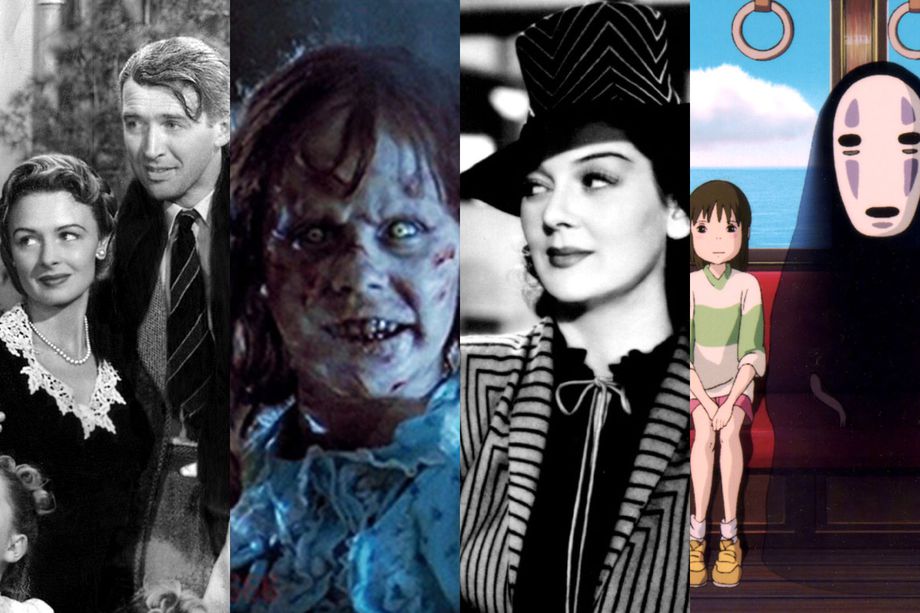
Feature Image Credit: I never did post a #Filmstruck4, so here’s my best attempt at picking the four movies that define me, which are (from left) It’s a Wonderful Life, The Exorcist, His Girl Friday, and Spirited Away.RKO; Warner Bros.; Columbia Pictures; Studio Ghibli
So you think you’re ready to rebrand. You have a good reason (if you’re not sure, here are 7 reasons to consider one), you’ve talked to leadership, you’ve done the research, and now you’re ready to hit the road running.
You may be eager to dive into logo prototypes or word clouds, but a good rebrand generally requires an intentional and meticulous process. For a huge global company, it can take years, millions of dollars (as Pepsi’s did), and an enormous team of interdisciplinary creative professionals. While it can be less complex and costly for a mid-size company or startup, it’s still a detailed process. You can’t just give a designer carte blanche or tell an agency you want something “young and fresh,” then expect the right idea to roll in.
The Key to a Strong Rebrand
A good rebrand doesn’t start by fast-forwarding to the future; it starts with taking a look at your present brand. You can’t create a strong vision without an intimate understanding of what it is you’re working with, the struggles your brand has faced, where it has failed, how you want it to evolve, and what you hope it will achieve. That’s why a rebrand should always start with a brand audit.
A brand audit is a survey to help you articulate the “state of your brand” before you dive into a full rebrand, covering things like strengths, weaknesses, blind spots, opportunities, etc. This information is crucial to help your team or any outside agency understand your objectives, challenges, and goals. (It’s smart to do a brand audit before you reach out to a branding agency, as they will need to know this info anyhow.)
We often end up walking our partners through this process, but if you can get a jump on it, it will save valuable time for everyone involved. Here, we’ll walk you through a brand audit, including the questions to ask, pulled from the framework we use ourselves.
Before You Start Your Brand Audit Survey
We’ve seen many of the roadblocks or hiccups that can happen during a rebrand. We find it’s often due to a communication issue. To make sure your team is on the same page throughout the brand audit, make sure you:
Answer everything as thoroughly and honestly as you can.
Gather insights and feedback from individuals at all levels of your organization, not just the higher-ups.
Get final approval.
This way everyone can rest easy knowing that the information you’re working with is current and accurate. So, onto the exercise.
Step 1: Distribute Your Brand Audit Survey
On the surface, a brand audit survey is fairly simple in that it is a basic audit of all elements of your brand. However, for brands that don’t have a well-articulated brand strategy, these seemingly simple questions can actually be difficult to answer, which is why it’s important to come to a final consensus after questionnaires are distributed. (Trust us; differing opinions and vague responses can cause havoc down the road.)
For your brand audit survey, you will survey your team about three specific areas of your brand:
Current Core Identity
Current Visual Identity
Current Verbal Identity
Here are the basic survey questions to distribute to your team. You may add, edit, or tweak depending on what’s most relevant to your brand.
Current Core Identity
Organization name? List the way you want it on the logo and any other derivatives)
What does your organization do? Use a succinct, objective description.
What is your core identity? This includes purpose, vision, mission, and values.
How is your organization currently perceived? Does that align with the organization’s character/values?
How does your organization want to be perceived?
How has your organization changed over time? Where is it now, where is it going?
Who is your audience?
Who are your competitors? How does your brand fit into the landscape?
How does your organization differentiate itself?
Exercise: Place an X where you want your brand to fall on the spectrum below.
Current Visual Identity
Objectively describe what your brand is/what it looks like (e.g., logo, color, font)
Subjectively describe what you think it communicates (e.g., friendliness, strength)
How does the visual identity align or misalign with the organization’s values?
What do you like/not about the current visual identity?
How has the visual identity changed over time?
Are there different geographical teams or divisions to account for within a variation of the logo?
How do you feel about your logo?
Where will this logo be used (print, web, social)?
Why are you creating a new and unique logo? Why now?
Should your new logo be “evolutionary” or “revolutionary”? Is it updating the current identity or starting completely new?
Why type of “character” or “personality” would you like the new logo to have?
What type of logo are you more drawn to:
A symbol: An abstract representation of the brand of the organization. (e.g., Nike swoosh, McDonald’s arches)
A logotype: Stylized letters representing the name of the organization (e.g., Coca-Cola, Dell, FedEx, NASA)
Combination mark: Logos that use a combination of both words and symbols to represent the organization (e.g., AT&T, Domino’s)
Current Verbal Identity
What is your brand positioning? Articulate what differentiates you in the marketplace, or how you are different from your competitors. A simple template to help you articulate this is “Our [offering] is the only [category] that [benefit].
What is your tagline? Use a simple, succinct statement summarizing your brand promise.
What’s your elevator pitch? Sum up what you do in a few sentences.
What are your brand stories/messaging? These are main talking points/supporting messaging that reinforce your value proposition.
What is your voice/tone? How do you speak?
Who is your brand persona?It can be helpful to describe your brand as a person, such as George Clooney with the irreverent humor of Jon Stewart.
Step 2: Collate Your Brand Audit Answers
Your job is not to gather surveys, then dump the pile on your poor design team or branding agency. The goal of the exercise is to get a consensus and distill your thoughts into a single, all-encompassing document.
Once you have your surveys completed, gather your team and review them to look for similarities and discrepancies. While the responses to your brand audit survey may differ wildly, they also provide incredibly valuable insight into how your current brand is succeeding or failing at communicating your identity. (Large discrepancies are also a symptom of why a cohesive rebrand is so necessary.)
Step 3: Come to a Consensus
After you’ve talked it out, your team should be able to fill out a single “official” questionnaire (which will ultimately become the outline of your creative brief), then you can share it with whoever is helping with your rebrand. If done well, this document will help make your rebrand stronger and more successful from the get-go.
Paula Scher, Sagi Haviv, Jessica Walsh, and others reveal how they handle their worst clients.
Sometimes, you have to agree to disagree. But what do you do with clients who just fundamentally have terrible taste in design? They’re paying the bills, creating a problem that almost every designer has to face in his or her career at least once: How do you tell your clients that their taste sucks?
We asked five designers at four leading design firms how they deal with the nightmare client who is actively thwarting their ability to do their jobs. Here’s what they had to say.
Stop in the name of the law
“I have said this when a client has asked me to do something visually putrid: ‘I can’t do that, and it will be nearly impossible for me to explain why I can’t do it, and if I show it to you, you may even like it. But pretend that I am a lawyer and you asked me to do something patently illegal that would cause my disbarment and professional shame forever. That is what you are asking me to do.’” — Paula Scher, Pentagram
“‘Your taste sucks.’ Politely translated: ‘It’s not about what one likes or dislikes, it’s about what works.’ Our experience is that the initial feelings and reactions about visual identity designs are meaningless because we are trying to establish something that can endure for many years and have the potential to become iconic. We therefore try to shift the focus and the conversation away from personal taste and subjective preferences (“I like circles; I hate blue”) and toward more strategic considerations: Does the design work? (We also never show a client anything that we can’t live with if selected.)” — Sagi Haviv, Chermayeff & Geismar & Haviv
Educate them
“Ha, I would never tell them their taste sucks! I would simply try to give them my best recommendation, based on explicit connections to the content of a project. [As designers,] our job is to educate clients on why we make the decisions we do, based on precedent, legibility, and/or function. If a client is telling us how to design, they’re probably not a client worth having.” — Jesse Reed, Pentagram
“Working with clients with bad taste has to be one of the toughest things to do if you are passionate about the work you do.
I try not to get into any arguments because at the end of the day it is their brand not mine.
Try these tactics:
1. Remind them they hired me for a reason and ask to save their money and just do it yourself.
2. Ask them if they want “my professional” opinion that clearly does not match their “non-professional” opinion.
3. Depending on the situation I will try to find examples of how other companies have made a similar mistake they are about to make.
4. Let their actions speak louder than my words by letting them make that mistake and wait for them to hire me to correct it.
5. Simply tell them I disagree and remove myself from the project.” — D’Wayne Edwards, Pensole
Just tell them
“We’re pretty straightforward and real with our clients, if they suggest something that will not work, we just tell them it’s a bad idea.” — Jessica Walsh, Sagmeister and Walsh
Digital design luminary and Swinburne grad, Tim Kotsiakos, is using his years of experience to shape the future of digital design students.
A 22-year career in graphic and digital design has provided Tim with a vital outlook on the landscape, one which he aims to impart to aspiring designers.
Since completing a Bachelor of Graphic Design (Hons) at Swinburne in 1995, Tim has blazed a trail in digital design, navigating huge changes in technology and garnering an impressive reputation within the industry.
Immediately following his graduation, Tim became a senior designer for DTDesign, working with fellow Swinburne grad David Trewern to establish an upstart design studio that would be able to compete in an ever-changing and close-knit Victorian design industry.
“It was a pretty exciting time to be in the industry and it was all very new,” says Tim.
“The industry was so small, we’d meet at a bar once a month and we’d all fit in the tiny back room.”
Becoming a creative director
Tim’s first exposure to the industry also played a vital role in shaping the kind of creative director he wanted to be as his career developed.
“Some of these early experiences certainly helped me understand the importance of being truly human-centric. Being able to watch David interact with clients and build his own business was a massive influence, and one I’m still very grateful for,” says Tim.
Tim spent eight years playing an integral role in pushing DTDesign to the forefront of the Victorian digital design scene, where he developed his knowledge of production and interface design for the user experience (more commonly referred to as Information Architecture at the time).
Developing these skills early in his career helped Tim stand out from the crowd, giving him the opportunity to collaborate with the Australian Graphic Design Association (AGDA), where he developed his outlook on the business of design.
“It was a very good reminder of how many amazing, hard-working design businesses there are in Australia, and a reminder of how many of them are small, micro-businesses,” Tim says.
“It helped me form the opinion that to do great design work you also need to be great at business.”
Taking on the world
Following brief stints at Atomic and Eclipse (Deloitte), Tim joined the world-renowned Reactive design team as a creative director. He completely overhauled the Reactive brand and website, before collaborating with a number of international clients, including British Airways.
Working in conjunction with Reactive’s London office, Tim developed an in-flight entertainment interface that would work while reclined in first class with a handheld remote, as well as in a confined space in economy, utilising a touch screen display.
This experience, working in a small team of “really experienced people” had a lasting effect on Tim, as it provided a model for him to launch his own design company in 2015.
MASS effect
After a fruitful tenure at Reactive, Tim’s new company MASS hit the ground running, quickly developing a reputation for exceptional design output and client collaboration, which Tim hopes will lay the foundations for future growth.
“We’re excited about solving big problems in lateral ways and we want to work on projects that have a long-term impact on peoples’ lives.”
“If we achieve this and continue to grow, we’ll be absolutely rapt!”
While managing his small Fitzroy-based team, Tim has also returned to his Swinburne roots, becoming heavily involved in developing the Make It, Break It Design Sprint, a five-day program that allows communication design students to workshop creative new ideas in a team format.
In addition, Tim has been involved in adjudicating an honours year ‘shark tank’, allowing these same students to pitch their ideas to established industry experts and garner feedback that can help shape their own design outlook, a role Tim takes great pride in.
“My goal has always been to remain connected with education, and Swinburne has made it very easy for me to do so,” says Tim.
“I’m impressed to see an emphasis on research and user-centred design… the immediate benefits to students are obvious, but I think there is a longer-term benefit to the industry.”
“If we raise the overall quality of graduates we can in turn progress the industry.”
I can’t blame marketers for avoiding the development of marketing plans, launch plans or any other version of a strategic plan. This apparently reasonable request usually requires countless hours of writing and revisions, only to be filed away in some dusty online folder.
The reason marketing plans don’t get implemented is that they are focused on what you want to achieve. In fact, countless articles and templates for marketing planning suggest that you start with your goals, obstacles, and objectives. While these are certainly critical components, I don’t see how marketers could possibly expect anything built around internal needs could withstand exposure to the pressures of new priorities, ideas and people.
What do your buyers want?
While marketers often try to include market data and audience profiles in their plans, if you look closely you’ll see the plan says nothing about what your buyers want to know during their journey or where they go for this information. Thus, the actual content of marketing deliverables is left to the imagination of the team that is doing the work. It should be no surprise that depending on where the work originates, the content differs dramatically. Even more costly is the team’s guesswork about how to deliver the content, which has much more to do with your preferences than the buyers’.
A more rational and sustainable approach to planning begins with clarity about what affects your buyers’ decisions (and just as critically, what doesn’t matter to your buyer). It might feel like cheating, but what if you knew the buyers’ true story about everything they did, and every question they asked, as they went through their awareness, consideration and decision process? Now your marketing plan could be based on the information buyers are seeking and actual insight into how buyers decide that a competitor’s solution (or the status quo) is better suited to their needs.
Information your buyer needs to make a decision
To illustrate this potential, here is a mock-up of several different buyer’s journeys wrapped up into one. Note that we mixed up the findings from several personas to protect the intellectual property of the companies that invested in this research. So please don’t use this mock-up to guide your own planning, but this will give you a sense of the detail about your buyer’s informational needs that results from the proper research.
What your buyer does to make a decision
In this example, we have also combined results from several studies to illustrate the steps a buyer might take during their journey. You’ll note that unlike a lot of buyer journey examples you’ll find online, this one is about what the buyers do, not your marketing activities. Once you know where buyers go for trusted information and who influences their decisions, you’ll have the data you need to decide which marketing spend is most valuable and what deserves less attention.
Not knowing this information is costing you
Many marketers who wish they had deep buyer insights say it is difficult to justify the investment. If this is you, consider the very tangible costs of making stuff up as you go and failing to give buyers the useful information they are seeking during their journey. You’ll discover quite quickly, the costs are enormous for you, your sales team and your company’s bottom line.
For more recommendations, attend our virtual Buyer Persona Masterclass or read our book; Buyer Personas: How to Gain Insight into Your Customer’s Expectations, Align your Marketing Strategies and Win More Business (Wiley). If you are even more passionate on the subject, contact the Buyer Persona Institute directly so we can learn about your special circumstances and tell you how other marketers have solved the same challenges.
Adele Revella has more than two decades of experience as a B2B marketing executive, keynote speaker, workshop facilitator, consultant, and author of The Buyer Persona Manifesto. For 10 years, she traveled the globe, presenting “Effective Product Marketing,” a two-day Pragmatic Marketing™ seminar that showed more than 5,000 marketers how… View full profile ›
Read more at https://www.business2community.com/marketing/marketing-plans-should-start-with-the-buyers-needs-not-yours-02091416
Editor’s note: You may have missed this article when CMI published it last year. We’re sharing it now because the misperceptions about editorial calendars and content marketing strategies are still common.
Marketers often talk about how they have a strategy … then proceed to say they are set because they have an editorial calendar.
At the risk of sounding ranty, I’d love to yell from the rooftops: An editorial calendar is not a content marketing strategy!
While this conflict may seem like semantics, the meshing of these terms points to a bigger issue.
You need to have both a strategy and an editorial plan or calendar. And you need to understand how they differ because the absence of one may explain why you are experiencing uncertainty in your content marketing efforts.
Let’s say you are building a home. An architect leads the design of the structure by creating an architectural plan. But a civil engineer makes the design possible – implementing and adjusting the plan to realize the architect’s vision.
Do you need an architectural design for your new home? Absolutely. It’s the vision of what you want to achieve. You help your architect understand your needs (your why) – your strategy. Where do you want to move? How big do you want your house to be? Do you want room to grow or something more compact? How much do you want to spend? These are some of the questions you need to answer before the architect creates a plan for your house.
With that architectural strategy, the civil engineer can create a building plan to implement the vision. That’s akin to your editorial plan or calendar.
In short, just like when you are building a home, you can’t have an effective building plan without an architectural strategy, and you can’t execute your strategy without your plan. (And, if you are designing a house with your spouse, you both need to get on the same page as well – just like your team needs to get on the same page with your strategy.)
If your editorial plan isn’t feeling quite right, chances are you don’t have a solid strategy – or your team doesn’t have a shared understanding of what that strategy is.
In simple terms (this doesn’t account for all the nuances), your strategy needs to answer these three questions:
Who are we educating/helping? (Note: I did not say “targeting,” as your goal should be helping. Creating a persona is one way to do this.)
How can we help them in a way that no one else can? (This is your content tilt.)
How will we know we are successful? (These are the business goals of your strategy.)
You need to clearly understand the answers to these three questions – and having this clarity isn’t as common as you may think.
In our most recent content marketing research, 37% of B2B marketers say they have a documented content marketing strategy, with 38% indicating they have an undocumented strategy. (I won’t rant about the importance of documenting your strategy … but you should do it.)
But not enough of their strategies have a content mission, a deep understanding of their personas, and goals tied to their content. If you don’t have these things, something is going to feel off. And, while your strategy typically comes from the leadership team, don’t make excuses if you don’t have one.
Does everyone on the team have the same understanding of the strategy? Ask your fellow team members the three questions above and see how consistently everybody communicates the strategy.
Post simple answers to the three questions on each team member’s wall (or close by). You want team members to internalize the answers. I can’t stress this enough: If you don’t stick to your audience and mission – with a focus on your goals – you will flounder.
Unlike your plan, your strategy is relatively set in stone and won’t change often.
Each item you publish and communicate needs to support the three key items in your strategy. Every. Single. Thing. And that’s where your editorial plan comes in.
Your editorial plan is tactical and detailed. It explains what you are going to do and who will do it. If you have your big ideas nailed down and are struggling with execution, chances are you need to spend some time with your editorial plan.
Key pages from your site that require ongoing attention (Not sure which pages require your attention? Learn about the four key reports to help you, as well as the five opportunities to consider.)
Content to update and republish (Learn about a system to decide which posts to republish as well as details on how CMI does it.)
Measurement plan (See a template CMI has used to share insights with the team on a monthly basis.)
As you can see, all these details are tactical and important. A high-level strategy is necessary, but without an editorial plan to support it, your content marketing program will have a tough time gaining traction.
Remember, you need an architect to draw your vision of a new home (the strategy), but you also need the civil engineer to create the construction plan to practically implement the vision.
Do you have both strategy and a plan? Does that create a comfortable home for your content marketing? Or do you have a plan, but without a strategy – your content marketing program lives day to day but it doesn’t live up to your vision?
Where are you feeling discomfort in your content marketing program? Would it make sense to fine-tune your content marketing strategy or your editorial plan – or both?
Want help in designing and building your content marketing home? Or maybe it’s time for some renovations. Register today to attend Content Marketing World Sept. 4-7 in Cleveland, Ohio. Use code BLOG100 to save $100.
Cover image by Joseph Kalinowski/Content Marketing Institute
By Michele Linn
Michele Linn is the co-founder and chief strategy officer of Mantis Research, a consultancy focused on helping brands create and amplify original research they can use in their marketing. Before starting Mantis, Michele was head of editorial at Content Marketing Institute, where she led the company’s strategic editorial direction, co-developed its annual research studies, wrote hundreds of articles, spoke at industry events and was instrumental in building the platform to 200,000 subscribers. In 2015, she was named one of Folio’s Top Women in Media (Corporate Visionary). You can follow her on Twitter at @michelelinn.
In the music example above, the artist had already produced other work for you to explore. They were putting in the time, experimenting, failing, and trying again … long before you had ever heard of them.
They were building their body of work so that they had more to offer you once you did finally discover them.
Build your body of work
The work you do when no one is watching is never a waste.
Even though you’ll probably be more reserved about what you reveal when you first start out, that early content is still an important part of your evolution.
When it comes to social media related to auto buying, carmakers should not put too much emphasis on “all the feels” as most demographic groups are looking more for facts.
The days of social as an optional marketing channel are over. Now that social has its rightful place at the table, it is vital to understand where in the funnel social efforts should be targeted, according to Spout Social.
Per its 47-page annual social index, the top consumer content preference is for product information (48%), followed by promotions and deals (46%), education content (18%), news (17%), business updates (12%) and entertaining content (9%). Only 8% want to see “inspirational content” and only 4% want to see content including celebrities or other influencers they follow.
“Consumers want brand awareness and consideration stage content from brands on social,” according to the report. “But 80% of social marketers are hyper-focused on awareness activities, leaving out the consideration piece of the puzzle. The social marketer’s No. 1 challenge is still ROI. Return on investment is the top concern for 55% of social marketers. This makes sense for two reasons: They aren’t meeting the full needs of their social audience with both brand awareness and consideration content and they’re defining ROI incorrectly to begin with.
Facebook remains a dominant force in marketing strategies and consumer behavior. A whopping 97% of social marketers list Facebook as their most used and useful social network, and Instagram blows Snapchat out of the water by social marketer usership and consumer adoption. In fact, 83% of marketers use Instagram and 13% use Snapchat; 51% of consumers use Instagram and 30% use Snapchat.
The automotive industry-specific data provides a pulse on effective social media marketing strategies to note for 2018.
“As marketers, we hear about ROI every single day—and social marketers remain anxious about it,” according to the report. “To truly understand what ROI means in the social marketing industry, and how social marketers are aligning with consumer preferences, we asked more than 2,000 social marketers how they approach structure, goals and content. We asked about their priorities and what they need to do their best work. Then we cross-referenced their reports against what consumers actually want. “
Millennials and Gex X differ in that Millennials prefer inspirational and entertaining content and business updates more than Gex X. Gen X prefer product information and news more than Millennials.
A recent Pew Study differentiated between Millennials (ages 22-37) and Generation X (ages 38-53) and their media consumption patterns. Sprout wanted to see how this differentiation translates to social.
As it turns out, Millennials are twice as likely to use Snapchat as Generation X. Millennials want to see only friends’ content on social 52% more than Gen X Millennials and Gen X prefer the same content from companies: Discounts or sales, posts that showcase products or services and educational posts.
“We found that social is still very much a personal platform,” according to the report. “People spend time on social, first and foremost, to interact with family and friends. As brands put together campaigns and messaging, they must remember that they are guests at dinner, not members of the nuclear family: their role in user feeds is delicate, valuable and should be treated with great care.:
So how can brands disrupt the user experience in the least intrusive and most relevant way? Data shows the answer: with awareness and consideration stage content. Think long-term, not quick fix. Think relationships, not attribution, per Sprout.
“Where there is alignment (is) customer service,” according to the report. “On the front lines with customers and prospects everyday, an overwhelming majority (88%) of social marketers understand the importance of customer service on social; nearly half (45%)
of consumer respondents have reached out to a company on social.”
Employee advocacy is the new influencer marketing. Social marketers in 2018 see the value in employee advocacy as a cost-effective, scalable alternative to influencer marketing. Seventy-one percent of social marketers use employees as influencers or advocates today or want to in the future, while only 19% of marketers surveyed had the budget for an influencer program. This shift reflects consumer tastes: 61% of consumers said they would be more likely to research a product or service recommended on social by a friend vs. 36% for influencers/celebrities.





:format(webp)/cdn.vox-cdn.com/uploads/chorus_asset/file/3334090/wizard_of_oz.0.jpg)

:format(webp)/cdn.vox-cdn.com/uploads/chorus_asset/file/9486611/GettyImages_51247031.jpg)
:format(webp)/cdn.vox-cdn.com/uploads/chorus_asset/file/11696897/350431_4784.JPG)






 Not knowing this information is costing you