After years of holding the data close to its vest, Google has begun to give advertisers more data to help them make better decisions and run successful campaigns. Earlier this month, Google confirmed that it would run a small-scale rollout of an Insights analytics report in Google My Business that shows business owners the most popular search keywords that people use to find listings.
On Friday Google announced that the Search Analytics API found in the Search Console now allows advertisers to retrieve 25,000 rows of data per request, up from 5,000 rows previously. Marketers can query all their search analytics data without exceeding their quota by running a daily query for one day’s worth of data.
Marketers need to choose the information requested, such as search types — web, image and video — along with the dimensions such as page, query, country, or device and whether to group results by page or property.
Along with the news, Google published a guide to take marketers through data retrieval. It includes an overview and describes how to group results by page or property and the dos and don’ts for the process, as well as defaults and nuances of how the queries work.
Google also notes that impressions, clicks, position, and click-through rates are calculated differently when grouping results by page rather than by property.
Earlier this week, Google announced the integration of Hotel Ads into the Google Ads platform with the introduction of a new type of campaign and a new dashboard for managing hotel price feeds.
Although Hotel Ads have been around for about eight years — initially in sponsored listings in Google Maps and then in Google Search — they were managed in a separate ad platform.
Now all the data resides in one place. Overall, it means marketers gain more data from one dashboard to support campaigns across the board.
The last few months and years we’ve seen a few significant changes in the social landscape.
Think about this, when most of us started using social media, social networks were the place for updating statuses, sharing photos and keeping up with family and friends.
Today, there are videos to watch, news articles to read, podcasts to listen to and the opportunity to shop right from a video or Instagram post.
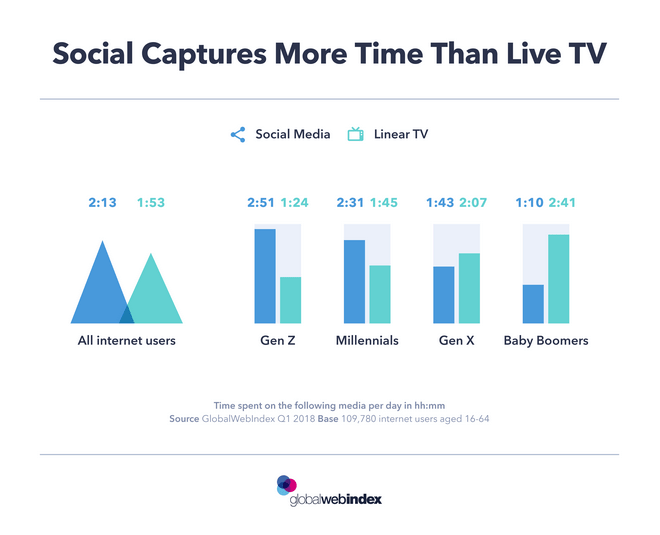
Today, we are spending around 20 minutes more per day on social media compared to TV and for Gen Zers, its almost 1 ½ hours more.
This shows that when embraced and managed effectively the advantage in reach with social media is rapidly closing the gap on television.
Social media is now directly competing with TV networks with the likes of Facebook, Instagram, Snapchat and Twitter
Social commerce is a significant revenue generator for apps such as WeChat in Asia, thus its no surprise that Facebook has been quick to encourage in-app impulse buying by facilitating payments on Messenger and ‘Shop Now’ buttons.
This leads to the question of how can brands embrace and engage with the rise of social commerce?
Social media is key for research
Today, a brand must have a social presence.
Social media and networks can drive a massive reach since just about anyone on the internet today is now a social networker. The role of social media has evolved from updating friends and family to now being an active part of the purchase journey.
A recent research study by Global Web Index demonstrated that 4 in 10 internet users ages 16-64 are turning to social media to research new brands or products.
In fact, 37% of internet users who turn to social networks to carry out research on brands or products – a marked increase on the 28% seen back in mid-2015.
Knowing that a younger demographic is leading this change, it will not be long before social overtakes search as the top portal for product research.
Today, 4 in 10 consumers follow their favorite brands on social media, and these numbers are increasing by the day.
Based on how consumers are engaging with brands on social media, brands should be marketing their products on these platforms.
Knowing where and when to communicate a brand message depends on the target audience, their needs, and where they are in the purchase funnel.
Considering that, 1 in 4 consumers have watched a consumer review on YouTube, while almost 4 in 10 have watched a tutorial in the last month, shows the shows the power of a brand YouTube product research, reviews, and education.
This allows for a seamless customer experience as brands can add “shop now” and “buy now” buttons for smooth transactions and the ability to act upon impulse purchases.
As a result of social media, the traditional purchase funnel has dramatically changed. It is now a ‘consumer decision journey’ that is a combination of the customer experience and brand advocacy.
It’s critical for brands to understand how the customer journey – or consumer buying process – has changed to influence consumers at the moments that matter.
Today consumers are more fragmented across social media platforms, channels, and devices than they’ve ever been.
Consumers have instant access to a depth of information today, at the touch of a button. As a result, consumers are considering a higher number of brands and products at the start of their journey than ever before.
This gives brands far more opportunities to compete with competitors, with a higher number of touchpoints to engage their target audience.
Touchpoints range from:
Online and TV Advertising
Chatbots
Social Media
Snapchat
Smart packaging – allows consumers to tap the brand logo with their phone to unlock five digital experiences, including competitions, drinks recipes or a playlist.
YouTube
Online Influencers
Video – 96% of Facebook users watch video clips on any device, and 99% of Instagram, Twitter and Snapchat users watch videos.
Knowing which drivers apply directly to your target market will ensure you’re using the right marketing tactics.
Research shows that the most critical factors impacting every stage of the purchase funnel and customer journey require a different approach for each for each demographic. For example:
71% of baby boomers think free delivery is essential.
59% of millennials will seek expert opinion before making a purchase.
47% of Gen Z turn to social media to research brands.
63% of Gen X stick to the brand they like.
71% of Gen Z discover brands through celebrity networkers.
A Baymard Institute survey, July 2017 showed that 61% of shoppers with abandon a shopping cart due to the extra costs for shipping, taxes, or other fees.
Understanding this gives brands an opportunity to rectify the problem and increase conversions at the optimal time. Asics, for example, reiterates the benefits of its free shipping policy in its cart abandonment email to drive conversions.
How to make social commerce work
That latest statistics show that buying online is a mobile-first activity – 57% of PC shoppers using mobiles to purchase items online. Therefore, your website needs to be mobile optimized and social media posts need to take this into consideration.
Instagram and Pinterest are photo-centric platforms that offer attractive options that allow brands to showcase a lifestyle and build their brand story.
IKEA embraced the inspiring nature of Instagram where it distributes inspirational content. This has resulted in an average order value increase of digital purchases by approximately 10%.
Instagram Stories, humanize brands and help forge a deeper connection with social audiences.
The New York Times Fashion section found the right balance covering the Ralph Lauren Fashion Show and showcasing the designer dresses that would be available for purchase. They also incorporated celebrity interviews and moments from the after-party using Instagram Stories.
You’re probably thinking, I have a boring product and work in a boring industry.
To you, it may be to the outsider it’s interesting. Do not be afraid to take a short video of behind the scenes, do quick employee interviews of what their job encompasses or what they like about the company.
The goal is to personalize your brand and make it relatable.
People buy from brands they relate to and trust. Putting the human touch on a product allows you to do this, regardless of the industry.
Maintain the balance between visual and written content
There’s a balance that needs to be maintained between effective content marketing and pushing for purchases.
Today, 4 in 10 digital consumers follow their favorite brands on social but does not mean that they are loyal followers. The worst thing a brand can do is overloading their social media feed with pictures of merchandise and buy buttons which will quickly turn followers off.
The real power of “shop now” and “buy buttons” emerge when brand messages reach shoppers who are interested in your brand and product.
The key is to maintain the balance between other non-sales type content to consumers who display a genuine interest and overloading with ‘sales’ content. This speeds up the consumer path to purchase with buy buttons is sure to appeal.
Make it Easy To Purchase
Today, 50% of the online population are now shopping on mobile devices, and inputting information on small screens can easily kill completing a purchase, increasing cart abandonment. This needs to be an integrated process which today is easily accomplished with the likes of Apple Pay and Google Pay.
We are still in the infancy of social commerce, however taking the time to understand how to interact with and bring value to your target audience will set your brand up for success.
Carol Forden is a freelance content writer. She writes passionately about MedTech, Healthcare, HealthIT, B2B technology, B2C national brands, business, marketing and tech. Carol has worked with such notable companies as American Express, First Data Corp, Abbott Labs, Novartis, AstraZeneca, Bristol Myers Squibb and HealthIT companies.
Carol writes a popular… View full profile ›
Read more at https://www.business2community.com/social-selling/how-can-brands-make-social-commerce-work-02077048
Online advertising is a crucial component of the modern world. It’s how consumers get the help they need to make important purchasing decisions. Additionally, it’s also how businesses improve their chances of earning sustainable revenue streams. Unfortunately, shady practices in the digital environment have led to some controversy over how ethical certain online advertising solutions might be.
Data Collection And Sharing
It’s no secret that organizations like Google and Facebook are constantly gathering data about users in order to provide consumers with a more customized web experience. These major advertising bodies then process user data, package it up and hand it off to other interested parties. This is how they make sure they’re making enough money to provide their clients with a free service.
While research indicates that most people don’t mind sharing their personal information with firms — particularly if it leads to a better shopping experience — they do expect to be asked for their permission first and potentially offered something valuable in return. In fact, according to a study by Columbia Business School, 80% of customers would voluntarily reveal data about themselves in exchange for better product recommendations or rewards points.
Problems do arise, however, when companies collect data without asking. Many people regard this information-gathering practice to be unfair, invasive and, in some cases, illegal. Not only does involuntary data collection upset customers, but it’s also incredibly difficult to keep that information safe, sometimes leading to data breaches and the problems that follow.
Transparency And Keeping Advertisers In Check
Rather than collect data underhandedly, companies need to come up with transparent solutions that effectively balance a tailored user experience and commitment to privacy.
Providing consumers access into which personal pieces of information are being transmitted through the data collection process, and where this information is going, may help advertisers retain consumer trust while being able to collect the data they need.
Agencies and clients alike need to maintain financial and operational transparency, both of which can be obtained via visibility and real-time reporting on their advertising campaigns.
Paving The Way For Better Customer-Company Relationships
If your goal is to build trust in a customer-company relationship, honesty is key. Re-establishing trust, however, requires coming clean about the information you’ve already gathered. From that point on, your company can listen to consumer reactions and concerns, validate their responses and ultimately form a game plan that addresses steps you’re taking to move forward.
Although a project that relies on greater transparency throughout the advertising world might mean that many companies must transform the way they do business, from my perspective, this could be an important step forward in the advertising industry.
The Demand For Greater Transparency
No matter how complicated this new change might be in the eyes of advertising brands, there’s an underlying agreement among many companies that something must be done to improve the regulation of transparency in the marketing and data-gathering sphere. Additionally, with new EU legislative framework set in place, these tools and ideas will not only be relevant to a large selection of firms but also an important part of maintaining compliance.
Ultimately, the rising popularity of a digital world doesn’t necessarily have to mean that customers must give up their privacy. While companies will always need data to help them make more informed and confident marketing decisions, it’s important to think carefully about how this information is collected and stored. All consumers should have a choice about who gets to access their data, and the online world is working hard to make this expectation a reality.
A new study into advertising trends by digital marketing and advertising firm Choozle has contradicted some well-held beliefs of the advertising industry.
Admittedly a US study, the report titled 2018 Digital Advertising Trends Survey contradicted assumptions around the rise of video, voice, ad blockers, and that recent digital advertising trends might actually be aggravating consumer distaste in online advertisement. It also brought to light that many consumers are unaware of how these developments affect them.
Ad Platforms and Types
Facebook (54 per cent) and Google (44 per cent) remain the most influential platforms for advertising followed by Instagram (23 percent), Spotify (28 percent), and Pandora (24 percent). Despite increased budgets on Instagram, it still falls far behind the duopoly; however, among the 18-29 age group, 60 per cent said they were influenced by ads on Instagram.
Mobile has continually been predicted as the leading digital advertising channel in 2018. However, only 45 per cent of respondents said they were more likely click on an ad on their mobile device, while 41 per cent said they’re more likely to click on a desktop.
Despite video being a major predicted trend in 2018, 72 per cent of consumers do not prefer video ads over other types of online advertisements.
Surprisingly, it was not the youngest group (18-29) but rather 30 to 44-year-old respondents who prefer videos (38 percent) over any other age group.
Industry headlines and reports also suggest a growing opportunity for voice search advertising, however, the survey revealed that only seven percent of respondents said they’re influenced by ads served through Google Home, and six percent through Amazon’s Alexa.
Connected TV advertising budgets also do not align with consumer sentiment. Some 17 per cent of consumers agreed that they’re influenced by ads on internet-connected TV, and that number increases to 29 per cent within the 18-29 age group.
Consumer Sentiment and Behavior
The survey found that 54 per cent of respondents have not used an ad blocker in the past six months, contradicting industry reports and predictions. However, recent digital advertising trends might actually be aggravating consumer distaste in online advertisement. A further 43 per cent of respondents felt negatively towards advertisements, compared to a similar survey from April of 2017 where only 34 per cent reported a negative sentiment, which reveals that hard feelings may be on the rise. The reasoning behind the negative sentiment included being shown the same advertisement multiple times (25 per cent) and advertisements slowing down the webpage (19 per cent).
Gender sterotypes
Some 25 per cent of respondents agreed they would be more likely to buy from a brand who breaks gender stereotypes. But when asked if they’d noticed a change in gender stereotypes in advertising only 13 per cent of consumers have noticed a significant increase in brands breaking stereotypes since that time, and 27 per cent say they have not seen a change.
Personal data/privacy
Internet users are becoming more and more aware of how–and where–their data is being used. But are we doing enough to educate them on why, how, and where their data is used?
Perhaps not. When respondents were asked their level of understanding around personal data use, 44 per cent of respondents answered that they are not very knowledgeable (26 per cent) or not at all knowledgeable (18 per cent) about what personal data online companies have about them. Beyond privacy awareness, 63 per cent of respondents understand that some companies do sell their personal data to other companies to make money, and 89 per cent do not think companies are doing enough to protect their data.
Even with the General Data Protection Regulations (GDPR) being a major news topic over the past year, 60 per cent of consumers did not know what the regulations entail or how they could be affected. However, 78 per cent of respondents think the US government should adopt stricter privacy and security standards and forty-four percent think that the websites that are showing the ads should be responsible for eliminating ads with false information.
Not many users who visit your website will make a purchase the first time. In fact, on average shoppers make 9 visits to a retailer’s site before deciding to buy. You need to get those users to come back to your site repeatedly in order to increase your conversions and that’s where retargeting comes in.
Retargeting is a pixel you add to your site that “follows” users who have previously visited and left without converting and shows them a targeted ad to reel them back in. Users who are retargeted are 70 percent more likely to convert. Retargeting is not just a banner ad on a website, it’s a highly-specific ad targeted to just the right users.
Retargeting is all about the details; if you’ve started retargeting but aren’t seeing any results from it, you might have rushed through the setup and missed some key elements.
Here are four retargeting mistakes you might be making and how to fix them.
1. Bombarding users with ads.
Don’t you think it would be irritating if everywhere you went you were being followed and had the same ad shoved in your face over and over again? That’s how your customers feel if you’re overloading them with too many ads.
You want to entice users to return to your site, you don’t want to annoy them. So while retargeting can be very successful, if you bombard users with too many ads, the effectiveness will be drastically reduced.
To avoid making this mistake and being spammy to your users, use frequency caps to restrict the number of times an ad is displayed to someone online. This will increase user engagement, maintain your brand’s trustworthiness and you won’t risk ticking off your customers and leads.
2. Not segmenting your audience.
Imagine you bought something from a website and then you’re shown a ton of ads for that product you literally just bought, that’s annoying. If you don’t segment your audience by who’s never purchased vs. who has purchased or by people who pay full price vs. people who only buy sale prices, your retargeting efforts will go to waste.
One tactic is to use burn pixels to avoid displaying ads to users who have already purchased from your website. You don’t want to lose a happy customer by showing them too many ads that aren’t relevant to them. On the other hand, if someone has purchased a product from you, you can target them with a specific ad to upsell to them or encourage re-ordering.
You should also segment your ads based on interest and intent. Retargeting allows you to show users ads based on their personal interests and also based on particular pages they’ve viewed on your site. This is especially important if your online shop sells a wide variety of products. A customer who visits your women’s footwear page multiple times should not be retargeted with an ad for men’s ties for example because you’ll miss out on your chance to sell them those shoes they’re clearly interested in.
3. Not switching up your ads.
If you’re showing users the exact same ad constantly, your ads are eventually going to fade into the internet background and your users will become blind to them. Consumers will get bored easily if an ad never changes and over time click-through rates will decrease. So you need to switch up your ads to keep them fresh.
Run a variety of different ads to keep users engaged, even simply switching up the photos you use can really help. It’s also important to use different ads across different platforms to keep users on their toes.
4. No ad or landing page customization.
Not only do you need to segment your audience but you need customized ads for each segment too. Different people respond to different messages so you need ads that will speak to each of your different audiences. You’re missing out on a lot of opportunities to convert if you’re not customizing your ads for different users, occasions and holidays.
Customize ads for moms who want back to school deals, for instance, the point of retargeting is to make it as relevant to your users as possible in order to convince them to return to you and buy.
You need to customize your landing pages as well. It doesn’t make any sense for a user to click on a customized ad promoting a holiday sale, only to have it lead them to a generic landing page. It will confuse customers and lead to loss of sales so make sure to customize your landing page to your retargeting ads.
Many marketers feel that retargeting is one of the most underused marketing strategies and it’s definitely one that you should take advantage of. Now that you know not just what mistakes you’re making but how to fix them too, you’ll be able to recapture the attention of users that you would have lost before.
Syed Balkhi is an award-winning entrepreneur and online marketing expert. He is the co-founder of OptinMonster, WPBeginner, MonsterInsights, WPForms, and List25. … View full profile ›
Read more at https://www.business2community.com/digital-marketing/4-retargeting-mistakes-and-how-to-fix-them-02093120
In-house agencies are all the rage, but most marketers still struggle with taking their advertising and media entirely within their four walls — leading to more brands favoring a “hybrid” approach.
Marketers of all types have made it a mission to talk more directly to their customers, take media planning and strategy, if not the actual buying to their own teams and overall, do more themselves. That means agencies are now doing far less big-picture planning and more execution.
For example, Marriott chief marketing officer Karin Timpone recently launched a new unit, part of the marketing team, called “global marketing optimization” group, which handles everything from overall customer strategy, media and marketing, as well as performance and media buying. This is new, and the group is in charge of also a new media group that handles all global media buying.
The brand also works with Publicis, which created a dedicated team called Marriott One Media to service the account earlier this year. The agency group handles execution while strategy and planning is done internally.
There’s also more media buying done internally, especially at the local-individual-hotel-property level, mostly in search. The brand’s internal agency also is working directly with platforms, like Facebook, on how to buy media there that Timpone said “couldn’t have been done with an external agency partner.” Once the plan is set, the agency can come back and put Facebook in the overall plan — more executional, rather than strategic. “The strategies of what you need for our business, you can’t ever farm that out,” she said.
Timpone declined to say how many people work inside that group but said it was born out of an understanding that marketers needed to be much more in control of their customer journeys than they have been in the past.
In-house agencies, while touted by some like JP Morgan Chase CMO Kristin Lemkau as being more efficient, are also difficult to create: They have expensive startup costs and require a high level of internal buy-in. Plus, agencies still remain, according to CMOs, a place for expertise on new trends and new technologies, which are too difficult for an internal team to stay on top of.
At Northwestern Mutual, chief marketing officer Aditi Gokhale said she isn’t a big believer in outsourcing everything to agencies. “But frankly, from an efficiency perspective, it’s not super efficient to build out a big in-house agency either.”
What’s changed at NM, said Gokhale, is that she and her team now define media and media spend. “The agency doesn’t define it for me, which historically they have,” she said. “I take control of it, the agency executes.”
Ann Billock, partner at Ark Advisors, which advises CMOs about agency partnerships, said that most brands are now using a “hybrid” approach because creating teams in-house is expensive — and talent is often an issue. As Digiday has reported previously, everything from cultural fit issues, to brand marketing talent needing to adapt to a different way of working, to finding people outside the coastal cities can be an issue.
Companies struggle especially to recruit media-buying experts for the client side, with 62 percent of marketers in a recent Digiday survey saying hiring talent is a challenge for bringing media buying in-house. One hurdle when recruiting media buyers for the client side is convincing them that there’s a path for career progression.
That’s what’s creating a movement where more brands are doing more in-house, but few are entirely eschewing agencies. Marc Speichert, chief digital officer at GSK, who said he doesn’t have plans to take everything in-house, said that what is happening is a clearer understanding of the marketer’s internal capabilities and how to increase them — and expect very different things from its agencies. “We have to make sure we push hard,” Speichert said. “As we elevated our own internal capabilities, we are asking much tougher questions of agencies. We have much higher expectations.”
“The most effective partnerships happen when the brand teams do, indeed, handle the strategy but recognize that the brand strategy still needs to be translated into a communications strategy by the agency,” said Billock.
Global events can captivate and engage the masses around the world. So it comes as no surprise to see brands working hard to to take advantage of events like the World Cup, the Super Bowl, astronomical events and everything else you can think of. And thanks to the digital revolution, it is now easier than ever before, for smaller brands to follow suit and create their own marketing campaigns during these occasions to generate engagement and brand awareness.
To help find inspiration on your next campaign we’ve highlighted five brands that took advantage of topical events to help grow awareness about their brand and sell their products and services.
1. Iceland Foods – The World Cup
When England’s national soccer team were eliminated by lowly ranked Iceland during Euro 2016, it didn’t take long for a plethora of jokes and memes to emerge on Twitter. Most notably, the UK-based supermarket, Iceland Foods got involved.
In this year’s World Cup tournament taking place in Russia, Iceland qualified for the competition for the first time. Iceland Foods again took advantage by sharing humorous tweets and engaging directly with Iceland’s national soccer team’s Twitter account. Their tongue-in-cheek tweets were numerous, attracting hundreds and sometimes thousands of retweets.
2. Kraft – The Super Bowl
Figures from Statista show us that this year’s Super Bowl was watched by 103.4 million viewers. The Super Bowl has always been a major platform for advertising, generating $385 million in ad revenue in 2017, with each 30-second ad costing $5 million. A majority of these Super Bowl ads rely on celebrity endorsements, which can bump up the overall advertisement cost significantly. Kraft, on the other hand, didn’t rely on celebrity endorsements and opted to create their 2018 Super Bowl ad using user-generated content.
Kraft asked Instagram and Twitter users to upload videos and photos of themselves watching the game with their families using the hashtags #FamilyGreatly and #KraftEntry. The resulting ad, which was essentially a compilation of pictures and videos of families watching the game, positioned Kraft as a family-centered brand.
3. Virgin Media – The Olympics
Virgin Media promotes their Wifi speed as either “superfast” or “ultrafast”. As part of their marketing campaign during the 2016 Summer Olympics, Virgin Media paid homage to Usain Bolt, who set the world record for the 100-meter sprint at 9.58 seconds at the 2009 World Athletics Championship. In their advertisement, Virgin Media strung together ten 9.58-second vignettes that showcased a different part of Bolt’s life. The purpose of the advert was to pay tribute to Bolt and to emphasize the role of speed in sports, and in web browsing.
4. KFC – The Royal Wedding
The rumored story of Prince Harry proposing to Meghan Markle over a roast chicken dinner definitely caught the attention of the marketing department at global restaurant chain, KFC. The fried chicken fast food chain developed a commemorative bucket of chicken that was decorated with a classic regal crest and also had both British and American flags.
Though this campaign was not a big revenue driver, it did align the brand with the royal wedding event and got people talking. Reports suggest that only 50 of these commemorative buckets were available at the KFC branch in Windsor.
5. Amtrak – The Solar Eclipse
The 2017 solar eclipse was the first to hit the US since 1979, and it generated a great deal of excitement. The eclipse was observed right across the country, with the best viewing spots in Missouri, Tennessee, Utah, Nebraska and Wyoming. Many brands took advantage of this occasion, most notably Amtrak. They successfully ran an “Eclipse Train” from Chicago to southern Illinois that gave passengers mesmerizing views of the solar eclipse. They even provided free viewing glasses on board and tickets were sold out.
What’s the most inventive way a brand has taken advantage of a global event? Share your take in the comments below!
If you were unfamiliar with MediaMonks and want to know more about the company that Sir Martin Sorrell has made his first capture, read on.
When MediaMonks was founded in 2001, its founder Wesley ter Haar and chief executive Victor Knaap (who joined in 2003), were both in their early 20s.
It began in a basement as a digital design boutique in Hilversum, Netherlands, (a city about a half-hour from Amsterdam) and has since cemented its place at the top of the global advertising creative community, helping some of the world’s most-recognised agencies create digital experiences for brands.
It would be another decade before Sir Martin Sorrell’s WPP bought AKQA for $540m (£407m) and rival Publicis Groupe snapped up LBi for a similar sum, as the holding companies’ appetite for digital agencies peaked.
At that time ter Haar and Knaap, MediaMonks chief executive since 2003, were in the early stages of building up their agency from a minnow to the $350m catch it became this week.
They had just opened their first international office, expanding to London in 2010 on the back of work in their home market, often via big-name agencies, for clients such as McDonald’s, Procter & Gamble and Samsung.
Since then MediaMonks has grown from two offices to 11 across Europe, the Americas, Asia and the Middle East, and from 100 staff to 750.
The list of clients availing themselves of its digital content production and ecommerce services now includes Adidas, Amazon, GE, Google, Hyundai, JAB, Johnson & Johnson, Netflix, 3G and Weber.
“While [MediaMonks] has proven its expertise building digital platforms and campaigns, MediaMonks had made few forays into the world of VR,” Campaign US reported at the time.
“Media Monks was pretty much the last of the independent digital agencies of a decent size,” said AKQA’s chief executive Ajaz Ahmed in response to yesterday’s deal.
MediaMonks was involved in 18 winning entries at this year’s Cannes Lions, including contributing digital production to the ‘Evert45’ work that won the Grand Prix for Entertainment for Netherlands telecoms company KPN. It taught children about the Second World War by imagining a child of the time’s video and social media diary.
Its festival presence has included a high-profile party for several years running, while ter Haar chaired the Digital Craft Lions jury in 2016.
Ter Haar recently told the journal of SoDA (Society of Digital Agencies), of which he is a board member, about his approach to innovation:
“At MediaMonks we hire or acquire against an internal innovation roadmap based on where we see the confluence of people, products and platforms are headed.
“For us, that has meant the acquisitions of a VR-first production company and a connected commerce company, the launch of a digital-first content company and a hiring spree to bolster our AR capabilities.”
Ahmed went on to wonder: “Is S4 Capital a holding group like WPP, or is it more of a buyout firm?”
“It’s more likely a buyout firm and therefore the end game for MediaMonks will be the company is sold again a few years down the line, once it has generated more revenue and profits.
“It could well end up being re-sold to Accenture Interactive, another consultancy firm or a holding group, once S4 Capital realises more than its significant investment in the company by using it as a platform to maximise the value prior to the next sale.”
Ter Haar and Knaap are savvy operators who previously sold a stake in MediaMonks to private equity firm Bencis and they used JEGI Clarity, the boutique investment bank, which sold Adam & Eve to Omnicom in 2012, to advise on the sale to S4 Capital.
MediaMonks will hope they have cut as canny a deal by taking shares in S4 Capital, rather than an earn-out.
However, the founders insist they have not “sold out”
As they say on their website: “We founded MediaMonks 17.5 years ago, we never sold out, but are excited to buy in to the vision of Sir Martin Sorrell to create the next platform for our industry.”
They also promise the “same Cannes celebrations and same creative culture”.
Recently, British regulators fined Facebook (FB) 500,000 pounds (about $660,000) for breaking data protection laws that led to the Cambridge Analytica scandal in March.
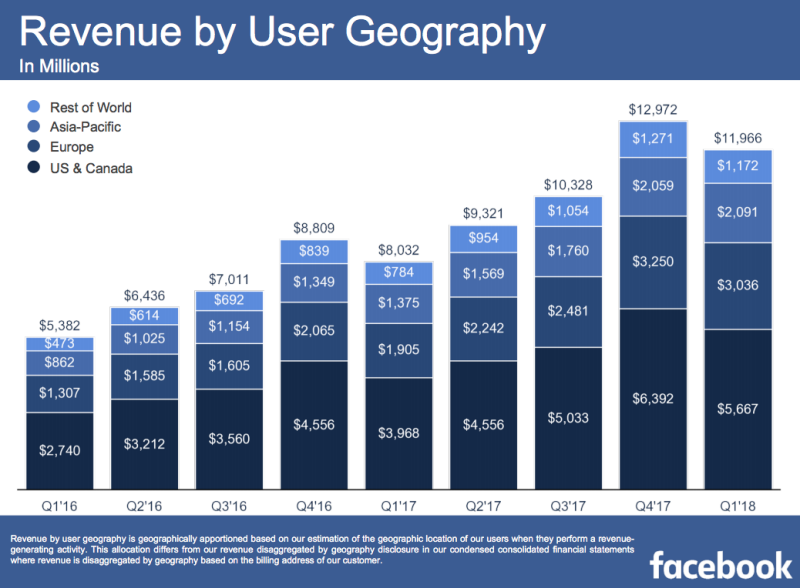
The fine totals about 7 minutes worth of the Facebook’s revenue.
The fine was so small because the company violated a 1998 data protection law that capped penalties at 500,000 pounds. Under the newly-passed General Data Protection Regulation (GDPR) regulations that took effect in Europe in May, however, the company’s maximum penalty would’ve been up to 4% of annual global revenue, or around 1.4 billion pounds. Not nothing, but still not the kind of financial penalty that would cause much more than a quarter of analysts “looking through” a one-time charge that impacts GAAP profitability.
And, as regulators increasingly look to take on big tech companies like Facebook and Google, more regulation will entrench these companies’ dominant positions in the online advertising industry. Which means that rules aimed at reining in tech giants will merely ensure their dominance in markets lawmakers already think the companies have too much control over.
Facebook’s revenue in the first quarter of 2018 was just under $12 billion, a nearly 50% increase over the same quarter last year. This week, British regulators fined the company the equivalent of seven minutes worth of revenue. (Source: Facebook)
“As history has shown, we believe that regulation will embolden the incumbents and increase their market share at the expense of smaller tech firms,” said Mark Kelley, an analyst at Nomura Instinet in a note to clients on Tuesday.
“We draw comparisons to the financial services sector post Dodd-Frank, where there has been a clear decline in new banks formed as regulation created higher barriers to entry, likely the result of the outsized impact of compliance costs on smaller banks versus that of larger institutions.”
Kelley cites data from the Minneapolis Fed that shows reported compliance costs at banks with less than $100 million in assets pose a burden that is four times that faced by banks with between $1 and $10 billion in assets.
“This disparity in the financial burden of compliance would likely be replicated in the tech sector, punishing smaller firms and reducing competition to the benefit of the incumbents,” Kelley writes.
“With this as a backdrop, we believe the big players such as Facebook and Google are best positioned to handle the heightened operating costs from regulation and will also benefit from increased barriers to entry.”
The fine levied against Facebook this week — which could be potentially fatal to a tech startup that runs afoul of regulations — illustrates the extent to which tech’s biggest players can swat away regulatory action.
Kelley and his team also think that worries over GDPR regulations neutering the ability for websites to track users’ activity online are overblown.
“Anyone on the internet can go to an EU website to see what the new cookie disclaimers and privacy policy notices look like now that GDPR is in effect,” Kelley said.
“In our opinion, to an unsuspecting consumer (which is likely the majority of consumers), clicking ‘okay’ to the new cookie use policy — which grants the site permission to collect data to be used for tracking purposes — doesn’t look much different than what it looked like in a pre-GDPR environment, if at all.”
Kelley’s note marked the firm’s initiation of coverage on the U.S. internet sector, with the firm putting Buy ratings on shares of both Facebook and Google’s parent company Alphabet (GOOGL).
“Overall, we think there is still some room for growth in digital advertising for the foreseeable future — led primarily by digital video and social (and TV budgets making the transition to digital), and primarily on mobile devices,” Kelley writes.
“As a result of slowing user growth and already high internet penetration, the growth will likely be led by pricing, rather than volume, and the consistent shift away from offline to online media.”
What Millennials want, Millennials — should — get. The demographic is increasingly influential as it matures and gains more spending power. With the aging of the demographic come big life events like marriage and having children, which is shaping their shopping behavior. According to a new report, “Building Loyalty with Dynamic Shoppers,” by Valassis, 47 percent of Millennials and 57 percent of Millennial parents have opted to visit a specific retailer for particular types of items.
“The competitive retail climate has made it crucial for brands to differentiate and prove their value to customers,” said Curtis Tingle, chief marketing officer of Valassis. “There are a number of variables that impact a consumer’s decision on where to shop. Discounts, offers, communication frequency, channel of engagement and more, all play a role in determining which brands become preferred retailers and reap the rewards of a loyal customer base.”
To collect the insights, Valassis in conjunction with NPD polled 1,200 U.S. consumers earlier this year. As current brand loyalty becomes strengthened over time, it will be difficult for competitors to draw consumers away for their preferred shopping locations. “Shoppers reported that to earn their loyalty, it’s critical for retailers to safeguard and protect personal information (76 percent); reward them with personalized discounts or special offers (73 percent); and interact with them through their preferred communication channel (55 percent),” said a Valassis spokesman.
Champions aren’t created overnight. The report said in order to hit home runs during key shopping seasons like back-to-school and holiday, retailers need to be dedicated to building loyalty throughout the year. Seventy-three percent of consumers will patronize merchants who have contacted them outside these blockbuster-shopping periods. Just be sure the messaging is purposeful and personalized.
But heightening efforts during key shopping events will have a better chance of drawing Millennial parents away from their typical destinations. According to the report, 49 percent of Millennial parents are more amenable to visiting new retailers during these shopping periods. Targeting this consumer set throughout the work day will likely improve loyalty, too. “Sixty-two percent of Millennial parents often make purchases during work when they see an email, online ad or mobile notification from a retailer,” said the spokesman.
Arguably less groundbreaking, Millennials will shop a good sale when they find one. “Nearly three-fourths (73 percent) of consumers admitted they can be swayed by advertised promotions and sales for where to shop and what to buy. Forty-seven percent of consumers say receiving an offer will drive them to visit a store or web site they don’t typically shop,” said the report.
Feature Image Credit: A Target on Black Friday. REYNOLD/EPA-EFE/REX/Shutterstock