From the logos that litter our social media feeds to the buildings we pass by every day on our way to work, design infiltrates our lives, even when we don’t realize it. And when we do start to pay attention, it’s impossible not to wonder who’s behind the shapes, colors, textures and structures of the brands, media, and objects that surround us in our daily lives.
Sometimes we don’t even realize the ubiquity of design until something changes, like when Google releases a new Google Doodle—suddenly we’re aware that the logo we see every time we open our Chrome browsers is different. Other times, design smacks us in the face, like when a new monumental building fills up the skyline. If you’ve ever looked at architectural renderings of the future, you can imagine how dizzying these design changes can be. Take a handful of proposals for upcoming projects — the world might look a whole lot different in the future.
While architecture may be the most noticeable form of design, graphic designers have a big impact on our lives as well. Many of the most prominent ones today you can even find on Twitter. And of the ones that are no longer alive, their influence still lives on in everything from the New York subway map to the Coca-Cola label.
Besides graphic and architecture, which may be on two different ends of the design spectrum, our list also covers people who are behind some of the most useful objects ever invented, from the cars we drive to the chairs we sit on. And don’t think we left out Apple’s head designer, Jonathan Ive, either. The fact that there’s an impeccably constructed object in almost everyone’s purse or pocket speaks to how impactful design can be. Check out our list of the most influential designers of all time.
Antoni Gaudi

Image via WikiCommons
Medium: Architecture, Furniture, Interior Design etc.
Spanish Catalan architect Antoni Gaudí’s magnum opus is the Sagrada Familia in Barcelona. The Temple Expiatori de la Sagrada Familia is probably a singularly unique structure: part Neo-Gothic, part Naturalistic, part hallucinatory dream. It is mind blowing that Gaudí was thinking of and designing spaces such as these so early in the 20th century, markedly different from the architecture of Victor Horta’s Art Nouveau influence. Gaudí also designed interior spaces, doors, and furniture that look as though they are a part of the bizarrely seductive universe that his architecture hails from. He even created pieces like a Gossip Chair, which is a series of seats conjoined at the armrests.
Saul Bass

Image via WikiCommons
Medium: Print Design and Animation
If you have ever seen the title sequences of Alfred Hitchcock’s Psycho, Spartacus, or Anatomy of a Murder, or seen the posters for Vertigo or West Side Story, you have encountered Bass’ most well known works. Other contributions to our society rank among the Girl Scouts’ and United Airways’ logos.
James Dyson

Image via WikiCommons
Medium: Product Design
Forbes may have said it best: “Dyson brought a level of excitement to housekeeping that’s usually reserved for cell phones and plasma televisions.” They’re right; 360-degree-swivel vacuums and bladeless fans have never felt so compelling.
POST CONTINUES BELOW
Marcel Breuer

Image via WikiCommons
Medium: Architecture, Furniture Design etc.
Like many of his brilliant contemporaries, Marcel Breuer also studied and taught at the Bauhaus in the 1920s, where he would then take on a teaching position as the head of the university’s carpentry workshop. His familiarity with unforgiving materials of Industrial design eventually lead to this Hungarian Modernist’s most widely-recognized work: the Wassily Chair. The name may not be familiar to all of us, but the bent tubular steel chair is no stranger in our lives. Breuer is also responsible for the Whitney Museum of American Art building (1966) uptown, which is a familiar façade for New York City aesthetes and civilians alike.
Stefan Sagmeister

Image via WikiCommons
Medium: Graphic Design
Austrian native Stefan Sagmeister’s most jarring (and recognizable) work was the infamous poster he designed for AIGA in 1999, where he opted to have the text of the event excised into his skin and photographed as the result. So, if Sagmeister doesn’t type typography personally — we don’t know who does.
Massimo Vignelli

Image via WikiCommons
Medium: Graphic Design etc.
Massimo Vignelli’s famous adage “If you can design one thing, you can design everything” may not hold true for everyone, but his idealism is much appreciated. Utopian aspirations aside, Vignelli re-branded familiar companies such as American Airlines, Knoll, Bloomingdale’s and Xerox, as well as created the signage for the NYC and DC Metro systems. So, next time you are in New York City, and you realize that the MTA arrows point you in the right direction, you have Vignelli to thank.
Kenichiro Ashida

Image via WikiCommons
Medium: Product Design
Kenichiro Ashida is to thank for all the time we have spent burning calories and time with the Nintendo Wii. His original design and creation of the Wii controllers, as well as its subsequent accessories, have truly changed the way that we interact with virtual games in real space and time.
Rem Koolhaas

Image via WikiCommons
Medium: Architecture
Rem Koolhaas is still hot; just last week, his design for the Miami Beach Convention Center Competition was chosen as the winner. In addition to his continuing contributions to contemporary architecture, Koolhaas is a Professor in Practice of Architecture and Urban Design at the Graduate School of Design at Harvard University. OMA (Office for Metropolitan Architecture) was co-founded by Koolhaas in 1975. In the late ’90s, as OMA was confronted with a transition into the virtual domain, they decided to create a new company called AMO, a think tank dedicated to operating in “areas beyond the tradition boundaries of architecture, including media, politics, sociology, renewable energy, technology, fashion, curating, publishing, and graphic design.”
Zaha Hadid

Image via WikiCommons
Medium: Architecture
Iraqi-born architect Zaha Hadid was the first woman to win the Pritzker Architecture Prize in 2004. Her Starchitect status and global notoriety speak to her success and recognition as a designer of space and structure. In 2013, Hadid proved she had made it with her first New York City project: a boutique condo complex near New York City’s High Line park. In addition to her geometric megastructures, she created furniture installations, and had a hand in the design of a three-wheeled automobile. She even dabbled in footwear design to produce a boot with clothing brand Lacoste in 2009. Hadid passed away in 2016.
Charles and Ray Eames

Image via WikiCommons
Medium: Architecture, Furniture Design
The Eames’ molded plywood lounge chair was the first and finest of its time when it debuted in the 1950s. Since then, the chair and its accompanying ottoman, have been in constant production. It even holds a spot in the permanent collection of MoMA in New York City. In addition to this stunning contribution to furniture design, the Eames’ home in Pacific Palisades (Case Study House #8, 1949) stands as a live-able (and lived-in) fantasy interior and somehow continues to look fresh and unbridled by decades of passing trends.
Paul Rand

Image via WikiCommons
Medium: Graphic Design
One of Paul Rand’s contemporaries, Louis Danzinger, once said of him, “He almost singlehandedly convinced business that design was an effective tool.” Rand’s work was mainly in rebranding corporate identities. Rand’s designs were decidedly reductive and seemingly uncomplicated, and a style that was once groundbreaking, has now become a paradigmatic model for generations of graphic designers today.
Richard Buckminster Fuller

Image via WikiCommons
Medium: Architecture, Automobile Design etc.
Richard Buckminster Fuller knew no bounds. The man was an inventor and an architect, a cultural theorist and an automobile designer, a simple game maker and a builder of geodesic domes. In retrospect, his two-time dismissal from Harvard University reads like a historical joke. Fuller’s international recognition began with his design of the geodesic dome. He even established the World Design Science Decade (from 1965 to 1975) to “apply the principles of science to solving the problems of humanity.” He seemed to be outrageously ahead of his time; urging designers to look towards renewable resources for energy, and creating affordable, sustainable works to serve the citizens of the world.
Frank Gehry

Image via WikiCommons
Medium: Architecture
Two of Frank Gehry’s best-known works are his titanium-covered Guggenheim Museum in Bilbao, Spain and the Walt Disney Concert Hall in downtown Los Angeles. These huge structures take on an unprecedented form and scale, which have now become attributed specifically to Gehry. He was also responsible for the design of the Experience Music Project in Seattle as well as Dancing House in Prague. It feels as though Gehry’s work doesn’t really need any explanation, since the forms themselves are quite astonishing in their own right
Philippe Starck

Image via WikiCommons
Medium: Architecture, Product Design, Industrial Design etc.
This internationally renowned product designer began his career at the artistic director of Pierre Cardin’s publishing house. Following that accomplishment, Philippe Starck went on to establish his own industrial design company that would work with the likes of Driade, Alessi and Kartell in Italy, Drimmer in Austria, Vitra in Switzerland, and Disform in Spain. His dedication to the idea of democratic design led him to create mass-produced consumer products rather than singular bespoke pieces. Starck gradually expanded his design practice to every genre possible: furniture, domestic appliances, staplers, toothbrushes and lemon reamers, tableware, even clothing, food, and architecture. Perhaps, the wonder of Starck is that his vision is not limited by medium, but instead is liberated by their respective possibilities.
Frank Lloyd Wright

Image via WikiCommons
Medium: Architecture, Furniture Design etc.
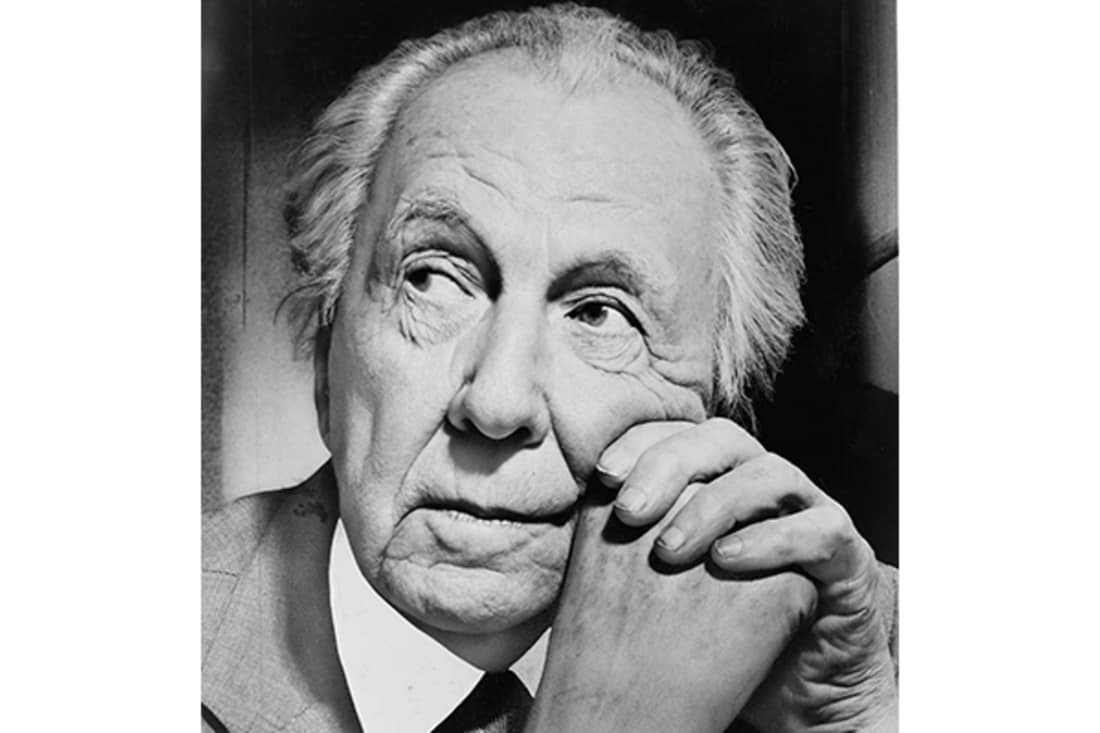
The prolific Frank Lloyd Wright designed more than 1,000 structures and completed over 500 works over his career. Though Wright was also the designer of the famed Solomon R. Guggenheim Museum in New York City, his magnum opus, Fallingwater (1935) in southwestern Pennsylvania, demonstrates an epitome of a harmony between man and nature. The façade of the Kaufmann Residence (as it is also known) is striking of course — the cantilevered slabs seem to float sublimely above cascading waterfalls, but the structure and its contents have been fully worked over by Wright. The entire interior (furnishing included) was also designed by Wright.
Ludwig Mies van der Rohe

Image via WikiCommons
Medium: Architecture
Mies van der Rohe is an accomplished man (to say the least). He served as the director of Berlin’s Bauhaus as well as the department head of architecture at the Illinois Institute of Technology, where he is credited to have developed the Second Chicago School. Among his fellow modern architecture masters (or peers, as some might refer to them) are Frank Lloyd Wright, Alvar Aalto, and Le Corbusier. But despite his rich associations, Mies strove for what he called “skin and bones” architecture; architecture with minimal framework and open space. Today, such a concept seems benign or even standard, but it was the prolific work of Mies that breathed life into the mantra, “less is more.”
Aleksandr Rodchenko

Image via WikiCommons
Medium: Graphic Design, Industrial Design, Architecture, etc.
Aleksandr Rodchenko is widely considered one of the founders of the Productivist movement of in the early 20th century Russian avant-garde art scene (which preceded landmarks such as Bauhaus and the De Stijl movement). He emerged as a prolific painter, sculptor, photographer, graphic designer, industrial designer and architect. Rodchenko sought to combine all mediums together for a socially engaged and aware purpose. He photographed modern monuments of his time, created bold opinionated graphics and posters that spoke to his derision for propaganda, and sought to use design to shape a better world.
Dieter Rams

Image via WikiCommons
Medium: Industrial Design
German industrial designer Dieter Rams served as the head of the consumer products company Braun. Rams is usually associated with the Functionalist school of industrial design and has even created ten clean-cut principles for us civilians to qualify “good design.” According to Rams, good design is innovative, makes a product useful, is aesthetic, makes a product understandable, is unobtrusive, is honest, is long-lasting, is thorough down to the last detail, is environmentally friendly, and is as little design as possible.
Milton Glaser

Image via WikiCommons
Medium: Graphic Design
Milton Glaser is such an accomplished graphic designer that the I ♥ NY (yes, someone designed that) logo is only a part of his portfolio. Glaser, along with his peer Clay Felker, founded New York Magazine in 1968. And among some of the graphical gifts endowed to future generations from Glaser are the Target, JetBlue and Coach logos. And, the 2009 documentary film titled To Inform and Delight: The World of Milton Glaser only drives home the ideology that Glaser’s work strove for: design that is legible, informative and visually pleasurable. That same year Glaser was also awarded the National Medal of the Arts by President Barack Obama.
Le Corbusier

Image via WikiCommons
Medium: Architecture etc.
In retrospect, history has painted Le Corbusier as a man who could create just about anything. He was a pioneer of modernist high design and architecture and considered a visionary for the future of urban space. His idealistic designs range from the infamous Villa Savoye (that summed up his five main points of architecture) to the unfinished capital city complex of Chandigarh, India.
Walter Gropius

Image via WikiCommons
Medium: Architecture
In 1919, German architect Walter Gropius founded the Staatliches Bauhaus, an institution still renowned for its approach to teaching and integrating craft, design and the fine arts. In addition to founding a school that attracted the likes of Paul Klee, Wassily Kandinsky, Laszlo Moholy-Nagy, and Josef Albers as faculty, Gropius is also considered to be a pioneer of modern architecture.
Sir Jonathan Ive

Image via WikiCommons
Medium: Industrial Design
Sir Jonathan Paul “Jony” Ive is Senior Vice President of Design at Apple Inc. and oversees the Industrial Design for the MacBook Pro, iMac, MacBook Air, iPod, iPod Touch, iPhone, iPad, iPad Mini and iOS 7. Essentially, this man is responsible for the sleek Apple-laden monolith that we all succumb to at one point or another.
Louis Kahn

Image via WikiCommons
Medium: Architecture
One of the kings of modern architecture, Louis Kahn rose to prominence in the ’40s and ‘50s and was known for heavy, monumental architecture. His work was informed by his populist political views, focusing on blocky public housing projects in his hometown of Philadelphia and abroad. His work is iconic for modernizing traditional architectural styles, without falling completely in line with the strict style of his contemporaries. This made him stand out as an influential innovator even in his own time.
David Adjaye

Image via Getty/Alexander Tamargo
Medium: Architecture
David Adjaye is a Ghanaian-British architect, which might make him an unlikely choice for the National Museum of African American History in Washington, D.C., but he’s said of the project: “You’ve got to realize that the African-American community is really part of the hope of almost every black person I know…I was brought up understanding African-American history as part of the kind of modern history of all people of color.” His museum speaks to this experience, letting the visitor literally rise through this history. And it’s this thoughtful detail and incorporation of cultural and social history in his creations that has established him as one of today’s most influential global designers.
Thomas Heatherwick

Image via WikiCommons
Medium: Architecture, product design, automobile design, furniture design
The man behind Heatherwick Studio, Thomas Heatherwick often takes viewers on a flight of fancy. For instance, for the 2010 Shanghai Expo, representing the U.K., Heatherwick worked with Kew Gardens’ Millennium Seed Bank Partnership to design a structure filled with optic fibers holding 60,000 plant seeds. His work often provokes, made up of amorphous structures that almost seem alive, and there’s a focus on re-inventing everyday objects, like a spinning chair that moves the sitter around like a top. Heatherwick is also the man behind the 2012 Olympic Cauldron, as well as the proposal for a “Garden Bridge” in London.
Daniel Libeskind

Image via WikiCommons
Medium: Architecture, set design
Love it or hate it, Daniel Libeskind’s most famous work to date is the enormous Freedom Tower dominating New York’s skyline, although it’s a much pared-down version of his original design. Libeskind is no stranger to politically and socially wrought commissions, however. He’s responsible for the perfectly somber Holocaust Museum in Berlin, where the architecture forces the visitor to reflect on the horror of the massacre more than anything the museum contains. It takes a brave and talented architect to do justice to such dark events in our history. But that doesn’t mean he lacks a sense of humor. He once designed an angular Jacuzzi for a British trade show.
Bjarke Ingels

Image via WikiCommons
Medium: Architecture
Danish architect Bjarke Ingles is the “young bad boy” of the contemporary architecture world because of his refusal to follow tradition. And this “gives zero f*cks” attitude has gotten him far, with more than one award each year since 2001. Even Ingles’ firm isn’t shy of the spotlight; named Bjarke Ingles Group, it goes by the brash acronym BIG. That’s just what his buildings look like, too, arising from the landscape like enormous waves crashing over their surroundings. And the commissions for this type of overarching design just keep coming.
Elizabeth Scofidio

Image via Getty/Neil Rasmus
Medium: Architecture, visual arts, performing arts.
One fourth of the firm Diller, Scofidio + Renfo, Elizabeth Scofidio may be the contemporary architect New Yorkers know best. Often speaking on relevant panels about the intersection of design and the community, Scofidio has contributed her voice to many pressing issues surrounding the development of New York. And her firm knows a lot about that. DS+R is responsible for converting the abandoned train tracks on the West Side into the world-renowned High Line, and they’re also working on the Museum of Modern Art expansion, a controversial project that resulted in the demolition of the American Folk Art Museum. During the latter process, Scofidio became a leading voice engaging with the public about the expansion and why it would help create a new space for performance art in the city.
Tadao Ando

Image via Getty/Luc Castel
Medium: Architecture
Japanese architect Tadao Ando is self-taught, but that hasn’t stopped him from challenging canonized Western designers or raking in prizes over the past two decades, including a Pritzker in 1995. Known for heavy, gray concrete and sparse geometric shapes, Ando’s architecture plays with the line between depressing and uplifting. Take, for example, the Chichu Museum, an underground masterpiece that would feel like a bomb shelter except for its magical ability to filter daylight into cavernous galleries. His style is marked by the influence of Japanese culture and has been likened to a haiku in its ability to showcase the beauty in simplicity. Designers around the world have taken note.
Craig Edward Dykers and Kjetil Trædal Thorsen

Image via Getty/Nicholas Hunt
Medium: Architecture, landscape, interior design, brand design
Snøhetta is the name of the tallest mountain in Norway, and if you’ve seen Craig Edward Dykers and Kjetil Trædal Thorsen’s Oslo Opera House design, it makes sense that the pair chose to use this mountain as their firm’s name. The enormous white building is winged with giant ramps that recall the slopes of snowy mountains and also serve as a public space for Oslo’s citizens. The firm’s awe-inspiring buildings, as equally immersed in the public landscape as they are striking, could be the reason Snøhetta was chosen to redesign New York’s Times Square and build the National September 11 Museum. They are also responsible for the design of Alexandria’s Library in Egypt, one of the most famous architectural projects in recent history.