Author

editor

Browsing

By Rob Thubron

“We know what you’re thinking. Is this even legal?”

A hot potato: For almost as long as we’ve had smartphones, there has been the belief that they surreptitiously listen to our spoken conversations to serve us targeted ads; most people have experienced seeing an ad on Facebook for something they were recently talking about. It’s always been claimed that this type of privacy invasion doesn’t happen. However, a marketing agency, whose clients included Facebook and Google, has admitted to using an “Active Listening” feature that eavesdrops on conversations via phone mics to gather data.

A pitch deck from Cox Media Group (CMG), seen by 404 Media, states that the marketing firm uses its AI-powered Active Listening software to capture real-time data by listening to phone users’ conversations. The slide adds that advertising clients can pair the gathered voice data with behavioural data to target in-market consumers.

The deck notes that consumers “leave a data trail based on their conversations and online behaviour” and that Active Listening collects and analyses behavioural and voice data from 470+ sources.

It’s also revealed that CMG’s clients include Facebook, Google, and Amazon, though it doesn’t specify if they used the Active Listening tool.

When 404 Media reached out to Google for comment about its relationship with CMG, the search giant removed the group from its Partners Program site, suggesting it no longer works with the agency.

“All advertisers must comply with all applicable laws and regulations as well as our Google Ads policies, and when we identify ads or advertisers that violate these policies, we will take appropriate action,” a Google spokesperson told The New York Post.

Meta, meanwhile, says it will investigate CMG to see if the agency violated any of its terms of service. “Meta does not use your phone’s microphone for ads and we’ve been public about this for years,” a Meta spokesperson said. “We are reaching out to CMG to get them to clarify that their program is not based on Meta data.”

Amazon said it has never worked with CMG on the program and has no plans to do so. The tech giant said it would take legal action against any partner that violates its terms of service.

Cox acknowledged the legal implications of its Active Listening tech in a now-deleted (but archived) blog post from November 2023. “We know what you’re thinking. Is this even legal?” it asks.

The agency claims that it is legal for phones and devices to listen to users. Cox says this is made possible by including consent to use Active Listening in the multi-page terms of use agreements – which few people ever read – that appear with new app downloads or updates.

404 Media first reported on CMG’s Active Listening tech in December.

Back in 2017, Facebook’s then-president of ads, Rob Goldman, said the platform doesn’t and has never used phone microphones to serve ads. CEO Mark Zuckerberg had to repeat the denial to Congress a year later, while he was answering questions about the Cambridge Analytica scandal and Russian election interference.

By Rob Thubron

Sourced from TECHSPOT

By Richard Jones

AI is turning intelligence—the most valuable commodity humans have ever possessed—into a utility.

Ask ChatGPT, Grok or Gemini a simple question, and the language models will reply, having already consumed a mass amount of knowledge that humanity has produced on a given subject.

The implications of this are only now starting to materialize. A quote from a PwC executive caught my eye and had me thinking about how AI is impacting our usefulness and value as working individuals. To summarize, the notion was that Gen-Z employees who want to succeed in the age of AI should be getting into the office five days a week. Today, that’s just not happening.

When intelligence itself becomes a utility, what is the biggest asset humans still possess? Without a doubt, it’s human connection, a domain yet to be mastered by AI. This underscores the importance of nurturing human connections, perhaps hinting at the benefits of physical office spaces and community-centric events for fostering such relationships.

In 2024, the e-commerce sector stands at a pivotal juncture, largely due to its early adoption of AI technologies. The impact of AI on e-commerce is poised to be monumental, offering unprecedented opportunities for innovation and growth. This optimism is echoed by industry leaders and research firms, identifying AI as a critical focus area for driving business strategy and innovation.

However, the marketing landscape faces a unique set of challenges. Nearly $16 billion will be spent on political ads this year—a 31% rise from the 2020 election cycle. This will send digital advertising costs through the roof at a time when brands are trying to advertise their way back to pre-pandemic engagement rates.

What’s more, 70% of marketers are also concerned that digital advertising will deteriorate in effectiveness following the deprecation of the third-party cookie, which is slated for Q3 of this year. These hurdles only accentuate the need for a strategic pivot to survive, let alone attempt to thrive.

It’s clear that 2024 is the year that brands and marketers must focus on building first-party databases and lean into their owned channels. Channels like email and text cut through the noise to reach consumers, and first-party data allows brands to connect on a personal level. Adding a strong identity resolution partner increases the ability to opt in and reach more unknown consumers across these channels, all at a fraction of the cost of paid retargeting.

But most marketing solution providers are touting their adoption of AI as revolutionary when it’s really akin to slapping a coat of paint on an old car. It looks new and shiny, but the solution didn’t change its core function or value much at all. Remember Microsoft’s Clippy, the AI assistant no one asked for but was forced to adopt in our day-to-day work streams? Don’t be fooled by today’s vendors that are simply slapping Clippy-like AI enhancements on the outside of their core products rather than gutting them from the inside out to rebuild with AI at the centre of their engine. These vendors will not be on the cutting edge of what is happening 18 months from now. They may actually be out of business.

These Clippy-like productivity enhancements in tools, built for workers, are not the north star of AI adoption for e-commerce businesses. Business outcomes, such as increased revenue, should be the north star, with much of the human workflow removed. This means AI is not only creating major technology disruptions, but it’s about to disrupt existing business models themselves.

When innovation brought in the Cloud, all the existing vendors that were selling on-premise software with perpetual licenses were disrupted by software-as-a-service companies selling annual subscriptions to software hosted on the Cloud. It was just fundamentally more cost-effective and you could cancel your subscription if you weren’t satisfied with the service. Many on-prem software giants were literally killed by the rise of Cloud-native vendors like Salesforce.

I believe the same will happen with AI, which promises business outcomes with little to no human involvement needed for much of the workflows of today. Vendors will emerge that have new business models based around these AI-driven outcomes vs. business models based on subscriptions for your employees to access tools that help them execute tasks. No amount of “tooling” built to assist marketers with their jobs will compete with an entirely AI-driven application for many of the things we do manually today.

But that future relies on AI learning from the right data to enable any given strategy and reach the desired outcome. At Wunderkind, we believe this is the lifeblood of our AI-first value proposition. Each year, our identity network recognizes over 9 billion consumer devices and 1 billion opted-in consumer profiles and stores these, along with insights and context from over 2 trillion digital transactions. It’s the data that matters when we talk about the outcomes AI can provide.

The business model is simple: guaranteed revenue is the outcome, not a subscription to a tool. Services that drive an outcome powered by AI are the future of e-commerce and, most likely, many other industries. Furthermore, for marketers, the idea of linear journey orchestration and the current practice of humans building campaigns and customer segments is soon to be a thing of the past. AI can deliver this at a scale never before thought possible while removing the human from a vast majority of the workflow. Autonomous engines will listen to trillions of consumer signals to provide real-time, personalized experiences.

Organizations that spend R&D dollars to place AI at the core of their offering and leverage their vast proprietary datasets will have the advantage of delivering the outcomes brands need to thrive in this new world.

Now, we only need Gen-Z to come back to the office to ensure the human connection between the brand, solution providers and their customers continues to flourish.

Feature Image Credit: Getty

By Richard Jones

Follow me on LinkedIn. Check out my website.

Richard Jones is Chief Revenue Officer of Wunderkind, helping brands adapt to modern trends amid any ever-evolving customer landscape. Read Richard Jones’ full executive profile here.

Sourced from Forbes

By Adamya Sharma

There’s no escape from YouTube’s ad hell!

TL;DR
  • YouTube Pause ads are now rolling out widely, displaying ads when users pause videos, in addition to multiple unskippable ads during playback.
  • The expansion has been driven by a positive response from advertisers. YouTube calls these ads “non-interruptive.”
  • The push for more ads seems aimed at encouraging more users to subscribe to YouTube Premium.


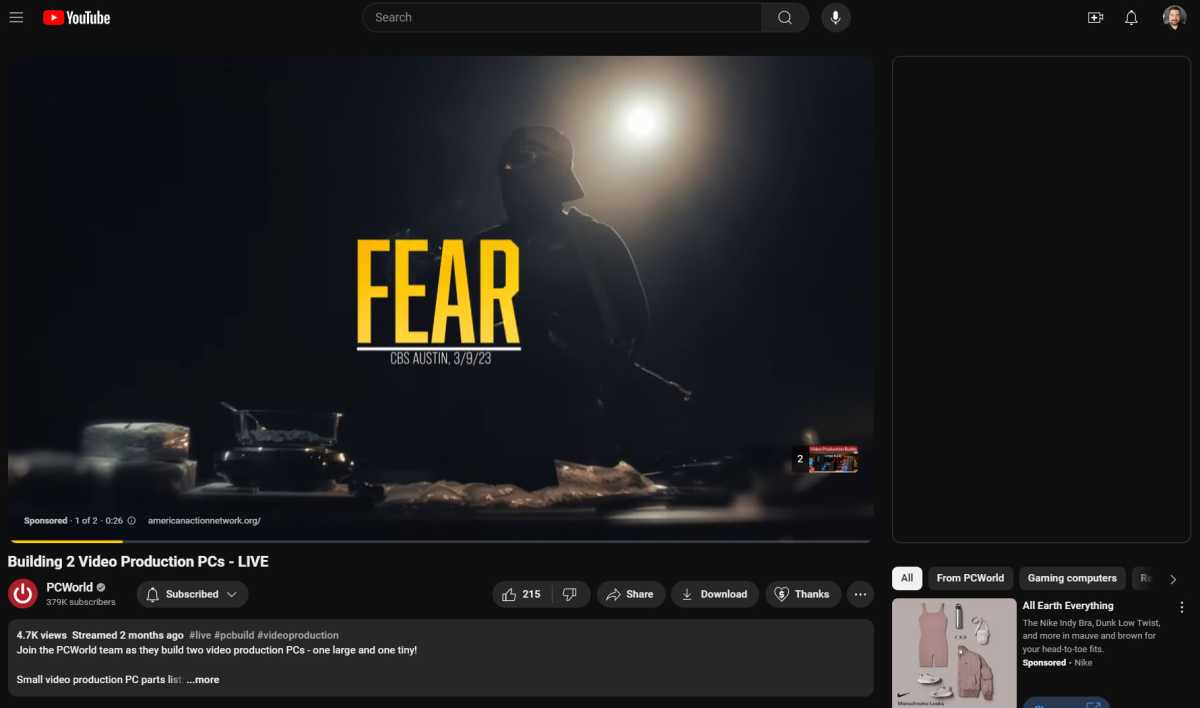
YouTube has confirmed that it’s now rolling out Pause ads widely on the platform. Yes, that means not only do you have to live with multiple unskippable ads, but you’ll also start seeing ads on the free version of YouTube when you pause a video.

In a statement to The Verge, YouTube’s Communication Manager, Oluwa Falodun, said that the company has seen a strong response to Pause ads on YouTube from both advertisers and viewers. “We’ve since widely rolled out Pause ads to all advertisers,” the executive confirmed.

YouTube has been testing Pause ads for some time now. In April, Google’s Philipp Schindler shared positive results from the experiment, calling Pause ads a new “non-interruptive” format that appears when users pause what they are watching. It remains unclear whether the widespread rollout of Pause ads will result in fewer regular ad breaks during video playback — though, frankly, that seems unlikely.

YouTube users are already seeing more frequent Pause ads on smart TVs. Some have even reported seeing them on YouTube’s mobile app. With the company’s confirmation coming in, it’s just a matter of time before Pause ads become a new normal for YouTube users.

Of course, you can always subscribe to YouTube Premium if you want to get rid of ads on the platform. That’s the whole intent here — to get users to pay for content one way or the other.

By Adamya Sharma

Sourced from Android Authority

By

In today’s digital age, privacy is a top concern for many smartphone users.

With the increasing number of apps available on our devices, it’s crucial to understand how they interact with our data and ensure that our personal information remains secure. One of the most pressing issues is the suspicion that some apps might be actively listening to our conversations without our knowledge or consent. The video below from iDeviceHelp gives us details on how to check if any apps or anything on your iPhone are listening to you.


Privacy concerns have been raised by numerous iPhone users who have reported seeing targeted ads related to topics they had recently discussed. This phenomenon has led many to believe that certain apps are using active listening software to gather data from their conversations. While this may seem like a far-fetched idea, it’s not entirely unfounded. Some marketing firms have been known to employ such tactics to collect information for advertising purposes.

Recent reports have shed light on the use of active listening software by certain apps. This software allows the apps to capture audio data from the user’s environment, which is then analysed and used to tailor advertisements. As a result, users may experience a sense of their phone “eavesdropping” on their conversations, as the ads they see seem to uncannily reflect the topics they’ve discussed.

To address these privacy concerns, Apple has introduced the App Privacy Report. This feature, available on iPhones, provides users with a detailed overview of how their data is being accessed and used by the apps installed on their devices. By regularly checking the App Privacy Report, users can stay informed about which apps have accessed their data and sensors, such as location, microphone, camera, and more.

How to Stop Your iPhone From Listening to Your Conversations

  • Location data can reveal your whereabouts and daily routines
  • Microphone access can potentially allow apps to listen to your conversations
  • Camera access can enable apps to capture images or videos without your knowledge

To protect your privacy, it’s essential to regularly review and adjust app permissions. This can be done by navigating to your iPhone’s settings, selecting the app in question, and modifying its permissions for various data and sensor access. By taking control of these permissions, you can limit the amount of information that apps can gather about you.

For example, if you use Instagram on your iPhone, you can easily modify its permissions by following these steps:

  1. Go to your iPhone’s Settings
  2. Scroll down and select Instagram
  3. Tap on Permissions
  4. Here, you can control what data Instagram can access, such as your microphone and camera

By being proactive and adjusting these permissions, you can ensure that Instagram, or any other app, does not have unnecessary access to your data or the ability to listen to your conversations.

Maintaining your privacy on your iPhone requires ongoing vigilance and a proactive approach to managing app permissions. Always be cautious when granting apps access to your data, and make sure to provide explicit permission only when necessary. Regularly review your App Privacy Report to stay informed about how your data is being used, and don’t hesitate to adjust permissions as needed.

By following these steps and staying informed about your iPhone’s privacy settings, you can significantly reduce the risk of apps listening to your conversations without your knowledge or consent. Remember, your privacy is in your hands, and taking control of your app permissions is a crucial step in protecting your personal information in the digital age.

Source & Feature Image Credit: iDeviceHelp

By

Sourced from Geeky Gadgets

Actively Creepy

In a pitch deck to prospective customers, one of Facebook’s alleged marketing partners explained how it listens to users’ smartphone microphones and advertises to them accordingly.

As 404 Media reports based on documents leaked to its reporters, the TV and radio news giant Cox Media Group (CMG) claims that its so-called “Active Listening” software uses artificial intelligence to “capture real-time intent data by listening to our conversations.”

“Advertisers can pair this voice-data with behavioural data to target in-market consumers,” the deck continues.

In the same slideshow, CMG counted Facebook, Google, and Amazon as clients, though it didn’t specify whether they were involved in the “Active Listening” service. After 404 reached out to Google about its partnership, the tech giant removed the media group from the site for its “Partners Program.”

A Meta spokesperson also pushed back in a statement, saying that CMG was a general partner, not a partner in the program advertised in the deck.

“Meta does not use your phone’s microphone for ads and we’ve been public about this for years,” the statement read. “We are reaching out to CMG to get them to clarify that their program is not based on Meta data.”

And an Amazon spokesperson told 404 that its Ads arm “has never worked with CMG on this program and has no plans to do so.”

Ill-Fated Admissions

This latest leak marks the third time in a year that 404 has reported on CMG’s shady voice targeting service. Last December, the independent news site not only put a marketing company on blast for boasting about such creepy tech on its podcast, and also revealed the existence of CMG’s Active Listening feature.

Together with this latest update to the CMG saga, these stories bolster longstanding suspicions about advertisers using our phones to listen to us.

“We know what you’re thinking. Is this even legal?” a since-deleted Cox blog post from November 2023 noted. “It is legal for phones and devices to listen to you. When a new app download or update prompts consumers with a multi-page term of use agreement somewhere in the fine print, Active Listening is often included.”

Beyond taking a big game, CMG did not cop to how it acquires its alleged voice data, instead saying only that it can identify users who are “ready-to-buy” and create targeted ad lists based on their interests. For this service, the media group that specializes in hyperlocal news charges $100 per day to target folks in a 10-mile radius, and $200 per day to target those in a 20-mile radius.

CMG didn’t respond to questions about the story.

Given that the company boasted about it on its public — and still archived — website before anyone began paying attention, however, it seems like it would be pretty hard at this juncture to deny that it was charging for its eavesdropping services.

Updated with a denial from Meta that it’s involved in the Active Listening program.

By Noor Al-Sibai

Sourced from THE_ BYTE

By Steve Hall

In the ever-evolving world of social media marketing, Instagram Reels has emerged as a powerful tool for brands looking to engage their audience and expand their reach. With its short, engaging video format, Reels offers a unique opportunity to showcase your brand’s personality, products, and values. This article explores effective strategies to leverage Instagram Reels to grow your brand, even if you’re just starting out or want to enhance your existing presence.

Understanding Instagram Reels

Instagram Reels allows users to create 15 to 90-second video clips set to music or other audio. These videos can be edited with various creative tools, including filters, effects, and text overlays. The Reels feature is prominently displayed on the Instagram platform, making it easy for users to discover new content. This visibility is critical for brands looking to capture the attention of potential customers.

1. Define Your Brand’s Identity

Before diving into creating Reels, it’s essential to define your brand identity. What message do you want to convey? Who is your target audience? Understanding these elements will help you create content that resonates with viewers.

Your brand’s identity should reflect in the style and tone of your Reels. Whether you opt for a fun and playful approach or a more professional and informative tone, consistency is key. This will help your audience recognize your content and build trust over time.

2. Plan Your Content Strategy

A well-thought-out content strategy is vital for success on Instagram Reels. Consider the following types of content that can help showcase your brand:

  • Behind-the-Scenes: Give your audience a glimpse into your daily operations, team, or production processes. This transparency can humanize your brand and foster a deeper connection with your audience.
  • Tutorials and How-Tos: Share quick tips or tutorials related to your products or services. This not only positions you as an expert in your field but also provides value to your audience.
  • User-Generated Content: Encourage your followers to create and share their own Reels featuring your products. This not only generates authentic content but also engages your community.
  • Challenges and Trends: Participate in trending challenges or use popular audio clips to reach a wider audience. This can help your brand stay relevant and increase your visibility on the platform.

3. Use an AI YouTube Shorts Generator

If you’re not comfortable showing your face on camera, consider using an AI YouTube shorts generator. This tool allows you to create engaging video content without needing to appear on screen. You can still convey your brand message effectively using animations, stock footage, and voiceovers. An AI YouTube shorts generator can be particularly useful for brands in niche markets or for those who prefer to maintain a level of anonymity.

4. Optimize for Discoverability

To maximize the reach of your Reels, optimize them for discoverability. Use relevant hashtags and keywords that align with your content and target audience. Research trending hashtags in your niche and incorporate them strategically.
Additionally, consider the first few seconds of your Reels crucial for capturing attention. Start with a hook that encourages viewers to keep watching. This could be a question, an intriguing statement, or a visual element that piques curiosity.

5. Engage with Your Audience

Engagement is a two-way street. Respond to comments on your Reels, ask questions, and encourage viewers to share their thoughts. This interaction helps build a community around your brand and fosters loyalty.

Consider hosting live Q&A sessions or asking for feedback on new products. Engaging with your audience not only helps improve your content but also makes your followers feel valued.

6. Analyse and Adjust Your Strategy

Instagram provides insights into your Reels’ performance, allowing you to track engagement, views, and reach. Regularly analyse this data to understand what works and what doesn’t. Look for patterns in the type of content that resonates most with your audience.

Adjust your strategy accordingly, experimenting with different formats, lengths, and styles. This iterative process will help you refine your approach and improve your overall effectiveness on the platform.

7. Collaborate with Influencers

Collaborating with influencers can significantly boost your brand’s visibility on Instagram Reels. Identify influencers in your niche who align with your brand values and have an engaged following. Partnering with them can help you reach a broader audience and gain credibility.

Create collaborative Reels that showcase your products or services, allowing influencers to share their unique perspective. This not only promotes your brand but also provides valuable content for their audience.

8. Promote Your Reels Across Other Channels

Don’t limit your Reels’ reach to just Instagram. Share them across your other social media platforms, embed them in your website, or include them in your email marketing campaigns. Cross-promoting your content can help you reach a wider audience and drive more traffic to your Instagram profile.

Conclusion

Instagram Reels offers an exciting opportunity for brands to connect with their audience in creative and engaging ways. By defining your brand identity, planning a robust content strategy, utilizing tools like an AI YouTube shorts generator, and actively engaging with your audience, you can effectively grow your brand’s presence on this dynamic platform.

As you embark on your journey with Instagram Reels, remember that consistency and authenticity are essential. Stay true to your brand, listen to your audience, and continuously refine your approach based on feedback and insights. With the right strategies, your brand can harness the full potential of Instagram Reels and thrive in the competitive social media landscape.

By Steve Hall

Sourced from AdRANTS

By Kristen Dolan

Over the course of this year, I’ve helped brands navigate seismic industry changes, from Oracle’s departure from the advertising business to Google’s cookie phase-out reversal. At the centre of discussions (besides the obvious, AI) is an increasing focus on the role influencers play across the media mix and customer journey. After engaging in meaningful discussions with the industry’s top marketing leaders, I’m sharing a top 10 list of my favourite questions, along with my perspectives, which have helped to shape media strategies and innovation roadmaps.

Let’s dive in!

10. How is AI transforming influencer marketing?

While AI has been around for quite some time, generative AI (GenAI) has been a recent topic of interest over the last two years. GenAI is a type of AI that generates copy, graphics, audio and videos. The integration of AI technologies, including GenAI, in the influencer marketing landscape is catalysing transformative advancements in creator vetting, communication efficiency and content creation. In other words, it’s a BFD.

By harnessing AI-driven insights, agencies and brands can optimize workflows, strengthen client relationships and navigate regulatory complexities. These are mere examples, but the opportunities are limitless.

9. Will virtual influencers replace traditional influencers?

If the question pertains to the human impact on influence, I find it hard for AI to replace human connection. People follow influencers because they genuinely have built these parasocial relationships, trust what that influencer is saying and trust their recommendations as they would seek their own friend out to do so. The human connection is what drives that authenticity.

While I don’t see that wavering in place of AI, I do see a more collaborative role in that creators can tap into AI tools to help manage their businesses. Operationally, they can save so much time and resources by tapping into AI tools to help automate things like resourcing, invoicing, planning, data/analytics and so much more. From a content perspective, AI can certainly expedite and advance the creation process—I see an early-stage use case here of expanding creativity, not used to directly influence an action/recommendation.

8. How will creator content evolve over the next few years?

Outside of AI collaboration, creator content is becoming more pervasive. I hope to see brands more proactively adapt to a creator and audience-first mindset when developing omnichannel strategies.

7. What are the most innovative ways influencers are using new social media features?

Anecdotally, I really want creator-led programming to have its moment. Humour me…if we are seeing more consistent tune-ins across lives on social, inevitably, that means people are developing the habit of tuning into their favourite creators at a specific time.

In parallel, we’re seeing Netflix test out live content.

If both worlds are successful, creator live content becomes extremely valuable. I can see a world where streaming platforms are picking up creator programming (as they would broadcast programming) and offering creator content as a viewing option.

6. What influencer strategy is most slept on?

From a brand perspective, deeper creator collaborations. Creators, as their own small businesses, are an untapped resource for brands to realize their full ROI potential.

5. Which past social predictions have made an impact so far this year?

Less of a prediction and more of a framework for discerning marketing hype from hyperbole. Essentially, the parameters that need to be met in order for an emerging social platform to truly be noteworthy are: consistent adoption, a positive and value-adding user experience, serving a need and evolving with its user base as those needs change.

Threads userbase hit 200 million monthly active users according to their Q2 earnings. Up 100 million from their initial launch week in July of last year—a platform to monitor and distinguish from hyperbole if the framework elements continue to be met.

4. How can brands leverage creators to streamline the checkout process?

Approaching strategies with a customer-first mindset, understanding the customer journey and the role influencers can play in driving sales on your website or in your store. An important concept is recognizing creators as a standalone media channel. Creator content will become more pervasive as the ROI continues to be justified.

3. What does the future of creator commerce look like?

I don’t look at things as if there’s a definitive endpoint, but I can speak to the general cyclical pattern of ubiquity to consolidation and vice versa. Consumers have so many options, more than ever. Their attention grows more and more fragmented, and the ability to meet them where they are, with relevant messaging and the ability to immediately shop, is business critical but also cumbersome. The next phase in the future will inevitably shift to a version of consolidation, which we’re starting to see a glimpse of via Google’s Anti-Trust ruling and TikTok’s partnering with Amazon for integrated shopping.

2. What examples across the creator economy stand out as ground breaking applications of AI, and how can businesses tap into that potential?

What I consider ground breaking isn’t necessarily the splashy consumer-facing side of marketing but the technical infrastructure that fuels consumer insights and strategy. The stronger the first-party data for a brand, the more opportunity there is to eliminate wasted spend and influence more immediate ROI. I look forward to seeing applications of AI that enrich the data process for consumer profiles and strengthen propensity modelling for stronger go-to-market strategies.

1. How should companies be navigating this new wave of digital transformation through AI technology?

Be agile or stay fragile. I encourage everyone to embrace innovation and technology while finding ways to up level yourself, your business and your people.

Today is the worst state we’ll experience technology. It only improves from today onward. Those embracing it today are setting themselves up for success in the future.

Feature Image Credit: Getty

By Kristen Dolan

Sourced from Forbes

By Adrian Falk

You can grow your business without breaking the bank — here’s how.

After running my own advertising and PR company for the past 22 years, I have learned that you always have to think ahead and be resourceful. Whatever worked yesterday doesn’t mean it will work today or tomorrow, especially now in our post-pandemic world.

When the cost of living crisis hit, I could see many companies in trouble. They were struggling with finding leads, filling their calendars with appointments and setting up automation in their business to save time and money. This is something that I have experience with — over two decades of experience, so I created an offer to help companies of all sizes remain afloat. But the challenge I faced was, how do I get this offer out there? So, I turned to Meta advertising — advertising on Facebook and Instagram.

With many years of digital marketing and advertising experience under my belt, here are my hacks for scaling the digital marketing side of my business for just $10 a day.

1. Have an irresistible offer

You need to think about what will make people stop and want to speak with you. Put yourself in your potential customers’ shoes. If you don’t think that you would want to take up your amazing offer, then would they? Focusing on the benefits of your product or services that your customers will receive will help you craft your luring proposal.

For example, if you’re a real estate agent selling properties, don’t sell a specific home on social media with a photo of the listing, but rather target investors — offering them the opportunity to purchase a great asset without even featuring an image of the property. It’s the return on investment that you’re ultimately promoting rather than the home for sale.

Guarantees can be captivating, too, as long as you can deliver on your promise and it doesn’t sound too far-fetched. The ads that guarantee “we will ensure we provide you with 15 full paying clients within a month” are too unrealistic and actually deter potential customers. Instead, for example, you could have a 30-day satisfaction guarantee if you have a coaching course or “see results in 30 days” if you’re a personal trainer.

2. Create a scroll-stopping design

The best designs have the foundation of a brilliant, funny and clever headline that grabs attention. I have found that slick, professionally shot and edited videos don’t work at all. People are on social media to catch up on their friends and family’s updates — not to see a fancy video ad. Attention spans are diminishing by the minute. Don’t think for a second that your target audience will watch your 90-second video encouraging them to go to a landing page. Instead, base your design with a simple, easy-to-read font combined with a plain background that pops. When it comes to your static image design, less is more. Your headline should be the only text that makes up the graphic. This will get viewers to stop scrolling right away.

Don’t have a designer? Don’t worry. Programs like Canva make it very easy to create different designs for social media channels and even come with inbuilt size templates so you know that your artwork will be compliant. The Facebook advertising manager platform also has an AI feature that will automatically redesign your artwork for various placements, so you no longer have to design multiple versions.

3. Set your campaign objectives

Facebook and Instagram have recently overhauled their lead form ads, allowing advertisers to get leads inexpensively by using their built-in forms. After all, Meta wants its audience to stay on its channels for as long as possible, so companies that opt to use its in-built forms and keep their audience sticky are being rewarded.

Think about your objectives and structure your campaign accordingly using the platform’s options. If you’re after more sales and leads, lead forms are ideal. Another great way of increasing engagement with potential customers is with an engagement campaign that encourages people to message you directly. This is often a preferred way of communicating with people under 45 years of age.

4. Optimize the ROI on your advertising spend

When it comes to your designs, it’s important to see what works and what doesn’t without changing too many variables at once. I always suggest spending no more than $10 a day initially with your ads. By doing so, your ad creative is actually doing all the heavy lifting rather than your budget. If you have a lacklustre ad or offer, testing at $100 a day could skew your results because you’re spending more than your competitors. Choosing to test at just $10 a day, you will see within a day or two the return on investment on the creative you are testing. If it’s meeting your objectives, keep going at $10 a day. If not, turn off that ad set and launch a second creative and start again.

5. Slowly increase your Meta advertising budget for consistent campaign performance

Once you’re seeing results with your creative, it’s time to scale. This doesn’t always mean boosting your budget immediately. It often takes the pixel a little while to go through a learning period. Many of my clients only spend $10 a day, like myself on ads, and get several leads coming in each day. However, if you want to increase the learning phase period, then start off slowly by increasing your budget by no more than 25% every few days.

When it comes to marketing your business on a budget, it definitely is possible and thanks to platforms like Meta, you can now quickly see what’s working and what’s not. Never has there been a time in business where you can turn on or off an advertising campaign so quickly and measure results down to every dollar spent.

By Adrian Falk

Entrepreneur Leadership Network® Contributor

Founder & CEO of international advertising and PR agency Believe Advertising, Adrian Falk generates digital marketing strategies and publicity for entrepreneurs, IT, fashion, luxury travel and beauty corporations across the globe, increasing their leads and sales.

Sourced from Entrepreneur

By

YouTube is adding a new format for ads on your TV which shows up when you pause the video, and that’s starting to roll out to users.

Back in May 2024, Google announced that YouTube would be getting some new ad formats on TVs, including a format that would place ads on screen whenever the video was left paused. There was no timeline given for when this format would start rolling out, but it appears to be showing up for some users now.

On Reddit and on Twitter/X (via TechIssuesToday), some users have noticed that ads now appear when a YouTube video is paused on their TV.

The UI puts the video in a smaller block with the ad off to the right side of the screen. A “dismiss” button appears below along with an information button. Dunkin’ Donuts appears to be the only advertiser that’s shown up so far, as this is presumably a limited rollout for the time being.

YouTube is also working on longer unskippable ads and advertiser-branded QR codes.

By

Follow Ben: Twitter/XThreads, and Instagram

Sourced from 9to5Google

By Trinity Taylor

Trinity Taylor, a Gen Z account manager at Lucky Generals, warns the industry not to underestimate the ingenuity of the supposed juniors; you’re on their turf now.

TikTok, iced coffee, and clouds of vape smoke are probably what spring to mind when you think of Gen Z creatives, but there is way more to us than you might think.

As Gen Z-ers in the UK advertising world, we don’t just adapt to digital trends—we drive them.

We’re the first generation to grow up in social media, watching it evolve from picture-perfect Instagram posts to a space that now values authenticity and openness through TikTok. This isn’t just our space; we helped create this turf. In an industry that’s still catching up to the idea that authenticity often beats perfection, we have a distinct competitive advantage.

Here’s what I’ve observed while navigating the ad world as a Gen Z-er, as well as some of my thoughts on how we can use our generational strengths to keep pushing boundaries.

1. Embrace newness

It’s a challenging market at the moment and with growing pressures, it’s understandable that there is desire to stick to the tried and tested. But Gen Z grew up in a constantly shifting digital and cultural landscape, where everything from social media to fashion trends evolve rapidly. It’s all we know. What’s ‘in’ today may well be outdated tomorrow, change feels less intimidating and meticulousness less essential.

Crucially, this has shown us that playing it safe or striving for perfection isn’t just outdated—it’s downright boring. As audiences increasingly seek authenticity over flawlessness, brands like Ryanair and Duolingo are leaning into self-deprecating humor and embracing a more ‘real’ approach. Ten years ago, those kinds of campaigns might have been seen as risky or even disastrous. Today, they’re examples of how thinking outside the box (or even tearing the box apart) can resonate with audiences. My advice to Gen Zs here; use your bravery to push both brands and your colleagues out of their comfort zones. Encourage them to try new things, jump on trends, and have more fun with brands. Now, it’s about connection as much as perfection.

2. Fluidity is your friend

In advertising, roles can often feel like rigid boxes—creatives on one side, account managers on the other. But Gen Z, we’re often criticized (or praised, depending on who you ask) for being anti-label and “too woke.” While these labels might sound like buzzwords, they actually highlight an important point: we’re used to fluidity, and that’s a strength.

Just because you’re an account person doesn’t mean your thoughts on the creative process don’t matter. And if you’re on the creative team, don’t shy away from voicing your opinion on client communications.

One of the best things we can do as juniors in the industry and something that is actively required of us at Luckies is to ask questions and seek input from everyone, regardless of their job title. It’s in these cross-role conversations that the magic often happens. So, don’t let traditional job descriptions limit you. Your perspective is valuable, and sometimes, the best ideas come from the most unexpected places.

3. Don’t get pigeonholed

Let’s face it: the shift in media consumption habits has been dramatic. People are watching less TV and spending more time scrolling through their feeds. As the generation that grew up with, and in many ways, shaped social media, we’re often viewed as the go-to experts for all things social. It’s flattering, sure, but it can also be limiting.

My advice?

Don’t let yourself be pigeonholed as just the ‘social media expert.’ While it’s true that we bring invaluable insights into the world of social, we also have the potential to elevate the entire creative process. Use your knowledge of social trends, technology, and emerging tools such as AI to bring fresh ideas to the table across all aspects of a campaign. We’re more than just the people who know how to make a TikTok go viral—we’re the ones who can help shape the future of advertising as a whole.

Own your Gen Z perspective

Being a Gen Z-er in the advertising industry is a bit like being the new kid in school. There’s a lot to learn, a lot to prove, but also a lot of opportunity to bring something fresh and exciting to the table. We’ve grown up in a world where change is the only constant, and that makes us uniquely equipped to thrive in an industry that’s all about evolution and creativity.

So, embrace the new, break down those silos, and don’t let yourself be pigeonholed. Our generation has the potential to bring about real, meaningful change in the way brands communicate and connect with their audiences. And if we can do that while having a little fun along the way, even better.

By Trinity Taylor

Sourced from The Drum