Creating polished, eye-catching presentations doesn’t always have to be a time-consuming task anymore. It shouldn’t feel like an all-night design marathon. However, many professionals struggle with spending hours creating an effective presentation. An effective presentation is not just about the slides but also about the content within it. So, what if you could generate a professional business slide deck in less time than it takes to grab a coffee? There are these AI-powered presentation tools that you can use to create stunning, professional-quality slides in seconds—no design expertise required.
You can now prepare a business sales pitch or a school project. These AI tools handle everything from content generation to design. You’ll be left with more time to focus on what matters: delivering your message confidently.
Why Choose AI Tools to Create Presentations?
Speed: These AI-powered tools can cut presentation creation time from hours to minutes.
Customization: Each platform offers ways to personalize slides, from branding to interactive elements.
Analytics: Some platforms even provide engagement tracking, offering insights to refine your content.
Collaboration: Many tools support real-time teamwork, making it easy to work with others remotely.
Ready to move on from the boring work and get results in minutes? Here are 9 websites that allow you to create presentations in just 60 seconds. They will give you more time to focus on the message—not the design.
Decktopus is a powerful AI presentation tool. It can handle everything from research to copywriting. Decktopus allows businesses to focus on delivering your message. It has a drag-and-drop interface that makes it incredibly easy to customize templates.
AI-powered copywriting, research, and image generation.
Drag-and-drop editor for easy customization.
Includes a presentation coach to improve delivery.
SlidesAI can turn any text into a fully formatted, stunning, professional-quality Google Slides presentation. It’s the perfect AI presentation tool for those who need slides but don’t want to spend hours on them.
PopAi allows you to create standout presentations by pulling data from different online and user-generated content. It can be your personal or business workspace for creating more than just slides.
AI-assisted creation of PowerPoints, flowcharts, and graphics.
SlideSpeak lets you create stunning, professional-quality business presentations by simply uploading a Word or PDF document. It uses AI to summarize and convert your documents into ready-to-go slides.
Upload Word, PDF, or PowerPoint files for AI conversion.
It also offers ChatGPT-powered summaries.
The AI tool also supports PPTX, Word, and PDF uploads.
Gamma helps you quickly create not only presentations but also websites and documents. It is powered by advanced AI that allows you to visualize complex ideas effortlessly.
It allows you to generate presentations, websites, and documents.
Built-in interactive features like charts and videos.
This platform lives up to its name by turning ordinary slides into visual chef-d’oeuvre. Beautiful AI does all the heavy lifting, allowing you to focus on your ideas.
Smart templates for fast slide creation.
Automatically applies design principles.
There are tons of pre-built slides to choose from.
Tome is perfect for teams needing fast, polished, stunning, professional-quality presentations. With Tome, AI personalizes sales decks based on your company’s data, making it easier to focus on closing deals.
AI-powered presentation personalization.
It integrates with tools like Salesforce for data-backed presentations.
Sendsteps focuses on making presentations more interactive and engaging. Its AI-powered design handles the visuals, content, and even speaker notes for you.
AI-generated content, design, and interactive features.
Multiple presentation creation methods (start from scratch, upload docs, etc.).
Presentations.AI combines the power of ChatGPT with a design assistant to generate stunning, professional slides in minutes. This AI tool can also cover infographics or timelines.
AI-powered design suggestions for unique styles.
Seamless PowerPoint export.
It can support multiple languages and real-time collaboration.
Traditionally, creating business presentations has always been a slow, labour-intensive task, but it is not anymore. These AI-powered platforms do the heavy lifting, from content generation to design. You can use them for your business, sales, and marketing to impress clients or education.
There’s an AI-powered presentation tool for everyone on this list that can help you save time while still delivering high-quality results. 60 seconds! It only takes 60 seconds or less to turn a simple idea into a stunning presentation. It’s time to wow your audience with your presentations, which didn’t take days to prepare but only took seconds.
ChatGPT has been around for over six months, and while the initial excitement of having a “robot assistant” may have faded, it continues to surprise with new use cases.
In this post, we’ll explore some effective ways to leverage ChatGPT for SEO, digital marketing, and management tasks, making your workflows more efficient and impactful.
1. Keyword Research with ChatGPT
While ChatGPT isn’t the best standalone keyword research tool, it can still play a crucial role in the process.
Standard keyword tools often give everyone the same results, increasing competition for those keywords.
However, ChatGPT can help you think outside the box by suggesting unconventional seed keywords.
For example, if you’re researching keywords for a golf website, you can ask ChatGPT to generate a list of related terms that are less obvious, helping you uncover untapped opportunities.
You can then input these keywords into traditional tools like Ahrefs or Keywords Explorer to find easy-to-rank topics.
This method has helped me find keywords with over 35,000 monthly searches that competitors haven’t yet capitalized on.
Combining ChatGPT’s creative output with a robust keyword tool can give you an edge in finding less competitive but highly valuable topics.
And if you’re looking to put your entire content strategy on autopilot, Expert Writer AI is the perfect tool to streamline your keyword research, blog writing, and affiliate marketing efforts all in one go.
One of the best uses of ChatGPT is for short-form copywriting, like creating email subject lines, meta descriptions, or ad copy.
While the tool is decent out of the box, I’ve found that refining the prompts produces even better results.
Start by setting the tone or voice you want the copy to have.
For instance, you might tell ChatGPT to write in the voice of a specific persona or with a particular tone, like humorous or formal.
You can also ask ChatGPT to generate multiple variations, giving you more options to choose from.
Here’s a personal example: When writing ad copy for a new product launch, I asked ChatGPT to generate five different versions of a Facebook ad.
This gave me a variety of angles to work with and sparked new ideas that I hadn’t thought of initially.
To take it a step further, you can use Expert Writer AI to automate your content strategy and blogging process, ensuring high-quality, optimized content without the manual effort.
For marketers who use advanced tools like Ahrefs or Web Explorer, ChatGPT can help create complex search queries that save time and find valuable opportunities.
By teaching ChatGPT specific search operators and combining them creatively, you can discover potential backlink opportunities or unlinked brand mentions.
For example, you can instruct ChatGPT to construct a query that finds mentions of your brand across the web that aren’t currently linking to your site.
This is a great way to identify opportunities to reach out and build more backlinks, ultimately improving your site’s authority and search engine ranking.
4. The Free Consultation Trick
One of my favorite ways to use ChatGPT is what I call the “free consultation.”
It works just like those free consultations businesses offer when you’re about to hire them for a service.
You can ask ChatGPT for advice on a wide range of topics, from podcasting to SEO strategies, and get actionable responses instantly.
For example, when I wanted to start a podcast but didn’t know how to differentiate it from others, I asked ChatGPT for creative suggestions.
It helped me come up with unique ideas, such as interviewing small business owners instead of just SEO experts.
The best part? This advice comes without the high price tag that often comes with professional consultations.
Even if you don’t follow every suggestion ChatGPT provides, it’s a great way to get your creative gears turning.
You’ll often leave these “consultations” with new insights and strategies you hadn’t considered.
5. Creating Long-Form Content with ChatGPT
Initially, ChatGPT wasn’t great at creating long-form content because the results often felt generic and boilerplate.
However, with GPT-4 and a well-defined workflow, the tool can now produce a decent first draft of long-form content.
There are two key factors that will make ChatGPT effective at writing longer content.
First, you need to choose the right topic — one that doesn’t require deep expertise.
For example, topics like “how to take a screenshot on a Mac” are ideal because they are straightforward and don’t require specialized knowledge.
Second, providing a detailed outline ensures that the structure and flow of the content meet your standards.
By giving ChatGPT an outline with bullet points, subheadings, and key details, you’re able to steer the content in the right direction.
The AI then becomes more of a tool that helps you flesh out ideas, rather than doing all the work for you.
Once ChatGPT provides a first draft, you can edit, add multimedia, and refine the tone to ensure the content meets your audience’s expectations.
6. Automating Email Replies with ChatGPT
One of the most time-saving uses of ChatGPT is for responding to detailed emails.
Instead of spending 20 minutes crafting a thoughtful response, you can provide ChatGPT with a rough outline and let it do the heavy lifting.
For example, when replying to a candidate who asked multiple questions about a job role, I gave ChatGPT a brief outline of what I wanted to say.
The AI created a professional yet casual response that sounded natural and saved me a ton of time. I even had ChatGPT adjust the tone to match my style, making the email sound more authentic and less corporate.
Final Thoughts
As AI continues to evolve, we’re discovering new ways to use tools like ChatGPT in our daily workflows.
Whether it’s conducting keyword research, writing ad copy, or responding to emails, ChatGPT offers solutions that make tasks faster and more efficient.
And if you’re looking to automate your content creation and marketing strategy, Expert Writer AI is the perfect solution for setting everything on autopilot.
With the right combination of AI tools and a bit of creativity, you can take your digital marketing game to the next level.
Stay tuned for more tips and tutorials, and start leveraging AI to streamline your workflow!
Note: This article contains an affiliate link to an external site. If you click on the link and make a purchase, I might get a commission at no additional cost to you.
A content strategist and SEO specialist who can get your website ranked on the first page of Google in a matter of weeks! Visit dastmyerseo.com for more info.
Companies are increasingly highlighting their support for diversity, but that can backfire if consumers sense tokenism, a recent analysis from my team found.
I’m an assistant professor of marketing who specializes in digital platforms and consumer behaviour. My recent research focuses on DEI initiatives by brands on social media. I’m specifically interested in how brands use influencers and minority representation.
An influencer is someone who has built a large following on social media and can affect the opinions or behaviours of their audience. Influencer marketing is when brands partner with these people to promote their products or services to the influencers’ online followers.
For an example of influencer marketing, consider this post from the influencer Thamarr Guerrier promoting Old Navy:
Influencer marketing has become one of the main channels for brands and consumers to interact, and minority representation among influencers is one way a company can display its commitment to DEI.
To understand how consumers have been responding to this trend, my colleagues Amy Pei and Keran Zhao and I collected data from the platform X, formerly known as Twitter. Our unique dataset included sponsored content from about 150 brands between 2018 and 2022, as well as details about influencers and reactions from consumers.
We found that brands with either very low or very high levels of minority representation among influencers experienced higher consumer engagement. Meanwhile, brands with moderate levels of minority representation saw a dip in engagement. These effects were particularly pronounced for large companies and those that demonstrated a prior vocal commitment to DEI initiatives.
In other words, we found a U-shaped relationship: Low levels are accepted, intermediate levels may backfire, and high levels are well received. We believe this may stem from consumer perceptions of tokenism at intermediate levels.
In contrast, we found that high minority representation convinces consumers of a brand’s genuine commitment and effort.
Why it matters
When brands showcase their support for diversity initiatives on social media, it doesn’t always win over consumers. In fact, DEI policies have been a source of controversy for many brands, including Chick-fil-A, Disney and Bud Light.
Since DEI initiatives from brands often provoke mixed reactions from consumers, it’s important to understand why. Our research offers a clue.
DEI is a sensitive issue, and consumers value genuine commitment. Our work suggests that brands – especially larger ones – should avoid taking moderate stances and instead adopt a clear position.
We also found that customers had stronger reactions to brands’ diversity efforts when those brands had previously expressed strong support for DEI. That suggests brands should be cautious about excessive public signalling if they don’t plan to back it up with action.
What still isn’t known
More research is needed to understand how consumers respond to diversity messaging from brands. For example, previous work has shown that consumer boycotts are often short-lived. But the Bud Light boycott, sparked by the use of a trans influencer to promote the brand, lasted for eight months.
Several things could explain the discrepancy, including political polarization among Bud Light’s consumer base and the fact that there are many light beers on the market.
Another key factor appears to have been the visibility of consumption: People often drink beer in social settings, which allowed boycotting consumers to publicly signal their stance, further strengthening the movement. These and other factors warrant more investigation.
More than half of young people want to be influencers — 57%, to be exact.
That’s according to a 2023 Morning Consult survey of 1,000 Gen Zers. And they’re not alone. Nearly half, 41% of adults overall would choose the career as well, according to a similar Morning Consult survey of 2,204 U.S. adults.
Their reasons vary. Some “are very excited about the idea of celebrity, fame and money,” says Victoria Bachan, president of talent at influencer agency Whalar. Some “are just genuinely looking for a place to connect and find community,” and there are those who simply love to create using the tools of social media, she says.
Whatever their reasons, the job may be harder than it seems. Here’s what it looks like day-to-day and the many challenges creators face along the way.
‘There’s a misperception that it’s easy’
Becoming a paid creator is basically akin to running “your own independent media company,” says Taylor Lorenz, host of tech and culture podcast Power User and author of “Extremely Online.”
“There’s a misperception that it’s easy,” she says, adding that, “most startups fail, and I think most media startups fail, too.”
There are 4.2 billion social media users around the world, according to linking tool company Linktree’s 2022 Creator Report. Out of those, 200 million are creators, or individuals who monetize their audiences. That means just 4.7% of social media users are making money from it.
Even if they are making money from it, it’s not necessarily enough to live on. About half, 48% of creators make $15,000 or less per year, according to a 2023 survey of more than 2,000 creators by influencer marketing agency NeoReach. Less than a third, 28.9% make more than $50,000 per year doing it.
‘It’s just constant, Monday through Sunday’
For those who are able to make a career out of it, the day-to-day can be gruelling.
Hannah Williams, 27, and her husband run the popular TikTok account Salary Transparent Street, where they ask people around the country what their salaries are. The channel has 1.4 million followers, and most of their income comes from brand partnerships with companies like Capital One, with a far smaller share coming directly from the platforms they post content on through creator funds.
Williams has been a full-time creator since quitting her previous job as a data analyst in 2022. In 2023, her business brought in more than $1 million altogether. She now pulls in $125,000 per year for her own salary.
Williams usually starts working around 8 a.m., including emails, video editing and planning content. Between noon and 3 p.m., she’s usually on calls with clients. She takes a break around 4 p.m. and gets back to her desk around 6 p.m., at which point she’s working “full on until midnight,” she says. She and her husband also travel a lot for the job, and they post at least once a day.
“It’s just constant, Monday through Sunday,” she says. “From the time you wake up to the time you go to bed, the internet’s on, so you’re on as well.”
This content is blocked because you are not allowing cookies.
To view this content, click on Cookie Preferences here or at the bottom of the page to allow all cookies.
Caroline Lasher, 22, has been a full-time creator since she graduated college in 2022. Her Instagram has 126,000 followers and her TikTok has just under 85,000. Lasher mainly creates beachy lifestyle content and makes much of her money through brand partnerships and affiliate links. Her income fluctuates, but she often brings in more than $10,000 per month.
Lasher wakes up around 8 a.m. and starts reading emails and contracts. She tries to post every day, so might do some editing in the morning as well. She’ll then go out shooting until the evening.
“I’m my own photographer, videographer and I edit everything myself,” she says, “So when I go out, I’ll usually have my tripod and I’ll look at public locations that I can take pictures at.” When she gets home in the evening, she’ll have dinner and decompress, then often edit until about 10 p.m. She works every day but takes breaks to grab a meal with a friend or after dinner.
Lasher’s schedule also depends on the companies she works with. There are weeks and months when they’re all trying to promote new seasonal products, and weeks when demand for partnerships is lower.
For many creators, clients can also be fickle and make demands like nonsensical timelines. “It’s almost like things that are in writing don’t matter,” says Bachan. “Initial timelines don’t matter. Contracts don’t matter. [Brands] want what they want, when they want, how they want it.”
Whatever the demands, Lasher, too, finds it’s nonstop.
Influencing is “so hard to walk away from,” she says, “since it’s on your phone and everyone’s on their phone all the time.”
‘We’ve literally been on our toes for nine years’
This type of never-ending schedule lends itself very easily to crashing.
“I have burned out,” says Lasher. “It usually comes in waves.” When it does, she’ll either give herself a few days off or simply work through it.
Creators say that the platforms they post on make it more challenging to take a break. Going for a few days without posting might mean that their content won’t be shown to as much of their audience when they return. Despite Lasher’s mental state at times, “I feel like not being active is going to hurt me,” she says.
There are other challenges as well. Platforms change or disappear altogether, leaving creators needing to reinvent themselves anew somewhere else. TikTok itself might be banned in January 2025.
This content is blocked because you are not allowing cookies.
To view this content, click on Cookie Preferences here or at the bottom of the page to allow all cookies.
Leslie Mosier, 32, has been running social media accounts for her dog, Doug the Pug, since 2013. After getting some sponsorship deals, she dove into creating full time in 2015. Their Facebook page has 5.7 million followers, their TikTok has 6.1 million followers and their YouTube page has 634,000 followers. Doug the Pug has made money through sponsorship deals, books deals and merchandising. Most recently, Mosier and her husband launched an organic dog product company called Nonipup.
“Nothing stays the same for longer than, like, six months,” says Mosier of the fluctuating popularity of platforms and the constant introduction of new ones. She adds that “we’ve literally been on our toes for nine years.”
‘You can imagine the racism that my partner and I experience’
Another unique component of the job, and ultimately one of the most challenging, is that it’s public facing.
“You basically have all the downsides of traditional celebrity fame and very few of the upsides,” says Lorenz. “So you get hate, harassment, stalkers. There’s not a single content creator I’ve ever talked to that hasn’t dealt with online abuse.”
Williams and her husband, for example, are an interracial couple, “so you can imagine the racism that my partner and I experience on a near daily basis,” she says. She’s been called various derogatory terms and says she’s gotten comments like “you guys will be divorced and she’ll be pregnant in a year.”
‘Do something you enjoy doing, even if no one’s watching’
Still, there’s plenty that creators enjoy about their jobs. Williams enjoys the freedom and flexibility it brings. Lasher loves photography and the creative aspects of it. Mosier loves putting a smile on people’s faces with her puppy.
Caspar Lee, 30, was a full-time YouTuber for about seven years, making comedic videos about his life and ultimately getting to interview movie stars like Will Ferrell and Kevin Hart. He still has more than 6.5 million followers on his channel, plus millions more on his other social media platforms.
But in 2019, he realized he just “didn’t love the process as much as I used to,” he says. So he quietly stepped away. He now works on various entrepreneurial ventures, including talent management company MVE Management and venture capital firm Creator Ventures.
Among his advice for finding success as a creator is to use the tools at your disposal, to diversify the platforms you post on and to find a niche for the content you make. Plus, he says, “it’s hard, so my advice would be do something you enjoy doing, even if no one’s watching.”
Feature Image Credit: Carlos Barquero | Moment | Getty Images
In the world of advertising, customer advocacy has become an essential strategy for boosting conversion rates. Rather than relying on paid ads and brand-centric messages, this approach uses the genuine voices of satisfied customers to promote products and services. In this article, we’ll explore how customer advocacy differs from traditional marketing, the impact of social proof, and how it can lead to higher conversion rates.
Difference Between Customer Advocacy and Traditional Marketing
Customer advocacy is fundamentally very different from traditional marketing. Traditional ads focus on pushing messages to a broad audience through various channels like TV, radio, print, and digital ads. It often emphasizes the features and benefits of products or services from the company’s perspective.
Customer advocacy, on the other hand, is all about empowering and encouraging customers to share their positive experiences with others. This approach relies on the authenticity and credibility of real customer voices rather than controlled messages from the brand.
The Role of Social Proof in Marketing
Social proof is a psychological phenomenon where people mimic the actions of others in an attempt to reflect correct behaviour in a given situation. In marketing, social proof serves as a powerful tool to influence potential customers’ decisions.
Types of Social Proof
There are several types of social proof that can be used in marketing:
Expert Social Proof: Recommendations from industry experts or influencers lend credibility and trustworthiness to your product.
Celebrity Social Proof: Endorsements from celebrities can increase visibility and desirability.
User Social Proof: Testimonials and reviews from actual users provide relatable and convincing evidence of your product’s value.
Wisdom of the Crowd: Popularity indicators, such as “best-sellers” or high follower counts, suggest that many people trust and use the product.
Wisdom of Friends: Recommendations from friends and family are often the most trusted form of social proof, as they come from people we know personally.
Psychology Behind Social Proof
The psychology behind social proof lies in our inherent need to conform to the actions and opinions of others. This is driven by several factors, including:
Uncertainty: When unsure, people look to others for guidance.
Similarity: People are influenced by those who are similar to them.
Expertise: Individuals trust the opinions of experts and authorities.
Understanding these psychological triggers can help businesses effectively use social proof in their marketing strategies.
How Customer Advocacy Drives Higher Conversion Rates
Customer advocacy uses social proof to drive higher conversion rates through several mechanisms:
Builds Trust and Credibility
Customer advocacy builds trust and credibility because it is based on authentic experiences shared by real users. When potential customers see positive testimonials and reviews, they are more likely to trust the brand and make a purchase. Trust is a crucial element in the decision-making process, especially in online environments where personal interaction is limited.
Creates Positive Word-of-Mouth
Positive word-of-mouth recommendations from satisfied customers can significantly increase brand awareness and attract new customers. Word-of-mouth is considered to be one of the most powerful forms of marketing as it comes from a trusted source. When customers share their positive experiences with their networks, it organically amplifies the brand’s reach and impact.
Enhances Brand Loyalty
Customer advocacy enhances brand loyalty by fostering a sense of community and belonging among customers. When customers feel valued and appreciated, they are more likely to remain loyal and continue supporting the brand. This loyalty translates into repeat business, higher customer lifetime value, and a strong customer base that advocates for the brand.
Provides Valuable Insights
Advocates can provide important insights into what they love about the brand, as well as areas for improvement. These insights can then be used to refine products, services, and marketing strategies to better meet customer needs. Engaging with advocates in this manner also makes them feel heard and valued, further strengthening their loyalty.
Increases Engagement
Customer advocacy increases engagement by encouraging customers to share their experiences and interact with the brand. This can lead to more user-generated content, social media activity, and overall brand visibility. High engagement levels are often associated with increased trust and loyalty, which can drive higher conversion rates.
Boosts SEO and Online Presence
User-generated content, such as reviews and testimonials, can improve SEO by providing fresh, relevant content for search engines to index. Additionally, positive mentions and backlinks from advocates can enhance a brand’s online presence and authority. This improved visibility can drive more organic traffic to the brand’s website, resulting in higher conversion rates.
How to Implement a Customer Advocacy Program
Successfully implementing a customer advocacy program involves several steps and best practices.
Steps to Create an Advocacy Program
Identify Advocates: Identify satisfied customers who are willing to share their positive experiences. Look for customers who have shown loyalty and enthusiasm for your brand.
Create a Platform: Provide a platform for advocates to share their testimonials, reviews, and recommendations. This could be a dedicated section on your website, a social media campaign, or a referral program.
Encourage Participation: Motivate customers to participate in the advocacy program through incentives, recognition, or exclusive offers. Make it easy for them to share their experiences.
Collect and Share Content: Collect user-generated content and share it across various marketing channels. Highlight authentic stories and experiences that potential customers can relate to.
Measure Impact: Use customer advocacy software like Mention Me’s Customer Advocacy Intelligence Platform to track the performance of the program and measure its impact on conversion rates and other key metrics. Then use this data to refine and improve the program over time.
Best Practices
Provide Exceptional Customer Service: Make sure that customers have a positive experience at every touchpoint. Excellent customer service is the foundation of effective customer advocacy.
Be Authentic: Encourage genuine testimonials and reviews, avoiding overly scripted content. Authenticity is key to building trust.
Engage with Advocates: Regularly interact with advocates, acknowledging their contributions and addressing any concerns they may have. This engagement will reinforce their commitment to your brand.
Leverage Multiple Channels: Share advocacy content across multiple channels, including social media, email, and the company website, to maximize its reach and impact.
Monitor and Adjust: Continuously monitor the program’s performance and make adjustments as needed to improve its effectiveness. Stay responsive to feedback and changing customer needs.
As we can see, customer advocacy is a powerful strategy that uses social proof to drive higher conversion rates. By understanding the difference between customer advocacy and traditional marketing, utilizing various types of social proof, and implementing effective advocacy programs, businesses can build trust, create positive word-of-mouth, enhance brand loyalty, and achieve better marketing outcomes. With the right approach, customer advocacy can become a foundation of your marketing strategy, delivering long-term benefits and sustained growth.
This story is paid for by an advertiser. Members of the editorial and news staff of the Santa Clarita Valley Signal were not involved in the creation of this content.
These changes to the YouTube app may benefit creators.
YouTube has taken the lead in the so-called “streaming wars,” outperforming giants like Netflix and Disney+ despite largely featuring user-generated content on its platform. Wanting to stay ahead, the app is planning to make some changes to how users interact with it on their televisions.
One of the most notable changes, according to The Hollywood Reporter, is the ability for creators to organize their content into episodes and seasons like a TV show. This could be beneficial for channels that post podcasts or already organize their videos episodically.
This is meant to make YouTube on your TV feel more like watching Netflix, for example, except you have access to the same creators, channels, and videos you like — in many cases without having to pay for a subscription. (You can pay for YouTube to get rid of ads, but it’s not essential.)
And that’s not the only change YouTube is making to its TV app in the very near future. Similar to the way Netflix will automatically play trailers for a show when you navigate to a certain page, YouTube will play “interactive previews” when a user goes to a channel’s page.
In an effort to further benefit creators, a few other features will be added specifically to help YouTube channels and associated businesses grow. It will become easier to subscribe to channels while watching a video on your TV, and accessing links in video descriptions on your TV will become more accessible thanks to QR codes.
So if you have been hoping that your YouTube experience would improve while using the app on your television, you’re in luck! And if you’re a content creator wondering if these updates will make a positive difference for you — stay tuned!
Let’s face it: getting your website noticed is incredibly important for its success. And in our experience, most websites get the bulk of their traffic from search engines.
More traffic means more customers, more sales, and more profit. So, you might be looking for a quality SEO tool to improve your search rankings and attract more visitors.
With so many SEO tools available, both free and paid, it’s natural to wonder whether paying for a premium plugin is worth the money.
In this article, we’ll share our firsthand experience using both free and premium WordPress SEO plugins. We’ll explore the extra features premium tools offer and the impact they can have on your website’s traffic and success.
Choosing the Right SEO Tool for Your WordPress Website
WordPress users have a lot of options when it comes to plugins that help optimize websites for search engines. But with so many tools that promise to boost your rankings, it’s hard to know where to start.
Here at WPBeginner, we get tons of questions from readers asking which SEO plugin is the best for making it to the top spots in search results.
In response, we created a detailed showcase of the best SEO plugins and tools. These tools can help you increase your website traffic by 20-30% within just a few months.
This list covers a wide range of use cases and includes leading plugins like All in One SEO (AIOSEO) and Yoast SEO, as well as standalone tools like Semrush and Ahrefs.
But here’s the catch. Many of these plugins offer both free and premium versions, leaving you with another decision to make.
While free versions provide a solid foundation for basic SEO, the premium upgrades promise to unlock advanced features designed to give your site an edge in search engine rankings.
So, are those premium features worth the investment? Do they really make a difference in your search rankings?
Let’s dive in and explore the unique capabilities of premium WordPress SEO tools and see how they can help your website make it into the top search results pages.
Tip: If you have the budget to spend money on SEO but prefer not to do the work yourself, then you can hire our affordable SEO experts at WPBeginner Pro Services to do it for you.
What Are the Benefits of Premium WordPress SEO Plugins?
At WPBeginner, we’ve been using premium SEO plugins for many years. Here are some of our favorite features and benefits:
1. Comprehensive SEO Audits
While free plugins provide basic on-page analysis, premium versions often offer more in-depth insights and recommendations.
They run comprehensive SEO audits on your website. This way, you get a clear idea of your site’s overall health from an SEO perspective. They scan all of your web pages and then highlight potential issues, recommending how to fix them.
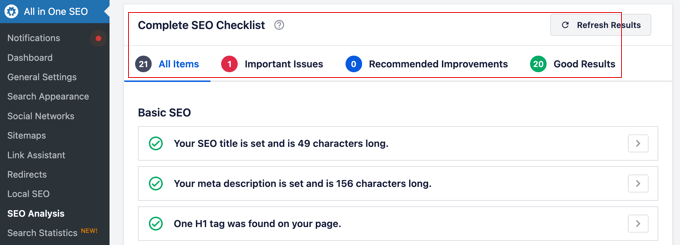
We regularly use AIOSEO to analyze our content for readability, keyword usage, and overall optimization. It gives us access to an actionable SEO report inside our WordPress admin area that gives us a clear roadmap for improvement.
This is really helpful because search engine optimization is a complex procedure that takes time. Having a clear checklist of everything that needs to be improved simplifies the process so you can easily fix one issue at a time.
2. Advanced Sitemaps
Search engines need to find and index every page on your website before they can be displayed in search results.
Google recommends using sitemaps to help with this process. Sitemaps help search engines crawl up to 40% more pages, resulting in more of your content appearing in search results.
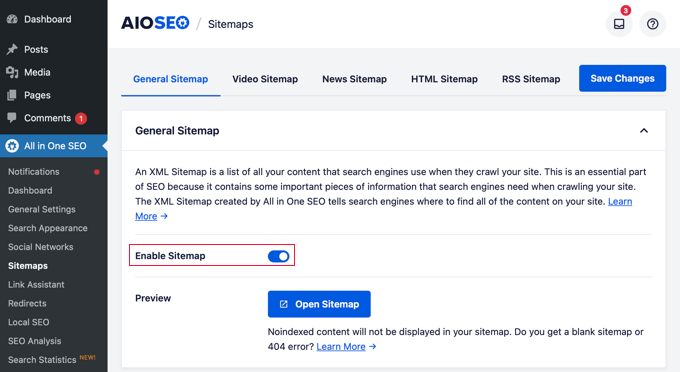
There are different types of sitemaps, such as XML sitemaps that help search engines discover and index your content and RSS sitemaps that notify them of updated content.
Enabling both of these will give you the biggest SEO benefits. With a premium WordPress SEO plugin, this is as easy as switching on a setting for each type of sitemap.
3. Powerful Redirects and 404 Monitoring
Broken links point to web pages that do not exist, leading to frustration and 404 error messages for your users. They are also bad for SEO and result in a 12% higher bounce rate.
Premium SEO plugins help you avoid broken links by automatically creating redirects when you rename a post or page or change its URL.
They also automatically track and log 404 errors so you can quickly redirect these URLs to existing posts as part of your regular WordPress maintenance.
This will make sure your visitors find the information they are looking for and avoid frustrating surprises when clicking links on your site.
4. Advanced Schema Markup
Schema markup is structured data that is added to your web pages behind the scenes. It helps search engines better understand your content and display it more prominently in search results.
For example, using recipe schema can make food blogs more visible in search results. It can increase your click-through rates by 30%, bringing valuable traffic to your website.
But manually adding this structured data to your posts is very technical and time-consuming.
It’s much easier using a premium SEO plugin because it can add schema markup automatically. These tools also let you add more specific markup to individual posts with the click of a mouse, including FAQs, recipes, events, products, and more.
5. Internal Linking Suggestions
We always recommend that you add links to your own content throughout your website. This way, you help users find posts that are related to the topic they are reading about. These are called internal links and they are good for SEO, increasing page views by up to 40%.
The problem is that as you create more content, it becomes hard to find all the related blog posts you can link to. Searching for them manually becomes frustrating and takes a lot of time.
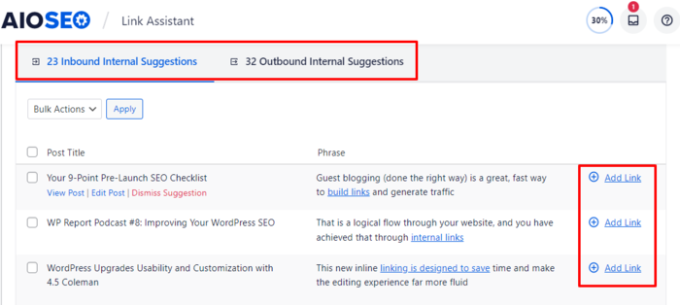
Premium SEO plugins help by automatically listing internal linking opportunities. With a click of your mouse, you can easily add these links to relevant posts along with an automatically generated phrase and anchor text, improving your SEO and saving you time.
6. Social Media Optimization
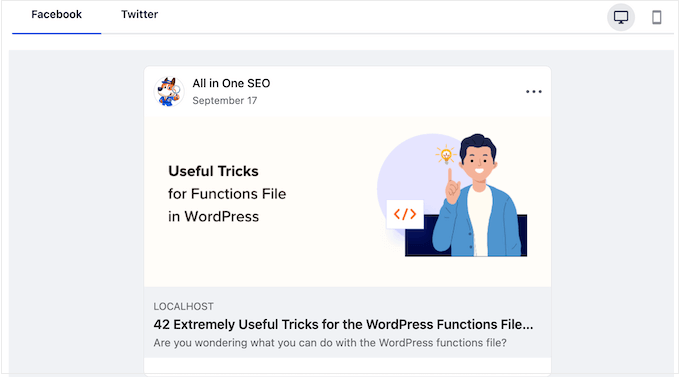
We also use a premium WordPress SEO plugin for social media optimization because it allows us to control how our WPBeginner content appears when shared on platforms like Facebook and Twitter (X).
Instead of these platforms pulling random information and images from our posts, we can specify the title, description, and image that is used. This means that our posts are more likely to resonate with our social media followers, bringing more traffic to our site.
7. Local SEO Optimization
If your business has physical locations, then premium SEO plugins can help optimize your site for local search results, including automatically generating location-specific schema markup that makes it easier for customers in your area to find you.
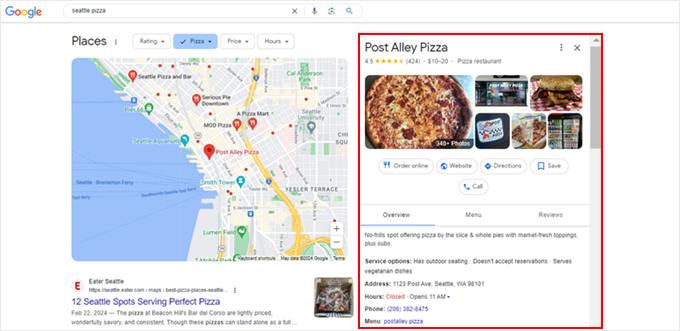
Potential customers will see your business on Google Maps and search results when looking for your type of business in their local area.
They will be able to see your address, phone number, and opening hours right from the search results page. Plus, they can even get turn-by-turn directions as they drive to your store.
8. WooCommerce SEO
If you have an online store, you can also benefit from the specialized WooCommerce SEO features offered by premium plugins. These help you optimize your product pages so they are more visible in product searches.
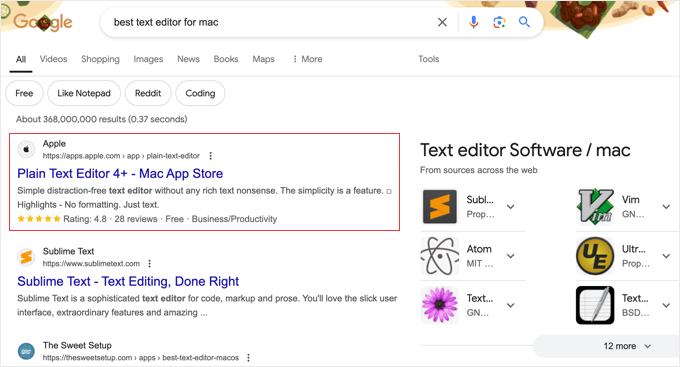
Users will also be able to see customer reviews and star ratings, showing that other customers have had a positive experience with your products. This can help drive more traffic to your store.
9. Priority Support
When you’re running an online business website, having access to expert support can be invaluable. Premium versions usually offer priority support to help you resolve issues quickly.
This ensures that if you come across any problems or issues when using the plugin, then you can receive prompt help from experts and get back to the job of running your business.
If you’re serious about driving more organic traffic to your website, then subscribing to a premium SEO plugin like we have is a smart move.
Your next task is to decide which plugin or service to use. Your first question will probably be which plugin offers the best value for money.
All in One SEO vs. Yoast SEO Premium
AIOSEO and Yoast SEO are the leading WordPress SEO plugins and offer extensive features.
However, there are important differences in their pricing and features.
When we compare the two plugins’ most affordable plans, AIOSEO is more affordable while offering comparable features:
AIOSEO’s Basic plan starts at $49.60 per year
Yoast SEO Premium starts at $99 per year
At first glance, the prices of their most powerful SEO plans look similar:
AIOSEO’s Elite plan costs $299.60 per year
Bundle pricing for Yoast SEO Premium, Yoast WooCommerce SEO, Yoast Local SEO, Yoast News SEO, and Yoast Video SEO costs $229 per year.
However, the difference is that AIOSEO’s plan covers 100 websites, while Yoast’s price is for a single site. Plus, AIOSEO offers a more comprehensive feature set.
When it comes to value for money, AIOSEO stands out. It offers a compelling package that covers multiple websites at a competitive price point.
If you don’t have the budget for standalone SEO tools like Semrush or Ahrefs, AIOSEO Premium offers a lot of impressive features for a great price.
To give you an idea, even when looking at the most affordable options, Semrush‘s most basic plan starts at $119.95 per month, and Ahrefs‘ lite plan starts at $99 per month.
While these tools are incredibly powerful, their starting prices come to more than $1,000 per year, which may not be justifiable for smaller websites or bloggers.
By contrast, you can subscribe to AIOSEO’s highest-tier Elite plan for far less money. It includes advanced features like local SEO, advanced WooCommerce support, and video SEO and costs less than $300 per year.
Besides that, AIOSEO focuses specifically on WordPress, making it easier to use and more tailored to your website’s needs. This makes it a cost-effective solution for agencies or businesses managing multiple WordPress sites.
Plus, if you run a small business or are just getting started, AIOSEO Premium’s features might be more than enough for your needs.
That said, if you’re looking for more SEO features at a lower cost, you can pair the plugin with an affordable tool like SEOBoost to get powerful content optimization options. This will give you AI-powered analyses, content audits, content briefs, and much more.
Or, if you need just a little extra help with keyword research, LowFruits is a great choice. It helps you generate keywords and analyze the SERPs to improve your rankings.
Premium WordPress SEO Plugins FAQ
Here are some questions we are asked most often about premium SEO plugins for WordPress:
What are premium SEO plugins?
Premium SEO plugins are paid versions of WordPress SEO tools that offer advanced features, enhanced optimization capabilities, and often superior support compared to their free alternatives.
How do premium SEO plugins differ from free SEO plugins?
Premium SEO plugins typically offer more advanced features like schema markup generators, content optimization tools, local SEO features, and dedicated support. Free plugins usually provide basic SEO functionality but may lack advanced features or regular updates.
Are premium SEO plugins necessary for good search engine rankings?
While not absolutely necessary, premium SEO plugins can significantly enhance your WordPress site’s optimization efforts, potentially leading to better search engine rankings. They often provide tools and features that can give you an edge in competitive markets.
Will a premium SEO plugin automatically improve my search rankings?
No SEO plugin can guarantee improved rankings. However, premium plugins provide advanced tools and guidance to help you optimize your site more effectively, which can contribute to better search performance.
How much do premium SEO plugins typically cost?
Prices vary, but most premium SEO plugins cost between $50 and $300 per year, depending on the features offered and the number of sites you can use them on.
Do I need to renew my premium SEO plugin license annually?
In most cases, yes. Annual renewals ensure you continue to receive updates, support, and access to new features. However, some plugins offer lifetime licenses.
Can I get a refund if I’m not satisfied with a premium SEO plugin?
Many premium plugin developers offer money-back guarantees for a certain period. Always check the refund policy before purchasing.
Currently, AIOSEO offers a 14-day money-back guarantee, and Yoast SEO has a 30-day guarantee.
We hope this tutorial helped you learn that, for many websites, premium plugins are definitely worth investing in. You may also want to see our guide on how to automate WordPress SEO or our expert pick of the best FAQ WordPress plugins.
If you liked this article, then please subscribe to wpbeginner YouTube Channel for WordPress video tutorials. You can also find them on Twitter and Facebook.
To be honest, the Google Search ranking volatility has not cooled at all since the pre-launch of the Google August 2024 core update. But something happened yesterday which caused a bit more of a swing of things in the rankings at Google Search. It is like we have had a constant Google Search ranking update for the past month or so – and no, this is not the longest volatility period from Google yet (although we may hit it).
We saw big signals on and around September 6th, September 10th or so and maybe around September 14th. And now I am September 18th.
Google Tracking Tools
Here are what the tools are showing – just look at how the volatility really has not calmed in most of these tools. Some of the tools are calmer but still show spikes around these dates. I wonder what is going on at Google, and I suspect Google wonders as well. 🙂
I cannot just go by these tools because most of them have just been showing volatility for the past month or so. The chatter within the SEO industry is a good tool for me to see bigger swings on specific days. So I think we had another big swing yesterday, September 18th.
Here is what I am hearing from WebmasterWorld and here in the past 24-hours or so.
HUGE drop today…
Same here.. HUGE drop today! 🙁
I’m really sorry to write this because I wish it were the case for all of you. Google suddenly seems to have taken a liking to my news site. I already mentioned that I had a very good weekend, but it goes even further than that. Since then, I’ve had roughly the same high number of readers that Google sends me every day (357% more than during the week), mainly via Discover. Sistrix also shows me that the value of visibility continues to rise (quadrupling since Friday). I would like to understand where this is coming from all of a sudden, but since I haven’t changed anything on the site, I don’t see any reason.
Slight recovery past 2 days. Keyword counts per Ahrefs also reversed and appear to be going up again. Too early to tell if its a real trend.
Same for me, the period from after labour day until now has been extremely high traffic. But it is slowly tapering off. I am seeing loses in top 3 and top 10 terms again and also my USA traffic is reverting to the old lower level day by day. Customer inquiries are also slowing down again. Non-USA traffic is still sky high though
A drop seems like it might have started yesterday at around noon…my traffic dropped like a stone and stayed down rest of the day. Today USA traffic is -40% at 11am, which has broken the pattern of being up every day since Sept. 3rd or so.
Oh … 75% of my Googleday gone and already at 167% v the month so far !
I, too, have a nice increase in traffic today, but that is not reflected in my revenue…yet.
Yes, today’s data. Yesterday was less notable. However, after 4pm, everything went back to normal. It seemed like a filter was turned on, then off…
Does anyone notice drop in impressions today, any upcoming update?
Ever wonder why your website isn’t showing up on Google? You’ve got the content, the design’s slick, but still—crickets. You’re missing the key ingredient: a solid keyword strategy.
Let’s cut to the chase. Keyword strategy is the backbone of any successful SEO plan. Without it, you’re shooting in the dark, hoping to hit something.
We’re not about hoping here.
We’re about doing.
And to do it right, you’ve got to understand what a keyword strategy is and how it can make or break your online presence.
Imagine investing time and energy into content that never reaches your target audience. Frustrating, right?
That’s where a solid keyword strategy steps in.
It’s your roadmap, your blueprint to ensure your content not only reaches the right people but also ranks on those golden spots in the search engine results pages (SERPs).
Keyword targeting isn’t just about stuffing random words into your content. It’s about understanding what your audience is searching for and delivering exactly that.
What Is a Keyword Strategy, Anyway?
Think of a keyword strategy like the GPS for your website. It guides every piece of content, helping search engines like Google connect the dots. But it’s not just about stuffing keywords into your content and calling it a day.
We’re talking about understanding search intent, using tools like the Google Keyword Planner or Ahrefs to find high-impact keywords, and making sure those keywords align with what your audience is actually searching for.
Understanding Search Intent
Here’s the deal:
Search intent is everything. Because you need to know what people are really after when they type something into Google. Are they looking for information? Ready to buy something? Or just browsing?
Understanding this is crucial for nailing your keyword strategy.
There are three main types of search intent:
Navigational: When someone is trying to find a specific website. For example, typing “Facebook login” into the search bar.
Informational: When they’re looking to learn more about a topic, like “how to create a keyword strategy.”
Transactional: When they’re ready to make a purchase, like searching for “buy SEO tools online.”
Align your keywords with these intents, and you’ll attract the right audience, at the right time, with the right content.
Let’s break down an example of search intent:
Imagine you’re in a café, overhearing someone say, “I need to rank higher on Google.”
That’s what they want, right?
But what are they really asking for?
They’re asking for tips, tricks, tools—something to help them rank higher.
That’s search intent.
And if you’re not aligning your keyword strategy with this intent, you’re missing out.
Here’s what you need to do:
Identify the intent behind each keyword: Is it navigational, informational, or transactional?
Choose the right keywords: Choose keywords that match what your audience is looking for.
Avoid fluff: With so much information on the Internet, your audience doesn’t want to have to search for the information they need, so go straight to the point.
Keyword Research Techniques
Let’s get into the nitty-gritty.
The foundation of any successful keyword strategy is solid keyword research. You can’t just guess what people are searching for. You need data.
And there are some killer tools out there to help:
Google Keyword Planner: This is your bread and butter. It’s free, and it’s straight from the horse’s mouth—Google Keyword Planner.
Ahrefs: If you’re serious about SEO, Ahrefs is a must-have. It digs deep, giving you a treasure trove of keywords.
SEMrush: Another heavy hitter, SEMrush not only helps with keywords but also shows you what your competitors are ranking for.
But how do you actually use these tools?
Simple.
Start with a broad topic—let’s say, ” content marketing.” Plug it into these tools, and they’ll spit out hundreds of related keywords. Some will be high-volume, others low-volume, and some will have high competition, while others won’t.
Your job is to find the sweet spot.
Competitive Keyword Analysis
Let’s get real for a second—if you’re not keeping an eye on your competitors, you’re missing out.
They’re ranking above you for a reason. Understanding why can help you build a better keyword strategy. This is where competitive keyword analysis comes into play.
Think of it as sneaking a peek at their playbook.
What keywords are they ranking for?
Which ones are driving the most traffic?
And more importantly, where are the gaps?
They’ve already done a lot of the hard work for you. Use that to your advantage.
How?
Competitive keyword analysis
Identify Your Top Competitors: With tools like Ahrefs or SEMrush, you can see exactly what keywords your competitors are ranking for. This gives you a blueprint of what’s working in your industry. And, also a means to see who’s ranking for the same keywords you want to target.
Find Opportunities: These are the keywords that have high search intent but low competition. They’re the sweet spot for your keyword strategy. But don’t just copy them—learn from them. It’s about learning from them and then doing it better.
Analyse Their Keyword Strategy: Look for gaps in their strategy. Maybe they’re missing out on some killer long-tail keywords or not fully optimizing their content. Look at the keywords they’re ranking for. Pay attention to the ones driving the most traffic.
This isn’t about copying your competitors.
Targeting Long-Tail Keywords
Ever tried ranking for “SEO”?
Good luck with that.
It’s like trying to win the lottery.
Instead, let’s focus on long-tail keywords—those specific phrases that might not get tons of searches but have way less competition.
For example:
“How to create an effective keyword strategy” beats just “keyword strategy.”
“Best tools for keyword research and analysis” beats just “keyword research.”
These long-tail keywords are gold.
Look for long-tail keywords—those are the more specific, lower-competition phrases that people are searching for. They’re often gold mines for attracting targeted traffic.
Another example:
Instead of just targeting “keyword strategy,” you might go for something like “how to create a keyword strategy for small businesses.” It’s more specific, and there’s less competition
They’re specific, less competitive, and they attract visitors who know exactly what they’re looking for.
Title: Your main keyword should be right up there in the title. It’s the first thing people (and search engines) see.
Headings: Break up your content with headings and subheadings that include your keywords. This not only helps with SEO but also makes your content easier to read.
Introduction: Drop your main keyword in the first few lines. It sets the tone and lets everyone know what your content is about.
Body: Naturally incorporate your keywords into the body of your content. But don’t overdo it—keep it natural and readable.
Conclusion: Wrap things up with your keyword. It’s a neat way to tie everything together.
Remember, keyword strategy is all about balance.
You want to include your keywords enough to signal to search engines that your content is relevant, but not so much that it feels forced or unnatural.
Here’s how to do it right:
Use your primary keyword: in the title, first sentence, and somewhere in the last sentence.
Include secondary keywords naturally throughout your content.
Create keyword-rich sub headers to help with on-page SEO.
Don’t forget the meta descriptions—they’re the unsung heroes of SEO.
And remember—keep it natural. If it feels forced, it probably is. Keep the flow, make it readable, and ensure the keywords serve the content, not the other way around.
Relevant FAQs on Keyword Strategy
Q: How many keywords should I target for each page?
A: Aim for one primary keyword and a couple of secondary keywords. Focus on making them fit naturally into the content.
Q: What’s the difference between short-tail and long-tail keywords?
A: Short-tail keywords are broad and competitive (like “SEO”), while long-tail keywords are more specific and easier to rank for (like “how to create an effective keyword strategy”).
Q: How often should I update my keyword strategy?
A: Regularly. At least every few months. SEO is dynamic, and staying updated ensures your content remains relevant and competitive.
Q: Should I use the same keyword strategy for every page?
A: No. Each page should have its own keyword strategy based on the content, audience, and search intent.
Q: How do I know if my keyword strategy is working?
A: Track your rankings, organic traffic, and conversions. If you’re seeing improvements, your strategy is on point.
Conclusion
So, there you have it.
We’ve gone through what makes a killer keyword strategy, from understanding search intent to optimizing content and keeping tabs on your competitors. Your website’s success hinges on getting this right.
And remember, keyword strategy isn’t just about getting traffic. It’s about getting the right traffic—people who want what you’re offering
Start implementing these strategies today, and you’ll see the difference. Your strategy will not just drive traffic, but drive the right traffic, making all the difference.
Thaddeus Collins is a seasoned digital marketer at Inker Street Digital with over a decade of experience in the ever-evolving world of online marketing. Specializing in strategies that drive growth and engagement, Thaddeus has helped numerous businesses scale their online presence through innovative approaches in SEO, and social media marketing.
Inker Street Digital provides online guides for entrepreneurs interested in promoting their businesses. For more information about our services visit or social post on Facebook, Twitter, or Instagram.
Alphabet’s vertically integrated search model and extensive network create significant entry barriers, making it difficult for AI-powered search engines like SearchGPT to disrupt Google Search.
Despite Microsoft’s AI-powered Bing, its market share growth has been minimal, reinforcing the strength and dominance of Google Search.
AI-powered search engines are not new; Alphabet’s AI Overviews already offer similar functionalities, making the impact of new AI entrants limited.
I reiterate a ‘Buy’ rating for Alphabet with a fair value of $215 per share, expecting 14% revenue growth driven by Google Cloud and Search.
The arrival of SearchGPT has raised many concerns about Alphabet (NASDAQ:GOOGL)’s online search business. I previously discussed the potential impact of AI on Alphabet’s search business in the risk section of my article published in July 2024. I think these AI-powered search engines, including SearchGPT, will complement Google Search in the near future and the financial impact will be quite limited. I reiterate a ‘Buy’ rating with a fair value of $215 per share.
I don’t think AI-powered search technology will disrupt Google Search for the following reasons:
Reason #1: Vertical Integration Creates Unique Online Search Model
Alphabet controls more than 90% of the global search market and operates a vertically integrated business model for Google Search. To become a successful search engine, it needs to create an integrated business that effectively connects advertisers with information seekers. Over the past decades, Alphabet has created a massive network of end-users, via their Android smartphones, third-party partnerships, YouTube, and other platforms. Many devices choose Google Search as the default search engine, giving Alphabet access to a huge number of customer base.
On the other hand, Alphabet has established a strong Ads trading platform for advertisers, allowing these merchants to purchase advertisements, manage marketing campaigns, perform data analytics and performance reviews, and conduct customized or targeted marketing by leveraging Alphabet’s massive data sources.
As a result, the online search ecosystem is a highly complex, vertically integrated business model. I don’t think OpenAI can easily disrupt Google Search by just relying on an AI-powered search engine without access to these additional resources.
Reason #2: Bing Search Engine Has Not Gained Big Share Since AI Introduction
According to StatCounter report, Bing search engine’s market share only increased from 3.03% in August 2023 to 3.91% in August 2024, as depicted in the chart below.
statcounter Report
In February 2023, Microsoft (MSFT) introduced their new AI-powered Bing search engine and Edge browser, partnering with OpenAI. Notably, the revamped search engine applies AI to the core search algorithm. However, based on the data above, Microsoft has not gained too much market share following their AI launch. It demonstrates that it is unlikely to disrupt Google Search without a powerful vertical integrated network connecting both advertisers and end-users.
Reason #3: AI-Powered Search Engine is Not Something New
Before the arrival of SearchGPT, there are several AI-powered search engines available in the market, such as Perplexity, Arc Search, etc. These AI-powered search engines can engage in conversations with end-users and provide search summaries instead of just links on a page.
As an example, when I used Perplexity to search for “How to subscribe stock investment research?”, the platform provided a quick summary of major popular services for equity research. The search engine summarizes the contents from these websites and presents to me. While I acknowledge it is convenient to review the summary, the information might not be comprehensive or accurate. As a user, I prefer visiting the websites of these service providers to review their fees and services in detail.
In addition, Alphabet also introduced AI Overviews, which provides AI-organized search result page. As such, the search summary is becoming somewhat of a commodity.
Outlook and Valuation
As discussed in my previous article, Google Cloud led the growth in Q2 FY24, growing by 28.8% year-over-year. With the rapid growth in cloud computing and AI, I anticipate Google Cloud will sustain double-digit revenue growth in the near future. For the near-term growth, I am making the following assumptions:
Google Search: in my previous article, I projected Google Search would grow by 14% in the near future. Considering that OpenAI has nearly 200 million weekly active users, I anticipate SearchGPT will attract some online search traffic. As analysed previously, I don’t expect Google search will be disrupted by SearchGPT. I anticipate Google Search will grow by 12% in the near future, assuming a 2% impact from AI-powered search engines.
I continue to forecast Google Cloud will grow by 25%, driven by ongoing digitalization and AI workloads.
For the subscription and services, I anticipate the segment will grow by 10%, which is consistent with their growth trend.
As such, I project Alphabet will grow their revenue by 14% in the near future. As Alphabet increased their CAPEX spending over the past few years, the company is going to face higher amortization and depreciation costs. I project their operating margin will decline by 10-20bps, the same assumption in my previous DCF model.
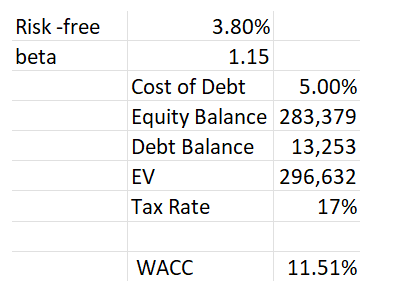
I revised WACC to 11.5%, reflecting a lower risk-free rate and lower cost of debts as the Fed cuts the interest rate.
Alphabet DCF Model- WACC
With these assumptions, the DCF can be summarized as follows:
Alphabet DCF Model
Discounting all the free cash flow, the fair value is calculated to be $215 per share, according to my DCF model.
Key Risks
Microsoft could potentially integrate SearchGPT to their Bing and Edge browser in the future. As Microsoft has a significant market share in the desktop market, the integration of search engine with SearchGPT might help the company gain more share in the global search market.
In addition, a federal judge ruled that Alphabet has violated US antitrust law with its search business. According to the judge’s opinion, Google is a monopolist in search and has violated Section 2 of the Sherman Act. These legal battles will create some headline risks for Alphabet in the near term, in my view.
Conclusion
In short, I don’t anticipate these AI-powered search engines will disrupt Google Search in the near future. Alphabet owns tremendous advantages in their online search business, and I expect the company’s entry barriers will be difficult to overcome. I reiterate a ‘Buy’ rating with a fair value of $215 per share.
I am a growth-oriented investor, conducting fundamental research. Long-term focus, independent thinking. I prefer companies with deep moats and high recurring sales growth. Disclosure: Hunter Wolf and I are working in the same investment team. I am writing here independently.