The chief creative officer and art director has been at the top of the biggest shops in the world, creating category-changing work, and in this week’s My Creative Career, he delves into the ins and outs of creating campaigns that capture culture.
Simon Fairweather is an advertising veteran, having been in the industry since the early 90s. Two years ago, when I interviewed Nils Leonard for this series, the Uncommon co-founder explained that Fairweather was one of the first people in the industry to be a mentor.
“[Simon] didn’t just show me design, he showed me life,” Leonard explained at the time. “He showed me how to go to a restaurant and order food, how to behave in a meeting, how to dress for work. He really invested in me.”
Fairweather emphasizes the importance of life experience in creative work, consistently encouraging young people to immerse themselves in culture and real-world experiences.
Starting as a photographer, Fairweather’s first ever shoot was assisting Peter Barry and Trevor Rogers as they shot the legendary singer Iggy Pop for an album cover. “That first year, I was the worst assistant ever,” laughs Fairweather. “I feel bad for the people employing me because I just didn’t know what I was doing.”
Being thrown into the world of music, fashion and art right in the heart of London’s West End was exciting for the young creative. But what truly captured his attention was the work of American photographer, Irvine Penn and his still life images. “It’s the idea of making the ordinary extraordinary,” Fairweather says, explaining that some aspects of creativity cannot be taught, particularly the ability to perceive things differently.
“Once you get going, it’s so hard to stop. You’ll be somewhere and see the light catch something, somehow, or the way someone reacts to something,” he continues. “You’re taking mental notes all the time.”
Creativity runs in Fairweather’s family, with a strong legacy in the graphics industry. His grandfather worked in newspapers in Dundee, primarily for DC Thomson, while his other grandfather was an illustrator for the boys’ comic books The Hotspur and The Victor.
In 1993, Fairweather joined Y&R, where he began his advertising career. Here, he worked under one of BBH’s original creative founders Mike Cozens and was brought on as head of advertising design. During that time, Fairweather worked on some standout print campaigns for the likes of Colgate, Pirelli and Eurostar. “They were big brands, but I didn’t feel intimidated,” he recalls “It was a great creative department.”

Simon Fairweather
Fairweather threw himself into the advertising world at Y&R for the next four years, with the next three at MullenLowe working with the likes of Mini Cooper and MontBlanc, before a move stateside to work at Hill Holiday, JWT NY and Leo Burnett.
Simon Fairweather
While at JWT in New York, he worked on a creative campaign for Rolex titled ‘A Crown for Every Achievement’ that he believes to be one of his “major career achievements”.
During those years, in the early noughties, JWT had won the Rolex account after it had gone into “quiet review” because, as a brand, it is very “careful about its publicity,” explains Fairweather. “You can’t enter Rolex [ads] in for awards. The brand is above all else.”
The art director says that number one, he’s a huge fan of watches and two, he loves the “purity” of Rolex. “We did over two hundred individual print ads in the first year. It was a huge volume of work,” Fairweather says. “Larry [Goldstein, his creative partner at the time] wrote some great headlines. I mean, they’re just phenomenal. One of my favourites is, ‘If only iron will could make a boat go faster’. It was just all about that achievement. You can’t own time, so what you can do is own moments in time.”

Simon Fairweather
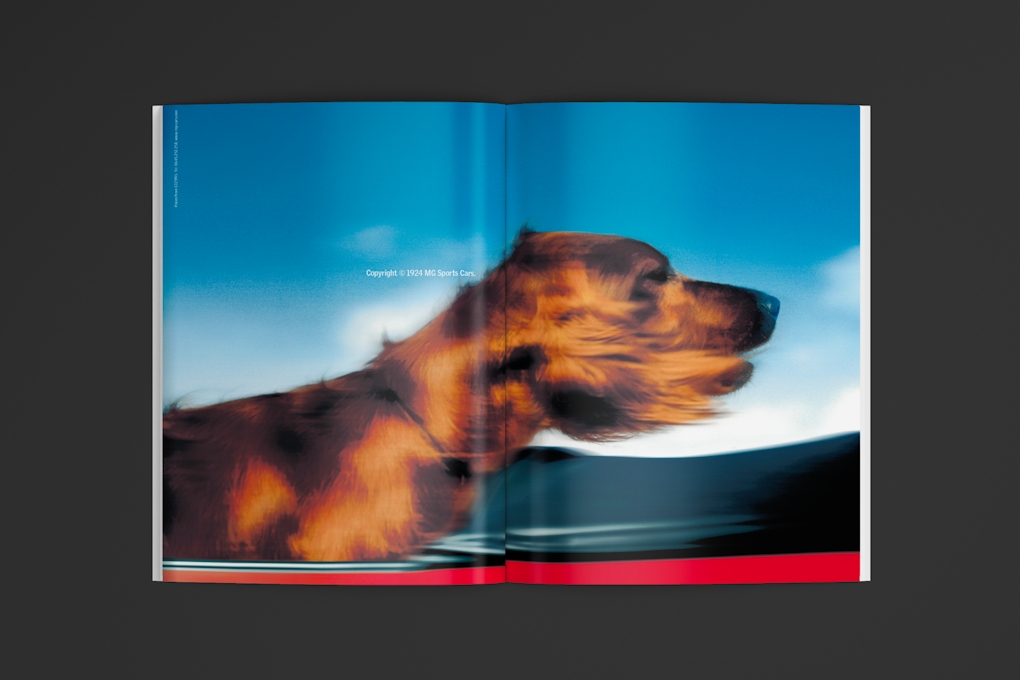
Cars are another passion of Fairweather’s and he says it was “interesting graphically” working on the MG and Mini accounts. “It’s craft, creativity and culture, that is pretty much how it goes,” he adds. “And cars are very much a cultural element. The majority of people have one, and it’s the next biggest purchase you have after your house.”
In 2005 and again in 2018, Fairweather had long stints at Leo Burnett in Detroit, which is the “home of American car building,” he says. He explains that when it comes to car advertising, you have 20 seconds to tell a story and 10 seconds to tell the viewer the price.

Simon Fairweather
“The Pontiac work, even though that brands not around anymore, that work was a breakthrough,” he says. “It was all about light and music and, giving it a personality.”
Sadly, Leo Burnett closed its Detroit office in Troy, Michigan on December 31, 2024. The agency laid off employees due to the loss of General Motors business, Fairweather included. He says that the creative scene in Detroit is “excellent,” but it’s been “devastated” by this loss.
Fairweather is a huge advocate for nurturing young creative talent. For several years, he mentored students at the Fashion Institute of Technology, which boasts the likes of Calvin Klein and Michale Kors as alumni. It allowed them to engage with real-world briefs, walk through the agency, and gain a practical understanding of the industry.

Simon Fairweather
His approach was to foster a more supportive environment than the one he had experienced, where feedback could often be harsh. Instead, he focused on helping students understand why certain ideas might not work for certain clients. “It taught me so much about how to approach things,” he adds.
After over three decades in the advertising industry, Fairweather says that he still gets excited when he sees his work out in the world. “I’m like the puppy that chases the ball,” he says. “I’ll chase it every time.”