
Tag

AI platforms

Browsing

By 

TikTok is the latest platform to push back against AI slop

If you’re getting tired of AI slop on social media, you’re not alone. Even TikTok, which has spent the last couple of years rolling out AI creation tools, is now testing new ways to detect AI-generated spam and teaching users how to recognize AI content.

TikTok says it is testing improved detection systems to target accounts dedicated to posting AI-generated spam that “crowds out original creators”, and it is also creating a new guide that helps its users use AI tools responsibly. TikTok is launching a new in-app hub within the next few weeks where you can learn practical skills for spotting AI-generated content when you search for AI-related terms.
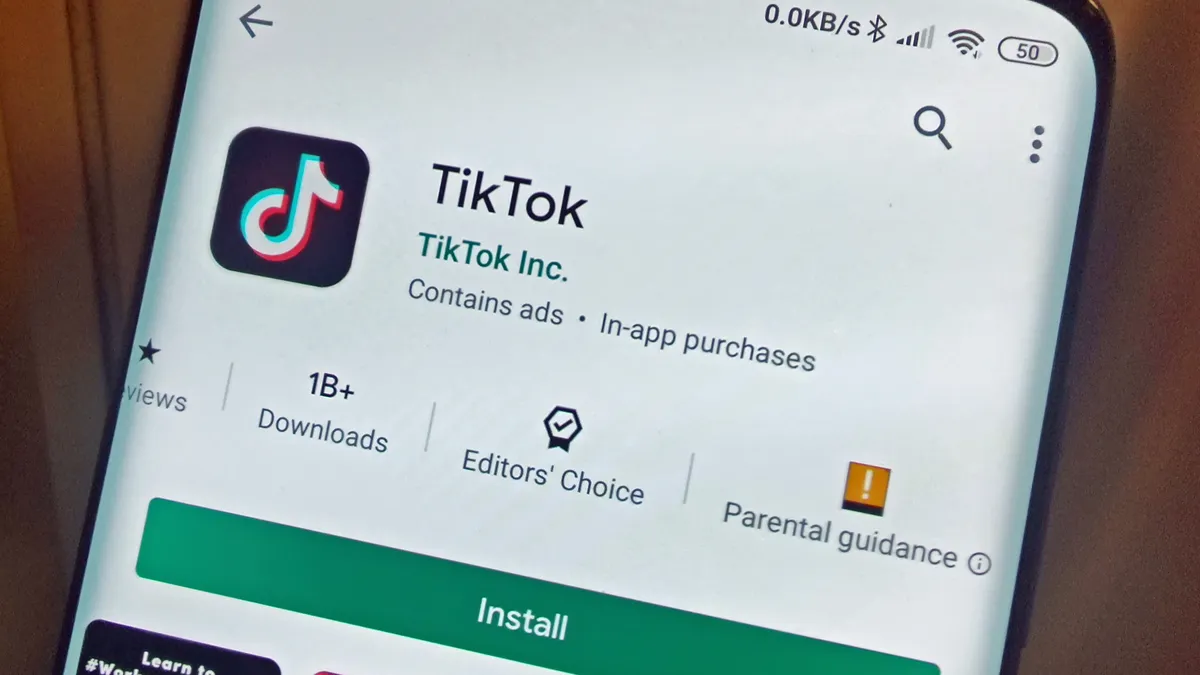
TikTok app in the iPhone App Store

(Image credit: Future)

Is it really a moral stance?

We spoke to Donatas Smailys — CEO of Billo, the largest UGC creator marketing platform in the US — about the new tool. His take is that TikTok is fighting AI content because it doesn’t perform, and that hurts TikTok’s ad business too.

“It would be naïve to read this as TikTok taking a moral stance. The platforms can see in their own data what audiences respond to, and they’re quietly rebuilding their rules around real people.”

It strikes me as slightly ironic that TikTok, which has spent the last couple of years pushing AI creation tools, is now simultaneously educating people to recognize AI content and testing systems to suppress AI spam.

If TikTok’s own data suggests AI-generated spam is harming engagement or advertising performance, then it may be the saving grace for the rest of us who are tired of AI slop ruining the experience of social media. Frankly, at this point I’ll take anything that reduces the amount of AI videos that get served to me, for whatever reason.

What this means for the future

The wider issue here is that if TikTok is beginning to treat low-quality AI spam as a platform problem, then it should raise some red flags for advertisers who heavily rely on synthetic influencers and AI creators. If low-quality AI spam was improving the platform, TikTok would have little incentive to invest in detecting and suppressing it.

TikTok actually has pretty stringent rules on AI content on its platform already. It’s quite common to see the label “Contains AI-generated content” on TikTok videos.

It seems that regulators are moving in the same direction. “New York now requires disclosure of synthetic performers in ads”, says Smailys “with penalties for those who don’t comply. And my guess is that more states will follow. But the loss of trust is an even bigger risk here. Once your audience feels tricked, no disclosure label wins them back.”

While the rise of AI slop seems unstoppable at the moment, I wonder whether we’ll eventually look back at 2026 as the year platforms realized that flooding people’s feeds with AI-generated content wasn’t sustainable and that what users really wanted all along was more real people.

Feature image credit: Shutterstock / Good Ideas

By 

Graham is the Senior Editor for AI at TechRadar. With over 25 years of experience in both online and print journalism, Graham has worked for various market-leading tech brands including Computeractive, PC Pro, iMore, MacFormat, Mac|Life, Maximum PC, and more. He specializes in reporting on everything to do with AI and has appeared on BBC TV shows like BBC One Breakfast and on Radio 4 commenting on the latest trends in tech. Graham has an honours degree in Computer Science and spends his spare time podcasting and blogging.

Sourced from techradar

By Tom Popomaronis.

These AI platforms are unleashing the power of social commerce by providing around-the-clock support.

Companies in most industries are struggling. According to ’s June 2020 U.S. Recovery Tracker, key factors in the labour market haven’t improved, such as hiring rate, job postings and employer confidence. It’s important for businesses to find opportunities that maintain or grow revenue, as well as operate cost-efficiently given the new normal in U.S. consumer and B2B demand.

However, there are long-term trends that are too disruptive to ignore. A seismic change in consumer behaviour is the growing use of messaging apps for more than sending and receiving texts. Ecommerce and social messaging apps are enabling internet shoppers to send payments, book reservations, watch multimedia and purchase items, among many features. Chatbots are unleashing the power of social and ecommerce by providing customer support 24/7, year-round.

There are a number of artificial intelligence (AI)-assisted conversational bots that can help give your enterprise a competitive edge in acquiring sales, automating customer support and saving money. Here are three I personally recommend.

1. School of Bots

Founded in 2016, veteran strategists at San Diego, California-based School of Bots help marketers and companies acquire sales, automate operations and provide 24/7 customer engagement, largely through chatbots deployed on  Messenger and SMS, with training available for other big messaging platforms. School of Bots’s experts teach proven strategies on platforms with whom they have close partnerships and create custom chatbot  systems for startups and consultants alike. An example of such a tailor-made bot might accompany a prospect down the sales funnel and nudge him or her into an eventual transaction.

“This year, more people are using messaging apps than , according to eMarketer, and that could indicate a major shift in consumer behavior,” says Kyle Willis, CEO of School of Bots. E-HUB, the company’s chatbot training platform, gives members access to checklists, instructional videos, standard operating procedures and hands-on mentorship. After undergoing training, members are accredited to offer consulting and agency services. Moreover, the platform enables participants to earn certifications, hire qualified bot builders or get hired and connect with fellow members in a virtual coworking space.

School of Bots works with tools such as ManyChat, which provides reach through Facebook and, explains School of Bots cofounder Natasha Takahashi,  “has superior capabilities for  and tracking that allow us to produce maximum ROI.”

2. Drift

Bots can be a partial solution for businesses that have laid off customer-support staff during the recession. Automated bots prevent consumers from visiting competing sites, and therefore help to capture sales opportunities. Moreover, they streamline operations and boost productivity. They can be programmed to answer frequently asked questions, book a meeting with a sales rep, troubleshoot problems and move online shoppers towards checkout.

Drift positions itself as a “conversational marketing platform” to emphasize the revenue-generating features of its bots. The company is a well-known solutions provider that installs chatbots that are able to qualify leads 24/7/365. Drift’s bots are used by large brands such as GrubHub, GitHub, Marketo and Ellie Mae. The tech is also geared more towards B2B sales and enterprise use cases. Drift’s conversational AI can tell when a user is making a statement (instead of asking a question) so that it can recommend certain products and display pricing. Other features include automatically booking meetings, as well as routing conversations to a sales team.

According to a Drift survey published on Salesforce.com, people use bots for these top reasons: 32 percent get an answer to a question; 29 percent get a detailed explanation; 27 percent resolve a problem; and 27 percent receive . Bots give businesses a competitive advantage given today’s consumer preference for interacting with messaging apps. Moreover, a big chunk of mobile users want immediate answers to queries. This automated ability to give real-time engagement ups the ante for every B2B and B2C business.

3. Intercom

According to a 2018 Accenture survey, 56 percent of executives say conversational bots are disrupting their sector, and 57 percent say the technology can deliver large returns on investment with minimal effort. AI and machine learning are the most revolutionary innovations of our lifetime, and a bad recession won’t stop the adoption of automated conversational interfaces. These platforms are growing more sophisticated. For example, AI is becoming better at natural language processing (NLP), which enables the tech to have conversational dialogue with humans.

Intercom has been around for nearly a decade and deploys custom bots that engage prospects, route conversations and reduce the need for web forms and emails. The company offers clients a proprietary Business Messenger app that provides automated real-time answers. This messaging  enables Intercom to differentiate itself in the bot marketplace. Mostly B2B users receive data they need to make timely business decisions. That includes dashboard info such as order status, invoice data and educational articles within the messaging app. In a 2018 Bloomberg interview, CEO Eoghan McCabe noted that emails are increasingly ineffective, and that more business professionals and consumers are turning to messaging apps for real-time business .

Intercom builds chatbot solutions to help enterprises make purchase decisions, such as by personalizing buying experiences and giving product tours. Access to certain features depends on your monthly subscription. A basic plan includes live chat and outbound messaging while an advanced plan is geared more towards B2B lead generation, automated workflows and reporting tools.

Chatbots are great sales tools that are seeing more use in B2B and B2C, and they provide a competitive edge by enabling companies to offer 24/7 customer support. Because bots are growing in sophistication, they can be programmed to book reservations, set up meetings and other functions without human involvement. They can also be implemented cost-efficiently compared to hiring human personnel. So with all businesses tightening their wallets, now is the time to consider automating the customer experience where you can.

Feature Image Credit: Natali_Mis | Getty Images

By Tom Popomaronis

ENTREPRENEUR LEADERSHIP NETWORK VIP. Executive Vice President of Innovation at Massive Alliance

Sourced from Entrepreneur Europe