
BY ASH KUMRA
AI can make content. Can it make a connection?
The best growth strategy in 2026 happens offline. During the 2026 SF Tech Week, thousands of founders and venture investors brought massive energy back to San Francisco across hundreds of decentralized events spanning AI, longevity, fundraising, media, and content creation.
Tech and media companies transformed lounges, warehouses, conference spaces, and local espresso bars into vibrant hubs for builders to connect and share ideas.
The investment paid off in a surprising way.
Earn trust through original voices
Search discovery is changing fast, and faceless corporate blogs are losing ground.
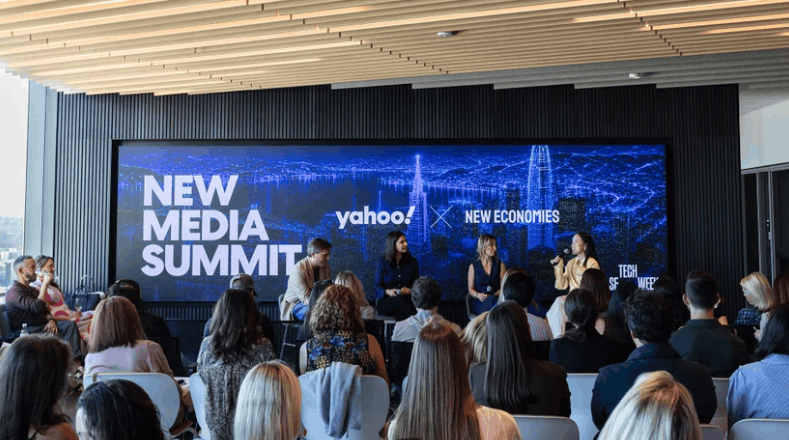
Yahoo partnered with Ollie Forsyth and New Economies to host the New Media Summit during the week, bringing together over 110 leaders from companies like Anthropic, Adobe, DoorDash, Canva, and Sequoia Capital.
During panels featuring tech journalist Joanna Stern, Yahoo chief communications officer Sona Iliffe-Moon, Vox Media vice president of podcast business Lillian Xu, and LinkedIn CMO Jessica Jensen, one rule stood out. As platforms filter out automated AI slop, audiences are moving toward recognizable human voices across newsletters and podcasts.
Even TBPN, the breakout media company acquired by OpenAI, has grown on the strength of hosts John Coogan and Jordi Hays’s unscripted chemistry and their freedom to act quickly on funny ideas. Their next ambitions? Booking guests like Kris Jenner and Jamie Dimon.
Sona Iliffe-Moon, Yahoo’s chief communications officer, noted that while the company’s AI answer engine, Yahoo Scout, helps users find fast answers, its core job is connecting readers to the human creators behind that work.
“The faster things move, the more valuable it is to get in a room together and have these discussions IRL,” Iliffe-Moon said. “People are following voices they trust across both established and new platforms, changing how influence is built and attention is earned.
For brands and communicators, that means being active readers, listeners, and participants in those communities, and understanding what people value before asking for their attention,” she added.
Stop treating your marketing channels like a one-way megaphone. Before you ask a community for its attention, show up as an active listener and put a real human voice behind your brand.
Ditch the sales pitch and build your own stage
Most founders treat live events like a trapdoor into a sales funnel. Customers can smell that desperation from across the room.
James Gee, director of partnerships and ecosystem at Startup Grind, took a different approach. With a small team and a shoestring budget, he hosted more than five gatherings across San Francisco in just four days.
On Monday, he kicked things off at 8 a.m. with bagels for agentic AI builders on 2nd Street. He also hosted a night for female founders in SoMa. Later, he teamed up with Alumni Ventures and AI Collective for a live AI product demo on the 19th floor of a Sacramento Street building. Slide decks were banned.
He wrapped up the week with a seed fundraising session featuring partners from Khosla Ventures, Floodgate, and Antler.
“SF Tech Week is littered with corporates hosting and selling their products,” Gee explained. “Startup Grind isn’t selling anything. We give our startups the stage to speak, to pitch, to demo, to learn.”
If you have zero marketing budget, stop trying to outspend corporate giants on digital ads. Build a local room for your ideal customers, hand them the microphone, and judge your success by a single metric.
“My philosophy for all events I host is that everyone has a great time and meets at least one person who can actually help them,” Gee shared.
Engineer unscripted offline connections
Online content builds awareness. It rarely closes a major partnership by itself.
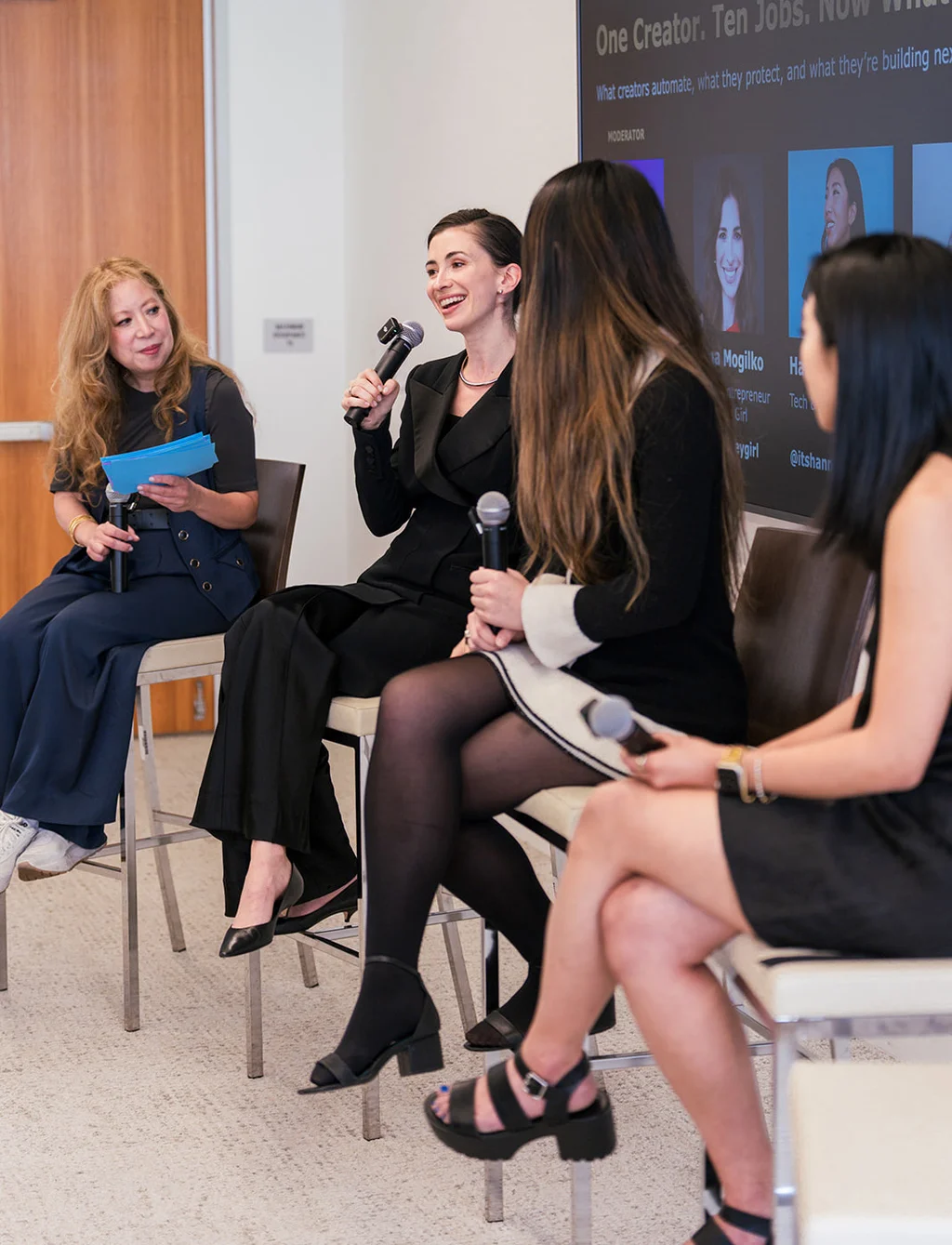
France Tantiado and Monica Khan, co-founders of Creator Gold, started Creator Gold Live last year because they looked at the SF Tech Week calendar and noticed nobody had built a room for the creator economy. This year, they brought creators, venture investors, AI builders, and brand executives together to tackle how creators are taken seriously as founders and business leaders building lasting companies beyond social platforms.
While they hosted two candid panels on the role of AI in content and commerce, Tantiado and Khan designed the schedule around small group conversations and curated introductions rather than stage lectures.
“The panels aren’t the main event. The people are,” they explained. “Content can build an audience. In-person experiences build relationships. Even in an industry built online, partnerships still run on trust. That trust often comes from time spent together and conversations you didn’t plan.”
Never use a live gathering to recreate what already happens on a screen. Tantiado and Khan noted that the real magic is the unplanned introduction sitting next to you or the dinner conversation that turns into a signed deal.
Put people back at the center of your growth
Software scales your reach. Only humans build loyalty.
Open your calendar for next month right now. Book a back room at a local restaurant for 15 of your best customers and introduce two builders who can solve each other’s hardest problems. You will build more trust over two hours of shared plates than you will in six months of digital ads.
Feature image credit: Mal Taam/Yahoo