Tag

Brand

Browsing

By BoF InsightsMcKinsey & Company

Value players are elevating their brands defensively against ultra-low-cost rivals such as Shein and Temu, whose business models remain difficult to undercut, even as policy shifts erode some of their cost advantage. For example, value brands Bershka and H&M have reduced the share of SKUs in their lower price tiers across categories and markets between 2023 and 2025, according to data from EDITED.

Mid-market players are tapping into the growing demand for “affordable aspiration” from consumers who remain price-sensitive but increasingly prioritise quality and design. Zara has pioneered this strategy, taking aim at trend-focused shoppers seeking fashionable designs at more affordable prices than luxury ready-to-wear collections.

SoF Elevation Chart

Premium/bridge and affordable luxury players are seizing the white space created by the increase in luxury prices, which rose 61 percent on average between 2019 and 2025. Many aspirational consumers, also squeezed by inflation and seeking more creative inspiration from luxury brands, are opting to spend their disposable income elsewhere. Brands like Ralph Lauren are capitalising on this shift, increasing focus on categories like outerwear and bags, where customers are familiar with paying more. Similarly, French affordable luxury giant SMCP has reduced reliance on discounting to support the elevation of its brands, which it outlined as a key priority in 2025.

SoF Elevation Chart

Brand elevation depends on three pillars — price, product and brand experience

1. Price: increasing the share of products in higher price tiers and growing full-price sales

31% of global customers are willing to splurge on fashion, driven by both tangible and emotional factors.

Price architecture: Drive value perception by shifting more of the assortment into higher price tiers and introducing “hero” products in premium categories, reinforcing stronger brand positioning

Discounting: Preserve brand value by scaling back promotions and discounting, ensuring pricing signals remain consistent with an elevated image

Channel exposure: Protect brand equity by carefully restricting distribution through outlets and off-price channels, particularly for signature products

2. Product: improving product quality, durability and relevance

51% of global customers say quality is a key driver in creating a high-end brand perception, the highest of all attributes.

Quality: Elevate customer perception by investing in higher-grade materials that align product value with rising expectations for price-to-quality balance

Design: Strengthen long-term appeal by focussing product development on durability and versatile styling that extends wear and relevance

Collaborations: Expand reach into higher-spending segments by partnering with premium brands, leveraging their equity to enhance desirability and brand stature

3. Experience: elevating perception through retail stores and brand marketing

47% of global customers say a brand’s story is a key driver in creating a high-end brand perception.

Brand marketing: Build stronger resonance by refining brand voice and narratives, and by actively engaging in cultural conversations where relevant

Stores: Differentiate the brand experience by enhancing store formats and visual merchandising

E-commerce: Invest in creating editorial content, elevated visuals and improved customer journeys

Ambassadors: Amplify cultural impact by partnering with aspirational, brand-aligned influencers

Product and pricing adjustments are core to an elevation strategy

Many value brands are retreating from ultra-low-price tiers where players like Shein and Temu increasingly dominate. In the UK, Bershka reduced the share of SKUs priced below £25 (approximately $34) by 15 percent between 2023 and 2025, according to EDITED. H&M made similar moves during this time, reducing the share of bags in this bracket by 25 percent in the UK. H&M has been diversifying its offering with premium ranges and capsule lines, such as H&M Premium and the Studio Collection, as well as collaborations with designer brands.

In the mid-market and premium segments, brands are incrementally increasing core assortments within most price bands. They are also introducing hero products in the higher tiers that create a halo effect that lifts consumer perception of the entire collection. For example, COS released its £1,000 ($1,355) Nappa leather shearling jacket in 2025. This is part of a 9 percent increase in the share of outerwear SKUs priced over £175 ($237) between 2023 and 2025 in the UK, according to EDITED.

Brands should be cautious about raising prices too quickly or steeply, as this can alienate the customer and call into question the balance between quality and value and the brand’s right to play within the price segment. Brands can use consumer research and peer benchmarking to calibrate pricing moves.

SoF Elevation Chart

Higher prices demand superior quality and refreshed designs

Customers are expected to become more cautious with their spending in 2026. For those who do splurge, they will be paying special attention to signifiers of value for money, such as craftsmanship, durability and sharp creative direction. Brands that raise prices without improving quality or design risk alienating consumers and eroding brand equity.

Creative vision will play an outsized role in proving worth. For example, the wave of luxury creative director appointments at mass brands — including Zac Posen at Gap and Jonathan Saunders at & Other Stories — has injected a higher-end aesthetic into lower parts of the market. Gap also launched the premium line GapStudio in 2025, designed by Posen and featuring items like silk slip dresses and worn by celebrities on the red carpet.

Collaborations offer another route to import design authority and relevance into accessible price points. Partnerships such as JW Anderson with Uniqlo and Victoria Beckham with Mango deliver both credibility and access to a more aspirational audience. These collaborations are often positioned as limited editions, which generates desirability and exclusivity among consumers — even in a more price-conscious environment.

Marks & Spencer:

Marks & Spencer is elevating the style, fabrics and fit of its fashion offering. For example, the brand is leaning into real leather across coats, minidresses, skirts and shoes and is generating excitement by increasing novelty, refreshing two-thirds of its assortment each season while dedicating one-third to core basics. Fashion, Home & Beauty sales increased 3.5 percent in the fiscal year 2024 ending March 2025. Its premium Autograph range performed particularly strongly, with sales up 47 percent over the same period.

43% of global consumers say they care more about quality than ever before, up from 30 percent in 2023.

Uniqlo:

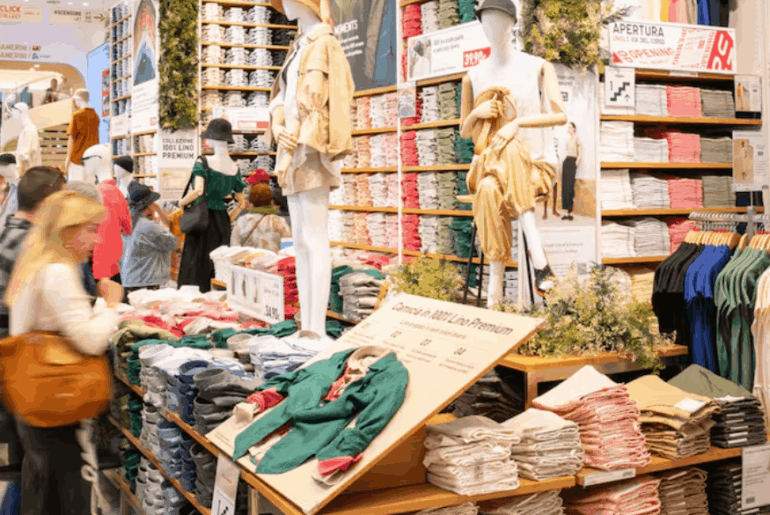
Uniqlo’s elevation strategy is centred around design authority and quality basics. Its premium essentials, such as its affordable cashmere sweater range, provide an alternative to trend-driven fast fashion. In 2023, the brand launched Uniqlo:C, a sub-label by Clare Waight Keller — formerly creative director of Givenchy and Chloé — focused on elevated everyday essentials and outerwear. In 2024, Keller assumed the role of creative director for the entire brand, expanding her remit to include Uniqlo’s core offering. Parent company Fast Retailing’s revenue grew 10.6 percent year on year in the nine months to May 2025, while operating profit expanded to 17.2 percent of revenue.

50% of global consumers say exclusivity creates a high-end brand image.

Product elevation only works when reinforced holistically across the brand experience

Borrowing aesthetic cues from luxury — across campaigns, editorials, photography and retail — can help justify elevated product positioning. For example, COS staged a ready-to-wear runway show at New York Fashion Week in September 2025, signalling its ambitions to extend its brand beyond the high street. While not every mass brand has a credible place on fashion week calendars, COS’ design-led aesthetic makes the case. Meanwhile, Zara’s use of famous fashion photographers such as Steven Meisel and Mario Sorrenti helps position it closer to high-end fashion.

Redesigned retail environments can offer similar signals and in-store service adds further weight. Aritzia’s personal style advisor approach to customer service is the backbone of its store experience, offering a high-touch styling journey like luxury department stores, which reinforces its premium positioning.

The same principles extend online. Websites and apps increasingly reflect elevated positioning through streamlined interfaces, lifestyle-driven storytelling and immersive visuals that replace function-focused user experiences.

There is a 76% correlation between a positive store experience and consumers’ perception of a brand as premium.

Zara’s High-Tech Concept Store:

In August 2025, Zara reopened its Manchester flagship in the UK with a new concept designed in an elevated format. The layout includes a series of curated rooms, each dedicated to collections such as Zara Origins, highlighting higher-value product lines. This zoning approach borrows from luxury retail, moving away from the uniform mass-market feel typical of fast fashion.

Technology is central to the redesign. Automated product sorting from fitting rooms to online orders, assisted return stations and app integration reduce friction and allow staff to spend more time on high-value customer interactions.

There is an 87% correlation between memorable and creative advertising campaigns and consumers’ perception of a brand as premium.

How should executives respond to these shifts?

Redesign product pyramids to signal elevated positioning

Build a product pyramid informed by consumer insights, balancing core assortments for the existing customer base with premium tiers aimed at capturing “splurge” purchases and recruiting more aspirational audiences.

Invest in material quality, craftsmanship and fit. Ensure consistency across the assortment to build credibility and trust with customers, which can translate into pricing power.

Introduce halo products in categories such as outerwear and leather goods that lift the perception of the entire brand.

Hire recognised creative talent to inject creativity and originality, or use capsule collections and designer collaborations to import design authority and generate excitement.

Adjust pricing architecture over a long-term horizon

Plan a multi-year brand elevation roadmap, emphasising gradual progress across multiple seasons over one-off drops or store renovations.

Use a combination of internal sales data and social listening tools to gauge price sensitivity across categories and define the brand’s price ceiling.

Place smaller-volume orders to limit overstock risk and reduce reliance on discounting to protect brand equity.

Reinforce positioning across the brand experience

Roll out the elevation strategy across the full brand experience — from communications to in-store environments. This means placing emphasis on elevated brand storytelling and cultural relevance while ensuring store design, visual merchandising and service standards signal the same aspirational positioning.

Online, brands can reinforce these cues through improved visuals, editorial content and frictionless user journeys that feel both premium and intuitive.

Higher-touch experiences more commonly found in luxury — such as personalised clienteling or exclusive community activations — can also build advocacy and deepen customers’ emotional connections

This article first appeared in The State of Fashion 2026, an in-depth report on the global fashion industry, co-published by BoF and McKinsey & Company.

Feature image credit: Uniqlo

By BoF InsightsMcKinsey & Company

Sourced from BOF

Sourced from VITA

In today’s competitive online marketing era, video lookbooks are a necessary tool for brands to establish their identity and promote their products. While an aesthetically pleasing lookbook grabs attention, a quality voiceover can be the most influential aspect, turning a quiet showcase into a memorable, engaging story. It’s a frequently neglected resource that extends beyond mere narration, offering a straightforward and compelling vehicle for engaging with your audience. The points below distinctly identify the powers of transformation that a professional voiceover can exert in video lookbooks.

1.   It Creates Brand Credibility and Trust

A professional voiceover is the human voice of your brand’s video presence, making direct contact that cannot be achieved through visuals alone. The correct voice, spoken with power and authenticity, immediately establishes your brand’s credibility.

When a lookbook has a refined, eloquent voice, it communicates to the audience that the brand is professional, meticulous, and trustworthy. On the other hand, an amateur or poorly recorded voice can ruin the entire production and render a brand untrustworthy.

The sound quality is unconsciously linked to the product or service quality offered. A clear, confident, and well-modulated voice soothes audiences, making them feel that they are dealing with a trusted company, creating a foundation of trust that is paramount when converting audiences to loyal customers.

1.   It Establishes a Deeper Emotional Connection

Aside from mere narration, voiceover is an effective instrument for expressing emotion and crafting brand personality. The voice’s tone, pace, and style can be selected thoughtfully to match your brand’s personality.

A luxury brand might find a sophisticated, smooth voice conveying luxury and exclusivity. A young, dynamic business might prefer an energetic and friendly tone to convey approachability and excitement.

A good voice artist or modern AI voiceover tools like Murf.AI have the ability to bring a script to life with the help of inflection and emphasis that will create a mood for the visual content. This element makes it more memorable and creates a stronger connection with the audience.

The voice is used as a brand identifier, a sonic logo that audiences will learn to associate with your business.

1.   It Guarantees Scalability and Global Accessibility

One of the greatest strengths of professional voiceovers, particularly with the usage of contemporary technology, is how easily they can scale and reach the world.

Traditional voiceovers work well, but they can be expensive and time-consuming to translate for various markets. Contemporary audio dubbing software and artificial intelligence-based voice generation platforms have streamlined this process. These software applications can easily translate one script into several languages with a natural-sounding voice. This capability enables a brand to produce versions of its video lookbook for various regional markets without the cost or time of independently contracting voice artists for each language. Not only does this increase a brand’s potential audience, but it also shows dedication to inclusivity by making content more accessible.

1.   It Clarifies the Story and Emphasizes Important Features

Video lookbooks, no matter how aesthetically pleasing, tend to fall short of providing accurate information to make the spectator well-informed. Voiceover provides a clear and effective way of supplementing that deficiency without overloading the screen with too much text. It can draw the eye of the viewer to specific details such as a special feature in a product, a material’s quality, or a design’s background. Clarity is highly necessary for products or collections with intricate or pioneering aspects where a visual explanation may not be sufficient. The voiceover functions as a narrator so that the viewer understands the entire message and doesn’t lose track amidst the aesthetics. This degree of intentional communication is a primary strength that cannot be obtained with visuals and music alone.

1.   It Raises Perceived Quality and Value

With a noisy digital landscape, in which audiences are constantly being pummelled with content, the quality of a brand’s voice can be the variable that stands out and creates loyalty. A professionally voice-overed video lookbook is seen as more valuable and of higher quality than one that is not. The cleaned-up sound makes the whole production classier, so the brand is seen as more mature and reliable. The cost of hiring professionals for the sound indicates that the brand cares about what it is making and how it is communicating. This quality perception can affect buying decisions, since customers tend to associate a company’s professionalism in advertising with the quality of its goods.

Final Word

The effectiveness of a professional voiceover in a video lookbook cannot be overemphasized. It is an essential component that commands trust, creates emotional bonds, guarantees world scalability, and clarifies the brand message. Therefore, investing in professional voiceovers is not an extravagance but a must for brands wanting to take their presence seriously and engage with a global audience.

Sourced from VITA

By 

When your brand is built on being number one, finishing second isn’t just a problem, it’s a complete identity crisis.

Some products become so synonymous with their category that the brand name replaces the thing itself. You don’t use an internet search engine, you Google it. You don’t blow your nose on a tissue, you grab a Kleenex. And for years, Elon Musk‘s car company had a similar advantage. “Tesla” and “electric vehicle” were commonly used interchangeably, almost as if no other EV brand existed.

That was Tesla’s superpower. They didn’t just make EVs; they were EVs. Every other manufacturer was playing catch-up. But now? They’re in second place. And for a brand like Tesla, second place might as well mean “first loser”. Not even the Cybertruck design debacle was as bad for the brand as this.

Reality catches up

So what’s happened? In short, Chinese manufacturer BYD has overtaken Tesla as the world’s biggest electric vehicle maker. Tesla delivered 1.64 million vehicles in 2025; down 9% from the previous year. BYD sold 2.26 million. That’s not close; that’s getting beaten at your own game. And it’s not just about sales; Tesla’s brand value has plummeted 35% in Interbrand’s latest ranking.

But here’s what’s genuinely bonkers: Tesla’s stock finished 2025 up 11%. Meanwhile traditional manufacturers like Toyota, who actually make consistent profits from their EVs, continue to be valued at a fraction of Tesla’s worth.

How’s that possible? Basically, Elon Musk is the world’s most effective one-man marketing department. He doesn’t just promote Tesla; he is Tesla. Every tweet, every wild promise about robotaxis and humanoid robots convinces investors they’re not buying a car company; they’re buying a sci-fi future.

A stainless steel Tesla Cybertruck driving down a long, open road toward snow-capped mountain peaks.

Tesla Cybertruck (Image credit: Tesla)

The problem is, this cuts both ways. Now Musk’s own brand is inseparable from Tesla’s, his erratic behaviour and divisive politics become Tesla’s problem too.

As Michael Jordan famously pointed out, “Republicans buy sneakers too”… and the same principle is playing out here in reverse. Turns out, not entirely surprisingly, that the people most motivated to buy an eco-friendly car don’t always share the same politics as Elon.

The maturing market

It’s worth noting that the market as a whole has matured. At the outset, Tesla made electric cars desirable, fast, luxurious, aspirational. They removed the “worthy” stigma and replaced it with swagger. That was revolutionary… but that was also 10 years ago.

Nowadays, Mercedes, BMW, Audi and Porsche are making credible electric cars with decades of brand heritage behind them. Chinese manufacturers are offering quality EVs at prices that make Tesla look overpriced. The branding of EVs has shifted from “I’m saving the planet while being impossibly cool” to “This is just a good car that happens to be electric.”

All of which means that for Tesla, second place really does equal first loser. The brand’s whole identity is wrapped up in being the disruptor, the one everyone else is chasing. Coming second – especially to a Chinese manufacturer most people couldn’t pick out of a line-up – takes all the air out of this brand narrative.

A gold-colored Tesla Cybercab parked on a wet city street at night in front of glowing storefronts.

Tesla Cybercab (Image credit: Tesla)

Elon knows this, which is why he’s pivoting to robotaxis and robots right now. “We’re not really a car company” is the subtext. It’s classic brand repositioning when your core business is wobbling. The question is, will anyone buy it?

After all, Tesla has spent a lot of time resting on its laurels. As a result, quality control has slipped, customer service has deteriorated and the CEO has become a liability. The brand promised – and is still promising – the future. But in practice, they’re delivering inconsistent build quality and broken promises, while continuing to talk about full self-driving being “just around the corner”… at it has been for over a decade now.

Key takeaway

Right now, Tesla faces a choice. Focus on being a premium EV brand; the Apple of electric cars. Or embrace the pivot to full tech company, betting everything on autonomous driving to AI.

What they can’t do is pretend nothing has changed. Because the results are in, and the brand that defined an entire category has been outmanoeuvred. For creatives in general, it’s a textbook case in how even the most powerful brand narratives eventually collide with reality.

The question now isn’t whether Tesla can recover. It’s whether they can accept that in the brand game they’ve built for themselves, second place really does equal first loser – and that might mean completely reimagining what winning looks like. Good luck with that, Elon.

Feature image credit: Tesla

By 

Tom May is an award-winning journalist specialising in art, design, photography and technology. His latest book, The 50 Greatest Designers (Arcturus Publishing), was published this June. He’s also author of Great TED Talks: Creativity (Pavilion Books). Tom was previously editor of Professional Photography magazine, associate editor at Creative Bloq, and deputy editor at net magazine.

Sourced from CREATIVE BLOQ

By Chelsea Gladden • Edited by Kara McIntyre

AI is redefining search. Without a strong, reputable third-party digital footprint, your brand risks disappearing in today’s competitive online landscape.

Key Takeaways

  • Answer Engine Optimization (AEO) is becoming a critical tool for brands to gain visibility and sales via AI-driven platforms.
  • Strategic press coverage using SEO-driven keywords enhances a brand’s chances of being recommended by AI tools like ChatGPT.
  • Building an affiliate program and optimizing digital presence are key steps for brands to leverage AI and increase their market share.

There’s a celebration going on amongst PR professionals. In an industry that takes on a lot of “no’s” for the coveted “yes” and takes hit after hit as a result of the dishonest agencies, the good “guys” needed some good news. With the ever-changing landscape of media, from print publications folding to all clients needing an affiliate option if they want press to feature their products, PR is now getting clients discoverable in AI.

In fact, without press, most brands do not exist when it comes to Answer Engine Optimization and Large Language Models (LLMs). Press is after its own SEO and uses coveted keywords based on what consumers are searching for, and now those keywords are linking out to those articles in ChatGPT, Gemini, etc.

Why AEO matters now

AI is changing the way people search. Instead of scrolling through Google, shoppers are asking AI engines directly for recommendations. In fact, Small Business Trends reports that 47% of U.S. consumers are shopping directly via AI tools.

Our long time Everything Branding clients are receiving the benefit of consistent press and, as a result, AI recommends their products. For example, when searching for “the best pepper grinder,” our client MannKitchen consistently appears as the number one option, citing the press our team secured as the source. Within ChatGPT, for example, you can also click on the link to see the original article. This widens the audience and views for that article. Press is strategically writing articles catered to traditional Google search and now also for AI, so they can secure more UMVs and higher advertiser dollars, all the while selling products for brands.

A mistake many emerging brands make is assuming shoppers will come without the effort to find them. Starting Google ads too soon generally fails because consumers don’t know the brand exists and aren’t googling it yet, nor interested in a brand they have never heard of. Once the brand starts getting press mentions, Google and Meta ads tend to convert better and now AI search is an added bonus.

How do you get recognized by AI?

Step 1: Secure press coverage

National outlets are now writing with AEO in mind, using SEO-driven keywords and structured content that LLMs can easily pull into answers.

Step 2: Build an affiliate program

With print consistently going away, magazines lost a major source of revenue with print ads. Media outlets got savvy and realized if they are telling their audience what to buy, they should be paid on the sale. Many media outlets now require brands to have an affiliate program before considering them for product roundups.

Step 3: Optimize your website for AI

Beyond press, you can improve your AI visibility through technical updates. In fact, I often run client sites through ChatGPT itself and ask: “What would make this brand show up in AI search?” The recommendations usually include adding schema markup, optimizing metadata, and building authoritative backlinks.

Step 4: Choose the right PR partner

Not all agencies are created equal. I’ve spoken with brands that felt burned by PR partners who overpromised and underdelivered. Here’s what brands should look for:

  • Verified testimonials (with names and businesses publicly mentioned; ignore any that are unspecific, like “Shelia M, Beauty Brand” and trust those that can easily be validated by checking if the personal name matches the brand, for example, “Jonathan, owner of Honeydew Sleep”).
  • Up-to-date expertise (Does the agency understand affiliate requirements and AEO practices?).
  • Flexibility to pivot (digital standards change fast, and agencies must keep up).

Doing a quick Google or AI search on an agency before signing can also reveal whether they practice what they preach. Make sure to differentiate between agencies that make over-the-top guarantees versus what is reality. For example, any agency that “guarantees” the Today Show is not being truthful.

Why DIY PR rarely works

I’ve worked with passionate founders who tried pitching editors directly. While their enthusiasm was clear, most outlets ignored them because editors prefer working with PR reps who understand their timelines, workloads and content needs.

One editor once told me, “I’d rather get one pitch from a PR professional than five emails a day from a founder asking why their sample hasn’t been featured yet.” Acting as the middle person builds trust with the press and ultimately leads to more coverage.

The bottom line

If SEO was the marketing differentiator of the 2010s, AEO is the differentiator of today. From my experience, the brands that invest in press, affiliate readiness and AI-friendly optimization are the ones already showing up in AI answers and getting sales directly from them.

The sooner brands adapt, the sooner AI will recognize them as the go-to choice in their category. Just like the internet boom brought more opportunities, now the AI driven boom is doing the same. It’s a win all around — press is being paid to sell products, brands are finding and selling to their customers and PR agencies are becoming the unsung heroes. And loving it.

By Chelsea Gladden 

Chelsea Gladden, CEO and founder of Everything Branding, leads the award-winning agency specializing in commerce-driven PR, AEO and digital marketing. Since 2018, the firm has driven high-authority press to boost brand visibility, including AI-driven and LLM-powered search results.

Edited by Kara McIntyre

Sourced from Entrepreneur

By Jodie Cook

Anyone can write a landing page, run some ads and start a business. It’s not difficult. But very few can build a brand that stands the test of time. One with happy, repeat customers, a solid reputation, and a commitment to quality in every transaction. Businesses that started decades ago have one thing in common: they cracked the code of longevity. They figured out what was working and doubled down. They listened to their customers. They didn’t give up until they were established. Set up your long-term brand right now and you’ll see more success in the short term too.

Chris Orzechowski is a brand growth strategist and founder of agencies including The 100 Year Brand. His work has generated over $120million in revenue for e-commerce brands, including Carnivore Snax, Gold Medal Wine Club, Factor 75, and author of Rich Dad Poor Dad Robert Kiyosaki. Orzechowski wrote the bestselling book, The Moat: How to Build a Durable, Profitable E-Commerce Brand That Can Last Forever, and has trained over 5,000 students in his marketing and brand growth practices.

Orzechowski wants to help you build a brand that never dies, and these 5 ChatGPT prompts make the ideal place to start. They have been modified to include the 9 crucial components of an effective prompt. Copy, paste and edit the square brackets in ChatGPT, and keep the same chat window open so the context carries through.

Build a brand that goes the distance with ChatGPT

Define your X-factor

In a sea of sameness, you can only compete on price. And no one wants to do that. Stand out for something else. Find your X-factor. According to Orzechowski, this is “the thing about your brand that means consumers inconvenience themselves to buy from you instead of taking a more convenient or cheaper option.” You should know exactly what your X-factor is so you can lean into it more. Use this prompt to clearly articulate the difference between you and everyone else.

“My company provides [outline your offering] for [outline your target audience]. I want to identify what specifically makes my brand unique and compelling to establish my “X-factor”. Acting as a brand specialist, analyze my brand and its offering to ascertain why a customer might prefer my brand over more convenient or cheaper alternatives. Start by opening a dialogue and ask questions, one by one, about aspects including product quality, customer experience, brand values, or any other unique selling points, to establish my X-factor. After five questions, suggest how I can further enhance and communicate this X-factor to make my brand even more irresistible to potential customers. Include the strategies I should employ to emphasize these unique qualities in my marketing and branding efforts.”

Build a moat around your business

Waste no energy being defensive by protecting your business interests. Spend more time on the offense, executing your plan of attack. “This prompt helps you forecast disruptions in your industry and come up with a plan to thrive,” said Orzechowski, who knows running a company on the back foot is no way to operate. Ask for ChatGPT’s assistance on what might be around the corner so you can cover every base and thrive during any turmoil.

“Given what you know about my company, our target audience and how we differentiate ourselves, help us prepare for future change, especially the impact of AI and other new technologies and how they might affect our revenue and position in the marketplace. Our ultimate goal is to build a moat around our brand so our company can survive and thrive for the next 100 years. Acting as a business analyst, outline the 5 steps I should take to ensure my company’s success over the next century.”

Assess your brand voice

“Brand voice is an abstract concept,” explained Orzechowski. “But this prompt will make it concrete.” He said it’s especially important if you’re hiring marketing team members or agencies, because “you need to be able to communicate your brand voice, as esoteric and ethereal as it might be.” If you can’t delegate work to others, your company will stay small and won’t fullfill its potential. “This prompt will list the key elements of your brand voice so your team members or partners can incorporate it into your communication.”

“Act as a brand strategist and analyse the attached origin story of my brand. My objective is to be able to confidently delegate the creation of marketing copy in the style of the document pasted below. Answer the following questions in a way that’s helpful to a marketing manager responsible for creating content from the analysis. 1) How would you describe the style and tone of this copy? 2) What would this copy suggest are key life goals and obstacles for my customers? 3) How does my brand aim to help them? After answering these questions, list the 5 key elements of my brand that should be incorporated into all marketing messaging. Here’s the copy: [Include the copy].”

Lock in your acquisition

Prospects in your pipeline mean nothing until they have converted to paying clients. Without paying clients, you don’t have a business. Orzechowski explained that, “every customer you acquire is a future cash flowing asset. But getting the cash to flow requires them to make that first purchase.” And that’s where most businesses fall down. Find out why people aren’t buying right now by analysing the ones who already said no. Dig into the lost reasons; the causes for someone to look elsewhere or decide to do nothing. The more data you have, the more you can find out how to compel products into a purchase. Secure the medium term of your business and the long term takes care of itself.

“I want to find out the main reasons prospects don’t turn into customers. I’m pasting a list of lost reasons by the number of times they were used. We also have [number] prospects in our existing pipeline who haven’t yet gone ahead. Act as a positive business analyst and use the data we have to suggest our main weaknesses in customer acquisition and suggest tactics we could try to (a) re-engage people who previously said no and (b) go out to current active prospects with a more compelling offer.”

Punch up your emails

Build a 100-year brand with email campaigns that can run autonomously. Make your email campaigns an extension of your high quality brand, not set up for a quick buck. When you get this right, your prospects will turn to customers as if by magic. You won’t need to change them up, you won’t need to spend any time writing new ones. Orzechowski said this is, “one of the easiest ways to increase your sales” and recommends using ChatGPT as your “writing assistant and copy chief.” He believes business owners often “forget crucial conversion elements that diminish the power of your sales message.” This prompt will help you double check your work so you can handle your customers objections before they even think of them.

“I’m writing an email to [describe the people on your email list] with the purpose of selling [describe the product the email is designed to sell]. Acting as a marketing specialist, analyse the copy and tell me its strengths and weaknesses from a conversion perspective. Using what you know about my business and its X-factor, highlight any key points missing from the copy. Make suggestions on improvements I can make to ensure the email is more compelling, true to my brand voice, and more likely to convert.”

5 ChatGPT prompts to build a 100-year brand

If you could get everything right today, your business’ upward trajectory would start from now. As your customer base grew, so would its reputation, website power, pipeline and number of referrals. More customers would tell their friends, more of your future would be secure. Start the ball rolling with these five key elements. Define your X-factor, build a moat around your company, and assess your brand voice to communicate with clarity. Lock in your acquisition by assessing prospect lost reasons and punch up your emails with ChatGPT’s critical eye. The next century starts today.

Build a brand that goes the distance with ChatGPT

Define your X-factor

In a sea of sameness, you can only compete on price. And no one wants to do that. Stand out for something else. Find your X-factor. According to Orzechowski, this is “the thing about your brand that means consumers inconvenience themselves to buy from you instead of taking a more convenient or cheaper option.” You should know exactly what your X-factor is so you can lean into it more. Use this prompt to clearly articulate the difference between you and everyone else.

Feature Image Credit: CHRIS ORZECHOWSKI

By Jodie Cook

Follow me on Twitter or LinkedIn. Check out my website or some of my other work here.

Founder of Coachvox AI – we make AI coaches. Forbes 30 under 30 class of 2017. Post-exit entrepreneur and author of Ten Year Career. Competitive powerlifter and digital nomad.

Sourced from Forbes

BY EMILY REYNOLDS BERGH

Having a solid brand and getting your brand publicized are two distinct things. Here are insights on how to increase your chances of garnering your brand’s media coverage.

Let’s clarify something right from the start: crafting your brand and promoting your brand are two distinct functions. The first is a wholly creative process, usually the foundational floor you lay before ever adding one brick to your business. Your brand is a look, a feel and a message. It has a tone, a personality, a presence — it’s what you’re all about.

Getting that brand presence out there into the world is a whole different matter, however. It has to land with your audience, align with the current marketplace and resonate with investors and stakeholders. And when it comes to the media — those individuals and outlets that are hugely influential in determining which brands will be highly publicized and which brands will flounder amid the vast landscape of competitors — you actually have to sell them on your brand.

How do you do that? By piquing their curiosity and capturing their attention. Securing media coverage depends on enticing influencers to take a closer look at your brand, then (consequently and hopefully) widely disseminating all the good news about your company that you already know.

Here’s what I’ve discovered about selling a brand to the media in my 20+ years as a public relations specialist.

Selling point #1: A compelling story

Media people are people first, journalists second, and just like me and you when we’re out shopping around for something new, they want to be interested in something potentially enriching and exciting. Nowadays, the route to elicit that interest is captivating storytelling. In fact, at the heart of any on-point media pitch is compelling storytelling, and although it’s your publicist’s job to compose a narrative that integrates your brand’s journey, values and impact, it’s your job to make sure that narrative is relatable and emotionally engaging by infusing it with authenticity and originality.

For example, there might be nothing new to say under the sun about Brussels sprouts. But when one of my restaurant clients started telling me one day about how his exposure to community gardening as a boy when he was volunteering with his uncle led to his passion for organically grown farm-to-table produce, suddenly my pitch about “Uncle Bernie’s Brussels Sprouts” on his menu came alive with character and flair. I had a similar experience with an interior designer who just started sharing with me how sitting on the floor as a child watching her mother paint in the basement led to her obsession with color and space. Voilà, I had my brand pitch.

The point is: To do something that has invariably been overdone, infuse it with the personal because that’s the direction in which media coverage is moving. Your product or service doesn’t matter as much these days as your givebacks, your community imprint or your origin story. Media professionals are always on the lookout for something with a touch of uniqueness — appeal to their humanity by delivering that in the way that only you can.

Selling point #2: Clarity and conciseness

Next comes appealing to the ear. The media industry is abuzz with announcements of the “latest and greatest” this or that and is positively awash in a sea of submitted content. To get your piece to rise to the top instead of drowning, recognize that time is a precious commodity in this fast-paced industry and act accordingly.

When pitching your brand, ensure that your messaging is succinct and easily digestible. Clearly articulate what makes your brand singular and why that should matter to the modern consumer. If you can showcase how your brand addresses a specific need or accords with a particular trend in the market, all the better. Short and punchy; a well-crafted elevator pitch — that’s what the media wants to hear.

Selling point #3: Visual interest

Appealing to the eye is equally vital to lure attention to your brand, and this step is actually fun to pursue. Enhance all your brand materials with visually arresting images, high-quality and thought-provoking photos, spiffy infographics and entertaining video snippets. All should support your brand’s story and messaging, and yet all do so in graphic format instead of text-only language. People like this; the media loves this — you’re supplying them with ready-to-use content that’s already primed for public viewing!

Selling point #4: Data-driven impact

A picture may be worth a thousand words, but in business spheres, facts will almost always trump even the most imaginatively composed fiction. The story still matters — the story will always take centre stage — but you’ll want to back up your brand’s story with concrete data and evidence of effectiveness.

The media is drawn more to brands that can demonstrate quantitative, not just qualitative, success, so brand pitches are an ideal place to seamlessly work into the narrative customer satisfaction ratings, market share percentage and social impact. Appeal to the intellect here by incorporating applicable statistics, case studies and testimonials that speak to the relevance of your brand in the market and give your story backbone and validity.

Selling point #5: Media-friendly assets

Lastly, don’t underestimate the value of supplying the media with eye-catching, user-directed assets that have been custom-tailored to present your business in its best possible light, in its most irresistible packaging. You’re appealing to the media’s sensibilities here with materials that serve as excellent resources to supplement and support the pieces you’re hoping they’ll write or air.

I recommend creating a media kit that includes high-resolution images, print-ready logo formats, links to video content, key points that make you stand out and any other pertinent information that will infuse journalists’ articles with details and descriptions exclusive to your brand. Then, when requests for interviews start coming in, be responsive and make yourself easily available. The objective for brand pitches — for any kind of pitch, really — is to snag the media’s interest in further exploring your brand. When you get them on the line with your hook, the sale has been made!

BY EMILY REYNOLDS BERGH

ENTREPRENEUR LEADERSHIP NETWORK® CONTRIBUTOR

Founder at R Public Relations Firm. Emily Reynolds Bergh — vintage-shoe hoarder, cycling junkie, & lover of pink drinks — is a marketing & PR pro with 15+ years of experience under her belt. Now the founder & owner of the award-winning R Public Relations based in New York, she’s been featured in numerous publications & podcasts.

Sourced from Entrepreneur

By Jeff Stillwell

In the age of big-box online retailers, social media influencers and the option of next-day delivery on most online purchases, brands are often left to wonder how (and if) traditional retail growth should be prioritized. Over my 25 years working in the apparel industry, I’ve found the answer to be a resounding yes. Based on this experience, here’s my playbook for successful retail expansion in the e-commerce era.

1. Don’t guess; follow the data.

Most executives know that it’s important to delegate and defer to the expertise of others when needed. For our company, when it came to selecting locations for new storefronts, I knew that we needed real expertise in real estate and market research. So we engaged a company to assist with site selection. This taught me the importance of analyzing metrics such as total population, local home values and average incomes.

Another important data point when considering a storefront is tourism data: What percentages of potential visitors live in the area, and how many are visiting? This analysis can help ensure you’re meeting your current customers where they are. Additionally, examining demographic data such as age, income levels and lifestyle preferences in the target location can provide valuable insights for tailoring your retail storefront to the local community. Understanding the landscape of competitors, including similar businesses and their success rates, can also help you with strategic positioning.

Lastly, evaluate the accessibility and convenience of the chosen location, like transportation infrastructure and parking facilities. These features can be essential to enhancing the overall customer experience and attracting a diverse clientele.

2. Use retail spaces as an interactive way to tell your brand story.

Once you’ve identified the ideal spot for a new store, focus on the experiential aspects of the build-out. Even as you expand to new markets, keep in mind what your current and future customers expect when they come to your location, and ensure the same top-quality experience across all of your locations, from the look and feel to messaging and staff training. Staying committed to making your brand story tangible can allow you to take the next step toward incorporating unique design touches and merchandising that will make customers in the area feel understood.

3. Make smart decisions, and don’t be afraid of rapid growth.

When pursuing expansion, it is important to develop a robust strategy. Instead of spontaneous choices, devise long-term strategies that incorporate potential growth avenues. Keep an eye out for market situations that present favourable conditions, and stay in tune with sector trends and consumer patterns in order to make informed decisions. By recognizing and adjusting accordingly to demand swings, your business can flourish and become more resilient—which helps make long-term growth sustainable.

While strategically growing my company’s retail footprint, our key takeaways have pointed to the continued importance of traditional retail in an e-commerce-driven world. By emphasizing data-driven decision-making, the branded experience your storefronts provide and a diversified channel mix, you can achieve informed, strategic growth. In an era of uncertainty and rapid change, embracing opportunities, investing in expertise and maintaining a strong physical presence can be pivotal as you forge lasting connections with your customers.

Feature Image Credit: GETTY

By Jeff Stillwell

Jeff Stillwell is president of Salt Life, LLC, and a 25-year veteran of the apparel industry. Read Jeff Stillwell’s full executive profile here.

Sourced from Forbes

By Hannah Cranston 

Let this year be where your brand’s story becomes not just told but celebrated.

The onset of a new year brings a fresh perspective, encouraging leaders to evaluate and enhance how they communicate and connect with their audiences. Brands and their leaders are presented with the opportunity to redefine and strengthen their public relations (PR) and media approaches. The new year is a time for innovation and growth, and in the realm of PR, it’s about crafting strategies that resonate with your audience and set your brand apart.

Let’s explore five transformative strategies that can redefine how you approach PR this year, ensuring your brand remains at the forefront of innovation and engagement.

1. Be proactive, not reactive

The cornerstone of a robust PR strategy is proactivity. Anticipating trends, understanding your audience’s evolving needs, and preparing your narrative well in advance can position your brand as a leader rather than a follower. However, the magic lies in balancing this preparedness with the ability to pivot.

The PR landscape is dynamic, and success often hinges on your ability to swiftly adapt to unforeseen events and trends. Your PR strategy must continuously monitor the media landscape, understand emerging platforms and identify potential opportunities or threats. It’s about having a strategic plan in place while being ready to make quick, informed decisions when the unexpected occurs. This blend of foresight and flexibility enables a brand to stay relevant and engaging in our fast-paced world.

2. Storytelling over selling

Consumers seek more than just a product or service; they crave a connection, a story they can be part of. This shift necessitates a move from straightforward selling to compelling storytelling. Crafting narratives that encapsulate your brand’s ethos and resonate with your audience’s aspirations creates a deeper, more meaningful connection. These stories should be authentic, relatable, and, most importantly, reflective of your brand’s values.

Effective storytelling in PR is about weaving a narrative that informs, inspires and engages the audience. It’s about finding the unique elements of your brand’s story and telling them in a way that creates an emotional resonance with your audience, making your brand memorable and impactful.

3. A 360-degree approach

In today’s multifaceted media landscape, relying solely on digital media can limit your brand’s reach. A holistic approach encompassing podcasts, Instagram Lives, broadcast media, and more can significantly enhance your PR strategy. Each medium offers unique opportunities and access to different audience segments.

For instance, podcasts can provide a more intimate way to convey your story, while Instagram Live can foster real-time engagement. This diverse approach ensures a more comprehensive and impactful reach. A 360-degree approach also means integrating your PR strategy with other marketing efforts, ensuring a consistent brand message across all platforms. It’s about leveraging each medium’s strengths to create a cohesive and far-reaching brand narrative.

4. Think beyond the press release

While the traditional press release still has its place, today’s PR landscape calls for a more creative approach. It’s about breaking the mould and finding innovative ways to share your story. This could mean crafting immersive digital experiences, collaborating with influencers in unique ways, or leveraging emerging technologies to create engaging narratives.

The key is to think outside the box, offering your audience something fresh and unexpected, which in turn can generate more interest and coverage. It’s about creating content that not only informs but also entertains and engages your audience, making your brand stand out in a crowded media landscape.

5. The power of delegation

Hiring a dedicated PR team is a game-changer for any business looking to elevate its public image. The complexity and nuances of modern PR require specialized skills that only a dedicated team can provide. A PR team allows the brand to have experts solely focused on PR, ensuring that each campaign is well-crafted and aligns perfectly with the brand’s overall goals and image. This dedicated team becomes the brand’s storytellers and reputation guardians, adept at navigating the ever-changing media landscape and adeptly crafting the brand’s presence in the public eye.

Let this new year be the moment you ignite a transformative journey in your PR endeavors. Envision your brand not just as a participant in the market but as a trailblazer, setting new standards in how stories are told and connections are made. Let the passion for your brand fuel innovative strategies, and allow the expertise of a dedicated PR team to amplify your voice.

By Hannah Cranston 

Entrepreneur Leadership Network® Contributor

Hannah Cranston is CEO of HCM, a PR & communications agency that helps changemakers share their story with the world. HCM’s clients have run for President, developed a TV series, created a YouTube channel with millions of followers, interviewed the top business leaders in the world, and gone viral!

Sourced from Entrepreneur

By Jon Michail

Nowadays, everyone wants to “build their brand” and grow their social media following. But authentic personal branding goes far beyond vanity metrics on Instagram or X (Twitter). At its core, your brand is simply your reputation — what you’re known for based on the value you consistently provide over time.

While social platforms are tools for amplifying your message, your brand exists with or without them, like before social media. Your message will differ in strategy if you have a mass-market brand compared to a niche market brand. So, don’t equate the size of your following with the strength of your brand.

You should focus on the 11 things I’ve highlighted instead.

1. Focus on providing real value

Gaining likes or followers shouldn’t be the goal. You want to attract engaged “true fans” who eagerly consume whatever you share because it enriches their lives somehow. That comes from consistently publishing original non-AI content they can’t find elsewhere.

Social media rewards quick, superficial content. But bite-sized posts alone won’t build authority. You also need in-depth educational content like blogs, videos, and courses. Demonstrating deep expertise earns trust and loyalty.

2. Be multi-dimensional

The most powerful personal brands showcase diverse talents, not just one narrow identity for social media. Consider what makes you uniquely you. What are your varied interests and abilities beyond any one label? Find creative ways to showcase those multi-faceted aspects through diverse content forms.

For example, Chef Joshua Weissman is known for his fun cooking videos. But he also posts candid vlogs, music parodies, and lifestyle content to show more of his personality. Sharing broader perspectives beyond a single niche makes you more relatable.

3. Focus on giving, not just taking

On social platforms, it’s easy to get caught up in a mindset of maximizing what you can get – followers, shares, and sales. But the most influential people focus on how they can give value to others first. When your audience feels you’re invested in their interests, they’ll invest in you.

Rather than trying to hook followers with self-promotional content, offer something useful for them. Teach a new skill, share hard-won lessons, and recommend helpful tools. Aim for content that improves people’s lives, not just grows your metrics.

4. Let your work speak for itself

There’s an art to self-promotion on social media – you want to get discovered. But nothing turns people off faster than constantly bragging about yourself. Show, don’t just tell. Let the quality of your evidence-based work demonstrate your talents so people spread the word for you.

5. Establish yourself offline too

While you can build a brand through digital content alone these days, having offline elements bolsters credibility. Speaking at events, getting media coverage, publishing books/courses, and other real-world achievements help take you to the next level. Look for opportunities beyond social media.

6. Stay authentic

In the quest for likes and follows, presenting an exaggerated or idealized version of yourself and life is tempting. But trying to mould your image into someone else’s idea of a “personal brand” just rings hollow. The most magnetic people share their real, unfiltered selves. Don’t become a caricature.

7. Take a long-term view and listen first, market later

Growing an engaged audience organically takes time. Social media rewards rapid output and trends. But consistency over the years is more important than any one viral post. Your audience will stick with you when they relate to you as a real person, not just a content machine. Play the long game.

Here are more ways to build a powerful personal brand beyond just social media metrics:

Relentless self-promotion fails to make real connections. Instead, listen to your audience’s needs first before deciding where you can provide value. Pay attention to comments and questions to identify pain points you can address. Let them guide your content.

8. Collaborate with those outside your niche

Partnering with complementary creators, even in other fields, helps expand your reach. Introduce your audience to someone new and vice versa. But choose collaborations strategically with those whose work has substantial value, not just because they have a big following.

9. Represent yourself professionally

How you present yourself in business contexts also contributes to your brand. Pursue speaking engagements, write guest articles for prominent publications and participate professionally on social media. Becoming an industry thought leader establishes credibility beyond just popularity.

10. Invest in original content and don’t neglect non-social channels

Great photography, graphics, and other production values elevate your content and brand. However, learning new skills or hiring help requires investment. Consider the return in terms of increased audience engagement and marketplace authority.

While social platforms are great for awareness, channels like email newsletters better cultivate lasting relationships. Someone may casually scroll past your post, but subscribers who opt into your newsletter are highly engaged fans. Don’t over-rely on social channel algorithms. Social media companies are deliberately changing the algorithms to keep you chasing your tail.

11. Live your brand values

To attract your ideal audience, identify your core values and express them consistently through your content and conduct. Standing for something gives your work a deeper meaning. People will support brands whose beliefs align with their own. Authenticity draws the right crowd.

Owning your niche often means filling gaps others miss. Provide resources you wished you had. Interview people you’re curious about. Share details no one else covers. Becoming known for addressing unmet needs makes you indispensable. The most powerful personal brands are built on passion. Let your enthusiasm for your niche fuel consistent, high-quality, original content. That passion is contagious.

Conclusion

Don’t just focus on vanity metrics and social media image. Build a multi-dimensional personal brand by providing value in diverse ways over time. Your long-term aim is cultivating true fans who are enriched by your work, not just chasing engagement. Be intentional and keep on giving real value, and the right audience will keep finding you.

By Jon Michail

Entrepreneur Leadership Network® Contributor. Jon Michail is the CEO and founder of Image Group International, an Australia-based corporate and personal-brand image advisory and coaching organization that conducts transformational seminars, workshops and one-on-one coaching in over four continents.

Sourced from Entrepreneur

Sourced from The Network Journal

Online competition for attention and engagement has never been more intense and the rapid rise of artificial intelligence (AI) is exponentially increasing this tension, experts note. They advise leaders to get their personal and business brands AI-ready in order to stand out from the crowd and compete.

One such expert is Karen Tiber Leland, founder of Sterling Marketing Group, a branding and marketing strategy firm specializing in personal, business and CEO branding.

“Any CEO or entrepreneur who is not preparing their personal and business brands for the coming AI tidal wave is in a dangerous place,” Leland says.

Because AI language models (such as the hyper-popular ChatGPT) rely on large datasets of text from the Internet to learn and generate responses, she explains, “You have to teach Google who you are and what your company is about — across the net…If you don’t have online discoverability, credibility and relatability, you can’t compete.”

Not having enough quality content that Google can find creates AI generated generic responses about a brand based on the limited information available, she notes.

In a recent test, Leland asked AI about CEO clients who had very little online presence. “The response was, ‘I don’t have enough information to provide an accurate response,’ or, ‘I’m sorry, I don’t know much about this person,’” she says. “Not being on the radar becomes a huge opportunity cost.”

Below are seven essential steps Leland recommends taking to prepare personal and business brands for AI and explains why.

Stop avoiding AI and embrace education and experimentation. The more you avoid AI, the further behind you will get. One way to stop avoiding AI and prepare your brand is to educate yourself with the abundant online resources and experiment to see how it could work for your personal and business brands.

Accept the need to create a parallel CEO brand. Although 82 percent of all Americans (88 percent of older millennials) agree that companies are more influential if their CEO and executives have a personal brand, many C-suite leaders still believe they don’t need to create one, Leland says. “What they fail to understand is that they already have one. It is just a matter of if they want their brands to be by default or design.”

Consistently create an abundance of online, high-quality content. AI models can better understand and generate contextually relevant and accurate responses as they become more advanced. If your content is visible on Google and considered an authoritative source, it is more likely to be referenced by AI models when generating answers to relevant queries. Content can be articles, blog posts, podcasts, media interviews, social media posts, videos, etc.

Take a fresh look at your target audience. Knowing whom you are trying to reach and their concerns is critical in being AI-ready. AI itself can be a good source of gaining data and insights about what your target audience is now wanting and needing. This allows you to create brand messaging and content that resonates with them.

Monitor your online reputation monthly. Keeping track of when you are mentioned online, by whom and what is said is necessary in today’s wired world. A whole host of AI online reputation management tools can help you stay on top of your personal and business brands and allow you to address any issues sooner rather than later.

Flip the focus of your social media. A robust social media presence is undoubtedly essential in building a brand. Leland says the problem is that 80 percent of most companies’ posts focus on the company, with only 20 percent being educational or entertaining. The key is to start having 80 percent of your posts written around keywords, industry topics, trends, customer interests and thought leadership.

Teach Google who you are and what you stand for. If you want to be an authority, you must author something, says Leland. Leland suggests writing at least one long-form (600-1000 words) social media or blog post a month is the minimum you should go for. In addition, measuring social media solely through the lens of “engagement” is a mistake. Part of the purpose of today’s social media posting is to make yourself discoverable to Google and to teach it who you are and what you stand for.

The bottom line is, ignoring the trend of AI and chatbots in business and personal branding is a significant mistake, Leland warns. Even if you are not preparing your personal and business brands for AI, your competitors are.

Karen Tiber Leland is the author of “The Brand Mapping Strategy: Design, Build and Accelerate Your Brand.”

Feature Image Credit: Sanket Mishra

Sourced from The Network Journal