Tag

Brand

Browsing

By 

Marketing holds a unique place in the modern world; it has the ability to challenge and shape perspectives, to inform culture and to kickstart movements.

Now, in a time of global crisis, we see more clearly than ever the industry’s ability to effect real change, by driving positive messages and offering platforms to those that need it.

It is in the spirit of this fundamental belief that The Drum and Facebook have teamed up to launch the ‘Marketers Can Change the World’ global initiative, which aims to unite and support the industry across three areas: EMEA, North America and APAC.

At its heart, Facebook exists to help create and sustain communities, even from a distance. Now, during Covid-19, that distance is felt more than ever. Pledging to donate $100mn to 30,000 small-to-medium size businesses (SMBs) across these markets, Facebook will support established and rising marketing leaders to rethink how these businesses are run and how we can make them more resilient in times of struggle.

Discussing the exciting new initiative and how marketing can effect positive change in the world is; General Mills marketing head- culture & brand experience (Europe-Australasia), Arjoon Bose, Bombay Sapphire brand director, North America, Tom Spaven, Facebook global industry relations and intelligence lead, Sylvia Zhou, and The Drum associate editor, Sonoo Singh.

What steps have been taken?

“You’ll have seen the Coronavirus Information Centre located at the top of your news feed from the start of the pandemic,” says Zhou. “This was introduced so that our users are up-to-date with news and developments, from a source they can trust.” Facebook has also offered free ads to public health authorities such as the W.H.O, created Community Help where people can support their peers and recently launched Facebook Shops to help users pivot their business online.

Spaven speaks of Bacardi’s commitment to their consumers during this trying period: “The bar and events industry was particularly impacted by Covid-19, so we wanted to give back to the businesses that have continually supported our business.” The project pledged $3mn in financial aid to bars and bartenders facing difficulty during this period, as well as offering up their platforms and marketing expertise for those that need it. For Bacardi, it was a case of serving those that serve them; an idea also seen at General Mills. With the enforcement of lockdown, Bose understood that it was essential to reiterate the kitchen as being the heart of the home and to promote the everyday products needed by families.

What more can bigger brands do to provide support?

“Now is the time to be bold and responsible,” Bose responds. Marketing has always been at the forefront of significant change. He argues that during these difficult times marketing gives consumers a reason to spend and a reason to hope. Now is the time to reiterate brand identity.

Spaven believes that going back to basics is the surest way to engage your consumer base. “The fundamentals of marketing, as well as of human behavior don’t change, only budgets and resources do.”

What are the objectives of the Facebook project?

The ‘Marketers Can Change the World’ global initiative supports small-to-medium size businesses (SMBs) across EMEA, North America and APAC and will focus predominantly on those run by immigrants, senior citizens, or women. “Statistics show that businesses run by these marginalized groups encounter more difficulties in acquiring resources and financial funding,” Zhou shares with us. The project will give rising stars in the marketing industry the opportunity to collaborate with senior mentors with vast experience in the field. Working together on a prescribed brief, the teams will create business policies that give value for the people and communities they impact. Facebook will provide essential training and access to tools that will allow these businesses to thrive both during and after the pandemic.

What knowledge will the mentors be able to impart?

Both Arjoon Bose and Tom Spaven express their sincere gratitude at having been asked to take part in the initiative as mentors. “This is a great opportunity to listen and learn from others, and to experience situations in a new way,” Spaven says. These views are echoed by Bose, who recognizes this opportunity to collaborate with different people and teams, as a teaching moment.

“I hope to be able to provide a fresh perspective to the team members and ask the right questions,” shares Spaven. This initiative lets teams combine the quick thinking of big brands with the even quicker movement of smaller, more centralised businesses.

At the heart of this, is our consumers- and their needs are changing rapidly. How are brands able to keep pace with this?

“Brands have to always be open to change,” states Bose. “Whether that’s remaining open to rethinking your retention strategy, trying out new tools or reprioritizing your products in line with consumer needs- we must be agile.”

Similarly, for Spaven businesses should always be thinking about their brand experience and how this meets customer needs. “Purpose is so important for every brand, but that doesn’t mean they all have to save the world,” he affirms. Understanding your brand’s mission and ensuring you deliver that, ethically and responsibly is enough.

Spaven adds that diversifying the industry needs to be a top priority if we are to truly meet the demands of today’s consumer; “It’s not about ticking a box, it’s about benefitting your bottom line- it’s just good business sense.”

Zhou agrees: “This mission is at the core of what Facebook wants to achieve in this initiative. By channelling our every effort into increasing the visibility of these groups, we want to create a ripple effect throughout the industry. This project will reveal the true power of marketing to influence for good and change the world for the better.”

By 

Sourced from The Drum

By Jessica Abo,

Learn tips for early business growth and branding from strategist, brand designer and entrepreneur Nikki Arensman.

Nikki Arensman is a  designer and strategist who works with female entrepreneurs, particularly those building digital businesses. She spoke with Jessica Abo via Zoom about how entrepreneurs can navigate the early stages of growing their businesses and beyond.

What do you think is the biggest mistake that most entrepreneurs make in year one of their ?

Arensman: Ultimately, in year one, you’re really just wanting to prove to yourself that your business is not only viable but that it can also impact your industry and earn you an income. You’re wanting to make money. We’re building a business. The mistake that I see all the time is not building a foundation from day one that supports building trust between you and your dream .

Our most favorite brands, they’re the ones that we can count on for X, Y, Z. Whatever they’re doing good at. We know that if we go over to their , if we open up their emails, if we listen to their podcast, if we read their blog, we know what we’re going to expect from them in terms of the way that they look, their language, the way that they talk and the way they communicate. And, subconsciously, what that does for us is it starts to build reliability and build trust. And we know that ‘Okay, I can always expect this from them.’ Then when we need something, we immediately think of them.

What this does is it really makes us, the consumer, want to be a part of their story and want to be a part of their success and have a piece of their brand. I always think of the formula consistency equals reliability, reliability equals trust, and trust brings in more sales.

For those entrepreneurs who just finished year one, and they’re entering year two and they just feel like they’re all over the place, what are your pieces of advice on what they should do first and what they should focus on long-term?

Arensman: First things first for me. When I’m either wrapping up year one with a client or even back to when I was exiting year one and moving on, it’s figuring out what worked and what didn’t work. Strategically, what worked in your business, what brought in income, but also what felt really good and in alignment and what was a struggle and just was like pulling teeth, trying to get you to show up and do it. And then, what did your audience and your clients just absolutely love? Whether that was a service, an offer, a webinar you did, a live training, something that it just hit it out of the park.

From there, I decide how this person should move forward. Either they can do one of three things or a combination of three things. They can either scale an offer with an audience that was a total win. Something like a webinar that did really well and piece together whether it was the audience or was it the actual topic of discussion?

Number two is continuing to explore new offers and figuring out where I really shine the brightest.

Number three is really bringing your branding and your messaging up to speed with where you’re at at that point, which is typically such a different place from day one when you first got started.

For those who identify with one of those or all of those, break down each one for us a little bit more.

Arensman: Let’s take number one, which is scaling an offer. Was there an offer or service that was a total win for you and the client? If so, then it might be worth turning this into an offer that you can scale. For example, if that’s a one-on-one offer, you can think about it like breaking down each piece of content that you worked on in that one-on-one setting and turning those into lessons or modules for a digital course that then removes you from the equation. The plus side of doing that is that you can still have your one-on-one offer. Except now you can raise the pricing on that and bump it up because they’re going to get access to you and your time. You can still have the course that could be sold to a wider audience. That’s an example of that.

Or maybe it was a group program that you launched live and you had a set of four or five calls where they did get access to you. You can now break that course down into smaller training sessions at lower cost. Say you’re taking module one and turning it into its own little offer at a lower ticket than somebody needing to buy into the giant group program. This introduces your audience into what we like to call “the binge and buy” mentality — it supports them in coming back for more. It eliminates people just being one-and-done with a service. Instead, they’re saying, “Oh, I want this,” and, “Oh, I can see they offer this.”

There are some programs that do offer that. One of my favorites is MemberVault. These let you have easy access to a marketplace. These options are a great place to begin. Getting comfortable with paid  through , Instagram and  ads that will basically lead traffic into these scalable offers that you could have.

If someone is not ready to scale, but they feel more comfortable continuing new offers, what does that look like?

Arensman: This is a great route if you are still figuring out who your people are or you haven’t totally clicked with a certain ideal client or niche. If you didn’t really feel yourself get in a flow in year one at any time, then it’s worth taking a step back and looking at what felt out of alignment and find the gap between what you offered and your messaging and what your audience is wanting.

One of the ways of doing this is having past clients answer a set of questions about their time working with you. What was it like, where did they feel most supported and how did the work that they did with you and the time that they spent with you really impact their business? That’ll give you a really good insider look from the client themselves, what felt good and what didn’t feel good. That scares people because they might get some answers that they’re not ready to hear, but it’s so powerful to look at that and analyze and then say, ‘Here’s where I really excelled, straight from the client.’ Sometimes you don’t even have the awareness of that as the provider.

Also, just trying some new things. Don’t be afraid to pivot and put something new out there and see if it sticks. You don’t always need a fully built-out sales page, the perfect  sequence or the perfect funnel in order to get some sales and gauge, what works and what doesn’t. And sometimes the thing that you just get from a blip of inspiration and you throw out there —whether it’s on , on your story or in your feed or you email out your list — sometimes that’s the thing that sticks. And it turns into that killer program that does really well or that new one-on-one service that you can then go back and scale in the coming months.

You also say that it’s okay to give yourself time to catch up to your business. What do you mean by that?

Arensman: Sometimes, when you have an offer or service that isn’t converting the way that you hoped, it’s not always the offer’s fault. Sometimes it’s the messaging or not really reaching the right client. This really comes back to having a beyond basic understanding of who you’re serving and ultimately what their problem is. This requires taking a look at your brand as a whole and, like you said, really just taking a second to let everything catch up.

In addition to knowing relevant information about your ideal client, it’s equally important for you as a brand to have a solid foundation in both visuals and content. The two of those being able to work in tandem together. If one gets left at the starting line — let’s just say you DIY’d your logo over a year ago, and you are avoiding using it on client documents or in your email footer or things like that because you’re embarrassed of it or it makes you want to cringe. That is an energetic block there between the presentation of you out there. It’s time to upgrade and bring it up to speed with where you’re at as an entrepreneur. Ultimately, it’s elevating the experience that a client can expect to have from working with you.

That’s one way, through your logo and visuals like that. Maybe up until now, you’ve been getting by using stock photography, but this is now the year that you’re going to invest in a brand photoshoot and really put some time and energy into curating the visuals that are important to you. It’s really about the experience that your client gets, that they want to be a part of that and can make a visual connection where they want to be to what your photos look like.

And lastly, if in general you just feel like you don’t know what to talk about on social media or you’re getting stuck every time you go to write an email campaign — I hear it all the time, “I feel all over the place.” And whether that is on your feed or in a live session, then I would get clear on three-to-five things that are relevant to your ideal client and their needs and also important to you and your brand.

You want to think of these, they’re three-to-five main topics that are important to you, and they make sense for your client and the problem that you’re solving for them. And then within those three-to-five topics, you’ve got a whole bunch of content that you could talk about and ways that you could maintain within those topics every time that you show up. You’re no longer just fishing and trying to figure out things to talk about and ways to connect. It’s like, “These are my three-to-five things, and I’m going to give these three-to-six months of just maintaining this lane and see how that starts to convert within messaging, within offers and in general,” — just the way that you are communicating with your audience.

By Jessica Abo

ENTREPRENEUR LEADERSHIP NETWORK VIP, Founder of JaboTV, Media Personality, Keynote Speaker and Consultant

Sourced from Entrepreneur

By 

As brands continue to add their name to the growing list of companies boycotting Facebook, fresh research from the World Federation of Advertisers (WFA) has painted a sobering picture of how marketers view the social network and its rivals.

Volkswagen and Mars are the latest corporations to halt ad spend with Facebook over its handling of damaging content and misinformation. The car marque and food giant join Levi’s, Coca-Cola, Unilever and more in signing up to the ‘Stop Profit for Hate campaign’ which is backed by civil rights groups including the NAACP, Color of Change and the Anti-Defamation League.

The coalition has been calling on major corporations to put a pause on advertising on Facebook for the month of July, citing its “repeated failure to meaningfully address the vast proliferation of hate on its platforms”.

Some brands have gone further, pulling the plug on all investment for the foreseeable future across all social networks.

The WFA’s research has revealed a diminishing faith in not only Facebook, but also its bedfellows, to address the issue at hand.

What did the WFA’s research find?

  • The WFA’s members control nearly $100bn in global ad spend. Following on from the news of the Facebook boycott, the trade body asked members about their policies on social media ad spend. The WFA’s research asked advertiser views on all social media platforms.
  • 76 responded, representing 58 companies and $92bn in marketing dollars.
  • Almost one-third of these marketers (31%) said they will, or are likely to, suspend advertising on social media over platforms’ failure to police hate speech. A further 40% said they were also considering doing so.
  • 17% said they were unlikely to withhold spend. 12% said they had no plans to withhold spend.
  • Brands were also asked which other actions they’d taken or had considered. 53% said they’d already had direct conversations with social platforms about hate speech. 48% said their main approach was to work through industry bodies to deal with the issue. 32% said they weren’t taking action for now and 13% said they were taking other actions.

What does the data show?

  • If anything, the survey shows how divided the industry is on how to handle the issue. Some brands are set on pulling spend, where others remain undecided.
  • The WFA also released some anonymised qualitative responses as part of the research. Again, these are a mixed bag: one marketer laments that it’s “simply depressing” how much the platforms are still falling short and says they would “appreciate support with identifying and viable alternatives for investments”.
  • Another pointed out that neither the platforms nor the advertisers propping them up are perfect: “Advertisers may pull out of these platforms,” the brand marketer continues, “but consumers will not.

What’s next?

  • Hate speech and how brands inadvertently fund it is an issue that has been on the WFA’s radar for some time. Working with social networks to find a solution to the problem is already being prioritised by the trade body’s Global Alliance for Responsible Media (GARM).
  • For its part, Facebook has promised “new policies to connect people with authoritative information about voting, crack down on voter suppression, and fight hate speech”.
  • Actions include labelling posts that are potentially harmful and even in violation of the platform’s policies but are not censored by the platform because they are deemed newsworthy.
  • Facebook will also add a link to its voting information centre to posts that reference voting, including those made by politicians such as President Trump.
  • Speaking to the Financial Times earlier this week, chief executive of the WFA Stephen Loerke noted how this moment feels like a turning point amid the pressure of the ‘Stop Hate for Profit’ campaign.
  • “What’s striking is the number of brands who are saying they are reassessing their longer-term media allocation strategies and demanding structural changes in the way platforms address racial intolerance, hate speech and harmful content,” he explained.
  • The magnitude of the brand exodus won’t really be clear until Facebook releases its Q3 results in October.

Feature Image Credit: Volkswagen and Mars are the latest corporations to halt ad spend with Facebook over its handling of damaging content / Unsplash

By 

Sourced from The Drum

By SASHA LAFERTE

Sometimes branding fails happen when something gets lost in translation. For example, when Coors translated its slogan “Turn It Loose” into Spanish, it used a colloquial term for diarrhea.

More often, though, branding fails happen because of a lack of a clear style guide, which can result in inconsistency or miscommunication among your content team.

#Branding fails happen because of a lack of a clear style guide, says @SashaLaFerte via @CMIContent.CLICK TO TWEET

A style guide also can be a way to foster content authenticity by containing instructions for all parties creating content for your company.

This article addresses why your organization needs a style guide, details what to include in your style guide, and gives examples of top-notch style guides to ensure streamlined external communications.

Why you need a style guide

First, what is a brand style guide?

brand style guide is a holistic set of standards that defines your company’s branding. It references grammar, tone, logo usage, colors, visuals, word usage, point of view, and more.

A brand style guide references grammar, tone, logo usage, colors, visuals, point of view, says @SashaLaFerte via @CMIContent.CLICK TO TWEET

By creating a detailed brand style guide, you ensure that your published content is consistent, polished, recognizable, and more enjoyable. A thorough, well-thought-out style guide puts your readers first. It creates a recognizable, engaging voice and personality that readers can form a more personal connection with.

What to include in your style guide

GatherContent recommends keeping a style guide to between four and five pages. Anything longer is too much to digest. Before creating it, research who your audience members are and what they want. Create a style guide based on what resonates with them.

Keep style guide to no more than 4 or 5 pages, according to @GatherContent. @SashaLaFerte via @CMIContent.CLICK TO TWEET

If you already have a mission statement or boilerplate “About Us” description for your brand, start there. Revisit it to make sure it’s not only on point with what it says but how it says it. If you define your brand voice as conversational, but your mission statement is filled with corporate jargon, it’s probably worth revisiting.

From there, create a table of contents for your style guide and use it as an outline. All style guides should include an introduction. This might include a mission statement, letter from the CEO, About Us page, or general overview of the company’s brand and audience. Next, create a section on how your brand talks and writes, and another section on branded visuals. Here’s a breakdown of what these sections should include.

Writing section

Roughly 45% of a brand’s image can be attributed to what a brand says and how it says it. Details like whether to use “&” or “and” or if you should use the numerical or written versions of numbers may seem trivial. But the sum of these details adds up. If they are consistent throughout your published work, they convey a coherent voice, coherent thinking, and a credibility impossible to attain without this consistency.

Here are some tips for ensuring that your brand guide aids in creating first-rate content:

  • Baseline guide: Use an existing style guide (like AP Style) as a baseline. Add your brand’s differences, such as the use of the Oxford comma or general best practices for emojis.
  • Formatting: Add a small section around formatting. Include details on how to format bullets, lists, hyphens, and quotes.
  • Tone and voice: Give descriptions of these and examples of how the tone and voice might be right or wrong. If you want a playful tone, explain what that means. This section also should include information on sentence structure. Do you want long complex sentence structures, a mix, or Hemingway simplicity? (Pro tip: You don’t want long sentences if you want to be persuasive.)
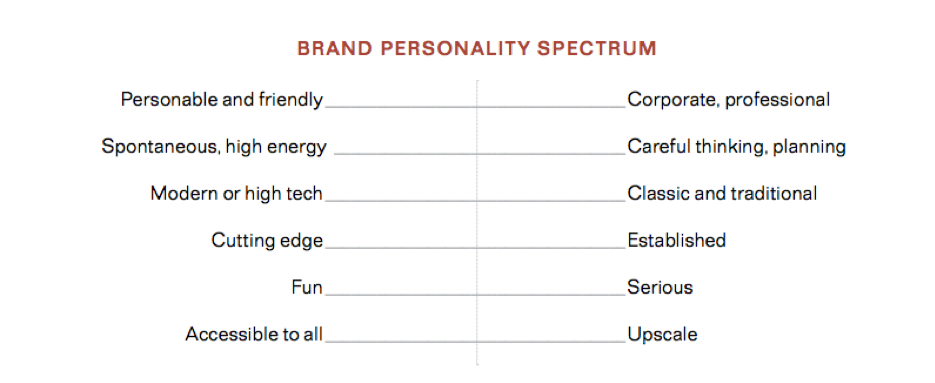
  • Additional details: Include a section on how to engage, words to stay away from, and any other details important to your brand. Use the brand personality spectrum below to get a better idea of what’s important to your brand’s written content.

In your brand style guide, give descriptions and examples of tone and voice, says @SashaLaferte via @CMIContent.CLICK TO TWEET

Visual section

Visual cues are as important to brand consistency as the written aspects. Consider including these elements in your style guide’s visual section:

  • Colors: Detail your brand’s palette of colors, including function. Make sure to include the hex, CMYK, and RGB codes for each color, as well as Pantone numbers.
  • Logo: Include all versions of your logo and examples of proper uses. If you have older or frequently misused versions, include them as “don’t-use” examples.
  • Fonts: Include all brand fonts for headings, paragraphs, etc., and their uses.
  • Presentation format: Include a link to a company slideshow template for presentations.

2 brands with awesome style guides

Here are two brands we all know that have first-class style guides and highlights on what makes them special.

MailChimp

MailChimp’s style guide thoroughly prepares any contributor to create on-brand content. Check out its style guide if you’re looking to create a guide with a lot of detail. Highlights include the voice and tone section and word list section. MailChimp also breaks out writing guidelines by content type, from emails to blog posts to social media.

.@Mailchimp’s style guide prepares any contributor to create on-brand #content, says @SashaLaferte via @CMIContent. #Contentmarketing #ExamplesCLICK TO TWEET

Uber

Uber’s brand style guide is packed with GIFs and videos that convey the very movement Uber is so proud of. Uber uses this site to not only describe brand style but to share the brand story, showcase examples of its branding done well, and provide helpful tools.

.@Uber’s brand style guide is packed with GIFs and videos that convey the very movement Uber is so proud of, says @SashaLaferte via @CMIContent. #Contentmarketing #ExamplesCLICK TO TWEET

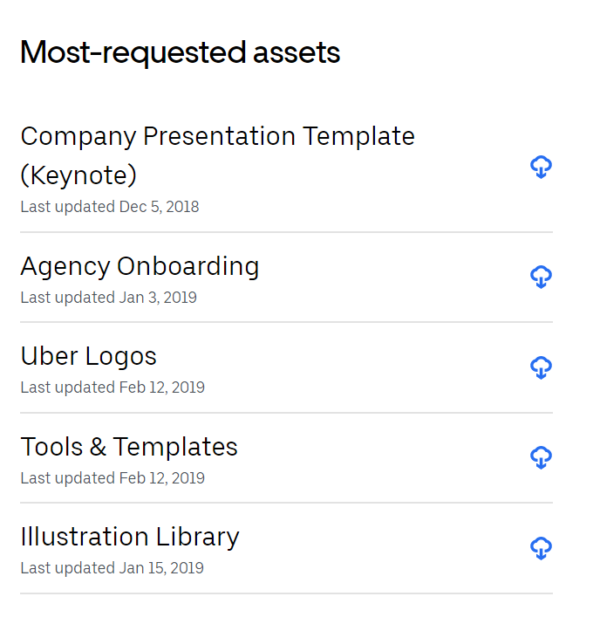
According to Uber, the guidelines cover nine elements: logo, color, composition, iconography, illustration, motion, photography, tone of voice, and typography. The style guide’s home page also makes it convenient for users by highlighting and linking the most frequently requested assets:

Create your brand’s style guide

Now you know why a good style guide is important, what it should look like, and what to include. It’s time to create one for your company. Include the marketing team, sales team, and any other creatives working on your marketing and products when creating a style guide. Upon completion, share it companywide, and store it as a living document in a place that’s easy to find.

By SASHA LAFERTE

Sasha Laferte is Checkr’s senior customer marketing manager. She’s written for several digital marketing publications including Young Women in Digital and HubSpot’s Blog. Her experience spans writing content for marketing software companies to creating viral media for Wenner Media (the parent company of Rolling Stone and Us Weekly). Follow her on Twitter @SashaLaferte.

Other posts by Sasha LaFerte

Sourced from Content Marketing Institute

By 

With both legacy and new media titles strained, we discover how indie magazine Delayed Gratification has been adapting to changed circumstances under lockdown.

With the collapse of advertising and marketing spend in recent months, media titles and especially magazine publishers have had a rough time of it, with lay-offs and pay cuts reported across the sector. Just this week, Dennis Publishing, the owner of brands such as Viz and The Week, announced that it was putting a quarter of its staff into a redundancy consultation.

However, for some publishers, a significant increase in magazine subscriptions has offset market woes. A study from Jellyfish found that demand for magazine subs has skyrocketed under lockdown, with verticals such as tech and gaming seeing a 268% year-on-year increase.

With less reliance on physical office space and smaller staffs, independent magazines have found themselves better positioned to cater to that increase in subscription demand.

Delayed Gratification is a quarterly indie title that champions ‘slow journalism’, covering current affairs with a three-month lag. Founded in 2010 with the tag ’Last to breaking news’, it’s considered a darling of the indie scene for its infographics and longform reporting.

According to co-founder and editorial director Rob Orchard, it’s also seen record-breaking subscription sales during the lockdown period.

“We’ve seen subscription sales that at times look more like Christmas sales,” he says. “We’ve seen a major rise in subscriptions, which has been the silver lining for us. We’ve had record-breaking sales, at times double what we would expect for this time of year.”

However, distribution networks and the newsstand have been significantly impaired.

According to Orchard, Delayed Gratification’s latest issue, which covered the final quarter of 2019, was sent to the United States the day before the country locked down incoming air mail deliveries. While US subscribers got their copies on time, thousands meant for the newsstand have been held up at distribution houses, as the bookshops and magazine stores that stock the magazine closed their doors.

“They’ve just been sitting there in warehouses. That’s tens of thousands of pounds worth of stock that is usable, but only if we sell insane numbers of back issues over the next 20 years.”

Digital edition

Distribution headaches, and the fear that the title’s printers would cease operations, led to the magazine unveiling its first-ever digital edition. ”People have asked us for years for a digital version of the magazine… but we’ve always shied away from it because we didn’t think that it was as special,” says Orchard. Since launching “with zero fanfare”, the title has gained its first seven digital-only subscribers. Orchard says the title will build on that base going forward to capture those readers uninterested in printed matter or in territories that make shipping prohibitive.

“That prospect of not being able to print the magazine gave us a real kick up the bottom to get that sorted,” he adds.

The magazine has also taken its events business virtual, albeit reluctantly. “We’ve always said it won’t be the same. You wouldn’t have that kind of intimacy that you get from being in the same room as other people.

“If anything, it’s kind of been better and more intimate, in a weird way. We’ve had smaller groups of readers, but from all over the world. It’s amazing – you’re talking to somebody in Brazil, and somebody who’s in Las Vegas, and somebody who’s in Dublin, all on the same call in a way that would never be possible before.”

Changing reader habits

To cope with changed circumstances in the streets, the title plans to clip back the print run – usually around 10,000 copies – of its next issue, due out later this month. “We’ll be bringing it down significantly,” Orchard explains. And while high streets and newsstands are beginning to re-open, he suggests consumer habits will not return to normal as quickly, if at all.

“Independent magazines cost quite a lot – it’s much less of an impulse purchase. And if people are not going to be browsing in the same way, then I think there’s every chance that sales of indie mags will be much, much lower.”

“It may just be that all people want to do is go to the pub and just drink solidly, as much as they possibly can,” he suggests.

On the other hand, recent events could spur the adoption of new habit-forming behaviours for magazine readers. “More people are going to need things that make them feel part of something. I think there is going to be real engagement with the world and a desire to know about it.

“People need to know what’s going on, more than ever before.”

Feature Image Credit: Delayed Gratification has, like many other indie titles, been boosted and hit by the coronavirus lockdown. / Delayed Gratification

By 

Sourced from The Drum

By

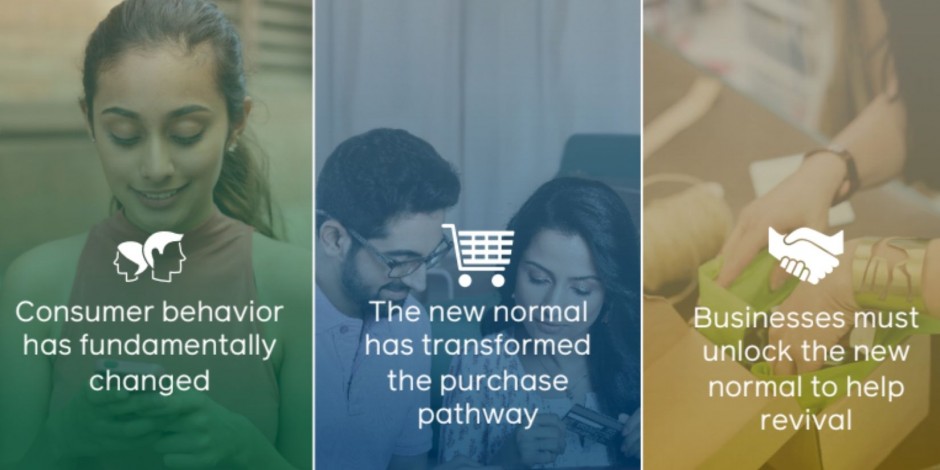
Brands need to focus on hyper-localisation by connecting with consumers where they are, as Covid-19 has dramatically changed consumer behaviour and altered the path-to-purchase, according to Facebook and Boston Consulting Group.

According to a new report called ‘Turn the Tide’, released by Facebook India and Boston Consulting Group, the use of micro-targeting can help brands get the first-mover advantage. This is because countries are being divided into different zones, with distinct restrictions due to the pandemic, so they need to build social connections despite social distancing, by engaging with consumers in their context

To cope with pandemic lockdown, which has caused significant disruption for communities and businesses, people are spending more time on social media platforms. This means brands have an opportunity to build stronger dialogues and deeper connections with users.

The aim of the guide, according to Facebook India and Boston Consulting Group, is to guide brands to adapt to the pandemic and ensure business continuity.

Nimisha Jain, the managing director and partner at Boston Consulting Group, says: “We are experiencing unprecedented shifts in consumer attitudes and behaviours as 80%+ consumers will continue to practice social distancing and are bringing the outside inside, over 40% of consumers are dialling up on health and wellness spends, e-commerce adoption has already advanced by two-three years, to name a few.”

“These aren’t just temporary surges, and many will last longer and become more defining traits. Our analysis reveals that only one in six companies emerged stronger in past crises. Players who show the agility to reinvent their value propositions, go-to-market plans and business models to address these demand shifts, will be the ones that set themselves apart from the pack.”

In addition, the report also shares actionable guidance for brands to build for the new consumer journeys in times of Covid-19 and beyond.

For example, brands can bring alive experiences through virtual launches and product demos as people turn to virtual experiences for every facet of their life. Facebook said it is already seeing more brands explore Facebook and Instagram ‘Live’ to connect with their followers and customers, with brands now thinking about using social media platforms for new product launches too.

Heeru Dingra, the chief executive officer at WATConsult tells The Drum the agency has modified its planning and strategy around the new consumer journeys, urging its clients to follow a simple mantra of ‘solve, serve and sell’.

She explains brands should focus on solving the problems their consumers face, serve their purpose and the result thereof could be the sale of services or products. She notes a lot of brands have understood this concept and have already started altering their approach to fit this mantra.

“We leveraged the power of gaming and re-created one of the most iconic games of all time, Ludo, for our client Tata Motors. Titled #SafetyFirst Ludo, this version aims to spread awareness about the importance of personal hygiene and social distancing amid the Covid-19 outbreak,” she says.

She also calls out work by Bajaj Allianz General Insurance called #CareWillOvercome, which salutes frontline workers, while a #ReconnectWithStarbucks campaign turned the act of baristas calling out people’s names into a digital phenomenon.

She adds: “These examples summarize how we integrated the need of the hour that is to maintain social distancing, continue to concentrate on personal hygiene and at the same time have our heartfelt appreciation for the ones who have been fighting for us day and night, into our brand approach in some way. This helps to amplify the brand message while being sensitive to the current situation, serving the purpose of extending the required communication and increasing as well as sustaining brand recall.”

The report also advised brands to look at their media mix models to drive growth by aligning to new media landscapes. According to the report, when brands, especially those with traditional product categories, start spending more online, they need to understand incremental outcomes, as well as cross-platform efficiency.

This would increase the need for digital measurement standards, such as custom mix modelling (CMM) by Nielsen, which Facebook said it had piloted last year.

Gautam Mehra, the chief data officer for South Asia and chief executive officer of programmatic at Dentsu Aegis Network observes the importance of moving away from traditional marketing metrics to real business metrics that can be measured and improved on an ongoing basis.

“With the impetus of commerce, CRM and digital transformation, I think, every company will now have a direct-to-consumer line of business and will want to bring themselves closer to the consumer, and rely less on the intermediaries,” he explains.

While most brands are dealing with huge change across many aspects of business, focusing on the changing customer journey is a good place for marketing to focus attention.

Feature Image Credit: the report also shares actionable guidance for brands to build for the new consumer journeys in times of Covid-19 and beyond.

By

Sourced from The Drum

By

With Isba’s study revealing that 15% of digital ad spend is unaccounted for, a statistic from the PwC-produced report that prompted headlines, Damon Reeve, chief executive of The Ozone Project, offers his first-hand insight into what this means for the programmatic sector.

The results from Isba’s Programmatic Supply Chain Transparency Study, carried out by PwC and in association with the AOP, have practically self-penned the industry’s headlines for the past few days.

“Missing billions”, “big holes”, “the unknown delta”, “mind-boggling” – perhaps not the usual words used to describe a positive first step, yet that’s exactly what this report represents. If, as an industry, we want to create a more sustainable, future-proofed environment for digital advertising we must first acknowledge that things aren’t working as they are. These results certainly speak to what many people already know, and reinforces the need for change.

As we look to create a blueprint for that change, it is a great step forward that it has been driven by advertisers and publishers – as the principal architects – alongside their respective trade bodies. Reversing the trend of disintermediation by programmatic tech vendors, and working together to find their voice, albeit of frustration, is one of the best outcomes of this study, and why it must be a first step and not an end in itself.

In the interests of disclosure, The Ozone Project is an advertiser-led business created by publishers and was developed to tackle many of the issues highlighted in this report. We see ourselves as a significant catalyst for the shift towards a more grown-up advertising environment, one less willing to accept the past shortcomings of programmatic.

The answer is not just what to do next, it’s how we do it

As we entered the 2020s I was convinced we would see an adult programmatic self emerge; still with lots of growth and development ahead, but also less wild and irresponsible than the younger child of the 2010s. Given some of the research in this report was produced in Q1 2020, it’s clear there is still much to do before a more mature self emerges. Nine weeks of Covid-19 isolation has given much time to reflect, and it seems how we go about change will be as important as what we change.

Firstly, collaboration must be front and centre. Through their trade bodies, advertisers and publishers have highlighted some of programmatic’s most persistent problems. An astonishing insight from the report is the confusion over whether advertisers and publishers have the right to access the log data for campaigns they are running. The answer to that question should not require consulting a legal department.

The programmatic supply chain should genuinely work in the best interests of publishers and brands. Together they must build on this work to address one of the critical recommendations from the report; standardising terms and conditions for buyers and sellers, while creating consistent data taxonomies and data sharing rules. This first step will help close the somewhat unhelpful gap that has developed between advertisers and publishers within programmatic advertising.

Secondly, while transparency is at the heart of this study, it isn’t something to fix, it is a way to behave. The ‘opacity by design’ approach that has challenged the sector for years represents institutionalised behaviour that will require a concerted effort to correct. Being open, authentic and human in terms and conditions will be deemed important qualities, rather than hiding the ‘unknown delta’ in technical terms and jargon that almost no one understands. Patience has been worn paper-thin amongst advertisers and publishers, and in this new future we will see vendors and partners selected on operating principles as much as technical capabilities.

A starting point for what to do next

The insights and recommendations from the report itself provide a framework for where future focus must be directed.

As already mentioned, standardising terms and conditions through Isba and the AOP is an obvious next step to remove much of the friction and confusion that exists today. It took PwC more than nine months to receive the information for its analysis, with an often ‘round the houses’, confused approach to who could give permission to use the data.

Brand safety has been high on the marketer agenda during these challenging times with a specific focus from Newsworks’ #BackdontBlock campaign. This new analysis should enable further grown-up conversations around brand safety generally, particularly as the study’s advertisers appeared on an average of 40,524 different domains. That’s not a misprint. 40,524 different websites. How many websites do you visit on a regular basis? Even looking beyond the first page of the Comscore top 3,000 yields some very random websites. Only 19% of campaign impressions were delivered on premium publisher domains, with the vast majority appearing on other websites and the unregulated long-tail of the internet. Responsible advertisers will no doubt be asking questions about where their advertising is going, and what exactly it is funding.

Next, the ‘unknown delta’ needs to become known. In an automated world, one would expect any margin for error to be reduced, and therefore any major gap is concerning. While many have offered thoughts as to why – from currency fluctuations to the compound impact of rounding through the supply chain – it’s important to remember that this 15% ‘unknown delta’ appears in the very small proportion of data that could be matched for the purposes of the study. If this reflects the ‘best of the best’ – major advertisers working with the most premium publishers – the 15% delta will be significantly bigger with smaller sites and smaller advertisers that weren’t measurable.

A final point not specifically called out in this report but to me is inferred in every insight and recommendation, is aligning incentives for each participant in the supply chain to the value they provide. And this extends to the agreements brands have with their media agencies. It will be very difficult to move to a trusted grown-up programmatic ecosystem if each actor is trying to game the system, whether through opportunity or necessity. Remove the incentive for opacity and we build an advertising environment that we all want. It’s on advertisers and publishers to build on this study and remove these incentives.

“The market is damn near impenetrable.”

In last week’s Financial Times, the frustration of Phil Smith, Isba’s director-general, regarding the programmatic world couldn’t have been more obvious. Yet with some time to reflect and digest, what is becoming increasingly clear is that this first-of-its-kind collaborative study has already laid great foundations for building a better future for digital advertising.

By

Sourced from The Drum


By

The Coca-Cola Company is looking to cushion the Covid-19-led decline of its bars and restaurants business by reducing marketing costs globally, and, in some markets, coming “off-air” entirely in Q2 2020.

The company reported global volumes were down by 25% in the first quarter of 2020. This was driven primarily by a substantial decline in its away-from-home business, which comprises trade orders from bars, restaurants, movie theaters, sports stadiums and on-the-go retail such as convenience stores.

James Quincey, Coca-Cola’s chairman and chief executive, noted this was partially offset in the US by a rise in drive-thru and carryout orders, as well as e-commerce and grocery stockpiling in some developed markets.

However, with lockdown halting out-of-home events and minimizing grocery trips for the foreseeable future, the company now predicts its second quarter to be “the most severely impacted” of the financial year.

Coca-Cola has thus cut brand marketing – partially to reduce costs and partially because it is skeptical of return on marketing investment at this time.

“We’re being … mindful about the right level of brand marketing and new product launches given the consumer mindset across market,” Quincey told investors yesterday (21 April). “We’ve developed and determined that in this initial phase there is limited effectiveness to broad-based brand marketing.

“With this in mind, we’ve reduced our direct consumer communication we’ll pause sizable marketing campaigns through the early stages of the crisis and reengage when the timing is right. These plans will vary from market to market with our earliest reengagement focusing on the recovery in China.”

He added: “Staying close to our consumers in a relevant way is a key guiding principle, and staying disciplined to demand an appropriate ROI is a close second.”

John Murphy, the company’s chief financial officer, confirmed that in its quest to “really stay close to the consumer in a relevant way”, Coca-Cola had made the decision come “off-air” in “many markets”.

He explained the brand is implementing this Q2 shutdown in order to give its various markets more flexibility with marketing strategies and budgets later in the year, dependent on when and how each country reopens for business and events.

“We have had a number of communications announcing that we will take a pause for now while we focus our efforts on our communities and on other priorities and that we’ll be back later in the year,” he said, alluding to the “millions of dollars of planned marketing spend” that Coca-Cola says it has donated to pay for the personal protective equipment (PPE) and beverages for healthcare workers.

Despite the company’s skepticism over brand marketing during coronavirus, it is making a concerted effort to enhance its presence on the shelf. The company has “redeployed” its ground sales reps and trained them in merchandising.

Coca-Cola hopes this will result in “increased share of displays of stock on the floor”, aided by a “ruthless” prioritization of core products and key brands to “help customers simplify their supply chains.

“We’re also taking this opportunity to reshape our innovation pipeline to eliminate a longer tail of smaller projects and allocate resources to fewer, larger, more scalable and more relevant solutions for this environment,” added Quincey.

The company’s decision to halt brand marketing is in stark contrast to the strategy of Procter & Gamble, one of the world’s largest advertisers. The CPG business is planning to increase spending on advertising during the coronavirus lockdown period in order to “maintain mental … availability to the greatest extent possible”.

Feature Image Credit: Coke’s Super Bowl 2020 spot was a celebrity-heavy affair

By

Sourced from The Drum

By

UK TV broadcasters are attracting record audiences, meeting their public service remit, and keeping the lights on while working from home. In return, they are bracing for a precipitous drop in ad revenue these next few months.

First, ITV said it expected a 10% ad revenue drop in April. Just weeks later, Channel 4 announced business cuts and staff furloughs, blaming the pandemic’s “severe effect” on demand and predicting that the current situation would burn a 50% hole in the TV market in April and May. ITV also said it was “taking measures to reduce costs and manage cash flow”.

At any other time, these audiences would be cause for celebration for the TV industry (ThinkBox says Easter weekend viewing in the UK was up 29% year on year). However, there are a difficult few months ahead as broadcasters look to ensure the flow of content keeps people informed and entertained at home, which balancing the books.

Barney Farmer, sales and marketing director at Nielsen Online, says its data shows that UK ad spend dropped 27% year-on-year across all media channels in March. Money coming in from from travel, transport and business utilities halved, while retail investments fell by a fifth. Some sectors saw the reverse. Among them was government advertising was up by 38%, food was up 16%, and tech/computing rose a massive 60% from an already high base.

Farmer explains: “The initial data for TV advertising in April does not paint a pretty picture, and it is expected that the numbers will drop significantly for the overall month.”

Many TV budgets have been frozenbroadcasters are unable to rely on tentpole events to prop them up. Brands looking to activate around the now delayed Euro 2020 (which ITV was expecting a particularly strong performance from) have been forced to shelve their best-laid plans. Other businesses are turning off the tap due to diminishing stock or demand.

“Broadcasters will be looking at all avenues for revenues, whether that is through different advertising sectors or ways to ensure money stays in their businesses via different digital channels,” adds Farmer. “Out of a crisis often comes new ideas so we can potentially expect something emerging that doesn’t exist today.”

The UK’s major broadcasters are all reliant upon ad income, although to differing degrees. ITV is less vulnerable to the ad freeze than the likes of Channel 4 due to its diversification efforts in production, e-commerce and its stake in streaming service BritBox. Sky, meanwhile, has user-generated revenue to lean on — although without the draw of its sports properties it could be bleeding custom.

Which brands are still on TV?

Amid this bleak outlook, British broadcasters are forming battle plans.

Some advertisers are still spending, with many leaning on TV to communicate how they are adapting to the pandemic or driving home message for viewers to ‘Stay At Home’. Though it’s brought the economy to a grinding halt, there is an opportunity for usefulness and long-term goodwill from brands willing to embrace a higher purpose. Others TV spenders may still follow, be it retailers directing shoppers from their shuttered stores to online, or games and apps looking to grab the attention of a bored locked-down populace — also, prices for a premium ad slot have dropped significantly.

“It’s looking like the cheapest TV pricing I’ve ever seen in my in my media career,” asserts Mihir Haria-Shah, head of broadcast at Total Media. Some audiences are down 50% year on year in terms of pricing. “I wasn’t working then, but it is comparable to the 2008 recession”.

The combination of larger audiences tuning into the TV at home and a reduction in demand for the inventory is to blame, argues Haria-Shah. “TV is really deflationary at the moment, and prices have really fallen kind of through the floor.”

Haria-Shah also notes some trepidation among brands that have been absent from TV for a while, a quick return may look “opportunistic”.

“Given the current circumstances, there’s quite a fine balance between doing the right thing for your business and also maintaining your long-term brand reputation,” he continues.

He adds its important to note that not every brand’s been fully hamstrung by the pandemic: “Some brands have actually reported their best sales in years, or for younger brands, the best in their existence.” FMCGs are among those seeing a bump from some of the early panic-buying of essential items, for which toilet paper will long be a visual metaphor for.

Right now, one of the biggest barriers to entry on TV, beyond falling ad budgets, is the lack of ability to produce big-ticket, sensitive creative. With most of ad land under lockdown, amendments will have to be made to existing films. Shots of friends and family out in the world having fun, or even in close contact, now carry negative connotations. The tone has to be right. The message can’t deviate too far from stay home. And the work can’t feel cynical, else long-term damage will be done in the name of short-term gains.

Some brands have been quick to adapt though. Apple is telling us that the lockdown doesn’t mean the end of creativity. Nike has been showing the home training routines of athletes. Toyota new creative was directed over Zoom. Mobile-footage and sweeping image slideshows driven by voiceover are the flavour of the day for brands limited in what in they can produce.

Accessibility

To woo brands among all this, broadcasters are looking to remove as much as the friction from buying and production as possible. Certain fees are being waived, and the best spots are more readily available than they’ve been.

On the production side, ITV’s in-house team is now being tooled to help clients where it can. There’s a great effort to get the work over the line fashion in its keen to help and others will be doing the same.

The in-house creative teams have indeed been busy too, Channel 4 and the BBC’s PSA efforts both landed earlier this week with strikingly different tones but the same message – ‘stay at home (and watch TV)’.

Further down the chain, according to Haria-Shah, TV ad clearance house Clearcast is reportedly working at an impressive rate – its new priority is to ensure no TV ads exploit the pandemic, spread misinformation, or offer advice contrary to that government guidance: “It’s [clearance period] seems to be down from five to three working days.”

He believes demand in TV ads will rise these coming weeks.

“TVs always been seen as the best brand builder. And now consumption is through the roof, you can sit alongside record audiences on trusted news or alongside the escapism of comedy, soaps and drama. There’s a lot of longer-term positive associations, that brands that advertise correctly can build right now.”

The aforementioned broadcaster budget cuts threaten this dynamic. Many productions have been frozen, few that were on the slate can be delivered under lockdown. As replacements, broadcasters have literal warehouses of archive content they can tap into.

ITV moved fast in releasing Euro 96 footage to its on-demand Hub as was requested by fans. BBC’s current affairs panel show is going ahead with phoned-in floating heads in a virtual studio. Netflix released a series of calls between Joel McHale as a bonus Tiger King episode. A BBC weatherman stole headlines by entering a frenzied cover of the news theme after his delivering his forecasts.

Will these bold makeshift productions continue to draw high attention these next few months? Or will audiences get their heads turned by a wealth of entertainment content on many of the ad-free subscription video-on-demand services.

Disney+ has just launched, Netflix and Prime and going anywhere. And for some, Quibi may be worth a look.

Concluding, Haria-Shah says: “You always believed that soaps like Coronation Street would always be on the TV. Its pause is a real symbol of how serious an impact this is having on the TV landscape.”

By

Sourced from The Drum

By

Secret Cinema’s plans for 2020 involved a much-anticipated show for Dirty Dancing, breaking the American market and bringing its first slate of Disney films to life following a mega tie-up with the movie giant. But amid Covid-19, the year ahead looks very different.

“It’s like winter has arrived, there’s a slowing down for three months, six months… I’m not sure,” says chief executive Max Alexander, who was facing a different kind of pressure just a few months ago when he revealed his ambitious plans to expand the experiential company.

After receiving private equity backing from Active Partners’ $131m fund and attracting industry heavyweights like Alexander, IMG veteran Alex Ward and The Mill and Copa90 exec Damien Macaulay, it inked tie-ups with Netflix and Disney to act as a pseudo ‘experiential creative agency’ to plan events around their most popular titles.

A stroke of luck meant that it had wrapped up its successful showing of Stranger Things just weeks before the coronavirus outbreak in London. Meanwhile, as the situation improves in China, Alexander is hopeful that the Casino Royale show in Shanghai will re-open. The plan to bring Dirty Dancing to life this summer has not been cancelled, though he is anticipating that dates will change.

“But in America the brakes were pulled hard,” he continues. “We were so ready to go and now it’s hard to get people to return calls about property we can’t possibly visit in LA and Las Vegas.”

The partnerships with Netflix and Disney are still holding strong, but events are likely to take place deep into next year, even if circumstances on both sides of the Atlantic improve.

Perhaps surprisingly for an experimental company that can’t put on any experiences, Secret Cinema has not been forced to make redundancies to its team of over 40. And that’s largely thanks to a quick pivot to bring “congregational storytelling” into the digital world.

Last week, it held its first Zoom party. 80s themed, hosted by actor Jackson and two DJs, it sold over 1,000 tickets at £5 a pop to raise money for the Trussell Trust, a nationwide poverty charity and food bank network.

“It was wonderful. We had 600 browsers open at any one-time. People were playing games, we had a dance-off and we encouraged people to dress up. It was amazing.”

Since then, it’s forged a deal with ice-cream giant Häagen-Dazs for an eight-week run of virtual screening experiences. Dubbed ‘Secret Sofa’, it will take place at 7.30pm every Friday and feature bespoke content, character narratives and interactive elements inspired by the evening’s film.

The first screening will be for Wes Anderson opus The Grand Budapest Hotel. Much like its live-action experience, Secret Cinema will issue those that have signed up with an email containing instructions on what kind of costume to wear, the sing-a-long and music playlists to rehearse, dance routines and prop making advice.

Recipients of the newsletter will also be given a code that allows them to order the chosen Häagen-Dazs flavour of the week online via a collaboration with Amazon Prime Now.

Finally, a Secret Sofa Facebook group will host audience discussions about the film and encourage people to share their pictures from the night.

“What we’re trying to do is, firstly, not to overstate our own importance in people’s lives,” says Alexander. “What we’re doing is kind of silly right? It’s not serious, but it is important to add some kind of structure and appointment to people’s lives; come, dress up and have a dance. We’ll get better at it, embellish it and add more as we get up and running. But right now, it’s put a hat on, grab an ice-cream and watch a movie.”

Though born from necessity amid the coronavirus chaos, Alexander has every intention of keeping the format when life inevitably returns to normal. Having a digital extension of the brand was always on its agenda, it just hadn’t figured out exactly how to execute it.

“It’s the kind of thing we’ve wanted to do this over the past few years and have never had the time to get our act together because we’re always on the treadmill of the next show. But we have a loyal base and we’ve wanted to offer more than just a couple of shows a year,” he says.

“We’ll keep going after. Why wouldn’t we? If this does appeal to people, it’s not a huge overhead for us to deliver and for people to consume.”

Feature Image Credit: Secret Cinema

By

Sourced from The Drum