Here’s why you need to get your advertising to zoom in.
By MediaStreet Staff Writers
The relationship between desire and attention was long thought to only work in one direction: When a person desires something, they focus their attention on it.
Now, new research reveals this relationship works the other way, too. Increasing a person’s focus on a desirable object makes them want the object even more – a finding with important implications for marketers seeking to influence behaviour.
The study, published in the journal Motivation and Emotion, is the first to demonstrate a two-way relationship.
“People will block out distraction and narrow their attention on something they want,” said Anne Kotynski, author of the study. “Now we know this works in the opposite direction, too.”
In marketing, advertisements with a hyper focus on a product’s desirable aspect – say zooming in on the texture of icing and frosting – might help sell a certain brand of cake.
Findings suggest the ad could be targeted to people who have shown an interest in a similar product, such as running the cake commercial during a baking show.
This finding also works in other areas outside advertising too. For example, doctors could potentially help their patients develop a stronger focus on healthy activities that they may desire but otherwise resist, such as exercising or eating a balanced diet.
The study’s findings also add a wrinkle to knowledge of focus and emotion. According to a spate of previous research, positive emotions, such as happiness and joy, widen a person’s attention span, while negative emotions such as disgust and fear, do the opposite: narrowing a person’s focus.
“We conceptualise fear as drastically different from desire,” Kotynski said. “But our findings contribute to growing evidence that these different emotions have something key in common: They both narrow our focus in similar ways.”
The findings also fit the notion that both of these emotions – fear (negative) and desire (positive) – are associated with evolutionarily pursuits that narrowed our ancestors’ attentions.
For example, fear of predators motivated attention focused on an escape route, while an urge to mate motivated focus on a sexual partner.
“If a person has a strong desire, research says this positive emotion would make them have a wide attention span,” Kotynski said. “Our research shows we developed a more beneficial behaviour around desire: focusing our mental energy on the important object, much like fear would.”
The study
Study participants were shown images of desserts mixed in with mundane items. They were instructed to pull a joystick toward them if the image was tilted one direction and push the stick away if it was tilted the opposite direction. Researchers recorded the reaction time of each.
Participants who responded fastest to pull the images of desserts were those whose attention had been narrowed. Responses were much slower to the mundane, and for participants whose attention was broad, suggesting narrowed attention increases desire for desserts but not for everyday objects.
The study used dessert pictures to measure reaction time because such images have been shown to increase desire across individuals, most likely due to a motivation to seek high fat, high calorie foods that is rooted in evolution.
There you go people. If people love cars and you can get them to focus on the car you are hawking, you’ll have a better chance of converting that to a sale. May the ROI forever be in your favour.
Do you supply services to the Irish Media Industry? Have you listed your company in our Media Directory? It’s free! Everyone’s favourite price! Click here to do it now.
Everything seems so fast-paced these days: You go to bed one night and wake up the next morning to the announcement of an entirely new technology, or a breakthrough on a project that seemed far-fetched until, well, this moment.
If you personally have issues with the speed of change, imagine what companies contend with: To keep up and stay relevant, they have to adapt their branding, marketing and sales efforts at a pace at least as fast as that of the new techologies’ debuts.
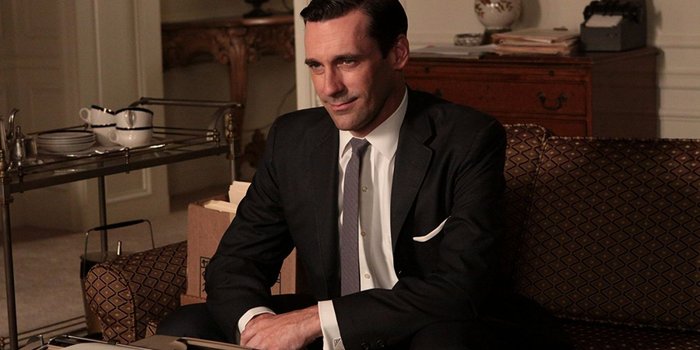
Gone are the Mad Men days of designing billboards and magazine ads (those jobs still get done, just in a different way and with different tools). In are the days of instant publishing. Despite the changes that the marketing industry has experienced, though, there are still some old-school branding and marketing strategies that work as effectively as before. Just because they seem old-fashioned doesn’t mean they’re out of date.
Here are eight aged but still workable branding and marketing strategies that are as effective in 2018 as they were back in the day.
Business cards. Business cards are less common now that text and email are so prevalent, but they’re still as effective as ever. Rather than simply telling someone what you do and asking them to email you if they’re interested, (though they may not remember your email address), a physical business card is more personal.
Business cards visually represent you and your brand — they have your logo and contact information, which will visually stand out in your prospect’s mind. Moreover, not only do business cards stand out visually, but because you made a physical, personal connection, the next time that prospect needs your company’s type of services services, he or she will likely contact you first.
Snail mail. Who doesn’t love getting a personal letter? Unfortunately, nowadays, mail most of the time is just bills and advertising disguised as letters or important documents. You on the other hand don’t have to trick consumers into opening your mail, in order to have a successful snail mail campaign. Although impersonal ads are disappointing, coupons and discount notifications are not.
Public talks at events. Speaking at events is a great way to get your company’s name out to people already interested in your industry. You can search out events related to your vertical or let connections know that you’re interested in speaking; then prepare an address that is educational and meaningful and will make a lasting impression.
Think about the last time you attended an event about something you were interested in. Did any of the speakers stand out to you? Why? When you find a speaker to be impressive, take notes, then apply his or her techniques to the next time you have the opportunity to raise awareness about your company. Offer yourself to speak at an event.
Publishing testimonials. Testimonials are as effective today as they’ve ever been. Customers turn to online reviews and testimonials all the time before making online purchasing decisions or deciding which service provider they want to use.
So, asking existing clients for testimonials and then publishing their words on your website and printed marketing materials will help establish trust between your brand and your customers and potential customers.
Sponsorships for community events. One old school but great way to get your company’s name out there is your sponsorship of a community event. Whether it be a local high school football team or a charity walk to raise cancer awareness, an event that gets you involved in your community through your sponsorship will raise awareness of your company and the things you do. It makes for great PR as well.
Cold calls. The term “cold calls” has a negative connotation, but why? Perhaps the reason is that rejection is tough and some people just aren’t cut out for sales. Assigning one of those people to cold calling probably won’t result in much success. Others, though, do their best work when making cold calls.
So, if you’re pursuing this strategy, you’ll need a plan in place that includes a list of potential customers, a strategy and possibly a script. Once you feel confident in your pitch, call the customers on the list. Don’t be afraid to digress a little bit or indulge in a personal conversation, since it will warm your prospect up and keep the conversation friendly.
A branding redesign. If your brand has been around for some time, it may be time for a redesign. Although this can be a difficult undertaking, redesigning your brand, logo and the overall look of your company can get you a lot of attention. This is especially true if your branding is outdated. Old customers will enjoy a fresh new look while potential customers will get curious and pay more attention because, let’s face it, sometimes we do judge books by their covers.
Trade shows. Trade shows like CES are still as popular as ever. Whether you attend trade shows in your local area or travel to national and even global events, participating in and presenting at trade shows is a great way to increase brand recognition. Not only can you get your name out there, but you can show potential partners and customers your products, what they do and what else you have been working on.
Women-owned businesses are most likely to use social media. Men! What y’all doing?
By MediaStreet Staff Writers
A woman-owned small business is more likely to use social media, according to a new survey from Clutch, a leading B2B research and reviews firm.
Among women-owned businesses, 74% use social media, compared to 66% of men-owned businesses.
The findings came as no surprise to experts, who said women overall are more likely to use social media. Given that trend, female small business owners more easily can bring their business onto social media.
“Women are generally better conversationalists than men,” said Jeff Gibbard, chief social strategist at digital agency I’m From the Future. “They tend to be more expressive and more emotive. It’s no surprise to me why more women business owners use social media.”
Women often communicate better than men, which translates to the online world where they are more likely to use social media effectively.
Millennial-Owned Small Businesses Lead Social Media Use
There is also a generational divide among small businesses’ social media use. The survey finds that 79% of millennial-owned small businesses use social media compared to 65% of small businesses owned by older generations.
Millennials, like women in general, frequently use social media for their personal lives. Their social media skills easily carry over into their businesses – unlike older generations, experts say.
“The older people didn’t grow up with social media, so many don’t understand how to use it for their business,” said Shawn Alain, president of social media agency Viral in Nature. “They went through a significant part of their life without even the internet, and they remember what it was like not to have a smartphone or email.”
Millennials are also more likely to use Instagram and Snapchat than older generations, but Generation Xers and Baby Boomers are more likely to use LinkedIn.
Most Small Businesses Use Facebook
Facebook remains the most popular social media channel for small businesses, no matter the gender or generation of the owner – 86% say they use it, which is nearly twice the number of small businesses that use the second-place channel, Instagram (48%).
Among small business users of social media, 12% say they use Facebook exclusively for their social media efforts.
Overall, 71% of small businesses use social media, and more than half (52%) share content at least once per day. Images and infographics (54%) are the most popular content types that businesses post to social media.
Do you supply services to the Irish Media Industry? Have you listed your company in our Media Directory? It’s free! Everyone’s favourite price! Click here to do it now.
Less than 1 in 3 people call Facebook a responsible company, according to a new survey.
By MediaStreet Staff Writers
Barraged by accusations of spreading divisive fake news and amid new allegations that it handed over personal information on up to 50 million users without their consent, Facebook is losing the faith of the people, according to a new survey.
Almost 4 out of 10 people surveyed said: “Facebook is not a responsible company because it puts making profits most of the time ahead of trying to do the right thing.” Less than 1 in 3 said that Facebook is a “responsible company because it tries to do the right thing most of the time even if that gets in the way of it making profits.” The rest were unsure.
By a 7-1 ratio people surveyed said that Facebook has had a negative influence on political discourse. Sixty-one percent said that “Facebook has damaged American politics and made it more negative by enabling manipulation and falsehoods that polarize people.”
The survey was conducted as new revelations surfaced that the company connected to the 2016 Trump campaign, Cambridge Analytica, inappropriately harvested personal information on millions of Facebook users.
The sharp rise in negative feelings is a significant departure from Facebook’s standing prior to the 2016 election, when the rise of so-called Fake News and polarizing content led to calls for the company to take greater responsibility for the content on the popular social media site – or face government regulation.
By a 2-1 margin, people surveyed said it’s Facebook’s responsibility to remove or warn about posts that contain false or misleading information. And 59 percent reported that the company is not doing enough to address the issues of false and inflammatory information that appear on its site.
“Facebook is at a crossroads because of its inability – nearly a year-and-a-half after the election – to get a handle on its divisive effects on society,” said Tom Galvin, Executive Director of Digital Citizens, who commissioned the survey. “From spreading fake and manipulative information to becoming a ‘Dark Web-like’ place for illicit commerce, Facebook seems to losing the trust of the American public. Regulation will not be far behind for social media companies if things don’t change.”
This declining trust reflects a growing concern about the impact Facebook and other social media sites have on young teens. In the survey, more than two in five people surveyed said that the minimum age to have a Facebook account should be at least 18 years old.
“Digital platforms have to rise to the occasion and assure internet users that their personal information will be safe, that the content will be legal, safe and not contrived to manipulate. In short, they have to demonstrate they will be the positive influence on our society that they espouse to be,” said Galvin.
Do you supply services to the Irish Media Industry? Have you listed your company in our Media Directory? It’s free! Everyone’s favourite price! Click here to do it now.
A travel company has managed to stir up a lot of viral traffic with their hashtag. Watch and learn, people.
By MediaStreet Staff Writers
What do a dream wedding in New York, an adventure through the mountains of Sri Lanka and a family’s search for their roots in Scotland all have in common? All saw a hospitality professional going out of their way to make or save someone’s trip. And a holiday booking company use this mushy sequence of events with a hashtag to fire up social media views and get a great repsonse from them.
Booking.com call themselves the global leader in connecting travellers with the widest choice of incredible places to stay. Established in 1996 in Amsterdam, Booking.com B.V. has grown from a small Dutch start-up to one of the largest travel e-commerce companies in the world. Part of The Priceline Group (NASDAQ: BKNG), Booking.com now employs more than 17,000 employees in 198 offices in 70 countries worldwide.
So, what are they doing with their social media marketing? They are riding hastags like a showjumper would a prize horse.
They have had some great success with their recent hashtag #BookingHero. They asked people to share their travel stories using the hashtag. The best story won travel prizes and big kudos online.
Following thousands of submissions via social media, Booking.com selected the three most touching and inspiring accounts of hospitality professionals going above and beyond to create unique and unforgettable travel experiences for their guests.
The customers were then flown back to say thank you to the person who saved their trips. Here are the stories.
The point isn’t the stories though. The point is that real people’s journeys made the hashtag come alive and generate traffic for booking.com. In fact, the call out for submissions via social media has been so successsful that Booking.com is now using the hashtag to extend the social media campaign with long-form video content that extends the #BookingHero message, with TV to follow.
According to recent research conducted by Booking.com across 25 markets in 2017, a personal connection is essential for many travellers with 29% saying that an accommodation feeling like home is key and 24% sharing that a welcoming host is a make or break factor during the first 24 hours of their trip.
Said Pepijn Rijvers, Chief Marketing Officer, Booking.com. “These stories beautifully demonstrate that an amazing trip is about more than simply finding the right destination or the perfect accommodation– it’s also about the people you meet along the way which truly make for an unforgettable journey. And that’s what travel is all about.”
And for the company, it is about finding the right hashtag and getting it to go viral.
Do you supply services to the Irish Media Industry? Have you listed your company in our Media Directory? It’s free! Everyone’s favourite price! Click here to do it now.
Gen Z use their phones a lot, but are relieved when they are taken away. So how do marketers reach this age group if they have a love/hate relationship with their smartphones?
By MediaStreet Staff Writers
Members of Generation Z are relieved when placed in a situation where they are unable to access their smartphones for several weeks. This is according to a new study conducted by Screen Education, a non-profit organisation that addresses smartphone addiction.
The study involved participants aged from 12 to 16, who spent 2-4 weeks at Camp Livingston during the summer of 2017. Because Camp Livingston does not permit its campers to bring smartphones with them, they are an ideal group for conducting research about refraining from smartphone use.
According to Michael Mercier, President of Screen Education, “Many children said they have become overwhelmed by their smartphones. They no longer can keep up with all their notifications, and they are burdened by the ‘drama’ they encounter through social media via their smartphones. Consequently, they were relieved to be separated from their smartphones because it eliminated that stress.”
This relief was reflected in a survey conducted with the campers after they had returned home. The campers were asked the extent to which they experienced feelings of gladness and frustration from being without their phones. “A large number − 92% − experienced gladness, while only 41% felt any frustration. We had expected the opposite,” said Mercier.
When asked what their experience would have been like if they had been allowed to bring their phones to camp, campers revealed just how severe smartphone addiction is among their age group. “They almost unanimously admitted they would have spent the entire time on their phones,” recounts Max Yamson, Executive Director of Camp Livingston. “They said they would not have formed deep relationships with the staff and fellow campers, would not have connected with their surroundings and nature on the same level, and would not have engaged as much in recreational activities.”
According to Yamson, “The study shows that the campers were glad to have left their phones behind so that they could experience a deeper level of engagement.”
“The research also revealed a stunning insight,” said Mercier. “Many campers discussed the experience of face-to-face communication as though it were a novel one. They exhibited a sense of discovery at learning that face-to-face communication is far superior to screen communication when it comes to building friendships and getting to know other people.”
Yamson added, “One camper said that in four short weeks she got to know her friends at camp better than she knows some of her friends at home – because she mostly communicates with her friends at home through screens.”
Other key findings include:
92% said it was beneficial to have gone without their phones while at camp
83% considered having gone without their phones for several weeks to be an important life experience
35% were successful at curbing their smartphone use after leaving camp
17% tried to influence a friend to spend less time on their phone after leaving camp
The researchers plan to follow this study up with additional research during the summer of 2018.
Marketers trying to catch the attention of this demographic may need to think carefully about how they approach mobile advertising for this generation of digital natives. It’s another day in the life of modern media.
Do you supply services to the Irish Media Industry? Have you listed your company in our Media Directory? It’s free! Everyone’s favourite price! Click here to do it now.
If you’re in business, branding is an important part of that. Branding affects how others perceive your business, and ultimately it affects your bottom line since people choose whether to do business with you based on their perception of you.
Strengthening your brand identity is important as you start your business or if you’ve changed your branding strategy. Branding is never more important than when you send out a design project proposal.
The right graphic design proposal templates can help you grow your own brand since they let you to incorporate branding elements right into your design proposal. Fortunately, there are plenty of branding proposal templates that will help you strengthen your brand. In this article, we’ll explore twenty design proposal templates to help you build your own brand and also land design clients. Here’s a popular design proposal template that’s trending in 2018:
This high quality design proposal template is just one example of a template proposal that you can find on Envato Elements.
We’ll also share five project proposal tips in this article to help you create the best design proposals for your needs.
What Is a Design Proposal?
A design proposal is used by a freelance designer, design agency, or other design business. It’s sent out to prospective design clients to provide details on design and branding work.
A design project proposal needs to be crisp and professional since it represents the business that sends it out. It also needs to be consistent with the organization’s own branding. For more information on branding, review this tutorial:
Branding
What Is Branding?
Julia Melymbrose
Top Branding Project Proposal Templates (2018 Product Showcase)
Choose between four different design templates with cover letter and table of contents. Use the free fonts and choose between three different color combinations.
Keeping your branding consistent for all of your communication needs is easy with this bundle. The template set also includes business card templates and a Facebook timeline template as well as some high-resolution background textures.
This full business proposal template is a great choice for your design and branding proposals. From start to finish, this professional proposal leaves a powerful impression. It’s perfect for agencies and other creative professionals.
Start by choosing one of three eye-catching different cover designs. Then take advantage of some of the unique features such as a milestone schedule, portfolio section, and pricing plans. The proposal template even includes a section for terms and conditions and a contract.
This 16-page proposal template is a great find if you’re looking for a proposal with a clean, attractive look. There are two different cover designs. INDD and IDML files are included. Plus, it’s fully editable and easy for you to add your own information!
This well-organized proposal template makes it easy for your design project proposals to look good. It’s been separated into five layers to make it easy for you to work with. Plus, the template includes a help text file.
Customers love this one. Here’s just some of what they say:
“This is really good work!”
“With this design the project is already a success! =) Great Work!”
Whether you’re an agency or a solo creative, the Apps Design proposal has a clean, modern look that you’re going to love. This 24-page template supports both A4 and US Letter sizes. The images, text, and objects are all on different layers–making it easy for you to edit. Plus, there’s an auto page numbering option!
This gorgeous creative proposal template is designed to meet the needs of creative professionals. With this template you’ll find lots of agency-friendly features such as:
With 14 templates, this proposal package has everything you need to make a pitch. You’ll find templates for a cover letter and resume as well as templates for project proposals and design quotes or estimates. There’s even a matching invoice for billing.
The template’s easy to use and customize. Plus, you can change the colors in the proposal to match your own unique branding.
No discussion of branding guidelines would be complete without a look at this brand logo document. If you do a lot of banding work, you’ll want this to use with your own clients. The beautiful design is based on a document grid and can be used for both print and web guideline documents. You’ll find this template has titled master pages with real text.
Impress your clients with the clean, modern look of this creative branding proposal template. You may even find this ideal for building your corporate identity. Some of the user-friendly features include:
The image your branding project proposal projects is important. This professional-looking template is great for branding and other creative projects. Plus, it’s full of features to help you succeed. Choose from two layout sizes and customize the colors to match your company’s brand. The bonus invoice template includes the Autosum feature.
This 40-page proposal template boasts a 12-column grid and also includes a baseline grid. Icons are included with the template. The graphic design proposal template also has many popular proposal sections including a table of contents, an about section, a case study, and a project timeline. There’s even a section for frequently asked questions (FAQs). It’s print ready and works for both A4 and US letter size pages.
The flexible format of the Kinney Proposal template makes it perfect for use by an agency or creative professional. The design is aligned to a 12-column grid. Images, text, and background are all separate layers to make it easy for you to edit. Plus, you’ll get a help file.
Here’s what customers say about this popular proposal template:
With a unique landscape format, this professional proposal is bound to catch your client’s eye. The fully editable graphic design proposal template file includes 30 professionally designed pages. There’s also a professionally designed front and back cover to further enhance your brand. And you’ll get a file with help and instruction text to make using the template even easier.
Take full advantage of the way this design proposal template bundle uses color to help your proposal stand out. You can use this proposal template with A4 or and US letter size pages. Here are some of the other powerful features that make this creative proposal template work:
The bold design of this creative design proposal template is bound to impress. The template comes with 24 pages, but you can add more pages by duplicating existing page layouts. Personalize the colors in this template using the one-click color panel. A documentation file is included for your convenience.
This print-ready project proposal is great for creatives or anyone who needs to make a good impression. It’s easy to customize–add your own colors with the palette. It’s based on free fonts. Plus, all the graphics are included with the template. The template files include a PDF preview file and a help file.
The clean design of this modern graphic designer proposal is good template choice for creatives and anyone else who needs their proposal to have a clean, professional look. The portrait proposal template design is 26 pages long and based on free fonts. In addition, you’ll find:
This comprehensive, easy-to-edit branding proposal is a great template choice for many reasons. It’s based on a 12-column grid. It includes clearly labeled layers as well as paragraph and character styles. Plus, it has editable tables. It’s no wonder that customers said this about this template:
The professional design of this creative proposal template is sure to please. It’s got a master page for layout consistency. You can customize the fonts and colors to reflect your company’s branding. The template is 18 pages long, but it’s easy to add additional pages as needed. Plus, there’s an invoice template included to help keep your project branding consistent.
It could be sending the wrong message to your intended audience.
By MediaStreet Staff Writers
An academic study has found that women wearing heavy makeup are less likely to be perceived as leaders. Of course, it depends on what you are selling and to whom. But if you want your model to portray leadership, then stay away from the make-up kit.
The research from Abertay University found that women wearing heavy makeup were less likely to be thought of as good leaders. The study was led by Dr Christopher Watkins of Abertay’s Division of Psychology, and published today in Perception journal. It revealed that the amount of makeup a woman is wearing can have a negative impact on perceptions of her leadership ability.
Study participants were asked to view a series of images featuring the same woman without cosmetics and with makeup applied for a “social night out”.
Computer software was used to manipulate the faces and the amount of makeup was also manipulated in the face images.
Each participant completed a face perception task where they judged sixteen face-pairs, indicating how much better a leader they felt their chosen face to be compared to the other face.
It was found that both men and women evaluated women more negatively as a leader if the image suggested she was wearing a lot of makeup.
Dr Watkins said, “This research follows previous work in this area, which suggests that wearing makeup enhances how dominant a woman looks. While the previous findings suggest that we are inclined to show some deference to a woman with a good looking face, our new research suggests that makeup does not enhance a woman’s dominance by benefitting how we evaluate her in a leadership role.”
The study was carried out by Abertay graduates Esther James and Shauny Jenkins and used a measurement scale common in face perception research, which calculates the first-impressions of the participant group as a whole, working out an average verdict.
Dr Watkins has carried out previous high-profile studies including work looking at how women remember the faces potential love rivals and the role of traits related to dominance in our choice of allies, colleagues and friends.
Do you supply services to the Irish Media Industry? Have you listed your company in our Media Directory? It’s free! Everyone’s favourite price! Click here to do it now.
“What am I missing? What is the insight I’m not seeing that could make our content marketing strategy make sense?”
An attendee at the 2018 Social Media Strategies Summit conference in San Francisco made that comment. She works for a major non-profit organization. She’s trying to manage through three strategic expectations the senior management team and board have regarding a content marketing strategy:
They want to keep everything on one Facebook page.
They have two important audiences that are each interested in different types of content.
She can’t change either of the first two strategic expectations.
She’s beating herself up for her inability to find an amazing branding strategy insight. The one that would allow her to get around the contradictions posed by her senior management team’s decidedly non-social-first content marketing strategy expectations.
After a few minutes, I assured her that she isn’t missing any big branding strategy insight.
The problem is the management team’s decisions about the content marketing strategy. Their stipulations are all about brand-first, not social-first, content.
She told her management team that she would return from the conference and write the organization’s social media strategy. She didn’t see that happening without the big insight.
I suggested she instead focus on creating a strategic conversation with her management team. Her first step is to address what they want to achieve as an organization with their two audiences. She can then start suggesting how social media contributes to realizing those business objectives. The more they want to push a brand-first content strategy, the less wedging in a few social-first content marketing tactics will successfully fix things.
Maybe THAT is the insight she was seeking: you can’t pursue the smart thing (a social-first content marketing strategy) when management’s every strategic expectation runs counter to doing so.
Not a great situation. As least now, though, she has a pathway to attempt to help them work their way out of it! – Mike Brown
Facebook is now the most popular places that advertisers are putting their video ads, even beating YouTube.
By MediaStreet Staff Writers
Top marketers know that digital video is one of the most powerful tools to increase consumer engagement and brand loyalty. In fact, according to a new study from Clinch, brand marketers are ramping up their production of digital videos with an emphasis on creating campaigns specifically for Facebook and YouTube.
The study found that 78 percent of marketers plan to increase their production of video ads in 2018, while only 43 percent of marketers plan to increase their production of static banner ads this year.
Social is Video
When it comes to digital video campaigns, Facebook reigns supreme, representing 46 percent of all video ads produced. When adding Facebook-owned Instagram into the mix, this number leaps to 74 percent. YouTube comes in a close second at 41 percent.
Says Oz Etzioni, CEO of Clinch, “It’s no secret that Facebook and YouTube dominate the digital media landscape and we don’t expect this to slow down, particularly with the Facebook algorithm change which requires brands to pay in order to be seen. In 2018 brands will increase spend and leverage the rich data that these platforms provide. However, the data and platform are just two pieces of the puzzle. Creative is the critical third piece. If brands aren’t uniquely tailoring their creative specifically for each platform and by audience, opportunities will be missed and ROI will be lowered.”
Nearly three quarters of marketers are adopting online video from their TV commercials. 44 percent indicated that they don’t shorten commercials for each platform’s suggested length. While TV ads remain a critical source of video content, the user experience of each social platform is very different than traditional TV. For example, TV ads are 15 to 30 seconds long but Facebook and YouTube recommend six-second videos.
Etzioni continued, “We were really surprised to learn that marketers were taking a one size fits all approach to video. In 2018, marketers will awaken to the fact that investment in creative will increase ROI and personalisation at scale, and will become the norm for digital video as it has become for static ads.”
Defining Social Personalisation
While 50 percent of respondents say they personalise their video campaigns, brands can be doing a lot more. Those that are personalising their creatives based on data are seeing big results. Nearly 90 percent of respondents who have customised Facebook or YouTube video ads reported seeing benefits. Furthermore, 70 percent of those who customise said that they have seen improvements in their key performance indicators (KPIs).
According to Etzioni, in the next few months, the definition of personalisation will change. “Rather than creating a handful of versions – one for men, one for women, one for the East Coast and one for the West Coast, we expect brands to be using data insights to personalise at scale. This means hundreds if not thousands of versions of videos where the message and creative is tailored to their specific needs and interests. This will create a more meaningful experience for the consumer and transform video campaigns from simply brand awareness to direct response opportunities,”
The full report, “How Leading Brand Marketers are Using Personalised Video to Drive Sales,” is available for download here.
Do you supply services to the Irish Media Industry? Have you listed your company in our Media Directory? It’s free! Everyone’s favourite price! Click here to do it now.




.jpg)

.jpg)
.jpg)
.jpg)
.jpg)
.jpg)
.jpg)
.jpg)
.jpg)
.jpg)
.jpg)
.jpg)
.jpg)
.jpg)
.jpg)
.jpg)
.jpg)
.jpg)
.jpg)
.jpg)


