
Tag

digital asset management

Browsing

By 

The Gist

  • AI-driven mediaBeehiiv launches a unified AI-powered media library for assets.
  • Getty integrationUsers on higher plans access licensed Getty Images directly.
  • Publisher efficiencyNewsletter teams can streamline workflows and enhance content quality.

Beehiiv wants AI-powered asset management to become essential infrastructure for newsletter publishers competing on visual quality and speed.

The company on Feb. 12 launched an AI-powered Media Library for its newsletter platform, introducing built-in editing tools and direct integration with Getty Images for premium, fully licensed visuals, according to company officials. Getty Images access is limited to Max and Enterprise plan subscribers, who receive three and 10 image credits per month, respectively.
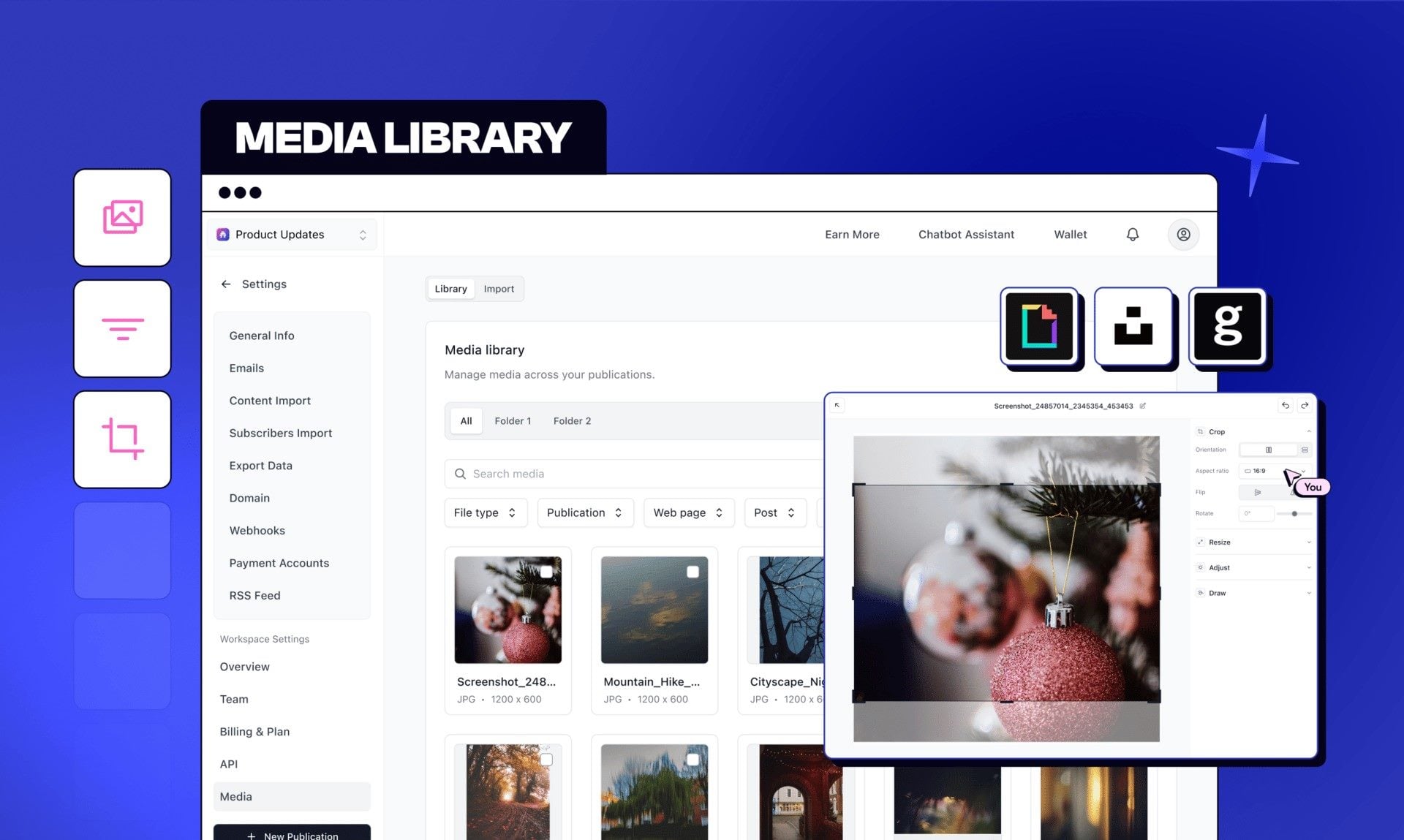
beehiiv medial library

Table of Contents

Recent Beehiiv Developments

Beehiiv executed a significant strategic expansion in November 2025, positioning itself beyond its newsletter roots to become what CEO Tyler Denk called “the operating system for the content economy.” The company’s November 13 Winter Release introduced an AI-native website builder, native podcast hosting, real-time website analytics and a digital products marketplace with a zero-commission model.

Founded in 2024, beehiiv targets independent creators, publishers and startups seeking to manage and monetize direct audience relationships. It now serves legacy publishers such as TIME, Newsweek and the Texas Tribune. In January 2026, beehiiv introduced Dynamic Content, enabling code-free email personalization.

On Dec. 17, 2025, beehiiv released Automations v3 alongside a redesigned Workflow Builder. The update delivered behaviour-based triggers, subscriber-level insights, a Journey Overview dashboard and a Performance Overview showing email-level contribution metrics.

Beehiiv’s ad network has become a significant revenue driver, paying publishers over $1 million monthly and attracting advertisers including Google, Netflix, Notion and Roku. With revenue projected to nearly double to $50 million in 2026, beehiiv now has more than 40,000 monthly active users and nearly 15,000 paying subscribers.

How AI-Enhanced DAM Platforms Are Becoming Strategic Content Command Centres

AI-enhanced digital asset management systems have evolved from basic storage into strategic content command centres that reshape how newsletter publishers manage creative workflows. Modern platforms integrate centralized media libraries with AI capabilities that automate labour-intensive tasks while maintaining brand governance.

AI-powered DAM systems reduce manual effort by automatically tagging images and videos with relevant keywords and descriptions. Enhanced search functionality leverages AI to understand intent and context beyond simple keywords, delivering relevant results even as asset libraries scale.

Beehiv Media Library Feature Breakdown

Capability Description
AI Image Generation Generate visuals on demand via text prompts
Built-in Image Editor Crop, rotate, resize, filter and annotate assets
Getty Images Integration Access licensed visuals directly (Max/Enterprise plans)
Global Asset Sharing Share assets across multiple publications
Enhanced Search & Filters Filter by date, file type, publication and dimensions

More About Beehiiv

Beehiiv targets independent creators, journalists and publisher-led businesses seeking to manage and monetize direct audience relationships. The platform provides newsletter creation, a no-code website builder, campaign analytics, A/B testing and AI-driven automation. These capabilities help publishers deliver a stronger customer experience by enabling personalization at scale.

Sheryl Hodge is assistant managing editor at Simpler Media Group, where she plays a vital role in keeping the editorial operations running smoothly across the company’s three sites: CMSWireReworked and VKTR. Known for her organizational skills and attention to detail, Sheryl acts as the glue that binds the publications together, ensuring that workflows remain seamless and deadlines are met. Connect with Sheryl Hodge:

Sourced from CMSWIRE


By

“Results are what you expect, and consequences are what you get.” This adage certainly rings true for brand strategy. Without data-driven goals, brands are destined to drift — with their organizations left to deal with the consequences.

This five-part series examined how organizations can enhance the value and perception of their brand through better use of their digital assets. Our previous installments looked at four of the five interconnected elements of brand management: strategy, people, process and technology. In each, a maturity model is used to assess and chart appropriate steps for improvement.

Our final discussion in this series looks at impact: the ability to measure how digital assets can influence brand success, and use data to track towards milestones and goals for brand efficacy.

Establishing KPIs

A digital asset management (DAM) platform helps teams organize, store, and distribute their content. It can also play a key role in brand management. Organizations that are in the early stages of brand maturity have little or no idea how their DAM system impacts their business. If they believe it is beneficial, they don’t know for sure because they aren’t accessing its effectiveness.

It’s critically important to measure and report on DAM impact. Mature organizations use this data to inform strategic brand decisions and support DAM system optimization.

At the highest levels of maturity, organizations fully understand the value of their DAM platform. Return on investment (ROI) models and key performance indicators (KPIs) can help quantify this value across three areas:

  • System usage: This includes the number of assets being uploaded, downloaded, and shared via collections and portals; user log in rates; and fewer email requests.
  • Content usage: How is DAM extending the content lifecycle? This can be measured through content reuse and repurposing, embedded asset activity, and system integrations.
  • Business metrics: Workflow efficiencies can result in numerous measurable outcomes. By eliminating manual tasks, content rework, and even risks related to rights infringement, teams can produce higher-quality content (and more of it!) that supports an expanded market reach and increased sales.

Establishing KPIs and benchmarks for ROI can be challenging, especially because DAM involves process and behavior changes. But setting and measuring success factors over time will clarify the impact that DAM has across the other four dimensions of brand maturity: strategy, people, process, and technology.

Steps to Improve Brand Maturity

It’s possible to make great strides in brand maturity, even within the first 12 months. Here’s how: First, develop a governance document to outline your purpose and guidelines. You’ll find a governance template here.

Second, plan on devoting eight hours a week on DAM maintenance and user engagement, via a dedicated administrator or a team to share tasks. Third, document your process for uploading and tagging new assets as part of your creative workflows. Fourth, map out your marketing technology (martech) stack to identify the role that DAM plays across the content lifecycle in data management, creative workflow, and content operations — all in support of your customer experience.

Fifth and finally, identify two to three KPIs related to content use and another two to three related to platform use. A good DAM system will have analytics tools that makes it easy to generate monthly, quarterly and annual reports.

Maximizing Value

A brand represents everything a company stands for. It’s the culmination of every customer interaction: from its products, to its online user experience, to the people who answer the phone.

As professionals in the business of brand management know, it’s not possible to completely control brand perception. But you can influence it, and a DAM platform plays a vital role in this regard. When used to its full capability, a DAM system fosters both control and consistency. It establishes guidelines and workflows that form the nucleus of a successful brand strategy. Use it wisely, and you’ll move your brand from an exercise in unintended consequences, to the most powerful tool your enterprise owns.

To access a PDF worksheet and discovery questions for maturing your brand management, go to go.widen.com/maturity-model.

Feature Image Credit: Pavel Sanchez

By

Jake Athey is VP of marketing and customer experience at Widen, where he helps organizations realize their maximum marketing potential by communicating the value of Digital Asset Management (DAM) as part of core brand and marketing channel strategies. An integral member of the content strategy team, he oversees and manages all of the moving parts of content strategy, brand consistency, sales and more.

Sourced from CMS WiRE