Tag

Digital Marketing

Browsing

By Susanna Gebauer

When you are new to the game and have not your path to success (yet), you probably hop from one piece of information to the next, sucking up all the tips, social media best practices and success stories.

The problem is that there is some horrible, outdated and often simply wrong advice still floating around. And for a newbie without any experience and knowledge it is extremely difficult to figure out which tips are legit – and which tips will at best get you nowhere – at worst the tips will hurt your blog, business, and marketing.

We have been there; we got some bad tips for our marketing – we tried some, ditched more. And to help you even more, here are some common myths about online and social media marketing that you should better ignore:

1. Post once a day – or week

Many people are sooo afraid to post too often that they kill all chances of social media success long before they got going. They post so seldom that their fans and followers have a hard time remembering who they were and how they met before they get the next update.

The truth is: Most people don’t post enough on social media. For Facebook once a day is rather the minimum than the maximum, for Twitter once a day is as good as not posting at all. Pinterest best practice tips range from 30 to 40 pins per day, and Instagram is more like: Post as often as you like as long as you have great images.

2. If you only post your own content, you are a spammer

Do you believe that? Be honest: If you follow a page on Facebook, do you follow the page because you love what they do and like to know more about it – or are you following them because you want them to give you a daily news update on everything they can find?

Posting on social media is about providing value. If you have enough valuable content and information you can share, feel free to share it, even if it is your own content!

3. Never automate

While you should not blindly automate all you can, once you understand what you are doing on social media, automation will be a game changer and the key to unlocking social media marketing success.

Or how do you think all the successful gurus post multiple times per day on Facebook, 30 to 100 pins on Pinterest, 20 – 50 tweets and several images in Instagram? They use tools and automate at least part of their social media activities.

4. Following other people is wrong

Honestly, how can you expect other people to follow you if you are too afraid to make the first step and follow some people? It is a two-way street. You need to be willing to connect if you want others to connect to you.

Simply keep in mind, who you want to connect to? Make sure that at least a large part of the people you follow is from your target audience.

5. Following back is a must

I have been attacked on Twitter for not following someone. Really? How can that be in my interest to follow back everyone who is following me?

Only follow back people that you are interested in – and if you follow people, never get angry at them if they don’t follow you back either. Don’t take it personally.

6. Posting too often is spam

Nope. It just might not be the optimal frequency. You have to watch your numbers and figure out what works best for you. Also, if you post you need to provide value. Don’t just post often because you think you should. If you don’t have something valuable to share, don’t post.

But if you have a ton of value to share, feel free to post more often – it can well be a game changer and give you a boost in traffic.

7. Re-posting content is bad

Do you always tweet your content once – and then never again? Bad. Only a fraction of your followers will have seen this one tweet. There is nothing wrong to tweet the content again – and again. Make sure you share a large variety of content – but you can and should tweet your content again at a different time of the day.

For Facebook, it is slightly different because their algorithm will know that you repeat a post you already posted. But even on Facebook, you can re-share content that you already posted. And your audience will love it – because most of them will either not remember that you already posted it, or they did not even see it the first time around.

8. You shouldn’t talk about your business

Many people are afraid to talk about themselves or their business on social media. They fear to be overly promotional. But there is a huge difference between sharing a story and promoting. And while you should not be too promotional, there is nothing wrong to talk about your business – or yourself. Sharing your own story should be an important part of your marketing!

9. Posting great content is enough to gather an audience (fast)
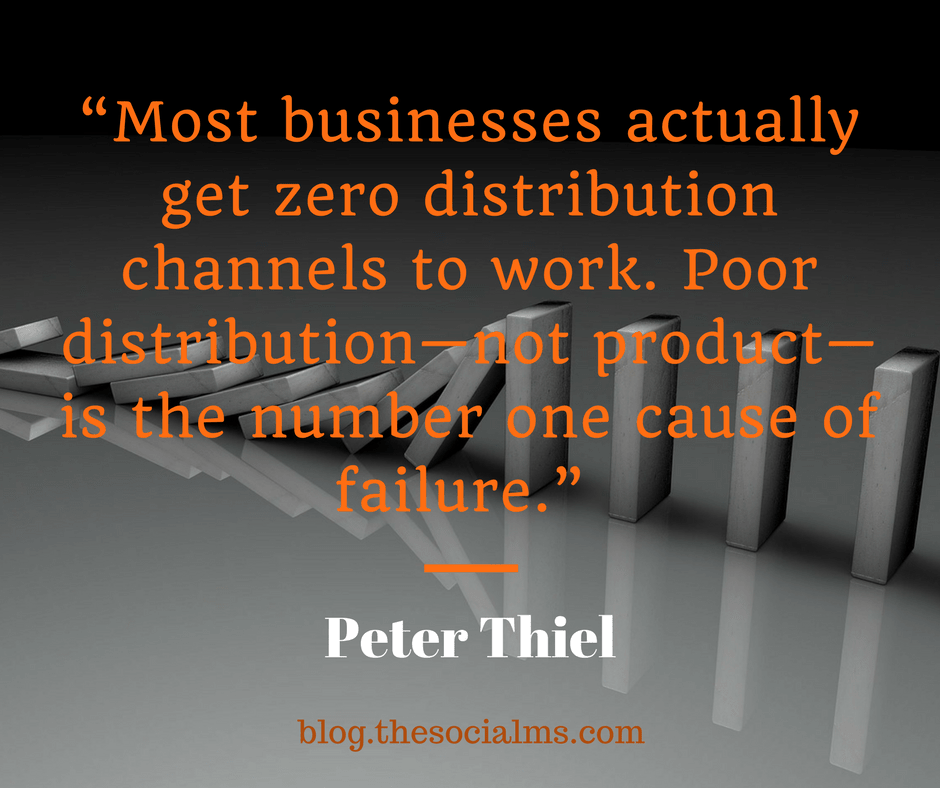
This is one major myth that is killing opportunities for many young businesses and bloggers. The hard truth is: if nobody knows you exist your content will not spread – no matter how great it is.

Even great keyword research will not do the trick in most cases. There is already so much content floating around that there is (almost) no niche where there isn’t already a ton of content floating around – with more backlinks and a larger audience than you have if you are just starting out.

Don’t sit back and wait for a miracle – take your success into your own hands and start distributing your content!

10. Rules are set in stone

So you found a set of rules that you think make sense and now you follow them, but unfortunately, you cannot see any success? Change your strategy. In online marketing, rules are not fixed. Things (and the networks) change on a daily basis. If something was best practice and worked for someone yesterday, it can still be different today – or not work for your niche.

Watch your numbers, question and test everything – and create your own best practices.

11. What works for others will always work for you

Do you have this one awesome blogger who made it to huge success? And now you try to recreate every step of their success journey?

Could work – but does not have to work.

You are a different person, you are in a different situation – and things change. How many years ago did that blogger start out? How many competition did he have – and much competition do you have?

Take Pinterest for instance: There are still success stories and best practices floating around from bloggers who started a couple of years ago BEFORE Pinterest introduced the smart feed – never ever will you get to success, if you follow one of these stories.

12. As a business, you can’t show personality (or humor)

Many first-time social media marketers try to stay very serious – but truth be told, the best and often most efficient social media campaigns or strategies play with emotions. Staying too serious and focusing only on the business side often fails to trigger the emotions that turn visitors into fans or subscribers and fans into customers.

13. Once you have a strategy that works, you should only repeat and not change it

Good marketing evolves. The big advantage of online marketing is that you can test, interpret and adjust in quick succession. The best marketers are the ones that are open to change, are creative and come up with new ideas and changes all the time.

Even if you found a great marketing strategy that gets you a ton of traffic and sales, you need to be open to change. Because the online marketing landscape evolves all the time.

14. Social media results aren’t measurable

There is a ton of data available. Knowing how to use that data is key to digital marketing success!

If the social networks or Google Analytics does not provide you the data you need – check some social media marketing tools. Most of them provide you with awesome analytics and statistics to help you to figure out exactly what is going on.

15. You need to be everywhere

When we started out we had no clue about marketing on any of the major social networks. We ended up trying everything at once and getting nothing.

That changed when we figured out Twitter. Marketing with Twitter was the game changer for us. All it took to get our marketing on the track to success was to find ONE social network that really worked. If you find your one traffic channel that you can tame and scale, some of the other traffic channels will either fall into place or be much easier to tackle with a little cross promotion.

16. The number of followers is what counts

A while ago there was a startup story floating around Berlin: They were really proud of growing their Facebook Page to an impressive number of fans mostly via advertising. The problem was that most of these fans were not interested in what they were doing, the Fan page was really unresponsive, the startup was German, but the fans were mostly from India and other Asian countries.

(Sorry, I cannot link to the page, the startup went out of business)

The problem is that the number of fans or followers will not pay your bills if they are not targeted and engaging. There are many examples of blogs, business or even people winning big with social media but they don’t have so many fans.

When we were still running our startup, we started seeing measurable results from Twitter when we only had a couple of thousand followers. And on networks like Pinterest, the number of followers is even less important because many people find content via the search function.

17. You always have to be on the cutting edge and follow the hype

A while ago in a workshop, one of the participants asked us why we are not doing more with video on Facebook. After all, video is the BIG thing right now.

The reason is simple, creating video content is a lot of work, We already have big-time marketing success without going for video. And maybe video is not so much our thing – we are more like writers.

Our blog, our subscriber list and the list of customers are still growing. Because we have a ton of traffic from other channels like Twitter and Google – for us it is a simple equation: We don’t want and need to invest the effort into creating a ton of videos for Facebook. For someone else who loves videos that might be a totally different story.

18. Twitter is dead

Do I really need to answer that? Twitter has millions of active users; Twitter is growing. Twitter just is not as good as Facebook and Instagram at making their users pay for success…

Did you know that there are some straight-forward processes that can help you and almost any other blog or business help to grow an audience from Twitter – no advertising involved. There are many blogs – including our The Social Ms blog and Jeff Bullas – who built their traffic with Twitter. A large part of our traffic still comes from Twitter, and it is not going dying down.

19. Pinterest is for women and DIY only

That is so totally wrong. Over 175 millions of people are active on Pinterest, and a lot of men are starting to discover the power of Pinterest, too. While there may be some niches where it is easier to unlock the full power of Pinterest it is not that other niches are not present on Pinterest.

20. Pinterest is purely social (Search)

The truth is that if you are looking to drive traffic to a website from Pinterest, you should consider the search function of Pinterest and do some sort of SEO for your pins. This way not only your followers will be able to see your pins, but you can also unlock the tremendous power of the Pinterest smart feed and search.

21. Pinterest is a search engine

While SEO for Pinterest should be a must, not considering the social aspect of Pinterest is also wrong. The smart feed is strongly based on multiple factors. And one of these factors is who is following who and who is sharing your content.

Pinterest recently took a major step towards some of the social media functionality by (re-)introducing hashtags. If you want to unlock the full power of Pinterest, you should now also look into hashtags (That is new as of October 2017).

22. Niche forums are dead

Most people today look for big-time traffic from the major social networks or Google search. But for many niches, it would be much easier to see first results quickly by going through niche forums. These can be on-topic Facebook groups or LinkedIn Groups but also special interest niche forums on very targeted topics.

Since targeting on them is often much better than you can do on the BIG outlets, you can often see better results, build valuable connections and have a lot more fun by talking to people that share your interests.

23. Email marketing isn’t social

Many people see email marketing as something impersonal or rather a shout –out medium. That is not how it should be.

Good email marketing is your chance to connect and build a relationship with your audience. You have the chance to start a conversation, have more than one point of contact and build trust.

You can often connect via email much better than with loose contact in social media. That is a chance that many bloggers, marketers and business owners are missing.

Final words on social media myths

These are just a few of the misconceptions and mistakes we have encountered throughout our marketing activity. I am fairly sure there a lot more myths floating around and misleading some of the more inexperienced bloggers and marketers.

Which social media myths have you encountered? Which mistakes have you made due to misleading advice?

This article originally appeared on the Social Ms blog.

By Susanna Gebauer

View full profile ›

Sourced from Business 2 Community 

By James Mathewson 

One thread that binds my career is top-of-funnel content. I’ve co-written two books on the importance of early-stage content and how to identify and capitalize on those opportunities. I’ve also had a lot of success launching content for the early phases in the customer journey: What some people call the “awareness” or “learning” phases. And I’ve written extensively about what success looks like for top-of-funnel content. But I have rarely led sustainable upper-funnel content efforts for a simple reason: It’s difficult to track the first touches in a multi-touch customer journey to revenue.

As I said in the referenced blog post:

When I have been successful in educating executives on recognizing their successes, I have convinced them to focus on optimizing the experience to get a higher share of users to take the next steps in their customer journeys. That kind of growth is much more valuable, as you can attribute it to revenue.

I should have added, “in theory.” In practice, few digital marketers I talk to have attribution working well enough to give each touch point in a customer journey the credit it is due. Upper-funnel content is expensive. It’s an easy line item on a budget to cut if there is no way to track it to revenue. Most of my upper-funnel content efforts were ultimately redesigned out of existence because there was no way to prove they generated revenue.

This is the paradox of upper-funnel content. Without attribution, you can’t prove it was instrumental in generating leads. But redesign it out of existence and suddenly, your lead volume goes way down. Why? Because no one becomes a lead until they’re ready. And they only get ready by first learning the what, why, and how of their topics of interest. These are the basic building blocks of upper-funnel content. Attribution modeling is the solution to the paradox. When you develop an attribution model, you figure out how important the content is to the leads you generate and give it the credit it is due.

We have developed some methods at IBM to give all the content in a journey the credit it is due, including upper-funnel content. I can share the basic methods with you now. Before I do that, however, I want to highlight a common dead end, so we can move on from it.

Last-touch attribution

Most people I talk to at conferences say they have attribution. But after I grill them for information on how they do it, they ultimately acknowledge that they mostly use “last-touch” attribution. That means giving all the credit for the last thing a prospect did before becoming a lead.

For several reasons, last-touch attribution doesn’t work. The main reason is the last thing a prospect sees before becoming a lead might not be the most important. If it is treated as such, a disproportionate amount of resources go to developing it, and you end up with a very bottom-heavy experience.

Last-touch is also bad because you never fill up the pipeline for bottom-of-the-funnel interactions without having top-of-funnel experiences. For example, the last thing many of our high quality leads did was to take a free trial. In last-touch attribution, you would give all the credit to the trial. But nobody takes a free trial without first learning about what they want to try. And nobody sets out to learn about what they want to try without first understanding what problem the tech solves. The more complex the product, the more touch points are necessary just to get to the point of wanting a free trial. In this example, top-of-funnel experiences contributed to the quality and quantity of the lead, but get no credit.

Last-touch attribution is really no attribution. So the question becomes, how do you move towards a true attribution model?

Start with response scoring

The first step is to score all your content in terms of how it contributed to leads and wins. If a white paper is downloaded often, and a high percentage of the respondents who register to take the download become sales, that white paper should be scored relatively highly. Let’s say you have 100 white papers, you can rank sort them on the number of high quality leads they generate, and give them scores on that scale from 0 to 100. Now you have a way to measure the relative value of those white papers.

But assets like white papers don’t generate leads by themselves. They have to be part of campaigns, which puts them in front of the audience using paid, owned, or earned means. If you use the same white paper in multiple channels, it is bound to generate more responses in some channels than others.Let’s say a particular white paper about migrating to the cloud gets a lot of quality responses through organic search. For example, a lot of people query “how do I migrate to the cloud?” and visit the page where the paper can be downloaded. When they visit, they download the white paper and give quality information about themselves in exchange for the asset. This indicates that the paper does its job in early-stage education.

Now let’s say you try to use the same white paper in a paid search campaign that focuses on a product name like IBM Cloud Migration Services. When prospects click the ad, they get a single-offer landing page with the same white paper on it. Here, most of the users abandon the experience before filling out the form, and the paper does not generate a lot of quality responses.

How can the same paper do well in one context and poorly in another? In this case, the paper is useful for early-stage prospects but not for late-stage prospects. By the time someone searches for a brand name, chances are they have already learned all the basics and are ready for a deeper conversation. So a paper that tells them what they already know is no longer relevant.

This example illustrates why simple response scoring is not enough. You need an attribution model that helps you understand the value of assets when they are most useful. Once you have this more nuanced response scoring method, you can begin to pay attention to other variables in the mix.

Every time I have done studies like this as part of campaign optimization, I have also found that the same paper performs differently in two early-stage experiences. Perhaps in one, users have to scroll to get the link to the download whereas the other experience is easier. You never learn how changing UX can change performance until you try to score your assets in the mix. If you have attribution, they become markers to help improve the whole experience, including the asset itself.

From response scoring to attribution modeling

The first step in moving to attribution modeling is to look for patterns in the responses you are getting for your assets. In the example above, the white paper performed well in the early stages of the customer journey and poorly in the late stages. The hypothesis is white papers tend to do better in the top-of-funnel. Test that by looking at all your white papers to see if that pattern is consistent. If so, you can tune your experience by moving your white papers to top-of-funnel and move other things, like product demo videos, later.

This tuning is important prior to implementing attribution because the data can be very noisy if you don’t havewell-tunedned experience design first. If you implement attribution prior to tuning, it’s not the end of the world, but you will need to cut through the noise to tune the attribution. And this can be difficult because there are so many variables to control, it’s difficult to draw valid conclusions from the data.

When we started doing this at IBM, we found that five out of the 1000 or so white papers we had in market generated any kind of quality responses. The temptation was to say, “white papers don’t work.” But when did a further analysis of the five that worked, we found that they were highly technical in nature, not just delivering strategic points of view, but giving tactical guidance of how to implement a solution. Also, all our testing was done on late-stage offers, when tactical information is relevant but strategy is not.

Instead of jumping to conclusions, we started looking at how strategic white papers performed in early-stage experiences, and found that they performed better. All we needed to do was wire up the tracking system to show that people who downloaded those white papers also did late-stage activities leading to quality responses. When those leads closed, we could attribute the early-stage white papers to both leads and wins.

This example illuminates how attribution modeling works best. It doesn’t work to try to make all kinds of assumptions and wire something up based on the assumptions. That leads to conclusions like, “white papers don’t work.” But if you want to know how well a particular white paper is working, you have to take all these variables into account. Assuming the context in which the white paper is delivered to the audience conforms to best practices (landing page UX, right asset type, etc.), you can compare their response scores on an apples-to-apples basis.

A note on gating

Another variable you will need to control is whether or not your assets are gated. In early stages, prospects are less likely to fill out a form with their correct information to download an asset. Also, gating can prevent them from finding the assets in the first place, because the gate prevents search engines from indexing the assets independently of the experiences where they live. So the best practice is not to gate assets in early-stage experiences.

But if you don’t gate, how do you know the asset contributed to a lead? The answer is tracking. You can cookie the user anonymously and track their activities through the point where they fill out a form. When they do fill out the form, you can add all those other touches to the client reference, with the name and email you capture. All those touch points contribute in some way to the lead. Your attribution model can then take those touch points into account.

I have intentionally avoided the question of how much weight to give individual touches in a multi-touch client journey. Weighting can add bias to the algorithm, which obviously affects the results. But it is up to you to weight things the way you think measures your touch points accurately. I would start with giving equal weight to all the touch points, and then look for patterns in the data to determine that you want to weight certain items higher than others.

Conclusion

Attribution modeling is as much art as science. I hope after reading this, you are not so intimidated on getting started. It’s not that hard. You make hypotheses (based on best practices) about what you think is working, and you test it. You learn a lot in this process, and eventually you are able to attribute any page or asset (or combinations) you publish to the business results that matter. If you have a working attribution model, you can learn how to focus on the things that matter more. Most importantly, you can get the funding you need to do more of the things that work. In particular, you can build sustainable top-of-funnel content marketing programs.

By James Mathewson 

Sourced from Business 2 Community

Sourced from TECHsling

The digital boom has changed the way companies interact with customers, making content marketing a crucial strategy for attracting customers and boosting loyalty. Recent research has revealed that two-thirds of people consider content marketing useful, significantly outweighing the 33% who consider it biased. Even when customers know they are reading marketing material, they continue to express interest, with over 50% of those surveyed being more likely to research a company’s products or services after consuming its content. In this post, we highlight the reasons why content is key to any business wishing to remain competitive.

Establishing Brand Authority

Many leading companies are hiring savvy content writers to produce content that will establish them as authorities in their field. By providing white papers, blog posts, insider tips and other content that is actually useful, companies can build trust, which is key when it comes to acquiring and retaining clients. As noted by Forbes, “Having brand authority means consumers will feel confident that you know what you’re doing, and thus that their money is well spent with your company.” Content not only needs to be informative but also curated to clients. Analytics can help companies determine a strategy that includes personalizing content to different target or client groups.

Encouraging Consumers to Engage

As noted in a thesis by J Denham-Smith and P Harvidsson (Content Marketing’s Effect on Customer Engagement), “The goal of content marketing is to provide consumers with content that they are willing to engage with. Ways of engaging in content mean sharing, liking, commenting and adapting the message, then spreading it, thereby creating user-generated content.” In essence, valuable content marketing leads to sharing and recommendations. Create excitement around content enables a company to reach the sites of social influencers, who can significantly boost its brand awareness.

Content Marketing Drives Sales

Over 82% of people make purchases from a company after consuming its content. This statistic highlights the value of investment in content. Your blog may have thousands of visitors and your social media hundreds of likes, but these figures need to be converted into sales if content marketing is to meet its aim. According to Moran (2016), content marketing should possess four key qualities: it should be credible, targeted, differentiated, and measurable.

We have mentioned the key reasons why content marketing is currently a big priority for most businesses that invest in digital marketing strategies. To stay at the top of your game, it is important to produce quality content, but also to curate it to your clients. Ensure your content is shared, commented on, and liked, and measure whether or not it is making a difference to your conversion rate.

Sourced from TECHsling

By

One of the top challenges facing influencer marketing is one common across the entire arena of digital marketing: brand safety.

At this year’s Cannes Lions, Unilever’s Chief Marketing Officer Keith Weed warned that influencer marketing has an integrity issue. The proliferation of fake followers, aided and abetted by a lack of transparency and proper measurement reporting, threatens to destabilize the entire industry.

Weed warned that the industry must take “urgent action now to rebuild trust before it’s gone forever,” and he pledged that Unilever’s brands will never buy followers nor work with influencers who buy followers.

Any brand conducting influencer marketing programs should heed the call to ensure greater transparency and integrity.

The relationship between social media and influencer marketing is at a crossroads. To be clear, the challenge is not one of growth: According to a recent study by the Association of National Advertisers, 75% of brands use influencer marketing, and almost half are planning to increase budgets in the next year. However, in order for influencer marketing to continue to thrive, brands will need to improve their campaign strategies.

Brand safety is of paramount importance in the development of influencer marketing tools and in ongoing campaign monitoring and management. Campaigns – and the technologies that support them – should be designed to track telltale signs of suspicious activity such as sudden bursts in followers or suspicious letter replacements in profile names, such as the use of “1” to replace the letter “I.” More sophisticated algorithms can flag dramatic shifts in performance and unanticipated engagement patterns.

In addition to ensuring transparency and integrity, influencer marketing campaigns should focus on authentic engagement. Influencer marketing is inherently social; when implemented well it can be an open (but directed) conversation that is amplified to the masses. This is why it is vital to focus on follower engagement.

While metrics like volume are of course important (e.g., follower count, posts per day/week, etc.), engagement may have the biggest impact on meeting or even exceeding KPIs. One of the highlights of influencer marketing is the opportunity for a brand to leverage an influencer’s unique voice. That unique voice has a big impact on the type of content an influencer can produce for brands — and it is that unique, authentic voice that ultimately drives consumer engagement with the branded content.

For brands, a trusted environment is one of the most effective places to engage consumers. Passionate influencers who authentically weave branded stories into social platforms that consumers trust are the ones who deliver powerful results.

Whether it is a story told through a blog post, video, a picture, or any combination of these, working with influencers can bring brands and products to life with engaging, custom content delivered to the right audience — amplified through the channels that has the potential to make the greatest impact.

But to help ensure that this marriage between influencer marketing and social not only survives, but thrives, it is up to everyone in the industry to work to ensure that engagements remain authentic, honest, transparent, and measurable.

By

By Katie Paulsen, Vice President of Influencer Marketing, RhythmOne

Sourced from MediaPost

By

Key Performance Indicators (KPIs) are measurable data that companies use to track and evaluate strategic activities and business objectives. KPIs are important to businesses because they provide context to organizational goals and place accountability on those tasked with achieving those goals.

While small business owners usually have no problem creating KPIs for sales and production, deciding how to track and measure digital marketing initiatives can be more cumbersome.

As technology becomes more integrated into our lives, so too is the importance of having KPIs for your small business’ digital marketing.

Here are seven of the most important digital marketing KPIs:

1. Email Open Rate

Measures: The number of email recipients who opened an email.

Calculating Open Rate: Most email marketing platforms provide open rate statistics on each email campaign. If you want to track open rates on individual email correspondents, try using a tool like Yesware.

Why it’s important: Understanding and using email open rates can help you improve your email marketing activities and discover trends that lead to more email engagement.

2. Cost Per Click (CPC)

Measures: The cost you pay for each unique visitor from an online paid media ad.

Calculating CPC: Most paid media platforms (Google AdWords, Facebook Ads Manager, Outbrain, etc.) have an analytics report that shows your CPC. You can also use Google Tag Manager and your digital marketing budget report to assess CPC from other paid strategies.

Why it’s important: Knowing your CPC and creating goals using this marketing metric can help you optimize your paid media activities.

3. Cost Per Acquisition (CPA)

Measures: The cost you pay for each conversion or acquisition. A conversion or acquisition could include activities like: calling your business, completing a lead form, downloading an eBook, purchasing a product, or any other number of user actions.

Calculating CPA: Where CPC calculates traffic, CPA measures activity. To calculate CPA, you need to track conversions either through the paid media platform, web analytics software, or manually. You will then take the total amount spent on advertising that campaign and divide it by the total users converted.

Why it’s important: Understanding your cost per acquisition and creating a targeted average CPA will help you assess the return on investment from your advertising activities.

4. Click-Through Rate (CTR)

Measures: The percentage of people who see your advertisement, inbound link, post, or search result snippet and then clicks it to navigate to your website.

Calculating CTR: Most communication channels will provide a CTR for each marketing activity you execute. If a platform doesn’t, you can look for the total impressions received, and use Google Tag Manager to calculate the traffic from that link.

Why it’s important: A low CTR indicates that people see your post or ad, but are not compelled to act. By measuring your CTR, you can adjust ad copy and marketing messages to entice more people to click on your links.

5. Inbound Links

Measures: The number of internal links pointing to your website from another site.

Calculating Inbound Links: Use an SEO tool like Ahrefs or SEMrush to crawl the web for links pointing to your domain.

Why it’s important: Inbound links are one of the most powerful ways to grow your online presence. You should be working to grow the number of links pointing to your site by creating link-worthy content and conducting link earning/building outreach. By tracking and creating goals for total inbound links, you can help improve your organic rankings and drive more traffic to your website.

6. Monthly Website Traffic (Channels)

Measures: The number of users who visit your website through organic search, referral links, direct URLs, or paid channels.

Calculating Monthly Website Traffic: Use Google Analytics to calculate your website’s total monthly visitors. You can also drill down to specific acquisition methods to determine what channels drive the most traffic.

Why it’s important: Knowing the total amount of traffic you receive every month and the channels they used to find your website provide you the insight needed to measure the effectiveness of your different marketing campaigns. It also helps you find opportunities to increase the amount and quality of your visitors.

7. Bounce Rate

Measures: The percentage of users who leave your website after only visiting the page on which they landed.

Calculating Bounce Rate: Use Google Analytics to track the bounce rate across your entire site and on the specific pages for which you are running targeted marketing campaigns.

Why it’s important: Bounce rate indicates the user-experience on your various pages. If visitors are leaving your site after only visiting one page, you need to assess whether that page is under-optimized, if you’re bringing the wrong audience to your site, or why visitors are not engaging with your other pages.

Working With Digital Marketing KPIs

Every small business should use digital marketing KPIs. While every company will have their own digital marketing KPIs, understanding some of the most popular ones can help you get started with tracking and measuring your digital marketing initiatives against your business goals.

Feature Image Credit: Getty Images

By

Sourced from the balance small business

By Kate Peers

Facebook has been experiencing a lot of bad press. Some even say that users are gravitating away from Facebook and towards other platforms.

The current statistics disagree with this assessment, however. There are still one billion active users on Facebook, which means that Facebook is still a strong place to find potential customers for your business. If you use Facebook ads efficiently, you can precisely target your audience and effectively spend for a strong return.

In this article, we examine how and when to use Facebook ads for your business.

Can I reach people without ads?

Facebook are using an algorithm which makes it more and more difficult to reach people organically through posting direct to your page. On average your posts will reach 1–3% of your audience without any ad spend. So, while can you interact with customers without ads, spending money on ads will help you reach more people, as well as more relevant people.

Should I boost a post?

Facebook is very clever. If you have ever posted anything on a business page, you’ll be familiar with the constant suggestions to “boost” your post. You may see a message that says something along the lines of, “This post is performing well, boost it now for more people to view it.”

While boosting a post can increase your customer reach, the most efficient way to interact with customers is by creating an ad from scratch.

How do I create an ad?

Before you make a start with Facebook ads, think hard about your objective. What would you like to achieve with your ad? Do you want to drive traffic to your blog? Would you like people to purchase an e-book? Are you hoping to get more page likes on Facebook and increase your followers?

All of these objectives can be achieved with Facebook ads, but make sure you have them clear before you begin, otherwise your spend will be directed towards the wrong outcome.

Target your audience

Take time to consider your dream client. Who is he or she? Do you want to target women in New York, aged between 30–45 with a high disposable income? You can do this.

Facebook has different targeting options divided into general demographics, interests, behaviors and connections. The real power of Facebook ads lies in interest and behavioral targeting. As we now know all too well, Facebook has tons of data on everyone’s interests, page likes and groups joined. If you know your audience, then you can reach them by creating an audience on Facebook.

Create a strong visual

A strong visual image is key to grab your customer’s attention. You only have one shot to make a first impression — you want to be sure that your images are clear, bright, and convey your message appropriately.

You should also be mindful about the fact that Facebook has very strict guidelines for ad creation, which tend to change a lot. You can only have text covering 20% of your image for instance, or your ad won’t deliver. Ensure your image meets these guidelines before you spend unnecessary time and money on an ad that doesn’t work.

Test, trial and respond to each ad

Facebook insights allow you to track how well an ad has performed. Price per click, number of times the ad was seen and adding URL tags to your ads mean that with a combination of Google analytics and Facebook insights you can play around with a small budget.

It is important to test to see what your audience responds to and ensure you are spending your money to achieve good results. If you notice that no one’s clicking on an ad, you may want to pause it. But, if you notice that hundreds of people are responding, you may want to add more spend and reach more people.

Once you get it right, the results will be mind blowing.

Final thoughts

There are few ways to reach your audience that are as direct and effective as Facebook advertising. If you’ve been hesitant to try out Facebook ads, now’s the time to give it a go.

Have you tried ProWritingAid’s editing tool yet? It will help you edit faster, strengthen your writing, and get your ideas across.

Try it for free now!


Originally published at prowritingaid.com.

Feature Image Source: Shutterstock

By Kate Peers

Kate Peers is the writer of the Mad About The Boys blog. A social media and marketing manager, she secretly wants to write a book one day. She is the a contributing author of Walking In The Rain and Washing Up Is Good For You, curated books by Department Store For The Mind. Her work can also be found on Metro online.

Sourced from The Writing Cooperative

By  Nicole Lee

Over the last five to six years, I have sat in numerous interviews in which candidates very candidly announced that their real passion was in marketing, digital marketing or social media marketing. I am constantly asking myself, “How can I attract quality account executives when there is so much buzz around digital marketing?”

There is no denying it — the term “sales” is not always looked on in the best light. No young person wants to think of themselves as being sold something, especially now when you walk into empty malls and see hungry associates trying to make their daily goals. The big shift in our culture from having a personal sales experience with a trusted, thoughtful salesperson to being able to order anything from your phone and have it there in two days has affected the way we think of salespeople.

This thought process extends into people’s careers. A large part of their interactions are in a voyeuristic/exhibitionist manner; this makes it difficult to ask people to fully engage in a career where you have to create and maintain your own relationships. Picking up the phone and calling someone does not come naturally. Having to reach out to strangers and tell them something they may not want to hear seems to a majority of candidates to be the lowest of the low.

While marketing is still a means of promoting and selling products, it is viewed as a creative industry and thus satiates the human desire to be creative. We know that 76.8 million millennials participate in some kind of social media. On a daily basis, they are marketing themselves to their friends and colleagues in their own creative voice. Thus, a career in marketing is just an extension of a personal habit that they already participate in and thoroughly enjoy.

So, how can we, as senior sales professionals, attract the best candidates to be passionate and engaged in sales and business development?

At Glow Concept, I have taken several steps that do not include doubling their pay or benefits. These tactics may not work for every industry, but we’ve been able to build an amazing team by changing our internal goals and outlook on what the sales team actually does. The following is our four-pronged approach.

Rebranding Our Sales Force

Our team members are now B2B relationship managers. Their main focus is on creating strategic marketing plans to optimize sales with our partners. This works particularly well for our team, as we are not in a heavy outreach phase and are focused on building deeper relationships with our current accounts.

Marketing Is Sales; Sales Is Marketing

We put a heavy emphasis on digital marketing being a part of our overall sales and marketing strategy. Our executives and managers must be involved in planning, implementing and monitoring digital advertising campaigns, social campaign effectiveness and affiliate marketing success.

Digital Marketing Is Really Just B2C Sales 

This is something I talk about on a daily basis because at some point (in our industry) someone is going to have to sell to the customer. We must think in terms of how we best deliver to the customer. From content to product shots to copy, I have enabled the team to have an eye out for how the message is best delivered and study the performance of each delivery.

Be Creative

I implore the team to always remember they are at the front end and therefore have a big voice when it comes to products and the communication around those products. They are encouraged to analyze how and why things are performing and what we can do to optimize our marketing and digital marketing efforts.

Putting an emphasis on relationship management as a means of marketing our products to other business and, eventually, consumers has invigorated our team. They are creative, digital-marketing-savvy salespeople who understand the importance of relationship management, but are also able to keep up with the digital marketing world. I realize this article may or may not be helpful depending on your industry, but I implore you to think of your sales team as more than a collection of salespeople and explore how you can get creative to pull in top talent in a digital market world.

Feature Image Credit: Shutterstock

Experienced Brand Builder with over 13 years experience in sales and marketing.

Sourced from Forbes

By Lucy Benton

Have you spent thousands of dollars on an online campaign but haven’t seen the results you have expected once the campaign is over? If the campaign was all about letting everybody know how amazing your product is and what excellent features it holds, then the reason for the lack of success is obvious. People probably did not respond well to your ads because they were focused on the brand or product. Modern market asks for a different type of approach when it comes to building up customer awareness for your business.

No matter how powerful and compelling your marketing content is, clients need more to become confident about your brand. There are new e-commerce businesses popping out almost every day so why should anyone trust the word of brand A instead of brand B? To capture the audience and create a bond between you and your client base, there must be some sort of personal relation among the two sides. The customers want to see you caring, not just thinking about how to get them into buying your product.

The best way to communicate with your audience is through social networks, as they offer the most ways to interact. This, however, doesn’t mean flooding everyone’s feed with status updates and promotional content. Your social network activities should be versatile and offer everyone a chance to speak their mind as well as bring your product closer, through creative non-sales related content. It’s less about pushing the sale and more about showing the effort and devotion put into your product.

Simply put, the audience is interested in what you have to say about your business, but what really makes the difference is what everybody else has to say about your brand. There are several ways to promote your business in a manner that doesn’t seem generic and won’t bounce people back but inspire them into wanting to know more about you. Marketing experts at College Paper went to work and created an easy to understand infographics depicting some of the best online marketing strategies. We encourage you to take a look and see how easy it is to bring your business to a whole new level by simply putting an extra effort into your social network marketing activities.

By Lucy Benton

Lucy Benton is a marketing specialist, business consultant and helps people to turn their dreams into the profitable business.  Now she is writing for marketing and business resources. Also Lucy has her own blog Prowritingpartner.com where you can check her last publications. If you’re interested in working with Lucy, you can find her on  Twitter.

Sourced from Irish Tech News – Alison McGuire

By Brown Hill

These Strategies Can Be Utilised To Increase Leads, Return On Investment And, Most Importantly, Sales

The world of B2B marketing is ever evolving, and today’s marketing team needs to be able to adopt new strategies and leverage a mix of technologies that educate, engage and increase conversions. Having a well-defined strategy is the key to improving the effectiveness of your B2B marketing efforts. There is no scope for any mistakes in B2B marketing. Because if you fail to impress one company about your services, then your potential target audience shrinks immediately.

Today we are going to cover the top five B2B marketing strategies that you can use to increase leads, return on investment (ROI) and, most importantly, sales.

Content Marketing

Most companies do a great job of explaining what they do but fail when it comes to using more dynamic content (blogs, videos, infographics) to show how they can help. You may have heard this repeatedly, but content marketing continues to rule strong for B2B marketers. In the past, a sales representative, dealer, or channel partner was the key point of contact for gathering information.

Content continues to cover the web and for performance-oriented marketing professionals, finding new and creative ways to show content can be a real challenge. According to a recent study by Regalix, 80% of senior marketers said creating marketing collateral is a top priority. In another study by TopRank, the most effective content marketing tactics according to B2B marketers are:

  • In-person events (70%)
  • Case studies (65%)
  • Videos (63%)
  • Webinars (63%)
  • Blogs (62%)
  • Newsletters (60%)
  • White papers and research reports (59%)

Interactive B2B content possibilities are only as limited as your imagination, and budget. Your writers should prepare a content-based experience for the target audience so that they fall in love with your services quickly.

Build Relationships

All marketing activities should be directed to establishing, developing and maintaining successful relationships with customers. Customer satisfaction is imperative to the success of any B2B company. Without happy customers, a business will struggle to achieve the rest of its goals. Your customer support team can help maintain positive relationships and improve customer retention rates.

Here are 5 ways to improve your B2B relationships:

  • Know yourself.
  • Re-imagine your B2B relationships.
  • Consider “scalability” in all that you do.
  • Find B2B partners with complementary technology.
  • Improve trust to enhance further partnering.

Large or small, improving your relationship with each and every prospect will undoubtedly have a positive effect on your ability to generate more, high quality leads now and in the future.

Make a Relevant Call To Action

Do you want to boost email engagement and conversion rates for your brand? No matter your business, CTAs can help you engage subscribers and encourage them to take action. Good CTAs build brand awareness, increase web traffic, and ultimately result in more conversions and sales.

Why Are Calls-to-Action So Important?

For those of you new to Inbound, strong CTAs are an essential part of a conversion path and the lead generation process. Check out the Act-On Center of Excellence to find resources that help you create more effective emails and landing pages in order to optimize the results of your next campaign.

The use of effective calls to action by email can help you generate conversions, but they are not all you need to consider for an effective email strategy. All of your website’s power comes to a fine point in the CTA. The user’s action is what it’s all about. Once you understand the basic of what a CTA is, its function, purpose, and appropriate content and use, you can create CTAs that improve conversion.

Digital Marketing Channels

What are the top digital marketing channels for your company? Is it Email Marketing, PPC, SEO, partnership program? Before starting to plan an effective digital marketing strategy, you must understand the different channels of digital marketing. The digital marketing has introduced several digital marketing channels that help advertisers target the right audience and attract them to the product or service that is marketed.

Popular Digital Marketing Channels

  • Social Media Marketing
  • Search Engine Optimization
  • Pay-Per-Click Advertising (PPC)
  • Email Marketing
  • Content Marketing
  • Affiliate Marketing
  • Display Advertising
  • Online PR

By setting up a digital marketing campaign for your company, you cannot rely on just one resource to generate all the results you want. The right digital marketing channel for your brand or business also depends on your brand’s business goals. Each marketing channel has to be evaluated for its relevance in your overall marketing strategy and needs to be aligned in keeping with your business objectives. With so many companies turning towards digital marketing, it’s important that you pull your socks up and make optimal use of what you can.

Marketing Automation

However, for B2B marketing specialists, evolving technology is not always a bad thing. The evolution of marketing automation is creating new opportunities for marketers to deliver better quality leads to their sales teams, bridge the gap between marketing and sales, and measure their direct impact on their business.

As companies that provide B2B services look to implement more effective marketing strategies, marketing automation has become one of the most useful tactics being implemented. In fact, the use of marketing automation by B2B companies increased by 1100% between 2011 and 2015.

Faced with these challenging market dynamics and increasing ROI pressure, B2B marketers at companies of all sizes can gain these benefits from a marketing automation:

  • Perfecting the Client Experience
  • Lead Nurturing
  • Increase in Revenue
  • Decreases Lead Conversion Time.
  • Reduce Marketing Costs
  • Customer Retention
  • Receive Multi-Channel Efficiency

As it stands today, business competition has reached cutthroat levels, and the marketing landscape is no exception. Now is the time to re-examine your essentials, take an inventory of current capabilities and talk with your marketing automation section and other marketing and sales technology providers.

Note: The views and opinions expressed are solely those of the author and does not necessarily reflect the views held by Inc42, its creators or employees. Inc42 is not responsible for the accuracy of any of the information supplied by guest bloggers.

By Brown Hill

Sourced from Inc42

By Alex Schnee

When you are looking for new ways to encourage customers to find your business and be excited about what you do, you might need to take a look at how you are choosing to brand yourself. Branding might seem like something that you don’t really need to do in order to find success as a company, but you would be surprised to know how much it can end up helping you.

Here are some ways you might want to reconsider your brand and the type of audience you are reaching.

Branding targets customers

Do you know exactly who you want to attract as a customer and why? It’s not always easy to describe your ideal client unless you’ve taken some time to brand yourself properly and to know what type of customer would be attracted to your product or service. By developing a brand, you’re taking the time to know who you are reaching and why, what your buyer’s habits are, and how you can best market to those who will deliver results.

Branding creates a recognizable image

Most companies that do well are ones that stand out a bit from the crowd. Either they have taken the time to differentiate themselves from the competition in the market, or they are seen as the top competitor. When you can easily recognize a logo or a business model, then a company is already one step ahead in terms of marketing and being competitive on the market. Having a recognizable face as a business can bring in new customers because they are already aware of your reputation.

Branding can create your marketing strategy

If you’ve had trouble putting together a comprehensive marketing strategy for your business, then it might be time to consider whether you are getting the message across through your branding. Your strategy should be based around what you are trying to convey with your brand and the types of customers that you want to reach. This can mean investing in better content, advertising, and the use of social media in order to achieve what you want.

Branding can create reputation

Some of the biggest names in several industries do not necessarily create better products than their competitors, but they do have a reputation to rest on. When customers know what to expect from your business, you are creating a brand name that has a connotation of caring for clients. Consistency tends to be key when you want to develop a brand that customers feel like they can rely on. Reputation can either make or break a business, so it’s in every company’s best interest to foster a positive one and to take the time to use branding as a tool for creating a quality reputation that will last.

Branding deserves time and effort and evaluation of how you can approach new customer. Because it is such an essential part of a business and how you choose to market yourself, sitting down and developing a strategy can go a long way toward creating repeat and consistent business in the long run.

By Alex Schnee

I’m an explorer in the old-fashioned sense of the word, and first and foremost a writer.I have worked as a freelance writer for years and have been published in publications such as the Huffington Post, Elite Daily, the Price of Travel, Pink Pangea, and many others. I was also formerly the Generation-Y blogger at Wanderlust and Lipstick and I am currently USA Today’s 10Best Local Expert on Florence, Italy.

Sourced from customer THINK