Tag

e-commerce

Browsing

Sourced from Entrepreneur Europe

Build a Shopify Store on a budget.

E-commerce boomed during the pandemic and as people have become more comfortable with shopping online, there’s good reason to believe the upward trend will only continue. For savvy entrepreneurs, this presents an outstanding opportunity, especially since platforms like Shopify are so easy to leverage.

That said, you may need a little help getting started in your passive income venture. Get your feet off the ground with The 2021 Shopify Drop Shipping & Private Label Bundle. It’s just $19.99 (reg. $796) for a limited time.

This four-course bundle gives you 14 hours of training to help you set up a Shopify store and start scaling it. You’ll learn the rules for choosing what to sell with a dropshipping model and understand how to discover suppliers for quick dropshipping. Additionally, you’ll understand how to save money with suppliers and even set up your site to automatically accept credit card payments to fully automate your selling.

You’ll also learn a step-by-step process to opening up new sales channels for your private label products and discover how to use targeted paid ad campaigns and promotions to market your store and products. Further your store’s reach by performing keyword research effectively and discovering SEO secrets both on- and off-page to amplify your store’s place in the marketplace.

Finally, there’s a crash course designed to help you build a T-shirt selling business as a practice round. You’ll get started with Printful, create graphics with low-cost tools, create products, and add them to Shopify to start selling fast.

Start earning some passive income or launch a side venture for your business. With the e-commerce boom here to stay, it’s an opportunity for all entrepreneurs to earn a little extra. Right now, you can get The 2021 Shopify Drop Shipping & Private Label Bundle for just $19.99 for a limited time.

Feature Image Credit: Roberto Cortese/Unsplash

Sourced from Entrepreneur Europe

By Ross Andrew Paquette

Email isn’t going anywhere, and it cannot be ignored.

Millions of consumers worldwide use  and its use continues to increase throughout the years. Email is one of the most popular  channels, and the majority of emails sent daily are  related.

Think of how many emails you receive on a daily and weekly basis — they consume a large part of our life. From notifications to paperless billing — we rely heavily on emails every single day.

Email marketing has continued to be one of the most effective ways for a business to market to its customers. Email is personal and the open rates put your message in front of its intended recipients more than any other channel.

Email isn’t going anywhere, and while SMS marketing may be experiencing industry-high open rates, specifically in the e-commerce industry, email cannot be ignored. Here is why brands need to be all-in on email marketing.

More customizable and personal than social media

E-commerce brands, especially direct-to-consumer brands, love social media. While social media offers a great platform to market to your customers, it isn’t highly customizable or personal.

If a brand has 100,000 followers on Instagram, for example, every Post or Story is broadcast to that entire audience. What if a D2C apparel brand has both men’s and women’s lines? A post highlighting the women’s spring collection is going to be seen by all followers — male and female.

Email, however, allows an e-commerce brand to segment its list based on data. An apparel brand can have a main list that includes all customers, and then segment that into lists according to purchase behaviour.

Sending an email announcing a new women’s line to customers that have previously purchased women’s apparel is going to perform much better than an offer broadcast to the entire list. The same applies to men’s drops.

Email  also helps to create a stronger relationship. A post on social media feels generic, whereas an email addressed to the recipient feels more personal.

Highly measurable data

When you take all of the data available to you and break it down, you can make incredible improvements in your future email deployments. You can further segment your list, identifying your best customers and you can also use data to determine the best days of the week and time of day to send messages.

Numbers don’t lie, and when you take the time to analyse your email data, you will find new opportunities and optimize them to improve your overall results. For example, you might find that general newsletters have a significantly higher open rate on Tuesday afternoon, while special offers convert better on Friday mornings.

Access to this data also allows you to send dynamic content within your emails, tailored to each recipient. When you place an offer for a product they were recently viewing on your website in front of them, they are more likely to convert than they would be if it was just a generic blanket offer designed to appeal to the masses.

Consumers have instant access to their email via mobile devices

Mobile devices have the majority of consumers’ email at the tip of their fingers. You don’t have to wait for them to get home or to login to their email on a desktop or laptop. They are notified as soon as that email hits their device.

Whether or not they open your email immediately depends on several factors. If they are busy, they are going to ignore their email until they have time to dive in. A strong Call to Action in the email subject, however, can potentially get your emails opened very quickly.

Most consumers are glued to their mobile phones all day and all night — from the morning when they wake up until it’s time to go to sleep. Even while working or preoccupied, most will at least glance at their notifications.

Email gives you instant access to the majority of your customer base. Remember, you aren’t the only brand vying for their attention. Strong email subjects to draw high click-through rates are important, as is conveying your message within the first few sentences.

The right offer can trigger an immediate action, which is the beauty of email marketing. A consumer could have no intention of making a purchase, but they become intrigued with your offer, and the next thing they know, their credit card is out and they are completing a transaction on your website from their mobile device.

Cost-effective

Online marketing costs are skyrocketing for e-commerce brands. Facebook ads are becoming increasingly popular, therefore driving costs so high that it’s forcing many brands to look for additional channels that provide a more affordable acquisition cost.

Email is hands-down the most cost-effective, as the hard costs to deploy messages are minimal. Customer emails are collected when they make a purchase and via opt-ins on-site. While there is a cost associated with every email address added to a list, that is a one-time cost.

That email list turns into an asset that becomes more valuable as it grows. Large e-commerce brands can send email marketing offers weekly or bi-weekly and generate a substantial amount of revenue each time without the customer acquisition costs that come with Google Ads and Facebook ads.

By Ross Andrew Paquette

Sourced from Entrepreneur Europe

By Dennis Doerfl

As the co-founder of an influencer marketing technology company and the commercial director of a merchandise shop solution, I’ve had a front-row seat for the rise of social commerce. Influencers are using merchandise to boost their brands not only for income but also to forge deeper connections with their followers. Some key players in the e-commerce space have taken notice, giving rise to SaaS companies and print-on-demand services integrating with social media giants.

In 2021, look for influencer culture to inspire more powerful social media retail integrations with almost limitless earning power for creators and the platforms that serve them.

Despite the challenges of the last year, I’ve seen three changes in the industry that I know will benefit influencers and creators in 2021. E-commerce professionals, social media agencies and influencer marketing agencies should pay attention.

1. Increasing use of e-commerce and the rise of selling via social media have produced creator commerce.

Last year was difficult for retail, but worldwide e-commerce sales grew by 27.6%. Within that rise, social commerce grew as well, and apparel and accessories remain the largest category. The global licensed merchandise market is expected to reach $338.7 billion by 2027, with a compound annual growth rate of 2.2%.

At the same time, e-commerce platforms have upped their game. Powerful and easy-to-use print-on-demand shop systems now integrate with social media platforms. Spreadshop is one such POD system, but others include Spring, Bonfire and Printful. Influencers have long been able to open an e-commerce shop, but these developments give them the advantage of immediacy, which allows them to deliver both engaging content and buying options in the very same moment.

Influencers now have an alternative to just ads and brand collaborations. Promoting their own merchandise has become a way for them to diversify revenue streams and grow their brands. Audiences look for entertainment and then buy into their brands.

2. Influencers are becoming skilled at social commerce tactics to monetize their fame and content.

To their followers, influencers are like trusted friends whose opinions are sought and emulated. As Nielsen’s research points out, we are more likely to buy from people we know and trust. Influencers come together on social platforms like Clubhouse and Facebook; they share tips and tricks on how to gain followers and connect with fans. I’ve seen top creators often note that producing niche content and staying authentic is the foundation of the influencer-follower relationship.

Monetizing content through merchandise is funding creators and deepening the connection with their followers. I expect this to continue through 2021 with three merchandise trends:

• Personalization/everybody merchandise. What do you want to wear today? A brand, a business or a cause? Personalization means we can wear our allegiances in a size, colour and style to suit us. Creators can leverage this trend to increase brand awareness.

• Instant moment merchandise. With POD, new designs are available for purchase as soon as they are uploaded by creators. POD can move almost at the speed of a meme, quickly delivering on-trend items to customers’ doorsteps and making moment merchandise possible.

• Campaign merchandise. In the U.S., many politicians blur the line between political figure and social media icon. Campaign merchandise sales help candidates raise funds. It’s quite the statement to wear a political slogan, but it’s also an opportunity to publicly support a chosen candidate.

3. POD shop solutions have integrated with social channels to enable frictionless buying for the customer and full-service fulfilment for the shop owner.

The need for POD merchandise solutions is growing rapidly. Great new platforms are also pushing into the space, and the global POD software market size is expected to reach $10.8 billion by 2026, up from almost $1.9 billion in 2020.

To support growth, creator commerce solutions will have to deliver high-quality sales platforms and integrate new technologies. One of the most recent developments is the connection between influencer videos and merchandise. As Philip Rooke, CEO of Spread Group (Spreadshop’s parent company), recently wrote for InternetRetailing, “The potential success of video plus commerce is the combination of technology and the customer desire coming together at the same time. … Entertainment and frictionless commerce are going to be the big trend of retail in 2021.”

Platforms can stay ahead of the game by understanding what influencers and creators value. From our own research and observation, I know that the following five platform features are key:

• Social selling integrations.

• Highly customizable products.

• Premium-quality items.

• Zero cash out of pocket required.

• Full-service e-commerce.

Final Thoughts

From my vantage point, creators will continue to promote their personal brands using merchandise in 2021. To be proactive as an e-commerce professional, engage with influencers directly and address their needs.

As the decade progresses, we may see influencers and creators aim not just for the magic 1 million followers mark but also for comparable commission. Follower millionaires could start to become T-shirt millionaires as they monetize their fame. SaaS companies, social media agencies and influencer marketers that harness this trend will likely have an advantage in the highly competitive online retail space.

Make sure you exercise caution, however. Merchandise companies that fail to integrate with content delivery platforms are at great risk for obsolescence. All-in-one solutions allow simultaneous content distribution, merchandise solutions and persona monetization. As influencers seek to simplify processes, stand-alone solutions that serve limited needs may not survive.

From followers to merchandise, I see influencers making a big play in the social commerce game to truly monetize their fame. Will your brand be a part of it?

Feature Image Credit: getty

By Dennis Doerfl

Dennis Doerfl, a former Groupon and Accenture executive, is Co-Founder of Fourstarzz Media and Commercial Director at Spreadshop. Read Dennis Doerfl’s full executive profile.

Sourced from Forbes

The instant messaging platform had introduced its Catalogs feature back in 2019, allowing businesses to create a storefront and menus for products they sell.

Facebook-owned instant messaging platform WhatsApp on Wednesday expanded its offerings for business users. The company announced two new features that make WhatsApp Business–the new e-commerce side of the platform–more effective and friendly for businesses. The features include better support for WhatsApp Catalogs on desktops, and the ability to hide items that are out of stock.

The instant messaging platform had introduced its Catalogs feature back in 2019, allowing businesses to create a storefront and menus for products they sell. The company says it has over 8 million business catalogs worldwide, including one million in India. But businesses can only create and manage these from mobile right now.

With the new update, the same will be possible from WhatsApp’s web/desktop applications. This could be especially helpful for established businesses, which would have already digitized their systems through ERP software and more. WhatsApp may not allow these ERP systems to be integrated, but at least it will allow businesses to do all their work from desktop computers.

The second update allows businesses to temporarily hide items that are unavailable from customers. The feature is common amongst e-commerce platforms, grocery delivery and food delivery services, where a dynamic storefront is required. It essentially lets sellers change their menus on the go, and avoid delays in delivery or taking orders for products that may not be immediately available.

The feature updates bring WhatsApp Business more up to speed with competing platforms. While the company has been trying to get more small businesses on board, it competes with virtually every delivery service on the market today. WhatsApp does have a large user base already, but a well rounded feature set will be just as important.

The company is just about a month away from enforcing its new privacy policies, which landed it in trouble with users and the Indian government. The new policies allow the company to share some data with partnering business, which the Indian government has asked the Delhi High Court to block.

By

Sourced from mint

By Joely Simon

Manish Chandra says e-commerce needs to step beyond convenience and scalability to become more social and humanized.

When he was growing up in India, Manish Chandra, CEO and founder of online secondhand retail marketplace Poshmark, attended the Chandni Chowk market in Delhi with his grandfather. That inspired him to create a platform that would provide a social shopping experience. “It imbued the fact that socializing is part of how we shop, and it’s not about just walking in this very sterile environment,” Chandra says.

On January 14, Poshmark went public, with its stock more than doubling from its offering price and its market cap soaring to more than $7 billion. Earlier this month Chandra gave a virtual seminar in which he offered advice for business owners navigating the retail industry’s future. Here are the biggest takeaways from the event.

Replicate the physical shopping experience

Online retail experiences that replicate in-person ones are critical to success, Chandra said, citing as an example Poshmark’s bundling feature, which lets users create outfits with items across various sellers. He also recommended retail business owners find a way to create the water cooler effect virtually. He equated the platform’s Posh Stories feature–which lets users post photos, videos, and text about their Poshmark shops–to the coffee machine at the office, allowing for organic conversations and discovery.

“What we are trying to do is to bring back that human connection that you have in shopping,” he said. “You can browse the stores as if you’re in a mall or a boutique and have the conversation and discovery experience while bringing all the ease, scalability, and convenience of e-commerce.” He added, however, that people’s craving for in-person social interaction will cause a brick-and-mortar boom after the pandemic.

Expand into new categories

Poshmark started for women but slowly grew to include categories and products for men, kids, and just this month, pets. “Our goal has been to expand to all of the dimensions where you express your style,” Chandra said, explaining that he saw pets as an extension of personal style and pet owners as a community built for a social marketplace.

Now that communities can more easily come together online and create niches, Chandra advised, retailers need to expand their pallettes: “Think of different ethnicities and different body shapes, which can now gather together and create retail demand that was not possible prior.” Expanding categories, he said, builds an ongoing conversation that will carry you into the future of more humanized online retail experiences.

Feature Image Credit: Photo: Getty Images. Illustration: Inc. Magazine

By Joely Simon

Sourced from Inc.

By Omar Zayat.

Since the first consumer retailers emerged online, retail and e-commerce giants have often been compared to one another and considered top competitors. But today’s mission-driven, “master-of-one” direct-to-consumer (DTC) brands are disrupting the market. The consumer shift from large marketplaces to DTC businesses has been growing, with 69% of consumers saying they’ve bought from brands directly in the last 12 months according to a survey from Diffusion.1

To stay competitive, successful large retailers need to leverage three strategies from niche businesses to help regain market share.

 1.  Adapt quickly to customers’ needs.

Turnkey platforms such as Amazon Web Services, Shopify and Wix have helped usher in countless new DTC brands and create a golden age for consumer diversity. With so many platforms to support start-ups, balancing growth with sustainable unit economics—i.e., maximizing revenue per unit—is easier to achieve. Furthermore, the evolving payments ecosystem and cryptocurrency have created greater global access to brands.

What this means for large retailers is that they must be willing to adapt quickly as new entrants emerge and consumer expectations change. Whether it’s curb side pickup, contactless payments or using augmented reality to help customers visualize products in their spaces, legacy retailers need to be mindful of how they can adapt to customers’ needs.

2. Become a category specialist.

It goes without saying that the team behind a master-of-one business is an expert in its category. For instance, a business dedicated to paleo meal kits knows the ins and outs of its business niche, from the best ingredients to the ideal early adopter. These specialized teams at single-category start-ups have the advantage of tailoring everything from their merchandising and category expansion to customer service and lifetime value models around their specialty and their enthusiastic customers.

For large retailers to stay competitive and gain credibility in a niche, they need to become specialists in a particular category. Everything, including organizational design, content calendars, customer relationship management (CRM) systems, product launches, research insights and personnel hiring, needs to be accounted for through the lens of that specific category. Retailers that recognize these nuances and create systems to take advantage of them can become category leaders.

 3. Speak your social truth.

Having societal impact is no longer aspirational—it’s a customer expectation. According to a global study from Accenture2, 69% of consumers want companies to stand up for the issues they’re passionate about. When people can both enjoy their online purchases and contribute to something meaningful, their loyalty to a business grows stronger and more enduring. Mission-driven start-up teams are perfectly positioned for this, having built every aspect of the business toward supporting a cause. Bombas is a great example of a cause-driven business, donating a pair of socks to people in need with every purchase and giving over 35 million pairs to date.

To strengthen customer loyalty, the largest e-commerce retailers can lead with their mission, using their platforms, customer experience and messaging to actively participate in the social issues they care about. Whether it is guiding a community organization or funding an initiative, people are gravitating to businesses that are not just category authorities but also ambassadors for a cause that allows them to channel their purchasing power toward advocacy.

As more niche, mission-driven start-ups enter the marketplace and win over customers, retail giants have the opportunity to adapt their strategies by incorporating these same tactics and leveraging their prestige to succeed.

I’ve spent nearly a decade in the e-commerce industry, and this feels like a fundamental shift. The way brands and customers connect is evolving—be it finding a category to master or highlighting social initiatives, retailers that want to succeed in the long run need to re-imagine how they position themselves in today’s competitive landscape.

Feature Image Credit: Facebook 

By Omar Zayat.

Sourced from AdAge

Sourced from DIGIDAY

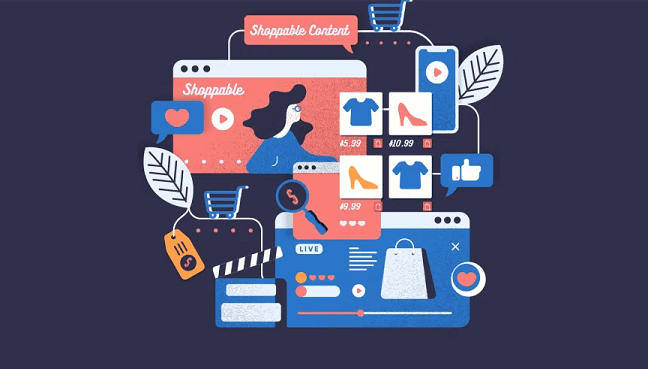
With the physical and social aspects of shopping stripped away due to various lockdown restrictions around the globe, shoppable social media is poised to fill the void.

In a recent example, Instagram launched its Reels and Shop tab for users to connect with brands and creators — and to discover products. The social media platform will further merge the two functions by allowing product tagging on Reels so that people can buy the products shown in the video.

“Shoppable content is not new, but there’s no question it’s gained more traction over the last year as consumers move online in their masses amid ongoing coronavirus restrictions,” says Olly Johnson, managing director of commerce at Jungle Creations. “Live shoppable video has been around since the days of TV channels like QVC.”

However, he adds, outlets such as Amazon Live have allowed shoppable video to enter the “big screen” of online, and it’s now “a proven concept.”

As Johnson puts it: “Trendy buzzword or not, headless commerce is truly enabling publishers and media brands to monetize their content. Adding ‘buy buttons’ within the content itself makes transactions seamless for consumers.”

Livestream shopping is taking off

Instagram rival TikTok also launched shoppable video ads and is testing a shoppable livestream experience.

Emma Chiu, global director at Wunderman Thompson Intelligence, says: “Livestream commerce is really taking off, as shoppers’ appetite for in-person and spontaneous live experiences, usually found in brick-and-mortar stores, are being adopted by digital platforms.” She says: “Offering live and interactive content to e-commerce is becoming the new way to browse ‘in-store’ in real time.”

It’s a trend that’s booming in China, where social e-commerce is ahead of the Western world. “Shoppable media is doing very well in China, where they do major content drops with influencers that drive massive sales,” says Jidé Maduako, CEO of influencer marketing agency Yoke Network.

Maduako gives the example of China’s top livestreamer, Viya, who sold $30 million worth of New Zealand products in hours. He says: “It’s still in its infancy in the West, but it will boom over the next few years: TikTok just entered the market in December by doing a deal with Walmart to showcase a fashion livestream using creators who have a big audience on the platform.”

Consumers are comfortable shopping via social media 

The appetite to buy via shoppable media is growing. New research from Tipser — surveying 332 consumers in the U.S., U.K. and Germany — shows that when asked if they would be open to purchasing products from Instagram if offered direct checkout, 58 percent said yes. And 35 percent said the idea of shopping via livestream is an appealing prospect.

Further to this, 74 percent said they look to social media for inspiration. Shoppable media is another way brands can provide consumers with an opportunity to purchase products at the point of inspiration. With stores either operating under restricted measures or closed, people will be searching for alternative shopping experiences, ones that include the social aspect of browsing or learning about products before they buy.

The content in commerce matters 

Social commerce has been growing for many years, but as TikTok and Instragam promote a rising cast of creators, it shows a move towards content that’s fit for purpose.

“Everything is about content now, and that is transferring to shoppable content,” says Maduako, at Yoke Network. He says there is a platform war happening where the likes of Disney and Netflix and Instagram and YouTube are “fighting for creators and their audiences” and using them to promote product drops “is really taking off.”

He says: “Any new e-commerce brand is going to launch with shoppable content, and by doing it with creators, you build engagement with your brand and your products because you’re seeing them in the right context.”

The future is shoppable, according to Johnson, at Jungle Creations. He says: “I’ve no doubt shopping directly through social platforms is set to take off exponentially in 2021, with increased engagement and personality cutting through via video from brands and influencers alike.”

As the pandemic continues, brands and media platforms will continue to experiment with ways of reaching, inspiring and converting consumers in the path to purchase. Shortening that path via shoppable video looks set to be the next evolution in e-commerce.

Sourced from DIGIDAY

By Amit Mathradas

President and COO of Avalara, a cloud-based compliance solutions provider that helps businesses of all sizes get tax compliance right. 

The proliferation of e-commerce and cloud adoption in recent years has sparked a number of shifts in how our society engages in business. Businesses of any size are now able to leverage digital channels to reach a larger number of customers in nearly any corner of the globe. Cloud technology has increased the speed and efficiency of organizations through implementations across functions.

Through my time leading financial technology companies, I’ve found the adoption of these technologies has prompted more businesses to engage in real-time, 24-7 sales cycles across channels while enabling consumers to make purchases whenever, wherever and however they choose.

In the past year, the Covid-19 pandemic has accelerated the adoption of cloud and e-commerce, prompting even further change in consumer behaviour and business operations. Amid temporary in-person business closures and social distancing practices, consumers have prioritized things such as convenience when it comes to making purchases. These priorities among consumers have increased the need for efficiency and urgency across businesses looking to capture consumer attention and convert customers.

All of the changes taking place on a global scale have created new rules of commerce for businesses of all sizes. Here are some of my tips for business leaders to navigate and succeed in the new era of global commerce:

1. Embrace omni commerce.

To compete in a digital-first society, businesses should have not only an e-commerce store but also an omnichannel presence. Consumers seek options and flexibility when it comes to shopping online. Because of this, it’s important for sellers to have a presence across platforms and devices.

Businesses can employ a mix of in-person, e-commerce, online marketplaces, subscriptions, live-streaming events and other channels to reach customers in a variety of ways. And as in-person shopping remains limited, it’s more important than ever to have more than just one e-commerce store. Selling through online marketplaces and advertising across social media can help you reach more customers online.

While the move to omni commerce has created ample opportunity for sellers, it has also created a complex ecosystem of applications and systems. From platforms to billing systems to supply chain management, omni commerce businesses are using a number of disparate systems to manage inventories, host products, process transactions, facilitate online and in-store returns and more.

To succeed in omni commerce, businesses not only need to expand their sales channels but also should consider embracing technologies that can easily integrate across systems, applications and channels to increase visibility across the business and create a seamless customer experience.

2. Reimagine customer experiences for digital.

The digital customer experience isn’t confined to the time one spends on a business’s e-commerce website. The digital customer journey spans from customer discovery to delivery. I believe consumers expect access to responsive e-commerce websites that deliver in-person shopping benefits, such as 1-to-1 support and options to “try on” products.

They also expect to have options for payment types and demand security for their personal information when shopping online. And, perhaps one of the most important aspects of the digital customer journey is timely shipping, along with notifications and updates, and the ability to return merchandise.

With elevated customer expectations, businesses need to deliver great experiences. Because my company’s solutions are cloud-based, I’ve found that using cloud-based technologies to optimize the entire customer journey is a scalable way to keep up with customer demand while providing a personalized and convenient experience for each customer. For example, leveraging out-of-the-box, cloud-based e-commerce platforms can be an easy way for sellers to work with the technology integrations needed to personalize the browsing experience and ensure an accurate checkout process.

3. Digitize operations to remove friction and enable growth.

As businesses grow, whether it be through omnicommerce, acquisitions, adding new products or expanding geographically, the complexity of business operations also grows. To enable efficient and scalable growth, businesses can identify operations that can be digitized and automated to reduce the burden on personnel and financial resources.

By digitizing lower priority operations, businesses can reduce the amount of friction prohibiting growth and devote resources to the highest value projects.

4. Prepare for frequent tax rule and regulation changes.

Through my company’s specialization in tax compliance, I’ve seen firsthand that tax laws on a global scale have undergone rapid change in recent years. From economic nexus laws in the U.S. to e-invoicing across Europe, the sheer complexity of tax regulations and obligations facing digital businesses is unprecedented.

And in the wake of the Covid-19 pandemic, we can expect that tax authorities will be facing the daunting battle of balancing budgets and recouping lost revenue. This, in turn, can lead to trends including the addition of new taxes on goods and services and requiring even the smallest sellers to comply with tax regulations that previously impacted only larger e-commerce merchants.

In the new era of global commerce, businesses not only need to understand the tax obligations within their state or country but also those abroad. E-commerce enables businesses to sell virtually anywhere in the world, which also exposes sellers to a range of new, cross-border compliance obligations. As we move forward, I predict new tax regulations for a digital-first world will take aim at collecting revenue from digital commerce, and the enforcement of tax laws will become even more strict. In order to be competitive and thrive, businesses must have the expertise in place to manage these changing rules in real-time on a global scale.

The pandemic significantly disrupted how most of us make purchases and accelerated the adoption of digital-first strategies and channels. Consumers have more access to goods and services than ever before, and businesses have more power to reach and sell to consumers on a global scale. This new era of global commerce will require businesses to hedge on technology to provide the experiences, scalability and data needed to keep pace with the rapid changes impacting every industry. These new rules will continue to change, and businesses will need to put the foundation in place today to keep pace and continue growing their operations.

Feature Image Credit: Getty

By Amit Mathradas

Follow me on LinkedIn. Check out my website.

President and COO of Avalara, a cloud-based compliance solutions provider that helps businesses of all sizes get tax compliance right. Read Amit Mathradas’ full executive profile here.

Sourced from Forbes

By Matthew Stafford

You might think I’m crazy to say that traffic is not your problem, but I’m going to prove that to you in the following paragraphs. I’m also going to show you how to profitably grow and scale your e-commerce business using the traffic that is already coming to your store.

I’m the chief marketing officer of Build Grow Scale, an e-commerce education company, and have been working in e-commerce for almost 10 years now, alongside my partner Tanner Larsson, who has been doing it for over 19. When we partnered up on our first e-commerce store five years ago, I was really good at Facebook Ads, and he was really good with private-labelling products, so we were a perfect match. We started off well, but we weren’t very profitable, no matter what ad strategy I used — and I knew how good my ads were based on my previous ad success.

There had to be something else that we weren’t seeing. If it wasn’t the ads, it had to be the store. The only way to figure out what was happening on our store was to look at our Google Analytics data.

I started diving into the data and even paid someone to teach me how to better interpret that data. Immediately, we started detecting leaks on the store left and right. Very soon I realized that the more we worked on the store, the easier Facebook Ads got.

My biggest “aha” moment happened when I found that our site’s load time was 13 seconds and our site’s bounce rate was 90%. I realized that we were struggling to be profitable because we were paying to get people to the site, but 90% of them were bouncing because the site was so slow. Only 10% were actually seeing the website.

I did the math and realized that if I could reduce our 90% bounce rate by just 10%, I would be getting twice as many eyes for the same amount of money, effectively cutting my traffic cost in half and instantly becoming profitable.

Think about this: Let’s say I spent $500 to bring 1,000 visitors to our site. That means that our cost per visitor is 50 cents, right? Wrong. Here’s my epiphany. Our site’s bounce rate was 90%, meaning that out of those 1,000 visitors, only 100 actually saw our offer.

So, in practical terms, we were paying $500 to get only 100 people to our site, making the true cost $5 per visitor. That is 10 times more expensive than we’d thought. It’s no wonder we weren’t profitable.

Now, let’s say we cut that bounce rate to 80%. That means that out of 1,000 visitors, 200 people would see our offer, which means that our traffic will cost $2.50 per visitor. A minuscule reduction in the percentage of people who bounce could cut our actual traffic cost in half.

Realizing this, I immediately hired a developer, and we went to work. We did a 15-hour marathon during which we reduced our site’s load time from 13 seconds to 1.87 seconds, and instantly, our bounce rate went down, and our conversions more than doubled.

From there, I started asking myself, “What else can I do? What other 10% improvements can I make that will double my results?” After doing that a few more times, our store performed much better, and we started selling thousands of units per day.

At this point, I hired a Google Analytics expert. We realized that we’d been looking at very surface-level data. That’s why we began using Google Tag Manager (GTM) in conjunction with Google Analytics and started getting granular. GTM allowed us to track everything that was happening on the website and unlocked a whole new level of data that we could use to optimize our store.

The more I learned about collecting and reading that data, the better I became at optimization. The more I focused on optimizing our store, the better our ads performed, and the easier they were to run. It was a powerful upward spiral. To make sure that this wasn’t just good luck, I decided to volunteer and do the same for two of my good friends, who both saw excellent results.

The way you profitably grow and scale your business is by focusing on optimizing your store first before burning money on running more and more traffic to a broken store. You cannot control the traffic, but you can control your store.

Before optimizing, ensure that Google Analytics and Google Tag Manager are set up properly and report accurately. You can only improve what you measure, and Google Analytics is how you’re going to track the changes in your metrics that result from your optimizations. This will also give you an idea of what you should optimize first.

I recommend you optimize your store backward, beginning with the checkout, then the cart page, the product page, the category page and, finally, the homepage. Start with the checkout because it’s closest to the money, so any fix there will mean a much bigger lift than a fix on your homepage, for example, which is many steps away from the purchase.

Finally, I recommend that you run A/B/n tests for any more significant changes you want to implement on your site. Make sure you test changes that alter user behavior rather than insignificant changes like new button colors. Run your tests for a minimum of two weeks and no more than one month. If you have a hard time finding leaks on your website, do 10 to 15 user tests using any of the tools out there, and you’ll likely discover issues that you can fix.

Why would you bet on something that you can’t control over something that you can? In fact, you are probably already better at traffic than you need to be. Focus on your store instead. Optimize before you maximize.

Feature Image Credit: getty

By Matthew Stafford

Matthew Stafford is CMO of Build Grow Scale, an e-commerce education company. Read Matthew Stafford’s full executive profile here.

Sourced from Forbes

By

Levi Strauss & Co. (LS&Co.) is recalibrating its leadership team to better serve the heritage company’s digital and direct-to-consumer (DTC) channels. The company announced Tuesday a series of leadership and role changes, effective Nov. 1, designed to strengthen the emerging channels and enable the company to respond more quickly and effectively in the marketplace.

The two business segments are helping to offset declines in Levi’s in-store and wholesale sales. Levi’s global digital business, which includes its e-commerce sites, as well as the online business of its pure-play and traditional wholesale customers, comprised nearly a quarter of total Q3 revenues, doubling the company’s digital footprint from the prior year.

“By doubling down on the company’s key growth drivers—the continued strengthening of our greatest asset, the Levi’s brand; leading with DTC and diversifying our business; and fully embracing digital to transform our operations and processes—we are capitalizing on the opportunities created by the global pandemic, which has accelerated changes in consumer behaviour and the competitive landscape,” said Chip Bergh, LS&Co. president and CEO.

To build on the existing strength of the Levi’s brand, the company is promoting its chief marketing officer, Jen Sey, to brand president. The Levi’s brand organization will bring together marketing, design, merchandising and brand experience to drive a “centre-led vision and execute with a consumer-centric focus globally.”

Liz O’Neill will become chief operations officer and leverage LS&Co.’s global supply chain by driving digitization, sustainability and agility, including the ongoing rollout of the company’s F.L.X. technology.

Seth Ellison, previously executive vice president and president, Europe, is being promoted to chief commercial officer (CCO), leading the company’s global commercial operations. As CCO, Ellison will adapt the company’s DTC-first mindset for Europe to amplify commercial growth across all channels and markets.

Marc Rosen, executive vice president and president, Americas, is taking on an additional role leading a new Digital Enterprise Office. In this capacity, Rosen will work with technology, business, data and artificial intelligence experts across the company to set the company’s “enterprise-wide” digital plan.

The business leaders will report to Bergh. “With an industry-leading management team, LS&Co. is fortunate to have a group of leaders who have been driving long-term value and are well-positioned to drive this focus for the next chapter of our growth,” he said.

Feature Image Credit: Levi’s: Courtesy

By

Sourced from Sourcing Journal