
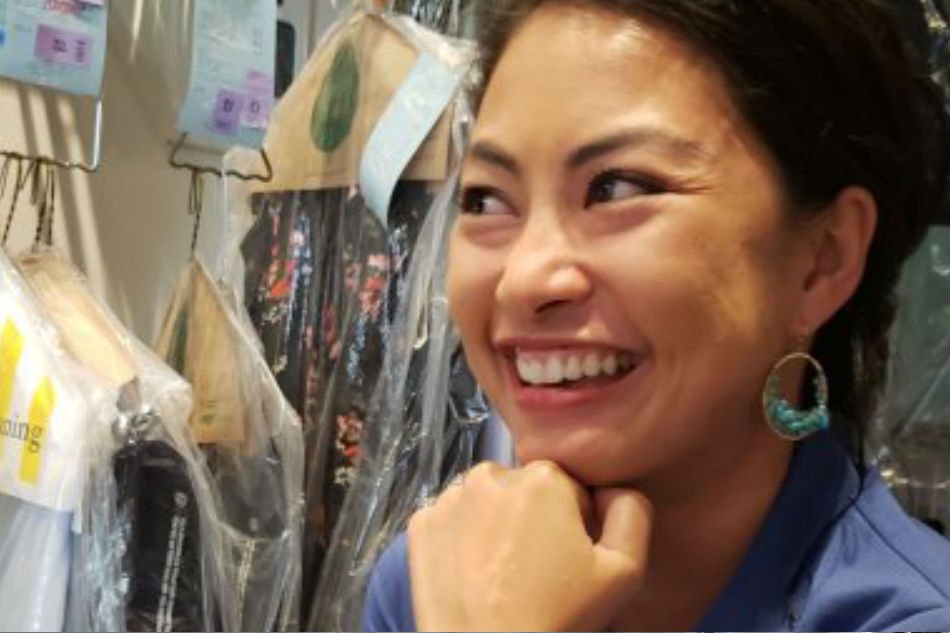
It was 2012 when Rechelle Balanzat decided to give entrepreneurship another try with Juliette, an invitation-only mobile app offering premium dry cleaning and laundry services.
She had tried putting up business before with a social media marketing company that did not quite take off the way she wanted.
Even though she faced many hardships in launching and then shutting down her first company, Balanzat felt more confident and in control when it came to her second one.
Not only was she armed with a great idea and a desire to change the status quo, she had also gained a wealth of knowledge from her previous experience. So, while there were risks, she happily jumped back into the game.
Fast forward to 2018 and Juliette has expanded from providing service to just three buildings in New York City to its first brick-and-mortar store. And not only has its clientele grown over the years, it now also includes supermodels, A-list celebrities, and award-winning singers.

Balanzat recalled how she built her business and what lessons she drew from her journey.
‘Humility is the greatest obstacle, failure the best teacher’
Under normal circumstances, humility is seen as a good thing – a virtue, Balanzat said. But she said it is the opposite when one is an entrepreneur building a brand, and have something to say.
“You can’t be shy. You have to be able to put the business and yourself out there or you won’t get anywhere and achieve anything. That’s exactly what I did,” she said.
“When I first launched Juliette, I approached a former client who owned several buildings and I asked if it would be okay to introduce my service to the residents. I got the go signal and went to town with the promotions. I put up signs in the elevators, sent out email blasts, installed a stand in the lobby and even gifted everyone with laundry bags.”
Another thing Balanzat saw differently as a business owner is failure.
“For some people, it’s (failure) quite possibly the worst thing that can happen, but not to me. It lets you learn so much about yourself – your limits and your capabilities. Once you know what those things are, you can manage yourself better in the real world. And beyond failure? That’s where all the great ideas are; that’s where all the amazing things happen,” she said.
‘It can’t be all heart; but it can’t be all brain either.’
Balanzat advises: Chase what you want in life, but balance it with what you need to succeed.
Before venturing into entrepreneurship, Balanzat was with the Kohlberg Capital Corporation and then with Stellarhead. Here, she worked hard and realized that if she exerted the same effort for herself, she would get ahead so much faster.
But things were not as simple as she thought.
Before Juliette, Balanzat had a social media marketing agency. She had to close it down because she realized how difficult it was to scale.
“I studied the numbers, did my homework and opted to cut my losses, and just move forward,” she said.
Balanzat said the idea for Juliette was formed when she noticed that cleaners were not taking care of her clothes the way that she had wanted. Apart from this, she saw that not many were tech-savvy or had a sense of customer service or marketing. This is when she decided to launch a company that would deliver quality service with the convenience of technology.
“When I first started, it was all about breaking even, but as I grew into it, I started to find the work more fulfilling and meaningful. I remembered what my intentions were as an entrepreneur and what my goals were for Juliette. So now, every day is a balancing act between profit and purpose,” she said
‘Don’t go by the book just because everyone says so.’
Success is not a blueprint, but a personal journey.
Balanzat advises that people have to carve out their own path and educate themselves with books, podcasts, and through mentors. But they must also remember to pick and choose from the things they have learned, and apply these to their own experiences.
“You don’t just copy and paste how other people have achieved success. If it was that easy, everyone would’ve done it by now,” she said.
“Keep in mind that whatever resources you might have, they’re there to help you be the best version of yourself, but if you’re only reading one book, listening to one podcast, and conversing with one mentor, then that’s never going to happen.”
To know more about this project, visit www.phtimeisnow.com
By Carissa Villacorta, PHTimeIsNow
Carissa Villacorta is an author and a publicist. She is the creator of #PHTimeIsNow. She has been running her own PR firm in New York since 2007, with high-profile business executives and multinational companies as her clients.

