HOW people use social media is more important than the time they spend using it. Let’s stop the moral panic.
By MediaStreet Staff Writers
There has so far been no evidence supporting the view that the amount of time spent on social media affects mental health in young people, says Chloe Berryman of the University of Central Florida. In fact, she says that there are very few links between different aspects of social media use among young adults and possible mental health problems such as loneliness, decreased empathy and social anxiety.
“We do not deny the potential for some online behaviours to be associated with mental health problems, rather we propose that research focus on the behaviour of individuals rather than assume media is the root cause of all socio-personal problems,” says Berryman, who compared the response that some people have to social media to a form of ‘moral panic’ such as that surrounding video games, comic books and rock music.
Berryman and her colleagues analysed the responses of 467 young adults to a variety of questionnaires. They were questioned about the amount of time per day they spent using social media, the importance it has in their lives, and the way they used social media. Their current mental health state, levels of social anxiety, the quality of their relationship with their parents and the amount of social support that they could count on were also assessed. Aspects such as general mental health symptoms, suicidal ideation, loneliness, social anxiety and decreased empathy were also considered.
The only worrying trend found had to do with ‘vaguebooking,’ which refers to a person’s tendency to write social media posts that contain little actual and clear information, but are worded in such a way as to solicit attention and concern from potential readers. Young people who tended to often write such posts were found to be lonelier, and to have more suicidal thoughts than others.
“Vaguebooking was slightly predictive of suicidal ideation, suggesting this particular behaviour could be a warning sign for serious issues,” says Berryman. “It is therefore possible that some forms of social media use may function as a ‘cry for help’ among individuals with pre-existing mental health problems.”
“Overall, results from this study suggest that, with the exception of vaguebooking, concerns regarding social media use may be misplaced,” she adds. “Our results are generally consistent with other studies which suggests that how people use social media is more critical than the actual time they spend online with regards to their mental health.”
There you go, readers. Go forth and Facebook obsessively… it’s all good.
As a business owner or manager, you understandably are looking for a direct and affordable method to communicate with your target audience. Social media marketing, such as through Facebook, is a popular and effective option that you may already be using in your own business to a moderate degree.
Because it appeals to a wide range of users with various demographic backgrounds around the world, it may be the ideal way for your business to expand its marketing reach.
While many business owners and managers are using Facebook for social media marketing purposes, some of these professionals are not taking full advantage of the many benefits that it can provide.
In some cases, users may need to revise their content or overall marketing approach to generate better results. However, most users may also be able to take advantage of several relatively unknown Facebook hacks to more fully benefit from all that Facebook offers.
If you have been looking for an exceptional way to improve your use or results of Facebook for social media marketing while also saving time and energy in the process, consider how these effective hacks could be adopted for your benefit.
#1 Using Eye-Catching Font Types and Colors
Facebook is an exceptional platform that you can easily use to get immediate recognition from your target audience or subscribers, but the reality is that each of your followers may follow hundreds or more unique people, businesses, special interest pages and more.
This means that the typical Facebook feed is cluttered with funny videos and photos, disheartening status updates, and stress-inducing news stories. These all pull attention away from your content. Because of this, it may be easy for many of your followers to overlook your updates about a new blog post, product feature or something else.
One innovative way to get your Facebook posts and announcements the attention they deserve in a crowded, noisy environment is to alter your font colour or type. There are several apps that you can use to change your font or text in different ways. For example, one app will post your text upside down to attract attention and get your post recognition.
This can make it difficult for some users to read your post, however. Therefore, you may also think about using other Facebook applications to change your posts’ font style as well as the text colour and size.
Think about how much more noticeable a red or green post with a slightly enlarged font size will be as opposed to a standard post with black text. However, you should also consider the importance of professionals if it is relevant to your company or brand image.
Many businesses will announce a new blog post through social media platforms, such as Facebook, to drive traffic to their blog page. The goal is to encourage Facebook followers to click on the link and read your new blog post, but you may not be getting the response that you desire.
As you have scrolled through your own Facebook feed in the past, you may have had your attention consumed by funny or eye-catching memes. These may be short-animated GIF files, and some are simply nonsensical with little or no purpose other than to entertain people.
Many are shared by others, which can have a viral effect. Some businesses are also using GIF animations or memes to make a statement about products and services they offer or other relevant factors.
Unfortunately, it can be difficult for a business owner or manager to locate the perfect meme for their own social media marketing purposes online.
Rather than use a meme that others may have already seen or that is not your business property, you could consider using a specialised Facebook app or a GIF creation program to make your meme or animated file that is customised to perfectly suit your needs.
This gives you complete control over the content that you place on your website and lets you take full advantage of the benefits associated with incorporating memes or animated GIF files in your social media marketing efforts.
By focusing on trending topics as well as by learning more about what your target audience is saying about them, you can create more focused and appealing contact on your own Facebook page.
With other business types or models, you may demonstrate product features, highlight how specific services can be used, offer helpful tips and more. This may be Facebook posts or links to blog posts or articles.
#5 “Like” Content From Your Business Page
Many people pay close attention to which of their friends “like” their comments or images. Some people are personally insulted when friends do not like their content on Facebook, but they may feel a level of camaraderie with those who regularly do like their content.
Just as you like content from your personal Facebook profile, you can spend time browsing through status updates, images and videos through your business page and liking different things that catch your eye to spread goodwill.
When your followers see that your business has liked their content, they may become more loyal to your company. Next, to that, other people may also notice that your business profile has liked the content their friends or colleagues posted, and these people may be encouraged to follow your business page as well.
Therefore, this is a beautiful way to increase your number of followers and expand your reach with your target audience using Facebook.
Liking content from your business page is simple and easy to do. Under each post, image or video, you will see the Like button that you are accustomed to seeing as well as a “Share” button and a button with three dots that are usually located to the right of the “Like” and “Share” tabs.
If you click on the tab that has three dots, you will see a drop-down menu that has “Like As Your Page” as one of the options. Simply select this option, and your business page’s “Like” will be visible for others to see.
#6 Reaching Out to Your Email Contacts
In some cases, a business owner or manager may not see the results desired from social media marketing because the business profile or account does not have an ample number of active subscribers or followers.
There are many steps that you can take to boost your number of followers, such as by asking customers at the point of sale to follow you on Facebook. Another idea that may produce faster and potentially more effective results is to send an email out to all of your email contacts.
Through Facebook, you can upload your entire email contact list, and Facebook can connect with most common email platforms for this purpose. Facebook enables the rapid creation of a customised message to your contacts and sends them a direct link to your business page.
If you have multiple email addresses, be sure to repeat this process for each account to enjoy more significant results. Remember that many people who follow you may share your page or content with others that they communicate with on Facebook. This means that you could multiply your number of followers within a very short period by taking this step.
#7 Use Facebook Pixel
Another excellent hack that your business could benefit from is Facebook Pixel. This is an analytical tool that is designed to help online advertisers and e-commerce sites take full advantage of Facebook for marketing purposes.
You merely place the pixel code on your website to get started. When your customers make purchases or perform other relevant actions on your site, Facebook Pixel notices. Facebook then notifies you of the activity and targets that customer with future Facebook ads.
Pixel is a Facebook hack that is free for you to use, and it can help you to learn more about your target audience as well as build a strong customer base through social media marketing. This is a simple and easy tool to use, and it can be instrumental in helping you expand your reach through social media.
#8 Invite people who like your post to like your page as well
When you click on the profiles of people who liked your post, there is an invite button next to it, suggesting they haven’t liked your fan page yet – just this one post. This means you can invite them to like your page as well. Go for it. Since they already liked your post, the chances of them liking your page are higher.
It’s simple, just send that person an invite to like your page. It’s a manual action, but it works. Additionally, you can also send them personalised messages explaining your business and its fan page but do so only if you see fit. Don’t be pushy, because that might produce a counter effect and make a person ignore your brand on purpose.
Inviting commentators who are not yet fans of your business to like your Facebook fan page doesn’t take a lot of time, but it can be the first step to establishing brand loyalty and creating long-term clients.
You’ve got the hacks, now go and apply them
As cost-effective and beneficial as social media marketing on Facebook can be, the reality is that many business owners and managers are spending too much and energy with Facebook marketing efforts.
Despite the high amount of time and level of energy focused on Facebook marketing, however, you may still not be generating the incredible results that you believe this marketing platform could provide for you.
You can see that there are exceptional Facebook hacks available that can help you to save time and energy on your social media marketing efforts in different ways. You may be able to combine multiple solutions featured here to enjoy far-reaching and substantial results.
Are you are ready to take advantage of all that Facebook has to offer, from a professional marketing standpoint? Start implementing these hacks in your activities today.
By Eric Gordon.
Eric Gordon is an independent business development and marketing specialist for SMEs. He loves sharing his insights and experience to assist business owners in growing their revenues. You can find Eric on Twitter @ericdavidgordon
Silicon Valley’s online tech giants are under pressure, and not just from Russia investigators. This time it is the people who pay the bills: the advertisers who are asking serious questions about whether their products were sold alongside covert Russian propaganda.
Just as airlines pull their ads during coverage of air crashes, advertisers have long had strict rules about the placement of their brands. But the evolution of the automated digital ad business, including that of Facebook, Twitter and Google, has led to some distasteful situations for advertisers, including the placement of hundreds of their banner ads — including those for politicians — atop jihadi videos on YouTube.
That debacle has led advertisers to be especially sensitive to what they call the issue of “brand safety,” the effort to make sure their commercials appear next to quality content.
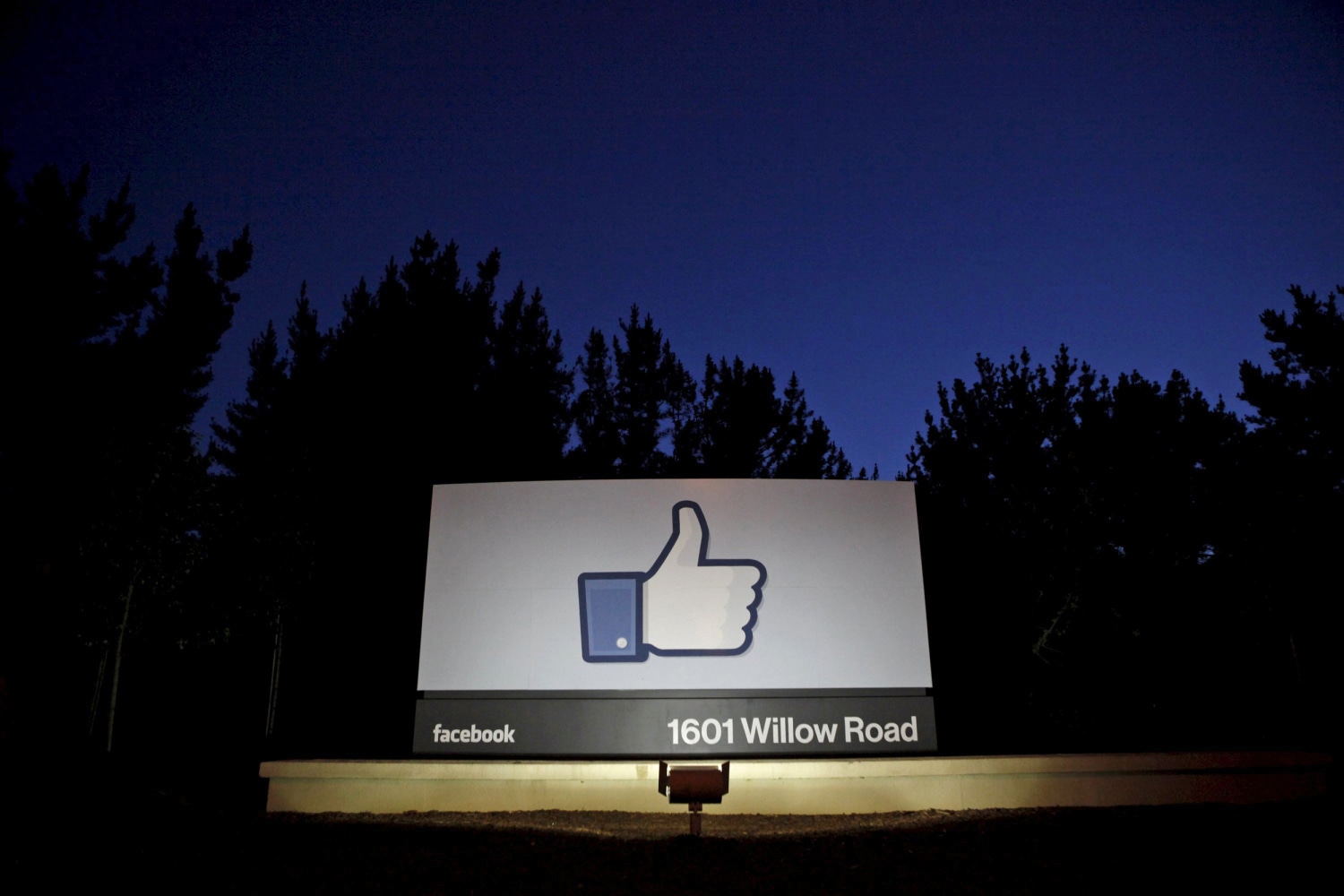
The sun rises behind the sign at the entrance to Facebook headquarters in Menlo Park before the company’s IPO launch in 2012. Beck Diefenbach / Reuters file
“The controls are not as strong as one would like,” said Bill Koenigsberg, chief executive of Horizon Media, an ad agency that spends around $8 billion a year for clients from Geico to Burger King. “Facebook and Google have hired people to be brand-safety watchdogs. Marketers are asking a lot more questions, the agencies that represent them are trying to hold Facebook and Google a lot more accountable, and if they don’t clean up the garden you will start to see it affect their pocketbooks.”
He said it isn’t just the Russia investigations that are causing concern but the parade of bad news surrounding the online advertising business. “Every day there is another snippet that comes out, and you piece them together and you’re starting to draw conclusions that the water isn’t as clear as we’d hoped.”
Facebook said it will place 1,000 staff members on a team to review ads and soup up its machine-learning abilities to address the problem. But the revelations are dragging the company and other online firms into a huge and potentially costly embarrassment.
No companies have pulled their ads from Facebook yet, at least not publicly, but executives say the sentiment is turning negative. That could have substantial implications for the company’s bottom line, which is almost entirely dependent on ad revenue.
One high-level business strategist, Michael Kassan, chief executive of Medialink, which advises tech companies and large media conglomerates, said that chief marketing officers at big companies fear that their bosses will ask them what is adjacent to their ads.
“People are on much higher alert,” Kassan said. “I have never seen it so pronounced. It’s every one of them.”
Kassan thinks the Russia investigation is still too new for marketers to figure out how it affects them.
“But you can’t argue they’re not involved,” he said. “If your brand is supporting the inclusion of stuff you don’t think is appropriate and you have proximity to it? One is known by the company one keeps.”
Nonetheless, there is still a clear reluctance in the advertising world to publicly criticize Facebook and Google.
“The entire advertising world is very anxious,” said Mike Paul, an independent expert in crisis public relations, who has worked at big ad agencies, “but few will admit publicly that the negative news is affecting Facebook because it is the 800-pound gorilla globally for ad and media buyers.”
Facebook’s Credibility Problem
The nervousness is not just because of the Russia inquiry. Brian Wieser, an analyst with Pivotal Research, recently found that the company claimed to reach an audience of 41 million people in the U.S. ages 18 to 24, though only 31 million of them exist, according to the Census Bureau.
The Video Advertising Bureau, an organization of broadcasters and cable companies, issued a study on Oct. 2, asserting that there are fewer people ages 18-34 living in every state than the number of people in that age range that Facebook claims it can reach in those states. (NBCUniversal, the parent company of NBC News, is a member of the bureau, as are the other major networks.)
Facebook said the problem may have been caused by kids pretending to be older, and said it does not bill advertisers on the basis of those estimates.
Facebook bought a series of newspaper ads, which ran on Wednesday, to explain its commitment to transparency. “We take the trust of the Facebook community seriously,” the ads said. “We will fight any attempt to interfere with elections or civic engagement on Facebook.”
Last month, ProPublica, the investigative news site, revealed that Facebook advertisers were able to use self-serve tools to target “Jew haters.” The company’s chief operating officer, Sheryl Sandberg, acknowledged the failure.
“We never intended or anticipated this functionality being used this way – and that is on us,” she said in a company statement.
A few days later, Mark Zuckerberg, Facebook’s chief executive, admitted that he was wrong to dismiss fake news on the social network as having had any influence on the election. “Calling that crazy was dismissive and I regret it,” he said in a statement.
Facebook and Google: The “Digital Duopoly”
Facebook is the second-biggest player in the digital ad market after Google. Both companies are set to grow their share of the ad pie. Together they are often known as the “digital duopoly,” with the kind of global scale other media companies can only dream of. Facebook has 2 billion monthly users. YouTube, owned by Google, has 1.5 billion.
And the financials are staggering by any measure.
This year, Google (including YouTube) will garner $35 billion in total digital ad dollars in the U.S., up 18.9 percent from last year, according to eMarketer, a measurement firm. That expansion will push Google’s share of the U.S. digital ad market to 42.2 percent.
The firm forecasts Facebook’s total digital revenues in the U.S. will grow 40.4 percent to $17.37 billion, pushing its share of all U.S. digital ad business to 20.9 percent.
Mark Zuckerberg did a Facebook live to discuss Russian election interference and next steps to protect the integrity of the democratic process. Facebook
Advertisers have to take Facebook and Google’s word that they get what they pay for. “We do not have visibility into whether we got what we bought,” said a senior marketing executive with a Fortune 500 company, who added: “I’m really nervous. We’re in business with Facebook and Google, they are the gateway to the audience, but the relationships are strained.”
Meanwhile, Facebook is on track to have yet another killer quarter. Last week a Deutsche Bank analyst, Lloyd Walmsley, told investors: “Facebook is the new IBM (in a good way). …We think Facebook is growing into a similar position in advertising, with best-in-class ad systems, a large growing audience across numerous products and a well-oiled sale machine.”
YouTube’s Credibility Problem
Still, Alphabet’s Google — is facing its own YouTube drama with advertisers around the globe.
One ad executive, who did not want to be identified because of business relationships with the online companies, said that a recent test run of ads on YouTube found they were placed adjacent to content that didn’t meet the firm’s requirements 30 percent of the time. After the Las Vegas shooting last week, for example, false conspiracy theories wound up high on YouTube’s search results, as reported in the Wall Street Journal. YouTube said it would tweak its search results to show more reliable sources of news.
Some of YouTube’s largest advertisers in 2016 dropped their spending by 95 percent or more, according to Pathmatics, a company that tracks online advertising, and measured desktop ad spending.
The company says AT&T notably reduced spending on YouTube by 76 percent over the year before (January through August). Disney spent less than $200,000 from April to August after spending more than $1 million in January, the data showed. Overall, however, Pathmatics said that spending on desktop YouTube was up 31 percent for the period January through August versus the same period last year.
In August, Google said it would refund advertisers for ads placed on dodgy websites with fraudulent traffic counts, according to a Wall Street Journal report.
Proctor & Gamble, the packaged-goods giant, cut more than $100 million in digital spending beginning in March, the company’s chief brand officer, Marc Pritchard, said in a speech in Orlando, Florida, on Thursday.
“There is no question ads should ever be on an ISIS video,” Pritchard said.
A Wake-Up Call For the Industry
Martin Sorrell, chief executive of the WPP Group, an advertising holding company whose agencies spend billions of ad dollars around the globe, said the pressure on Facebook is going to intensify. He said he has urged Facebook for some time to acknowledge that it is not just a platform.
“They are a media company,” he said. “They seem to have acknowledged the need for human review and that you can’t just rule by algorithm alone.”
Randall Rothenberg, president and chief executive of the Interactive Advertising Bureau, which represents Google, Facebook and other big content companies and advertising firms, said there’s an industry-wide effort to fix a host of issues, from fraud to cybersecurity to fake news.
“What has changed over the past three to four months, thanks in no small part to the Mueller investigation and the dribbling of information from various parties, is a broader understanding from multiple constituents that these things are all connected,” he said, referring to Robert Mueller, the special counsel investigating Russian meddling in last year’s election.
“The common understanding is out there,” Rothenberg added, “and now there is a greater will among more parties to come to the table to solve it.”
Facebook has introduced Facebook Cross-Platform Brand Lift in the US and UK which along with Nielsen Total Brand Effect with Lift will help advertisers optimize their Facebook and TV campaigns using actionable results according to a blog post.
The platform will see Facebook will match rival Google which launched Brand Lift for TV some years back in order to help marketers understand how YouTube campaigns can impact metrics such as awareness.
Facebook’s advertising partners who are expanding from digital advertising into cross-media campaigns will be able to leverage Facebook Cross-Platform Brand Lift solution.
Margo Arton, senior director of Ad Effectiveness at BuzzFeed said: “Now that Buzzfeed has begun to diversify our media strategies to include both Television and Digital, having the option to leverage solutions such as Facebook’s Cross-Platform Brand Lift and Nielsen Total Brand Effect with Lift presents a great opportunity.”
“We look forward to using cross-platform brand lift measurement to both receive valuable insights about our multi-media campaign performance in a single reporting surface, and also to optimize campaign elements such as spend and creative across both platforms.”
Facebook cited an example of household brand Shark’s campaign which was deemed a success as measured by Nielsen Total Brand Effect with Lift.
Ajay Kapoor, VP, Digital Transformation & Strategy, SharkNinja said: “We proved that Facebook video ads are a natural complement to TV campaigns. We experienced better brand results among people who saw ads on both versus just TV or Facebook alone. We saw the ‘better together’ impact first-hand. Facebook and TV are powerful individually, but deliver a stronger message to our audience when used in tandem.”
Facebook and Google’s advertising platforms are out of control. That used to be a good thing. Now…not so much
Now that’s some damn precise audience targeting! From Buzzfeed.
Facebook and Google’s advertising infrastructure is one of humanity’s most marvelous creations. It’s also one of its most terrifying, because, in truth, pretty much no one really understands how it works. Not Mark Zuckerberg, not Larry Page, and certainly not Russian investigator Robert Mueller, although of the bunch, it seems Mueller is the most interested in changing that fact.
Pro Publica catches Facebook with its algorithmic pants down.
And that’s a massive problem for Facebook and Google, who have been dragged to the stocks over their algorithms’ inability to, well, act like a rational and dignified human being.
So how did the world’s most valuable and ubiquitous companies get here, and what can be done about it?
Well, let’s pull back and consider how these two tech giants execute their core business model, which of course is advertising. You might want to pour yourself an adult beverage and settle in, because by the end of this, the odds of you wanting the cold comfort of a bourbon on ice are pretty high.
In the beginning (OK, let’s just say before the year 2000), advertising was a pretty simple business. You chose your intended audience (the target), you chose your message (the creative), and then you chose your delivery vehicle (the media plan). That media plan involved identifying publications, television programs, and radio stations where your target audience was engaged.
Those media outlets lived in a world regulated by certain hard and fast rules around what constituted appropriate speech. The FCC made sure you couldn’t go full George Carlin in your creative execution, for example. The FTC made sure you couldn’t commit fraud. And the FEC — that’s the regulatory body responsible for insuring fairness and transparency in paid political speech — the FEC made sure that when audiences were targeted with creative that supports one candidate or another, those audiences could know who was behind same-said creative.
But that neat framework has been thoroughly and utterly upended on the Internet, which, as you might recall, has mostly viewed regulation as damage to be routed around.
After all, empowering three major Federal regulatory bodies dedicated to old media advertising practices seems like an awful lot of liberal overkill, n’est ce pas? What waste! And speaking of waste, honestly, if you want to “target” your audience, why bother with “media outlets” anyway?! Everyone knows that Wanamaker was right — in the offline world, half your advertising is wasted, and thanks to offline’s lack of precise targeting, no one has a clue which half that might be.
But as we consider tossing the offline baby out with the bathwater waste, it’s wise to remember a critical element of the offline model that may well save us as we begin to sort through the mess we’re currently in. That element can be understood via a single word: Context. But we’ll get to that in a minute. First, let’s go back to our story of how advertising has shifted in an online world, and the unintended consequences of that shift (if you want a even more thorough take, head over to Rick Webb’s NewCo Shift series: Which Half Is Wasted).
Google: Millions Flock to Self Service, Rise of the Algos
Back in the year 2000, Google rolled out AdWords, a fantastically precise targeting technology that allowed just about anyone to target their advertisements to…just about anyone, as long as that person was typing a search term into Google’s rapidly growing service. (Keep that “anyone” word in mind, it’ll come back to haunt us later.) AdWords worked best when you used it directly on Google’s site — because your ad came up as a search result right next to the “organic” results. If your ad was contextually relevant to a user’s search query, it had a good chance of “winning” — and the prize was a potential customer clicking over to your “landing page.” What you did with them then was your business, not Google’s.
As you can tell from my fetishistic italicization, in this early portion of the digital ad revolution, context still mattered. Google next rolled out “AdSense,” which placed AdWords on publishers’ pages around the Internet. AdSense didn’t work as well as AdWords on Google’s own site, but it still worked pretty well, because it was driven by context — the AdSense system scanned the web pages on which its ads were placed, and attempted to place relevant AdWords in context there. Sometimes it did so clumsily, sometimes it did so with spectacular precision. Net net, it did it well enough to start a revolution.
Within a few years, AdWords and AdSense brought billions of dollars of revenue to Google, and it reshaped the habits of millions of advertisers large and small. In fact, AdWords brought an entirely new class of advertiser into the fold — small time business owners who could compete on a level playing field with massive brands. It also reshaped the efforts of thousands of publishers, many of whom dedicated small armies of humans to game AdWords’ algorithms and fraudulently drink the advertisers’ milk shakes. Google fought back, employing thousands of engineers to ward off spam, fraud, and bad actors.
AdWords didn’t let advertisers target individuals based on their deeply personal information, at least not in its first decade or so of existence. Instead, you targeted based on the expressed intention of individuals — either their search query (if on Google’s own site), or the context of what they were reading on sites all over the web. And over time, Google developed what seemed like insanely smart algorithms which helped advertisers find their audiences, deliver their messaging, and optimize their results.
The government mostly stayed out of Google’s way during this period.
When Google went public in 2004, it was estimated that between 15 to 25 percent of advertising on its platform was fraudulent. But advertisers didn’t care — after all, that’s a lot less waste than over in Wanamaker land, right? Google’s IPO was, for a period of time, the most successful offering in the history of tech.
Facebook: People Based Marketing FTW
Then along came Facebook. Facebook was a social network where legions of users voluntarily offered personally identifying information in exchange for the right to poke each other, like each other, and share their baby pictures with each other.
Facebook’s founders knew their future lay in connecting that trove of user data to a massive ad platform. In 2008, they hired Sheryl Sandberg, who ran Google’s advertising operation, and within a few years, Facebook had built the foundation of what is now the most ruthlessly precise targeting engine on the planet.
Facebook took nearly all the world-beating characteristics of Google’s AdWords and added the crack cocaine of personal data. Its self service platform, which opened for business a year or so after Sandberg joined, was hailed as ‘ridiculously easy to use.’ Facebook began to grow by leaps and bounds. Not only did everyone in the industrialized world get a Facebook account, every advertiser in the industrialized world got themselves a Facebook advertising account. Google had already plowed the field, after all. All Facebook had to do was add the informational seed.
Both Google and Facebook’s systems were essentially open — as we established earlier, just about anyone could sign up and start buying algorithmically generated ads targeted to infinite numbers of “audiences.” By 2013 or so, Google had gotten into the personalization game, albeit most folks would admit it wasn’t nearly as good as Facebook’s, but still, way better than the offline world.
So how does Facebook’s ad system work? Well, just like Google, it’s accessed through a self-service platform that lets you target your audiences using Facebook data. And because Facebook knows an awful lot about its users, you can target those users with astounding precision. You want women, 30–34, with two kids who live in the suburbs? Piece of cake. Men, 18–21 with an interest in acid house music, cosplay, and scientology? Done! And just like Google, Facebook employed legions of algorithms which helped advertisers find their audiences, deliver their messaging, and optimize their results. A massive ecosystem of advertisers flocked to Facebook’s new platform, lured by what appeared to be the Holy Grail of their customer acquisition dreams: People Based Marketing!
The government mostly stayed out of Facebook’s way during this period.
When Facebook went public in 2012, it estimated that only 1.5% of its nearly one billion accounts were fraudulent. A handful of advertisers begged to differ, but they were probably just using the system wrong. Sad!
Facebook’s IPO quickly became the most successful IPO in the history of tech. (Till Alibaba, of course. But that’s another story).
(Meanwhile, Programmatic.)
The programmatic Lumascape. Seems uncomplicated, right?
Stunned by the rise of the Google/Facebook duopoly, the tech industry responded with an open web answer: Programmatic advertising. Using cookies, mobile IDs, and tons of related data gathered from users as they surfed the web, hundreds of startups built an open-source version of Facebook and Google’s walled gardens. Programmatic was driven almost entirely by the concept of “audience buying” — the purchase of a specific audience segment regardless of the context in which that audience resided. The programmatic industry quickly scaled to billions of dollars — advertisers loved its price tag (open web ads were far cheaper), and its seemingly amazing return on investment (driven in large part by fraud and bad KPIs, but that’s yet another post).
Facebook and Google were unfazed by the rise of programmatic. In fact, they bought the best companies in the field, and incorporated their technologies into their ever advancing platforms.
The Storm Clouds Gather
But a funny thing happened as Google, Facebook and the programmatic industry rewrote advertising history. Now that advertisers could precisely identify and target audiences on Facebook, Google and across the web, they no longer needed to use media outlets as a proxy for those audiences. Media companies began to fall out of favor with advertisers and subsequently fail in large numbers. Google and Facebook became advertisers’ primary audience acquisition machines. Marketers poured the majority of their budgets into the duopoly — 70–85% of all digital advertising dollars go to the one or the other of them, and nearly all growth in digital marketing spend is attributable to them as well.
By 2011, regulators began to wrap their heads around this burgeoning field. Up till then, Internet ads were exempt from political regulations governing television, print, and other non digital outlets. In fact, both Facebook and Google have both lobbied the FEC, at various times over the past decade or so, to exclude their platforms from the vagaries of regulatory oversight based on an exemption for, and I am not making this up, “bumper stickers, pins, buttons, pens and similar small items” where posting a disclaimer is impracticable (sky writing is also mentioned). AdWords and mobile feed ads were small, after all. And everyone knows the Internet has limited space for disclaimers, right?
Anyway, that was the state of play up until 2011, when Facebook submitted a request to the FEC to clear the issue up once and for all. With a huge election coming in 2012, it was both wise and proactive of Facebook to want to clarify the matter, lest they find themselves on the wrong end of a regulatory ruling with hundreds of millions of dollars on the line. (Of course, they favored exemption over actual regulation).
The FEC failed to clarify its position, but did request comment from industry and the public on the issue (PDF). In essence, things remained status quo, and nothing happened for several years.
That set the table for the election of 2016. In October of that year, perhaps realizing it had done nothing for half a decade while the most powerful advertising machine in the history of ever slowly marched toward its seemingly inevitable date with emergent super intelligence, the FEC re-opened its request for comments on the whether or not political advertising on the Internet should have some trace of transparency. But that was far too late for the 2016 election.
Most everyone I speak to tells me that last week’s revelations about Facebook, Russia, and political advertising is, in the words of Senator Mark Warner, “the tip of the iceberg.” Whether or not that’s true (and I for one am quite certain it is), it’s plenty enough to bring the issue directly to the forefront of our political and regulatory debate.
Now the news is coming fast and furious: At what was supposed to be a relatively quotidian regular meeting of the FEC this week, the commissioners voted unanimously to re-open (again) the comment period on Internet transparency. The Campaign Legal Center, launched in 2002 by a Republican ally of Senator John McCain (co-sponsor of the McCain Feingold Bipartisan Campaign Reform Act of 2002), this week issued a release calling for Facebook to disclose any and all ads purchased by foreign agents. (Would that it were that simple, but we’ll get to that in the next installment.) One of the six FEC commissioners, a Democrat, subsequently penned an impassioned Op Ed in the Washington Post, calling for a new regulatory framework that would protect American democracy from foreign meddling. The catch? The Republicans on the commission refuse to consider any regulations unless the commission receives “enough substantive written comments.”
Once the link for comments goes up in a week or two, I’m pretty sure they will.
But in the meantime, there’s plenty of chin stroking to be done over this issue. While this may seem like a dust up limited to the transparency of political advertising on the internet, the real story is vastly larger and more complicated. The wheels of western capitalism are greased by paid speech, and online, much of that speech is protected by the first amendment to our constitution, as well as established policies enshrined in contract law between Facebook, Google, and their clients. There are innumerable scenarios where a company or organization demands opacity around its advertising efforts. So many, in fact, that if I were to go into them now, I’d extend this piece by another 2,500 words.
And given I’m now close to 3,000 words in what was supposed to be a 600-word column, I’m going to leave exploring those scenarios, and their impact, to next week’s columns. In the meantime, I’ll be speaking with as many experts and policy folks from tech, Washington, and media as I can find. Suffice to say, big regulation is coming for big tech. Never in the history of the tech industry has the 1996 CDMA ruling granting tech platforms immunity from the consequences of speech on their own platforms been more germane. Whether it’s in jeopardy or not remains to be seen.
This is not a simple issue, and resolving it will require a level of rational discourse and debate that’s been starkly absent from our national dialog these past few years. At stake is not only the fundamental advertising models that built our most valuable tech companies, but also the essential forces and presumptions driving our system of democratic capitalism*. Not to mention the nascent but utterly critical debate around the role of algorithms in civil society. And as we explore solutions to what increasingly feels like an intractable set of questions, we’d do well to keep one word in mind: Context.
Over the last few days, a slew of reporting, inspired by ProPublica, has revealed that it’s actually quite easy, through the programmatic structure of most online advertising, to create ads meant to target those who have espoused racist, antisemitic, or other hateful ideas.
Here’s a quick rundown of the major internet companies, and what has been discovered about their advertising platforms:
Facebook
On Sept. 14, ProPublica reported that Facebook allowed advertisers to target categories and ideas such as “Jew hater,” “How to burn jews,” and “History of ‘why jews ruin the world,’” based on interest Facebook users had expressed on the social network and terms with which they had used to describe themselves.
While Facebook removed those categories after ProPublica’s investigation, Slate then discovered that there are dozens of other racist, sexist, and xenophobic categories which advertisers could potentially target. It took Facebook less than a minute to approve ads against phrases like “Kill Muslimic Radicals”and “Ku-Klux-Klan,” and Slate found myriad other options, like “Killing Bitches,” “Killing Hajis,” and “Nazi Party (Canada).”
Facebook released a statement yesterday after ProPublica’s report, saying in part:
Keeping our community safe is critical to our mission. And to help ensure that targeting is not used for discriminatory purposes, we are removing these self-reported targeting fields until we have the right processes in place to help prevent this issue. We want Facebook to be a safe place for people and businesses, and we’ll continue to do everything we can to keep hate off Facebook.
Google
BuzzFeed discovered similar targeting issues on Google’s AdWords platform, which runs the advertisements you see on Google search results pages. Typing in keyword suggestions (which advertisers use to build their ads and figure out who to target) like “why do jews ruin everything” led to the system generating more keyword suggestions like “jews ruin the world” and “jewish parasites.” Buzzfeed was also able to build and launch a campaign around the phrase “black people ruin neighborhoods.”
When Quartz attempted to recreate BuzzFeed’s efforts using similar terms, or terms like those used by ProPublica and Slate, no keyword suggestions were returned. Google has since disabled many of the keywords that BuzzFeed tested.
Sridhar Ramaswamy, Google’s senior vice president in charge of ads, told Quartz in a statement:
Our goal is to prevent our keyword suggestions tool from making offensive suggestions, and to stop any offensive ads appearing. We have language that informs advertisers when their ads are offensive and therefore rejected. In this instance, ads didn’t run against the vast majority of these keywords, but we didn’t catch all these offensive suggestions. That’s not good enough and we’re not making excuses. We’ve already turned off these suggestions, and any ads that made it through, and will work harder to stop this from happening again.
Twitter
The Daily Beast was able to target similarly derogatory demographics on Twitter. It reported:
Twitter’s advertising platform tells prospective marketers it has 26.3 million users interested in the derogatory term “wetback,” 18.6 million accounts that are likely to engage with the word “Nazi,” and 14.5 million users who might be drawn to “n**ger.”
A Twitter representative told Quartz about the Daily Beast’s report:
The terms cited in this story have been blacklisted for several years and we are looking into why the campaign cited in this story were able to run for a very short period of time. Twitter actively prohibits and prevents any offensive ads from appearing on our platform, and we are committed to understanding 1) why this happened, and 2) how to keep it from happening again.
Snapchat
Quartz checked on Snapchat’s advertising platform to see if we were able to target using similar terms used on the other platforms. We were not able to: It seems that Snapchat’s demography isn’t quite as granular as the other platforms, which are far more text-based than Snapchat, and so it’s likely easier for them to glean what sorts of things its users are sharing than through all the videos and images posted to Snapchat.
Bing
Microsoft’s second-placed search network seems to have a similar problem to its other platforms. When Quartz created a test advertising campaign on Bing Ads, we weren’t able to directly target specifically loaded terms, but searching for just about any phrase in Bing’s “keyword suggestions” generator will generate specific keywords that you might want to try to target instead. Here’s one example, using “Hitler” as the search term:
(Screenshot/Bing Ads)
A representative for Bing told Quartz:
We take steps to ensure our Bing Ads always meet reasonable standards. We are committed to working with partners who share our vision for relevant, impactful brand interaction and respect the integrity of consumer choice.
Yahoo
Quartz attempted to create an ad campaign on Yahoo, but it seems there’s no simple way to create one online without speaking to a representative from Oath (Yahoo’s parent company) first. And presumably fewer people would feel comfortable telling a sales rep the sorts of things they’re targeting than they would inputting them into a computer system. Hopefully.
LinkedIn
Microsoft’s professional social network doesn’t seem to let users target based on arbitrary phrases or demographics. Other than geography, these are the only things you can target against on LinkedIn:
(Screenshot/LinkedIn)
The only section that might have the potential for hateful terms would be in “Member groups”—but a cursory search of terms like those used above didn’t reveal many professional hate groups to target on the platform. We did, however, come across this group:
(Screenshot/LinkedIn)
Upon further inspection, however, it seems that this group was set up by a LinkedIn employee trying to see whether they could set up a group with a title like this. Obviously, it worked:
(Screenshot/LinkedIn)
LinkedIn sent Quartz the following statement:
Hate has no place on LinkedIn and will not be tolerated. When we are made aware of such content, we act swiftly to enforce our policy and remove said content. On Friday, a member of our team created a group solely for internal testing purposes and after a brief testing period, we took the group down.
As the world’s biggest advertisers like Unilever and Proctor & Gamble continue to operate on lower advertising budgets and spend less on media buys in 2017, Facebook believes that putting its faith in mobile advertising will help it ride the storm going into the next year.
The cutbacks by the FMCG giants were necessary to clean up the supply chain and remove fraudulent inventory, acknowledges William Platt-Higgins, vice president, global client partnerships at Facebook in an interview with The Drum in Singapore, and notes that it is in everybody’s interest that fraud be eliminated from the ecosystem.
“We have seen various marketers and agencies taking a hard stance on this publicly and some clients very surgically try and cut out as much of that as possible. They have done so without any negative impact on their business because the inventory that they are weeding out is actually not good inventory to begin with,” explains Platt-Higgins.
“It won’t be eliminated completely, but I think all the clients that we work with in all regions of the world are focused on reducing fraud as much as they can and getting transparency into the supply chain by using third party verification.”
While Facebook has previously come under fire for reporting miscalculated metrics and for a lack of transparency because of its closed marketplace around its user data, brands and agencies still trust the social media giant, according to Platt-Higgins, which is why all Facebook verticals are growing, including FMCG.
He also accuses critics of being green-eyed about Facebook’s strong, growing partnership with P&G and other big FMCGs, claiming that it is being brought earlier into the creative and strategy planning stages.
“They (Unilever and P&G) are very focused on maximising value for their investments and cleaning up as much of their supply as they can. They are looking to hold all media choices, not just digital media choices accountable,’ says Platt-Higgins.
“One of the things we are starting to hear is the advantage of any digital investment is it is more measurable than traditional offline investments. Digital channels, because they are measurable, the amount of data available on their efficacy and attribution to sales is large.
“What we are seeing from these conversations is ‘It is great that I am holding all my digital investments super accountable, because that is the right thing to do and I want to hold all my other investments as accountable as well’. What you will see increasingly is that investments will flow to media channels that are providing the higher returns of investment and the higher value, and they will recede from those that aren’t.
He also repeats a well-trotted out company line about its closed marketplace, as he says that the Facebook ecosystem does not qualify it as a ‘walled garden’. He explains that people are jealous of the quality of its data and its desire to protect its data, which comes as a result of its commitment to user privacy.
“We certainly hear it (walled gardens) and I don’t think that we would agree with that,” he adds, adding that the requests tend to boil down to various people or entities wanting more data on individuals, which breaches Facebook’s terms of service and the trust that people give when they join.
“That is something that we will and must protect. So that’s our stance on it,” asserts Platt-Higgins.
Quoting a book called ‘How Brands Grow’ by professor Byron Sharp at the Ehrenberg-Bass Institute, Platt-Higgins says Sharp’s words inspired Facebook to shift its focus to mobile advertising to cope with the FMCG giants’ lower ad spend and media buys. Sharp wrote that in order for brands to grow they need to bring new users into the franchise, and that consumers are not uniquely loyal to brands and instead tend to shop on a ‘consumer regiment’ of products because of mental and physical availability.
He claims that this approach by Facebook has seen it reach 500,000 households in the Philippines for Nestle’s all-purpose cream product campaign using Facebook and Instagram. While in the UK, 37 FMCG campaigns that made use of its tools drove a 3.7% increase in sales, and of those people buying those products 60% were non-brand buyers. In the US, 200 campaigns on Facebook and Instagram drove an increase in household penetration, bringing new users in 72% of the time.
“Over the last number of years, as people shifted to mobile devices, the concept of both mental and physical availability has changed. If you are in the business of growing your brand, what you need to master is mobile marketing,” says Platt-Higgins.
“This is where we have been spending most of our time. Not only is Facebook and Instagram driving sales, but they are disproportionately driving household penetration and bringing new users in because of mobile.
“In Indonesia or India, where there might be power outages from television, the opportunity to reach people with mobile and bring top-of-mind awareness and mental availability is huge.”
However, Platt-Higgins admits that simply porting assets from television onto mobile does not necessarily work and Facebook is constantly reminding itself that the way people consume content is different. He adds that if a brand is not building for the mobile environment intentionally and with craft, care, seniority, thoughtfulness and senior stakeholder-management stewardship, as well as optimising for mobile, then it is a missed opportunity.
“Brands need to optimise in three areas. One is the reach, where often what we find is that clients have gone too narrow with their reach and that can be a drag on their results. We see that the frequency is not optimised and not reaching people enough or too often. The most important thing is how the creative is being optimised for mobile,” explains Platt-Higgins.
“We spend a lot of time trying to audit and show whether or not the work has been optimised for mobile and if it has, how we can make it even better.
“If we can get those three things right, we find that we can disproportionately drive sales and Facebook has a direct attribution to sales. That is the only equation that people are interested in.”
Platt-Higgins’ advice on mobile certainly carry weight, as a report by eMarketer found that FMCG brands are expected to invest 28% more in mobile advertising in 2017 in the UK.
Facebook, Snapchat and Twitter want a piece of the digital video advertising pie
Facebook, Snapchat and Twitter are embarking on a massive land grab for video content, hoping to drive increased usage and capture a greater portion of digital video ad revenues with familiar ad formats such as pre-roll and mid-roll.
“Consumers—particularly young people—are viewing video programming on more devices and in more destinations than ever before, and social platforms want to capture their attention,” said Debra Aho Williamson, eMarketer principal analyst and author of the new report, “Video Advertising in Social Media 2017: Showtime for Facebook, Snapchat and Twitter.” (Subscribers to eMarketer PRO can access the report here. Nonsubscribers can purchase the report here.)
Video advertising has become an important revenue stream for social media properties. But they want more.
Being pigeonholed in the “social” bucket has stymied growth. The broader digital video ad business is something that all social properties have been lusting after.
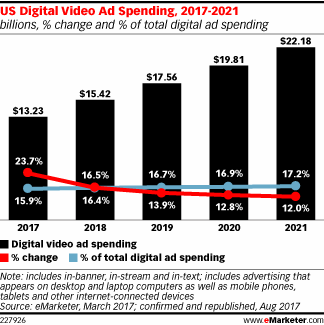
eMarketer forecasts US digital video ad spending outside of social platforms will reach $13.23 billion this year, up 23.7% from 2016. By 2021, spending will reach $22.18 billion.
eMarketer does not include video outlays on social platforms in its digital video ad spending forecast, instead counting them in the rich media forecast. Rich media, which will be a $10.33 billion market in the US this year, includes such ad types as flash, JavaScript and video that does not appear as part of a video player.
Companies like Facebook “know their users have an increasing appetite for video content and are actively making a play for brand marketing dollars that would traditionally go to online video or broadcast TV buys,” said Todd Silverstein, US head of performance marketing at Edelman.
Although Facebook has deep pockets and an enormous audience, its success is by no means assured. Consumers today don’t go there to watch shows, so Facebook must change their behavior by offering great programming and a winning video platform.
Meanwhile, Snapchat’s “Shows” are quite short, benefiting its position as a place for creative, quick-hit content for young people. TV networks are the primary programming partners, and the ads use Snapchat’s familiar vertical video format.
However, many marketers have yet to get comfortable with creating video ads on Snapchat. As the company continues to roll out programming, the challenge will be to convince them to develop for its unique format.
Twitter is relying on its real-time roots, emphasizing live and event-driven video content. Like Snapchat, Twitter has turned to a familiar format—its Amplify video publisher partner program—for delivering ads in its new shows. The company has a lot riding on its video initiatives, given its slumping user growth and resulting falloff in ad revenues.
If you are marketing a travel destination, you only need one mantra: Deliver an ‘Instagrammable holiday’ or go home.
This conclusion is based on the findings from Travelzoo’s Autumn Travel Trends Survey* issued today. (Never heard of Travelzoo? Neither have we, but the organisation has 28 million members! What?)
The survey reveals that how a holiday photo will look on social media platforms is an important consideration for 55% of those born after 1996 (Generation Z). The appeal of social bragging declines going back each generation. Millennials (those born between 1987 and 1995) are highly focused on the photogenic appeal of their holiday choice (42%), but just 10% of both late and early Boomers (those born between 1946 and 1965) consider this when booking a holiday.
Joel Brandon-Bravo, Travelzoo’s General Manager in the UK said, “It’s mid-August now and peak ‘posting season.’ Most people’s social media feeds are full of images of friends and family enjoying the sunshine. Let’s face it, when you’re stuck in the office on a rainy day those feeds can become irritating. But there is a holiday show-off in most of us and many hoteliers are getting wise to the power of making their properties as ‘Instagram-ready’ as possible.
“Some restaurants and hotels Travelzoo works with tell us they are starting to train staff in how to take great photos for social media as they are seeing how guests love to share their experience in real-time and want to be part of that process. Our research shows this focus is not misplaced and the importance of how photogenic a hotel, restaurant or destination is should not be underestimated. The tourist of today sees where they travel as a way of expressing themselves and this will only increase with future generations. Being seen in aspirational destinations that photograph well will become one of the most significant considerations a person will make before booking.”
In terms of the power of social media to influence holiday bookings, the generational split is vast. Almost two thirds of Generation Z use social media for inspiration on what to book, but only 10% of older Boomers (those born from 1946–1954) say social media has an influence on their decision making. For Millennials and Gen Z, Facebook and Instagram are the most powerful channels, with Facebook marginally more influential for Millennials.
Savvy hotels, restaurants and resorts are realising how important it is to enable customers to create the best visual impression of their experience. Thomas Cook recently opened a new line of resorts called Casa Cook, which have been designed with features that will photograph well and appeal to a younger demographic.
Travelzoo works with London restaurant Galvin at Windows, whose General Manager Fred Sirieix says, “Our image online is very important. We take great care in the imagery we post and how we appear.” Staff at Galvin receive training in how to take photos that are suitable for Instagram and other platforms because they understand how important it is for their restaurant. Sirieix stresses that while the online image is managed carefully it is important to be authentic. He believes in the importance of not appearing too “manufactured” in your online imagery and explains how “our Instagram is loaded with fun videos in order to show our personality.”
Generation X (those born from 1966–1986) is the most concerned of all generations about privacy online and limit posting on holiday because of this. Millennials are the least concerned about their privacy being compromised through social media but this group are the most aware (34%) of the pressure to project the image of the ‘perfect holiday’ while they are on a trip. Authenticity is a trend most noted by Generation Z, with one in four saying they think people are doing less obviously touristy activities on holiday.
While the appetite to share the holiday experience on social media shows no sign of abating, the survey also reveals an awareness of the benefits of switching off digitally – and this is true across all generations polled. Despite their love of social media 53% of Millennials and 45% of those born after 1996 say the idea of totally disconnecting digitally on holiday is appealing to them and over 60% of Generation Z say switching off from social media and emails would help them recharge more on holiday.
About the Research *Travelzoo’s Autumn 2017 Travel Trends Survey was conducted among 1000 consumers in the United Kingdom, who completed an online questionnaire sent out by third-party research agency One Poll. The questionnaires were completed between 21–24 July, 2017.
YouTube and Facebook get a bulk of the attention from digital publishers looking to build and scale video businesses. Meanwhile, for the past year, Amazon has built a platform that not only offers publishers another place to distribute videos but also the opportunity to make money from day one.
Last year, Amazon opened up its Prime streaming platform to video publishers and creators of all sizes, allowing them to distribute individual videos, themed video collections, entire seasons of shows and even their subscription channels. Called Amazon Video Direct, the program gives participating publishers access to the estimated 79 million people who pay for Prime in the U.S. alone.
One publisher in the Amazon Video Direct program said it earned mid-five figures on Amazon during its first month on the program last year — nearly four times the amount it made from YouTube ad sales during the same month. “That was an eye-opener, and we’ve been putting up more titles [on Amazon] since then,” said this publishing exec.
Amazon itself said the Video Direct program paid out “tens of millions of dollars” in royalties in its first year, with “billions of minutes” streamed.
“We are encouraged by the positive response and adoption from content creators, as well as the high level of engagement by Amazon Video customers,” said Eric Orme, head of Amazon Video Direct.
Video publishers have a number of ways to make money from the Amazon Video Direct program. If they choose to distribute individual videos and shows within the Amazon Prime subscription video service, they get paid 15 cents per hour streamed in the U.S. and 6 cents per hour streamed in the U.K., Germany and Japan. Publishers also have the option to sell individual movies, shows and video packages to customers, retaining 50 percent of all revenue made from purchases or rentals. There’s also an ad-supported, free portal, through which Amazon pays out 55 cents to every dollar generated from pre-roll ads. Finally, they can sell add-on subscriptions.
Very little revenue is coming in from the ad-supported side at the moment, according to multiple sources. However, the dollars generated from distributing inside the Prime subscription service, while fluctuating month to month, are proving to be noticeable. It’s enough money that HowStuffWorks started to produce long-form shows last year that can be distributed on Amazon.
Comedy studio Jash, meanwhile, is seeing enough revenue from Amazon that it plans to publish new episodes of “Norm Macdonald Live,” its comedy talk show with the famous comedian, on Amazon the day they premiere.
“Because Amazon is starting to pop up, I can create a show like this that’s a little bit higher profile, and I can do it at a profit with better margins than I see in traditional entertainment,” said Mickey Meyer, co-founder of Jash. For instance, on a show like “The High Court,” which airs on Comedy Central, the margin is the typical 10 percent that production company gets in TV. By controlling production and distribution on “Norm Macdonald Live,” Jash has the chance to make more. “Platforms like Amazon that place a value on premium content are bigger factors in this overall shift everyone’s seen from traditional to digital development.”
The Video Direct program, however, is not the only way video companies can distribute and make money on Amazon. There’s also the Amazon Channels program, which allows companies with subscription streaming services to sell those products to Prime customers. Today, this program boasts more than 100 partners, including premium cable channels such as HBO, Showtime and Starz, as well as numerous channels from mid-tier and digital publishers including Defy Media, Fullscreen, Fandor and The Enthusiast Network.
The deal terms vary, but multiple sources said Amazon typically takes a 30 to 40 percent cut of subscription revenue generated through this program. A research note from BTIG analyst Rich Greenfield in June said Amazon Channels account for half of the subscribers for HBO and as much as 75 percent for Starz’s streaming channel. The percentages vary, as multiple sources told Digiday that Amazon Channels account for anywhere from 10 to 40 percent of total subscribers of their streaming channels. One publisher said subscriber numbers doubled in the first three months after launching its streaming service on Amazon last year, though the growth has recently dipped, likely due to an annual summer seasonal drop.
“We want to play with companies that have the opportunity to be in it for the long haul, and Amazon is one of the companies that has that potential,” said Mark Garner, svp of distribution and digital content licensing at A+E Networks, which distributes two streaming services — History Vault and Lifetime Movie Club — through Amazon Channels.
Still, there is one more way to partner with Amazon — and that’s through the company’s original video business. So far, Condé Nast and Playboy have sold shows to Amazon Studios with the documentary series “The New Yorker Presents” and “American Playboy: The Hugh Hefner Story,” respectively. This is where Amazon competes with Netflix, TV networks and film studios, and it’s an area that top digital publishers are eyeing as they invest more in long-form and feature-length video.
“We’re targeting more feature films to bring to them,” said Dawn Ostroff, president of Condé Nast Entertainment, which also premiered the documentary TV series “Last Chance U” on Netflix in June 2016. “They’ve really risen as being one of the most sought-after places to sell because they stand for prestige.”
YouTube and Facebook will continue to be the platforms where a lot of digital publishers spend a lot of their time, resources and money to cultivate audiences — the scale is there. But with the amount of royalties and subscription-related revenue Amazon paid out in the past year alone, video companies — whether they’re TV networks, production studios or smaller, digital publishers — are treating Amazon as seriously as they do any other video distribution platform.
“Most of the time, when you launch on a new platform, you have a very long ramp toward success,” said Erick Opeka, evp of digital networks for Cinedigm, which distributes three streaming channels — Docurama, CONtv and the Dove Channel — through Amazon. “With Amazon, we saw success out of the gate immediately — it gave us breathing room to focus on how to grow our own direct-to-consumer streaming business.”