By BoF Insights, McKinsey & Company
Value players are elevating their brands defensively against ultra-low-cost rivals such as Shein and Temu, whose business models remain difficult to undercut, even as policy shifts erode some of their cost advantage. For example, value brands Bershka and H&M have reduced the share of SKUs in their lower price tiers across categories and markets between 2023 and 2025, according to data from EDITED.
Mid-market players are tapping into the growing demand for “affordable aspiration” from consumers who remain price-sensitive but increasingly prioritise quality and design. Zara has pioneered this strategy, taking aim at trend-focused shoppers seeking fashionable designs at more affordable prices than luxury ready-to-wear collections.

Premium/bridge and affordable luxury players are seizing the white space created by the increase in luxury prices, which rose 61 percent on average between 2019 and 2025. Many aspirational consumers, also squeezed by inflation and seeking more creative inspiration from luxury brands, are opting to spend their disposable income elsewhere. Brands like Ralph Lauren are capitalising on this shift, increasing focus on categories like outerwear and bags, where customers are familiar with paying more. Similarly, French affordable luxury giant SMCP has reduced reliance on discounting to support the elevation of its brands, which it outlined as a key priority in 2025.

Brand elevation depends on three pillars — price, product and brand experience
1. Price: increasing the share of products in higher price tiers and growing full-price sales
31% of global customers are willing to splurge on fashion, driven by both tangible and emotional factors.
Price architecture: Drive value perception by shifting more of the assortment into higher price tiers and introducing “hero” products in premium categories, reinforcing stronger brand positioning
Discounting: Preserve brand value by scaling back promotions and discounting, ensuring pricing signals remain consistent with an elevated image
Channel exposure: Protect brand equity by carefully restricting distribution through outlets and off-price channels, particularly for signature products
2. Product: improving product quality, durability and relevance
51% of global customers say quality is a key driver in creating a high-end brand perception, the highest of all attributes.
Quality: Elevate customer perception by investing in higher-grade materials that align product value with rising expectations for price-to-quality balance
Design: Strengthen long-term appeal by focussing product development on durability and versatile styling that extends wear and relevance
Collaborations: Expand reach into higher-spending segments by partnering with premium brands, leveraging their equity to enhance desirability and brand stature
3. Experience: elevating perception through retail stores and brand marketing
47% of global customers say a brand’s story is a key driver in creating a high-end brand perception.
Brand marketing: Build stronger resonance by refining brand voice and narratives, and by actively engaging in cultural conversations where relevant
Stores: Differentiate the brand experience by enhancing store formats and visual merchandising
E-commerce: Invest in creating editorial content, elevated visuals and improved customer journeys
Ambassadors: Amplify cultural impact by partnering with aspirational, brand-aligned influencers
Product and pricing adjustments are core to an elevation strategy
Many value brands are retreating from ultra-low-price tiers where players like Shein and Temu increasingly dominate. In the UK, Bershka reduced the share of SKUs priced below £25 (approximately $34) by 15 percent between 2023 and 2025, according to EDITED. H&M made similar moves during this time, reducing the share of bags in this bracket by 25 percent in the UK. H&M has been diversifying its offering with premium ranges and capsule lines, such as H&M Premium and the Studio Collection, as well as collaborations with designer brands.
In the mid-market and premium segments, brands are incrementally increasing core assortments within most price bands. They are also introducing hero products in the higher tiers that create a halo effect that lifts consumer perception of the entire collection. For example, COS released its £1,000 ($1,355) Nappa leather shearling jacket in 2025. This is part of a 9 percent increase in the share of outerwear SKUs priced over £175 ($237) between 2023 and 2025 in the UK, according to EDITED.
Brands should be cautious about raising prices too quickly or steeply, as this can alienate the customer and call into question the balance between quality and value and the brand’s right to play within the price segment. Brands can use consumer research and peer benchmarking to calibrate pricing moves.

Higher prices demand superior quality and refreshed designs
Customers are expected to become more cautious with their spending in 2026. For those who do splurge, they will be paying special attention to signifiers of value for money, such as craftsmanship, durability and sharp creative direction. Brands that raise prices without improving quality or design risk alienating consumers and eroding brand equity.
Creative vision will play an outsized role in proving worth. For example, the wave of luxury creative director appointments at mass brands — including Zac Posen at Gap and Jonathan Saunders at & Other Stories — has injected a higher-end aesthetic into lower parts of the market. Gap also launched the premium line GapStudio in 2025, designed by Posen and featuring items like silk slip dresses and worn by celebrities on the red carpet.
Collaborations offer another route to import design authority and relevance into accessible price points. Partnerships such as JW Anderson with Uniqlo and Victoria Beckham with Mango deliver both credibility and access to a more aspirational audience. These collaborations are often positioned as limited editions, which generates desirability and exclusivity among consumers — even in a more price-conscious environment.
Marks & Spencer:
Marks & Spencer is elevating the style, fabrics and fit of its fashion offering. For example, the brand is leaning into real leather across coats, minidresses, skirts and shoes and is generating excitement by increasing novelty, refreshing two-thirds of its assortment each season while dedicating one-third to core basics. Fashion, Home & Beauty sales increased 3.5 percent in the fiscal year 2024 ending March 2025. Its premium Autograph range performed particularly strongly, with sales up 47 percent over the same period.
43% of global consumers say they care more about quality than ever before, up from 30 percent in 2023.
Uniqlo:
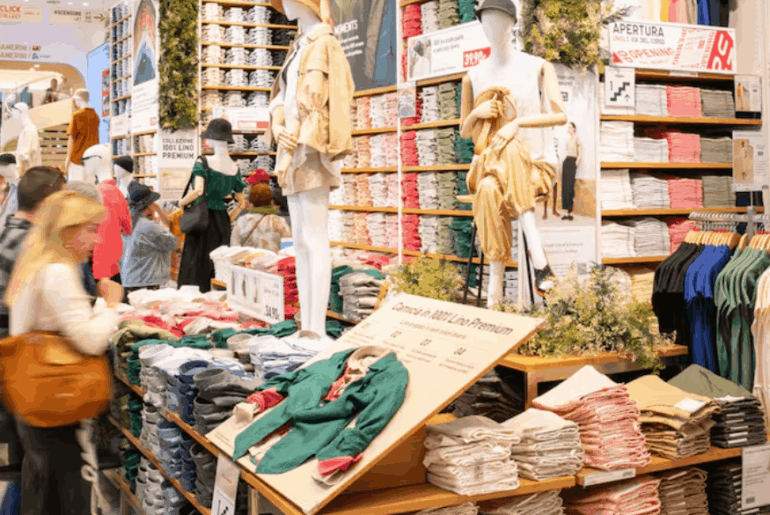
Uniqlo’s elevation strategy is centred around design authority and quality basics. Its premium essentials, such as its affordable cashmere sweater range, provide an alternative to trend-driven fast fashion. In 2023, the brand launched Uniqlo:C, a sub-label by Clare Waight Keller — formerly creative director of Givenchy and Chloé — focused on elevated everyday essentials and outerwear. In 2024, Keller assumed the role of creative director for the entire brand, expanding her remit to include Uniqlo’s core offering. Parent company Fast Retailing’s revenue grew 10.6 percent year on year in the nine months to May 2025, while operating profit expanded to 17.2 percent of revenue.
50% of global consumers say exclusivity creates a high-end brand image.
Product elevation only works when reinforced holistically across the brand experience
Borrowing aesthetic cues from luxury — across campaigns, editorials, photography and retail — can help justify elevated product positioning. For example, COS staged a ready-to-wear runway show at New York Fashion Week in September 2025, signalling its ambitions to extend its brand beyond the high street. While not every mass brand has a credible place on fashion week calendars, COS’ design-led aesthetic makes the case. Meanwhile, Zara’s use of famous fashion photographers such as Steven Meisel and Mario Sorrenti helps position it closer to high-end fashion.
Redesigned retail environments can offer similar signals and in-store service adds further weight. Aritzia’s personal style advisor approach to customer service is the backbone of its store experience, offering a high-touch styling journey like luxury department stores, which reinforces its premium positioning.
The same principles extend online. Websites and apps increasingly reflect elevated positioning through streamlined interfaces, lifestyle-driven storytelling and immersive visuals that replace function-focused user experiences.
There is a 76% correlation between a positive store experience and consumers’ perception of a brand as premium.
Zara’s High-Tech Concept Store:
In August 2025, Zara reopened its Manchester flagship in the UK with a new concept designed in an elevated format. The layout includes a series of curated rooms, each dedicated to collections such as Zara Origins, highlighting higher-value product lines. This zoning approach borrows from luxury retail, moving away from the uniform mass-market feel typical of fast fashion.
Technology is central to the redesign. Automated product sorting from fitting rooms to online orders, assisted return stations and app integration reduce friction and allow staff to spend more time on high-value customer interactions.
There is an 87% correlation between memorable and creative advertising campaigns and consumers’ perception of a brand as premium.
How should executives respond to these shifts?
Redesign product pyramids to signal elevated positioning
Build a product pyramid informed by consumer insights, balancing core assortments for the existing customer base with premium tiers aimed at capturing “splurge” purchases and recruiting more aspirational audiences.
Invest in material quality, craftsmanship and fit. Ensure consistency across the assortment to build credibility and trust with customers, which can translate into pricing power.
Introduce halo products in categories such as outerwear and leather goods that lift the perception of the entire brand.
Hire recognised creative talent to inject creativity and originality, or use capsule collections and designer collaborations to import design authority and generate excitement.
Adjust pricing architecture over a long-term horizon
Plan a multi-year brand elevation roadmap, emphasising gradual progress across multiple seasons over one-off drops or store renovations.
Use a combination of internal sales data and social listening tools to gauge price sensitivity across categories and define the brand’s price ceiling.
Place smaller-volume orders to limit overstock risk and reduce reliance on discounting to protect brand equity.
Reinforce positioning across the brand experience
Roll out the elevation strategy across the full brand experience — from communications to in-store environments. This means placing emphasis on elevated brand storytelling and cultural relevance while ensuring store design, visual merchandising and service standards signal the same aspirational positioning.
Online, brands can reinforce these cues through improved visuals, editorial content and frictionless user journeys that feel both premium and intuitive.
Higher-touch experiences more commonly found in luxury — such as personalised clienteling or exclusive community activations — can also build advocacy and deepen customers’ emotional connections
This article first appeared in The State of Fashion 2026, an in-depth report on the global fashion industry, co-published by BoF and McKinsey & Company.
Feature image credit: Uniqlo