Tag

Google’s search

Browsing

By Gene Marks

A couple of years ago I attended an excellent conference in Seattle by a well known firm that provides online search and marketing tools. They had a line up of top notch speakers who are experts in digital marketing from the largest corporations, brands and agencies in the country. The theme was Search Engine Optimization (SEO) and how to drive the most clicks to a website, ecommerce store or content page.

The conference was basically all about Google. Why? Because, even in 2025, Google controls 90 percent of search in the world. To get found you need to please the Google Gods. So what advice did the greatest and smartest people in the online marketing world have for conquering Google search? They all pretty much said the same thing: “beats me.”

No one knows. That’s because Google’s search algorithm is a secret more closely guarded than the recipe for Coke or U.S. nuclear launch codes. Everyone there was trying to figure out what Google was going to do next, where Google may change its algorithm and how these changes would affect traffic to their site.

AI is now changing that. AI is already starting to save small business owners like me from Google’s monopoly on search. And it’s doing so in three ways.

More Options

For starters it’s giving our potential customers more choices to find us. Yes, studies show that Google still dominates search. But already you can see ChatGPT and others like it begin to make headway.

So far, even if ChatGPT’s 1 billion messages per day were search-related, its total share of the search market would be less than 1 percent. Google saw approximately 373 times as many searches as ChatGPT in 2024 and Google searches actually grew in 2024 compared to 2023.

But things are changing. Gartner predicts that by 2026, traditional search volume will drop by about 25 percent, with AI chatbots and virtual agents capturing a growing share of user attention and behaviour Others project that AI-powered searches will grow annually by up to 35 percent starting in 2025, reaching an estimated 14 percent of search market share by 2028, with Google declining modestly to about an 86 percent share. I’m betting that decline will be more pronounced. But regardless it’s heading in the right direction.

I’ve tried Google AdWords and for a small business like mine it’s useless. My company sells customer relationship management software and the big players in this industry already have search results locked up. They spend more money than me. They buy up all the good keywords. People searching for products I sell won’t find me unless they click through to page 8 of their search results and no one does that. Of course, that doesn’t stop Google – the fox guarding the henhouse – from drawing down on my ad budget with their dubious claims of “impressions” and clicks. How can I even verify this? I can’t. They have the monopoly.

AI is solving this problem. As other chatbots take away search market share from Google I’ll be offered more ways for customers to find me. I predict that many small businesses – equally frustrated with the Google monopoly – will gravitate to these chatbots. ChatGPT and Perplexity have already announced their own browsers to compete with Chrome and collect data. Good for them. More competition means more choices and less costs for small businesses like mine.

Less Clicks, Better Clicks

Most have noticed that Google has introduced an “AI View” into their results where search answers are summarized. Some believe that this will result in fewer clicks on links to websites and they’re right. Smart marketing people, like Jason Rose – senior vice president of digital sales and marketing at HR firm Paychex believes that this will have greater benefits for small businesses like mine.

“People are reading the AI summary and kind of getting what they need and moving off,” he said. “But it’s not all doom and gloom because these visitors actually convert at a much higher rate.”

To date SEO has been all about getting visitors to your website. Websites are ranked based on their traffic. But how genuine is this traffic? In 2023, bots made up 49.60 percent of internet activity, almost catching up to human traffic, which was at 50.40 percent. Meanwhile we’re paying Google to send this nonsense to us. AI is fixing this too. It is changing the way people use the web for research, be it academia or shopping.

Rose is right. By reading an AI overview a visitor who clicks through to a website has given some thought to their action and is therefore a more qualified prospect, a better visitor. Google and others will likely charge more for this. I’ll pay. It’s worth it.

Content Creation Opportunities

To be included in an AI overview your content has to be relevant and useful. Unfortunately, a great deal of today’s content isn’t. At the Seattle conference I attended some of the sessions talked about SEO tricks and games you can play with content (keyword stuffing, hidden links, showing different content to search engines than what is shown to users) to get noticed by Google. AI will help to stop this. As it gets smarter it will be better able to root out this nonsense so that it’s displaying the best answers possible.

Which means that the best content will be included in AI overviews and the websites with the best answers will have a better chance of being found. No games. No tricks. Just good, valuable content. And not content generated by AI because AI will be able to figure that out too.

This will be an opportunity for quality content providers – writers, bloggers, creators, etc. – to step up their game and prove their value. The best ones will rise to the top, unburdened by the crawlers and spiders, that held them down. People worry that AI will replace content providers. It’s actually the opposite. It’s creating more opportunities for them.

“AI is reading the same content that the human would have and building summaries based off of that,” Rose said. “So again, you need great content. Content is still king.”

All of this is happening now. But we’re still early days. Google is still Google. ChatGPT and other chatbots are infants in the search world and still hallucinate too much. But you can easily see the future. And the future is a world where, thanks to AI, Google no longer monopolizes search. For a small business owner like me, that world can’t come soon enough.

Feature image credit: Photo by Michael M. Santiago/Getty Images

By Gene Marks

Find Gene Marks on LinkedIn and X. Visit Gene’s website. Browse additional work.
Sourced from Forbes

By Dr. Diane Hamilton,

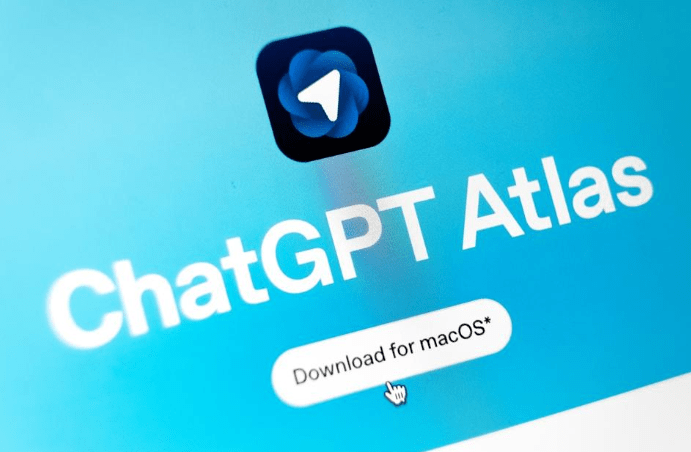
You might have noticed AI at the top of Google’s search page, but that might not be enough to compete with ChatGPT’s latest offering. For now, it is only available for Mac, but OpenAI has launched a browser called ChatGPT Atlas that searches, summarizes, and answers all your questions in one place. ChatGPT Atlas looks more like a traditional browser, complete with tabs and favourites. You can visit any site, ask questions about what you’re seeing, and get answers in real time without leaving the page. These changes can impact how major organizations like Google, LinkedIn, and Amazon operate. The question every major platform is asking is how to stay relevant when AI becomes the main hub for users. I discussed this with New York Times bestselling author, Seth Godin. Seth said AI is the biggest shift since electricity, calling it the final step in the capitalist drive to remove skill from workers and embed it in systems. He added that the alternative to being replaced is to use AI for small tasks while elevating our role to innovator, project manager, or visionary.

What Can Google Do To Compete With ChatGPT Atlas

Google built its success on ads tied to search traffic. When users click links, Google earns revenue. If ChatGPT Atlas gives people what they want without leaving the page, those clicks go away. Google has tried to stay ahead by adding AI-generated summaries at the top of its results, but the larger challenge is finding a way to keep advertisers interested when fewer people are viewing or clicking links. Seth said Google “stumbled into a miracle” with its advertising model because people actually wanted ads like classifieds, but warned that model cannot be repeated. He believes ChatGPT cannot serve both advertisers and users without losing trust, just as Twitter failed when it chased ad revenue at the expense of experience.

For now, ChatGPT Atlas does not run ads, but that could change. If OpenAI eventually introduces paid placements, it could reshape the entire ad industry. Instead of buying keywords, advertisers might pay to have their product or service mentioned in an AI-generated answer. That could work only if people trust those answers. If users suspect bias or manipulation, they will lose confidence quickly.

Google has one major advantage: habit. Billions of people already use Google every day, and that brand loyalty is powerful. To compete, Google can build deeper integrations between its AI products and its other services. That means creating value through data, analytics, and productivity tools that make Google indispensable in everyday life.

What Can LinkedIn Do To Compete With ChatGPT Atlas

LinkedIn faces a different challenge. It already uses AI to help people write posts, apply for jobs, and analyse their professional networks. But users are starting to notice how repetitive AI-generated posts can feel. Many sound similar, polished but hollow, and that kind of content hurts engagement. Even AI-generated images are losing their novelty. Seth said LinkedIn’s algorithm shapes behaviour by rewarding certain posts, not necessarily better ideas. As people follow what the system rewards, it creates an ocean of sameness. Once the algorithm changes, users shift again, unaware of how it drives their actions.

If LinkedIn wants to compete with ChatGPT Atlas, it has to double down on human connection. The platform’s power comes from people wanting to be seen, to share achievements, and to prove they are ready for their next opportunity. AI can’t replace that desire for recognition.

One smart move would be to create short discussion threads that feature a single question and invite professionals to respond with their insights. For example, a thread could ask, “How would you handle a team that resists adopting new AI tools?” These would be shorter and livelier than traditional articles, giving people the chance to show how they think, not just what they know. The threads could be personalized to show up in their feed based on their level of experience or desire for future employment.

LinkedIn already invites experts to comment on major topics, but those responses are often longer articles. Quick threads could generate more interaction and show off the expertise of all users and not just experts. The problem would come from people asking ChatGPT or LinkedIn’s AI what a good response is. People need to trust that what they read is genuine. Seth warned that scammers are already scraping LinkedIn’s professional graph to impersonate trusted contacts, which makes authenticity even more critical for the platform’s future.

What Can Amazon Do To Compete With ChatGPT Atlas

Amazon’s business depends on people searching within its platform. If users start asking ChatGPT Atlas for the best product and Atlas can place that item directly into a shopping cart, Amazon could lose control over discovery on their own site. People might never search inside Amazon again.

That scenario creates both risk and opportunity. Amazon has the infrastructure, logistics, and trust that AI companies lack. It can focus on building partnerships that allow its catalogue to integrate seamlessly into AI-driven searches. If someone asks Atlas for a recommendation and it links directly to Amazon, both companies benefit. But if OpenAI creates its own purchasing system, that could be a real threat to Amazon’s dominance.

To stay ahead, Amazon needs to make its customer experience even more personal. The company already collects detailed data about buying habits. If it uses that data to enhance how people shop, by predicting what they will need or showing real human reviews that feel trustworthy, it can maintain its edge.

As Seth put it, innovation starts small. He said we don’t need giant leaps, just tiny choices that persuade us to act, like solving small problems creatively every day. Seth described these as ‘buffet problems’ which are the small inefficiencies anyone can fix right where they stand, like pulling the buffet table away from the wall to help people navigate the table better. He also said fear is natural in times of change but should be used as fuel for upskilling and creative problem-solving, since curiosity identifies the problem and creativity finds the least painful solution.

Could ChatGPT Atlas Become The Biggest Platform Of All

There is no question that ChatGPT Atlas represents a major shift in how people will use the internet. But it will not exist in a vacuum. Competitors like Claude are improving quickly, and NVIDIA’s investments in AI infrastructure are setting the stage for even more powerful systems. The question is whether Atlas will become the default way people access information or one of many tools in a growing ecosystem. The companies that thrive will be the ones that stay curious and adaptable. As Seth noted, cycles of creative destruction are speeding up, from forty years to ten, and that waiting for top-down permission to innovate means waiting forever. Those who act first, even in small ways, will shape what comes next.

Feature Image Credit: NurPhoto via Getty Images

By Dr. Diane Hamilton,

Find Dr. Diane Hamilton on LinkedIn and X. Visit Dr.’s website. Browse additional work.

Sourced from Forbes