Tag

Influencer Marketing

Browsing

By Caitlin Burgess

Today’s content marketing space is a tumultuous one. Content shock, ever-changing search engine algorithms, social media’s midlife crisis, growing consumer distrust in brand messaging—marketers are constantly challenged to adapt and scale their strategies to simply bolster visibility, nevermind reach objectives and prove ROI.

Emerging from the noisy marketing mix is a promising strategic marketing star that can capture the attention of hard to reach buyers, improve audience engagement, bring insightful perspectives to the forefront, and build brand trust and credibility.

Of course, I’m talking about influencer marketing.

Spokespeople, brand advocates, experts—brands have been tapping “influential” people as marketing and advertising partners for a century. And, just as it’s always been, in the modern era of influencer marketing, some love it, some hate it, and plenty of people question whether it “actually works.”

At TopRank Marketing, we see credibility, value, and opportunity in influencer marketing; people crave credible content.

And we also see authenticity, relevancy, and thoughtfulness as defining characteristics of the modern approach to influencer marketing—we call it Influencer Marketing 2.0.

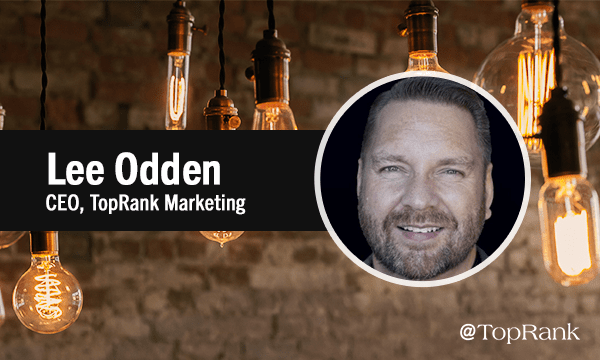
Lee OddenOur own resident marketing influencer and CEO, Lee Odden, has been evangelizing influencer marketing inside and outside company walls since 2012, before the practice in the content marketing realm went boom.

Lee’s been named the No.1 “Influencer Marketing Influencer” by Onalytica, and his expertise on the subject has been featured on top industry publications including CMO.com, Forbes, and Social Media Examiner. Lee was also instrumental in the Influence 2.0 research report in partnership with Traackr and Brian Solis of Altimeter Group.

So, what is the “Influencer Marketing 2.0” approach? Let these words of Lee Odden wisdom—words that have defined how we’ve architected our influencer marketing manifesto—lend some guidance, focus, and inspiration to your influencer marketing efforts.

How to Approach Influencer Marketing 2.0

Co-Create for Greatness

Content is the foundation of marketing. Period. But marketers repeatedly cite that consistent creation of strategic, quality, engaging content is a top marketing challenge.

But as Lee often says:

If you want your content to be great, ask influencers to participate. – @leeodden Click To Tweet

When you co-create content with influencers, you not only provide influential experts with a medium to share valuable insights, but can also provide your audience with a mix of perspectives—upping your storytelling capabilities and credibility. In addition, some influencers already have a desire and knack for creating content, so an opportunity to collaborate will be welcomed and beneficial to your business.

For any kind of content a business creates and publishes to the world, there is an opportunity for collaboration with credible voices that have active networks interested in what those voices have to say. – @leeodden Click To Tweet

However, it’s also important to note that co-created content isn’t inherently valuable or set up to drive gangbusters marketing success. Value and relevance is certainly in the eye of the beholder—your audience. As a result, you need to stay true to your audience and your influencers, which requires an integrated approach that includes SEO and other proven content marketing tactics.

As Lee has said:

With an understanding of keyword demand, B2B marketers can tap into the opportunity to be the best answer … (adding influencers) to that optimized content will give it the credibility and engagement needed to inspire action. – @leeodden Click To Tweet

Influencer Marketing 2.0 In Action

Content planning software company DivvyHQ* took their marketing the “back to the future”, launching a long-running campaign that included a sequence of connected content marketing campaigns featuring relevant influencers.

The SaaS company secured contributions from top content marketers for campaigns that resulted in significant increases in credibility and engagement. Additionally, the campaigns exceeded performance goals and added to DivvyHQ’s bottom line. The end result was this interactive eBook asset.

DivvyHQ Back to the Future eBook

Define Influence for Your Brand & Audience

Influencer marketing is often pegged as a tactic rooted in compensating celebrities or brandividuals with large social followings to push your product or service. But influence isn’t defined by popularity or number of followers:

Influence is the ability to affect action. – @leeodden Click To Tweet

There may be no bigger mistake than focusing on “shiny object” individuals; fame by association is more than hard to come by. There is absolutely a place for brandividuals in your influencer mix, but it’s important to remember that:

Everyone is influential about something. – @leeodden Click To Tweet

Your brand, industry, product or service, and audience is undeniably unique—and influence varies. Furthermore, it may be easier than ever to give the perception of influence. After all, Twitter’s recent purge of suspicious accounts sent some individuals’ follower count into a landslide.

However, the potential is there to validate and build relationships with relevant, experienced individuals—inside or outside your organization; broad expertise and niche knowledge; large or intimate yet engaged followings—who have the ability and willingness to affect action.

Nurture Relationships Early & Often

At its core, influencer marketing is all about brands engaging and developing relationships with individuals—individuals who have relevant topical expertise, reach, and resonance that aligns with the goals of the brand.

But strong, lasting relationships aren’t built overnight. Some influencers are frequently tapped to participate in various projects. In addition, other more niche experts or rising stars may not be as experienced in content collaboration. So, as Lee says, you need to develop rapport with influencers early:

Grow your influencer network long before you need them. The day to create an army of influential advocates isn’t the first day of the war. Find common interests and develop rapport. – @leeodden Click To Tweet

And your work shouldn’t stop after the first collaboration. You need to keep connections hot and mutually beneficial. In addition, for those more niche experts or rising stars, you can help them create more influence for themselves and your brand.

Work with an influencer, you’re friends for a day. Help someone become influential and they’re a friend for life. – @leeodden Click To Tweet

Influencer Marketing 2.0 In Action

Prophix*—a leading provider of corporate performance management (CPM) software solutions—combined original research with influencer content to create crush-worthy content marketing force.

With an interactive quiz, with influencer micro-content featured throughout, serving as the anchor asset, additional tactics such as long-form influencer interviews, email marketing, and more, rounded out this campaign.

The results? In the first 45 days, the anchor asset landing page garnered a view rate six-times higher than the benchmark for a similar resource. It was also the fourth most trafficked page—behind the Home, About Us, and Privacy pages.
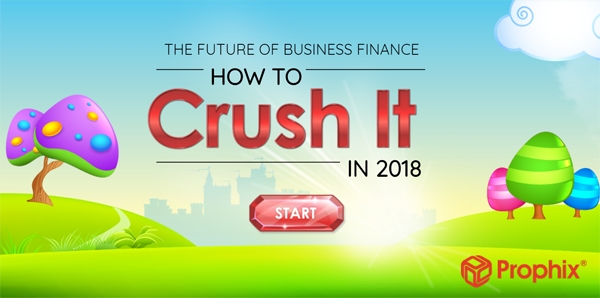
Prophix Crush It Interactive Quiz

Entice Participation By Showcasing Value

Whether you’ve cultivated warm relationships or you’re hoping to go beyond social engagement with the first collaboration ask, your success in securing their partnership is grounded in showcasing the mutual value proposition.

Some thought leaders want to bolster or grow their influence, while others simply want to create something their proud of (or their bosses can take pride in). Regardless, be transparent, make sure your ask is relevant, and lead with the value.

Invite influencers to make something together that drives the influencer’s objectives, while at the same time, fuels brand objectives. – @leeodden

Specifically, when it comes to colder relationships, don’t ask too much too soon.

Be thoughtful about how you ask and how you reward when working with influencers. – @leeodden Click To Tweet

Make Amplification Natural & Easy

There are obvious business benefits to working with influencers. Not only do they lend authority and credibility to your content and brand, but they also hold the power to introduce you and your content to their audiences.

Once your co-created content is ready to be released into the wild, at a minimum, provide influencers with the messaging and visuals they need to easily promote on their channels. In addition, make sure the final product lives up to its full potential. Regardless of their intentions for participating, if they’re going to share content with their followings, they need to be proud of it.

If they care, they’ll share. – @leeodden Click To Tweet

Influencer Marketing 2.0 In Action

There are few better examples of this principle in action than SAP’s* interactive microsite designed to help launch their Leonardo platform. Thirty-two influencers were engaged to share their insights on digital innovation topics from blockchain to machine learning.

The content experience was so compelling for the influencers that the share rate was 100%. In fact, several influencers shared multiple times. The content experience was engaging for the audience, too—the microsite had over 21 million social impressions.
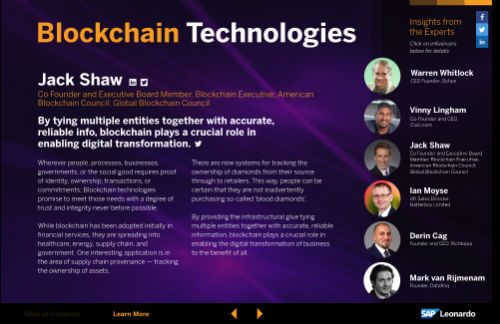
SAP Leonardo Interactive Microsite

Put Wisdom Into Action

Whether you love, hate, or question the potential of influencer marketing, it’s undoubtedly on the rise. It’s enjoyed a couple years of big hype, but now is the time to decide if it should be a trusted part of your integrated marketing strategy.

Use these guiding principles and snackable quotes from a pioneer of the craft to help you define what influence means to your brand, and opportunities for collaboration and co-creation.

Speaking of quotes, as the “Prince of Preachers,” Charles Spurgeon said: “Wisdom is the right use of knowledge.”

So, go forth and put your newfound influencer marketing wisdom into action.

Remember how we said that influencers add credibility to your content? Learn how three brands co-created more credible content to drive awareness, engagement, and action.

If you still want more influencer marketing insight, join Lee along with TopRank Marketing Digital Strategy Director, Ashley Zeckman, at their CMWorld sessions to learn how influencer marketing can grow your business. Get the details here.

*Disclaimer: DivvyHQ, Prophix, and SAP are TopRank Marketing clients.


By Caitlin Burgess

Sourced from TopRank Marketing

By

One of the top challenges facing influencer marketing is one common across the entire arena of digital marketing: brand safety.

At this year’s Cannes Lions, Unilever’s Chief Marketing Officer Keith Weed warned that influencer marketing has an integrity issue. The proliferation of fake followers, aided and abetted by a lack of transparency and proper measurement reporting, threatens to destabilize the entire industry.

Weed warned that the industry must take “urgent action now to rebuild trust before it’s gone forever,” and he pledged that Unilever’s brands will never buy followers nor work with influencers who buy followers.

Any brand conducting influencer marketing programs should heed the call to ensure greater transparency and integrity.

The relationship between social media and influencer marketing is at a crossroads. To be clear, the challenge is not one of growth: According to a recent study by the Association of National Advertisers, 75% of brands use influencer marketing, and almost half are planning to increase budgets in the next year. However, in order for influencer marketing to continue to thrive, brands will need to improve their campaign strategies.

Brand safety is of paramount importance in the development of influencer marketing tools and in ongoing campaign monitoring and management. Campaigns – and the technologies that support them – should be designed to track telltale signs of suspicious activity such as sudden bursts in followers or suspicious letter replacements in profile names, such as the use of “1” to replace the letter “I.” More sophisticated algorithms can flag dramatic shifts in performance and unanticipated engagement patterns.

In addition to ensuring transparency and integrity, influencer marketing campaigns should focus on authentic engagement. Influencer marketing is inherently social; when implemented well it can be an open (but directed) conversation that is amplified to the masses. This is why it is vital to focus on follower engagement.

While metrics like volume are of course important (e.g., follower count, posts per day/week, etc.), engagement may have the biggest impact on meeting or even exceeding KPIs. One of the highlights of influencer marketing is the opportunity for a brand to leverage an influencer’s unique voice. That unique voice has a big impact on the type of content an influencer can produce for brands — and it is that unique, authentic voice that ultimately drives consumer engagement with the branded content.

For brands, a trusted environment is one of the most effective places to engage consumers. Passionate influencers who authentically weave branded stories into social platforms that consumers trust are the ones who deliver powerful results.

Whether it is a story told through a blog post, video, a picture, or any combination of these, working with influencers can bring brands and products to life with engaging, custom content delivered to the right audience — amplified through the channels that has the potential to make the greatest impact.

But to help ensure that this marriage between influencer marketing and social not only survives, but thrives, it is up to everyone in the industry to work to ensure that engagements remain authentic, honest, transparent, and measurable.

By

By Katie Paulsen, Vice President of Influencer Marketing, RhythmOne

Sourced from MediaPost

By

But not in every country, and China has its own players

Influencer marketing is a powerful tactic that targets consumers where they already spend much of their time: social media. Globally speaking, Instagram is the primary platform for many influencer-brand campaigns, but it’s hardly the only one.

Take China, for example. Most of the major international social networks, including Facebook, Instagram, Snapchat and YouTube, are banned by the government. That means that the country’s influencers hold court on local services, of which Weibo and WeChat are the most popular.

And in the DACH region—which includes Austria, Germany and Switzerland—Instagram and YouTube are neck and neck, at least in terms of influencer marketing spending. According to Goldmedia data, sponsored content on the two platforms accounted for 34% and 31% of total influencer revenues in 2017, respectively.

Spending figures don’t always tell the whole story. While Goldmedia took into account both monetary and nonmonetary compensation, such as product gifting, influencers may charge a premium for a post on a certain platform, which could inflate its share of spending.

But those findings make sense when looking at where consumers in the region follow influencers. According to a March 2018 survey by M Science for Wavemaker, social media users in Germany were just as likely to follow an influencer on YouTube as they were Instagram, each cited by 73% of respondents. Roughly half said they followed influencers on Facebook.

That said, the importance of Instagram for influencer campaigns is rising in nearly every market worldwide.

In a February 2018 survey by influencer marketing agency Activate, 88.9% of worldwide influencers said they were using Instagram for influencer marketing campaigns more than they did one year ago. Excluding posts on their feeds, Instagram Stories was the most popular tactic used for sponsored campaigns.

Instagram’s rising popularity for influencer campaigns goes hand in hand with the platform’s strong user growth, as marketers tend to go where their customers are.

India is one example of that. According to our latest forecast, the number of Instagram users in the country grew by an explosive 123% in 2017—the fastest growth rate worldwide. So it’s no surprise that 78% of influencers in India cited Instagram as the platform that would rise in importance for influencer marketing this year, according to a December 2017 survey from influencer marketing agency Buzzoka.

Overall, we expect the number of worldwide Instagram users to rise by 18.4% to 714.4 million in 2018. Sweden will have the highest Instagram user penetration rate in the world, at 68.9% of social network users, followed by Indonesia (62.8%) and Norway (57.7%).

By

Sourced from eMarketer

By Adrian Fisher

Despite the fact that influencer marketing campaigns are a fairly new branding strategy, they are one of the fastest-growing sectors of digital marketing. A unique business model made possible by the prominence of social media, influencers partner with brands and recommend products to their followers for a fee. This benefits the brand by increasing their online presence and social media exposure while allowing them to learn more about their target audience through the influencer’s reach.

But because influencer marketing is a recent phenomenon, it is often seen as an untested advertisement method. However, influencer marketing provides an array of possibilities and can be a valuable asset to a marketer’s arsenal of campaign strategies. For example, my team finds real estate professionals who have become experts in marketing themselves online through our Facebook group. Then, we like to invite the top experts to guest post, record a podcast interview or webcast or even create a series of videos discussing their top tips that we can easily share across all of our marketing channels. This is a great way to show our audience real-world examples of how they can market their own personal brands and businesses. Here are a few key ways that partnering with an influencer can benefit your business, too.

Increase Public Perception And Conversions

Many businesses struggle to understand how partnering with an influencer can be more beneficial than simply running ads on social media. My advice is to think of influencer recommendations like word-of-mouth references.

Having an influencer that consumers are already engaging with recommending a service is not much different than having a friend make the same suggestion. This makes an influencer partnership the perfect strategy both for increasing overall online reputation and increasing the likelihood of acquiring a new customer.

If you don’t know where to begin, there are several tools that can help you get started with an influencer campaign. For example, IZEA and Brand Backer are great options for companies new to influencer marketing. There are also options dedicated to helping you connect with video or YouTube influencers only, such as FameBit and Octoly.

Feature Image Credit: Shutterstock

By Adrian Fisher

Adrian Fisher is the founder and CEO of PropertySimple, a real estate technology company.

Sourced from Forbes

By Laura Forer

our email service provider deploys emails. Your programmatic ad platform makes your ad buys efficient. And your influencer marketing platform connects you with influencers… Right?

Yes, but an influencer marketing strategy requires more than simply finding influencers, and you want to have the right tools in place to create a robust and successful program.

An infographic by influencer platform Izea illustrates the features you want to have as you execute your influencer marketing program:

  • The ability to discover and search for influencers
  • Easy contract and payment negotiations
  • Assurance that you’re in compliance
  • Workflow tools for working with influencers
  • The ability to promote and amplify posts
  • Facilitation of payment
  • Analytics, metrics, tracking, and reporting

The infographic explains what each of those facets of your influencer marketing program entails and why each is important, and it concludes with a section about how to choose the right influencer marketing platform for your program.

To make sure you’re on the right path to influencer marketing success, check out the graphic. Just tap or click to see a larger version.

By Laura Forer

Sourced from MarketingProfs

Online reputation management is very necessary all of a sudden.

By MediaStreet Staff Writers

Businesses say they plan to allocate more resources to their online reputations in response to the growing popularity of social media and online reviews.

According to a new survey from Clutch, 40% of businesses will increase their investment in online reputation management (ORM) this year.

All this is due to the growing power of social media and third-party reviews sites, which impact businesses’ control over their online reputation.

Clutch surveyed 224 digital marketers and found that more than half of businesses (54%) consider ORM “very necessary” for success. As a result, 34% said they allocated more resources to ORM in 2018, and an additional 43% said they plan to hire a professional public relations or ORM agency in 2018.

Businesses already invest a significant amount of time observing their online reputation, Clutch found. More than 40% of digital marketers (42%) monitor their companies’ brand online daily, while 21% monitor their online reputation hourly.

According to public relations experts, businesses frequently monitor how their brand is portrayed online because they know even one negative media mention can quickly damage the public’s perception of their company.

“When people search for brands online, they tend to search for stamps of credibility,” explained Simon Wadsworth, managing partner at Igniyte, an online reputation management agency in the UK. “If potential customers find anything negative, that could end up being a significant amount of leads the business won’t get from people who are put off from using the service.”

Social media also has shifted the ORM landscape because it gives consumers free-reign to share their opinions and experiences quickly and frequently: 46% of businesses look to social media most often to monitor their online reputation.

By using professional agencies that have expertise in online reputation management, businesses can minimise losing new customers who may be dissuaded from purchasing their product or service.

To read the complete report, click here.


Do you supply services to the Irish Media Industry? Have you listed your company in our Media Directory? It’s free! Everyone’s favourite price! Click here to do it now.

Women-owned businesses are most likely to use social media. Men! What y’all doing?

By MediaStreet Staff Writers

A woman-owned small business is more likely to use social media, according to a new survey from Clutch, a leading B2B research and reviews firm.

Among women-owned businesses, 74% use social media, compared to 66% of men-owned businesses.

The findings came as no surprise to experts, who said women overall are more likely to use social media. Given that trend, female small business owners more easily can bring their business onto social media.

“Women are generally better conversationalists than men,” said Jeff Gibbard, chief social strategist at digital agency I’m From the Future. “They tend to be more expressive and more emotive. It’s no surprise to me why more women business owners use social media.”

Women often communicate better than men, which translates to the online world where they are more likely to use social media effectively.

Millennial-Owned Small Businesses Lead Social Media Use

There is also a generational divide among small businesses’ social media use. The survey finds that 79% of millennial-owned small businesses use social media compared to 65% of small businesses owned by older generations.

Millennials, like women in general, frequently use social media for their personal lives. Their social media skills easily carry over into their businesses – unlike older generations, experts say.

“The older people didn’t grow up with social media, so many don’t understand how to use it for their business,” said Shawn Alain, president of social media agency Viral in Nature. “They went through a significant part of their life without even the internet, and they remember what it was like not to have a smartphone or email.”

Millennials are also more likely to use Instagram and Snapchat than older generations, but Generation Xers and Baby Boomers are more likely to use LinkedIn.

Most Small Businesses Use Facebook

Facebook remains the most popular social media channel for small businesses, no matter the gender or generation of the owner – 86% say they use it, which is nearly twice the number of small businesses that use the second-place channel, Instagram (48%).

Among small business users of social media, 12% say they use Facebook exclusively for their social media efforts.

Overall, 71% of small businesses use social media, and more than half (52%) share content at least once per day. Images and infographics (54%) are the most popular content types that businesses post to social media.

Read the full report here. 


Do you supply services to the Irish Media Industry? Have you listed your company in our Media Directory? It’s free! Everyone’s favourite price! Click here to do it now.

Less than 1 in 3 people call Facebook a responsible company, according to a new survey.

By MediaStreet Staff Writers

Barraged by accusations of spreading divisive fake news and amid new allegations that it handed over personal information on up to 50 million users without their consent, Facebook is losing the faith of the people, according to a new survey.

Almost 4 out of 10 people surveyed said: “Facebook is not a responsible company because it puts making profits most of the time ahead of trying to do the right thing.” Less than 1 in 3 said that Facebook is a “responsible company because it tries to do the right thing most of the time even if that gets in the way of it making profits.” The rest were unsure.

By a 7-1 ratio people surveyed said that Facebook has had a negative influence on political discourse. Sixty-one percent said that “Facebook has damaged American politics and made it more negative by enabling manipulation and falsehoods that polarize people.”

The survey was conducted as new revelations surfaced that the company connected to the 2016 Trump campaign, Cambridge Analytica, inappropriately harvested personal information on millions of Facebook users.

The sharp rise in negative feelings is a significant departure from Facebook’s standing prior to the 2016 election, when the rise of so-called Fake News and polarizing content led to calls for the company to take greater responsibility for the content on the popular social media site – or face government regulation.

By a 2-1 margin, people surveyed said it’s Facebook’s responsibility to remove or warn about posts that contain false or misleading information. And 59 percent reported that the company is not doing enough to address the issues of false and inflammatory information that appear on its site.

“Facebook is at a crossroads because of its inability – nearly a year-and-a-half after the election – to get a handle on its divisive effects on society,” said Tom Galvin, Executive Director of Digital Citizens, who commissioned the survey. “From spreading fake and manipulative information to becoming a ‘Dark Web-like’ place for illicit commerce, Facebook seems to losing the trust of the American public. Regulation will not be far behind for social media companies if things don’t change.”

This declining trust reflects a growing concern about the impact Facebook and other social media sites have on young teens.  In the survey, more than two in five people surveyed said that the minimum age to have a Facebook account should be at least 18 years old.

“Digital platforms have to rise to the occasion and assure internet users that their personal information will be safe, that the content will be legal, safe and not contrived to manipulate. In short, they have to demonstrate they will be the positive influence on our society that they espouse to be,” said Galvin.


Do you supply services to the Irish Media Industry? Have you listed your company in our Media Directory? It’s free! Everyone’s favourite price! Click here to do it now.


A travel company has managed to stir up a lot of viral traffic with their hashtag. Watch and learn, people.

By MediaStreet Staff Writers

What do a dream wedding in New York, an adventure through the mountains of Sri Lanka and a family’s search for their roots in Scotland all have in common? All saw a hospitality professional going out of their way to make or save someone’s trip. And a holiday booking company use this mushy sequence of events with a hashtag to fire up social media views and get a great repsonse from them.

Booking.com call themselves the global leader in connecting travellers with the widest choice of incredible places to stay. Established in 1996 in Amsterdam, Booking.com B.V. has grown from a small Dutch start-up to one of the largest travel e-commerce companies in the world. Part of The Priceline Group (NASDAQ: BKNG), Booking.com now employs more than 17,000 employees in 198 offices in 70 countries worldwide.

So, what are they doing with their social media marketing? They are riding hastags like a showjumper would a prize horse.

They have had some great success with their recent hashtag #BookingHero. They asked people to share their travel stories using the hashtag. The best story won travel prizes and big kudos online.

Following thousands of submissions via social media, Booking.com selected the three most touching and inspiring accounts of hospitality professionals going above and beyond to create unique and unforgettable travel experiences for their guests.

The customers were then flown back to say thank you to the person who saved their trips. Here are the stories.


The point isn’t the stories though. The point is that real people’s journeys made the hashtag come alive and generate traffic for booking.com. In fact, the call out for submissions via social media has been so successsful that Booking.com is now using the hashtag to extend the social media campaign with long-form video content that extends the #BookingHero message, with TV to follow.

According to recent research conducted by Booking.com across 25 markets in 2017, a personal connection is essential for many travellers with 29% saying that an accommodation feeling like home is key and 24% sharing that a welcoming host is a make or break factor during the first 24 hours of their trip.

Said Pepijn Rijvers, Chief Marketing Officer, Booking.com. “These stories beautifully demonstrate that an amazing trip is about more than simply finding the right destination or the perfect accommodation– it’s also about the people you meet along the way which truly make for an unforgettable journey. And that’s what travel is all about.”

And for the company, it is about finding the right hashtag and getting it to go viral.


Do you supply services to the Irish Media Industry? Have you listed your company in our Media Directory? It’s free! Everyone’s favourite price! Click here to do it now.


Gen Z use their phones a lot, but are relieved when they are taken away. So how do marketers reach this age group if they have a love/hate relationship with their smartphones?

By MediaStreet Staff Writers

Members of Generation Z are relieved when placed in a situation where they are unable to access their smartphones for several weeks. This is according to a new study conducted by Screen Education, a non-profit organisation that addresses smartphone addiction.

The study involved participants aged from 12 to 16, who spent 2-4 weeks at Camp Livingston during the summer of 2017.  Because Camp Livingston does not permit its campers to bring smartphones with them, they are an ideal group for conducting research about refraining from smartphone use.

According to Michael Mercier, President of Screen Education, “Many children said they have become overwhelmed by their smartphones. They no longer can keep up with all their notifications, and they are burdened by the ‘drama’ they encounter through social media via their smartphones. Consequently, they were relieved to be separated from their smartphones because it eliminated that stress.”

This relief was reflected in a survey conducted with the campers after they had returned home.  The campers were asked the extent to which they experienced feelings of gladness and frustration from being without their phones. “A large number − 92% − experienced gladness, while only 41% felt any frustration. We had expected the opposite,” said Mercier.

When asked what their experience would have been like if they had been allowed to bring their phones to camp, campers revealed just how severe smartphone addiction is among their age group. “They almost unanimously admitted they would have spent the entire time on their phones,” recounts Max Yamson, Executive Director of Camp Livingston. “They said they would not have formed deep relationships with the staff and fellow campers, would not have connected with their surroundings and nature on the same level, and would not have engaged as much in recreational activities.”

According to Yamson, “The study shows that the campers were glad to have left their phones behind so that they could experience a deeper level of engagement.”

“The research also revealed a stunning insight,” said Mercier. “Many campers discussed the experience of face-to-face communication as though it were a novel one. They exhibited a sense of discovery at learning that face-to-face communication is far superior to screen communication when it comes to building friendships and getting to know other people.”

Yamson added, “One camper said that in four short weeks she got to know her friends at camp better than she knows some of her friends at home – because she mostly communicates with her friends at home through screens.”

Other key findings include:

  • 92% said it was beneficial to have gone without their phones while at camp
  • 83% considered having gone without their phones for several weeks to be an important life experience
  • 35% were successful at curbing their smartphone use after leaving camp
  • 17% tried to influence a friend to spend less time on their phone after leaving camp

The researchers plan to follow this study up with additional research during the summer of 2018.


Marketers trying to catch the attention of this demographic may need to think carefully about how they approach mobile advertising for this generation of digital natives. It’s another day in the life of modern media.


Do you supply services to the Irish Media Industry? Have you listed your company in our Media Directory? It’s free! Everyone’s favourite price! Click here to do it now.