Tag

influencers

Browsing

By

Twitter has come a long way over the last 14 years.

From the early days of random egg-shaped avatars screaming into the void over 140 characters about why one celebrity’s dress was better than the other to modern election cycles. The cynic might view Twitter as nothing more than megaphone-assisted political diatribes without an edit button.

While this certainly exists to some extent, Twitter has grown to over 50 million accounts and as a top-five social media destination in the United States, maturity brings out additional use cases that brands should not ignore.

One big step in this maturation process has been the emergence of Twitter-specific influencers. Due to their relatively inexpensive acquisition cost comparative to professional networks like LinkedIn combined with a Swiss Army knife-like malleability similar to Google My Business influencers, there’s significantly more to the process than meets the eye.

Let’s explore seven different ways a business can employ Twitter influencers to solve a variety of use cases.

Build your next Twitter influencer campaign with Intellifluence now.

twitter-influencers-add-new-campaign-select-goals

Use #1: Social shares

Why: Amplify existing content such as previously written blog posts and hosted videos that exist outside Twitter in order to drive more exposure.

Details: This is one of the easier of the use cases for most brands to grasp. Twitter’s share functionality in the form of Retweets, Quote Tweets (and now likes injected into activity feeds) feel more disposable in nature than the intimate sharing with friends that exists over Facebook. The lower barrier to activity results in higher campaign acceptance rates for brands reaching out to influencers looking for these shares.

Since the amplification use case is designed more to maximize eyeballs than specific audiences, the targeting aspects are more relaxed.

A rough equation used at Intellifluence and other influencer networks would be to suggest Exposure-per-dollar wherein Twitter audience size is divided by the amount the influencer is looking to charge for a simple click.

This use case works best with content targeted towards a broad audience to ensure later KPIs for activity take place.

Use #2: Social engagement

Why: Driving deeper engagement on a conversation can not only increase exposure towards a desired audience as the comments show in the target activity feed, but conversation amongst authorities and industry peers provides an air of legitimacy, acting as social proof.

Details: Much like acquiring social shares, a brand in this case is looking for activity surrounding an existing asset; the primary difference is the asset in this example already exists on Twitter.

Further, pricing can be a little higher as the influencer is being asked to apply some critical thinking and needs to be judicious in word selection when commenting for engagement’s sake (though not as much as a review, which we’ll get to).

Targeting for engagement is also a bit more focused than simple social sharing, as the engagement that matters most will be from individuals the intended audience will respect. One easy method to locate these individuals is via Twitter’s own search functionality for specific keywords, both hashtags, and plain text.

An additional tip is to draw in specific influencers to a conversation occurring on Twitter.

This requires more nuance to not appear spammy.

By comment mentioning @NameOfInfluencer in reference to something s/he posted or commented elsewhere, the probability of ego baiting said influencer into the conversation increases dramatically. Don’t overuse this technique as it will become obvious what you’re doing and never do it if you have already pitched monetary compensation to the individual and were turned down.

Use #3: Social review

Why: When the KPI you are chasing requires eliciting a specific action such as sale, newsletter signup, or other lead generation activity, it is necessary to provide a more detailed endorsement than a Retweet or comment can provide.

Details: The individuals needed for a product or service review on Twitter should be hyper-focused on what you are selling.

Celebrity aspirational influencers only make sense in the context of the product having broad geographic and socioeconomic appeal.

Start with the best of the best: the industry experts you might have wanted to target your social engagement campaign. Get these industry experts to act as proxy authorities on your offering as well as social peers to your intended buying audience.

Expect the prices charged by influencers to be higher as the work they are required to put in is more of a time investment in order to accurately describe their endorsement via Tweet.

In previous years, social reviews over Twitter were similar to a Quote Tweet with a few sentences acting as an endorsement with a link out.

While this is still part of the strategy, the effectiveness of the method has evolved somewhat to where the initial Tweet can be thought of as the primary call-to-action language complete with the necessary URL, backed up with a Tweetstorm explanation of why the endorsement is taking place, such as a list of reasons.

The Tweetstorm threaded formatting enlists deeper readership by the influencer’s audience and a stronger probability of comment-driven engagement to extend efficacy of the campaign itself.

Use #4: Video reviews

Why: It is extremely difficult to convey a complex matter over 140 characters; 280 isn’t much better. When dealing with complex explanations, a good video can go a long way.

Details: Before starting, pour a drink out for Vine. Now pour another out for Periscope.

Vine was a wonderful short-form video service purchased by Twitter that was subsequently shut down. The demand for the humor-driven short format service has since shifted to rapidly growing TikTok.

At the beginning of writing this article, the video review solution for using influencers on Twitter resided then on the hope of Periscope. Unfortunately, that will now be sunset in March of 2021.

So how can brands get video reviews on Twitter?

Twitter Live.

The main concepts of Periscope have been adopted into the core Live product. Live reviews are objectively the same as regular social reviews in terms of influencer compensation and needs, with one caveat: timing.

As Live implies a time constraint, the timing of your influencers’ content needs to be managed to coincide with the time when a brand’s prospective audience is most likely to be on Twitter.

For specific use, Live content is ideal for both explaining complex matters and providing time-sensitive offers to spur the desired action.

Use #5: Contest/Giveaway for account growth

Why: Sometimes the best way to get attention is by giving away attention. When the KPI is to increase Twitter accounts following legitimately, contests and giveaways are the best way.

Details: The concept is relatively straightforward. If a brand is looking for a more authoritative account, the last thing you want is to purchase low-quality bot traffic and fake followers.

Instead, allow for self-selection of followers by periodically running contests and giveaways that somehow tie to the core product or service.

In the case of Intellifluence, the desire was to increase the number of influencers paying attention to the CEO’s account and the main brand account. To satisfy that, a simple giveaway was created to offer cash in exchange for a minor hoop-jumping activity.

The result was the positive lead generation of new influencers and a lot of additional attention.

For brands that are looking for specific paying users of their site, the giveaway could be a free subscription.

For brands selling a physical product, the giveaway could be the physical product.

The Retweets and comments in the example above were all from influencers recruiting more influencers, a virtuous cycle of activity.

If the contest is remotely successful, interview the winner like we did and re-run the contest again with a larger audience baked in to share your message.

Use #6: Press relations

Why: In short, influencer marketing is having someone tell your story for you.

Details: The PR world has been on a collision course with most mediums in the digital world since the advent of the Internet.

Influencer marketing is simply the latest collision.

For a brand’s purposes, the Twitter press relations game can be thought of as a multi-step process.

Keep in mind that the real power of press releases from an influencer perspective is to get the attention of those journalist contacts for the purposes of generating media interviews and garnering follow-up attention.

How to do this?

Step 1. Hire an authoritative influencer in your niche to write a positive story about whatever milestone you are looking to promote. This influencer doesn’t necessarily need to be Twitter-specific, but it helps if they have a strong Twitter following.

Step 2. Employ Twitter-specific influencers to Quote Tweet this content, utilizing mentions to the specific journalists you want to get in front of.

Step 3. Have your active listening customer service team (more on that below) comment positively in the thread that mentions the journalist and casually mentions being open to discussing what you’re building or doing.

It. Really. Works.

Use #7: Sneaky sales and customer service

Why: A happy customer might tell one person. An unhappy customer might tell ten people. An anti-vaxxer will probably tell ten thousand.

Details: All jokes aside, the premise is outreach with speed. When a prospective customer, current customer, or former customer is venting on Twitter, it is a prime opportunity for you as a brand to interject into the conversation and redirect.

The faster the response, the more appreciated and effective the outcome.

Anyone on Twitter has seen how angry frequent travellers can get at their airlines for poor customer service and take to put them on blast.

What’s the outcome? In most cases, if the Twitter user is prominent enough, a representative will jump into the conversation and try to make the problem right.

If you pay closer attention, the airline wasn’t always mentioned in the complaint, so they’re employing active listening. It is not enough to pay attention to brand mentions, but also the relevant hashtags and keywords used to know when a customer service nightmare needs to diffused before it explodes.

The same comes into play with sales.

A frustrated prospect might complain into the void about the need to solve problem XYZ, which just happens to be what you do! By having a small group of engaged influencers working on your behalf via active listening, compensated by a mix of hourly wage and per acquisition, they can redirect the prospect’s pain into your solution.

It’s sneaky because not only are you growing your sales, but you might be directly doing so at the expense of your competition.

Are there more use cases for Twitter influencers? Absolutely.

As with any advanced medium, there are far more use cases for Twitter influencers than the seven listed above. The limitations are constrained only by a brand’s imagination.

Build your next Twitter influencer campaign with Intellifluence now.

By

Joe Sinkwitz is the Co-Founder and CEO of Intellifluence. Joe has close to 20 years of experience in SEO, leading several successful marketing companies, and providing expert consultation. Joe recently published The Ultimate Guide to Using Influencer Marketing, available in print or ebook.

Sourced from Jeff Bullas

By

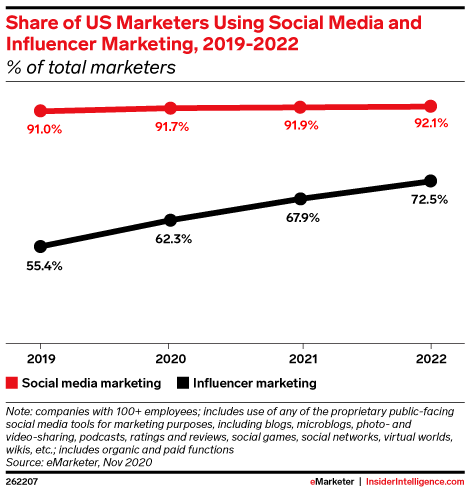
Not every marketer does influencer marketing, but a large majority do. In our first-ever forecast, we estimate that 67.9% of US marketers with 100 or more employees will use influencers for paid or unpaid brand partnerships in 2021.

Share of US Marketers Using Social Media and Influencer Marketing, 2019-2022 (% of total marketers)

Although some marketers cut spending on influencer marketing during the pandemic (such as travel marketers), the interest in working with influencers actually increased; between 2019 and 2020 the percentage of US marketers using influencers grew from 55.4% to 62.3%, according to our forecast.

And budgets for influencer marketing look ready to rise. In July 2020 research by Kantar Media, senior marketers worldwide said they expected to increase budget allocation for branded content shared by influencers by 48% in 2021.

What it means for marketers: Influencer marketing has its pitfalls, but an increasing percentage of marketers are working with influencers. Considering the important role they play in other trends in our list of social media predictions for 2021, such as social commerce and livestreaming, the impetus to use influencers will continue to grow.

By

Sourced from eMarketer

Have you ever wondered howI influencers are able to afford all of those designer clothes and extravagant trips? Well, tax deductions might have something to do with it.

Recently, digital marketing coach Mila Homes shared this mind-blowing fact with her 471,000 followers in a now-viral TikTok.

“I was today years old when I realized YouTubers do clothing hauls on their channels so that they can write off the clothing on their taxes,” she said in the video. “They literally get all this cool [clothing and] make a video of it so it’s considered work and then they get to write it off. THAT’S SO COOL!”

This might sound too good to be true, but Holmes is right. According to tax advisor Handy Tax Guy, all you have to do is prove that your clothes are necessary for “accomplishing your job as an online influencer” in order to write them off as a business deduction.

That’s not the only thing influencers can write off when they’re doing their taxes, either. Travel expenses like transportation and lodging can be considered essential for an influencer, which makes them a tax write-off. Prizes used in giveaways, charitable donations and meals eaten while discussing work can also be written off as business expenses. For bloggers and influencers, the list of write-offs is seemingly endless.

On Holmes’ video, many influencers noted that the amount of things that can be written off during tax season is “insane.”

“And as a travel content creator I get to write off my travel,” travel blogger @whereintheworldisnina said. “And lots of other stuff!”

“Being a small business owner has its perks,” another person added. “I write off my entire house mortgage because my office is in my basement.”

Other people who aren’t as familiar with the business of being an influencer were just plain shocked.

“This is crazy,” one person said.

“Brb making a YouTube channel,” another joked.

“I’m bout to save so much money,” a third added.

Before you make a YouTube channel just to get “free clothes,” you should consult a tax expert to learn more about how write-offs work. Write-offs lower your taxable income, thereby lowering how much you owe in taxes. At the end of the day, you will still be paying something for those trips and clothes.

Sourced from ITK

Sourced from TECHMAG

Brands are always looking out for new and effective methods and tricks to enhance their growth. These tricks are often referred to as growth hacking strategies, and implementing the right ones can cause phenomenal growth.

With many strategies to choose from, choosing the ones with the highest success ratio and return on investment matters a lot. Before that, if you need to know the exact definition of growth hacking, it is an experiment-driven technique, striving to find the most efficient methods to grow a business.

Growth hacking is especially crucial for start-ups with a little budget to market their offerings. Let us take a look at the nine best, and tested growth hacking strategies start-ups can readily utilize.

Growth Hacking Strategies For New Start-ups

1. Have a Simple, Intuitive Homepage

Your business’s website is the digital version of a storefront. And the website’s homepage can be the doorknob. If the doorknob is too complex to use, customers will have a hard time entering the store.

The same is true for your business website. Remove all clutter and always opt for a simple homepage. Customers must not be even slightly confused while navigating it. Make the CTAs approachable, and the company information clear and concise.

2. Create an Email Waiting List

Even though many refer to email marketing as an old school technique, it still rocks in 2020. For every single dollar invested in email marketing, you can expect a return on investment of $42. Collecting email addresses and creating an email list is an effective strategy, even if you’re months before launch.

Read more: Why Business Plan is Important for New Startups

Along with creating pre-launch hype, email marketing can be used to deliver critical information regarding your product. You can also utilize an email list to maintain a consistent relationship with your customers. The key is to utilize email marketing to add more value to the user journey.

3. Learn From Your Competitors

You have a lot to learn from your competitors, especially those who made it into the industry a long time ago. Look at how they market their products. Check out their levels of interactions with customers.

Since they made it into the industry before you, they will probably have tried, failed, and succeeded in many strategies. This will allow you to avoid strategies with lower success rates and focus only on those that guarantee remarkable results.

4. Offer Discounts for Shares

Word of mouth is still a useful marketing tool. The more customers you satisfy, the more number of friends they will bring along. You can also offer specialized discounts to users who are keen to refer to your products.

For instance, Dropbox increased its sign-ups by 60% by offering users extra storage space for each referred friend. If you succeed in gaining social desirability for your product and your brand, you will soon experience more inquiries and sales. Even something as nominal as a 5% discount will do the trick.

5. Collaborate With Influencers

Irrespective of your products or services, there will always be an influencer who rule your industry. Finding those individuals is as easy as searching for your products on social media platforms like Facebook, Instagram, and YouTube.

Connect with such influencers and allow them to creatively introduce your company. You can include influencer marketing as a top priority marketing strategy and experiment with multiple influencers.

You can also collaborate with influencers to co-create content that can be published on your channels or profiles. For branding, you can start your videos with a memorable intro. You can use free into makers like VideoCreek, for that matter. Visit VideoCreek for more information.

6. Try the Path of Exclusivity

People love acquiring exclusive products. You can use this as a marketing strategy and restrict access to your products. If yours is a product company, you can release only a specific number of units at a time and keep the customers waiting for the next release.

You can even follow an “invite-only” strategy to build the hype. Gmail used this strategy in their initial days, and only users who received an invitation could sign up. Even Pinterest benefited a lot from exclusivity.

7. Build a Cheerful Social Media Community

The majority of customers will be spending most of their time scrolling through the endless feeds of social media networks. So it makes more sense to connect with your prospects on such platforms.

Along with paid social media campaigns, there are numerous organic strategies you can utilize. With consistency in publishing content, responding to customer reviews, and actively keeping up with the latest trends, you can organically grow your follower base.

You can use witty social media copywriting and graphics to entice and convert people. You can also utilize social media networks to advertise your products. With the help of an online ad maker, you can craft convincing ad creatives for your campaigns and serve it to potential customers using paid advertising. Have a peek here guys for more info.

8. Use Third-Party Platforms to Pre-Launch Your Products

You can utilize third-party websites like Product Hunt to launch your products and validate their concepts. In such platforms, people review products and projects and vote for their favorite ones. Doing so will help you gain significant exposure at a nominal cost.

9. Leverage Q&A Sites

Q&A websites like Quora are the go-to sites for internet citizens to get answers to their questions. You can use such websites to generate relevant traffic to your site and improve your brand’s exposure.

Reddit too is a powerful platform for that matter. If you are a SaaS company, you can use professional platforms like Inbound.org, GrowthHackers, and StackOverflow as well. You can also utilize such platforms to converse with prospective customers and understand their take on your product.

In Conclusion

Contrary to popular belief, growing a company doesn’t always have to be challenging, time-consuming, or let alone an expensive process. The key is to follow the growth strategies that have been proven in the past, and the strategies listed in this article will surely be useful.

Sourced from TECHMAG

Sourced from MarketPlace

Black influencers tend to be paid less than white influencers, and it has nothing to do with follower counts.

Talking about how much you’re paid can make for an awkward conversation, but Adesuwa Ajayi is asking just that of social media influencers. They can have followings of tens or hundreds of thousands and companies will pay them for promotions. Ajayi started the Influencer Pay Gap account on Instagram to highlight the fact that Black influencers are routinely paid less than white influencers, even when they have similar numbers of followers or the same reach. The account lets people share stories anonymously and learn from other people’s experiences about what a fair payment is for a particular job or endorsement.

I spoke with Ajayi, whose day job is managing influencers at the talent agency AGM. She said she’s been collecting hundreds of stories. The following is an edited transcript of our conversation.

Adesuwa Ajayi (Photo courtesy of Ajayi)

Adesuwa Ajayi: One of the most interesting ones actually was a campaign an influencer was participating in. This was a white influencer. And she was approached last-minute by a beauty brand with the expectation that she was going to replace a celebrity. She was pitched £5,000 to be paid for that campaign. She turned up, but then realized that the celebrity that apparently wasn’t going to turn up actually did turn up. So, there was no need for her to be there. And she was still paid that £5,000. Whereas a Black influencer, who actually participated in the campaign, was paid around £1,700. And it had nothing to do with their influence and following.

Jack Stewart: It is one thing in a job where people get paid a salary and you can be fairly transparent about it or at least force that transparency. But with influencers, where there’s kind of just not that overall body, there’s not a union, there’s really no way, is there, to dig in and figure out what these differences are? It really lets you hide things quite easily.

Ajayi: One hundred percent, especially as there are different parties involved. You have the brands, but you also have the agencies, and agencies are often given big budgets from brands. And there’s no level of transparency, whereby if a brand gives an agency around £10,000, who’s to say the agency doesn’t cut off £5,000 for themselves and intentionally lowball influencers? I think there are so many things at play here. There are so many people involved in different ways, and each industry, each niche, there are different behaviours that are a lot more common within certain niches than others. So it’s a bit of a mess, to a degree.

Stewart: You work at a talent agency. Is there anything you can think of that would help fix this problem? Is there a way to structure pay? Is there a way for influencers to work together or form a union?

Ajayi: I am working hand in hand with a union that has actually been set up. They are working towards opportunities for advocacy when it comes to influencers in this space and creators in general, where people feel OK to discuss the ways in which they have been treated. I think reinvigorating influencers in the sense that where they feel a lot more confident, and a lot more, almost, heard, in the grand scheme of things is really important.

Stewart: Have you heard anything from brands either talking to you personally or speaking out publicly about the inequality issue?

Ajayi: There are some Black influencers who kind of feel a way about some of the posts that have been made by certain brands. Especially brands that have a habit of picking and choosing what they like from Black culture, but completely ostracizing Black influencers from their campaigns. And I think there is constantly, right now, a conversation around seeing Black influencers and Black creators as worthy of a level of respect. It shouldn’t be anything somewhat shallow because you’re scared of any repercussions.

Stewart: What do you hope changes as a result of this page and the work that you’re doing?

Ajayi: I would really love for it to create a space whereby people feel like they can be truly honest and they feel that they’ll be heard. And not only heard, but, based upon the feedback, brands will take steps to do what they know they should do. So that’s one thing. I would also say, just the sense of community has been amazing and just seeing influencers help one another. An influencer with a million [followers] can seem so far-fetched to an influencer who has 5,000. But on the page, it sort of brings people together and gives them an understanding of what different spaces are like and the things that other people go through. And so I’d love for a kind of close-knit way of people kind of advocating for one another. It also required people to use their privilege and also use their insight to help one another. And I think that is what has been really, really amazing about the page, and I think it will only continue to get even bigger and better in that sense.

Related links: More insight from Jack Stewart

You can read some of the stories people have shared on the Influencer Pay Gap account for yourself.

Being an influencer has only recently been recognized as a real job, and for some people it can be a very lucrative one. Your Kardashians or Jenners can earn hundreds of thousands of dollars for a sponsored post or other endorsement. For others, it’s much harder to make anything approaching a living. And while people were spending more time online during the pandemic, marketing budgets dried up, meaning less money to go around. Back in May, Instagram announced some new features so that people could keep making money, like putting ads on Instagram TV and sharing the revenue, something other platforms like YouTube have been doing for years.

Instagram is feeling the pressure of competition from TikTok, another favourite among the short-form video set. Despite calls to ban it, and concerns over its possible links to the Chinese government, more than 300 million people downloaded the TikTok app in the first quarter of this year, taking the total to something around 2 billion.

Sourced from MarketPlace

By

Popular creators on YouTube and Instagram can make money promoting music, but if they promote too many duds, their popularity can take a hit.

Back in 2018, it was possible to break a single via an Instagram meme. It happened with Rich the Kid’s “New Freezer:” Omid Noori, co-founder of the digital marketing and management company ATG, stumbled on a meme featuring several kids whipsawing their heads to the track; he then paid a popular hip-hop channel on Instagram to re-post it. The meme morphed into the “New Freezer challenge;” the rapper, his label Interscope, and ATG spread it across the digital universe; and the single eventually earned a double-platinum certification.

But as the music industry became increasingly interested in using memes to raise awareness for songs, naturally their impact diminished. “Memes were a novelty, but then it became, if you have enough money, ‘what’s the song — I’ll find a clip that kind of matches it and run it,’” Noori explains. “Now people don’t discover music as much that way, because it’s such a common thing when songs get dubbed over memes.”

This illustrates one of the central challenges of digital marketing and promotion in music. As soon the music industry recognizes that one technique on one social media platform is particularly effective for bringing attention to a track, record companies try to turn it into a standard marketing strategy, which backfires by making the tactic less potent. Memes and dance challenges initially became popular because they seemed fun and spontaneous; when they are rote and forced, advertisements rather than ways to engage with others online, their energy quickly starts to dissipate.

Several marketers say they’ve noticed significant drops in influencer engagement across multiple social media platforms lately, which they believe is a cost of trying to force-feed songs without regard for listeners’ preferences. “I’ve seen some YouTube influencers’ engagement fall 30 or 40 percent because they’re just saying yes to [every paid opportunity to place a song in their channel],” says Dillon Druz, who manages the rapper Bankrol Hayden and runs marketing campaigns for multiple labels.

“Every day there are hundreds of songs that don’t make sense for TikTok” — the app tends to reward songs that elicit simple, replicable movements — “and people are like, ‘well this other one went viral on there, so let’s put $20,000 behind it,’” Druz continues. “It all comes back to not having a proper influencer marketing strategy and spending money in the wrong places.”

“I see a lot of influencers only posting promos” — paid posts — “and their engagement is lowering,” adds Leilani, who has been on TikTok since it was Musical.ly and has more than seven million followers and half a billion likes on the app. As a result, “I try to keep the promos low.”

Digital marketing is a key component of the modern music industry. In the old days, an artist could reach potential fans in just a few ways: radio, print, television, physical advertising like billboards and flyers, and live shows. Those are still around, but their relevance is declining; now, attention has splintered into a myriad of digital pockets. An artist can perk ears through subcultures on TikTok, gaming channels on YouTube, and filters on Snapchat, not to mention Instagram, Fortnite, Facebook, Triller, Twitter, Dubsmash, directly through Spotify, and elsewhere.

“You can climb in a hole where you keep posting bad content and you can’t really get out of it.”

Popular users emerge on each of these platforms and gain followers, often by providing a unique personal perspective — a special brand of humor or a knack for finding hits early. Artists and labels then pay these influencers to disseminate music to their followers. (The pandemic caused labels to shift even more money to their digital efforts.) On average, marketers say Instagram influencers are more expensive than TikTok influencers, but top TikTok creators can still charge $25,000 or more for a post. Once labels and artists start paying for content, though, this can sometimes weaken the personal connection between an influencer and his or her followers by transforming a quirky individual into a walking billboard.

That’s not to say this approach to marketing doesn’t work — it’s easy to find the success stories, from labels fanning the flames of a challenge that materialized on TikTok to artists coordinating flashy activations on Fortnite. While it’s much harder to find stories about all the songs that don’t connect despite having plenty of marketing money behind them, in truth, the tracks that flop outnumber the ones that connect by a wide margin. Marketers are engaged in a complicated dance, trying to deliver effective ads and promotions while at the same time convincing their audience that they are not being spammed.


Marketers say that dedicated followers are often savvy enough to discern between posts that an influencer makes because they love a song and posts that are just about padding the bottom line. “It’s very obvious when people’s pages just become a paid platform, whereas before it was actually uploading clips in tune with them,” Druz says. “Their followers know it’s not authentic, and that’s why engagement is dropping.”

It’s possible that influencers are less susceptible to plummeting engagement on TikTok because of the sheer volume of posts common on the app — creators will often put up five or six clips a day on TikTok, far more than they would post on Instagram or YouTube. When an influencer is spewing out so many clips, each one has less weight.

“We have to post normally before we take on any more [paid] campaigns.”

Still, Leilani knows that her followers will not respond to some types of paid content. “Something they don’t like is if I do songs with dances that aren’t already popular,” she says. “They would always get the lowest engagement” in terms of views and likes, so she steers clear.

Since influencers post less frequently on Instagram and YouTube, the repercussions for a series of misfires on those platforms can be more serious. “You can climb in a hole where you keep posting bad content and you can’t really get out of it,” Druz says. “People care what goes on their Instagram and YouTube — they are more professional platforms” relative to TikTok, which prizes goofy spontaneity.

ATG’s Noori works with a network of influencers to help labels market songs, and he says that they sometimes decline to do promotions due to fears about alienating their audience. “A lot of influencers at one point in the last two months were like, ‘we can’t do as many [paid] campaigns this week, we need to get our engagement back,’” he notes. “People would say, ‘we have to post normally before we take on any more [paid] campaigns.’”

That’s part of the reason why Druz is changing the way he promotes music. Now “I’m very cautious,” he says. “I’m going to creators and saying, ‘is this a good fit for your channel?’ I have to make sure everyone actually believes in the song.”

Feature Image Credit: Photos in illustration by Adobe Stock/Kurkalukas, Adobe Stock/Endstern

By

Sourced from RollingStone

BY HASINA KHATIB

With the ability to create content from home and motivate purchase decisions, here’s how independent content creators have served as an asset for brands during the lockdown.

It would be an understatement to declare 2020 a year unlike any other. The onset of the global health crisis threw the conveyor belt of marketing into disarray, with conventional press conferences, glitzy launch events and other hype-building activities stalled. However, even as the red carpet was being rolled back, online influencers went on with their work, lending further heft to the notion that the future is digital. While new product launches were stymied by the absence of glossy product photoshoots, at-home content creators carried on unabated. Conditioned by years of putting in the elbow grease to set up tripods and camera lights, this tribe continued to mobilise purchase decisions from within the comfort of their bedroom duvets.

As the beauty industry adjusts to the new normal, all eyes are now on influencer marketing. With multiple restrictions on social movement still in place, brands will now have to revisit the drawing board to devise virtual activations that can bank on creators’ cult-like following to clock in sales. We spoke to some of the key stakeholders in the industry to understand what the road ahead looks like, and here’s what we learned.

How beauty brands are meeting influencers in the virtual world

“I have had to spend a lot more time putting out fires rather than designing since the lockdown started,” says Masaba Gupta. The multi-hyphenate designer launched her beauty brand in conjunction with Nykaa last year, and recently celebrated the launch of a new range of perfumes, Moi by Nykaa, virtually. The launch couldn’t have been more different from the debut of the Lips and Tips collection last year, when friends of the brand swatched the new products over music and hors d’oeuvres while dressed in the designer’s signature prints. Fast forward to a year later, and the gallantry has now been swapped for an intimate roundtable conducted over a video call—open conversation, candid thoughts and shared sentiments abound instead. “Times change, and a part of being a successful business owner is changing with these times. Initially, we were a bit sceptical about having a digital launch, especially because it was a perfume, and people would obviously prefer to smell it before buying it. But this lockdown has opened up avenues of virtual soft launches and more extensive digital marketing strategies, which are low-cost and sustainable,” she says.

Freed from the formalities of on-ground events, influencers are welcoming the change of pace. Luxury content creator Natasha Luthra, who attended the virtual launch, believes that the online experience measures up to the physical events she has attended in the past. “As much as I miss attending events, I enjoyed the fact that I could sit on my bed in pyjamas for the online launch,” she says. Actor and presenter Roshni Chopra, who recently attended an educational series with Estée Lauder on skincare routines, believes that an online session allows for a more streamlined exchange of information. “While physical events have a great energy about them, the virtual event had its own relaxed and focused vibe.”

Why it’s essential for brands to build a strong network of influencers

With many sold-out launches attributed to their ability to swing followers, there is no questioning the power that influencers can wield over a company’s bottomline. A recent study offers further proof, with 82 per cent respondents admitting to purchasing or considering to purchase a product or service after seeing influencers post about it. The secret ingredient isn’t love—it is trust, opine the current generation of bloggers. Numbed by the steady drip of #sponcon or sponsored content over the years, the internet user of today can ID a paid post with a blindfold on. Authenticity, thus, assumes the driver’s seat in motivating product sales, and beauty blogger Aanam Chashmawala agrees. “The reason why consumers find influencers more trustworthy is that they can truly gauge how reliable their source is. Since I don’t edit my photos too much, I believe my audience relates to me because I’m the same person on my Instagram stories as I am on my feed. This connection is what makes the difference and results in great ROI for the brands I eventually work with,” she explains.

The pandemic has helped further bridge the gap between influencers and their audience. With an unprecedented lockdown in place, for the first time in forever, those doing the influencing and those being influenced were living the same life. Chopra believes that the lockdown has levelled the playing field for all content creators. “The pandemic has forced everyone to dig deep into our own creativity and make do with less. Now, it’s not about ‘follow me because my life is amazing’, but because I’m figuring how to make the best of the circumstances. It’s no longer about unattainable travel or luxury, but the conversations are instead moving in a healthier direction keeping a social conscience in mind.” Beauty influencer Saachi Bhasin Daga confirms that she has reconfigured her content strategy accordingly as well. “I do polls with my followers, take into consideration what they would like to see during these difficult times and integrate that into my content instead,” she says.

Why influencers have been able to adapt their content strategy better than anyone else

With commercial photoshoots put on hold, the spotlight was taken by content creators who have for years been creating content on their own—from unfolding hefty tripods to spending hours hunched over video editing software. Luthra reiterates that they have been prepared for this all along. “We are only now realising that we have been prepared for this eventuality because we have been shooting and recording content on our own for years now,” she says. New Delhi-based brand consultant Rasna Bhasin further elaborates, “Influencers and bloggers aren’t used to big sets and entourages to shoot with. I have always been amazed at the amount of content this community can churn out within a minuscule turnaround time and with limited resources.”

The latter might even serve as an edge over their celebrity counterparts. She agrees that both have their merits. “While a celebrity ambassador can serve as the face of the brand and reach an extremely large audience with their fanbase, I have always believed that micro-influencers are the ones who really drive consumers to make the sale. Celebrities are people you always look up to, while influencers are like that well-informed friend with intimate knowledge about a certain product. They’re more accessible, not bound by hard contracts and can give an honest view of what works or doesn’t. This makes it easy for the consumer to relate to them and trust their word on what to buy,” she surmises.

What the road ahead looks like for the beauty industry

While the business has witnessed a few speed bumps along the way, the key stakeholders in the industry unanimously agree that all eyes will be on the virtual-verse. Reena Chhabra, CEO of Nykaa Brands, foresees a mix of both traditional and digital activities paving the way forward. She says, “Creating consistent relationships with your core customers gives the business a definite competitive edge, thereby serving as an impetus to the bottomline. There are many innovative ways to achieve this emotional connection—however, storytelling is one of the strongest marketing tools for communicating the brand message, and evoking emotions is precisely the role that influencers play today. Through content creators and their followers, we also get an opportunity to listen to their feedback, which we have always taken seriously when working on our product portfolio.”

Gupta echoes the sentiment and says, “Where there’s a challenge, there’s also an opportunity. People are getting more comfortable with witnessing a launch digitally as opposed to getting stuck in a car due to traffic. We must push towards digital storytelling, where our communication is more conversational as opposed to a conventional product launch.” And for beauty brands looking to not just survive, but thrive in the revised pecking order, constructing a strong network of influencers will get half the job done.

BY HASINA KHATIB

Sourced from VOGUE

By Katie Sehl,

Like most social media trends, Instagram trends move quickly. And in 2020, change has been fast and furious, with a global pandemic, social uprising, and competitors, shaking things up.

Trends make the difference between looking out of touch or ahead of the curve. That doesn’t mean you should throw your social media content calendar out the window. It means you should stay informed and stay flexible.

There’s a lot to stay on top of at Instagram. From Instagram Story trends to Live Shopping, and Instagram Shops, we break down the biggest trends on the app.

Bonus: Download a free checklist that reveals the exact steps a lifestyle photographer used to grow from 0 to 600,000 followers on Instagram with no budget and no expensive gear.

9 of the most important Instagram trends in 2020

These are the top trends on Instagram to watch right now.

1. Brands and influencers reckon with racial inequality

On June 2, Instagram feeds were checkered with black squares in support of Blackout Tuesday. The original concept, The Show Must Be Paused, was created by music executives Brianna Agyemang and Jamila Thomas, as a day for the industry to “take a beat for an honest, reflective, and productive conversation about what actions we need to collectively take to support the Black community.”

But the black squares swiftly became symbols of performative allyship. The posts inadvertently drowned out the #BlackLivesMatter hashtag, a channel activists use to relay vital information. Many brands and influencers who participated were called out for virtue marketing or hypocrisy, spurring calls for transparency and action.

Designer Aurora James’s #15PercentPledge initiative calls on big retailers to pledge %15 of shelf space to Black-owned businesses. Brands including Sephora, Rent the Runway, Cupcakes and Cashmere have since made the pledge. UOMA Beauty founder Sharon Chuter launched #PullUpOrShutUp to challenge brands to back their marketing with employee diversity statistics.

Instagram plans to reexamine how its policies, tools, and processes impact Black and other underrepresented communities on Instagram. The company will focus on addressing harassment, account verification, content distribution, and algorithmic bias.

Black creators and professionals have also been speaking out about tokenization, pay disparities, and being sidelined. Several celebspublic figures, and influencers have responded to this disparity by sharing Black influencers and businesses or hosting account takeovers. As a result, many Black creators have seen their followings double overnight.

The social momentum behind Black Lives Matter is stronger than ever. But as initiatives like #PullUpOrShutUp demonstrate, brands need to know the difference between social trends and social movements. As eTalk CTV reporter Tyrone Rex Edwards said, “My trauma is not a trend.”

Anti-racism, inclusive marketing, equal pay and opportunity are not trends. They’re the new norm and the bare minimum of what consumers expect from brands going forward.

2. Instagram goes Live

Stay-at-home orders and event cancellations have helped propel Instagram Live viewership figures to new heights. Between February and March, the number of people tuning in for live broadcasts rose by 70%. More than 800 million people now watch live video daily across Instagram and Facebook.

Live lineups have been packed with star power. DJ D-Nice’s #ClubQuarantine sets have featured shoutouts to Rihanna, Zuckerberg, and Joe Biden as the viewership count soared above 100,000. Former U.S. President Barack Obama and Justin Bieber were among the 50,000 viewers punctuating a live convo between NBA star Stephen Curry and Dr. Anthony Fauci with emoji.

As people look for ways to replace in-person activities, brands and creators have jumped on live, too. In fact, 80% of live broadcasters have fewer than 1,000 followers.

Instagram Live sessions include everything from cocktail and comedy hours to virtual protests, yoga classes, and drawing tutorials. Desktop functionality, added in April, has made tuning in a lot more practical.

Like Instagram Stories, live videos tend to be more intimate and spontaneous than posts in the feed. Hosts can also respond to questions and comments in real-time, which is why Live videos tend to average six times more interactions on Facebook.

It’s too soon to know what staying power Instagram Live may have in a post-COVID world. For now, Instagram is rolling out enhancements, such as the option to save videos to IGTV and run fundraisers. Live Shopping and Badges allow creators to monetize livestreams.

Instagram is also testing showing two-rows of Stories in the feed, with live videos up top.

Until in-person activities resume, expect to see more memes and innovation on the Instagram Live front.

3. Creators can now make money directly on Instagram

Since its inception in 2010, Instagram creators have mostly monetized their audiences through affiliate marketing and brand partnerships. New features introduced in May now allow creators to make money directly.

Instagram is now testing Badges with a small group of creators and businesses. During a live broadcast, viewers can spend 99 cents to $4.99 for heart badges to stand out in the comment stream and unlock features. During the test phase, creators will receive 100% of revenue earned from these badges.
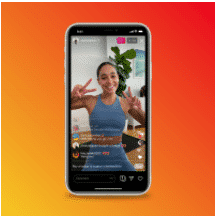
Instagram influencer doing a live video

Source: Instagram

Tests for IGTV ads are underway as well. These ads can last up to 15 seconds and appear after someone clicks to watch the full IGTV video. On par with YouTube, 55% of ad revenue is shared with the creator. In addition to ads, Live Shopping tools now let creators and brands tag products during live videos.

Influencer doing an Instagram live skincare tutorial

Source: Instagram

These changes come as competition to retain creators heats up between platforms. They also cater to a cohort of “specialized” creators who monetize their audiences by offering valuable content, rather than featuring valuable products and experiences in their content. It’s why many are shying away from the label influencer in favor of the term creator, or even ambassador.

Brand partnerships will still remain an important source of revenue, but they’ve already become a lot less transactional. Expect to see some fine-tuning in the Brand Collabs Manager from Instagram (and Facebook).

4. Instagram Shops set brands up to cash in on conversions

Instagram Shops promise to make it easier for brands to make money, too. Shops let businesses create a storefront directly in the app, so people can buy without the need to visit a website. By eliminating this friction, brands should be able to drive significantly higher conversions and sales.

In May, Instagram and Facebook launched a phased rollout to businesses globally. The plan is for the shopping experience to eventually be integrated across all of Facebook’s apps. Once complete, it will mean that when someone puts something in their cart on Facebook, they can check out later on Instagram using stored credit card info or Facebook Pay (which will likely be integrated, too).

Instagram shopping in Explore tab

Source: Facebook

To improve discoverability, Instagram will soon have a dedicated Shopping tab, like the Explore tab, which already features a shopping section. Accounts with shops have a View Shop button on their profiles, as well as a shop tab. Businesses can customize how collections appear, connect loyalty programs, and benefit from the platform’s built-in AI to create personalized experiences.

There are now more ways to spend money in Stories, too. In addition to product tags, companies can share gift card, food order and donation Stickers.

Set up Instagram Shopping so you can sell your products.

5. Shopping and advertising get AI-powered upgrades

More people shopping across Instagram and Facebook means more data. And more data brings the company closer to its vision of “making anything shoppable while personalizing to individual taste.”

To make anything shoppable, the Facebook engineers have developed an A.I called GrokNet that can automatically tag the products in a business’s catalog in seconds. The A.I., which is already used on Facebook Marketplace, can scan photos, identify attributes such as colour and style, cross-reference with catalogs, and suggest descriptions. On the flip side, this data is used to deliver better search results and targeted ads to users.

Rotating View is another A.I. project that aims to enhance social shopping. The feature, which allows people to create 3D-like images, is currently being tested on Marketplace. Maybe it will crop up on Instagram, too.

Instagram may soon introduce ads that use augmented reality to let people “try on” beauty products or preview furniture in their homes. Facebook already offers an AR ad format, and Zuckerberg recently announced more developments are on the horizon.

Bonus: Download a free checklist that reveals the exact steps a lifestyle photographer used to grow from 0 to 600,000 followers on Instagram with no budget and no expensive gear.

Get the free guide right now!

Read our complete guide on how to advertise on Instagram.

6. Instagram Guides accompany the rise of “info-social”

Brands and influencers often get asked for recommendations, from “where should we eat in Marrakech?” to “how do you talk to your kids about climate change?”. In the past, these requests have been handled by referring followers to highlights or blog posts. Now guides can be created directly on Instagram.
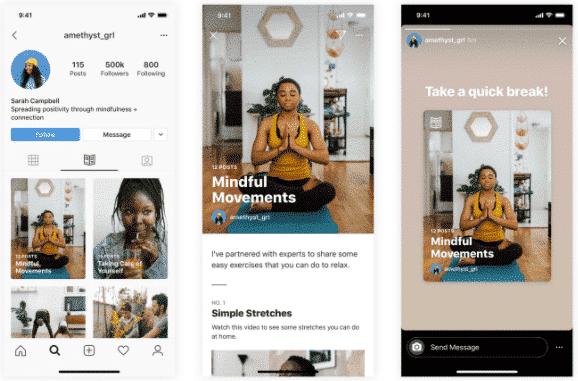
several different Instagram guides

Source: Instagram

According to Instagram head Adam Mosseri, guides were initially developed for travel, but that idea was curtailed by the coronavirus outbreak. Instead, they launched under the theme of wellbeing, with more themes coming up. Instagram recently assembled a racial justice resource guide, too.

Guides have their own devoted tab on profiles, and can be shared to Stories or appear in the Explore tab. They can include curated posts and videos with added notes and tips.

There’s a growing appetite for informative social content. On TikTok, educational videos are surging in popularity, especially in China, with a reported 14 million “knowledge-based” posts created last year. In the United States, career coaches, personal finance experts, and fitness experts are finding success on the app.

On Instagram, everything from “practice accounts” to doctor and nurse micro- and nano-influencers are popular, proving that engaged communities are much more valuable than high follower counts.

7. Values take center stage

Authenticity is a big buzzword in the influencer industry. But it’s not just an influencer trend. Consumers increasingly demand authenticity from brands, too, especially in the form of transparency.

As brands and influencers use their platforms to take a stand, promote values, and support causes, transparency will be more necessary to retain authenticity. For example, sustainable beauty brand Elate Cosmetics goes into great detail to explain the eco-attributes of its products and practices.

Influencers will share more about their decision making in general, and be more upfront about why they partner with specific brands. To maintain trust, disclaimers and clear labelling between spon-con and regular posts will be necessary, particularly in Stories.

With social advocacy on the rise, Instagram has added several fundraising tools, including live fundraisers and donation stickers. The company is also reportedly testing the option to add fundraisers to profiles. Nonprofits already have access to account Donate buttons.

Instagram is also adding context to posts from high-reach accounts. In April, the company started piloting a feature that shows location and where followers are based on posts from these accounts.
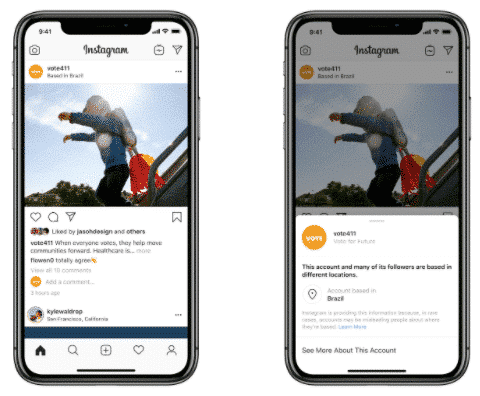
Instagram post showing where account is based

Source: Facebook

8. TikTok, Twitter, and Giphy invade Instagram

The days when Instagram was only a place for filtered images are long gone. Instagram’s feed now features everything from memes and Twitter takes to TikTok challenges, special effects, music, and more.

To keep up with competition from TikTok and Snapchat, Instagram’s been on a feature-adding bonanza—especially in Stories. The recent acquisition of Giphy, which already sourced 25% of its traffic from Instagram, will add to a collection of interactive features that already includes stickers, filters, and other special effects.

Despite more content variety in the feed, the Instagram aesthetic still creeps in. As Arimeta Diop points on in Vanity Fair: “It’s the end of the iPhone-Notes-App-Apology Era.” Bold typefaces, templates, and hand-drawn sketches have proven more popular, thanks in part to Instagram’s strong design community. Infographics and visual storytelling have taken off, too.

Most cross-platform sharing is up to the users, except when it comes to Facebook’s family of apps. Further integration between Instagram, Facebook, WhatsApp, Messenger—on the front and back end—is looming. Beyond a fully integrated shopping experience, Facebook is developing an option for users to view and reply to Instagram Stories from Facebook.

Facebook is also planning to merge messaging across its apps by the end of this year. Once complete, Instagram users would be able to message friends on WhatsApp and Messenger, even if those friends don’t have Instagram accounts. This level of integration would make the app family comparable with the WeChat, the super app that dominates in China.

Manage your Instagram presence alongside your other social channels and save time using Hootsuite. From a single dashboard you can schedule and publish posts, engage the audience, and measure performance. Try it free today.

By Katie Sehl

Sourced from Hootsuite

Sourced from Crain’s Chicago Business

Influencers can often produce content faster and more cheaply than a TV ad campaign team, helping brands adapt faster as consumer circumstances change. Italian pasta company Barilla, whose U.S. headquarters is based in Northbrook, is a case in point.

(Bloomberg)—Advertising has mostly collapsed, but brands are still spending — just not on billboards, newspaper ads or TV spots. This has opened a new frontier for social media influencers, the newcomers to the ad game, that could help them bounce back when the crisis eases.

The great pullback in advertising budgets hasn’t been evenly distributed. Spending on platforms such as Facebook Inc.’s Instagram and ByteDance Inc.’s TikTok is down, even for influencers, just not as much as traditional media.

It’s partly about following the consumer. There’s not a lot of motivation to freshen up a billboard when streets are so empty. Cinema screens are dark, and there are hardly any commuters to read the free newspapers handed out at rail stations. However, social media usage has surged.

Though there’s still less impetus for, say, travel destinations to ink deals with social media stars when the airline industry has all but ground to a halt, some brands that would never have considered an arrangement with an influencer are giving them another look.

Before Covid-19, companies might have considered influencers, and their large fan bases, a “support mechanism” rather than something that’s central to brand planning, said Frances Sinclair, a strategy partner at Dentsu Group Inc. agency Carat. The sudden economic shock and lifestyle upheaval wreaked by the virus is changing that.

“We’re seeing brands shift their investment from more-traditional media channels, which might not make sense to them at the moment, to being in an influencer environment where the engagement is very real-time and ready,” she said.

It’s also important to change the content of a campaign to reflect the reality of life under lockdown. For example, standard ad campaigns featuring carefree, optimistic people mixing freely outdoors are on the back burner in a post-virus world marked by job insecurity, health fears and uncertain prospects.

Influencers can often produce content faster and more cheaply than a TV ad campaign team, helping brands adapt faster as consumer circumstances change.

Italian pasta company Barilla, whose U.S. headquarters is based in Northbrook, is a case in point. A year ago, the brand was wooing consumers with a glossy television spot which showed tennis champion Roger Federer cooking its spaghetti at a mansion reception with top chef Davide Oldani.

To craft a more appropriate message for their locked-down audience, Barilla’s marketers looked to social media star Chiara Ferragni, whose portraits modelling red-carpet dresses and pool-side leisurewear have drawn 20 million Instagram followers.

Recently, she’s been showing off her homemade Barilla spaghetti dinners instead.

“One of the reasons brands use influencer marketing in this moment is that it’s fast to activate and solved the issue of production that was on halt,” said Alessio Gianni, the company’s digital and content marketing director. “Content is more spontaneous, close to the people. Chiara, being Italian and locked at home as everyone else, cooked herself a carbonara. It was the best person to involve.”

Europe’s biggest pay-TV provider, Sky, has enlisted Dentsu Aegis influencer agency Gleam Futures to promote shows and movies to homebound families. Parenting Instagrammer Louise Pentland posted pictures to her 2.4 million followers showing her children contentedly watching “Trolls World Tour,” made by Sky’s parent Comcast Corp.

Sky is using digital channels like Instagram and getting near real-time feedback in a way it hasn’t before, said Dentsu’s Sinclair.

“Whereas once it might have been very much about the brand and the content, now it’s very much about the experience you have within your isolation,” she said.

Influencers were a rare bright spot in M&C Saatchi’s April market update, which cited “steady” business in the newer channel despite “a sharp drop in demand across the group.”

S4 Capital Plc’s CEO, Martin Sorrell, said some European clients started to change their thinking on influencer marketing that month, accelerating a digital transformation of advertising that was already underway. S4’s IMA agency has picked up work on an influencer campaign to promote HP Inc. laptops.

“We certainly saw that on the influencer side—so whereas I think it was pretty dead in the back-end of March, it got pretty lively as we got into April,” he said.

Influencer marketing can still be a minefield given how easily a brand campaign can appear cynical and turn off followers. With billions of people tiring of lockdowns and worried about coronavirus, companies can’t look like they’re seeking to profit from a miserable situation.

“A lot of the feedback the influencers receive from their audiences is: ‘How can you go on like everything is normal, saying to buy this candle, or this make-up?” said Robert Levenhagen, CEO of marketing software company InfluencerDB.

That’s limiting any boost the medium can receive from the current situation. M&C Saatchi’s Thompson said lots of social media stars are shunning commercial ventures in favor of charity and community work.

It’s taken years to convince many companies that there’s as clear a return on investment in influencers compared to TV or other forms of digital advertising. It’s been easy for influencers to buy “fake followers” and generate artificial engagement activity, making it hard to assess their true audience reach and impact.

There’s always the risk they’ll do something dumb that gets a company all the wrong kind of publicity. That’s made some traditional brands reluctant to jump in, according to Hayley Brady, a partner at Herbert Smith Freehills who advises companies on digital advertising.

In 2015 Kim Kardashian promoted a morning sickness treatment but failed to mention its side-effects, earning a reprimand from the FDA. Then there’s the bad behavior: YouTube star Logan Paul lost advertisers in a controversy sparked by posting a crude video which showed a dead body in a Japanese forest known for suicides.

Still, the ability of influencers to pivot quickly to match popular sentiment is what’s boosted their appeal for some brands in the current environment. This bodes well for their outlook when the worst of the pandemic is in the past.

“Influencer marketing spend will come back quicker,” said Dafydd Woodward, global head of INCA, the influencer division of WPP Plc’s GroupM. “It’s agile, because we can create content very very quickly that reflects the mood of the nation, and the messages that are being put out by governments.”

Sourced from Crain’s Chicago Business

By Alex McGeeney, StackCommerce

Instagram has come a long way in the past decade. No longer is it just a tool to make your sub-par iPhone pictures look better; the platform allows users to live-stream, share photos and enjoy a variety of dynamic face-recognition filters. But, perhaps more important than all this is the fact that it has become a huge advertising and money-making tool for brands and influencers.

Want to harness that power for your business? The 10 Instagram Growth Secrets From Celebrities & Influencers Course breaks down what it takes to grow a business on the social media platform, and it’ll only run you $13.99 right now.
The online boot camp is led by entrepreneur and marketing expert, Benjamin Wilson, who taps into the knowledge of big-name influencers and tastemakers on the platform.

Armed with expert advice and practical applications in hand, Wilson breaks down how to exponentially increase your following, generate profit, use hashtags to your advantage, and ultimately build an engaged audience that continues to come back to your content day after day.

So far, over 200,000 students have already taken this specific course, rating it an impressive 4.4 out of 5 stars. As one past customer notes, the step-by-step guide was “Amazing. The course is up to date and at the edge of what is happening now. I am enjoying the easy natural presentation and the logical step by step guides and procedures.”

If you’re ready to get serious about the ‘gram, consider enrolling in the 10 Instagram Growth Secrets from Celebrities and Influencers Course. Currently, the digital course is on sale for $13.99 — a total savings of over 90% off its normal retail price.

By Alex McGeeney, StackCommerce

Sourced from New York Post