By Neil Patel.
Last week, I was discussing Instagram strategies with a colleague. Naturally, the conversation flowed from building followers and engagement to generating revenue.
Of course, monetizing any digital channel requires some planning and a well-executed strategy.
But Instagram is different.
One thing that really got me thinking is how Instagram only allows you to link to 1 website or page in your profile’s description (unless you’re paying for ads).
This really changes the playing field and limits a brand’s opportunities to promote the sale – at least by traditional standards.
We’ve all seen those awe-inspiring accounts where it seems like Instagrammers are raking in serious cash just by posting selfies.
Unfortunately, looks can be deceiving.
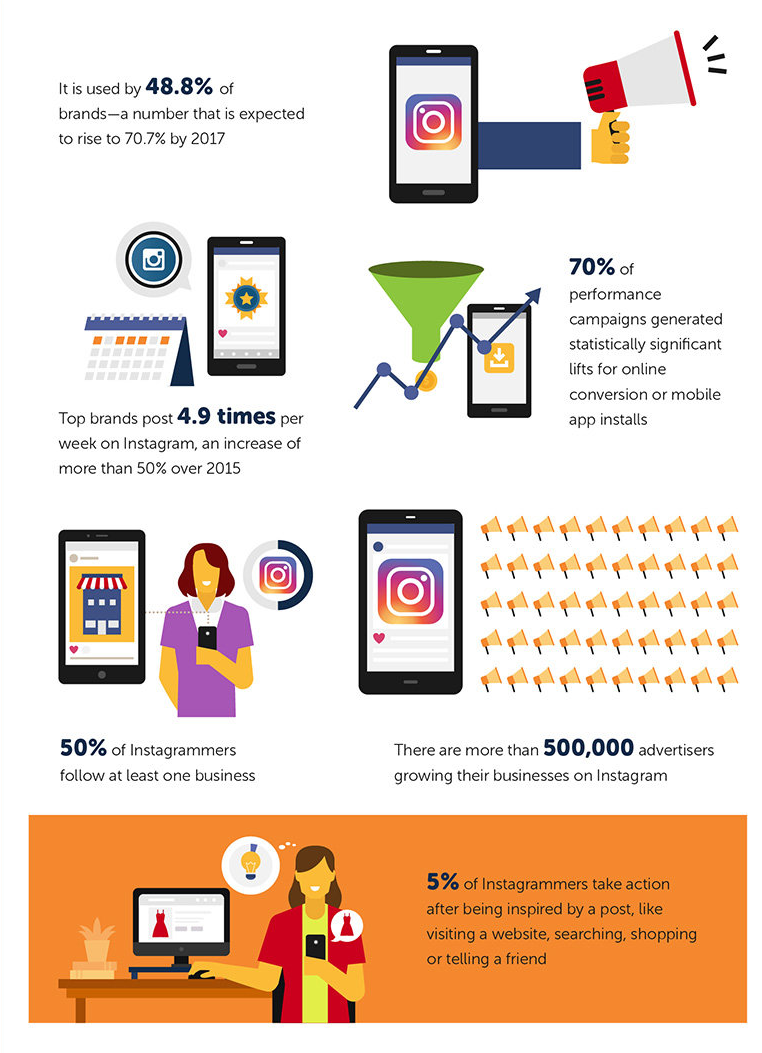
The reality is that it’s a gradual process. In fact, when it’s the talk of brands, 50 percent of Instagrammers follow at least 1 business, but only 5 percent of them take action (like shopping) after being inspired by a post.
I took these numbers from the Instagram facts-and-stats infographic published by MarketingProfs. Here are a few more highlights.
Don’t get me wrong – the platform is great for generating sales.
It can even account for as much as 80 percent of a brand’s sales, as it did in the case of The Beaufort Bonnet Company, a Kentucky brand selling high-end baby items.
It’s just that Instagram has its own quirks, and it takes a while for the money to flow in.
Selling to your followers can be a big challenge, especially when the impact of the content you post is decreasing. The Instagram account of National Geographic reflected this trend.
As its following increased, and as the number of brands posting to Instagram also increased, engagement with the global nonprofit’s posts declined, revealed TrackMaven.
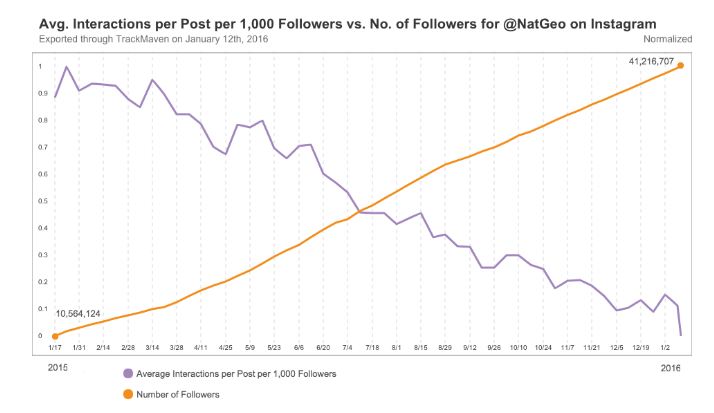
Most brands can resonate with this trend.
But, it’s possible to see a decent influx of sales – and that requires using Instagram strategically.
In this post, I’m going to list a few different measures that you can take to encourage your followers to buy from your brand.
We know that selling is partially a numbers game. So obviously, your follower numbers will impact your sales numbers. But when it comes to profitability, it’s all about the conversion power you generate.
So, how do you make your followers stop mid-scroll on their feeds and notice your product or service?
Let’s jump in.
Establish a Personal Connection Using Instagram Direct
Instagram Direct, or DM as it is popularly known, gives you an opportunity to connect with consumers personally through private messaging.
You can access this feature by clicking the arrow icon in the top-right corner of your Instagram account. Here’s what it looks like:

It will then give you the option to send text and multimedia messages by displaying a message thread. You can send messages to 15 followers at a time.
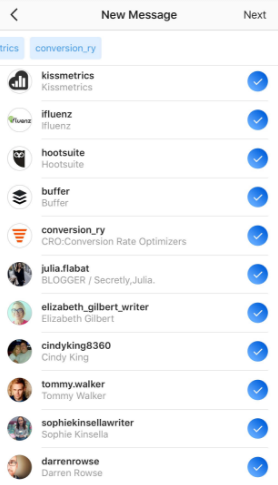
There’s also an option to give a certain name to the group of followers you’re sending the message to.
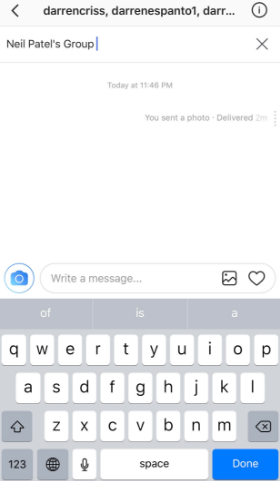
If you want to reference a specific follower’s name or shopping preferences, the DM needs to be sent to each follower individually.
Now that you’re familiar with Instagram Direct, here’s how you can use it to drive sales.
Tactic #1: Offer a promo code
Send a product image to your followers and share a promo code in your message. Instagram Direct doesn’t allow you embed clickable links, so send any links as their own individual message.
You can also announce that this promo code is exclusive to your Instagram followers to encourage them to use it and make a purchase.

Another thing you can do is to add a time limit to the promo to incite a quicker response.
Tactic #2: Host a contest right before a sale
If I offered you free tickets to watch The Fate of the Furious, and all you had to do was comment on the photo of Dwayne Johnson’s outfit, would you do it? I would’ve been all in.
I would’ve been all in.
That’s the allure of an Instagram contest.
A good idea is to host one right before putting your product or service on sale.
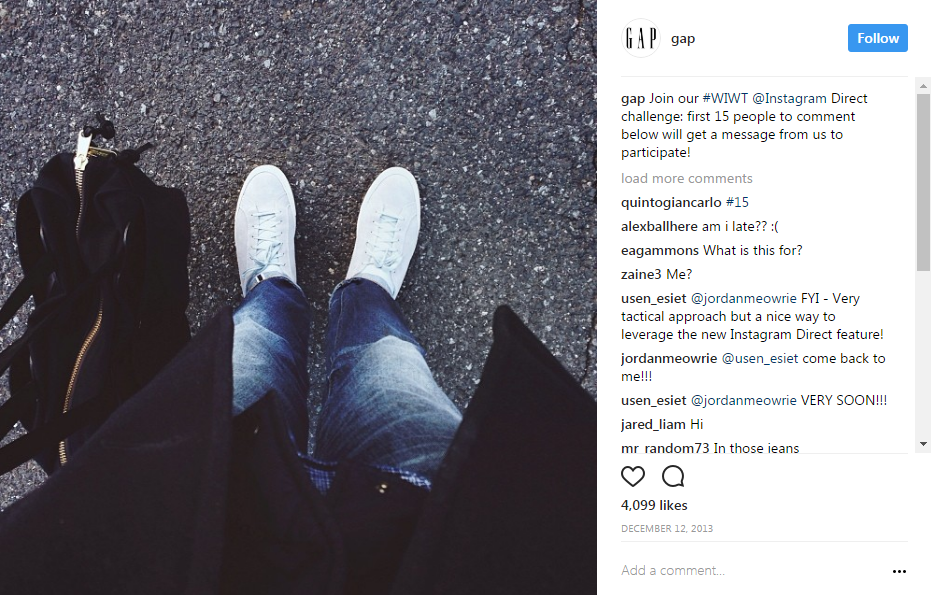
Use Instagram Direct to spice things up. For instance, you can post a contest photo and announce that the first 15 people to comment will receive a DM from you on how to participate.
This is exactly how the clothing retailer GAP leveraged Instagram Direct.
The prize should be a product that you’re going to offer in the sale.
Here’s why: By offering the product in the contest, you’ve piqued the interest of those who participated. While they wanted it for free (who doesn’t?), the sale price might be an extra push of encouragement to buy.
That’s really good nurturing at work.
Tactic #3: Conduct Q&A sessions
Instagram Direct supports threaded conversations, so use this as an opportunity to find out if your followers have specific questions about your products.

You can also invite them for a one-on-one Q&A session. it’s a great way to learn about their preferences and educate them about your products.
This is a great way to learn about their preferences and educate them about your products.
To make Instagram Direct really pay off, I recommend segmenting your followers into different groups based on engagement.
For instance, those who engage more with your content can be put in the group that displays the “highest brand loyalty.”
You can use SumAll Premium to add efficiency to your Instagram segmentation efforts.
All of the above tactics should work better with segmented groups.
Make Buying Easy with Shoppable Instagram
While creating an e-commerce-like experience on Instagram sounds like a pipedream, it’s possible with shoppable Instagram tools.
The right tools can transform your feed into an immersive shopping experience. Your followers can explore the unique features of your products and buy with a few easy clicks when they’re ready.
And since you’re only allowed to promote a single link in your bio, these tools are also super handy for avoiding that clumsy and distracting “visit link in bio” image caption that we’ve all seen.
So let’s harness the robust functionality of these tools to make your Instagram feed shoppable. Here are your options.
Tool #1 – Like2Buy
This tool allows you to link photos from your Instagram account to the product or service available on your website.
Using your Like2Buy link in the bio section of your Instagram account, followers are able to open up a gallery of shoppable Instagram photos and click through to buy products on your website.
In addition, followers can also see a personalized feed of the product images they’ve liked that can also be purchased. It appears in the “My Likes” tab that’s present on the Like2Buy page.
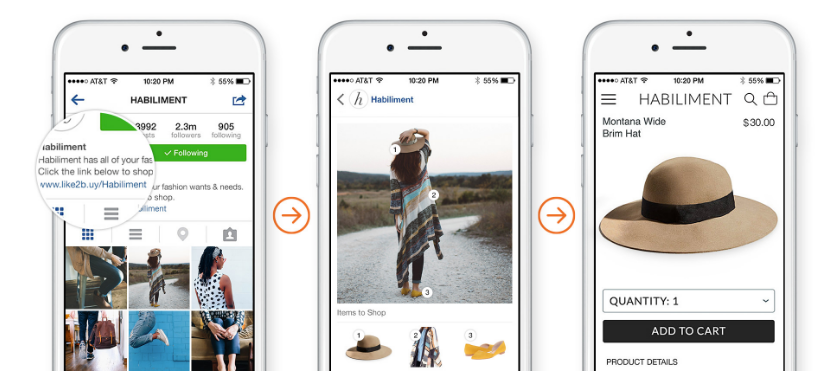
Because the tool incorporates the same photos on the Like2Buy page as on your Instagram account, followers don’t feel they’re leaving Instagram.
Curalate says that Like2Buy-referred visitors have a greater average order value than the typical mobile shopper.

However, Like2Buy is for larger businesses and certainly not the ideal option if you’re looking to start right away. You’ll have to shell out $1,000 – $2,000 a month to use it.
Tool #2 – Like2Have.it
This tool enables you to create an embeddable feed and includes links that refer followers to relevant product pages.
You can also feature the images of your existing customers demonstrating how to use your product or service in the embeddable feed.
The user-generated feed works well on product pages by giving followers social proof and gently encouraging them to add products to their shopping carts.
Neckwear, a Swedish shirts and accessories company catering men, uses Like2Have.it to display a shoppable gallery featuring photos from Neckwear’s Instagram account on its website.
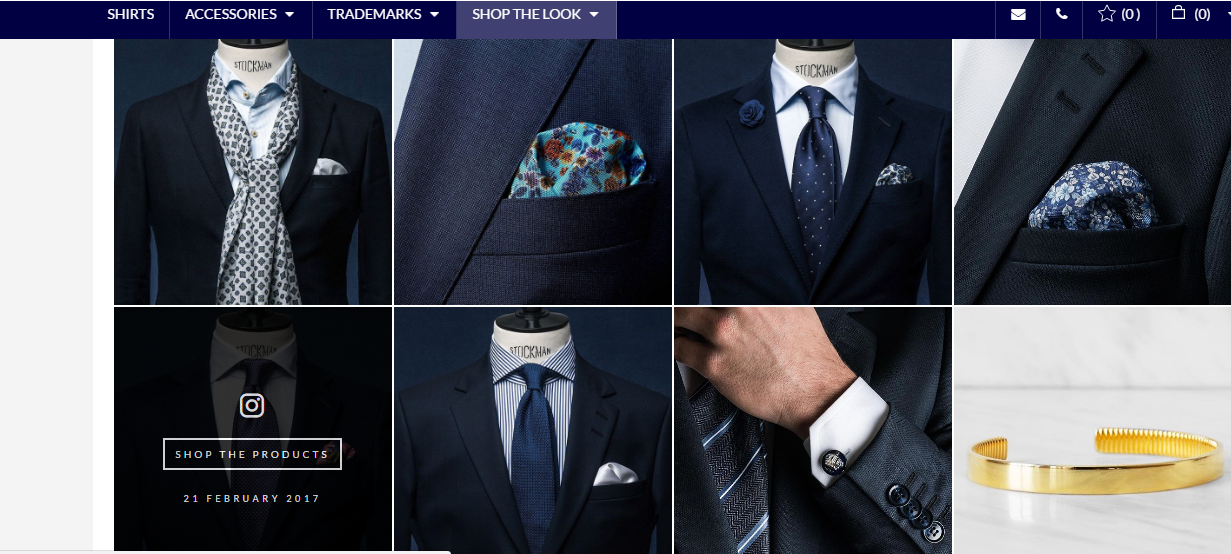
Like2Have.it is more suitable for smaller brands. The price is $20 a month.
Tool #3 Linkin.bio
Apart from Like2Buy and Like2Have.it, you can look into Linkin.bio, a part of Later’s – an Instagram scheduling tool – premium plan.
Linkin.bio is a landing page that looks similar to your Instagram feed and shows your images as clickable pictures.
When any follower visits that page, they can click on your Instagram post to go to the product page that the image is about.
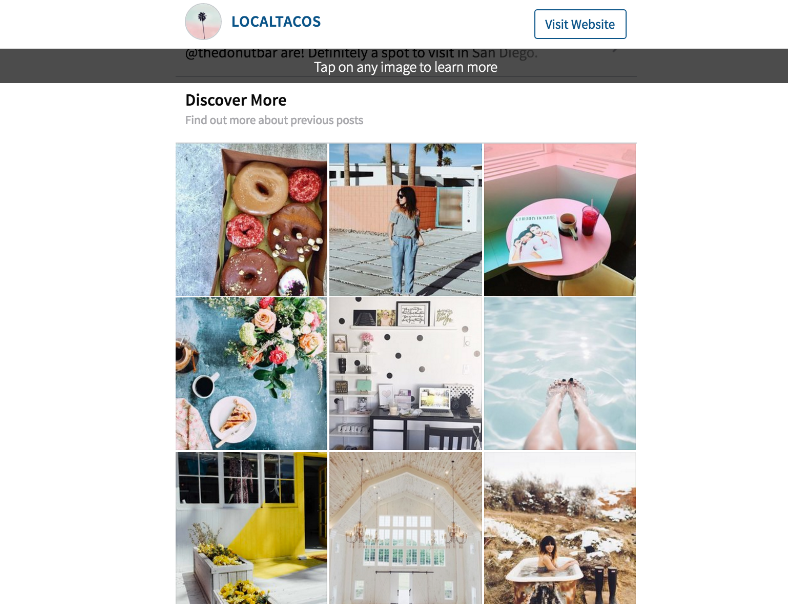
It costs $16 a month for 2 Instagram accounts and also provides an option to schedule Instagram posts.
Make shopping easy for your followers by choosing an appropriate shoppable Instagram tool to encourage more purchases.
Piggyback on Influencers to Inspire Followers to Shop
It’s no secret that influencer marketing works. Linqia’s The State of Influencer Marketing Survey revealed that 94 percent of marketers who have used influencer marketing found it to be effective.
And guess which platform along with Facebook is considered the most important for influencer endeavors? Instagram! 87 percent of marketers referenced these two platforms.

Also, Instagram is the best performing platform for social action when it comes to influencers, having a 3.21 percent engagement rate (in contrast to 1.5 percent across all social media channels).
So why not bring influencers into the mix to encourage your followers to purchase your product or service?
According to Social Media Examiner:
There are over 40,000 influencers on Instagram covering all verticals including fashion, beauty, health and wellness, home décor, food and more. With tens of thousands to millions of followers, influencers are trusted for their opinions and they can add credibility to the products they promote.
Therefore, influencers can do much more than just drive sales on your Instagram account. Because your followers will relate to them and value their opinion, they can establish brand equity.
So, with all that in consideration, let’s look at the tactics for using Instagram influencers effectively.
Step #1 Get Relevant Influencers On Board
It’s important to get as targeted as possible when it comes to choosing the influencers you’ll work with.
For instance, if you’re selling handbags, you’ll want to work with influencers who possess knowledge on the subject, such as personal style Instagrammers who talk about handbags and demonstrate different ways to carry them.
The hard part is finding targeted influencers. You’ll have to sift through hundreds of accounts to see who is relevant to your business and if they have influence over the type of people you have as your followers.
One way to cut the research hours is to discover the top hashtags in your particular niche and see what posts are trending.
Often, the “Most Liked” section on Instagram will include posts from influencers.
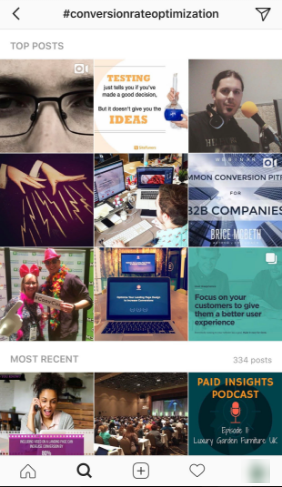
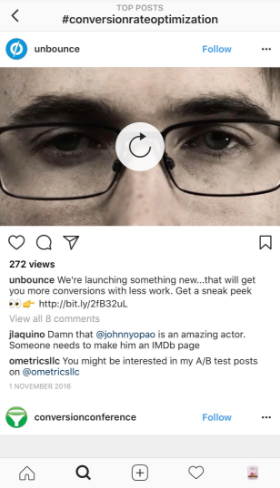
For the hashtag #conversionrateoptimization, the top post in the “Most Liked” section for this hashtag is from Unbounce.
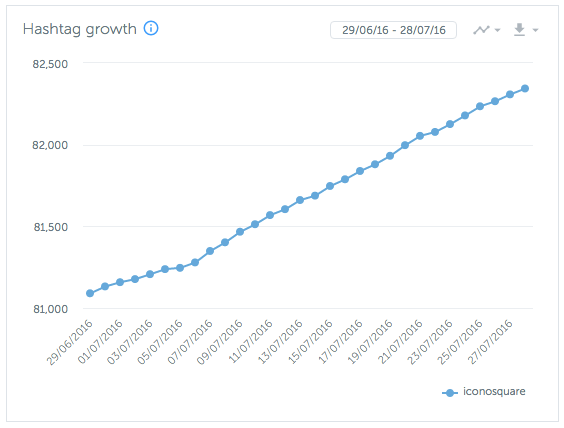
I recommend using IconoSquare to speed things up. The tool allows you to find hashtags based on popularity, growth, engagement and more.
Still, you’d have to spend time comparing different profiles when you take this approach.
Fortunately, there are a variety of tools out there that can automate the process of analyzing several profiles and detecting suitable influencers for you.
Called influencer marketing tools, they give you accurate results on each influencer’s reach, relevance, and authority. Here are some options:
Here are some options:
Tool 1: Ninja Outreach
The company has over 2 million Instagram influencers in its database and growing.
You just have to type in a keyword inside the Ninja Outreach dashboard to discover thousands of relevant influencers based on the keywords you’re targeting in your niche.
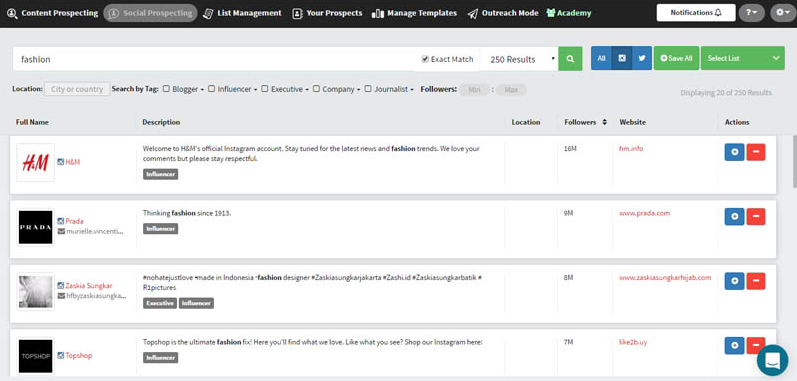
The tool enables you to filter influencers by tags as well as follower count. In addition, it gives you additional data about each influencer such as their website address and contact information.
Tool 2: Ifluenz
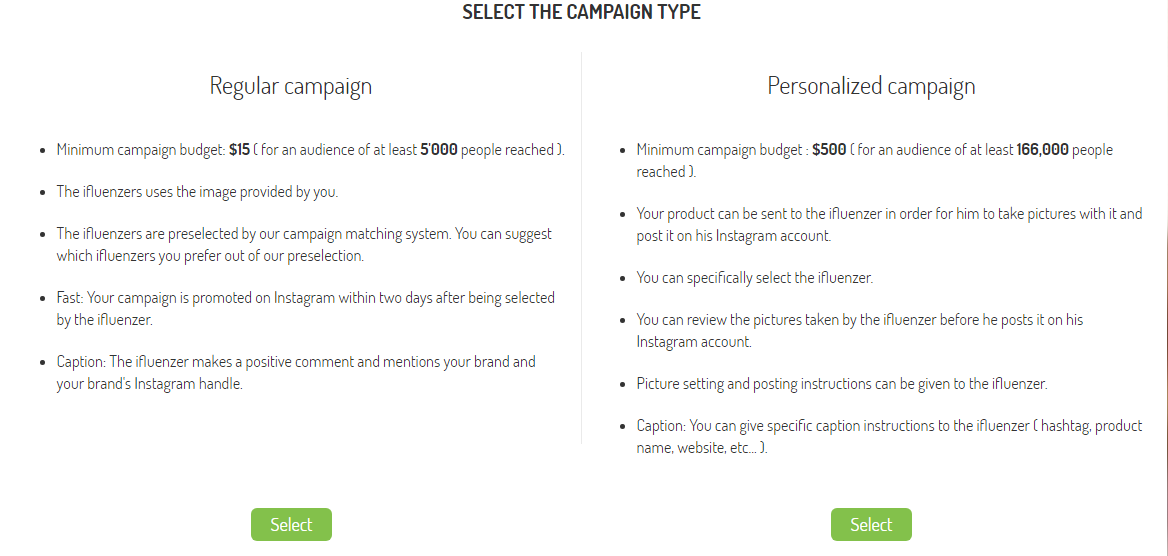
Ifluenz is straightforward to use. You just have to create an account, select the campaign criteria, and wait for influencers to make your product or service popular on Instagram.
You can choose to run either a regular campaign or a personalized campaign using this tool. Here’s what each offers:
Zalando used this tool to announce the availability of a new pair of sneakers and drive traffic to its website using fashion influencers with an engaged following.
The result was increased sales, new followers on Zalando’s Instagram account, and new subscribers on the company’s email list.
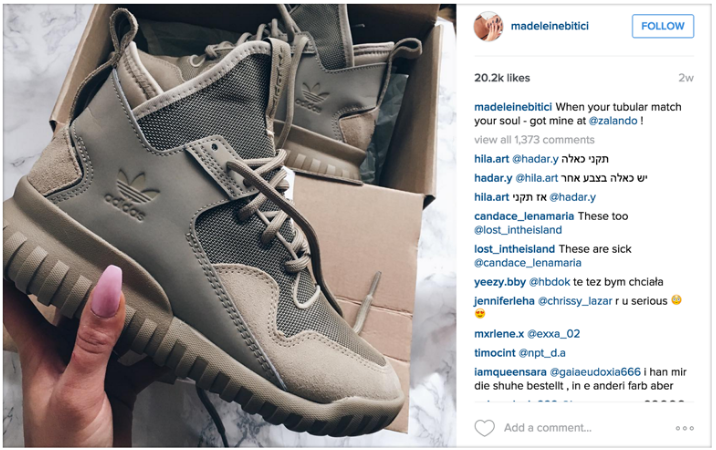
The campaign reached 248,000 Instagram users that gave 20,200 likes and left 1,373 comments. 90 percent of the comments were positive.
Tool 3: InfluencerDB
InfluencerDB’s database contains influencers from every channel on Instagram. You are able to apply filters to discover channels based on languages used, their KPIs, or the location they post from.
The Engaged Influencers section in InfluencerDB’s dashboard shows influencers who engage the most with a particular channel.
You can then use the tool’s Influencer Analysis features to analyze their profile, where their followers come from, and how they behave on Instagram.
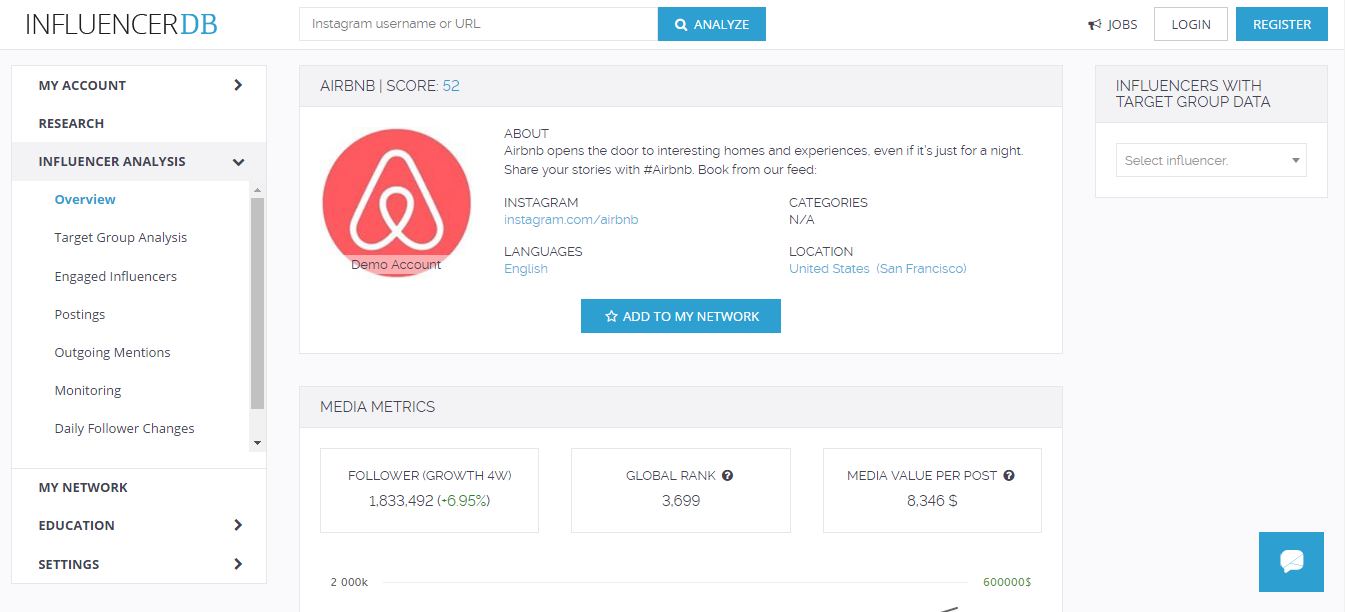
What’s unique about InfluencerDB is that it goes real deep into finding insights about an influencer’s authority. For instance, it shows media value per post and the comments per post for each influencer.
Step #2: Work with Your Influencers to Encourage Purchases
After choosing the influencers you want to work with, how do you make them your brand’s catalyst in sales generation? Here are some ideas:
Tactic 1: Promote discounts or giveaways through Influencers
Influencers have the ability to instill a sense of motivation to try a product. When you allow them to give a discount, they give followers a more compelling reason to check out your offer.
Sumo cited an example where the bone broth company Kettle and Fire did just that. The brand worked with Whole30 Approved to introduce their new Chicken Bone Broth through a giveaway and a discount.
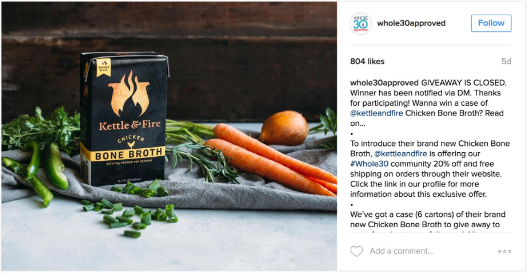
The influencer-powered promotion resulted in 374 website visits and 21 sales with a $95 average order value.
Consumers were given the final push towards the purchase when the influencer shared the discount code. This gave a credible stamp of approval and drove home the value of the discount.
Tactic 2: Get Them to Demonstrate Unique Ways of Using Your Product
Placing products in an enticing setting can work great for sponsored content. But it’s more effective when influencers put the daily life use of your product or service into perspective.
Give influencers some freedom when you take this approach. You’d be surprised to see them come up with unique ways of using your product.
For instance, fashion Instagrammers often create new looks when showing clothing or accessories in action.
Also, influencers can provide tips on how Instagram followers can use the product in the same manner.
Ensure that you repost the content published by your hand-picked influencers. This can inspire your followers to try out your product.
ThinkGeek does that regularly.
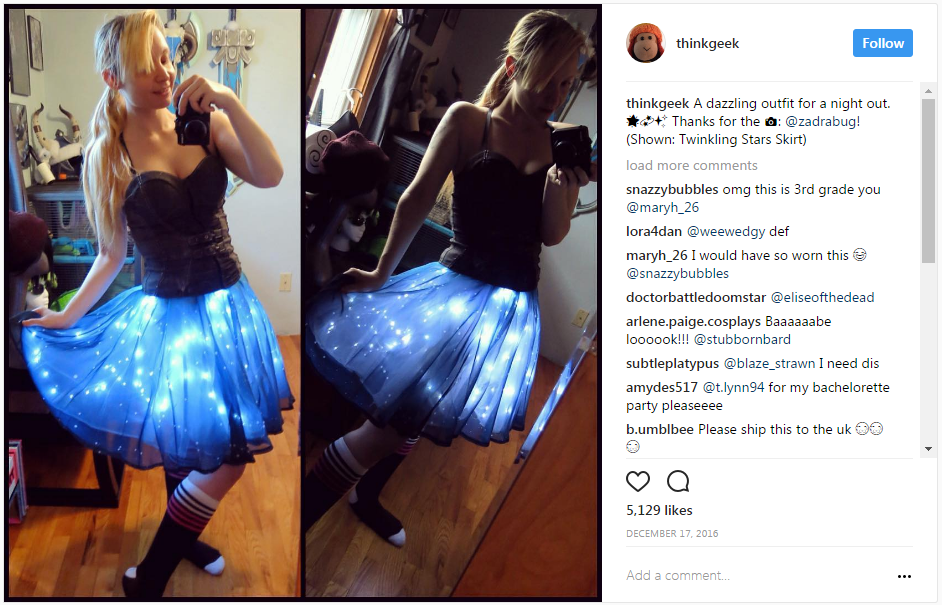
The company doesn’t shy away from reposting the content of other Instagram users showcasing ThinkGeek’s products in action.
Tactic 3: Host an Instagram Takeover
Pass over your Instagram content strategy to your influencers by inviting them to post directly to your account as well as engage with your followers in real time.
Even though there may not be a discount or any sort of perk, because the takeover is momentary, it sparks an instant reaction to the discussion at hand such as commenting or even buying products.
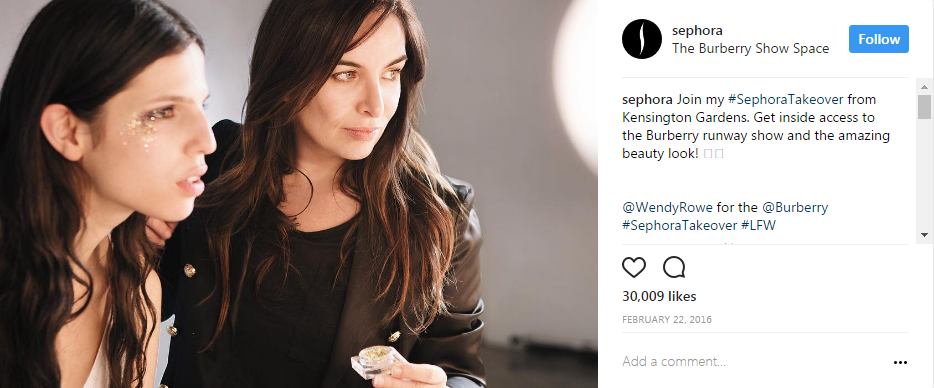
Typically, before the takeover, the brand and the content creator should hype their collaboration. Wendy Rowe did this before taking over Sephora’s Instagram account.
The monthly beauty and grooming subscription box company, Birchbox, does a great job at Instagram takeovers.
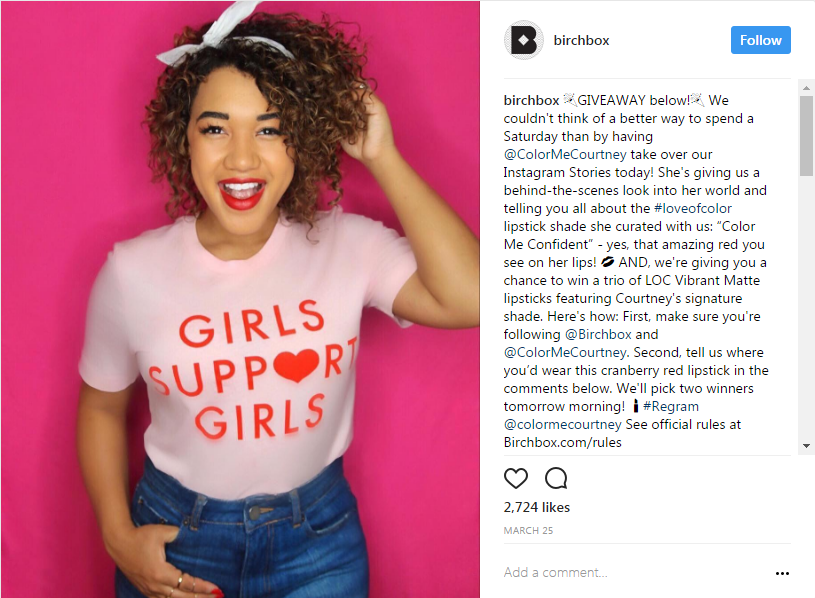
It presents a unique stream of content to its followers through the voice of influencers, who announce giveaways, new products, and more.
All that improves brand affinity and likely has a positive effect on Birchbox’s sales.
Conclusion
The revenue you generate from social commerce is just as important as the income you generate from your website, and Instagram can be an invaluable tool to boost your social media sales.
The three tactics I mentioned in the article will leave your followers with a positive sentiment about your product or service. They’ll also help you navigate the unique obstacles of the platform – especially the one-link limit for each account.
Soon, your followers will be moving through the buying process as you build a good relationship with them and make it easy to shop on Instagram.
Expect your brand’s influencers to reduce the time your followers spend on making a decision.