Social media is a great tool to help business owners expand their online presence, publish informative and authoritative content, and, most importantly, engage with their customers. Having a strong social media strategy can grow your business exponentially.
Using an organic approach to help grow your social media accounts results in authentic engagement and true consumer loyalty.
But first, to grow your social media accounts, you need to master your social media strategy.
Whether you’ve recently started your own business or work in-house, here are 5 top tips to organically grow your social media accounts.
Consistent & Captivating Content
Creating content is one of the most important aspects of growing your social media account. Users tend to gravitate towards consistency. This includes consistency in the type of content shared and the frequency with which it is posted.
You will find that social media users are more likely to engage with a post if they know the type of message or branding experience they are signing up for.
Your content has got to be consistent; it has to be exciting! Whilst consistency is key; you should remember the old age saying quality over quantity.
Planning, identifying and researching one’s target audience and keeping an eye on the competitors are just a few ways to create meaningful content.
Engage & Acknowledge Your Followers
Would you keep talking to someone who never returned your messages? Probably not. The same works for customers.
Users will not want to communicate with you or follow your brand on social media if they receive no benefit. That’s why it’s crucial to interact with your followers on social media.
If you want to create a social media presence, you must turn your accounts into a community. That isn’t to say if someone comments on one of your posts, you must respond, but at the very least, you should like it.
You may also use posts to ask and answer questions and acknowledge and share user-generated content to show your appreciation to your followers and customers. Engaging with your followers will help you develop authentic relationships and boost your social media presence.
Establish Your Niche
I’m sure you’ve heard the phrase “jack of all trades, master of none” before. This is true not only in business but also in content marketing.
Defining your niche is preferable so that even your customers know your values, which helps you stand out.
Monitor Your Competitors
Other successful competitors’ social media accounts can be great blueprints for beginners. Keep an eye on accounts that have a similar audience target as you. Have a look at what is working for them? What type of posts generates the most engagement for them?
When looking to increase growth organically, there are many challenges to getting your business off the ground. However, studying what has worked and, most importantly, why it works can help you understand the best ways to grow your account.
Choosing The Right Social Media Platform
It is very tempting to be active on all social media platforms, but do all platforms benefit your business?
Knowing which social media platform works best for your business is essential. For example, Instagram/Facebook may be a good platform if you own a clothing business or sell jewellery products. Still, if you are offering a service, it may be best to use Linkedin due to its professional audience.
Another tip is to focus on the platform that delivers the best results. Although this is not something you would necessarily know when you first start using social media, you may need to give it a few months to monitor results. But once you’ve identified the platform for you, you can determine what needs to be done to organically push your social media account.
Ultimately have fun with it; social media should be used to spread positive messages and show your brand’s personality. Using these five tips, you lay the groundwork in terms of strategy, but if you find something that works, stick with it. Don’t be afraid to get involved in the conversation.
Online customer experience is changing like never before. So, brands need to decide: adapt or die, writes BOSCO™’s Morgan Mitchell.
The new customer experience economy is set to be the making or the breaking of not just newer brands but established ones too. Since 2020, the customer experience (CX) online has evolved dramatically. The need for a winning online CX is essential for success and is proving to be one of the most important and fundamental elements of marketing in today’s digital landscape.
With 81% of retailers increasing their investment in CX over the past two years, what does that mean for brands, consumers and the long-term relationship between the two?
The BOSCO™ index measures the online footprint of brands and benchmarks how effective they are with their paid and organic media channels. Using third-party data, BOSCO™ generates a score between 0-1,000 to determine how successful brands are in the digital space.
What is online CX and what does it include?
Online CX refers to the digital customer experience of your brand. It includes every stage of the consumer buying journey, including pre-purchase, purchase and post-purchase.
Online CX is a huge part of brand perception as it encompasses every interaction a customer has with you digitally. That could be from first finding your Instagram page to using your online chat function to troubleshoot an order problem. While that may sound overwhelming, online CX is really just about providing a persona to your brand and carrying this through every customer-facing element of the business. And as we’re sure you know, consistency is key.
Why is online CX changing?
Unsurprisingly by now, the online and digital space is changing. Major steps have been brought forward by the Covid-19 pandemic as the world moved solely online as a result of international lockdowns. The need for online customer support skyrocketed and brands that previously didn’t have a digital-first approach scrambled to catch up.
Plus, it’s getting even more difficult for brands to retain consumers. 94% of sales and marketing professionals say that their business is effective at nurturing newer relationships during the ‘interaction’ and ‘awareness’ stage of the buyer journey. But that all changes at the advocacy stage, where professionals feel they are only 77% effective. What that tells us is that it’s harder to sustain long-term consumer relationships. This is where online CX comes into play.
So, how are brands adapting and strategizing to fit this new customer experience economy? What can we learn from these insights and consumer behaviour patterns?
Instant messaging & online chat functions
As the pandemic hit in 2020, consumers moved their lives entirely online in a way that hadn’t been seen before. We couldn’t pop into a shop to see a product, make a return, or just speak to an employee. Phone lines became jammed, so consumers turned instead to online messaging.
Since then, brands and retailers alike have amped-up their online messaging capabilities. Whether that be a live chat function on their site or through their social media, messaging became the go-to way to interact with brands online. In fact, between 2019 and 2020, social messaging rose in popularity by 110% – that’s huge.
Implement an omnichannel CX approach
Businesses fail to form meaningful, positive relationships with consumers when processes become tricky to navigate. For example, support tickets are passed from department to department without proper follow-up.
Let’s put that into context. A consumer messages you on social media with a complaint. The social team pass this on to customer service where the consumer has to explain the issue again. This then gets passed on to a complaints department and once again, the consumer must explain the problem. This could go on and on, meanwhile, the consumer is becoming more and more annoyed at the lack of communication within your business.
Instead, an integrated omnichannel CX system is seamless. Agents can easily transfer customer messages between apps and departments without the need to start from the beginning every time. This creates an easy, problem-free interaction that solves problems quickly, efficiently and, most importantly, leaves the consumer with a positive experience.
It’s not just about problem-solving either. Great online CX is more about being proactive rather than reactive. A great example of omnichannel CX is Zara’s (BOSCO™ score: 731) use of ‘Store Mode’ in its app. This allows users to only see products available in their local Zara store which they can then buy online and pick up in that store on the same day. This real-time shopping perfectly blends both online and offline channels using GPS and QR technology to its advantage.
Be open and responsive to feedback
When it comes to consumer feedback, there tends to be only two options: incredibly positive or incredibly negative. No one bothers to leave feedback or a review for an average experience, but they have plenty to say when everything has either gone right or wrong.
Being open to and receiving feedback is a huge part of uncovering valuable insights into your consumer base. While you may think your online CX is bulletproof, your consumers are the people who can really put that to the test. What they have to say is a massive part of the digital evolution of your brand. Plus, that open-ended communication helps you to build that relationship further and patch up damaged ones. Often, your next clever CX move will be the result of real-time feedback directly from the consumers themselves.
Uber (BOSCO™ score: 738) is a leading example of using customer insights to improve its online CX. The business makes around 22,000 tweaks to its app every month to customize it in every city it operates in. It does this using incident and reliability reports to tailor how the app operates based on where its user is. This eliminates data problems early and lets users know it is listening and adapting.
The key to digital transformation
Standing out in the digital space isn’t easy, and with the rapidly changing online CX expectations of consumers, brands need to fast decide their strategy.
The first step is to stay up to date with changes and developments as they happen. Take note of other brands that are adapting their online CX well and look at how you can implement something similar. With 58% of consumers expecting more from services than they did pre-pandemic, the need for integrated, omnichannel CX with room for personalization is key to digital transformation.
BOSCO™ is an AI learning platform that integrates your cross-channel digital marketing data into one personalized dashboard. The data allows marketers to make better digital marketing spend decisions with the help of data-driven insights, forecasting and mapping tools. Unlock your BOSCO™ score, today.
HubSpot is one of the best CRM software on the market. Here are some ways you can use it in your marketing career.
HubSpot has been known for being the best customer relationship management platform on the market for businesses of all sizes, but what specifically can the company offer your marketing career?
If you aspire to work in the marketing field or want to start your projects, you’ll want to invest time into a good program to manage customer databases for companies you work for, as well as for your use. Here are some HubSpot features that will help your career get off to a great start.
1. Customer Relationship Management
HubSpot has one of the top CRM platforms above all others, so whether you end up growing a team during your career or choose to work solo, you can guarantee all of your important records will be managed effectively!
Add members of your team to the platform to boost productivity —such as calls or meetings— important information on contacts, companies, deals, and more. Know more about your audience by tracking their patterns, which will overall transform into a collaborative and supportive online workspace!
2. Social Media Management
Not only can you use HubSpot to craft amazing emails, but their social media marketing tools as well. HubSpot can be especially useful to you if you intend on managing your own social media brand! Increase your brand awareness to the public, obtain leads —and hopefully conversions—build relationships with your social media audience, and delve into competitor research.
Instead of spending a fortune on independent programs, you can use the HubSpot social media software to connect your accounts, schedule a bulk collection of posts ahead of time, design images with Canva build into HubSpot, customize the publishing schedule, build social media campaigns with their premium templates, publishing platform, analytics, and more.
3. WordPress Integration
If you’re at that point in your career where you’d like to build a solid website but have no idea how to optimize it, HubSpot has a great tool for it. Integrate WordPress into your HubSpot account, then you can have access to all of their amazing features.
After setting everything up, you can add call-to-action buttons to your site to encourage clicks, create custom forms for potential clients to fill out, set up an email automation feature when people agree to subscribe to emails, and effectively manage your website analytics! Know exactly how many people are accessing your page, and all the nitty-gritty details along with it.
4. Search Engine Optimization
Learning the basics of SEO usually becomes a normality at some point in your marketing career, but with the HubSpot SEO Marketing Software, this can make the process way more simple. It offers advice on what you can do to rank your content higher, assistance with content strategy, accurate reports on your Google ranking, and support at every corner with your blogs, landing pages, emails, and more.
If you’re looking for a system that has the entire package, you need to implement this into your marketing strategy. Furthermore, if you’re still worried due to being an SEO novice, check out the best websites to learn SEO!
5. Sales Tool
Are you working on building a business alongside your career, but do not know sales? HubSpot can show you how. Marketing is important, but so is managing your sales with a platform that can manage them.
The HubSpot Sales Hub Enterprise allows you to take part in sales engagement tools, monitor internal business permissions, manage payments, have access to sales data, analytics, and the overall activity and progress of a business. With these tools at hand, all of your sales information can be stored and managed with ease.
6. Email Marketing Tools
HubSpot has a range of tools in their Marketing Hub. These can be used to build an email list, store and manage contact data such as location or phone numbers, create innovative email campaigns, design forms people can use to sign up to emails, and so much more.
Choose from custom templates, build categorized lists, upload your current clients, and more. In using this feature, you can slowly build up a list of loyal customers that you can manage with a few clicks of the button! If you’re looking to learn the basics of email campaigns, here’s how to leverage email marketing with this boot camp course.
7. Reliable Analytics
With numbers, they need to be accurate, and HubSpot offers precise analytics that can be a big help in your marketing journey. If you decide to send out an email, there are statistics you can always refer back to tweak your strategy.
Check out the number of clicks, the percentage of people who opened your email, the number of emails that didn’t send, and even whether your customers opened your email on Firefox. With solid statistics to keep track of, HubSpot will be your best asset when it comes to those digits.
8. Customized Database
How good are your organizational skills? This is one of the most important things when climbing up the marketing ladder, and HubSpot has everything you need if you struggle to keep track.
With the database system, you can add in contacts manually or using an Excel spreadsheet, create numerous records, email or call contacts, see communication history, and even integrate Gmail or Outlook to make sure you’re sending to the right people! Don’t stress about that one company that hasn’t received a newsletter yet, you can easily filter their details at the click of a button,
9. High-Quality Customer Service
When starting your marketing career, you need a trustworthy support network! Not only does HubSpot have proven marketing features that work, but their customer service is one you can always rely on.
Easily contact the support team by clicking the chat box via their website, type in your problem, and you’ll receive a friendly support specialist in a matter of minutes. HubSpot is fast, reliable, and goes as far as recording videos on Loom to give you a hands-on demonstration to help you. The effort put into customer satisfaction is phenomenal, and knowing you have a support network will decrease your career anxiety.
Exceed in Your Marketing Career
Working in the field as a solo marketing entrepreneur or employee means you need the right programs to push you forward. HubSpot is professional, easy to use, and will ultimately be the key to your success in the world of business.
All aspects of marketing will benefit from the program, whether it’s content marketing, mobile marketing, direct to consumer, social media marketing, or email marketing. Your stakes are higher with a reputable platform on your side every step of the way.
Saffron has been freelancing for over five years, specializing in the copywriting and creative writing industry. She is based in Melbourne, Australia. More From Saffron Clacy
Many businesses turned to email to connect with their customers when pandemic measures sent so many people online. Now with increased privacy concerns for marketers and a need for joined up omnichannel marketing, email is about to be catapulted back into the limelight, finds a new report.
Email marketing in 2022 is more important, more integrated and more mature than ever, but email marketing teams still need to be faster, more efficient and better at personalization. Meanwhile the biggest concern marketers face – privacy – is also email’s biggest opportunity.
The report puts email’s growing role in the context of the recovery in business activity. It found almost a third (63%) of marketing leaders globally saying their budgets reflect pre-Covid levels. However, the pandemic has left its mark. Priorities are shifting, says the report, in that advertising and wide-net marketing efforts are too much of a gamble for organizations. Instead, businesses are investing in branding, CRM and email marketing. Content remains as high a priority as it was last year.
Email shines during lockdowns
Businesses certainly turned to email when pandemic measures sent so many people online.
“Email became a critical tool for organizations of all kinds to contact various stakeholder audiences with the combination of flexibility, speed, precision, and low cost not available through other modes of communication,” says George Schlossnagle, email evangelist and founder of SparkPost.
This crucial role continued into 2021. Three-quarters of marketing leaders (76%) say their email marketing program made a positive impact on the business in 2021, compared to 58% in 2020. And email’s increased importance is reflected in a greater maturity in the way it’s measured. Almost three-quarters (70%) of leaders said they changed the way they measure email marketing last year, compared to half (51%) who said the same thing in 2020.
Just as importantly, the pandemic also accelerated the integration of email with other marketing channels. Almost everyone who took part in the 2021 survey (95%) said their email marketing was aligned with other marketing disciplines, compared to half the respondents in 2020.
Intriguingly, this acceleration has happened despite the massive switch to remote working at the same time. Despite the fact that only 10% of the world’s companies are fully back in the office, almost everyone surveyed said collaboration is the same or better (98%) and that communication is the same or better (96%) than they were before remote working became a necessity.
Greater integration also ties in with the growing importance of an omnichannel approach to marketing. This means talking to customers on the channels they prefer and breaking down the silos between channels in order to deliver a coherent, consistent customer experience across every touchpoint. This is ‘absolutely the future of marketing’, the report says, particularly with the impending demise of the third-party cookie and the rise of first-party data.
The future is private
Indeed, privacy and data are the biggest concerns for email marketers in 2022.
“What we’re seeing now is only the beginnings of a paradigm shift that will continue to drive marketers to rethink data collection and usage practices,” adds Schlossnagle. “Changes in privacy regulations and a shift in consumer perception of personal data are big factors in marketing leaders’ commitment to investing in earned and owned marketing channels.”
The report found that the biggest concerns for respondents were the fear of existing digital marketing assets being unusable in the future; the threat of having to overhaul existing systems; and the need to re-do things from scratch.
More specifically, email marketers are most worried about Apple’s iOS 15 changes (a medium to high concern for 81% of respondents), Google’s third-party cookie tracking (77%), and government regulations and the deprecation of app tracking data (both 72%).
Email returns to centre-stage
Despite these concerns, the report predicts another impact of these changes will be to thrust email marketing even further back into the limelight. Companies leaning more heavily on first-party data and on the channels that are closest to their known customers – like email – creates an opportunity to build better profiles. In turn, these will drive longer term loyalty and engagement, leveraging audience behaviour on the company’s own website or app.
Email has the ability to be the glue between consumers and brands.
“The demise of third-party cookies puts a tailwind behind channels that leverage first-party data – email being the most pervasive,” says Schlossnagle. “We should all be gearing up for more investment in email and SMS because owned data is about to be more valuable than ever.”
Budget pressures demand greater efficiency
All this talk of a bright future for email marketing comes with a downside. The resources to support all this extra work haven’t necessarily arrived just yet. Two-thirds (69%) of leaders say their teams are busier than ever, but only 5% of respondents report having higher budgets in 2021 compared to 2020.
The result is even greater pressure for marketers to be more efficient – email marketers included. It’s one reason for the push for closer alignment of channel teams. Another effect is the increase in the proportion of companies bringing email marketing in-house. In 2020, just over half (55%) of leaders said they relied on agencies for their email marketing. Last year that fell to under a third (29%).
In addition, one of the key trends identified in the report is the increasing use of email design systems. These are pre-created and optimized selections of HTML templates. As the report explains, all the coding is done before marketers start creating an email – which means you can crank out high quality emails quickly. But it also notes that ‘there are clear opportunities for faster, more intuitive martech solutions, streamlined email marketing processes, and improved collaboration between stakeholders within the marketing team.’
One thing is clear. Email has long been seen as boring and unfashionable, but the current convergence of such trends as more time being spent online, increased privacy concerns and the need for joined up omnichannel marketing are just about to catapult it back into the limelight.
To explore this and more findings from SparkPost’s Email In 2022 – The Trends, Behaviors & Benchmarks Driving Email Forward report, click here.
Leaders from The LEGO Group, Taco Bell, Delta, YouTube, and more share the most underdeveloped marketing skills today.
What it takes to unleash great marketing today–marketing that truly moves people–requires buy-in both internally, communicating creativity’s direct tie to commerce, as well as externally, connecting creativity to what’s most important to your consumers.
It can often take a decade or more of experience to hone in on the skills necessary to succeed in our field. Fortunately, we have insight from some of the boldest and brightest marketers out there.
We asked our recently featured Innovators what’s the one skill you feel is currently underdeveloped in marketing? Here’s what they said:
The science of marketing
“The belief that creativity and quantitative skills are mutually exclusive. I love art but also believe that science is equally important, so for me, the best marketers are those who can think both creatively and analytically. … Ultimately, I think my understanding of finance has made me a better marketer.”–Shannon Womack, general manager of U.S. brand marketing, Delta
“One of the biggest skill gaps that I have seen is an understanding of business strategy and analytics. Ultimately, as marketers, we are only as valuable in our ability to understand the biggest areas of opportunity and to quantify our impact on how we move that North Star forward. If you don’t understand the dynamics of the business, it is next to impossible to earn a seat at the table with the C-Suite.”–Chris Marino, global head of performance marketing and media, Bloomberg Media
Playfulness to pique consumer curiosity
“I have to say playfulness. My favourite campaigns and activations are the ones that do not take themselves too seriously, while also having deep meaning behind them, and that is the same as play. … I think more of us could use play in our process of campaign planning.”–Cristina Liquori, head of U.S. marketing, The LEGO Group
“Dialing up the mystery piece is what’s missing in marketing. I think marketing feels like it must be literal and obvious sometimes. However, I think there is a lot of room for creating mystery through marketing, which draws on people’s curiosity and, thus, to the brand.”–Miki Agrawal, founder, Tushy
“I really admire brands that are taking swings in various industries through playful and meaningful marketing. I think about the work that Sweetgreen has done with Naomi Osaka or what Liquid Death has done with their packaging.”–Jordan Schenck, cmo and co-founder, Sunwink
Listening first and translating into action
“Truly hearing what your target consumer and fans are saying, asking and expressing. … Because the current landscape is so competitive and so loud, marketers feel the need to shout or to be first, even when there’s no brand connectivity. The importance of being a brand that ‘gets me’ and ‘aligns with my beliefs’ is huge, especially with the newer generations. And you don’t get there by shouting—you get there by listening.”–Matt Prince, senior manager of PR and brand experience, Taco Bell
“The ability to translate creative concepts into execution, or simply put, moving from conversation to action. Ideation is an integral part of marketing, but the work doesn’t end there. Many marketers are great at coming up with strategic ideas; however, they struggle with turning big ideas into executable initiatives. As we build the next generation of marketers, it is critical to foster creativity and innovation while also teaching the importance of the how.”–Elizabeth Del Valle, global head of marketing, gaming and creator communities, YouTube
Marketing to businesses requires special strategies and tools.
If your business caters to other businesses, the manner in which you promote your products and services will be very different from the way you market to consumers. This is because customers who are purchasing on behalf of a business or a company have different requirements and buying journeys compared to those who are looking to purchase something for personal use.
As such, businesses that are selling to other businesses need to master the art of B2B marketing and understand the best B2B marketing software to use. When done correctly, this will help you reach key decision-makers and turn them into paying customers.
In this article, we’ll cover the ins and outs of B2B marketing, including what it is and how to implement it. You’ll also learn the different types of B2B marketing and see examples of campaigns in the wild.
Let’s get started.
How is B2B marketing defined? B2B Marketing definition
The definition of B2B marketing is exactly what it sounds like: it’s the practice of marketing to businesses. Simply put, it’s about getting your products or services in front of people who work in the business sector.B2B marketing is different from marketing to individuals. When you market your products to businesses, you’re dealing with clients who buy products or services for their companies. B2B buyers are looking for things that can help them meet a business objective. Examples of such objectives include:
① Increasing revenue
② Improving employee efficiency
③ Saving the business money
Generally speaking, B2B buyers are looking for products or services that can provide a good Return on Investment (ROI) for the companies they work for, as opposed to B2C buyers who purchase products for personal consumption.
So, when did B2B marketing start? While trade journals did run ads targeting businesses during the 1800s along with early content marketing-style articles, B2B marketing didn’t really come into its own until the 1930s after the stock market crash of 1929 changed modern buying habits.
As the Great Depression forced consumers and businesses to purchase products based on utility rather than fashion, industrial buyers demanded more data-driven market research. This sparked early “industrial marketing” with marketing materials offering statistics and case studies for industrial buyers.
Over time, new mediums like radio and television provided additional B2B marketing platforms and tools to reach businesses. With the coming of the Internet, marketers gained a way to connect with millions of people on a regular basis. Now, B2B marketers come up with ways to make it easier for businesses to find their companies online.
Today, both small business owners and large companies can access more information on products and services through business and review sites. This requires B2B marketers to provide useful and relevant content that engages prospective clients and helps retain current customers.
Why is B2B marketing important?
(Image credit: Pexels)
B2B marketing is — and will continue to be — important for as long as the business sector exists. Companies, just like consumers, have certain needs; without B2B marketing, businesses that can fulfil other businesses’ needs won’t be able to get their products and services in front of their target audiences and customers.
What is the difference between B2B and B2C marketing?
(Image credit: Slack)
Although there is some overlap, business-to-business (B2B) and business-to-consumer (B2C) marketing have different strategies and goals. B2B marketing is focused on educating and communicating ROI to key decision-makers, while B2C marketing communicates how a product fits into the customer’s personal life.
There are also some key distinctions when it comes to the channels leveraged by B2B and B2C marketers. And while there is a bit of overlap — e.g., B2B and B2C buyers both use email marketing — the manner in which campaigns are executed is completely different.
Here is a table outlining the biggest differences between the two:
B2B Marketing
B2C Marketing
Customers
Sells to businesses like retailers, software companies, manufacturers, and suppliers
Sells directly to individual consumers
Buying journey
Can take weeks or months; B2B buyers often take time to research solutions, work with multiple stakeholders, and engage with sales reps to figure out the best vendor
With certain exceptions, the buying journey of consumers is shorter and more direct; often, it simply involves adding an item to a physical or digital shopping cart
Messaging
Usually centered on educating buyers and communicating the solution’s ROI
Usually focused on communicating how a product or service fulfills a personal need (e.g., entertainment, social status, making life easier, etc.)
Sales and marketing channels
Email marketing, TV and radio ads, account-based marketing, SEO, paid search, social media platforms like LinkedIn, Facebook, and Instagram
Email marketing, SMS, TV and radio ads, retail marketing, SEO, online marketplaces (Amazon, Etsy), social media platforms like Facebook, Instagram, Snapchat, and TikTok
What are the types of B2B marketing?
(Image credit: Future)
Marketers have a wide range of digital B2B marketing strategies to reach prospective clients. Some of the most effective ones include:
Content marketing. Content marketing offers useful information like business guides and industry studies to prospective clients. The information can be shared via blog posts, podcasts, online videos, and email newsletters. As more people view your content as a valuable resource, your B2B company’s brand awareness, leads, website traffic, and sales will grow.
Lead generation. B2B marketing teams need to identify their ideal potential customers, or “leads,” and convince them to buy from their company. Lead generation can be accomplished by capturing prospect information (usually through the use of online forms and landing pages). Lead generation can also be done at live events like trade shows where businesses market to other businesses.
Email marketing. Email campaigns generate a high ROI, with $42 for every $1 spent. This makes email newsletters a powerful way to share facts, statistics, and studies with leads and convert them into customers.
Social media & viral marketing. Social media posts like an Instagram video of valuable tips and tutorials can be deemed useful by potential B2B clients. These posts are shared on the Internet, increasing your brand awareness. With enough shares, your posts can go viral and reach thousands of potential clients, creating an effective form of viral marketing.
Affiliate marketing and native advertising. Affiliate marketing enables you to get existing clients and other content creators to promote your business on their sites via affiliate links that earn them a commission when someone clicks on the link (pay-per-click) or when you make a sale (pay-per-sale).
Native advertising allows these affiliate links to look like part of the site they appear in. For instance, your ad may appear as content recommendations on an affiliate site, making it more likely B2B clients will visit your site.
Search engine marketing (SEM). SEM is all about increasing your brand presence in search results, typically through the use of paid ads. It involves creating search ads and bidding on keywords. The goal is for your ads to show up whenever people enter relevant search queries.
Mobile (MMS & SMS) marketing. Mobile marketing uses devices like tablets and smartphones to market products and services. This can be done through Multimedia Messaging Service (MMS) which sends enhanced text messages or Short Message Service (SMS).
B2B marketing teams use various platforms for different advertising campaigns. If you want to promote your company on social media, LinkedIn, Instagram, and Facebook are popular sites frequented by potential clients. Many businesses also use WordPress to build blogs for content marketing.
Ultimately, your choice of B2B marketing tools and platforms depends on your objectives and Key Performance Indicators (KPIs) for measuring the success of your campaign.
B2B marketing objectives and measurable KPIs
As you build your B2B marketing campaign, clarify your objectives. Are you looking to increase sales, improve your brand awareness, or retain your current clients?
Have the B2B marketing tools for tracking and measuring your Key Performance Indicators. Important KPIs include:
(Image credit: Unsplash)
Example of a successful B2B marketing strategy
Thanks to its strong B2B marketing strategy, Ahrefs, a company that provides SEO software, has managed to become one of the go-to tools in a very crowded market.
Here are some of the components involved in its strategy.
Long-form content. The team at Ahrefs has produced hundreds of detailed tutorials, articles, and opinion pieces on topics that search marketers care about. Because Ahrefs consistently publishes high-quality content, many of its articles rank high on Google, which then helps drive traffic to its website.
(Image credit: Ahrefs)
Ahrefs Academy. The company also set up an educational hub on its website, which is packed with SEO courses and training materials. Ahrefs even offers a certification course designed to teach people how to use its platform more effectively.
(Image credit: Ahrefs)
Data and studies. In addition, Ahrefs publishes its own research reports based on proprietary data gathered from its platform. These reports shed light on trends and insights that Ahrefs’ audience can use in their businesses.
(Image credit: Ahrefs)
All in all, the different components of Ahref’s B2B strategy work together to increase brand awareness as well as position Ahrefs as a leading authority in the space. Because of its efforts, Ahrefs has earned the trust of the SEO community, and this has helped it rapidly grow its userbase.
Example of a successful B2B marketing campaign
CB Insights is a company that provides market intelligence on private companies and investor activities to venture capital firms, investment banks, and other companies with a stake in high-growth private companies. Its business analytics platform and global database help companies respond to potential threats, predict emerging tech trends, and uncover competitor strategies.
(Image credit: CB Insights)
Sounds heavy, but to promote itself, CB Insights offers a fun and informative e-newsletter that examines lucrative trends in the business world — like the profitability of funny GIFS and the popularity of Internet memes.
This strategy gets clients to open their emails and recognize CB Insights as a source of relevant information. Subscribers then have an incentive to go to the company website and become clients, making this the type of effective campaign that wins B2B marketing awards.
Conclusion
By using B2B marketing strategies like content marketing, email campaigns, and social media marketing, you can show how your company helps solve business problems. This lets you connect with lucrative businesses and convert them into regular clients.
Of course, in order to form these connections, you need effective B2B marketing platforms and software.
Learn more about how the right tools can help expand your business by reading additional resources on the best B2B marketing software to help you reach more clients in our guides: the Best CRM software, the Best email marketing software and the Best SEO tools.
Francesca has over 10 years experience as a B2B writer and content marketeer, creating content about retail, ecommerce, technology, and SMB. And has written for websites such as Entrepreneur.com, The Huffington Post, Lifehack, MediaBistro, Independent Retailer, Retail Touchpoints, and many more.
Everything you think you know about making money online is probably wrong.
Most of my students aren’t complete online business newbies. Many of them have tried at least some kind of online business at some point. Some of them are trying to juggle several of them when they come to me, and they are usually very excited to tell me about it.
I admire their enthusiasm, but if they come to me looking to me for validation of what they are already doing, they usually come away disappointed. The idea they breathlessly share with me often times was old news five years ago.
If I try to point that out to them, as gently as possible, they sometimes don’t take it well. They have invested a lot of hope and excitement into their entrepreneurial endeavour. Hearing that they have been spinning their wheels ranges from dispiriting to offensive.
I don’t blame them. There’s a lot of noise out there. Not to contribute to it unnecessarily, but someone needs to cut through the hype and tell some hard truths. The online business environment has changed a lot in the last 10 years. Yes, you can still succeed, but only if you are present and accept the business environment as it is, not what it was.
On that note, here are five dirty secrets about today’s online business environment that must inform every opportunity you consider.
1. Marketing is useless without a great product
The golden age of online marketing is dead. My condolences.
Not to say that digital marketing is useless. Here’s what I mean: It used to be that if you could write good copy, build a funnel, set up an email autoresponder and buy some Facebook ads, you could make money online. Even if the product was garbage.
This was always a bubble. It was never going to last. The market has corrected to the way it used to be, the way it always has been — it’s all about the product.
When I consider clients for my agency, I always vet the product. If the product is terrible, I can’t help them. No amount of traffic I drive to their landing page will result in sales, growth and sustained success.
Many aspiring online entrepreneurs get seduced by the shine of marketing, from veterans of that golden age who still believe that great marketing is all you need. It isn’t, especially in the early going. These entrepreneurs would be better served to forget about fancy sales funnels and focus on making the product the best it can be.
2. Competition is for chumps
Most entrepreneurs think they need to “beat the competition,” “differentiate themselves from the competition” or “spend more to acquire a customer than the competition.” The dirty secret is: If you even havecompetition, you’re fighting a losing battle. Most market battles are zero-sum games. One guy wins 99% of the business, and everyone else fights over the remaining 1%. This is why I advise students to niche down. With a specific-enough niche, you don’t have any competition. You’re out there cleaning up and can name your own price.
For example, there are a million agencies saying, “We help businesses get more leads.” But what about, “We help plumbing and heating companies get more leads?” Better.
“I help plumbing and heating companies in Pennsylvania get more leads.” Even better.
“I help plumbing and heating companies in Pennsylvania get more install jobs.” Now you’re talking.
3. Value trumps fame
Americans live in a fame-saturated culture. No wonder entrepreneurs think they have to be famous to sell anything. If you Google-search how to sell a book, start a blog or launch a YouTube channel, most of the listicles you discover will say something like: Step 1, Get Famous.
So you have entrepreneurs trying to get famous — on YouTube, on Instagram, on TikTok or whatever is the flavour of the month. They figure once they’re famous, the selling will take care of itself.
But the cult of fame is falling apart. The emperor has no clothes and people are starting to see it. Is there a better example than Fyre Fest? The now-incarcerated founder cloaked the event in celebrity but didn’t bother to bring the value.
People get the fame equation backward. Fame is like catching lightning in a bottle; it’s nearly impossible to consciously makeit happen. Most people who domake it happen discover that it’s a double-edged sword. Ask anyone who has ever been mobbed by paparazzi at a grocery store.
But you canfocus on delivering value. That is very much in your control. Maybe you will go viral, maybe you won’t. But by delivering value, you will at least build a cult following — and a cult following can make you very, very prosperous.
4. Focus trumps diversification
I can’t hate on my students who are trying to juggle 10 businesses when they come to me, because I was the same way. I can’t even fault the strategy — I kept throwing things at the wall until something stuck.
But once I found the business with the most potential, I pulled the plug on everything else I was doing and focused like a laser on scaling it. That’swhat made the difference. Finding the idea was maybe 10% of the battle. What really made the difference was quitting everything else I was doing.
“Multiple streams of income” is a cliché that gets misunderstood, and “diversification” is for people who have no idea how to invest their 401k. If you want to create a great product and bring value to the marketplace, you have to pick a thing and focus on it to the exclusion of everything else.
Whatever stage in the journey you are in, that’s the goal — to hone in on the one thing. With focus, the idea is almost an afterthought. With enough focus, you can make almost anythingwork.
5. Most businesses can’t scale
If you want to succeed in online business, don’t start anything you can’t scale. Anything that depends on unique human contributions — including your own — is hard to scale.
I’m guilty of this too. My agency can’t be fully automated or outsourced. I have to have a team, and I can’t just have one person for each job. I try to have twopeople for each job, minimum. That way, if someone quits, I’m not screwed.
Of course, this runs up payroll costs. What saves me is the fact that our invoice volumeis scalable, even if the client volume isn’t. Assuming we do the job well, we can easily scale invoices from $10,000 to $100,000 and beyond. We can afford that payroll.
Whatever you do, begin with the end in mind. Even if you’re doing the work in person now, make a plan to automate, outsource and take unique human input out of the equation when the time is right. That’s the onlyway to go big online.
I want all of my students to prosper in online business — to fire their job, discover financial freedom and build the lifestyle they always envisioned.
But the first step for many of them is to wipe the slate clean of misguided and outdated ideas, leaving them tabula rasa. Then they can accept the online business ecosystem as it is. Spilling the beans on this dirty secret will hopefully help you do the same.
Dylan Ogline is an entrepreneur, investor and author. He is known as a pervader of work and lifestyle optimizations. He is founder of digital marketing agency Ogline Digital. A student of Stoicism, he enjoys playing hockey, reading and traveling the world.
Marketing your services and your business through YouTube sounds super simple, but there are guidelines to be aware of if you want your videos to be found.
Leveraging YouTube means being able to know and understand the users of the platform, what metrics to track and what to create content about in the first place. When you have these pieces of the puzzle down, your channel will become a natural extension of your lead generation efforts.
Here are three things to keep in mind when marketing on Youtube:
1. Obey the laws of YouTube SEO
SEO (search engine optimization) is a fancy term for making your content visible in search engines such that when people search for a term your content comes up in search results. In other words, if you’re searching for “how to start a podcast with an iPhone”, then your content should be optimized with keywords, tags and a title supporting that search phrase.
Another point to remember is that you should not be making content that people aren’t searching for. If you’re trying to answer a question people don’t have or solving a problem that doesn’t exist, your videos will go nowhere and people won’t find your business or your content.
2. Know which metrics to measure
Like any platform, there are many metrics you could use to measure the success of your channel and its ability to generate leads and revenue. Most often people look at subscriber count and number of views to measure success, but that’s not actually what YouTube loves to see. YouTube, like any other platform, wants to keep viewers on the platform for as long as possible — so it’s going to pay attention to metrics in support of that goal. To that end, what you want to pay the most attention to is your average view duration and click-through rate.
The average view duration is a good indication of how long your viewers are spending watching your content. When that’s high, YouTube recognizes that your content is good for the platform and will likely push out more of it on their platform. The click-through rate is a measure of the percentage of viewers who click through to your view after it’s been presented to them (like on the home page or as a suggested video). This is an important signal in determining that your content is relevant to viewers and is more likely to keep them on the platform and coming back for more.
3. Answer specific questions
People come to YouTube to be entertained and to learn. YouTube is, after all, a search engine. Your video should be able to provide the information they need. In return, you are boosting the authority of your business and your channel in the eyes of the viewer. They are then more likely to get to know you and your business.
When you answer specific questions with your YouTube videos, it can be as specific as, “How to change the colour of a menu item on Elementor” (I know because I Googled that very thing this afternoon.) If you’re not sure where to start, begin by listing the 25 most frequently asked questions in your niche or line of work. Don’t worry that they seem too basic because people are looking for the answers to these questions.
The more videos you make, the larger your audience will eventually be. Then, you’ll be able to tailor your content to their questions. But it all starts with answering specific questions.
Zach Benson is the founder of Assistagram, a company that empowers influencers and Fortune 500 companies to connect with real followers in their target audience. Benson helps influencers and brands cut through the noise to accrue millions of new followers on Instagram.
When I founded my first company, Grafomap, I was an idealist. But, like many freshly baked entrepreneurs, I saw this personalized map poster startup almost as my own child and felt the need to take care of it nearly 24/7.
To further blur the line between my personal and professional life, Grafomap was born out of a friendship with my childhood friend Martins. However, with time, I realized that my company had become my work and my child, hobby, and pastime.
When I started with Supliful last year, I had learned a few painful lessons, and this time I was determined to approach business management with a more balanced and composed mindset. This is a story of how I faced entrepreneur burnout and how this painful experience taught me to become a smarter business leader the second time around.
I didn’t know what burnout was until it hit me — Hard
At Grafomap, my responsibility was all things marketing, but somehow I became involved in sales processes, human resources, accounting, and other areas. So it’s probably not surprising that, after working at full speed for several months, exhaustion and burnout crept up on me. I felt constantly anxious and insecure, having doubts whether the business would stay afloat for another month.
Looking back, I think these were the main factors that caused me to hit the wall:
First, micromanaging and trying to become involved in almost every process.
Taking all the opportunities that came my way and not filtering the valuable ones from mere time-wasters.
Long working hours and not knowing how to separate work from private life.
Two years into developing Grafomap, I felt I had hit rock bottom. The business model was seriously lacking repeat purchases. A constant need to find new sales channels, new ideas, and approaches for attracting customers was tiring and frustrating. A business must find a way to acquire repeat customers for better profitability. The one-and-done model is the way to go insane.
As we were slowly going bankrupt (up to the point of taking personal loans to save the business), we sat down and refocused our priorities and stayed only with a few marketing and sales tactics that had proven to be effective. We managed to grow Grafomap to $1.5M revenue and then decided to sell the business.
After selling my first serious business and taking a little rest, I couldn’t stay idle for long. Then, a new idea came along, and it was linked to food supplements and dropshipping – an industry we had already familiarized ourselves with, thanks to Grafomap.
My painful experience with Grafomap and a few other smaller business endeavors before that taught me several valuable lessons about leading a company. Now I am thankful for everything I had done wrong before – as it made me able to start on a better foot with Supliful.
You don’t want to ruin your future. However, I believe that entrepreneurs have very promising ideas that can be destroyed by mismanagement.
Here’s what I did differently with my second serious business
Supliful — Strict prioritizing
When starting your business, the backlog of tasks and plans seems endless and overwhelming. However, I had already learned the hard way the importance of prioritizing and viewing your time as the most valuable resource. Especially when you’re a company owner, you have to evaluate all the steps and responsibilities you take and be 100% sure you’re investing your time in the right things.
To begin with, I prioritized creating a Minimum Viable Product or MVP for Supliful to start attracting customers and test the idea’s success in practice. I got some valuable feedback, and together with Martins working on improving our service to make it more profitable. During this time, I transferred many of my operational tasks to other colleagues, focusing on company goals and other crucial aspects of the business.
Delegating more
From the first months of Supliful, I created a structure for who’s responsible for what. I wasn’t going to repeat the mistake of trying to participate in every aspect of the business. So I managed to transition from being a one-person orchestra to a conductor.
In particular, here’s what I did:
I made a list of my priorities and focused on them instead of constantly checking my team’s performance.
We hired several great people and trusted them to fulfil their responsibilities.
I outsourced professionals to help us with copywriting, influencer marketing, etc.
When some processes required my participation, I scheduled weekly or monthly meetings with the respective team to stay in the loop about the most critical operations.
Tailoring marketing tactics to the brand’s buyer persona
During the five years of Grafomap, I was responsible for marketing — and I think there wasn’t a single marketing strategy that I hadn’t tried. From pay-per-click ads to content marketing – you name it, and I tried it, based on the belief that a good marketing strategy is a diversified one.
I ended up in another extreme – my marketing efforts were scattered, and there was an evident lack of focus on what worked best.
With Supliful, I started with a few tactics I believed would be most effective – social ads and influencer marketing. I already knew which tactics work best in different development stages, and I ensured that every marketing effort resonated with our buyer persona.
Today, I make thought-out and data-based decisions, and I’m not afraid to change the approach if I see that my chosen tactic doesn’t bring the expected results.
Generating repeat purchases
One of the main stumbling blocks that prevented Grafomap from success in the long term was the lack of repeat purchases. While people really enjoyed our custom-made posters, they rarely needed more than one to hang on their walls.
61% of businesses say that the majority of their revenue comes from repeat buyers. When even the customers who loved your product don’t come back to get more of it, you’ve got a problem because you’ll have to be constantly chasing new customers.
Therefore with Supliful, we decided to focus on developing our repeat purchase strategy early on. As a result, we came up with ideas for generating repeat sales for Supliful’s supplements and our subscription model.
The university of mistake correction
Thanks to the ups and downs in my career as an entrepreneur, I’ve understood that learning from your mistakes is a craft in itself. It can be equally necessary as a university degree — at least to serial entrepreneurs like myself.
When something goes wrong, be sure to find, study, and learn — the reason behind the failure and proudly correct your mistakes. As long as you don’t give up, you don’t have to fear failure. Even though you always give your best, you’ll find that mistakes are a natural part of the business management process.
Email marketing is a great way to touch base with your audience, provide product education and keep existing customers engaged with your brand. If used correctly, this strategy can help you build trust and increase sales, which will help you grow your brand for years to come.
It’s no surprise that email campaigns continue to flourish, despite new marketing channels like social media making waves in countless industries. Globally, it’s estimated that more than 4 billion people use email, and that number is expected to rise over the next few years.
One of the best ways to continually provide value to your readers is with email newsletters. Newsletters contain helpful information about your company, as well as content designed to appeal to your audiences’ goals and pain points.
I believe business owners across all industries can benefit from email newsletters. So today, I’m going to share several tips you can use to improve your newsletters and see more success with your email marketing strategy in 2022.
Include plenty of value-packed content.
The mistake I see many business leaders and marketers make is they use their newsletters to push product promotions and little else to their audience. As a result, subscribers who are not ready to make a purchase may leave before they fully grasp what you’re trying to say.
As a general rule, I suggest using a 60/40 split when creating newsletter content. This means that 60% of each newsletter should focus on adding free, value-packed content to your readers. Typically, this includes links to blog posts, exclusive lead magnets and even free online courses. The other 40% is for promoting new products, offering discounts on existing products and offering things like paid online courses or events.
People who subscribed to your list want more than a discount on their next purchase. They want to get to know and trust your brand. Top-notch content allows you to put your knowledge and expertise on display, which is bound to win over subscribers who have yet to buy something from your site.
Look for micro-personalization opportunities.
Personalization can make or break your marketing campaign. Don’t believe me? Consider this: 91% of shoppers are more likely to shop with a brand if they deliver personalized content and offers.
In many cases, you can add personalization to your marketing strategy by creating broad segments that define the various traits of your target audience. For example, a sporting goods store would create segments for people based on the type of sports they enjoy. But you can go beyond personalizing newsletters based on broad segments. Now, it’s possible to add micro-personalization to your newsletters. Let me show you what I mean.
My team and I often customize newsletters for our subscribers based on factors like their birthday or how long they’ve been subscribed to our company’s email list. Imagine your readers’ surprise when they see a discount they can use during their birthday month just for subscribing to your list. These micro-moments help you build rapport with your subscribers, which means they are more likely to read future newsletters and take advantage of special offers.
Prioritize accessibility.
Another hurdle many business leaders face when developing email newsletters is they don’t focus on accessibility. If subscribers cannot read your emails from their device of choice, they are less likely to engage with the content inside your message.
A majority of smartphone users check their email from their devices, so mobile optimization is a must. The good news is that there are plenty of quick and easy ways to make your emails more mobile-friendly.
For starters, I suggest using a single-column format. Multiple columns can make your newsletter appear too busy and complicated. As a result, many people will choose to back out instead of trying to decipher your newsletter.
You’ll also want to make sure that buttons and links are easy to click and use on mobile devices. Imagine trying to take advantage of a promotion, but you can’t tap the button because of how it’s placed in the email. Odds are, you would feel frustrated and may think twice before navigating to the online store that sent you the message.
I recommend testing your email campaigns on multiple real devices. Emulations can give you some insights, but testing in a real environment is the best way to check the accessibility of your emails.
Gather feedback from your audience.
The last tip I have for you today can help you gradually improve your email newsletter. Customer feedback is how many companies evolve over time, and email campaigns are not an exception to this rule.
When you’re crafting your next newsletter, consider adding a feedback form so readers can share their thoughts with your team. You can learn so much from your visitors, but you have to ask first.
You’ll want to focus on questions that are relevant to the format, style and content of your newsletters. If you’re willing to ask the right questions, you can find countless opportunities to grow and evolve your campaigns.
One of my favourite questions is, “What would you like to see in future newsletters?” The answer to this question helps me learn more about my target audience while giving me some ideas I can use in the future. After gathering enough feedback, you’ll have the information you need to shape your newsletters to match your readers’ needs, pain points and goals.
Over to you.
Email newsletters are one of the most consistent and powerful ways to engage with your audience and grow your brand. The advice offered here will help you get more value from your campaigns, which can lead to increased trust, new engagement opportunities and more sales. Use the tips I’ve provided with your own internal industry knowledge to create irresistible email newsletters that make your subscribers eager for your next message.










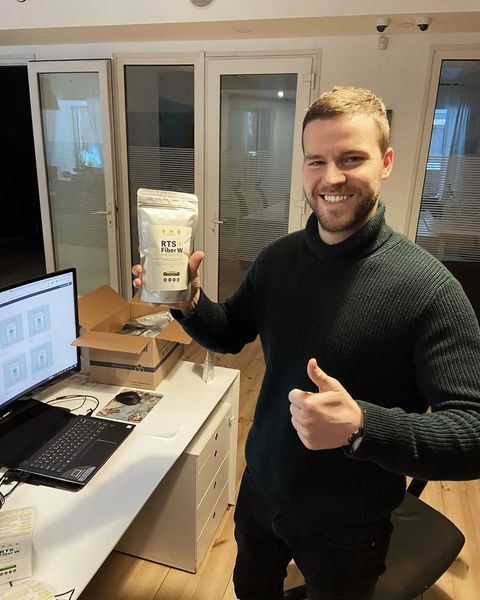 Me, sending out the very first Supliful order.