There are more than 4billion hours of video watched each month. With an active audience, it’s no wonder many businesses have begun to embrace video marketing…
As more businesses embrace content marketing as part of their overall marketing strategy, it’s become critical for brands to distinguish themselves through newer, more innovative means.
Video has long been a favorite among online giants like Google and SEOMoz, and it’s no surprise why; according to YouTube.com, there are more than 4billion hours of video watched each month.
With an active audience, it’s no wonder many businesses have begun to embrace the medium.
Related: Get your online marketing on track before moving onto video — talk with one of our vendors
Why Video?
Video provides three important benefits generally lacking from text-only content:
Video search results have been previously reported to be 50 times more likely to earn clicks than text-only links.
Video can be consumed quickly, and does not require a watcher’s singular focus in the way text-only content might.
Video encourages watchers to connect to the content, as well as to the subject or presenter, on a more human level. Whether crafting a narrative or online tutorial, video captures inflection, tone and many other human subtleties that text-only content generally does not.
Adapt Video to New Media
In order to successfully use video online, brands must be sure to tailor their videos to the unique online medium. Following are 5 tips for getting started.
1. Focus on Results-Based Narratives
Traditional executive two-person interview-style videos remain relevant, but a more compelling option is to produce short, high-quality narratives that focus on consumer results.
Filmmaker and StoryFirst Media Co-Founder, Michael Neelsen, suggests that brands take a planned approach to crafting video if they decide that the narrative format gels with their overall marketing goals. He says:
“It can be easy for inexperienced videographers to think you can just go out and shoot a bunch of footage and see how it fits together later. However, visualizing what the final product should look like beforehand and being deliberate about what you film will make for a far more efficient production and a more considerate end result.”
With carefully planned and executed narrative-style video, brands can convey the benefits of their products and services by featuring real-life, human subjects — a highly-effective maneuver for making the message hit home.
2: Know Your Medium
Among the many new challenges marketers now face is the need to create content that’s optimized for smaller devices and platforms. This is especially true of online video — a medium increasingly viewed on smaller screens.
“Hollywood has begun to adapt their filming style to smaller screens by including more close-ups than before,” says Neelsen. “They recognize that, over time, more viewers are likely to watch films on laptops and tablets than in the theaters.” This same principle applies to corporate video. Reviewing website analytics should provide insights about which devices visitors use to consume your content.
3: Integrate Video into Your Existing Content Marketing Strategy
If your brand has already embraced content marketing, video can be an effective way to add variety to the ongoing strategy.
CloudTactix Social Media Manager, Sam Zastrow, suggests integrating video content into corporate blog publishing and social media campaigns.
“The best part about video is its versatility,” says Zastrow. “Video blogs are great for getting busy decision-makers involved in content marketing without eating into their schedules more than once per quarter or so.”
4: Err on the Side of Shorter
Video analytics are proving just how short our online attention spans really are. It was found in a 2009 study conducted by online video hosting service, Wistia, that video completion rates drop significantly after the first 30 seconds: The average 30-second video was viewed 85% of the way through, while the average 2-minute video was viewed on average 50% of the way through.
5: It Doesn’t Matter What You Shoot On
Although first-time filmmakers tend to believe they need the highest quality hardware to create something worth watching, this is rarely the case.
“It really doesn’t matter what you shoot on,” says Neelsen. “We’ve had cinematographers shoot brilliant footage using just an iPhone. Audiences are engaged by compelling content.”
When adding video to your corporate content marketing strategy, don’t become overly preoccupied with less-than-stellar screen resolution — create something remarkable and viewers will be too engaged to notice.
There’s no debate today about whether blogging works or not. Studies show that inbound marketing can deliver a high volume of leads. However, inbound marketing isn’t exactly a silver bullet. Just because it works well for one type of company with one type of product trying to reach one type of customer, doesn’t mean it will work well for you.
Here’s why problems pop up and what you should do when they happen.
Where Inbound Marketing Commonly Fails
Inbound marketing can work well for most companies in the long run, as long as you plan for:
How long it will take to pay off (years).
Knowing it doesn’t always attract the right type of buyer.
New companies don’t always have the luxury of waiting around for a few years for enough inbound leads to flood their salespeople’s inboxes.
And other content-based campaigns like blogging or webinars almost never get to hard-to-reach people that need to sign off on six or seven-figure deals (think: lawyers, CEOs, etc.). These people barely have enough time to answer an email, let alone attend a webinar for a full hour (or longer).
Blogging acts like a net, helping you to attract and catch people who may one day need what you sell. But like fishing, you’re also going to catch a lot of stuff that will never, ever convert. Instead of tossing out some bait and waiting around for a nibble, you need to go spearfishing.
How You Can Generate High-Ticket Leads (Instead of Inbound Marketing)
In “Predictable Revenue,” Aaron Ross writes about how his team generated over $100 million for Salesforce in new recurring revenue. They did that by first qualifying the types of companies who need what they do, and then conducting outreach to get introductions to the right person inside each large organization. That sounds easy enough on the surface, right?
Call it account-based marketing or just call it good direct sales. The concept is simple: you need to directly get in touch with the right types of buyers through email, phone calls, direct mail or conferences.
The problem is most marketers don’t do enough of these activities quickly enough. High-ticket deals can take months to close. The revenue you’re booking this month actually comes from the work you did over the past three months (or longer).
The reality is you can’t just focus on increasing the top of your funnel like most marketers and advertisers do. Everyone’s familiar with reach and frequency. Reach is the number of new unique people, while frequency is the number of times you reach the same person.
Direct marketing and selling place a greater emphasis on increasing frequency, instead of reach. It transitions you from mass, one-to-many tactics to one-to-one tactics as quickly as possible. Because the data is pretty clear no matter where you look:
Even direct mail, which seems old and tired, converts better than email.
And anyone who’s ever had to sell anything will tell you how much easier it is to close face-to-face than through a digital alternative.
All of these activities are labor intensive. You won’t be able to reach the same number of people, as easily as throwing up a few blog posts. But instead of impressions or eyeballs, you’ll get something much more valuable in return — more sales-ready leads who can turn into new revenue tomorrow.
Neil is the co-founder of Neil Patel Digital. The Wall Street Journal calls him a top influencer on the web, Forbes says he is one of the top 10 marketers, and Entrepreneur Magazine says he created one of the 100 most brilliant companies.
Email is a powerful marketing tool, but too many businesses miss out on its potential. Is yours one of these?
Email is one of the most effective ways for businesses to advertise their services. While many businesses still use direct mail, their budgets might be better spent on email marketing. According to a partnership study conducted by the Data and Marketing Association and United States Postal Service, more than half (57 percent) of mail being sent at the time of the study was still direct mail.
But this strategy, the researchers said, produced a return on investment of just 7 percent. In comparison, email marketing offered an ROI of 28.5 percent. In terms of value, studies have found that email marketing offers businesses $44 for every $1 spent.
Still, some businesses fail to realize email marketing’s full benefits, so to convince them, here are five of the best ways for any business to improve its email campaigns.
1. Personalize your email content.
Most marketers are aware of the benefits of personalization, but many don’t take it seriously. Personalized email content is by far one of the best ways to increase email marketing effectiveness. According to statistics, personalized emails offer six times higher transaction rates than emails without any personalization. Other studies have shown click-through rates are 14 percent higher and conversion rates are 10 percent higher when personalization is part of the general email content.
However, personalization for many businesses means they’re just including the name of the contact in the content. This is far from perfect as a strategy, and many subscribers are now fully aware of this tactic. Instead, personalization needs to be taken to the next level.
One way of doing this is to segment your audience into groups. Then you can send more relevant content to each group. A wedding specialist website that attempted this asked one question: Are you shopping as the couple or for the couple? This simple question split the website’s audience into two groups, but the results showed a 244 percent increase in open-rates and 161 percent increase in click-through rate.
2. Avoid certain words.
Spam filters are there to stop malicious emails from reaching audiences. Of course, spammers usually use words that businesses themselves would like to use. So filters are growing more sophisticated, and allowing more genuine content to gain access into inboxes. Still, there are times when your email might be mistaken for something malicious.
Therefore, you need to minimize the use of certain words that are considered spam by these filters. For instance, words like “bargain,” “50 percent off” and similar keywords will likely send your email to the spam folder.
When you do want to use a typical spam word, because it is relevant to your content, be inventive with your subject lines. Also restrict yourself to just one high-level spam word per email within the content and email subject line. This will reduce the chance of your emails being blacklisted.
The aim here is to catch people who are just about to check their inbox or are in the process of doing so. This will put your email close to the top of their inbox. The more time between your sending it and customers checking it, the less likely it will be that your email is read.
You also don’t want to be sending your promotional content at the same time as everyone else, so sending your emails on the weekend might be the best option. Research has shown that many businesses don’t start campaigns on weekends, so you’ll have less competition, and more people are checking their emails on the weekends now than ever before.
4. Ensure you’re building an engaged email list.
It is often the pride of some entrepreneurs to promote how many people they have on their email lists. However, long lists mean nothing if those people aren’t engaged.
There are many ways to ensure that your list is engaged. It requires removing old and inactive subscribers, but in the end, it will help you achieve more profitable campaigns. The first thing is to check for addresses that have bounced three or more times. Ensure that a simple typo such as .con instead of .com is not responsible for the error.
You can also use email verification services. Those services will identify emails that bounce or are inactive, and they can help to remove spam traps: old emails that ISPs use as a tool to identify businesses that send spam.
5. Optimize emails for mobile.
The number of people who open emails on their mobile varies depending on the study being cited. One study said that 46 percent of people opened emails on their mobiles while another found that 59 percent of emails were being opened on these devices. Very few people actually use a desktop mail client to open emails (15 to 18 percent).
To support your efforts, ensure that your campaigns are optimized for these devices. If your campaigns don’t look good on a mobile device, people aren’t going to read them and take action. Therefore, check to make sure you have great mobile templates. A few quick tips include:
Email marketing could be the best way to make your business grow. For over a decade now, it has remained the most profitable form of digital marketing. Yet, too many businesses are failing to optimize their campaigns to maximize potential revenue. So, ensure that you are personalizing your emails as much as possible and make sure you avoid the traps your competitors are falling into. Most of these changes can be made without too much disruption to your current campaigns. So, why not implement them right away?
As summer looms so too does a deluge of ‘summer ready’ and ‘beach body’ ads targeted at women. But Boots’ latest ad from Ogilvy has turned the trope on its head.
Part of a wider commitment from the retailer to focus on body confidence in its marketing, Boots has launched an integrated summer campaign it hopes will “give women the confidence to be whoever they want to be.”
Based on its own insight that 76% of women in the UK have avoided summer activities – like going to the beach or attending music festival – because they feel self-conscious, the TV spot at the heart of ‘Summer Ready’ follows the story of two women embarking on a summer trip.
As they head into shop in Boots, they see a Protein World-esque ad which asks, ‘Are you summer ready?’. The pair are shown laughing it off, before heading to their destination. Boots products feature in the ad as the duo get ready to head to the beach.
The spot is set to a custom version of the Diana Ross classic, ‘I’m Coming Out’.
Helen Normoyle, marketing director for Boots UK and Ireland, said that amid a shift in the conversation around confidence the brand “had a role to play” in ensuring the discussion wasn’t about shape or size but about women having the confidence to be whoever they want to be.
“The statistic [we uncovered] is really shocking and as the brand that stands for championing everyone’s right to feel good, we wanted to take action.”
She added: “That’s why we’re celebrating women who aren’t driven by a need to be someone else’s definition of ‘summer ready’. In doing so, we hope to inspire the rest of the nation to stop worrying about what others think and just start feeling great about themselves.”
The TV ad marks the beginning of a summer-long campaign with activations set to take place throughout the season which will run across ATL TV, print, PR & influencer marketing, loyalty and more.
The play from Boots builds on other commitments it has made to championing body confidence, including its sponsorship of all the national women’s football teams in the UK.
“This is not just about summer. Our partnership with women’s football has given us the opportunity to talk to our customers in new ways, supporting a much bigger social conversation to help improve the confidence and wellbeing of others,” explained. Normoyle.
Boots Health & Beauty print magazine has been leading the charge on this too, having banned image re-touching from its their cover seven years ago.
Boots has been heavily focusing on beauty in its marketing. Its 2018 Christmas ad from Ogilvy married its brand purpose with its beauty proposition, telling the story of a mother and daughter to showcase how giving the gift of beauty can make someone feel.
Earlier this year, it announced it was upping investment in its beauty proposition, overhauling its bricks-and-mortar stores and bringing fresh brands into the fold as it looks to keep is grip on the burgeoning market.
Startups that have a great marketing plan and product are leaps and bounds ahead of many starting a business. One of the first questions that’s posed is whether the company is going to take on the marketing themselves or outsource their marketing to an agency. The fact is that both of these options have their merit as well as disadvantages. Taking on your marketing as a start-up founder allows you to control each aspect of the marketing campaign, but this can be risky since many start-up founders might not be too well-versed in marketing.
Outsourcing your startup marketing can be risky as well as not all marketing companies are created equal. With a small budget, one marketing company that doesn’t deliver then cash flow can be limited without any return.
Self-Education
Self-education in the marketing realm is challenging but very possible. There are training programs for nearly every part of online marketing like PPC, Google Adwords, and affiliate marketing. If you want to learn Adwords or PPC, then you should review which classes/certifications garner the best results. After you have self-educated, it is important to remember that your training was not industry specific. For this reason, it is essential to try a few different approaches to things like content marketing, SEO and, PPC.
Finding the tactics with the most substantial ROI might take a few months to find the optimal process. The education can also be offered to your staff as this will help them understand the marketing strategy in a more profound way. Many of these classes can be written off come tax time so do not look at this education as money spent, but rather an investment in the company as well as its people.
Become an Industry Thought Leader
The founder of a start-up generally gets quite a few responses when outreaching to industry publications. For this reason, you should spearhead becoming a thought leader in your industry. This doesn’t mean that you always have to write articles, but it can mean being a part of a podcast or agreeing to be interviewed. The companies of thought leaders in an industry tend to get leads just because of the highly revered name of the founder. As the founder, you should take it as a personal mission to become widely known throughout an industry.
Other opportunities to establish yourself in an industry is that of conferences. At specific conventions, there are openings to speak about something specific which can do a multitude of good for the speaker. This presentation can be shared as well as a substantial increase in sales can be achieved after the presentation. As we all know conferences are a hotbed of deals being made so giving a great presentation could seal a massive deal for your startup.
Build Your Team
Building a great team can be difficult, but it has numerous advantages. This team will have no learning curve when it comes to the brand that you want to build as this can be instilled in them with training and reminders. An in-house team will also be directly accountable, while a contractor can push responsibility onto their employees. This team in-house is an investment; but with the conversions the marketing team can bring in can be an excellent basis for the beginning of a start-up.
How to build the perfect team:
• Find a great content strategist who can keep your content calendar exciting and informative.
• A social media coordinator isn’t always needed, but someone who writes excellent social media copy is. This can be a contract or piece-by-piece position. A copywriter you have on board can do a month’s worth of tweets using Hootsuite within a few hours. Automating all of the posts should be done carefully as this post points out what could go wrong.
• Talented writers are a must in an online marketing campaign, so find a few contractors while having a writer or two in-house for rush assignments.
• A person who specializes in other types of content like video or infographics can be quite valuable. Content shouldn’t just be in written form so diversify your team with a person who specializes in these content mediums.
Take Advantage of Free Marketing
Social media can market every business regardless of size or industry. The fact social media is also free makes it necessary to create social media accounts for your start-up. This can be a great place to engage with those who might be potential customers. Creating a buzz via social media for a start-up can be invaluable. Name recognition is something all start-ups strive for during their infancy. Social media profiles are often some of the first Google results for a company. Engaging with others in your industry can be an excellent way for the company to network as well as possibly drum up some new business.
Other free marketing opportunities are things like directories as well as forums. These are not as effective as social media, but without cost, there is no real risk. Subreddits are a great place to get real feedback about products or ideas. Even though this isn’t marketing it can be used as a test group as many people on Reddit are there to help and educate.
Taking on marketing, in-house and personally, as a founder of a start-up can be quite a responsibility. Build the best team possible to market as well as establish yourself individually in the industry and watch the leads/sales stream in. Marketing in-house isn’t always an option, but it should at least be considered.
The word “automation” conjures up the image of robots on an assembly line – an impersonal process with little human input. With marketing automation, this image couldn’t be further from the truth. Used correctly, marketing automation software can create a far more personal experience for your customers and leads.
However, just as marketing automation can add a valuable human feel to your marketing communications, so it can also suffer from human error. Inappropriately managed or applied, this software will not provide the ROI you expect from it.
So how can we make sure our investment in marketing automation is fruitful? Below, I’ll share six examples of fatal errors regarding marketing automation that I’ve seen businesses make, along with recommendations about how to avoid these pitfalls.
1. Too much, too soon
Marketing automation is a brilliant tool for nurturing your existing customer base; what it can’t do is to produce customers out of thin air. Businesses that are just starting up can be tempted by the potential of a sophisticated marketing automation solution, but in reality such a solution needs a big enough customer audience in order to be effective.
Similarly, start-ups can go overboard by choosing marketing automation software with more functionality than they require at this early stage – wasting investment on features that will go unused. Or the software might even be too comprehensive for the size of target market.
Honda’s Andrew Pattison has some straightforward advice for startups looking to invest in marketing automation: “Start small, really nail something, and then scale it.”
Action:
Ensure your business has enough prospect data to make the solution worthwhile. If traffic is low, the investment would be better spent driving more users. Some say that only 20-25% of your total marketing budget should go on marketing automation.
Start with a smaller, scalable solution, based on a solid understanding of the features you really need. Ideally, it should be able to grow with your number of contacts.
2. Ignoring the customer journey
In the build-up to conversion, there is a series of unique interactions between a customer and your business. It is a mistake to assume that a conversion funnel from another business will work the same way for your customers.
Failing to engage in customer journey mapping could lead to investment in the wrong marketing automation solution. If you don’t understand the crucial touchpoints for your customers, you can’t ensure that this particular solution will offer the right tools for you to reach them.
In contrast, once you have gained an understanding of the customer journey, marketing automation “allows you to nurture your leads through the entire buying process, delivering highly-targeted, personalized messages that address their specific barriers to purchase.” (Hubspot)
Action:
Monitor customer interactions with your business, identifying the pain points that could be addressed by your marketing automation strategy.
Iteratively test different funnels and work out which marketing automation solution can be adapted for you. Perhaps you could implement a more targeted email strategy, or reach out to customers via social media.
3. Poor utilisation of customer data
Far too often, an effective marketing automation solution is rendered useless by the customer data it relies on. Mismanagement of your CRM system and a lack of customer segmentation result in the wrong messages getting through to the wrong people, threatening your overall inbound marketing strategy.
Businesses frequently overlook the need to clean up customer data held in their CRM. With around 15% of email addresses on marketing lists invalid, that’s a lot of inefficient noise. The impact of your marketing automation is dependent on the quality of data being fed into it.
Once you’re confident that your CRM data is up to date, the next crucial step is to segment it effectively. Marketing automation can achieve an impressively individualised method of nurturing your customers, but it can only do this if your audience segmentation is well defined.
Action:
Ensure your CRM data is relevant and up to date. This Uberflip guide has some excellent tips for refreshing your database.
Consider complementing your CRM with a data management platform (DMP) that can help you achieve even more accurate audience segmentation.
4. Alienating the customer
At its best, marketing automation should create an interesting, informative, personal experience for your customers. However, if mismanaged, there is still a risk of alienating people with irrelevant campaigns, excessive numbers of emails, or even the wrong mode of address.
Communication via marketing automation should make customers feel that you are giving them more choice and agency – not that you see them as one more faceless consumer. For example, florist Bloom & Wild has received praise for emailing customers the opportunity to opt out of Mother’s Day communications. Demonstrating this sensitivity could have a powerful positive impact on the value of their brand.
Nonetheless, using marketing automation to personalise the content your customer sees goes far beyond email communication. It can include the ads you show them or even a modified version of your website. You have the tools to shape a customer’s experience around who they are as an individual.
Action:
Make sure your marketing automation complements your inbound marketing strategy; use the software to nurture existing customers based on the knowledge you have.
Utilise other external data sources to enhance the data you already possess about your customers.
5. Insufficient integration
If your marketing automation solution is not sufficiently integrated with your other digital tools and systems, then it will not react at the right moments – and the chance of a valuable interaction with the customer will be lost.
Certain user activity – for example, making an in-app purchase or downloading an eBook – should trigger a sequence of messages. These will ensure the user knows you value their interaction with your business and are there to support them to get the most out of it.
Action:
Try using data management software to help you integrate your marketing automation with your other systems.
6. Focusing on the wrong metrics
When you’re evaluating the success of your marketing automation, it’s easy to get distracted by one high-performing metric – forgetting that this is just one part of a bigger story.
Perhaps your open rate for one email campaign is 40% versus 10% for another. Based on that metric alone, it looks like the first campaign was more successful. But what about click-through rates? If that 40% opened the email but didn’t follow the link inside, whereas half of the 10% did, suddenly the second campaign looks more productive.
Considering how multiple metrics work together will give you a much more accurate picture of the impact of your marketing automation. Take a holistic approach. This will help prevent a waste of budget on ineffective strategies.
Action:
Make the most of web analytics tools to test your KPIs and ensure your marketing automation solution is keeping pace.
Conclusion
In the right hands, marketing automation will allow your business to grow while still providing a personal experience for customers. Choosing software with the appropriate level of functionality for your business – and then using these tools to their full potential – is crucial.
Keep your customers in mind at all times. Who are they, what are they buying, what content do they demand? This data needs to be measured, managed, and used to shape your automation strategy. Furthermore, checking that your systems are integrated and communicating with each other will ensure that the high-quality content you’ve produced is actually reaching the right people at the right time.
Providing you invest in the right software for your business needs, marketing automation will be a great asset to your company – allowing you to connect with more customers in more profound ways. But you must take time to understand the software’s functionality, integrate it with your existing systems, and ensure that it is delivering a message that will drive engagement and action.
Oren Greenberg is a growth marketer and the founder of the Kurve consultancy in London, UK. He helps startups and corporate innovations projects scale using digital channels. He has written for leading marketing blogs and has been featured in the international press.
In the summer of 1956, 10 scientists and mathematicians gathered at New Hampshire’s Dartmouth College to brainstorm a new concept Assistant Professor John McCarthy called “artificial intelligence.” According to the original proposal for the research project, McCarthy—along with fellow organizers from Harvard, Bell Labs and IBM—wanted to explore the idea of programming machines to use language and solve problems for humans while improving over time.
It would be years before these lofty objectives were met, but the summer workshop is credited with launching the field of artificial intelligence (AI). Sixty years later, cognitive scientists, data analysts, UX designers and countless others are doing everything those pioneering scientists hoped for—and more. With deep learning, companies can make extraordinary progress in industries ranging from cybersecurity to marketing. It’s just a matter of knowing where to start.
Think of AI as a machine-powered version of mankind’s cognitive skills. These machines have the ability to interact with humans in a way that feels natural, and just like humans they can grasp complex concepts and extract insights from the information they’re given. Artificial intelligence can understand, learn, interpret, and reason. The difference is that AI can do all of these things faster and on a much bigger scale.
“In the era of big data, we have the need to mine all of that information, and humans can no longer do it alone,” says Mark Simpson, VP of offering management at IBM Watson Marketing. “AI has the capacity to create richer, more personalized digital experiences for consumers, and meet customers’ increasingly high brand expectations.”
The knowledge companies stand to gain by using AI seems to have no bounds. In healthcare, medical professionals are applying it to analyze patient data, explain lab results and support busy physicians. In the security industry, AI helps firms detect potential threats like malicious software in real time. Marketers, meanwhile, can use AI to synthesize data and identify key audience and performance insights, thus freeing them up to be more strategic and creative with their campaigns.
There’s something else AI is very good at, and that’s improving the relationship between companies and consumers. “Even in its earliest iteration, AI helped companies better understand how to be human,” says Brian Solis, author and principal analyst at Altimeter, the digital analyst group at brand and marketing consultancy Prophet. “The irony is that it took this very advanced technology to make them think differently about how they should communicate with their customers.”
Over the past 50 years, Solis says, advances like speech technology, automated attendants, virtual assistants and websites have opened a chasm between companies and customer engagement while also multiplying consumer touchpoints. But AI has the potential to close that gap.
By helping marketers collect data, identify new customer segments and create a more unified marketing and analytics system, AI can scale customer personalization and precision in ways that didn’t exist before. Connecting customer data from sources like websites and social media enables companies to craft marketing messages that are more relevant to consumers’ current needs. AI can deliver an ad experience that is more personalized for each user, shapes the customer journey, influences purchasing decisions and builds brand loyalty.
IBM’s Watson Marketing is leading the charge with a platform that capitalizes on all that AI has to offer. Products like Customer Experience Analytics lets marketers visualize the customer journey and identify areas where consumers might be experiencing friction. Companies get a more complete view of the customer journey, which they can then optimize to improve customer engagement and conversion rates. Since it’s delivered through a single, unified interface, IBM Watson Customer Experience Analytics makes gaining actionable intelligence a seamless process for brands.
According to market research firm TechNavio, the AI market in the U.S. is expected to grow at a compound actual growth rate of about 50 percent through 2021. In its 2017 report “Artificial Intelligence: The Next Digital Frontier?” the McKinsey Global Institute urges companies not to delay “advancing their digital journeys”—especially when it comes to leveraging AI. “It’s those who understand how to use AI in new ways, to create new mindsets and paradigms, that will instill a competitive advantage that wasn’t there before,” Solis says.
We’ve entered the age of deep learning, and with human guidance AI is finally reaching its true potential. Today, the technology McCarthy and his colleagues dreamed about in 1956 takes the form of AI platforms like Watson Marketing. And now is the right time to truly harness the power of AI and put it to work for business success.
Find out more about how Watson Marketing can uncover insights to help you better understand your customers. Read the Guide.
Content Provided by IBM with Insider Studios. Insider Studios is the branded content studio for Insider Inc., the parent company of INSIDER and Business Insider.
Marketing consultant must be in a position to take care of any issues or problems that may come up during your advertising campaign quickly and efficiently.
Marketing consultant must be in a position to take care of any issues or problems that may come up during your advertising campaign quickly and efficiently. You want to discuss with a professional marketing and advertising consultant who can help you find your own strengths and weaknesses and help you position yourself in the industry. An excellent marketing and advertising consultant must be a specialist in many different advertising and marketing practices and strategies. An advertising consultant is a person who truly understands that marketing is vital to business success and penetration. He is the person who can helps a company decide how to best engage existing clients. A growth promoting consultant may be a great idea for your company.
Online marketing is a multifaceted game and societal media is part of the entire game. The Marketing Process An advertising consultant will use a step-by-step procedure to help create a productive advertising plan. Plenty of search engine marketing requires the utilization of relevant keyword phrases as well as the usage of relevant backlinks.
To get the most out of your associations with copywriters and consultants, you want to understand what they both do best-and when you require each. You should first assess the consultant’s experience so as to guarantee superior support. Now, an individual cannot just assume he or she is able to turn into a Multi Level Marketing consultant. It is essential that as a Multi Level Marketing specialist, you will have the ability to advise people or other network companies on how they’ll have the ability to meet success and how much time it will take.
Marketing consultants provide valuable insight into your company. Moreover, your advertising consultant personally designs an approach to fix your problems. An advertising consultant looks at the present business model and after that, using analytical tools, considers the industry potential and develops a strategy to attain larger goals. He can help your business create marketing plans and marketing strategies. Business advertising consultants are usually talented enough to think of a business plan which will attract attention and will guarantee potential clients. They can be a great service to your business. When hiring business advertising consultants, make sure to assess your candidates thoroughly to make sure you’re choosing the very best person for the job.
In the event the consultant isn’t asking questions, there is an enormous chance he isn’t understanding your problem. He will also discuss how your marketing ideas will affect your business and which parts of the plan you should fine-tune. So before you employ any sort of SEO consultant ask for a completely free site audit. A search engine optimization consultant will look after the entire course of action. If you’re going to employ a professional search engine optimisation consultant, make sure you check his credentials carefully. The very good search engine marketing consultants will also let you know what you have to ask a search engine optimization company so you will not to be fooled into paying too much. Timing A superior local search engine optimisation consultant will always complete his job punctually and won’t extend the time limits to provide you your preferred service.
So you’re in the early stages of launching a small business. You’ve got a great product or service and obtained funding to get the company off the ground, but what about marketing? Do people know your business will be opening soon?
Getting noticed is one of the biggest challenges facing new small business owners. There are many different ways to market your business, such as using internet ads, social media pages, content marketing, in-person networking and more.
Some methods may be more effective than others, depending on your industry. But two areas all businesses need to excel in are internet-based marketing and in-person networking.
We’ve compiled a list of small business marketing tips, strategies and ideas that will help get your business noticed before, during and after opening.
13 Small Business Marketing Tips, Ideas and Strategies
Below is a breakdown of different tips, strategies and approaches on small business marketing. These tips and ideas are ranked based on when you should consider implementing them during pre-launch or in the early days of your business.
1. Create a Marketing Budget
For small businesses operating on a shoestring budget, it can be tempting to save money by not setting aside funds for marketing. But if your marketing strategy is to rely on word of mouth to promote your business, you’re in for a rude awakening.
Josh Rubin, CEO of Post Modern Marketing, tells small business owners they have to create a marketing budget, and the value of that budget can’t be an amount that will break the company if it doesn’t produce immediate results.
In the early days, you’re going to be spending time determining your company’s identity and figuring out what messaging connects with new customers. Be prepared for a lot of trial and error. “So set a budget that you’re willing to lose,” Rubin says.
2. Secure Your Company Name
You have an idea of what to name your small business and think it will connect with your target audience, but is that name available online?
“I see a lot of business owners that think of the name of their company but then don’t think about reserving a URL with [that name],” says Sherry Bonelli, owner of Early Bird Digital Marketing. She is also a small business mentor with Score, a volunteer group supported by the U.S. Small Business Administration that connects business owners with mentors from similar fields.
Having a website address that matches your company name is important, as people are doing more business online. It might be difficult for potential customers to find your website if they don’t match.
Once you have a business name in mind, go to a domain registrar, such as GoDaddy or Google Domains, to see if the web address is available. Prices start at $12 per year to reserve a domain name using Google Domains.
3. Create a Logo and Brand
If you want to be taken seriously as a business, you’re going to need to look the part. It might be tempting to create a generic logo and use a website template or stock photos when launching, but that isn’t necessarily good in the long run.
“I think many small business owners skimp on this step, and that’s a big mistake because if you don’t look like a real company, customers and clients are not going to trust you,” Bonelli says. Freelance websites such as Fiverr, Upwork and 99designs connect business owners with graphic designers who can create a custom logo, color palette, business cards and overall design for your business. This can cost anywhere between $300 and $500.
4. Build a User-Friendly Website
Once you have your logo ready, it’s time to build your website.
The way people search online has created many changes to website design. Having a site that looks good on smartphones and tablets is more vital than ever.
Website builders like WordPress.com, Squarespace and Wix, come with mobile-friendly features. They offer multiple templates, customization options and support for a monthly fee. Think like a potential consumer when building your site and make sure it has all the features and information you’d want to see.
5. Make Your Website SEO Friendly
Now that you’ve built your website, you should make it as easy as possible for people to find it when searching the web. Search engine optimization, more commonly known as SEO, is the process of getting web traffic from search engine results. SEO plays a crucial role in helping local and small businesses get discovered online.
Several factors determine a website’s search engine ranking. These include posting well-written blog pages that establish your topic credibility on a regular basis and using correct keywords associated with your business. To learn more about best SEO practices, check out free resources on sites such as Moz, Search Engine Land and Search Engine Journal.
If you’re planning on opening a physical location such as a restaurant, store or office, don’t forget to create a business profile on Google My Business, a free business listing service, that provides your essential info,such as a street address, phone number, hours of operation and business description.
One of the primary benefits of Google My Business is that it drives the “Map Pack” on Google search results, which may increase your visibility, in-store visits or calls This service is only available for local businesses with a physical address, not internet-only companies.
When owning a company, you should watch what your competitors are doing with their social media platforms. “If a competitor is using Pinterest and it seems like they’re gaining a lot of engagement, then Pinterest might be a place you want to go,” says Kim Randall, owner of KiMedia Strategies. Tina Russell/The Penny Hoarder
Now it’s time to create social media pages on platforms your audience uses. You can count on using the major platforms — Facebook, Instagram, Twitter and LinkedIn — to promote business news and engage with your customer base.
At all stages of your company’s life, you should also keep an eye on what your competitors are doing with their social media platforms. “If a competitor is using Pinterest and it seems like they’re gaining a lot of engagement, then Pinterest might be a place you want to go,” says Kim Randall, owner of KiMedia Strategies, a small business marketing firm.
7. Find Free or Low-Cost Business Services
Money is going to be tight in the early days of starting your small business, so it helps to use free or low-cost services to help your marketing. Below is a list of programs that can help you save money running your business.
Buffer is a social media tool that allows users to schedule posts in advance or post the same content to different platforms at once. It has free and paid versions, starting at $15 per month.
Google Alerts are free and will help you keep up with what people are saying online about your business or keep up with specific keywords.
KeywordTool.io is a free service that allows business owners to do keyword research for their website and ads.
Apps such as Grammarly and the Hemingway Editor can be useful when writing blogs or content on your website. These will help you write more succinctly and catch grammatical errors. Grammarly has a free version and a premium version that includes features such as a plagiarism detector, vocabulary enhancement and genre-specific writing-style suggestions. The premium versions costs $29.95 per month (or a discounted rate of $139.95 when paid annually).
8. Buy Online Ads
Once your business has opened, it’s time to start advertising. Google Ads, which appear when you search on Google, is an obvious place to start because of the search engine’s popularity. According to Google, businesses generally make an average of $2 in revenue for every $1 they spend on Google Ads.
Bonelli says the problem with Google Ads for new small-business owners is that it can be expensive. To make it effective, she says to include your ad the information that users seek when they search on Google.
For example, if someone is searching for “wedding gown alterations,” the web page your ad sends users to must emphasize that your business specializes in wedding gown alterations.
9. Set Up Email Marketing
People who sign up to your email marketing program tend to be the most engaged members of your audience. These members generally read more articles after opening the email and are more likely to buy your products or services. That’s why it’s important to provide content and information your audience cares about in every email blast you send.
“If you’re mailing out to a random [email subscription] list you didn’t build, that’s where you’re not going to be effective. But if you mail out information that people are interested in, that’s where it’s really effective,” Bonelli says.
Include a button on your website that allows people to sign up for your email campaigns. A free version of MailChimp can help build your email list — it allows you to send up to 12,000 emails a month to up to 2,000 subscribers. The paid version allows you to send an unlimited number of emails to an unlimited number of subscribers. The cost of the membership increases based on the number of subscribers.
10. Craft an Elevator Pitch
Before you start meeting potential customers and attending networking events, do you have your elevator pitch ready? An elevator pitch is a speech lasing 30 to 45 seconds that tells the listener who you are, what you do and how your business will be better than the competition. With some practice, it may lead to a potential customer. Learn more on how to develop a great elevator pitch.
Randall listens as Jason Hendricks asks a question during an Operation Startup workshop where Randall led a workshop on how to grow one’s company social media presence at the Entrepreneur Collaborative Center on in Ybor City, Florida on March 15, 2019. Tina Russell/The Penny Hoarder
When your business is off the ground, think about establishing yourself as a thought leader. A “thought leader” is a marketing term for a recognized authority in a field who is sought after as an expert.
Every business owner is a thought leader without knowing it yet; there is a reason you started your business, so let people know what you know. For example, if you’re a photographer, write blogs offering tips and tricks on how to take better iPhone photos or suggest “three things to look for in a wedding photographer.”
Randall used this strategy in the early days of social media marketing. “When I gave my thoughts, tips and everything else away and became a thought leader within the social media space, I gained a lot more clients,” she says.
Early on when people are not yet visiting your site, consider becoming a guest contributor on another established website in your field so you can promote your knowledge on the subject and point people in the direction of your website to learn more.
Another way to become a recognized expert is by meeting your target audience. Meetup.com is a great way to find local groups who are interested in topics related to your business. For example, if you run a knitting or sewing store, you might look to see whether any knitting or sewing events are happening in your area and offer to give a free demonstration.
12. Get Involved With Your Chamber of Commerce
Not all marketing is done online. Getting involved with your local Chamber of Commerce will enable you to meet fellow business owners during in-person networking events and other chamber functions. Over time, you’ll expand your professional network and be able to utilize their resources.
Rubin says his Chamber helped his company get featured on a local news segment. Once you start to support other businesses, they’ll do the same when you have a big event or project.
“All it takes is your time and your energy,” he says.
13. Find a Business Mentor and Continue Learning
As a new small business owner or entrepreneur, it’s never a bad thing to seek guidance from people who have been in your shoes. There are both local and national nonprofits devoted to helping business owners.
Score offers their mentoring service free of charge. Rubin, a Score volunteer, says if you want to know more about marketing, Score can connect you with retired marketing executives or other knowledgeable people who can help you grow your business.
“I’ll scream their praises from every rooftop because everyone always thinks that you have to pay for this kind of business support, and it’s out there for free,” he says.
As you progress and figure out what marketing material connects with your audience, don’t stop learning new things. Small business marketing is a topic that is difficult to master because strategies that work now will change and marketing fads come and go.
Luckily, there are a lot of free blog posts, courses and resources out there to teach business owners about SEO, social media marketing, internet advertising and more.
You can sign up for a massive open online course (MOOCs), keep up with the SEO sites listed above or follow marketing professionals you admire on LinkedIn or other social media.
“There’s so much information out there now that if business owners spend an hour a night just searching the web and teaching themselves how to do small business marketing, they’ll be successful at it,” Bonelli says.
Feature Image Credit: Kim Randall, owner of KiMedia Strategies, helps other businesses grow their social media presence. Tina Russell/The Penny Hoarder
Your international marketing campaigns hinge on one crucial element: how well you have understood your audience.
As with all marketing, insight into the user behaviour, preferences and needs of your market is a must. However, if you do not have feet on the ground in these markets, you may be struggling to understand why your campaigns are not hitting the mark.
Thankfully you have a goldmine of data about your customers’ interests, behaviour, and demographics already at your fingertips. Wherever your international markets are, Google Analytics should be your first destination for drawing out actionable insights.
Setting up Google Analytics for international insight
Google Analytics is a powerful tool but the sheer volume of data available through it can make finding usable insights tough. The first step for getting the most out of Google Analytics is ensuring it has been set up in the most effective way. This needs to encompass the following:
Depending on your current Google Analytics set-up you may already have more than one profile and view for your website data. What insight you want to get from your data will influence how you set up this first stage of filtering. If you want to understand how the French pages are being accessed and interacted with then you may wish to create a filter based on the folder structure of your site, such as the “/fr-fr/” sub-folder of your site.
However, this will show you information on visitors who arrive on these pages from any geographic location. If your hreflang tags aren’t correct and Google is serving your French pages to a Canadian audience, then you will be seeing Canadian visitors’ data under this filter too.
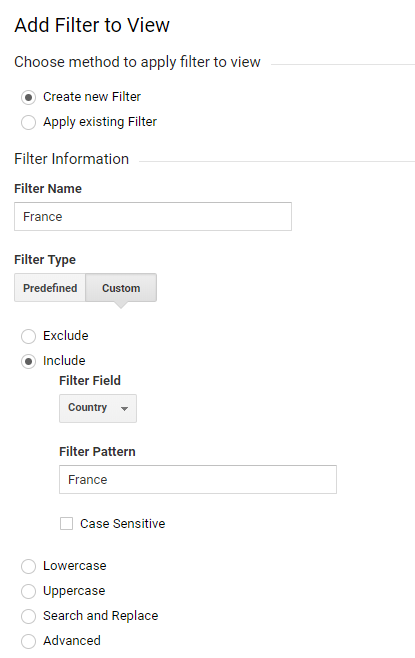
If you are interested in only seeing how French visitors interact with the website, no matter where on the site they end up, then a geographic filter is better. Here’s an example.
2. Setting up segments per target area
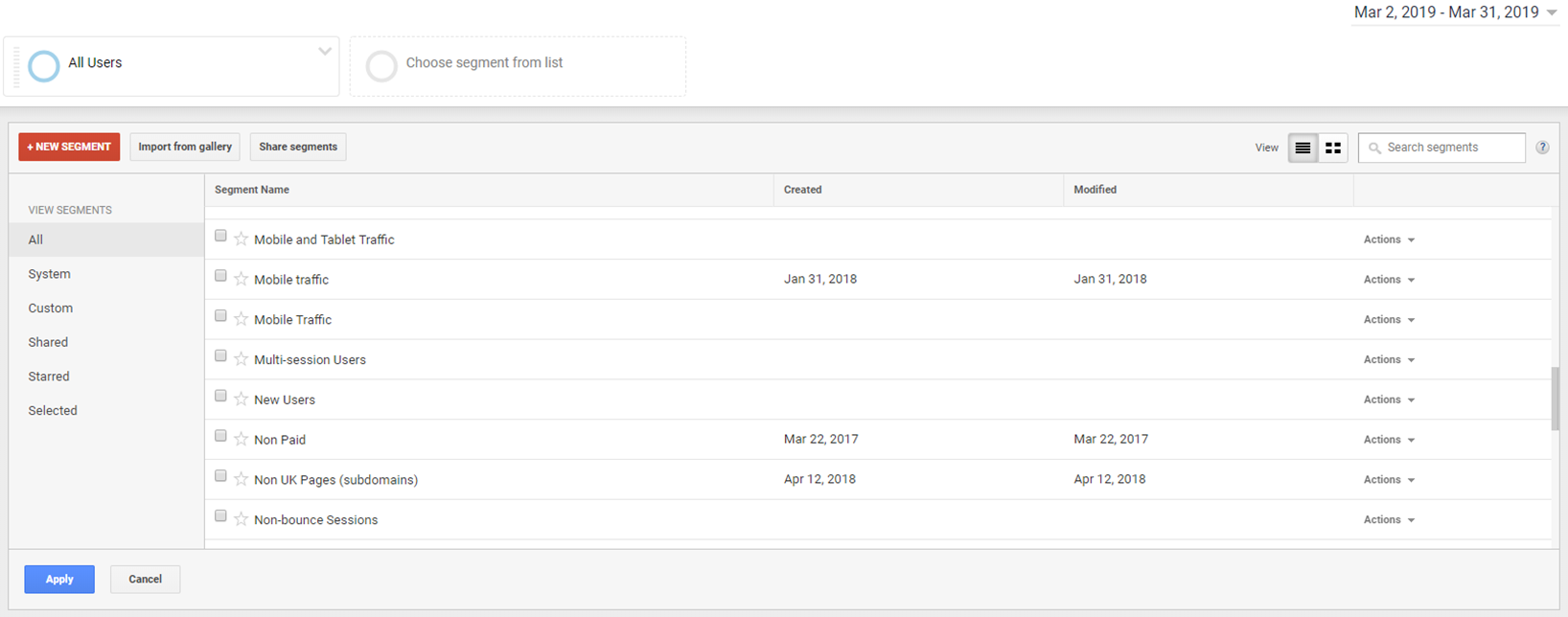
Another way of being able to identify how users from different locations are responding to your website and digital marketing is by setting up segments within Google Analytics based on user demographics. Segments enable you to see a subset of your data that, unlike filters, don’t permanently alter the data you are viewing. Segments will allow you to narrow down your user data based on a variety of demographics, such as which campaign led them to the website, the language in which they are viewing the content, and their age. To set up a segment in Google Analytics click on “All Users” at the top of the screen. This will bring up all of the segments currently available in your account.
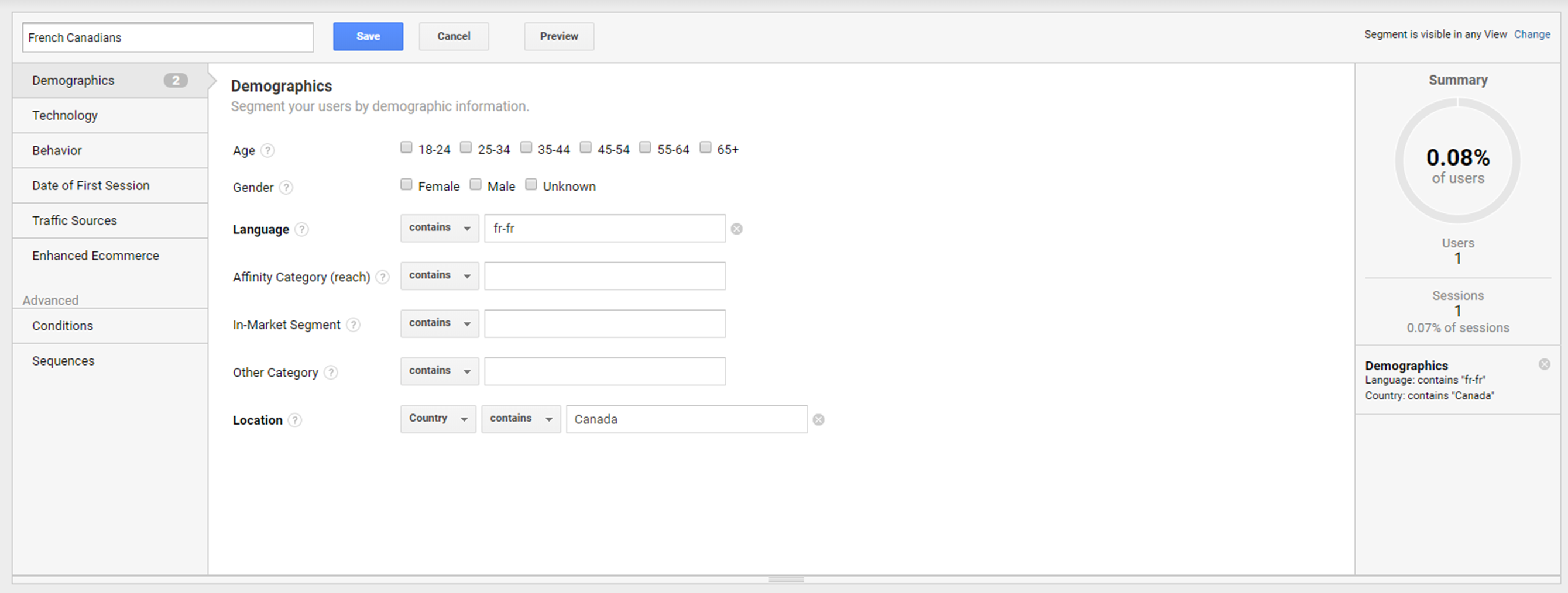
To create a new segment click “New Segment” and configure the fields to include or exclude the relevant visitors from your data. For instance, to get a better idea of how French-Canadian visitors interact with your website you might create a segment that only includes French-speaking Canadians. To do this you can set your demographics to include “fr-fr” in the “Language” field and “Canada” in the “Location” field.
Use the demographic fields to tailor your segment to include visitors from certain locations speaking specific languages.
The segment “Summary” will give you an indication of what proportion of your visitors would be included in this segment which will help you sense-check if you have set it up correctly. Once you have saved your new segment it will be available for you to overlay onto your data from any time period, even from before you set up the segment. This is unlike filters, which will only apply to data recorded after the filter was created.
A common missing step to setting your international targeting up on Google Analytics is ensuring the entry points for visitors onto your site are tracking correctly.
For instance, there are a variety of international search engines that Google Analytics counts as “referral” sources rather than organic traffic sources unless a filter is added to change this.
The best way to identify this is to review the websites listed as having driven traffic to your website, follow the path – Acquisition > All Traffic > Referrals. If you identify search engines among this list then there are a couple of solutions available to make sure credit for your marketing success is being assigned correctly.
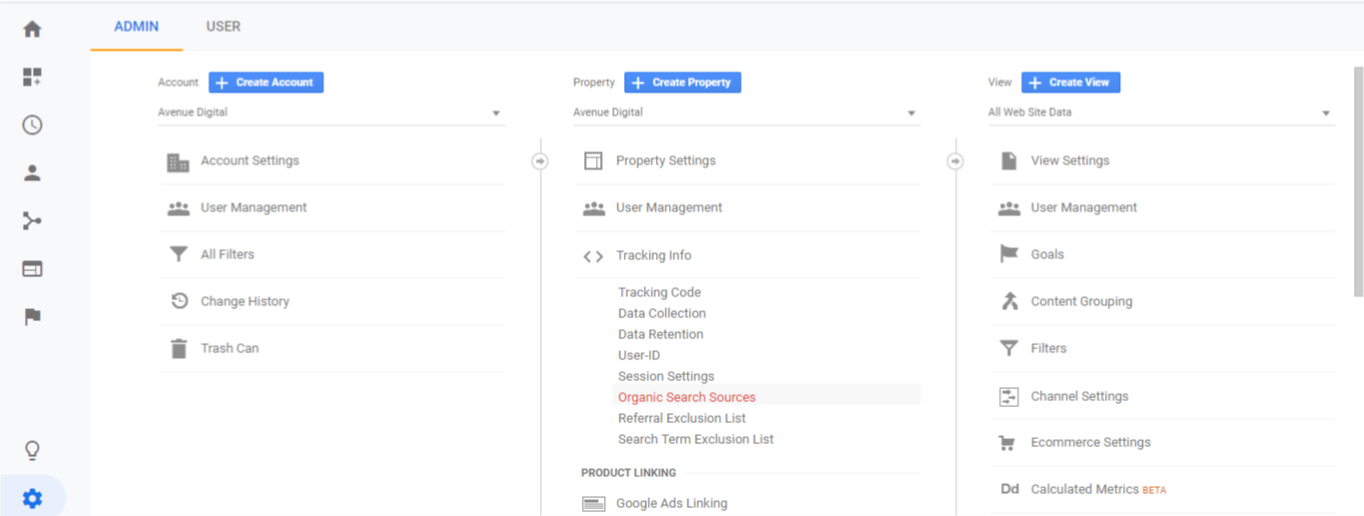
First, visit the “Organic Search Sources” section in Google Analytics which can be found under Admin > Property > Organic Search Sources.
From here, you can simply add the referring domain of the search engine that is being recorded as a “referral” to the form. Google Analytics should start tracking traffic from that source as organic. Simple. Unfortunately, it doesn’t always work for every search engine.
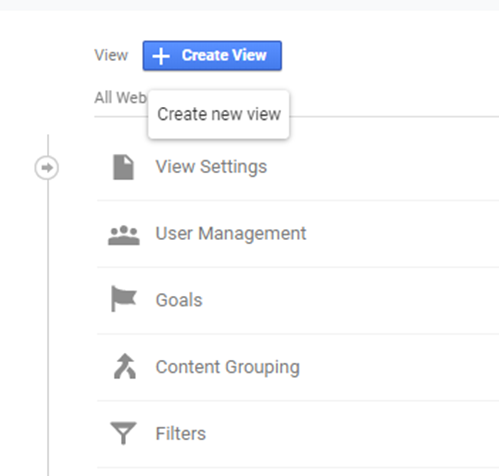
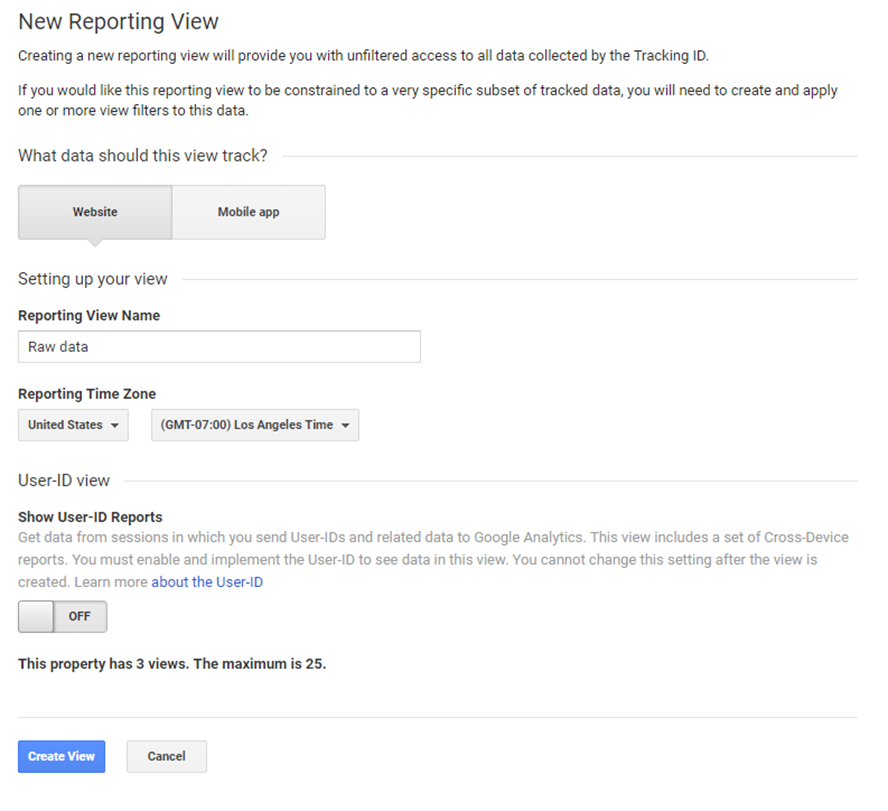
If you find the “Organic Search Sources” solution isn’t working, filters are a fool-proof solution but be warned, this will alter all your data in Google Analytics from the point the filter is put in place. Unless you have a separate unfiltered view available (which is highly recommended) then the data will not be recoverable and you may struggle to get an accurate comparison with data prior to the filter implementation. To set up a view without a filter you simply need to navigate to “Admin” and under “View” click “Create View”.
Name your unfiltered view “Raw data” or similar that will remind you that this view needs to remain free of filters.
To add a filter to the Google Analytics view that you want to have more accurate data in, go to “Filters” under the “View” that you want the data to be corrected for.
Click “Add Filter” and select the “Custom” option. To change traffic from referral to organic, copy the below settings:
Filter Type: Advanced
Field A – Extract A: Referral (enter the domain of the website you want to reclassify traffic from)
Field B – Extract B: Campaign Medium – referral
Output To – Constructor: Campaign Medium – organic
Then ensure the “Field A Required”, “Field B Required”, and “Override Output Field” options are selected.
You may also notice the social media websites are listed among the referral sources. The same filter process applies to them. Just enter “social” rather than “organic” under the “Output To” field.
4. Setting goals per user group
Once you have a better idea of how users from different locations use your website you may want to set up some independent goals specific to those users in Google Analytics. This could be, for example, a measure of how many visitors download a PDF in Chinese. This goal might not be pertinent to your French visitors’ view, but it is a very important measure of how well your website content is performing for your Chinese audience.
The goals are simple to create in Google Analytics, just navigate to “Admin”, and under the view that you want to add the goal to click “Goals”. This will bring up a screen that displays any current goals set up in your view and, if you have edit level permissions in Google Analytics, you can create a new one by clicking “New Goal”.
Once you have selected “New Goal” you will be given the option of setting up a goal from a template or creating a custom one. It is likely that you will need to configure a custom goal in order to track specific actions based off of events or page destinations. For example, if you are measuring how many people download a PDF you may track the “Download” button click events, or you may create a goal based on visitors going to the “Thank you” page that is displayed once a PDF is downloaded.
Most goals will need to be custom ones that allow you to track visitors completing specific events or navigating to destination pages.
With the number of goals you can set up under each view (which is limited to 20), it is likely that your goals will be different under each in order to drive the most relevant insight.
5. Filtering tables by location
An easy way to determine location-specific user behaviour is using the geographic dimensions to further drill-down into the data that you are viewing.
For instance, if you run an experiential marketing campaign in Paris to promote awareness of your products, then viewing the traffic that went to the French product pages of your website that day compared to a previous day could give you an indicator of success. However, what would be even more useful would be to see if interest in the website spiked for visitors from Paris.
By applying “City” as a secondary dimension on the table of data you are looking at how you can get a more specific overview of how well the campaign performed in that region.
Dimensions available include “Continent”, “Sub-continent” “Country”, “Region”, and “City”, as well as being able to split the data by “Language”.
Drawing intelligence from your data
Once you have your goals set up correctly you will be able to drill much further down into the data Google Analytics is presenting you with. An overview of how international users are navigating your site, interacting with content and their pain points is valuable in determining how to better optimize your website and marketing campaigns for conversion.
1. Creating personas
Many organizations will have created user personas at one stage or another, but it is valuable to review them periodically to ensure they are still relevant in the light of changes to your organization or the digital landscape. It is imperative that your geographic targeting has been set up correctly in Google Analytics to ensure your personas drive insight into your international marketing campaigns.
Creating personas using Google Analytics ensures they are based on real visitors who land on your website. This article from my agency, Avenue Digital, gives you step by step guidance on how to use your Google Analytics data to create personas, and how to use them for SEO.
2. Successful advertising mediums
One tip for maximizing the data in Google Analytics is discerning what the most profitable advertising medium is for that demographic.
If you notice that a lot of your French visitors are coming to the website as a result of a PPC campaign advertising your products, but the traffic that converts the most is actually from Twitter, then you can focus on expanding your social media reach in that region.
This may not be the same for your UK visitors who might arrive on the site and convert most from organic search results. With the geographic targeting set up correctly in Google Analytics, you will be able to focus your time and budgets more effectively for each of your target regions, rather than employing a blanket approach based on unfiltered data.
3. Language
Determining the best language to provide your marketing campaigns and website may not be as simple as identifying the primary language for each country you are targeting. For example, Belgium has three official languages – Dutch, German, and French. Google Analytics can help you narrow down which of these languages is primarily used by the demographic that interacts with you the most online.
If you notice that there are a lot of visitors from French-speaking countries landing on your website, but it is only serving content in English, then this forms a good base for diversifying the content on your site.
4. Checking the correctness of your online international targeting
An intricate and easy to get wrong aspect of international marketing is signalling to the search engines what content you want available to searchers in different regions.
Google Analytics allows you to audit how well international targeting has been understood and respected by the search engines. If you have filtered your data by a geographic section of your website, like, /en-gb/ but a high proportion of your organic traffic landing on this section of the site is from countries that have their own specified pages on the site, then this would suggest that your hreflang tags may need checking.
5. Identifying emerging markets
Google Analytics could help identify other markets that are not being served by your current products, website or marketing campaigns that could prove very fruitful if tapped into.
If through your analysis you notice that there is a large volume of visitors from a country you don’t currently serve then you can begin investigations into the viability of expanding into those markets.
Conclusion
As complex as Google Analytics may seem, once you have set it up right expect to get clarity over your data, as it makes drilling down into detail for each of your markets an easy job. The awareness into your markets you gain can be the difference between your digital marketing efforts soaring or falling flat.