Back in the land of B2C marketing, I could build a water-tight business case for TV using insight from Think Box, present a strong argument for redeveloping my e-commerce process by pointing to indisputable benchmarking data, and get under the skin of my target customers using a bucket-load of comms planning tools.
Best of all, I could prove the impact of my efforts to senior management.
“Just look at those numbers! No, seriously. Look. At. Those. Numbers.”
Before long I was up for a fresh challenge, so I jumped ship and embraced the B2B world.
Things were, shall we say, different.
My tried and tested methods didn’t land in the same way.
And it got worse.
The finance director said the B2B marketing budget was discretionary.
And if that wasn’t enough, the sales team got all the credit for the revenue generated.
10 years down the line and again things are different – only this time in a good way. I still use insight and benchmarking to inform my marketing planning where I can – but I’ve learned other ways to convince the board of the importance of investing in B2B.
Fingers crossed you never hear the dreaded words: “The B2B budget is discretionary.”
But if you do, these seven tips will help you present the case that a healthy B2B budget is a must-have, not a nice-to-have.
Get closer to your business
Marketing shouldn’t be a silo. Get to know the various levers in your business – the things that influence the outcomes your business is trying to achieve.
For example, the marketing budget is an important lever as it influences how many leads are generated. The pricing of your product and the effectiveness of your sales team will influence conversions. While your customer relationship management will impact how long customers stay with you and how much they spend.
Understanding these levers will help shape your marketing strategy – and improve its effectiveness.
Know the magic number to ask for
It’s hard knowing what a realistic B2B marketing budget looks like, so it’s useful having some credible research in your back pocket. The CMO Survey Highlights and Insights Report 2017 from Deloitte, Duke University and the American Marketing Association found organisations spend, on average, 7.9% of their revenue on marketing and 11% of their total company budget. While according to the Gartner CMO Spend Survey 2017-2018, the number’s higher – organisations dedicate 11.3% of their overall revenue to marketing.
Understand buyer-behaviour trends – and make sure your spend mirrors them
Then you can justify exactly how you plan to spend your budget. Online is making its presence felt across every phase of the B2B buying journey – according to a study by Earnest and Imperial College London, it accounts for 49% and 58% respectively of the ‘research’ and ‘purchase’ stages.
No surprise, then, that we’re seeing an increase in digital marketing spend.
Check what you’re doing matters to people other than you
Do your metrics turn the heads of people outside of marketing? That stuff you’re tracking and reporting on – is it in sync with broader business goals and key performance indicators? Truth is, your board probably doesn’t care about the same things you do. So make sure your KPIs demonstrate your marketing is having an impact on the stuff they do care about.
Incorporate alternative measurement models
It may seem counter-intuitive, but it’s not all about directly attributing sales to your marketing activity. Assists matter too. If your content marketing strategy aligns with your customer journey, you can use your marketing automation platform to see how the buyer engaged with it in the lead-up to the deal.
Be proud of your results – you worked hard for them
Don’t hide your numbers away. Make a visually striking dashboard or scorecard that makes it really easy for your board to understand what you’ve achieved. And don’t forget to highlight where your marketing successes align with the wider business goals.
Use the lingo being used right now
More and more we’re seeing the marketing department being relabelled the ‘growth department’. Who knows, maybe next year we’ll be relabelled as a chief growth officer. Or head of growth.
But that’s OK, because marketers are good at growth. We grow brand engagement. We grow customer bases. We grow revenue.
So choose your words wisely because sometimes it pays to use the latest buzz word.
Digital marketing is an investment. It takes time to mature before it can pay you back.
This is a question that has plagued us for years and we have spoken to many “experts,” but they seemed to be speaking in another language. We are not the professional online marketers they usually have as students. We are regular small business owners looking for advice we can understand and apply. We decided to ask Claudia Sheridan, a social marketing practitioner who specializes in small and medium-sized businesses like ours. After our initial meeting with Claudia, she was able to explain the various facets involved in digital marketing and how they work together to produce results — in terms we could understand!
1. The Big Picture
Michael & Bonnie: We’ve spent hundreds of thousands of dollars over the years on social marketers. We found that generally speaking, they understood one or two parts of the puzzle but didn’t have a comprehensive picture and certainly couldn’t deliver all the details necessary to make it happen. Typically, they would create and charge us for a funnel and put a lot of emphasis on landing pages but could not get many people into the funnel. Can you outline for us the various different aspects of social marketing that have to be in place to make it work?
Claudia: Social marketing is a part of a much larger concept, that isn’t really talked about. We think about social media and lead generation but rarely do marketers talk about all of the different aspects involved with Digital marketing, which is what businesses, in my opinion, really need to focus on. It’s not one aspect of the available websites and tools, but rather how to make the different components work together in an effective and efficient manner that produces the desired results.
When looking to work with a marketer, look for one that understands the digital marketing landscape and can identify how the elements can best work for the goals you’re trying to accomplish. For example, a company may want to utilize a social media channel, such as Facebook, to generate awareness and build their brand. They may decide to place an ad and make an offer but they rarely consider the stages at which the prospect is within the buying journey.
This reminds me of a stranger on a street corner who offers to sell you a fake watch from the lining of his coat. It may capture your attention, or you may walk away. There is no friendship here, no relationship, no trust. What there is, however, is doubt. And, who wants to build a business relationship based on doubt? So then, what does this process look like? And, the answer is that it varies on the strategy that is being used.
2. Metrics vs. Results
Michael & Bonnie: When we’ve dealt with social marketers in the past, they have tried to tell us that the likes, clicks, and shares, somehow resulted in increased business. But we found that it actually increased our overhead to maintain a current and interactive online presence. Further we’ve seen no substantial increase in business as a result of our investments in social marketing. What would you say to a client who has had that unfortunate experience before coming to you?
Claudia: I think that entrepreneurs are always on the lookout for that one thing, that silver bullet, that will generate a large amount of business for them. In 2011-2012, commenting, liking and sharing would have done the trick, but today, that is no longer the case. Today, to be successful on Facebook, it means that you need to play within Facebook’s rules and adapt accordingly. More importantly, it means that you need to have a clear marketing strategy that can be executed, tested, measured, optimized and is able to adapt to Facebook’s changes. This isn’t a linear strategy, but an iterative one that is constantly evolving.
3. Changing Rules
Michael & Bonnie: It seems like every six months the rules change on social marketing. Just when you get set up, it seems like the rules change and you have to go back and reorganize. How can you anticipate and mitigate these changes?
Claudia: The rules do change, and although the changes seem to be significant, they’re really not. If a business has actively been participating in Facebook marketing, executing their strategy and making adjustments along the way, then as we learn of a new Facebook change, it just becomes a slight adjustment in the strategy. Facebook’s changes, however, can appear colossal to companies who are not actively monitoring their Facebook marketing or do not have a solid strategy in place that they’re following.
It’s kind of like joining the gym every January. If we had just stuck with the workouts that the fitness trainer laid out for us on day one, and we committed to working out a few times a week and eating right, then going to the gym after the holidays would be just another day. But if we joined in January, stopped going in February, only to join back up 11 months later, the goal of getting into shape is much more daunting. We don’t expect to walk into a gym on day one and walk out two hours later with six-pack abs, do we? Yet with Facebook, we expect immediate return with very little effort and get frustrated when the work-out has changed.
4. Overload
Michael & Bonnie: Don’t you think people are getting too many emails from social marketers? I know that I now have a setting on my Outlook that can take all those emails and put them on a lower priority profile. How do you get your clients prospects to open the emails in the campaigns you organize for them?
Claudia: If marketing was a pie, then email marketing should make up another piece of that pie. There are some companies who are amazing at email marketing and others who could use a little refinement. To get a prospect to open emails, you need to send them the right message at the right time. The question then becomes, how do you know when that is? Well, with a good email system, you can segment your audience to deliver messages that best resonate with their needs. Often with email marketing, businesses will craft a single message and broadcast it to their entire list, without consideration to where each person is within the customer journey. But, if the email message aligned with the stage the customer was in, then the email is more likely to be opened and valued.
Expense or Investment?
Michael & Bonnie: What advice can you give to our readers so they will have a better understanding of what to expect from social marketing?
Claudia: I think the most important thing to remember is that social media marketing should never be the only method of marketing a company engages in. Work with someone who understands the digital marketing landscape and how the different elements fit together to accomplish the goals you’re trying to accomplish. Digital marketing should be viewed as an investment, not an expense. And as with any investment, it often takes time to mature before it can pay you back. Finally, make sure that there’s a strategy and work that strategy.
Have you spent thousands of dollars on an online campaign but haven’t seen the results you have expected once the campaign is over? If the campaign was all about letting everybody know how amazing your product is and what excellent features it holds, then the reason for the lack of success is obvious. People probably did not respond well to your ads because they were focused on the brand or product. Modern market asks for a different type of approach when it comes to building up customer awareness for your business.
No matter how powerful and compelling your marketing content is, clients need more to become confident about your brand. There are new e-commerce businesses popping out almost every day so why should anyone trust the word of brand A instead of brand B? To capture the audience and create a bond between you and your client base, there must be some sort of personal relation among the two sides. The customers want to see you caring, not just thinking about how to get them into buying your product.
The best way to communicate with your audience is through social networks, as they offer the most ways to interact. This, however, doesn’t mean flooding everyone’s feed with status updates and promotional content. Your social network activities should be versatile and offer everyone a chance to speak their mind as well as bring your product closer, through creative non-sales related content. It’s less about pushing the sale and more about showing the effort and devotion put into your product.
Simply put, the audience is interested in what you have to say about your business, but what really makes the difference is what everybody else has to say about your brand. There are several ways to promote your business in a manner that doesn’t seem generic and won’t bounce people back but inspire them into wanting to know more about you. Marketing experts at College Paper went to work and created an easy to understand infographics depicting some of the best online marketing strategies. We encourage you to take a look and see how easy it is to bring your business to a whole new level by simply putting an extra effort into your social network marketing activities.
By Lucy Benton
Lucy Benton is a marketing specialist, business consultant and helps people to turn their dreams into the profitable business. Now she is writing for marketing and business resources. Also Lucy has her own blog Prowritingpartner.com where you can check her last publications. If you’re interested in working with Lucy, you can find her on Twitter.
The team here at LinkedIn recently celebrated ‘B2B in focus’ week, a few days dedicated to unearthing the latest trends and innovations in B2B marketing.
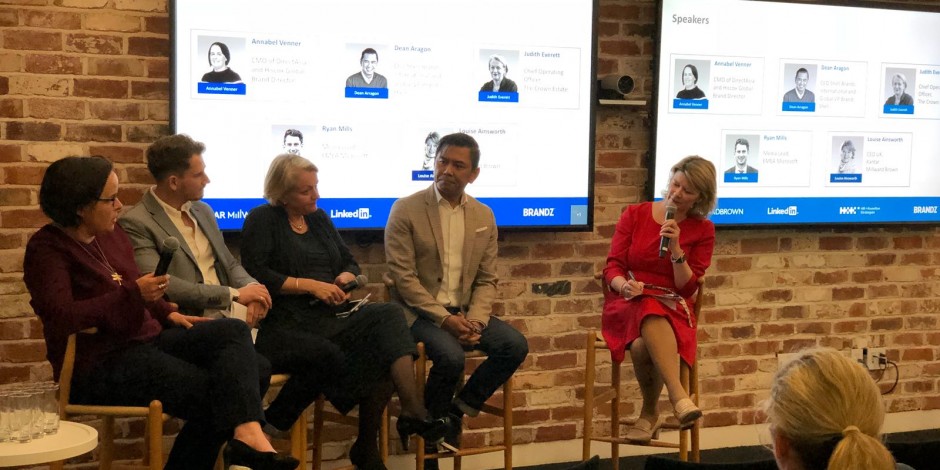
One of the things that really struck a chord with me was a panel discussion we hosted with Kantar Millward Brown, BrandZ, Hill & Knowlton and a number of leading marketers – Dean Aragon of Shell, Judith Everett from The Crown Estate, Ryan Miles from Microsoft and Annabel Venner of Hiscox – which discussed how marketers can unlock the potential of B2B brands. There was certainly a consensus among the panel that the B2B buying journey is rapidly changing. And as a result, marketers need to work harder than ever to create opportunities for their brands.
I wanted to share three key things I took away from the panel, which I think bring this challenge to light and – when applied correctly – should help all B2B marketers take their brand to new heights.
Be more human
The growing group of decision makers playing a part in any B2B buying cycle contributes to it being longer, more complex and even more emotional than most B2C journeys.
One area where B2B marketers could borrow from their B2C cousins, though, is better understanding and tapping into the emotional drivers of decision making. It’s impossible to do this if you don’t humanise your customer first, though.
During the session, Aragon raised the point that for marketers operating in the B2B space, it’s all too easy to forget that buyers and decision makers are human. I challenge you to find someone who defines themselves as “just” a 24/7 fleet manager or procurement director.
With a better understanding of their customers, beyond simply their job title, B2B marketers can humanise their brand and content in ways which will more likely drive action. It’s no easy task in B2B, where the buying committee could be the size of a small village, but it was a great reminder for everyone in the room about where to start with campaigns.
Embed purpose in all that you do
Knowing how to communicate effectively with prospects and customers on a human level is only one part of the jigsaw. Humans are hardwired to buy into something as much as they want to buy something. It’s no different when it comes to the B2B world.
As much as selling a product, B2B marketers need to communicate the wider purpose of their business and use it to drive both awareness and conversions. That purpose needs to be more than just a pet project or the idea of growing a conscience. It needs to be lived and breathed by any organisation every day.
During the session, Venner made this point by explaining how Hiscox has a strong set of values that have successfully guided and defined the business and are consistently communicated through all that they do. In essence, Hiscox aims to be there when stuff goes wrong – to be there quickly, first and make everything right.
Not every business will always have a purpose that means something worthy; the important thing is having something to stand for. What was clear from the session was that this needs to start from the inside out, with employees, otherwise it won’t last and no one will believe it.
Break the structural silos
Engaging customers on a person-to-person level and communicating your purpose boils down to getting closer to them. Marketing teams need to break out of their own confines and better align with other parts of the organisation.
In the session the panelists talked about creating agile teams and the need for closer sales and marketing alignment. While it’s a challenge – especially within larger organisations – building nimble, forward-looking teams is also a massive opportunity.
As well as circumventing unnecessary hierarchies, it automatically means marketing activity is in tune with business priorities and sales targets, enabling a much faster decision making process.
On a more practical level, I have seen first hand how the most successful B2B sales and marketing organisations are those which integrate both types of engagement seamlessly throughout the consideration stage, delivering the right type of interaction that’s most relevant at any given moment. For example, thought leadership content from the marketing team has the potential to short-circuit the traditional buyer journey and lead directly to the award of the business.
For today’s B2B marketer, taking a broad brush approach and simply replicating the B2C buying experience is not an option. B2B marketers need to forge their own path, use technology to automate the process where they can but ensure they have purpose at the heart of their business and communicate it in a human way.
When it comes to business, patching your problems just won’t cut it. Find out how to handle three hard moves entrepreneurs frequently push off.
There’s a lot of pressure for small-business owners to be masters of every aspect of their business. This is especially true when you’re first starting out and are often a one-person shop. A recent survey by The UPS Store found that one of the biggest barriers to starting a small business in 2018 was fear of failure, behind concerns about financial security.
With somewhat limited resources and fear of failing, small-business owners will often push challenging tasks to the back burner. This may work out in the short term, but it won’t lead to long-term success. Think of your business like the roof of a house. Are there problems you’ve been patching up instead of completely repairing? It’s time to invest the time and resources, replace the roof and address your problems head-on. It may not be easy or cheap, but in the long run it will help you be successful.
The three most common holes entrepreneurs frequently patch up include: marketing, recruiting and investing in digital.
Marketing will retain and grow your customer base.
Are you stuck in a rut trying the same marketing tactics again and again? It’s time to branch out and try some new things. If you’ve been unsure how to start, begin by figuring out who your customers are.
The starting point can be as simple as talking to your customers. Find out what they’re watching and reading, what social platforms they’re using, what they are interested in, etc. Once you know them, you’ll better know how to reach them. For example, social media can be a cost-effective and targeted way to reach customers. Using images, videos and other multimedia, you can demo products, advertise promotions and engage with your customers directly.
Start with existing customers, but remember to keep in mind the type of customers you want to attract, too. By doing this, you’ll be able to focus your marketing efforts on things that matter instead of spreading yourself thin.
Recruit the partners and employees your business needs.
Have you put off recruiting or outsourcing to get the help you need to run your business? Don’t be afraid to ask for help!
Start off by clearly outlining the support you need to better run your business. Do you need someone with web design skills or someone to help with your finances? This is support you may be able to find from another small-business owner that specializes in these areas. Local small-business organizations and LinkedIn are great resources for discovering talented partners with desired qualifications. There’s a sea of people ready to help.
Are you looking for support in the day-to-day running of your business? Then it’s time to hire an employee. Once you get a few potential applicants, invite them in for an interview. An in-person interview can tell you much more about a candidate than a phone interview. Once you find the right candidate for your business, be sure to take the time to train her. If you’ve trained her and trust in her ability to run the daily operations, you can take a step back to focus on other priorities while knowing everything is in good hands.
Invest in your digital presence.
How does your front door look? I’m not talking about your actual door — I’m talking about your website.
Research shows that 88 percent of consumers pre-research their buys online before making a purchase either online or in-store. That means there’s a lot of potential for your website to drive traffic to your business.
You can look for a partner to help you, but there are also many cost-efficient and easy-to-use website builders. Most sites make content management simple and come with recommended formats and layouts. By utilizing these, you’ll make it easy on customers searching for your company or wanting to learn more about you. Similarly, make sure your social media presence is up to date — especially as more and more customers are turning to social media for customer service.
Making these hard moves may seem intimidating, but in the long run they have great potential to help your business be more effective and successful.
Consumer outcry surrounding the global overuse of plastics has caused multitudes of FMCG, retail and food companies to rapidly readdresses their packaging strategies. But is the drastic jettisoning of PET plastic really the best route for brands to take?
If David Attenborough is the prophet of the anti-plastic generation, Chris Griffin is the pragmatist. As multinationals from Evian to Adidas scramble to reduce the amount of plastic in their supply chains in response to consumer outcry, the chief executive of the Museum of Brands, Packaging and Advertising is quietly cynical with regards to brands’ efforts.
“From the consumer’s point of view, the plastic debate is so complex that I don’t think they can engage in anything other than the top line soundbite,” he says. “The consumer is going to be fed many lines – like ‘we’re going to make all our new bottles out of sugar cane’ or something. That’s probably not going to happen worldwide on the scale of a global brand.”
The reason, Griffin believes, is because product lifecycles are complicated. Designers spend years understanding the end-to-end process of packaging – from conception to burial in either landfill or recycling plant – and therefore the choice of whether or not to use plastic should not be one made by a PR department.
“Brands have to be very careful not to respond too quickly to media pressure,” he says. “If they say … ‘We’re going to go for all sugar cane-based packaging’, that’s going to be dangerous for them because they won’t be able to deliver it.
“What might work as a comment this year, could get them in trouble next year.”
Yet there’s no doubt the pressure on brands to do something about the amount of plastic they produce is enormous. Last month saw a brigade of passionate, if not militant, protestors launch a ‘plastic attack’ on a Tesco store in Bath (they ripped off wrapping and left it dumped at the tills), ‘reduce plastic waste’ brings up 38m+ results on Google and online vitriol spun towards Whole Foods over selling orange segments in plastic boxes caused the retailer to pull the product almost instantly.
Since David Attenborough urged humanity to halt plastic use in order to save ocean ecosystems in Blue Planet II, the list of brands promising to reduce or jettison plastic from their packaging has extended exponentially. Commercial pressure has given plastic a bad name – but that’s not entirely a good thing, argues Griffin. Plastics, after all, evolved with and as part of the notion of the 20th century brand.
“Plastics do some incredible things: preserving by using the absolute minimal amount of material,” he explains. “The moldability, the formability … you can get shape and character, you can get brand attributes into your packs.”
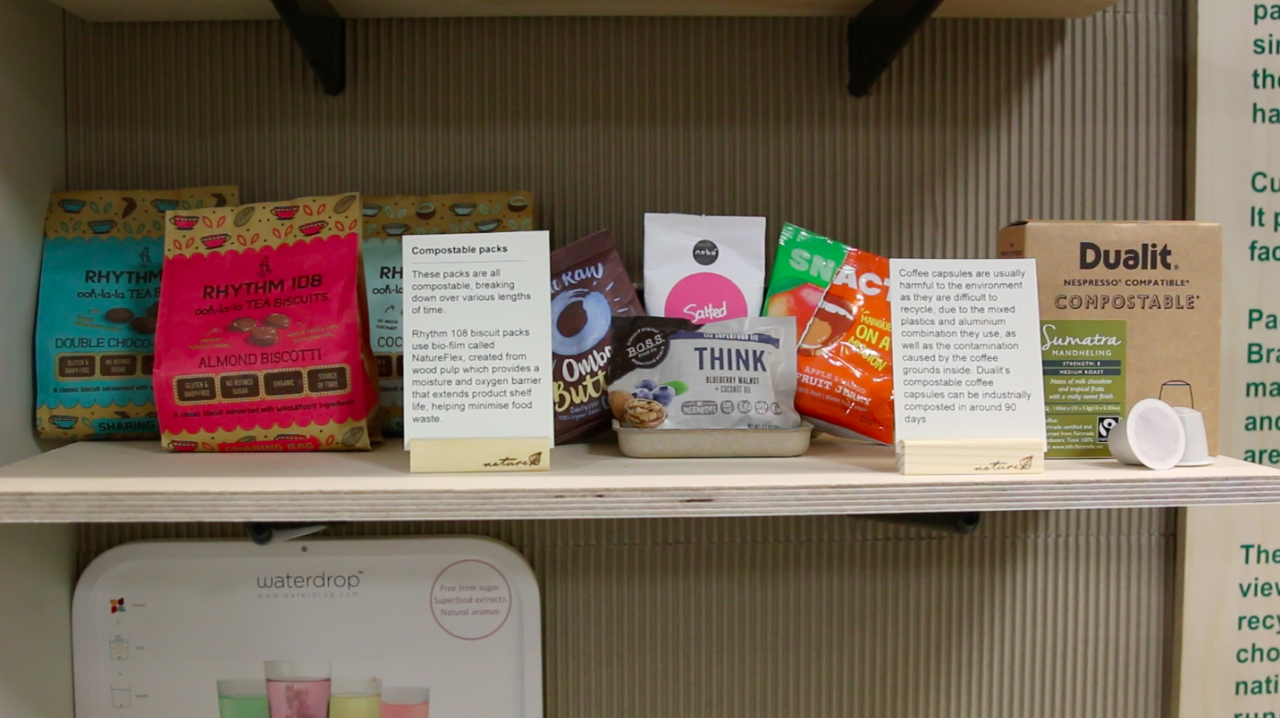
The Museum of Brands’ Pack The Future
Griffin’s appreciation for the material is slightly ironic considering his museum has launched an exhibition dedicated to sustainable and, largely, plastic-free packaging. Yet his favourite exhibit is of two cucumbers, one wrapped in plastic and one naked: while the green skin of the cucumber is cited by many anti-packaging activists as natural packaging, it’s the unwrapped fruit that goes mouldy first.
“The energy that goes into food production is phenomenal,” Griffin says. “And if we don’t get it from the field to the plate because it’s wasted [because of a lack of packaging], that’s a huge waste of energy.”
A similar argument was made by The Genuine Coconut Company when it was lambasted for wrapping its coconuts in film; its retort was the packaging helps the milk stay fresh for longer, and plastic is fully recyclable. Additionally, disability campaigners have defended the accessibility of pre-chopped and wrapped vegetables, which have also been much maligned since the Blue Planet II episode aired.
A food industry without plastic may then be unobtainable – or even undesirable, at least for the time being. But as countries such as the UK continue to wait for a comprehensive national recycling system, it’s brands that are leading the charge in researching sustainable solutions. Unilever announced last week (4 April), for example, that it’s collaborating with Dutch startup Ioniqa, which has developed a technology to break down PET plastic to a molecular level.
“That means we can take any type of PET waste, then break it down to remove colour and impurities,” said Sanjeev Das, the conglomerate’s global packaging director, in a statement. “We can then turn it back into pure, clean, transparent PET plastic that’s food-grade ready.”
Coca-Cola has promised to help collect and recycle a bottle or can for every container that it sells by 2030, alongside aiming to manufacture plastic containers with 50% recycled content by the same date. On a smaller scale, rival P&G is working with the recycling company Terracycle to manufacture Head & Shoulders bottles made partially of plastic washed up on beaches and waterways.
Interestingly, Terracycle has found gaining support from big multinationals, such as P&G, to have been easier than garnering it from the NGOs it relies on to collect the beach plastic.
“P&G wanted to do something sustainable, something to make a difference,” explains Stephen Clarke, head of communications at Terracycle Europe. “And although there’s quite a lot of work to get buy in from various departments from within a company, our biggest problem was actually getting the NGOs to buy into it. It’s getting them to do something different.”
While the FMCG multinationals (which have budget and scale on their side) lead on recycling innovation, Griffin sees potential in the luxury sector when it comes to the development of sustainable plastic alternatives.
“As a designer, some sustainable materials are just fabulous to work with,” he says. “Corrugated cardboard looks beautiful, materials come from crustaceans have fabulous textures and some [materials] that come from various plant materials are wonderful to work with and wonderful to design with. But they’re not on the scale that will be economical for volume. So I think luxury’s a whole new area where sustainable thinking is necessary.”
The potential for luxury, sustainable packaging to double as a proof point for the wider industry is a sentiment shared by a number of design houses.
“As with any aspirational market, the luxury packaging sector is a platform for materials and innovations to be revealed and translated into other areas,” says Toby Wilson, chief operating officer at MW Luxury Packaging. “Naturally, the more a new technology, technique or material is used, the more accessible it becomes.”
However Wilson is cognisant that the luxury sector has, thus far, been immune to the pressures of sustainable packaging due to the assumed long lifespan of its products. A consumer is more likely to keep and reuse a beautiful Fortnum & Mason chocolate box, for instance, than a Milk Tray.
“But this is changing,” he says. “Quality and brand aspiration is critical and therefore innovation in high quality and high-performance materials is essential. Materials that perform and present need to be developed to maintain the luxury credibility that a brand demands.
“This will come through innovation and material development.”
Progress Packaging’s totes for Tom Dixon featured natural canvas wrapped in a clear biodegradable bag
The current trend for minimalism (little to no branding on packaging) in the luxury sector has also meant for easier experimentation with avant-garde, sustainable materials, says Victoria Walmsley, media developer at Progress Packaging. The agency has been working with recycled cottons, canvas and hessian, as well as corrugated board and recycled boards.
“There is definitely a strong wave of encouragement [for more sustainable materials] that comes from designers, manufacturers, and the consumers, too,” she says. “We do see more enquiries asking us how they can make things pretty but also reusable. I think reusability once a product has been opened is the key requirement. The market doesn’t just want to provide bags and boxes that will get used once and then thrown away anymore.”
Yet environmental charities, quite understandably, aren’t ready to rest the future of the world’s oceans on the luxury sector’s ability to innovate alternatives to plastic. For Julian Kirby, lead plastic-free campaigner at Friends of the Earth, the onus is on a number of actors to make change.
“Currently the companies that make and market packaging only contribute about 10% of the costs of collecting and processing it, meaning the remaining 90% is borne by tax payers through cash-strapped local authorities,” he says. “A mix of sectors working together could rapidly provide answers we need to the plastic pollution crisis, with big companies having the power to make alternatives to plastic the mainstream choice.
“However, for this change to come about on a mass corporate scale we need central government action.”
Asos has singled out the performance of Instagram Stories in its marketing mix, saying the number of people viewing its content on the platform has almost doubled in just six months.
The online retailer today (11 April) reported stellar sales for the six months to 28 February, noting a 10% rise in half-year profits to £29.9m as sales jumped 27% to £1.13bn compared with the same period in the previous year.
On a call with analysts, chief executive Nick Beighton praised the Instagram-effect, saying the Facebook-owned platform was now more popular among its core 20-something customer base than Facebook and as such the business had maintained its investment in its “relevant, emerging content formats” including Stories.
The brand’s content on the site was viewed over 30m times while videos were viewed more than 52m times, up from 40m in the previous half of the year.
“When we recognise technology that can help our business, we fold in pretty quick,” Beighton said.
Now that its convinced on the value of Stories, the current tool under the spotlight is Instagram’s shopping-enabled adverts, which launched widely at the beginning of this year.
“On one level [Instagram Shopping] could turbo charge the experience for 20-somethings but on another level it could be a real threat,” admitted Beighton.
“We do know Instagram is one of the biggest channels for our customers, it’s much bigger than Facebook, so I’d go with the positive and think about how we can make it more intuitive and friction free for our customers.”
Its experiments on the digital channel come amid a wider review of its marketing costs. It didn’t give an exact figure but as a percentage of sales it stood at 5% versus 5.3% in the previous period. The savings were made as a result of “digital marketing efficiencies and a higher return on advertising spend,” said Beighton.
Though admitting the brand is on “every conceivable marketing channel”, Beighton said it is venturing offline, especially in other European markets. In the UK it ran its first out of home campaign to launch its Face and Body and Activewear lines while in France it took to TV and cinema for the first time with promising results.
“The combination of TV and cinema aren’t immediately relevant to the 20-something market in the UK but they are in the French market. But it’s an experiment,” he said.
In the US meanwhile, its PPC ad spend is under scrutiny with Beighton saying the rates “are up pretty dramatically” on various terms, though he didn’t go into detail on how it would mitigate that cost.
Overall, he said continued investments are enabling strong engagement levels across its customer base. Site visits increased by 25% year-on-year; average order frequency improved by 8%; average basket value increased by 2% alongside a 10 base point improvement in conversion.
Active customers are now at 16.5 million, representing a 17% increase since last year.
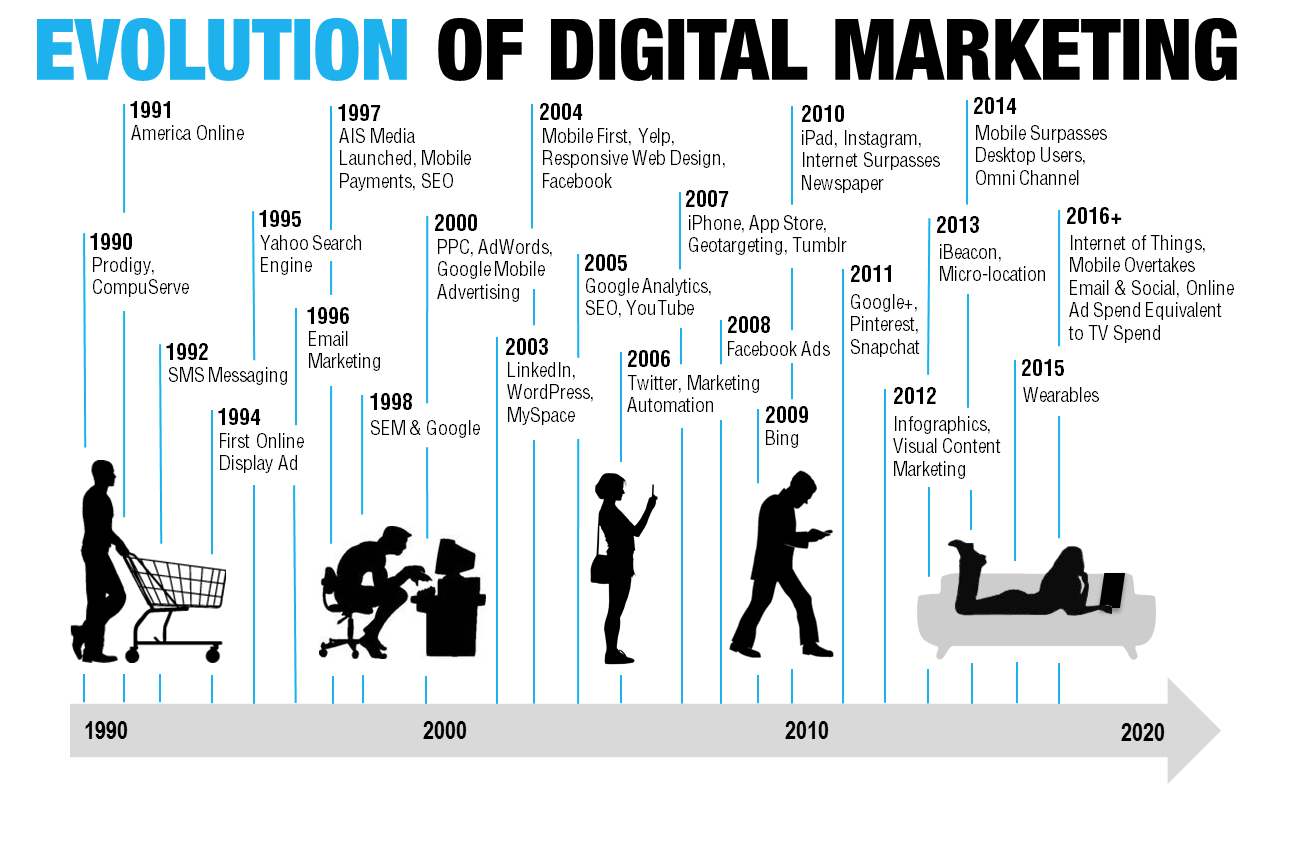
Over the last ten years, the marketing industry has been turned completely on its head. With the advent of social media, a number of human interactions have moved from the physical world to the digital world, and marketing is one of them. Traditional methods of marketing, including print, TV and radio, while not irrelevant today, now take a back seat to digital methods.
The last 20 years have seen technology grow leaps and bounds and social media, as a result, has evolved tremendously over the last few years. One of every eight people on earth now have a Facebook profile. One of every five minutes spent online is on a social network. With a whole generation, or maybe even two, so addicted to social platforms, marketers must promote their brands where their audience spends the most amount of time in their day.
While the basic tenets of marketing remain the same, digital marketing sees a complete shift in the way that brands and consumers view marketing. Take customer service, for instance. The three basic rules are still intact – make sure you listen to your customer, the customer is always right, and always remember to follow up with your customer. The only difference today, is that your customer is not always there, right in front of you. Your customer could be far away and still expect the same service as they would if they were physically in the store with you. Additionally, whether it’s information they need or reviews about your product or service or even a complaint, the first instinct in 2018 would always be to go online. In fact, Twitter is today one of the most popular platforms for individuals to share opinions and grievances about products or services they have used. Therefore, it’s one of the best points of access brands have to their customers. And that’s exactly what a smart digital marketer would make the most of.
The second thing that hasn’t changed is the fact that the only way to actually connect with a customer is to make sure you connect with the right customers in the right way. In traditional marketing, this would mean either sales calls or using media like TV, print or the radio to get your message across. What has changed today is that not only has the idea of targeting your audience evolved to a point where you can go down to specifics like never before, but we’re also in a day and age where the consumer wants a say too. It’s no longer a one-way street. Marketing today is all about the conversation. It’s about engaging your audience and letting them know they have a voice, that voice is important and that voice is heard. Another way that the consumer has changed is that the consumer no longer wants to be sold to. They want brands to know that they’re smarter than that. They want a story, not a sales pitch. This is why marketing today has shifted from a sales first to a content first strategy. As marketing guru Neil Patel puts it, “You can’t just place a few “Buy” buttons on your website and expect your visitors to buy.”
So then, in the world of digital marketing, what can a business do to ensure that their customers consume not just their products but also their content?
First off, understanding social media platforms and which ones they need to be on. Just because it exists, doesn’t mean you need to be on it. Each platform serves a different purpose. Find the one that fits your brand’s needs and audiences the best and stick to those. Once you have the platforms in place, create strong content. Clichéd as it may be, in today’s digital world where the numbers of distractions are increasing and attention spans are reducing, content truly is king.
The next thing you need to do is make sure you have highly effective Search Engine Optimization. This may be one of the most important investments you make for your business so go all in. SEO is important to make sure you are being found by the right people. Google is the new Yellow Pages and SEO makes sure that if someone’s looking for you, they will find you. As Guy Sheetrit, CEO at Over The Top SEO jokes, “the best place to hide a dead body is page two of google”. This is why it’s critically important for any business to be on page one.
Last but not least, your brand needs social media advertisements. With the way Facebook’s algorithms have changed, most of the content, no matter how incredible it is, won’t reach your followers unless you advertise. Make sure all your content is backed up with the right kinds of ads targeted to the right kinds of audiences. Get your advertising right and there’s no stopping you.
With the ever-evolving landscape of digital marketing, you need to make sure you stay up to date or get left behind.
Coca-Cola’s latest experiment in opening short design briefs to the entire world illustrates its plans to no longer be seen as “a traditional advertiser” by appointing consumers – not agencies – as its co-creators.
The drinks giant’s head of digital, David Godsman, admitted at the Adobe Summit opening keynote that the digitally connected world is “somewhat unknown” to the brand. Nevertheless, 12 months ago it embarked on a five-year digital transformation programme, underscored by four key areas: operations, business, culture and experiences.
Surprisingly, Coca-Cola has filed its marketing and advertising operations into the latter category. Not only is Godsman asking his “traditional brand marketers to become experience makers”, but he’s earmarked the fans of Coca-Cola as vital to its content creation strategy.
David Godsman, chief digital officer, Coca-Cola
“Digital allows us to create unifying experiences which – regardless of language or place in the world – helps to bring them together,” he said. “Digital enables them to participate actively with us and co-create the experiences we bring to market
“We don’t see a world where we will continue as a traditional advertiser in that sense.”
James Sommerville, Coca-Cola’s vice president of global design, introduced one of the first forays into this strategy of consumers-as-creators. Coke x Adobe x You, which quietly launched last October on social media, comprised a succinct brief open to the entire internet, which read: ‘Create a work of art celebrating Coca-Cola, sport, movement, strength, and unity using Adobe Creative Cloud tools’.
“We thought: ‘What would happen if you just gave the world’s designers three or four simple tools and a short brief – so short that you could tweet it?’,” explained Sommerville.
The brief for Coke x Adobe x You
So far, the project has thrown up around 1,500 submissions, from trippy, fun animations to meticulous hand-drawn illustrations. All the designers were commissioned to feature the red Coca-Cola circle, while Adobe and Coca-Cola kept the Tokyo Olympics 2020 under wraps.
“If you scan these pages you’ll see the enthusiasm to work on our products and our brand,” said Sommerville, adding that the project “really is the start of our journey”.
The brand is arguably in need of a revived creative strategy. Diet Coke’s latest offerings have failed to capture the mass imagination that 1995’s ‘Diet Coke Break’ managed to, for instance, while ‘Because I Can’ was pretty much panned creatively.
It’s unlikely that Coca-Cola will eschew working with creative agencies for consumer creations altogether. Sommerville stressed that “we love our agencies partners, we need our agency partners”, but he also loves to “discover the hidden gems”. By that he means freelance artists such as Noma Bar, the graphic designers going viral, or “some guy working in Starbucks right now on a laptop”.
Noma Bar for Coca-Cola
But when conglomerate does come looking for agencies in the future, it may start knocking on other doors. Sommerville’s design lab is currently experimenting with prototypes such as a fountain that dispenses mobile data in lieu of soft drinks – the kind of project that will certainly require the expertise of creative technologists, but perhaps not those of traditional creatives.
“I really want to invite the creative community to reimagine the whole experience,” said the Atlanta-based, Huddersfield-born designer. “Everyone in this room, everyone on this planet, has the right to work with Coca-Cola.”
How does he plan on keeping those divergent, global ideas tied to a common brand idea? By looking back on the vast history of Coca-Cola.
“We have a little phrase called Kiss the Past Hello,” he explained. “A lot of people talk about failing fast – for us this is the Coca-Cola way of saying a very similar thing. Our past is so important to us. It educates us. The good, the bad, what worked, what didn’t.
“Those stories are the same, but the context has changed. We are about technology, we are about transformation and we are about talent. But ultimately for us the experience starts at the product – it’s the texture, it’s the touch of the glass, it’s the temperature.”
After disrupting many traditional sectors through its online presence, Amazon is now stepping into physical spaces, with tangible results. The Drum looks at how the brand is rewriting the rule book, most notably with retailer Whole Foods and its own Amazon Go store concept.
When Amazon launched in 1994 it declared itself to be ‘Earth’s Biggest Bookstore’. Almost 25 years later, the strapline feels laughably out of step with the money-making juggernaut it has become.
However Amazon has, throughout its lifecycle, remained true to its roots as a purveyor of paperbacks, going on to disrupt the category with the Kindle e-reader and self-publishing services.
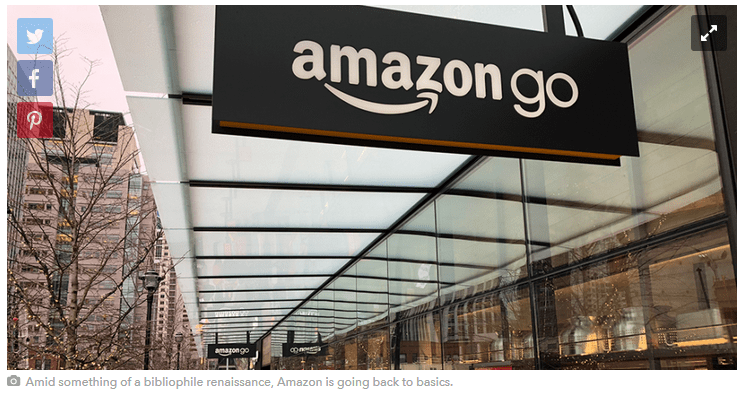
And amid something of a bibliophile renaissance, Amazon is going back to basics.
Last year it announced plans to open a bricks-and-mortar bookstore in Manhattan. Meanwhile, its own physical imprint has in the past few months launched a division dedicated to short fiction reads.
Amazon is also taking a back to the future approach to retail. Its now-famed checkout-free Amazon Go opened recently to shoppers in Seattle, and the company has a network of Whole Foods stores throughout Canada, the US and UK.
Omnichannel experiences
“Amazon is coming at these industries from a position of no baggage,” muses Teaque Lenahan, regional director of business design and strategy at Fjord Seattle.
“Digitally native companies such as Amazon already know how to interact with consumers in that context, so in many ways it is an easier play for them to shape this digitally enabled, physical experience, than it is for traditional bricks-and-mortar players.”
Publishers in particular are likely to find themselves caught between the draw of a mutually beneficial relationship with Amazon and the memory of the disastrous impact that bringing sales online had on stores like the now defunct Borders.
Cory Cruser, experience innovation partner at creative consultancy Lippincott, argues that Amazon is not so much moving into the industries it helped kill, but rather shaping future behavior.
“With behavior changes come new ways to create value for customers, and reinterpreting traditional models is one way to do that, improving them in line with the behavior shift.”
Too much influence?
Aydin Moghaddam, head of PPC at digital agency Roast, laments the lack of competition Amazon asserting its dominance in these areas would bring about.
“Amazon has too much influence, and there cannot be perfect competition when one company has that,” he says.
Fjord’s Lenahan, meanwhile, is more pragmatic. “At the moment, Amazon’s foray into the physical market is either primarily for customer learning, or not yet scalable,” he says.
What’s next?
For Simon Law, chief strategy officer at WPP agency Possible, there is no irony in its forays into physical retail.
“It’s brilliant. The company has more than $22bn in cash and is using it to explore what the future looks like and how to keep retail innovating. It is investing in the new, the different and the explorative. It is doing what all business that are in decline failed to do.”
As for what’s next, Moghaddam predicts Amazon will acquire a fashion retailer, while Lenahan notes that as Amazon could trade on transparency to make money in the media arena.
For Cruser, it’s finance. “The industry ripe for massive disruption is banking, simply because the systems in this industry have not kept pace with the changing nature of our relationship with money,” he says.
Whatever happens, the company that started out as the world’s biggest bookseller is rewriting the rule book when it comes to disruption.