Tag

Media

Browsing

By .

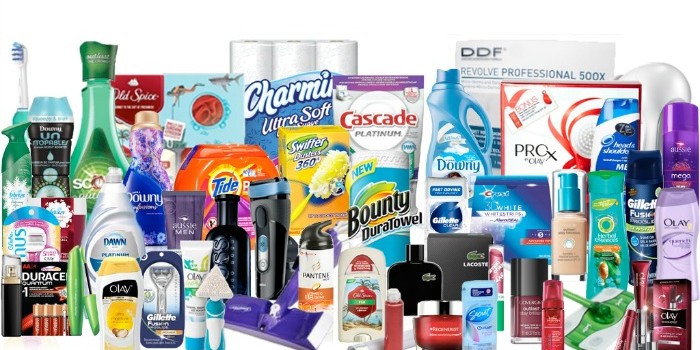
Procter & Gamble (P&G) is working to get the right blend of precision with mass-reach in its marketing after previously admitting that it had targeted excessively online.

It doesn’t have to be an “either or” debate, opined Gerry D’Angelo, the global media director for the world’s largest advertiser at the Festival of Media in Rome this week (9 May).

“The approach I’m trying to instill here is to make sure we’re using all the technology to drive scale and reach and then once that’s in place we can use that muscle memory to build personalisation,” he said.

D’Angleo’s talking about building a better use of data and technology at the business, where its marketers have a more robust idea on how to get the most reach but also the right precision. Rather than pull swathes of media money from online platforms, the noises coming from P&G suggest its revamped approach will revolve around how to better buy reach. Part of this thinking would have likely guided P&G’s decision to redistribute its programmatic data duties earlier this month when it cut ties with AudienceScience.

“It’s not that personalisation is a bad thing,” assured D’Angelo as if to ward off concerns that he and his peers will start pulling reams of budget from the likes of Facebook and Google.

“We just need to make sure we don’t follow it out the window and end up talking to a fraction of our category buyers. As long as you can accommodate both of those concepts [personalisation and mass reach] simultaneously, which I think you can, then I think its absolutely acceptable to be able to talk o people and also talk to them in a highly targeted way.”

It’s a change in tack from P&G, which was one of a throng of advertisers to pump money into targeted ads that consequently sacrificed reach. The company’s top marketer Marc Pritchard admitted as much last year when he said “we targeted too much and went too narrow” on Facebook. Four years ago, the business was adamant, as many of its peers were, that this was the way to go. In 2013, it moved a third of its advertising budget online and then a year later slashed its spending by 14% and refocused on what it said at the time was an “optimised media mix” with more digital, mobile, search and social investments.

But businesses like P&G own brands built on mass media, with the type of recognition that has always chaffed against the hyper-targeted sensibilities of environments like Facebook. And with tougher cost pressures on the company’s marketers as seen by its plan to cut a whopping $2bn in marketing costs over the next five years, it may have to go back to the marketing sensibilities that defined the industry in order to continue to grow.

Nowhere is this need clearer than in P&G’s four-point plan to overhaul its investments around viewability, third party measurement, agency relationships and online ad fraud.

If Pritchard is going to lead by example on his view about the death of craft in advertising currently then he needs to disentangle the media supply chain and consequently tackle mass personalisation.

“There is a reality that personalisation can go too far,” said Matthew Heath, chairman and chief strategy officer at Lida. “Firstly you need brand salience and attraction – you can be as personal as you like but I still need to trust you and be interested in you in the first place. Secondly brands often need a dimension of discovery and serendipity, that disappears in the overly personalised world.”

By

Sourced from THE DRUM

By ,

    TV ads are about to undergo a huge shift in how they are bought and sold. This change isn’t just about the big announcements of late about audience-based TV ads – the OpenAP consortia from Fox, Turner and Viacom, as well as NBCU’s announcement that it would reserve $1 billion of its inventory this year for audience-based sales.Nope, something even more fundamental is happening in media, and it’s going to have its biggest impact on TV.

    The future of TV will be about performance. As media legend Alan Cohen proclaimed as he took over as president-CEO of independent agency Quigley-Simpson earlier this year, “Performance media is where it’s at. It’s the new programmatic.”

    While Cohen was speaking of media broadly, the rise of performance-based buying and selling will have its biggest impact on TV advertising, I think.

    Why? Performance dominates digital advertising, because it can be measured and optimized that way. And performance is what marketers truly want, fundamentally, when they buy.

    This was never really possible on TV historically, not at the spot-person level, but now it is. The rise of massive amounts of direct, second-by-second TV viewing data at the person and household level that can be matched to online and offline purchase data in a privacy-safe way means that marketers no longer have to wonder how TV ads work in driving sales or leads. Now they can know. Better yet, now they can use those insights to better plan and optimize their campaigns going forward, maximizing their performance.

    No longer are they hamstrung by only having mix models that take months to conduct, and not getting much deeper than the network or day-part level.

    Is this really new? A bit yes and a bit no. Television has always had performance advertising, you might say, since direct-response ads have been with us almost as long as TV has. That’s different, though. You might also argue that TV has always been a performance medium for marketers who sell regularly and track sales, whether it’s retailers like Walmart or packaged-goods brands like Coca-Cola.

    Without question, retailers have always known in a general way how their TV spend correlated to store traffic and sales. Movie studios have always seen the impact of TV spend in their box-office numbers. So too have airlines, restaurants and hotels when it comes to butts in seats and heads in beds.

    However, TV advertising has never been as predictable, provable and performance-oriented  as new digital channels like search and social have become for marketers. On platforms like Facebook, marketers can buy campaigns that are guaranteed to reach a certain group of people as well as deliver their desired business outcomes. Marketers get to have their cake and eat it too.

    That is where TV is going fast. The notion of “programmatic” TV was a bit of a head fake. The vast, vast majority of TV is not about to be bought and sold on programmatic exchanges — not for many, many years.

    However, the idea that TV will be bought and sold based on performance — that world in unfolding before us right now.

    By ,

    Sourced from MediaPost

    By Robert Andrews.

    It is one of the leading lights among paid-for online news publishers, with 625,000 premium digital subscribers, but that isn’t stopping The Financial Times from making money from new-style advertising, too.

    In fact, while the FT is typically known for selling big brand ads to luxury buyers, it is also taking advantage of programmatic technologies that promise greater efficiencies.

    Doesn’t programmatic risk devaluing inventory for which a high-end publisher charges a pretty penny? Not at all, says the FT’s global head of programmatic, Elli Papadaki, who will be speaking at The Drum’s Programmatic Punch conference on 8 December.

    Programmatic is changing, and the technology is often misunderstood. What does the term mean to you?

    As a brand, we use programmatic to identify new audiences and convert them in to new customers for us, just like many other marketers are doing.

    From my perspective in commercial, however, programmatic is a way to create efficiencies in the buying process. We use it as another route to inventory. We are not using it for remnant inventory.

    We are trying to bridge the gap between direct and programmatic – we say to buyers, whether it is content, pure-play display or even video pre-roll, our relationship with our audience allows you to leverage data programmatically.

    How has your use of programmatic evolved at the FT?

    We started trading about three years ago in this place. Our approach was to say, part of our inventory will go in the open exchange. We quickly realised, though, that all that meant is having different price points – you’re half-insinuating the value of the inventory is less good. But, in our case, it really wasn’t.

    As of this year, we started saying, we appreciate all the efficiencies … we do want to facilitate that for the buyers we work with. However, the commitment we make to the advertiser is exactly the same as that we do directly.

    What is the role of advertising automation in a publisher so reliant on paid subscriptions?

    Being premium subscription, we have access to first-party data, which is very hard to find. It means we sell out direct.

    If you want to target a C-suite audience, you’re more than welcome – whether through direct or programmatic marketplace. The quality will be the same, we don’t differentiate.

    We have a very premium product and people pay a premium price. So we tread a very fine line – we have to be conscious of dangers of serving inappropriate or irrelevant advertising.

    This is why we’ve maintained our pricing on par with direct. The very nature of the pricing floors means it excludes certain ads from running on the site – more often than not, we know who we’re trading with. You’re seeing a rise in conversations where the buyer actually knows they are trading with us.

    How do you think programmatic execution for the FT’s audience differs from that of other publishers?

    We’re trying to shift the perception that programmatic is a different product – it isn’t. It’s a smart way to leverage on existing activities.

    We’re trying to educate the buyers and brands we work with to explain … we don’t have separate programmatic teams – we have a single, unified sales team; they are vertical experts, selling by category, selling across portfolio – whether that be in magazine, paper, insert or digital.

    The FT was a founder member of the Pangaea Alliance, publishers’ programmatic cooperative. What is the progress?

    We launched a year-and-a-half-ago, and there have been additional publishers added to the ranks. We look at the audiences we’re all contributing and are looking for niches to add to the portfolio.

    Brand safety and fraudulent inventory is still a problem when it comes to programmatic buying. For buyers, knowing they can run ads at scale in a brand-safe environment with audiences that are prequalified is quite important.

    What’s missing from the programmatic ecosystem?

    There is a lack of consolidation and transparency. We often find an obstacle is no standardisation. One technology vendor may say, ‘We require the buyer to have a DSP’, another won’t. Instantly, you have pockets of possibilities, which means multiple systems for the publisher to manage.

    Something is going to have to change quite quickly. We increasingly hear frustration in the market – there will be increasing pressure for transparency.

    We are seeing brands start to realise the complexity involved with programmatic. There will come a moment when brands evaluate whether to take it in-house. Some will start to do so, but resources will be required.

    What changes will reshape programmatic in 2017?

    The new European Union General Data Protection Regulation [GDPR] directive that’s coming in to place in the next year or so will be significant. Any business that deals with any organisation in the EU will need to comply. Considering that programmatic is an audience buy, this will throw a spanner in the works.

    The fees and penalties if you breach the regulations are significantly higher than in the past. It will certainly force more businesses to take it seriously. If they do have data, they will have to prove they have users’ consent.

    It is going to increase the pressure to make sure the quality of data is there and that there is permission from users and consent to use it. It will lead to everyone reconsidering who they work with.

    By Robert Andrews

    Sourced from The Drum