Tag

Netflix

Browsing

By

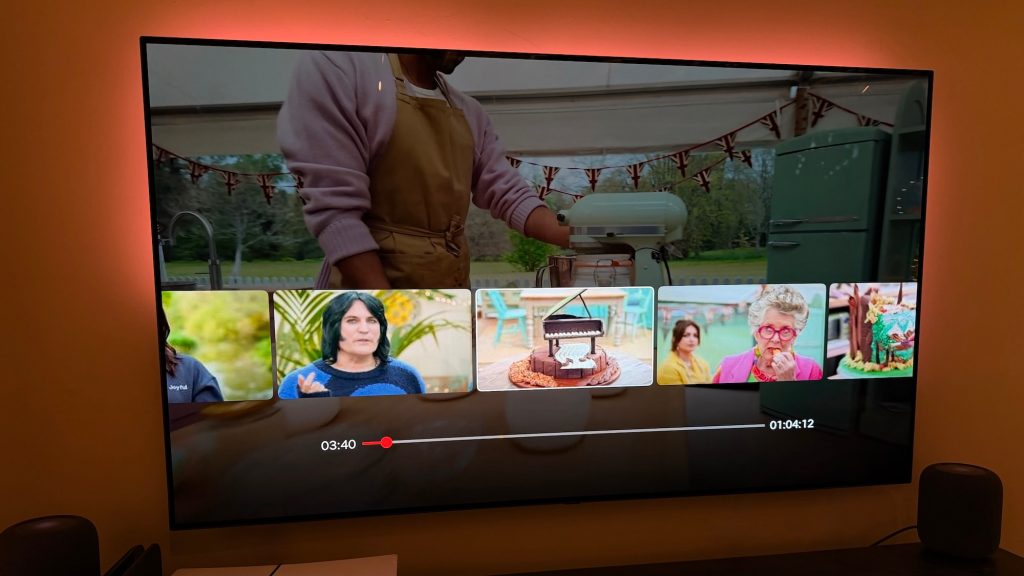
Netflix has once again made a controversial change to its Apple TV app. In recent weeks, the company has stopped using the native tvOS 26 video player in favour of a custom player similar to the one it uses on other TV platforms.

In practice, this makes the most common interactions more cumbersome and blocks users from using platform-specific Apple TV features.

Netflix’s Apple TV app is now very bad

The change began rolling out a few weeks ago, and user frustration is mounting. On Reddit, there’s a growing thread of Netflix subscribers saying they are cancelling their subscription because of this change to the Apple TV app.

In a separate thread on Reddit, one user explains the cumbersome process of simply rewinding or fast-forwarding by 10 seconds:

Did Netflix mess up the app? There are two extra clicks for a simple 10s rewind or fast forward. Instead of it going back 10s in one click, now it pauses and brings up the frame selector, and then you have to click again. Did they not do any research or usability testing before releasing this?

The change also means you lose access to full playback controls using the Apple TV Remote app on your iPhone. You can’t enable Enhance Dialogue from the video player. That clever Apple TV feature that automatically enables subtitles when you rewind? Gone.

One of my most-used tvOS video player features is the ability to tap the Siri Remote to see when what I’m currently watching will end. It’s great for trying to decide whether you have time for one more episode before bed. That feature is gone in Netflix as part of this change.

FlatpanelsHD has a great roundup of all the features on Apple TV that rely on an app using the native video player.
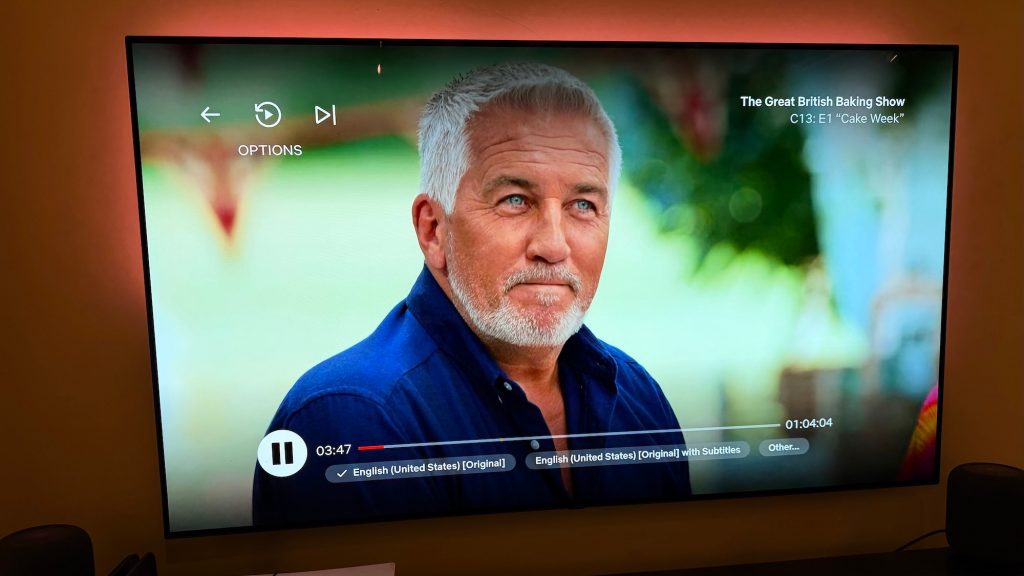
My guess is that it has something to do with advertising, and Netflix thinks it can use its own video player for better or more “immersive” advertising opportunities.

Netflix’s switch to a custom video only further exacerbates the company’s poor support for Apple TV in general. The company, for example, does not integrate with Apple’s TV and therefore does not support system tvOS features like the universal “Up Next” queue. Its use of the native Apple TV video player was really its only redeeming quality on the platform.

The core functionality and controls that this change ruined aren’t minor. They aren’t things you’ll only notice occasionally. Netflix’s video player botches even the most basic of tasks, such as requiring multiple button presses to rewind if you happened to miss a piece of dialogue. Netflix has fundamentally made its experience worse, and you’ll notice every time you use the app.

The timing is also pretty poetic: Netflix started rolling out this change at almost the exact same time it announced yet another price increase.

Here’s John Gruber:

Switching to their own custom video player also broke Netflix’s integration with the iPhone. Until last week, playing video in the Netflix app on Apple TV would put a live activity widget on your iPhone lock screen with the name of the current program, scrub location, and player controls. Now that’s gone.

This regression dropping the same week that Netflix announced price hikes makes me so angry that I’m giving even more thought to downgrading my family’s Netflix account from the $27/month Premium plan to the $20/month Standard plan. Sending Netflix only $240 per year instead of $324 will show them.

I no longer subscribe to Netflix, except for the “Netflix on Us” ad-supported plan I get for “free” through T-Mobile. I find the service doesn’t have much content I want to watch, and changes like this mean I definitely don’t want to give the company $27 per month.

Hopefully, Netflix sees the growing frustration from users and walks back this change. I wouldn’t hold my breath, though.
By

Chance is the editor-in-chief of 9to5Mac, overseeing the entire site’s operations. He also hosts the 9to5Mac Daily and 9to5Mac Happy Hour podcasts. You can send tips, questions, and typos to [email protected].

Sourced from 9TO5Mac

By

At its latest upfront presentation, the streamer unveiled new tools, capabilities and partnerships that span planning, buying and measuring outcomes of ad campaigns.

NEW YORK — At its latest upfront presentation, Netflix reminded advertisers what its combination of technology, entertainment and scale can provide to those looking to engage its attentive and growing audience. Executives on May 13 shared impressive statistics and unveiled new pilots and capabilities across programmatic, agentic AI and data-driven insights.

In between, there were appearances from stars including Florence Pugh and Millie Bobbie Brown and the usual dog and pony show theatrics — literally: The presentation featured three pups courtesy of the Westminster Kennel Club, which will broadcast its dog show on the platform in 2027.

“If the last couple of years were about proving we’re a durable player, this year is about establishing ourselves as a more formidable one,” said Amy Reinhard, Netflix’s president of advertising, during the presentation. “We’ve proven we’re effective. We’re expanding ads to more places, and we’re ready to compete with anyone.”

Netflix, which recently shifted to counting monthly active viewers, claimed it has 250 million monthly active viewers around the world. As that number grows, over 60% of sign-ups are choosing the company’s ad-supported plan, and nearly half of its members, 44%, who see an ad on Netflix never saw it on broadcast TV or other streamers, providing advertisers with unique audiences.

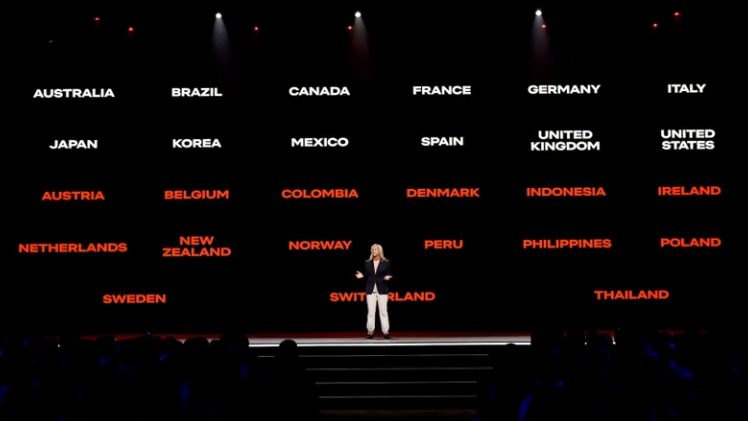
That audience is expected to grow in 2027 as Netflix expands its ads plans from its initial 12-country slate to 15 new countries: Austria, Belgium, Colombia, Denmark, Indonesia, Ireland, Netherlands, New Zealand, Norway, Peru, the Philippines, Poland, Sweden, Switzerland and Thailand. The platform will also open new ad inventory across podcasts and vertical videos globally in 2027, along with expanding brand partnerships with its official fan site, Tudum.

As discussed on its recent earnings call, Netflix is turning to artificial intelligence and machine learning tools that it has used for decades to help build out its ad business. DoorDash, Target and TurboTax have recently tested AI-powered capabilities that look to better match advertiser creative with the platform’s content — a capability that will be brought to every ad-supported region by the end of 2026.

The company is also testing AI agents to manage, optimize and purchase ads, in addition to the AI-driven tools that it already offers around developing and optimizing media plans based on brand objectives. Additionally, AI is being used to adapt assets for different formats, like vertical video or pause ads, and the company is testing new personalized ad loads and frequency caps that are dynamically adjusted based on viewing behaviour.

“On top of new inventory, we’re also marrying art and science better than anyone else,” Reinhard said. “AI is already making advertising with Netflix easier and more efficient.”

Simplified campaigns, driving results

Netflix during the presentation unveiled new tools, capabilities and partnerships that span planning, buying and measuring outcomes of ad campaigns. The offerings are part of the Netflix Ads Suite, which was deployed to all its ad-supported territories in the fall. Along with tapping the cast of “Emily in Paris” to detail its full-funnel solutions, the presentation featured Nicolle Pangis, vice president of advertising at Netflix, who joined the company after a stint as CEO of the cable ad sales company Ampersand.

“I know the pressure on every dollar is higher than ever, and I also know that you’re looking for fewer, more strategic partners who provide high quality environments at the scale you need to streamline your buys and drive better results,” Pangis said during the presentation.

A new Audience Insights API helps advertisers learn about member characteristics and behaviours, while a Reach Curve API assists in forecasting campaign reach. The company has integrated with partners including Snowflake and Amazon Web Services around data clean rooms, and will add InfoSum as a partner by the end of the year. Netflix also works with Dentsu, Horizon, Omnicom, PMG and Tinuiti on solutions like planning APIs and clean rooms.

Additionally, Netflix is expanding programmatic capabilities to Live and Pause Ads using Dynamic Ad Insertion tech, allowing clients to buy through their preferred demand-side platform partners — first in the U.S. and Canada this summer before expanding more widely by the end of the year. The company will also enable programmatic audience targeting for all ad-supported countries on Amazon DSP by June 1 and Yahoo DSP in the months after, providing a timeline for previously announced partnerships.

While the battle over audience measurement continues, Netflix has joined the list of publishers working to prove outcomes, not just impressions. Campaigns on the streamer drive almost two-times the TV norm on long-term brand building, and perform 23% above benchmarks for purchase intent compared to competitors, per data shared by Netflix.

Dove, which partnered with the company around hit show “Bridgerton” for a campaign that spanned consumer products and custom spots, notched more than 1 billion impressions across seven markets and saw an almost 60% increase in new shoppers for products. Meanwhile, a partnership between Airbnb and “Nobody Wants This” around the booking platform’s experience offerings boosted awareness and purchase intent, delivered a return on ad spend more than double the industry benchmark and helped drive bookings.

“It’s no surprise that ads on Netflix drive greater attention, more brand awareness, higher engagement and more search and web visits, but they also drive higher sales, lift purchase intent and return on ad spend, compared to our competitors,” Pangis said.

Feature image credit: Dimitrios Kambouris / Staff via Getty Images

Amy Reinhard speaks onstage during the 2026 Netflix Upfront at Sunset Pier 94 Studios on May 13, 2026 in New York City.

By

Sourced from Marketing Dive

By 

Netflix has done away with the “monthly active users (MAU)” metric, which is widely used across ad-supported streaming, and has switched to capturing viewership as “monthly active viewers (MAV),” which it defines as subscribers watching at least one minute of ads on Netflix per month, multiplied by how many people are watching in a given household. “Our move to viewers means we can give a more comprehensive count of how many people are actually on the couch, enjoying our can’t-miss series, films, games and live events with friends and family,” the company explained in a blog post, via Deadline.

With a new metric comes a new viewership milestone, as Netflix has reported that it now reaches more than 190 million MAVs on its ad-supported tier. Given the metric change, it’s hard to know exactly how big a jump that is from the 94 million MAUs Netflix stated it had back in May, although the streamer did note that MAUs were tied to account profiles and therefore undercounted co-viewing, a factor that the new MAV metric addresses.

Netflix Has Offered an Ad-Tier Since 2022

Despite being initially against advertising, as competition in the streaming market grew, Netflix announced plans for an ad-tier in 2022, which was rolled out that November. With the three-year mark having just passed, Netflix is gearing up for an even bigger 2026, with the company currently testing out a new interactive video ad format in North America that is geared to each subscriber’s individual viewing behaviour. This new format has reportedly been well-received and will be rolled out globally by Q2 2026.

Netflix remains the biggest streaming service in the world, with an estimated 302 million subscribers. Despite facing stiffer competition now than it did during its first decade as a streaming service, Netflix has continued to grow its subscriber base by offering several crowd-pleasing and/or award-winning original series like House of CardsStranger ThingsThe Witcher, and Squid Game. The company has also been able to attract top-tier talent to its platform, such as television powerhouses Shonda Rhimes (Grey’s AnatomyBridgerton) and Ryan Murphy (GleeMonsterRatched).

Upcoming movies that Netflix subscribers will want to keep an eye out for include the Once Upon a Time in Hollywood sequel The Adventures of Cliff BoothGreta Gerwig’s Narnia reboot The Magician’s Nephew, and Brad Bird’s long-gestating animated passion project Ray Gunn. On the TV side, subscribers have new seasons of Stranger ThingsVirgin RiverOuter Banks, and Bridgerton to look forward to, as well as a live-action take on Scooby-Doo, a new adaptation of Little House on the Prairie, and an Assassin’s Creed series.

By 

Sourced from CBR.

By Lillian Rizzo

Netflix said Wednesday that its quarterly revenue and subscriptions rose, as efforts to curb password sharing took hold.

Here’s what the company reported for the second quarter versus what analysts expected, according to Refinitiv:

  • Earnings: $3.29 a share vs. $2.86 per share expected
  • Revenue: $8.19 billion vs $8.30 billion expected

The streaming giant said it added 5.9 million customers during the second quarter amid its broader crackdown on password sharing in the U.S. Netflix said it would roll out its new policy to the rest of its customers on Wednesday.

Netflix’s stock fell as much as 8% in after hours trading.

The company reported revenue of $8.19 billion, up 3% from $7.97 billion in the prior-year period. Net income of $1.49 billion climbed from $1.44 billion in the year-ago quarter.

The earnings report comes soon as investors look for more information on the rollout of Netflix’s ad-supported streaming tier and push to boost subscriptions by rooting out account sharing.

However, Netflix said it was too early to report a breakdown of revenue from the ad-supported tier — which was introduced late last year — as well as the accounts that have come from the new password policy.

Netflix said Wednesday it expects a boost in revenue in the second half of the year as it begins “to see the full benefits of paid sharing plus the steady growth in our ad-supported plan.”

Netflix said it now forecasts revenue of $8.5 billion, up 7% year over year, for the third quarter. It attributed the expected revenue growth to more average paid memberships.

The company also anticipates paid net subscriber additions in the third quarter will be similar to the second quarter. Meanwhile, Netflix expects revenue growth in the fourth quarter to “accelerate more substantially” as the efforts to curb password sharing gain steam and as advertising revenue grows.

In May, Netflix began alerting members about the policy to deter the use of other people’s accounts. Subscribers can either transfer a profile to someone outside of their household so they can pay for their own account, or the member can pay a $7.99 additional fee per person.

The company’s subscriber base rose in the weeks following the sharing policy rollout, according to a report from Antenna.

Netflix executives declined on Wednesday’s earnings call to give specific information on the rollout of its paid sharing initiative so far.

Co-CEO Greg Peters said Wednesday that the company will not see the full effect of the policy for several quarters.

“It’s not an overnight kind of thing,” Peters said on the call. “In part because of interventions that are applied gradually, and in part because some borrowers won’t immediately sign up for their own account, but will do so in the next month or three months or six months or maybe even longer down the line as we launch a title that they are particularly interested in.”

The executives noted that the password sharers who have started their own accounts have similar characteristics as longstanding customers, leading the company to expect a high retention rate.

Netflix introduced both the new sharing policy and ad tier in the last year as part of its response to its first subscriber loss in more than a decade in 2022.

Netflix’s stock has risen with the rollout of the initiatives. The company’s shares have climbed more than 60% this year, and it notched a 52-week high on Wednesday amid expectations it would show growth this quarter.

The company on Wednesday said it hopes the changes will help to “generate more revenue off a bigger base,” adding it wants to use the additional funds to reinvest in the platform.

In May, Netflix said it expanded its paid sharing policy to more than 100 countries, which account for more than 80% of its revenue.

“The cancel reaction was low and while we’re still in the early stages of monetization, we’re seeing healthy conversion of borrower households into full paying Netflix memberships,” Netflix said Wednesday, adding it would address the issue in the remainder of the countries that it is available.

Meanwhile, media companies have turned more to ad-supported streaming as a way to get to profitability.

During its pitch to advertisers in May, Netflix unveiled few details about its ad-supported tier, albeit enough to push its stock higher. The company said it had 5 million active users for the new tier, and 25% of its new customers were signing up for the tier in areas where it’s available.

On Wednesday, Netflix confirmed that it removed its “basic” ad-free plan, making its standard plan with ads its cheapest option at $6.99 a month. The standard and premium tiers without commercials cost $15.49 and $19.99, respectively, a month.

These initiatives come as the media industry goes through one of its most tumultuous periods in some time.

Industry analysts have long suspected the industry could consolidate, particularly through mergers and acquisitions.

On Wednesday, co-CEO Ted Sarandos said Netflix looked at opportunities to buy intellectual property and build its content library.

“Some of those assets are stressed for a reason,” Sarandos said of potential media companies or assets up for sale. “Our M&A activity would mostly be around IP that we could develop into great content for members. Traditionally, we’ve been very strong builders over buyers and that hasn’t changed.”

Netflix is also contending with the potential fallout of the Hollywood writers and actors strikes.

Analysts expect Netflix to fare better than other media companies during the work stoppage due to its deep bench of content, particularly from international sources.

As a result of the strike, Netflix increased its free cash flow forecast to $5 billion for 2023, up from a prior estimate of at least $3.5 billion due to lower spending on content this year.

Sarandos said during Wednesday’s call that Netflix has a lot of fresh content in the pipeline, but did not say how long that stream would last. Still, he said the strike needs to reach a conclusion.

“We’ve got a lot of work to do. There are a handful of complicated issues,” Sarandos said. “We’re super committed to getting to an agreement as soon as possible, one that’s equitable and one that enables the industry and everyone in it to move forward in the future.”

Feature Image Credit: Sopa Images | Lightrocket | Getty Images

By Lillian Rizzo

Sourced from CNBC

By

Netflix is expanding into gaming opportunities

Netflix is set to bring video games to its platform next year having made its first key hire to lead the push.

Mike Verdu was previously head of virtual and augmented reality at Facebook, where he worked with developers to bring games and other content to Oculus.

Prior to that, he spent his career leading the gaming efforts at companies including EA, Zynga and Kabam.

He will now lead Netflix’s push into creating content beyond TV shows and films. Netflix hasn’t been shy in talking up its ambition to be a major player in the $90bn video games industry.

It’s likely that some games will be tied to its most popular shows, such as Stranger Things. On its most recent earnings call, chief operating officer Greg Peters – who Verdu will report to – said its users “want to immerse themselves more deeply and get to know the characters better and their back stories and all that stuff”.

He said: “Really we’re trying to figure out what are all these different ways that we can increase those points of connection, we can deepen that fandom. And certainly, games is a really interesting component of that.

“And there’s no doubt that games are going to be an important form of entertainment and an important sort of modality to deepen that fan experience. So we’re going to keep going, and we’ll continue to learn and figure it out as we go.”

According to Bloomberg, which first reported Verdu’s hire, the first games are slated to appear on the platform within the next year. Rather than sitting on a separate site, they will appear alongside current content as a new programming genre. It is not expected that users will be charged extra to access games.

The move into gaming comes as Netflix continued to battle it out against Amazon Prime and Disney+ for new users in the competitive streaming market.

Netflix reported a dramatic slowdown in subscribers for the first three months of 2021.

As a result of the pandemic, it added 36 million subscribers in 2020 to pass 200 million subscribers worldwide. It predicted the surge would continue this year and said it expected to add six million users to the platform in the first quarter of the year. However, it only managed to add four million and now expects to add about one million subscribers in the current quarter, which would be its slowest growth on record.

By

Sourced from The Drum

More Netflix. Less ESPN. The pandemic means a greater number of television viewers in the short term, but signals a potential threat to the ecosystem protecting the industry.

It happened around the world, and now it’s happening in the United States: The more people stay home to avoid the coronavirus pandemic, the more they find themselves glued to their screens.

In South Korea, as cases spiked, television viewership shot up 17 percent, according to Nielsen. Last month in Italy, the size of the TV audience increased 6.5 percent, with a 12 percent rise in hard-hit Lombardy.

The same trend has arrived in the United States. In the Seattle area, total television use increased 22 percent on March 11 from the week before, according to Nielsen. In New York that day, as more people started working from home, use went up 8 percent. (Total use, as defined by Nielsen, includes live television, on-demand viewing, streaming and gaming.)

But for media companies, the benefit of having a bigger-than-usual audience may be short-lived as the outbreak threatens to undercut the very structure of their business. With businesses scaling back workers and analysts warning of a recession as global economies slow, a significant number of viewers may decide in the coming months to break away from cable or cut back on streaming subscriptions.

The gain in audience size “will be replaced pretty quickly by the necessity of reducing monthly bills, when people will have to deal with the financial impacts of a recession,” said Craig Moffett, a co-founder of the research firm MoffettNathanson. “Cord cutting will accelerate with a vengeance.”

The Walt Disney Company, ViacomCBS and other media giants face a pivotal moment as the delicate ecosystem that protects their business — live content tied to high-cost subscriptions — erodes even faster. It started last week with the sudden disappearance of a dependable asset: sports programming.

Live sports coverage generates billions of advertising dollars and fuels television subscriptions — a combination that delivers fat profits. Now the industry is facing the postponement and cancellation of almost every major sporting event, including the Masters golf tournament, a CBS staple, as well as the remainder of the National Basketball Association season and postseason, which are consistent draws for the AT&T-owned Turner channels and Disney’s ESPN and ABC networks.

The sports coverage has become critical at a time when the audience appetite for dramas and sitcoms has shrunk. Advertisers spend more than $2 billion on live games and tournaments during this part of the year, according to Kantar Media. And with LeBron James benched indefinitely, ESPN is expected to lose $481 million in N.B.A.-related advertising; for Turner, the loss will be about $210 million, according to MoffettNathanson.

In statements, ESPN and AT&T’s WarnerMedia said they were confident that they would weather the challenge, but declined to make executives available for interviews. For now, ESPN has filled the gaps by running “SportsCenter” nearly nonstop.

ImageKarl Ravech on ESPN after the announcement of the cancellation of the Southeastern Conference men’s basketball tournament in Nashville last week.
Credit…Andy Lyons/Getty Images

NBCUniversal executives have been eagle eyed on the Tokyo Olympics ever since President Trump called last week for a possible postponement. More than $1.25 billion in advertising commitments are on the line for the network and its parent company, Comcast.

The overall TV industry calendar has also been upended, thanks to the scrapping of the upfronts, the annual schmooze-fest of advertisers, television executives and prime-time stars.

Instead of locking in ad deals over canapés and cocktails after splashy presentations at Radio City Music Hall, Carnegie Hall and other New York venues, the usual attendees at this springtime gathering will have to find another way to broker the roughly $20 billion in marketing agreements for the 2020-21 season.

“We’ll miss Carnegie Hall and our agency dinners this year,” Jo Ann Ross, the head of advertising sales at CBS, said in a statement, adding, “We won’t miss a beat.”

Brian Wieser, the head of analysis and research at the media buying giant GroupM, wondered about the possible long-term effects of the pandemic on the industry.

“Will lack of advertising demand in the spring make it so pent up that when the upfronts are being negotiated, advertising will come back rapidly, or does it go away forever?” he asked. “Right now odds don’t look great, but nobody really knows.”

At a time when millions of isolated people are likely to tune in, the media industrial complex is grinding to a halt — and it is unclear when it will start back up again.

Warner Bros. has halted production on more than 70 television series. Netflix has suspended production on all scripted series and films in the United States and Canada for at least two weeks.

Most late-night talk shows, a major profit center for broadcasters, have announced that they will go dark through at least March 30. (On Monday, Stephen Colbert broke the silence with surprise segments filmed from his bathtub.) “Saturday Night Live” announced on Monday that it was halting production indefinitely, with six episodes to go in the current season.

Image

A piano onstage at Stern Auditorium at Carnegie Hall, which canceled events because of the virus.
Credit…Vincent Tullo for The New York Times

Other programs shot before live audiences will not be affected. The current season’s remaining episodes of NBC’s “Ellen’s Game of Games” and Fox’s “The Masked Singer” are already in the can, as are the next six weeks of NBC’s “The Voice.” But a question mark hangs over the final episodes of “The Voice” — episodes that, in previous years, have been shot live before a studio audience.

The suspensions call into doubt the industry’s push into live and event-based content, a strategy designed to create programming that’s not easily replicated on the web.

“It looked like a good bet until two weeks ago,” Mr. Moffett said. “Now these companies look like they’re in the wrong place at the wrong time.”

Netflix, Hulu, Amazon Prime Video and Disney Plus are likely to see a “surge” in viewership, now that traditional television has lost some of its “most valuable content,” said Matthew Ball, a media executive and former head of strategy at Amazon Studios.

Disney took advantage of the newly homebound by releasing its animated hit “Frozen 2” on Disney Plus three months earlier than planned. In a break from Hollywood’s standard practice, Universal announced on Monday that it would make its films available for rental via streaming the same day as their theatrical releases.

Soon-to-launch platforms could attract more viewers than expected during the nightmarish pandemic situation. Peacock, NBCUniversal’s streaming service, has an April 15 start date. AT&T’s HBO Max is set for a May debut. Quibi, the short-form content service from Jeffrey Katzenberg and Meg Whitman, is scheduled for an April 6 launch.

“This might not last, but it gives them all a much better and lower-cost shot at proving their value to audiences,” Mr. Ball said.

The streaming players may find themselves in a price war. “Cost will become that much more urgent,” Mr. Moffett said. “There are going to be very large parts of the population out of work.”

Image

Warner Media headquarters at Hudson Yards in Manhattan.
Credit…Jeenah Moon for The New York Times

The chaotic events of recent days suggest the futility of predicting what will happen next as the virus creeps into previously unaffected areas. A CNN presentation for advertisers held on March 5 — less than two weeks ago — seems almost quaint in retrospect.

It took place at the network’s new headquarters in Manhattan’s Hudson Yards complex. The room was so packed that some advertisers had to be seated in an overflow area.

In front of the crowd — after the anchor Anderson Cooper quipped that he had “shaken, like, 50 hands today” — the CNN president Jeff Zucker asked the network’s chief medical correspondent, Sanjay Gupta, if it was “OK for these folks to go to a room of about 250 people.”

“No,” Mr. Gupta answered half seriously, to laughs from the crowd.

Tiffany Hsu contributed reporting.

Feature Image Credit: Credit…Hunter Kerhart for The New York Times

Edmund Lee covers the media industry as it grapples with changes from Silicon Valley. Before joining The Times he was the managing editor at Vox Media’s Recode. @edmundlee

John Koblin covers the television industry. He reports on the companies and personalities behind the scripted TV boom, and the networks that broadcast the news. He previously covered fashion. @koblin 

Sourced from The New York Times

By Sarah Perez

Despite ongoing speculation and investor pressure, Netflix is still declining to adopt an advertising-based business model as a means to boost its revenue, Netflix CEO Reed Hastings confirmed on Tuesday. The company on its Q4 earnings call again shot down the idea of an ad-supported option, with Hastings explaining there’s no “easy money” in an online advertising business that has to compete with the likes of Google, Amazon and Facebook.

Explained the exec, “Google and Facebook and Amazon are tremendously powerful at online advertising because they’re integrating so much data from so many sources. There’s a business cost to that, but that makes the advertising more targeted and effective. So I think those three are going to get most of the online advertising business,” Hastings said.

To grow a $5 billion to $10 billion advertising business, you’d need to “rip that away” from the existing providers, he continued. And stealing online advertising business from Amazon, Google and Facebook is “quite challenging,” Hastings added, saying “there’s not easy money there.”

“We’ve got a much simpler business model, which is just focused on streaming and customer pleasure,” he said.

The CEO also noted that Netflix’s strategic decision to not enter the ad business has its upsides, in terms of the controversies that surround companies that collect personal data on their users. To compete, Netflix would have to track more data on its subscribers, including things like their location — that’s not something it’s interested in doing, he said, calling it “exploiting users.”

“We don’t collect anything. We’re really focused on just making our members happy,” Hastings stated.

That’s not exactly true, of course. Netflix does track viewership data in order to make determinations about which of its original programs should be renewed and which should be canceled. It also looks at overall viewing trends to make decisions about which new programs to greenlight or develop. And it tracks users’ own interactions with its service in order to personalize the Netflix home screen to show users more of what they like.

The company also this quarter introduced a new viewership metric — “chose to watch,” which counts the number of people who deliberately watched a show or movie for at least two minutes. That’s far longer than Facebook or Google’s YouTube, but isn’t a great way to tell how many people are watching a show to completion, as on TV.

However, none of this viewership tracking is on the scale of big tech’s data collection practices, which is what Hastings meant by his comment.

“We think with our model that we’ll actually get to larger revenue, larger profits, larger market cap because we don’t have the exposure to something that we’re strategically disadvantaged at — which is online advertising against those big three,” he said.

This isn’t the first time Netflix’s CEO has had to repeat the company’s stance on being an ad-free business. In Q2 2019, Netflix reminded investors in its shareholder letter that its lack of advertising is part of its overall brand proposition.

“When you read speculation that we are moving into selling advertising be confident that this is false,” the letter said.

Analysts have estimated Netflix could make over a billion more per year by introducing an ad-supported tier to its service.

To some extent, the increased push for Netflix to adopt ads has to do with the changes to the overall streaming landscape.

Netflix today is facing new competition from two major streaming services, Disney+ and Apple+ — both of which have subsidized their launch with free promotions in order to gain viewership. In the next few months, Netflix will have to take on several others, including mobile streaming service Quibi, WarnerMedia’s HBO Max and NBCU’s Peacock. The latter features a multi-tiered business model, including a free service for pay-TV subscribers, an ad-free premium tier and one that’s ad-supported.

The service was introduced to investors last week, where it was well-received.

Other TV streaming services also rely on ads for portions of their revenue, including Hulu and CBS All Access. Meanwhile, a number of ad-supported services are also emerging, like Roku’s The Roku Channel, Amazon’s IMDb TV, TUBI, Viacom’s Pluto TV and others.

Netflix’s decision to keep itself ad-free is likely welcome news for its subscriber base, however, who see the lack of ads as being a key selling point.

Feature Image Credit: Ernesto S. Ruscio/Getty Images / Getty Images

By Sarah Perez

Sourced from TechCrunch


By Jeff Haden

Netflix co-founder Marc Randolph’s father gave him a guide to success that is as powerful as it is simple.

Every parent wants their kids to be successful, but there are many different paths to success. Which means every parent tries to give their children different things.

Warren Buffett gave his kids “enough money so that they would feel they could do anything, but not so much that they could do nothing.” Bill Gates and wife Melinda
will give their kids a “minuscule” amount of money, so they will “have to find their own way.”

When Netflix co-founder Marc Randolph graduated from college, his father gave him a handwritten list of instructions he later passed on to his own children. (The original hangs next to his bathroom mirror.)

  1. Do at least 10 percent more than you are asked.
  2. Never, ever, to anybody present as fact opinions on things you don’t know. Takes great care and discipline.
  3. Be courteous and considerate always — up and down.
  4. Don’t knock, don’t complain — stick to constructive, serious criticism.
  5. Don’t be afraid to make decisions when you have the facts on which to make them.
  6. Quantify where possible.
  7. Be open-minded but skeptical.
  8. Be prompt.

Sounds simple? It is — and isn’t.

Doing more than expected is hard, especially when extra effort goes unappreciated. But that’s OK, because you will benefit: You’ll become more skilled, more talented, and more experienced.

All of which will pay off in the long run.

The same is true for courtesy and respect; it’s easy to be courteous to those “above” you, but the people who really deserve your respect and consideration are the people “below.” It’s also true for complaining. If something is wrong, whining never helps. Put your effort into making the situation better.

And it’s true for being prompt. Arriving late — for an appointment, a meeting, for anything — is disrespectful. Make people wait and you’re saying that your time — whatever you are doing — is more important than theirs.

Which is, of course, BS.

Time is the most precious commodity any of us have.

So don’t waste yours.

And definitely don’t waste anyone else’s.

(Here’s a photo from Marc’s LinkedIn feedof his dad’s actual list.)

Feature Image Credit: Getty Images

By Jeff Haden

Sourced from Inc.

As Apple reveals its own on-demand video service, it’ll have to face up to an old enemy: pirates

Apple’s move into the streaming video industry is the industry’s worst-kept secret, but while the shift into creating video content is a new one for the company, another issue will be sorely familiar: the risk of piracy.

Nearly 190 billion visits were made to illegal piracy websites in 2018, according to MUSO, a company that tracks the scale of digital piracy – 5.75bn of which came from the UK (and a further 17.4bn from the US). Almost half of all visits to piracy websites were for television shows, with nearly one in five visitors to illicit sites seeking out the latest film.

MUSO’s figures for 2018 show a slight drop in the amount of privacy compared to the previous year. In 2017, it says, there were 206bn visits to pirate sites. But the illegitimate video industry is mimicking its legitimate peers, says Andy Chatterly of MUSO.

“People have moved largely to on-demand [streaming] and away from downloading, in a similar way that people have moved away from iTunes to Spotify,” he says. “Whether they’re paying for it or not, they want to access things when they want.” Six in ten visits to piracy sites las year were to illicit streaming services – with torrenting, once a popular method of accessing illegal content, dropping in popularity.

Convenience is a key reason for people taking the illegal route when hunting out their favourite TV shows and films, reckons Chatterly – and illicit websites are starting to make their user interfaces more user-friendly for that exact purpose.

It’s a similar move to one we saw four years ago with the rise of Popcorn Time, an illegal movie sharing program singled out by Netflix CEO Reed Hastings as a major competitor back in 2015. Popcorn Time’s slick front page was the equal of Netflix – a world away from the dark old days of wrangling VPNs and downloading a raft of new software just to be able to access shaky rips of Hollywood screeners.

That idea of illegal platforms pushing forward innovation has continued today. “Some of these sites you go to, the dashboard experience is better than the paid subscription services,” says Chatterly. That builds up brand loyalty – last year saw a ten per cent increase in people directly visiting big-name illegal streaming sites, rather than finding them through search engines.

But it’s not just a lack of friction that makes movie sharing so popular. Many consumers now don’t see why illegal streaming or download is seen as a bad thing, in large part thanks to the attitude of Netflix and Amazon Prime’s towards account sharing. “The more digital services allow sharing of passwords, the more people think of it as they’re okay with me doing it, so I’ll just go download a piece of content,” says Frost & Sullivan streaming video analyst Dan Rayburn. “I don’t think consumers think it’s stealing.”

There’s also an element of subscription fatigue, says Chatterly – something likely to be made even worse by a slate of more high-quality original programming appearing on yet another service looking to separate us from our cash, none of which overlaps with others. “It’s inevitable that people are not going to pay for four or five different subscriptions to four or five different platforms,” he explains. “If you can access everything with a single click, of course you’re going to do that.”

While on-demand streaming services need to have their own original content to attract audiences, the fragmentation of content across competing services can mean someone who loves Game of Thrones, Arrested Development, The Grand Tour and whatever Apple decided to launch with has to sign up to multiple services – all of which take money out of their bank account.

As a result, the core base of people accessing illegal websites has broadened out – significantly. “We have to stop thinking this audience is the traditional pirate in our imagination,” says Chatterly. “The reality is these are probably people who do subscribe to multiple platforms, who do have sports subscriptions, but access other sports online because it’s not available in their region or they have too many subscriptions.”

While Chatterly is reticent to lay the blame at the platform providers for giving people an excuse to turn to privacy, he believes a rethink is required. “There’s an opportunity here,” he says. “There are huge amounts of demand, and we ignore that audience demand. It’s important to try not to leave pirated content online, but at the same time, the audience is something that has to be valued.”

The battle with piracy is one any company – whether Netflix, Amazon or Apple – is likely to lose in the long run. “I don’t care what steps you’re going to take, you can’t keep 100 per cent of your content protected at all times,” says Rayburn.

Sourced from WIRED

By Mike Murphy

Apple’s plans for a future beyond iPhone sales are slowly beginning to take shape.

At an event at its headquarters in California March 25, the company unveiled a range of new services intended to provide it with more stable, recurring revenue sources, including a credit card, a magazine subscription service called News+, a video-game subscription called Arcade, and original video programming debuting in the fall under the banner of Apple TV+.

Details are still thin on how these services will be priced—News+ will be $10 per month but Apple didn’t offer information on the others—but they seem to be building on the recent successes the company’s services division has had.

In its latest earnings report in January, there were legitimate concerns about the future of its cash cow, the iPhone, which has struggled to expand into burgeoning markets like China and India. But its services business had another banner quarter.

Over the last four quarters, its sales of apps, movies, games, Apple Music, AppleCare, iCloud subscriptions, and Apple Pay fees have generated roughly $39.6 billion for the company, with a 62% margin in the most recent quarter. To put that into perspective, that would land that division on its own at number 79 on the Fortune 500 list, a few spots below Facebook, and above the likes of American Express, Nike, Coca-Cola, McDonald’s, Time Warner, and 21st Century Fox. Without much fanfare, Apple has become one of the largest media and services companies in the world, and there’s likely far more ahead.

Apple has been signing deals with producers, filmmakers, and actors, many of whom were onstage with CEO Tim Cook today, with the goal of launching its TV+ streaming service with exclusive content to compete with the likes of Hulu, Netflix, and Amazon Prime.

Given that Apple has been supremely successful with relatively mediocre services offerings to date—it has essentially the same film, TV, and music offerings all its competitors have; iCloud is overpriced; and Apple Music, even with its reportedly 50 million subscribers, is generally a poor experience—it should be able to leverage whatever content it plans to launch to build a services package that consumers would be excited to subscribe to.

Right now, people buy iCloud because their phones run out of storage space, they buy AppleCare because it seems like a sensible thing to do, and they buy Apple Music for early access to music and forget to cancel (or they’re one of the few people who own a HomePod). But if Apple is serious about shifting its business model away from individual hardware sales (it stopped reporting unit sales this past quarter) and toward more consistent, expected streams of revenue, it should truly go all in on services. It should take a page out of Amazon’s playbook and launch Apple Prime.

Apple launched the iPhone Upgrade Program in 2015 in a move to capture some of its hardware sales away from third parties like cellular carriers. It’s a payment plan though Apple, underwritten by Citizens Bank, where customers pay a monthly fee to get the latest smartphone each year, along with AppleCare. It’s a decent deal if you’re sort of person who needs the newest phone each year. Given that it also offers subscriptions for iCloud storage and Apple Music, and will soon have ones for video and news, it’s not wildly unreasonable to think that Apple would consider selling a single subscription package for everything it owns, including its new content.

Amazon Prime started out as an annual subscription for discounted expedited shipping, but has since grown into a massive program that gives customers deals at Whole Foods, free streaming on Amazon Prime Video and Prime Music, free e-books and magazines, free photo storage, as well as free shipping. The shipping may have been why many people signed up for the now $119-a-year service, but it’s likely the award-winning programs and other benefits are what keep them coming back. Prime has a renewal rate of over 90%, better even than discount retailer Costco’s member program, Bloomberg reports.


Apple could offer something similar, bundling together its new shows and news subscription with access to music, games, storage, AppleCare, and even phones, in one monthly package. A service like this likely wouldn’t come cheap (Apple is a luxury brand after all). Apple’s iPhone upgrade program ranges from about $37 to over $60 a month; Apple Music costs $10, and iCloud can cost from $1 up to $10. Lump on top of that AppleCare, and a video service (most of its competitors’ are around $10), and the new subscriptions in the pipeline, and Apple Prime could easily run anywhere from $75 to $100 per month. (But perhaps if it’s purchased with Apple’s new credit card, there could be some additional cash-back benefits.)

Even so, Apple has the brand loyalty to pull something like this off. Instead of worrying about holiday sales, down quarters, and having a massive supply of phones ready each September, Apple could shift more of its customers to a monthly subscription that will give it reliable revenue, and offer customers a discount on paying for services and devices separately. It’s working for Amazon, which has over 100 million Prime subscribers, and others have pushed similar ideas for other companies, like Disney. It’s a model that’s worked in IT sales as well—companies like HP, Microsoft, IBM, and even Apple itself all offer managed services for massive corporate customers.

If Apple wants to get serious about generating a nice flow of recurring revenue, and deepening the ties between its customers and its ecosystem, it should definitely consider offering all of its services bundled together. Today it laid further groundwork for doing that.

By Mike Murphy

Sourced from Quartz