Tag

Nostalgia

Browsing

By and

The rain hasn’t stopped for hours. Wind rattles the shelter’s windows as the storm outside swells, flooding the streets they used to call home. In a crowded gym, a family of four sit huddled together on makeshift beds pushed side by side each other. The parents wrap donated blankets around their shoulders; the teenagers lean against each other. Someone suggests a movie: something light, something old. They settle on a childhood favourite, a worn-out Pixar film, its colours flickering softly on the phone screen. Familiar voices, the opening music, the brand logo before the title… For a few minutes, it feels like the flood damage caused to their home no longer matters because they are together.

This is not just nostalgia. Research shows it is a form of collective coping. When the world feels unstable, why do we cling to familiar household brands and family rituals?

A study in everyday survival

In our recent research published in the International Journal of Research in Marketing, we explored how families use everyday brands and consumer rituals to restore a shared sense of identity after major life-changing disruptions.

Drawing on interviews and the diaries of 22 French families during the Covid-19 lockdowns, we found that major life disruptions, sudden collective shocks like pandemics, wars, or natural disasters, destabilise shared identities. When crisis strikes, family units don’t merely adapt their routines; they rebuild who they are together through consumption.

Brands act as scaffolding for reconstructing “who we are together”. Products, platforms, and rituals, from Netflix series to board games to family meals, become tools for resilience and belonging.

And this pattern extends well beyond Covid. In an era of growing environmental volatility, it matters more than ever. According to global risk reports, the number of natural disasters causing major economic losses is at record highs. As more and more communities around the world face upheaval, these small, mundane gestures of consumption are likely to become even more vital.

How we make sense when the world stops making sense

The study identifies three-way people use shared consumption to soothe anxiety and reclaim a sense of belonging.

1) Ritualised structuring: re-creating routine

When time feels suspended, people rebuild daily habits through familiar brands. This can involve watching the same show every night at eight to mark family time or deciding that Tuesday night is reserved for a sisterly chat over WhatsApp while watching a cooking show. Even a simple coffee in a beloved mug every morning can signal the start of “normal” life again.

These rituals restore predictability and reinforce family structure: who does what, when, and with whom?

2) Collective revalorising: rediscovering shared fun

Shared consumption becomes a new form of togetherness. Families dust off old board games like Monopoly and Cluedo. Parents can cook with kids using brands that “belong” to the household (e.g. Nutella pancakes, Lego projects). The activity is not about the brand itself; it is about reasserting family character traits: “We’re playful,” “We’re resilient,” “We do this together.”

3) Intergenerational romanticising: reviving lineage

Families can also turn to the past for comfort, rewatching classics from childhood, cooking passed down recipes, or creating family newsletters to share stories across generations. These rituals ease anxiety by reconnecting with lineage and continuity. A form of quiet resistance to the fear that the future is slipping away.

Together, these practices form a kind of psychological architecture: a way to impose meaning, order, and belonging amidst chaos.

What brands really mean in a crisis

Not all brands can play that role. The ones that endure crises often do so not because they shout louder, but because they embody stability, shared experience, and emotional legacy.

During an economic downturn or after a parent’s layoff, trusted retailers can become family anchors and symbols that life can still be rearranged. A brand like Ikea, for example, could help families adjust to smaller homes by buying back larger furniture and offering adaptable, modular pieces that transform rooms into communal areas. That kind of gesture does more than move products: it helps families reimagine togetherness and regain a sense of control.

In climate disasters, local brands can strengthen communities and become symbols of solidarity. After the 2025 Texas flash floods, Walmart offered free meals to affected families. Initiatives like that could go further, for example by creating spaces where families gather, connect, and rest. The value is not just in the food; it is in rebuilding collective morale.

Even in political upheaval, cultural and media brands provide continuity. National broadcasters, for instance, can help by reviving beloved classic films that families can watch together. A subtle act of collective reassurance, reminding people of their shared cultural heritage.

The insight is simple but powerful: during disruption, consumption is not escapism. It’s sense making.

Belonging as a Business Asset

If brands can become emotional lifelines, it is because consumption in moments of rupture is not mindless escapism. Sharing a meal, lighting the same candle, queuing up the same movie… these acts whisper, “We’re still ourselves.”

The brands that subsist are not the ones that dominate conversations, but those that quietly fit into our family coping mechanisms. Our research shows that brands become vectors of family history, creators of gathering occasions, and delineators of individual, relational, and collective times and activities. They are, in effect, identity technologies which act as everyday anchors for group belonging and continuity.

As societies face mounting major challenges, from climate anxiety to digital disconnection and geopolitical tension, the emotional dimension of the marketplace will matter more than ever. When the world falls apart, the brands we hold onto are not about consumption at all; they are about remembering who we are.

Feature image credit: Unsplash
By and

Sourced from The Conversation

By 

Nostalgia is replacing reinvention.

In the past year you will have seen many a big brand lean on nostalgia and heritage rather than radical reinvention. It feels like a retreat from bold and daring reinvention, as we snuggle up to nostalgia like a security blanket

Take the case of the poster child of this new-age caution in Cracker Barrel Old Country Store. In August 2025 the chain attempted to modernise a brand rooted in roadside American. Immediately it saw a tsunami of political and social-media uproar. Soulless … bland … lacking resonance. Not long later, the company quietly dumped the redesign and reinstated its classic 70s-era emblem featuring “Uncle Herschel” beside a barrel. Cracker Barrel serves as a costly lesson in caution, with Cracker Barrel’s market value briefly falling by about $100 million before rebounding when the old design returned.

The old Cracker Barrel logo with a barrel and old man and the more minimalist new Cracker Barrel logo side by side

(Image credit: Cracker Barrel)

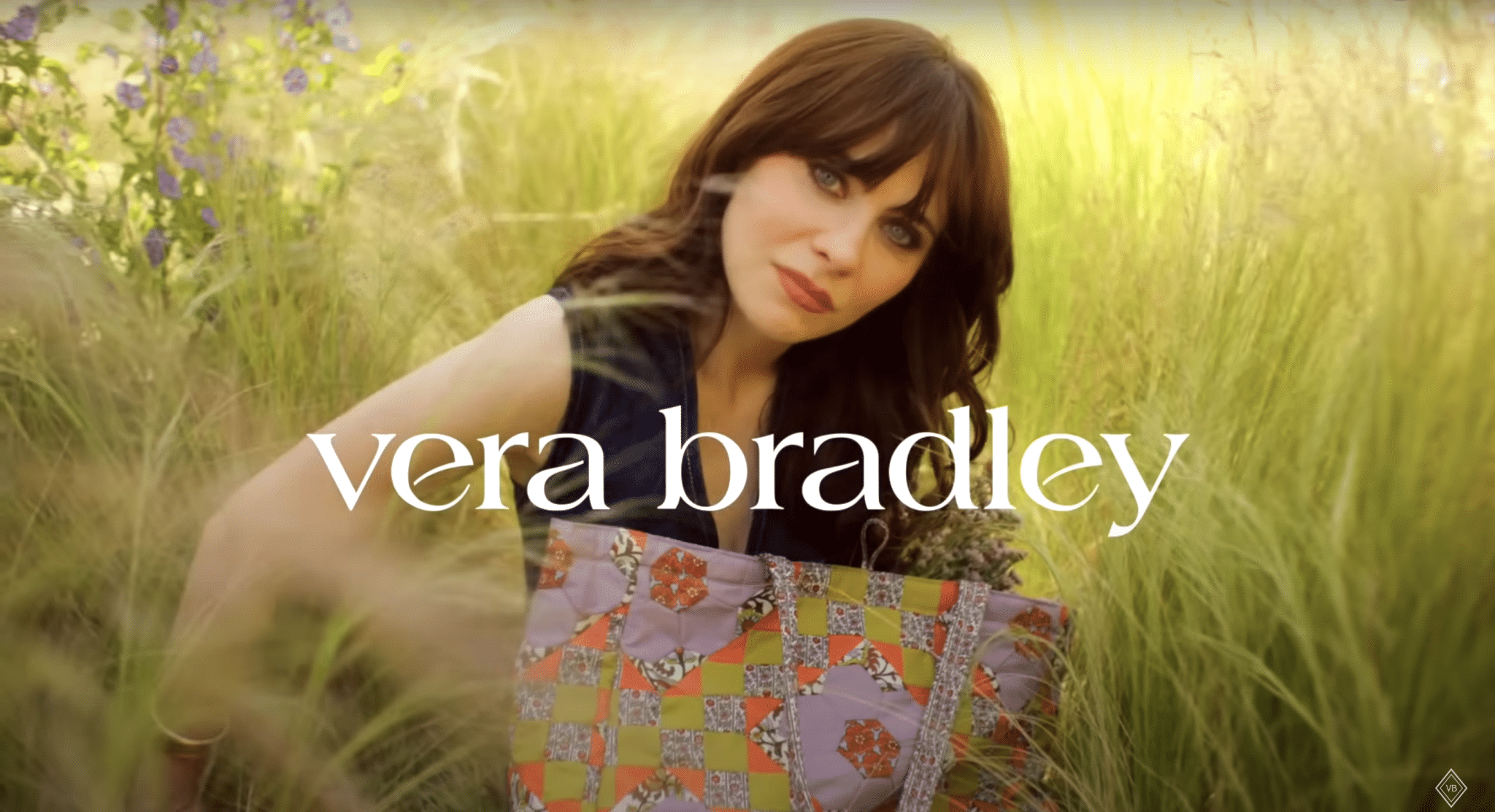
A similar story has been unfolding at midmarket fashion label Vera Bradley. Long known for its quilted bags in florals and paisley, Vera Bradley launched a brand “refresh” in 2024 aimed at attracting younger buyers. This makeover downplayed the company’s signature prints in favour of solid colours and sleeker lines. But many loyal customers rebelled. By early 2026 the company announced a course correction and its new “Project Sunshine” pivot doubled down on the vintage florals that made the brand famous. The Wall Street Journal reported that Vera Bradley’s executives admitted they had “lost track of what made Vera Bradley special”. The brand reversed its own makeover and leaned into nostalgia, acknowledging that its heritage patterns were, perhaps, core to customer appeal.

Vera Bradley

(Image credit: Vera Bradley)

These high-profile U-turns indicate a broader motive. We exist in an age of political upheaval and economic uncertainty, and many companies seem to be betting on familiarity. Designers and marketers note that nostalgia isn’t just sentimentality – it’s a strategic comfort zone.

Brand Genetics, a human centred insight and innovation consultancy, argues that research shows that nostalgic branding provides comfort during uncertain times and this helps consumers feel familiar and trustworthy with a brand. Nostalgia creates continuity between past and present, acting as a psychological anchor for weary customers. Familiar cues, such as old logos, classic patterns act as anchors.

When the world feels unpredictable, a gool old logo and pattern on your breakfast cereal might, on some level, make you feel a little bit safer.

Brands also face a much-more immediate cautionary environment. Social media and 24/7 news cycles mean that even small design changes can spark big reactions, when the name of the game is click bait. A new logo can be framed as a woke political statement, and any misstep is magnified online. In Cracker Barrel’s case, just removing an old cartoon figure became ammunition for a culture war. That kind of instant, vocal feedback encourages companies to play it safe.

Logo for Jaguar

(Image credit: Jaguar)

Think of one of the most radical examples of not playing it safe, Jaguar’s EV pink explosion. Last month The Telegraph reported: “The designer behind Jaguar’s controversial “woke” rebrand has reportedly been dismissed from the carmaker just days after a new chief executive took over…”

Where does all this leave designers? Innovation still matters, but maybe it should be cautioned with authenticity. Be sure change is kept close to the client’s DNA. Strip away at your risk, be mindful around signature elements that customers love – the very things that can alienate the audience a rebrand seeks to excite. Think colours, patterns, characters or typography as an echo to remind people what they already loved.

For many brands, nostalgia has become a safe space to hide from the judgement of a volatile world. For designers, maybe it’s a reminder that rupture without purpose can be a big bang of hot air. So tread carefully, there are landmines in the market.

Feature image credit: Burger King/Pepsi

By 

Simon is a writer specialising in sustainability, design, and technology. Passionate about the interplay of innovation and human development, he explores how cutting-edge solutions can drive positive change and better lives.

Sourced from CREATIVE BLOQ

By Sam Anderson

At 63, Kate Bush recently claimed a UK number one thanks to 80s nostalgia-fest Stranger Things. Trends all across media and marketing point to a mania for the cultural touchstones of years gone by. How can marketers ride this retro wave? What does our preoccupation with the rear-view mirror say about what people want from their media and ads? We asked seven leaders from The Drum Network.

Kate Cliffen, senior creative lead, Jellyfish

The retro wave shows that people of all demographics are still leaning into nostalgia for relief and comfort because, let’s be honest, the future is scarier than ever.

Brands can ride this wave by creating media that matches their audiences’ moods, but it’s all about finding a balance. Content should not just be about the past, or even pinpointed to a certain era. We can combine the old and new, embracing modern technology and mashing decades together to create something that re-imagines the future that we want to see, rather than the one we’re living in.

The world has changed a lot since the 80s, so while nostalgic content has to feel comforting, it must also be forward-thinking and inclusive to hit.

Music is a form of escapism. If Stranger Things had chosen Rock You Like a Hurricane to save Max, it likely wouldn’t have had the same effect. In Running Up That Hill, Kate Bush is asking God to switch places with a man so he can understand how difficult things are as a woman. Perhaps accidentally, that perfectly lines up with our very current conversations about bodily autonomy. This, combined with the fact that it’s harnessing the power of audio in a time where we have more screen fatigue than ever, creates something powerful.

As marketers, we should be thinking about how we can lean into this even further with 3D audio to create meaningful and dynamic experiences for fans.

Daniel Liddle, search engine optimization lead, Impression

Cultural moments that are considered retro, vintage or passé are often labelled nostalgic, or a pastiche of the past. Often, we’re haunted by a past that is no longer there, or nostalgic for something that never existed (hauntology) in some recent trends.

The key thing with nostalgia is the feeling that something has been lost.

The global pandemic, the war in Ukraine, internet discourse and general economic imbalance are making consumers feel grim about the future, so we’re looking back (rose-tinted-ly) to these imitations of positive cultural events.

With digital marketing, we could cynically tap into this with content and ads that cement the idea of cultural bereavement. It would be more progressive to look to the future than the past. Whether that’s some sort of ecotopia or something else, brands can be drivers of this force. In the words of another Kate Bush song: “I just know that something good is gonna happen.”

Jamie Maple, managing director, Wilderness

The wave that current moments are riding has been cresting for a long time. Back in the early 2010s, almost every band from the 90s got back together and went on tour. Then Disney started to make live-action remakes of every beloved cartoon property. Since then, it’s been a steady stream of reissues, remakes, films, TV, albums and theatre based on pre-existing (and, importantly, pre-sold) intellectual properties.

It has always struck me (a cynic) that the place nostalgia marketing comes from is the fear that unless you have something recognizable and comforting (with a readymade audience) brands are far less likely to take a risk.

Where the creativity and excitement comes from on social is the fan groups curating detailed and niche collections of curiosity for other like-minded culture vultures to engage with and explore: channels such as synthwave1989 (compiling the best 80s aesthetics in one place), retro1sheet (taking classic movie posters and giving them new life) and italysegreta (bringing together beautiful images of an idea of Italy).

It’s not for every brand to jump on a retro trend. What brands can take from these examples is that there’s joy (and engagement and brand loyalty) to be had in exploring the details that make you and your audience unique. Showing passion and knowledge about your area of expertise will bring other passionate and knowledgeable users to your channels, who will be given a reason to follow a brand.

Sophie Lewis, chief strategy officer, M&C Saatchi London

Ahhh nostalgia. Warm, rose-tinted perfection. Looking back and forgetting all the crap bits. A piece of music, a sound, a smell. A place, a person, a chocolate bar.

But beware nostalgia in communications. It’s a dangerous game.

For legacy brands, it’s a tempting place to go. Let’s remind people how much they loved us way back when. Let’s take them back to that school disco, that first kiss, that family dinner around the table – and they will want us again.

But everything is different now, and you can’t go back. Yes, I know things are difficult and we all love the comfort and stability that the ‘old days’ provide. It is a lovely warm feeling in a sea of rubbish.

It’s not that you shouldn’t understand or think about the past. As Sir John Hegarty says: “You’ve got to understand the past to move forward.” But you have got to be moving forward – taking those elements of the past that are still motivating now. Trying to recreate the past will take you down a cul-de-sac. Try it at your peril.

I speak from experience. I’ve tried it. For jeans, for a kids’ chocolate bar, for salad cream – the list goes on. Oh, and Kate Bush? In 1985, Running Up That Hill was a banging track. Go and have a listen now. Still a banging track. It’s not nostalgia. It’s brilliance.

Anna Beynon, strategy director, Anything is Possible

Every generation thinks it invented retro. Marketers need to know how to frame this recurrent behavior to their advantage. In the 00s ‘vintage’ was coined as a new category to create a positive movement around embracing the trends of previous decades. Positivity is key: fond memories, stories from ‘the good old days,’ 80s-themed parties, outfits and hairstyles. In uncertain times that comfort in the known, in what we shared before, is vital for social cohesion.

Generation Z embracing the mid-80s via Stranger Things is interesting: the last pre-internet days. The final moment before we all began living in the permanent ‘now’ of digital. The secret paradox of nostalgia is that it’s not really about a longing for the past, but how we can evolve the now. Sometimes you have to go back in time to find a future that looks more open, positive and full of possibility than our view of it today.

This tells us two things about how to reach gen Z. They grow weary of digital experience, but crave authentic in-person connection. And they want the future to be a better version of what we had before.

Jim Bowes, innovation director at TPXimpact

Tapping in to nostalgia is about taking an edited or curated look at a moment in time and representing that authentically but with a sense of knowing fun. You can’t pretend your audience is a 1980s audience, so breaking the4th wall can offer great results.

This means picking out little details that demonstrate the difference between then and now, while still creating an authentic experience that doesn’t mock what went before. You need to hit notes that appeal to a wide audience, from those that remember it first time around, to those that have no idea. That’s about the narrative being as strong as the context you set it in.

Amy Naughton, client services director at Jaywing

With political turmoil, a cost of living crisis and the backdrop of Covid-19, we’re craving normality: the ability to enjoy experiences, family and friends, or tomorrow without the tempestuous shadow of ‘the world’ hanging over us. Nostalgia isn’t new; every generation looks to the past for comfort in the present.

Even if it’s never been lived in person, the past can feel relatable, and discovering past icons opens gateways for escapism to another time and place. Music especially evokes a time, place and feeling of being where we can self-identify. When you can’t figure out ‘forward’, bind people by looking ‘backward’.

For advertisers, it’s about leveraging that connected feeling. Don’t just pop some neon in your social posts, expecting a facet of your brand that was never iconic to become so now. Take influence from popular culture; use heritage brands; unearth your own classic ads. Find the levers that will collectively connect people with times they remember fondly, not the future that they’re unsure of.

By Sam Anderson

Sourced from The Drum

BY ELIZABETH WALTON EGAN

Unsure of your next marketing strategy? Here’s why nostalgia never fails.

In one of the most iconic scenes from the Emmy-winning television series Mad Men, advertising executive Don Draper pitches the name “Carousel” for Kodak’s slide projector. “[An old colleague] told me the most important idea in advertising is ‘new.’ Creates an itch–you simply put your product in there, as a kind of calamine lotion,” Draper says. “But he also talked about a deeper bond with the product: nostalgia. It’s delicate–but potent.”

As he flips through old photos of his family on the slide projector, Draper further describes nostalgia as “a twinge in your heart far more powerful than memory alone.” While Kodak’s (fictional) marketing executives were insistent that the word wheel be used to brand their futuristic piece of technology, Draper sells the device as a time machine, rather than a spaceship.

That scene is set in the 1960s. But if you fast-forward to today, Draper’s message still resonates. This is partially because the message still stands out–many marketing strategies remain focused on the “new,” for understandable reasons. Particularly in the world of tech, consumers want to know what unique benefit your product brings to their life, often requiring a fresh set of features to unlock that value.

But there will always be new, newer, and newest. That’s the fleeting nature of technology–Draper called it a “glittering lure.” Distinct memories, on the other hand, are unique and irreplaceable. Using nostalgia is the trigger that brings those memories and emotions back.

Research shows that people are 22x more likely to remember a story over a fact. And that’s just any story–nostalgia prompts people to recall their own stories. When watching the ’80s-inspired TV series Stranger Things (and the surrounding marketing assets around the show), folks from that generation–consciously or unconsciously–recall memories from that era and associate that positive experience with their viewing.

Spotify cleverly used the ’80s song “Never Ending Story” and the original actor from the movie to say that the song is still streamed today, with the tag line “Stories end. Songs are forever.” Uber used Wayne’s World actors Michael Myers and Dana Carvey to connect with the show’s fans from the early ’90s, making their message to “Eat local” that much more compelling.

And those are examples that romanticize the past. A recent commercial from CarMax relives parts of our past that “we don’t ever need to experience again,” including wearing headgear, renting movies from a physical store, running with a CD player, and–to pay it all off–having only one way to buy a car. While these behaviours now seem ridiculous, they were, at the time, part of normal life. With the song selection of “Hold On” by Wilson Phillips for the commercial, the brand is sending a clear signal of nostalgia, even if they’re poking fun at it.

My team and I wanted to evoke a similar emotion with our latest brand campaign at Yext. Our search platform is intended to replace keyword search, a technology that hasn’t changed since the ’90s and yet is still widely used. And so we personified Keyword Search and juxtaposed “him” with three other technologies from the era that have evolved (Cellphone, Internet, and Storage) at a faux high school reunion. As Cellphone, Internet, and Storage reminisce about how far they’ve come since the ’90s, Keyword Search stands out as an over-the-top character who’s stuck in that time period, right down to his frosted tips. For viewers who grew up in the ’90s, we’re hoping they connect with the struggles of dial-up internet or clunky cellphones–and realize how absurd it is to be using an unchanged technology from that era in the present day.

Of course, all of the brands mentioned above eventually bring users into the present and explain their product’s value proposition. Focusing on “new,” in some form or another, is here to stay. But what’s also timeless are real, human connections with our past, and that’s where nostalgia marketing can serve as an effective and memorable way to capture your audience’s attention.

Feature Image Credit: Getty Images

BY ELIZABETH WALTON EGAN

SENIOR VICE PRESIDENT OF GROWTH, YEXT@LIZWALTON

Sourced from Inc.