Tag

online shopping

Browsing

Stripe’s co-founder says AI agents will replace search-based shopping, forcing brands to appeal to algorithms, not humans.

John Collison thinks keyword search is a “ridiculous” way to find things to buy. The Stripe co-founder told Bloomberg that agentic commerce, in which AI agents shop on behalf of consumers, will completely transform the online shopping experience, reshaping not just how people purchase but how retailers sell.

The argument is structural. For more than a decade, e-commerce has been built around targeted ads, algorithmic recommendations, search engine optimisation, and infinite scrolling, a system designed to capture human attention and convert it into transactions. Agentic commerce replaces the human in the loop. When an AI agent evaluates products, compares prices, checks reviews, and initiates a purchase on a consumer’s behalf, the entire advertising and discovery infrastructure built for human eyeballs becomes less relevant. Brands will need to appeal to AI agents as well as, or instead of, human buyers.

Collison’s perspective is informed by Stripe’s position at the centre of internet payments. The company processes transactions for millions of businesses and has been building infrastructure specifically designed for agent-to-agent commerce. At Stripe Sessions 2026, held in San Francisco last month, the company unveiled its Agentic Commerce Suite, live integrations with Meta, Google, OpenAI, and Microsoft, alongside a Machine Payments Protocol co-authored with its blockchain subsidiary Tempo that enables AI agents to pay each other in stablecoins or fiat currency. Amazon responded this week by putting its Alexa for Shopping agent inside the main Amazon.com search bar, a defensive move designed to keep the buy flow inside Amazon’s ecosystem before external agents capture the high-intent query.

The question Collison raised in the Bloomberg interview, whether AI agents can truly mimic human taste, cuts to the heart of agentic commerce’s limitations. For commodity purchases, groceries, toiletries, repeat orders, an agent optimising for price, speed, and past preferences is straightforwardly useful. For high-consideration purchases, fashion, furniture, electronics, the role of personal taste, aesthetic judgment, and the experience of browsing is harder to delegate. The technology is advancing rapidly, but the gap between an agent that can find the cheapest flight and one that understands why you prefer a window seat on the left side of the aircraft is not trivial.

China is already further along this trajectory than the West. Alibaba integrated its Qwen AI assistant with Taobao’s catalogue of more than four billion products, reaching 300 million monthly active users. Alipay processed 120 million AI-agent transactions in a single week in February. Meituan, JD.com, ByteDance, and Tencent are all deploying similar capabilities. The structural advantage of Chinese super-apps, which integrate discovery, communication, payment, and fulfilment within a single environment, means the entire agentic shopping workflow can happen without leaving the platform. In the West, the buy flow still typically crosses multiple apps and websites, creating friction that agents must navigate and that incumbents can exploit.

The implications for retailers are significant. If an AI agent is the primary buyer, search engine optimisation gives way to something closer to agent optimisation, the discipline of making products legible to AI systems rather than to human browsers. Product descriptions, structured data, pricing transparency, and return policies all become inputs that agents evaluate programmatically. A brand that ranks well on Google but poorly in a ChatGPT shopping query may find its traffic evaporating.

Stripe is positioning itself as the payment infrastructure for this transition. Its Link product, which now has 250 million consumer wallets, has been adapted to function as an agent wallet, allowing AI agents to spend money on a user’s behalf within boundaries the user sets. Google, Amazon, and OpenAI are all building their own agentic commerce protocols, and the competition to control the payment rail that agents use is intensifying. Stripe’s bet is that it can be the neutral infrastructure layer that all agents transact through, regardless of which AI company built them.

Collison has previously described agentic commerce and stablecoins as “twin revolutions in intelligence and money.” At Stripe Sessions, William Gaybrick, Stripe’s president of product, used the same framing. The company’s $159 billion valuation, confirmed in a recent tender offer, reflects investor confidence that Stripe can capture value from both transitions simultaneously. Whether that confidence is justified depends on whether agentic commerce reaches the scale its proponents predict, or whether it remains, for the near term, a compelling idea that works better in conference keynotes than in the messy reality of online shopping.

The enterprise software industry is already restructuring around the assumption that agents will handle an increasing share of commercial activity, from procurement to customer service to payments. Collison’s argument is that retail will follow the same path, and that the companies that adapt their products, their data, and their payment flows for AI buyers will outperform those that continue optimising for human ones. The timeline is uncertain. The direction, he believes, is not.

Sourced from TNW

By Aparajita Chatterjee

The purpose of online shopping was to make buying easier, a benefit widely used during the pandemic.

So much so that even after physical stores reopened, retailers continued to invest more in developing their digital businesses.

But that convenience has also caused a new problem.

For many consumers, online shopping now means juggling sales, dozens of open tabs, abandoned carts, promo-code hunting, price comparisons, resale checks, brand newsletters, restock alerts, and social-media ads that may or may not show the product they actually want.

And while this may be a headache for consumers, it translates into new opportunities, especially given the emerging scope of artificial intelligence and agentic commerce.

Retailers such as Amazon and Walmart have already successfully integrated AI shopping agents on their sites, and many other vendors are relying on AI-powered product discovery for exposure.

Bridging the gap further are AI startups such as Phia and The Mall, which are built around a simple consumer frustration.

Shoppers have more online options than ever, but finding the right product at the right price from the right brand has become harder to manage.

That shift could have major implications for retailers as the next stage of online shopping may begin with an AI assistant that already knows what a shopper likes.

AI shopping apps, The Mall, try to solve consumer shopping problem

The Mall, a new app founded by Sreya Halder and Ellie Konsker, aims to recreate the shopping mall experience for the internet age.

Instead of making shoppers jump from one brand website to another, The Mall lets users build a personalized feed from their favourite brands.

Shoppers can follow brands, track sales, get alerts about new arrivals or restocked products, and discover similar items from other retailers.

The idea reflects a broader problem in online retail. Consumers may know where they like to shop, but keeping up with every brand’s website, newsletter, sale calendar, drop, and restock can become overwhelming.

The Mall is trying to put those updates in one place.

According to TechCrunch, the app uses large language models and custom models to label products it pulls into its system, allowing users to search for specific items and drops.

When shoppers are ready to buy, the app opens a browser page inside the app and takes them to the brand’s e-commerce site to complete the purchase.

That matters because The Mall is not trying to be another traditional marketplace. It is trying to become a personalized feed of what shoppers actually want to buy.

“We created The Mall to solve our own problem: always forgetting where to shop from and resorting to the same 5 websites. So we made a solution: one app to save brands from anywhere, get updates when they save sales, new arrivals, or restock popular products, and smart filters to easily discover more. And now we’re making it for you,” said The Mall founders Halder and Konsker.

The app is currently available only for iOS and is free to use.

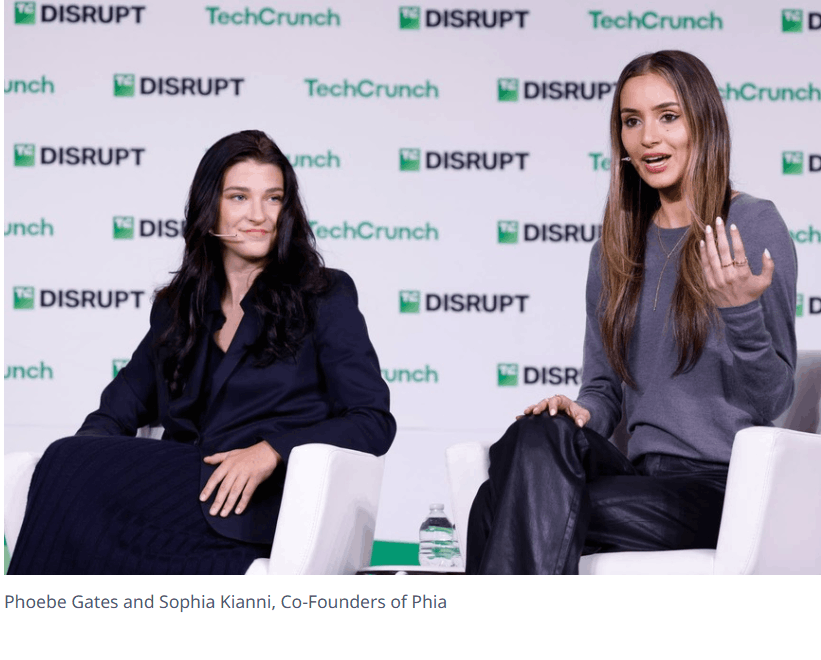
Phoebe Gates and Sophia Kianni, Co-Founders of Phia Kimberly White / Getty Images

Phoebe Gates’ Phia gets celebrity funding

Phia is attacking the shopping problem from a different angle. The AI shopping app, co-founded by Phoebe Gates (Bill Gates’ daughter) and Sophia Kianni in 2025, helps shoppers compare prices and find alternatives, including resale and second hand options.

If a shopper is about to buy a new item, Phia can surface whether the same or a similar product is available for less elsewhere, similar to the travel app Travago.

That gives the app a clear consumer hook at a time when shoppers remain highly price-sensitive.

It also gives Phia a sustainability angle, since resale can steer consumers toward second hand options instead of buying new.

Phia has also grown quickly.

The company posted on its Instagram page that, within a year, it surpassed 1.5 million users, has partnered with over 9,600 retail brands, and raised a $35.5 million Series A round at a $185 million valuation.

The company also announced a new list of celebrity investors, including Khloe Kardashian, Priyanka Chopra Jonas, Jessica Alba, Sydney Sweeney, Paris Holton, and Mindy Kaling, among others.

For consumers, the app promises to do some of the work that shoppers already do manually, including comparing prices, checking resale value, and searching for better alternatives.

Both apps currently serve as discovery tools.

AI could change who controls the shopping journey

For years, retailers have fought to win shoppers’ attention through search results, social media ads, loyalty programs, email lists, and marketplaces.

AI could disrupt that model by shifting more decision-making to a layer between the consumer and the retailer.

PwC describes agentic commerce as a new way of shopping powered by AI agents that can act on a user’s behalf. Unlike a basic chatbot, these tools can browse, compare, and, eventually, initiate purchases based on a shopper’s goals, preferences, and limits.

That could significantly change the retail funnel.

A consumer may not need to search “best work bag,” visit five retailer websites, compare prices, check resale sites, read reviews, and wait for a sale. An AI agent could eventually do much of that work before the shopper ever sees a product page.

McKinsey has described agentic commerce as a major shift in which AI agents anticipate consumer needs, navigate shopping options, negotiate deals, and execute transactions in line with human intent.

The firm estimates that by 2030, agentic commerce could account for up to $1 trillion in orchestrated revenue in the U.S. business-to-consumer retail market.

That is why the trend is not limited to startups.

Amazon is also pushing deeper into AI-powered shopping. AWS recently introduced its Agentic Shopping Assistant for retailers, a solution designed to help companies build their own conversational shopping experiences using their own data, catalogues, business rules, and brand voice.

Amazon said Kate Spade is already using the solution to build an AI gift concierge, while other retailers are testing it.

The move shows how quickly AI shopping is moving from a novelty to a competitive retail tool.

Retailers may have to compete for AI attention

The shift could be helpful for consumers, especially those tired of scrolling through endless products or wondering whether they are getting the best deal.

AI shopping apps could help shoppers compare prices faster, discover smaller brands, avoid missing sales, and make more confident purchases. They could also make online shopping feel more personalized and less fragmented.

But for retailers, the rise of AI shopping agents could create new pressure.

If shoppers rely on AI tools to decide what to buy, retailers may have to optimize not only for Google search and social media algorithms, but also for AI recommendations.

It could also change how retailers think about loyalty.

A shopper may still love a brand, but if an AI assistant finds a similar item for less, available faster, or with better resale value, the consumer may choose the alternative.

It does not mean AI shopping apps will replace retailers’ own websites or stores overnight. For example, final transactions at The Mall and Phia are handled by the retailer or seller, not in the app.

But there is still pressure on retailers to adapt to these shifting circumstances. Placer.ai’s retail outlook found that more than 55% of respondents were confident in brick-and-mortar performance in 2026, while only 20% expressed concern.

At the same time, 44% said they expect agentic AI to increase the share of online retail, and 34% said it could drive broader growth across commerce overall.

So AI isn’t driving shoppers away from stores; it’s just helping determine which stores to visit and which retailer gets the final sale.

The Arena Media Brands, LLC THESTREET is a registered trademark of TheStreet, Inc.

By Aparajita Chatterjee

Sourced from SunHerald

By 

How OpenAI’s new shopping feature will fundamentally reshape customer experience expectations in ecommerce and retail.

The Gist

  • Instant Checkout transforms ChatGPT into a commerce platformUsers can now buy directly from Etsy and over one million Shopify merchants without leaving a conversation—collapsing the traditional ecommerce journey into a chat-to-checkout experience.
  • Frictionless buying raises new CX expectationsMerchants retain order control, but customers will expect conversational ease across all post-purchase support channels.
  • Agentic commerce reshapes trust and transparencyAs AI gains more autonomy in purchasing, CX leaders must redefine safeguards, metrics, and relationship ownership in a world where experience becomes inseparable from conversation.

Since its November 2022 launch, ChatGPT has become synonymous with general AI capabilities. Now OpenAI is extending its influence toward a new frontier: ecommerce.

OpenAI has officially transformed ChatGPT from a discovery tool into a complete commerce platform with the launch of Instant Checkout, powered by the Agentic Commerce Protocol developed in partnership with Stripe. Starting with U.S. Etsy sellers and expanding soon to over one million Shopify merchants, including Glossier, SKIMS, Spanx, and Vuori, this development represents more than just another checkout option.

It is a fundamental reimagining of the customer experience journey that could have been implications on the customer experience industry.

Customer experience professionals in e-commerce and retail recognize OpenAI’s entry as a signal that the entire paradigm of how customers discover and purchase products is shifting toward agentic commerce — online shopping managed with AI.

Table of Contents

What OpenAI Is Offering: Instant Checkout Explained

Instant Checkout enables ChatGPT users to complete purchases without leaving the conversational interface. When someone asks a shopping-related question—”best running shoes under $100″ or “gifts for a ceramics lover”—ChatGPT displays relevant products from across the web. For items where Instant Checkout is enabled, users see a “Buy” button that lets them complete the entire transaction within the chat.

How Instant Checkout Collapses the Ecommerce Journey

The technical foundation is the Agentic Commerce Protocol, an open-source standard co-developed with Stripe that OpenAI is making available to any merchant or developer. This protocol creates a secure payment framework where ChatGPT acts as the user’s AI agent, passing information between customer and merchant while the merchant retains full control as the merchant of record. Merchants handle orders, process payments through their existing systems (Stripe or otherwise), manage fulfilment and own the customer relationship post-purchase.

Currently supporting single-item purchases for U.S. users of the Plus, Pro, and Free tiers, OpenAI plans to expand to multi-item carts and additional regions. The company emphasizes that product recommendations are organic and unsponsored, ranked purely by relevance, with merchants paying a small transaction fee on completed purchases. For customers, the service is free and doesn’t affect product prices. ChatGPT Plus and Pro subscribers can leverage saved payment methods and shipping details for even faster checkout, though all users must explicitly confirm each step before purchase.

This represents OpenAI’s first major move toward what they call “agentic commerce”—a platform where AI doesn’t just help you find products but actively facilitates purchasing them on your behalf, with the long-term vision of more autonomous shopping experiences.

The Friction-Free Promise: What Changes for CX

Ecommerce has long been a goal of every digital platform, from the leaders of internet browsers to social media platforms. Yet the customer journey of most ecommerce attempts often includes friction points for customers to complete a purchase: multiple browser tabs and re-entering payment information, all while having users create an account, can lead to abandoned carts.

Many experts had hoped social commerce – retail through social media – would minimize the friction points. The volume of US social commerce did rise, especially during the COVID-19 pandemic. The rise of direct-to-customer retail placed a spotlight on aligning click-through behaviour and sales, creating high interest in a cart checkout with just a few clicks.

OpenAI’s launch of Instant Checkout approaches a speedy checkout with a “chat to checkout in just a few taps.”

How Does Instant Checkout Work?

Here’s how Instant Checkout works: A customer asks ChatGPT for “gifts for a ceramics lover,” receives curated product recommendations, sees a “Buy” button on items with Instant Checkout enabled, and completes the purchase without ever leaving the conversation. For ChatGPT Plus and Pro subscribers, the platform can prefill shipping and payment details, making the experience even more seamless.

This level of convenience raises the digital customer experience bar significantly.

The Rise of Conversational Shopping Behaviour

If customers can complete a purchase in seconds through conversational AI, they’ll increasingly expect similarly frictionless experiences everywhere else. Retailers who maintain clunky checkout processes will feel the comparison acutely.

The Trust Equation: Transparency in a Black Box

One of the most significant customer experience implications involves trust and transparency. OpenAI emphasizes that product results are “organic and unsponsored, ranked purely on relevance to the user,” and that Instant Checkout availability doesn’t influence product rankings. When multiple merchants sell the same product, ChatGPT considers availability, price, quality, primary seller status and Instant Checkout availability to optimize user experience.

One potential shift for customers is the kinds of trust signals to look while shopping online.

New Trust Signals in an AI-Led Environment

Customers have spent years learning which search results, sponsored placements and algorithmic recommendations to trust. They know when they’re being marketed to. Conversational AI collapses those visual cues. There’s no “Ad” label or comparison shopping pages, verifying that you’re seeing the best options.

For CX professionals, this creates a paradox. The experience feels more personal and helpful—like getting advice from a knowledgeable friend—but the mechanisms driving recommendations remain opaque. OpenAI’s commitment to relevance-based ranking is important, but maintaining customer trust will require ongoing transparency about how these decisions are made.

Merchants as Merchants of Record: Preserving Relationship Ownership

Unlike marketplace models where the platform intermediates the customer relationship, OpenAI positions itself as the customer’s “AI agent—securely passing information between user and merchant, just like a digital personal shopper would.” Merchants remain the merchant of record, handling orders, payments, fulfillment and customer support through their existing systems.

This architectural choice has profound CX implications. When issues arise—damaged goods, shipping delays, return requests—customers must navigate the merchant’s existing support infrastructure. They can’t simply resolve everything in ChatGPT. OpenAI explicitly states that “merchants use your order information to complete the order, but OpenAI asks merchants to not sign users up for marketing emails from their ChatGPT orders.”

This creates a potential friction point.

When the Chat Becomes the Customer Support Channel

Customers who complete purchases in a conversational environment may expect conversational support. They’ll ask ChatGPT about order status, return policies or replacement requests. While ChatGPT can surface information, the actual resolution still requires engaging with the merchant directly.

For retailers, this means your post-purchase CX needs to match the seamlessness of the purchasing experience. If ChatGPT makes buying easy but your support remains difficult, the disconnect will be glaring.

The Context Advantage: Memory and Personalization

ChatGPT’s existing features—Memory, Custom Instructions and conversation history—create opportunities for deeply personalized commerce experiences. The platform can remember that you prefer sustainable products, have a specific budget range, or are shopping for someone with particular interests.

Memory as the Engine of Relationship Commerce

This contextual awareness enables product recommendations that feel genuinely helpful rather than algorithmically generic.

For customer experience strategy, this represents a shift from session-based commerce to persistent relationship commerce. Instead of starting fresh with each visit, customers maintain an ongoing dialogue where preferences, constraints and needs are already understood. It’s the digital equivalent of shopping with a personal stylist who remembers your taste, size and budget.

However, this also requires rethinking privacy and consent. OpenAI notes that “to respond to your shopping question, ChatGPT uses your query and available context (such as Memory or Custom instructions).” Customers may not fully grasp how much information they’re sharing through casual conversation or how it’s being used to shape recommendations.

Multi-Item Carts and the Future of Agentic Commerce

Currently, Instant Checkout supports single-item purchases only. OpenAI plans to add multi-item carts and expand merchant and regional availability. But the real customer experience transformation lies in what OpenAI calls “agentic commerce”—where AI doesn’t just help you find what to buy but actually makes purchases on your behalf.

Imagine asking ChatGPT to “stock my pantry with staples I usually buy” or “replace my worn-out workout clothes with similar items” and having it autonomously complete those purchases based on your preferences, budget and past behaviour.

AI Autonomy and the Next Phase of Agentic Commerce

OpenAI emphasizes that “users stay in control—they explicitly confirm each step before any action is taken,” but it’s easy to see how this could evolve toward greater autonomy.

From a CX perspective, this promises ultimate convenience but introduces new anxieties. What happens when the AI makes a wrong assumption? How do you dispute an order you didn’t manually approve? What safeguards prevent accidental purchases during casual conversation? These aren’t theoretical concerns—they’re fundamental customer experience challenges that will need addressing as agentic commerce matures.

The Discovery-to-Purchase Continuum Collapses

Traditional ecommerce has maintained a clear separation between discovery (search engines, social media, content sites) and purchase (retailer websites, marketplaces). ChatGPT collapses this continuum entirely. The same conversation that starts with “how do I decorate a small apartment” can seamlessly transition to purchasing specific furniture pieces without the customer ever consciously entering “shopping mode.”

This fluidity creates immense convenience but also removes traditional decision-making waypoints. In conventional ecommerce, the journey from discovery to checkout includes multiple opportunities for price comparison, reading reviews and specification verification.

Discovery, Purchase and Confidence in One Flow

Conversational commerce compresses these steps, potentially reducing buyer confidence even as it increases convenience.

Savvy retailers will need to ensure their product information, reviews and trust signals are accessible within conversational contexts. If ChatGPT recommends your product, customers should still be able to access detailed specifications quickly, customer reviews, return policies and other information that builds purchase confidence.

Six Strategic Imperatives for Retail CX Leaders

Actions ecommerce and CX professionals can take to prepare for conversational commerce.

Action Recommendation
Prepare for conversational commerce expectations Even customers who never use ChatGPT shopping will expect its convenience. Streamline your checkout to minimize steps between discovery and purchase.
Ensure your product data is AI-ready ChatGPT relies on structured data—pricing, inventory, and descriptions—to recommend accurately. Optimize catalogues for AI parsing, not just human browsing.
Strengthen post-purchase CX Make order tracking, returns, and support as effortless as buying through chat. Consider adding conversational AI support on your own channels.
Maintain transparent pricing and policies AI shoppers may buy without visiting your site. Ensure your product feeds include clear pricing, shipping, and return data to prevent confusion.
Rethink customer acquisition costs OpenAI’s per-transaction fees shift focus from ad-driven discovery to conversion-based models. Re-evaluate your acquisition and retention ROI.
Plan for autonomous shopping Prepare for AI-driven, recurring purchases where customer oversight decreases. Define safeguards, limits, and opt-ins to maintain control and trust.

The Larger Context: Commerce at the Conversation Layer

OpenAI’s move follows a broader trend of commerce functionality migrating to conversational interfaces powered by AI. Meta has been experimenting with business messaging on WhatsApp and Instagram. Google has integrated shopping into search results, hoping to further leverage its AI Overview integration with its search engine.

But OpenAI’s approach—combining product discovery, recommendation and checkout entirely within a conversational AI interface—represents the most complete implementation yet. OpenAI’s decision to open-source the Agentic Commerce Protocol suggests ecosystem ambitions.

Commerce at the Conversation Layer

By creating a standard that works across AI platforms and payment processors, OpenAI is positioning conversational commerce as infrastructure, not just a ChatGPT feature. Marketing professionals must monitor adoption of conversational commerce as an element of marketing strategies and campaigns.

Moreover, competitors who are still finding their AI strategy will see the Agentic Commerce Protocol as a significant competitor. Amazon, for example, has long offered shopping capabilities with Alexa. But partners in the Alexa ecosystem may move toward Open AI if Amazon does not launch a similar AI protocol for Alexa.


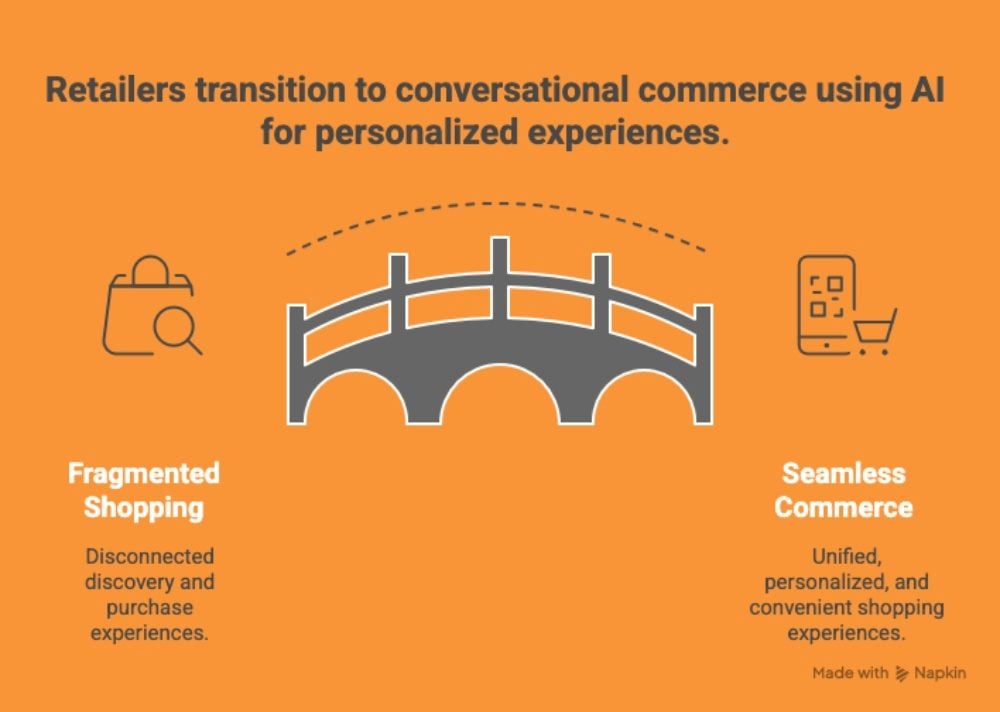
An orange infographic showing a bridge connecting “Fragmented Shopping” on the left—representing disconnected discovery and purchase experiences—to “Seamless Commerce” on the right, illustrating unified, personalized and convenient shopping through AI-powered conversational commerce.
An AI-driven bridge is forming between fragmented shopping journeys and seamless, personalized commerce as retailers embrace conversational AI experiences.Simpler Media Group


Measuring Success in Conversational Commerce CX

Traditional ecommerce metrics—bounce rate, cart abandonment, time on site—don’t translate cleanly to conversational commerce.

Metrics That Redefine Success in Conversational Commerce

New ways to measure engagement, conversion and satisfaction when shopping happens inside AI conversations.

Metric Definition
Recommendation acceptance rate Percentage of purchases made from ChatGPT’s initial suggestions versus alternatives.
Conversational conversion Ratio of shopping-related prompts that end in a completed transaction.
Repurchase through conversation Share of customers returning to ChatGPT for repeat or follow-up purchases.
Post-purchase satisfaction Customer-reported satisfaction after buying through ChatGPT, including fulfilment and support quality.
Preference drift How accurately ChatGPT adapts to a customer’s evolving preferences and feedback over time.

These metrics will help retailers understand whether conversational commerce delivers genuine CX improvements or simply novelty-driven early adoption.

The Questions That Remain

OpenAI’s Instant Checkout raises as many customer experience questions as it answers:

How will product returns work when the purchase was made conversationally? Can customers modify orders placed through ChatGPT? What happens when products are out of stock after ChatGPT recommends them? How do subscription services and recurring purchases translate to conversational commerce? What safeguards prevent accidental purchases during ambiguous conversations?

These implementation details are fundamental to whether conversational commerce is a fit for the seamless customer experience being sought. Marketers should consider whether the answers mean achieving the promised experiences or are an indicator of implementation frustrations.

By 

Sourced from CMSWIRE

Author: CHRIS PHELAN, Edited By: JENNA GLEESPEN

These days, online shopping is more prevalent than ever. Since so many purchases are made online, it’s essential to be prudent when shopping. Luckily, saving significant money when shopping online is straightforward, thanks to the handful of tips and hacks you’re about to digest. Your bank account will be thanking you in no time!

1. Shop at the Right Time

Sale
Image Credit: Shutterstock.

A great rule of thumb is always to be aware of seasonal sales and base your shopping around particular dates. Whether taking advantage of Black Friday or holiday sales or buying your Christmas decorations in January at a massive discount, you can save tons of money by being mindful of when you open your wallet.

2. Be Vigilant With Comparison Shopping

Family Purchasing Laptops
Image Credit: Shutterstock.

I can’t stress this enough: Never stop researching deals and never settle for the first “good price” you find! Even if you’re loyal to specific online retailers, most allow price-matching, which means that if you prefer buying items from Amazon and see a lower price at Best Buy, Amazon will honor the lower price (assuming the lower price is legitimate). Comparison shopping is critical to saving money in 2024.

3. Always Stock Up

Amazon Parcels on the doorstep
Image Credit: Shutterstock.
Take advantage of fantastic sales and discounts by stocking up on everyday household items. If you stumble upon the deal of the century on things like toilet paper, toothpaste, laundry detergent, or other household items, jump on the opportunity to fill your pantry and cabinets with the essentials! Buying in bulk now equates to significant savings and ensures you won’t have to re-purchase products at a later date.

4. Use Google Shopping

Woman using phone
Image Credit: Shutterstock.

One of the most underrated tools at your disposal is Google Shopping. Accessibly via any Google search, Google Shopping will scour the internet for the best prices for any product you choose. Sometimes, small mom-and-pop retailers offer items at massive discounts, and Google Shopping is the ideal way to identify those places so you can take advantage of them!

5. Stop Being Loyal To Specific Brands

Gucci Store
Image Credit: Shutterstock.

In the never ending quest to save money, you should throw brand loyalty out the window. Stop being obsessed with specific products when similar items will get the job done just fine. In 2024, prioritize value and savings over individual brands and watch how much cash you have in your bank account! We’re creatures of habit, but brand loyalty is one of the most straightforward bad habits to break.

6. Search for Coupon Codes

Coupon QR Code
Image Credit: Shutterstock.

Coupon codes (also known as promo codes) are one of the savviest ways to save money while online shopping. Once you find an item you like from a trusted retailer, simply Google your retailer’s name and the phrase “coupon codes.” You’ll often find codes you can apply during checkout to earn free shipping, cash back, or a discounted rate you wouldn’t usually come across!

7. Pay With Cash-Back Cards

Cashback and Rewards
Image Credit: Shutterstock.

Cash-back and rewards credit cards are excellent tools for online shopping. These cards reward you with cold, hard cash every time you use them, putting you in a unique situation: You’re ostensibly getting paid to shop! Whether you hit spending milestones that earn rewards down the road or earn a small percentage of cash-back with every purchase, these valuable credit cards are must-haves for a modern shopper.

8. Buy Used Items

Antiquites Thrift Vintage Store
Image Credit: Shutterstock.

If you can stomach the risk of purchasing an item that’s already been used by someone else, you can save significant money. While used items may be dirty or worn, in many cases, they still operate as the manufacturer intended. I’ve bought a few used pieces of electronics that saved me over 50% of the retail price, making me a delighted online shopper.

9. Install Browser Extensions

RetailMeNot Deal Finder
Image Credit: RetailMeNot.

In 2024, web browser extensions open up a new world of saving money; if you’re not taking advantage of these, you’re leaving money on the table! Extensions like the RetailMeNot Deal Finder automatically find and apply coupon codes for an item that goes into your shopping cart, regardless of retailer! How convenient is that? It takes all the legwork out of searching for codes and makes the money-saving experience seamless.

10. Sign Up for Email Alerts

Email Alert
Image Credit: Shutterstock.

Nobody likes receiving endless spam and promotional emails. Still, sometimes you have to play that game if saving money is a priority in your life. You should always sign up for email alerts with any online retailer you do business with because you never know what kind of members-only discount will enter your inbox on any given day! Thankfully, if no discount comes, it’s easy to unsubscribe from future emails.

11. Play the Shopping Cart Game

Smiling Woman Laptop
Image Credit: Shutterstock.

In 2024, online retailers are just as innovative as shoppers are. They will do whatever it takes to make a sale, especially if they think you’re on the fence! Many smaller, independent retailers will send a pop-up or email if you permanently remove a product from your cart. I’ve gotten into the habit of intentionally emptying my cart, hoping to get a “We hope you change your mind!” discount code; in most cases, it works like a charm!

12. Utilize Amazon’s Subscribe & Save

Amazon
Image Credit: Shutterstock.

I have a confession. I completely abuse Amazon’s Subscribe & Save option! When buying supplements, I often click “Subscribe & Save,” which guarantees me a certain percentage off (usually 20-30%) my first purchase of an item. However, the massive savings don’t apply to future deliveries, so I always cancel my subscription after getting my heavily discounted first product, only to re-subscribe at the same great discount a month later. I haven’t gotten in trouble yet, so I assume it’s a legit money-saving strategy.

13. Purchase Gift Cards

Woman using GiftCard
Image Credit: Shutterstock.

Gift cards aren’t just the perfect gift for someone you don’t care for; they’re also a fantastic way to save money! Take advantage of the opportunity to buy discounted gift cards from your favourite online retailers. Purchasing a $100 gift card for $90 represents an incredible 10% savings that will add up in the long run! If you use the gift cards at some point, your purchase will always be financially-savvy.

14. Check Your Linked Credit Card Offers

Credit Card Shopping
Image Credit: Shutterstock.

Most credit cards (regardless of whether they’re high-end rewards cards) feature linked offers that enable you to save money at thousands of online merchants in exchange for using a particular card. For example, if you carry a Chase credit card, you can use the Chase app or website to check for offers, usually in the form of cash-back. I’m constantly surprised by how much cash is offered in exchange for using a particular card at specific merchants!

15. Buy Refurbished Items

Thrift Sale
Image Credit: Shutterstock.

There is no more excellent value in online shopping than buying refurbished items. While technically used, these products are cleaned and tweaked to be indistinguishable from their “new” counterparts. In addition, these items still carry their original manufacturer’s warranty, giving you peace of mind and much-needed relief in your wallet! I prioritize buying refurbished products ahead of brand-new ones, and it has yet to burn me.

16. Abandon Your Cart

online shopping
Image Credit: William Potter / Shutterstock.

Some online retailers may offer discounts or incentives if you abandon your shopping cart. Leave items in your cart for a day or two, and you might receive a reminder with a special offer.

17. Consider Generic Brands

Image Credit: Shutterstock.

Explore generic or store brands as alternatives to name brands. Often, these products are of similar quality but come at a lower price.

18. Leave Items on Your Wishlist

Shutterstock 1701296347
Image Credit: Shutterstock.

Place desired items in your online store’s wishlist and keep an eye on them. Retailers may notify you of price drops for items on your wishlist.

19. Follow Brands on Social Media

social media
Image Credit: Shutterstock.

Stay updated on special promotions and exclusive discounts by following your favourite brands on social media platforms.

20. Take Advantage of Student and Military Discounts

Discount Voucher

If you’re a student or part of the military, check for special discounts. Many online retailers offer reduced prices for these groups.

21. Set a Budget and Stick To It

living like a student
Image Credit: Shutterstock.

Before you start shopping, set a budget. This helps you avoid impulsive purchases and ensures you only buy what you need.

22. Clear Your Browser Cookies

google on laptop
Image Credit Thaspol Sangsee/Shutterstock.

Some online retailers may adjust prices based on your browsing history. Clear your browser cookies or use incognito mode to avoid potential price hikes.

23. Opt for Free Shipping

Shutterstock 1417685987
Image Credit: Shutterstock.

Look for online retailers that offer free shipping. Some sites provide free shipping if you spend a certain amount, so consolidate your purchases to meet the requirements.

24. Check Return Policies

fed-ex-express-shipping

Before making a purchase, review the return policies of the online store. Knowing the return process can save you money in case you need to return or exchange an item.

Author: CHRIS PHELAN, Edited By: JENNA GLEESPEN

Chris Phelan Title: Writer. Expertise: Sports, Finance, Lifestyle, Travel

Chris Phelan is an American culture writer, frequently dabbling in the travel, finance, and entertainment fields. He currently resides in Asheville, North Carolina where he is constantly amazed at the number of black bears wandering down his street on any given day.

His work can be seen on Wealth of Geeks, NBC, Bravo, USA Network, Yahoo, and countless other online publications.

Sourced from Wealth of Geeks

By Nadeem Sarwar

Last year, Amazon CEO Andy Jassy said that every business division at the company was experimenting with AI. Today, Amazon has announced its most ambitious AI product yet: a chatbot named Rufus to assist with your online shopping.

Imagine ChatGPT, but one that knows every detail about all the products in Amazon’s vast catalog. Plus, it is also connected to the web, which means it can pull information from the internet to answer your questions. For example, if you plan to buy a microSD card, Rufus can tell you which speed class is the best for your photography needs.

Amazon says you can type all your questions in the search box, and Rufus will handle the rest. The generative AI chatbot is trained on “product catalogue, customer reviews, community Q&As, and information from across the web.”

In a nutshell, Amazon wants to decouple the hassle of looking up articles on the web before you make up your mind and then arrive on Amazon to put an item in your cart. Another benefit of Rufus is that instead of reading through a product page for a certain tiny detail, you can ask the question directly and get the appropriate responses.

An AI nudge to informed shopping

Amazon app’s Rufus AI.
Amazon

Amazon says Rufus is capable of answering generic queries such as “What to look for before buying a pair of running shoes” or simply telling it, “I need to deck up my workstation,” and it will automatically recommend the relevant products. In a nutshell, it’s a web-crawling recommendation machine that will also answer your questions, product-specific or otherwise.

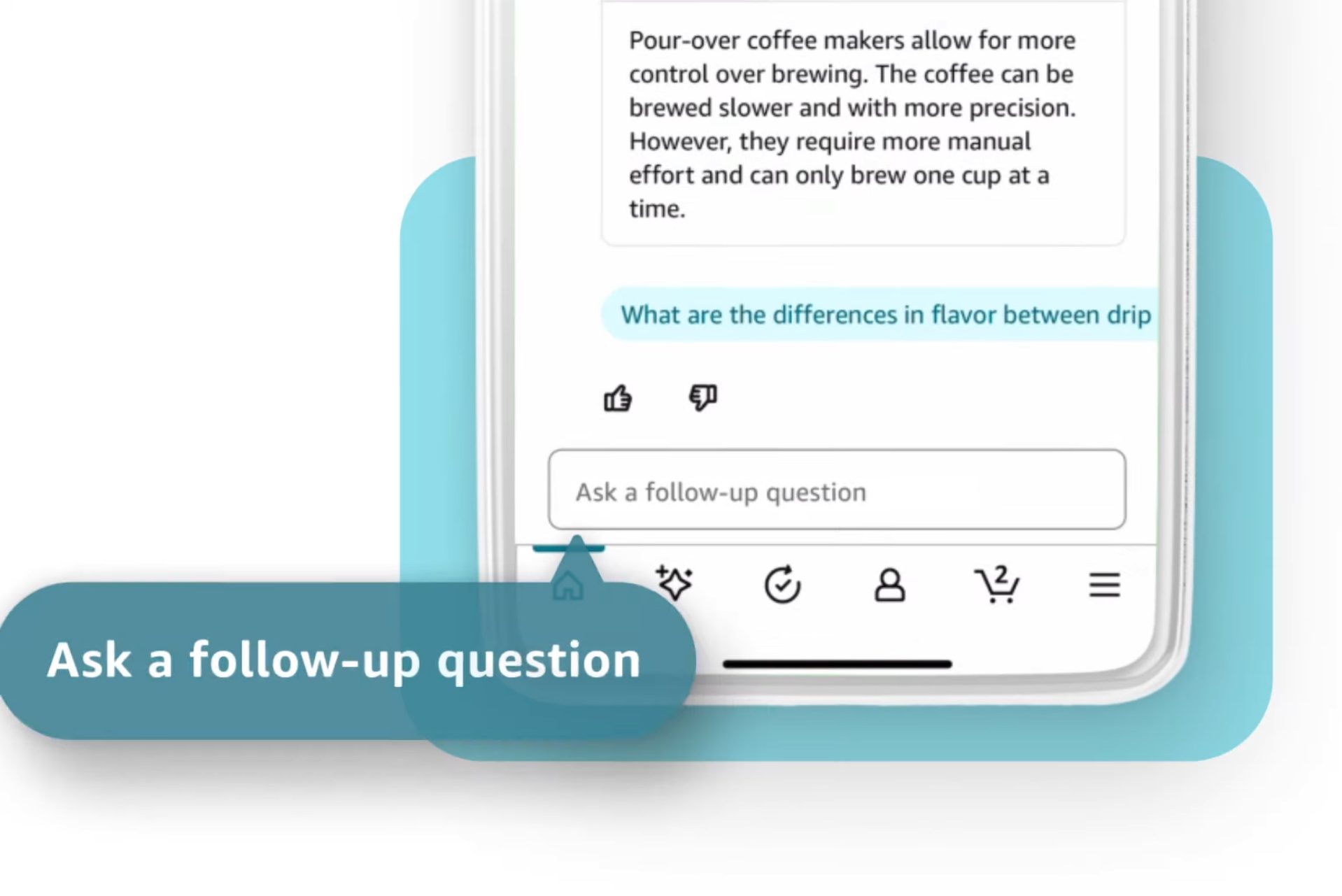
“Customers can expand the chat dialog box to see answers to their questions, tap on suggested questions, and ask follow-up questions in the chat dialog box,” says the company’s official blog post.

For queries such as “Is this phone case reliable,” the AI bot will summarize an answer based on product reviews, Q&As, and information on the product page. At the end of the day, it’s all about making informed purchasing decisions with some help from an AI chatbot.

Rufus AI answering Amazon product questions.
Amazon

Rufus is currently limited to a small selection of Amazon mobile app users in the U.S. as part of a beta test. However, this is an early version of the product, and Amazon also warns that Rufus “won’t always get it exactly right.” In the coming weeks, the AI chatbot will be made available to a broader set of users in its home market.

Rufus seems to be one of the more thoughtful and practical implementations of generative AI I’ve seen recently, and far away from the hype machinery built around the tech with hidden caveats. Plus, it seems to be free, without any Prime mandates.

Feature Image Credit: Amazon

By Nadeem Sarwar

Sourced from digitaltrends

By Jhinuk Sen

We’ve seen retail undergo a series of changes and upgrades over the past two years. Before COVID-19 got us to stay in and shut down malls and markets, 85 per cent of all shopping used to happen offline. Forced into quarantine, retailers and brands did the best they could to adapt to a new world order where they had to transition to online for sales or perish.

Digitalisation became the new mantra. Consumers too, quite naturally, weren’t immune to this renewed digital push.

Many took to online shopping naturally. The younger generation had been buying things online for a while now, the elders followed suit gradually, but definitely. But many things were missing when it came to online shopping.

First and foremost, the experience. Pre-pandemic, going out to buy an outfit meant an evening out with friends or family – it was a social outing in most cases. It was all about consulting each other, speaking to the salespeople, trying to find the best deal, and visiting multiple shops until you found just what you were looking for.

Online shopping took all of it away by bombarding customers with a million discounts and offers, and consulting another person for the best suggestion got replaced with sending each other links. And while that’s exactly how things still stand, social commerce and live commerce has brought some action into a space that is cluttered and on the verge of becoming very boring.

Ask Paloumi Das. The 25-year-old, who works as head of content at the fabric retail outlet Cottons and Satins, is no stranger to online shopping and social commerce. Das has been shopping online for years now and the brand she works for has been juggling between ramping up their portfolio on Instagram – where they have about 65k followers – and directing interested users to their website or their brick-and-mortar stores in Delhi and Mumbai if and when feasible.

“I’ve been shopping online long enough to not be hassled when malls were shut down due to the pandemic. One barely needs to go out to buy anything nowadays and while that is very convenient, it is also quite boring,” Das said. She argues that social media has made it easy for consumers to buy something with a click of a button.

While it certainly is easy, but it has killed off the excitement of shopping. And at this point, consumers like Das feel frustrated being confined to this linear mode of shopping, where all it entails is sharing product links to friends so that they can decide what one can buy, and if not that, then after a bout of endless scrolling, chance upon something to buy it using a click of a button.

And this increasing frustration is slowly percolating into the brands as well. They too seem to be asking the same ubiquitous question: how do we liven things up?

The solution lies in the question itself. When social commerce has become mainstream, the next best bet is to go live.

What does ‘going live’ in shopping mean?

Live commerce, simply explained, is a real-time event where customers get a chance to bag some great deals and they also get to engage with other customers, and influencers, ask questions, etc., before they buy the product.

Live commerce is already a huge trend in China and globally people are starting to pay attention, as are the brands. Cartier hosted its first jewellery show on Taobao Live where they unveiled more than 400 timepieces and jewellery items. Kim Kardashian sold more than 15,000 bottles of her perfume in minutes, live.

Closer home, Myntra has taken its first step into the world of live commerce with M-Live. The company said during its announcement that this move is “likely to engage 50 per cent of its monthly active users” over the next few years, while currently, it engages about 20 per cent of them. The company aims to push out about 1,000 hours of video content per month.

M-Live is a real-time, interactive experience that can be found on the shopping app and is currently live. “M-Live is also the nearest to an expert-assisted offline shopping experience that is fully experienced online.

The core benefit is the users’ ability to get interactive descriptions of products independently curated by experts they can trust and identify with while getting instant advice on various aspects like styling, fitment, product quality, and material,” the company explained.

“With several concurrent users joining the live sessions, it also gives users the opportunity to shop as a community and benefit from the community’s knowledge, observations, questions, and comments, enabling a more confident shopping decision that is backed by social validation,” it added.

This community feeling is one of the core benefits of live commerce and the only one that effectively can recreate the social experience of being able to shop with friends and family.

Live commerce has other perks too. For example, it is the best way to publicise and optimise product launches, thematic sales (like Diwali or Black Friday sales) with the aid of celebrity interactions, product demos, and influencer videos. And another very significant feature that live commerce can optimise is impulse purchases.

To make the best of impulse purchases, all that apps, websites, and brands need to do is to embed a clickable layer that presents users with a shortcut to making the purchase fast and smoothly. The good news here – for brands looking to get on board with this – is that there are apps that can help you.

“Indians spend on average over five hours a day online with a large part of that time is dedicated to two activities: consuming content and shopping,” said Firework’s President of Global Business Jason Holland to Business Today. Holland’s company, Firework helps bring these two concepts together to help brands create live commerce experiences on their platforms.

“Global e-commerce growth accelerated dramatically as a result of the Coronavirus pandemic, and it shows no signs of slowing down anytime soon. This, combined with recent forecasts that 82 per cent of global Internet traffic will be video by 2022, make the growth of live commerce in India seem practically inevitable. As a blend of two of Indian consumers’ favourite online activities – content consumption and e-commerce – livestream shopping is arguably the most important factor in the evolution of shopping, both in India and around the world,” Holland said.

Conceptually, all this sounds fair, but would it work in India as well as it did in China? Holland thinks it will.

“India has all the right ingredients to become one of the top three global leaders in livestream shopping, and it’s only a matter of time before it does,” he said. And Holland has data to back his belief.

He points out that according to Comscore’s data, online retail sales increased by 43 per cent over the first several months of the pandemic, from January to October of 2020. “And even now, long after the lockdowns ended, online retail sales still clock significantly higher. This suggests that COVID-19 has not only driven digital adoption in developing nations but has also accelerated digital maturity and established habits,” Holland pointed out.

“The responsibility now rests on brands to embrace live commerce and seize the massive opportunity to be among the first movers in these emerging markets,” he added. And Holland isn’t the only one to think this way.

Achint Setia – VP & Business Head – Social Commerce at Myntra – argues that livestream shopping is that perfect confluence of aspiration, on one hand, and innovation, on the other.

“We are always on the quest to build innovative fashion-tech shopping experiences for our customers that can strengthen our relationships with them by garnering higher trust, creating inspirational and immersive experiences while deeply engaging them.

Livestream shopping is the perfect fit for fashion and beauty shoppers as it blends both aspirational and informative content with commerce, it democratizes fashion, and is a convergence of many current trends, such as influencer-led shopping and social commerce,” he said.

So, what’s the best way forward for brands looking to step into the live commerce space?

“I think it is important for brands to embrace the change first. Brands need to understand that establishing a social media presence isn’t the best path to digital transformation. Additionally, with a significant share of shopping happening online, brands need to remember that competition is only a click away – which is a significant departure from brick-and-mortar retail. That heightened competition makes it incredibly important to offer a differentiated shopping experience – one that embodies the brand identity faithfully, while also delivering on the promise of entertainment,” Holland explained.

The most important factor for brands to succeed in this space is data.

With social media platforms that have incorporated more sophisticated e-commerce elements, businesses end up forfeiting all access to their first-party data, which is an invaluable resource for any brand.

If data is unavailable, that combined with very low engagement and conversion rates can lead to hugely inefficient marketing spends. Brands need to thus pick the right apps that give them access to all the numbers like Firework does so that they can understand their audience.

Live streaming and the influencer

The job of getting all this right lies with the brand – obviously. But there’s a massive lot that content creators and influencers can make off this as well, and short video apps are paying attention.

This year two short video apps, Moj and Bolo Live, ventured into live streaming, while Glance’s Roposo too took a step ahead and moved from live streaming and into live commerce.

“The next decade belongs to creator economy globally and live streaming influencers from India shall dominate the same. Just India is expected to see over a $300 million market for creator economy by 2023 end,” said Tanmai Paul, Chief Product Officer and Co-founder, Bolo Live.

Paul said that pivoting into live streaming from short videos has helped democratise monetisation opportunities for content creators by giving them opportunities beyond brand partnerships.

“Fan-to-creator microtransactions on Bolo Live has led to over 4x increase in creator earnings in just last six months. Already more than 18 live streamers are earning over Rs 1 lakh per month from our platform,” Paul added.

Influencers and content creators will play a significant role in live commerce and its proliferation in the retail space, at least for starters. Live commerce is an ecosystem that can benefit the brand, the content creator/influencer, and the customer, it is only a matter of time till everyone cashes in.

By Jhinuk Sen

Sourced from BusinessToday.In

By

The physical demise of high street clothing brand Topshop signalled the turn of the UK’s retail sector. As the flagship store closed in 2021, the physical became digital, and the brand was picked up by online retailer ASOS – a move demonstrating the appetite and continued willingness of UK consumers to shop virtually. As the rise of online shopping continues, how can marketers seize the digital opportunity? And is there a role for the physical store anymore?

In a panel discussion spearheading The Drum’s latest Deep Dive: The reinvention of retail and ecommerce, The Drum’s Olivia Atkins speaks with experts from VMLY&R COMMERCE and Heal’s on how to assess the changes in customer experiences; the technology pushing the sector forward; and how agencies and retailers can prepare for what lies ahead.

Brand purpose is here to stay

E-commerce in the UK grew by 46% last year as the pandemic forced stores to close, driving consumers online from the lockdown convenience of their homes.

“People who buy online now are used to buying online – they’ve adapted to the price and the convenience of it; and recognize the advantages of doing so,” said Debbie Ellison, global chief digital officer at VMLY&R COMMERCE, who believes these habits may be here to stay.

Online shopping saw many customers become more aware of their purchases and look into the purpose of the brands they’re buying from – a trend perpetuated by Gen Z.

Ellison recognizes the spending power of Gen Z and their influence in pushing retail trends forward. She suggests brands need to become more relevant to their audiences or risk seeming redundant.

She thinks, “retailers should respond to their shopper’s needs and communicate their brand purpose at shelf – whether that’s in a physical or digital space. In physical retail environments, marketers easily understand their local community and how to engage there. This same logic needs to be applied in the digital sphere.”

David Kohn, customer and e-commerce director at furniture retailer Heal’s, agrees: “Purpose is the single biggest social consumer trend that we’re seeing at the moment. In retail, that translates to being a brand that stands for something – whether that’s environmentalism, diversity or even quality design.”

Physical versus digital

Despite the surge in online shopping, retailers should work to embrace both virtual and physical spaces for their brand, as certain purchases may require prospective customers to shop in-person to get a sense of their desired products.

Ellison said: “Over the last year, there’s been a pent-up demand globally to get back in-store with consumers wanting to experience something special. Retailers will be listening to that and thinking how to differentiate their offerings across channels.”

The focus for retailers is to understand the role and purpose of every space they have. Ellison suggests that in-store offerings could feature more sensory experiences where the social aspect of shopping is considered along with how to improve the service and looking at how consumers interact. Technology also works to scale up connected experiences, by automating backend processes and improving the consumer’s experience.

Kohn adds: “Technology in-store can be useful for getting your consumers to imagine. At Heal’s, we try to bring them into our world and get them to visualize our products in their home.”

He’s excited about the prospect of incorporating new technology like virtual reality (VR) in stores, believing it will be a great device for reviving storytelling methods in retail.

Merging e-commerce with in-store

“We’ve all moved online; we’re all inspired and purchasing within milliseconds,” says Ellison. “But now that the gap between inspiration and purchase has converged, how is that going to translate into the physical retail space? How will creativity be brought through each touchpoint to deliver on both the emotional and functional aspects of buying?”

Despite this change in habitual consumer behaviour, Kohn suggests that retailers need to reassess how they use each space and set them up accordingly to ensure they cater to customer needs. He gives the example of Heals’ online in-store teams who work to connect customers online with relevant store team members.

“As a brand, you’ve got to think carefully about your customer’s purchase journey,” he says. “Try to understand where the customer fits in and what you can do to move them along that process. That’s where the fusion between in-store and online can come into being.”

It’s been a trying time for retailers but having a clear understanding of what consumers need and want from each space will only help brands to move more seamlessly between their online and physical offerings. Customers are already overwhelmed by the amount of choice available to them in the marketplace, so brands need to work hard to stand out.

“Selling products is not enough anymore,” said Kohn. “You’ve got to look at the wider needs of your customer and work towards fulfilling those.”

Ellison agrees and concludes: “Brands need to walk in their customers’ shoes and really look at how they will show up in a connected way across all their different channels.”

By

Sourced from The Drum

As brands and consumers seek a return to the physical retail space post Covid-19, the technology that has enabled ecommerce to fill the gap as stores were closed will play a vital role in the recovery of that same bricks-and-mortar retail. Shoppers, particularly in the UK, want a “connected shopping” experience.

The pandemic has obviously hit the UK high street, but shoppers are ready to return, particularly if the ease of online shopping is blended with the richness of the in-store experience. Some 40% of UK shoppers use their mobile in-store to look up more information on a product. And there is a huge increase (80%) among Gen X shoppers who say they will use augmented reality (AR) in shopping over the next five years.

These are the headline findings of a new report, ‘Future of Shopping’, based on a global survey of 20,000 shoppers by trends agency Foresight Factory, for Snap Inc. Technology, rather than sounding the death knell for bricks-and-mortar retail, has led to an irreversible shift to omnichannel that genuinely benefits both shoppers and retailers.

As we have seen over the past 18 months, when new technologies are built primarily around human behaviour, rather than imposed because of internal business needs, their impact can be positive. Yes, online shopping has disrupted bricks-and-mortar retail over the past two decades. However, technology has also helped retailers navigate the increasing overlap between online and physical environments, now a part of our lived experience.

The report reveals that consumers worldwide feel their shopping experience has been greatly enhanced by camera technology and accompanying digital innovations. It is clear that shoppers are keen to get back into stores, but they also want to keep all the advantages of technology when they return; for example, instant access to stock information or home delivery service.

Britons seem more wedded to online shopping, particularly for clothes, than others. Some 44% plan to do the majority of clothes shopping online, above the global average of 38%. Only 34% of Brits said buying in-store was their favoured method of shopping – compared with 43% globally. But nearly half (49%) of Brits missed the social aspect of shopping and more than half (51%) found the inability to try on products frustrating.

This desire to blend online and in-store highlights how vital the mobile phone has become across the shopper journey and explains why the new consumer habits forged in the pandemic are here to stay. However, consumers have missed the social component of physical shopping, so e-commerce advertisers need to greater humanize their brands online.

The report identified several other key takeaways:

Growth in e-commerce during Covid-19 will be sustained

81% of UK shoppers are expecting to do the same amount or more online shopping in the next 12 months compared to last year, with only 19% indicating they plan to do less.

A post-lockdown return to physical retail

Shoppers returning to store post-lockdown will seek the social and tactile experiences they have missed in the last year, albeit combined with the convenience and safety of shopping online. But bricks and mortar stores must act fast to ensure they do not lag behind shopper expectations.

Technology will drive shoppers into stores

Some 35% of global consumers would visit a store specifically if it had interactive virtual services such as a smart mirror that allowed them to try on clothes or makeup.

Mobile will connect brands and consumers across the shopper journey

One in three global consumers choose the mobile phone as their preferred shopping channel, and 50% of Generation Z and millennials say they never go shopping without using one. These trends will only continue, not least in the area of price comparison.

Virtual testing could accelerate e-commerce further

Some four in 10 consumers globally state that not being able to see, touch, and try out products puts them off online shopping. Retailers will therefore need to invest heavily in try-before-you-buy technology to help encourage purchase and reduce the potential need for returns, by enabling consumers to more tangibly engage with products.

Shoppers will demand widespread AR

Within five years we will see a 57% increase in Gen Z shoppers who use AR before buying. Significantly, 56% of consumers who have used AR when shopping claim it encouraged them to make a purchase. The mobile phone will be the core tool.

New technology could reduce the number of online items that are returned annually by up to 42%. The study estimates that the cost of online returns now amounts to around $7.5 billion each year – and £377m in the UK alone.

Resale platforms cement their position as a credible alternative

Four in 10 consumers globally have bought and sold something via resale platforms, which attract shoppers searching for cheaper prices and unique products. Second-hand goods no longer come with stigma, but are a more desirable, sustainable alternative. Retailers like Levi’s, Ikea and H&M are moving into the branded resale space.

The key trends identified above talk to the blurring of consumer needs and expectations across physical and digital shopping channels. They reflect shoppers’ primary demands (beyond pricing): convenience, social interaction and product testing.

Ed Couchman, general manager, UK, Nordics and DACH, at Snap Inc. says: “People thought the internet and technology was a threat to physical retail but this report clearly shows that those who harness the benefits of tech are best placed to thrive post pandemic. Shoppers want to read reviews, compare prices and try on items using AR – but they also enjoy the experience of going into a shop, speaking to staff, and looking at items. They want the best of both worlds.”

The ‘Future of Shopping: Global Report 2021’ from Snap is available here

Sourced from The Drum

By Terry Tateossian,

Merging shopping, entertainment, and real-time interactions, video-based live-stream shopping is changing the ecommerce game.

Live commerce, a hot trend in China and Singapore, is an innovative approach to interacting with customers by way of creating an engaging retail experience. Using live streaming, brands in Southeast Asia are increasingly using movie stars, top chefs, and influencers to reach online audiences and encourage them to make purchases. Merging digital technologies, shoppertainment, real-time interactions, and brand advertising, live streaming promises to revolutionize e-commerce and consumer shopping habits. But while Southeast Asia has seen an explosive growth in livestream shopping, is the U.S. catching up with trends?

Live Commerce Gaining Momentum in the U.S.

The pandemic-driven shift to online shopping has helped accelerate the transition to live commerce in the U.S. Sales are forecasted to increase by 38.4 percent in 2021, according to Emarketer, with brands using Pinterest and Instagram to put themselves at the forefront of live commerce. Apparel and accessories are the largest categories for livestream shopping. Companies selling consumer goods, cosmetics, and electronics have also been quick to embrace the trend and add social commerce to their marketing mix.

Levi Strauss and Tommy Hilfiger have been among the early adopters, featuring short sessions during which viewers were offered the opportunity to ask questions. In 2019, Amazon launched its livestreaming commerce service, enabling influencers to market products through video streams to earn commissions. Alongside big brands, startups have also gained momentum, including online shopping platforms such as NTWRK, Popshop Live, and ShopShops. Popshop Live, for example, was able to raise $4.5 million to enable established brands and individual sellers to market their products in real time. A video-based footwear shopping marketplace, NTWRK features major brands like Nike, Jordan, New Balance, and Adidas. Having a membership of over 1 million, the platform boasts a conversion rate of 5 – 15 percent, with sales volumes doubling from March to April alone.

Why Is Live Commerce Set for Success?

As big brands and innovation-forward startups are already leveraging shoppable video, live commerce seems to be gaining strength in the U.S. And while it has a way to go from taking off, livestream shopping is the next frontier of modern advertising, offering frictionless experience where digital commerce, social media, and entertainment merge. Still in its nascent stage outside of Southeast Asia, live commerce is nevertheless set to boom and for two reasons. First, we already have the technology to livestream products and interact with consumers. Second, younger generations expect two-way engagement and more interaction with brands. Social commerce brings technology and human interaction together, enabling consumers to connect and shop in new ways.

Social Commerce: The Future of U.S. Retail 

Livestream shopping is the latest ecommerce trend to emerge and a hybrid between in-store retail and online browsing. It is gradually gaining traction as brands come to embrace it as a powerful form of retailing. With plenty of options to utilize live streaming, from unboxing of products and live webinars to product demos and launches, this is an opportunity for brands to go beyond describing, showcasing, and convincing. It is a win-win for both businesses and customers who benefit from that dose of human connection that ecommerce has long been missing.

Feature Image Credit: Getty Images

By Terry Tateossian

Sourced from Inc.

By Heather Fletcher

A few, focused ideas for performance marketers

Millions of marketers have the same thought their customers do about packaging: It’s a means to an end. Put the product in the package. Get the package to the customer. Mission accomplished.

But experienced performance marketers know there are so many more packaging possibilities. They can literally market outside of the box. And even in it.

Performance marketing on a package

Whether it’s a box or a bag, marketers can add URLs, QR codes, barcodes, branding and so much more. Marketers can even add brand mission URLs about subjects like recycling.

For example, on a Prime box, one of the customers bringing in the 37% year-over-year increase to $96.1 billion in net sales that Amazon saw in Q3 received a box with several barcodes used for tracking the shipment; recycling information about a non-profit with which Amazon and other brands partner, at how2recycle.info; and packaging tape with Prime branding.

The tape on this first box included calls to action to Prime’s services, including video, music and free delivery. A different package’s tape highlighted “Shop at smile.amazon.com and we’ll donate to your favourite charity” and “$183 million donated to charities so far.”

It’s in the bag

One way the UPS works with ecommerce marketers is to reveal to them that there’s more to packaging than boxes. That means there are many ecommerce marketers fulfilling orders with bags, too. And while bags tend to be plain, labels sometimes carry marketing–depending on what the mail carrier allows.

And UPS is among the carriers onboarding mail clients–especially SMB, which represented 18.7% in volume growth in Q3 vs. 10.5% in Q2. (Even as B2B business is down, not just for UPS at 7.8% year-over-year, but for many businesses, its average daily volume in the U.S. is up 13.8% year over year to 20.4 million packages a day. That’s because B2C shipments increased 33.4% year-over-year to 61% of total volume.)

While many SMBs are using UPS delivery options, others are taking a different route.

Local goes online

Maya Komerov is founder and CEO of Cinch Market, a local online marketplace for retailers in Brooklyn. As of last month, she had 50 stores on board and 50 more wanting to join. Because the National Retail Federation reports consumers want to shop local, despite increasingly going online to patronize marketplaces, entities like Cinch are in demand for Brooklyn’s speciality food, gift, toy, essential and pet food retailers.

“We keep the bags of the stores when we deliver the package to the customers,” Komerov said. “Most of the businesses have branded bags.”

This reflects a trend Adweek reported on of retailers using stores as online fulfilment centres to offset in-store losses.

Thank you cards and inserts

Among those brands going for the personal touch in package marketing are those with marketers who add thank you cards or other personal notes within the packages. Those can onboard consumers to e-newsletters for content marketing purposes or provide some other cross-channel capability to create brand loyalty during a pandemic.

Performance marketers can also add fliers, whether they’re using third-party marketplaces or their own packaging. For instance, Tervis added a warranty activation insert in its product within an Amazon package.

Transpromo

Performance marketers who want to create new sales within the packages can add predictive analytics to the invoices. Similar to Netflix and Amazon, performance marketers can tell customers what they have to offer that’s similar to what the customer already bought, or might interest them based on what they bought.

Marketing thought leaders say not to do what Shopify suggested about unloading less-desirable inventory on customers as a gift within packages. It’s not moving for a reason: customers don’t want it.

Package shipping will continue during the pandemic

The USPS is moving 708 million more shipping and package pieces vs. the same time last year. That’s a 49.9% increase.

“In the near term, the postal service anticipates that these trends will continue given the surge in e-commerce as many Americans stay home due to the Covid-19 pandemic,” according to Q3 results. Package marketing may bring a whole new bag of tricks to performance marketers looking for an edge with pandemic purchasers.

Feature Image Credit: Getty Images

By Heather Fletcher

Heather Fletcher is a freelance reporter for Adweek. She covers performance and direct marketing.

Sourced from ADWEEK