Tag

PepsiCo

Browsing

By Hal Crawford

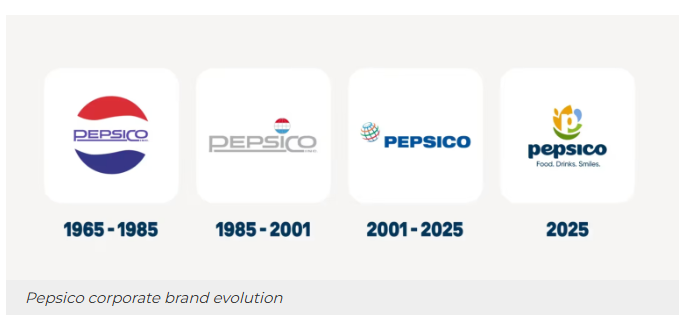
Pepsico, the global giant, already derives more of its revenue from food than drinks. Last year it launched a corporate rebrand that is designed to carefully move away from cola-centricity.

The company’s global corporate affairs boss sat down with Mumbrella this week to explain the relaunch, which will see the new logo subtly appearing on billions of packages worldwide.

For Stephen Kehoe, Pepsico executive vice president and chief corporate affairs officer, the key constraint of his company’s corporate branding is also its biggest strength: “Pepsi”.

Solving that particularly devilish problem — maintaining the brand power but moving beyond the fizzy drink — has been the focus of the food giant’s first corporate rebrand in more than two decades.

 ”Obviously 25 years ago, we were a company steeped in beverages,” he told Mumbrella.

“Today we’re primarily a foods company. Second largest food company on the planet, largest food company in North America. We are steeped in agriculture, 60 crops, 30 countries around the world, localized production, involved in farmers …  the old Pepsico way of looking at the logo didn’t really speak to all of that in a way that came across.
“All of that” is a lot.

Pepsico’s global revenues were US$94 billion last year, from sales of more than 500 food and drink brands. That places it behind only Nestlé (around US$115b revenue) in terms of the packaged food and drink market.

As Kehoe points out, the majority — 58% — of Pepsico’s revenue now derives from food, including products from big global brands such as Lay’s, Doritos, Quaker and Cheetos.

Local Pepsico food brands include Australian favourites such as Smith’s and Twisties.

Kehoe mentions how the new logo, which is styled all lowercase, seems to take the emphasis off the “Pepsi” brand recognition. On closer examination it seems clear the omission of Pepsi’s defining red, white and blue in the colour scheme is also significant.
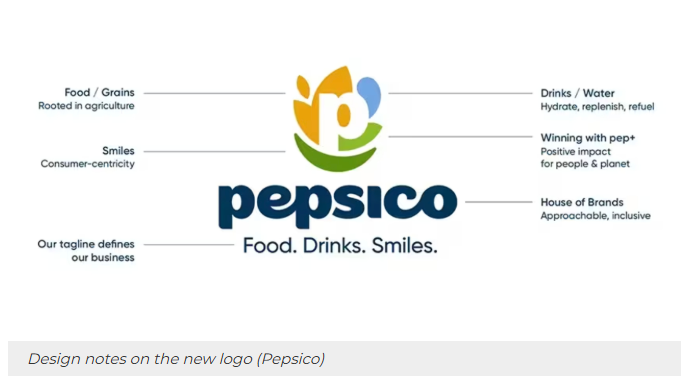
“[The old logo] was very much dominated by one particular brand in our beverage portfolio, Pepsi, and whilst we’re extremely proud of that heritage and will never want to let it go, it doesn’t speak to the overall company who we are today.”

The logo redesign work was done in-house, with brand senior design director Marco Escalante credited as the lead creative.

A question of strategic positioning
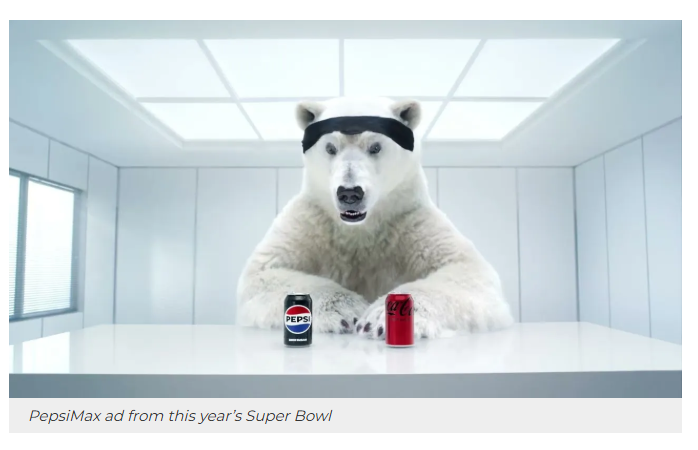
Kehoe declined to comment on his company’s long-time rivalry with Coca-Cola. The latter company remains squarely focussed on beverages, and is around half the size (US$48b global revenue).

“Our brand proposition only being linked to the fortunes of the beverages industry is a self-limiting proposition,” he said.

Kehoe seems focussed on building that brand proposition with regulators and the company’s 320,000 employees first. Pepsico as a house of brands for consumers would be a much more gradual build.

“For those of us that spend more time than others talking to policymakers, governments, regulators and all of this, I think this is a powerful new way of representing the company,” he said.

 ”It’s been a very quiet, understated launch to start to get the brand out there. And we hope through putting the logo on all of our packs around the world, consumers will begin to associate the name with the brands that they love and that will over time increase the overall halo and reputation for Pepsico itself.”

The spectre of advertising regulation

Kehoe was measured in discussing regulatory interventions targeting junk food advertising — for example, South Australia’s ad ban on government properties.

“Banning ways in which we can communicate to consumers is probably not the long-term solution in all of this,” he said.

“ It’s much more around the provision of transparent information about what’s in the portfolio, allowing us as a company to continue to innovate and reformulate, as we have over the years reduced the amount of salt within the portfolio, a switch to healthier oils reducing the amount of sugar.”

In a slightly different context — the question of his long-term outlook — he made a case for choice.

 ”I believe in the average human being’s ability to make rational, intelligent decisions for themselves and their families,” he said.

Macro economic conditions

Given the signs in Australia of a retail downturn, Mumbrella asked Kehoe his opinion of the general economic environment.

 ”It’s certainly a challenging moment,” he said.

“It’s an economy of two halves. You’ve got the affluent who continue to do very well, and then you’ve got at the other end of the spectrum, people who are finding it very difficult to make ends meet.

“You can see that actually reflected within the Pepsico portfolio itself … certain aspects of the portfolio continue to grow very well, which tend to be the more premium products like Red Rock Deli here in Australia … people are willing to pay for products that they perceive are healthier for them.”

So how will he know the relaunch has been a success? What are the core KPIs?

“Number one is people’s awareness that we are a food company as well as a beverage company,” he said.

“And then secondly … if people are able to name three, four brands which are part of the Pepsico portfolio and not just one or two.”

“We’re doing something which really is about making sure that people understand that Pepsico, the mother company, is one that has a real, deep voice to play in some of the biggest existential problems and challenges that we face in the world today.”

Note on house style: Mumbrella follows standard capitalisation in company names (for example, “Pepsico” rather than “PepsiCo”) except where non-standard capitalisation is required for legibility.

Feature image credit: Stephen Kehoe (Mumbrella)
By Hal Crawford

Sourced from Mumbrella

By

As high fat and sugar drinks fall out of favour, PepsiCo UK is banking on premium and health-conscious consumers to drive demand for healthier options on the market.

With investors increasingly reluctant to commit to soft drink and energy stocks, The Drum spoke with PepsiCo UK’s top marketer to learn why it is scaling its sugar-free options in order to diversify their portfolios (or protect their market share).

“The big growth that we’ve observed across our beverage brands has been around no sugar” explained Natalie Redford, marketing director of PepsiCo UK. “We’re really unlocking what that means.” This shift is being seen around the globe.

“I think it’s the new norm,” Redford said. “Guilt-free, but not compromising. It’s proven really successful for us in the UK.”

And while the Advertising Standards Authority (ASA) ups its focus on cutting down high fat, salt, and sugar (HFSS) advertising, Redford said PepsiCo UK has responded to Government consultation relating to further advertising restrictions for products high in fat, salt and sugar.

“The great thing about the beverages and brands that I look after in my portfolio, and the ones that we advertise are no-sugar beverages that fall outside of the HFSS category,” Redford said.

Of all carbonated brands included in her UK portfolio, Pepsi Max tops the sugar-free market for cola, and 7up Free leads the lemon and lime.

PepsiCo UK is channelling this healthier alternative approach through its advertising.

In a first of its kind event for the 7up Free brand, this weekend, PepsiCo UK has launched a pop-up shop to commemorate the return of its chilled-out 90s mascot, Fido Dido.

“We wanted to use the ‘free’ in 7up Free to mean more than just no sugar,” Redford said. “We wanted to use the free to make a more ’emotional connection’ with our customers.”

With this thought in mind, Fido Dido House is an ‘anti-pop-up.’ While people normally ‘do do do,’ PepsiCo UK created an experience that allowed people to opt-out of the frenzy of hectic life, to feel free to just ‘be.’

Premiumisation

It claimed consumers are demanding more premium products; PepsiCo UK is increasing investment in this space.

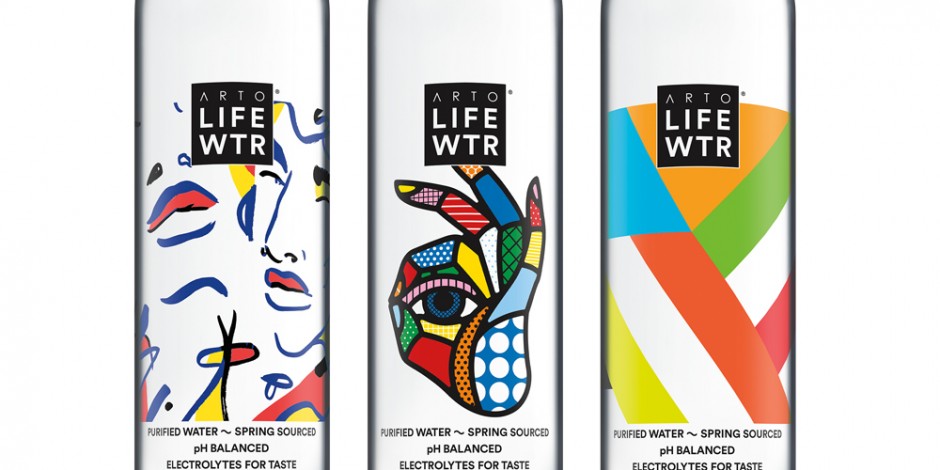
In 2017, PepsiCo first launched Lifewtr ​- a premium water bottle brand – in North America in a bid to rival Coca-Cola’s Jennifer Aniston-endorsed Smartwater.

Serving as a canvas to showcase emerging artists’ work, the brand caters to the need for healthier alternatives to carbonated, sugary drinks, while supporting arts and culture. Now, Lifewtr has launched in the UK market as Arto Lifewtr.

Redford spoke how “premiumisation is definitely a trend that [PepsiCo] is going exercise more of in the next five years and it’s happening at every level.”

She puts it down to the breadth and depth as a company that means PepsiCo can play across those segments and foresees this will be a general direction for the brand as it steps out from the more mainstream drinks industry.

“We’re thinking how our brand can be served in a more premium way,” Redford detailed. “Whether that be a premium experience or a premium product.”

While moving towards healthier options is undoubtedly a strategic move for PepsiCo, it isn’t always an easy one. It’s main competitor Coca-Cola has to axe its Life brand, after-sales slumped in the UK, whereby the product accounted for less than 1% of its trademark sales.

Feature Image Credit: PepsiCo

By

Sourced from The Drum

By Dave Kerpen

Teachers are the latest demographic marketers want to reach. Use these 5 strategies to successfully connect with this influential audience.

PepsiCo has had its share of marketing mishaps in recent years–perhaps most notably the widely vilified ad featuring Kendall Jenner handing a Pepsi to a cop during a protest. The 2017 commercial spawned such an internet backlash that it was pulled from programming one day later.

But Pepsi has also had some major successes, namely with the PepsiCo Recycling Rally campaign launched in 2010. This project has been so successful that it earned the company a Gold Honor in the MarCom Awards in December 2017.

For this award, PepsiCo created a campaign to teach K-12 students about recycling in their schools. They focused on marketing to educators and reached a new demographic via a program that is still going strong more than eight years later.

Educators are increasingly being recognized as a valuable audience to target. They make up a significant portion of the general population, have high participation rates in a number of sectors, and are sophisticated shoppers who respond to marketing that includes independent research and facts.

There are several marketing strategies brands can employ to effectively connect with educators.

1. Join forces for an important cause.

Many companies already include corporate social responsibility as a major part of their marketing strategies, and teachers are more willing to support brands that will add value to their students’ lives. PepsiCo used recycling and sustainability efforts to teach children about how to protect the environment. To follow PepsiCo’s lead, find a cause that represents a common interest between your company and educators.

2. Make it a competition.

Stir up educators’ competitive spirit with a contest in which classes or schools go head to head for a good cause. Everyone loves a little competition to make things interesting. A contest builds unity and teamwork within a class or school and gives teachers something concrete to work with as they attempt to get their students excited about school projects.

A great example of this is the Box Tops for Education program, which lets students collect box tops from food and other products and turn them into money and prizes for their schools.

3. Give them some extra incentive.

To encourage students to participate in these competitions, it’s important to provide teachers with incentives they can use to entice students to get involved. These could include tickets to an amusement park, a class pizza party, or a movie day in class. A great example is Pizza Hut’s Book It! program, in which kids earn free pizza for hitting a reading goal each month.

Motivation plays a huge role in how a student engages (or not) with a subject. These extrinsic motivators are especially powerful in changing student behavior and engagement, emphasizing skills, or encouraging certain behaviors. When used properly, they can be powerful tools for winning a child over to a school subject like reading or a civic activity like recycling.

4. Ease the lesson-planning burden.

Teachers are always looking for new materials to incorporate into their classrooms, so providing an educational component to your program or partnership will increase the chances of teachers wanting to take advantage of it. This aspect can also teach students how business and community service go together.

A major element of CSR is looking beyond the company’s bottom line and engaging in causes that further the social good. In the end, these efforts serve as good PR for a brand and encourage sales, but that’s not the main point. Companies tend to have resources that individuals lack, giving them the capacity to fund charities, sponsor community athletics or arts programs, and support local cultural or educational initiatives. Educators are eager for this support, especially when it comes with additional classroom tools and strategies.

5. Be selective with your audience.

First-grade teachers need different lessons and incentives than high school English teachers. Research what your demographic wants, as it will be challenging to find an overarching theme for different age ranges. Determine what type of teacher your company can most effectively connect with, and focus your efforts there.

Educators are a powerful force in society, and their influence is far-reaching. (I’m proud to say I’m a former public school math teacher myself!) Joining forces with teachers can elevate your marketing strategy, but you need the right methods to connect in a meaningful way. The tactics above will help you effectively partner with people who play an important role in shaping the minds of future generations.

Feature Image Credit: Getty

By Dave Kerpen

Founder and CEO, Likeable Local@davekerpen

Sourced from Inc.