Tag

retail

Browsing

By 

Although I’m not certain that they all were “Robert Wendland originals,” my late father had many witticisms to which I credit him. With impeccable timing, a simple, pithy phrase would be spoken that was not only appropriate for the moment but also stuck with me for a lifetime. One in particular that I reference often suggests that “You can’t drive forward if you spend your time only looking in the rear-view mirror.”

The rate of change occurring in our lives and across virtually every industry is unprecedented. Oddly, the smartphone was first introduced less than a decade-and-a-half ago, and yet its ubiquity makes it unfathomable to think of going through life without one. The same could be said of self-check-in at airports. (Remember the days of paper tickets, travel agents and full-service?) And, in retail, where our company Hamacher Resource Group works across the retail supply chain, everything I remember from my childhood seems like ancient history.

I am personally fascinated by predictive analytics and the ability to combine data elements to create an approximate idea of what the future may hold. Although data modeling has been used quite extensively in certain industries (e.g., weather predictions based on specific historic models and key indicators, insurance estimates and actuarial tables, etc.), the concept of applying similar science to retail holds unrealized potential. Given technology advancements and data-mining tools, potential future predictions — in other words, answering the question “What lies ahead?” — seems far more attainable than ever before. Considering big data already captured within the retail sector, it becomes mind-boggling.

Virtually all industries have pools of information that could be used for predictive purposes. This reminds me of a presentation I sat through nearly three decades ago by a then-IBM executive who suggested that the future will be owned by those who have the keys to data and the intelligence that it generates. And, as recently as this month’s National Retail Federation event, the power of data was repeatedly emphasized.

According to a recent blog post from McKinsey, “winning decisions are increasingly driven by analytics more than instinct, experience, or merchant ‘art’; what succeeded in the past is now a poor predictor of the future, and analytics is helping to inform and unlock new pockets of growth.”

So, what types of data do we have available in the retail class of trade? Here’s a partial list:

 Point-of-sale transaction-level data

 Retail pricing strategies

 Consumer-based loyalty information (shopper insights)

 Physical store size and demographic characteristics

 Department sizes and product assortment (planogram data)

 Store navigation intelligence (traffic flow)

 Social media metrics

 Competitive intelligence

 Seasonality and other external trends (e.g., weather)

If one takes the time to imagine connecting discrete data elements and begins creatively combining them in unique ways, amazing predictions can be formed. Whether informing promotional campaigns, personalizing customer offers, improving employee training, building customer retention or simply forecasting demand and optimizing assortment and stocking levels, using big data and some gut instinct can conjure up interesting insights. Here are a couple on my mind.

Imagine aligning store navigation intelligence, shopper loyalty data and neighborhood demographics to consider how to attract others within the area by enhancing navigation and department placement to match their needs. Once again, continuing to do the same thing time and time again may not be positioning the retailer to best capture additional sales.

As an example, say a grocery store was initially designed to attract stay-at-home moms with two kids. The store was arranged to cater to her needs, but the neighborhood was now comprised of older adults with limited mobility and fixed incomes. How could the data predict their navigation pattern, category preferences and better cater to their overall shopping occasion? The hypothesis I would look to prove is whether shelves should be lower and aisles wider, whether certain categories (e.g., sugary cereals and baby diapers) should be downsized and how to rearrange the checkout to be less confined and more staff-centric. Predictive analytics could be used to model the potential result of such changes and allow the retailer to assess whether such an investment would be justified by the return.

Another scenario fueled by predictive analytics could look at the success ratio of certain product launches within a retail operation. Examining planogram and assortment data alongside point-of-sale transaction details and customer loyalty intelligence, future predictions can be created to fuel decisions about placement, promotion and timing.

Today a delicate balance exists between staid and proven stock keeping units (SKUs) and potential innovators and disrupters. Developing analytic modeling that can better predict performance could greatly improve buying decisions and bolster the performance of the category. This would certainly help in honing the process of new item evaluation and potentially reduce the number of new products shelved that do not perform to the expectations of the retailer.

In essence, only looking in the rear-view mirror and continually employing the same process will merely produce the same results. On the other hand, using learnings from the past and combining new, enriched data elements could generate a true breakthrough that drives new results.

Feature Image Credit: Getty

By 

Vice President, Strategic Relations at Hamacher Resource Group, Inc., passionate about optimizing results across the retail supply chain.
Sourced from Forbes

By  ,

Have you ever tried to buy a pair of shoes via the Footlocker website? According to Google retail guru Kiran Mani it takes (or once took, he wasn’t precise on the time frame) 17 clicks to order a pair shoes at the site, not including the in-putting of a 16-digit credit card number. That’s after a 20-plus second wait time for the site to load.

Heck, as a New Yorker I could run over to one of their mid-town stores and buy a pair faster than that!

The point Mani was making—at WPP’s 2018 Checkout conference–is that speed is one of the most important elements to a successful e-commerce practice. (Along with selection and a couple of other components). In today’s world that Footlocker experience is an eternity, particularly when compared to Amazon’s one-click process.

“Speed is currency in today’s landscape,” Kiran noted, in an on-stage discussion with WPP’s head of shopper marketing Carl Hartman.

Somewhat surprisingly, the average website load speed for most American’s is 22 seconds. But for Amazon, the average is more like three seconds, Mani told the Checkout crowd.

Amazon, he said, “is great for retail. They’re doing it well and setting the bar. They’ve taught the industry a lot.”

Asked about the degree of concern regarding Amazon’s rapidly increasing share of search traffic vis-a-vis Google, Mani, replied, “sure we’re concerned.” That said, he added, competition benefits the consumer.

In a separate presentation at the conference, which looks at the future of retail, shopping and technology. Kantar Consulting’s J. Walker Smith made the case that marketers and agencies need to figure out optimal ways of “advertising to algorithms,” which consumers are increasingly relying on to do their shopping.

Smith provided a number of interesting examples, noting consumer use of a growing number of smart gadgets and Internet of Things to make their purchases, like the smart washing machine that automatically reorders detergent.

He also noted the growing “chelfie” phenomenon. A chelfie is a changing-room selfie, used by shoppers to decide which items to purchase in-store based on likes from their Instagram and other social media accounts.

Consumers are bombarded with so many ads these days that they’re relying more and more on tools and technology to help with buying decisions and purchases Smith said. Thus future ad targets will increasing be those tools and tech rather than the consumer using them.

The conference was chockful of insights. Try to score a ticket next year if you need to keep up on the shopper marketing and e-commerce worlds.

By 

Sourced from MediaPost

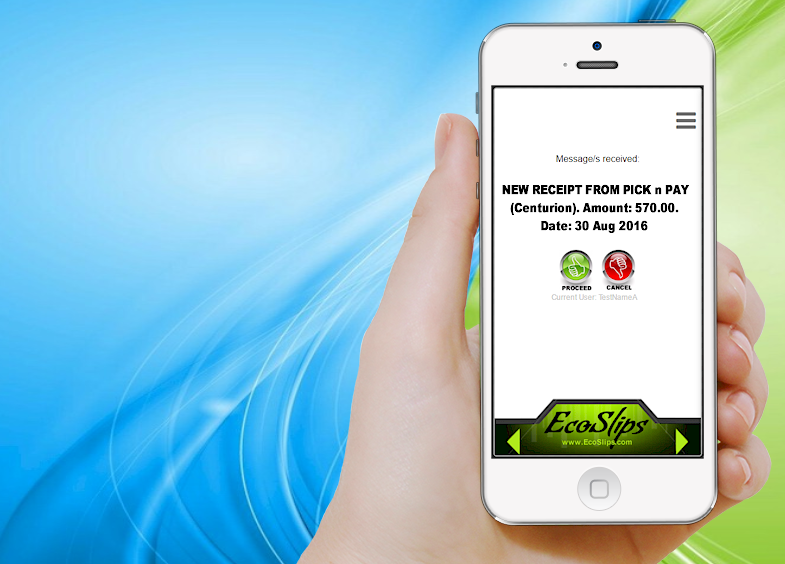
A South African tech company wants retailers to send receipts to their consumers’ phones directly upon purchase. These receipts can be held in the cloud, be searchable, and carry advertising.

By MediaStreet Staff Writers

The company, called EcoSlips, says it is launching the new disruptive service to forever get rid of paper-based transaction receipts.

Retailers can now link their point-of-sale systems to EcoSlips and send transaction receipts digitally from any pay point to the consumer’s mobile phone.

Paper receipt waste is reduced and a new advertising platform provides opportunities to grow any business in the retail sector.

Consumers may download the application to their mobile phone and register free of charge. The cashier scans or enters the customer’s unique pin number and a digital receipt is forwarded to their phone within seconds.

Transaction receipts are stored in the cloud from where it can be downloaded, verified, forwarded or printed at any time, from any location.

BENEFITS TO CONSUMERS

Transaction receipts do not get lost and a printer-friendly report with all transactions can be downloaded in seconds. Consumers may use it for tax purposes, corporate expense claims, medical and warranty claims.

Transaction slips can also be forwarded directly from the retailer to the user’s office for corporate expense claims. Users do not even need a cell phone to request their digital receipts at a pay point.

The system saves hours of manual labour, since transaction slips are already scanned and summarised in digital format.

Customer identities remain protected and no spam can be sent to any phone, as is the case with text or email powered systems. Messages do not get lost in spam filters because they are sent directly to the user’s phone.

BENEFITS TO POINT-OF-SALE VENDORS

Vendors can provide a value-added service to their clients at no additional cost. They have an advantage over competitors and receive free advertising exposure in the process.

Free software is provided to link any windows based POS system without backend programming to EcoSlips.

BENEFITS TO RETAILERS

EcoSlips provides an advertising platform that targets only consumers in their immediate geographic location.

Complaints and compliments can be sent directly to the retail manager from the customer’s phone and frustrations caused by waiting in line to speak to a call centre agent are completely eliminated. Service levels can improve significantly when complaints are handled in a timely fashion by the retailer.

According to Henco Schoeman, founder of EcoSlips, “consumers may use the service free of charge. Retailers can significantly reduce paper slip waste, save on printing costs and early adopters may secure an exclusive opportunity to advertise in their geographic area. It is a win-win solution for retailers and consumers.”

EcoSlips is financially supported by Mlab and the SA Technology Innovation Agency (TIA). The service can be used anywhere in the world.

So if you are a retailer, this may be food for thought.

As retail customers increasingly turn digital, online checkout performance is critical.

By MediaStreet Staff Writers

Retailers have always understood that the checkout line is the most crucial step during their buying journey. When long lines welcome potential shoppers, over 40% of customers will avoid a retailer in the future. Unsurprisingly, this same negative impact from slow and frustrating online checkout experiences is affecting digital retailers.

Quantum Metric, a customer experience analytics firm, has been studying online shoppers and their extreme sensitivity to site performance during online checkout process. The study analysed different sectors including the financial, travel, automotive, entertainment, and retail industries.

So here’s the news. Customers shopping online are less likely to make a purchase with each fraction of a second slower that a website responds. Even a small degradation in page load time can cost companies tens of millions in lost annual revenue.

Not only are customers conducting more and repeated business on faster sites, customers are also willing to pay more for the privilege. According to a survey conducted by Oracle, 44% of customers are willing to pay more than a 5% premium for better customer experiences.

Online retailers are turning to various tools to provide browser performance monitoring that helps troubleshoot why sites are slow. With insights into slow content delivery networks (CDN), server latency, or sluggish browsers and devices, retailers can now address the root causes of what’s negatively impacting customer experiences and rectify the issues.

Why does this all matter? Because retailers are continuing to see revenue shift from physical stores to digital stores. This means that online retailers must get to grips with their customers’ online digital struggle. Research shows that the online customer experience is the top innovation project for 2017. It is recommended that the purchasing experience should be the highest spend area for many enterprises as competition heats up.

Says Mario Ciabarra, Quantum Metric’s CEO, “It’s difficult for eCommerce retailers to comprehend that when a site is just a few hundred milliseconds faster, that it could lead to millions in additional revenue. We are having tremendous success empowering online retailers with the data that shows them what performance truly costs, allowing them to spend their time on solving problems that will ultimately improve their business.”


Get your business listed now on our free media directory.