Tag

Snapchat

Browsing

By Ross Benes

Snapchat’s ad rates have taken a hit since it started selling ads programmatically.

CPMs for Snapchat inventory that’s sold in open auctions run between $3 and $8, according to three ad buyers requesting anonymity. Those rates are similar to what’s found on Facebook, but the difference with Facebook is that it has much more scale. Snapchat reported 178 million daily active users in the third quarter. Meanwhile, Facebook claims to have 1.4 billion daily active users.

Programmatic buyers typically seek audiences more than context. But Snapchat’s targeting and reporting is pretty basic, said Michael Racic, president of media operations for ad agency iCrossing. Facebook and Google attract a ton of programmatic buyers because they provide hypertargeting across demographics and device type. Snapchat has lots of location data, but the platform is still mostly used by advertisers just to reach millennials. And that’s not a unique enough proposition to boost ad rates, Racic said.

Despite ad buyers pleading Snapchat to open up its application programming interface, there wasn’t much pent-up demand once the company did so, Racic said. Media executives recently told Digiday that Snap plans to bring in more programmatic ads after struggling to fill ad space inside its Snapchat shows. Snapchat declined to comment for this story.

Allowing automated buying helped Snap bring in more advertisers, but the drop in its ad rates is concerning for a company that was once considered a viable challenger to the Facebook-Google duopoly. Back in 2015, Snapchat asked brands for $750,000 a day for its disappearing ads. Those days appear to be over.

On Snap’s quarterly earnings call this week, the company said its CPMs in the third quarter were down 60 percent year over year. Snap reported third-quarter revenues of $208 million, which is a 62 percent increase year over year. But its stock price dropped after its last earnings call because Snap’s revenue growth was below analyst expectations, and the company posted a net loss of $443 million on the quarter. As of this writing, its stock is selling for about half the price as it did on its first day of trading back in March.

About a year ago, Snapchat opened up its API so that advertisers could buy Snap Ads — 10-second vertical video units — programmatically. Previously, advertisers had to work directly with Snapchat’s sales team to get ads on the platform. But few agencies had the resources to create custom ads for the platform, so Snap opened up to automated buying before its IPO in an effort to bring more advertisers in. Its filters and lenses are still sold directly at a premium, but about 80 percent of Snap Ads were sold programmatically in the third quarter, according to Snap.

“Snapchat previously had the market cornered, explosive growth rates and a hard-to-reach audience squarely in its grasp,” said Melissa Wisehart, director of biddable media at ad agency 22squared. “They were able to charge a premium for inventory to limited buyers. But as their leverage for this cost was reduced from pressure by Facebook and Instagram, they simply just flooded the market with supply by opening up inventory to more players.”

A few ad buyers said Snap’s tech stack has yet to catch up to older and larger competitors like Facebook and Google, and until it does, advertisers will have a tough time showing the return on ad spend is great enough to push Snapchat from experimental budgets to a must-have on media plans every quarter. Snap is trying to change that perception. In the past year, it purchased ad tech firms Metamarkets, Placed, Flite and Vurb, which could improve the platform’s attribution and analytics.

“The ad tech acquisitions show that they are now serious about selling advertising the way marketers already buy it, rather than trying to bend the market to their platform,” said Marcus Pratt, head of technology at media-buying shop Mediasmith.

By Ross Benes

Sourced from DIGIDAY UK

By 

  • A large number of brands have been using Snapcodes, Snapchat’s own version of QR codes, to elevate their marketing campaigns.
  • Snapcodes are potentially huge: Users are already scanning over 8 million codes a day. They help brands connect traditional and digital advertising and also gives them access to data.
  • But additional production costs and lack of clarity in how they drive results are its downsides, say marketers. 

Turns out that everyday objects like cans, bottles and cardboard cups can serve as the perfect gateways to Snapchat. Just ask Gatorade, Wendy’s and Evian.

These are just a few among a growing roster of brands that hopped on the Snapcode bandwagon this past summer, using Snapchat’s own version of QR codes to elevate their marketing campaigns on the platform to another level.

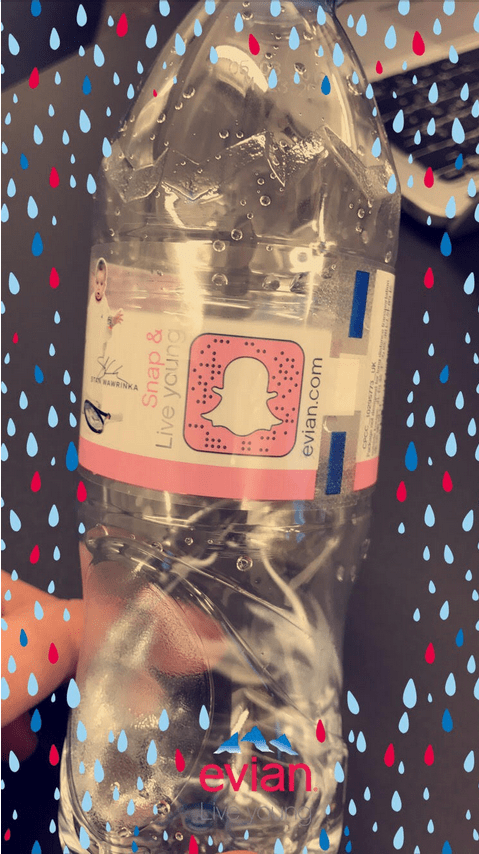
By plastering Snapcodes onto product packaging, print and even out-of-home ads, these brands have been able to encourage people to use their smartphones to unlock exclusive branded filters, lenses, custom websites and even Snapchat-specific mobile games.

Evian, for example, printed Snapcodes on over 300 million bottle across six countries, which opened up to exclusive branded content, including filters and lenses on the platform. Wendy’s, on the other hand put the codes on its drink cups, donating $5 to a foster care foundation every time someone scanned the code to unlock a custom Snapchat filter.

“Snapchat fits into our overall marketing mix and aligns well with our brand personality because it’s a fun, interactive platform,” Jimmy Bennett, Wendy’s head of media, told Business Insider. “And Snapcodes are unique as they seamlessly connect social and real world experiences.”

Rise of Snapcodes

While Snapcodes have been around since 2015, for a long time they were mostly used by people to add friends on the app using their smartphone cameras. Only recently have they emerged as a powerful weapon in a brand’s Snapchat marketing arsenal.

It’s not hard to see why.

The benefits of Snapcodes are potentially huge: The company says users are already scanning over 8 million codes a day, making for a sizeable audience that brands can target. If brands can give people a fun way to use the Snapchat camera in the real world through branded filters and lenses, they are likely to spread that content to more of their friends.

Evian’s “Live Young” campaign, for example, saw over 2 million unique Snapchatters interact with its lenses and over 3 million play around with its filters.

Free advertising

Wendy's cup for charity.PNG Wendy’s

Unlike filters, lenses or video Snap Ads, Snapcodes are not actual ad products. In fact, they are free, and Snapchat says it doesn’t charge advertisers extra for them.

Anyone can create a Snapcode that unlocks an external website from within Snapchat (what the company calls a “web view”), without anyone at Snapchat helping them. And if they want to have a Snapcode link to their filter or lens campaign, Snapchat can create that for any brand for free.

So in other words, Snapcodes basically enable advertisers to reach more consumers and ideally amplify their paid Snapchat ad campaigns investments by tapping into existing behaviors.

“Snapcodes made for an easy, shareable way to raise awareness and do some good at the same time,” said Wendy’s Bennett. “Plus, our customers use Snapchat regularly and have a habit of sharing pictures and selfies, so featuring a code on cups was an ideal way to get participation while in restaurants.”

Plus, marketers can connect their Snapchat campaigns — which typically live within the app itself — to the real world. Plenty of brands have attempted this, from Lancôme, which ran a Snapcode in the magazine Allure, to fast food chain Jack in the Box, which printed out Snapcodes on its receipts.

Snapcodes “enable brands to extend their Snapchat campaigns across TV, out-of-home or guerilla marketing initiatives, enabling a campaign to have more integration with traditional media,” said Sherwin Su, director of social at digital agency Essence.

Data Mining

But perhaps the most compelling advantage of Snapcodes is that they give brands an opportunity to collect data on some of their biggest customers on Snapchat — an app that has long been slammed for its lack of data to track return on ad spend compared to some of its competitors. Only the most engaged of fans, after all, would put in the effort to unlock exclusive content offered by brands.

Gatorade, for instance, wanted to reach and inspire its core consumer base of young competitive athletes by providing them tools for athletic inspiration and utility, like training videos. It decided t0 tap into Snapcodes to give its fans access to exclusive branded content, also also ended up accomplishing a key business goal along the way.

That’s because users who wanted access to the brand’s content featuring pro athletes Karl Anthony Towns and JJ Watts were prompted to add their names and email addresses to unlock it. Now, Gatorade has a list of between 75,000 and 100,000 highly engaged fans that it can re target moving forward.

“Our intent with the activation was to gather first-party data on young athletes and consumers, and we achieved that,” Kenny Mitchell, Gatorade’s head of consumer engagement, told Business Insider. “Snapcodes provide a real frictionless way for consumers to engage with us and our content in a place where they already are from a mobile perspective.”

Not for everyone

While Snapcodes may serve as the perfect additions to large scale Snapchat campaigns, they aren’t necessarily made for all brands.

For one, Snapchat may let advertisers incorporate Snapcodes in a marketing campaign for no additional cost, but developing and deploying Snapcodes across traditional media placements still requires extra creative and production costs and resources, said Essence’s Su. As a result, only brands with deep pockets and broader deals may be able to afford them.

Gatorade’s parent company PepsiCo, for instance, has been a longstanding partner of Snapchat’s and has a broader deal with the company encompassing all the brands in its portfolio. Pepsi has regularly invested in Snapchat, and is often one of the first brands to test out new formats. It was one of the first brands to test sponsored geofilters with Crystal Pepsi, for example, and also one of the first to launch a video game ad tied to the U.S. Open inside of ESPN’s Discover channel.

Further, marketers are still not sure how exactly to track return on their investments as far as Snapcodes are concerned.

“We have yet to understand how the exposure or usage of the Snapcode drives scalable and incremental business outcomes, compared to a standard Snap campaign from a measurement standpoint,” said Essence’s Shu.

By 

Sourced from Business Insider UK

By Mike Murphy.

Over the last few days, a slew of reporting, inspired by ProPublica, has revealed that it’s actually quite easy, through the programmatic structure of most online advertising, to create ads meant to target those who have espoused racist, antisemitic, or other hateful ideas.

Here’s a quick rundown of the major internet companies, and what has been discovered about their advertising platforms:

Facebook

On Sept. 14, ProPublica reported that Facebook allowed advertisers to target categories and ideas such as “Jew hater,” “How to burn jews,” and “History of ‘why jews ruin the world,’” based on interest Facebook users had expressed on the social network and terms with which they had used to describe themselves.

While Facebook removed those categories after ProPublica’s investigation, Slate then discovered that there are dozens of other racist, sexist, and xenophobic categories which advertisers could potentially target. It took Facebook less than a minute to approve ads against phrases like “Kill Muslimic Radicals”and “Ku-Klux-Klan,” and Slate found myriad other options, like “Killing Bitches,” “Killing Hajis,” and “Nazi Party (Canada).”

Facebook released a statement yesterday after ProPublica’s report, saying in part:

Keeping our community safe is critical to our mission. And to help ensure that targeting is not used for discriminatory purposes, we are removing these self-reported targeting fields until we have the right processes in place to help prevent this issue. We want Facebook to be a safe place for people and businesses, and we’ll continue to do everything we can to keep hate off Facebook.

Google

BuzzFeed discovered similar targeting issues on Google’s AdWords platform, which runs the advertisements you see on Google search results pages. Typing in keyword suggestions (which advertisers use to build their ads and figure out who to target) like “why do jews ruin everything” led to the system generating more keyword suggestions like “jews ruin the world” and “jewish parasites.” Buzzfeed was also able to build and launch a campaign around the phrase “black people ruin neighborhoods.”

When Quartz attempted to recreate BuzzFeed’s efforts using similar terms, or terms like those used by ProPublica and Slate, no keyword suggestions were returned. Google has since disabled many of the keywords that BuzzFeed tested.

Sridhar Ramaswamy, Google’s senior vice president in charge of ads, told Quartz in a statement:

Our goal is to prevent our keyword suggestions tool from making offensive suggestions, and to stop any offensive ads appearing. We have language that informs advertisers when their ads are offensive and therefore rejected. In this instance, ads didn’t run against the vast majority of these keywords, but we didn’t catch all these offensive suggestions. That’s not good enough and we’re not making excuses. We’ve already turned off these suggestions, and any ads that made it through, and will work harder to stop this from happening again.

Twitter

The Daily Beast was able to target similarly derogatory demographics on Twitter. It reported:

Twitter’s advertising platform tells prospective marketers it has 26.3 million users interested in the derogatory term “wetback,” 18.6 million accounts that are likely to engage with the word “Nazi,” and 14.5 million users who might be drawn to “n**ger.”

A Twitter representative told Quartz about the Daily Beast’s report:

The terms cited in this story have been blacklisted for several years and we are looking into why the campaign cited in this story were able to run for a very short period of time. Twitter actively prohibits and prevents any offensive ads from appearing on our platform, and we are committed to understanding 1) why this happened, and 2) how to keep it from happening again.

Snapchat

Quartz checked on Snapchat’s advertising platform to see if we were able to target using similar terms used on the other platforms. We were not able to: It seems that Snapchat’s demography isn’t quite as granular as the other platforms, which are far more text-based than Snapchat, and so it’s likely easier for them to glean what sorts of things its users are sharing than through all the videos and images posted to Snapchat.

Bing

Microsoft’s second-placed search network seems to have a similar problem to its other platforms. When Quartz created a test advertising campaign on Bing Ads, we weren’t able to directly target specifically loaded terms, but searching for just about any phrase in Bing’s “keyword suggestions” generator will generate specific keywords that you might want to try to target instead. Here’s one example, using “Hitler” as the search term:

Screen Shot 2017-09-15 at 5.51.52 PM
(Screenshot/Bing Ads)

A representative for Bing told Quartz:

We take steps to ensure our Bing Ads always meet reasonable standards. We are committed to working with partners who share our vision for relevant, impactful brand interaction and respect the integrity of consumer choice.

Yahoo

Quartz attempted to create an ad campaign on Yahoo, but it seems there’s no simple way to create one online without speaking to a representative from Oath (Yahoo’s parent company) first. And presumably fewer people would feel comfortable telling a sales rep the sorts of things they’re targeting than they would inputting them into a computer system. Hopefully.

LinkedIn

Microsoft’s professional social network doesn’t seem to let users target based on arbitrary phrases or demographics. Other than geography, these are the only things you can target against on LinkedIn:

Screen Shot 2017-09-15 at 6.01.21 PM
(Screenshot/LinkedIn)

The only section that might have the potential for hateful terms would be in “Member groups”—but a cursory search of terms like those used above didn’t reveal many professional hate groups to target on the platform. We did, however, come across this group:

Screen Shot 2017-09-15 at 6.03.39 PM
(Screenshot/LinkedIn)

Upon further inspection, however, it seems that this group was set up by a LinkedIn employee trying to see whether they could set up a group with a title like this. Obviously, it worked:

(Screenshot/LinkedIn)

LinkedIn sent Quartz the following statement:

Hate has no place on LinkedIn and will not be tolerated. When we are made aware of such content, we act swiftly to enforce our policy and remove said content. On Friday, a member of our team created a group solely for internal testing purposes and after a brief testing period, we took the group down.

By Mike Murphy.

Sourced from QUARTZ

Sourced from eMarketer

Facebook, Snapchat and Twitter want a piece of the digital video advertising pie

Facebook, Snapchat and Twitter are embarking on a massive land grab for video content, hoping to drive increased usage and capture a greater portion of digital video ad revenues with familiar ad formats such as pre-roll and mid-roll.

“Consumers—particularly young people—are viewing video programming on more devices and in more destinations than ever before, and social platforms want to capture their attention,” said Debra Aho Williamson, eMarketer principal analyst and author of the new report, “Video Advertising in Social Media 2017: Showtime for Facebook, Snapchat and Twitter.” (Subscribers to eMarketer PRO can access the report here. Nonsubscribers can purchase the report here.)

Video advertising has become an important revenue stream for social media properties. But they want more.

Being pigeonholed in the “social” bucket has stymied growth. The broader digital video ad business is something that all social properties have been lusting after.

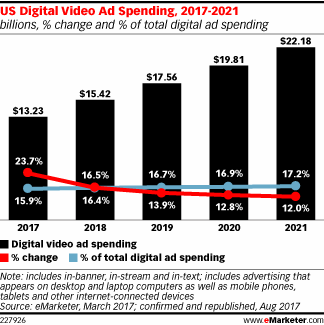
eMarketer forecasts US digital video ad spending outside of social platforms will reach $13.23 billion this year, up 23.7% from 2016. By 2021, spending will reach $22.18 billion.

US Digital Video Ad Spending, 2017-2021 (billions, % change and % of total digital ad spending)

eMarketer does not include video outlays on social platforms in its digital video ad spending forecast, instead counting them in the rich media forecast. Rich media, which will be a $10.33 billion market in the US this year, includes such ad types as flash, JavaScript and video that does not appear as part of a video player.

Companies like Facebook “know their users have an increasing appetite for video content and are actively making a play for brand marketing dollars that would traditionally go to online video or broadcast TV buys,” said Todd Silverstein, US head of performance marketing at Edelman.

Although Facebook has deep pockets and an enormous audience, its success is by no means assured. Consumers today don’t go there to watch shows, so Facebook must change their behavior by offering great programming and a winning video platform.

Meanwhile, Snapchat’s “Shows” are quite short, benefiting its position as a place for creative, quick-hit content for young people. TV networks are the primary programming partners, and the ads use Snapchat’s familiar vertical video format.

However, many marketers have yet to get comfortable with creating video ads on Snapchat. As the company continues to roll out programming, the challenge will be to convince them to develop for its unique format.

Twitter is relying on its real-time roots, emphasizing live and event-driven video content. Like Snapchat, Twitter has turned to a familiar format—its Amplify video publisher partner program—for delivering ads in its new shows. The company has a lot riding on its video initiatives, given its slumping user growth and resulting falloff in ad revenues.

By Mike Murphy.

Snap will report its second-quarter earnings Aug. 10, and after a turbulent first few months as a public company, it will need to show investors and advertisers that it deserves to be in the same conversations as Facebook and Google.

The company unveiled an entirely new platform for developing and running high-quality video ads on Snapchat in June, and as TechCrunch reported then, it will need to prove that it’s as simple and useful as running a campaign on rival services. Snap generated roughly $150 million in revenue last quarter (and the overwhelming majority of its revenue comes from ads on Snapchat), which was up over 280% from the $38 million it generated in the same quarter the year earlier, but about $15 million less than the fourth quarter of 2016.

Snap needs to show Wall Street that it is a growth company—some analysts had been expecting quarter after quarter of sequential revenue growth, and Snap is already disappointing. This earnings report must show that advertisers are treating Snap as a part of their media plans, rather than something to try out and move on.

Analysts are expecting revenue for the quarter to be around $189 million, up from $72 million in the same quarter last year, according to Business Insider.

Snap has an uphill battle proving that it deserves to be on par with Facebook and Google, which overnight can launch new products with their legions of engineers and sales teams that could effectively crush demand for Snap’s own services.

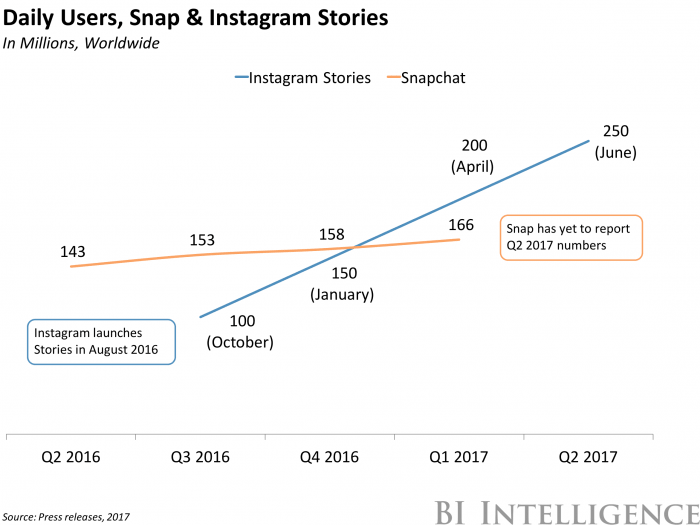
Instagram recently announced that Stories, the section of its app that pretty much copied Snapchat’s own Stories section, now has over 250 million people using it daily, well beyond the 166 million people Snap has checking Snapchat every day. But Snap has said since its IPO filing that one of its differentiating traits for advertisers is the fact that people spend so much time on the app—the average user checks the app 18 times a day, and spends between 25 and 30 minutes on it each day. For comparison, the largest social network in the world gets about 50 minutes of its average users’ time per day.

Google is reportedly working on a service built into its search engine that would function much like Snapchat’s Discover section, where users can read and watch purpose-built content from publishers—broken up by ads—as a sort of digital magazine.

According to eMarketer, a marketing analytics firm, Snapchat accounts for about 1.3% of the mobile advertising market, which is dominated by Google and Facebook.

Snap’s growth has been slowing in recent quarters, but given how engaged its users are, slowing growth wouldn’t matter much—if Snap has figured out how to generate more revenue from each user.

In its last earnings report, Snap said its average revenue per user fell from $1.05 in the fourth quarter of 2016 to $0.90 in the first quarter of 2017—that’s still a 181% increase over the same quarter in 2016, though, so it’s entirely possible that Snap will post an equally large jump in average revenue for this quarter.

By Mike Murphy

Sourced from QUARTZ

By

This story was delivered to BI Intelligence “Digital Media Briefing” subscribers. To learn more and subscribe, please click here.

Instagram is offering marketers and advertisers credits for and free trials of its ad products, according to Business Insider.

Further, some existing Snap advertisers are starting to question the value received from running campaigns on the platform.

As Instagram quickly duplicates Snap’s most successful features and rolls them out to its wider audience, it’s important that Snap clearly differentiates its offering to advertisers, and pricing may have to come down.

  • Snap was already offering discounts for its ads. Back in May, Snap was offering discounts to agencies and brands to lure them onto the platform. Instagram’s free trials and ad credits can drive Snapchat to give even steeper discounts than it already does.
  • Snapchat’s lack of organic reach metrics as could drive advertisers to Instagram. Publishers know exactly how many followers each of their Instagram accounts have, and how many times a user has interacted with a certain post. Snapchat, on the other hand, is something of a black box. While the company does have ad metrics available for its clients’ campaigns, advertisers can’t actively track the number of people they reach organically through the app.
  • Discounts encourage experimentation with new ad formats. Offering discounts is a common practice for tech giants when rolling out new products — Facebook, Google and Twitter have all offered them in the past.

BI Intelligence, Business Insider’s premium research service, has compiled a detailed report on U.S. digital media ad revenue that:

  • Forecasts US digital ad revenue through 2021.
  • Highlights the rising popularity of digital media with consumers and brands.
  • Explores why digital video advertising growth will exceed all other formats over the next five years.
  • Outlines emerging technologies that will help propel ad growth in the next decade.

To get the full report, subscribe to an All-Access pass to BI Intelligence and gain immediate access to this report and more than 250 other expertly researched reports. As an added bonus, you’ll also gain access to all future reports and daily newsletters to ensure you stay ahead of the curve and benefit personally and professionally. » Learn More Now

You can also purchase and download the full report from  research store.

By

Sourced from Business Insider UK

By

  • Snap has made easy ad skipping a feature of its Snapchat messaging app.
  • That poses a critical challenge for marketers, who are turning to some long-tested tricks to make their campaigns blend in.
  • Snapchat has to square its intentions as a chat app with fleeting messages with the demands of advertisers that need a way to see their promotions stick.

NBA star Karl-Anthony Towns was shooting hoops a few weeks ago in a video shared on Snapchat Stories, the social-messaging video feature.

It all looked like a pretty typical Snapchat post — until he casually paused and turned to the camera, with it becoming clear that he was making a pitch for the sports drink Gatorade.

Another video just a few days ago featured a woman — this time not a celebrity — who seemed surprised while looking at someone’s phone, asking “Is this a video?” as the device recorded her reaction. That was an ad for Snickers.

The two ads exemplify a critical element emerging in Snapchat advertising strategies. They are designed to look like other videos on Snapchat; namely, they are less slickly produced and fit the app’s homemade aesthetic, and they blend in to their surroundings (the Towns Gatorade ad was spotted in an NBA-centered Snapchat Story) in a way that might momentarily convince users they were just watching another piece of user-produced video.

Marketers have long tried to make their advertising blend in. So-called native advertising, or promotions designed to resemble a publisher’s normal content, have become a ubiquitous example of that effort. But with Snapchat, the ads reveal a different kind of challenge: Easily skipping video clips or photos, including ads, within a Story is a key Snapchat feature, one that makes it much harder for marketers to stop people in their thumb-tapping tracks as they blaze through content on the app.

For Snapchat’s parent company, Snap, this raises an existential question. Is the platform, founded as a teen-oriented chat program with private, fast-disappearing messages ever going to be hospitable to interruptive advertising?

Gatorade recently advertised on Snapchat

The best Snapchat ads blend in to Snapchat Stories.Snapchat

In the above cases, it’s likely that Snapchat presold advertisers on ad packages in specific custom stories. For instance, Snapchat knows when it’s planning to run a big Story that will grab eyeballs — such as a roundup of Fourth of July videos (which Google’s Pixel appears to have sponsored on Tuesday) or messages from fans hanging out at Wimbledon. It can sell ad space for these user-generated video compilations to big brands, which can then create custom ads designed to fit in seamlessly with the user-generated content.

But if Snap wants to cater to hundreds of thousands of advertisers, it can’t realistically sell each one ad space in a Story tied to a big event.

Snap recently opened its platform to the masses, as it looks to crank up revenue by attracting advertisers of all sizes after becoming a publicly traded company. It has to be able to accommodate advertisers that have smaller budgets or smaller lead times and those that may not be able to hire an agency to produce eye-catching ads featuring NBA stars.

That means most new Snap advertisers won’t be able to craft the perfect Snapchat-esque ad for the ideally timed Snapchat Story. They’ll have to find another way to get people to stop in their taps.

Does Snap have a unique ad-skipping challenge?

Unlike many other big social and mobile platforms, Snapchat does not make anybody sit through ads. You can always skip through Snapchat’s vertical ads that appear within stories. And nobody forces you to use a brand’s filter to turn your head into a taco (as millions did using a custom Taco Bell ad last year) if you don’t want to.

“What comes to my mind on Snapchat is how many millennials already use ad blockers,” said Rita Mogilanski, a senior strategist at the agency The Marketing Arm. “These consumers are more intolerant.”

Mogilanski said her clients had success running custom special effects and filters on Snapchat. Still, “I think there is a challenge” to keep people from skipping, she said.

Contrast that with Snap’s rivals Facebook and YouTube, where users have a fairly high degree of control over which ads they see but can’t avoid advertising completely. Recently, both are creeping toward introducing more ads, such as Facebook’s burgeoning “midroll” video ads, which people can’t skip. Similarly, YouTube is increasingly running ads that don’t include a skip option.

pixel ads smallerGoogle’s Snapchat ads focused on a close up of a Snapchat-like image of a person before pushing the Pixel phoneSnapchat

One ad buyer said Snapchat’s completion rate was lower than its competitors’. But others say it’s no different from the rest of the digital marketing world, where engagement is generally fleeting and expecting people to patiently sit through a 30-second TV ad waiting for their favorite show to air is quickly becoming a thing of the past.

“It’s simply an outgrowth of their platform, in that you are a thumb click away from something else,” said David Cohen, the North America president at the ad agency Magna Global. “The idea of ad skipping is a reality. Period. Full stop. With Facebook’s News Feed it’s the same thing. Or on YouTube, how often do you hit the skip button right way?”

Snickers ad on Snapchat

Some brands like Snickers are experimenting with ads that appear to be just like any old Snapchat video.Snapchat

As a marketer, “you have to make your point earlier,” Cohen said.

Indeed, Mogilanski noted, as the Facebook-owned Instagram co-opts Snapchat’s Stories format, its ads will face the same high threshold for attention.

What can a marketer do?

Snapchat has been training new advertisers on how to make ads that fit its platform. And the company has recently been nudging agencies to use images and styles that make ads that look like messages from regular people.

Snapchat also has a slew of partner companies that brands can turn to for help. For example, the startup VidMob promises to help marketers produce custom Snapchat ads in just days.

The company operates as sort of a TaskRabbit for web video ads —advertisers can tap into a network of 5,000 freelance producers and editors — and can churn out ads for a few hundred or a few thousand dollars, depending on customers’ needs.

VidMob’s founder and CEO, Alex Collmer, says the challenge Snapchat poses can spark inspiration.

“We haven’t really seen a formula yet, other than cool, interesting, creative,” he said, noting a recent campaign for Colgate, which VidMob made in 24 hours, that urged Snapchat users to turn their phones upside down to see the ads.

“Things need to be much faster paced,” Collmer said. “The cuts are faster. The info comes right away.”

Lowermybills ads on Snapchat

Snapchat is now trying to get all sorts of small and midsize advertisers on board.Snapchat

Lingering doubts

As some ad buyers noted, Snapchat is still very early in its ad-product development.

Facebook, Twitter, and YouTube didn’t have ads early on, and marketers took a while to find their way on those platforms. Facebook didn’t introduce its News Feed until two years into its history, for example, and it rolled out video ads only a few years ago. YouTube resisted preroll ads until a couple of years after Google acquired it.

That doesn’t mean Snapchat doesn’t have serious hurdles to overcome, given its inherent navigation/usage patterns.

Matt Britton, the CEO at Crowdtap, an agency that specializes in marketing to younger consumers, argues that Snapchat has a “core challenge.” Namely, that it is a fundamentally a communications tool for teens and 20-somethings and that content from publishers and brands is an awkward fit.

“It’s a place you go to talk with your best friend about what happened last night,” he said.

He also cites recent moves by web influencers and celebrities to Instagram from Snapchat as evidence that the Snapchat Story format has peaked.

Overall, he offers a fairly brutal assessment, saying that Snapchat was “really not a great platform for advertising” and that the market had “tried to make them into something much larger.”

Feature Image: FILE PHOTO – The logo of messaging app Snapchat is seen at a booth at TechFair LA, a technology job fair, in Los AngelesThomson Reuters

By

Sourced from Business Insider UK

Social media monitoring gives journalists more power to verify that stories coming in are real. However, it also gives others power to track where our kids are, right down to the exact address. Is it too much of a trade-off?

By MediaStreet Staff Writers

While social media has wild benefits and is currently seen as the place to put ads in front of captive markets, there are uncomfortable trade-offs. Take for example, Snapchat. While this app is wildly popular with kids, tweens and 20-somethings, it has been criticised for a new feature that makes parents feel really panicked.

https://www.youtube.com/watch?v=RQMxcbZ2iIg

The controversial Snap Map app enables Snapchat users to track their “friends.” This is the latest in a series of monitoring tools to be built on social media platforms. The Snap Map app has provoked widespread concern among parents, and protests from child protection agencies. So much so that boffins at Ludwig-Maximilians-Universitaet (LMU) in Munich decided to study the benefits and risks associated with the use of such technologies.

Snap Map enables users to monitor their friends’ movements, and determine – in real time – exactly where their posts are coming from (down to the address). Many social media users also expressed their indignation, referring to the app as ‘stalking software’.

“However, Snap Map is just one of a range of apps that allows social network users to be monitored without their knowledge and with pin-point accuracy,” says Professor Neil Thurman of LMU. “Indeed some of these apps far exceed Snap Map in their surveillance capabilities, and are able to track individuals over time and across multiple social networks.”

In his latest study, which has been published in Digital Journalism, Thurman lists a range of such apps – including Echosec, Dataminr, Picodash, and SAM. While Snapchat’s Snap Map is aimed at the public, many of the other social media monitoring apps are aimed at professional users, including the security forces, journalists, and marketeers.

Thurman analysed how journalists reacted to these new tools for locating and filtering content on social networks, and monitoring the activities and movements of its authors. It turns out that these apps are particularly useful in verification, enabling journalists to judge whether witness accounts were actually posted from the supposed scene of the action.

“These apps have been welcomed by some journalists who see them as an ‘early warning system'” says Thurman. But, he says, they also have consequences for users’ personal privacy. In the course of his study, he interviewed journalists who were given an opportunity to experiment with some of these apps professionally. One said that being able to track the locations of individual social media users felt “slightly morally wrong and stalkeresque.”

However, reservations like this are apparently not universal. “One of the apps my report describes – Geofeedia – was used by hundreds of law enforcement agencies, promoted as giving the police the power to “monitor” – via social media – trade union members, protesters, and activist groups, who the company described as being an overt threat. “The Geofeedia controversy led to its demise, with social networks refusing to persist in supplying the app with a pipeline of posts for fear of further negative publicity.”

According to an article in the business magazine Forbes, cited by Thurman, the sheer number of apps that have been built on their platforms makes it impossible for the leading social media networks to prevent this form of social surveillance.

“As we’ve seen with the launch of Snap Map, social media surveillance is not going to go away,” he warns. “Although we might now know how to go ‘ghost’ on Snapchat, how many of us know that our other social media posts could be betraying our whereabouts to the thousands of organisations around the world using social media monitoring apps most have never heard of?”

Does this make you think about where your marketing spend is going?


By Mike Murphy.

Snapchat parent company Snap filed to become a public company today, and arguably the largest threat to its future, Facebook, had its quarterly earnings call yesterday.

One topic that kept popping up throughout the call was Instagram, the Facebook-owned photo- and video-sharing service which could well undermine Snap’s chances of becoming a profitable publicly traded company. Facebook CEO Mark Zuckerberg tried to buy Snapchat for $3 billion back in 2013, and was rebuffed. Since then, Facebook has tried to copy multiple features from Snapchat’s app for standalone Facebook apps, and recently inserted what’s more or less a clone of Snapchat into Instagram, on top of its original features.

Without actually mentioning Snapchat on the call, Facebook made a series of comments about Instagram that may keep Snap executives and potential investors up at night before their initial public offering:

Mark Zuckerberg talked about the long-term strategy for Instagram’s growth, and the fact that in a few months, the company created a new product identical to Snapchat’s Stories that already has more than the 110 million users as Snapchat’s entire app is reported to have:

Over the next five years, we’re going to keep building ecosystems around our apps that a lot of people are already using. Growth and engagement on Instagram have been strong. We announced in December that Instagram now has over 600 million monthly actives and recently passed 400 million daily actives. Instagram Stories reached 150 million daily actives just five months after the launch, and we’ve added new features like Boomerang and Live into Stories and I’m excited to see that continue to grow.

Chief operating officer Sheryl Sandberg discussed Instagram’s success has finding ways to provide services to businesses, beyond just selling ads to them—something Snap has not been able to do—by leveraging a model originally built by Facebook:

We’re really excited to announce today that 65 million businesses are using our free Pages product and 5 million are using Instagram Business profiles. More and more of these businesses are becoming advertisers with over 4 million advertising on Facebook and over 500,000 on Instagram. As a result, our revenue base is becoming more diverse. In Q4, our top 100 advertisers represented less than a quarter of our ad revenue, which is a decline from Q4 last year.

Sandberg explained how granular Facebook can get with its advertising products for businesses—whereas right now, Snapchat only offers video ads and sponsored filters for users’ snaps:

To make our ad products as relevant and effective as possible, we’re increasingly tailoring them by vertical. In 2016, we invested in Dynamic Ads, which allow advertisers to automatically promote products from their entire catalog. We expanded Dynamic Ads across Facebook, Instagram, and the Audience Network, and tailored them for verticals like travel and retail.

Sandberg implied there’s still a lot of room for growth in Facebook and Instagram’s advertising businesses:

With only a small fraction of the businesses on Facebook and Instagram advertising, we know we have a lot of opportunity and hard work ahead. In 2017, we’ll stay focused on helping businesses of all sizes reach customers around the world and grow.

Echoing Sandberg’s implication that there is still more room for Instagram to grow, chief financial officer David Wehner explained that Instagram helped Facebook show more ads to more people, and generate more revenue, than it did in the same quarter a year earlier:

On the supply side, growth in users, time spent, and ad load also contributed to our strong results. In Q4, the average price per ad increased 3% and the total number of ad impressions served increased 49%, driven primarily by mobile feed ads on Facebook and Instagram.

An analyst asked Zuckerberg how Instagram’s audience differs from Facebook’s core audience, and his answer explains how Instagram is perfectly aligned to fill the same need that Snapchat does:

Instagram is a follow model, right, so it’s—they’re not all bidirectional friendships [like on Facebook]. A larger portion of the content is public content. More of the content is visual, right. Facebook has a mix of text and news and links and visual content like photos and videos. And Instagram creates a pure experience that’s focused on photos and videos. So all those good and subtle decisions that [Instagram CEO] Kevin [Systrom] has made over the years add up to creating a different kind of community that what we’re finding and that’s great, is that it’s really complementary to what people are doing on Facebook.

And some of what we found is that as we encourage people to use both Facebook and Instagram, engagement on both can increase. So that is great. And that I think speaks to how you can build these different kinds of communities with different connections in a way that really is creating new value in people’s lives.

Another analyst asked about Facebook’s plans to monetize videos on its platforms. Sandberg’s response shows the company’s familiarity with advertising agencies and big brands and their interest in working with Facebook—even despite recent advertising metrics misstatements:

As consumer video has grown in News Feed, it’s given us that opportunity for video ads because the format of the ads fits the format of what consumers are doing. And we’re seeing a lot of great examples of people using ads in the feed across Instagram and News Feed.

To share one example, Motorola, working with Ogilvy and Moto Mento, launched the Moto Z phone, and they did awareness boosting before they launched, targeting Android users and Verizon subscribers. And they optimized their video for the Facebook and Instagram mobile feeds. And then after they launched, they did purchasing ads and re-targeted people who had viewed those initial ads.

That’s just a great example of someone using video ads, optimizing a format, but also using the pretty unique targeting we can offer to drive sales. They measured that they had over a 3.5% lift in sales driven by the Facebook and Instagram video ads.

Sandberg also discussed how the end-goal of Facebook’s advertising products is to help businesses increase their sales—and how the company can prove that to businesses, something that Snapchat has struggled with:

What matters the most is the A/B test that these people saw ads on Facebook and Instagram, these people didn’t, and here’s the sales lift. And all of the other metrics, although important and we’re working hard, are proxy metrics, and those metrics are going through a platform shift that we need to work on.

It’s likely that engagement—time spent on a social network, and how much users interact with its content—will be a metric that Snap focuses on in its filings, given that, as The Information pointed out (paywall), spending longer in an app gives a company more time to show ads to that user. Snapchat doesn’t have the largest user base, but if it has a really engaged group of users, advertisers—and investors—will be more interested. On the earnings call, Wehner said Instagram, and Facebook more generally, are seeing high levels of engagement:

Video is one of the big drivers of engagement growth on Facebook. It’s also helpful on Instagram where we’re also seeing the benefit of ranking changes. So we continue to see good engagement and time spent growth across the Facebook family and on just Facebook, and video is a part of that story. So it’s an important part of that story.

One of Snapchat’s major benefits is that it has a younger audience—that marketers are after (and who can mature along with the company)—than its competitors. Wehner said this same generation is also on Instagram, and the company is figuring out how to better target them every day:

Instagram is obviously another great place to reach Millennials, and we continue to build our products to serve a wide variety of audiences, including Millennials as well.

In passing, Zuckerberg mentioned that he considers Instagram to be the Facebook Messenger of its messaging apps, compared with his other property, WhatsApp—meaning that Instagram and Messenger are more about sharing imagery than Facebook and WhatsApp, which tend to be used more for conveying information. While this isn’t a particular shot across the bow at Snapchat, it’s worth remembering just how many social and messaging products Facebook owns that have millions of users to sell advertising against—all of which could be a threat to Snap’s long-term successes:

[Facebook] Messenger is much more focused on being an expressive and rich environment that has lots of different types of content. Kind of more like Facebook to the Instagram example that we used before, whereas WhatsApp I think is a much more utilitarian experience with a much more stark UI where there’s just not as much emphasis on having a lot of different ways to engage.

Wehner added that Instagram still has the potential to be stuffed with more advertisements—what Facebook refers to as “ad load”—meaning it has the potential to generate more revenue off its current users, assuming they aren’t annoyed by seeing more and more ads:

On Instagram versus Facebook and ad load, clearly the biggest driver of our business is core Facebook just in terms of sheer size and even sheer contribution to growth. Instagram is growing quicker on a percentage basis, but it’s much smaller. The ad load opportunities are higher on Instagram because Instagram is at a lower ad load than Facebook, so there is an opportunity for us to continue to grow ad load on Instagram probably beyond—in a longer timeframe—[the number] there is on Facebook because of that disparity in terms of where they are today.

By Mike Murphy

Sourced from Quartz