Tag

Social Media

Browsing

Sourced from jeffbullas.com

Social media content has become the lifeblood of online marketing and personal branding, serving as a crucial bridge between brands and their audiences.

This content encompasses everything from captivating Instagram posts and insightful LinkedIn articles to engaging TikTok videos and informative tweets, each tailored to captivate and engage a target audience.

However, to navigate the ever-changing social media terrain effectively, you must embrace the concepts of a content calendar, strategic content creation, and meticulous planning.

These elements work in harmony to ensure that every post, tweet, or story is not just a drop in the digital ocean but a strategic step towards achieving overarching marketing and branding goals.

Through this lens, we’ll explore how social media content can transform your digital footprint, enhance your brand’s visibility, and ultimately drive business success.

The Importance of a Social Media Content Calendar

social media content calendar is an indispensable tool for any brand or content creator serious about their online presence. This calendar serves as a strategic blueprint for what, when, and where to post across various social media platforms.

It’s essentially a detailed schedule that outlines upcoming content, including posts, videos, stories, and any other social media activities planned for the future. By organizing posts in advance, the calendar aids in maintaining a consistent and cohesive brand voice across all channels.

Benefits of Using a Content Calendar Template

  • Consistency: A content calendar helps maintain a regular posting schedule, which is key to building a loyal audience.
  • Strategic Planning: It enables you to plan around key dates, holidays, and events, making your content more relevant and engaging.
  • Efficiency: By planning content in advance, you can batch-create posts, saving time and resources.
  • Collaboration: It facilitates better teamwork, allowing multiple team members to contribute, review, and approve content seamlessly.
  • Analysis and Improvement: Tracking the performance of scheduled content can provide insights that help refine future content strategies.

For those looking to dive deeper into the nuts and bolts of creating and utilizing a social media content calendar, check out our dedicated article.

Image Source

The Process of Social Media Content Creation

Creating engaging and relevant content for social media platforms is both an art and a science. It requires a strategic approach, creativity, and a deep understanding of your audience’s preferences and behaviors.

Follow this step-by-step guide to streamline your social media content creation process:

Step 1: Define Your Goals and Audience

Start by clarifying what you want to achieve with your social media content. Whether it’s increasing brand awareness, driving sales, or engaging with your community, having clear goals will guide your content strategy. Next, understand your audience: their interests, pain points, and what they value in social media content.

Step 2: Use a Content Planner

A content planner is crucial for organizing your content creation process. It helps you visualize your strategy over time and ensures you cover a variety of content types and themes. Your planner should include key dates, themes, and the platforms where each piece will be published.

Step 3: Brainstorm Content Ideas

With your goals and audience in mind, brainstorm content ideas that align with your brand’s message and your audience’s interests. Consider using tools like social media listening platforms, competitor analysis, and trend research to generate fresh, relevant ideas. Encourage team brainstorming sessions for diverse perspectives.

Step 4: Create a Content Mix

Plan for a balanced mix of content types, such as educational posts, entertaining videos, inspiring stories, and interactive polls or quizzes. This diversity keeps your social media feeds dynamic and engaging for your audience. Ensure your content mix aligns with the platforms’ strengths and audience preferences.

Step 5: Develop and Schedule Your Content

With your ideas in place, start creating your content. Focus on quality and consistency, ensuring each piece reflects your brand’s voice and values. Use visuals, compelling captions, and strong calls-to-action to enhance engagement. Once your content is ready, schedule it according to your content calendar to maintain a consistent online presence.

Step 6: Monitor and Adapt

After publishing your content, monitor its performance closely. Analyze metrics such as engagement rates, shares, and comments to understand what resonates with your audience. Use these insights to adapt your future content, focusing on what works best and exploring new ideas to keep your audience engaged.

How to Create Content for Social Media

Here are practical tips and techniques for crafting visual content, written posts, and interactive media that can elevate your social media presence.

Creating Visual Content

  • Use High-Quality Images: Clear, high-resolution images are more likely to catch the eye of your audience. Use professional photography or high-quality stock images when original photos aren’t available.
  • Embrace Brand Consistency: Apply your brand’s color scheme, logos, and aesthetic to your visuals to enhance brand recognition.
  • Leverage Design Tools: Tools like Canva or Adobe Spark make it easy to create engaging graphics, even if you’re not a professional designer. Use templates and customize them to fit your brand.
  • Experiment with Video: Video content has a higher engagement rate. Create short, engaging clips that convey your message within the first few seconds. Tools like InShot or Adobe Premiere Rush can help you edit videos for social media.
Image Source

Crafting Written Posts

  • Be Concise and Clear: Social media users tend to scroll quickly. Make your point clearly and succinctly to grab attention.
  • Use a Conversational Tone: Write as if you’re speaking directly to your audience. A friendly, relatable tone can make your brand feel more approachable.
  • Incorporate Storytelling: People love stories. Share behind-the-scenes glimpses, customer testimonials, or the inspiration behind your products to create an emotional connection.
  • Utilize Hashtags and Emojis: Use relevant hashtags to increase the visibility of your posts and emojis to add personality and emotion, making your content more relatable.

Creating Interactive Media

  • Polls and Quizzes: Use polls and quizzes to engage your audience directly and gather valuable feedback. These can be fun, related to your industry, or used to understand your audience’s preferences.
  • Live Streaming: Platforms like Instagram, Facebook, and Twitch offer live streaming capabilities. Use these to host Q&A sessions, product demonstrations, or simply to chat with your followers in real-time.
  • User-Generated Content: Encourage your followers to share their own content related to your brand, using a specific hashtag. This not only boosts engagement but also provides you with a wealth of authentic content to share.
  • Interactive Stories: Take advantage of the interactive features available in Instagram and Facebook stories, such as swipe-up links, question stickers, and polls, to engage with your audience dynamically.
Image Source

General Tips for Content Creation

  • Understand Your Audience: Tailor your content to the interests and needs of your audience. Use analytics to track which types of content perform best and refine your strategy accordingly.
  • Stay Updated on Trends: Keep an eye on current trends and adapt your content to stay relevant. However, ensure that any trend you follow aligns with your brand identity and values.
  • Engage with Your Followers: Make it a habit to respond to comments and messages. Engagement builds community and loyalty, encouraging more interaction with your content.

Creating content for social media is an ongoing process of learning, experimenting, and adapting. By employing these tips and remaining attuned to your audience’s preferences, you can produce content that not only resonates but also drives engagement and growth for your brand on social media platforms.

Crafting a Social Media Content Strategy

A well-crafted social media content strategy is the backbone of successful digital marketing efforts. It’s a comprehensive plan that guides the creation, delivery, and management of your online content, tailored to engage your target audience and achieve your business objectives.

Here are the critical components of a successful content strategy, along with insights on adapting strategies across different platforms.

Goal Setting

The first step in crafting your strategy is to define clear, measurable goals. Are you looking to increase brand awareness, generate leads, drive website traffic, or boost sales? Setting specific objectives will help you tailor your content to meet these goals and measure your success.

Audience Targeting

Understanding your audience is crucial. Develop detailed audience personas that include demographic information, interests, pain points, and social media habits. This knowledge allows you to create content that resonates with your audience, making it more likely to engage and convert.

Content Planning and Creation

Based on your goals and audience insights, plan the types of content that will best resonate with your followers. Your content plan should include a mix of formats (e.g., posts, videos, stories) and themes (e.g., educational, inspirational, promotional) tailored to each platform’s unique environment and audience preferences.

Platform Strategy

Each social media platform has its characteristics and user base, requiring a tailored approach:

  • Instagram: Focus on high-quality visuals and stories for a younger, visually-oriented audience.
  • LinkedIn: Share professional, industry-related content for B2B audiences.
  • Facebook: Leverage a mix of content types, including videos and curated content, to engage a broad demographic.
  • Twitter: Utilize timely, conversation-driven posts for real-time engagement.
  • TikTok: Embrace creative, trend-driven content to capture the attention of a younger audience.

Examples of Successful Social Media Content

Now let’s explore a few examples of successful social media content and dissect the elements that contributed to its success. By understanding these principles, you can apply similar strategies to elevate your social media content.

Example 1: User-Generated Content Campaign

  • Case: A lifestyle brand launches a hashtag campaign encouraging users to share their own photos using the brand’s products in their daily lives.
  • Success Factors: Authenticity, community engagement, and brand visibility.
  • Lesson: User-generated content not only provides authentic material for your brand but also fosters a sense of community and belonging among your audience. Encourage your followers to share their experiences with your brand, and feature their content on your platforms to boost engagement and trust.
Image Source

Example 2: Behind-the-Scenes Stories

  • Case: A tech company shares behind-the-scenes stories on Instagram, showcasing its team’s daily activities, product development processes, and office culture.
  • Success Factors: Transparency, humanization of the brand, and insider look.
  • Lesson: Giving your audience a peek behind the curtain humanizes your brand and builds a deeper connection with your audience. Share stories that showcase the people and processes behind your products or services to create relatable and engaging content.

Example 3: Interactive Polls and Quizzes

  • Case: A beauty brand uses Instagram Stories to run polls and quizzes about skincare routines and preferences.
  • Success Factors: Interactivity, personalized engagement, and valuable insights.
  • Lesson: Interactive content like polls and quizzes engages your audience and encourages them to participate actively in your content. Use these tools to gather insights about your audience’s preferences and tailor your offerings accordingly.
Image Source

Example 4: Educational Video Series

  • Case: A financial services company creates a series of short, educational videos explaining complex financial concepts in simple terms.
  • Success Factors: Value-driven content, simplicity, and shareability.
  • Lesson: Educational content that provides real value to your audience is more likely to be shared and remembered. Break down complex topics into digestible pieces to position your brand as a helpful resource in your industry.

Example 5: Influencer Collaborations

  • Case: A fashion retailer partners with influencers to create “day in the life” content featuring their clothing line.
  • Success Factors: Credibility, wider reach, and aspirational content.
  • Lesson: Collaborating with influencers who align with your brand values and aesthetics can introduce your products to a broader audience in a credible and aspirational manner. Choose partners who resonate with your target audience for maximum impact.
social media content example
Image Source

Example 6: Real-time Engagement Posts

  • Case: A snack brand uses Twitter to engage with current events and trends, creating humorous and timely content related to their products.
  • Success Factors: Timeliness, humor, and brand personality.
  • Lesson: Leveraging current events and trends can make your brand feel relevant and engaged with the wider cultural conversation. Use humor and personality to make your content stand out and encourage sharing.

These examples illustrate the power of creativity, authenticity, and strategic thinking in social media content creation.

By applying these lessons—focusing on genuine engagement, providing value, and leveraging the unique features of each platform—you can craft content that resonates with your audience and drives meaningful engagement.

Becoming a Social Media Content Creator

Think you have what it takes to become a social media content creator?

At the heart of effective content creation lies the ability to tell compelling stories, engage with your audience, and adapt to the ever-changing digital landscape. Here’s a look at the essential skills, tools, and attitudes needed to succeed in this dynamic field.

Essential Skills for Content Creators

  • Creativity and Innovation: The ability to generate fresh, engaging content ideas that stand out in a crowded social media space is crucial. Creativity isn’t just about what you create but also how you present familiar concepts in new and exciting ways.
  • Strategic Planning: Understanding the big picture, setting achievable goals, and planning content that aligns with these objectives are vital skills for any content creator.
  • Technical Proficiency: Familiarity with social media platforms, basic graphic design, video editing, and analytics tools is essential to create, publish, and analyze content effectively.
  • Adaptability: Social media trends and algorithms change rapidly. Being adaptable and willing to learn and experiment with new content formats and platforms can set you apart.
  • Communication and Engagement: The ability to authentically engage with your audience, respond to feedback, and build a community around your brand is key to long-term success.

Final thoughts

When it comes to creating social media content, the keys to captivating and retaining an engaged audience lie in strategic planning, creativity, and consistency.

By embracing the strategies and tools outlined, content creators and business owners alike can elevate their social media marketing, turning casual followers into loyal advocates.

Whether you’re crafting your next viral post or planning a comprehensive campaign, remember that success on social media is a blend of artful expression and meticulous strategy. So, take these insights, apply them to your content creation efforts, and watch as your social media presence flourishes.

Sourced from jeffbullas.com

&

Social media’s unregulated evolution over the past decade holds a lot of lessons that apply directly to AI companies and technologies.

Oh, how the mighty have fallen. A decade ago, social media was celebrated for sparking democratic uprisings in the Arab world and beyond. Now front pages are splashed with stories of social platforms’ role in misinformation, business conspiracymalfeasance, and risks to mental health. In a 2022 survey, Americans blamed social media for the coarsening of our political discourse, the spread of misinformation, and the increase in partisan polarization.

Today, tech’s darling is artificial intelligence. Like social media, it has the potential to change the world in many ways, some favourable to democracy. But at the same time, it has the potential to do incredible damage to society.

There is a lot we can learn about social media’s unregulated evolution over the past decade that directly applies to AI companies and technologies. These lessons can help us avoid making the same mistakes with AI that we did with social media.

In particular, five fundamental attributes of social media have harmed society. AI also has those attributes. Note that they are not intrinsically evil. They are all double-edged swords, with the potential to do either good or ill. The danger comes from who wields the sword, and in what direction it is swung. This has been true for social media, and it will similarly hold true for AI. In both cases, the solution lies in limits on the technology’s use.

#1: Advertising

The role advertising plays in the internet arose more by accident than anything else. When commercialization first came to the internet, there was no easy way for users to make micropayments to do things like viewing a web page. Moreover, users were accustomed to free access and wouldn’t accept subscription models for services. Advertising was the obvious business model, if never the best one. And it’s the model that social media also relies on, which leads it to prioritize engagement over anything else.

Both Google and Facebook believe that AI will help them keep their stranglehold on an 11-figure online ad market (yep, 11 figures), and the tech giants that are traditionally less dependent on advertising, like Microsoft and Amazon, believe that AI will help them seize a bigger piece of that market.

Big Tech needs something to persuade advertisers to keep spending on their platforms. Despite bombastic claims about the effectiveness of targeted marketing, researchers have long struggled to demonstrate where and when online ads really have an impact. When major brands like Uber and Procter & Gamble recently slashed their digital ad spending by the hundreds of millions, they proclaimed that it made no dent at all in their sales.

AI-powered ads, industry leaders say, will be much better. Google assures you that AI can tweak your ad copy in response to what users search for, and that its AI algorithms will configure your campaigns to maximize success. Amazon wants you to use its image generation AI to make your toaster product pages look cooler. And IBM is confident its Watson AI will make your ads better.

These techniques border on the manipulative, but the biggest risk to users comes from advertising within AI chatbots. Just as Google and Meta embed ads in your search results and feeds, AI companies will be pressured to embed ads in conversations. And because those conversations will be relational and human-like, they could be more damaging. While many of us have gotten pretty good at scrolling past the ads in Amazon and Google results pages, it will be much harder to determine whether an AI chatbot is mentioning a product because it’s a good answer to your question or because the AI developer got a kickback from the manufacturer.

#2: Surveillance

Social media’s reliance on advertising as the primary way to monetize websites led to personalization, which led to ever-increasing surveillance. To convince advertisers that social platforms can tweak ads to be maximally appealing to individual people, the platforms must demonstrate that they can collect as much information about those people as possible.

It’s hard to exaggerate how much spying is going on. A recent analysis by Consumer Reports about Facebook—just Facebook—showed that every user has more than 2,200 different companies spying on their web activities on its behalf.

AI-powered platforms that are supported by advertisers will face all the same perverse and powerful market incentives that social platforms do. It’s easy to imagine that a chatbot operator could charge a premium if it were able to claim that its chatbot could target users on the basis of their location, preference data, or past chat history and persuade them to buy products.

The possibility of manipulation is only going to get greater as we rely on AI for personal services. One of the promises of generative AI is the prospect of creating a personal digital assistant advanced enough to act as your advocate with others and as a butler to you. This requires more intimacy than you have with your search engine, email provider, cloud storage system, or phone. You’re going to want it with you constantly, and to most effectively work on your behalf, it will need to know everything about you. It will act as a friend, and you are likely to treat it as such, mistakenly trusting its discretion.

Even if you choose not to willingly acquaint an AI assistant with your lifestyle and preferences, AI technology may make it easier for companies to learn about you. Early demonstrations illustrate how chatbots can be used to surreptitiously extract personal data by asking you mundane questions. And with chatbots increasingly being integrated with everything from customer service systems to basic search interfaces on websites, exposure to this kind of inferential data harvesting may become unavoidable.

#3: Virality

Social media allows any user to express any idea with the potential for instantaneous global reach. A great public speaker standing on a soapbox can spread ideas to maybe a few hundred people on a good night. A kid with the right amount of snark on Facebook can reach a few hundred million people within a few minutes.

A decade ago, technologists hoped this sort of virality would bring people together and guarantee access to suppressed truths. But as a structural matter, it is in a social network’s interest to show you the things you are most likely to click on and share, and the things that will keep you on the platform.

As it happens, this often means outrageous, lurid, and triggering content. Researchers have found that content expressing maximal animosity toward political opponents gets the most engagement on Facebook and Twitter. And this incentive for outrage drives and rewards misinformation.

As Jonathan Swift once wrote, “Falsehood flies, and the Truth comes limping after it.” Academics seem to have proved this in the case of social media; people are more likely to share false information—perhaps because it seems more novel and surprising. And unfortunately, this kind of viral misinformation has been pervasive.

AI has the potential to supercharge the problem because it makes content production and propagation easier, faster, and more automatic. Generative AI tools can fabricate unending numbers of falsehoods about any individual or theme, some of which go viral. And those lies could be propelled by social accounts controlled by AI bots, which can share and launder the original misinformation at any scale.

Remarkably powerful AI text generators and autonomous agents are already starting to make their presence felt in social media. In July, researchers at Indiana University revealed a botnet of more than 1,100 Twitter accounts that appeared to be operated using ChatGPT.

AI will help reinforce viral content that emerges from social media. It will be able to create websites and web content, user reviews, and smartphone apps. It will be able to simulate thousands, or even millions, of fake personas to give the mistaken impression that an idea, or a political position, or use of a product, is more common than it really is. What we might perceive to be vibrant political debate could be bots talking to bots. And these capabilities won’t be available just to those with money and power; the AI tools necessary for all of this will be easily available to us all.

#4: Lock-in

Social media companies spend a lot of effort making it hard for you to leave their platforms. It’s not just that you’ll miss out on conversations with your friends. They make it hard for you to take your saved data—connections, posts, photos—and port it to another platform. Every moment you invest in sharing a memory, reaching out to an acquaintance, or curating your follows on a social platform adds a brick to the wall you’d have to climb over to go to another platform.

This concept of lock-in isn’t unique to social media. Microsoft cultivated proprietary document formats for years to keep you using its flagship Office product. Your music service or e-book reader makes it hard for you to take the content you purchased to a rival service or reader. And if you switch from an iPhone to an Android device, your friends might mock you for sending text messages in green bubbles. But social media takes this to a new level. No matter how bad it is, it’s very hard to leave Facebook if all your friends are there. Coordinating everyone to leave for a new platform is impossibly hard, so no one does.

Similarly, companies creating AI-powered personal digital assistants will make it hard for users to transfer that personalization to another AI. If AI personal assistants succeed in becoming massively useful time-savers, it will be because they know the ins and outs of your life as well as a good human assistant; would you want to give that up to make a fresh start on another company’s service? In extreme examples, some people have formed close, perhaps even familial, bonds with AI chatbots. If you think of your AI as a friend or therapist, that can be a powerful form of lock-in.

Lock-in is an important concern because it results in products and services that are less responsive to customer demand. The harder it is for you to switch to a competitor, the more poorly a company can treat you. Absent any way to force interoperability, AI companies have less incentive to innovate in features or compete on price, and fewer qualms about engaging in surveillance or other bad behaviours.

#5: Monopolization

Social platforms often start off as great products, truly useful and revelatory for their consumers, before they eventually start monetizing and exploiting those users for the benefit of their business customers. Then the platforms claw back the value for themselves, turning their products into truly miserable experiences for everyone. This is a cycle that Cory Doctorow has powerfully written about and traced through the history of Facebook, Twitter, and more recently TikTok.

The reason for these outcomes is structural. The network effects of tech platforms push a few firms to become dominant, and lock-in ensures their continued dominance. The incentives in the tech sector are so spectacularly, blindingly powerful that they have enabled six megacorporation’s (Amazon, Apple, Google, Facebook parent Meta, Microsoft, and Nvidia) to command a trillion dollars each of market value—or more. These firms use their wealth to block any meaningful legislation that would curtail their power. And they sometimes collude with each other to grow yet fatter.

This cycle is clearly starting to repeat itself in AI. Look no further than the industry poster child OpenAI, whose leading offering, ChatGPT, continues to set marks for uptake and usage. Within a year of the product’s launch, OpenAI’s valuation had skyrocketed to about $90 billion.

OpenAI once seemed like an “open” alternative to the megacorps—a common carrier for AI services with a socially oriented nonprofit mission. But the Sam Altman firing-and-rehiring debacle at the end of 2023, and Microsoft’s central role in restoring Altman to the CEO seat, simply illustrated how venture funding from the familiar ranks of the tech elite pervades and controls corporate AI. In January 2024, OpenAI took a big step toward monetization of this user base by introducing its GPT Store, wherein one OpenAI customer can charge another for the use of its custom versions of OpenAI software; OpenAI, of course, collects revenue from both parties. This sets in motion the very cycle Doctorow warns about.

In the middle of this spiral of exploitation, little or no regard is paid to externalities visited upon the greater public—people who aren’t even using the platforms. Even after society has wrestled with their ill effects for years, the monopolistic social networks have virtually no incentive to control their products’ environmental impact, tendency to spread misinformation, or pernicious effects on mental health. And the government has applied virtually no regulation toward those ends.

Likewise, few or no guardrails are in place to limit the potential negative impact of AI. Facial recognition software that amounts to racial profiling, simulated public opinions supercharged by chatbots, fake videos in political ads—all of it persists in a legal grey area. Even clear violators of campaign advertising law might, some think, be let off the hook if they simply do it with AI.

Mitigating the risks

The risks that AI poses to society are strikingly familiar, but there is one big difference: it’s not too late. This time, we know it’s all coming. Fresh off our experience with the harms wrought by social media, we have all the warning we should need to avoid the same mistakes.

The biggest mistake we made with social media was leaving it as an unregulated space. Even now—after all the studies and revelations of social media’s negative effects on kids and mental health, after Cambridge Analytica, after the exposure of Russian intervention in our politics, after everything else—social media in the US remains largely an unregulated “weapon of mass destruction.” Congress will take millions of dollars in contributions from Big Tech, and legislators will even invest millions of their own dollars with those firms, but passing laws that limit or penalize their behaviour seems to be a bridge too far.

We can’t afford to do the same thing with AI, because the stakes are even higher. The harm social media can do stems from how it affects our communication. AI will affect us in the same ways and many more besides. If Big Tech’s trajectory is any signal, AI tools will increasingly be involved in how we learn and how we express our thoughts. But these tools will also influence how we schedule our daily activities, how we design products, how we write laws, and even how we diagnose diseases. The expansive role of these technologies in our daily lives gives for-profit corporations opportunities to exert control over more aspects of society, and that exposes us to the risks arising from their incentives and decisions.

The good news is that we have a whole category of tools to modulate the risk that corporate actions pose for our lives, starting with regulation. Regulations can come in the form of restrictions on activity, such as limitations on what kinds of businesses and products are allowed to incorporate AI tools. They can come in the form of transparency rules, requiring disclosure of what data sets are used to train AI models or what new preproduction-phase models are being trained. And they can come in the form of oversight and accountability requirements, allowing for civil penalties in cases where companies disregard the rules.

The single biggest point of leverage governments have when it comes to tech companies is antitrust law. Despite what many lobbyists want you to think, one of the primary roles of regulation is to preserve competition—not to make life harder for businesses. It is not inevitable for OpenAI to become another Meta, an 800-pound gorilla whose user base and reach are several times those of its competitors. In addition to strengthening and enforcing antitrust law, we can introduce regulation that supports competition-enabling standards specific to the technology sector, such as data portability and device interoperability. This is another core strategy for resisting monopoly and corporate control.

Additionally, governments can enforce existing regulations on advertising. Just as the US regulates what media can and cannot host advertisements for sensitive products like cigarettes, and just as many other jurisdictions exercise strict control over the time and manner of politically sensitive advertising, so too could the US limit the engagement between AI providers and advertisers.

Lastly, we should recognize that developing and providing AI tools does not have to be the sovereign domain of corporations. We, the people and our government, can do this too. The proliferation of open-source AI development in 2023, successful to an extent that startled corporate players, is proof of this. And we can go further, calling on our government to build public-option AI tools developed with political oversight and accountability under our democratic system, where the dictatorship of the profit motive does not apply.

Which of these solutions is most practical, most important, or most urgently needed is up for debate. We should have a vibrant societal dialogue about whether and how to use each of these tools. There are lots of paths to a good outcome.

The problem is that this isn’t happening now, particularly in the US. And with a looming presidential election, conflict spreading alarmingly across Asia and Europe, and a global climate crisis, it’s easy to imagine that we won’t get our arms around AI any faster than we have (not) with social media. But it’s not too late. These are still the early years for practical consumer AI applications. We must and can do better.

Feature Image Credit: STEPHANIE ARNETT/MITTR | GETTY, ENVATO

&

Nathan E. Sanders is a data scientist and an affiliate with the Berkman Klein Center at Harvard University. Bruce Schneier is a security technologist and a fellow and lecturer at the Harvard Kennedy School.

Sourced from MIT Technology Review


& archive page

By JESSICA WONG

The year 2024 looks promising for marketers who are willing to embrace technology without sacrificing community.

Within less than two decades, marketing as we know it has changed almost beyond recognition. At the beginning of the century, business owners and marketers had a limited choice of channels through which they could reach potential customers. For small businesses, some of those channels were cost-prohibitive.

The state of marketing in 2024

Over the past two decades, digital marketing has transformed how companies find customers. Type ‘the state of marketing 2024’ into any search engine, and the results will most likely include some of the following key elements: personalization, use of emerging technologies such as artificial intelligence (AI), creating community, and a degree of uncertainty.

As economic challenges and wars continue to wreak havoc on economies worldwide, forecasts for business performance remain volatile. Still, a handful of trends have been slowly emerging in marketing and are set to become key elements of winning marketing strategies in 2024. Unsurprisingly, perhaps, some of those revolve around the use of technology. At the same time, there is a distinct trend toward human connection. Marketers can make use of both to benefit their brands.

1. Personalized marketing strategies

Gone are the days when entire families gathered in front of radios and TVs to watch a certain program and the advertising content delivered during breaks. For several years now, marketers have emphasized targeting specific audiences rather than using a broad approach.

Experts predict that leading brands will take things one step further in 2024 and introduce true personalization, basing the information consumers see on their needs immediately. Imagine a weather change, for example. As soon as the rain starts, you see adverts for rain gear, umbrellas, and articles discussing weather patterns. The goal is to make content more relevant than ever before.

2. Interactive content and experiences

Interactive marketing communications are also gathering pace. To take advantage of them, marketers can use elements like polls and quizzes to create stronger connections with their target audiences. The goal is to transform the passive connection between the brand and the consumer into active, memorable communication.

Product images and basic videos may no longer be enough to help a product stand out. Instead, leading brands will utilize augmented reality (AR) and virtual reality (VR) to allow their customers to experience new products and innovations.

3. Innovative use of social media

Social media marketing and advertising have become a core element of the marketing strategies of businesses of all sizes. Social media platforms offer targeted access to audiences, activities can be tailored to fit most marketing budgets, and the platforms lend themselves to community-building.

Over the past few years, ephemeral content that is available briefly and then disappears has been growing in importance. As consumers’ attention spans grow ever shorter, content like Facebook or Instagram stories becomes more easily digestible than longer-form offerings.

Aside from this type of disappearing content, live videos, social commerce offerings, and interactive storytelling that allows the audience to decide the outcome of a story will continue to grow.

4. Embracing new technologies

Most of the key developments in marketing in 2024 will be driven or supported by emerging or developing technologies. Artificial intelligence (AI) has already made its mark on 21st-century marketing, with nearly two-thirds of marketers telling Hubspot that they are utilizing AI for market research, content creation, and improving the user experience their brands are delivering.

Chatbots have become common on many brands’ websites, improving the user experience by allowing customers to access support 24/7. Combined with AI, chatbots are becoming increasingly more capable. Voice search and other voice-driven technologies are another element of leading marketing strategies in 2024.

5. Community building and user-generated content

The continuing rise of technology has led to something that could be seen as a counter-trend – the demand to create community among audiences. Early examples of these communities include Facebook’s community chat feature in groups or Instagram’s broadcast channels. Both give brands and creators another option to open conversations with multiple users.

In addition, brand communications are no longer a one-way street from the company to the consumer. Some of TikTok’s most popular videos show consumers using products and sharing their experiences authentically and in a highly relatable manner.

6. Sustainability and purpose-driven marketing

Today’s consumers expect more than profit-making from their favorite brands. More and more, discerning consumers are choosing businesses with a greater purpose, such as environmental or social commitments. Two key elements of purpose-driven marketing are searching for sustainable solutions and giving back to the local community.

Highlighting a company’s work in that area will appeal to conscious consumers, but brands must demonstrate a real commitment. Superficial commitments and activities may grab consumers’ attention in the short term, but they are unlikely to deliver long-term benefits.

7. Cross-channel integration

A cohesive and integrated approach to marketing has always been considered best practice. Even though brands can use different channels to reach different audiences, marketing messages must align across those touchpoints. Most audience members will see a brand’s content in different places. Inconsistent messages will be confusing and may drive potential customers away.

2024 is looking promising for marketers willing to embrace technology without letting go of the need for community. While not without its challenges, this year has the potential to transform the way marketers use emerging technologies like AI to create the strongest brand-consumer connections yet.

By JESSICA WONG

Founder and CEO of Valux Digital and uPro Digital.

Jessica is the Founder and CEO of nationally recognized marketing and PR firms, Valux Digital and uPro Digital. She is a digital marketing and PR expert with more than 20 years of success driving bottom-line results for clients through innovative marketing programs aligned with emerging strategies.

Want to be an Entrepreneur Leadership Network contributor

Sourced from Entrepreneur

By 

You can’t just be “authentic” and “accessible” when times are good.

A big powerful organization with a carefully manufactured image gets embroiled in a conspiracy theory about one of its most beloved and valuable brand ambassadors. To try to quell the uproar, said organization takes to its social feeds. But when those posts turn out not to be the full story, the conspiracy mushrooms, sparking even more intense scrutiny and mass intrigue.

We are, of course, talking about Kensington Palace’s Kate Middleton crisis (because who isn’t). But the British monarchy is essentially a massive global brand — there’s a reason it’s known as The Firm — and the mess it finds itself in right now should be a warning to any business that thinks it can control its own messaging.

What turned the most casual royal watchers into crazed professional internet sleuths is the now-infamous photo that was posted by the Prince and Princess of Wales’s handle on X (formerly Twitter) on Sunday. The image of Middleton with her three children was meant to quell questions over the health of the princess, who hadn’t been seen in public since December. Instead, the obviously doctored photo only set off more alarm bells. The explanation that Middleton had been the one to alter the image was about as likely as a C-suite executive claiming they had just logged on to the company’s corporate Instagram account to casually touch up a post.

Much of the analysis of the photo and the ensuing uproar focused on how this episode is an early taste of what’s to come as AI and deepfakes feed into our post-truth world. But the erosion of society’s faith in its biggest institutions (including the British crown) started long before such technologies existed. And conspiracy theories, like the ones that have been swirling around the princess’s disappearance, are more likely to take hold when people are looking for some sense of control and certainty when the world’s long-established norms and power structures are in flux.

Recognizing that they can seem out of reach and out of touch, brands have taken to social media to meet their consumers where they are. The younger generation of the royal family has done the same, attempting to show a side of itself that has long been hidden behind all the pomp and circumstance. But when you attempt to regularly engage with an audience in order to come across as accessible, it only amplifies the decision to go silent when things take a turn.

We do not know what’s going on with Middleton, and she has a right to her privacy. But the family has put itself in the uncomfortable position of straddling a space between new and old media, laying out the expectation that it will talk to its followers directly and candidly through X and Instagram. But in this moment of crisis, it has fallen back on the old way of doing business — official releases and explanations that make vague references to “personal matters” and “ private appointments.”

The royal family has learned the hard way what every big company brand should already know: If you’re going to play on social media and court an engaged and active audience, you better know what you’re doing. A sophisticated following will parse your every move and pull apart your every post. It’s dynamic and fun when times are good, but not so much during a crisis. Your audience, however, will expect to hear from you on both occasions. If you stay quiet, they will fill the vacuum with their own TikToks and tweets and Instagram posts. And if you dare lie to them, they will sniff it out immediately, further degrading whatever trust and goodwill you have managed to build.

This episode made me think of my past coverage of the vegan food delivery service Daily Harvest, which is a useful case study of the “live by social media, die by social media” phenomenon. It’s a small company that managed to build an impressive following during the direct-to-consumer boom of the 2010s. But when one of its products sickened hundreds of people, the startup was criticized for taking too long to send out any sort of clear update on Instagram and other platforms, where it was in regular conversation with its customers. Just as social media amplified its brand on the way up, it also amplified its failings and acted as a forum for its very online customer base to share theories (some of them of the conspiratorial variety) of what had made them ill.

In this case, it’s a key brand ambassador who is having the health problems — we just don’t know of what variety or how severe. The “Where’s Kate” crisis has been felt more acutely in large part because of the unusual level of transparency King Charles III has provided into his own health. Why has The Firm been relatively open about the king’s condition while remaining so vague about Middleton’s? It’s likely a function of the way the royals run their press operations, with each couple having their own team. This is akin to every member of the C-Suite running their own communications apparatus — which they often do. But this is a reminder that in times of crisis, a failure to have one overarching strategy will reveal an organization’s internal conflicts and dysfunction to the public.

Social media can be a powerful tool for institutions trying to restore and build trust. But it can just as quickly destroy it. With the photo debacle, the royals have been caught peddling mistruths online in an attempt to quiet the ones spreading about Middleton. The best thing for any brand to do when faced with this kind of crisis of confidence is to tell the truth and own up to its mistakes; the problem is, it will now be that much harder to believe them.

Feature Image Credit: Photographer: Mark Cuthbert/UK Press

By 

Beth Kowitt is a Bloomberg Opinion columnist covering corporate America. She was previously a senior writer and editor at Fortune Magazine.

Sourced from Bloomberg

BY KALI HAYS 

“Social Media is Dead. Long Live Snapchat!” Snap’s CEO wrote in the title of a leaked memo.

This article originally appeared on Business Insider.

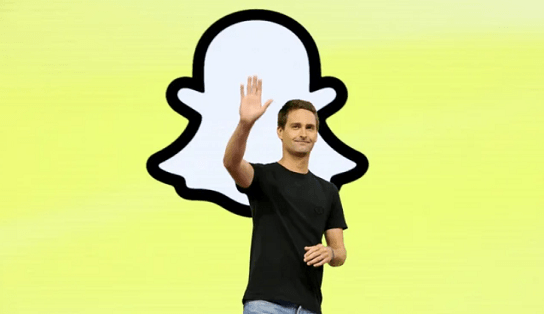
Evan Spiegel told Snap employees this week they work for a rare social-media platform that “makes people happy.”

In an internal note sent Monday, the co-founder and CEO seemed intent on rallying the Snapchat operator behind a sense of “urgency” after seeing several quarters of stalled revenue growth, layoffs, and struggles with its advertising business.

“Social Media is Dead. Long Live Snapchat!” he wrote in the title of the memo.

Spiegel said the company has “reached a real turning point,” while lashing out at rivals that he vaguely alluded to as Meta‘s Facebook and Instagram, along with the X platform formerly known as Twitter.

“This year is a chance to build on all the momentum we’ve developed and deliver on our full potential,” he wrote in the memo, a copy of which was seen by Business Insider.

Spiegel highlighted specific work done by Snap‘s data science, content, augmented reality, and monetization teams to improve the company’s performance for users and advertisers.

Early 2024 priorities

For at least the first half of 2024, he said Snap will focus on “bringing together several critical projects we believe are essential for our long term success.” Those include:

  • Shifting to focus on more user growth in developed markets like North America and Europe
  • Requiring a more “more iOS-centric approach”
  • Further efforts to improve ad targeting and performance
  • And the unification of “content and ad interactions” across Spotlight and Stories, Snapchat’s main features, with a vertical swipe navigation

Success in these objectives is required for Snap to be in the financial position Spiegel wants in order to push further into AR products.

“Timing matters, hence the urgency, because consumer augmented reality glasses will gain momentum before the end of the decade, and this is our chance to transcend the limitations of the smartphone and provide a computing experience that is more sensational and shareable,” Spiegel said. “We need our business to be strong enough and profitable enough to deliver the future of computing in augmented reality.”

Lashing out at rivals

Toward the end of the note, Spiegel took aim at rivals in the social media space. He harkened back to the founding of Snapchat over a decade ago, saying he and Bobby Murphy wanted to build “an antidote to the online popularity contest that started with MySpace, evolved into Facebook, and eventually became Instagram.”

A Snap spokesman declined to comment, noting only that during a Tuesday appearance at CES in Las Vegas, Spiegel mentioned his early ambition to differentiate the platform. “Bobby and I grew up with social media, MySpace, Facebook, then Instagram, and felt this constant pressure to be pretty perfect online to get likes and comments, to grow followers, and we just wanted something that we could use to have fun with our friends and our family,” Spiegel said during the event.

He went further in his Monday note to staff, however. Spiegel positioned Snapchat as a platform offering “happiness,” to teens specifically, through its messaging features and focus on close relationships. Meta on Tuesday announced new features on Instagram and Facebook aimed at making the user experience for people under 18 better as scrutiny has increased on teen mental health issues being exacerbated by content on Instagram, in particular. The company is facing dozens of lawsuits over the issue.

Spiegel seemed to refer to other issues on Meta’s platforms, like child exploitation material, as well as on X, and platforms’ issues with content moderation around the Israel-Hamas war.

“We’re certainly far from perfect, but while our competitors are connecting pedophiles, fuelling insurrection, and recommending terrorist propaganda, we know that Snapchat makes people happy,” Spiegel wrote.

In an employee-only chat posted to Blind, where users’ workplaces are verified, employees expressed frustration with the way Spiegel seemed to speak about competitors, specifically Meta. “You can clearly tell Evan’s hatred for Meta in most of the letters he sends out,” one employee said.

For the full note, see below:

Social Media is Dead. Long Live Snapchat! 8 Jan

Dear Team,

Happy New Year! I hope you all have had the opportunity to rest and recharge over the holidays. We’ve got a lot of hard work ahead of us in 2024. After years of fighting through many challenges like the pandemic, platform policy changes, and economic upheaval – all while taking on tough competitors and changing regulations – I feel we’ve reached a real turning point. This year is a chance to build on all the momentum we’ve developed and deliver on our full potential.

So much of the progress we’ve made lately has been the result of focusing intently on who we are and the role we play in people’s lives – empowering people to express themselves, live in the moment, learn about the world, and have fun together. Snapchat enhances our relationships with friends, family, and the world.

When we help people enhance their relationships, our business grows. For example, our product, growth, and data science teams developed a new methodology for determining close friends on Snapchat and use that to build features that are more likely to support close friendships. People who have close friends on Snapchat are more likely to retain over longer periods of time, so when we help people find and connect with their close friends we support the happiness and wellbeing of our community while also growing our business.

Relationships are the heart of everything we do. Our content team has used insights around relationships to recommend content in Spotlight that people want to share with their close friends. Our monetization teams are intently focused on helping advertisers form relationships with the right customers. Our augmented reality teams have created a new framework for ranking Lenses that promotes Lenses that people want to send to their friends.

The first half of this year brings together several critical projects that we believe are essential for our long term success:

First, we are continuing to evolve our machine learning models to better differentiate amongst ad interactions across our platform. Our efforts last year showed that evolving our models to drive more down-funnel, post-click engagement reduces waste and improves performance for advertisers. This year we are expanding those learnings across all of our advertising objectives.

Second, we are unifying content and ad interactions across Spotlight and Stories to reduce confusion. This means that Stories and Spotlight will both feature vertical swipe navigation, with a consistent call-to-action for linking to long-form content or engaging with ads. These unified interactions will also allow us to combine content inventory and ranking across Spotlight and Stories which will improve the likelihood that we can recommend the right personalized content for each Snapchatter.

Lastly, we are shifting more of our focus towards user growth in our developed markets like North America and Europe. Over the past several years, we’ve driven enormous growth in daily active users by focusing on Android performance in large countries like India. We will continue to build on our momentum in large opportunity countries in the APAC region while increasing our investment in improving the product experience for our community in North America and Europe. Doing so requires a more iOS-centric approach in these regions and a continued focus on helping our community connect with their close friends, especially for people who use our service monthly but not daily.

We believe that focusing on these three projects will help us to improve performance for advertisers, deepen content engagement, and increase daily active use of Snapchat – ultimately accelerating our revenue growth and increasing free cash flow. Timing matters, hence the urgency, because consumer augmented reality glasses will gain momentum before the end of the decade, and this is our chance to transcend the limitations of the smartphone and provide a computing experience that is more sensational and shareable. We need our business to be strong enough and profitable enough to deliver the future of computing in augmented reality.

Thirteen years ago Bobby and I set out to build something different. We wanted a way to communicate that was fast, fun, and expressive. An antidote to the online popularity contest that started with MySpace, evolved into Facebook, and eventually became Instagram.

In 2012, we declared that we were building something different to capture the full range of human emotion, not just what is pretty or perfect. Then, in 2017, we separated social from media to strengthen relationships with friends. In 2024, we’re on the precipice of another revolution in personal computing that began with the desktop, evolved into the smartphone, and is becoming wearable with Spectacles, our augmented reality glasses.

We’re certainly far from perfect, but while our competitors are connecting pedophiles, fueling insurrection, and recommending terrorist propaganda, we know that Snapchat makes people happy. New research published today from the University. of Chicago’s NORC shows how our core use case of messaging is a key source of happiness for young people

Messaging is the only feature on online platforms that makes a majority of both teens and young adults happy, as 2 in 3 say messaging with family and close friends makes them extremely or very happy. On the other hand, a majority of teens and young adults feel overwhelmed at the way social media makes them feel pressured to post content that will get lots of likes and comments, or will make them look good to others. Perhaps most importantly, according to the NORC data, respondents who use Snapchat report higher satisfaction with the quality of friendships and relationships with family than non-Snapchatters.

At a time when more people are feeling lonely, suffering from constant judgment online, and exposed to harmful content, snapchat offers something different: a way to enhance relationships with your real friends. And soon, we will offer a new way to use computers that brings the benefits of the Internet and computing into three dimensions, grounded in the real world, and shareable with friends – unlike any experience that exists today.

Technology isn’t going away. It’s our responsibility to make it more human, more natural, and more seamlessly integrated into our lives, so that we can benefit from its positive potential while avoiding the pitfalls. It isn’t just an exciting opportunity – it’s existential.

Your leadership and the work you are doing everyday matters deeply to our future. Let’s not waste a minute.


Feature Image Credit: Joe Scarnici | Getty Images via Business Insider

BY KALI HAYS 

Sourced from Entrepreneur

By Dirk Petzold

In social media, creating eye-catching and engaging content is essential for business success.

Enter Roverto Castillo, a design virtuoso who has crafted a set of business social media InDesign templates that redefine the art of digital communication. These templates, designed with precision and flair, are set to revolutionize your online presence. Let’s dive into the details of this visually stunning collection that promises to take your brand to new heights.

Please note that this template requires Adobe InDesign. You can get the latest version from the Adobe Creative Cloud website—take a look here.

Business Social Media InDesign Templates by Roverto Castillo

Meet the Creative Genius – Roverto Castillo:

Roverto Castillo, a name synonymous with innovation and aesthetic brilliance in the design world, has curated a set of InDesign templates that embody his signature style. With a keen eye for detail and an innate understanding of contemporary design trends, Castillo’s templates seamlessly blend vibrant colours and geometric simplicity to create a visual spectacle that captivates audiences.

Template Specifications:

The templates come in a convenient size of 1080×1080 pixels – an ideal dimension for various social media platforms, ensuring your content looks flawless on every feed. This attention to detail reflects Castillo’s commitment to providing a user-friendly experience for businesses looking to elevate their online presence.

Easy Customization for Maximum Impact:

One of the standout features of Castillo’s templates is their effortless customization. Replacing headlines, tweaking text, and adding your images couldn’t be simpler. With InDesign’s intuitive interface, even those with minimal design experience can effortlessly tailor these templates to match their brand identity. It’s a game-changer for businesses seeking professional, polished content without the hassle.

Vibrant Colours and Elegant Simplicity:

Castillo’s designs are a testament to the power of vibrant colours and the elegance of simplicity. Each template features a carefully curated colour palette that not only grabs attention but also conveys a sense of energy and dynamism. The use of simple rectangles as graphic elements adds a modern touch, creating a clean and sophisticated look that resonates with contemporary audiences.

Versatility for Every Business:

Whether you’re a startup, an established enterprise, or a creative individual, Castillo’s templates cater to a diverse range of business needs. From promoting products and services to sharing company updates, these templates provide a versatile canvas for expressing your brand’s unique personality.

Roverto Castillo’s Business Social Media InDesign Templates represent a paradigm shift in the way businesses approach online communication. With their stunning visuals, easy customization, and versatile applications, these templates empower brands to stand out in the crowded digital landscape. Elevate your online presence, captivate your audience, and leave a lasting impression with Roverto Castillo’s exceptional design prowess – because in the world of social media, exceptional is the new standard.

Don’t hesitate to find more trending graphic design templates on WE AND THE COLOR.

By Dirk Petzold

Sourced from WATC

By

If you opened Facebook, Twitter or Instagram about a decade ago, you’d likely see posts from friends and family, in chronological order.

Nowadays, users are hit with a barrage of content curated by an algorithm. Passionate about plants? Sports? Cats? Politics? That’s what you’re going to see.

“[There] are equations that measure what you’re doing, surveil the data of all the users on these platforms and then try to predict what each person is most likely to engage with,” New Yorker writer Kyle Chayka explains. “So rather than having this neat, ordered feed, you have this feed that’s constantly trying to guess what you’re going to click on, what you’re going to read, what you’re going to watch or listen to.”

In his new book, Filterworld, Chayka examines the algorithmic recommendations that dictate everything from the music, news and movies we consume, to the foods we eat and the places we go. He argues that all this machine-guided curation has made us docile consumers and flattened our likes and tastes.

“For us consumers, they are making us more passive just by feeding us so much stuff, by constantly recommending things that we are unlikely to click away from, that we’re going to tolerate [but] not find too surprising or challenging,” Chayka says.

What’s more, Chayka says, the algorithms pressure artists and other content creators to shape their work in ways that fit the feeds. For musicians working through Spotify or TikTok, this might mean recording catchy hooks that occur right at the beginning of a song — when a user is most likely to hear it.

Though the algorithms can feel inescapable, Chayka says increased regulation of social media companies can mitigate their impact. “I think if Meta, Facebook’s parent company, was forced to spin off some of its properties, like Instagram or WhatsApp, and those properties were made to compete against each other, then maybe users would have more agency and more choices for what they’re consuming,” he says.

Interview highlights

On how the internet takes power away from gatekeepers

There’s this huge power of the internet to let anyone publish the art that they make or the songs that they write. And I think that’s really powerful and unique. … [In] the cultural ecosystem that we had before, there were these gatekeepers, like magazine editors or record executives or even radio station DJs, who you did have to work through to get your art heard or seen or bought. And so these were human beings who had their own biases and preferences and social networks, and they tended to block people who didn’t fit with their own vision.

Cover of Filterworld

Doubleday

Now, in the algorithmic era, let’s say rather than seeking to please those human gatekeepers or figure out their tastes, the metric is just how much engagement you can get on these digital platforms. So the measure of your success is how many likes did you get? How many saves did you get on TikTok or bookmarks? How many streams did you get on Spotify?

So I think there are advantages and disadvantages to both of these kinds of regimes. Like, on the internet, anyone can put out their work and anyone can get heard. But that means to succeed, you also have to placate or adapt to these algorithmic ecosystems that, I think, don’t always let the most interesting work get heard or seen.

On the difficulty of knowing what’s going outside your specific algorithm

These digital platforms and feeds, they kind of promise a great communal experience, like we’re connecting with all the other TikTok users or all of the other Instagram users, but I think they’re actually kind of atomizing our experiences, because we can never tell what other people are seeing in their own feeds. We don’t have a sense of how many other people are fans of the same thing that we are fans of or even if they’re seeing the same piece of culture that we’re seeing, or experiencing an album or a TV show, in the same way. So I think there’s this lack of connection … this sense that we’re alone in our consumption habits and we can’t come together over art in the same way, which I think is kind of deadening the experience of art and making it harder to have that kind of collective enthusiasm for specific things.

On how success on social media determines who gets book deals, TV shows and record deals

Every publisher will ask a new author, “What is your platform like? How big of a platform do you have?” Which is almost a euphemism for, “How many followers do you have online?” — whether that’s [on] Twitter or Instagram or an email newsletter. They want to know that you already have an audience going into this process, that you have a built-in fan base for what you’re doing. And culture doesn’t always work that way. I don’t think every idea should have to be so iterative that you need fans already for something to succeed, that you have to kind of engage audiences at every point in the process of something to have it be successful. So for a musician, maybe you’ll get a big record deal only if you go viral on TikTok. Or if you have a hit YouTube series, maybe you’ll get more gigs as an actor. There’s this kind of gatekeeping effect here too, I think, where in order to get more success on algorithmic platforms, you have to start with seeding some kind of success on there already.

On how some film and TV shows lean into becoming internet memes

You can see how TV shows and movies have adapted to algorithmic feeds by the kind of one-liner, GIF-ready scenes that you see in so many TV shows and movies now. You can kind of see how a moment in a film is made to be shared on Twitter or how a certain reaction in a reality TV show, for example, is made to become a meme. And I think a lot of production choices have been influenced by that need for your piece of content to drive more pieces of content and to inspire its own reactions and riffs and more memes.

On how algorithms impact journalism

Algorithmic feeds, I think, took on the responsibility that a lot of news publications once had. … In decades past, we would see the news stories that we consumed on a daily basis from The New York Times front page on the print paper or as on The New York Times homepage on the internet. Now, instead of the publication choosing which stories are most important, which things you should see right away, the Twitter, or X, algorithmic feed is sorting out what kinds of stories you’re consuming and what narratives are being built up. We now have TikTok talking heads and explainers rather than news anchors on cable TV. So the responsibility for choosing what’s important, I think, has been ported over to algorithmic recommendations rather than human editors or producers.

On how passive consumption affects how deeply we think about culture

I think passive consumption certainly has its role. We are not always actively consuming culture and thinking deeply about the genius of a painting or a symphony. … It’s not something we can do all the time. But what I worry about is the passivity of consumption that we’ve been pushed into, the ways that we’re encouraged not to think about the culture we’re consuming, to not go deeper and not follow our own inclinations. … And I suppose that when I really think about it … the kind of horror that’s at the end of all this, at least for me, is that … we’ll never have the Fellini film that’s so challenging you think about it for the rest of your life or see the painting that’s so strange and discomforting that it really sticks with you. Like I don’t want to leave those masterpieces of art behind just because they don’t immediately engage people.

Feature Image Credit: Getty Images

Sam Briger and Susan Nyakundi produced and edited this interview for broadcast. Bridget Bentz, Molly Seavy-Nesper and Beth Novey adapted it for the web.

By

Sourced from npr

Human influencers can still thrive amid their AI virtual counterparts. Employ these strategies to stay relevant on social media.

The proliferation of virtual influencers is changing the way brands approach digital marketing. They could make AI-generated personas go viral while simultaneously cutting their ad spend—buying AI tools costs less than hiring social influencers.

You might consider dropping your rates to win back clients, but it’s merely a band-aid solution. Develop more long-term plans instead. Here are simple yet effective strategies to attract brand deals and sponsorships as a human influencer despite the expanding virtual influencer market.

You might consider dropping your rates to win back clients, but it’s merely a band-aid solution. Develop more long-term plans instead. Here are simple yet effective strategies to attract brand deals and sponsorships as a human influencer despite the expanding virtual influencer market.

1. Zero In on Your Target Market

The Lifetime YouTube Studio Insights of Animetorific Channel

Your relevance as an internet personality depends on your impact on market trends and consumer behaviour. Hence, the term “influencer.” Brands will still prioritize your services over AI-generated campaigns and virtual influencers if you have healthy conversion rates.

Go beyond follower counts; study industry data and objectively list the demographics of virtual influencer subscribers. Some markets prefer AI content nowadays, so you might need to overhaul your content strategies if you’re slowly losing subscribers, fans, or engagement.

If market statistics are too generalized, narrow down your research to specific buyer personas. Ensure you understand your target market.

2. Build an Audience Across Various Platforms

TikTok, YouTube, Instagram, and Snapchat Logos on Influencer Girl

Human influencers have an edge over AI-generated personas in executing cross-platform marketing tactics. Virtual influencers perform limited functions made for specific sites. For instance, VTubers gain thousands of views on YouTube and Twitch, but only a few rank on image-based apps like Snapchat and Instagram.

Alternatively, human influencers are versatile enough to maximize various social networks. You could share random activities on Snapchat, post aesthetic shots on Instagram, and upload vlogs on YouTube.

3. Establish Yourself as an Industry Authority

Trendjacking won’t help you beat virtual influencers. Yes, capitalizing on popular topics boosts visibility, but establishing yourself as an industry authority leads to stable long-term growth. Earn the trust and respect of your audience, otherwise, people will quickly forget about you if your content revolves around recent controversies and viral topics.

Let’s say you review Apple products on YouTube. Parroting Apple’s press releases provides zero value to readers—they’ll find the same information on hundreds of other sites. Some AI platforms even scrape and summarize news reports in real-time. The best approach is to provide unique, first-hand insights. Rather than listing new features, walk your readers through them with actual screenshots and demonstrations.

4. Collaborate With Other Industry Experts

Charli and Dixie D'Amelio Talking on Unicef Interview
Image Credit: Priyanka Pruthi/Wikimedia Commons

AI-generated avatars generally publish solo content. Collaboration is almost impossible because they can’t interact as humans do, and this lack of engagement makes them look inauthentic and robotic, which viewers can dislike.

Human influencers can maximize this advantage by regularly collaborating with relevant personalities. Establish yourself as an industry authority among peers and fans alike. Your audience would also appreciate seeing you with their favourite personalities—think of it as fan service.

5. Leverage Your Personal Experiences

Blonde Influencer Wearing Pink Jacket Posing in front of Kia Stinger
Image Credit: Do The Daniel/Wikimedia Commons


As an influencer, you can leverage your daily experiences by documenting and sharing them with an interested audience. Virtual personas will never replicate your real-life stories and relatable struggles despite advancements in AI. They’re merely pre-programmed avatars with made-up backstories.

Your viewers would love to see your real side. Talk about your most notable triumphs, share how you overcame your worst challenges, and ensure you thank your loyal supporters.

6. Try to Empathize With Your Audience

AI-driven virtual influencers use natural language processing (NLP) technologies and language models to engage in conversation. While impressive, they only execute patterns. As a result, talking to AI feels inauthentic because it can’t empathize with users or show feelings.

Human influencers can set themselves apart by connecting with viewers on an emotional level. Demonstrate a deeper understanding of your audience by resonating with their struggles and sharing how you overcame them.

Set disclaimers saying that your advice and personal experiences don’t replace professional consultations.

7. Analyse Why Brands Prefer Virtual Influencers

Several Influencers at Party With a Show Host
Image Credit: Juice Krate/Wikimedia Commons

A growing number of companies are offloading their marketing needs to AI. Forbes reports that 61% of businesses use AI for email optimization, while 55% generate user-targeted ads. Going by these trends, some might start replacing their influencers too.

While AI has significantly advanced over the years, it still has shortcomings—understanding them will help you retain projects. Offer what virtual influencers can’t guarantee, like lasting partnerships and collaboration skills.

8. Frequently Engage With Your Audience

We know how nasty some people act online. They use anonymous profiles to leave hurtful comments on various platforms. Even if you understand that these insults are baseless, they could still make you feel bad. You might even stop reading comments sections to avoid haters.

Although your feelings are valid, ignoring your audience will impede your growth and reach as an influencer; people prefer personalities that interact with them. You must answer questions, consider the type of content they want, and work on constructive criticisms.

If you can’t ignore your haters, block them or delete their comments. Just make sure you engage with your audience.

9. Participate in Social Movements

Group of People Wearing Blue Picking Up Trash at the Beach

Joining social movements humanizes social media influencers. Viewers generally see you doing the same things online—participating in new activities emphasizes your individuality. Show that you’re more than your on-screen persona.

However, this isn’t to say you should just take photos of feeding programs and clean up drives. Putting up a façade for attention will only hurt your image. Support social movements that align with your principles and prioritize making a real-world impact over announcing your contributions.

You can also use these social events to expand your network and connect with like-minded individuals.

10. Explore Generative AI Tools Yourself

Influencer Feeding Prompts to ChatGPT for Content Creation

Embrace AI instead of fearing it. AI-driven platforms are here to stay regardless of your opinion—you’d do well to incorporate them into your career. Start with simple, accessible tools. For instance, you could ask ChatGPT to write a short script, generate images on Midjourney, then stitch them together using text-to-video generators.

You can’t claim ownership of your output because copyright laws don’t apply to AI art.

And even if you don’t plan on using AI tools, exploring them helps you understand how virtual influencers work. Remember: you can’t surpass something you barely comprehend. Study the functions and scope of AI before overhauling your content strategies.

Create New Strategies to Beat AI Virtual Influencers

AI platforms and virtual influencers will continue impacting the content industry as they become more accessible. And brands won’t just stop exploring AI suddenly; you must level up your overall marketing strategy as an influencer or risk losing clients to AI.

Also, closely study the most popular virtual influencers to understand how you can beat them. Try looking for issues in their marketing campaigns. You’ll keep attracting new clients if you focus on providing results that virtual influencers and AI tools don’t.

By Jose Luansing Jr.

Jose Luansing Jr. is a staff writer at MUO. He has written thousands of articles on tech, freelance tools, career advancement, business, AI, and finance since 2017

Sourced from MUO Make Use Of

By Marilyn Stone

Researchers from LUISS Guido Carli University have published a new study that examines whether and how subtle shifts in language arousal might shape consumer engagement and the way it affects perceptions of influencers’ trustworthiness.

The study, published in the Journal of Marketing, is titled “How High-Arousal Language Shapes Micro Versus Macro Influencers’ Impact” and is authored by Giovanni Luca Cascio Rizzo, Francisco Villarroel Ordenes, Rumen Pozharliev, Matteo De Angelis, and Michele Costabile.

Companies increasingly turn to popular personalities to promote their brands, products, and services. The influencer marketing economy was valued at $21.1 billion in 2023, and more than 90% of brands enlist influencers with a small audience (micro) or with massive reach (macro) to connect with consumers and achieve a variety of marketing goals, from creating awareness to increasing sales.

Influencers have the potential to diffuse marketing messages and drive actions, but it is unclear why some of their posts get a lot of engagement while others do not. One possibility is that consumers are increasingly aware that influencers get paid to promote products, raising questions about their motives. Additionally, anecdotal evidence suggests that when influencers use high-arousal language (e.g., “it’s totally amazing!”), it leads to questions about their trustworthiness, which in turn leads consumers to engage less with the content.

Micro vs. macro influencers

Consumers typically see micro influencers as regular people, so if they say something like “this shake is AMAZING!” consumers believe they really are excited about that shake and just want to share this discovery with their friends and followers. This belief in their sincerity increases consumers’ trust in micro influencers.

However, macro influencers do not seem like regular people. Consumers know these influencers receive substantial sums to say positive things about products, so they judge their posts as an attempt to persuade, just like any other form of advertising. Believing that someone has manipulative intentions tends to decrease trust. Yet the negative effect of high arousal posts by macro influencers could be mitigated if their posts offer more informative (vs. commercial) content or if the messages are more balanced.

The researchers collaborated with an influencer marketing agency to acquire a sample of 20,923 Instagram-sponsored posts across industries from 1,376 U.S. influencers. They measured engagement as the sum of likes and comments that a post receives. To measure language arousal, they combine a words-based lexicon (including terms like “hectic,” “amazing,” and “sensational”) with paralanguage (i.e., exclamation marks, capitalization, and emojis).

They used 100,000 followers as the cut-off to classify micro versus macro influencers. To measure how informative the post goal would be, they validated a dictionary with words like “explore,” “read,” and “watch.” Finally, more than 100 controls were employed, including details about the influencer, the text and images shared, and so forth. Combining the field data and controlled experiments led to some compelling results.

The researchers note, “For micro influencers, we find that a 10% increase in arousal is associated with a 5.4% increase in engagement, on average. Recommending a product by saying, ‘It’s superb’ rather than ‘It’s great,’ for example, would attract 49 additional likes or comments. However, our findings raise concerns for macro influencers. If macro influencers increase arousal in their posts by 10%, it reduces consumer engagement by 8.4%, on average.”

However, macro influencers are not completely forbidden to express excitement. Since signalling an informative goal is associated with a 1.8% increase in engagement, they can share informative rather than commercial posts. Also, admitting some concerns or noting some negative aspects of the promoted product can help macro influencers seem more genuine, which also increases engagement.

Finally, macro influencers can use high-arousal language if they also include words that signal trustworthiness (e.g., “learn,” “help”). Thus, brands and macro influencers should collaborate to make sure their posts include phrases like “that’s what I learned about this incredible product” rather than “that’s how to use this incredible product.”

From Instagram to TikTok

These findings are not limited to Instagram. The study provides evidence that language arousal also plays a role in TikTok, with relevant influences on its young target market. “We gauge influencers’ vocal cues and the level of pitch in their voices as proxies for arousal. A higher pitched voice can signal greater arousal, and in line with our Instagram study, we determine that a higher pitch, and higher arousal, voice exerts a negative effect for macro influencers,” the researchers say.

This research underscores the importance of aligning social media posts and language arousal strategies depending on the type of influencer. For micro influencers, using high-arousal language authentically can enhance , but macro should focus more on informative content to maintain their trustworthiness.

Exploring the impact of arousal on emerging platforms like TikTok is especially crucial when it comes to targeting young, savvy consumer audiences effectively. This research could be extended to politicians, scientists, and other high-profile individuals and the statements they issue.

Feature Image Credit: Unsplash/CC0 Public Domain

By Marilyn Stone,

Sourced from PHYS.ORG

BY KARTIK JOBANPUTRA 

The convergence of ecommerce with social media influencers creates a dynamic symphony of trust, engagement, and sales.

The digital revolution in ecommerce has brought forth numerous innovations, with the role of social media influencers standing out distinctly. These online mavens, each with distinct flair and following, are crafting a new narrative in online marketing. Central to this transformation is social commerce, an innovative strategy that weaves shopping into the tapestry of social media.

Unpacking the phenomenon of social commerce

Social commerce signals a paradigm shift in how consumers experience online shopping platforms. Rather than the traditional browsing and searching, it offers a richer, more engaged shopping journey. Modern consumers, especially those in the millennial and Gen Z demographics, are tightly intertwined with their social media accounts. Platforms like Instagram, TikTok and Facebook aren’t just for entertainment; they serve as lifestyle compasses, guiding users in everything from pop culture to shopping choices.

In this digital landscape, influencers have carved a niche for themselves. Their content, genuine and relatable, shines bright amid the bombardment of traditional advertisements. When these influencers vouch for a product, it’s seen not as a sales pitch but as a sincere recommendation. Augmenting this is the allure of convenience that social commerce brings. The process is incredibly streamlined; one can spot a product on a post or story, swipe or click on it, and be led directly to an online checkout. The entire experience is swift, smooth, and satisfying.

The inimitable role of influencers

At the core of the social commerce machine are influencers. These individuals, with their varied followings, are more than just digital personalities; they’re pillars of modern marketing. Unlike celebrities who might endorse various products, influencers are selective, ensuring their endorsements often stem from personal experiences and align with their brand. This selective approach, combined with their domain-specific expertise, makes influencers trust magnets.

For instance, a beauty influencer’s tips on skincare are valued because they’re backed by experience, while a tech influencer’s gadget review is awaited for its depth and authenticity. Additionally, influencers prioritize engagement. Their interactions aren’t limited to broadcasting content. They chat, conduct polls, share snippets of their lives, and create a shared digital space with their followers. This two-way communication fosters a bond, a digital kinship that’s deeply valued. Another feather in their cap is their expertise in visual content. In an age where visuals dominate, influencers, with their compelling images, videos and stories, hold their audience’s rapt attention.

Strategic collaborations for mutual growth

The collaboration between brands and influencers is multifaceted. There is sponsored content, where influencers create posts or videos infused with their personal experiences with products. While promoting, they ensure transparency, often tagging these as #ad or #sponsored. Then there’s affiliate marketing, a performance-centric approach where influencers reap rewards based on the sales generated via their unique links.

Some collaborations transcend regular promotions. Think of a renowned beauty influencer launching a limited-edition product line with a major brand. Such initiatives blend the influencer’s personal brand with the product, promising authenticity and unparalleled quality. Beyond these, some brands envision a longer journey with influencers, turning them into brand ambassadors. This deep relationship ensures that the influencer becomes an enduring face and voice for the brand.

Enduring impacts and considerations

The synergy between brands and influencers leads to tangible benefits. Enhanced brand recall, exponential growth in sales and spikes in website traffic are common positive outcomes. On the trust front, influencers act as a bridge, lending their credibility to the brands they endorse. However, like all strategies, this one isn’t without pitfalls. Over-commercialization can dilute an influencer’s authenticity.

Moreover, ensuring that the influencer’s personal brand aligns with the corporate brand is crucial. Then, there’s the challenge of measuring the intangibles. While metrics like clicks, views, and sales are straightforward, quantifying trust or brand perception remains nebulous. It’s also crucial to remember that influencer marketing isn’t an unregulated frontier. Clear guidelines, especially about disclosures, exist, and both brands and influencers must adhere to them to maintain credibility and avoid legal pitfalls.

Conclusion

The convergence of e-commerce with social media influencers creates a dynamic symphony of trust, engagement, and sales. For consumers, it offers a shopping experience that’s rich, trustworthy, and interactive. For brands, it’s a golden ticket to visibility and authenticity in a crowded digital marketplace. Looking ahead, with innovations on the horizon, this partnership promises to redefine the retail landscape further. In a rapidly evolving digital world, the bond between e-commerce platforms and influencers is beneficial and essential. They aren’t just changing the game – they’re crafting a new one for the next generation of online shopping.

BY KARTIK JOBANPUTRA 

ENTREPRENEUR LEADERSHIP NETWORK® CONTRIBUTOR

Founder & CEO Benevolent by nature, Kartik is a diverse man of diverse and unpredictable choices, a serial entrepreneur. One may find him not just reading stoics or seizing the present like jumping off a plane. He is pro skydiver/licensed scuba. He doesn’t speak in hypotheticals and lives life by doing.

Sourced from Entrepreneur