Tag

Social Media

Browsing

By Anders Hjorth

To make your content king on social media, you need a strategy. These are the steps required to create it.

Content is at the heart of social media. “Content is king,” they say, and it takes many forms: text, images, photos, videos, and emojis 😉💪🔥🙏🥇. But it’s not the individual components that give content a royal stance, it’s the story it tells and the emotions it generates in its audience.

That’s why you need a content strategy to define your brand’s storyline and ensure you fully reap the benefits of social media.

When building your social content strategy, remember that engagement is an integral part of how social media platforms work: The more your content resonates with your audience, the further it will be distributed on the social platform to be seen by more people — and if you’re lucky, it might even go viral.

There’s never a guarantee your content will go viral, but a structured approach to building your strategy will increase your chances.

Let’s look at the steps for defining a social media content strategy.

Here are 7 steps to develop a social media content strategy:

  • Define your audience
  • Audit your content
  • Define your themes and topics
  • Map out your hashtags
  • Create the story and the content mix
  • Set publication frequencies and goals
  • Build your social media content calendar

How to create a social media content strategy for your small business

To make your strategy successful, you should tell a story with your social media content, be ambitious, use automation as your invisible friend and creativity as your magic wand. And above all, maintain your rhythm and consistency throughout the entire process.

Step 1: Define your audience

Before we look at the content itself, we need to consider who it’s for. Your social media audience should correspond to your target market, but it doesn’t have to be limited to just individuals in that market.

Adjacent audiences, or those who can exert an influence on your target market, can serve as an entry point to your audience and shouldn’t be overlooked.

A great way to define your target audience for social media is by using personas. Personas are a simplified representation of your target audience with a name as well as geographic, demographic, psychographic, and behavioral characteristics.

A persona is like a sketch of a segment of your audience that you can improve over time.

Make sure to include motivations, interests, fears, and pain points in your persona definitions, and keep your persona(s) in mind every time you shape new content.

Persona Template

By formalizing your personas into easily understandable formats that can be put on posters on the wall and summarized with memorable names, you can keep them in mind during the entire content creation process.

Tips for defining your audience:

  • Use Facebook Audience Insights: Via your Facebook business page, you’ll have access to free audience insights from Facebook. This tool can help you further define and quantity your target audience.
  • Try Sparktoro: By querying Sparktoro with some of the key elements from your persona overview, the tool will identify audience characteristics such as what sites they visit or what influencers they follow.

Step 2: Audit your existing content

Keeping your audience in mind, it’s time to look at your existing content. This can be quite a challenging and time-consuming process as it involves identifying all of the articles on your blog, any historical publications on social media, and even content you’ve created for using offline.

If you plan to reuse some of this content, it would be a great idea to organize the content in a repository or a digital asset management tool.

Here are some ways to find your content:

  • Find popular content on your blog with Google Analytics: In Google Analytics, go to Behavior > All pages and select a long time frame (for example, one year back) to see the most popular pages on your website. Ignore the homepage and all the static pages on your site, and copy the list of all the popular articles on your website.
  • Find popular posts on your Facebook page: Go to Facebook Insights and select Posts to see a list of your posts organized chronologically. You can scroll to see pieces of historical content and extract the most successful posts if you haven’t already identified them elsewhere. (An easier way to do this is by using a social media management tool to extract and organize your posts on various social networks. We’ll look at those options in more detail below.)
  • Crawl your website from the outside: Content audits are often performed in relation with Search Engine Optimization (SEO), and there are a number of tools available to help you with this. For a small website, the Screaming Frog site crawler is free to use (up to 500 URLs). It will allow you to extract all of the URLs your content represents so you can add the list to your content repository. Perhaps you’ve already done an SEO audit to gather some recommendations about your content that you can use as well.

Now you should be able to start identifying your highest-quality content, as the most popular content will be prioritized in the searches you do. However, you shouldn’t assume that your most popular content is also the best representation of your brand.

Keep in mind your audience personas as well as the values of your brand. Perhaps you’ve performed a brand audit or detailed the values of your brand in your social media marketing plan or your business plan. Look them up, and qualify your best-performing content against those criteria.

There’s also a fun way to audit your existing content: Let artificial intelligence (AI) have a look at your existing articles: “What does Walt think?” Analyzing your content with AI can help you understand how credible it is.

Walt uses artificial intelligence to analyze any article

The artificial intelligence (named “Walt”) from Fakerfact will analyze any article you submit via its URL and score it according to various content dimensions. Source: Fakerfact.org.

The ideal outcome of your content audit should be a complete overview of your existing usable content, which we will categorize in the next step.

Step 3: Define your content themes, topics, and channels

While auditing your content, you may have realized that most of it fell into natural categories corresponding to the themes you most often communicate about. In this step, take the time to define the full range of themes you want to cover.

Keep an open mind; you may discover content gaps between what you have and what you need, which will help you in the process of developing content.

You also need to define what social media channels you want to use in your content strategy and what their function will be. Define your primary social media channel as well as a few secondary channels, too, that can piggyback on your primary channel to increase the reach of your communications.

Don’t forget to define the role of your website in your social media content strategy, and create an overview of the themes and topics your content needs to address.

Step 4: Map out your hashtags

With your themes in mind, do some hashtags research. Hashtags are an essential component of social media navigation on Twitter and Instagram, and they have a secondary role on most other social media networks, too.

The four roles of hashtags:

  1. Drive discovery. When hashtags are used to drive discovery, as it is the case on Instagram, Twitter, and increasingly, LinkedIn, it’s important to choose related hashtags that are already being used by other social media profiles, as these hashtags can start to trend. If your post has used a trending hashtag, it can appear when new users are looking for content by navigating via that hashtag.
  2. Give context to a message. Hashtags are also used more generally to provide context for a message and thereby use fewer words. The hashtag gives context to the other words in the post: “How are we all doing today? #coronavirus” means something totally different than “How are we all doing today? #brexit.”
  3. Create an anchor. Hashtags can also be used for creating an anchor. If, for example, you’ve created a report about marketing on Amazon, and you post extracts and content from the report to drive awareness about it, you could use the hashtag #AmazonMarketingReport in all of your posts to create a way to anchor the different posts together as well as create a concept that spans multiple social media platforms.
  4. Reference events. Finally, don’t forget events hashtags. These can be used for yearly recurring events, such as #MayThe4thBeWithYou and #BlackFriday, or they can be associated with specific events such as a conference, like #sxsw2019.
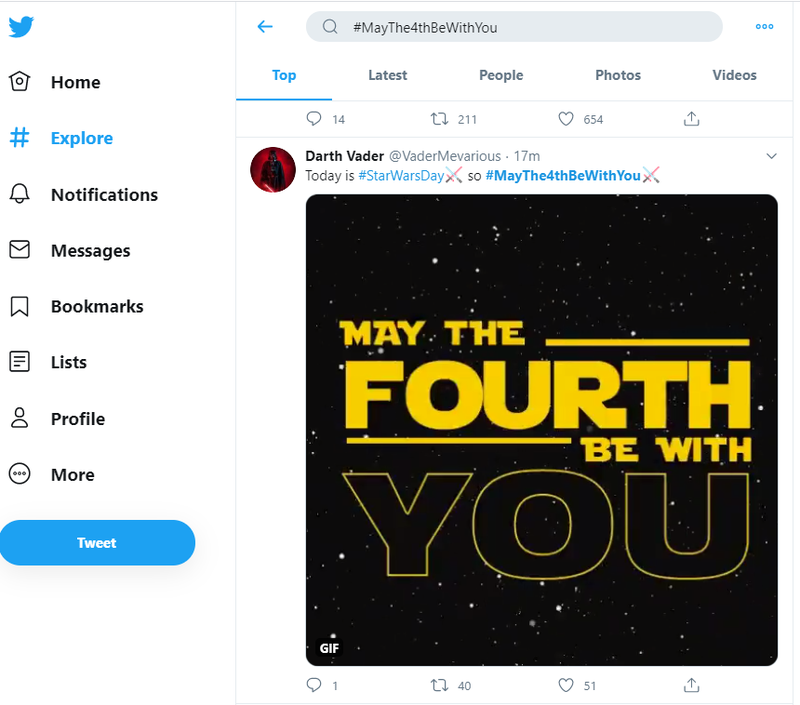
Twitter's trending events hashtag

If your post is visible on a trending events hashtag, you will have created significant visibility for your brand.

The next step is to associate various hashtags to each of the themes you identified in the last step. Focus on the ones that can drive discovery, and analyze the reach and consistency of each of them. You should end up with a prioritized list of hashtags you should be using for new posts on each topic.

To check the consistency of a hashtag, simply search for it and look at the results. Would a post from your brand belong in the search results? To check the volume of searches for various hashtags, here are a couple of free tools that can help analyze the amount of traffic on hashtags:

The social media management tool you’re using might be also able to provide this functionality. Keep a number of hashtags on your list so you can vary the audiences you target from time to time.

Use restraint with hashtags, though: A good limit to respect is 3-5 hashtags per post, allowing you to use events or discovery, context, and an anchor.

Step 5: Create the story and the content mix

Now that you know your personas, have identified your existing content, and have defined the themes that should be present in your social media marketing strategy, it’s time to take a step back and look at the big picture.

  • What’s the story for your brand in that context?
  • Perhaps you need some inspiration for outstanding content?

Use your newly defined content themes and hashtags to look at content that has stood out for the theme in the past using BuzzSumo, which is a database of articles that appear on blogs and social media sorted by popularity. What outstanding creative content do you need your story to wind itself around?

Next, consider content types. YouTube put the Hero, Hub, Hygiene framework forward in 2014, which defines three functions for the pieces in your content strategy.

  1. Hero: The main piece is the “hero” content that’s the driving element of your storyline.
  2. Hub: Around the storyline, you build “hub” content that can be curated from other sources and keeps your audience engaged with your main themes.
  3. Hygiene: Finally, the “hygiene” content — renamed to “help” by Google — consists of more practical information about your products, services, or offerings.

The creativity of your hero content can strongly influence the success of your content strategy. It is the “Don Draper” of your content strategy: Don Draper is the main character of the Mad Men TV series, depicting the advertising industry in the 1960s.

He spends his time looking for outstanding yet simple concepts that will connect end users with brands.

Take some time to build the concept for your hero content, and consider it the most important content element in your mix. Next, consider all the elements that can support the main hero content and how they can prepare and expand the main story element.

When building up the storyline itself, consider learning from Pixar in this online course. The framework won’t be directly applicable to your social media strategy, but it should inspire you to apply some of the same storytelling principles in your communications.

Content strategy outlined as themes and hashtags

The building bricks for a content strategy can be outlined as themes, hashtags, and content that apply to your personas via your main social channels.

Step 6: Define publication frequencies and goals

To make it all come together, you need to define a more detailed plan. Identify a top storyline and a list of themes to cover in your communications. Also, be sure to insert the calls-to-actions and promotional elements required for this strategy to serve your marketing plan as well.

The next step will be to define your publication frequencies.

  • What will your personas expect of you?
  • What is the natural frequency of news related to your hero content?
  • How can you fill the gap in a natural way?

A good way to define publication frequencies is to look at the strategy from the viewpoint of social media metrics: Calculate your reach on social networks, and compare this to your communication goals.

Your ideal publication frequency will derive from this comparison as you will need to reach your entire audience many times per month — and maybe several times per day — to meet your goals.

If you can’t reach your goals via a higher publication frequency, you’ll need to activate social media advertising campaigns to close the gap. You should, however, look into as many alternative digital marketing ideas you can find before investing in paid media.

Step 7: Outline your social media content calendar

You’ve now put all of the components of your content strategy together. In order to further materialize it, consider building a detailed content calendar of individual posts, themes, hashtags, and publication dates.

A content calendar helps you organize when and where each of your posts will publish, allowing you to optimize your content as well as each social media platform you use.

A content calendar is one of the best social media content strategy tools you have at your disposal, and one way to organize it is by using a social media management tool.

The best social media management tools to execute your content strategy

Your new social media content strategy is ready, and you may feel a little overwhelmed with the objectives you’ve set for yourself and your team. If not, go back and revise your objectives upwards: Social media objectives should be daring!

Beyond the strategy, you now need to address the execution of your strategy, and for this, a number of tools in the market can help you automate a wide range of the activities you need to undertake, including automatic scheduling, competitive analysis, and reporting.

We’ve looked at some of the best tools for social media management below.

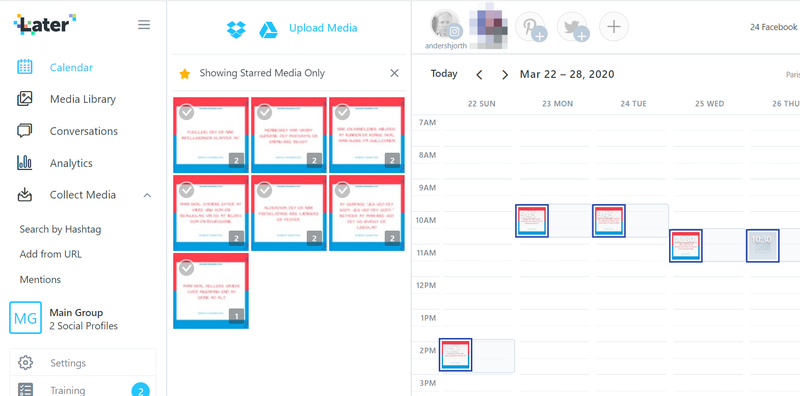
1. Later.com

If your primary social media channel is Instagram, then Later might be your preferred tool. Its strongest functionality is the preparation of a social media calendar from an image repository and the automatic publication of posts.

In addition to Instagram, the tool also allows you to manage your Facebook, Twitter, and Pinterest activity.

Later's visual content calendar

The visual content calendar and its drag-and-drop functionality from an image repository is one of the strengths of Later.

2. Hootsuite

Hootsuite is a longstanding leader in the area of social media management. With Hootsuite, you can cover four key aspects of your social media management: post scheduling, social listening, content curation, and analytics.

There is a further integration of direct management of advertising in Facebook and LinkedIn as well as project management for your social media team.

The basic Hootsuite plan is free for a limited number of social networks and posts per month.

Hootsuite's Core Features List

Beyond the basic functionalities of social media management, Hootsuite also allows you to manage your team and integrate with a number of apps and external solutions.

3. Sprout Social

At the high end of the social media management tools spectrum, we find Sprout Social. The basic functionalities covered include social listening, post scheduling via a content calendar, centralized engagement management across various social networks, and analytics.

Sprout claims additional access to consumer research and influencer identification as some of its strengths. These more advanced features can be helpful in some of the stages of the content strategy process.

Sprout Social User Interface

Sprout Social has a great user interface with clear illustrations of the performance of your social media channels.

Content does not become king all by itself

The myth of viral content that suddenly becomes a worldwide phenomenon simply because it was outstanding has endured for many years. In reality, though, it is preparation that allows for great social media success.

Social media teams who have their finger on the pulse, who abound with creativity, who detect every competitor move, and who constantly optimize their presence on the various platforms are the most likely to generate success.

And at the very foundation of a social media presence lies a well-researched and documented content strategy, which will guarantee that your content resonates with its target audience so you can meet your business objectives.

By Anders Hjorth

Digital Marketing Strategist
Sourced from the blueprint

By Anders Hjorth

Social media can empower small businesses and provide access to markets, clients, insights and advertising capabilities you wouldn’t expect.

Social Media empowers small businesses and opens opportunities formerly reserved for large corporations. It can feel overwhelming and scary, but do you ever hear of a small business experiencing social media downfalls? Not really.

Social media for small business makes complex business processes accessible, gives you direct access to market research and opens up world markets for you. Let’s look at the advantages of social media.

Here are some advantages for businesses using social media:

  • Social media empowers your marketing
  • Events can be held online
  • Sell direct to end users with higher margins
  • Advertise at a lower cost
  • Get direct user feedback
  • Extend your business reach

Marketing benefits of social media

Social media empowers your marketing and puts you in direct contact with end users. You can reach out, you can interact with them, and you can collect their feedback. You get insights into audiences you are targeting, helping you build an effective social media marketing plan.

Let’s go through some of the advantages of social media for the marketing of your small business.

1. Build a community

Social media brings people together via direct relationships. Your social media presence creates a community of users around your brand or your products. And this community can create user generated content (UGC) and strong ambassadors for your brand.

Microsoft uses the community approach for end-user support on a dedicated technology platform, but using social media, you can start building a user community at no cost.

Microsoft User Community

Microsoft has created a user community as part of its support. Source: Microsoft

2. Word of mouth

A Nielsen report shows people trust “recommendations from people I know” at a rate of over 83%. With TV advertising, it’s a much lower 63%, and online advertising only 48%.

Word of mouth is more powerful than advertising and much easier to activate via social media. Your business can use the power of social media communications between people to be seen, heard, and observed online.

You don’t need a full-fledged social media strategy to enjoy these benefits. Just ask questions like: “What do you think of our product?” and “If you liked this, would you mind sharing?”

Blog on sustainable development

Suggest that people share a post on social media as in this blog on sustainable development. Source: ICLEI

3. Content marketing

Social media existed for a number of years before content marketing concepts and inbound marketing appeared ten years ago. Both are based on search marketing and social media.

With content marketing, focus on creating remarkable content which resonates with your target audience. It builds awareness and engages users.

Inbound marketing takes this engagement as the first step in a user journey that draws the user toward your commercial offering. Valuable content and experiences have that power. Social media is a key component in content marketing and allows you to market to your audience without advertising.

Tableau sign up form

Software sales often uses inbound marketing, as in this example. Source: Tableau.com

4. Advocacy

Your brand and reputation will exist in the market whether you are part of the conversation or not. According to Jeff Bezos “Your brand is what people say about you when you are not in the room.”

David Brier, a branding authority, puts it this way: “If you don’t give the market the story to talk about, they’ll define your brand’s story for you.”

A large part of this conversation happens on social media, where you must create that brand positioning story. Use one of the most powerful mechanisms on social media: advocacy, where a person talks favorably about your brand. Advocacy is used in two distinct ways on social media:

  • Employee advocacy
  • Ambassador advocacy

Employee advocacy uses employees’ personal voice and network to weigh in on a brand conversation. Employee advocacy testifies to a strong corporate culture and sense of belonging. It can be very effective and generate a lot of natural engagement.

When community members act as natural brand ambassadors, they can be powerful advocates for your brand and product. Brand ambassadors sometimes receive some type of free product, service or privileged access to information.

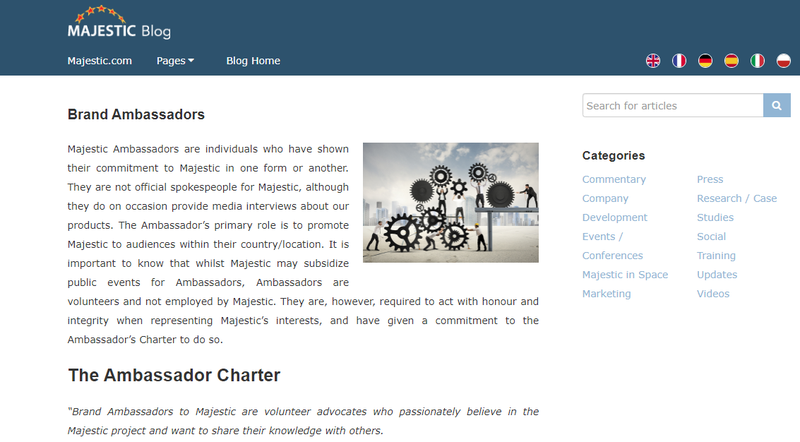
Majestic Brand Ambassadors

Ambassadors for

SEO software company Majestic represent a geographic region and act as spokespersons for the product. Source: Majestic

5. Social media influencers

Social media influencers are similar to brand ambassadors but are typically paid to present a brand or a product to their audiences. They come in many forms and shapes and can help access niche markets. Using them isn’t simple or straightforward, but can add social media power to a small business.

AspireIQ homepage

AspireIQ helps brands find influencers who fit their requirements and can increase their exposure. Source: AspireIQ

Travel destination promoters use social media influencers a lot. Inviting an influencer on a trip and having them share the experience with their audience makes the destination tangible, accessible and attractive. Search a travel destination on YouTube to see this in action.

Extended benefits of social media

Social media has expanded marketing by creating person-to-person communication, allowing your brand to enter into conversations with end users. Another dimension of social media disruption lies in dematerialization, or doing more with less.

There are no physical limitations on social media, and technology enables a business to do more at a lower cost, like creating live events or extending their business hours and international reach.

6. Live events online

Today, any company can stream a live event to their user base to showcase new products and services. They can even have one-to-one exchanges, at a low cost with tools such as Facebook Live or one of the many online conferencing platforms.

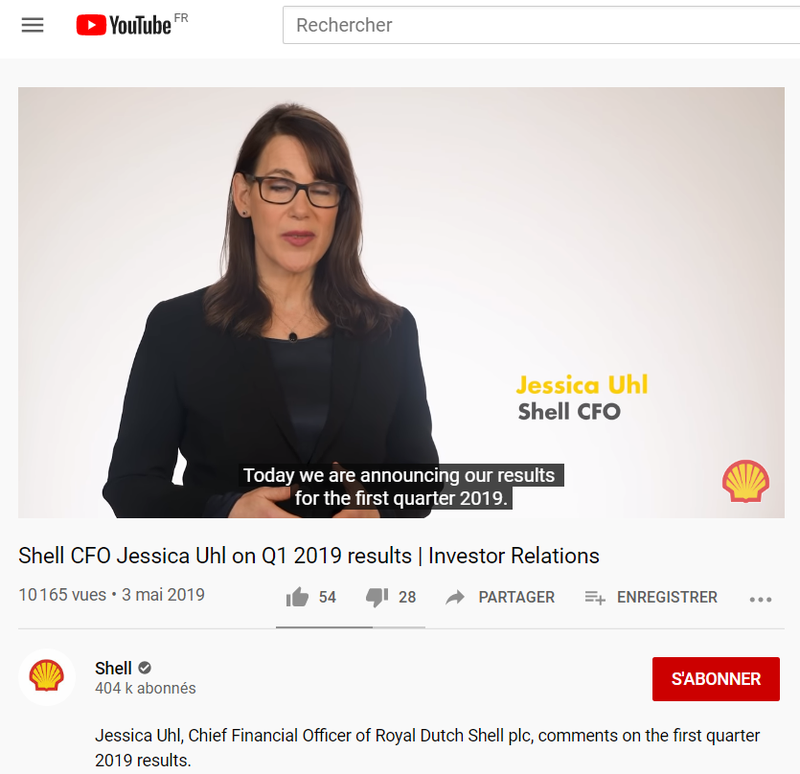
Jessica Uhl, Shell CFO

Dutch Shell Plc uses their chief financial officer to broadcast their quarterly reports. Source: Youtube

7. International reach

Social media has no geographical barriers so the world is your audience. Social media does, however, have language barriers. Your reach will be limited to the languages you communicate in.

Although automatic translation is improving, you probably need native language skills to persuade and sell products. Your international reach could be limited by local regulations and taxes, but once you cover them, you can market to the world.

List of Weber international sites

The internet lets you offer your barbecues worldwide. Source: Weber.com

8. Extend your business hours

Brick and mortar business and their owners have limited hours, but your social media profiles never sleep. They’re always open and make your business a 24/7/365 non-stop selling machine.

If you have an e-commerce business, your shop doesn’t close at night, and your audience is global. Program automatic responses and chatbots, and your social media profiles can be your customer service when you’re not available.

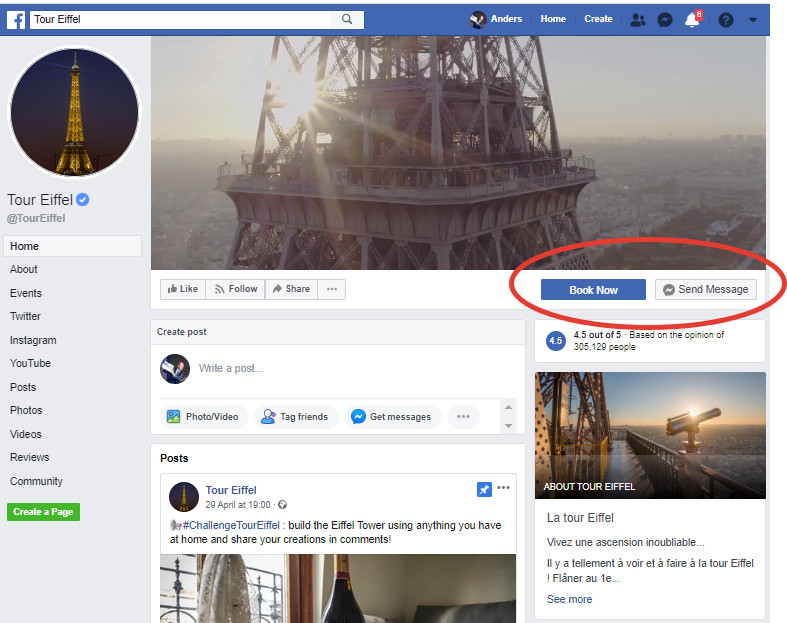
Eiffel Tower's Facebook page

Book your trip to the Eiffel Tower on its Facebook page. Or you can contact it via Messenger. Source: Facebook

Advertising benefits of social media

The internet has had a powerful impact on the value chain in many industries: shopping centers are disintermediated by e-commerce, insurance agents are disintermediated by online insurance, travel agencies are disintermediated by flight sales and online hotel booking.

Social media has eliminated your need for an advertising agency for much of your promotional activity.

9. Social commerce

Social commerce combines capabilities of e-commerce with the human interactions of social media. Consider Amazon.

It integrates several media aspects into the user experience: user reviews and ratings, recommendations based on users’ preferences, and the possibility to find Amazon products on social media outside the Amazon platform itself.

At the other extreme, we have Instagram. It integrates e-commerce directly into social media by product tagging and direct checkout without ever leaving Instagram. Social commerce may be the future of shopping, especially impulse buys.

Instagram Shopping Post

Products that appear in photos on Instagram can be tagged with their price, and the user can click on the product and buy out without ever leaving the app. Source: Instagram

Social media is a great place to showcase your products, in the form of images, videos or descriptive texts. More than just a showcase, social media is a great place to advertise.

10. Powerful targeting

It’s easy to access Social media advertising, and you can use it in sophisticated ways. The first step for many advertisers is to simply “boost” a publication to get more exposure.

This multiplies the number of impressions of a normal publication. No need to do artwork or write ad copy, simply use what you have and expand the exposure of something that has already proven successful.

Facebook Ads offers incredible targeting capabilities because of the extensive user data it holds. Facebook lets you target users via geography, demography, interests, behaviors and more.

11. Scalability

You can scale advertising campaigns almost endlessly, reaching audiences across the world with complex ad sequencing and retargeting setups. This can be part of a wider social media campaign, spanning several social media platforms and reaching your target audience in different ways.

Use this scalability to your advantage, reducing risks while increasing profits.

12. Measurability

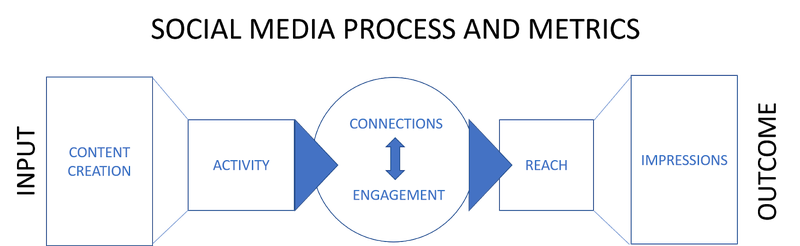
Social media analytics lets you measure almost all social media activity, especially advertising. Master the four basic social media metrics and you’ll be able to interpret and optimize everything you do on social media.

Social media process and metrics

Measure your performance on social media by looking at your input, engagement, following and reach.

Customer service benefits of social media

Social media profiles, always on and easily found, make it easy to contact a brand for after-sales service. Many companies use Twitter and Facebook for customer service. Users post direct feedback via reviews and post comments. Read and analyze their comments to tweak your marketing message.

13. Direct user feedback

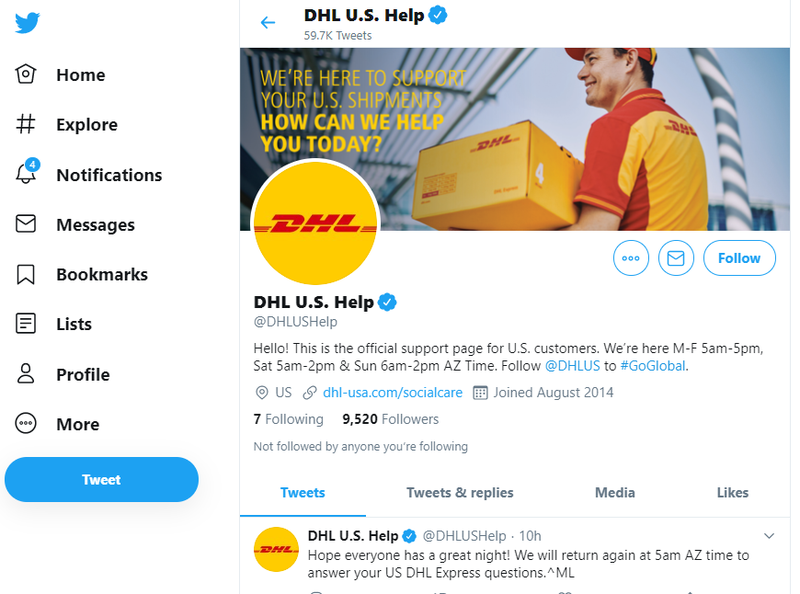
With Twitter, you can allow any user to exchange direct messages with you, and Facebook has an inbox system to receive messages, feedback and questions from your users. Some social media management tools centralize messages from various social media platforms and post them in one place.

DHL's Twitter account

DHL has created a dedicated Twitter account for customer service.

Chatbots are another way to initiate and extend the user feedback loop automatically.

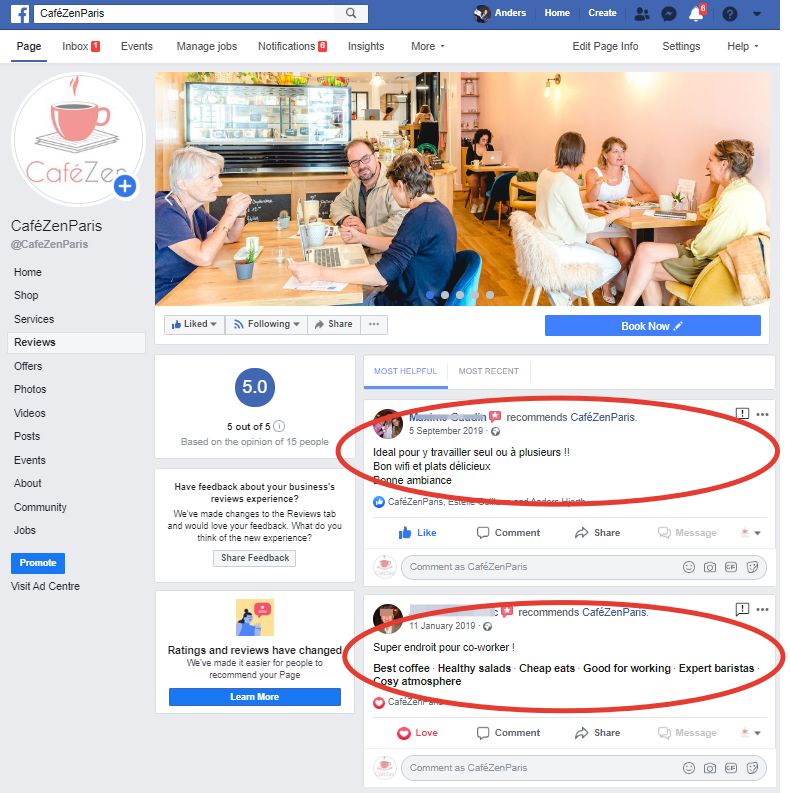
14. Reviews and ratings

Users can review your products and rate your company on social media. Many companies worry that a few unsatisfied users could make their overall service look bad.

In reality, most reviews are positive, and they have a positive effect on companies who provide great user experiences, which will generate great reviews.

Cafe Zen Paris Facebook Page

User reviews reveal what users preferred and what they didn’t like. Source: Facebook

You’ll inevitably find some fake reviews on rating platforms. If you want to increase your reviews, simply solicit feedback from more users, and improve the things your users are unhappy about.

So many benefits but you can’t have them all

Limited time won’t let you plug into all these social media benefits. Social media is work intensive and results come from hard and consistent work. Not so different from the offline world, is it?

Be selective and invest in social media actions which offer the biggest payback for your business. Set long-term objectives and work consistently toward them to extract significant value from social media.

By Anders Hjorth

Sourced from the blueprint

By William Arruda

Face time is valuable when you’re building your personal brand. Running into people at the company café or water cooler, popping your head into a colleague’s office, running into your boss on the elevator, and having an impromptu conversation with a decision maker are like valuable deposits into your personal brand bank. It’s not easy to replace those human, look- each-other-in-the-eye connections.

But we’re living in a time where handshakes are forbidden and we must stay at least six feet away from others. Of course, that’s if you even find yourself in the same physical space. For most people in the corporate world, the three letters that describe their current situation are WFH.

So when it comes to personal branding, the question is: How can I build my brand when I’m working in my living room and everyone I work with seems far away?

Well, not to worry. There are many ways to contribute value, get noticed and be acknowledged even when you’re socially distanced and feeling a bit isolated. These four actions will help you grow your personal brand no matter how isolated you are:

1. Leverage Social Media

When you use social media to build your thought leadership, you deliver value to others and become known as an expert in your field. That helps build your brand credibility both inside and outside your organization. Often, the external renown you create with your peers translates into power and influence internally. If you’re new to working from home, you were just given the gift of time. The minutes or hours you used to spend commuting can now be devoted to building your virtual brand. It’s time to start your own LinkedIn blog, YouTube channel or podcast. Choose the format that you enjoy and pick a vehicle that helps you reach the people you seek to influence.

2. Become A Video Star

When you use the 26 letters of the Roman alphabet to communicate, you’re truly limiting your ability to express yourself. In fact, according to Albert Mehrabian, words only account for about 7% of a communication. When you use video, you deliver a complete communication — including body language, intonation, and tone of voice, letting you deliver a more accurate and compelling message. So how can you make video your go-to personal branding platform?

  • Set up your makeshift at-home studio where you know the sound is good, the lighting is right and what’s behind you is not distracting. Then, make all your meetings Zoom, Skype or FaceTime meetings. If you’re the meeting leader, set them up that way; if you’re a participant, encourage the leader to make it a video meeting. Then, be your best professional self during meetings. Show up on time, look the part and don’t multi-task. Most people aren’t skilled at participating in video meetings, making it even easier for you to show up as the star.
  • Use video to stand out. When you have something to say that needs to command the attention—of, let’s say, your boss—send a video message instead of an email. We are bombarded with email so it’s hard to get your message noticed. When you use video, you cut through the clutter and send a subtle message that there’s something different about this communication. Sometimes, the medium is the message.
  • Create video updates for your team. If you want your people to pay attention to what’s going on, create regular team updates sharing the latest developments, what you see coming down the pike, and lots of acknowledgement for the great work of the members of your team. People are missing the human connection they experience in the office; a video message from you will be more connective and emotionally engaging than a boring email.

3. Appoint Yourself A Leadership Role

If some or all of your team is working from home, some for the first time, they’re likely struggling a bit to find their groove. Be the person who helps make it easier for them. Communicate what’s going on in the company, provide best practices for WFH, share a funny story—do anything you can to help make WFH more enjoyable, productive and fun. When you step up during unexpected and uncertain times and show yourself as a leader, you’re scoring a big win for your personal brand.

4. Be A Digital Brand Steward

When you become the person who engages in what your company is sharing with the world and become actively involved in making that content more visible, people take notice—people who count. Brand stewards move themselves outside the normal hierarchy of an organization. They become more aware of what’s happening outside their department or division, and they commit to making the company’s brand more visible to members of their professional community. It demonstrates your loyalty and shows that you’re a bigger, more strategic player who’s engaged outside your domain. And, it gives you some content you can use to stay regularly visible to your peeps. So share the relevant content your company is posting on their social channels with your community of connections, friends and followers.

Feature Image Credit: GETTY

By William Arruda

William Arruda is the cofounder of CareerBlast and author of Digital YOU: Real Personal Branding in the Virtual Age.

Sourced from Forbes

By Tim Hughes

The problem is very simple.

The world has moved on.

I grew up in a world where the only games in town was sending letters and cold calling, there was no internet and no email.  Yes there was such a world.

We stopped sending letters, why? because email meant it saved us the price of a stamp.  Again the world had moved on.

Just look at this research from Simon Kemp.

that 4.57 billion people now use the internet, an increase of more than 7 percent since this time last year. Social media users are growing even faster, up by more than 8 percent since April 2019 to reach 3.81 billion today.

social media users around the world have both increased by more than 300 million over the past twelve months

and there are “Big jumps in digital activity, especially in countries that have seen the strictest COVID-19 lockdowns

The world has switched to digital.

I was on a webinar today and said “everybody hates advertising, cold calling and emailing. Why? Because it’s based on interruption“.

And the penny dropped with the interviewer.

As a seller you may hate that, but that’s the world we live in.  Social media has changed society and changed how we do business.

We all have mobile phones, we all can buy things (and do) without talking to a sales person. So when we see an advert, we get a cold call and a cold email ….. it pisses us off.  Why? Because you have interrupted us and we know that you contacting us like this is so old fashioned and out moded.

Why Don’t People Buy Through Cold Calling and Email

Because you cannot build relationships … especially in a world of no face-to-face meetings

Because You cannot build trust …. why would I trust you after you pissed me off and we are living in a world of no face-to-face meetings

Because you cannot prove you are an expert and help the client

Because are savvy to your manipulative questioning

Because you are too busy running around trying to “qualify” sales rather than being able to only focus on deals you can win.

Because you are too focused on being liked by everybody

Because you don’t have the depth of relationship to convince the buyer

Because advertising, cold calling and email does not scale – it takes you far too long to build multiple relationships across a business

Because your methods are efficient … if you take cold calling 1 min of effort, translates into 1 min of output effort. With social you can take 1 min of effort and turn it into thousands of minutes output.

Because, because, because …..

This is your Leadership Moment.

While other analogue managers are going to stick with what they did in their 30s.  “It was good for me then, so it can be good for me now”.  We so often hear.

Covid19 has accelerated the need to move to digital and social.

You know as well as I do that you and your team need to be fitter and stronger and have embraced digital and social by the time we get out of this crisis.

Social Selling Business Case

We expect each of the people we train in social selling to be able to make (if they do what we say) at least one additional meeting per week.  Let’s assume that 4 of those meetings turn into proposals and you close 1 of those proposals.  That means you are closing one additional deal per quarter.  If your average deal size is $100,000, then each sales person is closing an additional $400,000 per year.  As sales team of 10 will create $4 million additional revenue per annum.  This isn’t a one off, this is every year. Forever!

The Low Risk Approach

Here at DLA Ignite, we are not pivoting, we have been transforming companies to use social and digital for four years.  We have the track record, we also know what when we run our social selling programs the results are repeatable and predictable.  In fact, we have done this so many times that we are a low risk option.

If you want to get out of this mess, maybe it’s time to talk to us.

https://www.linkedin.com/in/timothyhughessocialselling/

We make dozens of prospecting calls, send hundreds of emails. We find customers with some level of interest, then do everything we can to convince the customers to buy our products.

https://partnersinexcellenceblog.com/im-selling-as-hard-as-i-can-why-arent-you-buying/

By Tim Hughes

Sourced from Digital Leadership Associates


By

You don’t have to be a branding expert to attract the right clients or the right employees. Just cover the basics.

You’ve perhaps heard a lot about branding a business, but how much time have you invested in building your personal brand? Just like a business’ brand helps form that company’s identity, your personal brand is part of how you market yourself. It can encompass everything from your experiences to your beliefs. And, when it’s done well, your brand can help you snag good employees and clients.

Even if you’re not a thought leader or “influencer,” or haven’t put much thought into your personal branding, you can improve it using these six methods.

1. Think about who you are.

To get to the heart of your personal brand, take a step back and think about who you are as a person. Consider your achievements, talents, interests, career goals, and what motivates you in your professional and personal life. These elements help make up a strong personal brand, and as you develop that brand you’ll want to find ways to include materials that represent each of those qualities.

2. Do a social media and website audit.

To improve your personal branding, start by auditing your social media profiles and website pages. If you’re looking to find more clients as a small business owner, now is the time to remove any materials from your online presence that you don’t want clients to see. I’ve talked to professionals over the years who take inappropriate tweets or blog posts into account when deciding on which vendor to work with. See what shows up when you do a Google search of yourself. Take some time to double-check the permissions and security settings of your accounts, too, so you know just who can see your posts.

Next, review the content on all of your online platforms to make sure your personal brand is consistent. Perhaps it’s a high priority for you to convey a personable, professional image. Be sure your social platforms and website pages show that brand to visitors. They should highlight your recent achievements, skill set, and relevant projects you’ve worked on.

3. Be yourself and show what you’re passionate about.

With a personal brand, you can truly be yourself, so you don’t have to go out and find new causes to support or activities to build your company brand. Think about some real life qualities and interests that make you unique and then show off those qualities.

Maybe you were a marketing professional before you started your business, and also a talented juggler with the goal of visiting all 50 states by the time you’re 40. While a job candidate or client might be most interested in your entrepreneurial endeavors, your juggling talents and travel goals make you unique and instantly help you stand out from other prospective employers or vendors. Many feel that even if some of the qualities of a potential employer or vendor feel a little silly or unrelated to work, they can help personalize the company and make it more alluring.

4. Make valuable connections.

When networking, use your own brand to establish valuable connections. If you’re networking in person, elements of your brand can make for natural conversation starters and talking points.

While you should be sure to try to focus conversation on the other person so that they feel valued and understood, discuss some of your hobbies or interests outside of your company, too. This can make the conversation more engaging and help your new connections or potential clients remember you.

The same is true of networking via social media. If you ask to connect with someone on LinkedIn, include a personal message that incorporates a bit of your personal branding. Introducing yourself as a founder who specializes in software and loves skiing is more compelling than introducing yourself only as a founder. This personal brand angle immediately sets the tone for the conversation and may even identify something that you and your new connection have in common outside of work.

5. Build your reputation offline.

While your online brand is obviously vital, don’t forget to devote time to your offline personal brand, too. Volunteering in the community, sitting on the board of directors of a nonprofit, or mentoring up-and-coming professionals are all admirable ways to contribute to causes you care about while building your brand.

6. Be authentic.

When it comes to improving your own personal brand, it can be tempting to talk up your achievements and even inflate your image. Doing this could help attract clients, but they might not be a great fit for your company, or what you can actually deliver as a vendor. Instead, stay honest about what makes you, you.

If you’re planning to hire new team members, take on new clients, or just want the public at large to know more about your company, investing some time in your personal branding is a wise move. The better you know your brand and include these branding aspects in your social media and website pages, the greater chance you’ll stand out to prospective employees.

Originally published on Inc.

Feature Image Credit: mimagephotography/Shutterstock

By

Sourced from Thrive Global

By William Arruda

Social media can be pretty intimidating for some people—especially those who tend to shun the spotlight and avoid self-promotion. That being said, there’s no denying that social platforms can and do allow individuals to build personal brands that afford them greater professional opportunities.

Having a robust social media presence is an asset to your long-term career growth. In a survey by recruitment platform Tallo, 87% of Gen Z respondents saw the career significance of online personal branding. These competitive young workers and employees-to-be are making it imperative for candidates of any age to up their personal branding game online.

No matter what career stage you’re in, you can use social media to your advantage to improve your personal brand. Here are three strategies that will help.

1. Look beyond LinkedIn

Most people assume that when it comes to career growth, the only social media platform worth spending time on is LinkedIn. This is a myth. While anyone who knows me has heard me tout LinkedIn as a crucial starting point (with over half a billion users worldwide!) there is real power in supplementing it—as long as your image and messaging remain consistent across all platforms and your goals are tailored to what each one does best. For instance, LinkedIn is indeed essential for delivering your digital first impression and expanding your professional network, but Twitter is ideal for sharing content you’ve published and starting a discussion. Should you have a professional presence on every major social platform? It depends on what you’re trying to accomplish.

Brian Freeman, CEO and founder of microinfluencer platform Heartbeat, believes it’s a mistake to overlook newer, trendy platforms like TikTok if you want to bulk up your audience. “TikTok makes it easier than any other platform to go viral and gain a new following, then pass that following on to other social media platforms where you have a presence,” he says. “Whether it’s Instagram, Twitch, Twitter, or YouTube, you can go viral on TikTok and gain thousands of new followers on a second platform at the same time.” Most social media users are active on multiple platforms. When someone decides to follow you on one, follow them back—and then follow them on a different app to win their views across social.

2. Publicize your expertise

“Thought leadership” is a term often used in the content marketing world to describe content produced by company executives aiming to position themselves as experts in an industry or topic area. It can take myriad forms, but its goal is always to reinforce the credibility of the brands (personal and corporate) that produce and byline it—and it’s typically quite effective. Good news: It can work for you, too.

While publicists pitch the media, asking journalists to write about their clients, thought leadership lets you become the author of that coverage, not just by publishing your content in traditional outlets but also by publishing it through social media. If you’re an expert at something, let the world know by sharing your knowledge and ideas. Speaking at conferences, serving on boards and interacting with journalists and other influencers in your field of expertise will of course allow you to learn from and teach others, and it will also get you acquainted with people who might be able to help you achieve personal and professional goals. But taking a proactive approach to sharing your expertise on social media shows the world that you’re open to professional interaction and eager to answer questions. Engage in group discussions, provide thoughtful commentary on relevant posts and make an effort to introduce others to helpful resources, and you’ll be surprised by the opportunities that come your way.

3. Advocate for your organization

You’re serious about your career, so you want to be taken seriously—whether that’s at your current company or at the one you aspire to join. Your social accounts, when consistently and professionally branded, provide a platform for your company or college to get some free PR, which can help with both sales and recruiting on their end. Plus, by painting your colleagues and cohorts in a positive light, you’ll cement your image as a team player who cares about your organization’s future. That’s something every employer wants to see.

Doug Wilber, CEO of Gremlin Social, a social media solution for banks, understands the power of social selling (branded content posted on employee accounts). “When employees share their positive work experience on their personal accounts, they become powerful recruiting tools that can draw in potential candidates and increase employee retention,” he says. In turn, employees also benefit from brand advocacy. When you have a credible personal brand online, your words carry more weight with potential customers and other external contacts, meaning you’ll likely have more success in your day-to-day role.

Social media scrolling doesn’t have to be mindless or unproductive. In fact, social platforms give you a way to create and seize opportunities that would have been off-limits just a decade ago. Start with the three strategies above, and you’ll be amazed to see how far your personal brand can reach.

Feature Image Credit: Getty

By William Arruda

William Arruda is the cofounder of CareerBlast and author of Digital YOU: Real Personal Branding in the Virtual Age.

Sourced from Forbes Billionaires

By Drew Kraemer.

By the year 2022, Amazon is expected to earn more than $350 billion in global revenue. And savvy brands and retailers are reaping the benefits of this tremendous growth. However, it’s becoming more complex to manage and take advantage of its capabilities. To help brands do this, I’m sharing six ways to grow your Amazon business in 2020. Keep these recommendations in mind when your brand refreshes its strategy.

1. Embrace Trial And Error

One of the most important things we’ve learned over the years is the importance of trial and error on Amazon. Since the marketplace is always changing, we’ve learned the lesson that what once didn’t work is worth trying again.

Trial and error are important for both new and routine campaigns. And, in 2020, brands should commit to pushing the envelope. In today’s e-commerce landscape, brands must take their strategies to the next level. To do so, in our experience, persistence and innovation are key.

For example, you could test different techniques in Amazon’s back end or on the product detail pages. Through this, you can consistently find new ways to improve the shopper experience and add efficiency to your processes.

Our technical analysts have also unveiled opportunities for clients by testing new bundles and pack sizes. This requires time, research and skill to approach in a way that works for your unique business. Yet, when bundles and pack sizes are popular, it can create impressive momentum for a brand’s catalog.

2. Diversify Your Advertising Mix 

I’ve shared the importance of using both programmatic and search advertising before. To reiterate, we have seen the best results when implementing both options. Using Amazon DSP (programmatic) capitalizes on the shopper’s intent captured through Amazon Advertising (search) campaigns. In 2020, we expect more clients and brands to adapt to this practice. We also expect brands and retailers to introduce new tactics such as over-the-top (OTT) advertising and Sponsored Brand video ads.

The results driven by these campaigns are important, but the insights associated with reporting are invaluable. Diversifying your brand’s advertising mix will increase awareness, discoverability and sales. But it will also expand your brand’s knowledge of consumer behavior and allow you to refine your approach if needed.

3. Cater To Mobile Shoppers

Each year, mobile is becoming more important to those of us in e-commerce. Optimizing on Amazon is possible, but it requires specific knowledge of best practices. This can apply to a product’s detail page, A+content, Store, advertising campaigns, and more. Prioritizing this will protect the customer’s experience and benefit other aspects of your brand’s Amazon presence.

For example, the Buy Box is more prominent on mobile devices and brands need to optimize accordingly. Doing so will improve the chances of making a sale. After all, 79% of shoppers make online purchases using a mobile device. We recommend regularly monitoring Buy Box ownership across your catalog and taking your product detail pages up a notch. Remember to include high-quality design and images and keep copy short and easy to read.

4. Practice Data-Backed Decision-Making

As I touched on above, the insights and data available through Amazon are extremely useful if you know how to use it to your advantage. In particular, advertising data is developing and continues to get better. Brands should build the knowledge to leverage attribution, new-to-brand, seller performance and more to regularly refine its strategy.

There’s nothing wrong with trying new things, but using historical data to make strategic decisions almost always pays off. If you don’t reach the goal you were intending to hit, you can still learn something valuable in the process.

5. Harness The Power Of Social Media 

Brands can drive traffic to their listings in more ways than advertising solely on the channel. There is a number of social media platforms to leverage and link to product detail pages or Storefronts. I recommend linking through advertisements, social posts or a mix of the two options.

Including social media in your brand’s Amazon strategy expands the reach of your products. It also is an opportunity to gain visibility for your brand without having to compete with listings in Amazon’s search results.

6. Focus On Earning More Customer Reviews

We’ve discussed the importance of customer reviews and user-generated content many times. This year, and well into the future, reviews will heavily influence whether shoppers purchase a product.

In fact, 91% of shoppers are more likely to make a purchase after reading positive online reviews. As it applies to Amazon, reviews are an essential tool to encourage customers to make a purchase if they’re undecided.

There are different steps brands can take to increase the likelihood of receiving positive reviews. But above all, we stress the importance of providing a great customer experience. Many negative reviews on Amazon include feedback associated with being misled or having unmet expectations. Fully optimizing your brand’s listing will allow shoppers to fully understand what your product is and what they can expect. As a result, the chances of receiving good feedback will be greater.

Brands that sell on Amazon will always have something new to try or learn different ways to grow their performance on the channel. These are just a handful of examples to get you started.

Feature Image Credit: Getty

By Drew Kraemer

Marketplace Strategy is a strategic Amazon growth partner for the world’s greatest brands. Visit Marketplace Strategy’s Website

Sourced from Forbes

Sourced from WNIP What’s New In Publishing 

Social media has quickly become one of the most valuable ways for people to discover and engage with sites they love.

Whether you measure your social media following through the number of Twitter follows, YouTube subscribers, Facebook likes or other social metrics, having a loyal group staying connected to your website or brand is essential to growing Average Revenue Per Visitor (ARPV) and Lifetime Value (LTV).

Check out some of the reasons that the value of social followers is critical to growing digital publisher audiences, subscribers and revenue.

You will have a consistent presence in front of your target audience

Social media followers have already shown an interest in your site, which gives you an audience of people who want to read your content and learn more about the products and services you offer, including articles, newsletters, digital subscriptions and more.

In fact, consumers who are brand loyal are most likely to engage with the company through social media.

According to MarketingSherpa, 95% of consumers aged 18-34 will follow companies or brands they love through their social media outlets.

To keep your audience engaged and make them loyal followers, you want to make sure that you consistently post to keep their interest.

Your content can reach an exponential audience

One of the beauties of social media is that information can be shared with a simple click. Your social followers become part of your marketing campaign by re-posting content on their feeds and sharing it with other users.

This can help you grow your readers since they are most likely to forward the information to others they think will be interested as well.

If done well, one simple post can be circulated numerous times and for months to come, all for little cost to the company.

Followers are more likely to have higher conversion rates

The ultimate goal of any marketing campaign is to turn leads into customers, and for publishers, this means turning those followers into active subscribers.

By them following your company on social media, you have already achieved the most important first step to conversion, which is interest and engagement.

By following you on social media, they have shown that they like your content and what you have to say, and becoming a subscriber is likely the next logical step.

Social media is here to stay

Even though social media marketing has been around for a long time, and there are numerous competitors vying for attention, it is and will continue to be one of the most widely used digital platforms that can reach a large audience in a short amount of time.

According to We Are Social, there are more than 3.84 billion social media users active in 2020, which is an increase of 288 million since January 2019. It is also estimated that a large portion of users will spend an average of two and a half hours each day interacting with social media — finding your content or your competitor’s.

For digital publishers, this means a significant time frame to capture their audience’s attention every day.

Michael Yeon, VP Marketing, Admiral

Sourced from WNIP What’s New In Publishing 

Sourced from  Power Retail

Social media can make or break a brand’s image. Small things like maintaining transparent language can be the crux to building a strong and loyal customer.

On average, Australians spend more than 800 minutes scrolling through social media per week. From Instagram to TikTok, we’re living in a world of omnipresence. Shopping is the same, and this omnipresence will only become more ubiquitous.

Every year social commerce adapts and transforms with ever-sophisticated technology and consumers. Digitally native and rapidly self-educating, Australian consumers are spending more tie on their phones than ever before. Capturing every facet of this tech is a vital tool for bolstering growth.

In 2020, it’s not acceptable to simply have an Instagram account. In 2019, the number of internet users globally was 4.4 billion. Furthermore, 3.5 billion of those internet users also utilised social media.

On social media, even the smallest moments can be worthy of a share. Get your team to create a video of someone using a product, share customer images and reviews, and keep the content honest. In this day and age, 59 percent of social media users want to see content that is authentic and engaging. Thirty-three percent wish to see informative content and 28 percent want to see something visually appealing.

2020 Trends to Watch and Apply

  1. Transparency … To the Next Level

    As one of the key buzzwords of the last two years, a retailer that maintains transparency is one that establishes greater trust with its consumer. Whether it’s a simple post on Instagram and Facebook that an item is out of stock, or even posting a requested item on social with a hyperlink to the site. Last week, Sportsgirl shared a post on Instagram with the caption: ‘WE GET IT – YOU ALL CAN’T STOP TALKING ABOUT THIS DRESS. So, here it is…’ This language is laidback, relatable to its audience and has a compelling CTA which will resonate with its consumer.

    In 2018, Showpo shared a video on YouTube addressing the backlog of orders during the busy Easter period. The video, titled ‘So… We F*cked Up’, included Showpo’s CEO, Jane Lu, who addressed the business’ mistakes and promised to do better in the future. In the act of frankness, it opened up a dialogue about the ways the company could improve. Social media allows companies to have somewhat face-to-face communication with their consumers.

  2. Multiple Platforms – Within Reason

    It’s no longer acceptable to be across two or three channels. Cross-promotion is a fantastic way to keep your consumer abreast of the latest promotions, products and updates for your brand. It’s also a useful tool for capturing a new audience. With TikTok growing exponentially (500 million global active monthly users and 1.5 billion iOs and Android downloads), creating an authentic and well-conceived action plan for these platforms is essential. There is a catch, though. Just because a platform is trending, it doesn’t mean your brand is aligned with that platform.

    A success story of a retailer utilising the likes of TikTok includes Superdry, who brought out three TokTok influencers during the launch of its store in August 2019. “The way Australian’s (and the world for that matter) shop and interact is evolving. We have seen the rise of many businesses and technologies that have entered the traditional brick and mortar marketing stratagem (AfterPay, WeChatPay, Facebook, Instagram and even AI technology) and TikTok is just one of the newer developments,” said Matthew Iozzi, PR and Marketing Manager at Superdry Australia. “We are seeing an active shift in the kind of content brands are expected to create for Gen Z. Moving away from static, posed, model-esque Instagram shots, to engaging video and interactive AI.”

  3. Visual-Rich Content

    It’s no longer viable to share simple images across social media. Content can conjure up a better online retail experience and can create a lifestyle from a single product without too much imagination from the consumer.  YouTube is the best option for tech demonstrations – Instagram is ideal for fashion and makeup. “Using tactics like blogging, you can create warm traffic to remarket to later, with a much lower CAC than cold traffic,” said Cassandra Campbell, Content Marketing Lead at Shopify.

    It’s not just about creating a beautiful image for Instagram 0- you have to compel your customers to continue to visit your site. Use reviews, essential features of the product, real-life pictures of people using your product and anything else that you think it’s useful for the customer. This is one of the most essential parts of creating rich content – make sure it’s relevant to your customer, not just your brand image. BCF does this in spades with its content. The company often shares imagery of consumers using fishing tackle and camping gear from the retailer, while staying rich in its aesthetics and staying ‘on-brand’.

  4. Don’t Discredit Influencers

    In 2019, there was a peak of influencer content. The social media world was flooded with #ad hashtags, and content was soon becoming far too saturated to have any cut-through. Then when Instagram cut off the visuals cues of likes in 2019, it seemed that the inevitable bubble for influencers had burst. However, this isn’t the case. While the number of influencers may have dipped in size, it means that the quality of this content may have actually increased. According to Power Retail, 53 percent of Australian consumers want influencers to promote bargains, and 43 percent prefer content that is filled with advice or tips.

    When it comes to finding the right influencers for your content, it’s not about finding someone with a considerable following. In reality, that will get you nowhere. It’ doesn’t make sense to pay someone thousands if they don’t represent the retailer’s brand image, messaging or overall ethos. Micro-influencers, or those with under 100,000 followers, often have a core community of loyal followers who produce a high engagement rate. While hiring a celebrity may look great for your image, it may not have the cut-though you’re expecting. Influencers of this calibre get hundreds of offers thrown at their feet every day, and if they shill every product under the sun, their audience may feel desensitised to the content.

Really, not much has changed for social commerce, but the retailers must remember the power of social media. It pays to do your research, find imagery and messaging that resonates with your brand, and don’t be afraid to reach out into new platforms that may bolster further growth with a new audience.  It can make or break a brand; and can build or demolish reputation.

Sourced from Power Retail


By Gita Jackson

Botnet is a social media app without people. Perfect.

This article originally appeared on VICE US.

Ever wanted to post something to social media just for the cheap, dopamine-fueled thrill of seeing a stream of favs and comments, but not risk interacting with a real human being? Botnet, a social media simulation for iOS where you’re the only human in a sea of bots, might be just what you need.

When you download the app, you enter a fantasy world where you’re the most popular user—and only non-bot—on a social network. It feels like a blend of the big three apps: the overall layout of Facebook, the commenting system of Instagram, and the anarchy of Twitter. While it feels real enough when you’re posting about your cat or the weather, Botnet’s views on politics are baffling, though not moreso than a particularly obsessed Twitter rando.

According to the makers of the app, when you post, all the comments are made by bots trained on thousands of “real conversations.” For a dollar each, you can buy bots that will troll you or make dad jokes. It’s deeply refreshing in some ways. All the minutiae that I post about is treated like the most fascinating and mind blowing content to this army of bots. I love being popular.

Posting about my cat or my boyfriend yielded an eerily accurate facsimile of what happens when I post something stupid on social media. Bots in the replies to both pictures said “great pic!” or posted the “100” emoji. In general, Botnet’s use of emojis is stellar. Just like on Instagram or Twitter, the first replies I get to any post are the same emojis people use to get in their first reply—stars, crying laughing faces, and hearts.

Some of the replies were so convincing, I reached out to Billy Chasen, artist and creator of Botnet, to ask if there were any real users on the app other than myself. The company told Motherboard that it uses GPT-2, an algorithm created by OpenAI, and trained it on “millions of internet comments.”

“Everything they write is original and based on training,” Chasen said.

When I posted about politics on Botnet, things got weirder.

Botnet functions basically like a diary. While the bots give you the impression of there being interaction, you’re actually just writing down your thoughts in a closed system that no one but yourself will see. What I do in my real life diary is try to decompress and untangle my stresses, and on Tuesday, February 11, one of my greatest stresses is the New Hampshire primary election. I wrote in Botnet, “Bernie Sanders will be victorious in New Hampshire.” Instead of hearts and smiley faces, one of the first replies I got was “The Democratic Party will not abandon Marianne Williamson.” The bots, it seems, have some pretty wild political opinions.

From there, I started to test more general political opinions. By this point I had paid a buck to get some troll bots, which have red hued icons. When I mentioned socialism, they all insisted I’d be better off volunteering.

A picture of the Botnet feed with comments like

When I said that socialism is the only path to an ethical society, one of my bots attributed the quote, hilariously, to JFK.

A picture of the Botnet feed, where a bot attributes the quote

The friendly bots didn’t really understand what I meant when I wrote, “workers of the world unite,” but the troll bots were right on cue with telling me that queer people should go fuck themselves.

A picture of the Botnet feed with comments like

It’s incredible not just how deranged these bots are, but how much like real social media these replies are. I’ve had exchanges like these with real human beings on Twitter, confusing anger and Marianne Williamson stanning included. That said, Botnet did generate a comment leagues funnier than anything I’ve seen on Twitter when I’ve tried to talk politics:

New Hampeeeeeeee!

New Hampee, indeed.

Feature Image Credit: Getty Images

Sourced from Vice