Tag

Social Media

Browsing

By Wendy Marx    

The value of content marketing for PR and social media has become a slam dunk when it comes to digital marketing. And as new networks and platforms emerge, it becomes even more essential.

And if we had any doubts, a new  study from Brunswick shows that investors and analysts are making decisions based on the digital content of executives and companies.

The consultancy’s annual Digital Investor Survey tracks the digital behavior of investors and analysts around the world in terms of communications, research and information-gathering.

How Important Is a Digital Presence?

In a word…Crucial.

For instance, according to the survey, 90% of investors use digital platforms and channels to investigate companies and the issues surrounding them. Another 70% reported that they have made investment decisions based on digital research. These statistics prove a direct link between your content and communications and how willing people are to invest in your brand — aka, your bottom line.

You can almost guarantee that others who are looking to do business with your company will do the same. You need a digital presence to greet them at the door, so to speak, and give them a good first impression of your company.

And we do not mean just a static website. We are talking about a rich digital identity that make your brand stand out, such as a regular blog, social media presence, and search engine optimization.

“Building an effective individual digital profile is not just an essential component in a successful investor relations strategy, it is now a necessity for maintaining shareholder value and competing with peers that are more active in digital and social media,” Brunswick partner Marshall Manson told the Holmes Report.

If your brand is not available on a digital platform, such as a blog, to not mince words — you’re impacting your bottom line.

“As an industry we’ve always wondered, Mason continued, “but the research makes it absolutely clear: there’s a line between great communications and business performance.”

What Should You Do?

Knowing the crucial role of digital marketing, it’s essential to maintain your digital marketing and social media channels. Which translates to solidifying your content marketing.

Search engines and online publishers like blogs are the most used digital sources for investors. Social media platforms are also important with LinkedIn the favorite with 63% of investors using the platform for research, and Twitter the second most used platform at 55% of investors.

Wherever you go on the internet, you can’t ignore the role that content plays — whether it’s a blog shared on social media, visual graphics in your PR campaigns, or a video that you use to promote your brand across multiple channels. All of this and more falls under the content umbrella.

But this involves more than just creating content. You need to pay attention to content marketing trends, from blogs to social media, to public relations and ROI.

Brunswick provides three recommendations for communicators:

  • Ensure senior executives use digital and social to reach and engage investors, particularly LinkedIn.
  • Expand your digital universe to include podcasts, which are underutilized.
  • Maintain your SEO and content materials.

To give your content marketing a leg up for social media and public relations, we’ve expanded these three areas into 4 easy ways for you to

We’ve laid out 4 easy ways to use content marketing for social media and public relations. These methods will help you strengthen your communications strategy.

4 Ways to Use Content Marketing for PR and Social Media

1. Write and Maintain a Blog

For the past decade, businesses and entrepreneurs have been urged to maintain a regular blog. Not only does it show evidence of expertise, but it also directs people back to your brand time and time again.

And we now have even more proof of the value of blogging. The Brunswick survey showed that 61% of investors and analysts used blogs to make investment decisions and recommendations.

Blogging helps to boost your digital presence, not just on your site, but also on social. For instance, it gives you original content to post on your social media profiles. This original content bolsters your reputation and points your audience back to your website for more original content.

Note: Because of the very visual nature of social media, you need to include visual graphics when you post to social media. This includes blog images, infographics, and even videos to attract your audience.

Your blog is one of the top places where you can promote all of your media gems. This includes media interviews, major company-wide news, and awards. It is a great in-house platform to allow your audience to share in your brand’s triumphs. As a side perk, posting this kind of news strengthens your reputation as a top-shelf brand.

2. Invest in SEO

Search engines are one of the most heavily-used platforms for research — as proved by the 65% of people who use it to research investment opportunities, according to Brunswick. This makes sense, since who hasn’t tapped into engines like Google or Bing to find answers to questions or learn more about a brand?

Because of the heavily-guarded algorithms that ensure top-quality content on search engines. these platforms have gained a level of trust that few other platforms match. In fact, in Brunswick’s survey, search engines were trusted slightly less than The New York Times but above CNN when it came to trust.

Audiences know that not just any joe-blow with a computer can make his or her way onto that first page slot — it takes domain authority, link-building, and other strategies to get there.

SEO is a crucial part of today’s content marketing trends — and can be used to empower your PR and social media. Think of your latest bit of news or your campaign. When you build up your site’s authority through SEO and use the right keywords, you have the potential to expand your visibility and gain the trust of your audience.

3. Create a Podcast

Brunswick’s survey reported that 48% of investors said that they used podcasts for information about a brand. But sadly, podcasts are often forgotten when we discuss content marketing trends and strategies. And what a loss that is.

Podcasts were listed as the third most popular content (after search engines and blogs) used to make investment decisions.

While podcasts are among the most powerful pieces of content a brand can produce, they are also one of the most under-utilized. As a brand, you should give serious consideration to how podcasts could fit into your

Podcasts are a great place to promote your PR and social media. For instance, why not discuss a subject on your podcast and point your audience to your social media profile for more information? Have some company news or a PR campaign that you would like to promote? Use your podcast to get your audience excited about it.

4. Leverage LinkedIn in Your Strategy

In the past, many brands have relegated their LinkedIn maintenance to their HR teams. But what once started as a simple professional networking site has blossomed into a lot more.

Brands are realizing the far-reaching value of LinkedIn in the business landscape. It is now used as a publishing platform, to share company news, and as a place where prospective buyers and investors vet companies.

What makes LinkedIn so valuable? It’s trust factor. Indeed, Brunswick reports it to be the most trusted social network with a score of +26, which is on par with media outlets like CNBC. In an age where fake news is talked about seemingly all the time, this shows just how valuable LinkedIn is as a platform and a resource for your brand.

And if you’re still not convinced, consider that 48% percent of investors said that they used LinkedIn as part of their research into companies.

Take the time to familiarize yourself with LinkedIn’s best practices. This includes engaging with groups and communities and publishing regular content on the network’s publishing platform.

By Wendy Marx    

Sourced from Business 2 Community

Sourced from ma-no

Social media marketing is a baffling area. It looks like anyone can do it: Post something (anything!) on social media, look for new content, talk with people, keep filling the Instagram page of your company with your most photogenic team. It sounds like a task for today’s social media age kids.

If you want your ROI to grow, though, that’s not the way to go.

It may look simple, but without economic resources, talented people and the right tools for the job, it is almost impossible to make social media marketing effective. This article will focus on marketing tools for social media. These SMM tools actually stand out because they are user-friendly and continue to improve in response to social media changes and trends.

According to the most important SMM tasks requiring automation, we’ve divided them into three groups: Social media management, social media monitoring, and social media advertising.

These social media social media management tools help you manage the workflow required by social media. So they really make it easier, more organized, less stressful and thus more efficient. Some of our favorites are here.

1. IFTTT

IFTTT is the freeway to get all your apps and devices talking to each other. Not everything on the internet plays nice, so we’re on a mission to build a more connected world.

IFTTT is a website as well as a mobile app. The free service was launched in 2010 with the motto: “Put the Internet to work for you”. However, in recent years it has changed a lot. You can currently connect all your “services” with IFTTT to complete tasks automatically.

There are numerous ways you can connect all your services – and the resulting combinations are called “Applets”.

Applets essentially automate your daily workflow, whether smart home devices or apps and websites are managed. For example, if you own the intelligent lighting system, Philips Hue, you can use IFTTT to automatically turn on a light each time you are tagged on a Facebook photo.

Price: free

2. Buffer

Buffer makes it easy for businesses and marketing teams to schedule posts, analyze performance, and manage all their accounts in one place.

BufferApp lets users manage a range of social media accounts, lining up updates to be shared in the future across a range of social networks.

Every time you find a post you want to share, a tweet you want to retweet, or whenever you write some content that you want to share out over time, you can add it to your Buffer.  This places it in a queue and the posts are sent out in order, at times you have pre-selected.

This means that you don’t need to choose a date and time for every single post you want to schedule.  You just add it to your queue, and Buffer does the work for you.

Buffer has a smooth, clean interface that is really enhanced by installing its browser extensions – a lot of its best functionality comes from these add-ons.

Price: freemium; paid plans from $15/mo

3. Quuu

Quuu is the number one source for content and the only place where each and every piece has been hand-reviewed in house.

Quuu’s main goal is to increase your follow-up and commitment to social media by helping you post hand-curated content in your niche. Quuu sends relevant, high-quality content from its niche to its users every day, which they can easily program and post on their social media profiles via Quuu scheduler or any other tool such as Buffer or HubSpot.

These suggestions include a link to the content (article, blog post, video, podcast episode…) and a text containing relevant hashtags and social handles (making it easier to tag the author or source).

Price: plans start at $15/mo

4. MeetEdgar

MeetEdgar is another programming tool that stands out for one reason: You can recycle old posts. This is more important than it seems: Content is forgotten and left behind even good and popular content. It is low-hanging fruit and too often a missed opportunity to recycle this old content so that it can get views again.

With MeetEdgar, you organize posts by category, schedule content by category, and then, every time the tool has gone through your scheduled posts, it will automatically post old content from each category so it can get attention again.

Price: $49/mo

Social Media Monitoring Tools

Social media marketing is divided into two processes. One is about the content you and your brand have. You create content, aggregate and share content with your audience and promotional content. The SMM tools discussed above to automate and optimize this part of social media marketing.

The audience is the second aspect of social media marketing. It’s your brand’s online mentions, reviews, questions, compliments, and complaints.

Although posting may be more important to raise brand awareness, it is also important to keep an eye on what people say about you and to respond appropriately. It’s almost impossible to manually find all brand mentions on social media, as people don’t always tag the brand even on social media platforms.

That’s why there are social media monitoring tools: To ensure comprehensive communication with an online audience. Here are some of the highlights:

1. Awario

Are you looking to bring your social media presence under one roof and get usable, real-time insights? Awario lets you join in conversations about your business after crawling the web and finding the people having those conversations.

When the web and social media are saying something about you, the Awario monitoring tool is able to pick up mentions instantly using non-stop monitoring in any language. This lets you respond quickly to what is being said, good or bad. You can then amplify the positive and clarify any negative comments or untruths regarding your brand before they get out of control.

Having a website and social media are now almost requirements for small businesses in today’s digital ecosystem. And once you create your channels, managing the different platforms and interacting with users takes a lot of effort. Being able to do it in one place, makes the task that much easier.

Price: starts at $29/mo

2. Mention

Mention offers real-time social media monitoring, and you can set up alerts for your brand, your competitors, and your industry. With this tool, you can view and respond to each like, tag, or mention (ah, see what they did there?) right in the app. You can also sort mentions by importance or significance, and even set up filters, including by source or by language.

Price: starts at $29/mo

3. Brandwatch

If your budget is much wider, Brandwatch can be your tool. The analytical data of Brandwatch is highly visual: If you are an agency, it is perfect to illustrate the significance of social media marketing for customers.

Price: starts at $800/mo

3. Talkwalker

Talkwalker is another tool at the company level that is without a doubt one of the most powerful on the market. It offers a wide range of filters, subfilters and coverage platforms. It covers not only social media, news sites, blogs, and forums, but also broadcasting, television and printing. The available data is nearly endless.

Price: starts at $9,600/year

Sourced from ma-no

By Sara Bliss

It all started with Twitter for Dummies. It was 2010 and Suysel dePedro Cunningham and Anne Maxwell Foster decided to join forces and launch their own New York-based interior design firm, Tilton Fenwick. A few years prior, Anne and Suysel had pivoted to the design world from advertising careers. To learn the trade, they both worked as assistants to established designers—Anne for Ashley Whittaker and Suysel for Markham Roberts. While Anne and Suysel had years of design expertise between them, they had been in relatively behind-the-scenes roles. To establish themselves publicly as design experts, plus get noticed by press and potential clients, the partners understood that social media could be an incredible tool. Cue the Twitter guide.

“All the magazines were really active on Twitter at the time, regularly hosting chats with hundreds of people in our industry at once,” explains Suysel. Over time, through online conversations, comments, retweets, follows, and DM’s, they were able to get on the radar of editors, design bloggers, designers, and manufacturers who began following them back and retweeting their insights. They used the platform to create their brand identity, sharing their design point of view. It only took them a few months before they landed thousands of followers.

In order to leverage their new connections however, they needed examples of their work as Tilton Fenwick. They started by co-designing Suysel’s house in Upstate New York making it Instagram-ready with lots of color and pattern—now their signature look. It wasn’t long before one of their Twitter connections, editor Michelle Adams, reached out to ask if they could submit a few projects for possible publication. They rushed to finish Suysel’s house,  take photographs, and share them with her.

Within weeks, Tilton Fenwick were chosen as designers to watch in a collaboration between Lonny and Traditional Home magazines. Anne and Suysel completed their website, launched Instagram and Facebook pages, and started a blog—just in time for the attention the award brought them. “We knew the importance of a strong digital presence, when more established designers were still shunning social media. They would comment ‘It seems like a waste of time, what is the benefit?’” says Anne. “For us it has been incredible. Social media really opened doors and opportunities for us. It is absolutely what built our business.”

The press attention led to more social media followers and lots of clients. Suysel and Anne estimate 50% of their clients find them through social media. “Even if they discover us through a referral, they immediately go to Instagram to see our work,” says Anne.

As their followers and social media presence grew, brands took note and reached out for partnerships including Duralee where they now have a popular textile line and Target which launched a Tilton Fenwick capsule collection in 2014.

Tilton Fenwick’s Pombal wallpaper for Hygge & WestHygge & West

They have now shifted their focus to Instagram where they have 60,000 followers and an active community of design lovers. It was on IG where they discovered hip, online manufacturers Hygge & West which recently debuted a Tilton Fenwick line of wallpapers. “We  direct messaged them on Instagram and asked to show them ideas for a wallpaper line,” explains Suysel. “We asked to meet in person and presented our designs which is what closed the deal. Social media only gets you so far and then you have to connect in real life.”

Here, Tilton Fenwick share their best advice for how to build a brand on social media:

  1. Target the right platforms. Not all social media platforms are created equal. Twitter is more of a conversation, best for sharing industry news or topics related to your brand. Facebook is similar to Twitter but with a much older audience. As a visual brand, we have found Instagram is our sweet spot that allows us share our projects and make connections with brands, editors, and clients. The key is to find the platform that will boost your profile and connect you with your target audience.
  1. Build a brand voice. Make sure that the images and content that you post is consistent with style and imagery of your brand. Consider it like an advertising tool kit and keep it uniform across all platforms.
  1. Post frequently. Post often to create engagement with your audience. On Instagram we try to post twice a week, however we post almost daily through IG stories to stay connected with our followers.
  1. Post visually compelling content. Use photo editing apps like Snapped to make your feed look more coherent, polished, and professional.
  1. Create a unique hashtag. It offers another way for people to find and share your work. Do your research and create a totally original hashtag.
  1. Mix it up. On Instagram, your main feed should be a snapshot of your overall brand. Use Instagram stories to highlight other companies, talent, and things you love. Don’t forget to tag the brand, creator, and photographer to help them get more followers as well.
  1. Separate business and personal. Unless you are a celebrity brand that is selling your lifestyle, it is better to keep the two separate and keep the attention on your brand message.
  1. Connect with influencers: Follow all the influencers in your industry and develop a meaningful conversation with them online. To get on their radar, comment and like their posts. Also post about their work and tag them. You can use DM’s to make an initial connection, but be respectful and only reach out once.
  1. Do it yourself. We do our own social media so that it’s our voice online, it’s our voice DMing, and it is consistent when we meet in person. For a more authentic voice it is better to control your social media platforms.

Feature Image Credit: Anne Maxwell Foster and Suysel dePedro Cunningham of Tilton Fenwick Brittany Ambridge

By Sara Bliss

I am the author of Take the Leap; Change Your Career, Change Your Life which features 63 people who made radical life and career changes. Follow me on Twitter & Instagram.

I write about career pivots. I’ve interviewed everyone including, CEOs, celebrities, founders, athletes, and creatives for outlets like Travel & Leisure, Yahoo, The Wall Street Journal, and in my book Take the Leap: Change Your Career, Change Your Life (Touchstone, 2018). I noticed that the most successful people didn’t follow a linear path, but often had entirely different careers and lives beforehand. It’s a reminder that for many, success happens a little later, that you absolutely can reinvent your life.

Sourced from Forbes

By

If you want more dates, a better career, or a shot at being an influencer, you should hire a professional photographer to boost your social media status.

As a former model, I can tell you that looks matter—even though they really shouldn’t. Denying that people judge everything on appearances is just downright foolish.

When we see attractive people and things, we gravitate towards them naturally. It’s a trait that is built into our very DNA. Even babies are proven to prefer good-looking people over those who aren’t quite as physically attractive.

Now that social media is king, it’s becoming even more real to the world around us that looks matter for everything. The power that a good social media presence can give you is insane.

Entire careers have been built on a well-constructed social media brand. People found love on Instagram. We discover new people, products, and services based on how they look when we’re flipping our way through Facebook and Snapchat.

That’s why I’m a firm believer that you should hire a professional photographer to handle your social media shots. It sounds insane for someone who’s not a model, but hear me out.

Even if you’re not in entertainment, I have some great reasons why it’s so important to get some pro shots in your social media profile.

If you want to be an influencer, your photos will be everything.


Though I am a writer, I’d be lying if I didn’t say that people are visual creatures. These days, words alone are not enough to make a writer famous.

You need to be able to be an influencer. You need to captivate your audience, get them to relate to you, and also get them to relate to the topics you write about.

People are visual creatures, and we all know that adage that pictures are worth a thousand words. If you want to gain followers and become an influencer, you need to hire a professional photographer to take those shots—or become handy with a DSLR yourself!

I mean, look at this photo by Simone Bramante, a professional photographer. He tells a story about Barilla pasta and captivates his audience in a way that words would fail to match up with.

It will help your networking.

Having a degree isn’t enough to get you a job in a prestigious place these days. People want to see that you eat, sleep, and breathe your brand. They want to see what you are capable of—and what you want to show the world.

When you have a social media account that looks professional and also gives people a good idea of your brand, companies that want to hire you will start to reach out. This is why professional photographers need to embrace a changing world if they haven’t already, too. Social media is the best advertising both you and a photographer can have, if you each put equal effort into it.

Getting professional shots can also help you figure out your look.

When I was a model, I was forever thankful to photographers who were willing to do TFP. TFP stands for “Time for Portfolio,” and it’s when a model works for free in exchange for shots and practice time.

Spending a little time in front of the camera is a great way to figure out which outfits really flatter you and which look bad. It’s also a good way to learn how to take a better photo.

The model in this photo did TFP and posted the shots to her Instagram. I can assure you that she learned more about her best poses and wardrobe from her shoot.

Most of us are not pro models, which means that you will need to hire a professional photographer to do this. Thankfully, there are some affordable ones out there—and art schools love casual models.

A good photo or two can help you look more put-together, even when you’re not.

No matter who you are, you need to make it look like you have your shit together on social media. No one wants to associate with someone who looks like their lives are a mess, especially if they wear that look online. It’s cringe-inducing.

We all do what we can to try to cover up flaws. There’s only so much those Instagram filters can do, and in many cases, they come off as trying too hard. A good photographer will give you shots that will help you look great, effortlessly.

Professionals know how to work lighting, angles, and composure into a better shot. That’s why professional shots look better than a typical selfie.

Let’s face it, it’ll help your dating life.

There’s a reason why so many people joke about others “sliding into the DMs” on sites like Instagram and Facebook. People legitimately get dates this way, and some even find love through social media.

When you’re looking for a date on social media, the first thing you’re going to notice are the photos. Good shots that are taken with quality hair and makeup will get you more dates than casual shots.

Back when I worked as a pickup coach, I told guys they should hire a professional photographer and work on their looks for their social media accounts. People are shallow these days, and sadly, it will affect your love life.

The people who are most successful on social media are the ones who cultivate a brand that makes them look physically attractive, professional, and yet also adventurous. It makes sense; it shows they have a lot to offer.

It can help you sell things on your store.

I can’t express how important having a social media campaign is for business owners. A good social media marketing campaign can make or break your ability to turn a profit on a regular basis.

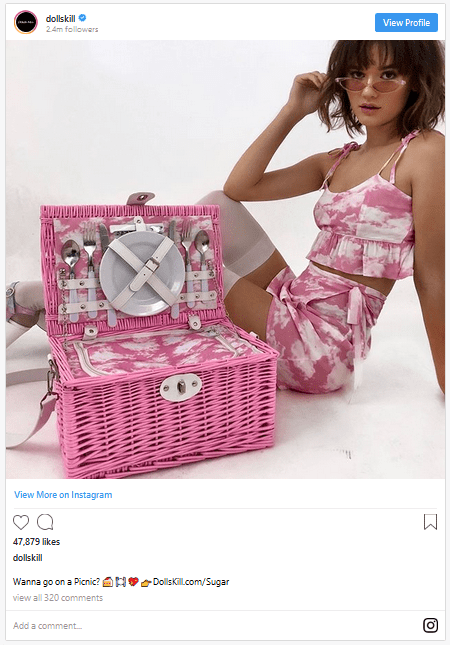
A lot of brands got their break on Instagram’s ads, but they wouldn’t have gotten so far without good shots. Dolls Kill, for example, is known for their amazing shoots, and owes a lot of their success to their active social media marketing.

Going to shoots is a confidence booster.

When I first got into modeling, I did it because I felt insecure. I needed to gain confidence, and I felt that being a model would help me see my beauty inside. To a point, it worked. I felt better and people treated me better.

Taking the time to hire a professional photographer and working on a photoshoot is an amazing experience. It’s something that will put you in touch with a side of yourself you didn’t know you had.

It will make you feel like a star, and you’ll be shocked at how much better you feel.

Professional photography can help you express your creativity.

If you’re creative like me, you probably use social media as an outlet for your imagination. Many creatives have images and art they want to make, but don’t have the skill to fully make those concepts come to life. This is doubly true with visual arts like photography.

A pro will have the equipment, knowledge, and skill to make your ideal images come to life. Those who want to flaunt their creative side would be wise to hire a professional photographer—or at least, pair up with them for a series.

For example, a shot like this wouldn’t be possible with yourself, the best professional online photography courses to up your game, and a selfie stick.

You don’t have to look too far to find a photographer that’s affordable.

Most people who want to hire a photographer think of wedding photography prices and wince. It’s true; most wedding photographers are pretty expensive.

However, that doesn’t mean you can’t afford a pro—or someone damn close to it. Student photographers are often less expensive, and at times, will be willing to work for free in exchange for practice sessions.

This beautiful photo was taken by a student photographer. Need I say any more?

It will help others see you in a new light.

You want to know the biggest reason why you should hire a professional photographer to take photos of you once in a while? People notice the impacts of photography and social media. Professional shots show people that you mean business. It shows people that you are working towards something—and that you demand a certain level of respect.

By

Sourced from PHOTOGRAPHY

NEW YORK (AP) — The growth of the internet and social media has changed the way small businesses market themselves — the variety of online marketing channels allows businesses, whether they serve consumers or other companies, to focus on a broad or narrow population.

But many owners find that low-tech marketing methods can work for them. For example, a new retailer or restaurant might send discount coupons through the mail to homes in their area. Some owners who consult or provide services like accounting may find that networking and word-of-mouth are their best bets for finding clients. Often, it can take trial and error to find the right approach.

Before owners pick a marketing channel or channels, they need to answer some key questions for themselves, says Ramon Ray, a small business consultant who often speaks publicly about marketing. Who is your target market? Are you clear about how your service or product will help them?

Here are some tips from small business owners about selecting a marketing method:

— Owners should consider which marketing method is the best way to get information to prospective customers to help build a relationship, Ray says. For example, an accountant could offer in social media posts to send tax tips in return for a potential customer’s email.

“I’m not trying to sell to the customer first,” Ray says. “I want to get their attention.”

— Social media can be ideal for start-ups. Carolyn Bothwell, whose marketing consulting business is just about a year old, social media has been low-cost and effective. “Over 80 percent of my inquiries come in directly from Instagram,” she says. Many of her clients are also young companies and social media channels including LinkedIn and Facebook have worked for them.

— Different social media channels will yield different results. Germain Chastel, CEO of technology consultant NewtonX, says Twitter helps the company be more visible — it shows up at the top of Google searches. LinkedIn is the social media channel most of the company’s clients use, so it’s a natural to try to reach them there.

“You just need to be on the channels that can lend real value,” Chastel says.

— Face-to-face contacts can be just as valuable as online marketing. Robyn Lanci, owner of Owl PR, a marketing firm, has “found the best methods for marketing my business are networking groups and pure, organic conversation.”

Follow Joyce Rosenberg at www.twitter.com/JoyceMRosenberg . Her work can be found here: https://apnews.com

Sourced from AP News

By Ryan White

These three value-driven strategies will improve your social media game and help you build a loyal following on Instagram.

Social media has taken this generation by storm. Nowadays, your online following is like your resume. Many millennials see your following and engagement numbers as equivalent to your overall credibility.

Even the big guys – Apple, Starbucks, Taco Bell and many more – have turned to social media as a way of business. They realize it is the future and the best way to reach young people today. Facebook ads, for example, made over $40 billion in total sales in 2017.

I truly believe that this new wave is only going to get bigger – and the people who build the largest brands over the next five years will not only make the most money but will create the most impact in the world.

We live in a time where anyone with an internet connection can earn a living. We are seeing the rise of digital entrepreneurs as we speak. That said, things have definitely changed when it comes to monetizing through social media.

The social media space is a nonstop evolution process. It’s no longer just about being active online or posting an ad for your business – it’s all about the brand. People only buy online from brands they trust and have an actual connection with. Too many people try selling before establishing a relationship with their followers, which doesn’t work like it used to.

I want to show you how to build a cultlike following of excited and engaged people from around the world so you can turn that into an income stream for yourself. We are going to focus on Instagram, as it’s the fastest-growing social media platform, with over 1 billion active monthly users and counting. Instagram allows you to simultaneously grow a brand on Facebook as well – another big perk.

To do this, as an example, I want to share with you three strategies that my friend and Instagram expert Alex Lombard and I are currently implementing to crush it in 2019 with our brands. These strategies work for both a business owner and an individual looking to create a presence on Instagram.

1. Build your personal brand.

The first strategy is to focus on building up your personal brand on Instagram. It doesn’t matter who you are, what you’ve done or what kind of business you own – the world wants to know you. Your buyers will arise and become more active when they see your face and hear your voice. It gives your potential customers the ability to build a real connection with you.

2019 is all about the rise of the personal brand. People are taking over industries by simply documenting their life through their Instagram feed. Things like starting a podcast, doing live videos and posting quality, value-driven content seem to be the winners moving forward on Instagram.

One powerful way to accomplish this is through what’s known as influencer marketing. This simple yet effective strategy made over $1 billion in revenue in 2017 and has helped millions of brands explode on Instagram.

The idea is that you reach out to major accounts within your niche market and ask them what it would cost for them to post your photo or video on their account, exposing their followers to you. You may even be able to collaborate for free in return for you promoting their brand on your account. It’s a common win-win tactic that, when used correctly, can take your brand to another level.

The key is to become known in your industry, to become the go-to expert in your specific field, and one of the best ways to do that is by building up your personal image online, particularly with Instagram.

2. Build an engaged following of people who love everything you do.

Having a lot of followers on the front end looks really good and is the starting point to establish yourself as a figure of authority. However, without a back-end following of truly engaged people, you won’t see true engagement or ever really sell anything. The goal is not only to establish credibility but also to build a culture with your followers so they listen and take action on everything you say.

There are many ways of doing this, but by far the most effective is the story feature on Instagram.

The first strategy of Instagram stories is to provide as much value as possible. Everyone on Instagram is trying to sell you something, but few provide any real value. Remember, no one cares what you know until they know that you care!

Find creative ways to do this. For just a few examples, you can give value by simply uploading motivational or inspiring content, sharing tips and tricks you have learned inside your niche or industry, or actually giving something of value away for free to your followers. E-books, courses, cheat sheets and video recommendations are all great and easy value-adds that people love to receive.

The second strategy for building a cultlike following through your story feature is showing your day-to-day life to your followers. This strategy is what allows your followers to really connect with you on a deeper level. An example of this would be you waking up in the morning and taking a video of you talking about how excited you are for the workday and sharing a tip about your morning routine. As dumb as it may sound, it works.

Another example would be you walking across a stage accepting an award for something. Your story is a peek into your actual life, and I recommend showcasing the good, the bad and everything in between. It shows you are human and allows you to not only establish some credibility with your followers but also connect with them. We live in a filtered world, and the brands that are raw and real will take the upper hand in 2019.

3. Create a clear message through quality posts.

Content is king on Instagram – on any social media, for that matter. One of the biggest mistakes that so many people make is that their content doesn’t portray a clear message in an effective way. If I click on your profile, I should know within seconds what type of brand you have, what niche you are in and what I will get by following your account. I recommend a few steps to achieve this:

  • Decide what type of brand you are building. Is it a fitness page? A sports page? A motivational quotes page? The best way to do this is by starting with whatever you are excited and passionate about. You can’t hit a target that isn’t there.
  • Design your content around that overall theme. If your page is all about health and fitness and the majority of your content is about your favorite Netflix show, you won’t make it far. Post content related to the story you are trying to tell people.
  • Follow a posting structure. I recommend making one or two columns on your feed the same style of photo. This provides clarity for your potential followers and structure for yourself as to what you post. An example would be two columns that show your personal life and what you are all about, while the third column is motivational quotes with a white background.
  • Quality content will make or break your account. You don’t need to live the filtered life, but you do need to make sure your content is sharp, high-quality imagery. Blurry images or video, for example, will push people away. Social media is a visual stimulus, so make sure your content sticks out to capture the short attention span of new followers.

At the end of the day, Instagram is all about clear, concise and quality content. Take some time to figure out what your brand is all about, and create a structure to paint that vision to your followers.

These three strategies work, plain and simple. The ones who apply them consistently over this year will be ahead of everyone else come 2020. Go and set yourself up for success in the new digital age!

To connect or mastermind with Alex or myself concerning social media tips and strategies, you can reach us on Instagram at our handles: Alex – @visionwall | Ryan – @ryanwhite

Feature Image Credit: Worawee Meepian / Shutterstock

By Ryan White

Ryan is a 7 figure digital entrepreneur, influencer, investor, press contributor, and speaker. Ryan founded the globally recognized social media marketing company Social Revelation which helps business and personal brands increase their digital footprint and brand awareness online. Ryan’s company manages the social media strategy for several seven to eight figure earners who are top performers within their industry. He has curated a personal online network around 500,000 people from all around the world. Ryan has also been featured on the award winning podcast “Entrepreneurs on Fire” hosted by John Lee Dumas and on the live television show “Good Morning LALA Land” in West Hollywood.

Sourced from business.com

Sourced from MEN STYLE FASHION

The digital platform has led to the immense growth of social media. This has led to growth in a lot of areas on the internet including trade, advertisement and marketing. There are so many sites where you can advertise your brand, but which is the right one? It can get very confusing and overwhelming to make such a decision. Although some sites may not need too much investment financially, they can really take up your time.  One effective way to get to know the perfect site is to understand your audience, commodity or services and markets.

Here are some major social site and how they can do for your brand

Facebook

Facebook is a pretty old social media site and is among the most used among all generations. This is the safest choice when you want to market your brand. Statistics show that over 2 billion people across the whole world have active accounts on this platform. They also share videos, audio and other content types.

You can market your brand by creating your own page with your brand name and description. Getting followers on facebook is easy, you just have to send some follow requests to your audience and convince them to share them with their friends and family. Growing the page won’t be that hard also, as stated there is a numerous audience on this platform. Facebook also offers you the tools to target the audience specific to your brand and advertise to them.

facebook

Instagram

One fun fact is that Instagram is that it is owned by facebook. There close to one billion people who are active of this platform and they share posts, pictures, videos and stories. Statistics show that more than half of these people follow at least one brand. This is the best place to advertise your brand or sell your goods and services.

Instagram offers you the ability to showcase your products to your target audience while pinning the location at the same time.  You can use this visual platform to your advantage by personalising your brand and making it different from the rest.  You can also get followers who have a specific interest for your brand. There are some few methods you can use to give your brand more notice. You can choose to use the hashtag strategy, tag other followers in your posts or even pay for story advertisements.

If you’ve only created your Instagram business account, there is another way to get more followers. You can choose to engage different people through likes, comments or if you don’t have time you can get auto comment for your Instagram posts and let it do the work for you.

instagram

Twitter

Although this platform is more social than marketable, it can work as a real great advertisement.  For the most part, twitter is a platform for trending news, updates and opinions on everything.  Users on twitter follow accounts they would like updates on.  Your update is restricted to a number of updates, making it pretty short and precise.

The good thing is, you can use the hashtag to categorise your content with key words about your brand and what you have to offer.  Twitter will need you to be more engaged with your audience. You will need to tweet several times daily in order to reach a certain number of audiences, or just a target.  Most twitter users are critics and tend to be college educated, not every brand will pass in this platform.

Linked in

It is estimated that one person in every 4 or 5 social media users owns an account in linked in. It is probably not as popular as other platforms, but is a great marketing platform.  It is used equally by both genders and is a great platform for marketing any form of resume or job.  You can use this to find employees or get new jobs.

linked in

YouTube

This is one of the most popular social media platforms across the whole world.  You tube has an active user list of more than 1 billion users. It is estimated that most people who won social media account spend one third of the activities online watching videos on YouTube.  This is the widest platform when it comes to different cultures and languages. There are close to 80 different languages on this platform.

The advertisement and marketing opportunities in this social platform is outstanding.  Most people who own accounts on YouTube use it to promote themselves, and some products.  The audience is both old and young making it convenient for most types of products.

Pinterest

Like Instagram, this platform is mainly a visual platform.  One amazing fact is that Pinterest is preferred by more female compared to male. This means that if you want to use for marketing, you have to ensure your brand suits the target market.  This platform is also thought to likely to convert your marketing into a purchase compared to other social media accounts.  One amazing feature on this platform is that you can pin the purchase product on your photo and the buyer will get direct access.

Snapchat

I think we all agree that snapchat is the least expected for marketing, branding and business. At first, it was more appealing to teenagers and younger generations.  The application has very fun features and filters which draw the younger generations.  It has an outstanding 300 million users. It offers you a creative and fun way to advertise your products and services.  The filters are ever changing, making it exiting and alluring for the young.

Manage several platforms

Keep in mind that social media platforms are ever changing and require you to make changes as you go. Instead of advertising your brand in one platform, you can use the opportunity to your advantage by creating accounts with your brand in all these platforms. Ensure you have an idea of what brand will work well for the target audience before putting it out there.  If you are too busy, autolike applications or social media managers can do the work for you.

snapchat

Sourced from MEN STYLE FASHION


By 

Facebook might be under fire for questionable data management practices, but that doesn’t mean businesses should shy away from social media as a means of connecting with customers.

In fact, high-profile breaches of consumer trust have lead to a call for authenticity, and businesses who fail to connect on social media and through other digital methods will miss the opportunity to demonstrate authenticity and earn consumer loyalty.

Why is consumer trust at an all-time low? Well, the ongoing deluge of scandals involving misuse of consumers’ personal data has had a devastating effect. For example, Facebook’s rocky year ended with a harsh New York Times expose, revealing that the company sold out even more user data than previously thought to a whole bunch of companies — including Netflix and Spotify, who supposedly can now read your private messages.

Facebook isn’t alone in defending its data security policies — during the first half of 2018,  3.2 billion consumer files were compromised worldwide. Yet even as consumer fears around privacy invasion grow, (last year, for example, Pew Research found roughly half of Americans don’t trust the government or social media sites to protect their data) we continue to rely on social media platforms for information about what products and services to buy.

Oh, the Irony!

So, here we are. Consumers don’t trust the government or social media, but they rely on review sites and social media giants like Facebook for information to guide their purchasing decisions. Case in point: Facebook continues to add more active users, and many think the #deletefacebook movement is self-defeating — the # itself connotes the idea of social media channels aggregating data for our perusal.

It’s up to businesses to figure out how to be seen as trustworthy using an inherently untrustworthy marketing medium. In this contradictory environment, how do businesses fare well? Provide exceptional service. Hold yourself accountable. Be authentic.

What Consumers Really Want

Reputation.com’s 2018 Retail Reputation Report uncovered powerful, actionable insights into what retail customers really want — staff competence and friendliness, short wait times and product value all play significant roles in swaying customer sentiment. All of these things are reflected in online reviews and social commentary, and contribute to a business’s overall Reputation Score — the sum of all your efforts to optimize your online presence.

Our report lists the winners, with Lego at the top, along with Trader Joe’s and (you guessed it) Nordstrom. And we found that a high Reputation Score correlates with a 3.9% boost in sales.

But brands should be careful not to overlook another important factor that goes a long way in earning consumer trust — authenticity. Eighty-six percent of people say authenticity matters when deciding what brands they like and support. To win the hearts and business of your target customers, you have to convince them you are trustworthy and authentic.

Being authentic means being accountable and upholding your brand promise. It requires transparency and a dash of vulnerability. When a brand is authentic, consumers know it, appreciate it and prioritize their spending accordingly.

Think about it. What are people looking for when they have a bad experience at a store, or when a service they access online is temporarily unavailable. Usually an apology combined with a concerted effort to right the wrong — in other words, being authentic —  will quell a consumer’s anger and resentment. And, it can keep bad reviews or negative posts from spiraling out of control.

Forrester’s 2018 Customer Experience Index found that the way an experience makes customers feel has a bigger influence on brand loyalty than any other factor. Elite brands provided an average of 22 emotionally positive experiences for each negative experience.

When it comes down to it, we’re all human. We respond to being treated well. We reject what’s fake or dishonest, and we are drawn to authenticity. It seems so easy, yet for many brands, it’s difficult to accomplish.

Here are some simple ways to build the authenticity your audience is looking for

  • Listen and respond to your customers publicly online. Responding to a critique or complaint online is more critical than ever — 54% of consumers expect a response in less than 60 minutes. And Gartner found that not answering customers on social channels can lead to a 15% increase in the churn rate for existing customers. Make sure you have processes and the right technology in place to monitor all your social media and review sites continuously, and set up alerts to notify you when reviews come in, so you can respond right away.
  • Address complaints and take action to correct issues. The content in reviews and social commentary contains clues to a better customer experience — but you’ll never know they’re there if you don’t leverage technology to collect and analyze the text. That’s what AI-based solutions can do. They pull in content from all over the web, apply machine learning and uncover all kinds of useful information, like where your locations can improve. Having this information on-hand can help you optimize the customer experience (and also boost profits).
  • Share authentic user-generated online content, from reviews, social media and surveys. Lean on your advocates to tell your story. In the customer’s mind, they are way more credible and trustworthy than you are.
  • Own up to mistakes: If there’s one thing we’ve learned from recent reputation management failures — think United Airlines and Starbucks — it’s this: Honesty and humility earn points with consumers. Be authentic in your ability to admit you screwed up, and do better next time.

Feature Image Credit: Getty images

By 

I’m the Founder and Chairman of Reputation.com. I started my business because digital privacy, Big Data and online reputation are issues that impact everyone from individuals to massive corporations. People should be the center of the Internet machine – not cogs in its wheel. More empowerment online, not less, not what we have now. Follow me @michaelfertik.

Sourced from Forbes

By

What’s the best way to measure Return on Investment when planning social media campaigns? How can you justify the time and the budget spent on them?

Ever since social networks showed up in our lives, there has been an ongoing discussion among marketing teams surrounding whether social media is worth the time and effort invested into it.

Many of us recognize its benefits as part of a digital marketing strategy, but it isn’t always easy to measure its effectiveness. This has become even more challenging as budgets have grown larger.

As social networks have grown (both in size and in number), so have the expectations from their usage. It’s no longer enough for a company to justify social media marketing by counting the number of likes or comments they receive.

There is a need for a proper analysis of each platform, along with the right use of metrics that can establish which are the most effective social networks for each company.

The Challenge of Finding a ROI for Social Media

Return on Investment (ROI) has rapidly become a buzzword among marketers: a phrase that is often used, but rarely defined.

Not every company will see the same ROI from using social media. In fact, not even every campaign will yield the same ROI for a specific company. This makes it harder to answer the question:

“What is the ROI of social media campaigns?”

Measuring Return on Investment doesn’t have to be about putting an absolute figure on the value of a social media campaign; it’s more about gauging whether or not your campaign has achieved the goal that it set out to achieve, to an extent that justifies the resources you invested into it.

Thus, the best way to respond to this question is by splitting the answer into three types of campaigns. This makes it easier for every company to find the goals that fit their campaign and thus, the ROI that they should expect from them.

Image: Quicksprout

Brand Awareness

A campaign that aims for brand awareness is attempting to increase a company’s exposure to a particular audience.

The KPIs for a brand awareness campaign are usually an increase in:

  • reach
  • followers
  • traffic

The idea is to use the campaign to reach a wider audience that might be interested in the brand’s particular product or service. As social media users become more demanding year on year, it’s important to create such campaigns to try to grab their attention, until they are ready to start the process of becoming customers.

The ROI in this case has to do with the time and the budget spent on brand awareness, and the change in KPIs that resulted. Campaigns that aim for brand awareness may require a large budget invested in reaching a wider audience, so it is crucial to be able to show results that justify this.

  • Did the campaign actually increase the number of followers and interest towards your brand?
  • Did traffic towards your site increase during the time of the campaign?

Increased Engagement

A campaign that aims for increased engagement for a brand is trying to spark discussions about that brand in the most genuine way.

The aim of increasing engagement in a brand’s social network has to do with a wider attempt to boost social media interaction among the target audience. Engagement serves as a good indicator of a user’s sentiment and interest in a brand, and it can be monitored through:

  • number of likes
  • number of comments
  • number of shares
  • type of reactions (on Facebook)
  • brand mentions

The ROI for the campaigns of increased engagement has to do with the proof that the time spent towards engaging with the audience had an actual value.

  • How has the engagement increased during the time of the campaign?
  • Was there a genuine interest from social users towards the brand?
  • What are the chances that these people will continue interacting with your brand in the future?

Lead Generation

A lead generation campaign is one that uses a tangible hook to direct social users towards a specific landing page. Whether it’s a free gift, a report, or an ebook, brands use lead generation campaigns to increase:

  • traffic to the site
  • number of email subscribers
  • number of downloads for a specific piece of content
  • number of form completions

Lead generation campaigns can be used to grab the audience’s attention and make it easier to have a further discussion with them. The other advantage of running lead generation campaigns is of course gaining the “lead” – the customer’s contact information – that gives you a means of marketing to them more over the long term.

It’s important to aim for relevance and value when generating leads, as these two elements combined increase the chances for a social user to turn into a customer further down the funnel.

The ROI for this type of campaign is to justify the budget spent on the hook and the actual campaign, towards the set goals. It’s good to start the campaign with specific numbers in mind, as the ideal metrics that a campaign can reach. This estimate helps a brand have a clear goal without losing the focus on metrics that are not the primary goal.

For example, if a brand offers a free ebook in a lead generation campaign with the goal of increasing the number of email subscribers, the key metric is the actual number of people who were interested enough in the content to volunteer their email addresses.

If there is an increase of social followers along with it, that can serve as an additional success, but it’s still not the primary goal that the brand was seeking to achieve.

When examining the ROI for such campaigns, it’s a good idea to ask:

  • Is my brand closer to reaching its established goals?
  • Was the hook effective for the particular campaign?
  • Did I set the right goals to measure the effectiveness of the campaign?

Social Media ROI Is Not A Myth

During the early years of social media marketing, establishing ROI was more challenging, and this led to the misconception that social networks are not as effective as other forms of marketing.

However, times have changed and we’re lucky enough to discover every day all the creative ways that social media marketing can be part of a wider digital strategy.

As social media usage increases, it’s more exciting than ever to come up with the best campaigns that will help you get closer to your goals.

All you need is the measurement that will justify your efforts.

By

Sourced from Jason Houck Media

By Gabriel Shaoolian

By following these tips, you’ll be sure to create a digital presence that captivates millennial consumers.

Ecommerce sales in the United States are projected to surpass $504 billion by the end of this year — and millennials are historically a driving force in the ever-increasing growth of online shopping.

What’s better, they are currently the most valuable target demographic for modern businesses.

But, with a plethora of digital marketing tactics, remarketing campaigns, email campaigns and more inundating consumers, how can brands capitalize on this digitally inclined demographic to boost their own bottom line?

Target them on social media, of course!

Young target audiences flock to social media in droves.

A study from the Pew Research Center examined U.S. adults’ use of social media. All in all, the overwhelming majority of Americans regularly use social media. In fact, a whopping 68 percent alone frequent Facebook.

However, it seems that the younger the user, the more prominent the social media use. The research found that 88 percent of 18- to 29-year-olds and 78 percent of 30- to 49-year-olds use at least one social media channel — which almost perfectly aligns with millennials’ age group of 22 to 37.

Studies show that social media platforms influence ecommerce shopping experiences with millennials.

My company DesignRush.com conducted a study that analyzed 219 millennials’ ecommerce behaviors on social media platforms. We found:

  1. Thirty percent of millennials purchase products directly on Facebook.
  2. Facebook, Instagram and Pinterest foster the most brand trust and help young adults find discover products they would actually use.
  3. Snapchat is irrelevant for ecommerce and branding — only 5 percent of millennials believe it creates the most trustworthy relationship.
  4. Sixty-one percent of millennials trust a friend’s endorsement the most, followed by their own experience with a brand (51 percent) and website reviews (48 percent).
  5. Thirty-one percent of respondents said social media influences their purchases. However, they complete the transaction elsewhere.

The survey’s key findings show that social media marketing has a direct effect on brand visibility, awareness and conversion rates. These results also reinforce the ideas that the best platforms are those that are robust, ever-evolving and user-centric — such as Facebook.

Here’s how to integrate your ecommerce and social media marketing strategy.

The findings of millennials’ social media shopping habits can be used to improve your own brand’s strategy.

After all, if brands were left to guess which platforms would appeal to a younger demographic, they might find themselves going all-in on Snapchat. However, despite boasting a hefty 300 million active users, Snapchat lacks the finesse, brand discoverability factor and website traffic capabilities to truly inspire meaningful purchases or build long-term brand growth.

Therefore, businesses shouldn’t leave themselves to guess which social media channels will inspire a millennial audience, but instead look at more specific insights when formulating a strategy.

Luckily, the survey’s findings outline a few simple fixes that can drastically improve ecommerce conversions through social media, including:

Invest in Facebook initiatives.

Millennials audiences (and, frankly, all demographics) overwhelmingly rely on Facebook for their social media needs. Luckily, there are plenty of tactics that can improve your brand identity, customer services and even direct purchases right on the platform. Try strategies such as:

  • Organic and sponsored posts
  • Retargeting advertisements
  • Advertisements targeting a custom audience
  • A fully functional ecommerce store, embedded directly into the social platform

There are several programs to help you achieve the latter. These include WooCommerce, WP-eCommerce and Ecwid. By creating a separate Facebook shop, you can target potential consumers with ads and products that might love and make it easier for them to complete a purchase, which increases conversion rates.

Utilize user-generated content.

A younger target audience trusts real people as opposed to influencers and celebrities (although influencers do historically perform better than traditional famous people). Therefore, whenever possible, humanize your brand by including user-generated content.

Repost real people’s photos on Instagram, ask for personal testimonials or even try a social media video featuring real consumers. This will foster an honest brand-to-consumer relationship that is proven to grow brands and increase revenue. Warby Parker, SoulCycle and Aerie, respectively, are all great examples of these user-generated content tactics in action.

Plus, don’t forget website reviews! Make it easy for customers to leave reviews on your website — and give them a few options for rating the product, such as star ratings, images, recommendations and paragraph descriptions. Not only will this build credibility with new customers, but it will make your returning consumers feel as though their voice is welcome and will be heard by your brand.

Build an authentic, well-branded online community.

Although integrated ecommerce shops and targeted advertisements are crucial for reaching millennials on social media platforms and transforming them into regular customers, taking the time to create a community that represents your brand will result in longevity. To achieve this:

  • Ensure you also publish non-paid social media posts.
  • Respond to comments and customer service requests.
  • Create campaigns that engage consumers.
  • Ensure your imagery and messaging.
  • Don’t just promote your products — add some informative posts and information to your social channels, too.

These strategies can still add business value by driving traffic to your website, showcasing your area of expertise or promoting your brand’s core values. However, going the extra mile and incorporating these tactics will cultivate a well-rounded and comprehensive social media presence that will appear genuine to consumers and add validity to those oh-so-important ads and ecommerce promotions.

Social media and ecommerce strategies can work together to grow your business.

It’s undeniable that social media marketing strategies directly influence conversions and revenue. However, it can be difficult to understand how to leverage social media platforms to ensure success.

By following the tips above, you’ll be sure to create a digital presence that captivates millennial consumers. This will empower you to transforms them into life-long users of your brand for decades to come, ensuring a long line of success for your business.

Feature Image Credit: Image credit: Elizabeth Fernandez | Getty Images 

By Gabriel Shaoolian

Sourced from Entrepreneur Europe