Tag

Social Media

Browsing

By 

Millennials are often criticized for their over-reliance on social media. They often prefer online health advice to doctor’s visits; plan their vacation based on the destination’s “instagram-worthiness” and cite social media as their main news source.

However, when it comes to disaster management, judging millennials for their “obsession” is tediously wrong-headed, it can do a real disservice. In fact, there may not be a better tool than social media when it comes to responding to a disaster, organizing resources, and mitigating damage.

Not only are millennials in a good position to act as leaders in these situations, they can serve as educators as well. Here are for some practical uses of social media during a disaster as well as some best practices organizations can implement.

Disaster preparation: create smart social media policies

Unfortunately, too many companies create reactionary policies when it comes to social media. These policies tend to focus on mitigating the behaviors of a small percentage of abusers rather than taking a positive approach and maximizing social media’s potential as a business tool.

When disaster strikes, these policies can be very dangerous. When employees or customers are unable to access social media they are limited to other forms of communication. Considering that other pathways to getting information out could be limited that could be problematic, policies that involve blocking access to social media could be a bad idea.

Community forums can be used to share information and resources

Neighborhoods and other community groups are already using social media to connect with one another and share information. Location based groups on Facebook and other social media platforms are being used to share information about community events, offer items for sale or trade, and even as a source for help and advice.

In 2017, FEMA announced that it would be leveraging the Nextdoor app to send location relevant messages during disasters. Using messenger apps in this way is ideal for keeping residents up to date on information and resources that is as useful to them as possible.

Even without the participation of government agencies, these community forums can still be an extremely useful resource. Imagine residents impacted by flooding being able to inform each other which local roads were passable and which pharmacies or grocery stores remained open.

Brands can use social media to provide practical help and information

Disasters can disrupt supply chains and negatively impact business operations. That can negatively impact a business’ ability to provide needed supplies to customers during disasters. Not only can this leave already suffering communities reeling, it can be a PR disaster for brands as well. Worse, during these times brands’ responses on social media often ranges between tone deaf and wildly insensitive.

This is a shame because businesses have the ability to utilize their social media presence to broadcast important information to a wide audience during and after a disaster. They can provide updates on availability of supplies as well as informing the public of resources they do have to offer. Millennials who are connected with these brands can help to spread that information to their own followers.

Picture and video sharing can help agencies gauge impact

People who use Instagram and other sharing sites can provide extraordinarily valuable resources to public and private agencies tasked with rendering aid. By posting geotagged pictures to agencies’ Instagram pages, or by tagging various agencies, citizens can help officials gauge what is happening and where. This can help them to determine where to send responders and route supplies.

When agencies are slow to respond, geotagging can also get the attention of news outlets and other news agencies. This can serve the dual purpose of getting information out as well as leveraging media pressure and attention to get help where people need it.

Bloggers can share vital information that can be used after a disaster

While a blog certainly isn’t the most efficient way to spread information during a disaster, it can be a valuable resource during the post-mortem period. When kept up to date during a disaster, a blog serves as a time-stamped written recording of events and experiences. This can be much more useful, for example, in identifying successes and failures in established procedures and protocols than relying on people to properly recall things.

Community agencies can build confidence with regular updates

Not much causes more dread in a disaster than radio silence from the powers that be. Community and government agencies can work to establish a solid social media presence, and cultivate a following prior to disasters. Then, they can use those same social media accounts to keep citizens updated.

When disaster strikes, both citizens and entities can use social media as a powerful tool. It can be used to organize resources, spread information, and provide education.

By 

Sourced from Forbes

By Joshua Nite

Time moves faster on the internet. Last month’s memes are about as relevant as a 1920s vaudeville show. Even a bona fide viral phenomenon from just a few years ago seems quaint and dated.

Twitter and Facebook are only 12 and 14 years old, respectively. But they’re aging at internet speed. And right now they’re having a midlife crisis. Instead of buying a sports car and taking up craft brewing, though, that crisis is manifesting as existential dread and intense soul-searching.

The people who run the platforms are publicly examining their purpose and societal impact. More importantly, the people who use the platforms are asking tough questions:

What am I getting out of my time spent here?

Who is this platform structured to benefit?

Should I be trusting my data with this platform?

Is this a positive or negative thing I have let into my life?

As marketers, we have to ask ourselves the same questions. And we should add one more: Is our social media marketing valuable to our audience?

If we’re not adding value, we’re adding to the problem.

Social media is in crisis right now. But that doesn’t mean marketers should abandon ship. It means we have to do our own soul-searching. We need to take our social media accounts off of autopilot and approach them mindfully. Here’s what marketers should consider as we weather the social media midlife crisis.

How Does Your Social Media Marketing Make People Feel?

A recent Hill Holliday report found that a majority of 18-24 year olds were at least considering abandoning social media. Over a quarter said that social media hurts their self-esteem or makes them feel insecure. Thirty-five percent said there was too much negativity, and 17% said they were considering quitting because social media makes them feel bad about themselves.

Connecting with your brand on social media should make a person feel better. They should feel that your brand shares values with them, is paying attention to them, can help meet needs and solve problems.

It’s worth evaluating what your brand is posting on social to make sure it’s helping spread positivity. The old days of scaring or shaming people into buying a product are more than over. The overarching message of any brand on social media should be some variant of: “This is what we’re like. If you’re like that too, you’re awesome. Here’s some help you didn’t even know you needed. Here’s something to make your day a little brighter.”

Connecting with your brand on #socialmedia should make a person feel better. They should feel that your brand shares values with them, is paying attention to them, can help meet needs & solve problems. – @NiteWrites Click To Tweet

Is Your Brand Using Social Media to Be…Well…Social?

Let’s be honest with ourselves, shall we? No one opens their Facebook app saying: “Gosh, I hope I have some satisfactory brand interactions today.” People use social media to connect with other people — you want to see if your high school best friend had her baby, check out your uncle’s kitchen remodel, or see pictures of your parents’ second honeymoon.

Most brands on social media have been pretty lousy at giving people that type of person-to-person interaction. Which explains why people are moving their conversations out of the public eye, into private groups in apps like Facebook Messenger and WhatsApp.

How can brands be more social on social media? It starts with transparency and honesty. I love Wendy’s’ sassy Twitter account as much as the next jaded Gen X’er, but snark only takes you so far. Use your social media posts to introduce the people behind your brand and the values they stand for. Then aim for meaningful interaction: When someone reaches out to the brand, make sure the reply is prompt, personal, and useful.

How can brands be more social on #socialmedia? It starts with transparency & honesty. – @NiteWrites Click To Tweet

Is Your Brand Connecting with People Your Audience Trusts?

At the heart of it, there’s a limit to how well your brand can connect with individual people. Even when you’re honest, transparent, and engaging, a brand is still not a human being.

The relationship dynamic will always be a little strained.

That’s one of the many reasons why influencer marketing works so well. Influencers can co-create content with you and amplify it to their audience on a much more personal basis than your brand could manage on its own. Find the people your audience already follows — in other words, the ones they want to interact with. Then work with these influencers to bring their audience great content that only your brand could have helped create.

Working with influencers helps put the personal, social touch back into social media marketing. It puts the emphasis of your brand interaction where it belongs: person to person.

Working with influencers helps put the personal, social touch back into #SocialMediaMarketing. – @NiteWrites Click To Tweet

Getting Beyond the Crisis

When social media platforms first launched, most of us jumped right in. We found our high school classmates. We connected with friends from college. We added co-workers and family members and friends of friends, and we shared everything. Over time, we developed routines. Now, people are finally starting to analyze just what social media means to them. Most will keep their accounts open — but the majority will change the way they interact with the platforms.

Sound familiar? Most brands jumped headfirst into social media, developed routines, and then many of us went on autopilot. Now it’s time to question what we hope to get out of social media, and whether our tactics are getting us closer to those goals. And most importantly, making sure our goals match what our audience wants from us.

By Joshua Nite

Sourced from Top Rank Marketing

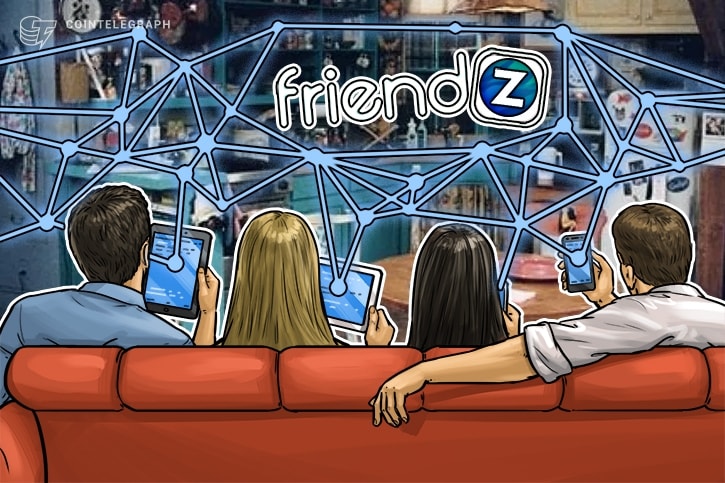
An Italian-born startup has used Blockchain to build a peer-to-peer digital platform that taps the power of word-of-mouth marketing on social media.

Friendz, with offices in Milan, Rome and Madrid, allows companies to engage armies of social media users to promote their brands. Users get rewarded for creating and sharing content on brands with their friends. The startup was co-founded in 2015 by the trio of Alessandro Cadoni, Daniele Scaglia and Cecilia Nostro.

Early backing

With €500,000 in financing, Friendz has built a strong technology platform and assembled a roster of clients including Jeep, Disney and Reebok. According to Friendz, the three-year-old company has run marketing campaigns for over 200 brands, creating and promoting branded content with the help of 200,000 users with a combined reach of 1.5 bln. In 2017, the company reported €1.2 mln in revenues.

Friendz opened an ICO on March 1 and has already carried out more than 20,000 transactions from around 14,000 micro contributors. It has sold 22 mln ETH.

One of the few marketing companies leveraging the power of Blockchain, Friendz is betting on lower-cost, decentralized marketing on social media, as digital advertising spend steadily grows.

Digital ad spending to be worth $378 mln in 2021

Global ad spending is projected to rise to $757 bln in 2021, up nearly 30 percent from $584 bln in 2017, according to eMarketer.

In 2017, digital ad spending overtook television advertising for the first time, as it reached $209 bln worldwide, according to Magna, the research arm of media buying firm IPG Mediabrands. In 2020, Magna expects digital ad spend to account for 50 percent of all ads, up from 41 percent in 2017. The digital ad market could be worth an estimated $378 mln in 2021 if one extrapolates Magna’s estimate with that of eMarketer.

If the two sets of data back Friendz’s business prospects, Nielsen’s Global Trust in Advertising lends even greater support to its “word-of-mouth” model. According to its seminal 2015 survey, in which the leading New York media firm surveyed over 30,000 people, 83 percent of people base their purchase decisions on advice from friends and family or “people we know and trust.” Also, 66 percent trust consumer opinions posted online, the third-most-trusted advertising format.

Friendz eyes B2B business too

Currently, Friendz targets B2C companies to build its business, but it has its eyes on B2B companies too. The company believes its adoption of Blockchain not only makes its platform safer and stronger but, notably, improves its business model and long-term prospects.

The technology would enable its platform to be used by every kind of business in need of creative content, or even “every online activity-as-a-service,” Friendz has said. Examples of potentially new services that can be enabled on the company’s platform include app reviews, bug testing, market research and lead generation.

Currently, Friendz is active in Italy and Spain and proposes to expand its business to other parts of the world, starting with the rest of the European countries, America and Asia.

FDZ coins to be listed on top international exchanges

The FDZ coins are based on ERC20 and are being offered at about $0.067. The ICO has a soft cap of 50 mln FDZ and a hard cap of 750 mln FDZ. It will be possible to trade the coin on the most famous international exchanges anytime after the conclusion of the ICO, the company said.

Tokens bought during the so-called Power Hour received a 40 percent bonus and are locked for one year. The coins will be unlocked proportionally over 12 months. The stipulation, Friendz said, would curb speculation such as ‘pump-and-dump’ methods, and keep the value of the FDZ cryptocurrency stable.

Friendz plans to use the ICO proceeds to expand its business abroad, create a larger global community and for further technology development.


By Bala Murali Krishna

Sourced from COINTELEGRAPH

Disclaimer. Cointelegraph does not endorse any content or product on this page. While we aim at providing you all important information that we could obtain, readers should do their own research before taking any actions related to the company and carry full responsibility for their decisions, nor this article can be considered as an investment advice.

By Tim Hughes

This blog previously appeared on the DLA blog here

The other day I spotted a message from a social media guru where he said that people shouldn’t read sales and marketing books.

Maybe it’s because he hasn’t written one, and I have (so maybe I’m biased), but even before I had written a book, I completely disagreed and still do disagree with this.

There are three reasons for this:

  1. At my previous company we did some research on the “A-Players” in the business. What was it that made these people continually over achieve their number year in and year out? One of the factors was the continual investment in personal training. “B-Players” always said they didn’t have time. “A-Players” realised they had to continually learn new techniques and for that reason alone, books will teach you new things.
  2. I’m continually reading sales and marketing books and there is always something new. A technique or a new way of working I haven’t thought about before. Yes, in many of the traditional sales books I’ve heard (and read it) all before. How many books on prospecting can you read and expect something new. But I’m always finding nuggets about staying ahead of your competition.
  3. The feedback from people who have read my book. I have to admit that Matt and I wrote it in a way to be a “how”, rather than a “why”. So while the first few chapters are about why you need to social sell, we get straight into techniques on how you can change what you do now to meet the way that the modern buyer works. It is, after all, a buyers’ market. There are currently (as I write) 38 x 5-star reviews.

This blog is continued here

By Tim Hughes

Sourced from Medium

By Larry Alton.

Audience segmentation is one of the greatest tools in a marketer’s arsenal.

In traditional marketing settings like direct mail or radio spot placement, narrowing your message to only the most relevant audience can instantly double the effectiveness of your ad (and therefore increase the ROI of your campaign).

Even some digital marketing strategies, like email marketing, offer convenient ways to isolate segments of your audience and increase the targeting of your outbound messaging.

But what about social media marketing, where social platforms aren’t intended primarily as marketing tools and audiences are national or international? Fortunately, there are still a handful of tools and tactics you can use to segment your audiences properly.

1. Proper platform selection

First, it’s worth mentioning that your choice of social media platforms instantly serves as a form of audience segmentation by itself. For example, Pinterest’s demographics tend to lean toward women, so if you have specific marketing messages for women, posting on Pinterest could help isolate that group.

Similarly, Snapchat users tend to be younger than users of other, more popular platforms, and older professionals seem to prefer LinkedIn over anything else. If you’re on multiple platforms, you can use these distinguishing characteristics to decide where to post your material.

2. Targeted messaging (and advertising)

One of the most obvious ways to segment your demographics is through paid advertising on various social platforms. Almost every social media platform offers some level of audience filtering when you opt to pay for an advertising campaign, though these options range from simple geographic targeting, to advanced filters narrowing down audiences to highly specific segments.

Of course, the downside is that you have to pay for the advertising to get access to these features. As you’ll see below, there are other ways to manually segment your audience, but paid advertising does offer one of the best and most thorough means of ensuring your messages get to the right people.

3. Facebook filtering

Facebook doesn’t explicitly allow businesses to create custom lists on its platform, though there is a way to filter the audience you’re messaging without worrying about paying for advertising. For example, you can use post filtering to narrow your audience for a given message down to only local residents—which is perfect for internationally active brands looking to invite people to a local event.

Unfortunately, the Facebook filtering for business pages doesn’t get more advanced than this—if you want more demographic controls on Facebook, you’ll have to pay for them with advertising.

4. LinkedIn groups

LinkedIn groups don’t offer a specific way to filter how your messages are released, but they do offer a nice way to connect with pre-defined segments of different audiences. For example, if you’re selling something specifically to marketers, you can join a national marketing group and use that as a platform for engagement.

There, you’ll be able to post messages, respond to questions, and even engage with people, and you’ll be nearly guaranteed that everyone there is a marketer. Unfortunately, the groups on LinkedIn are mostly limited to the professional realm, so you won’t be able to filter down with age ranges, genders, or other factors.

5. Twitter Lists

Twitter lists offer one of the best ways to organize your followers on social media, but unfortunately, they can’t do much for your outgoing messaging. On Twitter, you can create dozens of different lists, manually separating your followers into different categories such as “top buyers,” “competitors,” or “decision makers.”

You can make these lists public or private, and access them whenever you want. They’re extremely handy for finding out what certain segmented demographics are talking about and are interested in, but they’re not as handy for segmenting your outgoing messaging. It’s not possible to send a tweet or direct message to only the followers within a given list.

6. Separate profiles

If none of the above strategies are working for you, or if your audience segmentation strategy has different demands, consider splitting your company into separate profiles across different social media platforms. For example, you could create a local business page for different geographic segments, or create sub-pages for niche interests of your followers.

This will allow you to build specific audiences and refine your outgoing messaging, but will also present more challenges in your ongoing management.

7. Personal brands

As another alternative to separate profiles, you can consider using various personal brands to complement and enhance your core brand efforts. For example, you could have several different personal brands, each specializing in a different area of your business, working on building up audience segments that can then be used as recipients for targeted messaging.

Make good use of these tools and strategies to segment your audience to more specific, narrower niches. Choose your messages for each niche carefully, and don’t be afraid to go too narrow. The more demographic qualities you filter out, the smaller your audience will become, but that decrease in volume is also associated with an increase in relevance.

By Larry Alton

Larry is an independent business consultant specializing in social media trends, business, and entrepreneurship. Follow him on Twitter and LinkedIn.

Sourced from Social Media Week

Online reputation management is very necessary all of a sudden.

By MediaStreet Staff Writers

Businesses say they plan to allocate more resources to their online reputations in response to the growing popularity of social media and online reviews.

According to a new survey from Clutch, 40% of businesses will increase their investment in online reputation management (ORM) this year.

All this is due to the growing power of social media and third-party reviews sites, which impact businesses’ control over their online reputation.

Clutch surveyed 224 digital marketers and found that more than half of businesses (54%) consider ORM “very necessary” for success. As a result, 34% said they allocated more resources to ORM in 2018, and an additional 43% said they plan to hire a professional public relations or ORM agency in 2018.

Businesses already invest a significant amount of time observing their online reputation, Clutch found. More than 40% of digital marketers (42%) monitor their companies’ brand online daily, while 21% monitor their online reputation hourly.

According to public relations experts, businesses frequently monitor how their brand is portrayed online because they know even one negative media mention can quickly damage the public’s perception of their company.

“When people search for brands online, they tend to search for stamps of credibility,” explained Simon Wadsworth, managing partner at Igniyte, an online reputation management agency in the UK. “If potential customers find anything negative, that could end up being a significant amount of leads the business won’t get from people who are put off from using the service.”

Social media also has shifted the ORM landscape because it gives consumers free-reign to share their opinions and experiences quickly and frequently: 46% of businesses look to social media most often to monitor their online reputation.

By using professional agencies that have expertise in online reputation management, businesses can minimise losing new customers who may be dissuaded from purchasing their product or service.

To read the complete report, click here.


Do you supply services to the Irish Media Industry? Have you listed your company in our Media Directory? It’s free! Everyone’s favourite price! Click here to do it now.

Here’s why you need to get your advertising to zoom in.

By MediaStreet Staff Writers

The relationship between desire and attention was long thought to only work in one direction: When a person desires something, they focus their attention on it.

Now, new research reveals this relationship works the other way, too. Increasing a person’s focus on a desirable object makes them want the object even more – a finding with important implications for marketers seeking to influence behaviour.

The study, published in the journal Motivation and Emotion, is the first to demonstrate a two-way relationship.

“People will block out distraction and narrow their attention on something they want,” said Anne Kotynski, author of the study. “Now we know this works in the opposite direction, too.”

In marketing, advertisements with a hyper focus on a product’s desirable aspect – say zooming in on the texture of icing and frosting – might help sell a certain brand of cake.

Findings suggest the ad could be targeted to people who have shown an interest in a similar product, such as running the cake commercial during a baking show.

This finding also works in other areas outside advertising too. For example, doctors could potentially help their patients develop a stronger focus on healthy activities that they may desire but otherwise resist, such as exercising or eating a balanced diet.

The study’s findings also add a wrinkle to knowledge of focus and emotion. According to a spate of previous research, positive emotions, such as happiness and joy, widen a person’s attention span, while negative emotions such as disgust and fear, do the opposite: narrowing a person’s focus.

“We conceptualise fear as drastically different from desire,” Kotynski said. “But our findings contribute to growing evidence that these different emotions have something key in common: They both narrow our focus in similar ways.”

The findings also fit the notion that both of these emotions – fear (negative) and desire (positive) – are associated with evolutionarily pursuits that narrowed our ancestors’ attentions.

For example, fear of predators motivated attention focused on an escape route, while an urge to mate motivated focus on a sexual partner.

“If a person has a strong desire, research says this positive emotion would make them have a wide attention span,” Kotynski said. “Our research shows we developed a more beneficial behaviour around desire: focusing our mental energy on the important object, much like fear would.”

The study

Study participants were shown images of desserts mixed in with mundane items. They were instructed to pull a joystick toward them if the image was tilted one direction and push the stick away if it was tilted the opposite direction. Researchers recorded the reaction time of each.

Participants who responded fastest to pull the images of desserts were those whose attention had been narrowed. Responses were much slower to the mundane, and for participants whose attention was broad, suggesting narrowed attention increases desire for desserts but not for everyday objects.

The study used dessert pictures to measure reaction time because such images have been shown to increase desire across individuals, most likely due to a motivation to seek high fat, high calorie foods that is rooted in evolution.

There you go people. If people love cars and you can get them to focus on the car you are hawking, you’ll have a better chance of converting that to a sale. May the ROI forever be in your favour.


Do you supply services to the Irish Media Industry? Have you listed your company in our Media Directory? It’s free! Everyone’s favourite price! Click here to do it now.


More than a third of millennials use their phones for personal activities up to 2 hours during the workday.

By MediaStreet Staff Writers

Technology is now on the verge of making us utterly unproductive. This is according to a new report from Udemy.

The study measured how distracted employees are during work hours, how they’re responding to distractions, and the price of distraction for employers and the economy at large. The research found a strong correlation between increased levels of distraction, decreased productivity, and a lack of proper training at work.

Workers can’t resist the pull of social media
Most survey respondents (58%) said they don’t need social media to do their jobs, but they still can’t make it through the day without it. When asked to rank various social media sites and communication tools by degree of distraction, Facebook came in first (65%), followed distantly by Instagram (9%), Snapchat (7%), and Twitter (7%).

In addition to recognising how workplace distraction can hurt productivity and diminish quality of work, companies need to be aware of the very real damage to employee morale and retention. Among millennials and Gen Z, 22% feel distractions prevent them from reaching their full potential and advancing in their careers, and overall, 34% say they like their jobs less as a result.

When people are engaged, they report being more motivated, confident, and happy, and feel they deliver higher quality work. And, based on the survey, opportunities around learning and development are the top drivers of engagement.


Workers want training but are reluctant to ask for it
Though 69% of full-time employees surveyed report being distracted at work and 70% agree that training could help them learn to focus and manage their time better, 66% have never brought this up to their managers. Younger workers, in particular, are also having trouble balancing work and personal activities on devices they use for both; 78% of millennials/Gen Z say using technology for personal activity is more distracting than work-related tools like email and chat.

Let’s face it, we are all suckers for social media. The good news for marketers is that with highly engaged audiences comes a lot of places to put targeting advertising and reach these audiences.


Do you supply services to the Irish Media Industry? Have you listed your company in our Media Directory? It’s free! Everyone’s favourite price! Click here to do it now.

Women-owned businesses are most likely to use social media. Men! What y’all doing?

By MediaStreet Staff Writers

A woman-owned small business is more likely to use social media, according to a new survey from Clutch, a leading B2B research and reviews firm.

Among women-owned businesses, 74% use social media, compared to 66% of men-owned businesses.

The findings came as no surprise to experts, who said women overall are more likely to use social media. Given that trend, female small business owners more easily can bring their business onto social media.

“Women are generally better conversationalists than men,” said Jeff Gibbard, chief social strategist at digital agency I’m From the Future. “They tend to be more expressive and more emotive. It’s no surprise to me why more women business owners use social media.”

Women often communicate better than men, which translates to the online world where they are more likely to use social media effectively.

Millennial-Owned Small Businesses Lead Social Media Use

There is also a generational divide among small businesses’ social media use. The survey finds that 79% of millennial-owned small businesses use social media compared to 65% of small businesses owned by older generations.

Millennials, like women in general, frequently use social media for their personal lives. Their social media skills easily carry over into their businesses – unlike older generations, experts say.

“The older people didn’t grow up with social media, so many don’t understand how to use it for their business,” said Shawn Alain, president of social media agency Viral in Nature. “They went through a significant part of their life without even the internet, and they remember what it was like not to have a smartphone or email.”

Millennials are also more likely to use Instagram and Snapchat than older generations, but Generation Xers and Baby Boomers are more likely to use LinkedIn.

Most Small Businesses Use Facebook

Facebook remains the most popular social media channel for small businesses, no matter the gender or generation of the owner – 86% say they use it, which is nearly twice the number of small businesses that use the second-place channel, Instagram (48%).

Among small business users of social media, 12% say they use Facebook exclusively for their social media efforts.

Overall, 71% of small businesses use social media, and more than half (52%) share content at least once per day. Images and infographics (54%) are the most popular content types that businesses post to social media.

Read the full report here. 


Do you supply services to the Irish Media Industry? Have you listed your company in our Media Directory? It’s free! Everyone’s favourite price! Click here to do it now.

Less than 1 in 3 people call Facebook a responsible company, according to a new survey.

By MediaStreet Staff Writers

Barraged by accusations of spreading divisive fake news and amid new allegations that it handed over personal information on up to 50 million users without their consent, Facebook is losing the faith of the people, according to a new survey.

Almost 4 out of 10 people surveyed said: “Facebook is not a responsible company because it puts making profits most of the time ahead of trying to do the right thing.” Less than 1 in 3 said that Facebook is a “responsible company because it tries to do the right thing most of the time even if that gets in the way of it making profits.” The rest were unsure.

By a 7-1 ratio people surveyed said that Facebook has had a negative influence on political discourse. Sixty-one percent said that “Facebook has damaged American politics and made it more negative by enabling manipulation and falsehoods that polarize people.”

The survey was conducted as new revelations surfaced that the company connected to the 2016 Trump campaign, Cambridge Analytica, inappropriately harvested personal information on millions of Facebook users.

The sharp rise in negative feelings is a significant departure from Facebook’s standing prior to the 2016 election, when the rise of so-called Fake News and polarizing content led to calls for the company to take greater responsibility for the content on the popular social media site – or face government regulation.

By a 2-1 margin, people surveyed said it’s Facebook’s responsibility to remove or warn about posts that contain false or misleading information. And 59 percent reported that the company is not doing enough to address the issues of false and inflammatory information that appear on its site.

“Facebook is at a crossroads because of its inability – nearly a year-and-a-half after the election – to get a handle on its divisive effects on society,” said Tom Galvin, Executive Director of Digital Citizens, who commissioned the survey. “From spreading fake and manipulative information to becoming a ‘Dark Web-like’ place for illicit commerce, Facebook seems to losing the trust of the American public. Regulation will not be far behind for social media companies if things don’t change.”

This declining trust reflects a growing concern about the impact Facebook and other social media sites have on young teens.  In the survey, more than two in five people surveyed said that the minimum age to have a Facebook account should be at least 18 years old.

“Digital platforms have to rise to the occasion and assure internet users that their personal information will be safe, that the content will be legal, safe and not contrived to manipulate. In short, they have to demonstrate they will be the positive influence on our society that they espouse to be,” said Galvin.


Do you supply services to the Irish Media Industry? Have you listed your company in our Media Directory? It’s free! Everyone’s favourite price! Click here to do it now.