Tag

technology

Browsing

Sourced from PHYS ORG

Are we hooked like digital junkies or can we wean ourselves away from the screens which dominate our lives?

Between distractions, diversions and the flickering allure of a random suggestion, the major computer platforms aim to keep us glued to our screens come what may. Now some think it is time to escape the tyranny of the digital age.

Everyone staring for hours at a screen has had some exposure to “captology”—a word coined by behavioural scientist BJ Fogg to describe the invisible and manipulative way in which technology can persuade and influence those using it.

“There is nothing we can do, like it or not, where we can escape persuasive technology,” this Stanford University researcher wrote in 2010.

All of us experience this “persuasive technology” on a daily basis, whether it’s through the endlessly-scrollable Facebook or the autoplay function on Netflix or YouTube, where one video flows seamlessly into another.

“This wasn’t a design ‘accident’, it was created and introduced with the aim of keeping us on a certain platform,” says user experience (UX) designer Lenaic Faure.

Working with “Designers Ethiques”, a French collective seeking to push a socially responsible approach to digital design, Faure has developed a method for assessing whether the attention-grabbing element of an app “is ethically defensible.”

In the case of YouTube, for example, if you follow the automatic suggestions, “there is a sort of dissonance created between the user’s initial aim” of watching a certain video and “what is introduced to try and keep him or her on the platform,” he says.

Ultimately the aim is to expose the user to partner advertisements and better understand his tastes and habits.

Dark patterns

UX designer Harry Brignull describes such interactions as “dark patterns”, defining them as interfaces that have been carefully crafted to trick users into doing things they may not have wanted to do.

“It describes this kind of design pattern—kind of evil, manipulative and deceptive,” he told AFP, saying the aim was to “make you do what the developers want you to do.”

One example is that of the newly-introduced EU data protection rules which require websites to demand users’ consent before being able to collect their valuable personal data.

“You can make it very, very easy to make people click ‘OK’ but how can you opt out, how can you say ‘no’?”

Even for him, as a professional, it can take at least a minute to find out how to refuse.

In today’s digital world, attention time is a most valuable resource.

“The digital economy is based upon competition to consume humans’ attention. This competition has existed for a long time but the current generation of tools for consuming attention is far more effective than previous generations,” said David SH Rosenthal in a Pew Research Center study in April 2018.

“Economies of scale and network effects have placed control of these tools in a very small number of exceptionally powerful companies. These companies are driven by the need to consume more and more of the available attention to maximise profit.”

Internet as tool, not trap

Faure suggests that for a design to be considered responsible, the objective of the developer and that of the user must largely line up and equate to the straightforward delivery of information.

But if the design modifies or manipulates the user, directing them towards something they did not ask for, that should then be classed as irresponsible, he says.

French engineering student Tim Krief has come up with a browser extension called Minimal, which offers users a “less attention-grabbing internet experience” on the grounds that the internet “should be a tool, not a trap”.

The extension aims to mask the more “harmful” suggestions channelled through the major platforms.

An open source project, the extension should “make users more aware about such issues”, Krief says.

“We don’t attribute enough importance to this attention economy because it seems invisible.”

Design as a defence

But is this enough to fight the attention-grabbing tactics of powerful internet giants?

Brignull believes some designers can bring about change but are likely to be restricted by the wider strategy of the company they work for.

“I think they will have some impact, a little impact, but if they work in companies, those companies have a strategy… so it can be very difficult to have an impact on the companies themselves.”

Isabelle Falque-Pierrotin, former head of the French Data Protection Authority (CNIL) also believes that design can be used to effect positive change.

“Design could be another defence whose firepower could be used against making individuals the ‘playthings'” of developers, she said in January in a presentation on the “attention economy.”

Faure says he has seen a growing demand for an ethical approach to digital design and thinks his method could help “bring better understanding between users of services and the people who design them.”

This type of initiative “could be a way to tell the big platforms that such persuasive designs really bother us,” Krief says.

Sourced from PHYS ORG

Sourced from arch daily


What can you learn from enterprising firms who push tech to new limits? It is time to be inspired to experiment with innovative technology that supports BIM. The software that opens projects up to unlimited possibilities is the one that helps you benefit from ground-breaking techniques. For firms, using ARCHICAD, 3D modeling photorealism and VR experiences are more than gimmicks. These technologies are part of a powerful toolset that opens the door to unlimited possibilities. Hear from the firms who have unlocked that power in By Design: The Next Frontier.

“The Next Frontier” highlights an inspiring approach to design, coordination and project management – rooted in BIM and enabled by the design flexibility found in ARCHICAD. Three firms explore the way every aspect of their design process can be used to collaborate with the structural engineer, inform the contractor and the owner on a higher level.

Their approach to communicating design and maintaining open collaboration changed their workflow for the better. Including 3D modeling, photorealism, VR and AR – all supported in ARCHICAD – enhances the conversations they have with clients, it enriches the process and leads to new work. Technological advances partnered with the power of ARCHICAD allows firms to leverage technology, help their clients be more engaged and make their projects more efficient.

Three Architecture Firms Explore the Benefits of BIM in "By Design: The Next Frontier"

Communicating changes, cost, quantities, sequencing in addition to great design add up to running the project efficiently. Contractors want that added level of clarity, all stakeholders want the accurate and complete data set. A smoother, more efficient process is out there for you and your client – engineers and architects working in the same virtual model to name just one benefit.

Be inspired by the revolutionary firms who embrace the fascinating things that come from having the right combination of technology and innovation.

Sourced from arch daily

By

The social network paid people to monitor their phone activity and Apple was not happy

Facebook and Apple are in another fight over privacy and data after reports surfaced on Wednesday that Facebook built a consumer research app that opened a backdoor to iPhones. The phonemaker, which disabled the app, has accused the social network of violating its app rules.

Apple and Facebook have had a contentious relationship since Apple CEO Tim Cook took a hardline stance against data-collection practices of internet ad giants, calling for more regulations in the industry. Facebook then hired a public relations firm to push back against the criticism of its business model.

The latest episode in the saga is a bit hard to follow. To help, here’s our guide to what happened.

The Facebook Research App
Facebook recruited phone users to install a consumer research app that tracked their web traffic, messaging, app usage and more. About 5 percent of the participants were younger than 18, according to Facebook. (Minors were prompted to get permission from parents during the download process, for what that’s worth.) The app program was managed by third party companies uTest, BetaBound and Applause, which helped distribute the app.

Quick cash for consumers
People who participated in the consumer research typically received $5 to $10 to download the app and up to $20 a month to keep it active. It was almost like a multilevel data marketing deal because people could also make money for each person they referred, and then extra money each month that those people kept the app active. According to online commenters who say they participated in the program, people could potentially even make hundreds of dollars a month. (Facebook did not respond to a request for comment.)

Why does Apple care?
In August, amid a privacy backlash against Facebook, Apple shut down a similar app from Facebook called Onavu, which also collected details about people’s phone usage. Apple said it violated its App Store policies, and no apps should collect data about other apps people have on their phones.

Facebook’s workaround
The new research app avoided Apple’s App Store by using a program that Apple created for enterprise customers. Companies like Facebook use the enterprise program to build internal company apps, apps for communication, transportation and other logistics useful to employees. However, the apps in the enterprise program are only for employees.

Who the fallout is affecting
Perhaps the people most affected at this point are Facebook employees. Apple not only disabled the research app, it shut down all of Facebook’s other utility apps for employees, reportedly leading to some chaos at the office. Facebook has said it’s talking to Apple about getting its internal apps back online.

Without the internal app program, Facebook will have trouble beta testing changes to its main apps, as well, like when it tries out a new design on Instagram or a new feature on WhatsApp, but only among employees.

Also on the case: lawmakers
Lawkmakers have added this issue to the host of others that led Congress to call CEO Mark Zuckerberg and COO Sheryl Sandberg to testify before them last year. On Wednesday, Sen. Mark Warner, D-Virginia, issued a statement that said, “I have concerns that users were not appropriately informed about the extent of Facebook’s data-gathering and the commercial purposes of this data collection.”

What about those consumers?
Everyone who participated were aware they were participating in market research, according to Facebook. Also, Google and other companies have similar research programs. Nielsen employs thousands of everyday Americans to share their TV viewing habits for market research.

On the other hand, it’s hard to tell if Facebook adhered to the strictest standards of disclosure, and how well-informed participants were. And Facebook already has been under a microscope for privacy and data-sharing issues, most notably the Cambridge Analytica scandal. There have also been questions raised about how Facebook handled user privacy and data, especially in its early days.

Bottom line
No advertiser will pull their money from Facebook over this, but they will call their ad agency and ask what the hell is happening, again.

Feature Image Credit: Bloomberg

By

Sourced from AdAge

By

2019 is set to see ecommerce sales increase by 19.5% globally, offering an opportunity to savvy brands who are up to speed on the latest web design trends and developments to drive significant additional market share.

But what do brands need to bear in mind in 2019 to ensure that they continue to deliver relevant standout online design, and therefore sales?

Mobile First

It’s vital to implement mobile first design in 2019. In 2015 mobile searches overtook those on desktop, making mobile search the highest search form worldwide. In accordance with this, Google has changed which sites they index first — they now prioritise mobile sites over those that aren’t mobile friendly.

However, it’s worth bearing in mind that this push toward mobile first design isn’t just based on ranking factors or SEO, the visual result must enhance the user’s experience on the device that they will most likely be searching from.

This focus on mobile first requires a fundamental shift in the way that websites are designed. It used to be that a site would only be created for a desktop or laptop computer and a mobile-friendly or mobile responsive design might be added as well. Today, it’s critical to design the site for the mobile user first, before creating a version that will also standout for those on desktops.

Micro-animations/movement

Using moving micro-animations along with feedback loops – that deliver movement when hovering over an icon – help make websites more usable and engaging. The details of the micro-interactions: the button clicks and the page transitions can greatly improve a user’s experience on your site, meaning they are far more likely to return. It’s this meaningful motion, connecting an action with a reaction, that satisfies a user’s desire for interactivity. And with touch interfaces, especially on small screens, it has never been more important to deliver motion in micro-animations and feedback loops to make the interaction smooth and guide users on their journey to checkout.

Custom and classic fonts

Expect a move back to custom and classic font design – clean but formal – with bigger and bolder typefaces, and a move away from humanist fonts as brands aim to standout against the proliferation of humanist typefaces.

Colour

Bright colours should be used more liberally in 2019 to deliver greater standout. The last two years has seen an explosion of big, bold colour across the internet with an increasing number of brands choosing to use their core packaging brand colours as backing for their graphics, with clashing tones moving away from the edgy start-ups into the mainstream. Those who have embraced arresting colours include The Premier League, Sky and eBay. Though bear in mind a classic font design and bright colours won’t be suitable for all. The choice of font and colours has to be right for the values of the brand and resonate with the audience they are targeting.

Optimise for search

As is always the case, making sure the design of your website is optimised for search algorithms is vital. Developments in web design will be driven by what Google’s constantly evolving search algorithm looks for. To this end, make sure that the content being communicated is relevant to your target audience and written as naturally as possible. Google looks for honest, human generated content. Of course, this must be quality content to encourage others to have weblinks back to your site to aid your SEO efforts. If users want to share your copy this highlights to Google that you are a valuable resource and the reward for your efforts will be an improved organic search ranking.

Speed

With research revealing over half of consumers leave a website if it takes more than three seconds to load, websites must be designed with speed in mind. Also, the faster your site loads the better it will rank in search results, particularly in Google search. This is not to say that websites should be sparse affairs with limited content and imagery for the purposes of speed. With better broadband it’s much easier to have image and content heavy sites that can load quickly. However if you have an app it’s seriously worth considering hosting it on a Progressive Web App (PWA) for speed purposes. A PWA can be launched from a home screen and can be ready in less than a second, often beating native apps in load times.

All brands need to constantly evolve their web design to continue to standout and deliver an engaging experience to their users that generates sales. By recognising and having these six web design points front of mind, brands will be well placed for a profitable 2019 online.

By

James Pruden is studio director at Xigen

Sourced from The Drum

By

A generation of people have now grown up seemingly constantly broadcasting their lives on Instagram, sharing their innermost thoughts on Twitter, intimate details of life on Facebook and yet the world seems shocked that we’ve lost any sense of privacy. We now live in an age when it seems every Instagram user wants to be an influencer, to be popular and envied and to not have anyone know anything about them.

Ever more apps continuously ask us to share location data, software updates ask us to share our personal details, messaging apps want to scan the most personal communications we can imagine and access our friends lists too. And all in an era where security breaches are common, where nefarious companies seek to sway elections, where our data seems to be used to target us with ads that are designed to be as personal as possible, but never creepy, and yet haunt and chase us in on online lives.

Our homes are now wire tapped, not secretly and against our will, but we pay money and eagerly await delivery of connected smart speakers. We now volunteer all manner of information to Google, our location, photos, our calendar invites, our intentions are known by a global sentient network, more than our own selves.

It’s easy to think this is all a relentless march towards the dreadful future where our personal lives are invaded, where privacy is dead, where we can’t escape the filter bubble, where personalized ads follow us around like Minority Report, with few marketers aware it was a film about a dystopian future, not what should be done.

While we may hate personalization, the only thing we dislike more is irrelevance. We hate it when we phone up credit card companies and they don’t immediately know it’s us. We can’t imagine a world without Google offering us better search results based on our browsing history, we like that our weather is automatically shown in our location. Most people would happily swap mesothelioma class action lawsuit TV ads for a well-made commercial for some trendy new jeans.

The marketing and business world has long tip toed around the edge of the privacy debate. We take as much data as we can, whenever we can, we store it badly and hope to never awake the beast that is the customer. If we were to work around earning data from people, by giving them trust that we will use it wisely, not sell it, keep it massively securely and offer clear value in exchange, then life would be very different.

I’d love to see the world embrace privacy trading. How do we maximize the value offered to people in return for storing limited and intimate data about people in a transparent and trusted manner?

Uber knows that the only way for the app to work is to know where you are precisely and in real-time and we understand that and allow it. We know Google Traffic knows our location but uses it anonymously to process all traffic conditions and we’re fine with the net benefit. Dating apps track our location because sharing that is a small price to pay for life or evening long romance.

I like the thought experience of a post privacy world. Maybe I’m naive but if my airline knew exactly where I was at all times then it would be able to serve me better, to come and find me if I’m in the lounge and keep the plane from leaving without me. If my credit card company knew the same could it stop declining payments because I’m abroad and didn’t tell them? If my TV set knew I was in the market for a new car, new auto insurance and I liked leather manbags, is that a terrible world to live in? What if retailers had my face stored on file and I could pay for things with a smile? What if Uber could access my calendar and offer me cars when I’m running late? What if a hotel company could tell from my voice on phone calls I’m stressed and suggest a spa for me? What if a burger joint could tell I was hungry and not been there and entice me in with a special offer? What if a clothing retailer knew my size?

It’s easy to use the slippery slope argument against this and to assume that we can’t control a precise level of privacy. A company knowing you’ve bought a TV is one thing; knowing your blood test results or genetic code is absolutely another. If health insurers, for example, could ever access some of this information, we’d have absolute mayhem.

Yet the privacy debate is rooted in paranoia. It assumes companies want to know everything and not merely enough and likely in an anonymous way. It assumes advertisers want to build rich personal files and harass customers near endlessly. And given this has been so far how we’ve acted it’s easy to see why.

I’d love a discussion driven less by technology and language like targeting, and one driven by empathy and about serving people better. I’d love to see how we can start the process of asking permission, clear opt ins, clear trust, world class security protocols, and above all else a way to maximize the value exchange over a lifetime for all. Privacy is a recent invention, it’s perhaps the ultimate luxury for the future, but will it matter. Will our kids miss something like privacy, a concept they’ve probably never known.

Feature Image Credit: online information being given freely – picture from Pexels

By

Tom Goodwin is head of innovation at Zenith Media. A writer and speaker, Goodwin is the author of Digital Darwinism: Survival of the Fittest in the Age of Business Disruption. Previously, he has spoken at leading conferences and industry events around world, including Cannes Lions and CES.

Sourced from The Drum

By Daniel Farey-Jones

If you were unfamiliar with MediaMonks and want to know more about the company that Sir Martin Sorrell has made his first capture, read on.

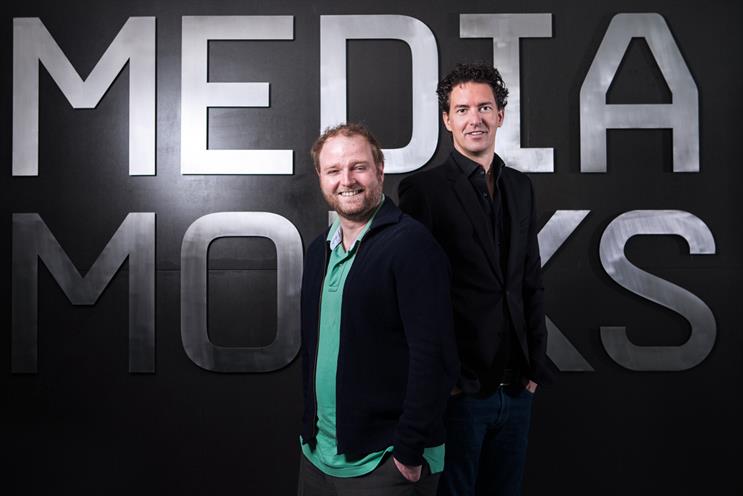
When MediaMonks was founded in 2001, its founder Wesley ter Haar and chief executive Victor Knaap (who joined in 2003), were both in their early 20s.

It began in a basement as a digital design boutique in Hilversum, Netherlands, (a city about a half-hour from Amsterdam) and has since cemented its place at the top of the global advertising creative community, helping some of the world’s most-recognised agencies create digital experiences for brands.

It would be another decade before Sir Martin Sorrell’s WPP bought AKQA for $540m (£407m) and rival Publicis Groupe snapped up LBi for a similar sum, as the holding companies’ appetite for digital agencies peaked.

At that time ter Haar and Knaap, MediaMonks chief executive since 2003, were in the early stages of building up their agency from a minnow to the $350m catch it became this week.

They had just opened their first international office, expanding to London in 2010 on the back of work in their home market, often via big-name agencies, for clients such as McDonald’s, Procter & Gamble and Samsung.

Since then MediaMonks has grown from two offices to 11 across Europe, the Americas, Asia and the Middle East, and from 100 staff to 750.

The list of clients availing themselves of its digital content production and ecommerce services now includes Adidas, Amazon, GE, Google, Hyundai, JAB, Johnson & Johnson, Netflix, 3G and Weber.

It expanded its presence on the US West Coast, as well as digital production, with the acquisition of Los Angeles based VR specialist Stopp in 2015.

“While [MediaMonks] has proven its expertise building digital platforms and campaigns, MediaMonks had made few forays into the world of VR,” Campaign US reported at the time.

“Media Monks was pretty much the last of the independent digital agencies of a decent size,” said AKQA’s chief executive Ajaz Ahmed in response to yesterday’s deal.

Recent work includes an immersive game for British Airways in 2015, a ‘Memory Line’ online experience for Cadbury in 2016 and a 360-degree video tour for Burt’s Bees in 2017 (below).

MediaMonks was involved in 18 winning entries at this year’s Cannes Lions, including contributing digital production to the ‘Evert45’ work that won the Grand Prix for Entertainment for Netherlands telecoms company KPN. It taught children about the Second World War by imagining a child of the time’s video and social media diary.

Its festival presence has included a high-profile party for several years running, while ter Haar chaired the Digital Craft Lions jury in 2016.

Ter Haar recently told the journal of SoDA (Society of Digital Agencies), of which he is a board member, about his approach to innovation:

“At MediaMonks we hire or acquire against an internal innovation roadmap based on where we see the confluence of people, products and platforms are headed.

“For us, that has meant the acquisitions of a VR-first production company and a connected commerce company, the launch of a digital-first content company and a hiring spree to bolster our AR capabilities.”

Ahmed went on to wonder: “Is S4 Capital a holding group like WPP, or is it more of a buyout firm?”

“It’s more likely a buyout firm and therefore the end game for MediaMonks will be the company is sold again a few years down the line, once it has generated more revenue and profits.

“It could well end up being re-sold to Accenture Interactive, another consultancy firm or a holding group, once S4 Capital realises more than its significant investment in the company by using it as a platform to maximise the value prior to the next sale.”

Ter Haar and Knaap are savvy operators who previously sold a stake in MediaMonks to private equity firm Bencis and they used JEGI Clarity, the boutique investment bank, which sold Adam & Eve to Omnicom in 2012, to advise on the sale to S4 Capital.

Adam & Eve’s founders ended up getting an estimated £110m as their earn-out maxed out.

MediaMonks will hope they have cut as canny a deal by taking shares in S4 Capital, rather than an earn-out.

However, the founders insist they have not “sold out”

As they say on their website: “We founded MediaMonks 17.5 years ago, we never sold out, but are excited to buy in to the vision of Sir Martin Sorrell to create the next platform for our industry.”

They also promise the “same Cannes celebrations and same creative culture”.

By Daniel Farey-Jones

Sourced from Campaign

Chrome is the biggest web browser. Use these extensions to get it to work for you

Chrome’s web store is full of little digital gadgets to help make your web browsing simpler, more productive, and more enjoyable. Here are our top ten extensions that tick those boxes and are all downloadable for free in a matter of moments.

Social Blade

Compatible with YouTube, Twitch, Instagram and Twitter, Social Blade feeds you knowledge about the videos you watch. A user’s followers, estimated ad earnings and views are shown in an interface next to what you are watching, letting you check how your favourite users and rivals are performing. Get the extension here.

Cite This For Me

Anyone who needs to show the source of their information, be it for an essay or a presentation, will find this button exceedingly useful. It quickly cites the webpage you are looking at in one of four citation styles, which can then be saved for later or pasted into a document. Click here to find out more and install the extension.

LastPass

LastPass means you only have to remember one password to keep all your other login details together in one place. It will also help keep your other accounts secure by generating super secure passwords that it will fill in automatically as needed. There’s space for notes for offline information that you want to be well protected too. Install it here.

Colorzilla

When you simply have to know the precise hue of something online, Colorzilla’s eyedropper can check any pixel and tell you. You can then paste that colour’s data into another programme or adjust the values and save it within the extension for future reference. It’s an invaluable extension for digital design work. Get the extension here.

TinEye

When finding the source of a picture’s proving difficult, try TinEye’s reverse image search. It focuses on the closest possible matches instead of just similarity, making it useful for finding originals, higher resolution versions, or checking for online fakes. The extension itself makes searches available in only a couple of clicks. Install TinEye’s Chrome extension from here.

Unpaywall

For those who want to read academic papers without stumping up for subscription fees. As you look for research, this extension searches for free (and completely legal) versions of the same articles, and pops into view if it finds a match. A potential saver of both time and money. Get it here.

Save to Pocket/Instapaper

Either of these extensions will let you to save web pages and articles for reading on your synced devices later, even without an internet connection. Both have premium versions too, if you want to support the developers and get extra features in return. Get Pocket and Instapaper’s extension here.

The Great Suspender

It’s all too easy to open absurd numbers of tabs in your browser. The Great Suspender helps to manage your computer’s performance by stopping abandoned tabs until you click back on them. There is a lot of room for configuration too, the extension able to keep certain sites open indefinitely, or unload others after a shorter period of time. Install it here.

Backstop

It’s happened to all of us. One bad key press and you’re on the previous webpage and all the info you were just typing into that form has disappeared. This simple extension stops your backspace key from taking you to the previous page, saving you from wasted time and frustration. Get it here.

Sourced from WIRED

By

Google has confirmed to Ad Age that an industry trade body tasked with deciding which “annoying” ad formats web browsers should block largely used its data and research methodology to do so. The trade body, known as the Coalition for Better Ads, last year publicly presented the material in full with Google and 18 company employees’ names removed, describing it as “the Coalition’s research.”

By not crediting the search giant for its research, the Coalition had until now effectively insulated Google from potential new unwanted attention to its influence over the web, which could raise questions of transparency at a critical time for the search giant: The company was hit with a $21 million fine last Thursday after the Competition Commission of India said it abused its dominant position in the online ad search market.

And in August, after Google said its Chrome browser would block ads according to Coalition criteria, European Commissioner for Competition Margrethe Vestager said her organization “will follow this new feature and its effects closely.”

After first sourcing its foundational research methodology to unnamed “members,” the Coalition has also confirmed that the work originated at Google. It emphasized that a broad group of members oversees the research and standards it adopts, and that further research has been done by others.

“The Coalition obtained the rights to publish the underlying research methodology from Google and to use it for ongoing research of consumer ad experience preferences in global regions,” the Coalition said in a statement. “This research effort is overseen by the Coalition’s Standards and Research Committee which includes a cross-section of Coalition members.”

Google said in a statement that it conducted research in April 2016 into poor consumer experiences on the web. “In October 2016, the newly formed Coalition for Better Ads asked member companies to share any research that had been conducted,” it said. “Google along with Facebook, Teads, the IAB Tech Lab and Washington Post, submitted their existing research as requested. In late 2017, the Coalition conducted additional research to define which ad experiences online were acceptable and unacceptable. In March 2017, the Coalition announced the initial Better Ads Standards based on this body of research. In addition, the Coalition has a dedicated Standards and Research Committee, which includes both companies and industry trade groups. Google is a member of this committee.”

When asked last week why its name wasn’t on the research on the CBA’s website, a Google spokeswoman said, “The Coalition for Better Ads made the decision as to what to publish and not to publish on their website.”

Chrome will gradually begin enforcing the Coalition standards starting Thursday.

Once enforcement is fully enacted, the browser will block all ads on websites—including those that aren’t “annoying”—should the publication be found in violation of Coalition standards and thresholds. The Coalition will grant publishers that volunteer to participate a period of time to defend themselves or address potential violations before ads are blocked.

Although the Coalition is devising standards for any participating browser to follow, Microsoft is the only other Coalition member that also has a browser. It told Ad Age last week that it has no plans to follow in Chrome’s footsteps. Firefox and Apple are regarded as longshots to join the Coalition, according to several high-level executives familiar with those conversations.

Blocking the blockers

Marketers, ad buyers, publishers and tech companies including Procter & Gamble, GroupM, Facebook, the Washington Post and Google announced the Coalition in September 2016 as a collective effort to undermine consumer demand for ad blockers.

The plan was to eliminate the worst ad experiences for users—like videos that play automatically with the sound on—in order to reduce the siren call of blocking software that lies outside the industry’s control.

“The Coalition’s research identifies the ad experiences in both North America and Europe that ranked lowest across a range of user experience factors, and that are most highly correlated with an increased propensity for consumers to adopt ad blockers,” it said in its initial press release, which did not bring up Google outside a roll call of members in the boilerplate. “These results define initial Better Ads Standards that identify the ad experiences that fall beneath a threshold of consumer acceptability.”

Public eye

Google knows many people are wary of its sway over digital media, says Nick Lee, a professor of marketing at Warwick Business School.

“They are very worried about perception when it comes to that kind of stuff—the perception of not just actual power, but that they are starting to control the data around these issues,” Lee says. “And maybe that is something they don’t want to be necessarily known for.”

Industry members say they embrace the fight against intrusive ads and consider Google’s research approach sound. Before sharing its research with the Coalition, Google sought feedback from the Interactive Advertising Bureau, publishers and ad-tech vendors after making them sign non-disclosure agreements, according to people familiar with the process.

When the Coalition asked members to submit any research they had, not just Google but Facebook, The Washington Post, Teads and the IAB Tech Lab complied. Coalition members ultimately chose to start with Google’s work.

“It’s as if they are caught between a rock and a hard place,” Lee says. “No matter how much of a good job they think they are doing, they don’t want the world to think they are controlling everything.”

Rivals in the digital ad ecosystem could cite Google’s influence as a reason to question the Coalition’s standards.

It remains unclear whether regulators would take an interest in the Coalition, says James Speta, a law professor at Northwestern University who specializes in internet policy and telecommunications.

“If it can be shown that Google manipulated the standard setting process, that would be a concern to the Federal Trade Commission,” Speta says. “The underlying issue in cases like these is how transparent is the trade body, and how fair is it? Was everyone able to see what was going on?”

Feature Image Credit: istock

By

Sourced from AdAge

By Steve Thomas.

When it comes to emerging technologies and marketing, most of the conversation today typically focuses on apps, social media and how to take advantage of consumers’ growing dependence on their mobile devices.

That’s all well and good for driving customers into your store or restaurant, but then what? In-store or point-of-sale marketing and merchandising is still the key to converting shoppers into buyers, but that doesn’t mean you have to be “old-school” about your signage and displays.

One of the most exciting new developments is spot High Definition printing, and a growing number of retailers are discovering the power of this technique to drive purchases of premium and/or ancillary items.

At Windsor Marketing Group, we recently commissioned Bentley University’s Center for Marketing Technology to measure the impact of our spot HD printing on consumer behavior. We asked Bentley to measure the impact of spot HD on consumers in order to better understand how different types of printing techniques affect what viewers see and what they recall. The study was specifically designed to focus on ability of next-generation digital printing to make a visual more attractive and memorable to viewers, creating sensory and appetite appeal, and ultimately, purchase intent.

The research team fitted a sample group of consumers with special glasses designed to measure the movement of the eyes. Participants were then shown visuals using traditional High Definition (HD) and Conventional print techniques, and another using Spot High Definition produced with WMG’s cutting-edge G-traxTM system.

The results surprised even us, and produced four key findings regarding the impact of spot HD printing compared with standard HD and conventional printing:

Finding 1 (Focus Speed): On average, spot HD printing attracted eyes to the target focal area 8.2 percent faster than conventional printing methods.

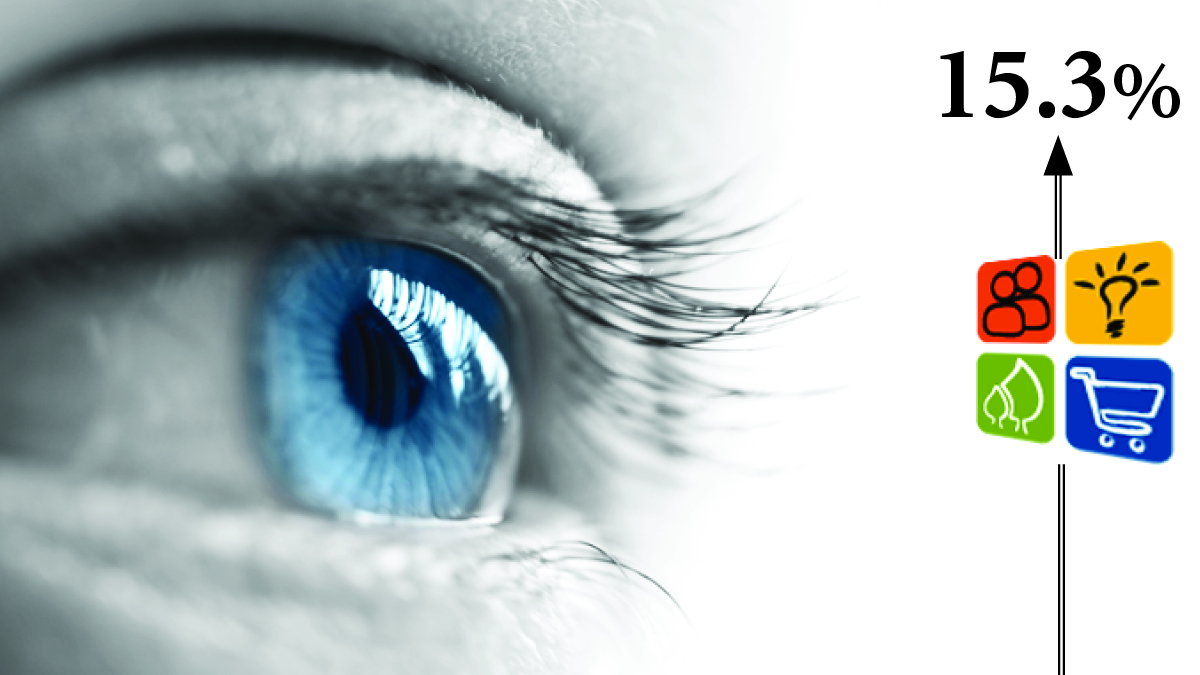
Finding 2 (Focus Duration): On average, eyes remained focused on the area using spot HD printing 15.3 percent longer.

Finding 3 (Upsell Purchase Intent): Purchase intent for a higher-priced or premium version of an item highlighted by spot HD printing increased 28.7 percent over traditional HD and 59.7 percent over conventional printing.

Finding 4 (Ancillary Item Purchase Intent): On average, consumers were eight percent more likely to purchase an ancillary item such as a bottle of wine that was merchandised with a primary item such as a pizza or steak when the ancillary item was printed in spot HD vs. conventional techniques.

Using this data, we develop our Hierarchy of Signage, an in-store marketing effectiveness execution model through which we work with a retailer to evaluate their  marketing objectives against available solutions based on sound, measurable insight, and then determine the solution that best accomplishes them.

This result is the creation of a practical tool that we use with retailers to impact the speed at which in-store marketing is noticed as well as the length of time that a customer stays focused on it. This then translates into favorable purchase intent and when used to promote premium or add-on items, can build basket size and impulse buys.

How can this translate into your restaurant?

The owner of a pizza restaurant wanting to drive wine sales, for example, could use Spot HD printing on a glass or bottle of wine pictured with a pizza on signage and POS materials. Research shows that by doing so, the owner will increase the likelihood that customers will purchase the highlighted item than if it were printed using traditional techniques.

The implication of this research for retailers is critical as they continue to search for ways to drive incremental sales in an increasingly competitive environment. The results clearly show, especially when all findings are considered together, that advanced printing technology such as spot HD can have a measurable positive impact on grabbing a customer’s attention and influencing their purchase intent and impulse buys.

By Steve Thomas

@WindsorMG | Website

Steve Thomas is Chief Marketing Officer for Windsor Marketing Group (WMG), which produces in-store marketing solutions for many of the world’s premier retailers, serving more than 3,000 clients from some of the most respected retail chains in the U.S.

Sourced from Modern Restaurant Management

By .

he mobile search landscape has changed immensely in recent years, transforming how consumers engage with brands and discover new products. But the change of pace has left some brands struggling to keep up, wondering just how hard mobile is working for them, and whether their brand proposition is really translating to the small screen.

It has led to many making what are, in 2017, some fundamental mistakes with mobile strategy. Here are six of the biggest:

The ‘m-dot’ site

When the ‘mobilegeddon’ update first reared its head in 2015, it unsurprisingly caused panic in the digital ecommerce sector. This was an update that threatened to dramatically harm the web visibility of those brands that weren’t delivering a mobile-friendly experience, and it was an update that would kick-in not very long after it was first announced – certainly not long enough to align all of the necessary stakeholders and plan, build, test and launch a completely new site.

Many brands responded by launching what became known as m-dot websites – essentially copies of a desktop website that were tweaked for mobile and appear on an m.website.com or mobile.website.com sub-domain. It was a quick-fix solution, allowing brands to meet the criteria that would see them becoming a ‘mobilegeddon’ victim, but avoided the need to go through a lengthy web redesign and build.

But now Google is warning brands that it wants to see the end of the m-dot, claiming that the mobile-first index may not index m-dot sites effectively. Throw in the increased risk of broken redirects and duplicate content that come with an m-dot, and the time really has come for you call in the designers and go responsive.

Being deaf to voice search

In June 2017, a Think with Google survey found that 57% of people would use voice search more if it recognised more complex commands, and 58% of respondents said they would like more detailed results when using search.

Think about how you can make your existing keyword strategy more conversational, to reflect the way in which your audiences are going to interact verbally with their mobile or smart devices – particularly if your site features a lot of ‘how to’ content on its site. A desktop search for ‘flights to London’ could very easily become ‘when is the next flight to London?’ or ‘what is the cheapest way to get to London tomorrow morning’. Could your current content answer that query?

Not thinking about your long-term app strategy

A survey by Localytics found that 60% of people who download an application become inactive within 30 days, whilst data from Quattra shows that the daily active user rate drops 77% the first three days after an app is installed on a device.

Mobile apps are not, in themselves, a flawed marketing channel but if you are going to invest in developing and maintaining one, think carefully about how you are going to avoid the graveyard of unused apps that lies on practically every smartphone in existence.

Is your app simply an extension of your mobile site? If so, then think about why you actually need one. What does your app offer that your users can’t get or would find more difficult to get elsewhere?

Think about how you would use your app to re-engage and reconnect with your audiences throughout the customer journey, using your data to provide personalised messages and push notifications that will resonate with them. Just remember not to over-use tactics like push notifications as they can get irritating (particularly if you are just pushing offers and sales messages).

Bombarding users with ads

Speaking of things that are irritating, ads on mobile. Obtrusive adverts are annoying on any platform, but on the small screen of mobile, they are even more of a user experience faux-pas.

If you are advertising to consumers on mobile, make sure that it isn’t your brand that is frustrating what should be a seamless and enjoyable user experience with an intrusive and impossible to dismiss pop-up or interstitial. Not only does it frustrate users and harm the brand, it can also harm your organic search visibility.

Ignoring your audiences’ neighbourhood

So-called ‘near me’ searches are growing at a rate of 130% per year, and 88% of these searches are made using a mobile device, claims Google.

This trend is being driven by the way in which the customer journey is becoming much more integrated between desktop, mobile and offline. Consumers are turning to their devices for ‘quick reference’ queries – local shops and restaurants for example – and then making purchasing decisions across any number of channels based on that information.

It means that brands, particularly those with an offline presence, need to really think about how they are optimising their online presence for ‘near me’ searches, and thinking about the content that they serve to these audiences that works on a localised level, and could drive an in-store visit.

Consider the importance of implicit search variables, such as location, time, device, transport and previous search history, and ensure that you have content that can serve as many combinations of those searches as possible.

Failing to close the loop

Cross-device tracking remains one of the biggest challenges for marketers, as multiple devices and multiple communications channels converge to create a much more complicated customer journey.

Google is working hard to close this loop as much as possible, with Google Attribution rolling out to provide much better integration between AdWords and Analytics, and it is continuing to use user data and search history to ‘join up the dots’ as much as possible.

Different organisations will have different approaches and different models to understand how different devices and channels contribute to the overall buying journey, and the model that you adopt will ultimately depend on your brand objectives for your mobile strategy. However, if you are using a last click model of attribution, then it is highly likely that you are either under or over-estimating the value of mobile, depending on the nature of the brand and the product.

By

Michael Hewitt is a content marketing manager at Stickyeyes, and is behind the agency’s guide to mastering your mobile strategy.

Sourced from THEDRUM