Tag

TV

Browsing

By 

Your smart TV knows too much about you

Your smart TV is collecting detailed information about everything you watch. From which apps you open to what shows you stream, your TV monitors your viewing habits and reports back to the manufacturer. That data gets used for targeted advertising or sold to third parties.

This tracking happens through technology called Automated Content Recognition (ACR), which samples pixels from your screen to identify what content you’re watching. It works whether you’re streaming through apps or watching from external devices like cable boxes or game consoles.

1. Samsung TVs

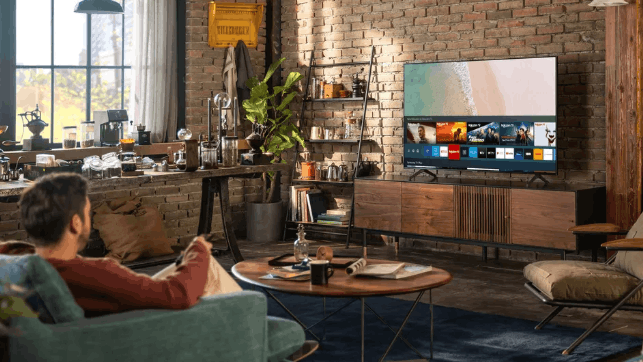
Samsung TVs use Tizen software and include tracking features for viewing data, voice recognition, and advertising.

Go to Settings, then Support, then Terms & Privacy, then Privacy Choices. This menu contains all the privacy settings you need to adjust. Select Viewing Information Services to disable ACR tracking. This stops Samsung from monitoring what content you watch

To turn off personalized ad tracking, select Interest-Based Advertising. This prevents Samsung from using your viewing data to target ads. If you use Samsung’s voice features, select Voice Recognition Services to disable voice data collection. This stops the TV from recording and analysing voice commands.

2. LG TVs

LG smart TVs run webOS and collect viewing data through several separate services, which means you’ll need to disable more than one setting to fully opt out.

First, go to Settings, General (or System, depending on your model) and select Live Plus, then turn it off. This disables LG’s Automated Content Recognition (ACR), which identifies what you’re watching across apps and external devices.

Next, return to Settings, General, Advertisements and enable Do Not Sell My Personal Information or Limit Ad Tracking. This limits how LG uses your data for targeted advertising.

Finally, open Settings, User Agreements and review each option carefully. Opt out of Viewing InformationInterest-Based AdvertisingVoice Information, and Live Plus Automatic Content Recognition wherever those toggles appear.

3. Amazon Fire TVs

Amazon Fire TV devices, including Fire TV Edition TVs from brands like Toshiba and Insignia, collect viewing and usage data through Amazon’s platform.

Go to Settings, Preferences, and Privacy Settings. This menu contains Amazon’s main privacy controls. First, select Device Usage Data and turn it off. This limits how Amazon collects information about how you use the device and its features.

Next, select Collect App and Over-the-Air Usage and disable it. This reduces tracking of which apps you use and what live or broadcast TV content you watch. Finally, select Interest-Based Ads and turn it off. This stops Amazon from using your activity to personalize ads, though you’ll still see advertising.

4. Roku TVs
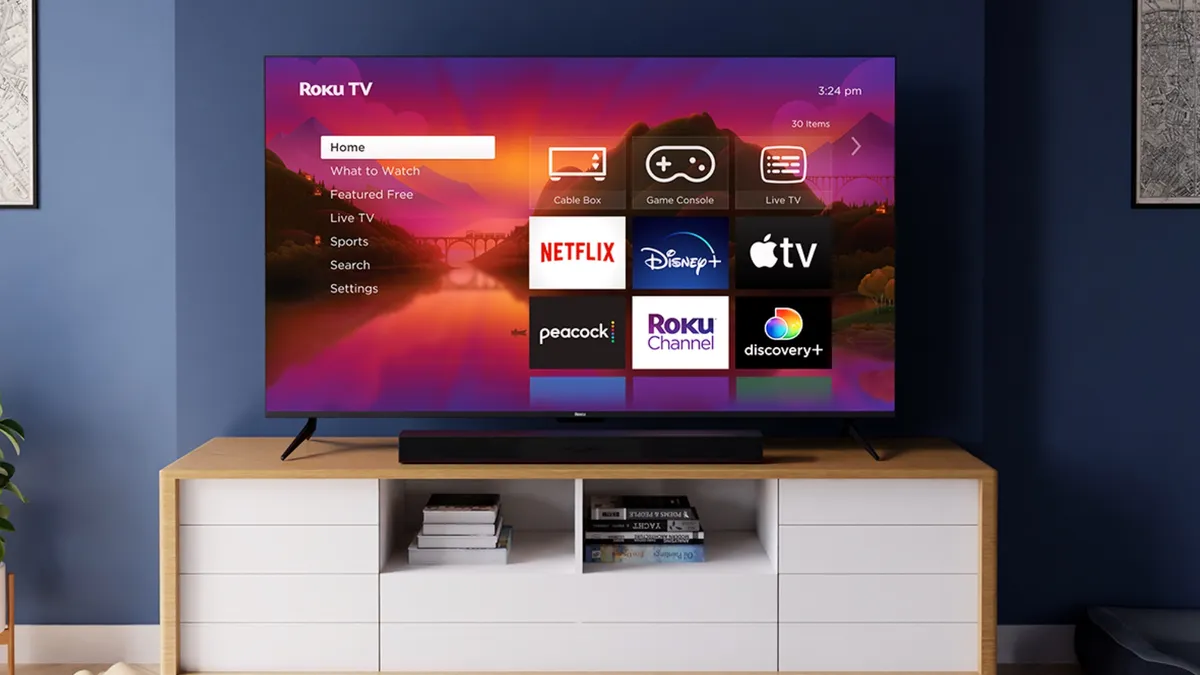
Roku TVs (initially made by TCL, Hisense, and sold under Roku’s own brand) and Roku streaming devices collect viewing data through the Roku platform.

First, go to Settings, then Privacy. This menu contains all privacy-related options. Select Smart TV Experience and disable “Use Info from TV Inputs.” This turns off ACR tracking for content from external devices like cable boxes.

To adjust ad tracking settings and limit personalized advertising, select AdvertisingSelect Microphone to control settings for Channel Microphone Access and Channel Permissions if your Roku remote has voice features.

5. Android and Google TVs

TVs running Android TV or Google TV — including models from Sony, TCL, Hisense, and others, collect viewing and usage data primarily through Google’s advertising and account services. Some models also include third-party Automated Content Recognition (ACR), such as Samba TV.

To limit Google’s ad tracking, go to Settings, Privacy, and Ads. Then turn ofAd Personalization to prevent Google from using your activity on the TV to personalize ads. On some models, this may instead appear under Settings, Accounts, Google, and Ads.

If you’re signed into a Google account on your TV, you can also manage ad settings at the account level by selecting your Google account and reviewing privacy and ad preferences.

On Sony TVs, there is an additional ACR system to disable. Go to Settings, System or Settings, Privacy and turn off Samba Interactive TV. This stops Samba TV from identifying what you’re watching across apps and external inputs.

6. Vizio TVs
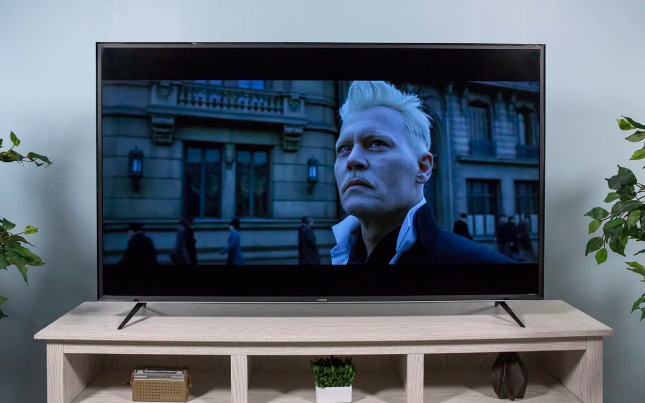
Vizio SmartCast TVs collect detailed viewing data through an ACR system built directly into the platform. This makes disabling these settings especially important if privacy is a concern.

Go to Settings and Admin & Privacy. This is where Vizio groups its privacy controls. Select Viewing Data and turn it off. This disables Vizio’s ACR system, preventing the TV from identifying what you’re watching across apps and connected devices.

Next, select Advertising and disable it to limit ad personalization and tracking tied to your viewing behaviour.

Feature image credit: Samsung
By 

Sourced from tom’s guide

By

How fast? As fast as big media companies can move when they face an existential threat.

Since I became the CEO of a publicly traded company, I have yet to take a meeting with Wall Street where some version of this question isn’t asked: “When is traditional TV finally going to move over to connected TV?”

I’m sometimes unsure of what question is really being asked — after all, it’s not hard to track the numbers on streaming, cord cutting, cord shaving and the increasing rate of cord-nevers.

It’s happening. It’s happening now. And it’s happening fast.

After fielding that question so many times and answering differently a number of times, I now think the question is usually coming from a more personal point of view. Everyone loves TV, especially right now. In terms of content quality, television is at the top of its game.

And consumers love Netflix perhaps more than any TV company ever. Sure, people loved their legacy networks more in the ’40s and ’50s, but it’s hard to imagine them being more cherished than Netflix. And Netflix is spending serious money to make such great content. They have to. They can’t get it cheap from the studios anymore. Everyone is on their own. Amazon, CBS, Disney — everyone. And they’re all trying to avoid giving content to YouTube — but that’s a different story.

Even though the content is so great, I think the question — “When is TV moving to the internet?”— also comes from a place of frustration. The number of ads per commercial break has gone up a lot in recent years. And watching TV with ads has become irritating without a DVR. The ad-to-content ratio is high, and ads aren’t personalized like they can be on the web. Viewers wish everything could bypass what the chief product officer at Netflix calls “the tyranny of the grid.” And everyone wants to watch on-demand.

So I think the big question is something more like, “When can everything be on-demand? When will that happen?”

Keep in mind the current cable set-up costs the average consumer more than $100, plus lots of taxes and fees. These go up every year. The median U.S. household income is about $50,000. So Wall Street and Silicon Valley should remember that most people can’t afford to pay for 15 subscriptions to get rid of ads.

But TV can’t survive without ads. My cable TV costs more than $250 a month and comes with nearly all the channels. Of my 500 stations, however, 490 of them have lots of ads, and none are personalized to me. Very few consumers can afford to get rid of all the ads. And many content providers won’t even offer the option.

Ultimately, TV will come to your house over an Ethernet cable, not a coaxial cable. All TV will be delivered over the internet, because it’s better. Everything will be on-demand, like Netflix. Just like today, most of internet-fueled TV will still be ad-funded. There will be a few no-ad channels, just like Netflix and HBO are today. But most TV content will be ad-funded, and there will be far fewer ads than there are today. The ads will be tailored to you. As consumers, you’ll actually like the ads, because they’ll appeal to you about products you love or products you don’t know about, but will love. These impressions will cost advertisers more per ad. Publishers and TV content creators will get a great cut of every ad dollar. And the global ad business will grow.

The unsustainability of linear television has a happy ending for consumers and the entire TV ecosystem. Some players currently in linear television, especially distributors, will win. Some, of course, will lose.

I’m not the only one who thinks the internet will power everything. Randy Stephenson, the CEO of AT&T, has a vision that he has spent more than $100 billion to realize. That’s a “bet the farm” number. Because of this, AT&T has become the biggest tea leaf to watch. And even more so now, with the AT&T and Time Warner deal. This is the biggest media deal in recent years, and most don’t yet understand the gravity of its implications.

Stephenson changed the game last year when he bought Time Warner. He paid more than $80 billion for what may be the most premium content in TV, which includes Turner and HBO. His vision centers around three things: On-demand content, 5G technology (which will change the internet forever) and fully addressable, personally tailored ads.

These three things work together to make it easier to install a new customer. They are making the ultimate move in cable TV — offer everything on-demand and for less. The cheaper bundles will barely be reminiscent of current cable packages because every ad will be tailored to a household, and all content will be on-demand. 5G is mobile. Since Stephenson can get economies of scale, and AT&T controls both the largest satellite TV company and the largest mobile network, he’s hoping to gain market share during the transition. Cheaper and better usually does that.

Every media company in the world, from Comcast to Disney, is losing sleep over this deal. AT&T was the first to make a huge bet, but it will not be the last. 5G will be available by 2020.

Last week, Randy Stephenson hired my friend Brian Lesser, one of the most influential people in digital advertising. The pieces are coming together.

So the answer to the question, “When will TV hit an inflection point?” is: “As fast as big media companies can move when they face an existential threat.” I wouldn’t underestimate how fast people can run when their life is on the line.

TV will be delivered over the internet. And just like everything on the internet, change happens fast.

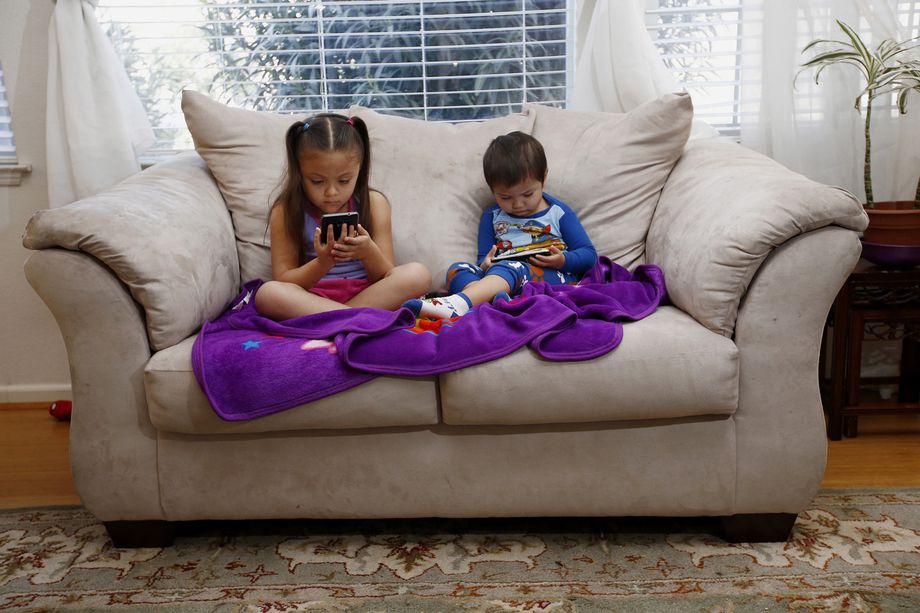
Feature Image: Say hello to the future cord-cutters of America: Juliana Sanchez, 5, and her brother, Francisco Sanchez Jr., 2, watch children’s programming on YouTube on their parent’s cellphones at their home.Gary Reyes / Bay Area News Group / TNS via Getty Images    

By

Jeff Green is the founder and CEO of The Trade Desk, a demand-side platform that powers the desks of the world’s most advanced buyers in online advertising. In 2015, Green and his co-founder Dave Pickles were named Entrepreneurs of the Year in the Greater Los Angeles region by Ernst & Young. Reach him @TheTradeDeskInc.

Sourced from recode

The battle between TV and Online rages on.

By MediaStreet staff.

New research reveals that 39% of U.S. broadband households visit a video sharing site like YouTube at least once a week. In total, 59% of broadband households visit an online video site on a regular basis.

“User-generated video from sites like YouTube skew to young consumers,” said Glenn Hower, Senior Analyst at Parks Associates. “Consumers 18-24 go to a video sharing site 13 days per month on average. They also use a video chat app like Snapchat an average of nearly 11 days in one month. The TV is still the most-used device for watching video content, but increased usage of secondary devices and video apps is making a significant impact on how users, especially younger viewers, consume and perceive content.”

360 View: Digital Media & Connected Consumers shows live streaming on platforms like Periscope and Facebook Live is still in its early days. Currently 26% of households participate in live streaming activities, such as streaming video from their own device or watching video over a live streaming platform.

“Emerging content platforms are changing the way content creators tell visual stories,” Hower said. “Services like YouTube have given rise to video bloggers and sketch performers, who can interact with their audiences in a way that traditional media like film and television cannot allow. In addition, live streaming on platforms like Twitter’s Periscope or Facebook Live is raw and impromptu, which can come across as more ‘authentic’ compared to a recorded video that has been edited and perfected.”

360 View: Digital Media & Connected Consumers analyses trends in music and video consumption by platform, source, and content expenditure. It segments consumers based on their consumption habits.