Tag

Twitter

Browsing

By E.J. Samson.

A new study shows just how much consumers want brands and culture to mix

Commerce and culture have always intersected—even though it can be a fine line for brands to walk. But what surprised the research team behind MAGNA and Twitter’s new study, “The Impact of Culture,” was just how much consumers—particularly younger people on Twitter—expect and even want brands to be culturally relevant: aligning well with cultural events, promoting trends that define today’s culture and supporting social issues that benefit everyone.

Insight-rich results

Brand involvement in culture is especially important among consumers between the ages of 18 and 35, and those on Twitter versus the general population are more passionate, informed and feel more strongly about brands aligning with culture.

The study found that brands can become more relevant by embracing culture by staying current, demonstrating knowledge of consumers and giving back. When people are deciding which products and services to buy, they’re not only thinking of basics like price and quality—or even more amorphous concepts like reputation. They are also assessing just how much a brand reflects their interests and supports the issues they hold close to their hearts.

Incredibly, a brand’s cultural involvement makes up a full 25 percent of a consumer’s purchase decision. That means being involved in culture is a significant consideration when people are weighing whether or not to buy something, alongside other factors like positive brand perception, price and quality. It’s a finding that should make marketers rethink their focus and strategies, since cultural relevance can be established with one campaign, whereas other factors are relatively more intractable.

twitter1

While jumping on trends and cultural happenings in realms like sports and music are table stakes for brands, the study reveals that people want to go even deeper: Americans might love their reality TV, but survey respondents say they are more informed on issues like gender equality and fair trade than pop culture events.

What does this mean for marketers?

Go where the most leaned-in and influential people are already gathered: A key revelation of the study is that while culturally passionate consumers tend to be younger, what really sets them apart are their media habits. Social media usage is a 25 percent stronger indicator of cultural passion than age. According to our study, culture-focused ads work harder on Twitter than on other premium sites, where audiences of true tastemakers are most engaged and most receptive.

Live out the values of your customers: While there are many ways for a brand to be involved in culture, according to survey respondents, the top ways include giving back to the community, putting customers first, being inclusive of a wide audience and supporting social issues that benefit everyone.

Have a strong POV in your ads: Culture-focused ads succeed in positioning brands as relevant. They also position them as socially responsible and innovative. And they create a more memorable experience for consumers.

This new research makes a strong case for brands to acknowledge, and even actively improve, the culture that permeates all of our lives so fully. And expressing their engagement with culture on platforms like Twitter is the best way for brands to join the liveliest conversations of the day.

By E.J. Samson.

E.J. Samson is the lead content strategy manager for Twitter’s Global Business Marketing team. Follow him on Twitter @ejsamson.
Sourced from AdAge

‘We’re very sorry this happened’

On Tuesday, Twitter announced that it “unintentionally” used phone numbers and email addresses for advertising purposes even though the information was provided by users for two-factor authentication.

According to Twitter, no personal data was shared with the company’s third-party partners, and the “issue that allowed this to occur” has been addressed. As of September 17th, phone numbers and email addresses are now only collected for security purposes, Twitter said.

“We cannot say with certainty how many people were impacted by this,” Twitter said in a blog post disclosing the security mishap. “We’re very sorry this happened and are taking steps to make sure we don’t make a mistake like this again.”

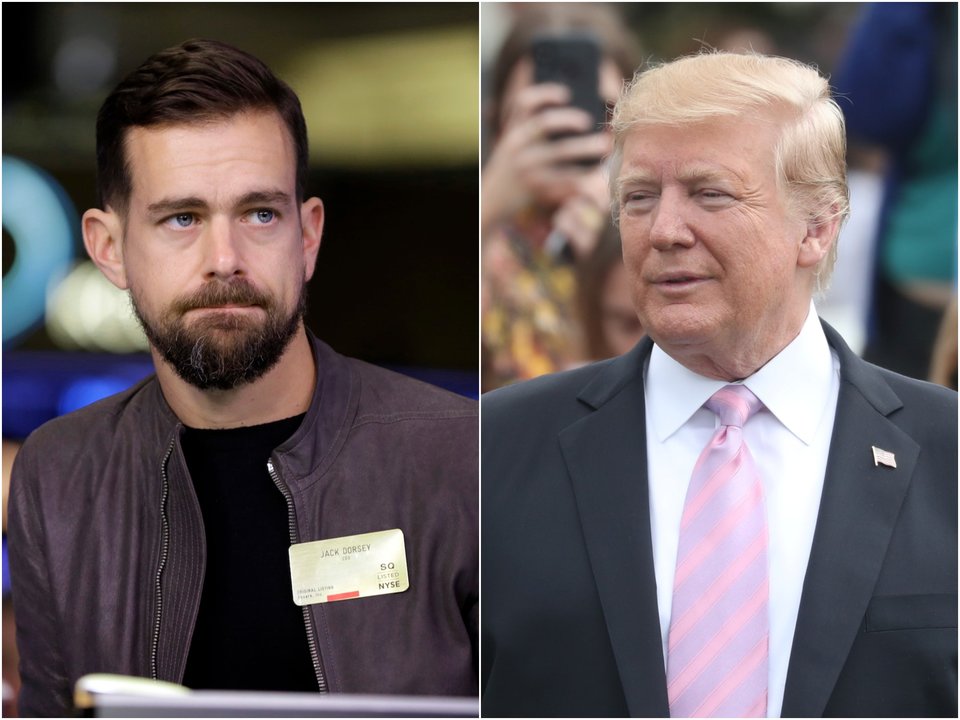
Over the past year, Facebook has taken the brunt of criticism over its privacy malpractices, but Twitter has been embroiled in its own controversies over how it handles the privacy of its users. Just last month, Twitter CEO Jack Dorsey’s account was compromised after hackers were able to tweet racial slurs via text message.

In May 2018, Twitter advised its users, all 330 million of them, to change their passwords after a bug was discovered that exposed them in plain text. Twitter said at the time that no information was breached or misused.

Feature Image Credit: Illustration by Alex Castro / The Verge

Sourced from The Verge

For many users, logging onto Twitter is a daily gamble. You might return to a calm newsfeed or your mentions and direct messages may be overtaken by abuse. Recently, Twitter launched its anti-abuse filter for DMs, but the platform’s newest feature seems like yet another bandaid rather than a solution.

Back in August, Twitter began testing its filter for Message Requests, or DMs from people that you don’t follow. It works by hiding messages that might contain offensive content behind a warning. You’re given the option to delete a message without having to open it at all.

After a month and a half of testing, Twitter decided to officially roll out the feature. The company tweeted, “We tested, and turns out filters help you cut through the noise to find gems. Who knew. So we’re rolling out this filter to everyone on iOS, Android, and web!”

It seems Twitter is on a roll when it comes to giving users options to hide unwanted messages on it site. Earlier this month, the platform also introduced its Hide Replies feature in both the United States and Canada.

However, neither of these features are actually doing anything to stop the abuse itself. That means for many of Twitter’s users, marginalized people specifically, these features may be functionally useless.

If you’re marginalized and on Twitter, you’ve probably faced harassment and abuse before. From receiving outright threats to having slurs brought into your mentions, the abuse varies, but it’s always ugly. To organizations like Amnesty International, the level of abuse that some groups receive constitutes a human rights violation.

In December 2018, Amnesty International released a report looking into violence and abuse of women on Twitter. The report found that 71 percent of tweets sent to women were problematic or abusive. That statistic is alarming by itself, but it gets worse for women of color — especially Black women.

Amnesty International reported that “Black women were disproportionately targeted.” They are 84 percent more likely than white women to be mentioned in abusive or problematic tweets.

“Online abuse against women on this scale should not and does not have to exist on social media platforms,” Amnesty International wrote. “Companies like Twitter have a responsibility to respect human rights, which means ensuring that women using the platform are able to express themselves freely and without fear.”

Along with rampant abuse of women, Twitter has seen a rise of members of the alt-right and white nationalism on its platform. In 2017, Vanity Fair reported on Twitter’s verification of white nationalists like Jason Kessler, who helped organize the Charlottesville white-supremacist rally where protester Heather Heyer died. Twitter has taken steps to deplatform some of these people.

Part of why Twitter seemingly refuses to appropriately tackle abuse can be attributed to the same logic the company uses to claim that it has “no bias”.

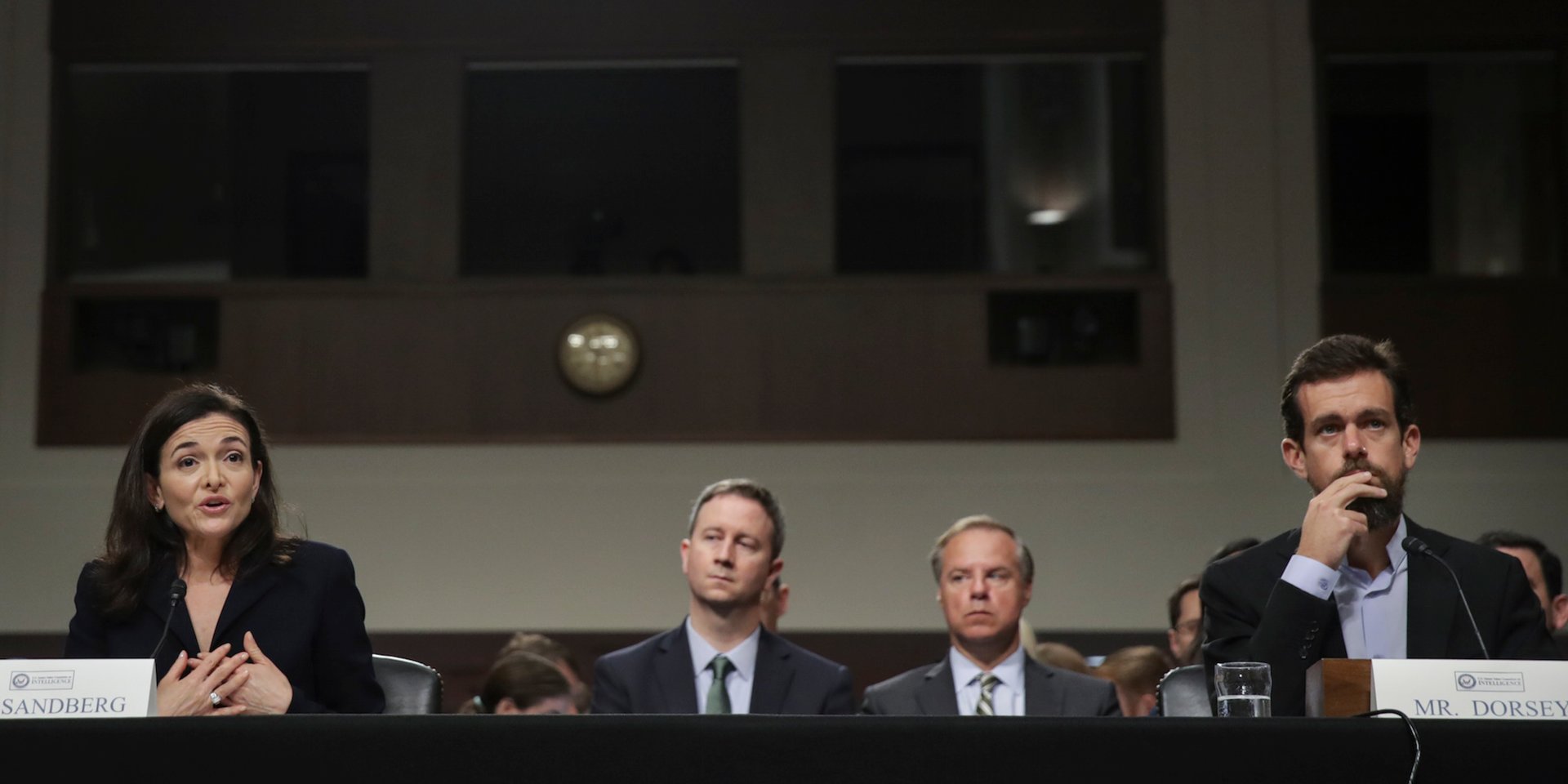
Last year, in a prepared statement for his appearance before the US House Committee on Energy and Commerce, CEO Jack Dorsey wrote:

“Twitter does not use political ideology to make any decisions, whether related to ranking content on our service or how we enforce our rules…from a simple business perspective and to serve the public conversation, Twitter is incentivized to keep all voices on the platform.”

By refusing to acknowledge the role political ideologies like white nationalism can play in harassment, Twitter leaves the door open for members of the alt-right to continue utilizing its platform for abuse. Not only that, but people engaging with harassers can drive up ad views, and make the platform money.

Twitter’s problem has become so rampant that TechCrunch even referred to the platform as a “Nazi haven”. While Twitter’s new Hide Replies feature and DM filter might make it a little easier to dodge some abuse, neither of them are actual answers for it.

It’s time for Twitter to stop putting the onus on individual users to prevent their own abuse. As a platform, Twitter has a responsibility to re-evaluate the culture that allowed this problem to grow virtually unchecked.

Sourced from Mic

Sourced from The Economic Times

Facebook exerted more control over Instagram over the last two years.

If you have been seeing more ads on Instagram this year, you are not alone. Parent company Facebook reportedly instructed Instagram to increase the number of ads in the app towards the end of 2018.

According to The Information, Facebook exerted more control over Instagram over the last two years, including the move to rename the app, Mashable reports.

Facebook plans to bring Instagram’s revenue number closer to its own app, and will heavily rely on commerce to achie ..

Click HERE to read the remainder of the article

Sourced from The Economic Times

By

Twitter redesigned its in-app camera for easier access and faster posting.

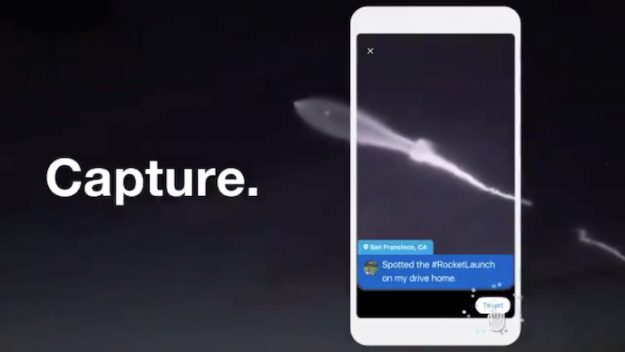
Instead of tapping twice to first compose a new tweet and then open the camera, simply swipe left from your feed.

Rolling out now to all users, the function can automatically tag pictures to specific locations or events, and allows for captions as colourful text overlay.

“We’re trying to make it really simple to go from capturing what’s happening, to getting it to the audience that really matters and getting it to the people who want to talk about it,” Keith Coleman, Twitter’s vice president of product, told Mashable.

Notably, these features apply only to snaps taken directly in the Twitter app. Attaching a photo or video from your camera roll will result in normal-looking tweets—a move that, according to Coleman, was very intentional.

Twitter’s new camera, after all, is meant to encourage in-the-moment sharing.

“If Twitter has always been sort of the microphone or megaphone in your pocket, we want it to feel like this was almost the TV camera in your pocket,” he said.

This marks the first significant update to the social network’s in-app shooter “in some time,” Mashable reported.

See it? Tweet it! (via Twitter)

But it’s not a challenge to social media rivals Instagram Stories and Snapchat; this refresh isn’t aimed at selfies or fleeting content. Instead, it is an invitation to citizen journalists and documentarians to capture important events and breaking news.

“The first moment that pictures mattered on Twitter was when a plane landed in the Hudson,” Coleman pointed out. “If it was an ephemeral picture … it would have had a very different effect than if it was a picture that was live for the world to see that could go viral.”

(Ironically, the “Miracle on the Hudson” photo did eventually disappear from the microblogging service, Mashable said, because the company didn’t have its own photo-sharing capabilities at the time.)

Twitter did not immediately respond to Geek’s request for comment.

The camera launch comes just as Twitter’s new prototype app “twttr”—an experimental testing space initially focused on testing conversation designs—began rolling out to its first group of testers this week.

Feature Image: Twitter’s new camera is just a swipe away (via Twitter)

By

Sourced from GEEK.COM

Are you using platforms like Facebook and Twitter to grow your small business? Are you hoping to attract more customers by using social media marketing, yet find yourself wondering whether your efforts will be rewarded? Increasing your social media marketing ROI (return on investment) might not be a matter of posting more often, but instead changing what you share on social media.

Small business owners who increase the amount of visual content that they share on social media can significantly improve their audience engagement rate. Potential customers are more likely to engage with visual content versus text-based content. If you need convincing of the power of visual content for your small business, bear the following three essential truths in mind:

Retention Matters

If you want your small business’s target audience to retain more of your marketing materials, it is imperative that you start sharing more visual content with potential customers. The human brain retains visual content easier than text-based content. Start sharing brand visuals like infographics via social media and there’s a good chance you’ll increase your marketing ROI in the process. For instance, if you are launching a new mobile application, you would want to craft attractive graphics that lead your potential users to your mobile applications splash page or directly to your app store listings. Imagine that you are launching a beauty health line and need to engage with more of your potential purchasers. It would be imperative to create marketing materials that would persuade likely customers to not only inquire but also to try out your products or services. Simply put, perception equals reality.

Conversions are Critical

If you want to boost your conversion rate as a small business owner, it’s time to double-down on visual marketing opportunities like video marketing. Video content converts buyers at a faster rate than static content like blog posts and articles. Increase your small business video marketing this year, and the odds of increased sales are in your favor.

Visual Content is Engagement on Steroids

For small business owners wanting to increase audience engagement rates on social media, visual content creation is a must. Not only is visual content retained better by your target audience, but they’re also more likely to engage with your brand online thanks to your visual content. Start creating custom images using a tool like Canva.com and watch your social media engagement rates go through the proverbial roof.

These are just three of many reasons your small business should be creating more visual content for social media marketing. Develop a detailed visual marketing strategy and build a library of visual images you can use daily.

By 

Jeff Shuford is a nationally syndicated columnist whose monthly column appears in more than 44 regional newspapers. Shuford is one of fewer than five millennial African-American syndicated columnists in the United States, and one of the country’s youngest syndicated columnists overall.

Sourced from Black Enterprise

What’s your backstory?

My name is Christian Vind, I was born and raised in Minnesota. All my life I dreamed of being famous for making music, but I could never find the right people to work with to make it happen back in my high school days. Whenever I tried to find people to work with, to start a music group or to be in one, they would laugh at me saying “Stick to your day job”, “White Boy trying to act Black”, “White people don’t have rhythm”, “Stop trying to be someone that your not”, “You’ll never make it”, “I don’t want you in my group”, “Who does this person think he is”, “You suck”, “You’ll never be good enough” and was bullied all the time just for me being who I wanted to be.

Years later, everything had changed for me when I watched Eminem’s movie, 8 Mile. I had seen that movie before, but then, watching it again, I had felt something tell me to chase my dream. Watching that film inspired me to chase my dreams and I told myself that if Eminem could do it, then I can do it as well. I started searching for recording studios in 2014 shortly after watching that movie. I had went from studio to studio till I went to High School for Recording Arts after hours, in St. Paul, Minnesota, to get my music recorded. I released my first EP, Christian Vind The EP, on iTunes, Google Play, Spotify, Apple Music, etc. in 2015 and then got some music videos done to it as well. The next step was to learn how to create a fanbase on social media.

Once I figured out social media marketing, I started making money from that just by retweeting people’s content to help them gain more exposure helping them expand their fan base, after I got verified on Twitter, I also helped people gain more organic followers to build their brands. How I got to where I am is by networking with celebrities and verified influencers on Twitter.

2016 is when I started performing and one of my best performances was at the PourHouse in downtown Minneapolis in Minnesota. It was a great year for me, I charted in the top 3-15 on the MTV Artist Website, in the summer of that year when they had it on their website. Then I got invited by Republic Records and I attended the MTV VMA After Party, in New York at Vandal, which got me to be on the red carpet. I feel like that helped my career a lot.

In 2017, I stopped performing my old music to work on my new album and now I will be releasing it in 2019! Definitely expect some dope creative photography and music videos from Andrew St. Jean and I in 2019 as well!  Also, get ready for Sundra Xaphakdy, Darrin Austyn James Hall, owner of www.newlifemusicgroup.com, Shermo, Christi Vind, After Memphis, John White, Jassiel Macias, Dylan Bostic, Devonte Riley, Dale Moss, Kiya Edwards, Jimmy Star, Angel Sessions, Rodney Crews, Demetrius Guidry, Tru-Serva, Cara Rgnonti, Dixon DeVille, Andrew St. Jean, A.Win Music, Daniel Mignault, and I, Christian Vind, to take over the entertainment industry!

I know this is not an easy job. What drives you?

What drives me is knowing that there is always a light at the end of the tunnel. On this entertainment journey, God has shown me many things about myself and they’re so many reasons to not give up. One major reason is knowing that there could be someone that is looking up to me and what if I gave up? I wouldn’t want them losing hope.

So what exactly does your company do?

I offer promotional services via Twitter, whether it would be a shoutout, and or retweeting their content. The first thing I do is reach out to brands and companies that are looking for more exposure for their businesses.

Is there someone who made a big difference in your life who helped you get to where you are today? What lesson did you learn from them?

John White helped make a big difference in my life. Not only did he teach me how to become a successful entrepreneur, but he also got me into the PR industry as well. One lesson that I learned from him is that LinkedIn is the best place to do business. For one, thats where most of the big ballers go. For two, it is so much easier to connect with people on there. So, if you’re looking for clients, that’s the first place you should look!

Photographer

Andrew St.Jean

Christian Vind’s Social media

Facebook s

Twitter

Instagram

By 

I am influencer in the PR industry. I have worked with clients worth over 100M. My goal is to share my experiences and influence others to find success while sharing valuable and interesting content.

Sourced from Thrive Global

By 

  • Facebook and Twitter have both announced takedowns of hundreds of fake accounts designed to influence politics around the world.
  • Facebook detected accounts from Iran dating back to 2010, while Twitter’s came from Iran, Venezuela, and Russia.

Facebook and Twitter have taken down hundreds of fake accounts designed to influence politics and public debate, the two social networks announced on Thursday.

Facebook took down 783 accounts linked to Iran that targeted countries ranging from Afghanistan to France, Germany, Israel, Morocco, South Africa and the US.

Twitter, meanwhile took down accounts linked to Iran, Venezuela, and Russia, it said, that were active during the US 2018 midterm elections. According to The Washington Post, 418 and were from Russia, 764 were from Venezuela.

“This morning we removed 783 Pages, groups and accounts for engaging in coordinated inauthentic behavior tied to Iran. There were multiple sets of activity, each localized for a specific country or region,” Facebook cybersecurity exec Nathaniel Gleicher wrote in a blog post.

“The Page administrators and account owners typically represented themselves as locals, often using fake accounts, and posted news stories on current events. This included commentary that repurposed Iranian state media’s reporting on topics like Israel-Palestine relations and the conflicts in Syria and Yemen, including the role of the US, Saudi Arabia, and Russia.

“Some of the activity dates back to 2010. Although the people behind this activity attempted to conceal their identities, our manual review linked these accounts to Iran.”

This story is developing…

Feature Image Credit: Drew Angerer/Getty Images

By 

Sourced from Business Insider