Tag

YouTube

Browsing

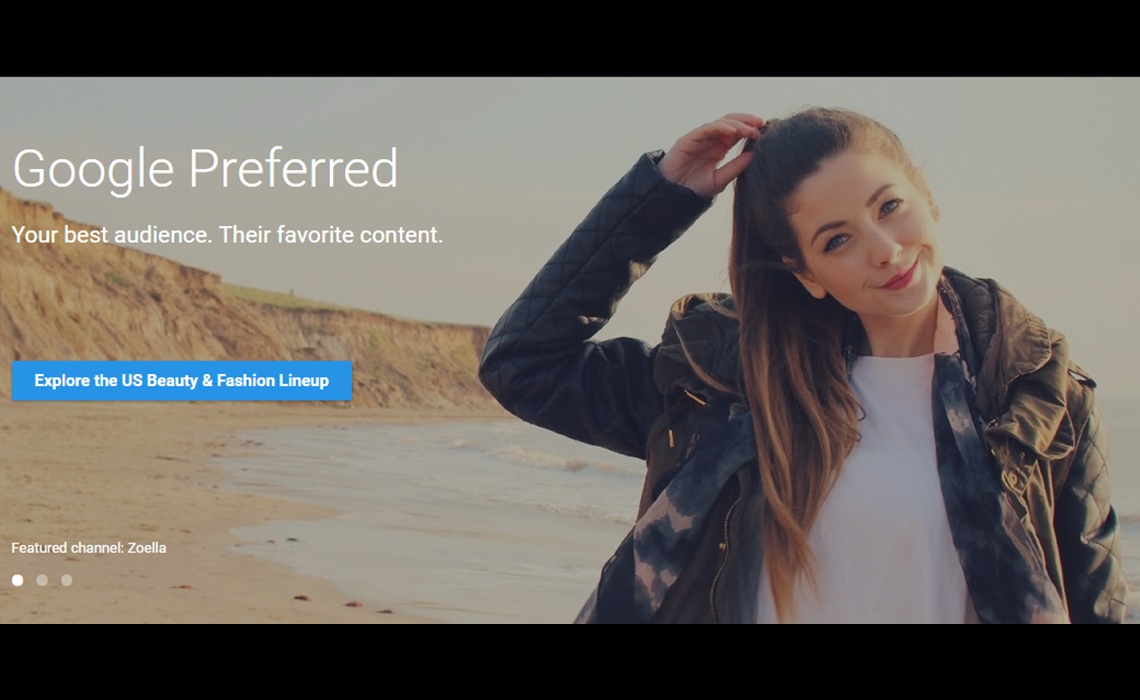
At several points in 2017, major brands suspended ad campaigns on YouTube because they could not be assured that their spots would run next to brand-appropriate videos. As it looks to improve its relationship with those brands, YouTube is reportedly taking steps to ensure its premium ad tier remains a worthwhile buy. As shared by Bloomberg, YouTube will use both human and technological moderation to vet the channels it includes in its Google Preferred package.

Google Preferred, first launched in 2014, ropes off ad space on YouTube’s top channels, which is reserved for advertisers that enter into the Preferred program. In theory, this is a win for both creators, who get to reap the benefits of strong ad rates, and brands, who can ensure that their YouTube media buys connect to strong, engaged audiences.

For a while, Preferred worked as planned. In November 2017, however, some customers griped that Google Preferred wasn’t delivering the level of brand safety YouTube had promised.

Now, YouTube is responding to those complaints. A day after it removed Logan Paul from its Preferred lineup in response to the embattled star’s “suicide forest” video, it vowed to do right by its most valuable brand partners.

“We built Google Preferred to help our customers easily reach YouTube’s most passionate audiences and we’ve seen strong traction in the last year with a record number of brands,” reads a statement from a Google spokeswoman. “As we said recently, we are discussing and seeking feedback from our brand partners on ways to offer them even more assurances for what they buy in the Upfronts.”

YouTube’s promise to clean up Preferred is in line with the initiatives it has taken across its platform. It is planning to hire 10,000 humans to review questionable content, and it is improving its technological processes to ensure they catch the right types of inappropriate videos. Those steps can likely help YouTube restore advertisers faith in Preferred as well.

Sourced from tubefilter

At the International Consumer Electronics Show (CES), YouTube’s chief product officer, Neal Mohan, announced that a staggering majority of watch time on the platform — to the tune of 70% — is driven not by user search, but by the company’s own masterful recommendations, which are powered by artificial intelligence and machine learning.

And the fact that YouTube is so good at suggesting videos — which is no small feat given that 400 hours of content are uploaded to the site every minute — has resulted in longer watch times, said Mohan (pictured above). Today, the average viewing session on a mobile device lasts more than an hour.

“We focused a lot in the last several years on machine learning and artificial intelligence to learn what our users like and make,” Mohan said, per CNET, at the Las Vegas tech conference. “Our job is to give a steady stream — almost a synthetic or personalized channel.”

Sourced from tubefilter

This is how you do it. Watch and learn, people.

By Nicole Buckler

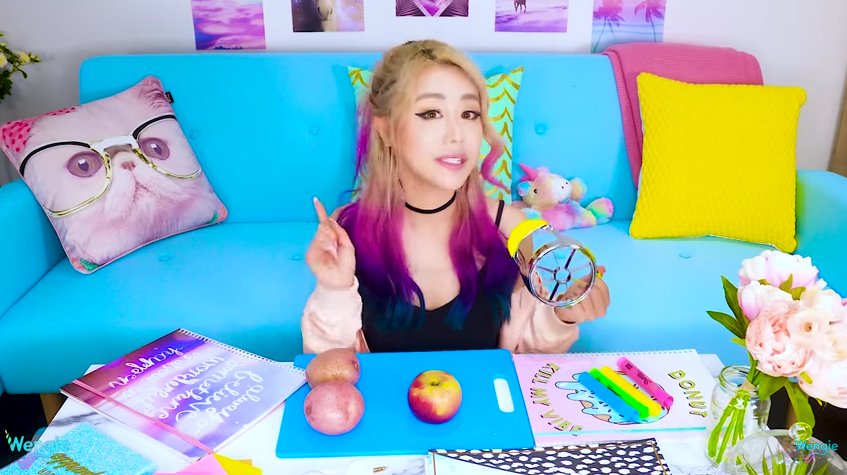
How do you make yourself a global sensation without having to get the approval of media chiefs of any industry or sit on every casting couch going? You do it yourself. And if you do it well, fans will come. Self-made beauty and lifestyle star Wengie is a perfect example of this. She is smashing it on just about every piece of internet real estate.

Wengie is an international YouTube sensation, and she is the #1 most subscribed channel in Australia, hitting 10 million subscribers in 2017. But it is not only in her native Australia that she is smashing it. With over 700 million video views, Wengie’s global fan base of ‘Wengiecorns’ continues its unprecedented growth. Wengie started her YouTube channel in 2010, to express her passion for truly fluffy videos that give viewers helpful advice, DIY/life hacks, music, reactions and more. The videos have become immensely popular around the world, in places like the UK, and the United States. And of course, here in Ireland.

Anyone with tween daughters knows just how much influence this unicorn in human form has. Born in China, but brought to Australia as an infant, Wengie could recommend anything from a rubbish bin to a doormat and tweens MUST HAVE IT.

Wengie’s global social media following is currently:

  • 10 million YouTube subscribers
  • 1 million Instagram followers
  • 251k Facebook likes
  • 169k followers on Twitter

These are stats that mainstream media channels can only dream of.

Wengie is not stopping at influencer smashing. She is using it as a stepping stone for global domination. Her music and television career have already gained a substantial audience. In 2017, Wengie recorded her first music album in China. And we all know how big the Chinese market is. She is also currently involved in several on-screen projects including being the voice of the 4th PowerPuff Girl (Bliss) on the Cartoon Network. And the thing to remember here is that she has done this all herself, starting with just a computer in her bedroom. What this means is that ANYBODY can do this. ANYONE. Even you.

The Wengie phenomenon is also interesting for marketers. Placing your product with someone like Wengie is a good bet. Her fans love her and she’s entirely unlikely to get herself involved in any scandals or end up in jail with cocaine all over her face. She is a compelling competitor to any other marketing channel, especially if you are selling anything aimed at tweens and teens. Her growing celebrity status has already made her a very much sought-after collaborator for both high-profile and emerging global brands.

The reason for her popularity is that she understands tween and teen girls perfectly. She knows what they need to relax and switch off from their day on the school battlefront. She’s happy, she’s bright, everything is fluffy, and it’s all rainbows. It is devoid of politics, there’s no lecturing, there’s no drama. Just smiley, cutsie, happy hints and tips, in short ten-minute bursts of fragrant goodness. It’s all good. And, she is a sponsors’ dream.

Go the Wengiecorns.


It seems that Facebook is trying to muscle in on YouTube territory.

By MediaStreet Staff Writers

Facebook is indirectly becoming a solid source of user-generated content, often replacing time otherwise spent viewing similar videos on YouTube.

A new report from the UXS group at Strategy Analytics has been investigating the needs, behaviours and expectations of consumers regarding video consumption. The result? While consumers look to Facebook to see what friends/family are up to and to gain information overall, videos are being increasingly consumed as a part of this experience.

According to the report:

  • Social platforms are becoming the main source of consumption of ad-hoc short-form video. Sites such as Facebook and Instagram are increasingly sources to communicate new content availability; while sites such as Snapchat, IG stories and Boomerang are leading the drive towards social video creation and sharing.
  • Socially shared and discovered ‘viral’ content not only serves as entertainment on its own but can impact an unintended direction for users and their video consumption.
  • Ongoing live video streaming and posting of temporary ‘stories’ across Facebook and Instagram are also driving users to return.

Says Christopher Dodge, report author, “Content is ‘finding’ the user within social media: consumers no longer have to search for videos themselves. Furthermore, new ‘live’ video, along with countless shared video content, is shifting behaviours and resulting in more unintended video consumption.”

Chris Schreiner, Director of Syndicated Research, UXIP, agrees. “Identifying Facebook as a solid source for video – inclusive of professional, user-generated, and ‘viral’-type videos – not only makes Facebook’s experience even more compelling for users, but also drives advertisement revenues for this platform.”

There’s plenty of ways to use facebook video to advertise products.

But will they take YouTube’s thunder? Perhaps this is wishful thinking at this point. But, stranger things have happened. We will stay tuned.

By

A sit down with the authors of StreamPunks

YouTube is arguably having its best and worst year. The company recently announced that more than 1.5 billion people log in and view videos each month, putting the service second only to Facebook in terms of global scale. Its revenues are estimated to be growing at upwards of 30 percent each year, and Google CEO Sundar Pichai has repeatedly highlighted the company as a key contributor to the search giant’s overall financial success. It’s even got a new look.

At the same time, YouTube has been forced to reckon with its laissez-faire approach to content creators. After a Wall Street Journal article found ads from major brands playing next to racist and disturbing content, a number of big marketers pulled their spots. Shortly after, YouTube’s biggest home grown star, PewDiePie, was called out for his use of anti-semitic humor and Nazi imagery. Both Disney and YouTube severed ties with the streaming video star.

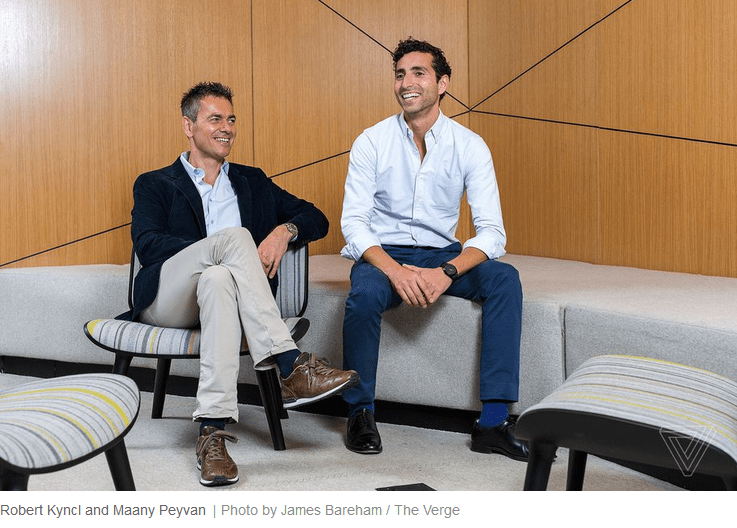
So it’s fitting that Robert Kyncl, YouTube’s head of business, is releasing a new book entitled StreamPunks: YouTube and the Rebels Remaking Media. It was authored with Maany Peyvan, a Google speechwriter who has crafted much of the language Kyncl and his team use during public engagements. The pair sat down with The Verge at our offices in New York to discuss the challenges and opportunities they see for YouTube and its creators.

So why write a book?

Robert Kyncl: The online video space, and the overall entertainment space, because its changing so fast, can be confusing, both to consumers, advertisers, agencies, studios, anybody. Because we’re in the middle of it, we get into conversations with everybody around it.

And where does the title come from? Did you coin that term?

RK: We were batting around different titles, and I always admired Cable Cowboy. Loved the book. Told him we needed something as catchy as that, but it has to be current.

Maany Peyvan: This is a new class of creator, one that is embracing streaming and online video. The other element is that they are creating their own path, going around gatekeepers, not following the rules of traditional media. There is something rebellious about that. Who is Casey Neistat if not a punk?

At 1.5 billion monthly users, can YouTube really still be considered outside the mainstream? Is it still rebellious to pursue fame here over the traditional Hollywood route?

RK: I think because it’s open, they don’t think of us the same way they think about other destinations. It’s so attainable. You don’t need an agent or a contract with a studio. Our creators tell you about how they accomplish their fame. It’s right there for you to try. There will always be people who try, some who fail and some who succeed in a big way. No matter how big YouTube may get, I don’t think that part will go away.

And contrary to the popular notion, it’s not just for young people. People in their 50 and 60s can do it. Alan DeBoton with the school of life. Jenny Doane is the most heart warming example of someone who leveraged this platform. It’s not some kid with a computer science degree who built an app. It’s a lady who quilts, and she tapped into an audience because of

YouTube, and rebuilt a town around it.

Your definition of punk isn’t really about counter-culture then. 

It’s about creative freedom, and DIY attitude. Do you think there is less of that as YouTube grows and more mainstream advertisers come onboard?

RK: There is a lot more money flowing through the system with a billion and a half monthly logged in users. The opportunity to build a large business is much bigger. We focus on what can drive revenue and distribution. All of that brings good things for the people who know what to do with it.

MP: Are we victims of our success? I don’t think so. The fact that anyone can start a channel means there is a healthy source of supply. A lot of the people who have become popular on YouTube in the last few years came from other platforms.

But you have to admit that the kind of content that can make money on YouTube has changed. If this was a comedy club, as it’s grown its audience, it’s also forced creators to clean up their acts. PewDiePie being the prime example.

RK: It is our job to make sure that the advertisers have confidence in the platform and the creators, and that the creators get paid. We have to make sure those connections happen in the right way. These things evolve, every year. We care about them both. One without the other, is weaker.

MP: The power of global scale is that you can cultivate niche communities in a way that wouldn’t have been possible with traditional broadcast media. Quilting is the example we like to use. The revolution we’re talking about is so different than what’s happening on Netflix or Amazon, which wouldn’t be unfamiliar if you saw it on TV five or 10 years ago.

Do you think it’s possible that in the future we might see shows on YouTube Red in the future which aren’t palatable to advertisers but can be supported behind a paywall?

RK: We’re still early on with YouTube Red. We’ve seen a lot of evolution with the programming. You will always see something on the paid platforms [that] you won’t on the free platforms. One of the reasons could be that the content is racier. When you look at HBO or Showtime, it’s racier than the broadcast networks. It works for everybody. Naturally, you find the boundaries with ads, and what is better without them.

So Robert you have daughters, what do they watch on YouTube?

RK: Both of my daughters are vegan, so they follow other folks who teach them how to convince your parents it’s ok and mitigate all the arguments.

Veganism is pretty punk.

RK: They can win you over to adjust the shopping list. My younger daughter created a whole presentation with videos embedded in it. Should I be angry or proud? I’m going to lose this argument, but she’s using good techniques.

By

Sourced from THE VERGE

By Danny Vena.

For all the talk about Facebook taking on TV and streaming video, the answer is much simpler — and potentially lucrative.

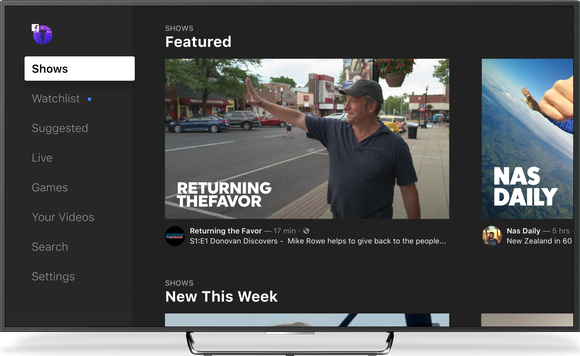
When social media giant Facebook (NASDAQ:FB) announced it would debut a hub for original video content, much ink was spilled that the company was preparing for an all-out assault on television. This would be an easy conclusion to draw since the platform, called Watch, would feature programs that will appeal to a wide variety of its users, including live sports, cooking shows, and children’s programming.

While there’s always potential for quality content to lure viewers away from live TV, it’s more likely that the company is pursuing a much broader strategy as it launches a video platform. Facebook likely has one competitor in mind — YouTube, a subsidiary of Alphabet‘s (NASDAQ:GOOGL) (NASDAQ:GOOG) Google, and Facebook’s most direct competitor in the online advertising space.

Facebook Watch has its sights set on YouTube. Image source: Facebook.

It “ads” up

In a recent blog post, YouTube CEO Susan Wojcicki revealed that more than 1.5 billion viewers visit the site every month and that viewers spent over an hour watching video. That many eyeballs generate a significant share of YouTube’s ad revenue.

In 2016, digital advertising in the US grew by 22% year over year, amounting to $72.5 billion, and an increasing portion of that growth is being divided between Google and Facebook. Estimates suggest that the two accounted for as much as 89% of digital advertising growth in 2016, with Google commanding 49%, while Facebook garnered 40%.

Estimates by eMarketer indicate that Google enjoys a 41% share of all U.S. digital ad revenue, while Facebook accounts for 20%. By increasing its focus on video, the latter hopes to increase its share of digital advertising revenue at YouTube’s expense.

Watch out!

Facebook introduced Watch as “a new platform for shows on Facebook”, which is personalized to help users find new content of interest to them and organized around their friends. The platform would feature categories, including “Most Talked About”, “What’s Making People Laugh”, and “What Friends Are Watching”. The company’s experience with Live taught it that user interactions were an important aspect of the experience, so it’s also organizing shows around communities.

New programs will include Virtual Dating where strangers will use virtual reality as the medium for a blind date and Tastemade’s Kitchen Little, “a funny show about kids who watch a how-to video of a recipe, then instruct professional chefs on how to make it.” As you can imagine, those recipes don’t always turn out as intended. Facebook had previously announced a deal with Major League Baseball to livestream 20 games on its site this season.

Screenshot of Facebook Watch, showing Featured shows.

Facebook believes video will continue to grow user engagement. Image source: Facebook.

Facebook described Watch as “a platform for all creators and publishers to find an audience, build a community of passionate fans, and earn money for their work,” though that definition works equally well for defining YouTube.

There has been a massive increase of mobile video consumption, and it’s estimated that video will account for 82% of all internet traffic by 2021, up from 51% in 2016, so Facebook is wise to stake its claim now.  There are also limits to how much advertising the company can place in its Newsfeed before users revolt, and the company has addressed this by adding additional platforms like Messenger, WhatsApp, and Instagram. The debut of Watch will provide the company with additional real estate for both user engagement and advertising, and stealing share from YouTube would be icing on the cake.

Suzanne Frey, an executive at Alphabet, is a member of The Motley Fool’s board of directors. Danny Vena owns shares of Alphabet (A shares) and Facebook. Danny Vena has the following options: long January 2018 $640 calls on Alphabet (C shares) and short January 2018 $650 calls on Alphabet (C shares). The Motley Fool owns shares of and recommends Alphabet (A shares), Alphabet (C shares), and Facebook. The Motley Fool has a disclosure policy.


By Danny Vena

Daniel W. Vena, CPA, CGMA is long-term investor searching for intangibles that provide explosive growth opportunities in his investments. He served on active duty with the US Army and has a Bachelors degree in accounting.

Sourced from The Motley Fool

By Sahil Patel

YouTube and Facebook get a bulk of the attention from digital publishers looking to build and scale video businesses. Meanwhile, for the past year, Amazon has built a platform that not only offers publishers another place to distribute videos but also the opportunity to make money from day one.

Last year, Amazon opened up its Prime streaming platform to video publishers and creators of all sizes, allowing them to distribute individual videos, themed video collections, entire seasons of shows and even their subscription channels. Called Amazon Video Direct, the program gives participating publishers access to the estimated 79 million people who pay for Prime in the U.S. alone.

One publisher in the Amazon Video Direct program said it earned mid-five figures on Amazon during its first month on the program last year — nearly four times the amount it made from YouTube ad sales during the same month. “That was an eye-opener, and we’ve been putting up more titles [on Amazon] since then,” said this publishing exec.

Amazon itself said the Video Direct program paid out “tens of millions of dollars” in royalties in its first year, with “billions of minutes” streamed.

“We are encouraged by the positive response and adoption from content creators, as well as the high level of engagement by Amazon Video customers,” said Eric Orme, head of Amazon Video Direct.

Video publishers have a number of ways to make money from the Amazon Video Direct program. If they choose to distribute individual videos and shows within the Amazon Prime subscription video service, they get paid 15 cents per hour streamed in the U.S. and 6 cents per hour streamed in the U.K., Germany and Japan. Publishers also have the option to sell individual movies, shows and video packages to customers, retaining 50 percent of all revenue made from purchases or rentals. There’s also an ad-supported, free portal, through which Amazon pays out 55 cents to every dollar generated from pre-roll ads. Finally, they can sell add-on subscriptions.

Very little revenue is coming in from the ad-supported side at the moment, according to multiple sources. However, the dollars generated from distributing inside the Prime subscription service, while fluctuating month to month, are proving to be noticeable. It’s enough money that HowStuffWorks started to produce long-form shows last year that can be distributed on Amazon.

Comedy studio Jash, meanwhile, is seeing enough revenue from Amazon that it plans to publish new episodes of “Norm Macdonald Live,” its comedy talk show with the famous comedian, on Amazon the day they premiere.

“Because Amazon is starting to pop up, I can create a show like this that’s a little bit higher profile, and I can do it at a profit with better margins than I see in traditional entertainment,” said Mickey Meyer, co-founder of Jash. For instance, on a show like “The High Court,” which airs on Comedy Central, the margin is the typical 10 percent that production company gets in TV. By controlling production and distribution on “Norm Macdonald Live,” Jash has the chance to make more. “Platforms like Amazon that place a value on premium content are bigger factors in this overall shift everyone’s seen from traditional to digital development.”

The Video Direct program, however, is not the only way video companies can distribute and make money on Amazon. There’s also the Amazon Channels program, which allows companies with subscription streaming services to sell those products to Prime customers. Today, this program boasts more than 100 partners, including premium cable channels such as HBO, Showtime and Starz, as well as numerous channels from mid-tier and digital publishers including Defy Media, Fullscreen, Fandor and The Enthusiast Network.

The deal terms vary, but multiple sources said Amazon typically takes a 30 to 40 percent cut of subscription revenue generated through this program. A research note from BTIG analyst Rich Greenfield in June said Amazon Channels account for half of the subscribers for HBO and as much as 75 percent for Starz’s streaming channel. The percentages vary, as multiple sources told Digiday that Amazon Channels account for anywhere from 10 to 40 percent of total subscribers of their streaming channels. One publisher said subscriber numbers doubled in the first three months after launching its streaming service on Amazon last year, though the growth has recently dipped, likely due to an annual summer seasonal drop.

“We want to play with companies that have the opportunity to be in it for the long haul, and Amazon is one of the companies that has that potential,” said Mark Garner, svp of distribution and digital content licensing at A+E Networks, which distributes two streaming services — History Vault and Lifetime Movie Club — through Amazon Channels.

Still, there is one more way to partner with Amazon — and that’s through the company’s original video business. So far, Condé Nast and Playboy have sold shows to Amazon Studios with the documentary series “The New Yorker Presents” and “American Playboy: The Hugh Hefner Story,” respectively. This is where Amazon competes with Netflix, TV networks and film studios, and it’s an area that top digital publishers are eyeing as they invest more in long-form and feature-length video.

“We’re targeting more feature films to bring to them,” said Dawn Ostroff, president of Condé Nast Entertainment, which also premiered the documentary TV series “Last Chance U” on Netflix in June 2016. “They’ve really risen as being one of the most sought-after places to sell because they stand for prestige.”

YouTube and Facebook will continue to be the platforms where a lot of digital publishers spend a lot of their time, resources and money to cultivate audiences — the scale is there. But with the amount of royalties and subscription-related revenue Amazon paid out in the past year alone, video companies — whether they’re TV networks, production studios or smaller, digital publishers — are treating Amazon as seriously as they do any other video distribution platform.

“Most of the time, when you launch on a new platform, you have a very long ramp toward success,” said Erick Opeka, evp of digital networks for Cinedigm, which distributes three streaming channels — Docurama, CONtv and the Dove Channel — through Amazon. “With Amazon, we saw success out of the gate immediately — it gave us breathing room to focus on how to grow our own direct-to-consumer streaming business.”

By Sahil Patel

Sourced from DIGIDAY

WhatsApp may be currently testing a new feature that could save a few headaches. Currently, when you’re chatting with someone and you receive a link to a YouTube video, the YouTube app will open up when you tap on it. This means you then have to navigate back to WhatsApp to continue the conversation.

WhatsApp may be looking to solve this problem as it’s reportedly testing a new feature that allows you to watch YouTube videos in the chat window. When you tap on a link, the video will show up on your screen in a small window placed on top of the conversation you’re having.

WABetaInfo

Apparently, you can also expand the video to full screen, or hide it momentarily, to get a better view of the chat window. However, the video will disappear as soon as you open up a different chat.

The news arrives via WABetaInfo, which claims that WhatsApp is currently testing the feature with a small number of users on iOS devices. We can’t verify this info at this point, but if it’s true, we expect that it would make its way to Android also.

Sourced from Android Authority

Sourced from eMarketer.

Facebook is favored, but YouTube, Twitter and Instagram may see increases in video ad spend

More marketers currently invest in video advertising on Facebook and YouTube than on Twitter and Instagram. But they’re increasing how much they spend on all four social media platforms.

US Marketers Who Currently Spend vs. Plan* to Increase Spending on Video Ads on Select Social Media Platforms, April 2017 (% of respondents)

More than two-thirds (67%) of US marketers run video ads on Facebook, while more than half (51%) do so on YouTube, according to an April 2017 survey from cloud-based video creation company Animoto. By comparison, only 25% of marketers surveyed are spending on video for Twitter, with the same percentage buying video ads for Instagram.

But that doesn’t mean Twitter and Instagram are falling completely by the wayside. In fact, half of marketers said they plan to increase their investment in social video advertising on Instagram in the next 12 months, and 52% plan to do the same on Twitter.

Marketers are more confident in video content on Facebook and YouTube when it comes to driving views, engagements and purchases. But videos placed on Instagram and Twitter are not that far behind, Animoto found.

US Marketers Who Are Confident in Their Ability to Create Video Content that Will Drive Views, Purchases and Engagement on Select Social Media Platforms, April 2017 (% of respondents)

For example, 83% of respondents were confident in Facebook videos for driving purchases, while 67% were similarly assured in videos placed on Instagram.

Investment in social video advertising will likely grow if platforms can prove their units are effective. Just last week, IPG Mediabrands reported on a study of video ad units on Twitter commissioned by the microblogging platform. The research revealed that Twitter’s “First View” video ads, which appear at the top of users’ feeds, were on screen for significantly longer periods of time than standard, in-feed video ads.

If marketers get more insight into the performance of video ads on social media platforms and like what they see, the dollars will follow.

Maria Minsker

Sourced from eMarketer

By Tom Huddleston, Jr.

YouTube says it now reaches 1.5 billion viewers each month—and those users are watching a lot of mobile video.

Susan Wojcicki, CEO of the Google-owned digital video service, announced the milestone at the VidCon digital video conference in California on Thursday, where YouTube trotted out some shiny new user metrics to aid its battle to lure advertising money away from television.

The company specifically highlighted the fact that 1.5 billion monthly viewers are also all “logged in” users, which is an important distinction as it suggests that even more viewers might be watching videos without signing into Google Accounts.

In her keynote address at VidCon, Wojcicki also noted that YouTube users watch more than an hour of mobile video on average each day. The YouTube CEO drew a direct comparison to TV, claiming that people in the U.S. spend roughly four hours per day watching television. “We think there’s lots of room to get people to watch even more YouTube,” she said in the address.

Get Data Sheet, Fortune‘s technology newsletter.

As part of YouTube’s push to earn more advertising dollars that might normally go to traditional TV networks, the company has worked hard to expand its streaming video offerings, including adding a growing number of original series to the YouTube Red subscription video service. YouTube Red has debuted 37 original series and movies to date—including new shows featuring celebrities like comedian Kevin Hart and Ellen DeGeneres announced earlier this year—and YouTube previewed 12 new series on Thursday.

The company also launched YouTube TV, its live-TV streaming service, in certain U.S. markets in April. And YouTube said on Thursday that it will be rolling out the service in several new markets soon, including Dallas-Fort Worth, Washington, D.C., and Atlanta.

YouTube’s push to further chip away at traditional TV’s advertising dollars took a hit earlier this year, when some advertisers boycotted the service after their ads showed up next to offensive material on YouTube, including videos posted by terrorist groups and white supremacists. The company apologized to advertisers earlier this year. But the fact that YouTube spent part of the Cannes Lions advertising festival this week offering details on how it is cracking down on extremist content on the site shows that the company is still trying hard to allay the concerns of nervous ad clients.

Meanwhile, YouTube is also facing increased competition on the streaming video front from other digital rivals like Hulu (which is jointly owned by the biggest TV networks) as well as social media players that have been increasingly investing in video programming. Facebook, Twitter, and Snapchat have all been adding a great deal of streaming video content and original series over the past several months.

By Tom Huddleston, Jr.

Sourced from Fortune