Tag

YouTube

Browsing

Now? Fashion brands are meeting with social media influencers directly.

By MediaStreet Staff Writers

Hundreds of NY Fashion Week influencers were invited to a party specifically held to put them in front of brands that want some of the spotlight. The party was held by a company called Influence, which connects brands and influencers. Together, they create social campaigns that expand visibility and engage new audiences for brands. The influencer gets paid, and the brands get to reach audiences that they might not be able to access using other methods. Welcome to the “now” of fashion and brand marketing.

Influence is a sister company to the already-successful operation called Newswire. Newswire currently have an online portal that publishes thousands of press releases every day. Journalists and influencers can go straight to company news, by keyword or subject search. This means that they can get their news directly from the companies, rather than have the interaction brokered through a PR agency. This renders the traditional PR agency almost obsolete.

The way the PR industry is changing is similar to the way that fashion magazines are going. Teen magazines and fashion publications are no longer the huge, powerful entities that brokered deals between brands/fashion houses and their audiences. Now, it is the online fashion influencers who have huge sway with their fans, and brands can contact them directly. This circumvents the hugely expensive fashion magazines, whose circulations are falling dramatically.

As an example, a top YouTube fashion influencer is Chriselle Lim. Her channel is growing at a breakneck pace. Her videos reveal how to transform basic pieces of clothing into stylish apparel. Chriselle has support from global brands such as Target and Estee Lauder.

The change in the way brands and fashion are marketed has been incredibly rapid. Fashion magazines? Pah. Now Facebook, Instagram, Twitter and YouTube are the place to put brand marketing spend.

But back to the party. The event hosted hundreds of NY Fashion Week Influencers at Manhattan’s chic Sixty Soho Hotel. Influencers and brands from across the globe arrived to share in networking and developing opportunities for campaign partnerships that strengthen an Influencer’s channel and widen content reach for brands. The party was also used to promote Influence.com itself. And it worked, because here you are, reading about this new company.

Said Director of Influencer Marketing, Magnolia Sevenler, “Whether you are an influencer or marketer, the Influence by Newswire platform provides a community to build your campaigns.”

According to Sevenler, the platform has been well-received from both marketers and creators for its simplicity and reach. “It’s exciting to see all the positive feedback…as we enter a new era of marketing, where micro-influencers can be rewarded for their passions and brands can reach new untapped audiences.”

The company has plans to expand its network and add additional features to enhance users’ experience. And it is doing this all because the fashion magazine industry is destined for a papery grave. It’s time to move on, people, and bring your marketing spend with you.

Have you listed your company in our Media Directory? It’s free! Everyone’s favourite price! Click here to do it now.


Before you dish out money to bid for a top-ranked ad position on a search engine, you may want to pause and make sure it’s actually going to pay off.

By MediaStreet Staff Writers

New research out of Binghamton University, State University of New York suggests that instead of just spending to get that top spot, advertisers should be considering other factors as well to ensure they are getting the best results from their sponsored search advertising campaigns.

Sponsored search advertising involves paying search engines, like Google and Bing, to bid for placements on the search results pages for specific keywords and terms. The ads appear in sponsored sections, separate from the organic search results, on those pages.

“The common belief in sponsored search advertising is that you should buy the top ad position to get more clicks, because that will lead to more sales,” said Binghamton University Assistant Professor of Marketing Chang Hee Park. “But the fee for the top position could be larger than the expected sales you’d get off that top position.”

Park, with the help of Binghamton University Professor of Marketing Manoj Agarwal, analysed data collected from a search engine and created a model that can forecast the number of clicks advertisers could expect in sponsored search markets based on four factors:

  • Rank in the sponsored listings
  • Website quality
  • Brand equity
  • Selling proposition

The model gives advertisers a way to quantify the expected clicks they’d get by adjusting these four factors, while also taking into consideration how their competitors are managing these four factors. This could enable advertisers to find a perfect blend of the four factors to ensure they are getting the most out of what they are paying for their ad positions.

It may also indicate that they should be spending more money to bolster their brand or website rather than amplifying their offers in top ad positions.

“Using this model, you may find that paying less for a lower ad position while investing more in improving your website is more effective than spending all of that money strictly on securing top ad positions,” said Agarwal.

This applies especially if your competitor has a poorer-quality website, but is spending more than you on securing top ad positions.

Their model found that poor-quality advertisers that are ranked higher in ad positions drive consumers back to the search results page, leading consumers to then click on advertisers in lower ad positions to find what they are looking for.

In contrast, they also found that a highly-ranked good-quality advertiser results in significantly less clicks for all the advertisers ranked below them.

“It’s more likely that in the top position, all advertisers being equal, you’ll get more clicks. But depending on these four factors, as well as the quality of your competitors, you may find that you’ll get more clicks in the second or the third position,” said Park.

“Conceptually, this is not a new idea, but now the model can help determine this by accounting for multiple factors at play at the same time.”

Advertisers aren’t the only ones who can benefit from this research.

Park and Agarwal’s model found that simply reordering the listed advertisers could result in significant changes in overall click volume (the total number of clicks across all advertisers) for search engines.

“Because they often charge on a pay-per-click model, search engines can now simulate which ordering of advertisers in a sponsored search market results in the most overall clicks and, therefore, most revenue” said Park. “Search engines may want to consider charging advertisers in a way that gives the search engine more flexibility in determining the order in which the ads in sponsored sections are displayed.”


Have you listed your company in our Media Directory? Click here to do it now.

Not all “likes” are equal.

By MediaStreet Staff Writers

While the trusty “like” button is still the most popular way to signal approval for Facebook posts, a computer model may help users and businesses navigate the increasingly complicated way people are expressing how they feel on social media.

In a study, researchers developed a social emotion mining computer model that one day could be used to better predict people’s emotional reactions to Facebook posts, said Jason Zhang, a research assistant in Penn State’s College of Information Sciences and Technology. While Facebook once featured only one official emoticon reaction – the like button – the social media site added five more buttons – love, haha, wow, sad and angry – in early 2016.

“We want to understand the user’s reactions behind these clicks on the emoticons by modelling the problem as the ranking problem – given a Facebook post, can an algorithm predict the right ordering among six emoticons in terms of votes?” said Zhang. “But, what we found out was that existing solutions predict the user’s emotions and their rankings poorly in some times.”

Zhang added that merely counting clicks fails to acknowledge that some emoticons are less likely to be clicked than others, which is called the imbalance issue. For example, users tend to click the like button the most because it signals a positive interaction and it is also the default emoticon on Facebook.

“When we post something on Facebook, our friends tend to click the positive reactions, usually love, haha, or, simply, like, but they’ll seldom click angry,” said Zhang. “And this causes the severe imbalance issue.”

For social media managers and advertisers, who spend billions buying Facebook advertisements each year, this imbalance may skew their analysis on how their content is actually performing on Facebook, said Dongwon Lee, associate professor of information sciences and technology. The new model – which they call robust label ranking, or ROAR – could lead to better analytic packages for social media analysts and researchers.

“A lot of the commercial advertisements on Facebook are driven by likes,” said Lee. “Eventually, if we can predict these emoticons more accurately using six emoticons, we can build a better model that can discern more precise distribution of emotions in the social platforms with only one emoticon – like – such as on Facebook before 2016. This is a step in the direction of creating a model that could tell, for instance, that a Facebook posting made in 2015 with a million likes in fact consists only 80 percent likes and 20 percent angry. If such a precise understanding on social emotions is possible, that may impact how you advertise.”

The researchers used an AI technique called “supervised machine learning” to evaluate their newly-developed solution. In this study, the researchers trained the model using four Facebook post data sets including public posts from ordinary users, the New York Times, the Wall Street Journal and the Washington Post, and showed that their solution significantly outperformed existing solutions. All four sets of data were analysed after Facebook introduced the six emoticons in 2016.

The researchers suggest future research may explore the multiple meanings for liking a post.

“Coming up with right taxonomy for the meanings of like is another step in the research,” said Lee. “When you click on the like button, you could really be signalling several emotions – maybe you agree with it, or you’re adding your support, or you just like it.”

And we as marketers know, the more you understand how your market feels, the better you can tailor your advertising to them.


Have you listed your company in our Media Directory? Click here to do it now.
A new survey indicates that 1 in 5 small businesses use social media in place of a website. Many assume a website is cost-prohibitive and may not consider the risks of not having one.

By MediaStreet Staff Writers

More than one-third (36%) of small businesses do not have a website, according to the websites section of the fourth annual Small Business Survey conducted by Clutch, a B2B research firm. One in five small businesses (21%) selectively use social media instead of a website in an effort to engage customers.

The survey indicates that small businesses consider cost a bigger concern than the potential repercussions of not having a website.


Social media platforms such as Facebook and Instagram attract small businesses by cultivating a highly engaged user base. However, relying solely on social media may be a risky strategy for businesses.

“Whenever you put all of your eggs into someone else’s basket, it’s risky,” said Judd Mercer, Creative Director of Elevated Third, a web development firm. “If Facebook changes their algorithm, there’s nothing you can do.”

Facebook recently announced changes that potentially increase the risk of using social media in place of a website. The social media platform plans to prioritise posts from family and friends over posts from brands.

This new policy may make it more difficult for small businesses to reach their audiences through social media. As a result, websites are expected to regain importance among businesses – as long as cost is not considered an obstacle.

Among small businesses that do not currently have a website, more than half (58%) plan to build one in 2018.

Some Small Businesses Say Website Cost is Prohibitive, But Others Cite Costs of $500 or Less

More than a quarter (26%) of small businesses surveyed say cost is a key factor that prevents them from having a website. However, nearly one-third of small businesses with websites (28%) report spending $500 or less.

Small businesses may not be aware that some web development agencies offer packages that defray costs by dividing website construction into multiple phases or sliding rates for small businesses. “You don’t necessarily need to launch with your first-generation website,” said Vanessa Petersen, Executive Director of Strategy at ArtVersion Interactive Agency, a web design and branding agency based in Chicago. “Maybe just start small.”

Mobile-Friendly Websites Becoming Standard
Businesses that do have websites are moving en mass to mobile friendly ones, the survey found. Over 90% of respondents said their company websites will be optimised for viewing on mobile devices by the end of this year.

In addition to the 81% of company websites that are already optimised for mobile, an additional 13% that say they plan to optimise for mobile in 2018.

Clutch’s 2018 Small Business Survey included 351 small business owners. The small businesses surveyed have between 1 and 500 employees, with 55% indicating that they have 10 or fewer employees.

To read the full report and source the survey data, click here.


So, which citizens trust their media the most? And the least?

By MediaStreet Staff Writers

Let’s start with the USA. The 2018 Edelman Trust Barometer reveals that trust in the U.S. has suffered the largest-ever-recorded drop in the survey’s history among the general population. Trust among the general population fell nine points to 43, placing it in the lower quarter of the 28-country Trust Index. It is now the lowest of the 28 countries surveyed, below Russia and South Africa.

The collapse of trust in the U.S. is driven by a staggering lack of faith in government, which fell 14 points to 33 percent among the general population, and 30 points to 33 percent among the informed public. The remaining institutions of business, media and NGOs also experienced declines of 10 to 20 points. These decreases have all but eliminated last year’s 21-point trust gap between the general population and informed public in the U.S.

“The United States is enduring an unprecedented crisis of trust,” said Richard Edelman, president and CEO of Edelman. “This is the first time that a massive drop in trust has not been linked to a pressing economic issue or catastrophe like the Fukushima nuclear disaster. In fact, it’s the ultimate irony that it’s happening at a time of prosperity, with the stock market and employment rates in the U.S. at record highs. The root cause of this fall is the lack of objective facts and rational discourse.”

Conversely, China finds itself atop the Trust Index for both the general population (74) and the informed public (83). Institutions within China saw significant increases in trust led by government, which jumped eight points to 84 percent among the general population, and three points to 89 percent within the informed public. Joining China at the top of the Trust Index are India, Indonesia, UAE and Singapore.

For the first time media is the least trusted institution globally. In 22 of the 28 countries surveyed it is now distrusted. The demise of confidence in the Fourth Estate is driven primarily by a significant drop in trust in platforms, notably search engines and social media. Sixty-three percent of respondents say they do not know how to tell good journalism from rumour or falsehoods or if a piece of news was produced by a respected media organisation. The lack of faith in media has also led to an inability to identify the truth (59 percent), trust government leaders (56 percent) and trust business (42 percent).

This year saw a revival of faith in experts and decline in peers. Technical (63 percent) and academic (61 percent) experts distanced themselves as the most credible spokesperson from “a person like yourself,” which dropped six points to an all-time low of 54 percent.

“In a world where facts are under siege, credentialed sources are proving more important than ever,” said Stephen Kehoe, Global chair, Reputation. “There are credibility problems for both platforms and sources. People’s trust in them is collapsing, leaving a vacuum and an opportunity for bona fide experts to fill.”

Business is now expected to be an agent of change. The employer is the new safe house in global governance, with 72 percent of respondents saying that they trust their own company. And 64 percent believe a company can take actions that both increase profits and improve economic and social conditions in the community where it operates.

This past year saw CEO credibility rise sharply by seven points to 44 percent after a number of high-profile business leaders voiced their positions on the issues of the day. Nearly two-thirds of respondents say they want CEOs to take the lead on policy change instead of waiting for government, which now ranks significantly below business in trust in 20 markets. This show of faith comes with new expectations; building trust (69 percent) is now the No. 1 job for CEOs, surpassing producing high-quality products and services (68 percent).

“Silence is a tax on the truth,” said Edelman. “Trust is only going to be regained when the truth moves back to centre stage. Institutions must answer the public’s call for providing factually accurate, timely information and joining the public debate. Media cannot do it alone because of political and financial constraints. Every institution must contribute to the education of the populace.”

Other key findings from the 2018 Edelman Trust Barometer include:

  • Technology (75 percent) remains the most trusted industry sector followed by Education (70 percent), professional services (68 percent) and transportation (67 percent). Financial services (54 percent) was once again the least trusted sector along with consumer packaged goods (60 percent) and automotive (62 percent).
  • Companies headquartered in Canada (68 percent), Switzerland (66 percent), Sweden (65 percent) and Australia (63 percent) are most trusted. The least trusted country brands are Mexico (32 percent), India (32 percent), Brazil (34 percent) and China (36 percent). Trust in brand U.S. (50 percent) dropped five points, the biggest decline of the countries surveyed.
  • Nearly seven in 10 respondents worry about fake news and false information being used as a weapon.
  • Exactly half of those surveyed indicate that they interact with mainstream media less than once a week, while 25 percent said they read no media at all because it is too upsetting. And the majority of respondents believe that news organizations are overly focused on attracting large audiences (66 percent), breaking news (65 percent) and politics (59 percent).

It’s a brave new world, and we as marketers must realise that placing any marketing cash with distrusted media outlets could mean a very big waste of our advertising spending power.

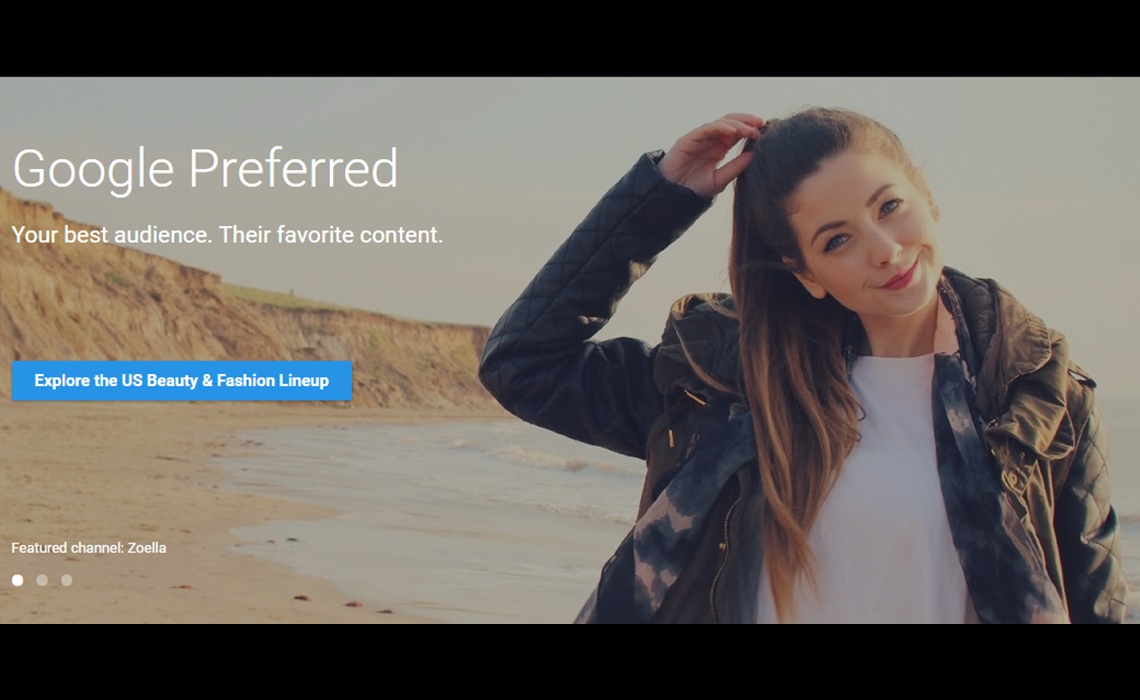
At several points in 2017, major brands suspended ad campaigns on YouTube because they could not be assured that their spots would run next to brand-appropriate videos. As it looks to improve its relationship with those brands, YouTube is reportedly taking steps to ensure its premium ad tier remains a worthwhile buy. As shared by Bloomberg, YouTube will use both human and technological moderation to vet the channels it includes in its Google Preferred package.

Google Preferred, first launched in 2014, ropes off ad space on YouTube’s top channels, which is reserved for advertisers that enter into the Preferred program. In theory, this is a win for both creators, who get to reap the benefits of strong ad rates, and brands, who can ensure that their YouTube media buys connect to strong, engaged audiences.

For a while, Preferred worked as planned. In November 2017, however, some customers griped that Google Preferred wasn’t delivering the level of brand safety YouTube had promised.

Now, YouTube is responding to those complaints. A day after it removed Logan Paul from its Preferred lineup in response to the embattled star’s “suicide forest” video, it vowed to do right by its most valuable brand partners.

“We built Google Preferred to help our customers easily reach YouTube’s most passionate audiences and we’ve seen strong traction in the last year with a record number of brands,” reads a statement from a Google spokeswoman. “As we said recently, we are discussing and seeking feedback from our brand partners on ways to offer them even more assurances for what they buy in the Upfronts.”

YouTube’s promise to clean up Preferred is in line with the initiatives it has taken across its platform. It is planning to hire 10,000 humans to review questionable content, and it is improving its technological processes to ensure they catch the right types of inappropriate videos. Those steps can likely help YouTube restore advertisers faith in Preferred as well.

Sourced from tubefilter

At the International Consumer Electronics Show (CES), YouTube’s chief product officer, Neal Mohan, announced that a staggering majority of watch time on the platform — to the tune of 70% — is driven not by user search, but by the company’s own masterful recommendations, which are powered by artificial intelligence and machine learning.

And the fact that YouTube is so good at suggesting videos — which is no small feat given that 400 hours of content are uploaded to the site every minute — has resulted in longer watch times, said Mohan (pictured above). Today, the average viewing session on a mobile device lasts more than an hour.

“We focused a lot in the last several years on machine learning and artificial intelligence to learn what our users like and make,” Mohan said, per CNET, at the Las Vegas tech conference. “Our job is to give a steady stream — almost a synthetic or personalized channel.”

Sourced from tubefilter

This is how you do it. Watch and learn, people.

By Nicole Buckler

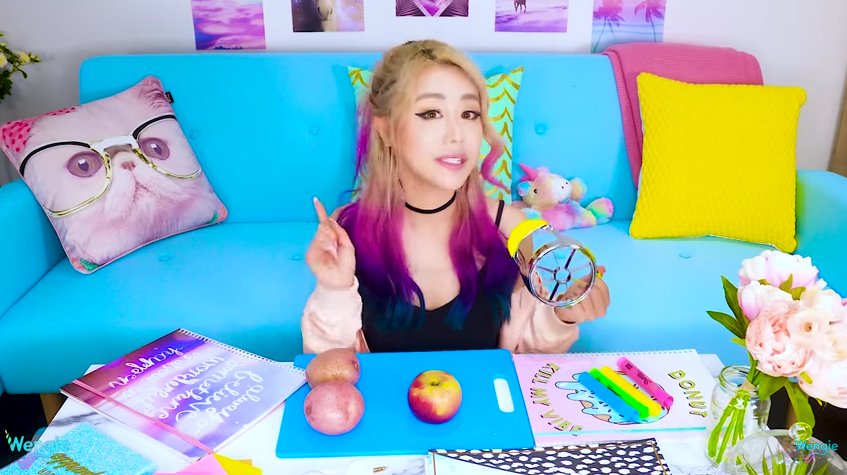
How do you make yourself a global sensation without having to get the approval of media chiefs of any industry or sit on every casting couch going? You do it yourself. And if you do it well, fans will come. Self-made beauty and lifestyle star Wengie is a perfect example of this. She is smashing it on just about every piece of internet real estate.

Wengie is an international YouTube sensation, and she is the #1 most subscribed channel in Australia, hitting 10 million subscribers in 2017. But it is not only in her native Australia that she is smashing it. With over 700 million video views, Wengie’s global fan base of ‘Wengiecorns’ continues its unprecedented growth. Wengie started her YouTube channel in 2010, to express her passion for truly fluffy videos that give viewers helpful advice, DIY/life hacks, music, reactions and more. The videos have become immensely popular around the world, in places like the UK, and the United States. And of course, here in Ireland.

Anyone with tween daughters knows just how much influence this unicorn in human form has. Born in China, but brought to Australia as an infant, Wengie could recommend anything from a rubbish bin to a doormat and tweens MUST HAVE IT.

Wengie’s global social media following is currently:

  • 10 million YouTube subscribers
  • 1 million Instagram followers
  • 251k Facebook likes
  • 169k followers on Twitter

These are stats that mainstream media channels can only dream of.

Wengie is not stopping at influencer smashing. She is using it as a stepping stone for global domination. Her music and television career have already gained a substantial audience. In 2017, Wengie recorded her first music album in China. And we all know how big the Chinese market is. She is also currently involved in several on-screen projects including being the voice of the 4th PowerPuff Girl (Bliss) on the Cartoon Network. And the thing to remember here is that she has done this all herself, starting with just a computer in her bedroom. What this means is that ANYBODY can do this. ANYONE. Even you.

The Wengie phenomenon is also interesting for marketers. Placing your product with someone like Wengie is a good bet. Her fans love her and she’s entirely unlikely to get herself involved in any scandals or end up in jail with cocaine all over her face. She is a compelling competitor to any other marketing channel, especially if you are selling anything aimed at tweens and teens. Her growing celebrity status has already made her a very much sought-after collaborator for both high-profile and emerging global brands.

The reason for her popularity is that she understands tween and teen girls perfectly. She knows what they need to relax and switch off from their day on the school battlefront. She’s happy, she’s bright, everything is fluffy, and it’s all rainbows. It is devoid of politics, there’s no lecturing, there’s no drama. Just smiley, cutsie, happy hints and tips, in short ten-minute bursts of fragrant goodness. It’s all good. And, she is a sponsors’ dream.

Go the Wengiecorns.


It seems that Facebook is trying to muscle in on YouTube territory.

By MediaStreet Staff Writers

Facebook is indirectly becoming a solid source of user-generated content, often replacing time otherwise spent viewing similar videos on YouTube.

A new report from the UXS group at Strategy Analytics has been investigating the needs, behaviours and expectations of consumers regarding video consumption. The result? While consumers look to Facebook to see what friends/family are up to and to gain information overall, videos are being increasingly consumed as a part of this experience.

According to the report:

  • Social platforms are becoming the main source of consumption of ad-hoc short-form video. Sites such as Facebook and Instagram are increasingly sources to communicate new content availability; while sites such as Snapchat, IG stories and Boomerang are leading the drive towards social video creation and sharing.
  • Socially shared and discovered ‘viral’ content not only serves as entertainment on its own but can impact an unintended direction for users and their video consumption.
  • Ongoing live video streaming and posting of temporary ‘stories’ across Facebook and Instagram are also driving users to return.

Says Christopher Dodge, report author, “Content is ‘finding’ the user within social media: consumers no longer have to search for videos themselves. Furthermore, new ‘live’ video, along with countless shared video content, is shifting behaviours and resulting in more unintended video consumption.”

Chris Schreiner, Director of Syndicated Research, UXIP, agrees. “Identifying Facebook as a solid source for video – inclusive of professional, user-generated, and ‘viral’-type videos – not only makes Facebook’s experience even more compelling for users, but also drives advertisement revenues for this platform.”

There’s plenty of ways to use facebook video to advertise products.

But will they take YouTube’s thunder? Perhaps this is wishful thinking at this point. But, stranger things have happened. We will stay tuned.

By

A sit down with the authors of StreamPunks

YouTube is arguably having its best and worst year. The company recently announced that more than 1.5 billion people log in and view videos each month, putting the service second only to Facebook in terms of global scale. Its revenues are estimated to be growing at upwards of 30 percent each year, and Google CEO Sundar Pichai has repeatedly highlighted the company as a key contributor to the search giant’s overall financial success. It’s even got a new look.

At the same time, YouTube has been forced to reckon with its laissez-faire approach to content creators. After a Wall Street Journal article found ads from major brands playing next to racist and disturbing content, a number of big marketers pulled their spots. Shortly after, YouTube’s biggest home grown star, PewDiePie, was called out for his use of anti-semitic humor and Nazi imagery. Both Disney and YouTube severed ties with the streaming video star.

So it’s fitting that Robert Kyncl, YouTube’s head of business, is releasing a new book entitled StreamPunks: YouTube and the Rebels Remaking Media. It was authored with Maany Peyvan, a Google speechwriter who has crafted much of the language Kyncl and his team use during public engagements. The pair sat down with The Verge at our offices in New York to discuss the challenges and opportunities they see for YouTube and its creators.

So why write a book?

Robert Kyncl: The online video space, and the overall entertainment space, because its changing so fast, can be confusing, both to consumers, advertisers, agencies, studios, anybody. Because we’re in the middle of it, we get into conversations with everybody around it.

And where does the title come from? Did you coin that term?

RK: We were batting around different titles, and I always admired Cable Cowboy. Loved the book. Told him we needed something as catchy as that, but it has to be current.

Maany Peyvan: This is a new class of creator, one that is embracing streaming and online video. The other element is that they are creating their own path, going around gatekeepers, not following the rules of traditional media. There is something rebellious about that. Who is Casey Neistat if not a punk?

At 1.5 billion monthly users, can YouTube really still be considered outside the mainstream? Is it still rebellious to pursue fame here over the traditional Hollywood route?

RK: I think because it’s open, they don’t think of us the same way they think about other destinations. It’s so attainable. You don’t need an agent or a contract with a studio. Our creators tell you about how they accomplish their fame. It’s right there for you to try. There will always be people who try, some who fail and some who succeed in a big way. No matter how big YouTube may get, I don’t think that part will go away.

And contrary to the popular notion, it’s not just for young people. People in their 50 and 60s can do it. Alan DeBoton with the school of life. Jenny Doane is the most heart warming example of someone who leveraged this platform. It’s not some kid with a computer science degree who built an app. It’s a lady who quilts, and she tapped into an audience because of

YouTube, and rebuilt a town around it.

Your definition of punk isn’t really about counter-culture then. 

It’s about creative freedom, and DIY attitude. Do you think there is less of that as YouTube grows and more mainstream advertisers come onboard?

RK: There is a lot more money flowing through the system with a billion and a half monthly logged in users. The opportunity to build a large business is much bigger. We focus on what can drive revenue and distribution. All of that brings good things for the people who know what to do with it.

MP: Are we victims of our success? I don’t think so. The fact that anyone can start a channel means there is a healthy source of supply. A lot of the people who have become popular on YouTube in the last few years came from other platforms.

But you have to admit that the kind of content that can make money on YouTube has changed. If this was a comedy club, as it’s grown its audience, it’s also forced creators to clean up their acts. PewDiePie being the prime example.

RK: It is our job to make sure that the advertisers have confidence in the platform and the creators, and that the creators get paid. We have to make sure those connections happen in the right way. These things evolve, every year. We care about them both. One without the other, is weaker.

MP: The power of global scale is that you can cultivate niche communities in a way that wouldn’t have been possible with traditional broadcast media. Quilting is the example we like to use. The revolution we’re talking about is so different than what’s happening on Netflix or Amazon, which wouldn’t be unfamiliar if you saw it on TV five or 10 years ago.

Do you think it’s possible that in the future we might see shows on YouTube Red in the future which aren’t palatable to advertisers but can be supported behind a paywall?

RK: We’re still early on with YouTube Red. We’ve seen a lot of evolution with the programming. You will always see something on the paid platforms [that] you won’t on the free platforms. One of the reasons could be that the content is racier. When you look at HBO or Showtime, it’s racier than the broadcast networks. It works for everybody. Naturally, you find the boundaries with ads, and what is better without them.

So Robert you have daughters, what do they watch on YouTube?

RK: Both of my daughters are vegan, so they follow other folks who teach them how to convince your parents it’s ok and mitigate all the arguments.

Veganism is pretty punk.

RK: They can win you over to adjust the shopping list. My younger daughter created a whole presentation with videos embedded in it. Should I be angry or proud? I’m going to lose this argument, but she’s using good techniques.

By

Sourced from THE VERGE