By ASHLEY COUTO
I’ve used this strategy to add an additional $30,000 in closed sales to my business in less than a week, and it can work for you, too.
One of the hills I’ll die on as a business owner and person who’s helped more than 1,500 people grow their business on LinkedIn is that polls are the most underrated sales tool on LinkedIn.
I hate cold outbound DMs and I’ve built most of my business on inbound conversations because of it. Polls are a happy medium because prospects volunteer information, so I can customize my outreach to them.
Polls slide under the radar—they aren’t even an official category of post on the activity section of LinkedIn’s profile feeds—but if you use them correctly, they can be a massive sales booster.
Here’s the system I use to predictably turn a one-click vote into revenue.
When to use a LinkedIn poll
I run polls roughly quarterly in one of three scenarios:
- When I’m scoping a new digital product or service offering and I need to do audience research or fill a beta round.
- When inbound inquiries are quieter and I need to fill up my pipeline with qualified people easily.
- When I sense the market has shifted and I want confirmation of my hunch if no public polling data or reporting exists
The best type of poll question to ask
The best type of poll to run is a segmentation poll that groups your audience into different buckets. That way, you can start a conversation with your audience about pain points they’ve already told you they have and you can design content and offers specifically around those pain points or states.
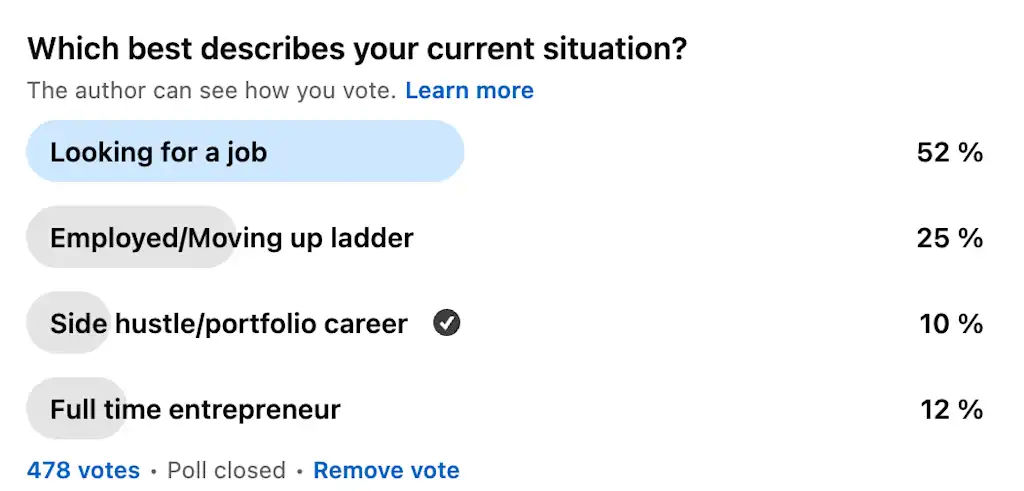
An example of a 72 hour poll I recently ran on LinkedIn.
DM qualified prospects in your audience
You only have so many hours in the day, so you want to start with people who are likely to pay you more money. Although it’s a much smaller segment of my audience, the majority of my five-figure one-to-one clients come from the “employed/moving up” bracket or the “side hustle/portfolio career” bracket.
These people are more financially stable and they stand to make far more than I charge in working together, so it’s an easy investment for them. If you can be online and messaging people within a few minutes of them voting, I highly recommend it.
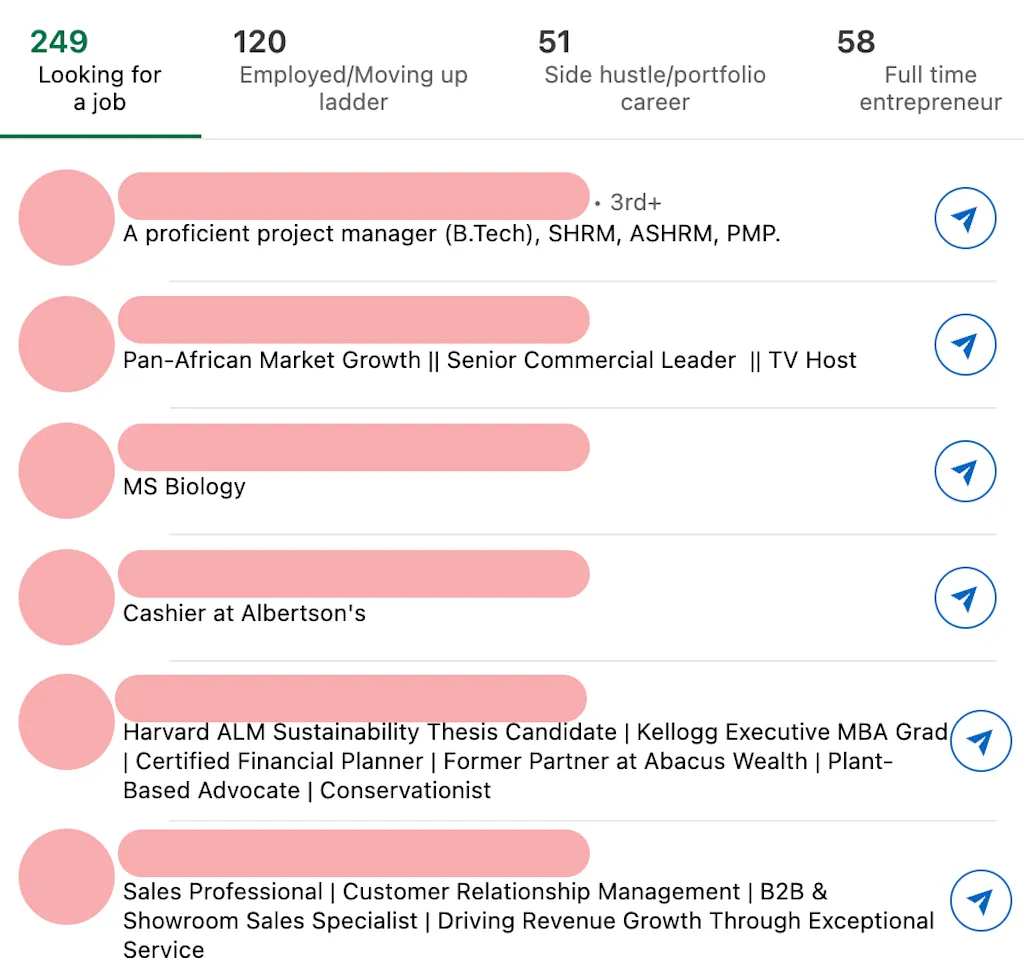
LinkedIn lets you DM all of your poll respondents.
I don’t message every voter. I scan the list and pick only the people who fit my ideal customer profile. Talking to everyone is how you waste your week and tank your reply rate. Talking to the right 100 voters out of nearly 500 is how you make money.
Logistically, you also don’t want to send too many messages in a day (I max out at 40) to avoid LinkedIn thinking you’re automating your activity.
If someone’s not a connection, I send them a connection request first with this message: “Thank you for voting in my poll. I have a free resource I’d love to send you to help you with [outcome].”
Once I start chatting with my highest value people, I then work on the people who will purchase my one-off services, courses and digital products. I have options between $27 and $1497 so I can meet people where they’re at financially.
How I structure my follow up message
My follow-up message does three things.
- I thank the person for voting and being part of my community
- I ask a follow-up question tied to the option they picked
- I send my best free resource with a link to a landing page related to their problem
Almost everyone responds to me because I give them three-value based ways to engage with me and keep the conversation going. Most people also opt-in, which means I get their email, more market research, and a lead all in one exchange.
I then go back and forth with the chattiest people via DM and if I see an opportunity to get on a call with them, I do. If I think the person needs a call or I’m not sure they’ll be a fit, I start with a paid $250 Career Power Hour where I’ll help them with a specific career outcome, and if they’re interested in more help, I roll that initial investment as a credit into their package.
How to write the post that accompanies your poll
People answer polls when they’re curious about the answer or they feel like there’s a net positive to answering, not when a poll feels extractive.
I tell my audience I want to make better content for them and need less than a minute of their time. Both of those things are true. I have no interest in posting about promotions for half the week if the majority of my audience is unemployed.
I also always leave a CTA to comment or DM. Most voters won’t comment, but the ones who do leave me something genuine are high intent, same with the people who DM me to chat about their answer.
Remember: A poll without a CTA and sales process behind it is a dead end and hollow engagement. A poll with a CTA and sales process behind it is a funnel.
Here’s an example of a recent poll post
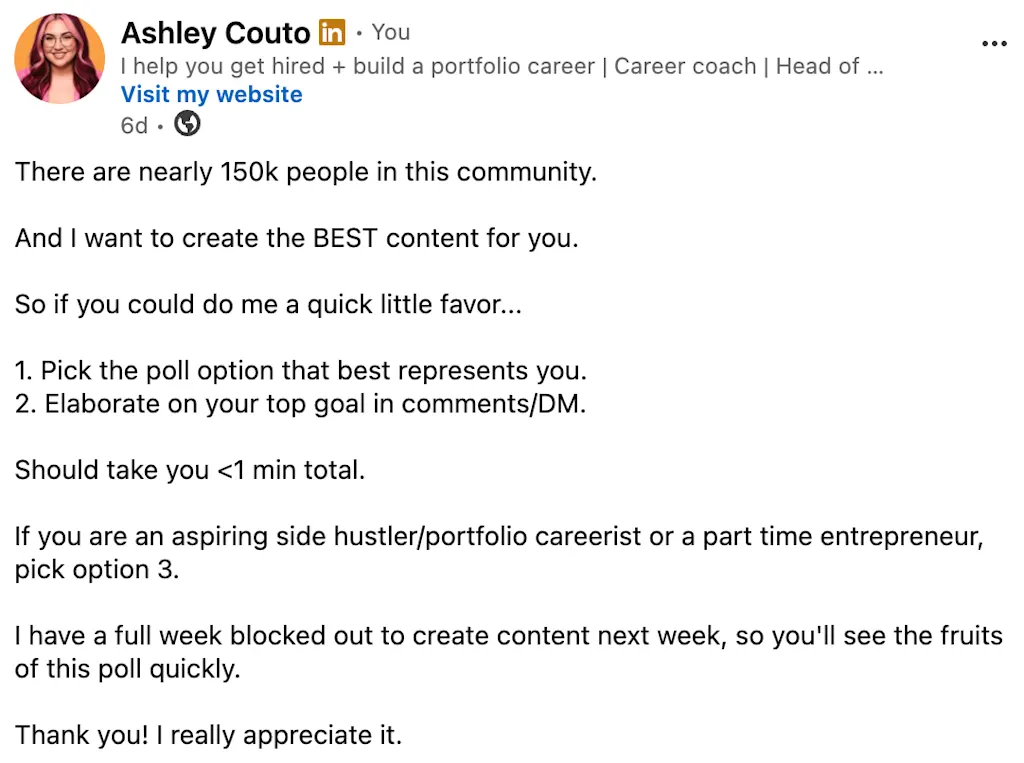
The post that accompanied my poll.
There’s always money in polls if you treat them as sales infrastructure rather than engagement filler. Most founders are still treating them like a fun way to ask a question. That’s the gap, and it’s wide open.
Feature image credit: Adobe Stock