By DAVE KERPEN
Sometime this spring, AI stopped being a passive tool you pick up and started becoming an active system that runs in the background.
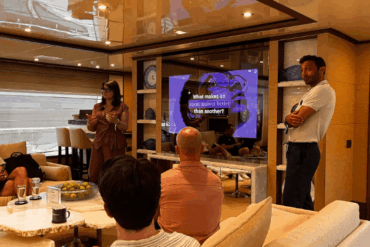
For about two years, most of the AI I saw at conferences and in companies I work with fell into a category I’d call “cool demo, now what?” (I’ve written before about the non-obvious ways tools like GPT change the game.) Someone shows you a dazzling thing the technology can do, everyone applauds, and then Monday arrives and nothing about how the work actually gets done has changed.
That era is ending, and I don’t think enough people have noticed.
Sometime this spring, AI quietly crossed a line. It stopped being a passive tool you pick up and started becoming an active system that runs in the background. Recent reports describe autonomous agents that can manage and execute multi-step tasks without a human babysitting each step. One phrase from the research stuck with me: AI is moving “from demo culture into the operating system” of small companies. Not the flashy part. The plumbing.
That shift changes the question I think every leader should be asking. For two years, the question was, “What can this tool do?” The better question—the one that actually predicts whether you’ll get value—is: “What have we built around it?”
Run the co-worker test.
For each AI tool in your company, ask: is this something a person occasionally picks up, or a system that runs whether or not anyone’s watching? If everything is still in the “occasionally picks up” category, you’re stuck in demo culture and leaving the real value on the table.
Build the guardrails before you build the autonomy.
The big enterprise vendors are racing to turn safety, permissions, and audit trails into product features—because an unsupervised agent with the wrong permissions is a disaster waiting to happen. Before you let an agent act on its own, decide exactly what it can touch, what it must escalate, and how you’ll review what it did. Write it down on a single page. It may be the most valuable document you create all year.
Pick the handoff, not the takeover.
The mistake is trying to automate an entire job. The win is automating the handoff—the agent does the first 80 percent, then hands a human the 20 percent that needs judgment, taste, or care. The goal isn’t to replace your people; it’s to hand them the hard, human work with the easy stuff already cleared away. That’s not a smaller job. It’s a better one.
The goal was never to remove the humans. It was to remove the parts of work that were beneath the humans. We spent a century asking people to do robotic work because we didn’t have robots. Now we do. The opportunity isn’t to do the same work faster—it’s to finally let people do the work only people can do: the caring, the creating, the connecting—and let the quiet co-workers handle the rest.
The demo era is over. The operating-system era has begun. The only question that matters now isn’t how smart your tools are. It’s what you’ve had the discipline to build around them. Ask yourself the co-worker test today. The companies that answer it honestly—and then build the boring infrastructure—are going to look unrecognizable, in the best way, a year from now.
Feature image credit: Getty Images
By DAVE KERPEN
CEO, KERPEN VENTURES @DAVEKERPEN