Author

editor

Browsing

By Jennifer Leach

We’re talking traffic monetization. Are you running a website and wondering about monetizing traffic? How does it work? Is your website’s traffic able to be monetized? What are the options?

We’re answering all those questions and more in this article.

Discover what traffic monetization is, income potential, requirements, and more.

  • Learn how advertising campaigns work
  • Read about how creating valuable content can pay off in dividends
  • Discover the power and income potential behind paid content, and much more!

Let’s get to it!

How Do Websites Make Money From Traffic?

Websites make money from traffic in a number of ways, from sponsored partnerships to display ads and other ways. Website owners with even minimal amounts of traffic can make a sizable income. This is how website owners can be rewarded for their valuable content and traffic.

This food blogger makes six figures from her website, monetizing it from sources like ad networks and partnerships. Kate Doubler earns $40,000/month from her health website.

In this article, we’re covering 7 proven ways to convert your website traffic to income:

  • Ad network
  • Affiliate marketing
  • Sponsored partnerships
  • Selling products
  • Selling services
  • Lead generation
  • Memberships

Let’s start!

7 Proven Traffic Monetization Strategies to Try

From selling ad space to doing sponsored posts, we’re going to cover 7 monetization methods to use to generate revenue for your site.

1. Ad Network

traffic monetization with an ad network
Working with an ad network is a great way to monetize your website with advertisements. You earn ad revenue each time a web visitor clicks on an ad. It’s a good way to make money passively, as you can imagine.

The ad network is a middleman between you, the publisher, and the advertiser. Advertisers pay ad networks to show their company to a larger audience. Publishers work with ad networks to monetize their traffic.

After meeting the requirements to join the ad network, display advertising will be placed on your website you will make money passively.

  • Jon Dykstra earns $100K/month from his websites, in part from display advertising and working with the ad network, Mediavine
  • $13,000/month from this website, with about half coming from display ads.

What Ad Networks Monetize Websites?

There are many ad networks for bloggers you can work with:

Want to learn more about ad networks? Here are 13 of the best ad networks for bloggers to enjoy passive income.

How to Join Ad Networks

Each ad network may have requirements for publishers to join. This can include traffic volume, website quality, content guidelines, and more.

First, identify an ad network you want to join.

Next, apply to join the ad network. Your website will be reviewed by the ad network. This can be instant or manually reviewed. Once your website is approved, you’ll be able to have ads placed on your site.

With some networks, like Google Adsense, you can choose an ad format and create and place the display ads where you want:

  • Sidebar
  • In content
  • Native ads

Other networks, like Mediavine, will manage the ad creation/placement process for you, making the process mostly hands-off.

After ads are placed on the site, you just want to continue to comply with the network’s policies and continue creating great, high-quality content.

Pros and Cons of Advertising Networks

What’s good, and what should you watch out for with advertising networks?

Pros

  • Passive income
  • Easy to set up

Cons

  • Stringent requirements to join
  • Too many ads can be off-putting to your audience

With no traffic requirements, Ezoic is an easy choice for bloggers looking to make money from their sites from the start. It’s trusted by 10,000+ publishers, so why not join them?

2. Affiliate Marketing
traffic monetization using affiliate marketing

Affiliate marketing works when publishers join affiliate programs and refer products to their audience. When web visitors click the affiliate link and take action (like making a purchase), the affiliate (the publisher) earns a commission.

To give you an idea of the income potential and how much affiliate marketers make, here’s what some successful affiliates (and website owners) are making:

How Can Websites Use Affiliate Marketing For Traffic Monetization?

First, join an affiliate program. Identify products that would be beneficial for your audience. Join affiliate programs for those products and then refer the products to your audience using affiliate links.

You can also join an affiliate network which is a collection of affiliate programs in various niches.

Examples of affiliate networks include:

  • Shareasale
  • Maxbounty
  • Impact Radius

Take a look at our pick of the best affiliate programs.

How to Start With Affiliate Marketing

Affiliate marketing has a low barrier to entry. Publishers of virtually any size can usually join most affiliate programs, whether you receive 1,000 visits or 100,000 visits a month.

If you’re looking to turn on traffic monetization for your website right now, affiliate marketing is the best way to start making money fast with your traffic.

Note: Some affiliate programs do have traffic requirements and other criteria.

Pros and Cons of Affiliate Marketing

Pros

  • Beginner-friendly way to make money with your website
  • Easy to start
  • Good for publishers at all levels
  • Lucrative

Cons

  • Earnings can be heavily driven by traffic levels

Check out the Affiliate Lab training course by Matt Diggity to learn all about affiliate marketing and ways to maximize your earnings potential using this method.

3. Sponsored Partnerships

sponsored partnerships

Monetize your traffic with sponsored partnerships when you collaborate with a brand that pays you to share them with your audience.

For example, if you’re a food blog, a tomato sauce company might pay you to make a recipe with their sauce, sharing it with your audience in a blog post.

Sponsored partnerships can be very lucrative.

Top publishers earn up to $50,000 to $100,000+ per month from sponsorships alone!

How to Start With Sponsored Partnerships

Like with affiliate marketing, sponsored partnerships can work for web publishers of various sizes. There usually aren’t any hard and fast requirements as exist with ad networks.

There are three ways to find sponsored partnerships:

  1. Join sponsored post networks
  2. Reach out to companies
  3. Have companies contact you

First, you can join sponsored post networks. These companies are intermediaries between publishers and advertisers. They connect the two together to work in a sponsored partnership.

Examples include Aspire, Izea, and TapInfluence.

Next, you can be proactive and contact companies. Find companies you want to partner with and email them. This is your opportunity to cold pitch your idea. You may or may not get a partnership here, but the more companies you pitch, the more potential opportunities are available.

Lastly, companies can contact you. For this to work, you want to make sure you have your contact information prominently displayed on your website, social media, and other places your business is published online so it’s easy for advertisers to reach out to you.

Pros and Cons of Sponsored Partnerships

Pros

  • Lucrative
  • A fun, creative way to work with your favourite companies

Cons

  • Unstable income

Check out our article on how to get sponsors for your blog to learn more.

4. Selling Products

selling products

Using your website as a place to advertise, share, and sell products is an excellent way to monetize your traffic.

How does selling products on your website work?

How to Start With Selling Products

First, decide what you’ll be selling. Physical products, digital products, services? Next, consider testing the market to make sure market demand exists for what you’ll be selling. It’d be awful to put all your hard work and effort to testing and developing a product to sell when there’s no market for it.

After confirming market demand, it’s time to source your product. This could be ordering wholesale, handmaking goods, or preparing digital assets.

Next, choose a selling platform. Here are some options:

Pros and Cons of Selling Products

Pros

  • Passive income opportunity (for digital products)
  • Lucrative
  • Easy for publishers of all sizes to do

Cons

  • Customer service
  • Support

I like that selling products has a low barrier to entry. Publishers of all sizes can do this. It’s a way to earn passive income if you’re selling digital products. It can be very lucrative as well.

With all product-based businesses, though, you’ll need customer service and support to deal with customers. That’ll likely be you, which can be painful for some website owners that would prefer this process be hands-off to them. But you can always hire someone to do this for you!

5. Selling Services

traffic monetization selling services
Selling services is a great option for traffic monetization. If you offer services, sell them to your audience. Here are some examples:
  • Consulting
  • Coaching
  • Bookkeeping
  • Website audits
  • Web design

Selling services can be extremely lucrative:

Marcus Clarke earns up to $100K/month selling services!

How to Start With Selling Services

The process for selling services is very similar to selling products.

You’ll decide what to sell, identify a need, test the market, and set up your store or webpage for selling services and collecting payment.

Pros and Cons of Selling Services

This is virtually the same as for products.

Pros

  • Lucrative
  • Beginner-friendly

Cons

  • No unlimited income potential usually
  • Time-intensive

6. Lead Generation

lead generation for traffic monetization

Lead generation is one of the top traffic monetization strategies of marketers worldwide. Did you know that 50% of marketers consider lead generation a top marketing priority? Podcasts, blog posts, and videos are the top content types that generate awareness and demand.

Website owners attract potential leads for the purpose of converting them into paying customers. As a traffic monetization strategy, publishers can sell those leads to companies and make money.

An example of how this might work would be a finance blogger giving away a free budgeting worksheet in exchange for a web visitor’s email address. Then later, selling those leads to a lead aggregator or company.

Lead generation can make millions!

Shane Dutka makes millions from lead generation and affiliate marketing!

You’ll create content to solve your audience’s problem. Then, generate a lead capture form for them to “learn more.” When you capture the email address, you can sell it to companies for a flat fee or commission.

It’s a widely used traffic monetization practice that websites use to make money.

So, using your website is a great option for generating leads for the purpose of traffic monetization.

How to Start With Lead Generation

Here’s a step-by-step outline of how the lead generation process works:

  1. Identify your target audience: Figure out what audience you’re targeting and identify key problems they have that you’ll market to for the purpose of capturing them as a lead. For example, homeowners that need their lawn cut by a lawnmowing service.
  2. Attract potential leads: Create content that aims to solve your audience’s problem. This could be a blog post to help homeowners know what to look for in a lawnmowing service company and what questions to ask them.
  3. Make an offer and use a CTA (call-to-action): Post a CTA form for the reader to learn more. This can be a simple form where the reader shares their email address.
  4. Capture the lead: They will submit their email address in exchange for learning more about getting their lawn cut by a lawnmowing service.
  5. Sell your lead list to clients: After capturing the lead’s email address, you sell it to your client, the lawnmowing service company.

This is how lead generation works, in a nutshell. Lawnmowing is one example of a problem your audience might have. It’ll differ of course, based on your niche.

Pros and Cons of Lead Generation

Pros

  • An opportunity to relationship-build
  • Increased sales opportunities
  • Cost-effective

Cons

  • Time-intensive
  • Resource-intensive
  • Competition

7. Membership Groups

membership groups traffic monetization
Last but not least, a membership group or membership site is a traffic monetization option to use for making money with your site. This can be a free or paid membership group. The money is in the community.

A group is a place where you’ll share content first hand with your audience. They’ll get to mix and mingle with like-minded peers, learn from you, learn from others, ask questions, and be part of a niche community.

Sarah Chant makes $10,000/month from her travel blogs and Facebook group!

How to Start With Membership Groups

I joined a business Facebook group of over 100,000 entrepreneurs. The group creator charged a $99/month fee to advertise to that group, and it really seemed like it was paying off for members.

Imagine spending 100 bucks a month to advertise to 100K targeted people in your niche. It was a steal and an incredibly effective way to promote products!

Pros and Cons of Membership Groups

Pros

  • Easy to start
  • Recurring-revenue opportunity
  • Community-building opportunity

Cons

  • Lack of engagement is possible
  • Resource-intensive

Is Your Website Traffic Ready to be Monetized?

traffic monetization

The big question is, are you ready to have your traffic monetized? The answer is probably yes. If you’re thinking about monetizing your traffic, you’re probably ready, but just in case, check out our post on optimizing your blog for monetization.

Regardless of where you’re at in your website journey, there are at least 2 or 3 different ways you can make money from your site.

Beginner publishers can take advantage of affiliate marketing or lead generation. Seasoned sites with moderate amounts of traffic can join high-traffic ad networks like Mediavine or Adthrive. There’s really something for everyone.


By Jennifer Leach

Sourced from Niche Pursuits

By Michelena Howl

Here’s how relationship marketing is critical to balancing ecommerce and brick-and-mortar shopping expectations.

When ecommerce activity skyrocketed during the pandemic, many were quick to call it the death of brick-and-mortar retail. But now that the 20%+ growth rates in ecommerce have fallen into single digits, many others are saying it was all just a fad.

The problem with both accounts is that they pit the ecommerce vs. brick-and-mortar as competing formats rather than recognizing their co-existence as concurrent, even complementary, channels.

It’s not about the channel. It’s about the customer.

As more paths to purchase emerge, the customer journey from awareness to sale becomes more complex. Retailers don’t need to pick a winning channel. They need to pick a winning strategy.

Customers don’t want to be forced to choose one over the other. They want more options and less friction. So retailers need a strategy that helps customers shop, buy and receive goods however and whenever they want.

The rise (and plateau?) of ecommerce

When ecommerce first entered the scene, it enjoyed double-digit growth rates for years. It reached a particularly noticeable spike during the pandemic. As pandemic restrictions eased, customers rushed back to stores, and ecommerce growth rates fell back to the levels expected by a more mature industry.

The pandemic disruption of 2020 has now settled to more stable levels, with both ecommerce and retail growth rates forecasted to maintain single-digit levels for the foreseeable future. It’s not a zero-sum game. One is not eating into the other.

Retail’s staying power

While many retail stores did shutter both before and during the pandemic. Data from Coresight Research shows that U.S. store closures between September 2021 to 2022 fell 55%. Despite the growth in ecommerce over the past few years, only 20-25% of sales occur online. That means 75% to 80% of sales still take place in a physical store.

The outlook is that while the rate of growth for ecommerce is slowing, it will continue to grow faster than physical. Meanwhile, physical sales will still grow, but at a slower rate than ecommerce.

Clearly physical retail is holding its own just fine. But the role of the brick-and-mortar store is evolving. Retailers are adapting in different ways. Some have converted stores to ecommerce fulfilment centres. Others are opting for showroom-style stores that display physical products, paired with ecommerce sales and delivery. Others are just opening smaller stores. There’s a lot happening.

What consumers want

In our Consumer Trends Index – Retail Forecast, published earlier this year, we found that 51% of consumers are doing more research before buying, and 47% are waiting for items to go on sale. Also, 50% are “showrooming” or browsing in-store before buying online or elsewhere. Over half (52%) made a purchase directly as a result of an email (up 4% on last year), while 55% used their mobiles to research potential purchases.

For these reasons, marketers must do everything they can to be more personally and contextually relevant to a consumer whose behaviour has become quite unpredictable. That means understanding the role of the store in the buyer journey and rethinking the role of messaging, digital media, loyalty, rewards and more in driving traffic as part of an omnichannel customer experience.

Three things marketers can do right now to make that happen are:

  1. Build relationships: The first step is building relationships that matter, from knowing who and what to send, to using multi-variant testing, automation and journeys to get noticed.
  2. Strengthen relationships: Getting noticed is just the first step. Follow with strengthening and deepening the relationships developed, offering multiple channels for sending and actionable data to improve and refine the content that adds value.
  3. Invest in relationships: Finally, keeping customers means investing in them, through preference and zero-party data that continues to deliver personalized content, as well as offers like coupons and rewards that build brand loyalty.

We live in a fluid world. Things change, formats shift, and technology evolves. Trying to predict or control how consumers respond to these changes is a risky way to respond. Far safer, and more productive, is to focus on the things you can control, which is how you collect, store and use customer data.

Some consumers will go all-in on ecommerce. Others will want a traditional retail experience. Still, others will want a mix of both. It’s not on you to choose the one “right” way for all. Instead, simply ask your customers (through constant interaction) what camp they fall into. Then you can communicate the right offers and experiences that align with the format they prefer.

And when those preferences change, which they often do, you’ll be armed with the information necessary to react appropriately. Ecommerce vs. brick-and-mortar isn’t about predictions or picking winners. It’s about data and relationships and removing friction between what customers want and what you can provide.

By Michelena Howl

COO of Marigold

Sourced from Entrepreneur

By Laura Blackwell

In a webinar with The Drum, two media moguls unpack the mounting complexities of evolving platforms and break down the challenges of omnichannel marketing to help marketers embrace the eclectic media landscape.

With more platforms and adtech becoming available to marketers, brands are more connected to their target audiences than ever. But while it’s a goldrush of sorts, it is also a minefield.

Everyone talks about omnichannel marketing, but does everyone understand it? In its simplest terms, omnichannel marketing encompasses a brand or company’s presence across multiple channels – from websites to apps, social media to email, and offline channels including retail stories and events.

The good news is that a proliferation of content equals more media opportunity for marketers. But in the present media landscape, there are complexities in its orbit. In a webinar for The Drum, industry experts sought to break down the challenges. Here are some of the key takeaways:

Be subtle

When audiences engage with a brand across multiple channels, it’s vital that their content consumption isn’t a jarring experience. Marketing across platforms must be discreet, says Christa Carone, president at connected media buying platform Infillion.

“I don’t think the audience should notice the magic that is happening within the marketer’s toolkit,” she says. “We should be smart enough to present the creative that is relevant for the platform that the consumer is engaging with. I know what I expect to see on TikTok because I’m already in that content experience, and the point is that audiences shouldn’t know.”

To streamline ads amid the rapidly changing industry, there’s a hunger to test and learn that is needed – Carone calls it “intellectual curiosity”. By testing different variables alongside being vigilant of new technology, you can continue to optimize what’s working, and be more efficient yet discreet in your marketing efforts.

Adopt a holistic view

A multichannel media strategy requires both generalist and specialist points of view; you need those who innately understand omnichannel marketing just as much as you need those who are immersed in the individual channels. This is the stance of Carl Fremont, chief executive officer at brand-led, performance-driven agency Quigley Simpson.

“Ideally, a generalist can still speak to individual channels like search and social influencer marketing,” he says. “But they have a broader view to put this all together.”

Silos won’t work; marketers must look at the entirety of the customer experience (CX) — across multiple channels, which is all the more reason to embrace integration. The new wave of technology is game-changing, allowing marketers to be more accurate and more in touch than ever with their targeting but, as Carone states, “the abundance of opportunity has also created some chaos”.

In Fremont’s view, to better understand the media landscape as it is today, “everyone from the brand side should spend some time on the technology or media publishing side to get a broad purview”.

KPIs first, vision second

In addition to generalists and specialists, Fremont also emphasizes the need for analysts: “I think too often, we just get right into the tactics without spending enough time on the strategy. That’s what we do at Quigley Simpson – and that’s what I would advocate for everybody to do: spend more time on the upfront strategy, on developing the KPIs and understanding how they’re going to be measured.”

Understanding from the beginning, the KPIs of what is going to be evaluated as success – whether sales, brand health, or a combination of the two – needs to be established first-off for the best chance of long-term campaign success. “Thankfully, we’re in a period of time where we can see instantaneous results and performance and be able to take that information and learn and then optimize campaigns going forward,” Fremont adds.

Food for thought

When it comes to the future of the modern media ecosystem, marketers should keep an open mind. The multitude of opportunities and platforms presents untapped potential for brands and marketers, but, as Carone puts it, “it can be a mess”.

We’re reminded that the media through which we consume content is as fickle as the consumers themselves: “Media and marketing professionals need to be really agile. We need to be tolerant and we need to be risk-takers,” says Carone. It comes back down to intellectual curiosity and, while it is indeed a mess, it’s the responsibility of marketers to make the media minefield more cohesive.
For more advice on how marketers can effectively engage audiences across multiple digital channels, tune in to watch the full webinar on-demand here.

Feature Image Credit: Adobe Stock

By Laura Blackwell

Sourced from The Drum

ChatGPT is useful for some tasks, but what if it sounded more like you?

ChatGPT generates remarkably human-like write-ups but lacks something important: a unique personal voice. While ChatGPT can compose thoughtful prose on any topic, the phrasing often rings hollow. To make ChatGPT truly your writing companion, you need to train it to write with your style, pacing, word choices, and tone.

Fortunately, with a few prompting techniques, you can train ChatGPT to adopt a unique writing style that matches yours.

2 Ways to Teach ChatGPT to Write Like You

To get started, we’ll assume the persona of a detail-oriented author who uses a lively, engaging tone, provides detailed, accessible explanations, make liberal use of analogies, and address the reader directly throughout their text. The author also has a knack for using analogies to explain key concepts. Here’s a sample of the author’s work.

The task is to get ChatGPT to adopt the author’s writing style. Here we have three options. We can ask ChatGPT to write in a “detail-oriented, conversational manner using a lively, engaging tone, providing detailed, accessible explanations, making liberal use of analogies, and addressing the reader directly throughout their text”—much like the author. ChatGPT will oblige, but this approach will produce unpredictable results for several reasons. For example, how frequently does the author use analogies in each write-up? How informal does the author get? Does the author use light-hearted humor?

Trying to describe your writing style to ChatGPT will make the instruction way too broad. There are ways too many details that this approach wouldn’t be able to capture, resulting in a style that might not be in tune with that of the author; creating a ChatGPT prompt to deliver this information would be a challenge.

To teach ChatGPT to write like you, you can:

  1. Train ChatGPT with several samples of text you’ve written
  2. Use a Personal Preference Map (PPM)

Both options require a different approach, which you can check out below.

1. Training ChatGPT With Samples of Your Work

To train ChatGPT with samples of your work, head over to ChatGPT and use the prompt below, immediately followed by a sample of your written work that best captures your writing style.

Extract the writing style in the text provided below. Please study the tone, word choice, mannerism, sentence structure, pacing, explanation style, and other stylistic elements in order to mimic this author's unique voice: [Paste the sample here]

After using the prompt above, you should get a result similar to this:

Of course, one sample might not be enough to thoroughly capture every aspect of your writing style. So, you can repeat the prompt above with three to five more samples within the same ChatGPT conversation. After iterating through the number of samples you wish to use, you can then use the prompt below to unify the extracted styles.

Unify all the extracted writing styles and present them in a clear detailed form. 
Use the tone, word choice, sentence structure, pacing, explanations, and other 
stylistic elements you have extracted from the different samples provided to 
mimic this author's unique voice. Your instruction is to write an article 
on the topic: "Topic to write goes here." Maintain the author's perspective 
and attitudes while covering new subject. Write smoothly and convincingly 
in the author's distinctive voice.

The prompt above should immediately apply a combination of all the writing styles extracted from all the samples to write whichever topic you provided in the prompt. It doesn’t have to be an article, it can be an email, a speech, an essay, jokes, or even a song.

When working with normal write-ups like blogs or articles, if you want ChatGPT to stick to the structure and style of a writing sample as much as possible, using one sample (and, to a lesser extent, two samples) seems to be much more effective. To do this, use the prompt below:

Pay attention to the tone, word choice, mannerisms, sentence structure, pacing, explanation style, and other stylistic elements in order to mimic the unique style of the author of the text below. Use the same stylistic elements to write an article on the topic: "Some article topic goes here." [Paste the sample here]

Also, for the best results, we recommend using GPT-4 and, specifically, the GPT-4 Code Interpreter plugin for the task. You’ll be able to work with more text or even, ideally, stack several articles in a text or word file and ask ChatGPT to analyze the content for its writing style.

2. Training ChatGPT Using a Personal Preference Map (PPM)

A Personal Preference Map (PPM) is a key-value list of preferences ChatGPT can use to produce responses that better align with your preference. In this case, ChatGPT can extract a PPM from written samples to learn about your writing preferences and use it to replicate your writing style on demand. If you are unfamiliar with PPM, we’ve discussed it extensively in MakeUseOf’s eBook on Unlocking the Potential of ChatGPT. It is lightweight and easy to read, so do check it out.

To use a PPM, you’ll need to first extract it before using it as a prompt whenever you have something to write. To extract a PPM from samples of your work, use the prompt below:

I want you to extract a Personal Preference Map (PPM) from the data I provide in the next prompt. Now, a PPM is a key => value pair of conditions mapped to preferences. Below are examples of key => value pairs:

Tone => sarcastic, sassy, and loving

Word choice => formal, complex

Sentence structure => mixed of short and long, mostly short

Explanation style => imagery, vivid, relatable

Only reply affirmatively if you understand the task and do nothing else. When I provide the next prompt, extract the PPM using the same logic and formatting used above. The key => value pairs should be separated using “=>” Apart from the tone, word choice, and explanation style, I want you to include 10 other stylistic elements that better capture a writing style.

Using the prompt above on this article about how Auto-GPT is different from ChatGPT, we captured several stylistic elements the author uses in the article.

Extracted PPM using ChatGPT

Although the PPM approach is slightly more complex, it offers enormous attention to detail. While our previous method takes a more generalist approach to describing and applying an author’s style, PPM can get as detailed as possible, far more than anyone can easily discern at first glance.

Another advantage of using a PPM is the flexibility and portability it offers. You can easily tweak the writing style with precision by hanging a few words. You can also use the PPM in a different AI chatbot like Claude AI or Google Bard. We used the PPM above on the Claude AI chatbot and asked it to give it a topic to write. It was able to replicate as many of the stylistic elements used by the target author as possible.

Using ChatGPT PPM on Claude AI chatbot

Make ChatGPT Work for You

The beauty of ChatGPT is its versatility—with the right guidance, the AI chatbot can be taught to write in practically any style you want. If you’re tired of ChatGPT’s soulless writing style, you don’t have to settle for it. ChatGPT can do better than bland, generic outputs. With the right mix of training data, prompts, and feedback, you can transform this AI chatbot into your own writing doppelganger. Go for it.

By Maxwell Timothy

Sourced from MUO

By Marcel Schwantes

This one approach to life never let the icon down.

In the realm of life’s uncertainties and ever-changing paths, Steve Jobs, co-founder of Apple, once shared a profound insight that is worth re-exploring today.

Jobs said we can’t predict how things will work out in the future; we can only understand how things fit together when we look back on our past. So, he suggested, we should trust that all our experiences will somehow lead us to good things in the end. Here’s Jobs’s original quote:

You can’t connect the dots looking forward; you can only connect them looking backwards. So you have to trust that the dots will somehow connect in your future. You have to trust in something — your gut, destiny, life, karma, whatever. This approach has never let me down, and it has made all the difference in my life.

With this astute observation, Jobs brought us back to a fundamental truth about the unpredictability of our journey. As we navigate the twists and turns of life, we often find ourselves unsure of how to navigate the moment, challenged by ambiguity, and compelled to make decisions with no clear roadmap ahead. However, in these moments of doubt, Jobs calls us to place our trust in something greater than ourselves.

Here are some useful lessons you can take away from the tech mogul’s profound insight:

Trust your intuition (or higher power)

Sometimes our instincts lead us down paths we never knew existed, bringing us to the most unexpected yet rewarding destinations. This trust in the unseen forces of life, Jobs suggests, can lead us to a remarkable revelation — that the events of our past can form our purpose and fulfilment in the future.

Hindsight leads to better choices

Jobs emphasizes the importance of looking backward to understand how events and decisions are interconnected. By reflecting on our past experiences, we gain insights into the consequences of our actions, allowing us to make better choices in the future.

Embrace failure as a part of success

Jobs’ quote also conveys the significance of embracing failure as an integral part of success. Many times, the dots we connect are not the successes alone, but also the lessons we learn from our failures. Every setback provides an opportunity to grow and refine our approach.

Be open to the small things

Every decision, every experience, no matter how small, creates ripples that extend throughout our lives. Jobs reminds us that these seemingly insignificant dots can lead to life-altering moments and opportunities that shape our journey.

Find your why

By trusting in something, Jobs encourages us to find our why–our purpose and meaning in our lives. Whether it’s through following our passions, helping others, or pursuing a higher calling, believing in something beyond ourselves gives life a sense of direction.

Overcome fear and doubt

Often, fear and doubt can hold us back from taking risks and exploring new paths. Jobs’ advice encourages us to let go of these inhibitions, to have faith in ourselves, and to step into the unknown with confidence.

Learn resilience

Life may not always unfold as we expect, but having faith that things will work out instills resilience within us. Trusting the dots, even in difficult times, empowers us to overcome challenges and keep moving forward.

In conclusion, Steve Jobs’ insight about connecting the dots by looking backward serves as a guiding light for living a purposeful and fulfilling life. In the end, embracing trust in the face of uncertainty will play an active role in your own extraordinary life journey, leaving an indelible mark on your pursuit of success and happiness.

Feature Image Credit: Getty Images

By Marcel Schwantes

Sourced from Inc.

Sourced from Forbes

Having a well-designed landing page is crucial for businesses to achieve their key performance indicators (KPIs) and boost their bottom line. An effective landing page can captivate visitors, convert them into leads or customers and ultimately drive revenue. However, creating an effective landing page is not merely about aesthetics; it requires a strategic approach.

Below, 18 Forbes Business Development Council members explore proven strategies to create landing pages that not only meet KPIs but also maximize conversions and contribute to the overall growth of your business.

1. Focus On Your CTA

A single, clear call-to-action (CTA) is a vital strategy for an effective landing page. This simple, direct proposition guides visitors towards conversion, improving KPIs and the bottom line. Ensure your CTA is compelling and distinct, making the next step unambiguous for maximum impact. – Tomer Warschauer Nuni, Pink Moon Studio Ltd

2. Be Consistent

Consistency is key. A landing page must have a clear call to action that aligns with the primary goal of the landing page. The “hook” has to be relevant to the goal and call to action. – Mark Clark, Modern Optical International

3. Demonstrate The Benefits To Customers

To effectively meet KPIs and increase the bottom line, your landing page needs to gain a prospect’s attention and lead them to action. Catch their attention with interactive graphics and video, but also deliver a “what’s-in-it-for-them” message—highlighting ROI, customer successes and testimonials. – Julie Thomas, ValueSelling Associates

4. Be Strategic When Choosing Your URL

An effective landing page starts with an effective, easy-to-remember URL. Think about vanity phone numbers—this would be a vanity landing page URL. Then, leverage the key pain points needed on that page so that people fill out the form or do your CTA. An easily-remembered URL, along with addressing pain points, is a win-win for all. – David Strausser, SEIDOR USA

5. Conduct A/B Testing

Create one to two landing page templates with content tailored to the audience. It’s critical to establish consistent layouts to properly A/B test which specific elements perform the best for each audience. Create messaging and value proposition “hooks” around keywords your audience searches for at each phase: education, consideration and decision. – Janet Waring, ArtForm Business Solutions, Inc.

6. Tailor Your Landing Page Strategically

We customize our landing page for some of our most strategic accounts. This means that when an individual from a strategic account visits our website, the content that they see is personalized for their company and industry. Web personalization helps create customized and unique experiences for customers and prospects rather than providing a single broad experience, helping to increase conversion. – Rakhi Voria, Procore Technologies

7. Optimize The Page For Conversions

Leveraging social proof helps alleviate visitors’ doubts or hesitations and increases the likelihood of conversion. Place these elements strategically, close to the CTA, or near critical benefits. – Lomit Patel, Tynker

8. Create Unique Pages For Adverts

Many businesses use the same landing page for all adverts. A landing page must be unique to the advert. The advert is the hook, the landing page must instantly reinforce the consumer’s decision to click on the hook by displaying the product, price and delivery, and then clearly outlining the CTA. The effectiveness of the landing page’s success hinges on its ability to match the advert. – Peter Schravemade, REACH ASEA

9. Use A ‘How To’ Headline

We lose more than half of the people who visit a landing page. The most effective way to keep them is to offer a benefit. The headline is going to be crucial. It doesn’t have to cost money, although a “get 10% off” headline works well. The “how to” headline works just as well because you are teaching customers how to solve an issue. Of course, pair the headline with a good CTA. – Bryce Welker, Crush The LSAT

10. Address Audience Pain Points

Create a single, clear and compelling CTA that is aligned with the audience and marketing messages that drive the traffic to the page. We showcase relevant and persuasive content offers that resonate with our target audience and build trust by telling their story, using their words in the copy and describing their pain point and desired outcomes as accurately as possible. – David Mattson, Sandler

11. Offer A Seamless Experience Across Devices

Combining clarity, simplicity and a seamless experience is the formula for an impactful landing page. Drive visitors to one desired action through a straightforward yet compelling page optimized for every device. But never stop testing, improving and refining to maximize results. Success comes from constant optimization through experimentation. – Abdulaziz Alnaghmoosh, Manga Productions

12. Keep It Simple

Adhere to the “keep it simple, stupid” principle, as effective landing pages should employ a good storytelling approach that includes real examples relevant to your target audience. Additionally, a clear CTA is crucial. Provide something valuable to your visitors without immediately requesting customer data, and aim to pique their curiosity enough to encourage them to take the next step. – Gregory Lipich, InfoSec Global

13. Improve The Guest Experience

In the hospitality space, a property’s website is often the first place consumers look for information. To drive bookings, meet KPIs and boost ROI, it’s important to center your webpage design around improving the guest experience. Mobile-friendliness, simple navigation, prominent CTAs and user-generated content are all important components to consider. – Frederic Dominioni, Solonis

14. Add Interactive Storytelling

Instead of presenting your site pages as usual, you can add things like animations, interactive graphics, videos and even mini-games. By doing interactive storytelling, you stand out and become memorable to your visitors. In the process, you drive higher engagement and conversions. However, always keep it simple. Don’t add clutter. – Wayne Elsey, The Funds2Orgs Group

15. Highlight Customer Testimonials

By incorporating compelling testimonials and positive reviews on your landing page, you can leverage the power of social proof to establish trust and credibility with your audience. This trust increases the likelihood of conversions and helps you meet your KPIs, ultimately driving the desired bottom-line results. – Kane Carpenter, Daggerfinn

16. Be Clear

A successful strategy for designing an effective landing page is to focus on clarity and simplicity. The headline should immediately communicate the value proposition, and the design should guide visitors toward a single, clear CTA. Engaging visuals, concise copy and social proof can build trust. This keeps users engaged, leads to higher conversion rates and increases the bottom line. – James Mull, htmull

17. Demonstrate Your Value

A key strategy is to spotlight how your solution tackles the visitor’s challenges. Back this with testimonials and case studies. Clearly articulate your value proposition and how it solves their problem. A precise CTA invites engagement with the solution, drives conversions and boosts the bottom line. – Michael Fritsch, UST Xpanxion

18. Intrigue Your Audience

Effective landing pages really are an art. It takes constant testing and changes even if they are ever so slight and based on engagement. It should begin with best practices such as ensuring it is a simple read that intrigues the reader and incorporates multiple CTAs that allow for conversion. If you use visuals, make sure they are pertinent to the offer and don’t overwhelm the reader. – Richard Lindhorn, VivoAquatics Inc.

Feature Image Credit: getty

Sourced from Forbes

By Rosemary Feitelberg

Innovative marketing is no easy task, but Vuarnet, Fire + Ice and The North Face are inhaling some mountain air to get there.

The health benefits of forest bathing have been detailed in recent years. But three outdoors-friendly brands are focusing on the greater heights of mountains to entice consumers and authenticate their marketing.

Vuarnet, Fire + Ice and The North Face have used some ingenuity and extreme adventurers to portray their respective brands in new lights and welcome new customers. Connecting with little-known mountain ranchers, outfitting a K2 climber and his team and creating AI-generated reasons to explore nature are among the ways these three companies are reinforcing their respective messages.

With a French alpine heritage that has been stretched to other mountainous regions of the world, Vuarnet presented more than climbers, hikers and other outdoors enthusiasts in its spring 2024 campaign. For the latest Vuarnet Fellowship Expedition, creative director Boramy Viguier was keen to meet mountain guides, farmers, shepherds, ranchers, forest rangers, rescuers, biologists and vulcanologists.

“Those laborers of the mountains fully belong to this community and more globally to the outdoor culture. They surely deserve, as any athlete or alpinist, to be equipped with the best protection. They spend most of their time in nature, sometimes in the most remote and exposed places.” he said via email.

The spring 2024 look book features images of not just the athletic people that Vuarnet equips, but also forest patrol officers, biologists and scientists. ”I feel they are high level mountaineers too. By working in the mountains. They are very much in the environment,” the creative director said.

Vuarnet
Courtesy Vuarnet

Another outdoors-oriented brand, Fire + Ice, has been going to new heights — literally. The snowboard and skiwear label that is owned by Bogner has supported Willi Steindl on a K2 expedition, providing the accomplished climber with high-performance Fire + Ice attire and tracking his progress on the brand’s site. Steindl’s Instagram also gives followers play-by-play lessons about the challenge of trekking up 8,611 meters.

Rather than magnify the products side of his apparel choices, Fire + Ice breaks down some of the challenges that such achievements take. More than halfway done at Camp 2 at 6,700 meters, Steindl said his first impression of the mountain of mountains, which is called “The Savage Mountain,” was that this nickname is not without reason. “The mountain shows you that you’re not welcome.”

Online visitors learn how the altitude induces headaches, loss of appetite, freezing, coughing and heart palpitations. “You have every symptom that you don’t want to have, but the body has to adapt to the conditions,” he explained online, adding that the 1,800-meter descent from Camp 2 to K2 basecamp — an acclimation rotation — enables the body to recover.

Steindl has ascended 8,000-meter mountains before, having hiked up Mount Everest last year. He is plugging Fire + Ice on his Instagram and has been posting footage of the icy wonders that he has been encountering.

He and his team are pioneering a new route from Base Camp 4 to the summit for this year’s expedition to try to avoid what is known as “The Bottleneck.” That arduous 100-meter stretch in the final approach has a 90 percent sloping overhang surrounded by glacier towers that can collapse at any time. The new route is considerably more demanding technically to master, but it eliminates The Bottleneck.

The North Face also developed an industrious marketing effort with the independent creative agency Fred & Farid Shanghai to create an AI-generated campaign titled “TNF 1,000 Reasons to Get Back to Trail.” The campaign showed the potential of AI to transform 100 reasons into 10,000 motivations to get back to nature.

This spring the campaign debuted on social media in mainland China, and then it appeared during the TNF100 Ultra Marathon that was held at Mount Mogan or Moganshan, a mountain that is located in Deqing County, which is about 200 kilometers from Shanghai. The ultramarathon winner Shēn jiā sheng covered the 100 kilometer distance in 11 hours, 43 minutes and 26 seconds. The film is still accessible on Weibo and WeChat. The North Face plans to use it soon in a few other activations,, according to a spokeswoman, who did not specify what those will entail.

Feature Image Credit: The North Face. Ultramarathoners at the start of a 100km trail race sponsored by The North Face at Mount Mogan in China.

By Rosemary Feitelberg

Sourced from WWD

By

There’s a hidden back door in the agency world that allows you to avoid retainer fees for a completely performance-based model. Imagine only having to pay your agency for every sale they generate for your business. This is called media buying arbitrage.

Explaining Media Buying Arbitrage

Let’s say you can afford to pay $75 to acquire a customer for your business. This factors in the value you expect to receive from each customer acquired, minus your costs. Whether you’re running ads on Meta, TikTok, Google, Pinterest or elsewhere, the money you pay for every customer acquired will depend on your agency’s performance, your ability to provide them with what is needed to perform, and external factors.

Media buying arbitrage allows you to pay a flat performance fee of $75 for every customer they acquire for you. If the agency isn’t successful in acquiring customers, you pay nothing. If they are successful in achieving profitability—say you’re paying them $75 for every customer acquired, but they’re acquiring customers at $55—they’re able to arbitrage the difference to make their profit and scale volume with the campaign.

Compared To Traditional Agencies

Not having to pay a retainer means having the flexibility to work with multiple agencies at a time. No agency is best at everything—there are so many traffic sources to advertise on—and it’s more common for agencies to have a few core areas of expertise. Being able to work with multiple channel experts as opposed to one that proclaims to be an expert in everything can be a massive advantage.

This lets you test much quicker, allowing you to gain learnings about what messaging, creative, landing pages and traffic sources resonate with your customers and most cost-effectively generate revenue. Being able to rely on multiple traffic sources is another advantage in itself, making you less risk-prone. If one channel goes down, you’ll have multiple others to rely on for consistent revenue.

The static nature of the performance fee can make your business less susceptible to seasonal fluctuations and provide cost consistency related to customer acquisition.

Benefits To The Agency

The agency isn’t necessarily getting the short end of the stick in this arrangement either. Many agencies actually prefer performance-based relationships. For one, they can work with a much larger number of brands. Since they’re only being paid to perform, these agencies test campaigns quickly and often to find their next profitable campaign.

There’s also a mutual responsibility between the brand and agency that’s created with performance-based partnerships. Building a successful agency relationship is a collaborative effort. Your agency will need your help to provide product knowledge, category insights, historical data, decision-making authority and more. When you’re paying several thousand a month in retainer fees, it may feel like the agency is winning in this arrangement no matter how they perform. Accordingly, more of the onus tends to be put on the agency. When it’s performance-based, everyone is incentivized with the goal to generate new customer acquisition.

Limitations To Consider

As quickly as a media buyer can start a campaign, they can end it just as fast, especially if they don’t see a quick path to profitability. Finding partners that will take the time to learn, iterate and test until they reach their winner are hard to come by. Without the cushion of a monthly retainer paying the bills, they can only lose so much of their own money to make your business work.

Test budgets and loss pools are popular ways of mitigating large upfront losses. This consists of paying the agency to cover advertising budgets for initial testing or covering losses up to a pre-agreed-upon amount. This is especially important for traffic sources, landing pages or products that are new or untested. This gives the agency the ability to gather initial data to identify opportunities to optimize and scale the campaign.

Although your agency may be incentivized to generate sales for your business, the quality of those sales should also be taken into account. It’s important to set traffic quality expectations before activating a new agency. This includes continuous monitoring of average order values, order cancellations and adverse customer responses.

How To Leverage Arbitrage Relationships

You can find agencies and media buyers to work with on performance-based networks. Many of these networks are segmented by vertical, with health and wellness, consumer tech and subscription services being popular categories. Some of the more popular networks include Squaredance, Madrivo and GiddyUp.

There are also agencies that will help you to find performance-based partnerships and manage these relationships for you. These often come with a monthly retainer. Nevertheless, working with one of these agencies can allow you to gain access to multiple partners, each with individual channel expertise.

Don’t be afraid to reach out to an agency directly that sparks your interest. You’d be surprised that some agencies would rather take a larger performance fee than a cushy retainer with a percentage of ad spend. If they’re a true channel expert and are confident in your product, the only last piece of the equation is you being a good partner to them.

Feature Image Credit: getty

By

Co-Founder & Growth Chief at Paul Street. Read Mustafa Saeed’s full executive profile here.

Follow me on Twitter or LinkedIn. Check out my website.

Sourced from Forbes

Sourced from abdz.do

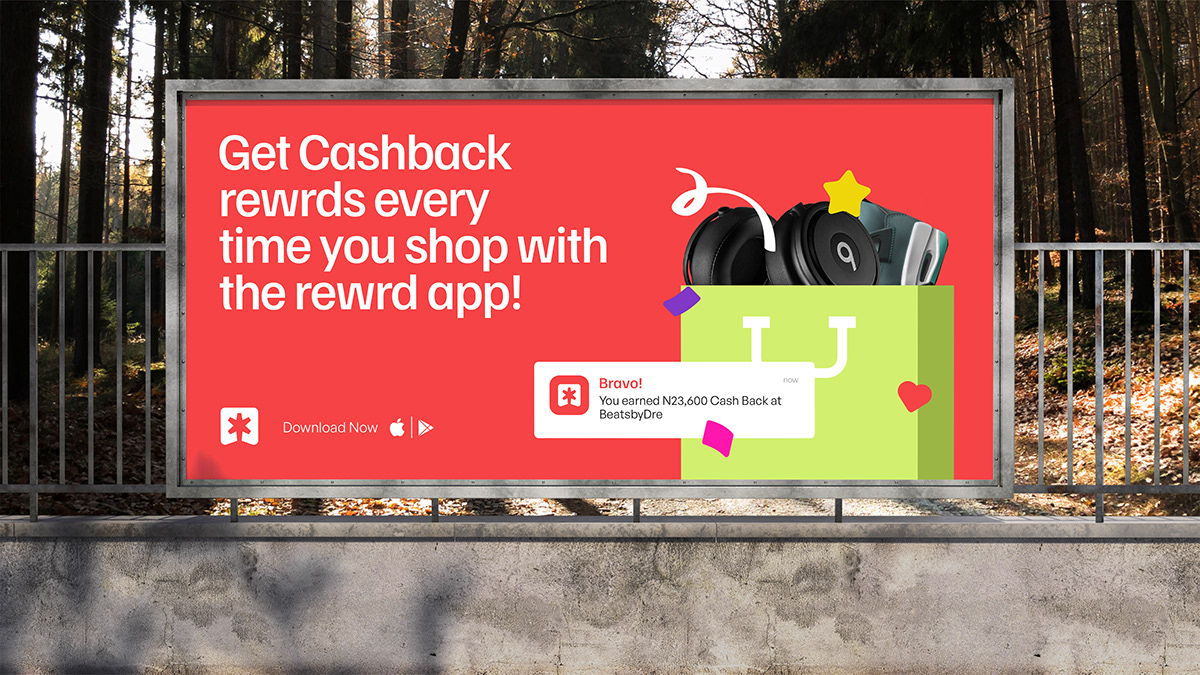
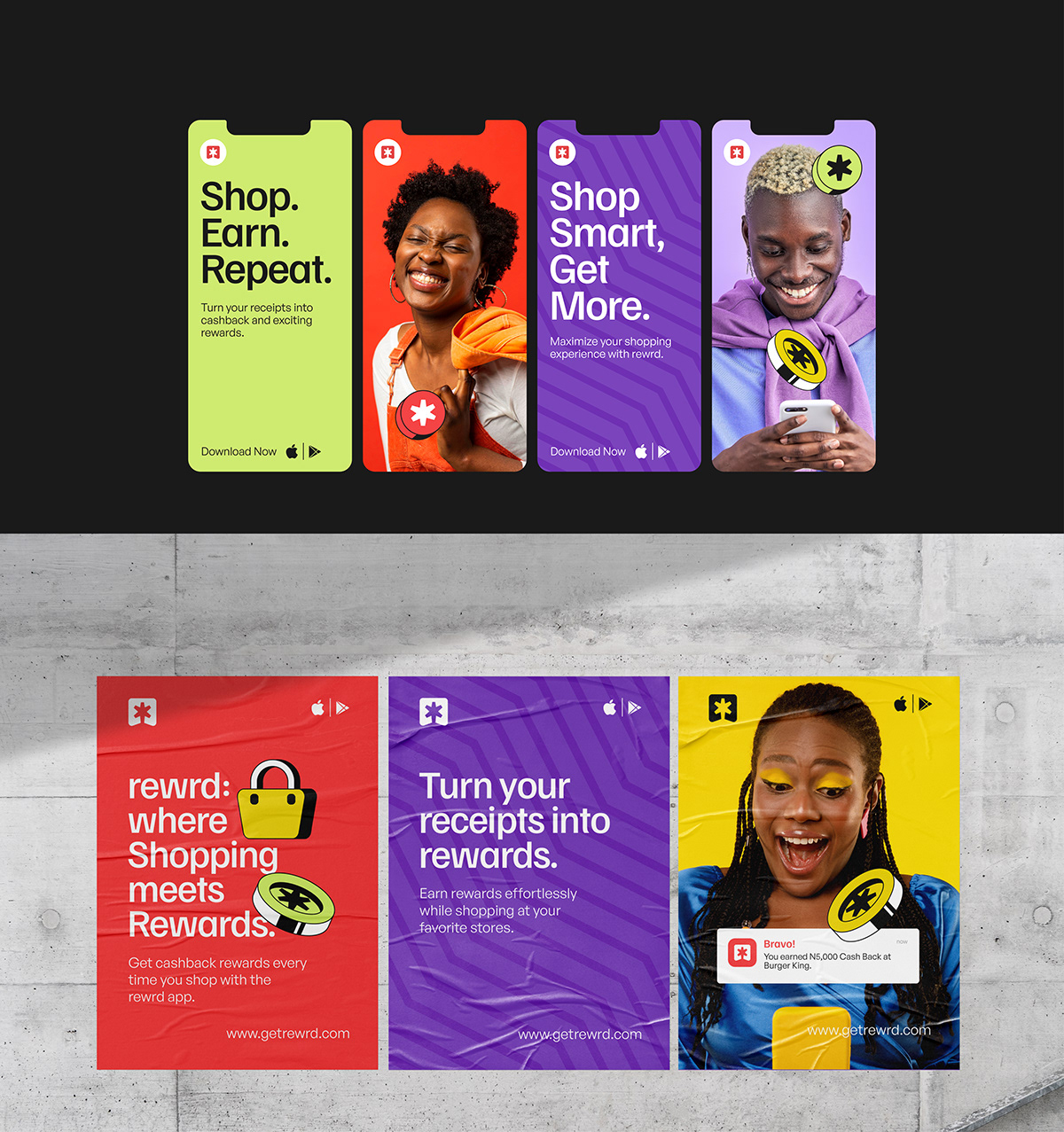
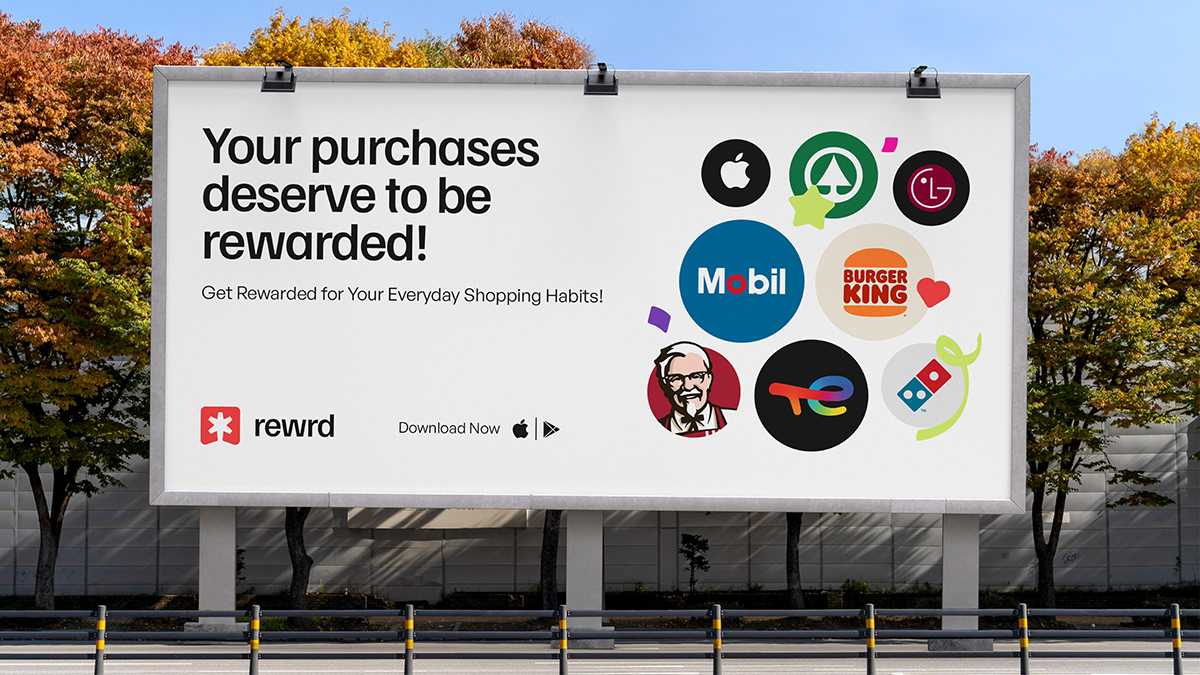
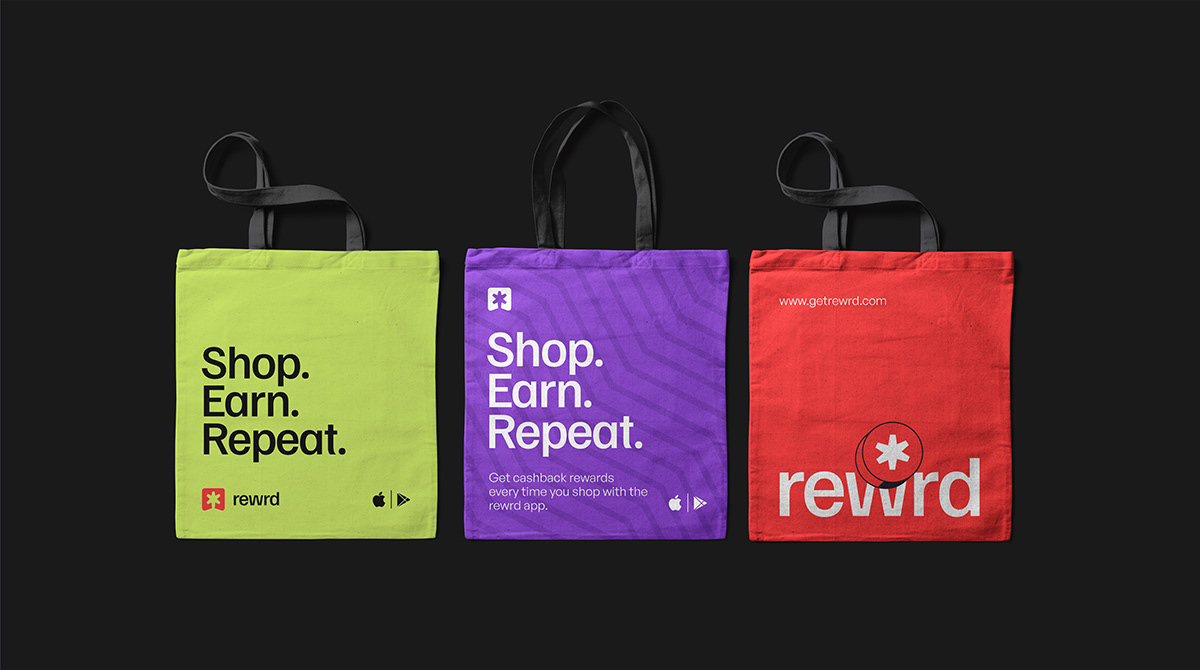
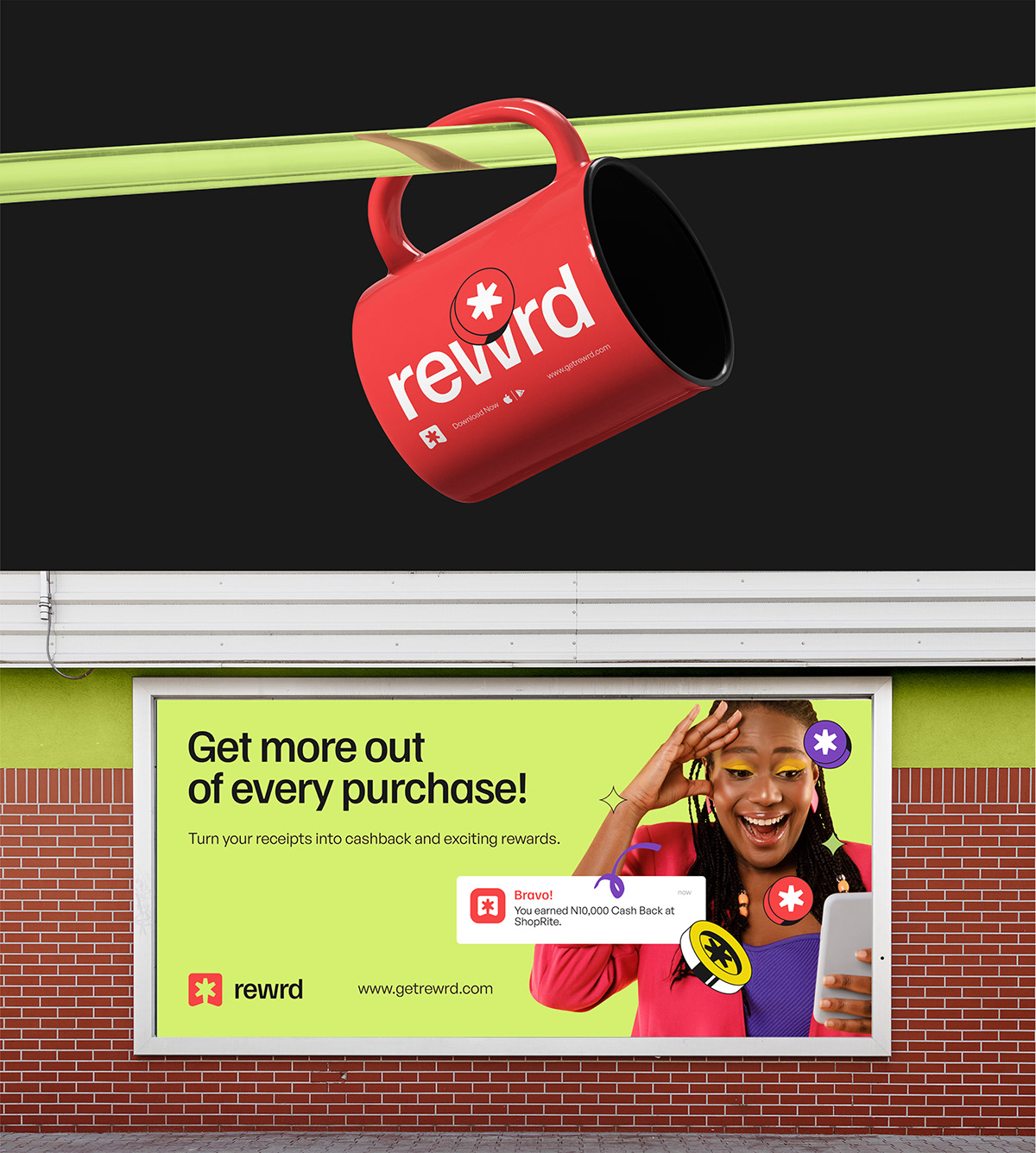
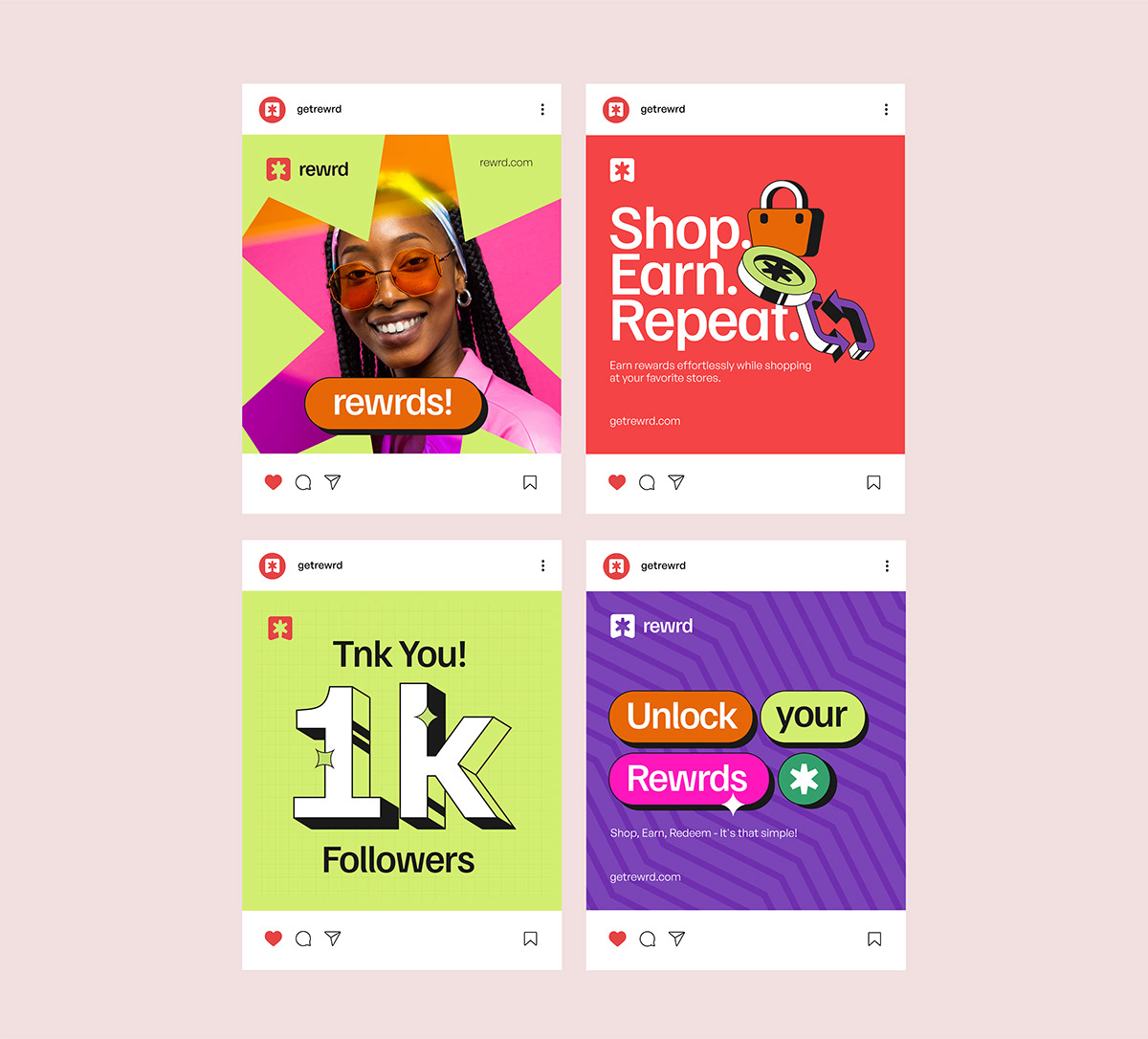
Ganiyu Razak, recently unfolded a new branding odyssey for “Rewrd”. Commissioned between May to June 2023, the project’s compass pointed toward Visual Branding, Illustrations, Graphic Design, and Guidelines. Tunbosun Tobiloba chipped in with motion graphic marvels, amplifying the project’s vibrancy.

Rewrd isn’t just another platform; it’s a celebration of everyday purchases. It romances the idea that every purchase, big or small, deserves a pat on the back. By simply uploading a purchase receipt, Nigerians are ushered into a world of exciting rewards, all while championing their go-to stores and restaurants. Plus, in a world drowning in data, Rewrd offers brands an underwater telescope into the depths of user behaviour and buying patterns.

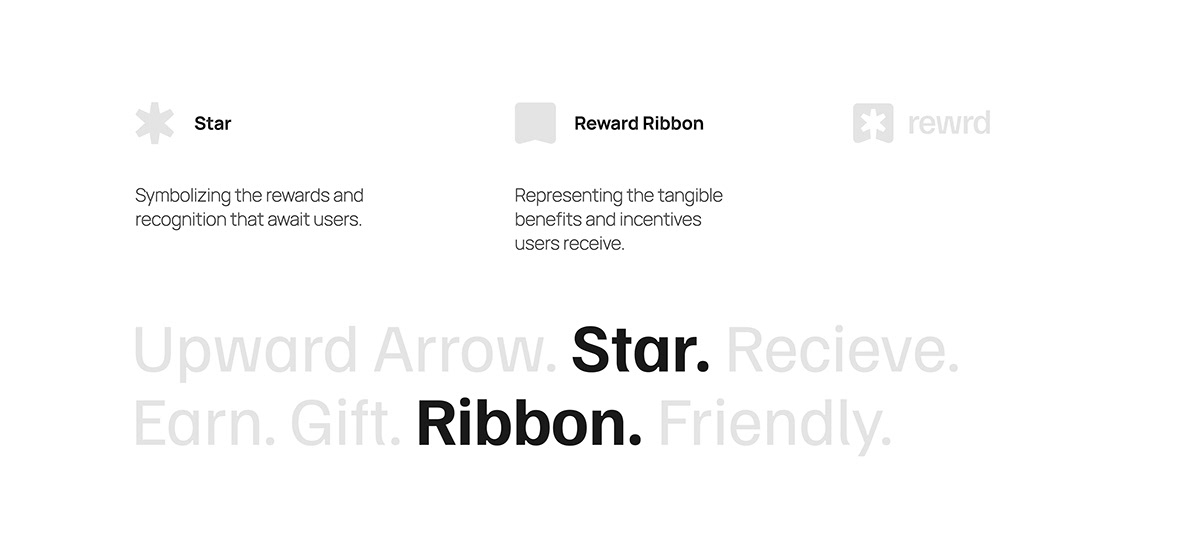
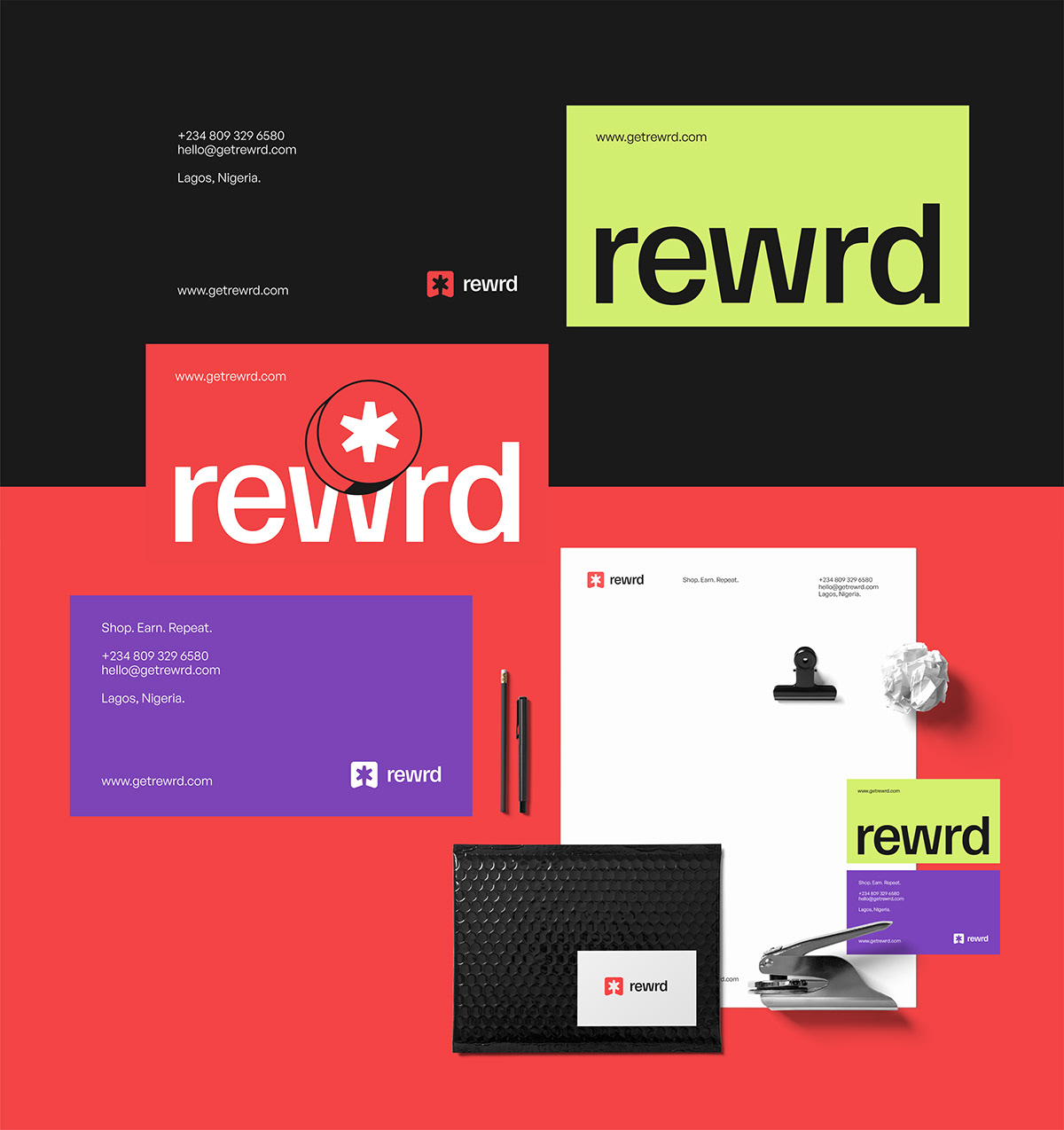
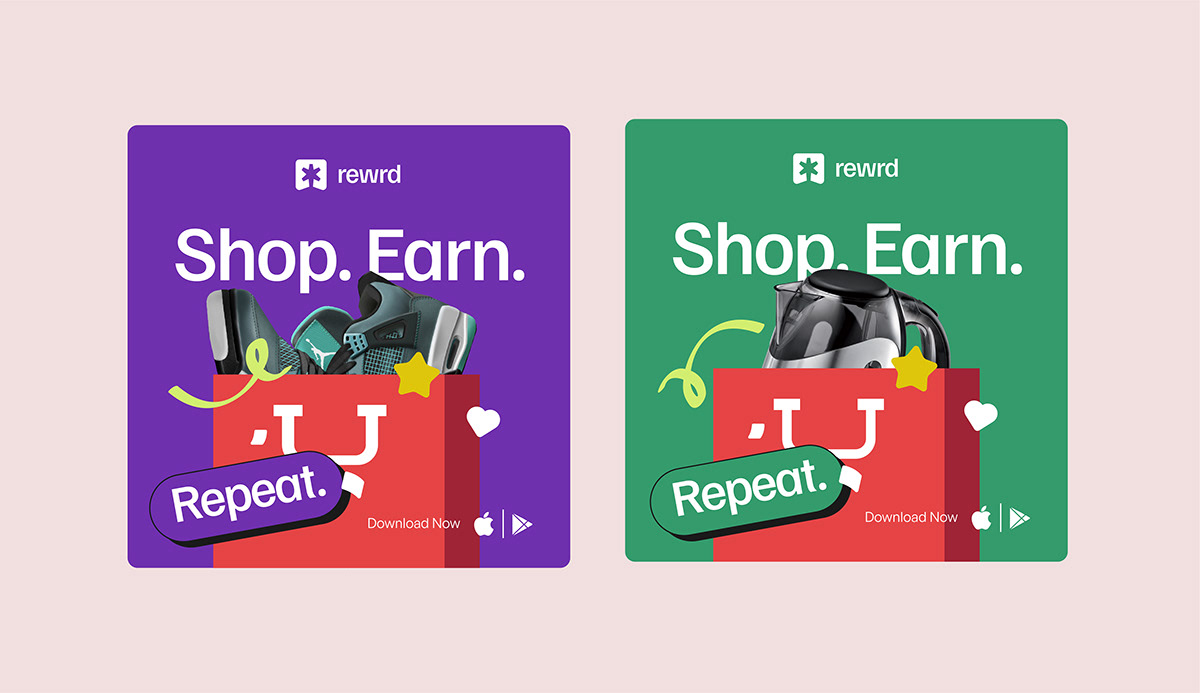
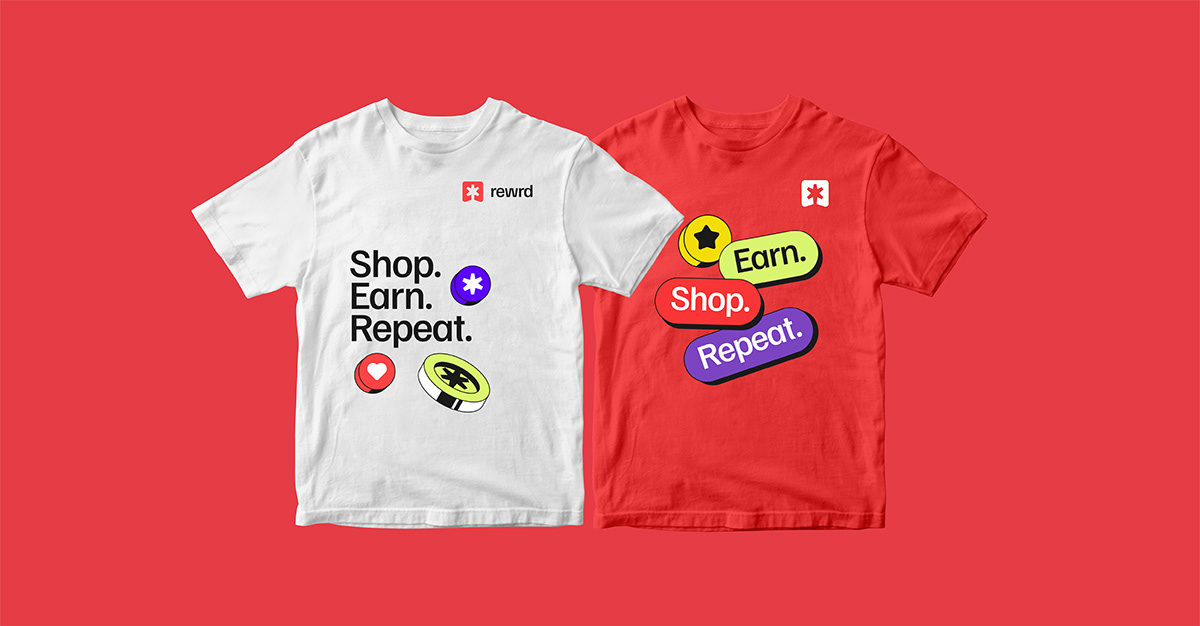
Diving into the logo, Razak’s ingenuity shines. After thorough research, the star and ribbon were chosen as visual mascots for Rewrd. The logo, thus, emerges as a beacon of exclusivity and exhilaration. The brand mantra, “Shop. Earn. Repeat.”, succinctly captures this essence, establishing a cyclical dance of buying and earning.

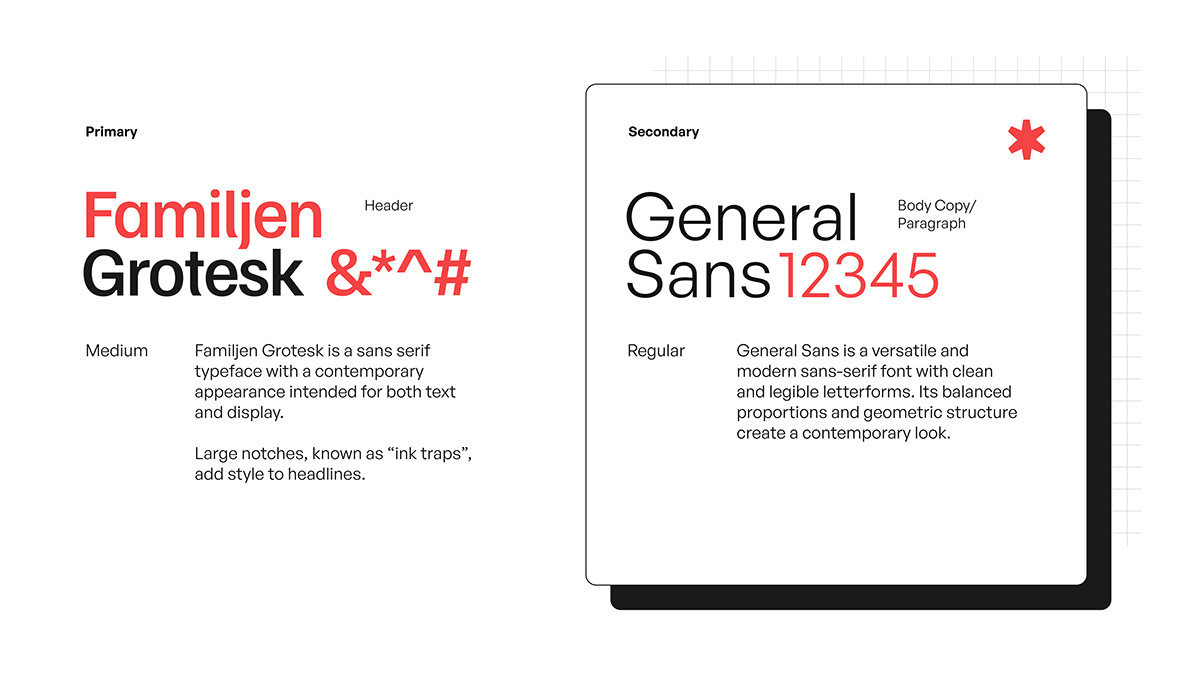
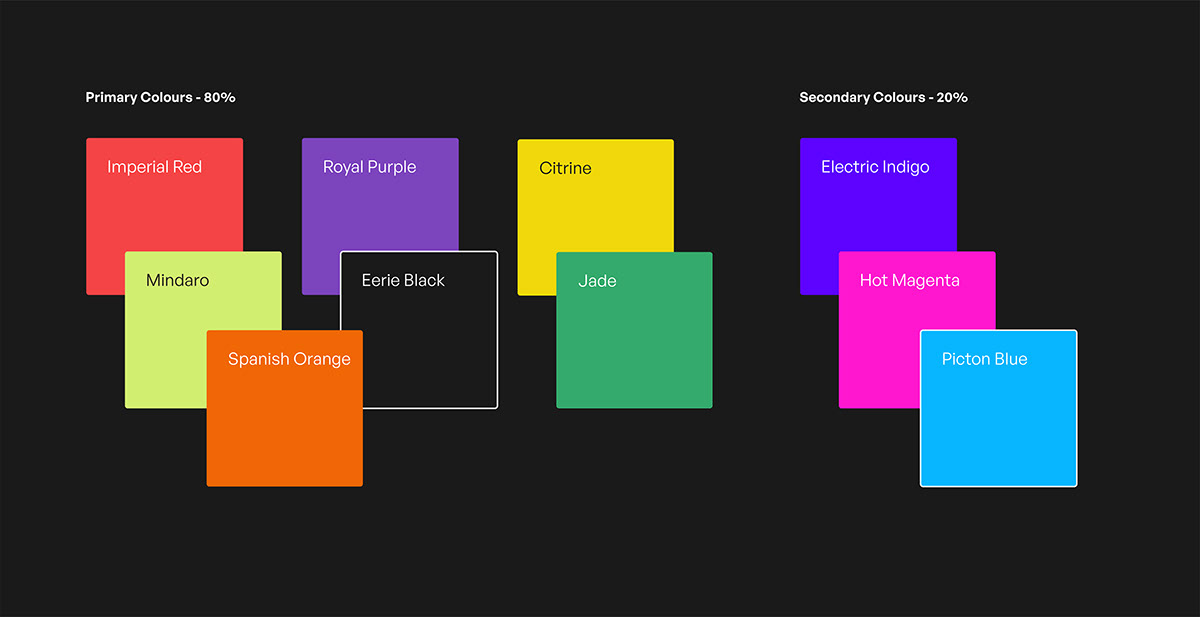
Typography has been wielded with precision. The header font, Familjen Grotesk, oozes reliability and modern flair. Meanwhile, the body text finds its voice in General Sans. The colour palette is a vibrant nod to Gen Z, mirroring the brand’s youthful, energetic aura.

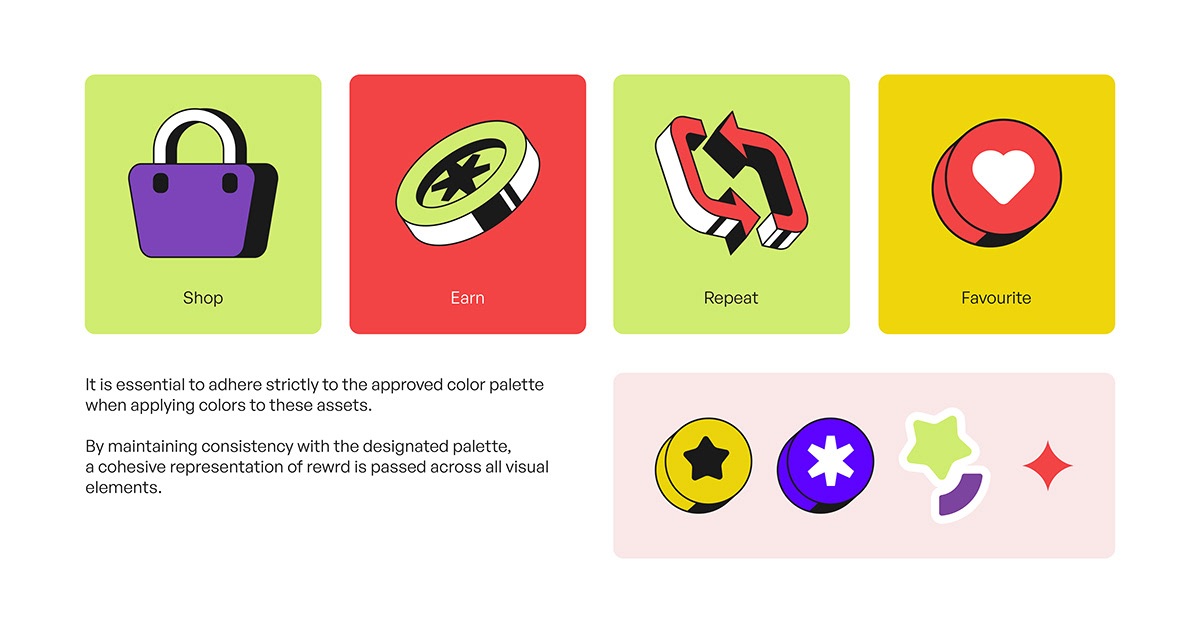
Illustratively, Razak opted for simplistic perspective illustrations, fortifying Rewrd’s visual lexicon. More than just design elements, these illustrations are emotive conduits, weaving deeper connections with the audience. Furthermore, the photographic choices, a collage of youthful zest, beautifully complement the brand’s ethos.

Razak’s creation for Rewrd isn’t just about aesthetics; it’s an experience. An experience that hopes to resonate, foster trust, and firmly place Rewrd on a pedestal in the industry. Once again, his 20-year journey in minimalist design has given birth to a brand identity that is as profound as it is beautiful. And for those who engage with Rewrd, it promises to be a delightful ride.

Branding and visual identity artefacts

adobe illustrator branding  Brand Design design Logo Design Creative Design rewards program brand identity logos rewardadobe illustrator branding  Brand Design design Logo Design Creative Design rewards program brand identity logos rewardadobe illustrator branding  Brand Design design Logo Design Creative Design rewards program brand identity logos rewardadobe illustrator branding  Brand Design design Logo Design Creative Design rewards program brand identity logos rewardadobe illustrator branding  Brand Design design Logo Design Creative Design rewards program brand identity logos rewardadobe illustrator branding  Brand Design design Logo Design Creative Design rewards program brand identity logos rewardadobe illustrator branding  Brand Design design Logo Design Creative Design rewards program brand identity logos rewardadobe illustrator branding  Brand Design design Logo Design Creative Design rewards program brand identity logos rewardadobe illustrator branding  Brand Design design Logo Design Creative Design rewards program brand identity logos rewardadobe illustrator branding  Brand Design design Logo Design Creative Design rewards program brand identity logos rewardadobe illustrator branding  Brand Design design Logo Design Creative Design rewards program brand identity logos rewardadobe illustrator branding  Brand Design design Logo Design Creative Design rewards program brand identity logos rewardadobe illustrator branding  Brand Design design Logo Design Creative Design rewards program brand identity logos reward

adobe illustrator branding  Brand Design design Logo Design Creative Design rewards program brand identity logos rewardadobe illustrator branding  Brand Design design Logo Design Creative Design rewards program brand identity logos rewardadobe illustrator branding  Brand Design design Logo Design Creative Design rewards program brand identity logos rewardadobe illustrator branding  Brand Design design Logo Design Creative Design rewards program brand identity logos rewardadobe illustrator branding  Brand Design design Logo Design Creative Design rewards program brand identity logos reward

For more information make sure to check out Ganiyu Razak on Behance.

Sourced from abdz.do

By

Rachel Klaver is a marketing strategist, specialising in lead generation and content marketing.

OPINION: I’ve used buyer profiles in retail businesses before, but they have just as much merit when applied to a service-based business. I’m not sure why we seem to think humans will be any different depending on whether they are buying a vacuum cleaner or contracting a cleaner. In the end, your services are still products that humans are choosing to spend their money on.

There are nine key buyer profiles we can intentionally (and unintentionally) attract. No one is better than the other, but you and your business will fit some more than others. It’s a matter of being aware of who you’re attracting, who you are ignoring that you could attract, and who you have consciously decided to repel with your marketing and sales style.

I’m a big fan of using the marketing and sales process to help find your ideal clients, by showing them at the outset what your own business values and boundaries are for. A simple example of this is choosing to only email your prospects during work hours, if that’s what you have as a core way of working with your clients. For me, we do the vast majority of work via Zoom. This is why we also do our sales calls via Zoom too. If the person is uncomfortable with this, they may also be uncomfortable with working with us, too.

When I went through the nine buyer profiles I found several I don’t want to attract, and a few I’d like to do better in drawing in. Use this list, and mentally check against it what you could do in your marketing to help these types of people want to buy from your service-based business.

The Browser

For me, my whole marketing approach is to help the browser. I’ve got people on my email list who’ve been there for three years or more before becoming a client.

These curious individuals stumble upon our content, and while they may not be ready to make a purchase right away, we can capture their interest by infusing our content with personality and emotion.

It’s essential to let them get a real sense of who we are, to truly understand our voice and the way we do things. When they resonate with us, they’re more likely to choose us over our competitors who don’t evoke the same connection. These people will choose us because we consistently resonate with them. They didn’t find us when they were ready to buy. But as soon as they are, they’re coming to us (I often get people emailing me saying: “Love your content. Not ready for you yet, but I’m going to be one day!”).

The Bargain Hunter

In writing this I realised this was me. I’m definitely always sniffing around for a good deal. This is an issue because I also don’t believe we should be discounting our products and services to get the sale.

However, we can cater to these types of buyers without discount. We just need to provide great deals.

To grab their attention, we can offer them lower-cost options or limited-time promotions. For me, I’ve learned that by providing resources, workshops, or even my book, that they can engage with at a lower price point, they can get a taste of what we have to offer and develop a stronger connection with us.

I also use free content. I provide that with things like this column, my podcast, my email newsletter and my blogs. They get value, and then it’s my job to show them that’s just the tip of the iceberg when it comes to working with me.

Showroomers

Showroomers are one type of buyer I’m starting to work harder to attract. I’m weirdly reluctant to share testimonials (of which I have hundreds) and feedback. I literally have to force myself to do it.

What I’ve learned is these types of buyers can take a while to make a decision but they are locked in once they decide, and they become incredible word-of-mouth referrers to others. For me, they are worth connecting with.

These savvy buyers are thorough researchers who want to know all the details before making a decision. Testimonials and feedback from other customers become crucial in gaining their trust.

Sharing testimonials that highlight the benefits and outcomes others have experienced can be a powerful tool in showcasing the value of our services. Testimonials help potential customers understand the benefits they can receive by working with us, and they serve as social proof of our expertise and credibility.

The “I’m on a mission”

These are also great clients, and again a section I’ve ignored in my marketing without realising it. Again this comes down to a reluctance to “show off” in my content. I’m working on this as I’m teaching my clients to become better at it, and I don’t like being a hypocrite as I do!

These individuals come prepared with a detailed checklist of requirements. To cater to their needs, we must clearly outline the features and benefits of our services.

It’s important to highlight what sets us apart and the specific outcomes they can expect to achieve.

Testimonials play a vital role here as well. They help potential customers envision the results they can achieve by working with us.

However, we don’t need to give them everything they want. It’s ok to have boundaries. I’ve encountered mission shoppers who requested to see strategies I’ve created for other clients. That’s a no from me, as it’s sharing someone else’s document, and also my intellectual property. It’s also often showing them the wrong part of the process, which is the completed document. The strength in my work is in the conversations we have to create it (which again is why I prefer to get them on a Zoom instead).

The Impulse Buyer

This might be a perfect fit for your business, but not for me, unless it’s a lower-cost product like a webinar, my book or a small course.

I often recommend service-based business owners don’t target this type of customer unless you’ve got one that solves a pain point that’s easily resolved, and you aren’t necessarily looking for a repeat purchase.

Impulse buyers make quick decisions based on their gut instincts or limited-time offers. To capture their attention, we can create enticing, low-cost options that allow them to experience a taste of what we offer.

If you’re going to target these buyers, having a chat on your website and being quick to respond to social media questions is key. These buyers want it right now.

The Chatties

I’ve got nothing against this type of buyer, but they aren’t a fit for my personality and business style. It’s not a “them” problem. It’s a me issue. I’ve got ADHD and love to talk. I can easily overshare, and add too much value in a sales call. I’ve had to learn to be pretty strong about moving people off phone calls and on to zooms that we’ve scheduled to prevent my entire week to be filled with chats with potential clients that often lead to nowhere. Boundaries are needed when it comes to me, clients and time.

Chatties are enthusiastic individuals who often seek free advice or consultations without genuine intentions of becoming paying customers. It’s crucial to set clear boundaries and protect our time and expertise.

This is also why I teach my clients to ditch the “discovery call” and rename it a “check the fit” call which has a higher sales intent. You may get less of them, but your conversion rate will go up.

Rather than offering endless free consultations, transitioning to structured sales meetings can guide them towards a more committed decision-making process. It’s an area where I’ve struggled in the past, as I genuinely enjoy helping people and can sometimes give away too much for free.

I’ve learned the importance of creating boundaries and directing these individuals to group interactions where others can benefit as well.

The Indecisive Shopper

Indecisive shoppers take their time when making purchasing decisions. They often have specific obstacles or objections that need addressing.

Patience, providing necessary information, and offering support are key in navigating the indecisiveness. It’s important to stay true to our values and clearly communicate the benefits of our services.

Addressing their objections and concerns while giving them the space they need to reach a decision is crucial.

I’ve learned that when faced with a money objection, it’s not merely about the cost but about the perceived value and trust that need to be established. Giving them time and ensuring they have all the information they need is incredibly important

I personally can find the key is to not over push, and allow them to take the time they need. Follow-up is key, but be wary of converting them before they are ready. It will cause you no end of pain as they stay indecisive as you work with them.

Indecisive shoppers take their time when making purchasing decisions. They often have specific obstacles or objections that need addressing. (file photo)
Unsplash
Indecisive shoppers take their time when making purchasing decisions. They often have specific obstacles or objections that need addressing. (file photo)

The Fully Educated

These buyers are slow to act, but when they do they come in hot. Educated buyers are well-informed individuals who have followed our content for years. They have done their research and have a deep understanding of what we offer.

Nurturing these relationships requires consistently providing valuable content through various channels. Our website should be clear and informative, while regular promotions and offers can keep them engaged and interested.

It’s important to provide actionable opportunities for them to take the next step in their journey with us. I normally recommend dedicating 10% to 20% of our content to serve these educated buyers is essential. They have invested time in us, and we should reciprocate by offering content that caters specifically to their needs.

The Loyal Customer

Service-based businesses can build a highly successful business by harnessing the magic of these types of buyers. They book and rebook with us, they tell others about us, and they always remember to pay.

Our loyal customers deserve our utmost appreciation. They have stuck with us through thick and thin, and they become our biggest advocates. Offering exclusive discounts, early access to new offerings, and free resources is a way to reward their loyalty.

These loyal customers often refer others to our business, and their support is invaluable. Recognising their loyalty and showing gratitude helps solidify our relationship and build long-lasting partnerships.

Understanding these nine buyer profiles allows us to tailor our marketing approach and connect with potential customers on a deeper level. By recognising the specific profiles that resonate with our business, we can identify areas where adjustments can be made in our marketing strategies to help talk to the best buyer types for our business model. It’s important to remember that patience, value, and consistency are key when engaging with different buyer profiles.

It’s absolutely fine to have several types that you don’t cater to. The key is to take the time to really think about which types work best for your business, then create content in your marketing that helps them get ready to buy. This can grow your business, without significantly changing what you are selling.

Feature Image Credit: Mark Taylor/Stuff

Rachel Klaver is a marketing strategist, specialising in lead generation and content marketing.

Sourced from STUFF