Author

editor

Browsing

By

Timing is of course everything in PR and marketing.  I witnessed a beautiful example of this recently coming out of Denmark.  Queen Margrethe II reigned for 52 years, abdicating just a couple of weeks ago in January, 2024.  She has been succeeded by her son King Frederik X, and if anyone ever needed advice on how to follow a queen of 52 years, it’s Frederik, who has to fill some very regal slippers indeed.

Fun fact:  both Queen Margrethe II and Queen Elizabeth II of England are great-great granddaughters of Queen Victoria of England, who lived from 1837 to 1901 and reigned for just under 64 years.  (Queen Elizabeth II still has everyone beat, reigning for an amazing 70 years before turning the country over to Charles III.) It’s an impressive family.

Back to the advice for the new King.  Trine Nebel, longtime political commentator and Assistant Professor and Management Rhetorician, Professional College Absalon in Denmark, and I have often exchanged views on each other’s political worlds over the years and become friends during those heated discussions.  So, I was not surprised when she published an op-ed piece in the Danish consortium of newspapers which covers most of that country on the subject of the succession.

In the piece, she offers 10 ideas for the new King to ponder based on the leadership principles that her college, Absalon, teaches its students as part of the leadership training course that all leaders in the government must take in order to retain their positions over time.  It’s a clever, fun way to give the King some advice, talk up the school, and spread the word on good leadership practices at the same time.

Because her timing was perfect, the op-ed piece received widespread notice throughout Denmark, and the school earned a nice moment in the spotlight.  Trine is already well-known in Denmark and has appeared on Danish television and in the press over the years, so she is a trusted source for journalists and commentators to reference, quote, and comment on themselves.

In short, her piece has all the necessary attributes to go viral in her world.  It’s timely, it addresses a hot topic, she is already a trusted commentator, and the clear structure of the op-ed makes it easily digestible and implicitly gives the reader a way to think about the new King’s role that is relevant and fun.

Here’s her advice in summary form.  I link above to the translated version of the piece, but please understand that Google translate doesn’t do justice to the sparkle and wit of her prose.

Learn from your people – they will mirror your successes and failures and your policies’ ups and downs as well.

Lead with empathy and create a strong professional community.

Your kingdom is a chessboard, where each piece has strengths and weaknesses. Make your moves accordingly.

Nurture your people.

The king is like the conductor of an orchestra – create the right harmony.

Think strategically, two moves ahead. As Trine notes, “we’re not quite done with the chess metaphor!”

Practice honest and open communication.

Be ready to change and adapt.

Don’t forget succession planning – help your son, the prince, develop in his role. A pawn can become a king. . . .

Make sustainability core to your reign. Think about the long term.                          

Good advice for any leader, no?  Wouldn’t it be wonderful if our next president could take some of these lessons to heart in our divided country?

By

Sourced from PUBLIC WORDS

BY EMILY REYNOLDS BERGH

Having a solid brand and getting your brand publicized are two distinct things. Here are insights on how to increase your chances of garnering your brand’s media coverage.

Let’s clarify something right from the start: crafting your brand and promoting your brand are two distinct functions. The first is a wholly creative process, usually the foundational floor you lay before ever adding one brick to your business. Your brand is a look, a feel and a message. It has a tone, a personality, a presence — it’s what you’re all about.

Getting that brand presence out there into the world is a whole different matter, however. It has to land with your audience, align with the current marketplace and resonate with investors and stakeholders. And when it comes to the media — those individuals and outlets that are hugely influential in determining which brands will be highly publicized and which brands will flounder amid the vast landscape of competitors — you actually have to sell them on your brand.

How do you do that? By piquing their curiosity and capturing their attention. Securing media coverage depends on enticing influencers to take a closer look at your brand, then (consequently and hopefully) widely disseminating all the good news about your company that you already know.

Here’s what I’ve discovered about selling a brand to the media in my 20+ years as a public relations specialist.

Selling point #1: A compelling story

Media people are people first, journalists second, and just like me and you when we’re out shopping around for something new, they want to be interested in something potentially enriching and exciting. Nowadays, the route to elicit that interest is captivating storytelling. In fact, at the heart of any on-point media pitch is compelling storytelling, and although it’s your publicist’s job to compose a narrative that integrates your brand’s journey, values and impact, it’s your job to make sure that narrative is relatable and emotionally engaging by infusing it with authenticity and originality.

For example, there might be nothing new to say under the sun about Brussels sprouts. But when one of my restaurant clients started telling me one day about how his exposure to community gardening as a boy when he was volunteering with his uncle led to his passion for organically grown farm-to-table produce, suddenly my pitch about “Uncle Bernie’s Brussels Sprouts” on his menu came alive with character and flair. I had a similar experience with an interior designer who just started sharing with me how sitting on the floor as a child watching her mother paint in the basement led to her obsession with color and space. Voilà, I had my brand pitch.

The point is: To do something that has invariably been overdone, infuse it with the personal because that’s the direction in which media coverage is moving. Your product or service doesn’t matter as much these days as your givebacks, your community imprint or your origin story. Media professionals are always on the lookout for something with a touch of uniqueness — appeal to their humanity by delivering that in the way that only you can.

Selling point #2: Clarity and conciseness

Next comes appealing to the ear. The media industry is abuzz with announcements of the “latest and greatest” this or that and is positively awash in a sea of submitted content. To get your piece to rise to the top instead of drowning, recognize that time is a precious commodity in this fast-paced industry and act accordingly.

When pitching your brand, ensure that your messaging is succinct and easily digestible. Clearly articulate what makes your brand singular and why that should matter to the modern consumer. If you can showcase how your brand addresses a specific need or accords with a particular trend in the market, all the better. Short and punchy; a well-crafted elevator pitch — that’s what the media wants to hear.

Selling point #3: Visual interest

Appealing to the eye is equally vital to lure attention to your brand, and this step is actually fun to pursue. Enhance all your brand materials with visually arresting images, high-quality and thought-provoking photos, spiffy infographics and entertaining video snippets. All should support your brand’s story and messaging, and yet all do so in graphic format instead of text-only language. People like this; the media loves this — you’re supplying them with ready-to-use content that’s already primed for public viewing!

Selling point #4: Data-driven impact

A picture may be worth a thousand words, but in business spheres, facts will almost always trump even the most imaginatively composed fiction. The story still matters — the story will always take centre stage — but you’ll want to back up your brand’s story with concrete data and evidence of effectiveness.

The media is drawn more to brands that can demonstrate quantitative, not just qualitative, success, so brand pitches are an ideal place to seamlessly work into the narrative customer satisfaction ratings, market share percentage and social impact. Appeal to the intellect here by incorporating applicable statistics, case studies and testimonials that speak to the relevance of your brand in the market and give your story backbone and validity.

Selling point #5: Media-friendly assets

Lastly, don’t underestimate the value of supplying the media with eye-catching, user-directed assets that have been custom-tailored to present your business in its best possible light, in its most irresistible packaging. You’re appealing to the media’s sensibilities here with materials that serve as excellent resources to supplement and support the pieces you’re hoping they’ll write or air.

I recommend creating a media kit that includes high-resolution images, print-ready logo formats, links to video content, key points that make you stand out and any other pertinent information that will infuse journalists’ articles with details and descriptions exclusive to your brand. Then, when requests for interviews start coming in, be responsive and make yourself easily available. The objective for brand pitches — for any kind of pitch, really — is to snag the media’s interest in further exploring your brand. When you get them on the line with your hook, the sale has been made!

BY EMILY REYNOLDS BERGH

ENTREPRENEUR LEADERSHIP NETWORK® CONTRIBUTOR

Founder at R Public Relations Firm. Emily Reynolds Bergh — vintage-shoe hoarder, cycling junkie, & lover of pink drinks — is a marketing & PR pro with 15+ years of experience under her belt. Now the founder & owner of the award-winning R Public Relations based in New York, she’s been featured in numerous publications & podcasts.

Sourced from Entrepreneur

By Webb Wright 

If you’re considering launching a new AI-centered brand or product, you may want to go beyond simply adding ‘AI’ to the end of the name.

The AI Gold Rush is in full swing and brands of all stripes are rushing to establish their particular niches in this hugely profitable and increasingly crowded industry. New AI-centered brands, departments and products are cropping up by the day, each requiring a name that is, ideally, both memorable and unique.

“Every single company, whether a candy bar manufacturer or a software company, seemingly has to show that it is doing something to leverage AI,” says Jonathan Bell, founder and CEO of Want Branding. “And that often requires some kind of adjacent brand, which, of course, then needs a name.”

Several brands, as you may have noticed, have simply taken to adding ‘AI’ (or ‘.AI’) to the ends of their names. Think Stability AI, Spot AI, Mistral AI, Shield AI, People.ai, Otter.ai, Arize AI, Crowd AI, Toggle AI and so on. And, of course, there’s OpenAI, the company that has become something of a flagship for the entire wave of AI innovation that’s currently underway following its hugely successful launch of ChatGPT in late 2022 and that has probably helped to establish the ‘AI‘ suffix as the name du jour for up-and-coming brands looking to make a name for themselves in the industry.

Adding ‘AI‘ to the end of a brand or product name “is an easy but often perhaps a cheap way of doing it without much thought,” says Bell.

A parallel can be drawn between this naming phenomenon and a similar one that followed in the wake of the dawn of the internet in the late 90s when scores of new brands with ‘.com‘ at the ends of their names began to emerge. In those early days of the world wide web, it made practical sense for companies to make unambiguously clear that they were technologically savvy enough to have an online presence. (Remember, this was back when ‘online‘ was itself a new, hip word.)

Over the slow process of many years, however, the internet became so deeply embedded into most of our day-to-day lives, into the very fabric of popular culture and commerce, that it became more or less superfluous to add ‘.com‘ to the end of a brand name. Most people these days automatically assume that any given brand – unless it‘s incompetent beyond belief or run by a group of Luddites – has a website and probably some degree of social media presence.

The ‘.com‘ naming trend, in other words, began as a worthwhile marketing tactic, but “at a certain point that was eroded and it became meaningless,” says David Placek, founder and CEO of Lexicon Branding. There are still, of course, some brands (Hotels.com, for example) that have chosen to use their domain names as their official names, but such a strategy is far less common today than it was when the internet had the shiny-new-toy factor.

AI could follow a similar trajectory of cultural adoption as that of the internet: today, it’s all anyone can talk about; tomorrow, it’s basically taken for granted. Just as people today assume that brands today have an online presence – even when they don’t have ‘.com‘ in their names – we could soon reach a point as a society in which AI is so ubiquitous, so deeply integrated into our devices and our modes of working and communicating with one another, that adding ‘AI‘ to a brand or product name becomes passé. Placek says he’s “absolutely positive” that we’ll cross that threshold sometime within the next two years, after which point “everybody will assume that there’s something AI-related” built into most brands and products.

Given that forecast, adding ‘AI‘ to the end of a name “can be a disservice for building brand strength over time, because [the market] becomes crowded,” says marketing agency Tenet Partners CEO Hampton Bridwell. “There are a lot of names with a similar sound or styling and that creates a situation where you don’t have differentiation or memorability within the name.”

Anthropomorphic names and the sad tale of Clippy

There have, of course, been other naming trends that have recently emerged around AI. For example, many AI-centered products have been given human-sounding names, apparently in an effort to make the underlying technology – which could potentially come across as a bit threatening to a culture that’s been weaned on films like 2001: A Space Odyssey and The Matrix – feel a bit less alien and intimidating.

Consider IBM’s Watson, an AI model originally designed to answer questions that gained global fame when it won Jeopardy! in 2011. There are also more recent examples, including Siri (Apple), Alexa (Amazon) and Einstein (Salesforce).

As the journalist Charles Duhigg points out in a recent article in The New Yorker, Microsoft (which became a leader in the burgeoning AI industry following its recent multi-billion-dollar investments in OpenAI) has had to learn the hard way about the risks involved with trying to anthropomorphize AI. In 1996, the company introduced Clippy, a smiling virtual assistant with big eyes and a paperclip for a body, who could answer simple user questions on Microsoft Office platforms. The character became widely loathed by users. The Smithsonian called Clippy “one of the worst software design blunders in the annals of computing,” as Duhigg quotes in his article. Microsoft killed Clippy off in 2001.

The company once again tried its hand at anthropomorphizing algorithms in 2016 with the launch of Tay, an AI-powered chatbot whose conversational style reflected that of a typical teenage girl. Tay rather quickly descended into a fit of hate speech and was deactivated less than 24 hours after its launch.

Apparently wiser after the Clippy and Tay debacles, Microsoft is now naming its AI products in a manner that suggests utility and even a touch of fallibility. Copilot, the name of the company’s recently launched suite of AI-powered productivity tools, insinuates something that can be reasonably relied upon to provide a measure of assistance, not something into which one should invest one’s whole trust.

The curious case of ChatGPT

Perhaps the biggest irony in the realm of AI names is the fact that ChatGPT, the product that, more than any other, catalyzed the burgeoning AI Revolution, has such a widely disliked name.

For one thing, says Bridwell, the word ‘chat‘ in a brand name “is pretty limiting – it really doesn’t embody what the whole thing is about in terms of [how] it delivers value. It’s a terrible name. Over time, [OpenAI] should really think about rebranding it.”

Even OpenAI CEO Sam Altman agrees that it’s not an ideal name. During a recent podcast hosted by comedian Trevor Noah, Altman said that ChatGPT is “a horrible name, but it may be too ubiquitous to ever change.”

ChatGPT’s suboptimal name could stem in part from the fact that the OpenAI team that built it did not initially have high hopes for its prospects as an uber popular app. It was referred to internally as a “low-key research preview” in the period leading up to its launch and it was intended as a means through which the public could begin to interact with OpenAI’s GPT large language model more broadly so that the company could then collect feedback and fine-tune the technology accordingly.

Many within the OpenAI team were surprised when ChatGPT attracted its first million users in just five days, becoming the fastest-growing app in history.

Advice for marketers

According to Want Branding’s Jonathan Bell, brands that are looking to promote their use of AI through an optimized name should take their time. “It needs to be well thought-out,” he says. “It shouldn’t be something that’s done casually over a quick meeting, where you just simply add ‘AI’ to [the name]. Companies need to think about: What are they specifically doing? Can they deploy AI in a way that is really effective, or is this something that’s been done that could come across as bandwagon-jumping?”

Placek, who’s prone to referencing cognitive science and linguistics when discussing the psychology of brand- and product-naming, highlights the importance of sound symbolism – that is, the associations between particular sounds and the concepts that they evoke in the mind of the hearer. “You don’t want something too soft and you don’t want something too clever,” he says. “[You want something that’s] a little bit on the more serious side that [suggests] intelligence … sound symbolism should play a role in selecting and developing your names.”

When prompted to describe the qualities of a great name for an AI brand or product in fewer than 10 words, ChatGPT wrote: “Memorable, clear, unique, relevant, easy to pronounce, globally appealing, scalable.”

Feature Image Credit: Adobe Stock

By Webb Wright 

Sourced from The Drum

By Michelle Collins

Experiential marketers’ value proposition cannot solely be about managing influence; they need to make the case for a brand’s vested interest and influence within a community.

Doing more with less seems to be a common challenge agencies and brands currently face. However, the pressure to gain market share equals the need to prevent attrition in a world where loyalty and a “cancel culture” can ultimately drive or damage, respectively, the success of emerging and heritage brands. In recent years, brands have increasingly fueled their marketing initiatives with extravagant experiential pop-ups and digital immersive experiences.

But now, these brands are being challenged by a new cultural paradigm with the power of influence now in the hands of the consumer, the community and the influencers who cultivate loyalty versus overnight fame. For example, SHEIN and H&M were once the pulse of accessible, fast fashion. However, they’ve recently faced backlash for business practices that no longer align with the globally- and ecologically-minded generation of consumers.

As a result, the conundrum now facing experiential marketers is how to create unique, exciting and exclusive experiences to attract new “fans” while continuing to reward the loyalists through access and reassurances that their loyalty retains significant value.

To that end, brands are shifting their focus toward loyalty programs that can connect communities of peers, curate meaningful cultural opportunities and foster authentic relationships within different cultural and economic ecosystems. Experiential marketers cannot rely solely upon media and industry consulting firms for their research, strategy and tactics to fuel their business value. They must become active, valued and engaged community members in order to best understand the needs, interests and social landscape which influences the tides of culture in an effort to cultivate this all-important loyalty.

3 communities of culture

While anthropologists recognize three levels of culture: international, national and subculture, in the brand ecosphere, experiential marketers look to cultivate brand loyalty within communities that are built around three entirely different cultures:

1 Technology 

Artificial Intelligence is a controversial hot topic that has divided creative, business and technology communities. There are those who believe that AI is the start of humanity’s demise and an art/creative industry killer and those who believe it is an empowerment tool for creativity. The fear of unknown technology, intellectual property violations, economic implications and the human existential crisis are clear dividing lines for both sides.

Regardless of one’s point of view, AI is being leveraged by brands and marketers. So how can a marketer communicate and develop experiences if they do not utilize the technology or actively engage in discussion groups and the communities that create, educate and consume?

AI is a tool that can be used in problem-solving, creative thinking and production. Rather than speculating, marketers should actively engage with the tools and the various AI communities such as OpenAI or Reddit’s AI. It’s the means by which hyper-personalization is proposed to be delivered virtually and in real life.

Consider organizations that advocate for AI as a human empowerment tool, such as AI For Good Summit or FB AI Art Universe. They unite in sharing their learnings, creations and encourage the advancement of responsible use. These communities have established an ecosystem built on more than consuming a product and assisting others to benefit from shared learning experiences.

Likewise, those who are of the opposite opinion like Stephen Hawking and Elon Musk equally advocate for regulation, mitigation and limited access.

Experiential marketers must pay close attention to how brands associate with this technology regardless of their personal point of view or risk serious backlash from consumers, or worse, be seen as irrelevant in the workforce of the future.

Here are a few examples of how marketers can better form an opinion and understand both perspectives:

  • Host virtual or live panel discussions and invite technologists, human resources, creatives and marketers.
  • Attend Generation X, Y and Z summits, networking and learning events.
  • Create opportunities to unite communities of similar values across different geographies and industries through workshops, and partnerships with education and nonprofit organizations.
  • Become a creator. There’s nothing more valuable than knowledge. Learn about the technology history, trends or create something that harnesses the power of your own human intelligence.

2 Luxury

Luxury brands have staying power and continue to thrive in all economic cycles. Heritage, legacy and craftsmanship have long been pillars of their credibility and influence. Through the influencer era and the growth of the creator’s economy, luxury brands continue to cultivate loyalty and connect communities of celebrities, influencers and non-influencers alike. They do this through credible content and curated social and cultural experiences that elevate and further distinguish their legacy while also stirring the desire for access and the associated prestige.

Luxury industry marketers are keenly aware of the etiquette, value metrics and the way these experiences and content must look, feel and be managed.

This loyalty toward luxury brands is measured by spending power and the ability to influence action (versus visibility alone). Because the spending power of their loyal communities transcends traditional marketing tactics, the relationships and influence that these brands cultivate are prerequisites to an invitation to their cultural communities.

3 Art & Design 

Historically, art and design have been culturally integrated into the fabric of luxury brands. However, they also are at the heart of AI and technology conversations. As a result, brands and marketers should be mindful of how these technologies can facilitate how art and design can influence communities of consumers to take action, while also allowing the influencer to create and curate, manage and sell to those communities that they influence. The design process and inspiration are forms of artistry now empowered by AI and other technology – with consumers using this same technology to create, curate and influence the communities they belong to.

For example, the Opensea.IO, Instagram and Community Tokens are platforms and mechanisms that allow creators and their communities to promote, connect and create value with fans, followers and collaborators. OpenAI’s generative art (Dall-E 2) and language-oriented tools (ChatGPT) are different community tools but equally influential due to their rapid adoption. These very different tools appeal to different mindsets and users so it is critical for brands and agencies to understand why creators might gravitate and use one versus the other.

A brand’s influence requires access to these communities as a valued contributor to its ecosystems. Loyalty and authenticity rankings are key metrics of influence metrics, less so than followers. A brand’s successful experiences will need to be curated, conceived and designed by those who are active members of the communities with whom they wish to leverage, elevate and establish relationships.

Feature Image Credit: Pixabay/Pexels

By Michelle Collins

Michelle Collins is president and CXO of A\N/A A Non-Agency®, a NYC-based consumer experience marketing design consultancy. A\N/A A Non-Agency has worked with luxury and global brands such as Richemont North America, Van Cleef & Arpels, Phillips NY, Kate Spade and Delta Airlines to develop and deploy their first experiential marketing strategies and installations and has received numerous awards. The firm ranked #413 on the Inc. 5000 Fastest Growing Companies for 2020, and in 2022, among Inc. magazine’s Regionals List for the Northeast.

Sourced from SmartBrief

If you liked this article, sign up for SmartBrief’s free email newsletter on Marketing Innovation. It’s among SmartBrief’s more than 250 industry-focused newsletters.

BY SYDNEY SLADOVNIK

The hospitality business is the latest company to use the video game platform as a brand-building tool.

The best place to meet your customers might be in a video game.

Hilton Hotels rolled out a new membership rewards initiative in the video game platform in collaboration with its celebrity spokesperson Paris Hilton, and her media company 11:11 Media.

The hospitality company launched an immersive hotel experience in “Slivingland”–a virtual neighbourhood that Paris Hilton launched on Roblox in 2023. When Roblox players complete in-game challenges in the virtual Hilton hotel lobby, they can redeem Hilton Honours points, which can be used towards hotel bookings, shopping, and even rental cars through Hilton. They also have the chance to win a Diamond Tier upgrade: Hilton’s premium membership status where guests have access to premium WiFi, room upgrades, and executive lounges. The campaign will run through February 22.

Hilton is the first hotel to join Roblox with tangible transferable rewards, but just one of the many businesses joining the gaming platform to advertise. Stephanie Latham, VP of global partnerships at Roblox said in a press release that she expects to see more brands tie their metaverse activations to the physical world with opportunities like loyalty program tie-ins, Roblox-inspired fashion items, or real-world commerce.

“The consumer demand across physical and digital is clear, and brands are smart to tap into it on Roblox where over 70 million people connect and communicate daily, nearly half of them Gen Z,” Latham added in the press release. “Utilizing [Paris Hilton’s Roblox universe] as part of Hilton’s loyalty program is paving the way for other brands to experiment with enhancing consumer engagement and brand loyalty via innovative immersive experiences and communities.”

Offering exclusive benefits and rewards can help business owners enhance their brand loyalty, and using video game platforms like Roblox to leverage rewards is one way to do so. Roblox, specifically, has more than 70 million daily active users; more than 200 brands are on the platform.

Chipotle employed this strategy when it rolled out a similar deal in 2021 that allowed 100,000 players to redeem a free entrée in the Chipotle app when they rolled a burrito in Roblox.

Hilton–the human, not the brand–said in a press release: “Getting actual Hilton Honours loyalty points for playing in Roblox?* That’s iconic.”

Feature Image Credit: Courtesy Company

BY SYDNEY SLADOVNIK

@SYDNEYSLADOVNIK

Sourced from Inc.

By Dirk Petzold

When it comes to digital marketing, a strong online presence is no longer a luxury but a necessity.

Whether you’re a budding entrepreneur, a creative artist, or an established business, having a compelling website is the key to unlocking your online potential. And amidst the plethora of website builders available, Squarespace stands out as a beacon of simplicity, elegance, and versatility.

A Breeze to Use

Squarespace’s user-friendly interface is a breath of fresh air in the world of website building. Farewell to the days of tangled code and complex jargon. With Squarespace, you can effortlessly create and manage your website without the need for any technical expertise. Their drag-and-drop functionality makes it a breeze to add and arrange content, while their intuitive design tools let you personalize your website to your heart’s content.

Design That Wows

Squarespace’s collection of templates is a feast for the eyes. Their team of designers has crafted over 140 stunning templates that cater to a wide range of industries and styles. From minimalist modern to playful retro, there’s a template that perfectly reflects your brand and resonates with your target audience. And with Squarespace’s customization options, you can effortlessly personalize your template to make it uniquely yours.

Beyond the Basics

Squarespace doesn’t just stop at crafting beautiful websites. It’s a comprehensive platform that empowers you to build a thriving online presence. From eCommerce functionality to blog tools and integrated marketing tools, Squarespace has everything you need to take your business or creativity to the next level.

The Community Factor

At Squarespace, they understand that building a website is a journey, not a destination. That’s why they’ve created a vibrant community of website owners and enthusiasts who are always ready to lend a helping hand. Whether you’re facing a technical issue or seeking design inspiration, the Squarespace community is there to support you every step of the way.

Your Path to Online Success

With its ease of use, stunning designs, comprehensive features, and supportive community, Squarespace is the perfect choice for anyone looking to create an online presence that truly reflects their brand and resonates with their audience. So, take the first step towards your online success by signing up for Squarespace today and embark on a journey of creating a website that’s as unique and captivating as you are. Feel free to subscribe for a free trial here.

By Dirk Petzold

Sourced from WATC

By Dirk Petzold

In creativity, where ideas and imagination dance in a constant symphony, staying inspired can be a challenge.

As creative professionals, we’re constantly bombarded with stimuli, from the latest trends to the ever-evolving technological landscape. But amidst this whirlwind of inspiration, it’s easy to lose sight of our unique spark.

Fear not, fellow creatives! For within us lies a wellspring of untapped potential, waiting to be unleashed. In this blog post, we’ll embark on a journey to rekindle your creative fire and guide you toward a world of boundless inspiration.

1. Embrace the Power of Curiosity

Curiosity is the gateway to creativity. It’s that insatiable thirst for knowledge, that desire to explore the unknown sparks new ideas and ignites the imagination. So, step out of your comfort zone and delve into the world around you. Visit museums, attend lectures, read books, and engage in conversations with people from all walks of life. Let your curiosity guide you, and you’ll be amazed at the treasures you uncover.

2. Seek Inspiration in the Everyday

Creativity isn’t confined to grand gestures or elaborate setups. It’s often hiding in plain sight, waiting to be discovered in the mundane moments of everyday life. Pay attention to the details, the subtle nuances that make up the world around you. A fleeting glance at a sunset, the aroma of freshly baked bread, the laughter of children playing in the park – these seemingly ordinary occurrences can be rich sources of inspiration.

3. Embrace Collaboration and Feedback

Creativity thrives in a collaborative environment. Surround yourself with like-minded individuals who challenge your perspectives, push your boundaries, and offer constructive feedback. Engage in open discussions, share your work, and seek out fresh perspectives. Collaboration will not only spark new ideas but also refine your creative voice.

4. Embrace the Power of Rest and Rejuvenation

Creativity is like a muscle; it needs time to rest and recover to function at its best. Don’t be afraid to step away from your work, to disconnect from the digital world, and be present in the moment. Take a walk in nature, listen to music, or engage in activities that bring you joy and relaxation. When you return to your work, you’ll approach it with fresh eyes and renewed energy.

5. Never Stop Learning and Experimenting

The creative journey is a lifelong adventure. There’s always something new to learn, a new technique to master, or a new medium to explore. Embrace the spirit of lifelong learning and never stop experimenting. Step outside your comfort zone, try new things and don’t be afraid to fail. It’s in the process of experimentation that we discover our unique creative identities.

Remember, creativity is not a destination but a continuous journey. It’s about nurturing your curiosity, embracing the every day, finding inspiration in collaboration, and never losing sight of the power of rest and rejuvenation.

So, fellow creatives, let us embark on this journey together, fuelled by passion, curiosity, and an insatiable desire to express ourselves. Together, we can unlock the boundless potential that lies within us and create works of art that touch the hearts and minds of others.

Feel free to get your daily dose of creative inspiration on WE AND THE COLOR.

By Dirk Petzold

Sourced from WATC

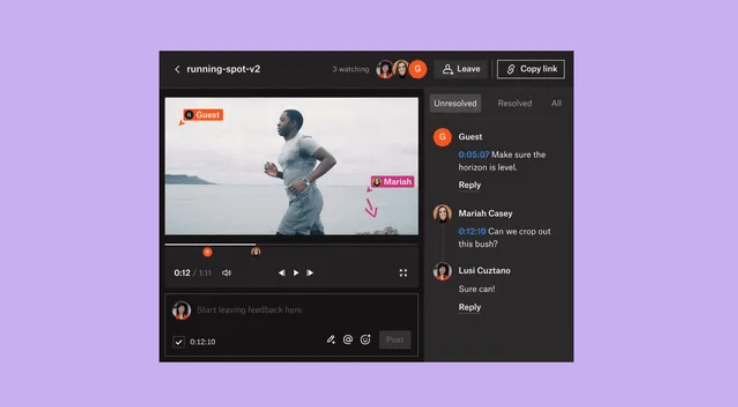
Cloud-based review tool Dropbox Replay is a serious time-saver, and fits perfectly into the way creative work is evolving. We explain why it’s a must-have for designers in 2024.

The creative industry is highly competitive, and creative freelancers and agencies are constantly being squeezed in all directions. Clients, armed with tighter budgets, expect top results. Yet, while agencies strive to create best-in-class content, they must also balance fair pay for designers with maintaining profitability. So what’s the solution?

Here’s where Dropbox’s vision of a more enlightened way of working comes in. The tech company is dedicated to helping designers and agencies realise their full potential, and Dropbox Replay, a cloud-based review tool, is helping them put that principle into action.

Right now, creatives all over the world are discovering how Dropbox Replay can revolutionise their workflows and speed up content delivery. Read on as we share five key features that make Replay a great addition to any designer’s toolkit, followed by a case study that highlights how it could boost your design practice too.

 01. Live sessions

Dropbox Replay revolutionises the way design reviews are conducted by introducing live sessions. This allows multiple stakeholders to simultaneously view and comment on an image, video or audio file at the same time; fostering real-time collaboration and ensuring everyone is on the same page.

Replay seamlessly handles ultra-high definition video and lossless audio playback, maintaining synchronisation across all viewers, ensuring a smooth and engaging review experience.

 02. Effortless project sharing

Dropbox Replay saves you time by eliminating the hassle of exporting compressed files and cluttering up your hard drive. Instead it generates a simple link for designers to share with your clients, collaborators and stakeholders.

This makes it super-easy to send out your projects for review. There’s no need for constant file transfers and version updates; you just share the link once, and once only.

03. Frame-by-frame feedback

Dropbox Replay goes beyond traditional text-based feedback, empowering reviewers to provide detailed and actionable comments using browser-based annotation tools.

Reviewers can mark up specific frames, write comments and even add annotations, ensuring that feedback is precise and easily identifiable. There’s no need for anyone to have specialised software and your client reviewers don’t even need a Dropbox account to access and provide feedback, making project-sharing accessible to a wide range of stakeholders.

04. Adobe and other software integrations

Dropbox Replay integrates seamlessly with industry-leading editing software such as After Effects, Premiere Pro, Final Cut Pro, Blackmagic Design DaVinci Resolve, LumaFusion, and WeVideo. That means reviewers can provide feedback directly from their editing workflows, without having to open a new tab.

This eliminates the need to switch between platforms and ensures that feedback is captured quickly, efficiently and in the context of the specific project.

05. Version Control and History Tracking

When you’re sharing files manually over email, it’s often impossible to keep track of who requested what changes, which corrections have been done, and so on. That’s not a problem with Dropbox Replay, though, as it provides comprehensive version control, keeping track of every iteration of a project and any associated feedback.

This enables you to easily revisit past versions, compare changes, and identify the evolution of your work. Replay also stores comments and markups for each version, providing a complete record of the review process.

Case study: Captive8 Media

Seated man being filmed by large video camera

(Image credit: Dropbox)

With its seamless integrations and focus on efficiency, Dropbox Replay is the catalyst designers need to thrive in today’s creative landscape. One such designer is Matthew Stokes, founder of the London based video production company, Capitve8 Media.

Having weathered the 2008 recession, COVID and the economic after-effects, Stokes has learned to master something that’s helped Captive8 Media stay in business: operating efficiently.

Stokes harnesses tech to handle the unavoidable business admin and to prioritise more of the work he loves. The more that these pieces of tech talk to each other, the better; which is why he’s used Dropbox since day one.

Captive8 Media’s work happens on a quick turnaround, making speed and efficiency business critical: Raw video is captured and immediately gets uploaded to Dropbox. Stokes’s editor then takes that footage, edits the video down to a rough cut, and opens it in Dropbox Replay. They’ll go back and forth leaving feedback on edits before a cleaner video is created and ready to be shared—again, via Replay—with clients who are just as widely dispersed as Captive8 Media’s own remote team.

“I don’t have to tell people how to use it, it’s self-evident,” says Stokes. “That’s where you put your feedback, you press submit, it appears there, job done.”

Man using video camera

(Image credit: Dropbox)

Replay’s ease has become integral to Captive8 Media’s creative process and customer service. The company has amassed a perfect 5-star score on Google Business with nearly 200 reviews. “In fact,” he says, “we recently had a review and someone specifically said, “We love the review process.”

By succeeding in creating simple and efficient processes, Captive8 Media has more time to focus on one of Stokes’ biggest passions: getting down in the details. And, at the same time, he’s been able to make more space for what matters most to him: a better work-life balance.

Stokes shares, “Captive8 Media is going to continue doing good stuff with good people in a good way, and keeping a smile on my face and a roof over my head.”

Feature Image Credit: Dropbox

Tom May is an award-winning journalist and editor specialising in design, photography and technology. Author of the Amazon #1 bestseller Great TED Talks: Creativity, published by Pavilion Books, Tom was previously editor of Professional Photography magazine, associate editor at Creative Bloq, and deputy editor at net magazine. Today, he is a regular contributor to Creative Bloq and its sister sites Digital Camera World, T3.com and Tech Radar. He also writes for Creative Boom and works on content marketing projects.

Sourced from CREATIVEBLOQ


By Tim Guercio

Business owners are always striving to stay afloat and keep their businesses running.

Stability is the key to success in any business, but there are certain strategies that business owners can employ in order to maintain business continuity.

Maintaining stability involves focusing on customer relationships, creating innovative marketing strategies and staying ahead of the competition. By understanding how business stability works, business owners can make sure they are doing everything possible to keep their business running smoothly.

Prioritize customer relationships.

It is important for business owners to focus on customer relationships, as this helps foster loyalty and trust between the business and its customers. Building strong customer relationships can lead to increased sales, repeat business and referrals.

Strive to provide excellent customer service in order to build these relationships. Make sure your customers feel important. At my company, the most important strategy we use to do this is prioritizing communication—which means constant communication via phone call, email and text. When we receive a call, text or email, typically, we answer promptly. If we are not able to, our standard is to respond back within two hours.

People just want to be informed on what is going on and what to expect. We hold our company to high standards, so our phone calls are all recorded, and random ones are reviewed at the end of the week. This lets us know our employees are responding respectfully and in a timely manner. Being consistent regarding the quality of your product, communication and service builds integrity and trust with your customers.

Get creative with your marketing strategies.

Businesses must also create innovative marketing strategies that generate sales and help differentiate their offerings from competitors’ products or services.

A marketing strategy I’ve found to be effective has been utilizing social media. If your business social media looks clean, polished and professional, and you consistently post, then people interact with you, and you become a credible source. If your socials look disorganized and neglected and you don’t post regularly, you can lose credibility and make potential customers feel you are hard to reach or maybe aren’t doing much service nowadays. Social media is a huge factor in effective marketing.

Another effective strategy is asking for referrals. According to a recent study, 59% of customers say they’d give a recommendation if they like a company. This has been a proven fact for us, as the majority of our customers come from friends and neighbours of customers we’ve had for years.

Train your employees to ask for referrals. Typically, our happy customers will refer us voluntarily, but I’ve found that asking the customer brings it to their attention, and they begin to think of ways they can help. Many people feel fulfilled when they help others, so if they feel they can help you by just referring you to friends, family or neighbours, they will likely want to help you. It also helps to offer the customer some kind of compensation for the referral so both parties can mutually benefit from the exchange.

Another marketing strategy involves creating a unique value proposition (UVP) that resonates with customers. This addresses the specific needs, desires or pain points of the target market, creating a compelling reason for customers to engage with a business.

Creating a compelling UVP requires a deep understanding of the target audience, competitive landscape and the unique strengths of the product or service. It should serve as a foundational element in marketing and communication strategies, resonating with customers and influencing their decision-making process. I think an example of a great UVP is “Where work happens.” This comes from Slack, and it emphasizes collaboration and communication in the workplace.

Pay attention to your competitors.

Business owners must also find ways to stay ahead of their competitors. This involves staying up-to-date on industry trends, understanding the competitive landscape and taking advantage of new technologies that can help them remain competitive.

One strategy that has helped me with this is comprehensive marketing research. Do thorough market research to gather data on competitors, industry trends and customer preferences. This means monitoring competitors’ marketing strategies, product launches, pricing models and customer feedback. The customer feedback is particularly important because you can see where improvements need to be made, and that is how you can improve or avoid those issues in your own company.

Another great strategy is to look inward regarding your business and organization. Evaluate internal factors such as your resources, capabilities and market positioning. Check your assets, equipment, facilities, financial capital, etc., as well as the skill level of your team and your brand reputation.

Identify areas where your organization can capitalize on strengths and opportunities while mitigating weaknesses and threats. Strive to create a business model that allows for scalability and flexibility in order to accommodate changing market demands.

Dedicate time to your financial health and risk management.

To ensure business stability, business owners must also focus on their financial health. This includes creating a budget and sticking to it, monitoring business expenses closely and making sure that income is greater than expenses.

Additionally, consider diversifying revenue streams by looking for opportunities to generate passive income or find new sources of funding. Also, make sure you are aware of potential risks in the industry you are operating in and take steps to mitigate them.

Stability is essential for business owners who want to be successful.

By focusing on customer relationships, creating innovative marketing strategies and staying ahead of the competition, business owners can ensure their business will remain competitive in today’s market.

It is important to keep in mind that improvements happen only if you do the work. Know that if your business is struggling, you can turn it around. However, it takes time. It requires dedication and consistent work from you, as well as your team.

Feature Image Credit: GETTY

By Tim Guercio

Follow me on LinkedIn. Check out my website.

Tim Guercio, Founder of The Christmas Team. Read Tim Guercio’s full executive profile here.

Sourced from Forbes

Yeah, I’m not sure about Google’s various names for its generative AI products.

To clarify:

  • Bard is Google’s generative AI chatbot, much like ChatGPT
  • Gemini is Google’s large language model (LLM) group, like GPT
  • Imagen is Google’s AI image generation system

All clear?

Okay, then this paragraph from Google should now make more sense.

“Last December, we brought Gemini Pro into Bard in English, giving Bard more advanced understanding, reasoning, summarizing and coding abilities. Today Gemini Pro in Bard will be available in over 40 languages and more than 230 countries and territories, so more people can collaborate with this faster, more capable version of Bard.”

I’m guessing that for most people, without the preceding context, the above explanation would have been somewhat bewildering, but basically, Google’s now making its Bard chatbot more powerful, with advanced AI models powering its responses, while it’s also adding image generation capability within Bard itself, powered by Imagen.

Google Imagen 2 in Bard

Google has taken a cautious approach with generative AI development, and has criticized others for pushing too hard, too fast, with their generative AI tools. Some have viewed this as anti-competitive bias, and Google simply protecting its turf, as more people turn to tools like ChatGPT for search queries. But Google’s view is that generative AI needs to be deployed slowly in order to mitigate misuse, which has already led to various issues in a regulatory sense.

But today, Google‘s taking the next steps with several of its generative AI tools, with Bard, as noted, getting improved system thinking and image creation, Google Maps now getting new conversational queries, powered by AI, to facilitate place discovery, and Imagen 2, the next stage of its visual creation system, also being rolled out within its image-generation tools.

Google Imagen 2

As explained by Google:

“Imagen 2 has been trained on higher-quality, image-description pairings and generates more detailed images that are better aligned with the semantics of people’s language prompts. It’s more accurate than our previous system at processing details, and it’s more capable at capturing nuance – delivering more photorealistic images across a range of styles and use cases.”

That’ll provide more opportunity to create better visuals within Google’s systems, which will also be created with various safeguards in place, in order to limit “problematic outputs like violent, offensive, or sexually explicit content”.

“All images generated with Imagen 2 in our consumer products will be marked by SynthID, a tool developed by Google DeepMind, that adds a digital watermark directly into the pixels of images we generate. SynthID watermarks are imperceptible to the human eye but detectable for identification.”

Given the recent controversy surrounding AI generated images of Taylor Swift, this is an important measure, and is one of several concerns that Google has repeatedly raised in the rapid rollout of AI tools, that we don’t yet have all the systems and processes in place to fully protect against this kind of misuse.

Sourced from SocialMediaToday