As a comms leader at Activision Blizzard, Claire Nance tracks all the trends obsessing marketers. She explains why the next big thing isn’t always the best.
Our industry loves a good story. And so it should. Marketers are, after all, storytellers themselves.
But look at the industry’s big stories or trends from the last few years, and you quickly see a pattern emerge, one that places greater emphasis on latching on to ‘the next big thing’ without a longer-term view to real-world implementation or impact.
In 2022, it was the metaverse. Barely did an earnings call or marketing strategy presentation went by without the ‘m’ word being hastily inserted. There was (and still remains) pervasive confusion around what actually constitutes the metaverse, but that didn’t stop the rush to proclaim the launch of marketing campaigns in the ‘metaverse’ and the flood of metaverse-related categories at industry events and award programs.
In many cases, these activations were within virtual gaming and social platforms, legitimate growing areas of opportunity and interest for marketers that became wrapped up by the desire to be part of the buzz and hype around the industry’s trend of the moment.
The result was that the industry conversation skipped a few steps in understanding audience behavior in virtual spaces to unlock the real impact these experiences can have both now and in the future. The story was instead focused on the latest brand to activate in ‘the metaverse’ without contextualizing it within the current technological landscape and paying little attention to results, impact or objectives.
In 2023, it happened again. And yes, I’m talking about AI. Witnessing the abrupt shift from metaverse to AI across industry headlines, events and areas of expertise this year has been simultaneously amusing and dispiriting. Once again, the priority has been to jump on to the big story of the year and ride the buzz while overshadowing the real potential AI technology offers. Such was the attention given to AI this year that the term became a proxy for technology that involved even basic levels of automation or machine learning (both of which existed before the 2023 AI hype bubble), missing the opportunity for education around what it actually is and thus how marketers should be thinking about it into the future.
It’s easy to identify the similarities between the metaverse and AI and, thus, why they became the prime marketing story in their respective years. They’re both new forms of technology that are conceptually easy to understand yet inherently complex.
They present a level of accessibility and familiarity that makes it easy for them to be inserted into existing industry conversations while also occupying a high degree of technological sophistication that makes them feel exciting and advanced. The other important component of the narrative arc was that both the metaverse and AI gained prominence after major tech industry announcements – Facebook’s name change to Meta in the case of the metaverse and the launch of ChatGPT in the case of AI.
The speed and ferocity at which both the metaverse and AI became the dominant stories for marketing and advertising exposes our industry’s penchant for chasing the next big thing. There is an at-times outsized focus on ‘newness’ and being first regarding how we think about innovation in marketing, which can lead to the scenarios above, where one idea or technology dominates the year until the next ‘next big thing’ comes along. The result of this is not only that focus remains firmly in one direction, leading to an abundance of retrofitting ideas and technology to align with the newest obsession, but also that other forms of innovation that do not fit quite so neatly into the popular industry discourse can be overlooked.
As we sit at the cusp of 2024, how quickly will we see AI discarded for the next technological advancement, as we saw with the metaverse at the start of 2023? Or is there instead an opportunity to rethink how we think about innovation within marketing and the stories we tell ourselves?
As an industry, we consistently speak to the importance of identifying objectives and goals upfront, yet that may be forgotten when it comes to new technologies and ideas. Innovation, for innovation’s sake, serves little purpose, and the same can be said for innovation driven primarily by industry hype. The focus should be on outcomes, impact and exploration, rather than a need to follow the noise. After all, innovation aims to find a better way of doing things to achieve the desired results, irrespective of whether it can be attached to the current industry buzzword.
Future technologies are exciting, but without fully understanding them, it’s easy to miss areas of real potential. The appeal of the metaverse and AI was that they were easy concepts to grasp but spoke to a technologically advanced future, creating the potential to ‘skip ahead’ in the conversation around them. Understanding these technologies better as they exist today allows for more advanced innovation and execution tomorrow. But this can be easy to overlook when the intent is speed over evaluation.
None of this is to discount the potential impact of future technologies on our industry, nor the need for us to be talking about them. But there is an opportunity for the discourse around them to be smarter. As we look ahead to next year’s industry predictions, mine might somewhat optimistically be that how we talk and think about innovation evolves and that we don’t need another ‘next big thing’ to shape how we think about the future.
Learn all about this popular chatbot without spending anything.
Anyone who has used ChatGPT will know all about its enormous potential, but knowing about this chatbot doesn’t mean you’ll know how to really squeeze everything you can out of it. That’s where an online course could really help.
Fortunately, platforms like Udemy are offering a wide range of free online courses on ChatGPT. We’ve checked everything out and lined up a standout selection of free courses to kickstart your learning journey. We’re nice like that.
These are the best online ChatGPT courses you can take for free this month:
These free online courses do not include certificates of completion or direct instructor messaging, but that’s the only catch. You still get unrestricted access to all the video content, so you can learn at your own pace.
TL;DR: Find the best free online ChatGPT courses on Udemy. Learn how to make the most of ChatGPT without spending anything.
All products featured here are independently selected by our editors and writers. If you buy something through links on our site, Mashable may earn an affiliate commission.
Some people consistently earn hundreds of likes and comments on each of their posts, and their audiences have helped them achieve financial freedom and security.
However, they all started with no network and zero followers.
So what actions did they take to achieve this success?
In this post, I’ll share 15 outstanding personal branding examples and break down their strategies to build successful personal brands so you can use the same process to achieve similar results.
3 Things All Strong Personal Brands Have In Common
As I analysed these individuals with strong personal brands, I noticed that all their strategies have three key things in common.
While there are many ways to build a personal brand, implementing these three commonalities into your personal branding strategy will significantly increase your likelihood of success.
Consistency
Every person on this list posted content consistently for an extended period of time (i.e., posted content 2-5 times per week for several years).
A consistent publishing schedule is essential to build your personal brand for a few different reasons:
It takes time to find your own brand identity and voice.
It takes time to build trust and a genuine relationship with your target audience.
It takes time to find audience-content fit (i.e., content that your audience likes and that you enjoy creating).
Therefore, even if you don’t think your initial content is very good, publish it to start gathering data and figure out what you enjoy creating and what resonates with your audience. You’ll also get better at creating content by publishing more.
Target A Single Niche
Another commonality I noticed among these individuals with great personal brands is that they all focus on a specific niche.
A key mistake many creators make is discussing too many different topics or expanding into other niches. While it may be boring to talk about one specific niche, the reality is that your audience probably follows you because they enjoy learning about that specific topic you cover.
For example, if you talk about digital marketing, NFTs, and solopreneurship, there’s a good chance that the people interested in digital marketing won’t be interested in your NFT content. As a result, you’ll find it difficult to build a loyal audience that loves all of your content.
Additionally, most people are only experts on one topic, so choose the niche you feel you know best.
However, if you want to post content related to your personal life and growth, this content can make you more relatable and strengthen your relationship with your audience.
As a general rule, make about 80% of your posts related to a specific topic, and then the other 20% of posts can be about your personal life or interests.
Share Real Experiences
Many readers don’t enjoy blog posts written primarily for SEO because these posts often lack personal experience. In fact, many people now turn to ChatGPT for strictly factual information.
Sharing your personal experiences makes your content more relatable as your audience is likely facing challenges you’ve also faced, and they’d love to hear someone else’s perspective on how they approached and solved that problem.
Bonus: Choose A Primary Platform
Most large influencers today began by publishing content on just one platform.
Over time, many of them branched out to different content formats, but at that point, they usually had teams behind them to assist with content repurposing. If you’re beginning your personal branding journey and don’t have a team to help you repurpose your content, focus on just one platform.
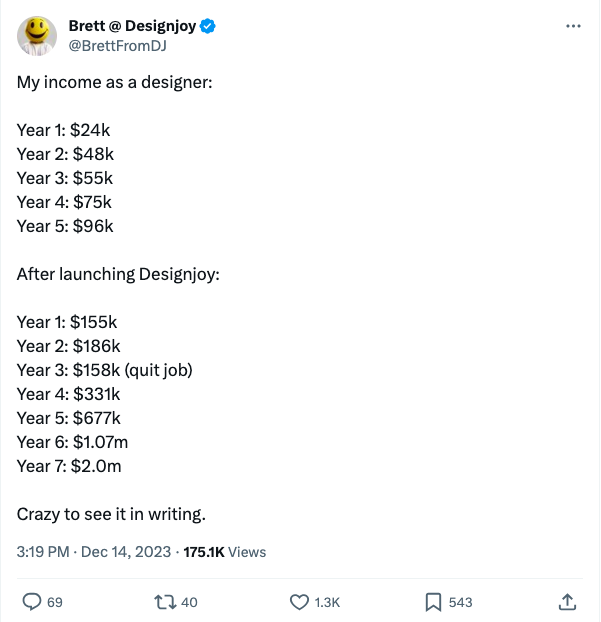
Brett Williams is a designer who makes over $100,000 per month with his one-man design agency, DesignJoy, and $50,000 per month from a course on productizing service businesses.
Nearly all of his customers for both businesses come from his 70,000 followers on Twitter.
To grow his audience, Brett followed all of the best practice advice, like posting consistently, owning a specific niche, and sharing his authentic experience. However, he also shared a lot of revenue numbers.
Here’s just one example of the transparency he regularly shares around revenue numbers.
He is also a solopreneur, which is currently a trending topic.
So the combination of real revenue numbers around a trending topic helped him quickly build a large audience.
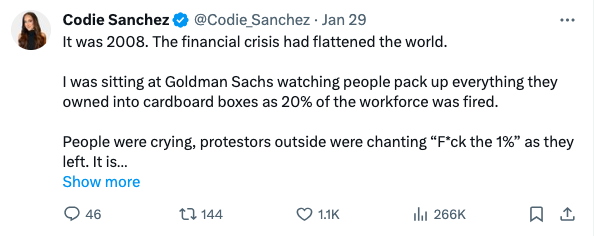
Codie Sanchez has built a strong personal brand in the entrepreneurship category. Specifically, she has established herself as an expert on buying boring businesses and has helped make that niche a trend.
Before focusing on building her personal brand, she had already built a portfolio of “boring” brick-and-mortar businesses. So when Cody decided to double down on building her social media presence, she already had capital to deploy and hired social media experts to help her repurpose the content across YouTube, Twitter, LinkedIn, and even a newsletter.
Today, she uses her audience as lead generation for her portfolio of businesses, and she also has a course that helps students identify and buy great “boring” businesses.
The key to her growth on social media likely comes down to a few things:
She hires experts. She hired people like ex-YouTuber Jamie Rawsthorne to help her grow her YouTube channel, and she also hired people to help build her social media profiles. These experts already understand the nuances of how each algorithm works, making it easier to optimize the content for each platform and grow faster.
She has unique experiences and shares them through excellent storytelling. Few people have worked on Wall Street and then built a portfolio of boring businesses, like car washes and laundromats. This experience gives her content unique context, which makes it more interesting.
She had a strong personal network. While she was in the trenches building these businesses, she also built a strong network. Therefore, when she decided to double down on building her online presence, she already had a leg up. So meet more people in real life and build genuine connections by attending conferences, hosting your own events, or sparking thoughtful conversations in the comments on other people’s social media posts.
Chris Do is a designer and the CEO of The Futur, an online education platform whose mission statement is to teach 1 billion people how to make a living doing what they love.
Today, Chris has a strong online presence across multiple platforms, but his primary growth channel is Instagram.
He outlines the approach he used to grow to nearly one million organic Instagram followers in this video:
As you’ll hear in the video, Chris’s main strategy to grow his Instagram following was transforming his existing keynote presentations into fun, engaging carousels.
This arsenal of content made it easy for him to post consistently, because he just had to reformat it into carousels. Additionally, he had already tested these keynotes with live audiences and knew what did and did not resonate with them.
The main takeaway is to look at the content you already have that has resonated with your audience and then repurpose it into engaging content formatted for that platform.
Chase Dimond has built a strong follower base on LinkedIn, and there are a few key reasons why he’s been successful.
First, he positioned himself in a very specific niche. Rather than trying to compete in the larger marketing consultant niche, he established himself as an email marketing expert for ecommerce companies.
In fact, if you look at his LinkedIn profile, he has sent over a billion emails for ecommerce companies that have collectively generated over $150 million in attributed revenue.
As a result, any ecommerce owner struggling with email marketing will immediately identify him as a specialized expert who can solve their specific problem.
He also publishes daily on LinkedIn, and you can tell that his posts are very visual. In fact, rather than typing out text-based content, he just uses screenshots from Twitter. This helps the text jump out at scrollers and capture their attention.
Jon Youshaei is an ex-YouTube employee who left his job to build his own YouTube channel.
Today, he is a well-respected thought leader and has interviewed YouTube experts like MrBeast, Danny Duncan, and many other creators.
While Jon publishes fairly regularly, he publishes less often than some other creators on this list.
Instead, his fast growth is mainly due to the outstanding guests he has on his podcast.
If you want to grow your personal brand faster, consider collaborating with other influencers in your industry. Jon already had some connections from his time as an employee at YouTube, but you can always start by interviewing smaller influencers and then work your way up.
Ideally, target influencers that also share content they participate in creating, as that will help your content earn more reach.
Jon also puts a lot of effort into editing the podcast videos to make them more entertaining than a traditional conversation. If you plan to do content collaborations with other influencers, think about how you can make your interviews unique and entertaining.
Romana Hoekstra is a SaaS marketer who quickly built an impressive audience on LinkedIn.
While many of the creators on this list are founders of multi-million dollar businesses, Romana is a great example of a freelancer who has built a strong personal brand. So even if you don’t have a stack of impressive accolades, like a multi-million dollar exit, you can still establish yourself as an expert by niching down and consistently creating visually attractive and actionable content.
She was even named a top content marketing voice:
About 80% of her content is focused on content marketing for SaaS companies and the other 20% is related to her personal life, making her a relatable and interesting creator.
Romana also puts a lot of effort into creating visually appealing graphics.
Regardless of the social media channel you’re posting your content on, think about how you can make it more engaging and fun for people to consume.
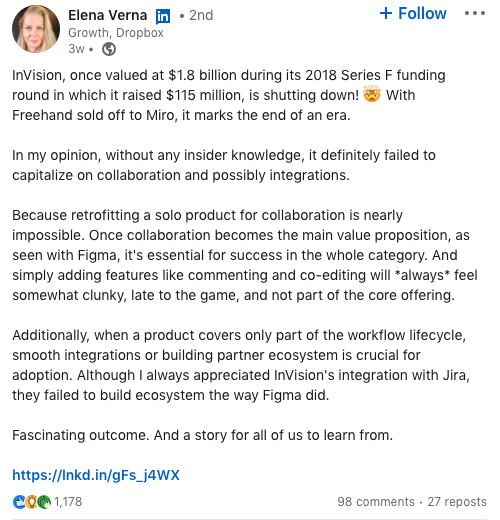
Elena Verna is the Head of Growth at Dropbox and has mastered the art of balancing entertaining content, like memes, with thought-provoking ideas that interest other high-level executives.
Here’s just one example of a meme she shared recently that is funny to her target audience:
However, she also frequently posts thought-provoking, original content like this post:
While Elena certainly has an advantage as an executive at a major company, anyone can use her strategy of mixing memes with thought-provoking leadership content.
You’ll also notice that a lot of her content is observational. For example, rather than telling you her opinion, she shows you an interesting fact and then offers her analysis.
This is another great example of her “observational” style content:
If you don’t have anything interesting to share and are looking for content ideas, identify patterns and share them with your audience. Then, you can provide your observation on it.
Alex Hormozi’s personal brand blew up seemingly overnight.
He grew from just 180,000 to 1.2 million followers in just six months, and two main factors allowed him to achieve such rapid growth in such a short period.
First, he had already built several eight-figure businesses, so he had very unique (and valuable) personal experiences to share. Even if you don’t have experience building multiple eight-figure businesses, you can still create equally interesting content by either interviewing these experts or taking their advice, implementing it, and then documenting your results.
However, he also credits his rapid growth to his content repurposing strategy. He was originally only producing seven pieces of content per week, but his growth took off when he increased his content output to 80 pieces per week.
The best part is that he didn’t even increase the amount of content he created. Instead, he simply hired people to repurpose the content he was already producing across more platforms.
Justin Welsh has established himself as one of the most prominent solopreneurs on social media and has over 450,000 followers on Twitter and over 500,000 followers on LinkedIn.
He was previously an executive at a successful startup, and after getting burned out, he eventually built his own personal brand.
Justin revealed that he relies heavily on content repurposing and publishing workflows, as he believes consistency is essential for building a personal brand.
Here, he shows that he posted the same piece of content 12 days apart, and you can tell it performed very well both times.
Using templates prevents you from starting from scratch each time you create a piece of content, and you feel intimidated staring at a blank screen.
The key to building a strong personal brand really comes down to consistency, so consider creating content templates to make it easier to create content. This way, you won’t waste time staring at a blank screen as you won’t have to start from scratch each time you create a piece of content.
Jay Clouse quit his job to become a full-time creator and has grown his social media following to over 35,000 followers on LinkedIn and over 40,000 followers on Twitter.
He is also a top voice on LinkedIn and earns over $50,000 per month as a solo creator.
He recently revealed exactly how he would focus on building an audience in 2024, and here’s the step-by-step process he recommends:
Choose one word or catchphrase to be associated with. For example, Nick Huber is known for “sweaty startups,” whereas James Clear is known for building small habits.
Create a free email course. An email course will help you build a deeper relationship with your readers, and unlike on social media, where you depend on an algorithm to show them content, you own the audience. Email subscribers have also permitted you to be in their inbox, so you’ll probably have a deeper relationship with them.
Choose a discovery platform. Similar to the advice I mentioned at the beginning of this post, Jay recommends that you double down on one platform (YouTube, Twitter, etc.).
Design your social media profile to align with your premise. Whatever you choose to be known for, optimize your tagline and personal brand statement to speak to your target audience. The most effective personal brand statements are clear, concise, and make it obvious what kind of value you provide.
Study, study, study. Whatever you choose to be known for, aim to become an expert on that topic so you provide the most helpful advice possible.
You can read his full step-by-step guide on building a personal brand, but those are the main steps to get started.
Jay also does interview-based videos with top creators, and leveraging their audiences has helped accelerate his growth. He is also a master at content promotion and creates mini-trailers of the interviews, which he then promotes on social media.
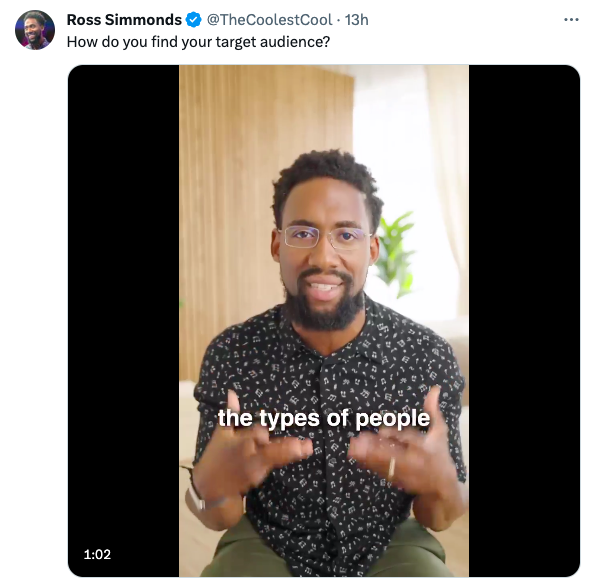
Ross Simmonds has over 65,000 followers on Twitter and is known as an influencer in SaaS marketing.
He has an impressive content publishing frequency and Tweets several times per day, and he revealed in the post below that he also relies heavily on content repurposing and republishing.
Most of his posts include helpful tips SaaS companies can use to improve their marketing strategies, but he also includes the occasional personal/philosophical post to keep his content relatable and personal.
Ross also creates many different types of social media content. For example, while most people only post text-based Tweets, Ross frequently posts graphics and even video content on Twitter.
If video content is your primary content format, you can easily repurpose them into short clips or even hire a copywriter to repurpose snippets of it into written content formats.
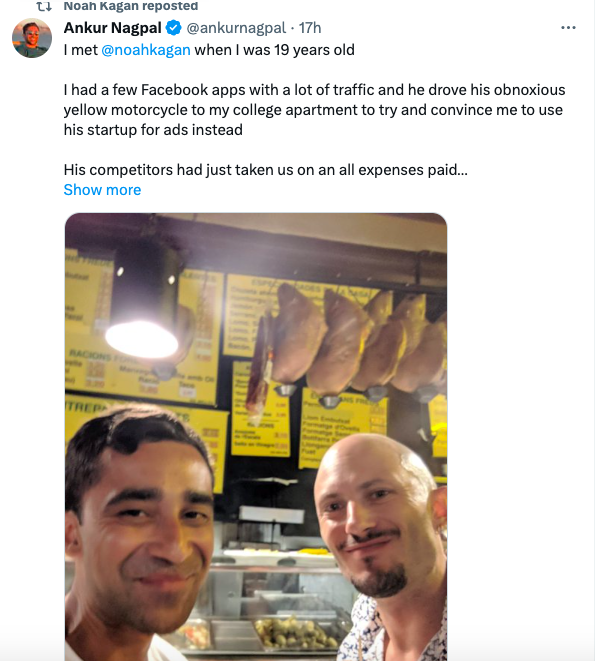
Unlike other influencers on this list, Noah Kagan has steadily built his personal brand over the past decade and didn’t use a single platform to build his audience.
Instead, he hosted in-person events, attended conferences, and made a real effort to build personal connections with people in real life.
As many of these people he met levelled up in their careers, these personal relationships have helped him grow on social media. For example, he recently launched a book and is well on his way to becoming a bestselling author, as his friends all pitched in to help promote it.
The main takeaway you can learn from Noah is that sometimes the best way to grow an audience is to meet people in real life, provide value, and cheer for them when they win.
He has also consistently posted content on his podcast, YouTube channel, and social media accounts for over a decade, so have a long-term mindset as you build your personal brand.
Nick Huber has risen to Twitter fame thanks to his unique niche (storage sheds) and the occasional controversial and/or uncomfortable statement.
Unlike most tech entrepreneurs, he stands out as a down-to-earth, country person, which makes him unique and fits his brand nicely.
Think about your unique interests and hobbies and then weave them into your content marketing strategy.
If you don’t feel that you fit in with the traditional tech entrepreneur mold, embrace your unique characteristics, because they will actually help you stand out.
Kevin Espiritu runs the largest YouTube channel on gardening. He began as a blogger and eventually transitioned to YouTube as his primary platform.
After switching to YouTube, he became the face of the channel and eventually began building his personal brand in the broader entrepreneur community.
Today, he regularly shares content on Twitter about his experience as a top player in the creator economy.
However, unlike many other solopreneurs and influencers on this list, Kevin doesn’t have a specific content framework or strategy for his personal brand. He purposefully writes on his Twitter biography that his Tweets are mainly notes to himself.
If you’re struggling to think of content ideas, write about anything you’ve recently discovered that you find interesting. If you find something interesting, there’s a good chance other people will also find it interesting, and as a result, you’ll grow a following.
Alex Lieberman is a co-founder of the popular newsletter Morning Brew. Yet today, he’s best known as a content creator and regularly creates content around entrepreneurship, the creator economy, and business ideas.
A key reason Alex is such a successful content creator is that he’s great at sharing his personal struggles and experiences.
For example, he openly shared about his failure with a backyard game he began after leaving Morning Brew.
If you’re posting primarily instructional content, think about how you can post more experiential-style content so that you seem more relatable.
Start Building Your Personal Brand Today
As you can see, there are many different ways to build a personal brand, but finding your niche and voice can be challenging.
To help you navigate the challenge of personal branding, we created the Copyblogger Academy, a community of solopreneurs and content creators building personal brands. You’ll also have access to courses on personal branding and direct feedback from the team behind Copyblogger and top personal branding experts.
If you want to invest in yourself and take your first step towards financial freedom, try the Copyblogger Academy today.
Here’s how to pivot your career into AI and how your existing skills can help open doors in the booming AI field.
Since I’ve been covering the new boom in AI, I’ve been getting reader letters asking how to grow into that industry. This letter from Rick is representative of many of them:
I’m trying to transition from my industry of life science to big tech. I want to continue to learn more about AI and its applications, with the focus on becoming a product manager who can showcase knowledge and use cases for it.
Do you have any suggestions for an experienced product manager, with very little machine learning experience, starting out on what to learn in the AI/ML space to become marketable? I’m going to start by taking the free courses from IBM as you mentioned. I would love to work with engineering and development teams on crafting products utilizing these technologies specifically.
What stands out about Rick’s letter is that he’s experienced as a product manager, but his field is life sciences rather than traditional tech. This experience is important, because he does have skills that can transfer into other fields.
I also receive letters from readers who don’t mention experience or pre-existing skills, but just see that prompt engineers are raking in the big bucks and want to be part of the windfall. I mention this, because a lot of less experienced folks see stories about app developers making millions or prompt engineers making six-figure incomes and think that just one course, or just wanting it hard enough, will get them the gig.
Back when I taught entry-level programming, about half my students wanted to program. The other half wanted programming jobs because they paid well. Unfortunately, that second set of students weren’t all that willing to apply themselves to the craft. They just thought that the mere fact that they took a course in programming would get them a job. And it might have. But without demonstrable skills, that job wouldn’t have lasted more than a few weeks.
My point here is that you have to be willing to do the work, and you also have to be able to bring something to the job. Rick seems willing to do the work, and he has skills he can bring to the job. Below are the five steps I’d recommend Rick — and anyone interested in pivoting to AI work — take.
1. Identify your current skills
This is important if you want to switch careers. What skills do you already have?
As a product manager, Rick undoubtedly has some people-wrangling skills. Product managers have often been described as CEOs without the authority or the pay. That’s because they need to manage and cajole people from multiple disciplines and departments.
He probably has some serious writing skills. Writing a product requirements spec is not a trivial task.
Depending on what kind of product manager he is, he might also have marketing communications skills. By this, I mean the ability to write promotional copy describing his products for prospects, not just the implementation teams.
As an experienced product manager, he probably also has strong project management skills, strong organization skills, and some level of product knowledge (in his case, for life science-related offerings).
2. Identify skills that might transfer
Rick might not be aware of this, but he has skills that are particularly well-suited to the world of AI. Prompt engineering (the writing of instructions for generative AI tools) is much more about structuring requests in natural language than it is about writing code.
If a product manager can do anything, it’s writing clearly articulated specifications that take into account known constraints. That’s already very close to prompt engineering. He’ll have to learn the particular nuances of prompt engineering and how to battle those constraints, but he’s in the perfect place to move into that role.
He also understands development teams, projects, and the product management process, which is as important to tech companies as it is to life science businesses.
What about if you’re not a product manager? What skills do you have that might transfer?
Back in the old days of AI, expert systems were built by modelling specific expertise of subject matter experts. But today’s large language models pull information from vast tracts of information, often straight off the internet. If you have a domain-specific expertise that’s valuable, say medical knowledge or petroleum modelling, or even how a house is constructed, that knowledge may be valuable to AI companies trying to break into those industries.
Don’t assume that knowledge needs to be high-tech or super high-end. If you’re a teacher, you have expertise in teaching and communicating knowledge, as well as the fields you teach in. If you’re a parent, you sure have experience with the real ins-and-outs of raising kids. If you have warehouse experience, go to the front of the supply chain line.
To be clear, just because you know something doesn’t mean you’re instantly going to get an AI gig in that area. But make sure you are aware of the subjects you’re strong in, and make sure you communicate those subjects as part of your transfer search.
Let’s go back to that teacher example. Teaching involves breaking down information into understandable chunks, creating lesson plans, and creating validation procedures to ensure students have learned the material. That’s very valuable in the AI process as well.
What about if you’re a good salesperson? Sales skills are perhaps the most important skills anyone can have because selling pays for our salaries. Learn about the AI business, especially the types of prospects and sales cycles. And then present yourself to an engineering-driven company desperate for sales skills. Here’s a hint: most engineers don’t have a clue how to sell.
What if you don’t have so-called professional skills? What if you’re a secretary or administrative assistant? If you’re smart, can apply yourself, and can learn, you also have an opportunity here. All companies need strong organizational skills and the ability to structure and manage projects. Do the learning tasks outlined in this article, do the resume-building tasks described at the end, and you might be able to change that title from administrative assistant to logistics manager for an AI company.
What about if you’re a coder, but not familiar with AI coding? Coding skills are hugely important. Just focus on the next section and train yourself on how your coding skills can use AI. Build a project or two. I talk about that in-depth next.
3. Train yourself
But, Rick says he doesn’t know the AI field. He doesn’t know the business of AI (all the players, how they relate, their competitive landscape). He doesn’t really know how it all works. And he’s never done any actual AI work.
The first is very easy to improve on. Read publications like ZDNET. Read voraciously about the AI industry. In fact, the very best way you can learn about a business you want to move into is to consume all the trade materials you possibly can. Read constantly. If you put in an hour of reading every day for six months, all of it centered on your desired target industry, you’ll build a strong familiarity with that industry.
Taking the free courses is also a good idea. But it’s very important not to just consume the material, but to do the exercises. The ChatGPT Prompt Engineering for Developers course offered by OpenAI (the folks who make ChatGPT) and DeepLearning (an education provider) has a hands-on simulator where you can construct prompts with code, and play with them.
The IBM course has a module where you can use IBM’s tool to do some project work. Use it and practice with it. Amazon, too, has free courses that include hands-on experience.
I’ll be spotlighting more free courses. Take them. Take as many as you possibly can. Give yourself time to really work the assignments and learn the material.
Then, get yourself a ChatGPT Plus and Midjourney account. You’ll spend about $30/mo, but you’ll have access to more powerful tools than just the free stuff. Use those tools. A lot. Experiment. Learn their limits and explore their strengths. Become comfortable with what they can do and how they fall short.
My point here is simple: make yourself knowledgeable. If you want to get a job in a field where you don’t possess the experience, expertise, or credentials, you won’t get anywhere without any of them. Fortunately, AI is a field that doesn’t require board certification or a specific terminal degree. But it does require knowing stuff.
4. Build yourself some AI resume points
By the time you’re ready to ask for a job interview, make yourself into someone who can answer those interview questions with confidence and competence. When asked, “Show me what you’ve built with AI,” have something you’re proud to show off. When asked about the future of AI, have enough knowledge to clearly articulate all the issues, opportunities, and concerns. When asked about the strengths and weaknesses of offerings by Amazon, Google, Microsoft, OpenAI, and others, know enough to be able to answer.
Another thing that will make you more attractive to hiring managers in the AI space is some experience in the AI space. Now, obviously that’s the Catch-22 that’s existed with jobs since there were jobs. Hiring managers want folks with experience, but how are you supposed to get experience without the job?
Well, here’s how: Be creative.
For someone in product marketing, there are two clear ways to add some fairly easy line items to your resume.
The first is a writing a blog or a newsletter. Starting a Substack is super easy. Write about marketing and business observations involving the AI industry. Deconstruct products and strategies of the various AI players. Even talk about your journey into learning more about AI. Use your product marketing background to provide weight to your discussion.
Now, for those of you not of the product marketing ilk, find how you can relate what you do know to AI and write about it. Experiment with the AI tools you do have and see how they might apply to your unique set of skills. Let yourself tinker, but ultimately, you want to do something you can put up on LinkedIn that has the word “AI” in it.
Speaking of that, especially for our product marketing friend Rick, find an AI Kickstarter project or a small AI startup, and offer to be a part-time advisor. You can offer services like looking over their marketing plans and offering advice or editing, or you can offer to write some marketing copy. The point is, if you don’t require payment, and put in a few hours a week, you can start relating with folks in the AI field.
Now, here’s the trick that will better help you move the job needle: Agree to do these services in return for giving you a title associated with the company. It doesn’t have to be a line title, like “marketing manager.” It can simply be “advisor.” The point is, you want to be able to legitimately list on your LinkedIn profile something like, “Advisor, Happy Valley AI Enterprises,” or something similar.
5. Give it six months
I know. Now that you’ve decided you want to transition into AI, you want the gig tomorrow. Well, pal, that’s not going to happen. But if you give yourself six months, and you work it seriously, you’ll have a pretty good chance of moving into this new field.
Put in an hour each day. Make sure you read relevant articles every day. Do some project work and tinkering in the field every few days. Make AI part of what you do. Try using AI in your current job, just to see how it can fit in.
The point here is that by the end of six months, make it so that AI isn’t this new thing you want to move into, it’s this thing that you’re already very familiar with and use as a matter of your daily activities.
That way, by the end of the six months, you’re not asking to “move into AI,” but to “use your AI skills and knowledge in the AI field.” That’ll come across as much more powerful to hiring managers.
Google says the feature, which saves a web page snapshot, is no longer needed.
One of Google Search‘s oldest and best-known features, cache links, are being retired, Google’s search liaison said in an X post seen by The Verge. Best known by the “Cached” button, those are a snapshot of a web page the last time Google indexed it. However, according to Google, they’re no longer required.
“It was meant for helping people access pages when way back, you often couldn’t depend on a page loading,” Google’s Danny Sullivan wrote in the post. “These days, things have greatly improved. So, it was decided to retire it.
Nowadays, however, the feature is used for more than just a web page backup. Many people rely on it to check to validity of a site, and SEO managers can employ the feature to check their pages for errors. Many users, particularly news professionals, use the cache to see if a website has recently been updated, with information added or removed. And sometimes, a cache can let you check a site that’s geoblocked in your region.
Previously, clicking on the three-dot menu next to a result would open an “about this result” dialog with the Cached button at bottom right. Now, however, it opens a much larger menu showing a website’s “about” page, a Wikipedia description, privacy settings and more. The cached button is now nowhere to be seen.
None of the comments in Sullivan’s replies were positive, with one SEO user saying “come on, why delete the function? It’s really helpful for all SEO.” Sullivan did say that Google may one day add links to the Internet Archive where the cache link button used to be, within About This Result.
However, that sounds like it’s far from a done deal, and would shift a massive amount of traffic over to the Internet Archive. “No promises. We have to talk to them, see how it all might go — involves people well beyond me. But I think it would be nice all around,” he wrote.
In the age of big-box online retailers, social media influencers and the option of next-day delivery on most online purchases, brands are often left to wonder how (and if) traditional retail growth should be prioritized. Over my 25 years working in the apparel industry, I’ve found the answer to be a resounding yes. Based on this experience, here’s my playbook for successful retail expansion in the e-commerce era.
1. Don’t guess; follow the data.
Most executives know that it’s important to delegate and defer to the expertise of others when needed. For our company, when it came to selecting locations for new storefronts, I knew that we needed real expertise in real estate and market research. So we engaged a company to assist with site selection. This taught me the importance of analyzing metrics such as total population, local home values and average incomes.
Another important data point when considering a storefront is tourism data: What percentages of potential visitors live in the area, and how many are visiting? This analysis can help ensure you’re meeting your current customers where they are. Additionally, examining demographic data such as age, income levels and lifestyle preferences in the target location can provide valuable insights for tailoring your retail storefront to the local community. Understanding the landscape of competitors, including similar businesses and their success rates, can also help you with strategic positioning.
Lastly, evaluate the accessibility and convenience of the chosen location, like transportation infrastructure and parking facilities. These features can be essential to enhancing the overall customer experience and attracting a diverse clientele.
2. Use retail spaces as an interactive way to tell your brand story.
Once you’ve identified the ideal spot for a new store, focus on the experiential aspects of the build-out. Even as you expand to new markets, keep in mind what your current and future customers expect when they come to your location, and ensure the same top-quality experience across all of your locations, from the look and feel to messaging and staff training. Staying committed to making your brand story tangible can allow you to take the next step toward incorporating unique design touches and merchandising that will make customers in the area feel understood.
3. Make smart decisions, and don’t be afraid of rapid growth.
When pursuing expansion, it is important to develop a robust strategy. Instead of spontaneous choices, devise long-term strategies that incorporate potential growth avenues. Keep an eye out for market situations that present favourable conditions, and stay in tune with sector trends and consumer patterns in order to make informed decisions. By recognizing and adjusting accordingly to demand swings, your business can flourish and become more resilient—which helps make long-term growth sustainable.
While strategically growing my company’s retail footprint, our key takeaways have pointed to the continued importance of traditional retail in an e-commerce-driven world. By emphasizing data-driven decision-making, the branded experience your storefronts provide and a diversified channel mix, you can achieve informed, strategic growth. In an era of uncertainty and rapid change, embracing opportunities, investing in expertise and maintaining a strong physical presence can be pivotal as you forge lasting connections with your customers.
LinkedIn has added some new features for job seekers, including job listings by different categories, job preference highlights, and new AI job application assistant tools.
Which still seem counter-productive, given that employers probably want to assess a job seekers actual communication skills, as opposed to getting a robot-written message. But inevitably, this is the way that things are headed regardless, so it probably makes sense for LinkedIn to incorporate such direct.
First off, LinkedIn is rolling out “Job Collections”, which will categorize open roles into different sectors and settings.
As you can see in this example, Job Collections will list open roles in various sector and business categories, making it easier to find the job that you want, based on differing parameters.
“Job Collections allows you to expand your job options and explore collections of relevant jobs across a variety of industries, specialties and companies that you may not have otherwise been aware of. To start, visit the Jobs tab on LinkedIn. Look for “Explore with Job Collections” and click on any of the collections that align with your passion and interests, including jobs that offer remote work, good parental leave, or a focus on sustainability.”
It’s a handy filtering tool, which will help to streamline your job search based on a range of additional parameters.
Along the same line, LinkedIn’s also adding a new Job Preferences filter option, which will enable you to set specific parameters and elements that you’re most interested in. Recruiters will then be able to see these preferences, while LinkedIn will also highlight the relevant aspects on every job role displayed to you in the app.
You can see the parameters highlighted in green, adding another way to more easily find relevant options in-stream.
Current preference options currently include: employment type (full-time, part-time, contract, etc.), location type (remote, hybrid, on-site), as well as minimum pay preference for U.S. members.
LinkedIn says that it will look to add more options over time, providing more ways to more easily find jobs with the most desirable elements.
LinkedIn will now also enable you to flag interest in a specific company from a job ad.
This option isn’t new as such, as you can already flag interest in a company on their business profile page. But having the button available on every job will make it a more readily accessible marker.
Finally, LinkedIn’s also testing some new job seeker tools for Premium users, including more advanced job search filters to highlight more relevant job matches, as well a new AI-powered LinkedIn Premium experience to help you assess if a particular job is a good fit for you, and even write an intro message.
As you can see in this example flow, LinkedIn also now enables Premium users to draft both job application and introductory emails via generative AI, which as noted, does seem a little counter-intuitive within the job search process.
But again, you can already do this in ChatGPT anyway, why not integrate it direct, I guess?
These are some interesting additions, which will provide more options for job seekers in the app. And with many more people looking to switch roles or careers in 2024, especially in the early months, it makes sense for LinkedIn to make this a focus.
You can read more about LinkedIn’s latest job seeker updates here.
2024 – A year when economics will play second fiddle to elections
Places are filling fast!
We have had a great response so far for our next #Toolkit webinar with Jim Power and Chris Johns to take part in our next Toolkit session on Tuesday, February 27th at 9AM.
76 states will have elections of one kind or another during 2024. Some analysts think that will be the largest number in history. A lot of those elections could be very consequential.
We start the year with Taiwanese elections – the outcome could well provoke China, widely thought to be preparing for a possible war by the end of the decade.
We end with the possible return of Trump. How bad could that be? Unimaginably bad.
With Jim Power and Chris Johns. Jim Power is the owner manager of Jim Power Economics Limited, an economic and financial consultancy, which he set up in 2009. He is a board member of Love Irish Food, BMW Financial Services and the Arboretum. He is a member of the Institute of Directors in Ireland and completed the IOD exams in 2022.
He is a graduate of UCD and holds a BA and a Master of Economic Science Degree. He lectures part-time on the MSc Management and the MBA at Smurfit School of Business, UCD. He is a native of Waterford.
Chris has worked in financial services, mostly asset management and investment banking. He was CEO and CIO (Chief Investment Officer) at Bank of Ireland Asset Management. He also worked as an economist in the UK Treasury, the National Institute of Economic & Social Research and UBS Philips & Drew in London, whilst also teaching economics in London and Cambridge Universities.
He is currently Chairman (non-executive) of Evelyn Partners Europe and a member of the Acuvest Investment Committee.
They are both also responsible for the very successful podcast, “The Other Hand”.
A little pivot here. A little pivot there. There’s no better way to successfully navigate today’s changing marketplace. Yet, all that pivoting could lead you down some disastrous paths if you’re not careful. It’s fine to be creative, but you don’t want to make big moves without conducting due diligence.
The problem, of course, is that it can be hard to resist making major pivots. When your industry gets shaken up by a competitor, you may be tempted to follow suit. Or you may be worried that you’ll miss out on an opportunity if you don’t embrace the latest trend. While both cases might be true, they aren’t always. Sometimes taking time to consider your options makes the most sense. You don’t want to pivot too rashly, quickly, or dramatically.
This doesn’t mean you should rest on your laurels and let the world rush by. Obviously, pivoting can be a good decision. YouTube was originally a dating site, after all. Without a pivot, you might be swiping left on videos rather than binge-watching TED Talks. The point is that you need to pivot, but you need to do it in a way that protects your company rather than exposes it.
To determine whether you should pivot, ask yourself the following three questions. They’re designed to help you evaluate the situation and refocus on your core business.
1. Is it worth productizing your service?
Many pivots involve businesses productizing their services. For example, let’s say you have a service that you want to scale. Your first instinct? Turn it into a product. That way, you can sell the product en masse, especially if you can set up subscriptions or another recurring income stream. There’s little doubt that productizing can be your ticket to more money. However, you don’t always have to productize, as noted by Greg Alexander.
As the founder of the mastermind networking group Collective 54, Alexander works with many other founders. He admits that one thing they often say is that they want to be software companies. Why? “Some founders believe that service firms are more work-intensive and that somehow building a SaaS company means a better work-life balance,” he explains. But according to research, the five-year survival rate of professional service firms is 47.6%. In contrast, the five-year survival rate of product companies is 23.%. “It is wiser to play the odds and start a service firm instead of a product company,” Alexander says.
This doesn’t mean you can’t productize. Just be certain that you’ve exhausted all service opportunities in your business niche. You may have overlooked some possibilities by assuming that productization was the only way to achieve your goals. If you’re still set on productizing, then thoroughly test your product on a small audience before scaling.
2. Can your intended market absorb another player?
You’re seeing your competitors engage in similar pivots that involve a market you’ve never tried. Is it your turn at bat? Maybe, or maybe not.
Did your parents ever ask, “If everyone were jumping off a bridge, would you jump off it, too?” They were worried about you giving in to peer pressure. When your peers seem to be appealing to a specific target market, you will notice it. What you might not think about, however, is the fact that the market may be a mirage. As noted by CB Insights research, one of the major reasons that 35% of startups go under is a poor market fit.
The way to avoid this is to be certain that you (1) identify a real market with a real need and (2) the identified market can support you and all your competitors. This is where you must get your hands dirty and do some serious focus group and market research. Your job is to figure out the total addressable market because you can’t use it to sustain your organization if it’s too small. Joseph DeWoody, CEO and cofounder of Valor, says, “This knowledge helps you craft a unique value proposition, develop a clear business strategy, and identify potential challenges and opportunities.”
Once you’ve completed a comprehensive assessment, you’ll know whether you should plan to enter a new market. If you’re still not convinced, you can always make a minimally viable product and test the waters.
3. Should you add or take away something?
Companies often get rid of major services or products as a pivoting move. BuzzFeed is a great example—and a cautionary tale. It officially shuttered its news division in 2023. The problem wasn’t the journalism. Rather, the division was no longer sustainable. Many wonder if the company waited too long.
Whether you’re thinking of closing a department or offering or adding a new one to your lineup, you have to be strategic. It’s not enough to just be comfortable with your choice. One wrong move could affect your profits, reputation, etc.
Even if you think removing or adding something is obvious, guess again. In 2022, franchisor McDonald’s and its American franchisees couldn’t see eye to eye on whether to keep or ditch $1 drinks. The conundrum was that the ramifications went beyond economics. Was it more profitable on paper to get rid of the menu option? Yes. Did it make sense from a marketing standpoint? Not always.
Data can help you make decisions, but you need to look beyond your profit margins. Jettisoning a beloved product or service—even if you’re replacing it with something you think is better—can be a liability.
Pivoting isn’t for the faint of heart. It’s not something to necessarily avoid, either. Just be sure to always look before you leap.
Co-founder Accountability Inc. Rhett Power (The Accountability Coach) is a best-selling author and contributor at Forbes. Follow me on Twitter or LinkedIn. Check out my website or some of my other work here.
If you opened Facebook, Twitter or Instagram about a decade ago, you’d likely see posts from friends and family, in chronological order.
Nowadays, users are hit with a barrage of content curated by an algorithm. Passionate about plants? Sports? Cats? Politics? That’s what you’re going to see.
“[There] are equations that measure what you’re doing, surveil the data of all the users on these platforms and then try to predict what each person is most likely to engage with,” New Yorker writer Kyle Chayka explains. “So rather than having this neat, ordered feed, you have this feed that’s constantly trying to guess what you’re going to click on, what you’re going to read, what you’re going to watch or listen to.”
In his new book, Filterworld, Chayka examines the algorithmic recommendations that dictate everything from the music, news and movies we consume, to the foods we eat and the places we go. He argues that all this machine-guided curation has made us docile consumers and flattened our likes and tastes.
“For us consumers, they are making us more passive just by feeding us so much stuff, by constantly recommending things that we are unlikely to click away from, that we’re going to tolerate [but] not find too surprising or challenging,” Chayka says.
What’s more, Chayka says, the algorithms pressure artists and other content creators to shape their work in ways that fit the feeds. For musicians working through Spotify or TikTok, this might mean recording catchy hooks that occur right at the beginning of a song — when a user is most likely to hear it.
Though the algorithms can feel inescapable, Chayka says increased regulation of social media companies can mitigate their impact. “I think if Meta, Facebook’s parent company, was forced to spin off some of its properties, like Instagram or WhatsApp, and those properties were made to compete against each other, then maybe users would have more agency and more choices for what they’re consuming,” he says.
Interview highlights
On how the internet takes power away from gatekeepers
There’s this huge power of the internet to let anyone publish the art that they make or the songs that they write. And I think that’s really powerful and unique. … [In] the cultural ecosystem that we had before, there were these gatekeepers, like magazine editors or record executives or even radio station DJs, who you did have to work through to get your art heard or seen or bought. And so these were human beings who had their own biases and preferences and social networks, and they tended to block people who didn’t fit with their own vision.
Doubleday
Now, in the algorithmic era, let’s say rather than seeking to please those human gatekeepers or figure out their tastes, the metric is just how much engagement you can get on these digital platforms. So the measure of your success is how many likes did you get? How many saves did you get on TikTok or bookmarks? How many streams did you get on Spotify?
So I think there are advantages and disadvantages to both of these kinds of regimes. Like, on the internet, anyone can put out their work and anyone can get heard. But that means to succeed, you also have to placate or adapt to these algorithmic ecosystems that, I think, don’t always let the most interesting work get heard or seen.
On the difficulty of knowing what’s going outside your specific algorithm
These digital platforms and feeds, they kind of promise a great communal experience, like we’re connecting with all the other TikTok users or all of the other Instagram users, but I think they’re actually kind of atomizing our experiences, because we can never tell what other people are seeing in their own feeds. We don’t have a sense of how many other people are fans of the same thing that we are fans of or even if they’re seeing the same piece of culture that we’re seeing, or experiencing an album or a TV show, in the same way. So I think there’s this lack of connection … this sense that we’re alone in our consumption habits and we can’t come together over art in the same way, which I think is kind of deadening the experience of art and making it harder to have that kind of collective enthusiasm for specific things.
On how success on social media determines who gets book deals, TV shows and record deals
Every publisher will ask a new author, “What is your platform like? How big of a platform do you have?” Which is almost a euphemism for, “How many followers do you have online?” — whether that’s [on] Twitter or Instagram or an email newsletter. They want to know that you already have an audience going into this process, that you have a built-in fan base for what you’re doing. And culture doesn’t always work that way. I don’t think every idea should have to be so iterative that you need fans already for something to succeed, that you have to kind of engage audiences at every point in the process of something to have it be successful. So for a musician, maybe you’ll get a big record deal only if you go viral on TikTok. Or if you have a hit YouTube series, maybe you’ll get more gigs as an actor. There’s this kind of gatekeeping effect here too, I think, where in order to get more success on algorithmic platforms, you have to start with seeding some kind of success on there already.
On how some film and TV shows lean into becoming internet memes
You can see how TV shows and movies have adapted to algorithmic feeds by the kind of one-liner, GIF-ready scenes that you see in so many TV shows and movies now. You can kind of see how a moment in a film is made to be shared on Twitter or how a certain reaction in a reality TV show, for example, is made to become a meme. And I think a lot of production choices have been influenced by that need for your piece of content to drive more pieces of content and to inspire its own reactions and riffs and more memes.
On how algorithms impact journalism
Algorithmic feeds, I think, took on the responsibility that a lot of news publications once had. … In decades past, we would see the news stories that we consumed on a daily basis from The New York Times front page on the print paper or as on TheNew York Times homepage on the internet. Now, instead of the publication choosing which stories are most important, which things you should see right away, the Twitter, or X, algorithmic feed is sorting out what kinds of stories you’re consuming and what narratives are being built up. We now have TikTok talking heads and explainers rather than news anchors on cable TV. So the responsibility for choosing what’s important, I think, has been ported over to algorithmic recommendations rather than human editors or producers.
On how passive consumption affects how deeply we think about culture
I think passive consumption certainly has its role. We are not always actively consuming culture and thinking deeply about the genius of a painting or a symphony. … It’s not something we can do all the time. But what I worry about is the passivity of consumption that we’ve been pushed into, the ways that we’re encouraged not to think about the culture we’re consuming, to not go deeper and not follow our own inclinations. … And I suppose that when I really think about it … the kind of horror that’s at the end of all this, at least for me, is that … we’ll never have the Fellini film that’s so challenging you think about it for the rest of your life or see the painting that’s so strange and discomforting that it really sticks with you. Like I don’t want to leave those masterpieces of art behind just because they don’t immediately engage people.
Feature Image Credit: Getty Images
Sam Briger and Susan Nyakundi produced and edited this interview for broadcast. Bridget Bentz, Molly Seavy-Nesper and Beth Novey adapted it for the web.