“You need to find something that you can do fast, that makes you happy, and that people will pay you for.”
It’s one of the great dilemmas in life, in business, and in raising kids: Should you follow your passion if you want to be successful?
Absolute necessity, said Steve Jobs. (“You’ve got to find what you love. The only way to do great work is to love what you do. If you haven’t found it yet, keep looking.”)
Heck no, says Mark Cuban. (“Follow your passion? No. Follow your effort. No one quits anything they’re good at.”)
Meet John Donohue, who spent 22 years working as an editor at the New Yorker magazine before being laid off in 20TK. After a year of “reflection and discovery and despair,” as he put it, “not necessarily in that order,” he got a new day job working in non-profit development.
He also launched a side hustle that turned into a real, full-time niche business, called All the Restaurants; Donohue draws and sells limited-edition prints of big city restaurants, primarily in his home of New York City. As that business grew and grew — and as he wound up leaving his new day job to run it full-time — he said he realized “the secret to life,” that he’d want to share with his kids.
It’s a new take on the old debate, and it goes like this: “You need to find something that you can do fast, that makes you happy, and that people will pay you for.”
Let’s break it down. I think there are four parts, even though it’s organized into three.
First, “you need to find something that you can do …”
There are a lot of things out there in the world that are worth doing, but there are probably only a limited number of things that any of us can do well — which is to say that we can do them well enough to make them worth doing.
Second, ” … fast …”
Donohue said it takes him perhaps 20 minutes to do each drawing, coupled with a few hours to add colour and make a print. Then, he can sell 365 prints of each piece of artwork. I think we can unpack this word, “fast” several ways, but it basically has to do with taking that thing you’re good at, and make sure you can do it at scale.
Third, ” … that makes you happy …”
In this context, to me anyway, “happy” seems like a more mellow and perhaps better substitute for “passion.” It also suggests that there might be more than one thing you might find; that seems a bit less pressure-packed than suggesting someone has to find their one, true, passion.
Finally, ” … and that people will pay you for.”
Maybe you don’t need money. Maybe you’re independently wealthy and your kids will never have to work a day in their lives. Lucky them; they can major in Elizabethan poetry at college. But for most of us, profitability is a pretty important piece of the puzzle. It’s not the only piece, but it’s equally important to all the others.
Look, as a business owner perhaps you’ve already figured out the perfect intersection between passion, purpose and profitability. But many entrepreneurs I talk to also want to give good advice to the people they mentor, and for that matter to their own kids.
Work on the idea yourself, and come up with your own answer. But if you want your kids to be successful (and who doesn’t?), it sounds like a good mantra to get them thinking about.
While Metaverse and Web3 will take a few years to take their full form, advertisers and marketers need to be prepared and get going on it.
Web3 is touted to have the potential to change the way systems work globally. And the world of marketing and advertising is and will not be privy to it. Much like how marketing took the form of digital marketing, it will now have to embrace the possibility of becoming decentralized in nature and adapt to the technologies of Web3 and Metaverse.
While Metaverse and Web3 will take a few years to take their full form, advertisers and marketers need to be prepared and get going on it.
Why the need to adapt?
Brands such as Nike, Hyundai, Adidas, Gucci, Louis Vuitton, and Samsung have embraced the virtual world and made it work for them. Demand Sage shared that the majority of revenue earned by the Metaverse came from advertising and made USD 114.93 billion in 2021.
Thoughtworks, in April, announced the purchase of its digital land in Jump.trade’sDX Racing Metaverse to leverage innovative ways and broadcast their brand and message. In March, Maggi announced the launch of its NFTs on OneRare Foodverse for reaching out to their fans and foodies in an all-new avatar. Puma announced Black Station 2 as an experimental 3D spatial playground for users to explore the virtual experience offered and/or mint NFTs by connecting their wallets.
“Brands should consider Web3 and Metaverse advertising and marketing over traditional methods due to the unparalleled potential for immersive and interactive experiences. By embracing these innovative approaches, brands can enhance their brand awareness, foster customer loyalty, and drive meaningful connections with their target audience. More importantly they no longer are constrained by geography and can sell to/engage customers anywhere literally,” shares Piyush Gupta, CEO, VOSMOS, a Web3 and Metaverse-oriented marketing company,
The user base will expand
Long story short, the user base for Web3 and Metaverse platforms will keep on increasing. The key reason for it is the control over data and the increase in privacy and security. Metaverse is reported to currently have 400 million monthly users as of 2023 and is expected to reach 800 billion users by 2028.
Users are and will be drawn to the virtual and decentralized world because of features such as ownership and control of digital assets, data and identity, transparency and trust, and enhanced privacy and security.
“With this strategy, brands may capitalize on the expanding trend of digital innovation while forging closer ties with their target market and staying ahead of the competition,” shares Hiren Shah, Founder & Chairman, Vertoz.
Why marketers and advertisers should tap into it
User engagement, direct communication, data ownership, and tokenization are the main reason why marketers and advertisers should tap into Web3 and Metaverse.
Tokenization- Tokenization lies at the centre of Web3 as a concept. With cryptocurrency and NFTs, brands can create an incentive system for users upon engaging with the brand content. The users can be rewarded with tokens which in turn can be utilized with the brand.
User engagement– Web3 will bring transparency to the table for the two parties. The relationships on this platform will be built on direct communication and trust. Marketers and advertisers will be able to learn the likes and dislikes of their target audience and how they engage with a brand publicly.
No middleman involved– The concept of tokenization and smart contracts will help remove intermediaries and middlemen from the process. Marketers and advertisers will be able to directly incentivize users to engage with them without any platform or ad networks coming in between. When it comes to marketers and advertisers, and influencers, the two can strike a deal with the need of any intermediaries, such as talent agencies or influencer marketing platforms.
Data ownership- Users will have more control over their data and will have more privacy and security. The data can be monetized by the user at will. A possible aspect of Web3 can be focused on enforcing data confidentiality and integrity on each transaction by having the owner of the wallet ‘sign it’. This concept can see advertisers and companies seeking permission from the user to access and use their data and have the user be compensated accordingly.
When should a brand think of using Metaverse and Web3?
“Firstly, understanding their target audience’s presence and engagement within these platforms is crucial. Secondly, brands should ensure their messaging and experiences align with their core values and resonate with the audience in the virtual space. Lastly, brands need to evaluate their technological readiness and capacity to provide immersive experiences,” shares Shah.
“There needs to be clarity on why the brand is getting into metaverse and what the short and long-term goals are. For example many brands are not there for sales but to reinforce and deliver a more immersive brand experience to their consumers. Second is ensuring readiness in terms of scalability and accessibility, in order to deliver a consistent and effective experience to a diverse and global audience, before taking the plunge. Half-hearted attempts simply backfire and do more harm than good. Last, look at aspects like security since web3/metaverse needs to be seamlessly integrated into the company’s existing systems/channels and that poses a potential threat if not well protected,” adds Gupta on being asked the question.
Covering news and trends in AI and Metaverse segments. An avid book reader running her personal blog on the side. You may reach me at paromita@entrepreneurindia.com.
Whether you’re an aspiring entrepreneur or a marketing maverick, you might be ready to ditch cookie-cutter marketing strategies and experiment with a few unconventional tactics. I want to share some of the marketing manoeuvres that worked wonders for my start-up. Through these strategies, you can say “goodbye” to the mundane and predictable and unleash your creative side.
1. Aim to create highly shareable content.
Let’s start with a bang: the power of viral content. While cat videos and dancing babies might dominate much of the internet, your start-up can tap into that addictive quality by creating videos that have the perfect blend of humour, quirkiness and relatability, all while showcasing your product’s unique features. When my start-up unleashed such a video, it spread quickly across social media. The key here is that you can’t be afraid to take risks, push boundaries and create content that people can’t help but share.
A few tips to keep in mind.
1. Stir emotions. Make your audience laugh, cry or feel inspired. In my experience, emotional content gets shared.
2. Be one-of-a-kind. Dare to be unique and unleash your brand’s personality.
3. Stand out from the crowd. There are no guarantees, but being bold and authentic can help boost your viral potential.
2. Partner with micro-influencers.
Move aside traditional celebrity endorsements—I believe it’s time to embrace the era of influencers and their mighty effect on the masses. But here’s the catch: Consider taking a detour from the traditional path and teaming up with micro-influencers who have a passionate and devoted following within your target audience instead.
This is the approach my company took, and by sending these influencers free samples and engaging them in an authentic way, we gained exposure to a highly engaged niche audience. Encourage these influencers to share their honest reviews and experiences, as this can build trust and credibility for your brand. Remember, it’s all about quality over quantity when it comes to influence.
3. Consider guerrilla marketing, and prepare for impact.
What’s stopping you from surprising the world? Enter the realm of guerrilla marketing. This unconventional tactic is all about catching your audience off guard and leaving them in awe. In my start-up’s case, we orchestrated a flash mob in the heart of a bustling shopping centre. Our dancers, dressed as our product mascots, unleashed an explosion of energy that captivated the crowd and left them clamouring for more. The results were foot traffic surges, social media buzz and increased sales.
To succeed in guerrilla marketing, you must be bold and unconventional. Align your efforts with your brand and target audience. Think outside the box. Break free from traditional strategies. Embrace creativity, and surprise your audience for a lasting impact.
4. Turn customers into players through gamification.
Who says marketing has to be a monotonous affair? Consider turning the tables and transforming your customers into active players in your brand’s story through gamification. In my company’s case, we developed a mobile app that rewarded users with points, exclusive discounts and a sense of accomplishment for completing tasks related to our product. Suddenly, our customers were eagerly competing, unlocking achievements and sharing their progress with their friends. I’ve found this approach can not only deepen customer engagement but also inject a thrilling element of competition into your marketing strategy.
To get started, identify key actions or behaviours you want to encourage. Then, create a points-based system or challenges that reward customers for completing those actions. Inject fun and friendly competition to keep them engaged. Get creative with leader boards, badges and exclusive rewards. Level up your marketing game.
5. Tap into the power of experiential marketing.
I believe experiential marketing is the key to leaving a lasting impression and forging profound connections with your audience. Instead of relying solely on virtual campaigns, my start-up organized a series of pop-up events. We created immersive experiences where potential customers could interact with our product in person, which helped spark their curiosity and left them hungry for more.
Imagine this: a beautifully designed pop-up store that showcases your product’s features and transports customers to a different world. To make this a success, craft an environment that engages all their senses, from captivating visuals to enticing aromas and live demonstrations. In doing so, customers can not only see and touch your product but also experience it first-hand. This hands-on approach creates a personal connection between the brand and customers and leaves them with a memorable experience to share.
Do not underestimate the immense power of social media when holding these events as well. By creating Instagram-worthy moments within your pop-up events, you can encourage attendees to capture and share their experiences online.
The ripple effect my team saw was astounding as we observed a wave of user-generated content flood the digital sphere. The power of experiential marketing is that it can dispel the clutter and create an emotional bond with your audience that I believe no digital ad can replicate.
In the realm of unconventional marketing tactics, the possibilities are endless. Think outside the box, and let creativity run wild. Marketing evolves; standing out demands being daring and breaking free. Embrace the unconventional, be fearless and watch your start-up thrive.
At Cannes Lions, the year’s biggest ad event, you couldn’t escape talk of ChatGPT or Midjourney, even at the yacht parties.
“If you were branding this Cannes, it would be the AI Cannes,” Meta ad executive, Nicola Mendelsohn, told me last week. We were sitting in a glass-walled cabana on the French Riviera, steps away from the shimmering blue Mediterranean Sea.
The Cannes she was referring to isn’t the one you’ve probably heard of — the film festival — but rather Cannes Lions, a similarly swanky festival celebrating advertising instead of cinema.
Every June, thousands of advertising professionals fly in for a bonanza of events. While the festival’s official programming happens at the Palais des Festivals et des Congrès convention center, the real networking happens at beachside business meetings, yacht deck happy hours, and celebrity-studded after-parties. The hot-ticket items this year were Spotify’s invite-only concerts by Florence and the Machine and the Foo Fighters, consulting agency MediaLink’s and iHeartMedia’s exclusive Lizzo performance, and TikTok’s end-of-week closing party. On the iHeartMedia yacht, Paris Hilton DJ’ed to a crowd so packed that the party was shut down by the cops.
But it’s not all rosé and champagne: Cannes Lions is a high-stakes hustling opportunity for power brokers at tech companies, ad agencies, and consumer brands — think Nike, Unilever, and Coca-Cola — to check in on multimillion-dollar advertising deals in the second half of the year, and plan new ones for the year ahead.
This year, the festival came on the tail end of a particularly rough time for the tech and advertising world. Digital ad spending slowed down significantly in 2022 compared to years prior, primarily due to rising inflation, an unsteady global economy, and policy changes that made it harder to track users’ browsing habits. That decline contributed to mass layoffs and budget cuts across the media industry. Although conditions are improving a bit, it’s unlikely spending will return to the levels it reached in the early pandemic, and the latest forecasts show continued advertising spending cuts. Given the economic uncertainty, some companies were sending fewer staffers to the festival and cutting back on their presence.
But everyone wants a reason to party and make deals at Cannes Lions. Since advertising funds so many of the free online services we rely on — everything from Facebook to Google to media publishers, including Vox — the industry’s success or failure has massive effects on the average consumer. And in the past year, the advertising industry has desperately needed something to be optimistic about.
Luckily for those looking for a vibe shift, AI had officially entered the chat.
The Carlton Hotel where TikTok had its press preview on June 19, 2023, in Cannes, France. Olivier Anrigo/Getty Images for TikTok
For a week in June, the developing technology was the talk of the beach in the south of France. And while I’m used to nonstop AI hype back home in Silicon Valley, I was not expecting to experience so much of it in Cannes. The streets were plastered with billboards; panels and late-night party chatter were all about AI. Google demoed new tools, Meta announced an upcoming AI assistant that will help advertisers make ads, and Microsoft hosted back-to-back days of AI-themed programming at a beachside venue decorated with images of AI-generated sea creatures.
There was so much AI talk at Cannes Lions this year that, at times, people sounded sick of talking about it. “I’m trying to find the AI superpowered yacht,” I heard one attendee say in jest as he sat on the deck of a luxury vessel, drink in hand.
Jokes and some healthy cynicism aside, the questions everyone seemed to be asking hint at some pretty serious shifts for the media business. Will AI fundamentally change the way we create and consume advertising? Will it be able to lift digital advertising out of its slump? And will it ultimately enhance or replace the human creativity that goes into making ads? Will it save (or destroy) journalism?
AI isn’t new, but it’s the saviour the ad industry needs right now
Six years ago, one of the world’s largest advertising agencies, Publicis Groupe, was widely ridiculed for cutting its marketing presence at Cannes so that it could instead invest money into developing a new AI business assistant, called Marcel. Clients and competing ad firms alike dismissed the idea that AI was a worthwhile endeavour for an agency in the business of human creativity.
“At the time, it was panned by everybody, but now it looks pretty smart,” Jem Ripley, the US CEO of digital experience for Publicis, told me in the hotel lobby of the Le Majestic hotel, a hot spot for executive meetings at the conference. To rub it in a little, this year, Publicis launched a hate-to-say “I told you so” billboard campaign around Cannes reminding people how prescient they’d been with developing the AI-powered Marcel platform.
Even before they became hot buzzwords in the industry, automation and AI were powering advertising behind the scenes for years. The two biggest digital advertising platforms, Google and Meta, have long used AI technologies to develop the automated software that determines the price they charge for an ad, who they show the ad to, and even what lines of marketing copy are most effective to use. As users, we don’t see it day-to-day, but that technology is core to many tech companies’ businesses.
Paris Hilton performed a DJ set during the iHeartMedia After Party on the iHeart Yacht, The Dionea, during the Cannes Lions Festival on June 20, 2023, in Cannes, France. Adam Berry/Getty Images for iHeartMedia
On the consumer side of things, apps like TikTok, Instagram, and YouTube all build AI into the underlying algorithms that decide what content you see, based on what the tech thinks you’re interested in. Think about how TikTok predicts what funny videos you want to see next or how Google ranks your search results; all of it uses AI.
“Everybody wants this to be the year of AI, which I think to some degree it is,” said Blake Chandlee, TikTok’s president of global business solutions, sitting with me in his company’s Cannes outpost inside the swanky Carlton Hotel. “AI is not new. This concept of large language models, it’s been around for years. … What’s new is ChatGPT and some of the bots and the applications of the technology.”
Just as everyone from artists to writers has learned the value of AI from apps like ChatGPT, Midjourney, and Bard, advertising companies are now realizing what these tools can do for them. That mainstream adoption, combined with the fact that marketers are looking to cut costs in this uncertain economic climate, means that AI is exploding in the ad industry at this moment.
I chatted with everyone from creative directors at the top of the totem pole to rank-and-file copywriters at the festival last week, and almost everyone I spoke with said they had experimented with AI tools in their day-to-day duties. And not because their boss told them to, but because they thought it could save them time writing an email, sketching an ad mock-up, or brainstorming an ad concept. Some of them were also worried that it could one day replace their jobs — more on that later — but for now, they were having fun with it.
“I think this year is particularly exciting because it’s sort of like the iceberg breaking through the surface,” said Vidhya Srinivasan, vice president and general manager for Google Ads, in an interview at Google’s beach outpost last Wednesday. “And so I think it’s more personal, and it’s much more tangible for people now. And that brings about a different kind of energy.”
What the AI future of advertising will look like
Standing onstage in a grand theatre at the Palais du Festival, Robert Wong, vice president of Google Creative Lab, touted the AI tools his company has starting to put in the hands of advertisers.
In one demonstration, Wong showed how a client can upload a single image of a company logo — a colourful Google “G” icon, in his demo — into Google’s systems and immediately get back a bunch of high-quality 3D images in the same branded style, from a Google dog cartoon to a Google-branded glass of rosé, which was fitting for the venue.
A waitress serves drinks to visitors arriving for a guided meditation by British podcaster and author Jay Shetty aboard the iHeart Yacht, The Dionea, during the Cannes Lions Festival on June 20, 2023. Adam Berry/Getty Images for iHeartMedia
While this quick demo may not seem dramatic compared to some of the splashy generative AI creations we’ve seen lately, like the Pope in a puffer jacket, it was met with “oohs” and “ahhs” from the audience of advertising professionals. That’s because for designers, work like that could take days or weeks. In just a few keystrokes, this new Google tool could give them limitless iterations of a design to experiment with.
“Day-to-day, what I see is designers literally doing sketches in a matter of seconds versus hours. And not one, but like 10,” said Wong in a press conference after the presentation. “And that’s just the beginning. I think we don’t even know what these tools might be in the future.”
Meta also made some AI announcements at the conference, including that it’s working on an AI-powered assistant that can help advertisers create ads. With its so-called AI Sandbox, the company in May released a slew of advertising tools that let advertisers use quick text prompts to come up with AI-generated advertising copy, create different visual backgrounds for their ads, or resize their images. For now, the program is only open to a small group of beta testers, but it’s expanding to more users later this year.
In the long run, the cost savings for brands using generative AI for advertising could be “substantial,” according to Mendelsohn, Meta’s global head of business group.
“It gets better as we train the machines,” she said during our interview at Meta Beach. “And then you think about the reduction not just in cost, but in the impacts on climate. People are not having to travel to be able to do shooting in different ways, or even the reusing of back catalogue of ads and things in the past.”
As the tech giants build out tools for their advertising customers, some are already experimenting with open source generative AI software with some impressive results.
For example, some major household brands are already starting to use AI to create high-production-value commercial videos.
In October, Coca-Cola enlisted the AI image creation tool Stable Diffusion to help create a video that was shortlisted for an award at the festival. The ad, called “Coca-Cola Masterpiece,” used AI in addition to traditional methods, like CGI, to create complex animations under a tight deadline. The two-minute spot shows characters popping out of the art in a gallery to toss a classic Coca-Cola bottle in and out of famous paintings, like a Warhol and a van Gogh; the bottle takes on the visual style of the work of art when it enters each picture. It’s an incredibly complex animation process that took only eight weeks, according to visual effects company Electric Theatre Collective, which Coca-Cola commissioned. Without the help of AI, the company told Digiday, it could have taken five times longer.
“We wanted to use technology to get the kind of perfection we needed, the kind of quality we needed, in a short time,” Pratik Thakar, Coca-Cola’s global head of generative AI, said on a panel hosted by Microsoft.
Generative AI holds promise for creating new kinds of audio advertising, too. Spotify, for instance, is exploring whether it can train AI on specific people’s voices so that it can one day generate original audio ads from scratch.
“Can we start to get to a place where — I use Morgan Freeman as a canonical example — if you go and license the IP for his voice, can we use machines to help scale that even further?” said Lee Brown, global head of advertising for Spotify, which has been growing its ad business in recent years. “So is there an opportunity here for us? I think there’s a lot of potential there.”
Spotify’s villa party at Cannes Lions. Antony Jones/Getty Images for Spotify
Some of these more sophisticated generative AI tools are still just possibilities for the ad industry at the moment. In the meantime, both Google and Bing are doing something a bit simpler: putting ads inside the conversations people are having with their AI chatbot assistants (Search Generative Experience and BingAI, respectively). The companies say this helps advertisers show users ads that are more relevant to people than what they’d see in a regular search.
The idea is that when you’re researching something like how to plan a trip to Greece, a chatbot would have more context about what you’re looking for — somewhere near the beach that’s kid-friendly in June, for instance — based on a series of follow-up questions you’re having with the bot rather than just through a single search query.
“From a marketer’s point of view, it’s interesting because you have a deeper insight into the user’s intent, because they’re in the conversation where you have more context about what they’re doing,” said Google’s Srinivasan.
Google’s presentation on new generative AI tools it’s rolling out for advertisers. Google
In other words, with generative AI search engines, people ask detailed follow-up questions and actually talk to the bots. Jennifer Creegan, general Manager of global marketing and operations for Microsoft advertising, said in a panel last Wednesday that people’s search queries are three times longer in BingAI because of this back and forth. This leads people to click on an advertiser link, she added, and buy something more quickly.
“The best thing about all of this is this is not something I’m showing you in PowerPoint at Cannes to talk about the future,” Creegan said. “This is real. This is in the wild today. People are using it.”
The concerns about AI and ads
Even though new advancements in AI and advertising are real and in the wild, human judgment still needs to play a role in how it all works. Advertisers aren’t ready to fully hand over the reins to the robots to make their ads.
SNL’s dinner party at Cannes Lions 2023. Fred Jagueneau/NBCUniversal via Getty Images
First of all, AI doesn’t replace taste. That means humans still need to review all the draft AI marketing copy or artwork manually. That’s because big companies are still cautious about protecting their brands, and it’s up to the people at the ad firms they hire to make judgment calls.
“At the end of the day, there’s still a healthy concern — I think rightfully so — from our clients about what is going out there,” said Publicis executive Ripley.
Another reservation major brands have around AI is that it could use other people’s creative work that it scrapes from the web, which could open them up to copyright infringement lawsuits. Publicis recently joined C2PA, a standard that watermarks images created by generative AI and can attach proper copyright information to it so that artists get credit for their work.
Advertisers are also worried about brand safety. Given how AI chatbots have a propensity to generate incorrect information, also known as “hallucinations,” or occasionally veer off into emotionally loaded conversations, advertisers need to make sure that the quality of AI-generated ads is up to par.
“For every hour you put into generative AI as a business driver, you need to put an hour into governance,” said Lou Paskalis, a long time ad executive who’s now chief strategy officer of Ad Fontes Media. “You need to make sure you don’t create a monster.”
All this raises some red flags for the workers in the ad industry. After all, if generative AI can reduce the number of people it takes to, say, produce a video or sketch an animation, the technology could wipe out a swath of jobs, particularly those on the creative side.
Among many advertising executives at Cannes Lions this year, there was an acknowledgment that AI will fundamentally change the kind of work people do. Despite tech companies’ optimism that AI will enhance and not replace human creativity, many said the new technology will get rid of some jobs while creating other new ones. One common refrain from ad execs was that the more creative your work is, the harder it will be to replace.
In the words of Coca-Cola’s Thakar, “Five-out-of-10” level creative advertising work is “free now.” He said, “So we need to figure it out … if you are really doing nine-out-of-10 work, then definitely there is always a demand.”
Florence Welch of Florence and the Machine performs onstage during Cannes Lions at Spotify Beach on June 20, 2023, in Cannes, France. Dave Benett/Getty Images for Spotify
Other executives compared AI to the invention of photography, which didn’t entirely replace painters as some thought it would. like Google’s SVP of research, technology, and society, James Manyika.
“AI and art are not at odds,” Manyika said in a keynote introducing Google’s new advertising tools. “AI doesn’t replace human creativity. It enhances, enables, and liberates it.”
Ultimately, it doesn’t seem as though any of the concerns about AI stealing or replacing people’s work are stopping advertisers from jumping on the AI bandwagon. This embrace of the new technology could be a boon to the struggling ad industry. And that, in turn, could benefit consumers who rely on free services propped up by advertising.
But like every other industry AI is impacting, the rise of AI-powered ads will force us to decide what still needs a human touch and what we’re happy to leave to the bots to handle.
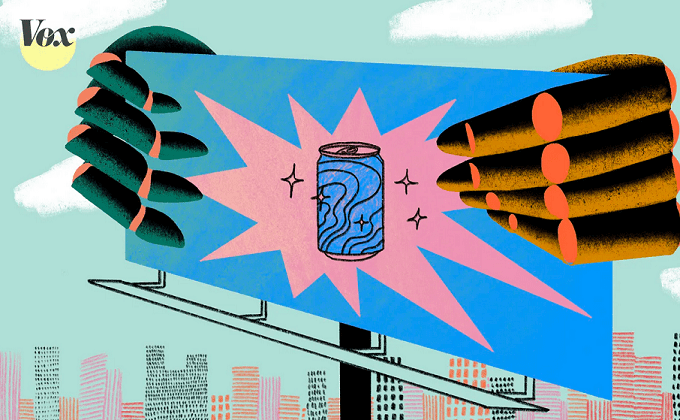
Feature Image Credit: At Cannes Lions advertising festival in 2023, AI dominated the conversation.Paige Vickers/Vox
Shirin Ghaffary is a senior Vox correspondent covering the social media industry. Previously, Ghaffary worked at BuzzFeed News, the San Francisco Chronicle, and TechCrunch.
Sometimes you need some help but you’re not sure who to ask. Your entrepreneur friends are busy, you’re not booked in with your coach for another week, and you’re not convinced your best friend from school will understand your business challenge. How can you get those nudges in the right direction without having to wait?
More often than not, we don’t need to be taught, we need to be guided. The best business coaches know that their entrepreneur clients probably have the answer, they just haven’t asked the questions that retrieve it.
What if an AI model could be trained to ask those questions? What if you could, confidentially, tell an AI model your problems and it could guide you through to solutions, directing its responses and encouraging you to think hard, consider pros and cons and discard options in favour of the way forward that’s right for you?
As AI coaching gets more advanced, test it out with ChatGPT. While it won’t give you a business coach based on the work of a real business owner that inspires you, it can be trained to hold space and encourage you to think for yourself.
Prompting a large language model (LLM) to coach you
Configured with the right words, you can hold a back and forth conversation with ChatGPT or another LLM, as if you were chatting with a real person. Set it up by this starter prompt:
“Hi there! I’m seeking guidance as I navigate my business journey, and I’d love to engage in a conversation with you as my business coach. My business is [briefly describe your business or business idea], and I’m facing some challenges in [mention specific areas or issues]. I believe your expertise can help me gain clarity, develop effective strategies, and overcome obstacles. Can we engage in a back-and-forth conversation where I can share more details about my business, and you can ask questions, confront my thinking and find the root cause of some of my challenges?”
Set the scene by completing the square brackets, then send the prompt and wait for a response. ChatGPT will say it’s ready to begin the conversation, then you can open your floodgates and chat away.
It’s a good idea not to disclose very specific information that can identify you or your business. Keep it anonymous or keep it vague, but give enough detail for ChatGPT’s questions to be useful. Once you’re on a roll you can paste the responses into your files or make a note of the next steps for taking action.
Turn ChatGPT into your personal AI business coach with this powerful prompt. getty
Will AI replace business coaches?
For artificial intelligence to replace coaches, it has to be welcomed by clients. Some are up for giving it a go, but others aren’t sure about the effectiveness of an AI coach and think they will miss nuances like body language and tone.
Regardless of whether coaches are safe from artificial intelligence, they can use it themselves. They can utilize AI-powered coaching to keep logs of their client conversations so a model can suggest new questions, lines of enquiry, or spot patterns they didn’t see. They can expand their content into different formats in a few clicks, they can get ideas for how to attract new clients and how to coach existing clients more effectively.
Even if you’re not convinced that AI coaching can replace in-person coaching, consider that it could supercharge personal development compared with journaling or introspection. At the moment, you write your thoughts and questions into your journal but it doesn’t talk back. You ponder your next move and challenges in your head, but might not reach any conclusions. A back and forth conversation, instead of journaling or pondering, could lead to better breakthroughs on a grander scale.
You’re not asking ChatGPT to solve your problems, you’re asking it to ask you questions so you can solve them yourself.
Use this simple yet powerful prompt to configure ChatGPT to become your AI business coach and see if the practice works for you. While it might not replace the work your real coach can do, it might tide you over until your next session. Use the language model to your advantage and unlock your next level.
Founder of Coachvox.ai – we make AI coaches. Forbes 30 under 30 class of 2017. Post-exit entrepreneur and author of Ten Year Career. Competitive powerlifter and digital nomad.
Are you looking for ways to expand the online presence of your local business? Want to learn some clever social media tactics to find more local customers?
The team from Idunn share their social media tips in this infographic.
Is your brand’s survival tied to social media? Why relying on such platforms may be risky and how companies like Lush and others are navigating this terrain.
The Gist
Social media marketing is evolving. Brands need to keep pace, even with economic challenges and overstretched social teams.
Vanity metrics and low ROI won’t hold up for much longer. It’s time for brands to rebalance the role of social media in their marketing strategy.
New opportunities are emerging.Brands are exploring the intersection of social commerce and influencer marketing to amplify content and generate revenues.
While social media is undoubtedly a crucial piece of brand marketing, building a social-media-dependent marketing strategy is akin to building your house on rented land. In the recent past, brands such as Tesla, Lush, Bottega Veneta and pub chain Wetherspoons, all large brands, have claimed to have gone “off” social media. And while that doesn’t quite mark a trend, it’s a timely reminder for all brands to reconsider the role and relevance of social media in their strategy.
Here’s why.
In many ways, mainstream social media is becoming increasingly noisy, cluttered and distracting. As brand content becomes more performative, audiences seek more authenticity and transparency. In general, there is a higher awareness of issues around personal data — and lower trust in the credibility and accuracy of anything on social media. Creating content that can stand out is more expensive because audiences expect slicker productions. And yet, most content on social has the shelf life of an avocado.
Walled gardens are making it harder and more expensive for advertisers to access audience data, and organic content is at the mercy of obtuse and unpredictable algorithms, not to mention owners. Brands have less control over negativity, political narratives and regulatory agendas. And AI is making content creation both easier and more difficult.
That is a lot going on! The challenge, said Meg Casebolt, founder of Love at First Search, is that social media is becoming just too unstable to be the primary marketing strategy, especially for smaller brands.
But that’s not all. Younger audiences — the largest consumer base for the next several decades — are tuning out of “mainstream” social platforms, preferring instead a more fragmented and private portfolio of social channels and messaging apps. In 2022, while TikTok, Snapchat and Insta made the Top 3, none enjoyed more than 30% of mindshare.
Gen Z approaches product discovery and brand engagement differently. They don’t want to be marketed and sold to, preferring instead to be involved and participate as brand co-creators, not just passive consumers. This means brands need to create more ad-free, intimate, and community-focused conversations on the various platforms that audiences are on. Super commercial splashes on mainstream social media may just not land.
Moving On: Conscious Uncoupling, or an Outright Separation?
No doubt what’s worked in the past is not going to work anymore. But leaving social media would be a knee-jerk reaction. With 90% of the US population on social media, brands cannot “just leave.” In fact, 96% of business leaders say investments in social media continue to be a must.
Instead, brands, large or small, have to be smart about where and how they spend their time and resources based on consumer behaviour, said Jen Spencer, CEO of digital agency SmartBug Media. With an average of 32% of marketing budgets spent on social media, brands are refocusing their social media strategy to adjust for current realities and reengineer why and how they use social media to achieve not just engagement, but also ROI and revenues in a stressed economic environment.
In this context, two of the best opportunities lie in social selling and influencer marketing. Let’s take a closer look.
Social Selling
Most brands see a lot of engagement, but sales are driven by social commerce, visual search and referrals, said Spencer. Lush, a handmade cosmetics company, made the decision to exit social, said Europe-based social media consultant and industry insider Matt Navarra. To leave Meta-owned channels and TikTok would likely have had a significant commercial impact in terms of product discovery, customer service, and general advertising reach and engagement. However, it was a hit the company was willing to take because the move aligns with who it is as a brand and may even strengthen its appeal.
It’s worth noting, however, that though Lush’s recent campaigns have encouraged customers to “be somewhere else,” the group, which suffered losses of $54 million in FY21, scored a pre-tax profit of $34.8 million in FY 2022. One factor could be its doubling down on digital website and app sales.
Is your brand’s survival tied to social media? Why relying on such platforms may be risky and how companies like Lush and others are navigating this terrain.
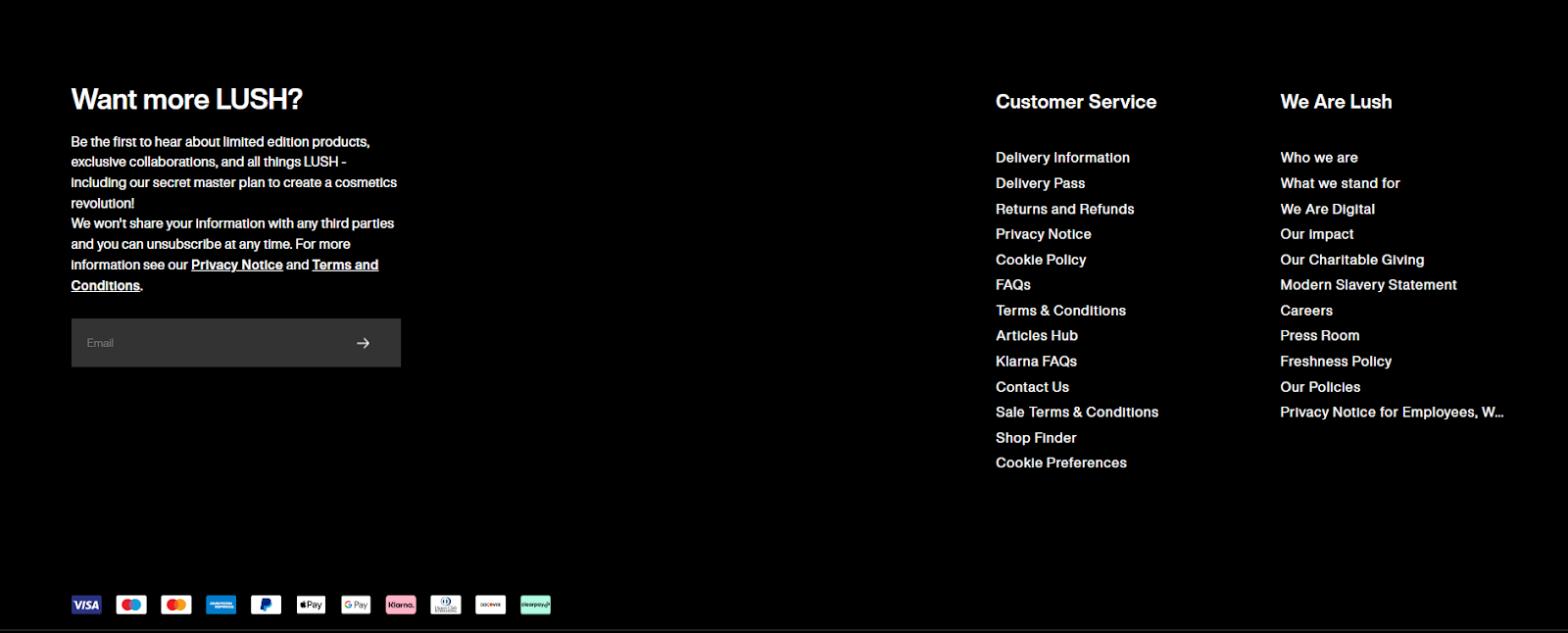
Payment options — not social media icons — line the edges of Lush’s website footer.
Influencer Marketing
Bottega Veneta, an Italian brand specializing in leather handbags and ready-to-wear fashion, may have gone off social media too, but it, like Lush, has doubled down on social media influencer marketing, said Trista Walker, certified customer experience professional (CCXP), president and CEO at creative agency Baldwin & Obenauf, Inc. There are two advantages to this strategy, she said. First, a wide net of influencers does the heavy lifting of keeping up with trends and staying on top of trending channels and platforms, as well as content creation. Second, this creates a layer of brand safety by allowing brands to be one step removed from the platforms directly. “For instance, one of our Fortune 100 clients went dark on Facebook for over a year due to brand safety concerns in the aftermath of the Cambridge Analytica issue and related concerns,” said Walker.
Social media is here to stay, but with usage fragmenting ever more, brands could explore new ways to leverage influencer marketing, said Navarra. After all, while there are over 128 social media platforms in 2023, not counting private social networks and chat apps, close to 50% of companies report having only between two-to-five people working on social media. Gen Z audiences — about 61 million users in the US alone — are spreading themselves across many more than three-to-four platforms at any one time. They are more likely to use multiple smaller, less-known social media channels at various stages of life for various purposes.
Brands, Navarra suggested, need to make their content super sharable to these multiple platforms. Two opportunities that add a new dimension to influencer and ambassador-led marketing, he suggested, are user-generated content and employee-led content on social media. As AI-created content takes over social feeds, brands could leverage their human side by mobilizing employees and customers themselves to build a meaningful, trusted social media presence.
On the other hand, Spencer also sees the use of interactive chatbots on social media as an opportunity to create highly personalized experiences. Brands should think about how to align chatbot-powered interactive social experiences at scale, with authentic human (influencer and employee) powered initiatives that drive trust and credibility.
The Hamster Wheel Isn’t Slowing Down
There seems to be no end in sight for the text, audio, video and soon, AR/VR content-creation hamster wheel that social media has become. The number of channels and platforms will increase, usage will fragment more and trends will continue to change faster than any social media team can keep up.
One smart way to combine the power of influencer marketing with social commerce, said Spencer, is livestreaming sales events with influencers and ambassadors. Perhaps even employees. This is a revenue-focused trend that will grow in 2023.
A better understanding of how people search and discover products on social media will also help grow social commerce by revealing new opportunities to leverage influencers. It will also be interesting to see if visual product search and social shopping — already a big deal in Asia — will also grow in Western markets, added Navarra.
Social media isn’t dying, and neither is consumer interest in it. Rather than cutting back, investing in a flexible, responsive influencer marketing strategy, combined with the right social selling strategy could be the key to staying relevant in the social media kaleidoscope.
Chitra is a seasoned freelance B2B content writer with over 10 years of enterprise marketing experience. Having spent the first half of her career in senior corporate marketing roles for companies such as Timken Steel, Tata Sky Satellite TV, and Procter & Gamble, Chitra brings that experience to her writing. She has authored over 500 articles, white papers, eBooks, guides, and research reports on customer experience, martech, salestech, adtech, retailtech, and customer data and privacy. She holds a Masters in global media & communications from the London School of Economics and Political Science and an MBA in marketing. Connect with Chitra Iyer:
The recent Cannes Lions International Festival of Creativity revealed how artificial intelligence will force us to find new ways of seeing if we’re to adapt to this new paradigm shift.
“Whenever the word AI was mentioned in a case study, the jury cringed.”
Back in 2013, right after Cannes Lions, I wrote an op-ed piece for Fast Company called “The End of Advertising As We Know It,” based on what I was observing then. I described a paradigm shift in marketing that I thought would occur because of technological, societal, and behavioural changes.
These changes didn’t kill advertising. Instead, they forced it to mutate over time.
Ten years on, advertising isn’t advertising anymore. This year, much of the award-winning work at Cannes Lions wasn’t what one would consider ads in the traditional sense. They were cloaked in or disguised as something other than ads. “Knock Knock” for Korean National Police Agency, “The First Digital Nation” for Tuvalu, or “Runner 321” for Adidas were grand prix winners of various categories—but to call them ads or campaigns would be a misnomer. “Advertising needs a new name,” Scott Galloway told a packed auditorium at the Festival.
The landscape has shifted so much that an individual can now have more sway than an institutional brand. A brand can also be lifted up to new heights or brought to its knees by an individual.
It may be the end of brands as we know them.
Based on what I have observed at the Festival and elsewhere, here are a few principles that can guide the next paradigm shift.
From Organizational Scale to Functional Speed
Galloway writes in his blog post that “[American football] Hall of Fame player Jerry Rice wasn’t that fast, but he had ‘functional speed,’ the instincts to accelerate or decelerate when it mattered most.”
Take Adobe, for example. In just a few months, it introduced Firefly, a prompt-based generative AI tool incorporated within Photoshop. Adobe, an old and possibly stale software giant, accelerated when it mattered, demonstrating its relevance as a brand.
It is important to note, however, that functional speed doesn’t belong just to tech giants like Adobe.
When I asked my friend Pum Lefebure, cofounder and chief creative officer of Design Army, about her recent AI-generated campaign, “Adventures in A-Eye” for Georgetown Optician, what struck me most was the speed.
[Image: Design Army for Georgetown Optician]
For this, instead of briefing her team to come up with it, Pum used Midjourney to produce the concept by herself. In a week or so, she presented nearly finished work. A few weeks later, the campaign launched. Typically, the process to develop something of this caliber would take several months. AI allowed her to collapse the process from four months to four weeks.
Moving forward, AI will enable companies of all sizes and individuals to scale and speed themselves in ways that weren’t possible before, rendering organizational scale less praiseworthy than previously.
From Transaction to Conversation
One of the key touch points between brands and people online is e-commerce. The entire process—from product selection to payment—is transactional. However, when asked what people value most in their customer experience and will pay more for, “friendly service” and “knowledgeable service” score as high as “efficiency” and “easy payment.” Conversations are highly suited for delivering friendly and knowledgeable services.
It’s already possible for us to have fairly natural conversations with AI on just about anything. In the next few years, it will be entirely possible for machines to provide friendly and knowledgeable services that are as good as, if not better than, those provided by humans in the form of conversations.
Aim for effectiveness, not just efficiency, in every transaction with your customer.
From USP to POV
Not too long ago, Ayako Tanaka, a Japanese fashion Instagrammer with a modest following of 168,000 followers, sold close to $1 million worth of products she curated during a two-day pop-up event. That’s the kind of revenue that a major global brand would sell in a day or two at its flagship store.
Major brands may have superior products with better unique selling propositions (USP). However, it’s Tanaka’s POV that followers are attracted to and buying into, resulting in this kind of sales figure.
Many brands try to express their point of view. Patagonia proclaiming that Earth is its only stakeholder is one excellent example, while Mastercard Europe helping Ukrainian refugees with “Where to Settle”—another piece of work winning big at Cannes—is another instance of a company putting money where its mouth is.
On the contrary, when a brand doesn’t stick to its POV, it can be far more damaging than it would have been a decade ago, as we saw in the case of a transgender influencer and a brand that relied on her but didn’t support her.
The mistake wasn’t not having a POV. Rather, it was not sticking to it.
From Generative AI to Human Touch
While AI was by far the dominant topic in Cannes, there was little evidence that it has materially made the work better. When AI was mentioned in the context of creative endeavours, people were quick to mention efficiency, not quality or originality. That’s an Achilles’ heel for creativity.
“McEnroe vs. McEnroe” for AB InBev’s Michelob Ultra is one example of the use of AI that wasn’t possible five years ago. It takes past data in order to regenerate the moves of tennis player John McEnroe from the past and lets the real McEnroe play against himself. Humans, not AI, came up with a seemingly impossible idea and used AI to make it possible.
PJ Pereira, an old colleague of mine and AI optimist like me, says, “The last turn [in the creative process] needs to be yours,” referring to what takes work from good enough to great.
In 2016, AlphaGo beat Lee Se-dol, the South Korean Go champion, 4 to 1. In Game 2, the AI program surprised Lee—and the world—with its so-called move 37, which humans thought was a mistake at first but turned out to be a decisive move in beating Lee. “This move was really creative and beautiful,” Lee would later say.
In the one game where Lee beat AlphaGo, it was his “hand of God” play, the 78th move, which perplexed the AI program. In a sense, the machine gave Lee “a new way of seeing the game,” as depicted in one scene of the documentary, AlphaGo.
In sum, AI might not kill brands—or creativity for that matter—just yet. However, it’ll force brands to mutate over time, and us to adjust our ways of thinking and working.
Not only has AI collapsed the space between your idea and execution, but so has the influence between institutions and individuals. Building a brand has now become accessible to anyone and everyone. That is why it also has gotten that much more competitive. Fiercely so.
When we don’t hear the mention of AI anymore, that’s when we know technology has diffused itself throughout our industry, whatever that may be.
Rei Inamoto is the founding partner of I&CO, a global innovation firm that works with forward-thinking leaders to accelerate growth and shape the future of their business.
Generative AI (gen AI) was born on November 30, 2022, with the release of ChatGPT, and it’s been moving 100 miles an hour ever since, drawing in 100 million people and counting. As new and surprisingly powerful as gen AI is, we can already see how companies will incorporate gen AI capabilities into their businesses’ strategies and operations. Our experience with two earlier, explosive technologies show you how.
The BYO explosion of the late 2000s taught us how to incorporate employee-led disruption. We learned that when employees brought personal technology to solve customer and business problems. We empowered, guided, and protected employees and the firm while taking advantage of the new value that personal technologies in business brought.
The mobile, social, original internet explosions taught us how to respond to and take advantage of customer-led disruption. We built mobile apps to help customers in their mobile moments of need; we adopted social media communications to improve engagement and collaboration; and we tooled up to take full advantage of the business models shaped by the internet.
Technology executives should prepare for generative AI to follow both paths and sprint into your business through four doors:
Bottom-up. Some of the 100 million people already using generative AI work for you. As you learned in the BYOD era, employees will adopt any tool that makes them more successful. The hyperadoption of gen AI leads to rampant BYOAI adoption. You can’t stop them, not fully. Your job is to put up guardrails that protect the firm’s IP and teach the skills of responsible AI. You need guardrails because your company IP is at risk. Just like with the original onslaught of BYO, you need to tune in now and empower, guide, and protect employees and the firm. Sharpen your listening tools and network sniffers. Revisit and promote your responsible AI policies ASAP. Your response to BYOAI will shape your top-down approach to gen AI, because employees will have elevated their robotics quotient and will be ready to go.
Top-down. Gen AI will unlock the value of 10-plus years of investments in data, insights, and artificial intelligence, including machine-learning models. This is where your investments in trusted AI will pay off, because you’re ready to use them. Already, the hyperscalers and software-as-a-service platform providers have announced and will trickle release gen AI-infused applications. Already, service providers and you are using TuringBots to generate and test code. Already, you’re incorporating marketing content generated from text prompts to hyperpersonalize engagement. And soon, you’ll overhaul your usability with text-based interfaces to business and analytics applications. Every part of your business will have ideas on how to use generative AI, mostly to optimize, automate, or augment something. Some will be great. Pick the ones that are easiest, safest, and most practical to deploy first.
Outside-in. Customers’ expectations for what gen AI can do for them are rising faster than anybody can keep up with. Every day, there is a new application using gen AI to do something useful. The latest I saw was a “free” cover-letter generator using GPT-4. (“Free” means that they’re accumulating your job preferences to resell as insights.) Microsoft triggered the search wars with OpenAI in Bing, and Google is now full-on engaged with Bard. Already, in the US, 35% of Gen Zers and 25% of Millennials have used bots to help buy hard-to-find inventory. That bot habit will be supercharged with gen AI, raising expectations even higher. Your job starts by anticipating where customers’ adoption will directly affect your company. If a customer has a better idea of your product landscape than your salespeople, that’s not good. If they are getting gen AI-powered customer care from a competitor and not you, not good. If your competitors’ stuff is in a next-generation recommendation engine and yours isn’t, that’s not good. Just like with mobile, your response will be to ramp up your customer-facing gen AI capabilities inside-out.
Inside-out. As you move through the gen AI opportunity thicket, you will quickly identify ways to help customers and deliver more value with your own gen AI-infused applications. Customer care or empowering frontline employees will be an early payoff, we expect. But you’ll find opportunities to streamline customer onboarding, hyper personalize engagement, provide better customer self-service, and stimulate a new round of value creation like what was triggered by mobile apps. Sort the scenarios based on the readiness of your data, the impact you will have, and your confidence that you can anticipate and manage the costs that go along with gen AI licensing and computing. The technical architectures are still in flux, but we believe that it will incorporate layers of intelligence — some of yours, some from others, and some public — protected by control gates for inputs and outputs and piped together into gen AI-infused applications. This “layers, gates, and pipes” approach will help you scale, take advantage of all the capabilities, and give you intense visibility into how it’s going and where the costs lie.
By Ted Schadler
This post was written by VP, Principal Analyst Ted Schadler and it originally appeared here. Follow me on Twitter or LinkedIn. Check out my website.
When I say that creative agencies are killing creativity, don’t get me wrong. I’m not trying to set up an all-out war with particular agencies. It’s not about agencies that fall into the ‘creative’ category per se. It’s the term ‘creative agency’ itself.
It’s a conceit invented to save the ‘ad’ agencies of old from crumbling under the up-surge of digital. In theory, it moved them away from being the TV agency in the mind of marketers, allowing them to maintain a bigger piece of the pie.
Likewise ‘smart marketing’: for some it’s a fair title, but for others it’s been a mask. An excuse to pitch the ‘we do digital, too’ idea when really, they’re creating a 15-second cut-down for social because digital is a loss leader to the bit they really want, the 60-second TV or cinema ad.
What does it mean to be creative?
The term was invented at a time when the more interesting and creative work was happening in non-traditional media. And so, a land grab was made on the ownership of creativity. As a result, every other media channel now seems to operate in service of proving the value of those big shoots.
Print and radio have become devalued and frequently lacking creativity. The industry has created an environment where budgets and effort are being funnelled so much to one medium or production that we’re tying our hands and cutting off huge opportunities for brands to shine.
Digital has all too often been demoted to basic social cut-downs of the 60-second film, with little consideration of how well it suits the behaviour of that channel.
I’m not going to decry TV as a medium, and I’m not going to argue against the many cases made over recent years for the value of brand building or fame, and the contribution TV makes to that.
It’s important that we stick to the true meaning of creativity. As Paul Feldwick put it, it’s “the artistry and skills that make things popular and distinctive” and not “innovation or originality for its own sake”. But, nor is it the sole pursuit of one type of agency, and one form of creativity from very singular minds.
It’s important that we stretch to find (or craft) the new whether that’s in film or other mediums. The problem is that, currently, it feels like some creatives start with ‘where would we like to shoot next?’ and not ‘what’s the idea?’. Where there is an idea there sometimes seems to be little challenge as to ‘how do we express this best?’.
There are plenty of examples where digital- or experiential-first ideas have created huge fame. They were admittedly fewer and further between, but we never harnessed and made repeatable those instances before resorting back to the safety of the old proven mediums.
The problem
Big networks have gone on to hoover up creatives from a broader more diverse creative background but then create a culture where those creatives are also drawn toward writing the big scripts, they’re rewarded more for that, and it’s held in higher regard.
It shouldn’t be down to the creative teams to fight to broaden the output; that’s the role of agency leadership and the clients. The direction and brief from the start should be to look in every corner to unearth ideas.
I spoke to one senior creative who had recently left a big network and was excited at the opportunity to “do different stuff”; to not be hemmed in by this culture. On one hand, it’s a symptom of the creative drain. But on the other it’s wildly damning of the industry’s standards. Creatives used to leave agencyland when they couldn’t live up to its demands anymore, not the other way around.
It’s also in part the power dynamic created by the term ‘creative agency’. Ownership of creativity by a small, core group whose interest is really in a limited range of mediums will always create a conflict of interest.
The solution
It’s more important than ever both for the retention of creative minds and also for the creation of the best work that we re-introduce tension in the industry, and that clients demand it. Not fewer/larger networks taking up the larger share of budget, but more open and equal bites at creativity, agencies encouraged to challenge each other. Helping make us think more broadly and freer. Ultimately, creative minds with a focus once again on idea first before medium.
And there’s the crux: ideas should own the title ‘creativity’. Not companies, not media channels; ideas. And competition for the best idea is the only healthy way.
Feature Image Credit: Creatives aren’t challenging themselves enough, according to True’s Nick Horne / Ryan Quintal


:format(webp):no_upscale()/cdn.vox-cdn.com/uploads/chorus_asset/file/24759577/GettyImages_1499728712.jpg)
:format(webp):no_upscale()/cdn.vox-cdn.com/uploads/chorus_asset/file/24759580/GettyImages_1500374493.jpg)
:format(webp):no_upscale()/cdn.vox-cdn.com/uploads/chorus_asset/file/24759559/GettyImages_1499988637.jpg)
:format(webp):no_upscale()/cdn.vox-cdn.com/uploads/chorus_asset/file/24759590/GettyImages_1499864947.jpg)
:format(webp):no_upscale()/cdn.vox-cdn.com/uploads/chorus_asset/file/24759603/Google_Robert_Wong_on_stage__1_.jpg)
:format(webp):no_upscale()/cdn.vox-cdn.com/uploads/chorus_asset/file/24759586/GettyImages_1258986119.jpg)
:format(webp):no_upscale()/cdn.vox-cdn.com/uploads/chorus_asset/file/24759593/GettyImages_1500256338.jpg)





By Rei Inamoto