Author

editor

Browsing

By 

And the logo is deliciously retro.

McDonald’s has been sneakily building a brand new spin-off restaurant with an out-of-this-world theme. The new establishment named ‘CosMc’s’, has appeared in Bolingbrook, Illinois and until now has been kept under wraps – but recent images of the new building have garnered a mixed response online.

As of now, it’s unclear how CosMc’s will compare to McDonald’s existing chains but from the theming alone, it looks like we’re in for a blast from the past. This new design is certainly a change from what we’ve seen before, but McDonald’s iconic golden arches still remain one of the best logos of all time.

As you can imagine, the design of the mysterious CosMc’s is suitably space-themed, with a deep blue exterior and McD’s yellow accents (with a cameo from the golden arches of course). The CosMc’s wordmark logo is perhaps the biggest change from McDonald’s branding, featuring retro-inspired curved text that gives the restaurant a nostalgic appearance.

If you’re familiar with the intricate world of McDonald’s lore, you may recall the classic character behind the new restaurant design. CosMc was a fleeting side character featured in various McD’s ads in the late 80s and 90s – Ronald’s extra-terrestrial pal who’s arguably lesser known than other McDonald’s characters. After the success (and trauma) of the latest Grimace shake trend, do I spy McDonald’s attempting to revive another forgotten friend?

Feature Image credit: Tony Baggett via Getty Images

By 

Natalie is Creative Bloq’s staff writer. With an eye for trending topics and a passion for internet culture, she brings you the latest in art and design news. A recent English Literature graduate, Natalie enjoys covering the lighter side of the news and brings a fresh and fun take to her articles. Outside of work (if she’s not glued to her phone), she loves all things music and enjoys singing sweet folky tunes.

Sourced from CREATIVEBLOG

By Simon Harwood

Brand fame is still achievable in a new communications era

This year marked a definitive turn in the U.S. media narrative, as time spent with online video overtook TV for the first time. Americans logged an average 3 hours and 11 minutes a day consuming online video, compared with 2 hours and 55 minutes watching television. The era of captivating mass audiences with communal media moments thus appears to be over.

Forty years ago, nearly 106 million Americans united for the M*A*S*H series finale, representing 59% of the adult population. The recent passing of Matt Perry struck a collective chord, perhaps nostalgia for a special type of parasocial relationship with TV icons woven into the collective consciousness of millions. User-generated content now accounts for 39% of all content consumed; meanwhile, nearly half of YouTube viewing takes place on television sets, more than any other individual TV outlet including Netflix.

We’re hurtling toward a kind of media singularity where all media melds into the digital domain and the term “digital” itself becomes meaningless. This landscape is often characterized as one of context collapse—a breakdown of communal meaning into multiple abstract fragments, forsaking shared experiences for insulated echo chambers. A sense of detachment looms, leaving us feeling alienated and adrift, with a loss of what the Germans call gemeinschaft, a sense of community and common ground.

For mass consumer brands, this is a big problem. Not merely in terms of reaching audiences, but in crafting the shared meaning that underpins the bedrock of their value.

People simply don’t have the time to assess thousands of brand choices every day. So what others say, use and buy has a huge impact on making these choices easier. Simply put, people like brands that they know other people like—a well-known beer brand, for example, is going to be a safer choice when buying for guests at a party versus a niche brand few have tried.

Meanwhile, hypertargeting threatens to scatter us further. Yes, it will be possible in the future to ask a machine to conjure a personalized, 10-part HBO miniseries about your favourite childhood toy solving mysteries in a Nordic noir style, but just because you can create individualized content doesn’t mean you should.

Brands aren’t solo constructs; they have shared meaning across many minds. And building brands at a micro level is impossible—communicating to many utilizes “costly signaling,” with perceived high-expense media to show that the seller has a reputation worth investing in, while targeting one person outside of public scrutiny invites suspicion.

Fewer mass moments and the allure of personalized targeting are reflected in the marked decline in advertising effectiveness in IPA case studies observed in Binet and Field’s analysis since 2012.

Fame is still the answer

Let’s not abandon hope prematurely. As the advertising great John Hegarty said: Principles remain, practices change.

Binet and Field define fame-driving activities as any activation that sparks conversation, whether in the digital realm or the comfort of one’s living room. Fame remains the key to unlocking incremental sales, profitability and sustaining price premium, among other business effects. Advertisers need both types of fame: overarching (being known by many) and resonating (being desired by many).

The internet amplifies the reach of those who ascend its ranks. Take Tube Girl: Sabrina Bahsoon’s video catapulted her overnight from the London Underground to the echelons of Paris Fashion Week and partnerships with MAC Cosmetics and Bentley.

Memes suggest a culture that desperately seeks shared community. Some are born from cultural moments mixing with the innate weirdness of the internet—see Kendall Roy’s transformation into social media’s favourite “babygirl,” or “He’s just Ken” fuelled by the all-conquering Barbie phenomenon this summer. Others, such as the Anakin-Padme meme, are more slow-burn, accruing widespread meaning over time until they hit a critical mass where universal comprehension allows for subversion and playful riffing.

Internet culture has become mainstream culture—”As Seen on TV” has been replaced with #TikTokMadeMeBuyIt.

How to be internet famous

A key driver of fame is standing out from the sea of conformity. Algorithms reward arresting and distinctive content with eyeballs, and consumers reciprocate with their wallets further down the line.

In May 2022, 91% of those aged 18-25 in the U.S. agreed, “There is no such thing as mainstream pop culture anymore.” But the question was just a tiny bit leading. After all, we’re also told Gen Z “prefer brands with a sound ethical purpose” in a world where Shein exists.

It’s a paradox that culture among young people is both more complex and more homogenous than previous generations. The distinct cultural codes, music, dress and style of different subcultures—goth, punk, techno, grunge, emo, indie—have been replaced by a more fluid, multifaceted outlook, dipping in and out of different interests and passions like a cultural magpie.

Young people arguably now exist in a more globalized, shared culture, with more common ground between them than is assumed. This means new ideas can be quickly shared across borders to millions of people. However, it is much harder to build mass reach and consensus across generations.

The key to relevance starts with listening but not simply reacting to every passing trend, which starts with using social listening tools to identify previously untapped contexts and conversations that align with what they have to say before making their move. Brands need to get strategic with what they do and don’t try to be a part of.

Culture mapping your audience’s interests is a good place to start investigating areas of potential. However, this also means brands need to get comfortable with appealing to one subculture at a time and scaling up their commitment quickly once they get a foothold with any particular interest group.

As the gatekeepers of culture, creators offer a valuable shortcut to get started. But brands need to tread carefully to establish their credentials in the space. Viewers know the score with paid promotions, and any partnership that feels off-key is damaging to both brand and creator.

Beyond authenticity, brands should signal the level of trust with creators to cement the brand meaning—for example, allowing them to play with their distinctive brand codes in refreshing new ways, demonstrating a level of integration far beyond mere product placement.

Keeping the brand before the public

Shared meaning and brand fame are still desirable, and achievable, in 2024. But it requires a shift from winning share of voice within an enclave to winning a share of mind in the broader culture. Each channel still boasts a unique strength: Out of home stands as the last truly broadcast bastion; cinema leverages its immersive scale; social media thrives on the sharing and remixing of culture. Online video, contrary to the naysayers, rivals television in eliciting the emotional resonance essential for enduring brand-building.

TV will still be able to charge a considerable premium for the rare moments when it can recapture the shared glories of the past. This year’s record-breaking single-channel viewership of 115 million tuning into Super Bowl 57 is testament to the enduring allure of communal experiences. But the rewards for brands that can maintain visibility, embrace public-facing narratives, avoid the siren call of hyper-personalization and sustain cultural relevance are substantial.

Collective moments stand as islands of common ground in the vast oceans of content. The pursuit of these shared moments is paramount for the enduring health of mass-market brands.

Feature Image Credit: CSA-Printstock/Getty Images

By Simon Harwood

Simon Harwood is global effectiveness director at Billion Dollar Boy.

Sourced from ADWEEK

By Walker Smith

The results here come from a 2016 Kantar Knowledge Point report about five situations in which Kantar data show bad advertising can help competing brands. In other words, spending your ad dollars on behalf of the competition, not yourself.

The five situations:

  1. Similar brands. (When your doppelgänger gets all the credit.)
  2. Similar branding devices. (Imitation is sincere flattery but bad branding).
  3. Parent/sub-brand confusion. (Too much family resemblance.)
  4. Misattribution to market leader. (The big wheel gets all the grease.)
  5. Misattribution to everyone. (Shining a light on everybody.)

To put it another way, these are situations in which a brand fails to create enough difference. Difference builds brand value, but difference is a matter of communication, not product. It is what people believe about a brand—so advertising is critical to difference.

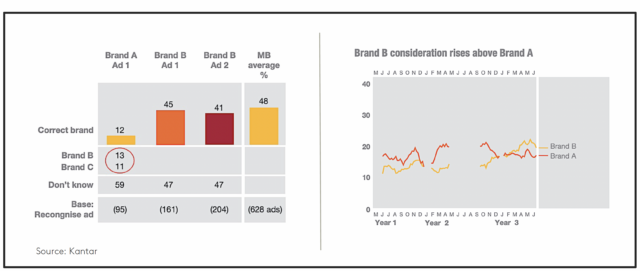
A Multi-Faceted Problem. Bad advertising hurts a brand in many ways. These charts are drawn from Kantar client work on behalf of Brand A, a mobile phone brand. In this category in the markets of interest at this point in time, many brands overlapped in terms of imagery and benefits. Brands A and B, especially. As part of diagnosing what was going on with Brand A, Kantar assessed its advertising. On the left, it’s clear that the ad was bad in multiple ways. To begin with, it failed to break through the attention span of 59 percent of consumers. Then, among those reporting some sort of recognition, just as many attributed it to other brands. Contrast that with the advertising of Brand B, which was working at roughly the level to be expected. However, Brand B had been off-air for a long time, yet, as seen on the right, its reported awareness went up. Courtesy of Brand A’s bad advertising.

How Bad Advertising Helps Competitors

Motivating, Too. What’s examined in the Kantar report from which these results are drawn is memorability, or the power of advertising to bring attention and recognition to a brand. That’s important, but not nearly enough. If the difference communicated—and recognized and properly attributed—is not motivating, then all is for naught. Difference alone is never enough. It’s never a matter of mere difference, even though many discussions of difference talk about it in isolation. It must be a difference that is motivating and meaningful. It must give people a compelling reason to buy. It must solve a need in a unique way. Difference could be trivial. Which is the unexamined part of the results shown here. Brand A’s advertising could be bad because the difference it is communicating is so frivolous that it is forgettable, thus randomly remembered, if at all. Difference must be motivating, too.

Difference In The Doing. High-level plans have to be right, but in the end it all comes down to execution. A lot of emphasis is placed on strategy in marketing. It’s the main focus of most marketing textbooks. It’s the big ideas we like to get on panels to discuss at conferences. It’s the way tales are told and reputations are made in business media. But strategy succeeds or fails on execution. This applies to building difference as well. In whatever way brands are designed and built, if difference is lost in the advertising or other communications, then the strategy fails.

Not because the strategy was bad, but because the strategy was badly executed. This is one reason why there is so much heat in the debate about difference vs. distinctiveness these days. The latter is little strategy and all execution. But there’s a confusion. Just doing things matters, but doing things that push strategic difference will always matter more.

By Walker Smith

Sourced from Branding Strategy Insider

By Alex Quin

While discounts and promotions can provide a temporary boost in sales, their long-term sustainability is questionable. Not only do they decrease revenue, but they also don’t necessarily foster genuine brand loyalty.

As a seasoned professional in the digital marketing industry, I’ve had the opportunity to collaborate with a variety of clients, helping them to strengthen their brand loyalty initiatives. In this article, I aim to offer valuable insights and strategies on how to nurture authentic brand loyalty in the highly competitive modern marketplace. After a decade of experience in my agency, I’ve learned the importance of marketing not only for the first sale but also the second, third, fourth and beyond.

Understanding Brand Loyalty

Brand loyalty is more than repeat purchases; it signifies a deep-rooted emotional connection between a customer and brand. This bond goes beyond transactional behaviours, reflecting a genuine preference for a brand over its competitors, often driving consumers to advocate passionately for it.

Research has shown that an increase in customer loyalty by just 7% can increase customer lifetime value by more than 85%. Again, the core of this loyalty is emotional connection. Consumers today align with brands mirroring their values, whether environmental, social or ethical, making values-based loyalty essential for meaningful connections.

Why Discounts Aren’t Enough

Discounts can grab immediate attention in a crowded marketplace, but they come with inherent limitations. First, they tend to attract price-sensitive shoppers, who may not return once standard pricing resumes. Additionally, frequent discounts can diminish the perceived value of a brand, causing consumers to question its quality. Discounts not only risk eroding profit margins but can also set an expectation of continual price reductions, leading to unpredictable sales and revenue.

Ingredients For Lasting Brand Loyalty

Exceptional Customer Experience

By providing top-notch customer service, brands can differentiate themselves in a saturated market. Every interaction, whether online or offline, should leave a lasting positive impression. An exceptional customer experience means meeting customers’ needs even before they realize they have them. It’s about making every touchpoint seamless and memorable. Take Amazon, for example. Its easy-breezy return policy is like a breath of fresh air for customer satisfaction.

A smooth, engaging customer experience is not just about meeting expectations; it’s blowing them out of the water. That’s the secret sauce to turning customers into raving fans and brand advocates. Keep it informative and real, and always back it up with the facts.

Personalization and Customization

Personalization and customization are at the forefront of modern consumer expectations. A prime example is Spotify’s “Wrapped” feature, which delivers annual personalized music summaries to users based on their individual listening habits.

This approach from a generic, one-size-fits-all strategy to one that adapts to and reflects the unique preferences and behaviours of each user creates a deeper, more intimate connection with users. Such personalized experiences not only resonate more strongly but also foster greater brand loyalty as consumers feel seen and understood by the brand.

By leveraging the power of personalization and customization, brands like Spotify are able to meet their audience’s specific needs more effectively, thereby enhancing the overall user experience.

Storytelling and Brand Identity

A compelling brand story can humanize a business and create an emotional bond with its audience. By sharing the journey, values and mission of your brand, you’re inviting consumers to be part of a larger narrative. This goes beyond mere purchasing and moves into the realm of authentic engagement and genuine connection.

Community Engagement

Community engagement is about more than social media interactions. Building a brand community where customers can interact, share experiences, and even voice concerns is invaluable.

Engaged communities foster trust and provide brands with honest feedback, ultimately driving brand development and innovation. Furthermore, a tight-knit community can lead to increased brand advocacy and organic growth.

Transparency and Authenticity

Consumers are more informed than ever, and they appreciate transparency and authenticity from brands. Whether it’s being open about sourcing practices, admitting to mistakes, or sharing company values, honesty resonates. Authentic brands build trust through transparency, and trust is foundational for lasting loyalty.

The Key To Long-Term Success

Loyalty can be divided into two primary types: transactional and emotional. Transactional loyalty comes from routine, habit or incentives like discounts. While this type of loyalty can drive repeat purchases, it’s often conditional and can easily shift when a better offer comes along.

Emotional loyalty is deeply rooted in feelings and sentiments. It’s the difference between buying a product because it’s on sale and buying it because you truly believe in its quality, the brand’s mission, or the values it represents. This kind of loyalty is enduring and far less susceptible to external market fluctuations.

While transactional loyalty might deliver quick wins, emotional loyalty promises sustained success. When customers feel emotionally connected to a brand, they not only purchase more but also advocate for the brand, leading to organic growth via word-of-mouth recommendations—the best kind of advertising a business can have.

These groups of customers are also more forgiving of mistakes, provided the brand remains authentic in its response. Essentially, emotionally loyal customers are the backbone of a brand’s stability in the ever-evolving market landscape.

Maintaining Loyalty In Changing Times

The market is ever-changing, driven by evolving consumer preferences, technological advancements and socio-cultural shifts. To maintain and grow brand loyalty, businesses must:

• Adapt to evolving consumer needs. Regularly gather feedback and use it to inform product or service improvements. This iterative process ensures the brand remains relevant to its core audience.

• Innovate. Brands that stagnate can quickly become irrelevant. By continually innovating, you can stay at the forefront of your industry and keep your audience engaged.

• Stay true to core values. While tactics might need to adapt, the brand’s core values should remain constant as consistency in values offers a rock of stability that loyal customers will cling to.

Conclusion

Building brand loyalty in today’s competitive market requires more than just enticing price tags. By focusing on cultivating emotional loyalty, brands can forge deep, meaningful connections with their audience. This not only drives repeat purchases but fosters a community of advocates. By understanding the distinction between transactional and emotional loyalty, brands can tailor their strategies to achieve lasting success.

Feature Image Credit: getty

By Alex Quin

Alex Quin is CMO of award-winning Digital Marketing firm UADV. He is a full-stack marketing expert, global keynote speaker & podcast host. Read Alex Quin’s full executive profile here.

Follow me on Twitter or LinkedIn. Check out my website.

Sourced from Forbes

BY CHRISTOPHER TOMPKINS 

It’s no secret that social media has become a very important part of our lives. It’s not just about connecting with friends and family — it’s also home to brands and creators building communities.

o far, we’ve all enjoyed free, ad-supported social media platforms, but that could be changing. Many platforms have seen their ad revenues drop due to several factors, and now they’re looking to make some changes to their business model.

Enter the subscription-based social media model. Today, let’s explore what this model looks like and how it could change the future of social media.

The problems with ad-based social media

Ad-supported social media platforms are focused on one thing: generating revenue through targeted advertising and sponsored content. Thanks to their large user bases and complex targeting algorithms, ads have made these platforms extremely profitable over the last few years.

However, this model isn’t without its issues, including privacy concerns, prioritization of sponsored content over more relevant content to users, and a lack of transparency regarding user data usage. This leaves many users feeling unsafe on these apps.

In response, Apple released its App Tracking Transparency feature, which allows users to stop social media platforms from tracking them. While this was a great tool for users, social platforms like Facebook announced that they would end up taking a major ad revenue hit as a result.

This was an existential threat to the ad-based social media business model, so it’s no coincidence that they all started introducing paid subscriptions before long.

Snapchat+, X Premium, Meta Verified and YouTube Premium — social media companies created these subscriptions to reduce their dependence on ad revenue. But what does this subscription-based model mean for marketers?

Understanding the subscription-based model

The subscription-based model is a mixed bag for marketers, with some distinct advantages for brands that subscribe and major risks as more users buy in. Let’s look at how this approach changes the digital marketing landscape.

Ads will be less effective — For users, one of the biggest selling points of these premium social media subscriptions is often that they reduce or outright remove ads. It’s great for users looking to free up some space on their feeds, but it could prove to be a major problem for marketers, leading to:

Loss of target advertising will make it difficult for brands to reach their ideal customers efficiently and could limit their ROI. When platforms begin to remove ads from social feeds, brands lose the ability to reach that audience, making it almost impossible for marketers to reach their projected KPIs for paid campaigns.

Increased reliance on organic reach — As audiences become harder to reach with paid ads, brands must rely more on organic reach to connect with them. This could get extremely competitive as it places brands on an even playing field with all other users on the platform. Tactics like influencer marketing will be key to reaching those premium users.

Challenges for small businesses with limited resources — Smaller brands may not have the budget to invest in influencer marketing or sponsored content, meaning they’ll face an uphill battle to reach their audience.

Leverage unique features

One of the upsides to the subscription model? To make these subscriptions worthwhile, social media platforms have a new incentive to develop new features for marketers and creators.

Take X as an example. Before, verification check marks were reserved only for large, reputable accounts. Now, any brand subscriber can verify their account, unlocking longer character counts, formatting features, editing posts and more.

Of course, there’s a dark side to this, too. You may recall a few months ago when TweetDeck, now known as X Pro, became locked behind the X Premium subscription after years of being free for all users.

To stand out from the free versions of their platforms — these subscriptions need exclusive features such as verification, improved content moderation systems, enhanced customization options and more, even if that means making users pay for something that was once free.

The elephant in the room

That’s right, we have to talk about Elon Musk and his place in the subscription-model conversation. That’s because while many platforms have introduced premium subscriptions, X is the only one that seems to be considering charging all users for access. Is that where every social platform is headed?

Short answer… no.

It’s hard enough to convince someone to pay for something that’s always been free. Still, it’s hard to see most users coughing up the cash when that something is X. It’s true that the ad-supported social media model has weaknesses, but it’s still a winning formula for making money.

Beyond profit, there’s also an ethical argument against charging all users for access to the platforms where they communicate. Not everyone can afford to pay a recurring fee for access to a social media platform.

This raises questions about inclusivity and the risk of creating digital divides, where those who can’t afford subscriptions are excluded from online communities — further deepening existing societal inequalities. For better or worse, social media has become a vital part of people’s daily lives.

Any move towards charging users must be carefully considered and balanced with measures to ensure inclusivity and fairness. A subscription-based social media model has the potential to address many of the problems associated with ad-focused platforms, but it also has the potential to create entirely new problems.

The only constant in social media is change, and that’s still true now. Ultimately, the success of such a model will depend on its ability to deliver real value to users and build trust in a more transparent and ethical social media ecosystem.

BY CHRISTOPHER TOMPKINS 

ENTREPRENEUR LEADERSHIP NETWORK® CONTRIBUTOR

Christopher Tompkins is the CEO and founder of The Go! Agency and an internationally renowned expert in digital marketing. With more than two decades of experience, he has turned The Go! Agency into a top-ten marketing agency in Florida and a top-25 digital marketing agency nationwide.

Sourced from Entrepreneur

By

Let’s be real, it’s AI’s (Artificial Intelligence) world and we are living in it. Or at least that is what it seems like recently. Will AI replace your job? Maybe, but probably not. But you could potentially become a much more productive employee thanks to AI. Or maybe you can start leveraging websites powered by AI to help you make money online in a more efficient way.

From ChatGPT to Scribe to Stock images made completely from AI, the world is being taken by storm and it’s time to either ride the wave or get out of the ocean. With that, below are 13 products and tools the use AI to save you hours of work each day. Who doesn’t want that?

13 Websites Powered By AI That Can Save You Time At Work

WriteSonic

We have all heard of ChatGPT by now. And it is great, but WriteSonic puts ChatGPT in the yesterday’s news category. Why? Well, instead of being stuck in 2021, WriteSonic has all the relevant information you need, right now.

CutOut Pro

Cutout.Pro is one of many AI-driven photo and background editing tools. It can save a person time by accurately removing backgrounds from images, which obviously make editing easier and faster. With Cutout.Pro, users can create perfect photo montages, remove backgrounds in a single click, and perform a range of other tasks. It’s a great tool for photographers and the like.

Scribe

Scribe

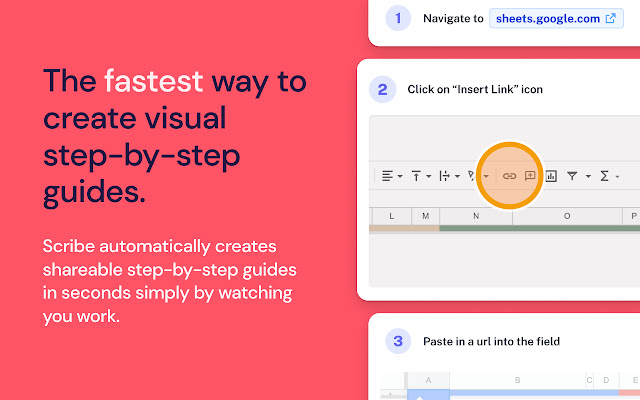
Making tutorials and guides is a laborious process (See also: boring and annoying). That’s where Scribe comes in. In literally seconds, Scribe can make an step-by-step guide to any process.

Murf AI

Murf AI

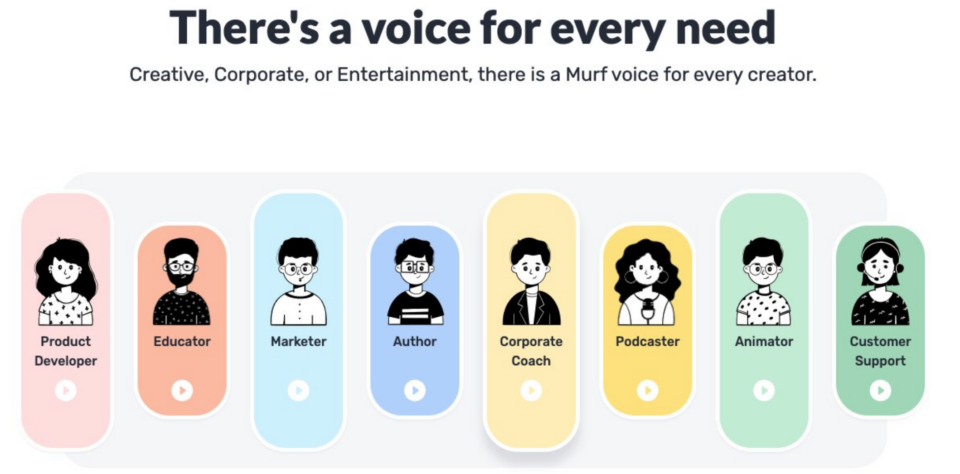
Hate the idea of having your voice on video? No problem. Murf AI can turn your text into human-sounding voices that are very, very realistic. This is ideal for creating videos for YouTube, Instagram or anything else that requires an actual human to speak.

Glasp

Glasp

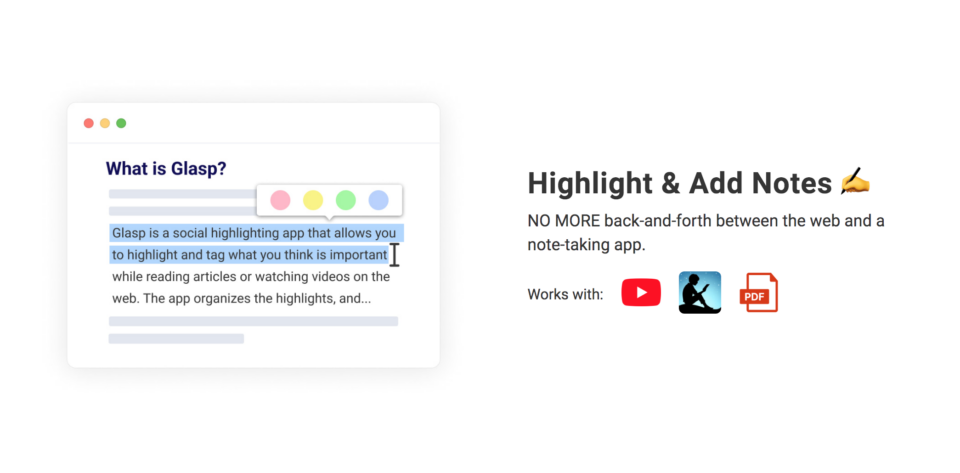
Glasp has a number of logical uses, but its ability to generate text summaries of any YouTube video might be our favourite. When people talk about how AI can save you hours and hours of work, this is what they mean.

TLDR This

We live in the “Too Long, Didn’t Read” era. With so much information, it can be overwhelming sometimes. That is where TLDR This comes in, by preventing an overwhelming amount of information. The site can remove ads, popups, graphics, and other distractions to provide a clean and focused reading experience. *Chef’s kiss*

DALL-E 2

StockAI

This image was created with AI. Is it as real-looking as a actual dogs? No. Is the woman’s hand extraordinarily long? Yes. (Wow, that is SOME hand). That all said, stock images generated using AI are only going to get better and more life-like. This will be a huge benefit to bloggers and creators who are constantly looking for unique images to use.

That is where DALL-E 2 come in. It is a powerful artificial intelligence system developed by OpenAI. It is designed to generate images from textual descriptions, and it can generate images of never-before-seen objects based on the text input. The images generated by DALL-E 2 can be surprisingly detailed and accurate, and the system can learn to generate images of abstract concepts, such as feelings and environment. Now if they could only perfect creating human hands to scale.

Runway

Runway allows you to take any idea you have and make it real just by writing it. What does that mean, you ask? It means you can use Runway’s 30+ AI Magic Tools, and real-time video editing, to make amazing content. Content like your own AI-powered videos or movies. Whoa.

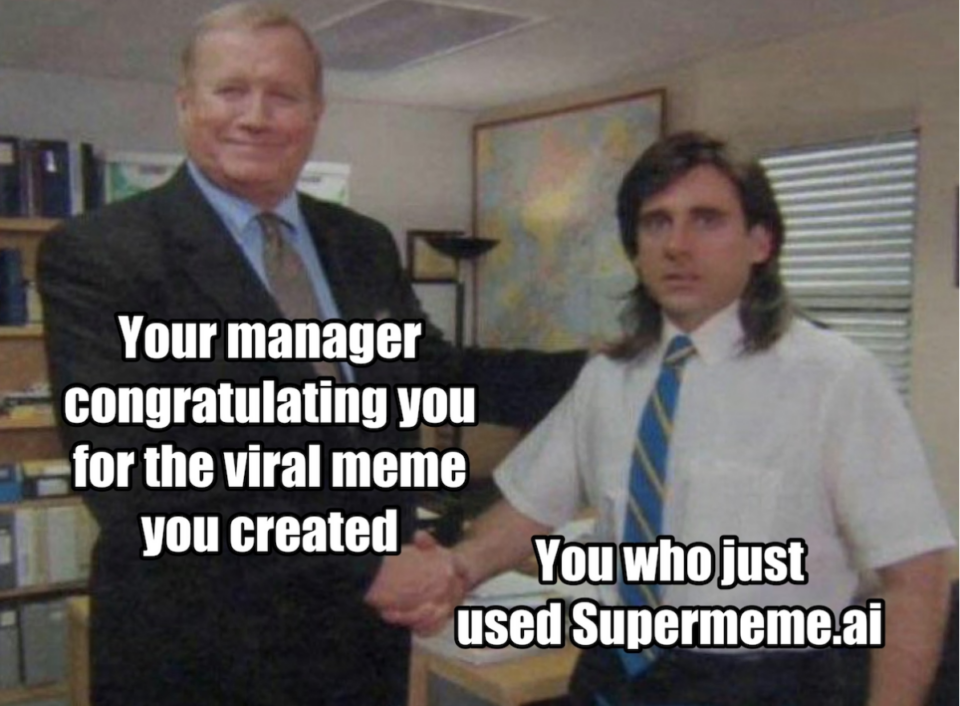
Supermeme AI

Supermeme AI

The name Super Meme says all you need to know. Memes made using AI and zero cleverness on your part. Super!

Jasper AI

Jasper.ai is an AI copywriting tool that helps users create content faster. It is trained with direct-response marketing frameworks and real high-converting ad copy, so it is able to generate content that can effectively engage users. It also includes a Chrome extension that allows users to quickly write emails and create content directly in their browser. With its AI-generated content, users can save time and produce better copy in a fraction of the time.

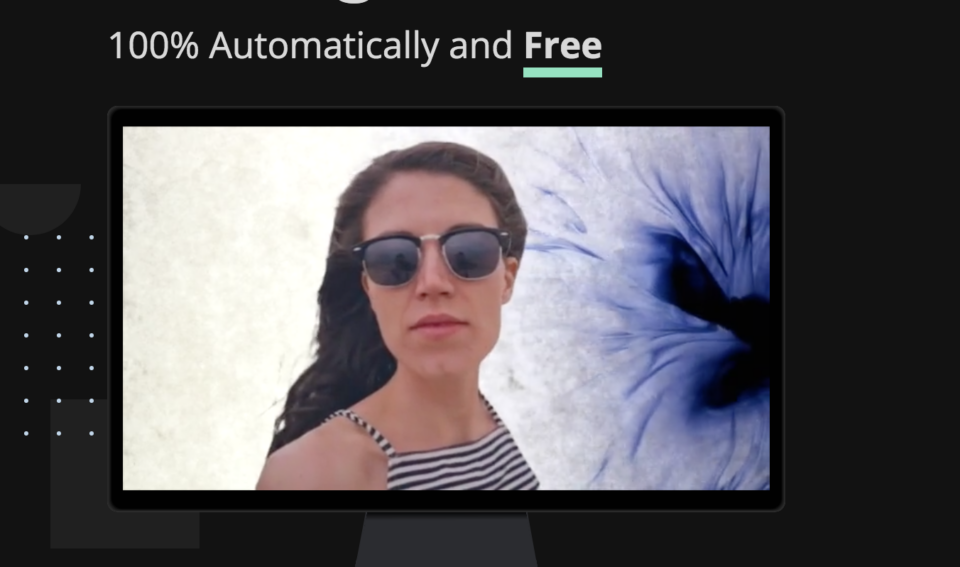
Avatarai

Avatar AI

Avatarai.me is an AI-powered avatar maker that allows users to easily create digital art from selfies or images. It uses NVIDIA’s foundational graphics, simulation, and AI technologies to generate realistic avatars in a variety of styles, such as anime or fantasy. The avatars are generated quickly and efficiently, saving both time and energy. Lensa AI, which is built on Avatarai.me, went viral recently for its AI-generated digital art. While the pictures could be considered pieces of digital art, many are concerned about the ethical implications of free, readily available AI tools like Avatarai.me.

Play HT

Play.ht helps users create professional voiceovers in minutes without the need for expensive recording equipment. It offers over 570 AI voices in over 60 languages to automatically narrate written content. Play.ht also provides a comprehensive dashboard to manage audio files and podcast hosting. With Play.ht, users can create audio content in a fraction of the time, while also increasing their reach potential.

Unscreen

unscreen

Unscreen is a (free) online video background remover that uses AI technology to quickly and easily remove the background from any video. With Unscreen, users can cut costs and save time, as well as customize videos with a library of various backgrounds to choose from. It enables users to take a single piece of footage and transform it for different purposes, making video creation faster and more efficient.

Benefits Of Using Websites Powered By AI To Do Your Work

AI technology has obviously revolutionized the way businesses and individuals carry out their work. That much has been made clear over the last 12 months. And it’s also obvious that it has the potential to help people save time, money, and effort by providing powerful automated solutions. That all said, Here are some of the main benefits of using AI to help with work:

  1. Increased Efficiency: AI can automate mundane and time-consuming tasks, freeing up workers’ time for more important activities. On top of that, AI can also analyze and process large amounts of data quickly and accurately, cutting down on the need for manual input and increasing overall organizational efficiency.
  2. Improved Accuracy: Nothing against humans, but AI can process data with a greater level of accuracy than we can, which will reduce the risk of errors and inaccuracies.
  3. Cost Savings: AI can automate processes that would otherwise require a human workforce, saving businesses money in the long term. Is that dollar signs you’re seeing? Yes, yes it is.
  4. Enhanced Customer Experience: By using AI, businesses can be used to provide personalized customer experiences, helping businesses increase customer satisfaction and loyalty. And, believe it or not, AI can also be used to anticipate customer needs and provide fast, efficient customer service.

Overall, AI can provide powerful solutions to help businesses and individuals carry out their work more effectively. And if you’re not using AI, in a few years you will be lightyears behind your competition.

Feature Image Credit:  Gerd Altmann from Pixabay

By

C. James is the managing editor at Wealth Gang. He has a degree in finance and a passion for creating passive income streams and wealth management.

Sourced from WEALTHGANG

BY JEFF BEER

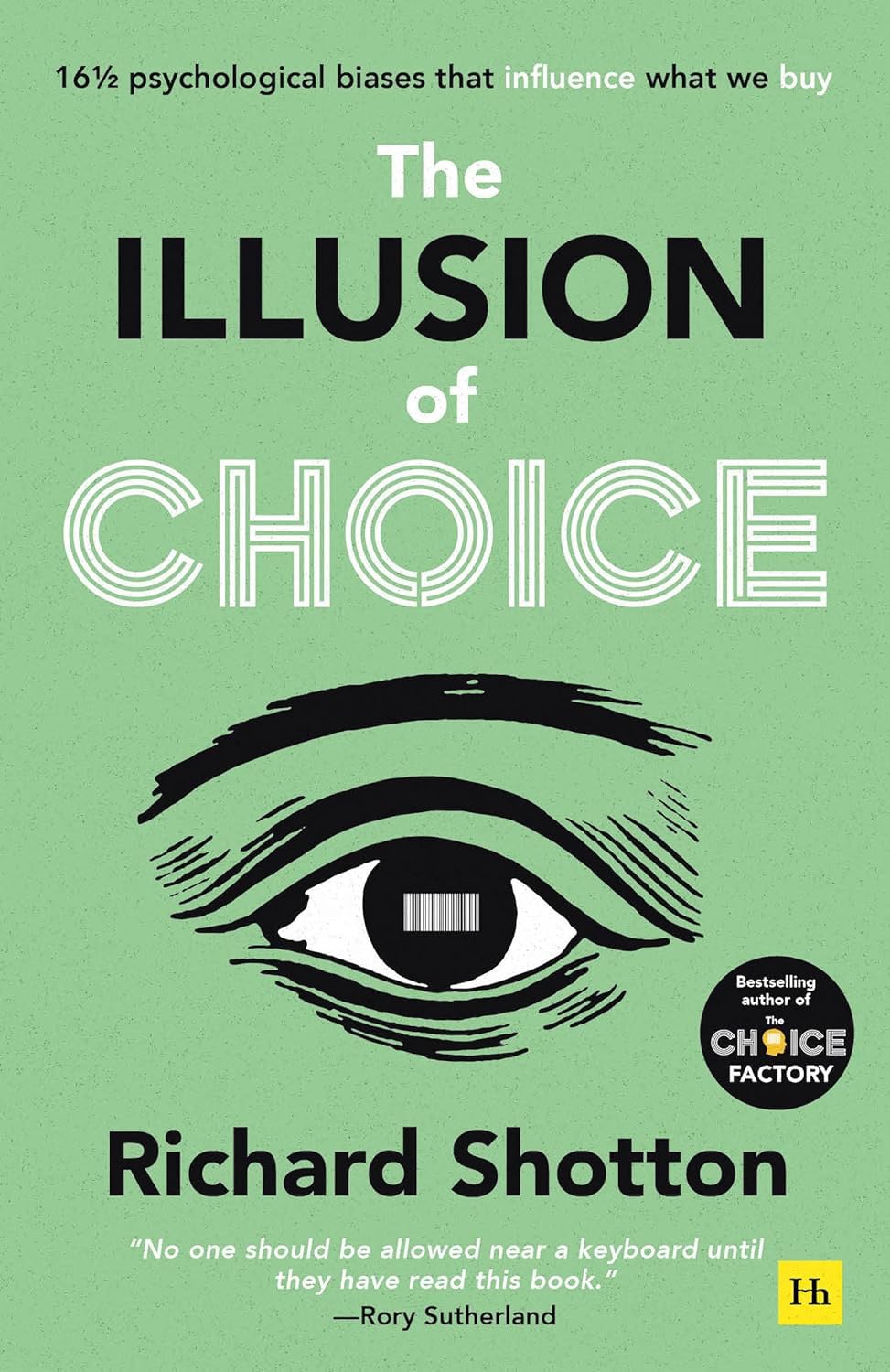
In ‘The Illusion of Choice,’ Richard Shotton explores the behavioural psychology that affects our impression of ads and buying habits. Why don’t more marketers use it?

Back in 2011, U.K. retailer John Lewis launched a new ad for the holiday season called “The Long Wait.” Created by ad agency Adam&eveDDB, it was unlike any other Christmas-related ads at the time. It used emotion and storytelling instead of a blatant promotional sales pitch, and it was 2 minutes long, despite conventional wisdom telling marketers that even standard 30- or 60-second spots couldn’t hold people’s attention.

It was a smash hit, and fundamentally changed British advertising, transforming the Christmas season into its very own Super Bowl of advertising, with every brand aiming to make the most creatively impressive spot.

This year’s impending onslaught and the recent release of U.K.-based consultant Richard Shotton’s latest book, The Illusion of Choice, makes now the perfect time to think about the science that theoretically underpins the art of persuasion. “This time of year is really interesting because not only do you have a huge volume of advertising, you have brands starting to adopt particular tropes, and [the ads] become interchangeable,” says Shotton. “If many brands are converging on a similar approach, that is an amazing opportunity for others.”

The Illusion of Choice promises 16-and-a-half psychological biases that influence what we buy, and it builds on concepts and ideas that Shotton first delved into for his best-selling 2018 book, The Choice Factory. John Lewis used distinctiveness to draw attention to itself and distinguish itself among its rivals. Hitting them in the holiday feels also helped. This approach ties back to a 1933 University of Berlin study by Hedwig von Restorff, which concluded that our ability to recall is significantly increased when something stands out. It’s known as the Von Restorff effect, and it’s the kind of behavioural psychology that sounds like common sense but that not enough marketers utilize.

But the first thing that becomes abundantly clear in reading The Illusion of Choice is that behavioural psychology isn’t as widely used as you might think. Why?

[Photo: Harriman House]

EMBRACING BIG BROTHER

Ever since the 1957 book, The Hidden Persuaders, hit shelves—the Vance Packard bestseller that purportedly exposed the use of subliminal messages in advertising—pop culture has often suspected advertisers as a kind of corporate Big Brother. With claims that flashing ads on a movie screen for 1/3000th of a second boosted Coke and popcorn sales by 70%, a percentage of the public concluded that brands were using lab-coat brain science to convince us all to buy stuff.

Turns out, not so much, as evidenced by the parade of bad ads anonymously scrolling past our eyes on an hourly basis.

In fact, Shotton’s thesis is that more brands should be using behavioural psychology to actually improve their marketing and our impression of brands, and the book outlines specific tactics to do just that.

One concept that surprised even Shotton was the value of concreteness, or the power of concrete language over more vague phrases. In Chapter 6, he writes about a 1972 study by University of Western Ontario psychologist Ian Begg that challenged people to recall a collection of phrases—some specific like “square door” or “rusty engine,” others more abstract like “subtle fault” and “better excuse.” Recall for the statements that people were able to picture clearly—such as square door—was 36%, while only 9% remembered the more abstruse ones. 

“I thought what was striking was the scale of the impact, a four-fold increase is massive,” says Shotton. “It’s not being utilized as much as it should be. If you look at taglines today, most are very abstract. Begg’s study suggests that is a mistake, and brands should turn the abstract idea into a concrete example.”

He points to the first, classic iPod ads, and the unforgettable tagline that came from Steve Jobs original 2001 introduction of the company’s MP3 player. “They didn’t come out and say how many megabytes it had, they said it had 1,000 songs in your pocket,” says Shotton. “You can picture that. That was applying this principle in a way no other MP3 players did. I do think it’s something the best copywriters use, but it’s not being applied as much as it should be more broadly.”

GO EASY . . . LIKE RHYMING EASY

In Chapter 5, we learn that many studies over the past century have concluded that the easier the information is to process, the more believable and memorable it becomes. This is known as the Keats heuristic.

The most common tactic for making information easiest to process is through rhyming.

Yet Shotton writes that in the past decade, the number of ads that use rhyming has been cut in half. In 1977, about 10% of print ads featured a rhyming tagline compared with just 4% in 2007. “Rhyme is a fascinating one,” says Shotton. “It was a very regular and common approach, and we’ve moved away from this proven tactic even though there is still evidence that it works. I think part of it is that advertisers want to illustrate their expertise to their peers rather than the end results.”

The same can be said for funny ads. A 2022 Kantar study found that there is a correlation between the decline in people’s enjoyment of ads and fewer funny ads being made over the past decade. Shotton writes in Chapter 15, “The Wisdom of Wit,” that humorous ads help create beneficial attitudes toward the brand and the ad: They garner more attention, are more memorable, increase positive emotions, and, perhaps most importantly, improve purchase intent.

THE PRINCIPAL-AGENT PROBLEM

In reading The Illusion of Choice, some of it sounds so obvious. Why aren’t more marketers using these tactics? Shotton tells me that there is something built-in to the agency-client dynamic—which also exists between in-house marketing departments and the broader company—that discourages simplicity. He points to Stephen Ross’ economic theory of the principal-agent problem. In marketing, the principal is the brand, and the agent is the ad agency or marketer.

“The principal is interested in long-term profitable growth, while the agent is interested in that, but also safe career progression,” says Shotton. “Once you start thinking about safe career progression, it moves you away from behaving distinctively. If you fail but you adopted a mainstream approach, you still have lots of evidence to justify your choice.”

If you sponsor a pro sports team and it doesn’t work out, there are still plenty of examples to show that it was a reasonable decision.

This is why so many ad campaigns in certain categories look and sound the same. Shotton points to Liquid Death as a prime example of the opposite tack, of a company taking a real risk. “If you choose to market spring water like a death metal band and it bombs, you’ll be exposed as a marketer, with people wondering what you were thinking,” he says. “So there’s a pressure there, because of this principal-agent problem, that what works for the brand and what works for the employee are different things, and it leads you down to defensible decisions rather than what’s best for the brand.”

The overall lesson on The Illusion of Choice, though, is that marketers may find that what initially feels risky is actually the most logical approach. Like John Lewis’ Christmas move in 2011.

“If you’re familiar with the underlying experimentation, suddenly being distinctive isn’t risky, it’s a sensible balancing of the odds,” says Shotton. “So, if people know more about these behavioural science experiments, it liberates them to behave in a way that organizations that are unaware of these studies never would.”

Feature Image Credit: [Photo: Harriman House

BY JEFF BEER

Jeff Beer is a senior staff editor covering advertising and branding. He is also the host of Fast Company’s video series Brand Hit or Miss More

Sourced from Fast Company

By Glory Kaburu

AI-driven technologies have revolutionized the world of SEO, offering over 100 free AI chatbots, cost-effective tools, and scalable solutions catering to marketing agencies and enterprises.

In recent years, artificial intelligence (AI) has become an indispensable part of various digital landscapes, particularly in search engine optimization (SEO). In this comprehensive guide, we will delve into the transformative role of AI in SEO and present a curated list of over 100 AI chatbots, tools, solutions, training resources, and courses suitable for everyone in the SEO domain, from individual consultants to enterprise-level marketing teams.

Why AI Matters for SEO in 2024

AI is now an integral part of virtually every facet of digital life, particularly in the context of search. A recent survey conducted among 2,205 adults in the United States revealed that over a quarter of respondents trust AI-powered search engines for various activities. Search engine giants like Google have been leveraging AI for decades to enhance their ranking algorithms, and Bing has introduced AI-powered chat, summarization, and image creation features. Notably, AI integration is not limited to search engines alone; it has permeated into the top advertising, business, marketing, productivity, and SEO platforms, offering generative AI chat and tools. Custom AI tools are also used to build links, boost brand visibility, and generate leads and sales.

One of the key benefits of AI in SEO lies in its ability to conduct web searches through chatbots, providing valuable insights into optimizing content for both search engines and AI. With Bing AI reshaping the search landscape, Perplexity aiming to modernize PageRank, and Cohere striving to enhance search results with rerank technology, AI’s role in SEO is more prominent than ever.

Important disclaimers for AI usage in SEO

Before diving headfirst into the world of AI-driven SEO tools, it’s essential to be mindful of some important disclaimers:

Confidential information: Never share confidential or sensitive information when using AI tools or online services, as human reviewers may access this information for quality assurance.

Training data: Information shared may be used for training future AI models. Some platforms allow users to opt out of contributing to training data.

Accuracy and uniqueness: AI-generated content may not always be accurate or unique, so it’s crucial to fact-check and not rely on it for areas like medical or legal advice.

Copyright infringement: Understand the copyright protections, if any, offered by the AI tools you use, especially if you are accused of copyright infringement.

Usage policies: Always review the terms of service, content use policies, and other usage policies for the tools you rely on, particularly when using them for professional tasks.

The top AI chatbots for SEO

AI chatbots have made significant strides since OpenAI’s release of ChatGPT in November 2022. These chatbots offer assistance in various areas, from analysis and content creation to coding and research. Some of the noteworthy options include:

ChatGPT: Offering access to GPT-4, DALL·E, file uploads, beta features, and web browsing with Bing, ChatGPT stands out with its extensive plugin library and the ability to create custom chatbots.

Claude by Anthropic: Known for its larger context window, Claude excels at tasks like summarizing extensive text. Subscribers gain access to the latest model and beta features.

Google Bard (Gemini Pro): Integrated with Google Docs, Drive, Gmail, and more, Bard streamlines productivity.

Microsoft Copilot (GPT-4):* Leveraging web resources and plugins, Copilot enhances coding and problem-solving.

Perplexity: Providing in-depth answers through deep searches and sources, Perplexity is highly effective. Subscribers can switch between various AI models.

Pi (Inflection-1): Pi differentiates itself with emotionally intelligent and personalized interactions.

Poe: Hosting 27 official chatbots powered by the latest AI models, Poe also allows users to create custom chatbots. Subscribers gain access to more advanced models.

AI chatbots on social media

Social media platforms have also embraced AI chatbots, enhancing user experiences:

Meta AI chatbot: Operating on Messenger, Instagram, and WhatsApp, Meta’s AI chatbot generates images and conducts web searches through Bing.

Quora and Poe: Quora integrates the ChatGPT bot from Poe into select answers, offering AI-powered insights.

Snapchat’s My AI: One of the early adopters, Snapchat’s My AI, enables users to engage in direct messaging and group chats with AI chatbots.

X (formerly Twitter) Grok: X introduced Grok for Premium+ subscribers, utilizing X’s posts/tweets as “sources” for AI responses.

Please note that while not a social media platform, Pi by Inflection is also available on Messenger, Instagram, and WhatsApp.

AI chatbots with context

As AI chatbots become more prevalent, users often repeat details for better responses. Some platforms allow users to provide context and specific instructions:

ChatGPT: Users can give context and specific directions through Custom Instructions.

Perplexity: Offers users the ability to provide context, specific directions, location, and language preferences in their AI profiles.

Custom chatbots with minimal coding

Creating custom AI chatbots tailored to specific needs has become more accessible:

ChatGPT: Subscribers can create GPT-powered chatbots with features like web browsing, DALL·E integration, code analysis, custom instructions, knowledge files, and action sets.

Microsoft Copilot Studio: Enables 365 users to create custom Copilot experiences.

Poe: Users can create custom chatbots using eight popular AI models, allowing specific instructions for each conversation and referencing knowledge files.

Consider the SEO perspective when utilizing custom chatbots; they can serve as free or cost-effective tools to promote on webpages, enhancing link building, brand visibility, lead generation, and sales.

Disclaimer: The information provided is not trading advice. Cryptopolitan.com holds no liability for any investments made based on the information provided on this page. We strongly recommend independent research and/or consultation with a qualified professional before making any investment decision.

By Glory Kaburu

Glory is an extremely knowledgeable journalist proficient with AI tools and research. She is passionate about AI and has authored several articles on the subject. She keeps herself abreast of the latest developments in Artificial Intelligence, Machine Learning, and Deep Learning and writes about them regularly.

Sourced from Cryptopolitan

By Jon Michail

Nowadays, everyone wants to “build their brand” and grow their social media following. But authentic personal branding goes far beyond vanity metrics on Instagram or X (Twitter). At its core, your brand is simply your reputation — what you’re known for based on the value you consistently provide over time.

While social platforms are tools for amplifying your message, your brand exists with or without them, like before social media. Your message will differ in strategy if you have a mass-market brand compared to a niche market brand. So, don’t equate the size of your following with the strength of your brand.

You should focus on the 11 things I’ve highlighted instead.

1. Focus on providing real value

Gaining likes or followers shouldn’t be the goal. You want to attract engaged “true fans” who eagerly consume whatever you share because it enriches their lives somehow. That comes from consistently publishing original non-AI content they can’t find elsewhere.

Social media rewards quick, superficial content. But bite-sized posts alone won’t build authority. You also need in-depth educational content like blogs, videos, and courses. Demonstrating deep expertise earns trust and loyalty.

2. Be multi-dimensional

The most powerful personal brands showcase diverse talents, not just one narrow identity for social media. Consider what makes you uniquely you. What are your varied interests and abilities beyond any one label? Find creative ways to showcase those multi-faceted aspects through diverse content forms.

For example, Chef Joshua Weissman is known for his fun cooking videos. But he also posts candid vlogs, music parodies, and lifestyle content to show more of his personality. Sharing broader perspectives beyond a single niche makes you more relatable.

3. Focus on giving, not just taking

On social platforms, it’s easy to get caught up in a mindset of maximizing what you can get – followers, shares, and sales. But the most influential people focus on how they can give value to others first. When your audience feels you’re invested in their interests, they’ll invest in you.

Rather than trying to hook followers with self-promotional content, offer something useful for them. Teach a new skill, share hard-won lessons, and recommend helpful tools. Aim for content that improves people’s lives, not just grows your metrics.

4. Let your work speak for itself

There’s an art to self-promotion on social media – you want to get discovered. But nothing turns people off faster than constantly bragging about yourself. Show, don’t just tell. Let the quality of your evidence-based work demonstrate your talents so people spread the word for you.

5. Establish yourself offline too

While you can build a brand through digital content alone these days, having offline elements bolsters credibility. Speaking at events, getting media coverage, publishing books/courses, and other real-world achievements help take you to the next level. Look for opportunities beyond social media.

6. Stay authentic

In the quest for likes and follows, presenting an exaggerated or idealized version of yourself and life is tempting. But trying to mould your image into someone else’s idea of a “personal brand” just rings hollow. The most magnetic people share their real, unfiltered selves. Don’t become a caricature.

7. Take a long-term view and listen first, market later

Growing an engaged audience organically takes time. Social media rewards rapid output and trends. But consistency over the years is more important than any one viral post. Your audience will stick with you when they relate to you as a real person, not just a content machine. Play the long game.

Here are more ways to build a powerful personal brand beyond just social media metrics:

Relentless self-promotion fails to make real connections. Instead, listen to your audience’s needs first before deciding where you can provide value. Pay attention to comments and questions to identify pain points you can address. Let them guide your content.

8. Collaborate with those outside your niche

Partnering with complementary creators, even in other fields, helps expand your reach. Introduce your audience to someone new and vice versa. But choose collaborations strategically with those whose work has substantial value, not just because they have a big following.

9. Represent yourself professionally

How you present yourself in business contexts also contributes to your brand. Pursue speaking engagements, write guest articles for prominent publications and participate professionally on social media. Becoming an industry thought leader establishes credibility beyond just popularity.

10. Invest in original content and don’t neglect non-social channels

Great photography, graphics, and other production values elevate your content and brand. However, learning new skills or hiring help requires investment. Consider the return in terms of increased audience engagement and marketplace authority.

While social platforms are great for awareness, channels like email newsletters better cultivate lasting relationships. Someone may casually scroll past your post, but subscribers who opt into your newsletter are highly engaged fans. Don’t over-rely on social channel algorithms. Social media companies are deliberately changing the algorithms to keep you chasing your tail.

11. Live your brand values

To attract your ideal audience, identify your core values and express them consistently through your content and conduct. Standing for something gives your work a deeper meaning. People will support brands whose beliefs align with their own. Authenticity draws the right crowd.

Owning your niche often means filling gaps others miss. Provide resources you wished you had. Interview people you’re curious about. Share details no one else covers. Becoming known for addressing unmet needs makes you indispensable. The most powerful personal brands are built on passion. Let your enthusiasm for your niche fuel consistent, high-quality, original content. That passion is contagious.

Conclusion

Don’t just focus on vanity metrics and social media image. Build a multi-dimensional personal brand by providing value in diverse ways over time. Your long-term aim is cultivating true fans who are enriched by your work, not just chasing engagement. Be intentional and keep on giving real value, and the right audience will keep finding you.

By Jon Michail

Entrepreneur Leadership Network® Contributor. Jon Michail is the CEO and founder of Image Group International, an Australia-based corporate and personal-brand image advisory and coaching organization that conducts transformational seminars, workshops and one-on-one coaching in over four continents.

Sourced from Entrepreneur

By Abdulmuhsen Fakih

In today’s digital landscape, where everyone is competing for digital ad space, I’ve found there is only one way to gain an edge over the competition: conversion rate optimization. Conversion rate optimization (CRO) is the process of systematically improving the ratio of a favourable outcome to overall actions.

For example, let’s say you offer an email opt-in and you get 50 visitors; if two people opt in, your conversion rate would be 4%. Since digital ad platforms are auction-based, this means that the more people who convert, the higher you can bid, the more views you can get and the more revenue you will generate. CRO is an invaluable tool for growth.

How does conversion rate optimization impact revenue?

Let’s consider another example, involving two different apps.

App A:

• Downloads: 10,000

• Trial sign-ups: 4,000 (40% conversion rate)

• Paid subscriptions: 1,000 (25% conversion rate)

• Lifetime revenue/customer: $100

• Total revenue: $100,000

App B:

• Downloads: 5,000

• Trial sign-ups: 2,750 (55% conversion rate)

• Paid subscriptions: 1,100 (40% conversion rate)

• Lifetime revenue/customer: $100

• Total revenue: $110,000

Although App B had 50% fewer downloads than App A, it generated 10% more revenue. That was achieved by increasing the conversion rate of only two steps of the customer journey by 15%.

Here’s how to improve your conversion rate.

1. Make split testing a weekly habit.

A split test is when you run a new image, headline, pricing, video, call to action or text against the one you are currently running to see if it performs better. A/B testing on a weekly basis will enable you to understand your customers through data, save on ad spend and improve your targeting.

2. Simplify the language.

According to data from 2012 to 2017, 54% of U.S. adults aged 16 to 74 years old lack literacy proficiency. One of the easiest ways to improve your conversion rate is to simplify the vocabulary used and use simple, short sentences. Also, you can copy your text and use a free online text editor to evaluate the language level. Ideally, you want your text to be written at a third-grade level.

3. Decrease friction.

The easier it is for people to buy from you, the more people will buy. Make your customer journey as intuitive and clear as possible. If your customer journey involves complex steps such as identity/address verification, online meetings or physical meetings, make sure you ask for those after the payment has been made.

If possible, collect payment even before the sign-up. This is because everyone who purchases will sign up, but not everyone who signs up will end up purchasing. So always make sure to set up your conversion page first (usually, with a paywall).

4. Offer win-backs.

A win-back is a coupon, discount, free trial, free sample or any other incentive for a customer to come back and interact with your business. Do not be afraid to be aggressive with your win-backs; however, a common mistake businesses make with win-backs is that they overdo it to the extent that their customers stop responding to the win-backs.

Here are a few ways win-backs can be implemented:

1. During the purchase: For example, once a customer adds an item to their cart and leaves the web page, send them an email with a discount code for that item.

2. For non-activity: If a customer makes a purchase and then does not make any other purchases for six months, send a “we miss you” email with a discount.

3. After a purchase: Upsell or cross-sell an item.

Ultimately, I’ve found conversion rate optimization is the only way to gain an edge in digital advertising. So make split testing a weekly habit. Use simple vocabulary and short sentences in your landers, ads and content. Make it seamless for customers to buy from you. And use win-backs for customers who stop interacting with your business.

Feature Image Credit: getty

By Abdulmuhsen Fakih

CEO & Founder of Systemize It, a 360° Sales and Marketing automation company. Read Abdulmuhsen Fakih’s full executive profile here.

Follow me on LinkedIn. Check out my website.

Sourced from Forbes