WhatsApp now lets you evade government clampdowns with this handy new feature.
Many governments around the world crack down on internet services, be it due to political unrest, protests in general, or for other reasons. Thankfully, WhatsApp has a solution with its latest feature.
The Meta-owned company has announced proxy support in WhatsApp, allowing people to stay connected to the messaging service if it’s blocked or disrupted by authorities.
“Choosing a proxy enables you to connect to WhatsApp through servers set up by volunteers and organizations around the world dedicated to helping people communicate freely,” the company explained. WhatsApp also noted that messages sent and received via a proxy still offer end-to-end encryption, but cautions that your IP address will be shared with third-party proxy providers.
Want to connect to WhatsApp via a proxy? Then the team suggests that you first search the web or social media to find a proxy from a reputable source. You’ll then need to visit Settings > Storage and Data > Proxy > Use Proxy > Set Proxy. From here, you’ll then enter the desired proxy address and tap save.
It’s worth noting that this solution won’t work if internet connectivity is completely shut down in a country. So you’ll have to rely on peer-to-peer messaging apps instead. But this is still a handy tool for people in authoritarian regimes.
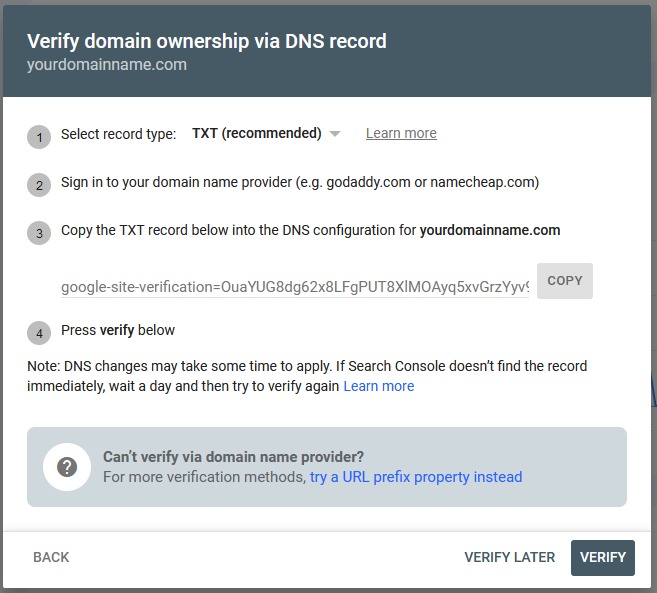
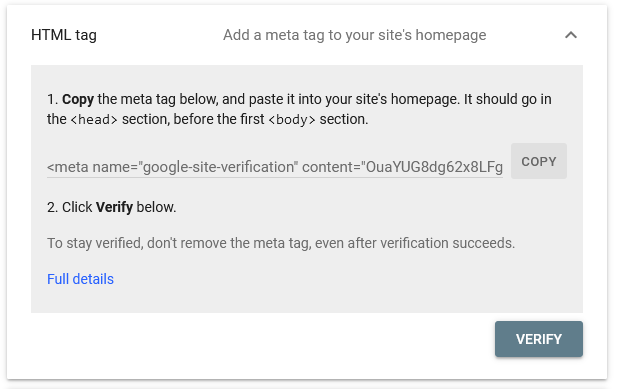
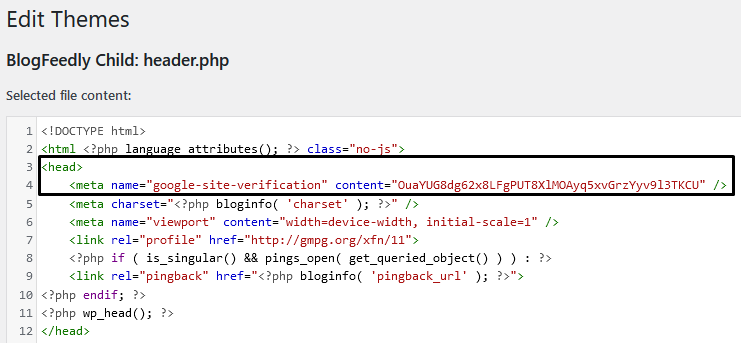
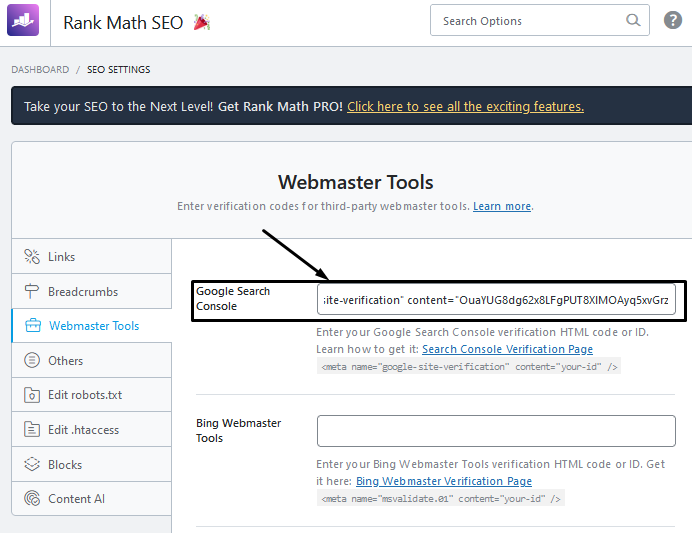
To add the HTML tag with an SEO plugin, some will only need the characters between the content quotations, whereas others require you to paste the entire code in:
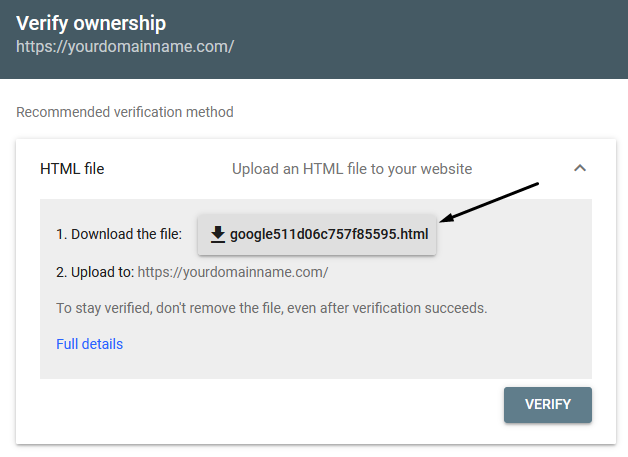
Once added, go back to Search Console and click on VERIFY.
Your search data will start showing up after a few days. Note that you’ll need to keep the HTML file or meta tag in place to keep verification active.
3. Alternative methods: Google Analytics or Google Tag Manager
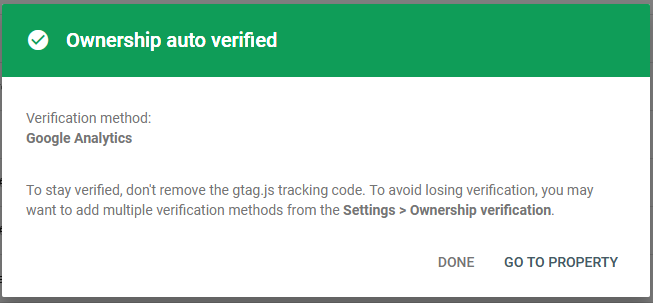
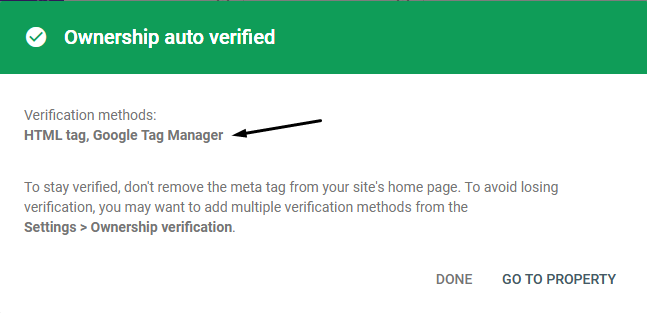
These methods are fairly straightforward if you’ve already added Google Analytics or Google Tag Manager to your WordPress site.
That’s because you’ll get a verified popup for the respective Google service when you add your property to Search Console.
If you want to verify Google Search Console this way, here’s how to add the code in WordPress.
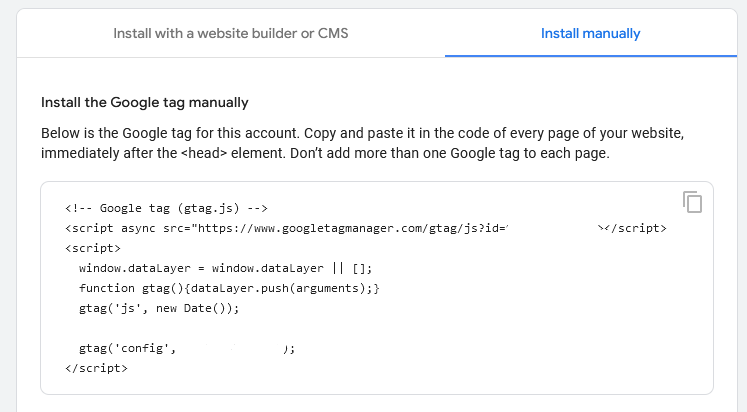
For Google Analytics 4, navigate to your Web Stream details and view the tag instructions. You see your code like this:
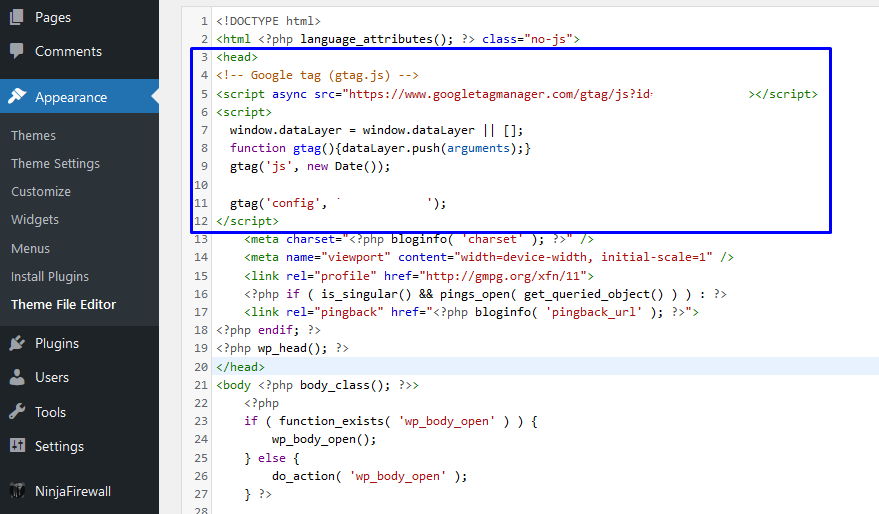
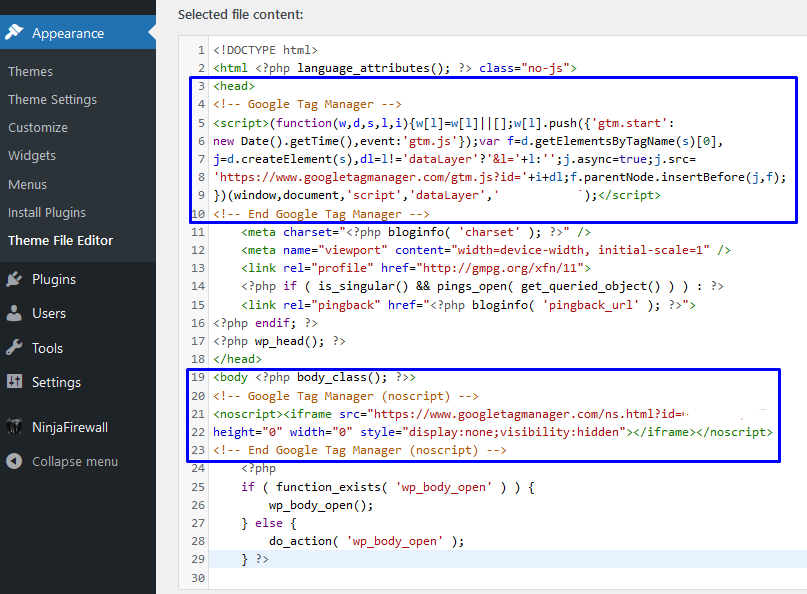
Copy the code and paste it directly after the HEAD tag in your WordPress theme:
Again, make sure you’re editing a child theme and not the main theme.
You can install a child theme easily by using a WordPress plugin called Child Theme Configurator.
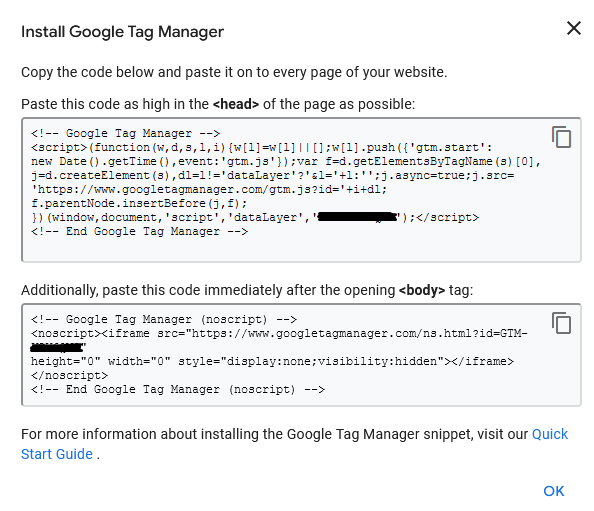
If you prefer using Google Tag Manager, here’s how you can add the code manually.
Add your property in Tag Manager, and you’ll see this popup:
Copy the first box and paste that directly below HEAD the tag. Then paste the code from the second box below the BODY tag.
You’ll now see the verification boxes above when you add your property in Search Console.
How to View Search Console Data Inside WordPress
If you want to see Search Console data inside your WordPress admin, then you’ll need a plugin for that.
The best we have come across is Rank Math, which lets you see up to 90 days of Search Console data for free.
But you’ll need the pro version if you want more data, like a keywords report overview.
What if you’re using a different SEO plugin, like YoastSEO? If you really want to see Search Console data in WordPress, then we recommend MonsterInsights.
MonsterInsights isn’t free, but it means you’ll be able to use it with Yoast.
The other option would be to change SEO plugins to Rank Math, just make sure you know what you’re doing. Otherwise, you can change how your metadata is displayed.
Why Add Google Search Console to WordPress?
The main reason you would add Google Search Console to your website is to measure organic search performance.
Other benefits include:
Adding an XML sitemap
Check which pages are indexed
Monitor Core Web Vitals
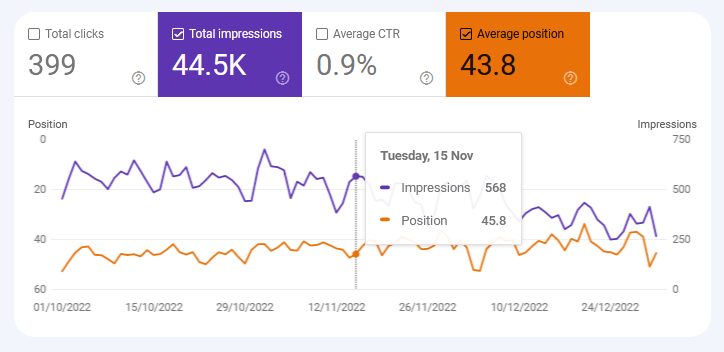
Here’s what you’re able to track regarding Google search rankings
Google search impressions and rank positions
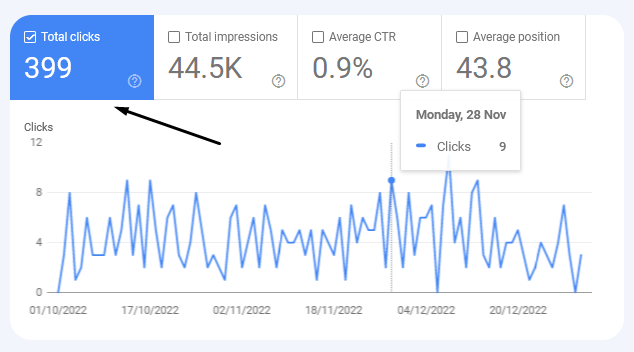
Search clicks
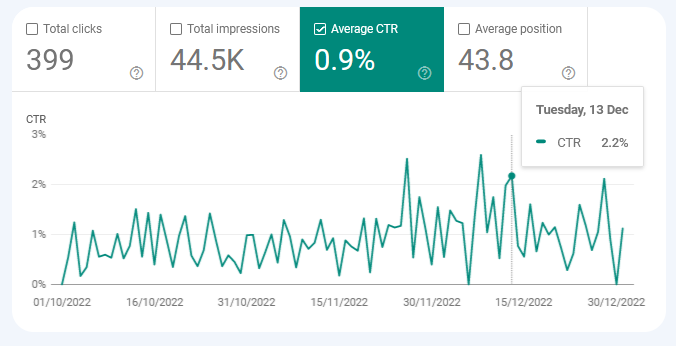
Google search CTR
Ranking keywords
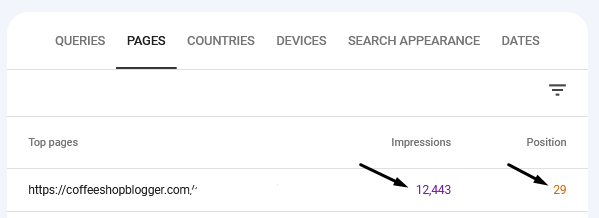
Google search impressions show how many times your website is seen in Google search results. The average position is the overall position your entire site shows up at.
You can see the average impressions and position for individual pages under the pages tab:
Total clicks are the number of times people click through to your website from search results:
Average CTR is the percentage of clicks compared to the number of impressions. So if you get 100 impressions and 10 clicks, your CTR would be 10%.
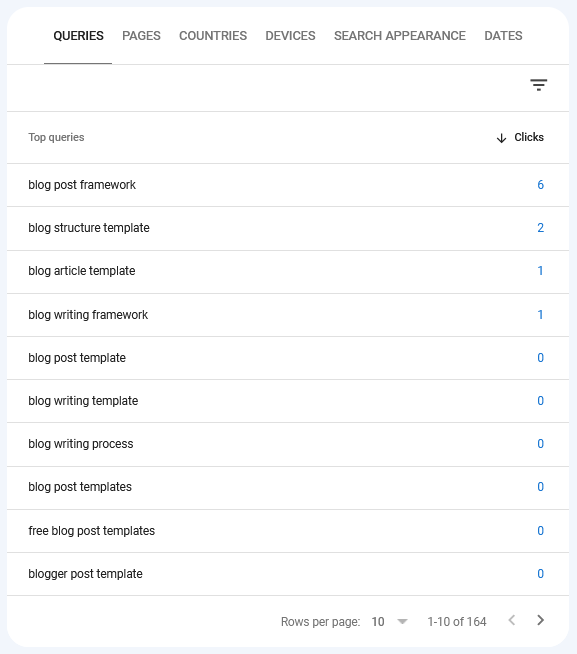
Ranking keywords are the terms your website has shown up for when people have searched for those terms in Google.
You can get an overview of all the keywords or select a specific page from the pages tab, then go back to the Queries tab.
Keeping track of this data every month will help you make improvements to your site’s search engine optimization.
How to Add an XML Sitemap to Google Search Console
Adding an XML sitemap to Google Search Console helps Google find all the pages and articles on your website.
To add your sitemap, you must install a plugin that automatically generates one.
Most SEO plugins will do this. For this example, I’ll show you how to do it with RankMath.
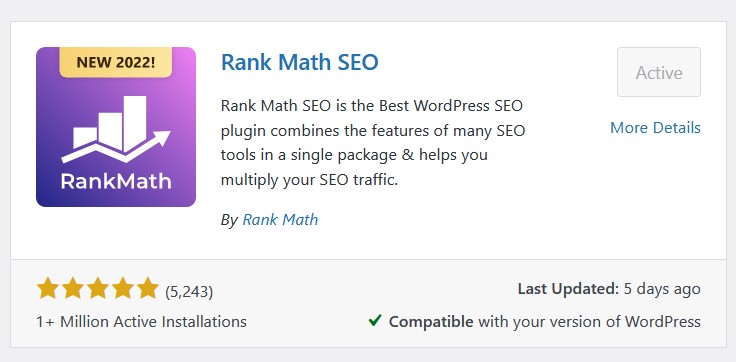
Search for, install, and activate the RankMath plugin from your WordPress admin:
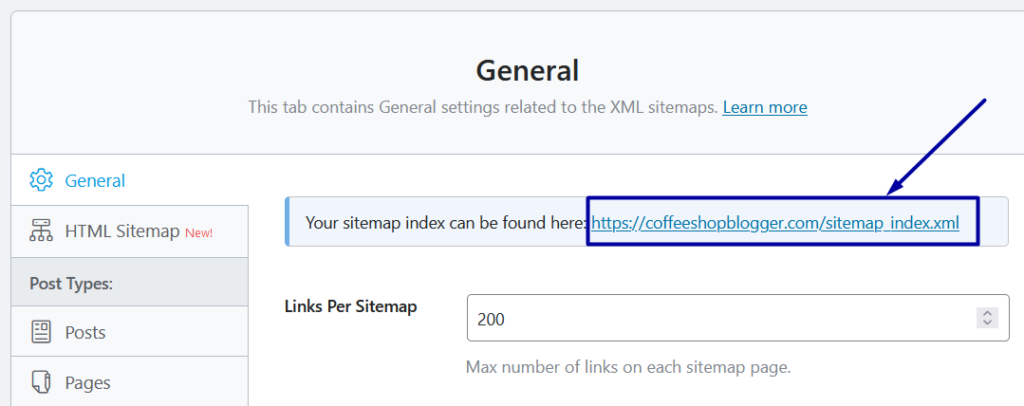
Once you’ve configured the RankMath settings, go to the Sitemap settings option and copy the sitemap URL:
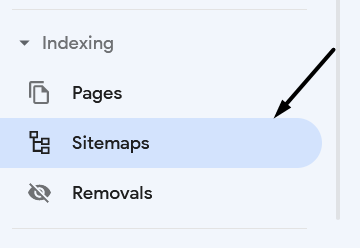
Then head back to Google Search Console and navigate to Sitemaps under Indexing:
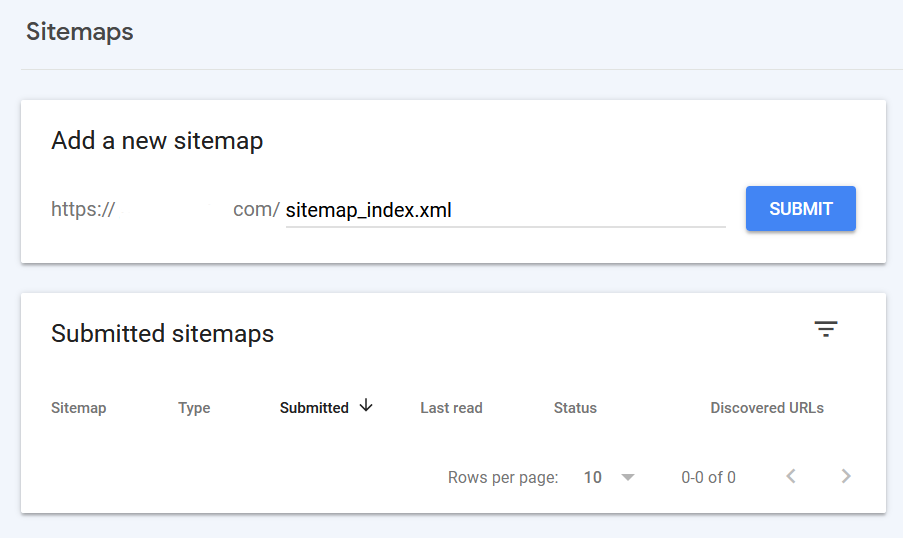
Then, type or paste the sitemap slug in the URL field and click on SUBMIT:
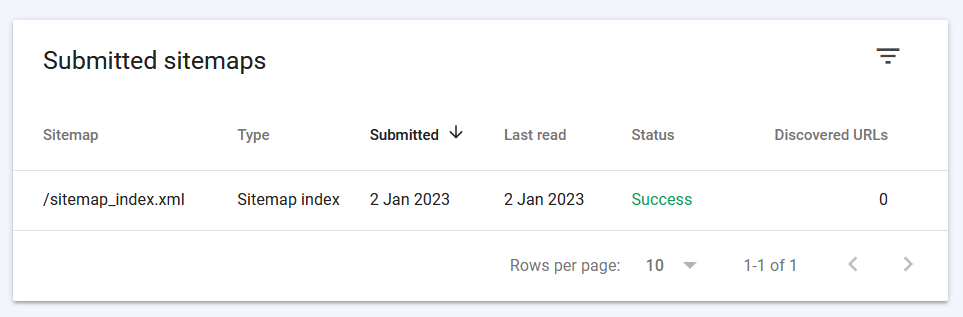
You’ll see a box with some details of when it was submitted, the status, and the number of discovered URLs:
Google bots will crawl the sitemap each time you add new content to your site, which will help keep your Search Console data up to date.
How to Associate Google Search Console Data with Google Analytics 4
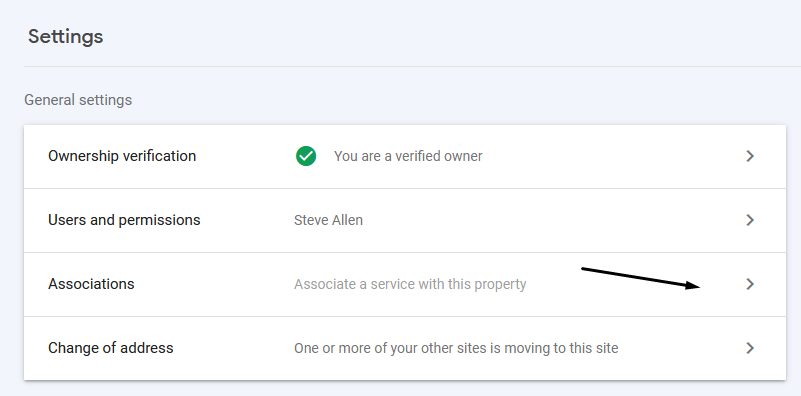
In your Google Search Console account, go to the Settings page in the sidebar and click Associations:
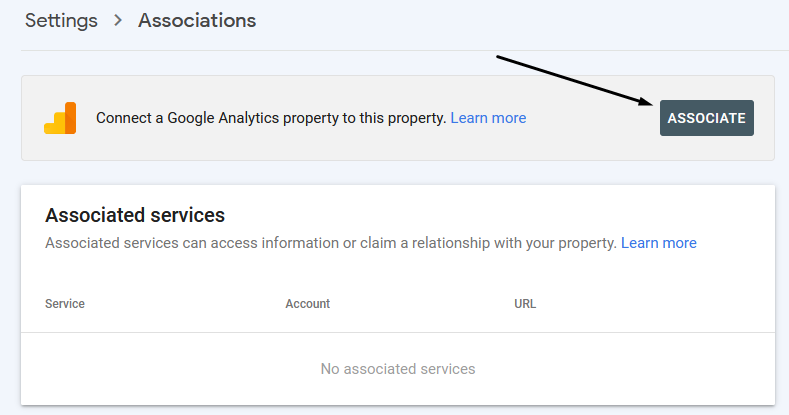
Then click the ASSOCIATE button where it says “Connect a Google Analytics property to this property”.
You’ll see a popup with all of your available Google Analytics accounts. Choose the one that matches the GSC property, click CONTINUE and follow the prompts.
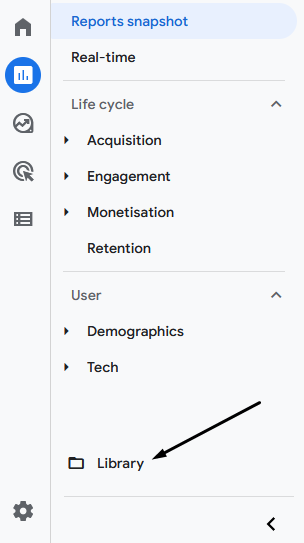
Next, go to your GA4 property and navigate to Reports > Library:
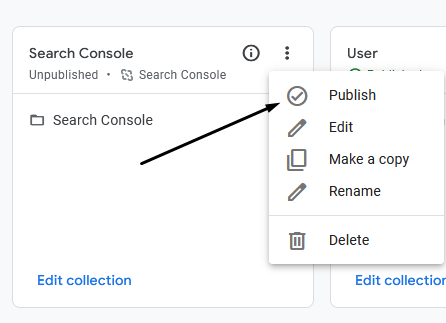
Then in the Search Console box, click on the 3 dots and click on Publish:
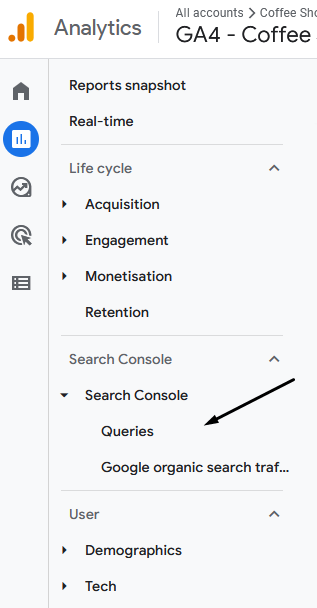
A Search Console option will appear left sidebar menu with links to display your search queries and Google organic search traffic inside Google Analytics:
Conclusion: Add Google Search Console to WordPress
As you can see from this post, adding Google Search Console is fairly straightforward when you know how.
Blogging is the best strategy when marketing your products or services to a niche audience for whom you customize your content. As discussed, some flawless writing skills exist to captivate such audiences and improve your website visibility.
4 Ways to Write Blogs your Clients will Read
Millions of blogs with daily content releases reach the target audiences intending to relay particular information daily. However, such blogs face glaring setbacks evident in the competition from similar bloggers in the same niches offering superior content. It is, therefore, commonplace to find them struggling to fight for a share of the scarce attention afforded by the audience.
We outline strategies one can employ to emerge as the leading source of readable content clients want to see on their screens. But first, we examine a client’s thought process from the time they see a blog post to the time they finish reading.
What is a Client’s Thought Process when Encountering Blogs?
Many readers go through the ‘AIDA’ experience whenever they encounter a blog touching on a particular topic. The acronym stands for ‘attention,’ ‘interest,’ ‘desire,’ and ‘action.’ These four steps in the prospect’s mind define the major attack points you can use to make your audience glued to your content. Let’s break each one down individually:
Attention: the prospect comes across a blog whose headline captures the attention of their gaze.
Interest: the individual notices relatable words or phrases that interest them.
Desire: the internet user becomes captivated by the blog’s content, making them read through the article.
Action: the client follows through with the blog’s call-to-action elements, effectively fulfilling the blogger’s desire.
Despite the millions of blogs online users encounter, adherence to the blogging best practice requirements will take your readers through these steps. Understanding how to summon your writing prowess for each of the four pieces of the puzzle to fall in place is essential. The following pointers will help impose your content onto the audience without appearing needy and boring:
How to grab the attention of the audience
Simple: People like what they see. If you want to captivate an audience, the question is, “what will the clients think when they scan the article?”
Simply put, audiences want to encounter an easily scannable blog; an easy read is always welcome. This is also crucial when you’re starting a blog – you need to get it right from the get-go, so you don’t end up having to fix certain issues once your blog starts growing.
The following details will help you better your chances of making the blog easy to scan:
Create a consistent article structure
The structure of your piece will make you the best-read blog in no time. The audience will sense careful organization in your work, making it easy to pick out the critical parts quickly. People have short attention spans when on their devices because there are other distractions like messages, calls, and phone notifications. Additionally, they have a constant urge to visit social media sites and see what is happening worldwide. Social media has become an obsession for many people, and social media listening is one way to track this activity.
However, creating blogs with simple formats will make them less anxious to look away because they can quickly scan captivating parts of your content. You can consider these points when designing your blog outline:
Use titles, subtitles, headings, and subheadings to break your content into small readable parts. The user can quickly identify the content under each section without reading everything there.
Write brief and straightforward sentences. Leave out any fluff which will make your sentences overly lengthy and tedious.
Write short paragraphs with up to five short sentences. Long sentences will discourage your readers and divert their attention to other less stressful content.
Use numbered lists to break down the paragraphs and highlight important points. You can alternate with bullet points for diversity.
Use appropriate images
Images can capture user attention better than words can manage. Prospects scanning your pieces notice the imagery and graphics in your article before they notice the detail of the terms. However, it is essential to use images appropriate to the context of your article content to avoid misleading readers. Images also have a few rules of best practice, including:
Ensure the pictures are clear and contain insights into the textual content.
Always label the images using descriptive words for instant context creation.
Use alt text when uploading images to your blogs to make them appear in search results when users type in the keywords.
Always indicate image sources to avoid copyright infringement reports that will limit visibility.
Relevant topic headlines
Your titles and headings must contain relevant topic keywords. Users will quickly identify and appreciate the relevance of your headlines to what they desire to read.
How to write content that captures user interest
After capturing the audience’s attention, the second point of focus is to cultivate their interest in reading through your articles. Here, you must be keen on the detail of the text in the body, which will inform the users’ interest. Every reader is looking for a few indicators of an exciting piece, as detailed below.
Use simple language
Simplicity, as stated, is the best way to captivate readers. The people going through your blog want to get the scope of your writing immediately after they begin going through your work. Please ensure the words are simple to understand without needing to digest or refer to other sources to understand meanings.
The flow of the story should also be flawless, with transitions between sentences and paragraphs allowing for instant follow-up. Avoid using jargon that will put off the audience by confusing them without revealing the actual context of your content.
Use authoritative phrases
Be simple but authoritative with your writing if you must keep readers interested in your work. They must know that you understand your facts and can relay the same without appearing uninformed. It would help to employ scientific, niche-specific, and descriptive language whenever needed to stir your readers’ minds.
Avoid overcomplicating things using such words and phrases with reasonable breaks between instances. You can use Google to identify the correct use of some word constructions concerning the topic.
Be keen on grammar
Grammar is key in keeping audiences hooked on your piece long enough to follow your drift. Many readers will instantly close your blog post and find other relevant material if they encounter regular mistakes in your work.
Material that strictly adheres to grammar rules indicates professionalism which people admire and respect. The readers will readily exhaust the entirety of your piece if they see consistent, grammatically correct sentences and phrases. You can use free or subscription-based tools to check and correct any grammar issues. Examples include Grammarly, QuillBot, etc.
How to make the audience desire to read your pieces
Capturing the audience’s desire means you are deeper into the client’s mind with your blog post. Many writers fail to reach this level of client engagement because the two previous steps contain glaring mistakes that discourage readership. However, if you make it this far, the rest is almost child’s play: the reader is already willing to go all the way. Read on to learn how.
The following aspects will be forthcoming in shifting client desire in your favor:
Employ a conversational tone
A blog is an educative and informative piece aimed at a large audience accessing your website at convenience. Therefore, ensure your material engages as if in conversation with an eager student searching for knowledge. Tailor your content to make the audience appreciate your knowledge base and yearn to read on for more.
The best way is to use language that implores them to continue reading to discover what you have in store. You should be convincing and create a vocabulary that reflects a tone people are comfortable reading. Be sure to employ the active voice instead of the passive one because the audience will quickly see interest.
Understand your niche
The subject and tone of your article rely on the topic you are covering. Your delivery will also depend on understanding the niche you decide to cover with the content. Consequently, it is necessary to research extensively to know what, why, and for who you write. The niche also defines the characteristics of the audience your work targets. The following questions will help you understand the place and define the topic and tone of the content:
What content am I advertising? It enables you to define the nature of your product or service.
Who is the target audience? It helps define the characteristics of your audience. Your tone must align with the people reading your work. Are they adults? Children? Women? Men?
Why am I advertising this content? The point defines the solutions you are offering to the audience. It helps you figure out the type of language suitable for the context.
Use real-life examples
Readers will always relate to real-life situations which reflect on their lives or provide relatable contexts. Ensure to include the most relatable examples and case studies in your blog if you address particular product details. For example, when advertising a product, you can quote previous situations where it was helpful to a different audience. Your audience will quickly develop a connection to the item if they have a relatable problem.
Use statistics to back your statements.
Statistics are always helpful when you want to display your knowledge about the effectiveness and reliability of a product or service. The end game is to make the readers interested in understanding the implications of a service or product based on quoted metrics. Such insights also help in decision-making steps if readers want to take action. Thus, always provide authoritative links to said statistics so that they can confirm the truth of your words. They will be willing to try out the item on offer after that.
State and answer FAQs
Frequently asked questions (FAQs) offer the perfect chance to address additional client concerns. The readers will see the questions touching on relatable topics and quickly read on to see how you responded. They will then get the desire to discover more about your writings and what you offer outside the blog, cementing the purchase intent.
How to make the audience take action
The best way to ensure that your readers take action after exhausting the detail of your written content is to tell them how. At this point, readers already understand your intention, your solutions, and the benefits they stand to gain. Therefore, you must direct their next steps so they can follow up to buy, receive updates, or discover more content. The following call-to-action (CAT) moves are ideal:
Ask the reader to engage with the blog post.
You can implement various CAT buttons on your page to direct the client to engage with the blog post as desired. First, you can have buttons for sharing, commenting, and liking your post after reading its entirety. It helps expose the content to a bigger audience since the individual helps spread it to friends and followers.
Ask the audience for feedback.
You can ask the audience to give feedback about the post or make suggestions about future posts. Here, you get to understand their perspective of the blog post or needs you did not address. It helps you prepare your following content.
Ask the prospect to subscribe.
You can request the prospect to click and subscribe to your content notifications for future posts. Here, subscribers indicate serious interest and become targets for new content before everyone else gets access.
Remarks
The piece explores the different strategies that can strengthen your reach by enabling optimal engagements on your blogs. The avenues explored ensure audience satisfaction by ensuring that your content reflects positively on the audience. You will find that the ideas are simple yet effective in helping build a brand with loyal readers who follow your work religiously. The trick is to keep them engaged every step of the way through content that reveals your attention to their needs.
Images, sentence structures, keywords, tone, and grammar are some pointers that will inform audience interest. However, the article explains their application in a way that underscores the effort by successful bloggers to win over a loyal audience. Careful application of the details herein opens your blog to new followers who will make you a popular destination in your niche.
Featured Image Credit: Photo by Suzy Hazelwood; Pexels; Thank you!
Over 200 million Twitter users woke up to find their email and log-in details had been posted online.
According to several reports, the data was stolen over a year ago but has only just been put up for sale on ‘Breached’, a dark web market place.
The data, contains emails and partial log-in details for over 200m users is available for sale for the crypto currency equivalent of $2 (£1.69) each.
Alon Gal, of Israeli cyber security firm Hudson Rock first reported the breach over LinkedIn, he said it was “one of the most significant leaks I’ve seen.”
Meanwhile, Bleeping Computer, a New York based tech and security firm. said they had confirmed the validity of a number of the leaked emails. They also said the data included not only email addresses and phone numbers but also names, screen names/user handles, follower count, and account creation date.
The security breach comes as experts question whether Twitter will be able to handle system vulnerabilities. Since taking over the social media platform, Elon Musk has fired over half of Twitter staff.
Last week, two UK politicians saw their Twitter accounts hacked, spelling trouble for public figures on the platform.
A senior threat researcher at Sophos has advised caution saying: “Now is the time to assume a brace position for a possible crash of Twitter. This is what many information security professionals are doing: it’s what everyone should be doing now.”
According to cybersecurity experts at Wedbush Securities, Musk’s mass firing means that no one is left to “fix things” that are broken.
“There’s skeleton staff right now left and I think that’s pretty scary, especially around the cybersecurity side. You start to lose some key engineers, developers, key people internally, I think that’s where this thing can really cascade,” technology analyst Daniel Ives was quoted saying.
From the benefits of choosing a niche subject to building a community and bringing in income
Focus on your niche
If you haven’t already chosen a blog topic, thinking about your hobbies, passions and personal experiences is a good starting point.
Pamela Rae-Welsh, the creative director at the online visibility specialist Worsley Creative, says: “With so much online content, you’ll need to carve out a unique purpose that your blog will serve. For example, rather than creating a general cooking and recipe blog, consider a specific niche, such as Italian-inspired vegetarian cooking.”
Whatever your subject, also think about what you are hoping to achieve to refine your blog’s aim. For example, that might be to help people, make them laugh or teach them something.
Choose your blog name
Once you have decided on your subject, you need a blog name. Bear in mind that your blog and domain name should be the same, and ideally one that will stand out from the crowd.
It could be relevant to your subject but it doesn’t have to be. Lynn Beattie, a personal finance expert and the founder of Mrs MummyPenny, says: “You simply need it to be as short as possible, and memorable, so it could be a specific word, phrase or play on words.” You could spark some ideas by using the Google keyword planner and the Wordtracker keyword tool to search for the terms you might write about.
The name of your blog does not have to be relevant to the subject. Photograph: lechatnoir/Getty Images
However, make sure your name isn’t already taken, so search across web domains and social media. You can search and buy your domain through different registrars such as GoDaddy and 123 Reg. See if you can buy the .com and .co.uk extensions.
Pick your platform
You will also need to pick a blogging platform that you will use to design and write your blogposts and publish online. There are several to choose from, including WordPress, Typepad, Blogger and Tumblr.
WordPress claims to be the world’s most popular platform, and is great for beginners who are looking for a simple site that enables them to build a blog within minutes. There are plenty of YouTube tutorials that can help you get set up. You can then work on personalising your blog.
Blogging platforms include Tumblr, WordPress, Typepad and Blogger. Photograph: NetPhotos/Alamy
Design your blog
Choosing your design theme is important because first impressions count. Francesca Henry favours WordPress for her money-saving blog the Money Fox. She says: “You can buy some beautiful and functional themes from about £50 to £150, and get free plug-ins that help you do loads of things such as create a standalone homepage.”
A simple theme is usually best, while making your blog as user-friendly as possible, including a call to action to let your readers know where they can find you, with links to Twitter and Instagram, for example. You could also get a professional logo designed to complete your brand, or work on one yourself.
Find your audience
Go where your readers are. This could be on specific Facebook groups, for example, TikTok, Instagram or LinkedIn. Follow blogs on similar subjects, start conversations and tweet your posts.
Georgina Durrant runs the SEN Resources Blog, which is for parents and teachers of children with special educational needs and disabilities. “The blog now has more than 30,000 social media followers but it took a lot of regular, consistent posting of blogposts on my site, as well as posts on social media, and a lot more work than I initially expected to get there,” she says.
“You don’t get very far just sharing links. It’s about building a community around the blog. My following increased when I joined in and started conversations on social media. The readership of my blog kept on increasing as the community grew.”
You could add a YouTube channel to your blog. Photograph: Éric Piermont/AFP/Getty Images
Add other channels
There will be people who prefer to listen or watch rather than read, so you could add a YouTube channel or podcast to your blog. Marie Brown, a blogger at Beyond the Kitchen Table, which builds websites for small businesses, also has a podcast called the Website Coach. She says: “A podcast is a great way to market your blog, and featuring as a guest on other people’s podcasts is another option.”
She matches her podcast and blog topics. “You can either use the podcast transcript as the basis of the blog or, as I do, write the blogpost and use this as the outline for the podcast episode. I link the blogpost in the show notes to the podcast episode,” she says.
Keep building your blog
You will want to focus on getting your brand known, producing content and sharing your expertise before potentially turning a profit. Networking to build up backlinks will ultimately help you to monetise your blog, too.
Rae-Welsh says: “Google is looking for unique, relevant and trustworthy content to rank in the search engines – the more you add relevant and quality content, the more traffic you will get, which will give you more opportunity to monetise.”
There are free tools such as Google Search Console or Google Analytics that will help you create content that will be seen by search engines. “But it’s worth investing in learning SEO [search engine optimisation] properly if you want to make your blog a success,” Rae-Welsh adds.
Make a profit
There are various ways to make money from your blog. For example, firms that are relevant to your blog’s subject may want to buy some space and advertise their services using a box or banner. You may also want to consider approaching a particular brand to collaborate and produce a specific campaign on a subject you are passionate about.
You can also make money from sponsored links, where advertisers pay bloggers to publish a post that includes a link to their website. But you will need to ensure you make it clear that the post is sponsored.
Alternatively, there is affiliate marketing, where links are placed into your posts or on your page that direct readers to a website selling something. You will earn a commission on any sales. You can find companies looking to place affiliate links on sites such as Tradedoubler and Amazon Associates.
Beattie adds: “There are so many other ways a blogger can make money, such as writing for brands, product sales, public speaking and social media advertising. The key is getting a well-diversified income stream.”
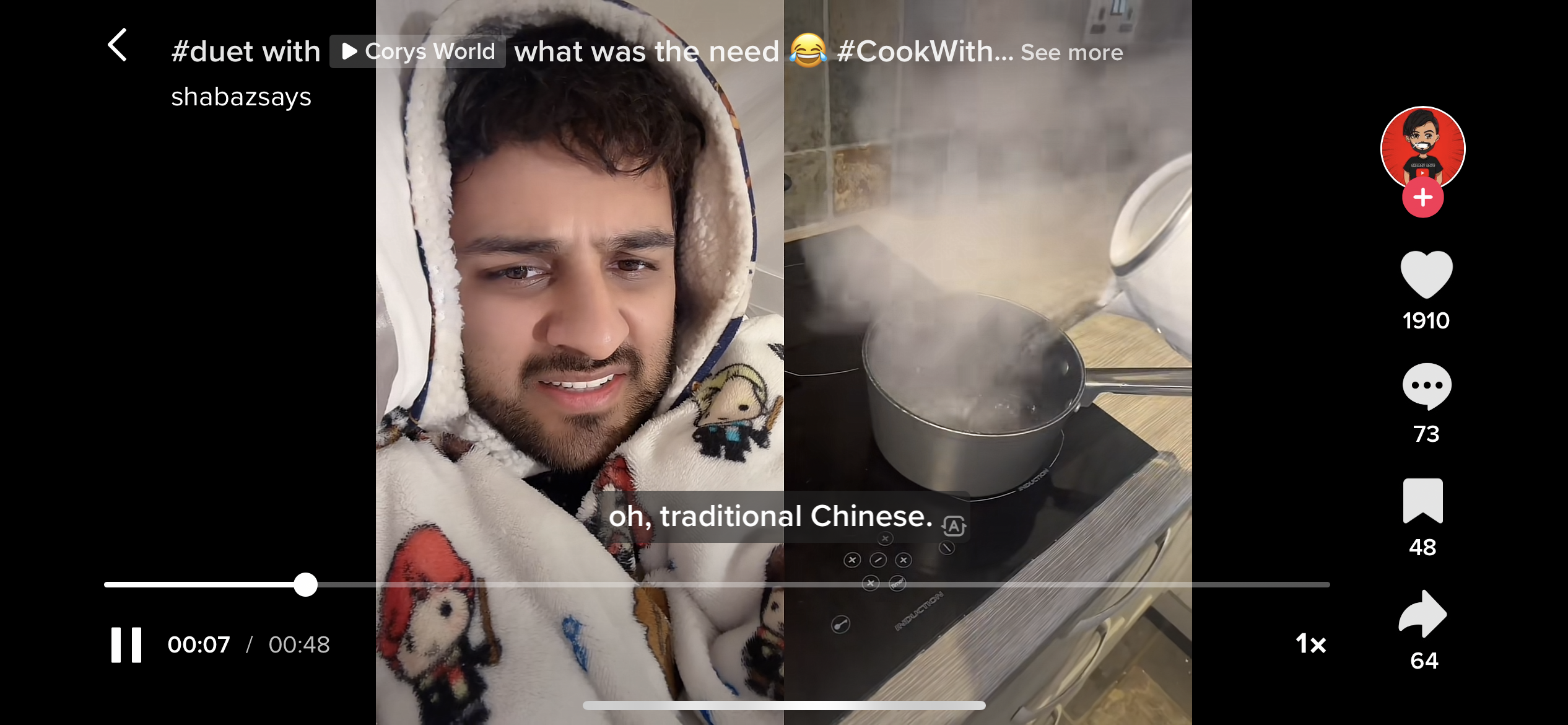
TikTok is testing a new horizontal full screen mode with select users globally, the company confirmed to TechCrunch. Users who have access to the test feature will see a new “full screen” button appear on square or rectangle videos in their feed. Once you click the button, the video will shift into a horizontal full screen mode that takes advantage of all the real estate on your phone.
The test feature marks yet another way that TikTok is steadily inching into YouTube’s territory. Earlier this year, TikTok rolled out the ability for users to upload videos up to 10 minutes in length. The move was seen as a way for TikTok to attract the same sort of longer-form video creators who normally post content on YouTube. With the expansion, creators gained more flexibility to film things like cooking demos, beauty tutorials, educational content, comedy sketches and more, without having to worry too much about the video’s length.
Now that TikTok has been supporting long-form content for a while, it makes sense for the company to enhance the viewing experience for users who are watching these sorts of videos, while also making the creative experience better for creators. Oftentimes creators will add a “turn your phone” message at the start of a video to get users to fully enjoy the content that’s about to play if they recorded a video horizontally. With this feature, creators would no longer have to do that.
Although some people may welcome the test feature and the opportunities that it brings, others may not. TikTok is the app that largely popularized the vertical video scrolling format that other companies were quick to copy, so its users may not exactly be fond of the new full screen mode after being accustomed to the vertical format.
Image Credits: Screenshot/TechCrunch
As with any test feature, it’s unknown when or if TikTok plans to release the full screen mode widely to all users. It’s also worth noting that if TikTok does decide to release the feature officially, the final product may look different than the test product.
One way that TikTok could possibly change the feature before an official rollout is by making it more intuitive. You currently have to click the button to switch to full screen mode, but maybe in the future users will just have to turn their phone sideways to watch in full screen, which is something that other apps allow users to do.
The test feature comes at a time when data has shown that kids and teens now spend more time watching TikTok than YouTube. This has been the case since June 2020, when TikTok began to outrank YouTube in terms of the average minutes per day people ages 4 through 18 spent accessing these two competitive video platforms. By enhancing its viewing experience, TikTok is continuing to inch further into YouTube’s territory.
On the other hand, YouTube is also continuing to rival TikTok with Shorts, its TikTok competitor. In September, YouTube announced major changes to its YouTube Partner Program, allowing creators to earn ad revenue on Shorts. Prior to this, no short-form video platform quite figured out how to share ad revenue, which gives Shorts a leg up on the competition.
Cheap and free cost the Earth. And we’re all a part of the problem, along with digital giants.
Much of the digital world is built on lies. A search is not free. A tweet is not free. Facebook is not free. Packing and shipping are not free. Every year, billions of trees are cut down for packaging. Every year, Amazon uses enough plastic to smother the Earth. Delivery trucks cost. We return four times more bought online than in stores. Most returns end up being dumped rather than resold. Cheap and free cost the Earth.
Digital Brands and Humans Are to Blame
The digital brands cleverly hide from us the true and total costs, and we hide from ourselves the acknowledgment that costs must be paid so that we can do these things for “free.”
We are in a climate crisis that has exploded onto a whole other level of harm since the 1970s. Of all the CO2 damage that humans caused over millions of years, we have caused 75% of it since 1970. In 50 years we caused three times more damage than in the previous three million years. This explosion in harm runs hand in hand with the explosion in technology.
A human with their bare hands can only do so much damage. A human with a smartphone is lethal. To manufacture, that phone caused 60 kg of CO2; 90 kg of earth were dug up; 4,000 liters of water were wasted. Using the phone, we can book “cheap” flights, order four pairs of jeans when we only intend to keep one, browse the superficial features of the next planet-killing SUV we plan to buy. Digital has turned humans into devourers.
What Facebook, Google Really Represent
This is some of the cost of free. Relentless, AI-manipulating advertising. Google is an AI advertising machine, not a search engine. Facebook is an advertising machine, not a community. The free model of the Internet can only be maintained through overconsumption and constant growth. If we continue this free model, we are guaranteed to eliminate life on Earth within the next 50 years.
In 1970, we dug from the Earth 25 billion tons of material. In 2020, we dug 100 billion tons. In 2050 we will dig 170 billion tons. Mount Everest has a mass of 150 billion tons. Life on Earth cannot survive a species that is devouring a Mount Everest every year.
I have been very slow to change myself. Since 1996, I have been publishing this opinion piece for free. From January 2023, I intend to charge €10 for a 12-month subscription to the email version. Perhaps nobody will subscribe. That’s OK. It’s much better than sending thousands of emails every week to people who no longer want them. I will leave it for free on my website for those who genuinely can’t afford to pay but who would like to read it.
If you’re using the free model, I ask you to reconsider it. It is a poisonous and deceptive model, full of tricks and multi-layered costs. The advertising industry has an enormous underworld web, consuming vast quantities of energy and creating enormous and utterly unsustainable levels of waste.
Digital advertising is probably an even greater threat to life on Earth than the fossil fuel industry. Every time we buy into the Big Lie of free, we make a down-payment on our extinction.
When it’s free, you are the product, and the Earth pays the price.
Gerry McGovern is the founder and CEO of Customer Carewords. He is widely regarded as the worldwide authority on increasing web satisfaction by managing customer tasks.
When you played video games as a kid, you would likely often look for cheat codes to help you gain a competitive advantage. Specific cheat codes would help you get to the next level of the game when you feel stuck.
Suddenly, this cheat code would unlock a new achievement and allow you to save yourself a significant amount of time. Did you know that there are cheat codes to life that could put you ahead of others?
We’re going to look at 15 cheat codes that will put you years ahead of 95% of people out there.
1. Become comfortable with getting rejected. The sooner you stop fearing rejection, the sooner you can become unstoppable.
Every successful entrepreneur or person has been through a laundry list of failures. As much as we love to glamorize risk-takers, we can’t ignore how much they’ve failed on the road to success. One could even argue that the road to success is paved with failures and crushed dreams.
The good news is every rejection or failure brings you one step closer to a yes that could change your entire life. They say that when one door closes, another one opens. This may not seem like the case at the moment, but those rejections will help you become more tenacious so that you’re ready for whatever life throws at you.
2. Pay attention to how people treat service workers because this reveals their true colours.
How someone treats those who can’t do something for them accurately indicates character. You can learn plenty from how someone treats service people.
There’s one quote that summarizes this best, and we really can’t argue with the greatest of all time:
“I don’t trust anyone who’s nice to me but rude to the waiter. Because they would treat me the same way if I were in that position.” ― Muhammad Ali
3. Embrace adversity because it will help you grow more than being stuck in your comfort zone.
Your comfort zone is the worst place you can spend any time if you want to see growth in your life. The comfort zone is where dreams go to die because nothing remarkable ever came from playing it safe.
How can you embrace adversity?
Don’t be afraid to suck at something new.
Challenge yourself constantly.
Try a new sport regardless of your age.
Seek feedback from people who aren’t afraid to hurt your feelings.
If it scares you, then it means that you need to do it.
If your goals aren’t intimidating, then they’re not bold enough.
4. Take action first and then figure it out as you go.
So many of us want to know everything upfront before taking action. Taking action when you don’t know all of the answers is a true superpower. The stars will never align, and the universe won’t conspire to give you the perfect conditions for starting. You have to take action first and then watch how everything conspires in your favour once you start to build momentum on your own.
This Ryan Holiday quote from “The Obstacle is The Way’” summarizes this notion best:
“We often assume that the world moves at our leisure. We delay when we should initiate. We jog when we should be running or, better yet, sprinting. And then we’re shocked –shocked!—when nothing big ever happens, when opportunities never show up, when new obstacles begin to pile up, or the enemies finally get their act together.”
Instead of waiting for the perfect conditions to start, focus on progress over perfection. Your future self will thank you for the risks you take today when you don’t feel fully prepared.
5. Know what you want out of life, or you’ll never get what you want.
They say that no road will take you there when you don’t know where you’re going. You must figure out what you want from life to start planning to make it happen. So many people walk through life aimlessly without a plan, and they wonder why they never seem to get lucky.
Knowing what you want out of life is the ultimate cheat code. Once you know what you’re after, you can craft a plan to go after it. The best part is that no matter what you want to accomplish, chances are that someone out there has already done it, so you can learn from them by buying a book, taking a course, or paying for coaching.
6. Never stop investing in yourself because this is the most important thing you can do.
Making yourself a priority isn’t selfish; it’s actually the most important thing that you can do because you can’t pour from an empty glass. Every investment you make in yourself today will pay dividends for years.
How can you invest in yourself right now?
Learn a new skill. The more that you learn, the more that you earn.
Buy a book on a topic that fascinates you. Everything that you could want to learn about has been written about. You can spend $20 on a book to acquire a lifetime of knowledge.
Spend money on your health. Always spend the money on eating better and the best physical training you can get. You want to ensure that you’re physically and mentally prepared for whatever life brings you.
Take someone out for coffee or lunch. You can learn something from someone who’s a few steps ahead of you by offering to take them out for lunch.
Attend an event or conference in your field. They say that your network is your net worth. You want to do what you can to get around those who are already where you want to be one day.
7. Focus on one thing at a time because multi-tasking is the biggest trap.
Multi-tasking is a recipe for doing a mediocre job on a bunch of random tasks. If you want to see remarkable results, you must focus on one thing at a time to give it your full attention. When you chase two rabbits, you end up catching none of them. While social media is filled with people bragging about how much they do, the reality is that we’re all better off focusing on one important task at a time.
You owe it to yourself to read “The One Thing” by Gary Keller if you struggle with focusing on one task at a time. Here’s a quote that simplifies the entire book into one sentence.
“It is not that we have too little time to do all the things we need to do, it is that we feel the need to do too many things in the time we have.”
Most of us don’t have an issue with time management. We struggle with figuring out the one thing that deserves our focus, so we try to complete multiple different tasks simultaneously.
8. Stop lying to yourself if you want to become unstoppable.
You have to know yourself and be self-aware enough to accept your limitations. There’s no sense in lying to yourself because you’re only going to set yourself up for disappointment. As tempting as it is to make audacious statements about what you plan on doing, you’re better off setting small and attainable goals that will help you get to the finish line.
9. Focus on quality friendships to build deeper relationships.
How many times have you seen a documentary about an athlete, musician, or celebrity who ended up losing everything they had? These people were always surrounded by an entourage, yet it seemed like they didn’t have any real friends. You don’t want this to happen to you.
A few quality friendships with deep connections are worth more than many acquaintances who don’t care about you. You want to surround yourself with people on a similar mission so that you don’t get side-tracked or brought down by anyone’s misery.
10. If you want to achieve greatness, you have to accept suffering.
You won’t get anywhere in life if you avoid all suffering. There’s a reason why so few people end up building a successful business or can get into amazing physical shape. Most of us will give up on suffering because we’re not sure if the short-term discomfort is worth the long-term results.
Knowing that suffering today for a better tomorrow is worth it is a cheat code that very few will accept. Whatever you’re going through today will be worth it when you get to the other side. Nothing worth doing has ever been easy.
11. How you react is much more important than what happens to you.
Life isn’t about what happens to you. It’s about how you react to what happens to you. Instead of blaming the world for your problems, you have to get into the habit of taking accountability for your situation.
You can’t choose what happens to you, but you can choose how you react to it. How you respond to conflict and challenges will say plenty about you.
12. Choose to change your life if you want it to change by tomorrow.
Your life won’t change until you change. This means you have to decide to change your life because nobody else can do it for you.
You can hire coaches, pay for mentorship, and join a mastermind, but none of that will mean anything if you don’t decide that you’re going to change. The choices you make today will be reflected in the results you get tomorrow.
13. To become successful, you’ll have to make many sacrifices.
Many sacrifices are required if you want to get to the next level. The good news is that every sacrifice you make today will be evident in the rewards you receive in the future.
14. You become more powerful when you don’t worry about what others think of you.
So many of us worry about the opinions of others when in reality, those people don’t even know what’s best for us. It would be best if you didn’t worry about the opinion of those who don’t know what you’re going through.
The truth is that most people will judge you because they’re jealous that you’re not afraid of taking risks. You’ll never be criticized by someone who’s doing better than you. Criticism tends to come from those who aren’t doing as well as you.
This quote about worrying about what others think always makes me think…
“When you’re 20, you care what everyone thinks, when you’re 40, you stop caring what everyone thinks, when you’re 60, you realize no one was ever thinking about you in the first place.”
This quote was originally attributed to Winston Churchill, but the original author hasn’t been verified. Regardless of who said this, we spend far too much time worrying about what others think of us when their opinions don’t pay our bills.
15. Your vibe attracts your tribe.
Smiling may not seem like a big deal at the moment, but your energy will attract many opportunities. You may have heard how your vibe attracts your tribe, but you don’t realize how accurate this is until you try it. How you present yourself to the world will determine what kind of energy you attract into your life. It’s important to remember this when you step out into the world.
Those are 15 cheat codes that will help you get ahead in life. Save this list and refer to it when you’re looking for some inspiration or when you’re just feeling stuck.
Work Hard to Win at the Game of Life
Why cheat at video games? Because you want to win! Old-school gamers will remember the days of pressing Down Up, Right, Left, Left, A, B, B, A, B, Up, Down, and similar combinations to unlock unlimited health, wealth, and more. If you can find a cheat code for life, you’re better positioned to find yourself winning at your goals.
My former colleague Corin Faife wrote an excellent explainer on the controversy earlier this year. But the TL;DR is that MV3 swaps out a powerful API used by ad-blocking extensions called Web Request for another called Declarative Net Request. The latter gives less power to ad-blocking extensions in an attempt to minimize security risks, but critics argue it restricts actions legitimate extensions might take to protect user privacy. Corin’s piece is well worth reading for a more thorough explanation.
As of late September, Google had planned to experiment with turning off MV2 in Chrome’s Canary, Dev, and Beta channels starting in January 2023, broaden the experiments to include the browser’s stable releases in June 2023, and stop running MV2 extensions entirely in January 2024. But as of December 9th, it’s postponing the January experiments and placing future milestones “under review.”
In his post, Vincent says the timeline has been pushed back to address feedback from developers. “We’ve heard your feedback on common challenges posed by the migration, specifically the service worker’s inability to use DOM capabilities and the current hard limit on extension service worker lifetimes,” he writes. “We’re mitigating the former with the Offscreen Documents API (added in Chrome 109) and are actively pursuing a solution to the latter.”
While rival privacy-focused extension Ghostery has opposed the MV3 changes, it’s worth noting they have the support of Adblock Plus. But ad-blocking is a sensitive topic when it comes to Google, given advertising still provides so much of the company’s income. And since the changes are being made to the Chromium project and not just Chrome specifically, they’re likely to impact other browsers like Edge, Brave, and Opera.
Despite the delays, it sounds like Google doesn’t have any plans to ditch its migration to MV3 entirely. Vincent says that Google will announce an “updated phase-out plan and schedule” in March next year.
Feature Image Credit: Illustration by Alex Castro / The Verge
As marketers and brands around the world start 2023, one subject I find myself discussing more and more frequently is creativity. Internally, creativity is critical for keeping agencies competitive. Externally, creativity is key for driving results for our clients and partners.
But just saying “think creatively” is a vague request and, therefore, a lost cause. Creativity means different things across the spectrum of marketing channels and expertise.
Looking forward to next year, I want to take some time to outline not only why creativity is key but also where creativity comes into play for improving performance and maybe even helping to future-proof the marketing industry.
Automation Fuels Creativity
While some fear automation as a threat to their particular area of marketing expertise, I personally see automation innovations as gifts that allow us to refocus our creative mindsets.
The time that may have been taken up by manually tracking data points for optimizing the performance of a landing page, for example, can now be reinvested into creating more landing pages for testing. New ad platform innovations like Google’s Performance Max may free up time for Google marketers to create more differentiated ad messaging for more rapid testing and optimization.
As another example, not too long ago, we had to crack open a laptop and dedicate hours upon hours to edit video content. Now edits, flashy transitions and color correcting can be automated on our phones if we desire.
I urge fellow marketers to take advantage of and embrace automation for reasons like these. Time is our most precious commodity, and automation offers us all more time to get creative with our content.
Strategy Requires Creativity
Often overlooked is the need to flex creative thinking to develop effective marketing strategies. Developing creative strategies is an underappreciated but deeply important skill for effective marketing campaigns.
At its core, strategy is problem-solving—mapping out a solution of tactics, tools and processes for going from where you are to where you want to be. Now, this may require thinking about data in creative new ways, exploring the connection of marketing channels from different angles and even re-exploring the pieces of the marketing funnel for different clients.
Remember, a creative mindset is not confined to copy, messaging and design. Without a strategy, there is no vision for how the pieces of the marketing puzzle will fit together. Without creativity, your marketing strategy is likely to fall flat.
Context Takes Creativity
If you take one thing away from this exploration of creativity, let this unpacking of context be the winner.
Context, in my opinion, generates 80% to 90% of the power attached to any piece of marketing content. Ad channels, website content, emails, social platforms, etc.—each require a different understanding when adapting content to the specific medium.
This is a very jargon-filled way of saying “what works in one place may not work in another.” For example, it requires creativity to take the essence of a product page on a website and pivot it to work for a Google ad. Even repurposing the minimal text of a Google ad for Facebook demands an understanding of the context so you can make the appropriate changes.
Just because someone is an amazing blog writer does not mean they can just bang out copy for a Google ad, Facebook ad or email drip campaign—and vice versa. It takes rapid creative thinking and an understanding of the content’s real-world context to be effective. Take the time to ensure you have the right creative minds in the right seats.
Loyalty Needs Creativity
In 2023, customer loyalty, and in turn better customer lifetime value, will become even more important. With a possible recession on the horizon, brands need to hold on to as much repeat business as possible.
So, where does the creative mindset come into play? Well, what drives loyalty is different across the board. It may take a combination of data, messaging and channel creativity to find an effective strategy for outreach, follow-up and loyalty-based promotions that are personalized for your various customer cohorts.
This might even mean polling your customer base to better understand their needs and desires so that you can proceed with creative and innovative loyalty programs.
Customers Want Creativity
All in all, customers have a thirst for creativity—something that breaks through the noise and makes them pay attention. There is a reason that people always talk about the commercials they see during the Super Bowl—it’s the “Super Bowl” of creative ideas.
The good news (and bad news) is that there are no rules surrounding creative concepts. “Got Milk?” and “Think Different” were beyond basic but broke through decades ago and are still remembered today.
There is a reason that consumers across demographics have pivoted to a platform like TikTok: We are attracted to new ideas. This platform has fostered a completely new avenue where creators are promoting products in ways that massive brands could never have seen coming.
The point is that customers and clients will always be in the market for new creative ideas and concepts. Businesses and brands will forever need creative strategies to progress. Marketers cannot ignore the power of creativity.
Creativity Is Non-negotiable
We have to invest in creative minds and ideas to keep our customer bases secure. You, your business or your agency partner may not (understandably) have every single creative angle covered. Anyone who claims to be an expert in every creative sphere is either lying to you or themselves.
So consider the various touchpoints of creativity, from the aesthetic to the strategic, and be sure to have your bases covered as you welcome 2023.
Bernard May is the CEO of National Positions, a 5-time Inc. 500 company, award-winning marketing agency and Google Premier Partner. Read Bernard May’s full executive profile here.








:format(webp)/cdn.vox-cdn.com/uploads/chorus_asset/file/24288081/txfDeyLhratHCO1P3wvc.jpg)
