These days, agencies act more like orchestrators of tech and creator access
A decade ago, I fought tooth and nail to gain a foothold in the advertising industry. I contacted the great-ish minds of our generation leading strategy at the legendary Madison Ave. shops and the new-fangled, tech-enabled experience studios. Handwritten letters rattled the bin without reply. Most emails went unanswered, save for a few generous folks who gleaned genuine interest in my request.
To those folks, I explained my interest—I am curious about people.
During a decade working brand-side marketing roles, I glimpsed what agency strategists got to do and I was jealous. One anecdote came from my time at a youth-focused travel company. As part of a project, I flew to London and trailed a few strategists from our agency for field research. We hit university pubs, buying students pints of cider and lager in exchange for travel stories and booking experiences.
Strategists sought a truth about humans, business and culture. While the world of advertising was already in flux, it still had some shine. It seemed a fitting way to use my journalism degree while making enough to not need more roommates than rooms in my apartment.
There were trips for some to industry confabs. At least once a week, we entertained a client with dinner and drinks or at least a stop at happy hour. I got to do plenty of research interviews. I even spent a few years working at iconic agencies in London, the birthplace of planning.
Today, I fear the industry is losing what made it home for misfits like myself—its focus on people.
Recently, a well-known CMO shared a screenshot on LinkedIn. In the midst of a publisher’s article was an ad. This ad looked nothing like the ads I wanted to help create. You can imagine it now. They are usually found at the bottom of articles on news websites. They feature a clickbait headline, an AI-generated image and a tiny disclosure line in a half-assed attempt to tell you what you’re seeing is an ad and not actual news.
Over the decade since I got into advertising, the share of ad revenue going to Meta, Amazon, Microsoft, Alphabet and TikTok has climbed rom 22 percent to 65 percent, per MoffettNathanson. Instead of the industry using its understanding of people to help these platforms create ad formats and creative that work through narrative and entertainment, agencies bent the knee. They reworked ideas to fit formats, ceded creation to influencers and accepted that somewhere between 5 and 50 percent of the users seeing an ad weren’t people, but bots. Unsurprisingly, the percentage of humans who find advertising annoying has also climbed.
A recent report from Forrester predicts that, “As creators take on more ideation and production responsibilities, creative agencies will act more like orchestrators of tech and creator access.”
Times change and culture shifts. I’m not naïve enough to see this prediction as a surprise nor stubborn enough to grasp at the vestiges of the industry of yore. What floors me about Forrester’s prediction is how willing the industry is to cede its leadership in understanding people.
These digital behemoths have reduced users to data points that brands can buy for pennies on the dollar. They don’t need to understand their users. Heck, they don’t even need to acknowledge that there is a human user. What matters is the identifying ID that bought from an e-commerce shop after tapping an ad so bad that even a junior art director wouldn’t put it in a sparse portfolio.
Our industry can and should do better.
Let’s give life to those aggregated data points. Let’s help clients see what they are already pointing out themselves: AI slop and clickbait ads are not going to win hearts and minds.
Research from System1 and others has shown that creators, as proper collaborators, can play a brand-building role. We can’t settle for becoming an orchestrator when at the very least we should be composing the music.
And these people aren’t gone. In terms of positioning, they are still our most valuable offer. They show us that when the advertising industry focuses on people, both those creating the ads and those enjoying them, the advertising industry wins.
A massive disconnect exists between media spends and media consumption. The disconnect between ad spend and consumption reality has multiple causes:
1. Outdated media mix models offered by major consulting houses weight older media forms like broadcast and cable more than new forms of media or ignore them completely.
2. Media fragmentation has muddied the marketplace with hundreds of new channels.
3. New media forms don’t have or haven’t built platforms allowing advertising at scale.
4. Bureaucracy. Large marketing organizations are slow movers, despite audiences moving elsewhere.
5. Change is hard. Lazy marketers stick to what has worked in the past, ignoring audience shifts.
The cure to mismatched advertising remains simple: follow your audience. In the spirit of smarter marketing, we compiled statistics from eMarketer, Warc, and Statista to create a guide for modern media consumption. Four simple pie charts detail each generations media consumption.
Our goal – to encourage marketers to think critically on closing the gap between their marketing spends and viewership realities.
Gen Z: Occupy the social, video game and streaming space
Gen Z, people aged 12-25, are the socially conscious, woke, TikTok dancers that advertisers can’t talk enough about. This group can be boiled down to four channels: social, streaming TV, streaming music, and video games. That’s where 90% of your budget should go to reach ad land’s most desirable, youngest, and impressionable demographic. For young women, skew to streaming TV; for young men, invest more in video games. Social should be prioritized for each.
Consider cutting your entire traditional TV buy for this audience. Yes, I just said that. eMarketer and Warc put Gen Z TV consumption at less than an hour a day, the lowest of any group. We still think an hour is an overestimate from antiquated survey methods that don’t accurately reflect or reach this audience.
Gen Z should be reached through digital channels. Strategies that heavy up on social, video games, and streaming platforms (Hulu, YouTube, Twitch), will win here. Don’t over-complicate it and stop buying broadcast TV.
Millennials: Straddle old and new media as the OG digital disruptors
Millennials, consumers aged 26-44, embody digital disruption, inheriting their name from the millennia transition and Y2K. With the most dispersed media habits on our list, millennials epitomize the move to digital with the adoption of the internet, iPhone, and social. This shift has caused them to share media habits from both older and younger generations. I sit square in the middle at 31, having enjoyed the razor flip phone, iPod, and AOL instant messenger.
This is the generation that embodied digital disruption, where analogue, cable, and broadcast were challenged by digital media. The dispersed viewing habits require advertisers to spread media spends across a wide variety of platforms.
Although advertisers have dumped us as they chase younger consumers, this demographic offers the biggest upside in buying power for brands. In our prime working years, this generation is having kids, buying houses, getting a car, or going through their midlife crisis.
We are also the first generation to stream more TV. We invented and adopted streaming audio. We love podcasts with the highest consumption of any generation. We also make up the majority of the workforce now. Ignore us with caution.
Gen X: Dispersed media while holding on to traditional TV
Gen X, people aged 45-60, also known as the forgotten generation, grew up in 80s pastels, pioneered cable, and watched a lot of MTV. This is your aunt on your Facebook, commenting about how she saw Madonna at Studio54 that one time.
Gen X share distributed media consumption with the millennial audience, albeit skewing toward older media forms like traditional TV. Curiously, Gen X also consumes the least amount of media at roughly eight hours. This generation is most likely to still have their pay TV bundles as well as new streaming TV subscriptions.
Gen X is busy. They are the most likely to be parents (of Gen Alpha) and occupy senior work positions. Although the least covered in advertising trades, they have the highest disposal income of any generation, according to the World Economic Forum.
Gen X sits in its highest earning years before the retirement. Brands, especially housing, luxury, finance, and healthcare, would do well to remember Gen X. Advertisers should lean into traditional TV while spreading their spend into diverse media to reach this big spending consumer.
Boomers: Stick with traditional TV buys while dabbling in streaming and social
Boomers, consumers 60+, grew up the 50s and 60s and now have their feet up kicked up as they enter retirement. Boomers are the parents of the millennial generation and the most likely to lie about their drug use in college.
Boomers love traditional TV. This is your dad who sends you clips from FOX News, CNN or MSNBC on how the country is going to hell. Boomers are the most likely to have pay TV packages, watching roughly 4.5 hours each day, almost 50% of their total media consumption.
When they are not parked in front of the TV, Boomers dabble in social media and streaming TV. All advertising that seeks to reach this audience should have TV buys baked in. The original TV generation are still the OG couch potatoes. They will have the cable plugged in for the foreseeable future, but will slowly adopt new media to connect to post awkward comments to their kids and grandkids.
Parting thoughts on marketing across generations
The guide’s media breakouts should provide a blueprint for planning marketing campaigns around shifting media habits between generations. Keep in mind:
1. Tech adoption happens bottom up, from the youngest to oldest, necessitating new strategies to meet the younger generations where they are.
2. As new generations mature into adulthood, their media habits crystalize while their buying power increases. Don’t forget about the wisest and biggest wallets in favour of chasing youth.
3. No media really dies. Headlines like these are clickbait. The pie just shifts. Your marketing budget should reflect those consumer shifts.
The three takeaways will help you close the gap between budget allocation and consumer realities. The audience is what matters, no matter the medium.
Wes Morton is the founder and CEO of Creativ Strategies. A native Texan, his 10-year career has spanned three advertising agencies through New York and Los Angeles, managing multi-million-dollar campaigns for Sour Patch Kids, Swedish Fish, OREO, British Airways, EA, BEN and more. In 2021, Wes Morton founded Creativ Strategies, a full-service marketing consulting firm for media and tech brands, where he leads a team of expert marketing consultants. He writes and surfs every day from his home in Venice, California.
If you are working in influencer marketing, you must have heard of the new buzzword: AI influencers.
AI influencers, also known as virtual influencers, are quickly becoming one of the most talked-about trends in the influencer marketing world. These digital personalities, often powered by AI and CGI, can look and behave like real people. Some are animated or stylized, while others are nearly indistinguishable from humans.
While AI influencers won’t replace human creators, they are changing the game, offering new opportunities for creative campaigns, brand storytelling, and customer interaction. Understanding how to work with these digital personas is key for marketers who want to stay ahead of the curve.
In this article, CreatorDB explores the evolution of AI influencers, why they’re gaining popularity, how leading brands are using them, and what this trend means for the future of influencer marketing.
What Are AI Influencers?
AI influencers are digital personas created using AI tools and CGI. They behave like human influencers, posting content, engaging with followers, and partnering with brands, but they are not real people. Some are managed by agencies, while others are entirely autonomous with AI-generated visuals and personalities.
According to The Conversation, there are three main types of AI influencers:
Non-Humans – Characters that are clearly fictional (e.g., mascots).
Animated Humans – Stylized or cartoon-like personas.
Hyper-Realistic CGI Humans – Nearly indistinguishable from real people.
Some of the most well-known examples include:
LilMiquela – Fashion and music influencer with over 2.7 million followers.
Imma – A Japanese virtual model with a highly engaged following.
Kuki – An interactive chatbot with a social media presence.
A Brief History of Virtual Influencers
The concept of AI influencers first came out in the early 2010s.
Back then, the early versions of AI influencers were simply virtual characters in the gaming and entertainment industry.
As AI and computer graphics developed, these characters started to have more nuances and became more sophisticated, eventually becoming the virtual influencers we see today.
In 2016, the world welcomed Lil Miquela, who is considered the first official hyper realistic AI influencer in history. After her release, there were a ton of debates about whether she was a real person or not.
Since then, the virtual influencer industry has exploded:
CB from Casa Bahia – A Brazilian virtual mascot with over 10M followers.
Milla Sofia – An AI-generated influencer using diffusion models.
Brand-created influencers – From Lu of Magalu to Noonoouri, companies are building and managing their own digital ambassadors.
Why Are Brands Turning to AI Influencers?
Though still niche, AI influencers appeal to brands for several compelling reasons:
Total control over content, messaging, and brand representation
No scandals or PR risks, unlike human influencers
Always available for campaigns and engagement
Cost-effective over time
High novelty value, boosting brand buzz and attention
Besides those reasons, according to Influencer Marketing Hub data, AI influencers are collecting excellent feedback from the marketers who worked with them and inspiring more collaborations:
59.8% of marketing professionals have worked with AI influencers
15.5% plan to collaborate with AI influencers
Over 60% of those who once collaborated with virtual influencers are satisfied.
Since AI influencers don’t exist as people outside of their social media feeds, a team of professionals manages them, making it easier to align them with the specifics of a marketing campaign.
Infographic showing attributes of AI influencers vs human influencers. – CreatorDB
Case Studies: How Brands Are Using AI Influencers
Although there is still no data about how effective AI influencers are compared to traditional influencers, it is clear that the fit with the product is still the most critical factor for a successful influencer marketing campaign.
Audiences might be happy to see the innovation of AI influencers, but they may find human influencers more relatable regarding certain products.
Still, AI influencers are great if brands want to showcase an innovative image and position themselves at the forefront of a trend.
CreatorDB found three case studies in different industries to help you better understand how to work with AI influencers.
1. Hugo Boss Rebranding: Rebranding With Imma and Nobody Sausage
In the spring of 2022, the German fashion brand Hugo Boss underwent a major rebranding effort to reach the younger generations. First of all, it was the campaign, which included many traditional fashion influencers such as Kendall Jenner and Hailey Bieber.
In addition, they partnered with Nobody Sausage and Imma, two of the most well known AI influencers in this field.
Integrating virtual influencers in the rebranding was a powerful signal that Hugo Boss’s future will focus on technology and innovation.
2. Samsung x Miquela: A Digital-First Dream
Miquela Sousa, created by Brud, partnered with Samsung as part of its #TeamGalaxy campaign. The collaboration highlighted the futuristic appeal of both the Galaxy smartphone and its ambassador. The campaign effectively reached tech-savvy digital natives and reinforced Samsung’s innovation narrative.
3. Dior x Noonoouri: A Virtual Icon for a Classic Brand
In 2018, luxury meets digital with Noonoouri’s campaign for Dior’s “Rouge” perfume. In a side-by-side recreation of Natalie Portman’s classic ad, Noonoouri added novelty and visual intrigue. This AI-led approach helped Dior appeal to both fashion lovers and early adopters of virtual media.
4. Magalu’s Lu: A Virtual Face of Retail
Lu of Magalu is not just a virtual influencer. She is the face of the leading Brazilian retail chain Magalu. Her profile blends memes, reels, relatable content, promotions, and branded content. By developing its influencer, Magalu can provide a more interesting face to its promotion and resonate better with the clients.
5. Coach x Imma: Storytelling That Blends Real & Virtual
Coach’s 2024 “Find Your Courage” campaign merged CGI and real personalities. Imma’s story—her journey to become human—ran alongside stars like Lil Nas X and Camila Mendes, showcasing how virtual influencers can amplify emotion-driven narratives through immersive storytelling.
What’s Next: The Future of AI Influencers
With tools like Midjourney, ChatGPT, and Runway advancing rapidly, brands and creators alike are experimenting with AI-powered personas that can communicate, adapt, and even develop unique personalities over time. Whether for cost-efficiency, creative flexibility, or 24/7 availability, AI influencers are unlocking new ways to build audience engagement and brand value.
AI Influencers for Brands
Many established AI influencers are created by marketing agencies at high costs. However, with the rise of ChatGPT, specialized LLMs, and GAN models, brands can now easily generate AI influencers tailored to their image and goals.
Tools like SynthLife enable the creation of realistic characters with branded elements, extending beyond images to AI-generated videos. Combined with AI-powered chatbots, these influencers offer 24/7 personalized social media engagement, acting as powerful brand advocates.
Why AI Influencers Work for Brands
Customers seek intimate, personalized interactions with brands, not just one-way messaging. Brands can meet this demand by expanding costly support teams or deploying AI influencers and chatbots that deliver personalized attention efficiently.
Effective AI influencers boost customer engagement, increasing social media following, visibility, and conversions by providing constant support and interaction.
The Future of AI and Branding
As AI influencer creation becomes simpler and largely self-sustaining, many brands will integrate AI characters into their core marketing strategies. These influencers offer a humanized yet curated brand presence, fulfilling consumers’ desire for thoughtful, authentic interaction.
Legacy brand characters brought to life as AI influencers will also capture significant attention, opening a new dynamic channel for brand storytelling and engagement.
AI influencers will significantly impact content creators—not by replacing them, but by enabling virtual clones that offer fans a more intimate, personalized experience.
For example, Caryn Marjorie pioneered this with Caryn AI, created in partnership with Forever Voices AI. Her AI clone, trained on hundreds of thousands of interactions, allows fans to chat directly with a virtual version of her. This innovation earned $72,000 in its first week and is projected to generate $5 million monthly as her following grows.
The Future of AI for Content Creators
Like brands, content creators will increasingly use AI tools and clones to deepen audience connections. Creators’ unique personalities, which build strong parasocial bonds, can be replicated by AI for personalized one-to-one interactions, boosting monetization and engagement.
Creators known for niche expertise can also train AI on their vast content libraries, offering fans faster, more intuitive access to their knowledge.
Overall, AI will drive a surge of innovative applications among content creators, transforming how they connect with and serve their audiences.
Final Thoughts
AI influencers are not just a passing trend, they’re the next evolution of digital branding and content strategy. For both brands and creators, the ability to scale engagement, personalize experiences, and control messaging offers significant long-term value.
As technology matures, expect AI influencers to become more intelligent, expressive, and seamlessly integrated into the digital experience.
FAQs about Virtual Influencers
1. How do AI influencers maintain engagement and authenticity in interactions with their followers, given their non-human nature?
AI influencers engage followers through programmed responses and content that resonates with audience interests, though this might lack the depth of human interaction.
2. What ethical considerations might arise in using AI influencers, especially concerning transparency and disclosure to audiences?
Ethical concerns include the need for transparency about their AI nature to avoid misleading audiences.
3. How is the content creation process involving AI influencers managed, and who is responsible?
The creative process involves teams of designers and AI specialists who develop the influencer’s persona and content, ensuring alignment with brand and audience expectations.
It’s an unexpected place to spot a recession indicator — from videos reviewing the latest in skin care to picturesque posts of summer vacations — but the impact of turbulent financial markets and seesawing tariff policies threatens to upend the multibillion-dollar influencer industry for millions of online creators.
Recession jitters have made online audiences and brands more discerning about their spending, possibly roiling the traditional income streams that influencers have come to rely on.
“It really does beg the question of what do creators do if the economy isn’t there to support them?” Sam Ogborn asks. Ogborn is a content creator and marketing strategist who has worked with brands like Red Bull and Walgreens. “If they’re so reliant on fans to buy from them and support them, what happens when that starts to go away?”
Recession fears grow as consumers’ confidence declines
Posts sharing luxury handbag collections or exotic vacations were once popular on TikTok and Instagram, but now influencers are facing backlash in their comment sections for what some followers see as excessive displays of wealth during an economic downturn.
It comes as a majority of Americans say they feel “stressed” or “concerned” about their finances, according to a CBS News/YouGov poll. Over half (54%) said they feel the economy is doing poorly. And it has impacted what audiences want to watch online.
Peyton Knight, a marketing executive at Ladder and founder of Last Digital, which assists companies in managing their social media presence, says the financial anxiety has contributed to a decline in trust between followers and content creators. She says, “The consumer is what really dictates what’s happening in the market. And I think the consumer has pushed back and said, ‘Enough.'”
Hauls and headwinds
Despite influencers’ ability to harness their followers’ buying power to promote a business or sell out a product with a single post, as recession fears grow, consumers’ confidence in their spending power declines, causing brands to recalibrate.
This year, nearly 76% of brands are dedicating advertising funds to online creators. That’s a 10% decrease since 2024, according to Influencer Marketing Hub. Only 12% of those brands said they plan to allocate more than half their budgets to influencer marketing, a 12 percentage-point decline since last year.
Knight explains, “Where brands may have used 20-plus creators on a particular campaign, now on average [they are] using single digits for their influencer campaigns, just depending on the scale.”
The influencer bubble
Nearly 12 million people in the U.S. consider themselves full-time influencers, according to one study, earning an average of $178,000 a year, a number boosted by the earnings of mega-influencers like Addison Rae and MrBeast. However, economic stressors and increased scrutiny from online audiences could cause the industry — and incomes — to shrink.
Knight believes that the inability of some influencers to innovate as monetary support from brands dries up will cause the decline of what she calls the “one-hit wonders”: “Some people just have their moment and then they go away. They try, but they don’t become the next Doechii.”
But the influencers who have staying power will survive, she says. “These people actually create the content I want to consume, that is, in some way, shape or form, is bettering my life or making me interested in a topic.”
Weathering the storm
Ogborn encourages influencers to take an unconventional approach to weathering the storm by looking at how brands reacted during the 2008 recession. “If I were a smart creator, that’s what I would be doing right now — is studying what that looked like and starting to understand how behaviours shifted, instead of scrambling to figure out what to do next. Because creators at the end of the day are brands,” Ogborn says.
For some influencers, it may mean pivoting their content away from shopping hauls and more toward embracing underconsumption. Ogborn says as consumers want to buy less and save more, “it makes sense that a lot of people now watch that kind of content and find ways to be scrappy in their own lives, because they don’t want to just buy a new item anymore and pay the cost of the tariff.”
“The only constant is change”
Caption
A recent Instagram post from content creator and former model Caralyn Mirand Koch. / <a href=”https://www.gpb.org/%3Ca%20href%3D”https://www.caralynmirand.com/”>https://www.caralynmirand.com/” class=”Link” target=”_blank” >Caralyn Mirand Koch</a>
For many influencers who grew up during the 2008 Great Recession, financial turbulence is nothing new. They remember the housing crisis, banks failing and the feeling of economic unpredictability. Yet content creators Kira Abboud and Caralyn Mirand Koch, who remember that time well, remain hopeful about the future of their industry despite the feelings of instability.
Mirand Koch, a lifestyle and fashion creator who has over 400,000 followers on Instagram, says she tries not to operate from fear, but instead remains adaptable, “whether that means shifting partnerships, or fine-tuning my content mix, or just leaning deeper into what my audience is asking for. Whether it’s more lighthearted humor or more lifestyle content and not just necessarily so focused on selling.”
Diversifying, Mirand Koch says, has been key to her success: knowing that social media platforms can come and go, but that “you still want to have your roots and your core of who you are and where your community can find you.” For her, it has meant growing her audiences on other platforms like TikTok and Pinterest, as well as promoting her website.
Abboud, a fashion and styling creator who has over 600,000 followers on Instagram and over 200,000 on TikTok, also encourages creators to look inward and work to better understand where their followers are emotionally and financially during this uncertainty. She says it’s important for her community to feel secure, whether it’s by offering clothing at lower price points or promoting more local brands: “I need to think about what my consumer is doing, so I can give them what they need so they do feel as though their buying power is with me.”
While there is uncertainty of what the future will look like for creators and their followers, for Mirand Koch one thing is clear: “The only constant is change, and you just have to constantly be open-minded and adapt to what’s happening — which is a scary place to be comfortable with.”
What’s making your favourite social videos go viral? The answer might surprise you.
Talking babies, but! Make it a podcast.
That’s the latest AI trend taking over social media as we speak.
Thanks to Pippit, a free AI-powered video generator built by CapCut, anyone can transform images into videos.
Imma be honest with you: talking babies on a podcast wasn’t on my AI bingo card, but I’ll allow it on account of it being so adorable. 😄
In today’s article, we’ll explore how Pippit is transforming the digital marketing landscape, highlight the key features that make it a powerful tool for businesses, and explain why it’s an opportunity to simplify and scale your marketing and content efforts in 2025.
If you’re new to my work, my name is Lester, but feel free to call me Les. I’m a founder with a successful exit, currently the executive chairman of a group of ecom brands, and an award-winning performance marketer.
My team has adopted AI to develop internal tools that enable us to stay ahead in a highly competitive space, providing me with real insight into how AI is transforming digital marketing and the opportunities that come with it.
If you’re finding it hard to stay ahead with AI and want insights and opportunities in this crowded space, consider signing up for my free newsletter, No Fluff Just Facts. I share what’s working, what to watch for, and the AI innovations that are worth your time.
But enough about me. I have to tell you why Pippit is more than just a tool for making funny videos and why it could be the missing piece to taking your career or business to the next level. 🤩
What is Pippit?
Pippit AI is a smart, creative agent owned by CapCut (a ByteDance product), and it could be a game-changer for those who need to create content but don’t have the time.
Pippit lets you upload a photo of yourself and add product details to create hundreds of videos of you talking about any product using avatars or animated characters, all by clicking a few buttons. The best part is that you can start for free.
You can also use the poster layout feature, where you upload any poster, and Pippit will vectorize everything, allowing you to easily move, resize, or edit each element to fit your brand.
They also have a bunch of features like image upscalers and background removers to make your visuals look even sharper.
Here are a few other features I rock with:
Drop in a product link or a few lines of text, and boom; you’ve got a full video without ever touching an editing tool.
Use AI to write scripts and sync them with digital avatars to create professional videos, all without needing to film yourself or hire on-camera talent.
It supports multiple languages and auto-generated captions, making your content accessible to a global audience.
It offers a wide range of trendy elements, including transitions, animations, captions, and AI voice filters, so you can give your content a unique touch, regardless of your product or service.
Pippit includes a built-in media library with royalty-free visuals, music, and sound effects, so you can easily enhance your videos without using additional software or services.
Pippit makes high-quality video creation effortless so that you can focus on growth without the usual barriers, bottlenecks, or burnout associated with content creation.
That said, here are a few things that grind my gears:
The processing speed can be a little slow when working on complex projects. I’m also not a fan of the lack of control over camera angles or motion details.
While the one-click, templated nature is convenient, once you really get into the weeds, it feels like a limitation.
The AI also struggles with realistic human movement and facial expressions, which can make things look weird or unnatural. Honestly, sometimes the content just lacks the creativity and emotional connection you’d get from something made by a real person.
However, these issues are pretty common among most AI video tools.
Pippit use cases
Ultimately, tools like Pippit are designed to help you create better content, and despite its limitations, Pippit can be a valuable tool in your workflow.
Here are a few ways you can use Pippit:
Creating product demo videos
Making explainer videos for complex services or apps
Generating social media content
Producing branded video ads for marketing campaigns
Crafting onboarding or training videos for employees or customers
Making personalized video messages for customer engagement
Repurposing blog posts or articles into engaging video summaries
Designing animated video podcasts or audio-visual articles
Creating educational content or online course modules
Developing quick event promos or announcements for launches and sales
These are all valid ways to use Pippit, but the truth is AI only works if you know what you’re doing, and half the battle is picking the right product or vertical.
For example, no matter what you do, you can’t make 8-tracks sell in this market, no matter how clever your ad copy is or what AI tool you use.
Outside of that, you need to follow the fundamentals of creating content:
Hook – Grab attention and make the user stop scrolling. Example: “Nothing’s worse than this when leaving the house.”
Story – Tell a story, aka set the stage. Don’t just say, “The problem is I can’t find my keys.” Go deeper. Example: “You’re late for work, and your boss is going to kill you…”
Close – Make your offer. This is when you let your prospect know you have the solution to their problem. Example: “With the Never Lose Your Keys Again 5000, you’ll never be late for work again.”
Why is this so effective? You’re painting the picture of what it feels like to be in that moment, and your prospects will relate.
Lastly, don’t get cheeky when creating content. Keep it simple. Use simple words and simple concepts.
My two cents
I’ll leave you with this…
Tools like Pippit are the sizzle, not the steak. These tools should enhance your work, not replace it.
A popular misconception is that you just “make” good content. That couldn’t be further from the truth. Good content is assembled, and how you put it together is what creates a connection with your audience.
That connection comes from understanding your customers and the problem you’re solving. Sure, AI tools can help, but you still need to put in the effort to understand your customers.
There is power in community, and brands are learning how to harness it through their audiences’ voices
Key Takeaways
Why “smaller” influencers are driving bigger engagement
Celebrity endorsements and influencer marketing have long been staples of brand strategy. But in today’s digital landscape, authenticity and relatability are becoming far more valuable than fame. Consumers are tuning out polished ads and turning their attention to brands that reflect real stories — told by people who look and live like them.
That shift is changing how smart businesses build trust, market products and grow communities — and it’s opening the door to a more cost-effective, scalable and human-centred approach to influence.
The rise of real people in brand storytelling
There are far more everyday people in the world than celebrities, and those everyday people are now driving the next evolution of marketing. As advertising saturation increases, audiences crave authenticity. In fact, 86% of Americans say transparency from businesses is more important than ever.
That’s why more brands are moving away from curated influencer content and toward community-led marketing. They’re spotlighting real customers, user-generated content (UGC) and grassroots brand advocates to tell stories that resonate more deeply than high-gloss ads ever could.
Why “smaller” influencers are driving bigger engagement
Brands are taking note. They’re shifting focus from high-budget campaigns to everyday content — reposts of customers’ testimonials, product use cases and genuine moments. It’s cheaper, more effective and fosters a more organic sense of trust.
Take Bumble, for example. Instead of flashy ads, the dating and networking app launched #FindThemOnBumble, a docuseries, outdoor, and experiential campaign that featured 112 New York City Bumblers and their real stories. The campaign achieved 15 million media impressions and reached 5.5 million people on Twitter alone. These relatable narratives showcase how the product fits into real lives, creating emotional buy-in without the hard sell.
How community is replacing the traditional “audience”
The old model of building a brand following — likes, comments, shares — is no longer enough. Today’s most successful businesses are fostering communities, not just collecting followers.
This means investing in more personal, participatory spaces: private social groups, live-stream events and digital forums where customers can connect, contribute and co-create. These environments build loyalty, offer valuable feedback loops and make customers feel like part of the brand journey.
Consider Lululemon. The brand doesn’t just sell apparel — it builds experiences. From local running clubs to wellness events, Lululemon creates space for its community to gather, then benefits from the authentic content they generate by simply showing up. The results speak for themselves, with a nearly 65% year-over-year growth rate of its Essential Membership program in North America, which is now home to 28 million members.
The marketing advantage you already have
You don’t need a Kardashian-sized budget to create meaningful brand buzz. What you do need is a way to make your customers feel seen—and a strategy to invite them to share their experiences. Proactive ways to build a strong brand community include:
Understanding what brand community success looks like
Ask yourself: Is creating a thriving brand community about engagement rates? Member numbers? Or is it the amount of user-generated content your brand community produces? Setting specific goals for your brand community is a key first step to shaping how it looks in the future.
Knowing your brand community
Find out where customers who fit your brand persona spend their time and what they discuss in those spaces. This will help inform how you target your community members and convince them that your brand community is worth investing their time in.
Using the right platform
Where is your brand community most likely to hang out? Depending on your target market, choose a place to host your brand community, whether it’s in an exclusive social media group, a brand app, or even a custom forum, where they can connect with like-minded people and access the benefits that come with being a part of the community.
Providing incentives
What do your customers want from you that they can’t get elsewhere? A practical way to gain interest is to give people a reason to join your brand community by understanding their needs and providing them with benefits that meet them.
When real people tell real stories about how your business added value to their lives, the impact can be just as powerful as celebrity-backed ads — if not more so. It builds credibility, fosters emotional connection, and turns your customers into your most trusted marketers.
In a noisy digital world, the quiet power of authenticity stands out. Community-led marketing isn’t just a trend — it’s a long-term strategy. Businesses that centre real people, encourage organic advocacy, and create space for honest stories will outlast those still chasing the influencer spotlight.
Solomon Thimothy, the driving force behind a thriving digital marketing agency, weaves innovation into his entrepreneurial journey. Solomon thrives in the dynamic intersection of business and technology, driving impactful results.
Bryan Moore said the platform has seen an over 75% uptick in inbound partnerships from brands and retailers.
Live shopping platform TalkShopLive is taking off in the US, and TikTok Shop might have a hand in that growth.
TikTok, which has been credited with making live shopping work in the US, was officially banned by Congress in January unless its China-based owners found a US buyer, but the platform continues to operate under extensions from the Trump administration.
TalkShopLive, the technology that powers live shopping for Walmart, has seen momentum build for its livestreams and short-form content, as TikTok future in the US remains uncertain. From Q1 2024 to Q1 2025, the livestream social-commerce platform says it saw a 59.5% jump in syndications of its embeddable video player, 40% longer livestreams, and stronger viewer engagement with 27.6% higher post-live watch time and 8.6% more live viewing time.
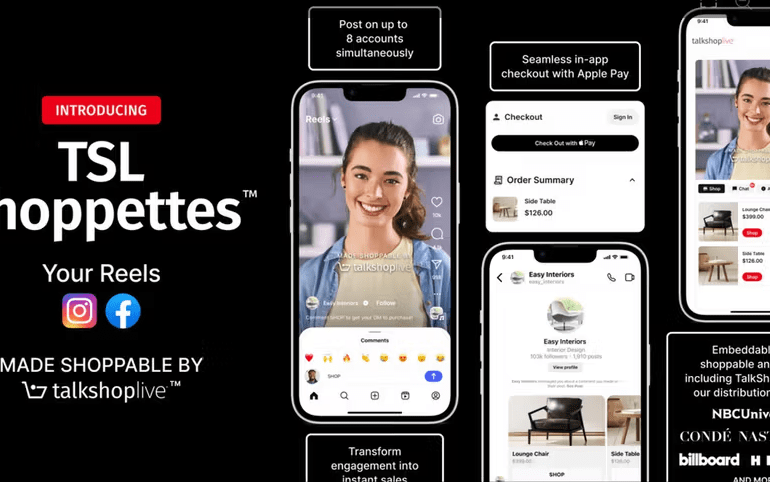
Founded in 2018, TalkShopLive gained prominence by striking strategic deals with platforms with Billboard and NBCUniversal and showcasing celebrities in the live commerce space with the likes of Matthew McConaughey, Alicia Keys and Dolly Parton. In January, it launched a shoppable short-form format called TSL Shoppettes, the platform’s latest integration with Meta to make Facebook and Instagram more shoppable.
TalkShopLive’s business operates on two fronts: the TalkShopLive Marketplace, where users can watch celebrities sell products, and its enterprise division, which partners with major retailers like Walmart. In a chat with Retail Brew, TalkShopLive CEO Bryan Moore said his business is evenly split between these two divisions, “but our enterprise division really just started growing much later and is scaling so rapidly.”
This interview has been lightly edited for length and clarity.
How has uncertainty linked to TikTok Shop impacted your business?
Since all of the news around TikTok, we have seen an over 75% uptick in inbound from brands and retailers seeking to do diversified programs with Talkshoplive. We’re also shoppable on Instagram. We’re shoppable on Facebook. So the opportunity to go live and then distribute your product to multiple different platforms taking off the dependency of one.
The thing that’s so great about TikTok Shop is it drove a big adoption of the medium. But the thing is, now retailers and brands are continuing to look for—what is that solution? When you rely on a single social platform, that’s a tactic. But what brands and retailers need to develop is a video commerce strategy and that strategy is distributed not reliant on one platform.
Did this shift in thinking happen after TikTok’s ban in January?
What it did was it made it very top of mind for all of the holding companies and all of the retailers and all of the brands that said, if our video commerce strategy is actually only a tactic of one platform, we can’t have so much of our business dependent on that one platform. How do we distribute the content so that we can have an overall strategy that drives success for video commerce, regardless of what happens to one platform?
Going back to that 75% stat of inbounds from brands that once relied heavily on TikTok, what is their headspace like?
Despite what’s happening with TikTok, they are still all looking for driving full-funnel results.
What’s one key learning from all of this?
What we realized really early on is the solution that retailers are searching for, creators are searching for, is how not to be dependent on one single social platform for their video commerce, but how to drive distribution of that content and make it shoppable everywhere it is.
What’s the live shopping landscape in the US like?
Consumers are adopting live shopping and video commerce overall. Our Talkshoplive Marketplace, for instance, we’re up over 100% in sales Q1 last year versus Q1 this year.
Was that a small base?
No. And it’s continuing to grow, and I think that it’s from the retail partners. But also, we’re seeing a big demand from creators and brand collaborations.
Can you expand on demand from creators and brand collaborations?
A lot of people are coming to Talkshoplive to launch their products.
What’s selling?
On our marketplace, our gateway categories were books and music. We started impacting the New York Times bestseller list. The top artists sometimes move up to 50% of our first week sales in products. But as we’ve grown to expand with our retail partners, we’re also seeing food, home, beauty all significantly picking up.
Social commerce is booming and set to hit over $100 billion in 2026. With social commerce set to account for over 8% of total e-commerce sales, some product areas, such as beauty, now account for over 50% of the global sales.
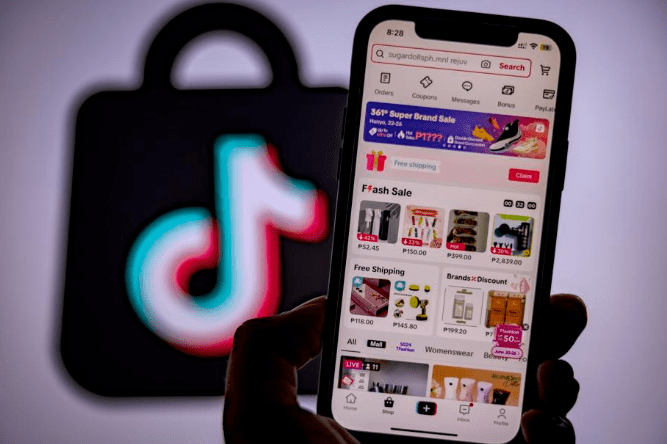
Social commerce is also democratising selling for small business owners, with low barriers to entry and little or no equipment required to start selling, other than a smartphone. Nowhere is this clearer than on TikTok Shop, the fastest-growing online retailer in 2024. According to TikTok, most TikTok Shops are small and medium-sized businesses.
However, AI automation, not influencers alone, gives small businesses the edge. AI-driven tools such as automated messaging are quietly becoming the backbone of this social commerce revolution.
This piece explores how AI and TikTok are reshaping social commerce, what that means for small businesses wanting to maximise their growth today, and why it matters now.
TikTok Shop’s unstoppable growth driving social commerce
With over 1 billion users worldwide and 15 million active sellers, TikTok Shop has quickly become a force to be reckoned with online. According to TikTok’s official figures, US TikTok Shop sales increased by 120% in the last 12 months to June 2025, and UK TikTok shop sales showed triple-digit growth.
Since the end of 2024, TikTok Shop has launched in Spain, Italy, France, Ireland, Germany, Mexico, Brazil, and most recently, Japan. The breadth of the offer has expanded, too, with 70 million products across 750 categories.
One major driver of TikTok Shop’s success is the rise of real-time interaction: LIVE selling.
Social Commerce LIVE selling is the new digital high street
Powering the growth of TikTok Shop has been the rise of LIVE streams. These allow sellers to interact with potential buyers in real time, demonstrate how their products work or look, and answer any questions on sizing, fit, and colour, just like you would in a physical store with a shop assistant or owner.
Beauty also continues to dominate in this area, with the products lending themselves to live demonstrations. TikTok’s official figures show that the UK live-stream record is held by P.Louise Cosmetics. The 12-hour LIVE marathon generated $2.2 million in sales with two products selling every second.
Live selling offers small businesses an excellent opportunity to launch directly onto social media without a traditional website.
P. Louise is the perfect example of how a small business, started by make-up artist-turned-entrepreneur Paige Williams and entirely self-funded, has leveraged the exposure generated by social selling to create one of the UK’s fastest-growing companies.
Many “born on TikTok Shop” brands that have found success on the platform also find success off the platform. Businesses in the UK, like Made By Mitchell, Glow For It, and Mallows Beauty, have attracted the attention of high-street retailers, who now stock their products on the UK high street in ‘Trending on TikTok’ aisles.
Automating the personal touch in social commerce
However, while social commerce makes selling more interactive, scale still requires tech support. That’s where AI and tools like chat marketing platform Manychat step in.
“For small brands, AI is finally closing the gap between social media engagement and real business outcomes,” states Ido Mart, chief marketing officer of Manychat, via email.
AI-powered tools like automated DM responses allow small businesses to have what Mart describes as “an authentic presence at scale.”
These tools allow small businesses to connect and interact with customers in a way that feels tailored and private to that individual customer, without the brand needing to monitor every message at every step.
“We had one creator tell us recently that using Manychat helped her secure over 65,000 leads in a year, which translated into more than $1.5 million in revenue for her business that could be directly attributed to the automations she set up with us,” Mart shares.
Without AI, small businesses would struggle to take advantage of the benefits of social selling unless they had the budget for a team to monitor responses. With AI, monitoring only the reactions that need human interaction is possible, while automating the vast majority.
Avoiding the social commerce AI pitfalls
While tools like DM automation can unlock scale and growth for small businesses, “small retailers often hesitate to adopt AI in DMs, fearing loss of control or authenticity,” according to Mart.
The solution? Don’t be afraid to start slowly and introduce just the level of automation that feels comfortable for you.
“AI doesn’t have to be all or nothing. With the right system, you set levels of automation that match the context. You can automate routine replies and stay involved where it counts,” explains Mart.
He also highlights an essential factor in automation—that it’s not just about what is said; it’s about the context and whether or not it feels relevant to the audience.
“Automation doesn’t erase your presence. The audience still hears your voice, shaped by your choices. The tone, timing, and content are still yours.” The key here is designing automation that reflects your brand to help deliver conversations that feel human “without having to be in every one.”
Same goals, new tools
Whether it’s a TikTok LIVE or an automated DM conversation, the goal for e-commerce businesses is the same as it’s always been – driving connection and conversation.
TikTok Shop, social commerce, and AI-powered automation tools are giving small businesses what they’ve lacked for some time—the potential for expanded reach and the tools to enable them to handle larger volumes of customers.
These tools allow them to unlock what Mart calls “the real benefits of AI: infinite scale, clear traceability, constant iteration, and smart segmentation.”
To compete in tomorrow’s retail landscape, small businesses must master the social commerce tools already reshaping today’s feeds.
Like many communications and marketing executives, I’ve spent a lot of time listening, learning, and thinking about where our industry is heading.
What you need to know: The next five years will transform communications more dramatically than the previous five decades. Chief communicators and marketing executives face a once-in-a-generation shift as technology fundamentally reshapes how attention is captured, how information spreads, and how reputations are shaped under intensifying pressure.
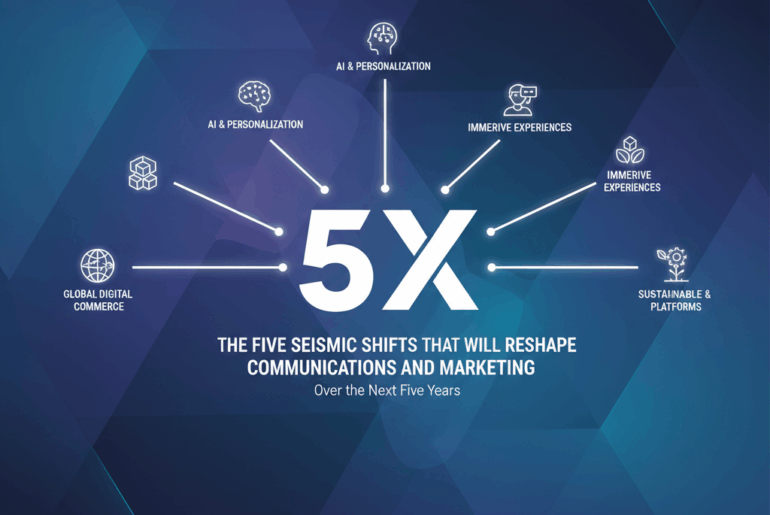
Here’s the deal: The changes that are needed to survive in this environment map to what I call 5X: five seismic shifts that are reshaping the future of our profession.
1. The Attention Economy: Earned renewal
Traditional PR asked, “How do we get coverage?” Now the question is, “How do we create ideas people feel compelled to share?”
At Weber Shandwick, our Chief Creative Officer is fond of saying that traditional advertising creates work for controlled environments, like admiring animals in a zoo. Yet in today’s world, ideas get injected directly into culture’s slipstream and either survive the jungle or die.
The strategy: Companies can’t buy attention the way they used to — they must earn it by creating ideas that move through culture, not just media.
The impact: Winning ideas spread because they let people express their identity and values. Breakthrough concepts don’t just reach communities — they form them.
2. The Creator Economy: Influence redefined
Creators are no longer just a media channel; they’re culture itself. Their content consistently outperforms brand-owned content because audiences trust them more.
The new reality: Brands must co-create with those who shape culture, measuring actual influence over vanity metrics.
Why it’s important: Creators increasingly drive earned strategies, capturing attention that attracts traditional media coverage and fuels broader cultural conversation.
3. The Stakeholder Economy: Business meets culture
Political shifts and media fragmentation have created an environment where external posture materially impacts business results. Issues escalate faster, stakeholders expect more, and leaders must constantly balance the tensions between cultural relevance and cultural resilience to drive outcomes.
Take note: This isn’t traditional “corporate comms” anymore. It’s about helping leaders navigate fluid, high-stakes situations where business strategy and cultural fluency must merge.
The benefits: Modern corporations can now engage in predictive issue forecasting and real-time stakeholder intelligence, but only if they have the right partners.
4. The Experience Economy: Digital, integrated
Digital worlds crafted in games, virtual reality or augmented reality are moving beyond early awkwardness and clunky hardware to blend physical and digital activations into immersive brand experiences. The cameras, screens and speakers in our pockets will continue to take new forms.
What this means: Audiences, who increasingly live their waking hours connected, expect personalized, participatory experiences across physical and digital touchpoints. Moments must be felt, not just seen.
The challenge: Brand experiences and activations that only live in the physical world lack reach and don’t effectively reach a new generation of consumers.
5. The Intelligence Economy: AI as accelerator
Artificial intelligence isn’t just changing our information environment and business — it’s supercharging all four other shifts. Communications leaders and teams aren’t immune. Every executive should be contemplating how to use these tools for anticipatory decision-making instead of reactive responses and agentic orchestration of routine work.
How it’s done: The ready availability of tools to create custom agents through platforms like ChatGPT and Google’s Gemini signals a future where every agency and communications team will need proprietary AI systems as a core competitive differentiator.
The breakdown: The companies that succeed in this AI generation will look nothing like those that succeeded in the last one. If you haven’t changed your playbook, you’re already behind.
Why this is important now
For communications leaders: This confluence of shifts redefines how the value of communications gets measured, what skills teams need, and how reputation management works in a fragmented, increasingly-AI-paced media landscape.
For agency leaders: In today’s world, nothing is siloed. The separate disciplines of earned media, digital, advisory, influence, and intelligence have converged. Only those who operate seamlessly across all areas will survive the shifts reshaping our profession.
Looking ahead: Intelligence isn’t just another economy — it’s the force multiplying all others. Communications leaders who understand this will lead the transformation. Those who don’t will be transformed by it.
By Jim O’Leary
Chief Executive Officer, North America, and Global President, Weber Shandwick
In this article, we break down what you need to know about the TikTok Creativity Program.
Whether you’ve just made your first $100 or crossed the $100,000 mark, monetization is an ever-evolving part of your journey as a creator, thanks to platforms constantly innovating new ways to pay – and TikTok is no exception.
The platform introduced the TikTok Creator Rewards Program (formerly known as the TikTok Creativity Program) to address issues with the (now defunct) TikTok Creator Fund, designed to reward creators for their high-quality and original content.
In this article, we break down what you need to know about the TikTok Creator Rewards Program.
What is the TikTok Creator Rewards Program?
The TikTok Creator Rewards Program is a monetization initiative launched in February 2023 to reward creators with high-quality, original content. It was introduced as a response to the limitations and criticisms of the TikTok Creator Fund.
The TikTok Creator Rewards Program addresses these issues by offering significantly higher earnings potential. Creators in the program are encouraged to produce longer-form content, with a requirement that videos be longer than one minute, signalling a shift towards supporting more substantial and engaging content.
How the TikTok Creator Rewards Program works
Here’s how creators can check their eligibility, become part of this program, and understand the payment mechanisms.
Eligibility requirements
To be eligible for the TikTok Creator Rewards Program, you must –
Be at least 18 years old
Have at least 10,000 followers
Have a minimum of 100,000 valid video views in the last 30 days
Have a personal account that’s in good standing – business accounts are not accepted
Abide by TikTok’s Community Guidelines
Be located in a region where the TikTok Creator Rewards Program Beta is available – currently, the U.S., Brazil, France, Germany, Japan, Korea, and the UK. TikTok plans to bring the program to more regions in the future.
If you tick all these boxes, you can apply for the Program. Here’s how.
How to join the TikTok Creator Rewards Program
To join the TikTok Creator Rewards Program, here’s a simple guide to get you started:
First, ensure you meet all the eligibility criteria mentioned in the previous section
Navigate to the TikTok Creator Rewards Program section within the app. You’ll typically find this in your account settings or under the ‘Monetization’ options. Look for any updates or notifications related to the “Creator Rewards Program”
Follow the walkthrough TikTok provides to guide you through the application process
Fill out the application form with all the required information. This usually involves confirming your eligibility, agreeing to the program’s terms, and possibly providing additional information about your content and audience.
Once submitted, your application will be reviewed by TikTok. The review process time can vary, so be patient. You’ll receive a notification once your application has been approved or if further information is needed.
If you have previously enrolled in the Creator Fund and want to switch to the Creator Rewards Program, here’s how:
Open the TikTok app and tap Profile.
Tap the Menu button (☰), then Settings.
Tap Creator tools and then Creator Fund.
Tap Switch at the bottom of the page.
How do creators get paid through the TikTok Creator Rewards Program?
The TikTok Creator Rewards Program represents a significant leap forward in how the platform compensates its creators, promising up to 20 times more earnings than the Creator Fund.
Unlike fixed ad revenue sharing models like YouTube’s, the program’s pay outs are based on TikTok’s proprietary metrics, including the platform’s revenue per 1,000 views over 5 minutes. The program has specific criteria for what constitutes a qualified view and eligible videos, emphasizing originality, viewer engagement, and adherence to TikTok’s community guidelines.
Here’s a simplified breakdown of how payments work under the TikTok Creator Rewards Program:
Increased pay outs: The program offers a generous pay out increase, with potential earnings ranging from $4.00 to $8.00 per 1,000 views. This is a substantial uplift from the Creator Fund’s payments, which generally ranged between $0.20 to $0.40 per 1,000 views.
Variable earnings: Creators under the program have reported earnings varying from $100 to $600 per million views, with some exceeding $1,000 per million views. This range highlights the program’s potential for higher earnings, although the exact pay out can depend on several factors, including content engagement, viewer demographics, and the nature of the content itself.
This approach to creator compensation underscores TikTok’s efforts to enhance the platform’s content quality and provide its creators with a more rewarding and sustainable income stream.
What’s the difference between the TikTok Creator Rewards Program and the Creator Fund?
The TikTok Creator Rewards Program and the Creator Fund represent two pivotal monetization strategies devised by TikTok to compensate its content creators, but that’s where the similarities end. Here’s a detailed comparison:
Geographical availability: The TikTok Creator Rewards Program is available in more regions compared to the Creator Fund. Initially, the Creator Fund was limited to creators in countries like the U.S., U.K., Germany, Italy, France, and Spain. In contrast, the TikTok Creator Rewards Program has widened to include additional countries such as Brazil, Japan, and Korea from its inception, signalling TikTok’s intention to support and monetize creators from a broader array of regions.
Video length requirement: A distinctive criterion of the Creator Rewards Program is its requirement for videos to exceed one minute in length. This underscores TikTok’s strategic push towards longer-form content, possibly aiming to compete with YouTube. The Creator Fund did not impose a minimum video length, allowing for the monetization of shorter clips.
Enhanced pay outs: Perhaps the most significant difference lies in the pay out structure. The TikTok Creator Rewards Program has been introduced with the promise of substantially higher earnings for creators. While the Creator Fund’s pay outs were often criticized for being insufficient, with rates ranging from $0.02 to $0.04 per 1,000 views, the Creator Rewards Program aims to rectify this by offering enhanced compensation, potentially reaching up to $8.00 per 1,000 views for the most successful videos.
Pay out comparison: The pay out disparity between the two programs is quite stark. Under the Creator Fund, creators reported earning modest amounts that didn’t reflect the value or time invested in the content. In contrast, the TikTok Creator Rewards Program introduces a more lucrative framework, with creators sharing experiences earning between $100 to $600 per million views, and some even reporting higher rates. This significant increase in pay out rates from the Creator Fund to the Creator Rewards Program makes the latter a more appealing option for creators aiming to maximize their earnings on the platform.
As TikTok continues refining its monetization programs, the TikTok Creator Rewards Program represents a pivotal step towards fostering a more sustainable and rewarding payment system for creators.
Feature
TikTok Creator Rewards Program
Creator Fund
Geographical Availability
Available in more regions including the U.S., U.K., Brazil, France, Germany, Japan, and Korea
Initially limited to the U.S., U.K., Germany, Italy, France, and Spain
Video Length Requirement
Videos must be longer than one minute to qualify
No minimum video length requirement for monetization
Payout Structure
Promises significantly higher earnings, potentially up to 20 times more than the Creator Fund
Payouts ranged from $0.02 to $0.04 per 1,000 views, often criticized for being low
Payout Rates
Creators report earnings between $100 to $600 per million views, with some exceeding this range
Creators reported modest earnings not reflective of their content’s value
4 tips to make the most of the TikTok Creator Rewards Program
Landscape is the video format of choice
TikTok is known for its vertical video format, optimized for mobile users who hold their devices upright – it literally popularized the format. Vertical video has dominated the platform since its inception, catering to the quick scroll-through nature of TikTok’s content discovery.
However, in 2024, some creators started reporting a shift towards landscape videos a la YouTube. Some creators have confirmed that landscape content will get priority rankings in the TikTok algorithm.
Here’s how creators can navigate video formats on TikTok going forward:
Understand your content needs: Choose the video format that best suits your content. If your video involves wider scenes or includes multiple people, landscape might offer a better view. However, remember that most users browse TikTok on mobile devices in a vertical orientation.
Experiment and analyse content performance: Don’t shy away from experimenting with different video formats to see what resonates with your audience. Use TikTok’s analytics to measure the performance of landscape vs. vertical videos and adjust your content strategy accordingly.
Optimize for mobile viewing: Even if you choose to use landscape format, ensure your video is optimized for mobile viewing. This means clear visuals, readable text, and considerate use of the wider frame to ensure details are not lost on smaller screens.
Follow platform trends: Stay updated with TikTok’s evolving content preferences and technical capabilities. If TikTok introduces features or trends that favour a particular video format, adapting to these changes can help maintain your content’s relevance and visibility.
Regardless of the format, engagement is key. Ensure your content is compelling enough to retain viewer interest, whether landscape or vertical. Use captions, on-screen text, and engaging visuals to keep your audience hooked.
Videos should be a minute or more
Creating videos that are longer than a minute is not just a requirement for participating in the TikTok Creator Rewards Program (TCRP); it’s an opportunity to deepen engagement with your audience.
Longer videos allow for more comprehensive storytelling, detailed tutorials, and richer viewer engagement. They provide the space to explore topics in-depth, offer valuable insights, and showcase creativity without the constraints of shorter clips.
Here are some tips for creating engaging videos over one minute:
Plan your content: Longer videos require thoughtful planning to maintain viewer interest. Outline your video to include a captivating introduction, informative or entertaining main content, and a strong conclusion that encourages viewers to engage further with your channel.
Maintain quality: With increased length, maintaining high video and audio quality becomes even more critical. Invest in good lighting and sound equipment to enhance the viewer experience, and pay attention to editing to keep the content dynamic.
Incorporate storytelling elements: Use narrative techniques to keep viewers hooked. Whether you’re sharing personal stories, creating fictional narratives, or explaining complex concepts, presenting information in a story format can help retain attention.
Interactive elements: Encourage viewer interaction by asking questions, prompting comments, or including call-to-action prompts. Engagement boosts your video’s visibility on TikTok and builds a community around your content.
Use visuals and transitions: Keep your videos visually interesting using relevant visuals, on-screen text, and smooth transitions. These elements can help emphasize key points and break up longer segments of dialogue or instruction.
Experiment with Series: Consider breaking down extensive topics into series. This approach can turn first-time viewers into repeat visitors, eagerly awaiting the next instalment of your content.
Follow TikTok Community guidelines to the letter
Adhering strictly to TikTok’s Community Guidelines is not just a requirement for participation in the TikTok Creator Rewards Program (TCRP) – it’s essential for fostering a positive and respectful community on the platform. There are many guidelines, but here are the most important ones to know:
Safety: Content should not promote dangerous activities, self-harm, or violence. It’s crucial to consider the impact your content could have on the well-being of your audience.
Intellectual Property: Respect copyright and trademark laws by only using content (music, visuals, etc.) you have the right to use or provide through TikTok’s library.
Adult Content: TikTok is a platform for users of all ages, so keeping content appropriate for a broad audience is important.
Hate Speech and Bullying: Content should not promote hate or discrimination nor target individuals or groups for bullying or harassment.
Misinformation: Avoid spreading false information that could cause harm or mislead people about critical issues like health and safety.
Here are some strategies to help you stay compliant with the guidelines,
Regularly review the Guidelines: TikTok’s Community Guidelines can evolve, so it’s important to stay updated on any changes. Regularly reviewing the guidelines ensures your content remains in compliance.
Educate yourself on ambiguities: If you’re unsure whether your content might violate the guidelines, seek additional information or clarification. TikTok often provides resources and updates about policy changes.
Use TikTok’s tools: TikTok offers various tools and settings to help manage your content and interactions. Utilize these features to moderate comments, control who can view your content, and report violations.
Outside of these efforts, pay attention to your community and foster respectful interaction within your content and among your audience. This can help maintain a healthy environment that aligns with TikTok’s community standards.
Dive into your analytics to improve your content
Understanding the performance of your videos through TikTok’s analytics can provide invaluable insights into what resonates with your audience, allowing you to tailor your content for better engagement and growth. Here’s how to use your analytics effectively:
Understand your audience: Analytics provide detailed demographics about your viewers, including age groups, gender distribution, and top territories. This information can be crucial for crafting content that appeals directly to your core audience’s preferences and behaviours.
Track video performance: Keep a close eye on which videos gain the most traction in terms of views, engagement, and watch time. High-performing videos can offer clues about topics, video styles, or presentation methods that work best for your audience. Use this data to replicate successful elements in future content.
Analyse engagement trends: Engagement metrics like comments and shares are strong indicators of how compelling your content is. High engagement suggests that viewers find your videos worth reacting to and sharing with others, a key factor in expanding your reach on the platform.
Optimize posting times: Analytics can also show when your audience is most active on TikTok. Posting your videos during these peak times can increase their visibility and engagement, giving your content a better chance of being seen by a larger audience.
TikTok offers a comprehensive analytics dashboard for creators, detailing various metrics such as view counts, engagement rates (likes, comments, shares), follower growth, and video watch time. Regularly reviewing these metrics can help identify trends and patterns in what your audience prefers to watch and interact with.
Explore multiple ways to make money on TikTok
The TikTok Creator Rewards Program may not work for you for any number of reasons, but that doesn’t mean you can’t make money on TikTok. If you need ideas for monetizing your TikTok, check out this article.