Facebook’s mulling a decentralized platform that rivals Twitter and Mastodon, but can it be a marketing goldmine?
The Gist
Step aside, Twitter and Mastodon? Meta, the owner of Facebook and Instagram, is planning to build a standalone text-based app that integrates with ActivityPub, an open, decentralized social networking protocol that controls notifications and content. This could potentially rival Twitter and Mastodon.
Marketing goldmine, or landmine?Smaller social media apps like Mastodon and Post.news, which foster a decentralized, ad-free platform, could pose challenges for marketers since they don’t allow personalized content or ads.
Meet P92, eventually. Meta’s new social media app is still in the development stage and has been codenamed P92.
Remember that whole social media thing? You know, before generative artificial intelligence took over our brains last fall?
Well, the big social media platforms are still out there. Really out there, in some cases. Smaller ones have emerged, and emerged again. And the bigger ones are contemplating creating smaller spinoffs.
The latest: Meta, owners of Facebook and Instagram, wants to build a standalone, text-based app that integrates with ActivityPub, the open, decentralized social networking protocol that delivers APIs for content management and federated server-to-server content management that controls notifications and content. Moneycontrol first reported this news March 10.
Twitter rival? Mastodon rival? Maybe so.
This development means more questions for marketers and customer experience professionals. Particularly, this: will we be able to build true marketing content real estate and valuable customer experiences on these new rising social media apps?
Marketer- and Customer Experience-Friendly Social Media Apps?
Here’s the biggest problem with some of these new apps. They’re not exactly marketer-friendly. The point of Mastodon, for instance, is to foster a decentralized, open-source social media platform that has no ads and presents posts in chronological order rather than using an algorithm to predict best-matched content. The site describes itself as a federated network.
Wait, no ads? No personalized content? What is a marketer — and a brand — to do?
Meanwhile, the vision for another new social media app, Post.news, is to be a “virtual watercooler for journalists.” The model: access premium news content without subscriptions or ads where writers share their articles on the site under a paywall. Marketers, advertisers and brands will be limited to posting relevant, informative or entertaining content, rather than running advertisements or posting promotional material.
So that’s good, but not quite marketing nirvana, right?
What We Know About Meta’s Potential Social Media App
Will marketers and customer experience professionals be able to get more pieces of the Meta social media innovation pie? Outside of, of course, the tried and true Facebook and Instagram?
It’s early to tell. News of the possible new social media app from Meta — said to be a Twitter rival — came out just over the past few days. Here’s what we do know so far:
Meta’s confirmed the development. “We’re exploring a standalone decentralized social network for sharing text updates. We believe there’s an opportunity for a separate space where creators and public figures can share timely updates about their interests,” a Meta spokesperson said in a statement.
It has a name. The project for this new social media app is codenamed P92, though sources told Moneycontrol it’s still in the idea stage and a work in progress. So it’s entirely unclear how far along it is on the development trail.
It may give users ability to share across servers. A source told Moneycontrol the Meta new social app would give users the ability to post to other servers. With Mastodon, you have to pick a server. What are servers related to decentralized social platforms? Mastodon servers, also called “instances,” are individual communities, each with its own rules and culture. A server can be owned by a person, a group or a professional organization, and the server owner is the one who dictates the community’s guidelines. (Imagine trying to crack some marketing eggs over that).
Preview, followers and likes. Sound familiar? This new app would have features like tappable links in posts with previews, user bio, username and verification badges, according to Moneycontrol. Comments and messages? Not clear yet. A source did tell Moneycontrol, “The team is also discussing whether to have the ability to reshare content like Twitter apart from business and creator accounts. A rights manager will be integrated from the beginning for first party content, but probably not for third party content from other apps and servers,” said another source.
With No Hard Plans for Meta, Focus on Content
The ultimate message with this latest social media development out of Meta for marketers and customer experience professionals? It’s hard to take any action on Meta’s plans since, for now, they are just that: plans. Nothing concrete.
Social media marketing will always be about what your customers and prospects think it is, and where they are, not you or your brand.
“Plan for more exploration of how to repurpose content, as no single format or platform will serve every moment or need,” CMSWire author Pierre DeBois wrote in an article on his social media vision for 2023: “Marketers should also plan campaign labels to compare channel lift and ROI. Doing so will deepen understanding what intent data streams are created from the video campaigns and events.”
Dom Nicastro is managing editor of CMSWire and an award-winning journalist with a passion for technology, customer experience and marketing. With more than 20 years of experience, he has written for various publications, like the Gloucester Daily Times and Boston Magazine. He has a proven track record of delivering high-quality, informative, and engaging content to his readers. Dom works tirelessly to stay up-to-date with the latest trends in the industry to provide readers with accurate, trustworthy information to help them make informed decisions.
When you provide a lot of value on these platforms and become their go-to source of information, you’ll grow your community independently from your blog.
3. Choose the Right Niche
When you first start your blog, it’s important to find your niche or you’ll get lost in a crowded space.
Some other benefits when choosing a niche include:
1. You’ll establish topical relevance faster
2. You’re seen more as an expert when your blog helps solve a specific problem
3. It helps you connect with your readers’ because they feel like you understand them
Here’s the deal:
Big sites that cover a wide variety of topics can afford to do so because they have huge marketing budgets.
Choosing a smaller niche will help you grow your blog a lot quicker.
Why?
Because you can cover everything in a shorter amount of time, helping you gain some traction.
If you need help with this, read our post find your blog niche, or follow these quick guidelines:
Choose a topic you’re interested in or it’ll be harder to stay motivated
Competition is a good sign there’s money in the niche
Niche down in the beginning, then cover broader topics later
Find a niche with products you can review or content with commercial search intent
4. Get to Know Your Audience
Touching on the previous tips, you might notice a recurring theme.And that is how involved you are in your niche and how well you know your audience.
If your content is quite generic because you don’t know the topics well, you won’t build a strong connection.
It’s totally fine to start a WordPress blog in a niche you know nothing about, but you’ll have better success the more you educate yourself about it.
On the flip side, knowing your audience because you live and breathe what you’re helping them with, will help you establish a much stronger connection.
5. Create a Reader Avatar
A reader avatar is an imaginary character you create that resembles your perfect reader.
This is an essential task you can do to help build rapport and connection with your audience.
Why?
This quote by psychologist Carl Rogers gives us a clue:
What is most personal is most universal.
Carl Rogers
This means that a person’s most personal problems are something we all struggle with.
When you define your blog avatar in fine detail, all of your readers will feel like you’re talking directly to them.
Start by listing things such as the basics; Name, age, gender, location, occupation, etc.
Then expand on your avatar with more details; Current challenges, goals, favorite movies, books, food, and so on.
Miles Beckler has a great post on this topic and even has a free template you can fill out.
6. Don’t Let SEO Take Over Your Life
Search Engine Optimization is an essential piece of the blogging puzzle, but try not to let it take over your life.
You could perform the perfect SEO strategy in the beginning, but it probably won’t get you far.
Let me explain.
In the early days, your blog doesn’t have any authority.
That’s because you don’t have enough content. Even 50 – 100 articles isn’t a lot of content these days.
What’s more important is publishing content every day, until you start seeing an upwards trajectory in Google Search Console.
When you’re seeing a consistent 100 visits per day, that’s a great sign things are working.
This is when you can work on more refined and advanced SEO tactics.
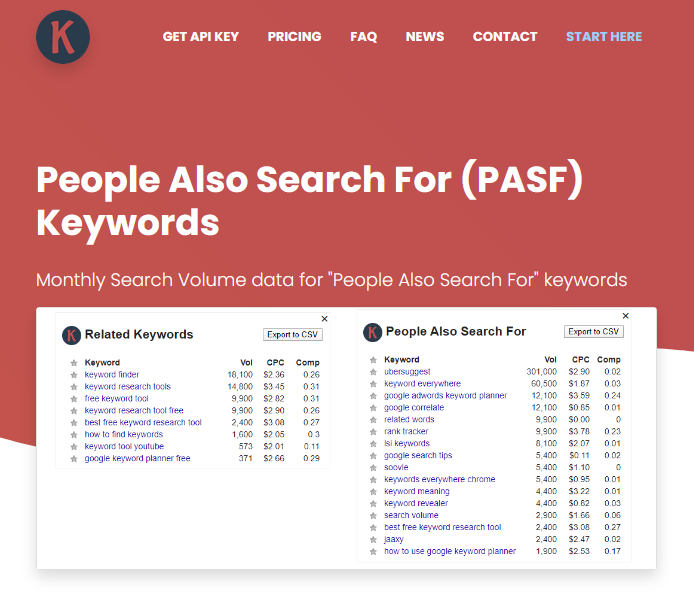
You purchase some credits, and it shows the keyword volumes everywhere in your browser.
As long as you know people are searching the content you post, the search volumes aren’t so important.
Just stick to lower volumes in the beginning, with a few high-volume keywords sprinkled in.
8. Follow Google’s Guidelines
With so many so-called SEO experts around, it can be hard to know which advice to follow.
Some will say you need a high word count per article, others rely solely on backlinks, and others jump on the newest trend such as AI writing tools.
How do you cut through all the noise?
You go to the source and that is Google.
If your most valuable traffic source is organic search, then it’s wise to know what their Google’s guidelines are.
Here are a few insights to keep you in the loop.
A great place to start is with their SEO Fundamentals. It starts with the basics of how to get your site on Google and how Google works, to in-depth tips on how to create helpful content.
Their crawling and indexing section covers all the technical side of things. This is the place to go if you want to know the difference between Sitemaps and robots.txt.
Lastly, Google blog is a good place to check now and then. They often release important updates, including this one on the recent changes to E-A-T.
9. Strategy vs Quality Content
Everyone talks about the importance of quality content, but without a strategy, you could be wasting a lot of potential.
Imagine this:
Every post on your blog is of the highest quality, but they don’t relate to each other.
Here’s the deal:successful blogging guides the reader from one post to another, teaching them how to make positive changes in their life.
Eventually, they’ve gotten so much value from your articles, they’re inspired to buy the thing you recommend. Or sign up to your email list, or buy your course.
To do this, you need a strategy.
A blog content strategy is where you plan out multiple posts that interlink with each other for optimum impact.
The purpose of effective content marketing is to raise the awareness of your readers. Awareness of their problems and what’s causing them.
When you can shift the perspective of your reader through strategic content, you’ll see substantial progress with your blog.
10. Build Internal Links
In the last blogging tip, I mentioned internal linking articles.
This is important for many reasons:
It’s how an effective content strategy helps guide your readers
It can also help keep people on your blog for longer
People will see you as an expert when you link to multiple posts
It builds topical authority in your niche, which helps your blog rank
Your blog can rank faster with more content and internal links
As you can see, internal links provide a ton of benefits.
The first step is to define how you’ll monetize your blog. This could be through affiliate marketing or by displaying ads with Ezoic.
Or maybe you want to eventually sell a digital product or service.
Either way, knowing how you’ll monetize will help you define the next step, which is knowing the types of content to create.
For affiliate marketing, you’ll want to create reviews, product comparisons, and how-to posts to support these articles.
Display ad blogs work best with question-related articles, list posts, or recipe posts.
Or if you’re selling your own products or service, case studies and interviews work well for this type of monetization.
Lastly, you’ll need to follow a system to produce content consistently. The best way to do that is by using a blog content calendar.
When you treat your blog as a business, know the main pieces of the puzzle, and produce content consistently, you’ll find it hard to fail.
12. Use Copywriting Frameworks
Copywriting frameworks are powerful ways to structure words that motivate readers to take action.
You commonly see these frameworks used in sales copy, landing pages, Facebook ads, or social media posts.
And you can bake these into your blog posts to create highly engaging content.
Some popular copywriting frameworks include:
AIDA (Attention, Interest, Desire, Action)
PAS (Problem, Agitate, Solution)
BAB (Before, After, Bridge)
Not only do these frameworks grab your readers’ attention and keep them engaged, but they also help you organize your ideas and identify your target audience.
For example:
Let’s say you want to write a post about the benefits of a morning routine.
You could use the AIDA framework to engage the reader in your blog post and promote an online course at the end.
Because these frameworks use psychological principles, it makes it super easy for people to follow and it improves conversion rates.
13. Track Things to Improve
This blogging tip is essential if you want to make consistent progress with your blog.There are key engagement metrics that you need to track to know if your blog is performing well.
Without this knowledge, you’ll never know what’s working and what isn’t.
In the beginning, it’s best to install the tracking and ignore it until you’ve posted enough content to see some traction.
A good rule of thumb is anywhere between 50-100 posts or when your blog starts getting 200+ visits per day.
Once you hit this threshold, you’ll want to keep posting content and monitor your numbers every month.
The most important numbers to track are:
Impressions and Clicks in Google Search Console – An improvement in these metrics will tell you your content is being found and ranked in Google. And that people click the results.
Pageviews and Average Engagement Time in Google Analytics – These metrics will help you see which content is performing best so that you can double down on them. You can also improve the content that isn’t doing so well and see if it makes an overall improvement.
14. Promote Your Blog
To increase the exposure of your blog posts, blog promotion is a great practice to adopt.
Relying solely on SEO traffic isn’t as effective.
What you need is a social media platform to promote your content.
This can be done in many ways.
For example, re-purposing your blog posts on social media is a good place to start.
Also, emailing your list when you publish new content will bring your blog more exposure.
Lastly, let other bloggers know you’ve linked to them. This is a great way to get your blog noticed by other experts in your niche.
And they might even start linking to your site in the future.
15. Be Consistent
Being consistent is possibly one of the most valuable skills to develop as a content creator.
Most people’s success comes from doing small things every day over the years, rather than aimless luck.
The issue with achieving success randomly or by luck is that it isn’t repeatable.
To get consistent success with your blog, you need to create systems that drive predictable results.
The easiest way to do that is to create big goals and break them down into tiny actions.
Then repeat these actions every day until you see positive results.
16. Update Old Blog Posts
This is a blogging tip that many people overlook.
Sure, some posts will perform better than others, but this doesn’t mean you have to completely abandon old content.
In many cases, underperforming content can be reworked from a different angle.
Or you can add more value to the post by adding more actionable steps.
Even content that once performed well might have gotten stale in recent months.
You can give these posts a new lease of life by adding images, internal links, or reformatting the text.
17. Read More Books
If you want your blog to stand out from the crowd, read more books.
What many bloggers do is share what they’ve learned from other bloggers or from content that is freely available on the internet.
The problem with this approach is that most blogs are eventually talking about the same things, with little originality.
To share a completely different perspective, you need new material.
And reading books will spark way more creativity, and you’ll find it easier to write content.
18. Diversify Income
We’ve all heard the phrase, “Don’t put all your eggs in one basket.”
And this goes for the income streams on your blog.
In the early days, it might be wise to focus on one revenue source so you stay focused.
But when you’re getting consistent traffic, you want to branch out.
So, if you started with affiliate marketing and you’re getting a decent amount of traffic, why not add display ads?
And if you’re doing both of these, how about offering a service or even coaching?
There are tons of ways to diversify income, read our post how do bloggers make money online to find out more.
19. Done is Better Than Perfect
Nothing is perfect in life. No matter how good you get, someone else can overtake you.
The point in following these blogging tips isn’t to reach perfection, only to help you improve and make progress.
It is far more effective to publish 100 mediocre articles in one year than it is to publish 12 perfect ones.
Why?
Because you will learn so much from publishing more content, even if they aren’t perfect.
With more content, you’ll start to see how Google works, and you’ll get an idea of which articles work best for you.
You’ll also develop the habits you need to become more consistent. And you’ll appreciate the process instead of trying to chase the next shiny object.
Check out what happened when Spencer published 1,000 posts in 12 months…
20. Make Posts Look Pretty
What is guaranteed to turn people away from your blog?
Ugly formatting, big walls of text, and no images.
That’s right, to keep people engaged with your content, you need to spice things up a little.
For best practices, follow these quick and simple guidelines:
Use short 1-2 sentence paragraphs
Break up text with subheadings, images, and bullet points
Highlight important text with bold and italic font
Add quotes or info boxes to grab readers’ attention
Try a combination of these and stick to the same theme throughout your blog. That way, people will know what to expect.
21. Add a Mixture of Content Types
Just like the last tip, different content types are essential for a highly engaged audience.
A variety of content types will generate more repeat visitors and can even help you rank better in search engines.
Steve Allen is a niche site builder, writer, and all-around WordPress wizard. He enjoys personal development, entrepreneurship, double espressos, and making things work better than they did before.
A tribute to overlooked innovators, good troublemakers, and remarkable women of the past, present, and future
“Women’s history is women’s right,” wrote Gerda Lerner, who organized the first Women’s History Day in the U.S., the precursor to Women’s History Month. “It is an essential, indispensable heritage from which we can draw pride, comfort, courage, and long range vision.”
Lerner is just one of countless historians, labour organizers, and political activists who’ve fought to recognize and validate women’s contributions, and to tell their stories. This March, to celebrate Women’s History Month, we’ve gathered a collection of some of those stories from across Medium’s archive. In it, you’ll find writer and editor
Of course, we’ve barely scratched the surface of everything there is to read about women’s history on Medium. So, if you have a story to share, please drop a line in the responses — we encourage you to read, highlight, and respond to each other’s recommendations.
Even now I smile remembering feeling like I owned that shop. In my jeans and work apron, I switched the lights on and started our days there. I remember rubbing my hand over a well-sanded table, or helping to lift a 20-foot piece of angle iron. I was fit, strong and every bit a woman. And I am proud of that.
Storytelling is an art form, and it would be limiting to prescribe a ‘correct’ amount of female or male screen time. Different stories are just that: different…With that said, it is good to keep in mind that the world is made up of men and women and that sometimes a male character could just as easily be rewritten as a female character.
Naturally talented, Mabley quickly became one of the most successful entertainers on the Chitlin’ Circuit. However, as a Black woman, her wages were meager as compared to her peers.
Margaret Scott, Rachel Peace, May McFarlane and Olive Hodgkin exercising in the yard of Holloway prison, 1913. (From the archives of the Museum of London)
In 1871, prisons were instructed to photograph all inmates. In an act of defiance, the suffragettes refused to pose for these photographs. But, by 1913, Scotland Yard wanted their images to create a photographic register of these subversive women, presumably so they could share them with around institutions where the suffragettes often made their most public demonstrations. So, they invented the dubious art of surveillance photography. Once again, the authorities had found a new way of removing their agency from them.
If you’re a developer, how many times a day do you use the word ‘debug’? For that we can credit Grace Hopper, an American who served in the navy in World War II… Hopper and her associates found an actual moth caught inside a switch on one of their machines and had to remove it (literally de-bug) because it was obstructing the machine’s operation. The remains of that moth are now in the Smithsonian.
The Black woman is always dark, fat, funny, can sing, and is really not sexualized in any way that is dangerous. But that’s not my understanding of women like that. Ma is my Auntie Joyce, my Aunt Letha, who were highly sexual and the most beautiful women I ever seen in my life. They were stylish.
When we wonder why there aren’t more women physicians recorded in history books, it’s important to remember that there was a time when practicing medicine as a woman could get you killed, that women risked their lives to heal their neighbors.
On a dreary day in 1936, Lange approaches a starving woman in California…Lange snaps a shot of the mother and her children…The photo is later published in San Francisco News. The response from the photo results in the U.S government sending 20,000 pounds of food to the campsite where the woman and her children live. The photo becomes forever known as “Migrant Mother”. It remains the most famous photo from the Great Depression era.
Sophie would have fared much better in our time, when she could make her own choices. Instead, she found herself subject to stifling royal etiquette and a husband she loathed.
Google’s ad revenue accounts for 80% of its income. Its biggest challenge yet might come from Microsoft’s Bing, currently the third biggest search engine behind Google and Baidu, and its new AI chatbot
Google’s dominance as the most visited website has been undisputed since it rose to prominence as the leading search engine in the early 2000s. However, that position could now be facing its biggest ever threat, with the arrival of new artificial intelligence (AI) chatbots such as ChatGPT, which can answer people’s questions online.
Google is countering by developing its own AI products. But its chatbot, Bard, didn’t have the most auspicious start. This month, a Google advert showed that Bard had provided an inaccurate answer to a question about the James Webb space telescope.
Plus, being the most popular website in the world comes with much more than prestige, namely incredible wealth from advertising revenue. But recent, sudden shifts in the technology landscape have created uncertainty for the likes of Google.
The advertising revenue stream that aided its success may no longer be a given. If AI chatbots such as ChatGPT begin carrying adverts, it could cut into Google’s leading position in the world of search engine advertising.
Xiang Xiang, born at the Ueno Zoo in 2017, was sent to China under an agreement in which giant pandas are loaned to zoos around the world but China maintains ownership of any loaned bears and their offspring
People’s reliance on Google has often been without question, so much so that people may not click beyond page one of a Google search results page. But the emergence of new AI platforms has shown that search as we know it does not have to end with a set of ordered links to websites. Instead, as the chatbots are showing, it can take the form of a conversation.
Such AI has not been without controversy. Concerns have been raised that it could lead to issues regarding plagiarism or even worse, the loss of jobs and income for a multitude of professions, from lawyers to journalists.
The chief executive of OpenAI, which developed ChatGPT, has said the company is developing tools to help detect text that has been generated by an AI. In a video interview, he added: “We hear from teachers who are understandably very nervous about the impact of this on homework. We also hear a lot from teachers who are like, ‘Wow, this is an unbelievable personal tutor for each kid’.”
Linguist and activist Noam Chomsky called the use of AI tools like ChatGPT “a way of avoiding learning”. Google meant we no longer needed to recall knowledge, we could just search for it. Now, with AI, the problem will be whether we can be bothered to question the answers we get back.
This paradigm shift in how we access and interact with knowledge goes much further than these concerns about how we search, and raises questions over Google’s revenue model, which has been instrumental in keeping it at the top of the technology pile.
Gateway to the web
Once-popular search engines such as Ask Jeeves, Lycos and Excite became the internet’s “also rans” as Google became synonymous with the word “search”. The agreement in 2000 between a then more popular Yahoo! website to host Google as the default search engine, ensured the search engine’s international status.
Being the gateway to the rest of the web came with one huge benefit through the capture of new internet-based advertising revenue. With every Google search result came the obligatory sponsored content which helped the company grow to where it is today.
Google’s annual revenue has continued to grow year-on-year because two decades ago it mastered search better than its aforementioned competitors. Its ability to combine this service so succinctly with income generation from advertisements is largely why it has been able to hold competitors like Microsoft’s Bing at bay.
If you want your company or product to appear as part of a web search, then Google is the place to be.
The company has invested that advertising income to build a massive infrastructure to handle billions of search queries in addition to hosting lots of popular cloud-based tools such as Google Mail, Drive and the acquisition of platforms such as YouTube. The video-sharing platform turned out to be a particularly fruitful investment in terms of generating advertising revenue.
Google’s sheer scale means its dominance will continue. But once advertising income starts to leech to new AI platforms that return results with sponsored content, it may find itself scaling back.
Masters of AI
A key to Google’s continued success will be mastering artificial intelligence and incorporating it into its services. But there are no guarantees for a company that has failed on at least five occasions to master the art of social media. For now, there is no doubt that Google can handle the traffic, it is really a question of whether it can deliver the goods.
Whether new contenders such as ChatGPT are anywhere close to handling the number of queries that Google does is open to debate. The evidence is that they are not, as ChatGPT had various issues earlier in the year when it was unable to accept new users or run queries due to excess demand.
ChatGPT is the platform that has gained most of the media attention of late. However, it might be established rivals like Bing that ultimately provide Google’s biggest headache. Bing is the third biggest search engine globally behind Google and Baidu.
That position could change with the launch of its own AI search, which will no doubt capture more income for an established company. Unlike Google, Microsoft does not have the same reliance on advertising revenue thanks to its business model, which is diversified across software, hardware and cloud computing.
According to the consumer and market data service Statista, Google’s income from advertising revenue has fallen in recent years, but it still accounts for 80% of the company’s income. Many might consider Google to be a search engine but it is largely an advertising company that was built on the back of search.
Without this advertising revenue, it could not have achieved many of its previous successes such as acquiring YouTube in 2006, or helping develop the Android mobile platform. Google’s failure to launch multiple social media platforms highlighted the company’s frailties and left the door open for the likes of Facebook and its parent company Meta to eat into that massive revenue pie.
Facebook too, will have concerns that Bing and new start-ups will lure marketers away to what is likely to be a slew of new AI knowledge tools. However, if Google fails to master AI search in the way Lycos and Excite failed to build upon their early success, we might find ourselves Googling a lot less and chatting much more. – Rappler.com
Here’s what happened after I signed up for over 100 promotional emails. There were some surprises.
The Gist
Forget something? Testing out 100 email signups, more than 8% of brands didn’t send a welcome email, missing a valuable opportunity to deepen the relationship with their new subscribers through promotions, education, profiling, expansion or evangelism.
Send a series. Nearly half of brands sent a welcome series, with subsequent emails including reminders to use discounts, explanations of brand strengths, pitches for loyalty programs, encouragements to download mobile apps or behind-the-scenes looks at their organizations.
Welcoming fails. Some brands missed the mark by using senseless or overly corporate sender names in their welcome emails, while others failed to seasonally optimize or personalize their messages, or had quality control problems.
But that’s not to say there weren’t some surprises. There were. Here are my key takeaways and the major opportunities I see for brands when it comes to crafting better onboarding experiences.
1. Shocking Number of Brands Didn’t Send a Welcome
More than 8% of the brands didn’t send a welcome email. Instead, they just dropped me into their promotional mail stream. Not only is that slightly jarring, it passes up a big opportunity to deepen the relationship in a way that your promotional emails just can’t.
Promotion: trying to drive a purchase through incentives or product promotions.
Education: trying to deepen brand affinity and loyalty by educating the new subscriber about your brand’s history, products, services, values and social causes.
Profiling: trying to to gather more information about the new subscriber so the brand can send more relevant messaging.
Expansion: trying to get the new subscriber to connect with the brand through additional channels.
Evangelism: trying to get the new subscriber to refer their friends or colleagues.
For most of those, messaging them immediately after signup is the ideal time to drive action and establish a healthy long-term relationship.
2. Nearly Half of Brands Sent a Welcome Series
In contrast to brands that didn’t send even one welcome email were those at the other end of the spectrum that sent a welcome series of two, three or even more emails.
What were the subsequent emails in those welcome series about? Brands included:
Reminders to use the discount they included in their first welcome, which was very common for retail and ecommerce brands.
Explanations of their brand strengths in terms of what’s unique about their products and how they do business, which was popular among direct-to-consumer brands.
Pitches to join their loyalty programs, which was also common for retail and ecommerce brands.
Encouragements to download their mobile app.
Behind-the-scenes looks at their organizations, which was most common among service-oriented brands.
Surprisingly, none tried to collect any preferences from me or profile me in any way using polls, surveys or quizzes. That’s a missed opportunity, as that kind of zero-party data can power personalization and segmentation during a time in the relationship when there’s little to no first-party data yet.
But the bigger opportunity here is that if you’re only sending a single welcome email, consider testing ways to expand it into a series.
3. Sender Names Could Have Been Better
For some brands, their welcome emails felt like they were sent by a different department or marketing group because of the sender names they used. For example, some brands had senselessly different sender names from the one used for their promotional emails, adding “Inc.,” “Company,” and “USA” to the end of the brand names for only their welcome emails. It made their welcome emails appear unnecessarily corporate and stiff.
That’s not to say that there aren’t opportunities to extend your sender name with purpose. Extending your sender name for your triggered emails, in particular, helps them stand out — not only from your other emails, but from all the other emails in your subscribers’ inboxes. Yet, only two of the brands I received welcome emails from extended their sender name. One used “BrandName Welcome” and the other “BrandName | Welcome.”
If you’re not currently extending your from name for your welcome emails, consider testing it and seeing how much of a lift you get. Adding an extension like “Welcome” is a sensible place to start.
Again, avoid overly corporate-sounding extensions. For example, some other welcome emails I received used sender name formats such as “BrandName Account,” “BrandName Account Services,” and even longer “BrandName Account Member Services.” Another used “BrandName E-mail Subscriptions,” with the dated hyphenation of email. While all of those are descriptive and accurate, they’re not particularly friendly sounding. They seem like they were written by lawyers, not marketers.
4. And There Were Smaller Opportunities to Improve, Too
In addition to those three big areas for improvement, brands sent welcome emails that…
Weren’t seasonally relevant. Only one brand seasonally optimized its welcome email, adding in imagery and content to match the season in which I signed up.
Rarely used emoji in their subject lines. 😢 Only 13% of brands used emoji in any of their welcome email subject lines. That seems a bit low, given their usage in promotional emails.
Included little personalization. Many brands required my name when I signed up, but few used it. For example, only 3% of brands used it in the subject lines of their welcome emails. First-name personalization isn’t great personalization, but if you ask for my name, use it.
Had quality control problems. One brand’s welcome email was sent twice, and another’s contained multiple broken images (but thankfully lots of HTML text, too). Not a good look.
Final Thoughts on Welcome Emails
Your welcome email — like all of your automations — are living campaigns. They need regular care and attention.
In fact, this goes double for your welcome emails since they are pivotal to making a good first impression and setting the tone for the emails that follow. If you haven’t reviewed your welcome emails lately, sign up for your email program with fresh eyes and see what improvements you can make or test.
Chad S. White is the author of Email Marketing Rules and Head of Research for Oracle Marketing Consulting, a global full-service digital marketing agency inside of Oracle.
Bots that chat with you and help you buy stuff are the new rage in e-commerce
For those of us who love buying fresh vegetables from the neighbourhood store daily, the Covid-19-induced lockdowns were a stressful time. Using WhatsApp as a notepad to make lists of things one needed to buy—which many people were prone to do—one had to first send the list to the grocer on the messaging app and hope that he checked it before the fresh produce was sold out; next, one had to wait for the grocer to get back with the bill and then make the payment via an e-wallet or UPI. Sometimes, one would even have to call the grocer to confirm that the payment was made, and then wait for the delivery to happen. The stress then led to many daily shoppers, like a relative based in Kolkata, to make—horror of horrors—weekly purchases.
After the lockdowns were lifted, the daily shoppers were back at their favourite neighbourhood grocery stores. My relative, a retired corporate executive, too, went back to his old routine, but a service he started using recently is causing some disruption in his habits. The service in question is JioMart on WhatsApp, which helps him order groceries and provisions in an interactive and seamless manner. And the convenience has convinced him to give his daily morning trips to the local grocer a miss.
But grocery is just one way you can use the messaging app. According to Ravi Garg, Director of Business Messaging-India, at Meta, you can also buy tickets for the Bengaluru metro on WhatsApp, and scan the e-ticket to board the train; and even book an Uber cab! These types of transactions on messaging apps are called conversational commerce, a term believed to have been coined by Chris Messina, the inventor of the hashtag, in 2015.
What exactly is conversational commerce? According to experts, conversational commerce is shopping on a messaging platform, where a chatbot engages in a conversation with a customer and helps her to buy a product, which is usually a small-ticket item. According to Prashant Garg, Technology Consulting Partner at EY India, conversational commerce usually involves products like apparel, fashion products, FMCG, fresh foods or other consumer goods. He adds that if a generative AI-powered chatbot starts conversing with customers, a third of them end up buying a product. “The bot has methods and a mechanism built in to engage with customers and keep them engaged till the decision to buy is made,” he says.
According to independent data platform Statista, total spending over conversational commerce channels worldwide will jump to $290 billion in 2025 from $41 billion in 2021. And while the market is still nascent in India, it has huge potential. According to Akhilesh Tuteja, Partner & Head of Technology, Media and Telecommunication at KPMG in India, India is home to the largest consumer base for the biggest conversational commerce enablers. “India is home to more than 600 million smartphones with one of the cheapest internet connections in the world. This infrastructure, along with the reach provided by these platforms and vernacular accessibility through voice commands, sets the right platform for Indian as well as global brands to penetrate the Tier II and Tier III cities. The new generation in these cities is more aspirational, tech-savvy and has increased disposable income,” he says. Although India is a long way from China, it still has 200 million-plus online shoppers, 65 million-plus MSMEs and $100 billion in gross merchandise value (GMV) today—the total addressable market for conversational commerce is huge, he adds. EY’s Prashant Garg agrees. “In two years’ time… we will be nearly a quarter of whatever China is now,” he says.
No wonder that for Meta, conversational commerce, or ‘business messaging’ as the company calls it, is its next big bet. In India, its tie-up with JioMart is significant since WhatsApp had more than 500 million users in India per an IT ministry release in February 2021, while JioMart—part of billionaire Mukesh Ambani-led Reliance Industries—has more than two million merchant partners. The tie-up was a “lighthouse example” for the world, Nicola Mendelsohn, Vice President of Global Business Group at Meta, had told BT in an earlier interaction, adding that all types of businesses were already working organically on WhatsApp.
Ravi Garg says that since the roll-out of the service in late August, a lot of businesses have approached Meta and shown interest in building a similar experience. “We built the business platform—WhatsApp—and it can enable any type of business on the platform,” he says. Business messaging can be used across all of Meta’s platforms, and Ravi Garg says that the company is looking at three ways to monetise its messaging platform. First is the WhatsApp Business App, which is free to use for small businesses; now, Meta is planning to add a subscription layer, which will give users access to advanced features. Second, its WhatsApp Business Platform API, which is for medium and large businesses. Here, businesses are charged for conversations they have with customers. The third revenue stream is click-to-messaging ads, wherein, by clicking on an ad on Facebook or Instagram, one lands on a messaging conversation.
Meta’s bullishness on business messaging in India is backed by research. According to a Kantar survey commissioned by Meta in April 2022, more than 70 per cent of Indians surveyed said they prefer to message businesses rather than send emails, call or visit their website, while 75 per cent said they are more likely to do business with/purchase from a company that they can contact via messaging. The survey adds that 86 per cent of adults in India message a business at least once a week, considerably higher than the global average of 66 per cent.
Ravi Garg says that business messaging provides customers with a personalised experience, something that shopping online generally lacks. EY’s Prasahant Garg adds that if an AI-powered chatbot is at work, it can provide customers with a personalised experience that even a brick-and-mortar store is unable to, since the bot has to engage with a single customer while a shop assistant has to attend to many. He adds that AI-powered chatbots can be added to existing websites or apps to drive customer engagement. This is done by using turnkey solutions powered by conversational AI that uses data, machine learning, and natural language processing to imitate human interactions, recognise speech and text inputs, and translate their meanings across languages. For instance, software giant IBM has such a solution called IBM Watson Advertising Conversations, which helps facilitate personalised AI conversations with consumers virtually anywhere online.
While the space is set to grow rapidly in India, it is not without its challenges. Tuteja of KPMG in India says that customising and training a conversational AI product in a country with around 22 official languages along with the required accuracy, is possibly the biggest challenge. The next challenge is enabling security and privacy for the users of the conversational AI product in a manner compliant with the local laws, he says, adding that ensuring human bias and examples of unethical behaviour from the training data do not pass into the AI is another big challenge.
Meta’s Ravi Garg says that for WhatsApp, user privacy remains at its core, despite it being open for business. “Messaging is the best way for people and businesses to connect, and India has led that transformation on WhatsApp. The scale, use-cases, and new buying experiences from the region are things we are really excited to see. What’s happening on WhatsApp in India is inspiring our customers all over the world. With business messaging as a top priority for Meta, we’re committed to helping businesses of all sizes in India to build valuable journeys on WhatsApp and keep innovating in this space,” says Matt Idema, VP of Business Messaging at Meta.
As for my Kolkata-based relative, he is happy with the convenience afforded by technology as it offers him more time for other pursuits. Wonder what other chatbots he will start conversing with next.
By combining PR with branding, content creation, advertising campaigns and social media outreach, companies can generate marketing results and boost their business growth.
Public relations (PR) is essential to any successful strategic marketing plan, but is your business making the most of its PR efforts? An effective PR campaign not only delivers media coverage in your target publications. In addition, optimized PR feeds into all other analog and digital marketing efforts to help your business connect with its audiences, wherever they are.
Why PR is so powerful
Even in the age of digital marketing, public relations campaigns are based on pitching to the media. When just a few years ago, PR professionals focused on print and broadcast media only; they are now extending their efforts to include online-only publications and leading bloggers.
The goal is simple: PR professionals are working with journalists and other content creators to add credibility to the brand they are representing. Media coverage not only creates exposure for the brand. It also adds a layer of credibility and trust that exceeds what other elements of a brand’s marketing strategy can provide.
According to the Institute for PR, audiences consider so-called earned media to be more credible than other sources of information. This credibility is critical to brand development, whether you want to build brand awareness or establish thought leadership in your field. Earned media is the result of effective PR.
The importance of PR is reflected in the industry’s continued growth. PR revenue is expected to grow worldwide from $88 billion in 2020 to $129 billion in 2025. PR agencies in the United States generated $14.5 billion in revenue in 2020. PR grew during the pandemic when advertising and the marketing industry as a whole contracted.
How to optimize the outcome of PR campaigns
To optimize the results of PR campaigns and maximize the benefits of public relations for a brand, marketing and PR professionals need to recognize the strengths of PR. Although online and offline news coverage can support a brand in the short and the long term, PR thrives over time. In addition, PR campaigns have more impact when connected to other elements of a company’s marketing strategy.
Focusing on the long term
Establishing successful media relationships takes time. PR experts understand which publications are interested in covering which brands and consistently pitch relevant stories to their media contacts. They understand that not every journalist will pick up every press release or feature suggestion. Rather than blanket-emailing press releases, PR pros get to know the interests of the most relevant journalist and pitch stories that are likely to make the cut.
The effort of relationship-building and consistency pays off when a brand receives attention in local and regional media outlets, eventually even getting the attention of national media. Industry-specific publications can also offer a great starting point for PR campaigns.
PR is best used as a mid to long term component of a brand’s marketing strategy. Allowing time to establish and nurture media relationships plays to the strengths of PR. Of course, there may be situations when immediate crisis communications are critical to protecting a brand’s reputation. But in most cases, PR excels as part of a long-term strategy.
Combining the strengths of PR with other marketing activities
Despite its undoubted strengths, PR alone is not enough to achieve all of a company’s business goals. Expecting a single PR campaign to increase credibility, drive web traffic, establish thought leadership within an industry and drive foot traffic to local branches is unrealistic.
Saying that, once marketing teams combine PR efforts with other strategic marketing activities, they will soon see the desired results. Combined with consistent brand messaging, for example, PR can improve brand perception among audiences.
While public relations does not necessarily result in immediate sales, stories pitched to the media can effectively educate the public about specific products and services. Many online publications are happy to link to a company’s website, thus helping search engine optimization (SEO) and local search rankings.
How PR, paid advertising and social media work together
Where PR is ideal for improving a brand’s image in the long term and connecting with audiences through a third party, paid advertising offers short-term, data-driven opportunities.
A strategically planned program of paid adverts can immediately increase brand or product exposure. Since the advent of digital marketing channels, it has become easier to reach highly targeted audiences, increasing the effectiveness of campaigns. Real-time campaign performance data allows marketers to iterate messaging and campaign design on the spot, further improving the effectiveness of their approach.
High-quality visual content, including images and videos, can be compelling in local newspapers, broadcast outlets and online channels. By streamlining advertising and PR messages, paid and earned media start working hand in hand to reach users of publications they already enjoy and, more importantly, trust.
Social media has been another fairly recent addition to a marketing team’s choice of channels where they connect with their audiences. Like traditional media, social media offers a range of opportunities, including paid, earned and owned coverage.
While earned coverage continues to come with the highest level of credibility even on social media, a company’s owned media channels offer another opportunity to share the results of PR efforts. By sharing stories that have been published about the brand, marketers are allowing the third-party credibility of those stories to reflect on the brand.
Existing followers will feel reassured in their choice of brand followership, and sharing stories from credible sources may catch the interest of new potential audiences.
Bringing it all together
Successful marketing relies on a solid strategy that joins the strengths of PR and other marketing activities. Combining PR with the power of branding, content creation, advertising campaigns, and social media outreach allows companies to generate the marketing results and overall business growth they are looking for. On its own, PR is powerful, but in combination with other marketing activities, public relations become unbeatable.
Founder & CEO of both Valux Digital and uPro Digital. Jessica Wong is the Founder and CEO of both Valux Digital and uPro Digital. She is a digital marketing and PR expert with more than 20 years of success driving bottom-line results for clients through innovative marketing programs aligned with emerging strategies.
The content-to-commerce strategy for ecommerce businesses is a relatively recent model, but I see it shaking up the industry in a big way.
Direct-to-consumer (D2C) businesses that lean heavily on fulfilment by Amazon (FBA) aggregators, in particular, could benefit big time from the model. Let me explain why.
How does it work?
The idea with this new model is that you own both access to the customers – i.e. the content – and the products to monetize it.
In typical D2C ecommerce, you own some brands that you sell on a combination of platforms, such as your own site, social channels and marketplaces. FBA aggregators like Branded and Thrasio are highly dependent on marketplaces.
Typically, though, their longer-term goal is to increase the ratio of products sold on their own channels and reduce reliance on Amazon. However, it’s difficult to do this profitably because customer acquisition costs (CAC) are too high with direct acquisition marketing.
Part of the problem is how these companies don’t have this kind of competency, so they need to learn it. D2C companies typically need to drive CAC down by getting better at content marketing and social media as well as building a community of users, among other skills.
With the content-to-commerce model, they solve this from the beginning by owning the customer channel/communities – media assets, access to influencers, and more – from the jump.
The Good Glamm Group
The Good Glamm Group is one of the first large content-to-commerce companies and is considered a pioneer by many in the industry. The firm has raised more than US$250 million to date and its last valuation was over US$1 billion.
Darpan Sanghvi founded the company – then known as a D2C business called MyGlamm – in 2017. But its CAC was too high, so the company experimented with content and acquired POPxo, an influencer marketing platform, in 2020.
The Good Glamm Group is structured into three core units:
Good Brands: Includes D2C beauty and personal care brands like MyGlamm, Organic Harvest, etc.
Good Media: Includes digital media brands that generate more than 4 billion monthly impressions and have over 2 million unique users
Good Creator Co: Includes influencer platform with more than 250,000 creators
In the past couple of years, the company has acquired 12 brands, which I believe puts it close to the aggregator model. The synergies and scale advantages that it aims to give to these brands are almost identical to the approach of aggregator firms.
Photo credit: Good Glamm Group
Good Glamm has also acquired digital media firms like Tweak Media, which has 6 million monthly active users and 15 million monthly impressions. It is now part of Good Media, joining other media assets in the group such as ScoopWhoop.
Form communities via content
Half a year ago, I came to the conclusion that D2C ecommerce brands should begin with content/community first. It means they should use content to build a community of followers via social media and then build brands that would resonate with their followers.
Why? Because this addresses the high CAC problems companies face later when using paid channels. It also prevents overreliance on marketplaces.
Influencers and media assets have the opposite problem. They have users and impressions, but the channels that they have to monetize – e.g. influencer platforms like Grin – often take a big cut. It makes sense for them to do away with an intermediary and deal directly with brands, particularly when they can collaborate with a specific set of brands.
Why aggregators will evolve toward this model
I’ve worked with two different FBA aggregators – Branded and Rainforest Life – over the past couple of years, so I have a decent sense of how they think and operate.
Their long-term goal is to build strong brands and a loyal community of users to wean themselves off the Amazon needle. As these FBA aggregators grow, they invest in more sophisticated marketing teams that can work with influencers and gain virality on social media.
But those efforts typically take time to improve, and they’ve already acquired a bunch of D2C brands with significant sales volumes in the meantime. Their content strategy is playing catch-up to make D2C channels such as Shopify and social selling more relevant than their Amazon sales.
This is why I think we’ll soon see large FBA aggregators like Thrasio move toward the content-to-commerce model in the coming years. It just makes too much sense.
Feature Image Credit: Amazon
By Ken Leaver
An American ex-strategy consultant that found himself in Lazada in 2014 and just loved the region so much he decided to stay. Now I call myself a ‘product guy’ and freelance while living in Bangkok.
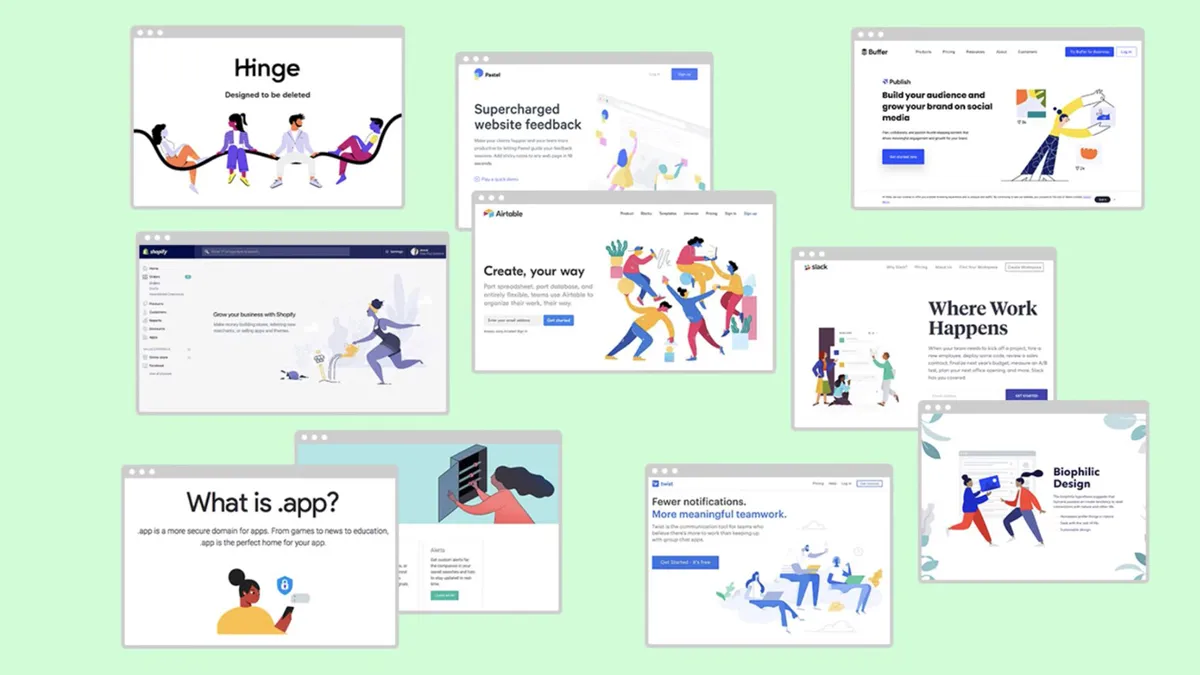
It can sometimes feel like big brands all are all working from the same design playbook. There was a time not so long ago when pretty much every brand used the same gangly-armed cartoon people (a style officially known as ‘Corporate Memphis’). So it’s refreshing that Netflix’s latest visual identity steers clear of tech’s obsession with one-dimensional vectors in favour of something much more cinematic.
The brand has unveiled a set of new iconography designed by Koto Studios, and not only does it lean in to the brand’s existing colour scheme, but it’s also just plain fun. (Looking for more design inspiration? Check out our roundup of the best logos of all time.)
(Image credit: Koto Studio)
Koto (opens in new tab) says it was tasked to inject the language of cinema into the Netflix product experience. “We evolved their previous system by connecting iconography, typography, and illustration to roots within the cinematic universe, referencing effects and techniques reminiscent of the film-making process—in a way that feels immediately Netflix.”
The new illustrations are delightful (Image credit: Koto Studio)
At the centre of the new visual language is a series of illustrations depicting (often surreal) objects in a delightfully vapour wave palette of purples and reds. Compared with all that Corporate Memphis (opens in new tab), this looks positively cutting-edge, even though the aesthetic is deliberately retro.
“We steered clear of the over-saturated, over-done, one-dimensional approach to graphic language typical of the tech and streaming worlds,” Koto says, “by defining a style that speaks to film enthusiasts, and feels inherently Netflix while remaining true to their core values: pioneering, welcoming, and always stimulating.”
We’ve seen enough ‘Corporate Memphis’ over the last few years (Image credit: Mitchell Wakefield on Twitter)
Along with the illustrations, the new visual identity includes more varied sizes and weights of the company’s Netflix Sans typeface, designed to “remain legible in functional applications, and flex to bold, cinematic title cards, genre-specific, or thematic comms.”
It’s certainly refreshing to see a big tech brand opt for a different visual style. Much like Burberry’s latest rebrand, Netflix’s new look is both retro and futuristic at the same time.
Daniel Piper is Creative Bloq’s Senior News Editor. As the brand’s Apple authority, he covers all things Mac, iPhone, iPad and the rest. He also reports on the worlds of design, branding and tech. Daniel joined Future in 2020 (an eventful year, to say the least) after working in copywriting and digital marketing with brands including ITV, NBC, Channel 4 and more. Outside of Future, Daniel is a global poetry slam champion and has performed at festivals including Latitude, Bestival and more. He is the author of Arbitrary and Unnecessary: The Selected Works of Daniel Piper (Selected by Daniel Piper).
Not everyone likes the idea of handing over their data for advertising purposes. Here’s how to turn off advertiser ID on Windows.
It turns out that it’s getting harder to use your computer without anyone tracking your activity. And Windows plays its part in showing you “relevant” or “personalized” ads by using the Advertiser ID.
But what is Advertiser ID, how does it work, and how can you stop it from tracking your activity?
What Is Windows Advertiser ID?
Advertiser ID is a unique code, assigned by Windows for every user on a device. This way, Windows can show different ads for different people that log in on the same device.
When the feature is enabled, it works similarly to browser cookies, as advertising companies and app developers can use the ID to collect data and display personalized ads in the apps that you’re using. For example, location-based apps will access your location and show ads for nearby businesses.
Now, if you’ve decided to turn off advertiser ID, we’ll show you several methods you can use. Before going through the instructions below, check if your Windows account has administrative rights, so you can change your system settings.
1. Turn Off Advertiser ID During Windows Installation
You can turn off the Advertiser ID feature right from the start. When installing the Windows 11 operating system, Windows lets you choose your privacy settings. All you have to do is turn off the toggle for Advertiser ID.
Now, if you’ve missed the chance when setting up Windows 11, you can still turn it off using the methods below.
2. Turn Off Advertiser ID From Windows Settings
Windows 11 is big on privacy and allows you to adjust your settings to control your data easily. Here’s how you can disable the advertising ID feature:
Press Win + I to bring up Windows Settings.
From the left pane, select Privacy & security.
Head to Windows Permission and click General.
Turn off the toggle next to Let apps show me personalised ads by using my advertising ID.
3. Turn Off Advertiser ID With Group Policy
Windows Group Policy is another tool that helps you manage your user and system configuration. Here’s how you can use it to disable advertiser ID:
In the Start menu search bar, search for group policy and select Run as administrator.
In the Group Policy window, head to Computer Configuration > Administrative Templates> System > User Profile.
In the right pane, locate and open Turn off the advertising ID.
Select the Enabled option.
Click Apply > OK to save your system settings.
Restart your computer.
4. Turn Off Advertiser ID With the Windows Registry
You can also edit the Windows Registry to turn off the advertiser ID.
In the Start menu search bar, search for registry editor and select Run as administrator.
In the Registry window, navigate to HKEY_CURRENT_USER > Software > Microsoft > Windows > CurrentVersion > AdvertisingInfo.
In the right pane, open the Enabled key.
Set Value data to 0.
Click OK and restart your computer.
If you’ve changed your mind and want Windows to show relevant ads again, go through the above steps again and set Value data to 1.
Does Windows Show Fewer Ads With Advertiser ID Turned Off?
Turning off the advertiser ID doesn’t stop Windows from displaying ads. According to Microsoft, disabling the advertiser ID doesn’t reduce the number of ads you’ll see, but it will make them less relevant to you.
Also, Windows will use the data to display ads on the apps you’ve downloaded from Microsoft Store. For any other apps, you should check their privacy settings and stop them from collecting data about you.
Stop Microsoft From Using Your Information
The truth is, you can’t make your activity invisible while using a device that’s connected to the internet. However, turning off Windows advertiser ID will help you protect your privacy.
Protecting your data isn’t as easy as you might think, but there are a few tools you can use to protect your online privacy, no matter which device you’re using.